63. How much is the total contribution-margin sales-volume variance?
64. How much is the contribution-margin sales–volume variance for rollerball pens?
65. How much is the total contribution-margin sales-quantity variance?
66. How much is the total contribution-margin sales-mix variance?
67. In a standard cost system overhead application is based on
68. The ________is the difference between the budgeted fixed manufacturing overhead and the fixed overhead
applied to the actual output units produced (or standard input units allowed for actual output).
69. Which of the following is true?
70. Which of the following is not involved in establishing variable factory overhead costs?
71. Which of the following will cause a negative or favorable fixed overhead volume variance
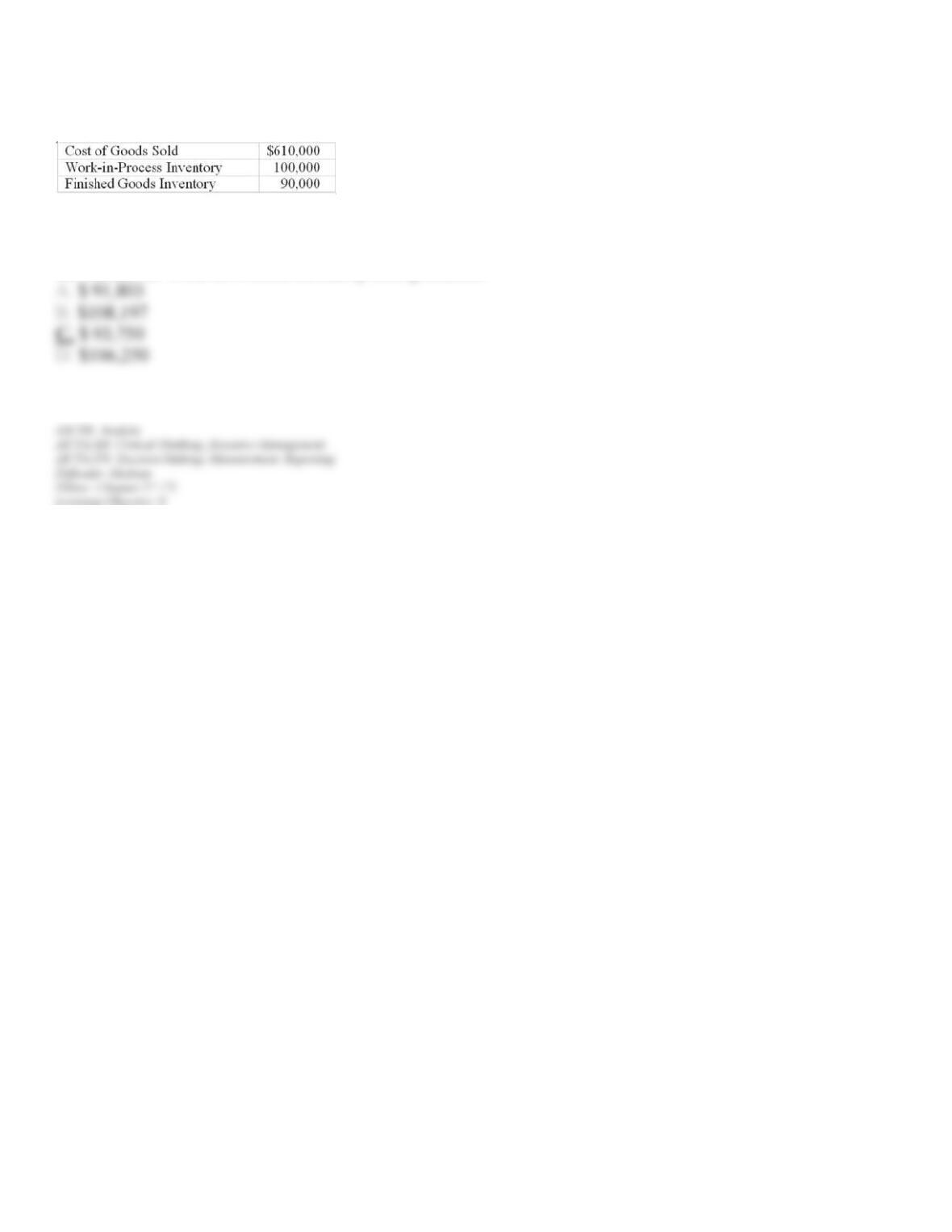
72. [Appendix A] Hammid Co ended this year with a total overhead variance of $50,000 favorable. The records
showed the following overhead amounts in the relevant accounts:
The Direct Material Inventory account had an ending balance of $10,000
If the company prorates the overhead variance to the ending balances in the appropriate accounts, how much is
the balance in Work–in-Process Inventory after proration?
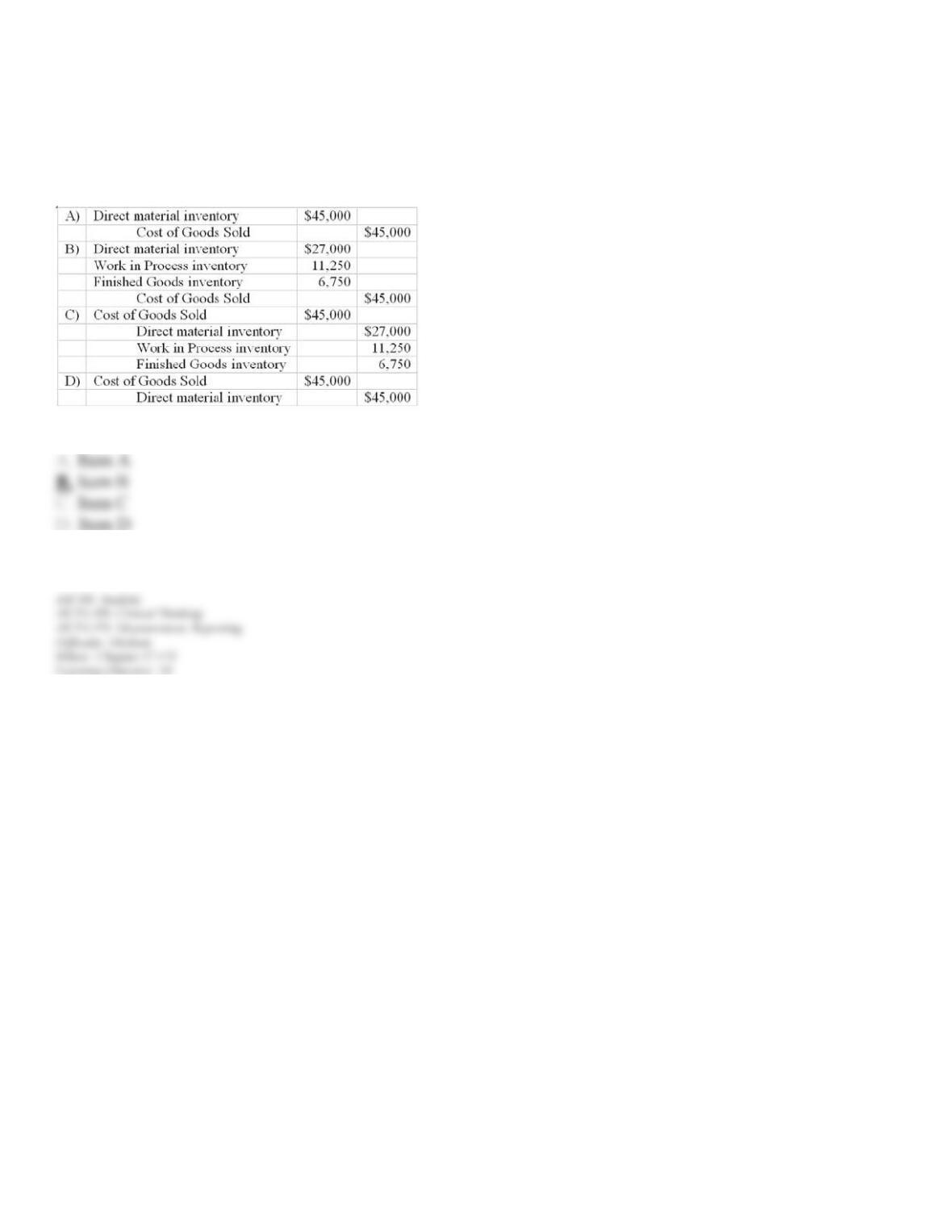
73. [Appendix B] Rafter Company uses a standard–cost just-in–time manufacturing system. During the first year
of the company’s operation direct materials at a standard cost of $100,000 were purchased and charged to Cost
of Goods Sold. At the end of the year $45,000 of this can be traced to various inventory accounts: 60 percent to
direct materials, 25 percent to Work-in-Process, and 15 percent to Finished Goods. Which of the following
entries is the correct end-of-period adjustment?
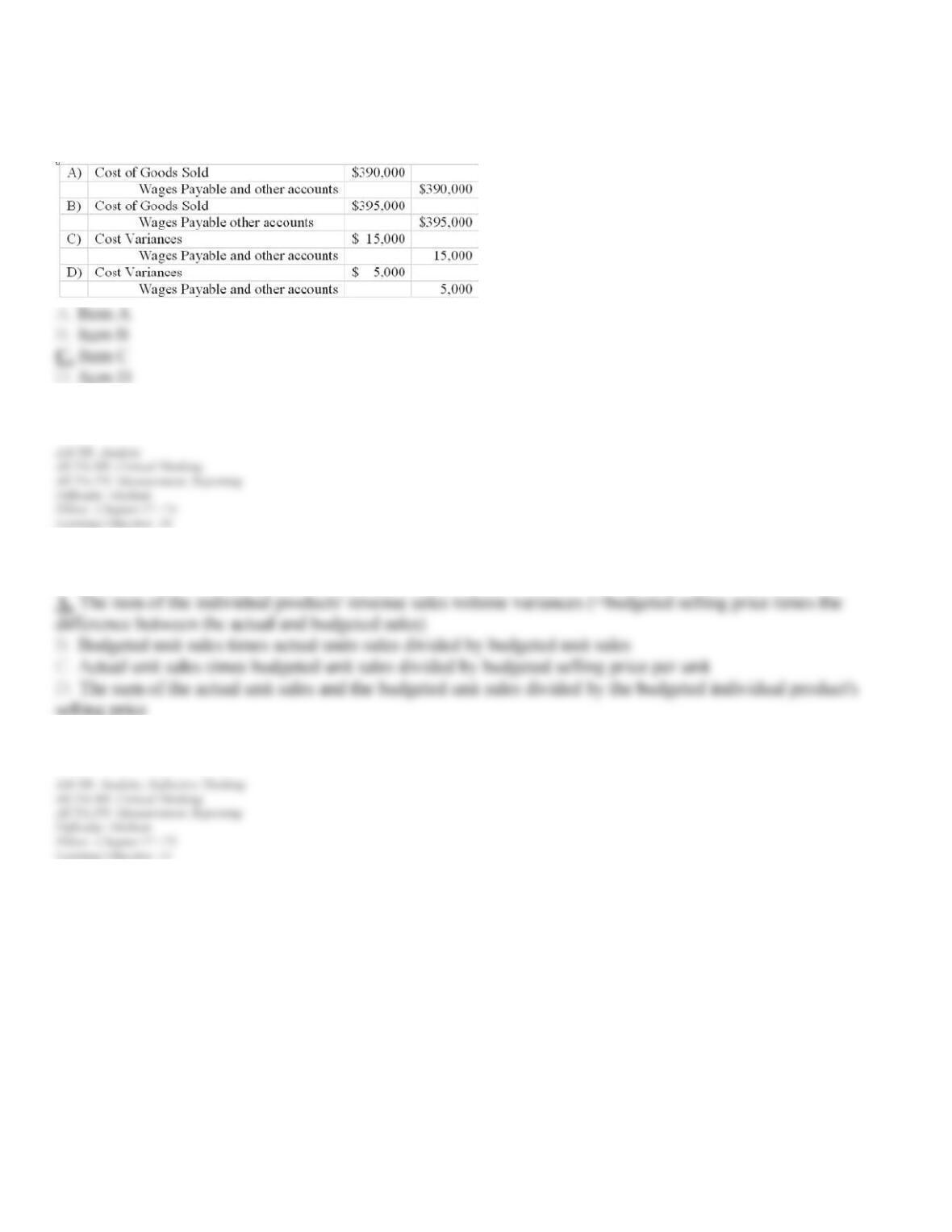
74. [Appendix B] During the second year of operations Halachmi Company’s records showed the following
information about direct labor and overhead: actual amount spent $395,000; standard allowed $390,000.
Which of the following entries reflect the recording of the Direct labor and overhead during the year?
75. (Appendix C) The revenue sales–volume variance is
76. (Appendix C) Health Foods Inc. sells a special multi-grain muffin. In January the budgeted output and
actual output were equal. January‘s revenue sales-volume variance
77. (Appendix C) The Campus Express bookstore ordered T-shirts and bookbags with the university logo in
September. The bookstore expected to sell 2,000 T–shirts and actually sold 1,800; the planned selling price was
$25 while the actual was $20. The planned sales of bookbags was 1,000 at a price of $75. The actual sales were
1,200 at a price of $60. What was the revenue sales-volume variance for September?
78. (Appendix C) Which of the following is not important to managers when analyzing revenue sales–volume
variance information?
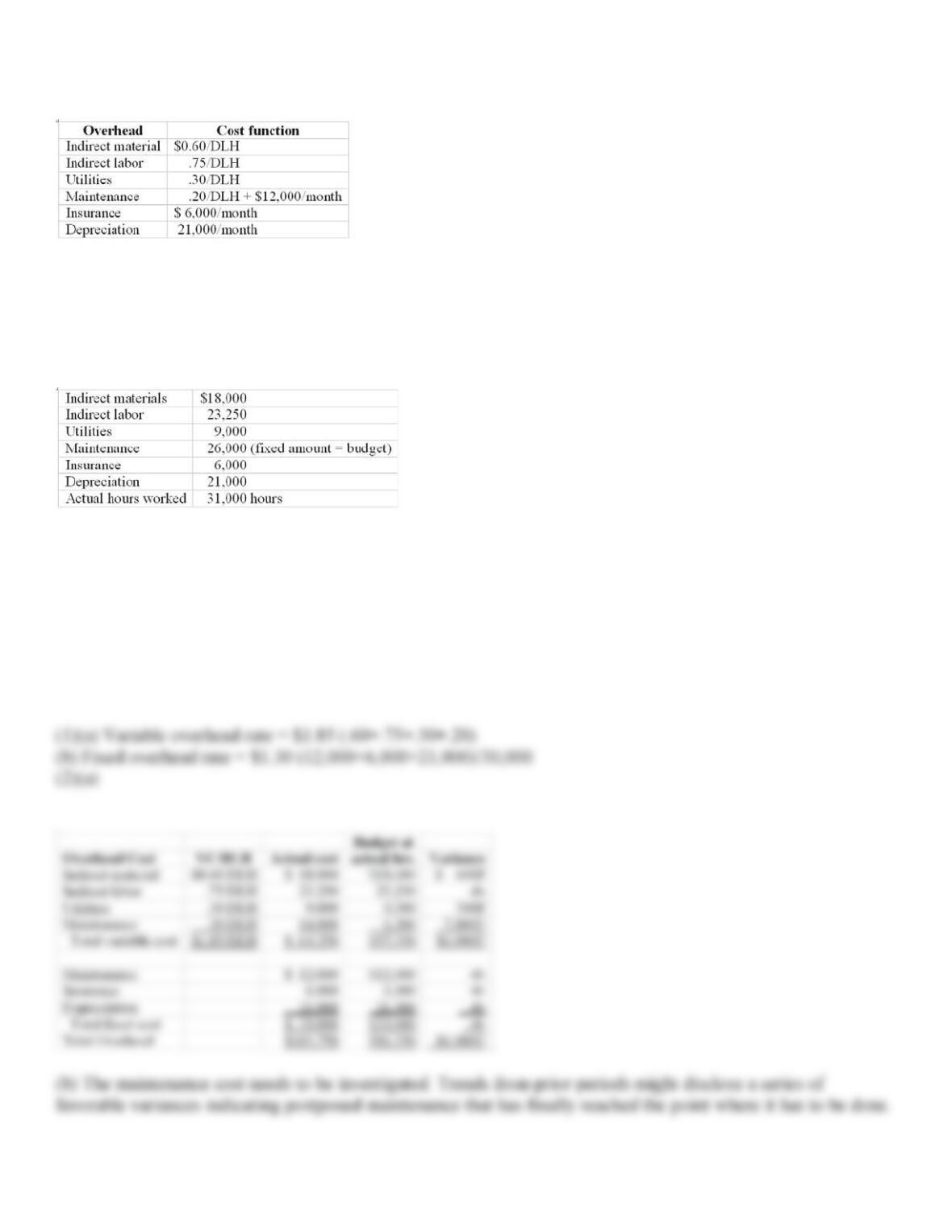
79. McIntire Inc. developed the following monthly cost functions for manufacturing overhead:
The cost functions are considered reliable within a relevant range of 25,000 to 50,000 direct labor hours per
month. The company expects to operate at 30,000 hours per month.
Actual results for February are as follows:
Required:
(1) What are the following standard manufacturing overhead rates based on expected activity?
(a) Variable manufacturing overhead
(b) Fixed manufacturing overhead
(2) (a) Prepare a flexible budget using the following headings:
Budget at
Overhead Cost VC/DLH Actual cost actual hrs. Variance
(b) Which variances need to be investigated and what are some probable causes?
80. Briefly differentiate between a static budget and a flexible budget for manufacturing overhead and why the
flexible budget is more appropriate for cost control and performance evaluation.
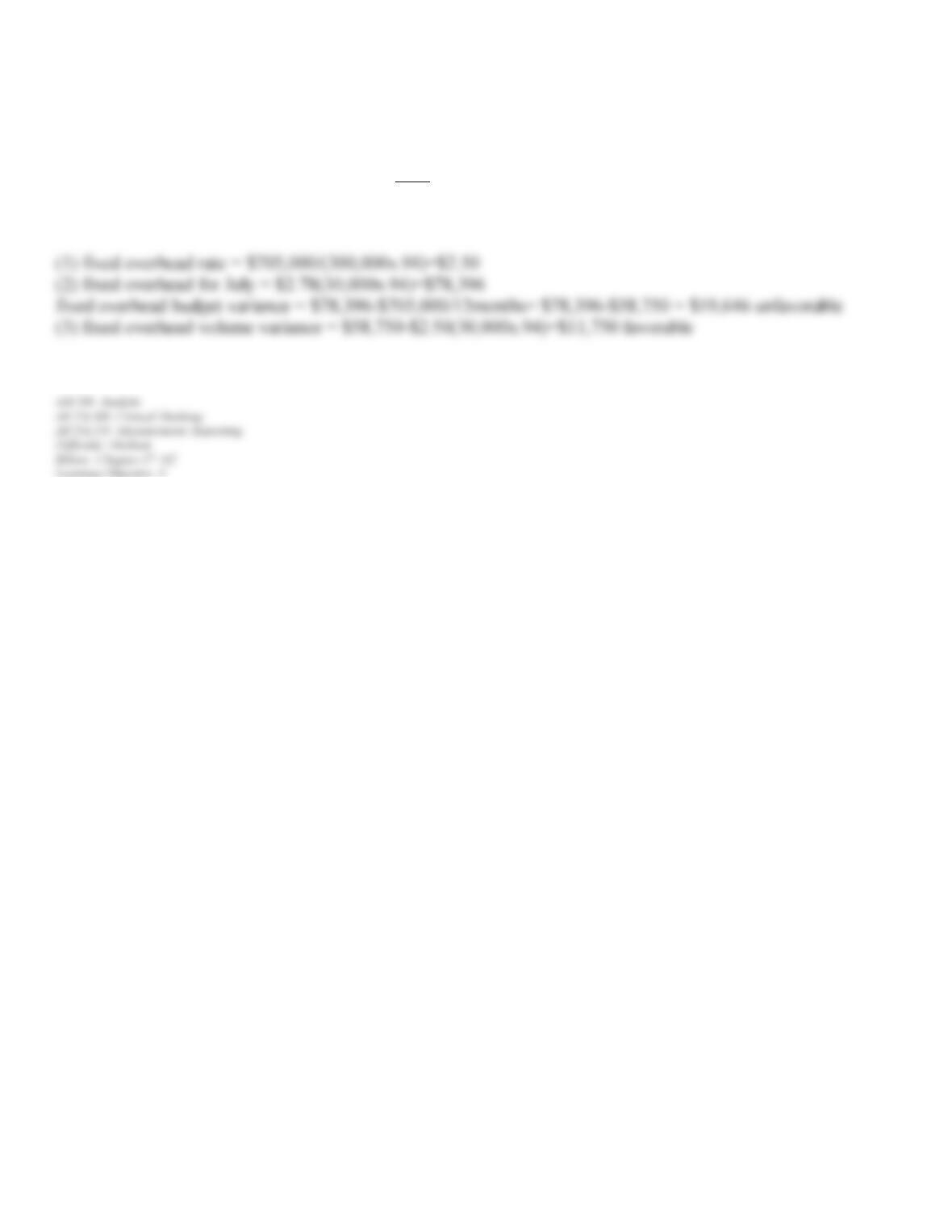
81. Briefly discuss the issue of the choice of an activity measure for setting overhead rates.
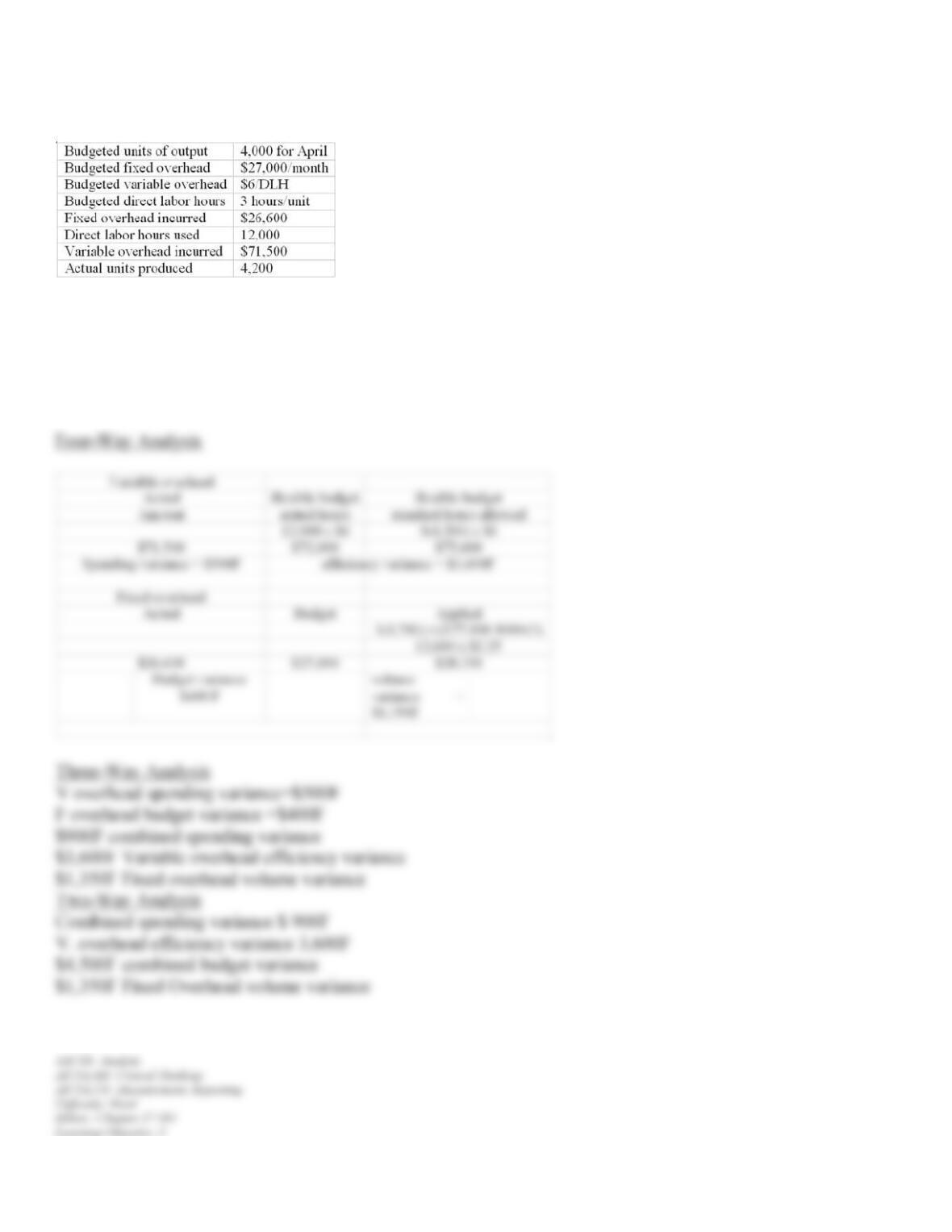
82. Jewel Company produces jewelry for a specialized market. The fixed overhead costs for the coming year are
budgeted at $705,000 and are allocated on the basis of good units completed. It is expected that 300,000 units
will be completed during the year. Good units average 94 percent of total production. During the month of July
30,000 units were produced. The actual fixed overhead per good unit averaged $2.78.
Required (Where necessary, round variances to nearest dollar):
(1) Determine the fixed overhead rate for the year.
(2) Determine the fixed overhead budget variance for the month of July,
(3) Determine the fixed overhead volume variance for the month of July.
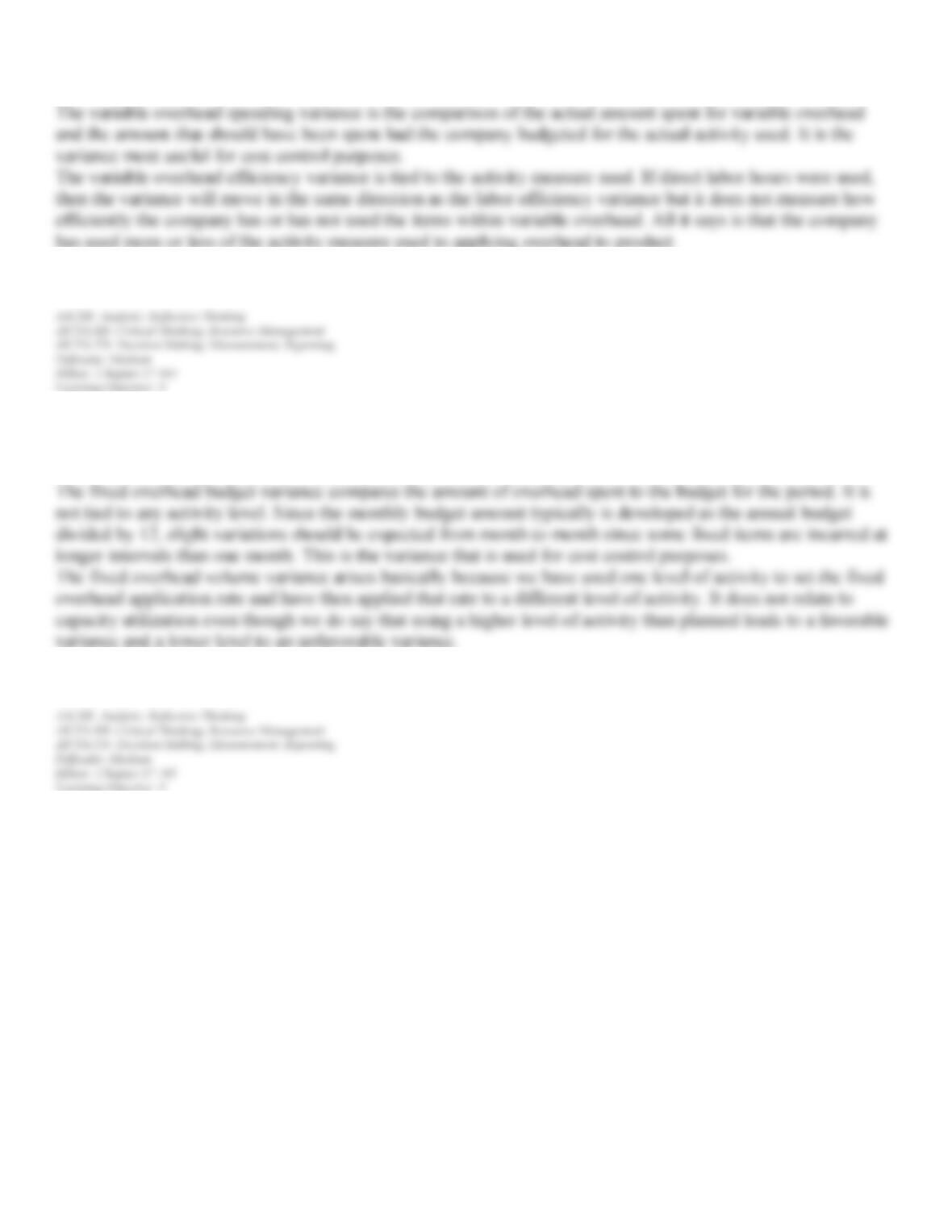
83. Menendez Incorporated is trying to decide which method of analyzing its overhead variances provides the
most useful information. The following information is available from the records for April:
Required: compute the overhead variances using the following approaches;
(1) four-way analysis
(2) three-way analysis
(3) two-way analysis
84. Briefly discuss the meaning of the variable overhead spending and efficiency variances.
85. Discuss the meaning of the fixed overhead variances.
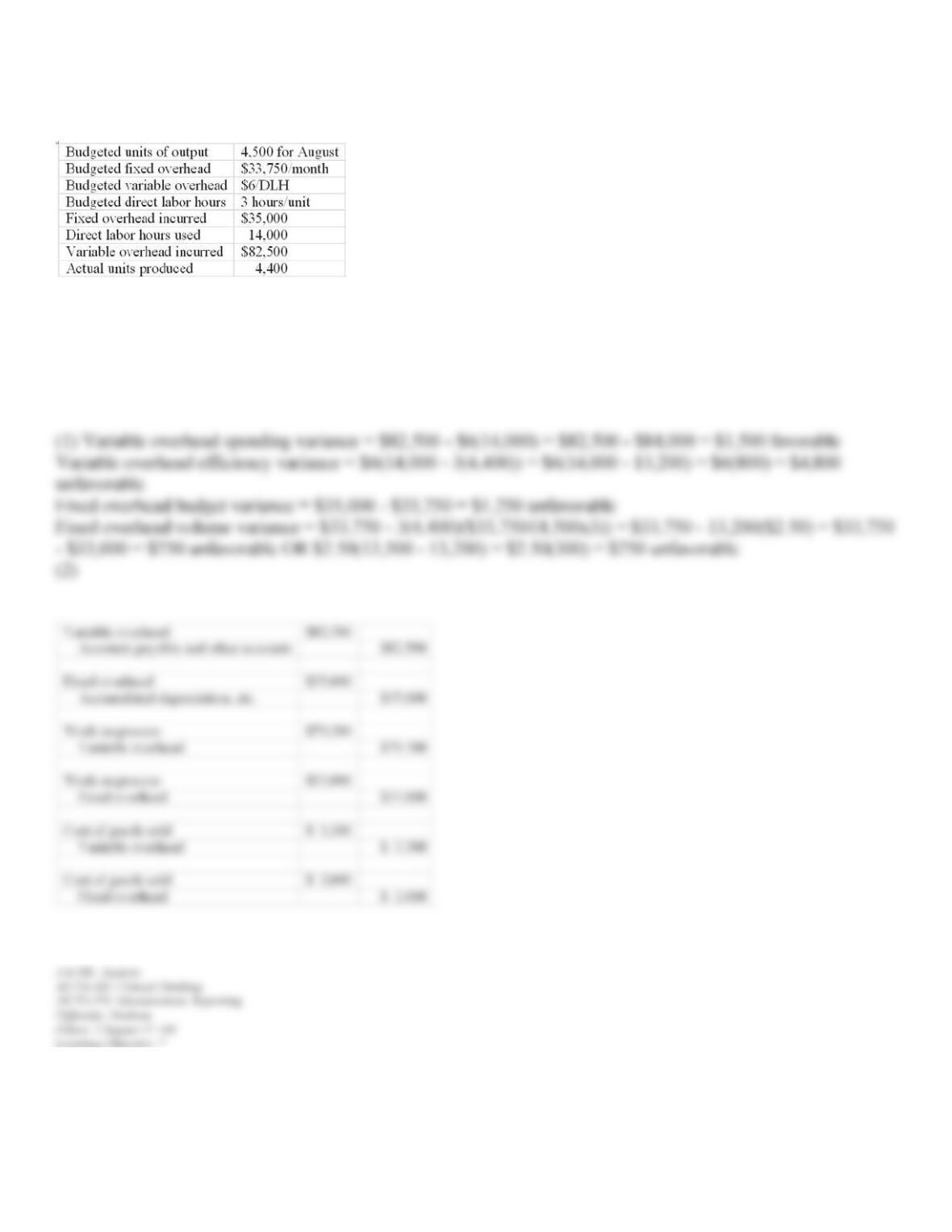
86. Atherton Company uses a four-way analysis for overhead. The following information is available for
August for overhead:
The company closes all variances to cost of goods sold.
Required:
(1) Compute the four variances for a four-way analysis.
(2) Prepare all necessary journal entries to close overhead into cost of goods sold. Keep the entries for fixed and
variable items separate.
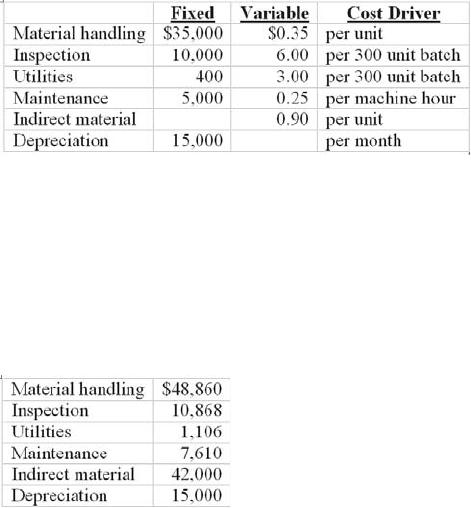
87. Herman Company has the following information related to its overhead costs:
At the beginning of the year, the budget showed the following plan: 45,000 units and 9,000 machine hours. The
company uses a flexible budget for its overhead costs.
End-of-year results show that 42,000 units were produced and 8,400 machine hours were used. Actual costs
were as follows (actual fixed costs equaled budgeted):
Required:
(1) Prepare an overhead static budget for variable overhead only with variances.
(2) Prepare an overhead flexible budget for variable overhead only with variances.
(3) Are there any variances that might signal a need for investigation, if so, which ones and why?