Introduction to General, Organic & Biological Chemistry, 12e (Timberlake)
Chapter 16 Amino Acids, Proteins, and Enzymes
16.1 Multiple-Choice Questions
1) Which of the following is not a function of proteins?
A) provide structural components
B) stores the genetic information of a living organism
C) movement of muscles
D) catalyze reactions in the cells
E) transport substances through the bloodstream
2) Collagen, a protein found in tendons and cartilage, would be classified as a ________ protein.
A) catalytic
B) structural
C) transport
D) storage
E) hormone
3) Sucrase, the protein that facilitates the hydrolysis of sucrose, would be classified as a
________ protein.
A) transport
B) hormonal
C) catalytic
D) structural
E) contractile
4) Glycine is the only naturally occurring amino acid that is ________.
A) negatively charged
B) positively charged
C) neutral
D) in the L- form
E) achiral
5) A basic amino acid has a side chain that contains ________.
A) an ammonium group
B) a carboxyl ate group
C) a methyl group
D) an alcohol group
E) a thiol group
6) In the ionized form of an amino acid, the carboxylic acid end is ________.
A) positively charged
B) negatively charged
C) neutral
D) soluble in a nonpolar solvent
E) attached to an amine
7) Methionine is an amino acid that contains ________.
A) a sulfur atom
B) a chlorine atom
C) a sodium atom
D) a phenyl ring
E) a heterocyclic ring
8) The structural formulas of amino acids are the same except for the ________.
A) carboxylate group
B) alpha carbon
C) ammonium group
D) R group
E) hydrogen bonding
9) Wool is primarily made up of ________.
A) protein
B) carbohydrate
C) globin
D) triacylglycerols
E) enkephalin
10) The following amino acid side chain is ________.
–CH–C
|
A) polar
B) hydrophobic
C) hydrophilic
D) acidic
E) basic
11) The R group for serine is – -OH. In the ionized form, serine has the structural formula
________.
A) –OH
–H–COOH
B) –OH
–H–CO
C)
H3–H–COOH
D) –OH
H3–H–COOH
E) –OH
H3–H–CO
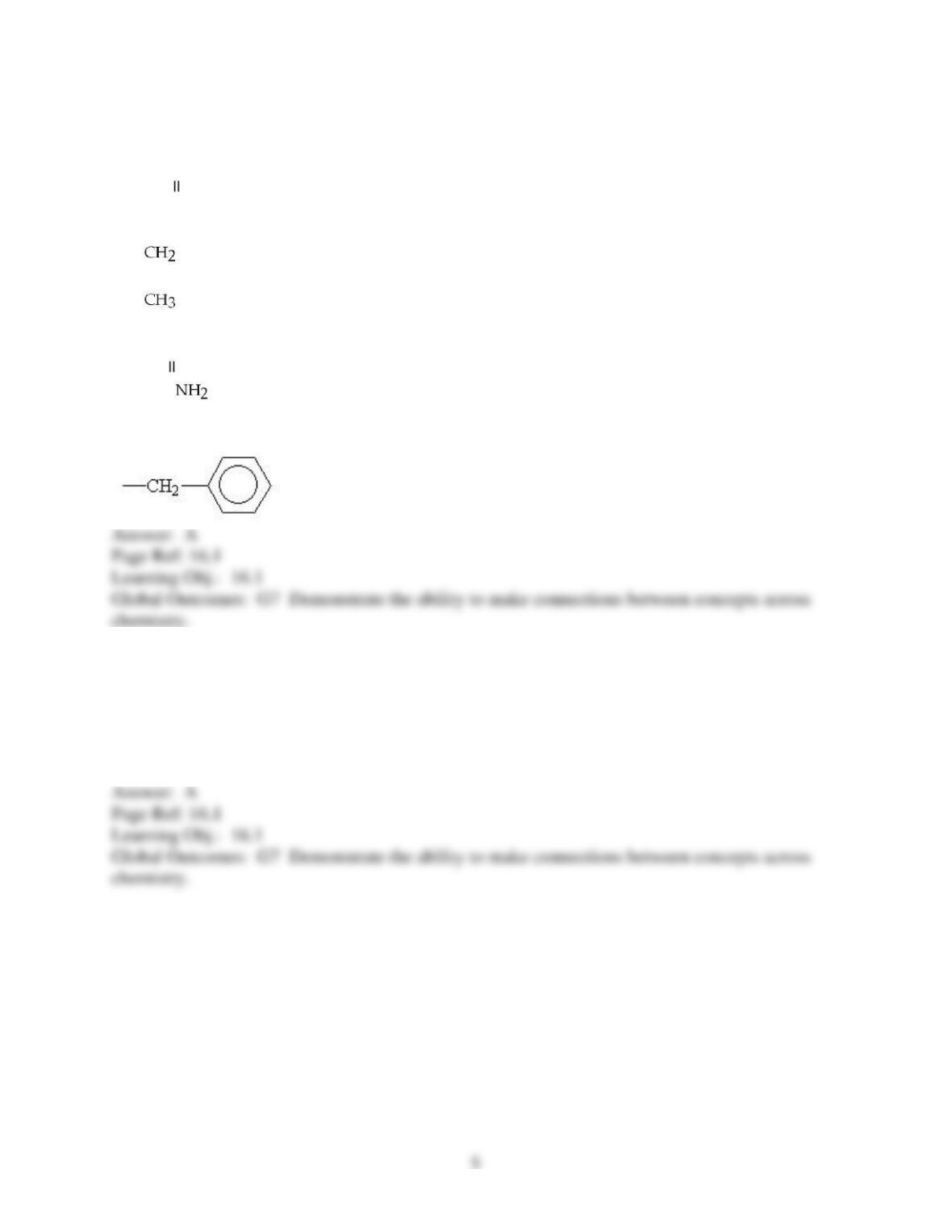
12) Which of the following functional groups of an amino acid would be in the ionized state at
high pH?
A) O
–C–OH
B) – –OH
C) –
D) O
–C
E)
13) The side chain for histidine is classified as a ________ side chain.
A) basic
B) neutral
C) acidic
D) nonpolar
E) polar
14) At a pH > 9, the ionized form of glycine will have ________.
A) a net positive charge
B) a net negative charge
C) an overall charge of zero
D) low solubility in water
E) a negative charge on the nitrogen
15) At a pH < 5, the ionized form for alanine (pI = 6) will have ________.
A) a net positive charge
B) a net negative charge
C) an overall charge of zero
D) low solubility in water
E) a negative charge on the carboxyl group
7
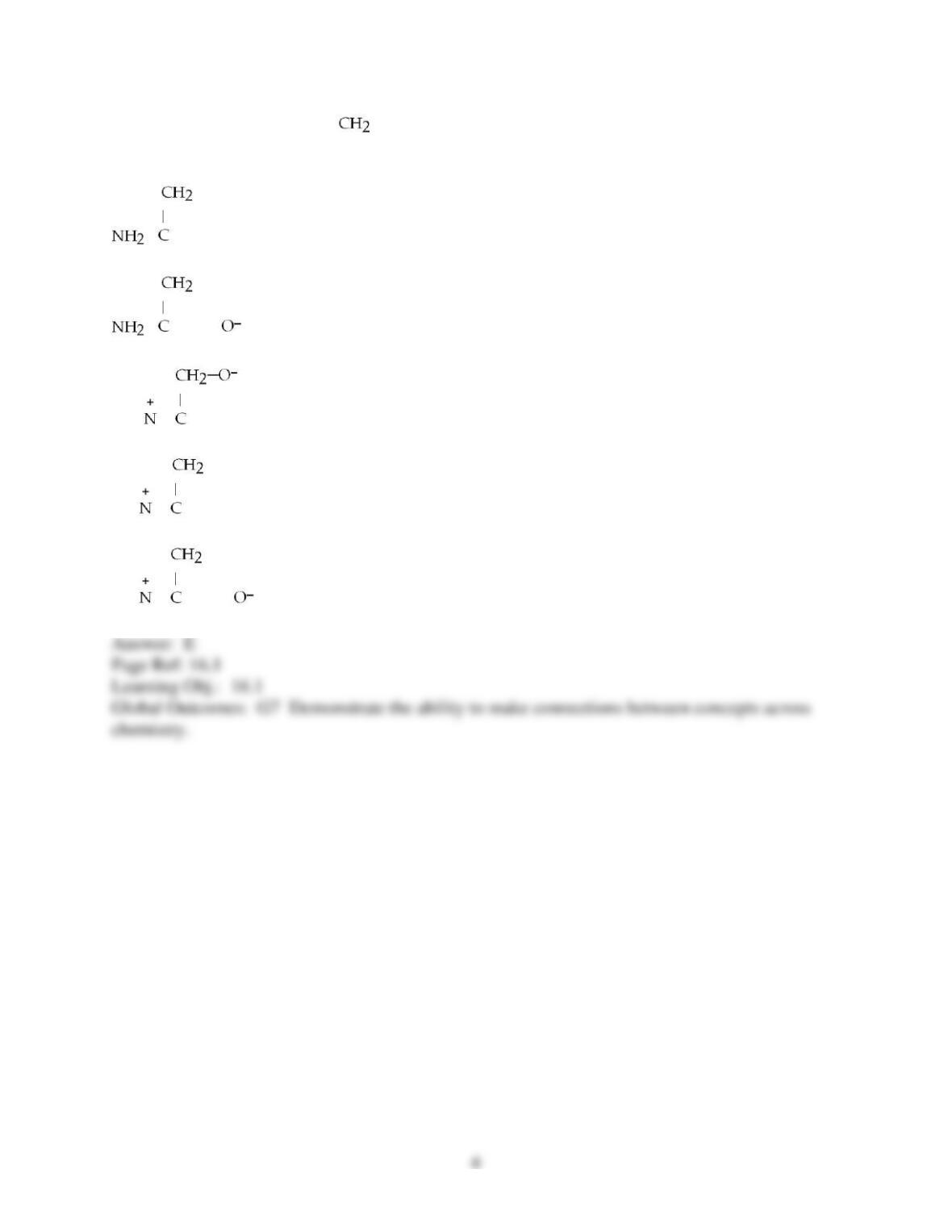
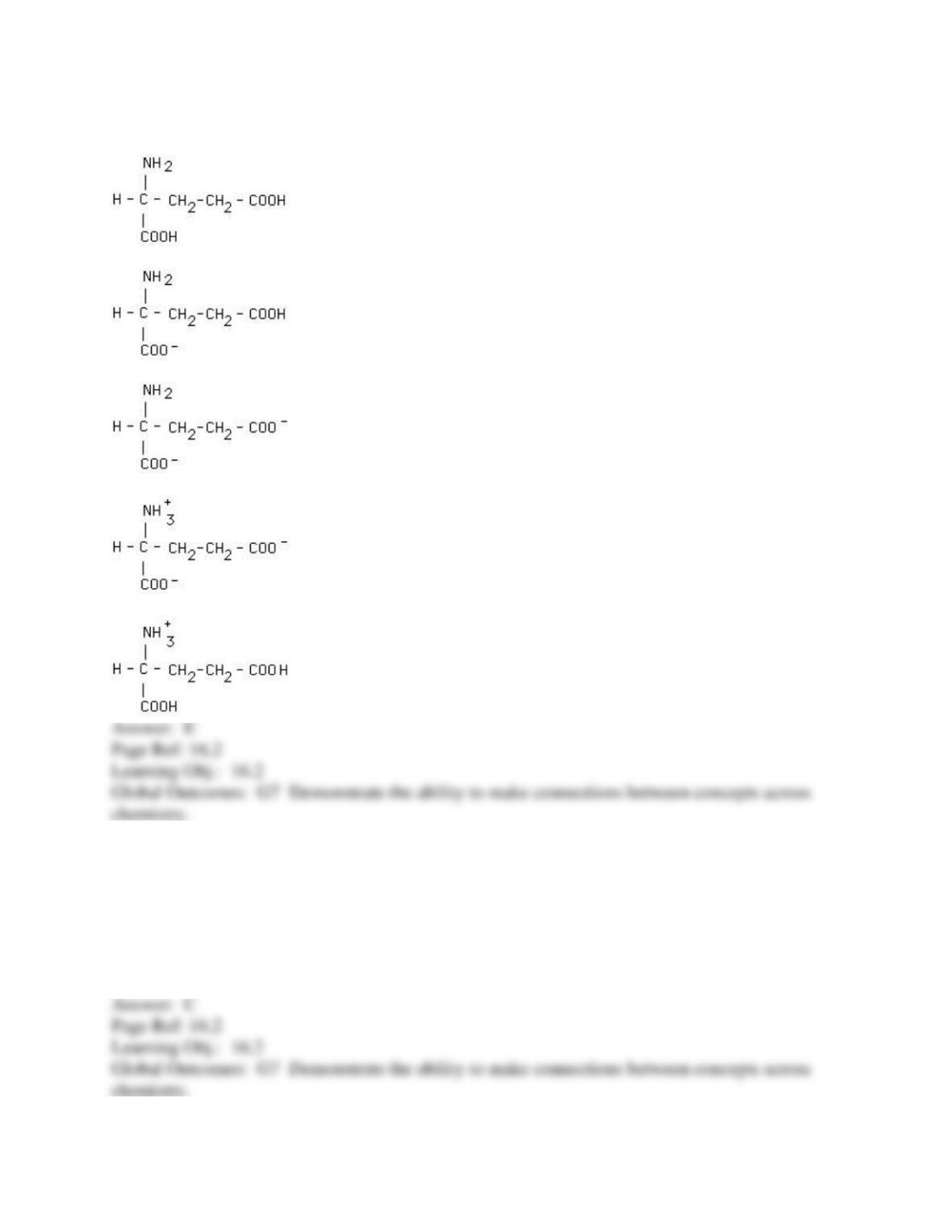
16) What is the structural formula of glutamic acid (pI = 3.2) at pH = 1?
A)
B)
C)
D)
E)
17) Which of the following would be most likely to be deficient in at least one essential amino
acid?
A) eggs
B) milk
C) beans
D) steak
E) ham
18) Amino acids that are not synthesized in the body and must be obtained from the diet are
called ________.
A) essential
B) polar
C) nonpolar
D) complete
E) incomplete
19) A completely vegetarian diet will contain all the essential amino acids if it includes
________.
A) wheat and rice
B) rice and beans
C) almonds and walnuts
D) corn and beans
E) wheat and corn
20) The peptide bonds that link amino acids in a protein are ________.
A) ester bonds
B) ether bonds
C) amide bonds
D) glycosidic bonds
E) sulfide bonds
21) In the peptide STFNA, the N-terminal amino acid is ________.
A) alanine
B) phenylalanine
C) tryptophan
D) aspartic acid
E) serine
22) In the peptide Ala-Try-Gly-Phe, the N-terminal amino acid is ________.
A) alanine
B) phenylalanine
C) tryptophan
D) aspartic acid
E) glycine
23) In the peptide Ser-Cys-Ala-Gly, the C-terminal end is ________.
A) serine
B) serotonin
C) glycine
D) glycerine
E) alanine
24) In the peptide GLVIW, the C-terminal end is ________.
A) tryptophan
B) serotonin
C) glycine
D) glycerine
E) alanine
25) A chain made of more than 50 amino acids that has biological activity is referred to as a(n)
________.
A) peptide
B) protein
C) enzyme
D) globulin
E) hormone
26) The attractive forces that are important in the secondary structure of a protein are ________.
A) hydrogen bonds
B) hydrophobic interactions
C) disulfide bonds
D) salt bridges
E) peptide bonds
27) Which of the following is a secondary protein structure?
A) α-helix
B) Ser-Met-Ala-Gly-Ile
C) disulfide bond
D) salt bridges
E) hydrophobic interactions
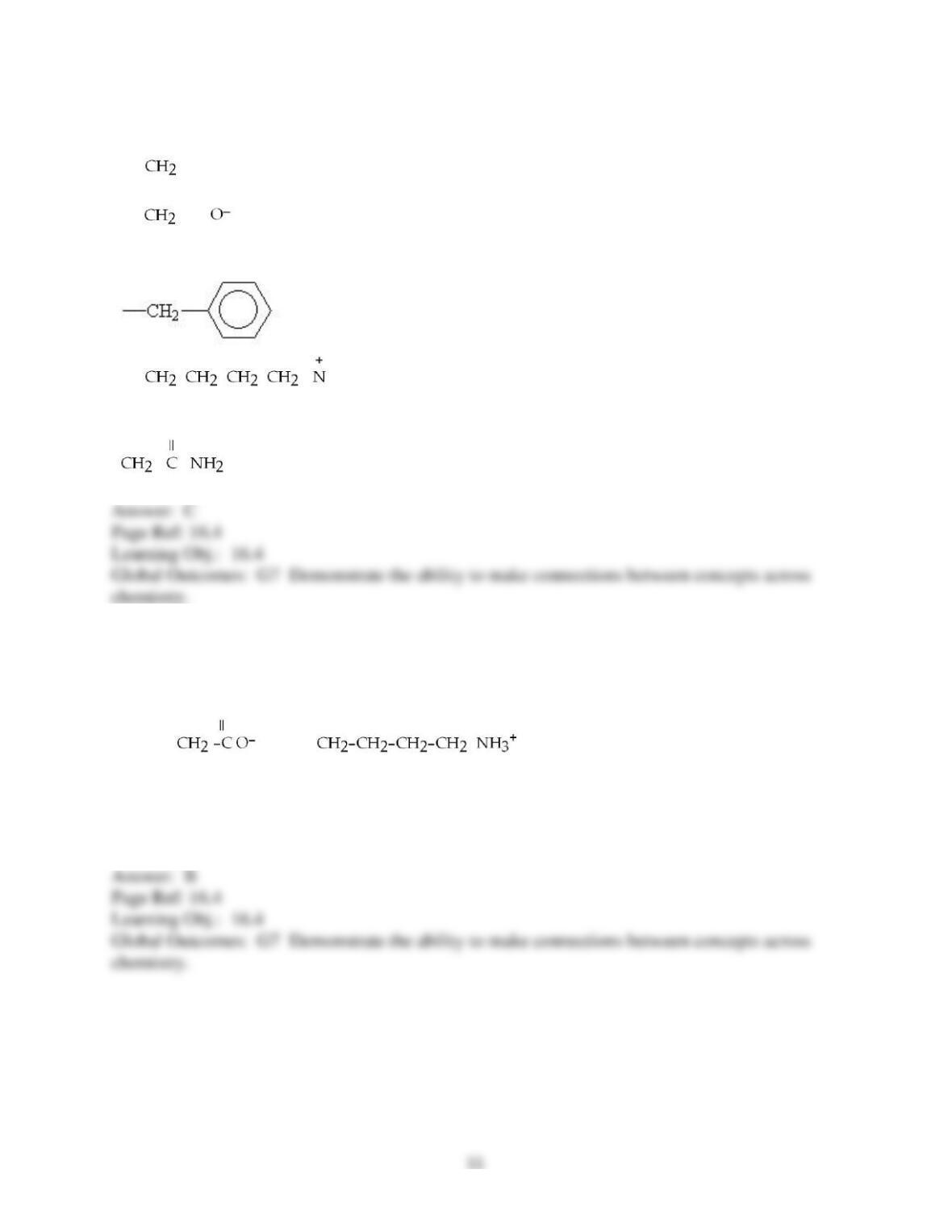
28) Which R group would most likely be found in a hydrophobic area of the tertiary structure of
a globular protein?
A) – –OH
B) – –CO
C)
D) –––––H3
E) O
– – –
29) What type of interaction would you expect between the following R groups in the tertiary
structure of a protein?
O
– and – –
A) disulfide bonds
B) salt bridges
C) hydrogen bonds
D) hydrophobic interactions
E) peptide bonds
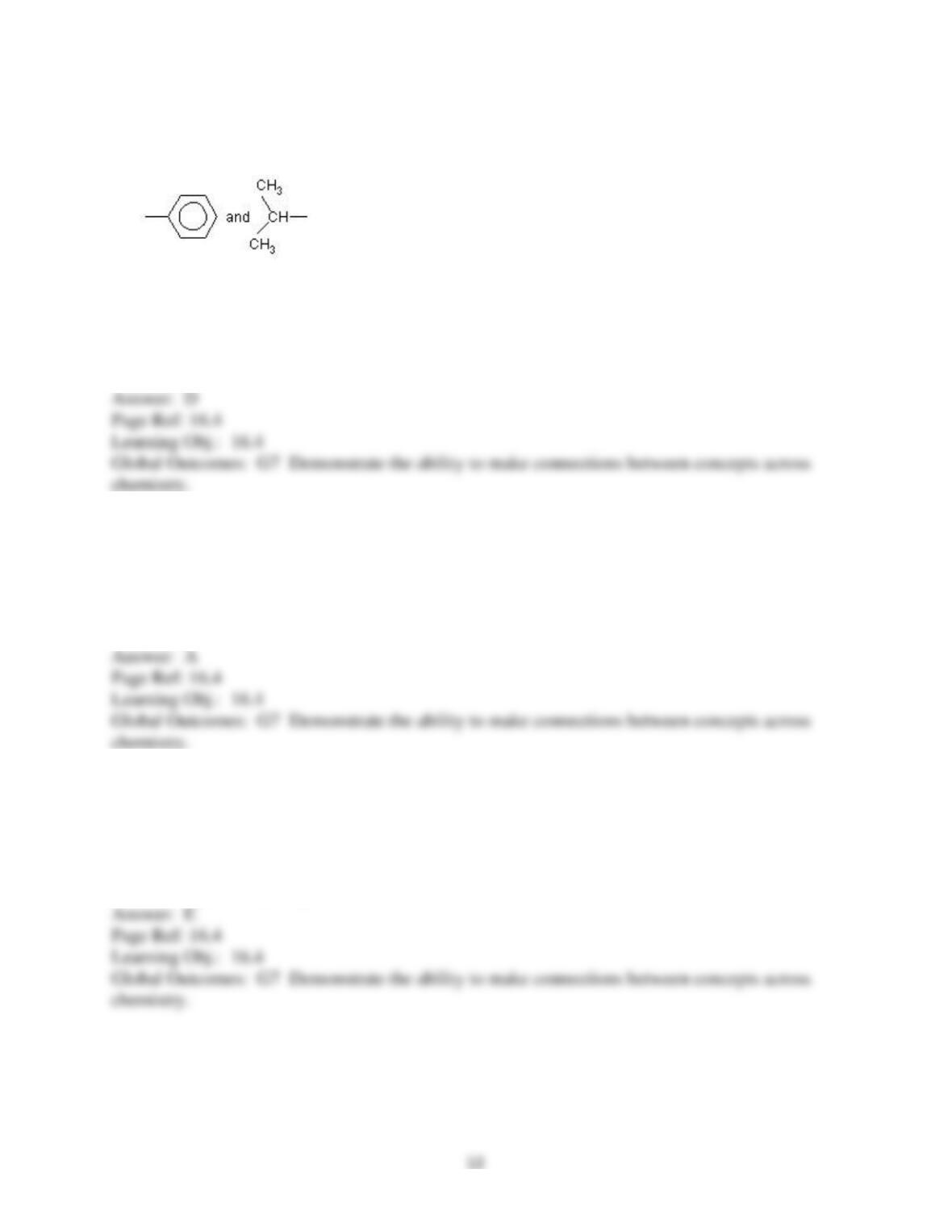
30) What type of interaction would you expect between the following R groups in the tertiary
structure of a protein?
A) disulfide bonds
B) salt bridges
C) hydrogen bonds
D) hydrophobic interactions
E) peptide bonds
31) What kinds of interactions are not part of tertiary protein structure?
A) peptide bonds
B) disulfide bonds
C) hydrophilic interactions
D) salt bridges
E) hydrophobic interactions
32) Acids and bases denature a protein by disrupting ________.
A) peptide bonds and salt bridges
B) amide bonds and alkene bonds
C) hydrophobic interactions and peptide bonds
D) salt bridges and hydrophobic interactions
E) salt bridges and hydrogen bonds
33) Heat denatures a protein by disrupting ________.
A) salt bridges and peptide bonds
B) hydrophobic interactions and hydrogen bonds
C) peptide bonds and hydrophobic interactions
D) disulfide bonds and peptide bonds
E) hydrogen bonds and disulfide bonds
34) The secondary structure of collagen consists of ________.
A) single α-helix strands
B) double α-helix strands
C) many α-helixes wound into fibrils
D) a braided triple helix
E) many glycoside links
35) The fibrous protein responsible for the structure of hair and wool is ________.
A) keratin
B) collagen
C) endorphin
D) myosin
E) casein
36) The α helix of the secondary structure of a protein is held together by ________ between two
widely separated parts of a protein chain.
A) hydrogen bonds
B) disulfide bridges
C) salt bridges
D) hydrophilic interactions
E) hydrophobic interactions
37) In the β-pleated sheet secondary structure of a protein, two or more amino acid sequences in
separate parts of the protein are held together ________.
A) in a coil, by hydrogen bonding
B) in random order, due to hydrophobic interactions
C) in a triple helix
D) in a double helix
E) by hydrogen bonding between different sections of the polypeptide chain
38) Enkephalins are polypeptides that have ________.
A) a sweet taste
B) a bitter taste
C) extra caloric value
D) pain-killing properties
E) hormone activity
39) In insulin, two peptide chains are held together in a single unit by ________.
A) disulfide bridges
B) hydrogen bonds
C) salt bridges
D) a prosthetic group
E) a β-pleated sheet
40) Hemoglobin is an example of a protein with ________.
A) primary structure only
B) a single polypeptide chain
C) a globular structure
D) primarily a β-pleated sheet structure
E) primarily an α helix structure
41) The heme in hemoglobin is a(n) ________.
A) protein chain
B) small molecule within a protein
C) helix area in the hemoglobin molecule
D) pleated sheet area in the hemoglobin molecule
E) oxygen molecule within the hemoglobin molecule
42) Within hemoglobin, the heme functions as ________.
A) a disulfide bridge
B) an oxygen carrier
C) a reducing agent
D) an α subunit
E) one of the four protein subunits
43) Hemoglobin has a total of ________ protein chains in its quaternary structure.
A) one
B) two
C) three
D) four
E) five
44) The function of myoglobin is to ________.
A) carry vitamins in the blood
B) carry oxygen in the blood
C) support the skeletal muscles
D) carry oxygen in the muscle
E) provide strength in cartilage
45) In sickle-cell anemia, the hemoglobin molecules ________.
A) come apart into separate chains
B) enlarge to twice normal size
C) clump together into insoluble fibers
D) dissolve in the plasma
E) undergo crenation
46) Denaturation of a protein ________.
A) changes the primary structure of a protein
B) disrupts the secondary, tertiary, or quaternary structure of a protein
C) is always irreversible
D) hydrolyzes peptide bonds
E) can only occur in a protein with quaternary structure
47) One heavy metal that can cause denaturation of a protein is ________.
A) silver
B) sodium
C) barium
D) iron
E) calcium
48) Heavy metals denature proteins by ________.
A) releasing amino acids
B) disrupting hydrophobic interactions
C) changing the pH of the protein solution
D) changing the temperature of the protein solution
E) disrupting disulfide bonds
49) An acid can denature a protein by ________.
A) agitating the protein chains
B) disrupting hydrogen bonds between side chains
C) disrupting hydrophobic interactions within a protein chain
D) removing helping molecules such as heme
E) breaking disulfide bridges
50) Disulfide bonds in a protein chain connect ________.
A) an amine and a carboxylic acid group
B) an alcohol and a carboxylic acid group
C) tryptophan and alanine residues
D) two cysteine residues
E) two asparagine residues
51) Enkephalins, naturally produced opiates in the body, are found in ________.
A) muscles and bone tissue
B) brain and kidney tissue
C) thalamus and spinal cord tissue
D) heart and lung tissue
E) pancreas and liver tissue
52) To what main class of enzymes does the enzyme that catalyzes the conversion of lactose to
galactose and glucose belong?
A) oxidoreductase
B) transferase
C) hydrolase
D) lyase
E) isomerase
53) The purpose of the many chemical reactions in our bodies is to ________.
A) store chemical energy in the body for future use
B) produce the amino acids
C) produce the lipids
D) release chemical energy for the production of macromolecules
E) all of the above
54) To what main class of enzymes does the enzyme that catalyzes the following reaction
belong?
O OH
– –CO → –H–CO
A) oxidoreductase
B) transferase
C) hydrolase
D) lyase
E) isomerase
55) To what main class of enzymes does the enzyme that catalyzes the following reaction
belong?
ser–ala → ser + ala
A) oxidoreductase
B) transferase
C) hydrolase
D) lyase
E) isomerase
56) Compared to an uncatalyzed reaction, an enzyme-catalyzed reaction ________.
A) uses less substrate
B) produces different products
C) occurs at a faster rate
D) requires more energy
E) requires a higher temperature
57) The general function of an enzyme in the body is to ________.
A) catalyze chemical reactions
B) maintain a neutral pH
C) act as a reactant in carbohydrate storage
D) maintain homeostasis
E) eliminate waste products from the blood
58) A biological catalyst is called a(n) ________.
A) lipid
B) enzyme
C) steroid
D) coenzyme
E) substrate
59) The full name of the enzyme LDH is ________.
A) lactate dehydrogenase
B) liver decompensation hexase
C) lactate dehydrase
D) liver dihydrogen kinase
E) lipase dehydrogenase
60) The names of many enzymes can be recognized by the suffix ________.
A) ate
B) ite
C) ose
D) ine
E) ase
61) The hydrolysis of ester bonds in triacylglycerols is catalyzed by a ________.
A) lipase
B) lyase
C) isomerase
D) peptidase
E) oxidoreductase
62) Most enzymes are ________.
A) fluid-mosaic proteins
B) induced proteins
C) substrate proteins
D) fibrous proteins
E) globular proteins
63) The presence of enzymes to catalyze bioreactions in our bodies allows ________.
A) us to eat non-nutritious substances without consequence
B) the activation energy of a reaction to be raised
C) the rate of a desired chemical reaction to slow down
D) bioreactions to occur under extreme conditions of temperature and pH
E) bioreactions to take place under mild conditions
64) The formation of an enzyme-substrate complex is the ________ step in enzyme action.
A) first
B) second
C) third
D) fourth
E) last
65) The active site of an enzyme ________.
A) is remote from the site of substrate attachment
B) is converted to a product
C) is the region where the reaction takes place
D) increases the energy of reaction
E) includes the entire enzyme
66) The optimum temperature for sucrase activity is 37 °C. The hydrolysis of sucrose is slowest
at which temperature in the choices below?
A) 0 °C
B) 10 °C
C) 20 °C
D) 25 °C
E) 45 °C
67) Which of the following is not true for a competitive inhibitor?
A) It occupies the active site
B) It cannot be converted to products
C) It has a structure similar to the substrate
D) Increasing the substrate concentration can reverse competitive inhibition
E) It binds to the enzyme at a site remote from the active site
68) A noncompetitive inhibitor ________.
A) binds at the active site of the enzyme
B) alters the three-dimensional structure of the enzyme
C) increases the rate of the enzyme-catalyzed reaction
D) has a structure similar to the substrate
E) has its effect reversed by adding more substrate
69) “Physiologic conditions” for reactions within the body are approximately ________.
A) pH 3 and 37 °C
B) pH 7 and 37 °C
C) pH 7 and 37 °F
D) pH 8 and 273 °C
E) pH 7 and 273 K
70) “Physiological pH,” the pH for optimum activity for most enzymes, is a pH equal to about
________.
A) 3.0
B) 5.4
C) 7.4
D) 8.6
E) 9.0
71) In the lock-and-key model of enzyme action, the enzyme active site is thought of as
________.
A) a rigid, nonflexible shape that fits the substrate exactly
B) an area of the enzyme that can adjust to fit the substrate shape
C) a key-like shape that fits into a pocket of the substrate surface
D) a hydrophilic area on the enzyme surface
E) a lock that bars a noncompetitive inhibitor from reacting
72) In the induced-fit model of enzyme action, the enzyme active site ________.
A) stays the same shape during substrate binding
B) adjusts shape to adapt to the shape of the substrate
C) stays the same shape while causing a change in the shape of the substrate
D) uses an inhibitor to adjust its shape for the substrate
E) uses a cofactor to change the shape of a substrate
73) The function of the enzyme-substrate complex is to provide an alternative reaction pathway
that ________.
A) lowers the energy of the products
B) lowers the energy of the substrate
C) changes the concentration of the substrate
D) lowers the activation energy for the reaction
E) changes the possible product formed
74) How many generalized steps are there in the reaction of an enzyme (E) with a substrate (S) to
form and release the product (P)?
A) one
B) two
C) three
D) four
E) five
75) Most enzymes are deactivated permanently above a temperature of about ________.
A) 25 °C
B) 37 °F
C) 40 °C
D) 45 °F
E) 50 °C
76) Urea is converted to ammonia and carbon dioxide by the action of urease. What will be the
effect on the rate if the temperature of the reaction is lowered from 37 °C (the optimum
temperature) to 27 °C?
O
–C– + O 2N +
A) There will be no effect.
B) The rate will slow down.
C) The rate will double.
D) The rate will triple.
E) The rate will slow down, then speed up again.
77) A competitive inhibitor is one that ________.
A) binds to the enzyme at a site far from the active site
B) binds to the active site in place of the substrate
C) destroys the substrate
D) binds to the allosteric site on an enzyme
E) forms a complex with the substrate
78) A noncompetitive inhibitor has a structure that ________.
A) does not resemble the substrate structure
B) resembles the active site of the enzyme
C) can bind to the active site of the enzyme
D) does not interfere with the enzyme-substrate complex formation
E) causes a change in the shape of the substrate
79) A compound that binds to an enzyme, and changes its shape so that a substrate cannot enter
the active site, is called a(n) ________.
A) coenzyme
B) proenzyme
C) steroid
D) noncompetitive inhibitor
E) competitive inhibitor
80) Enzymes that catalyze the same reactions but have slightly different structures are called
________.
A) coenzymes
B) cofactors
C) isoenzymes
D) competitive
E) noncompetitive
81) The optimum pH for the activity of pepsin is about ________.
A) 2.0
B) 4.0
C) 6.5
D) 7.4
E) 7.6
16.2 Bimodal Questions
1) Immunoglobulin, a protein that stimulates immune responses, would be classified as a
________ protein.
A) transport
B) structural
C) storage
D) protection
E) catalytic
2) What type of amino acids has polar side chains that are attracted to water?
A) hydrophilic
B) hydrophobic
C) nonpolar
D) aromatic
E) hydrocarbon
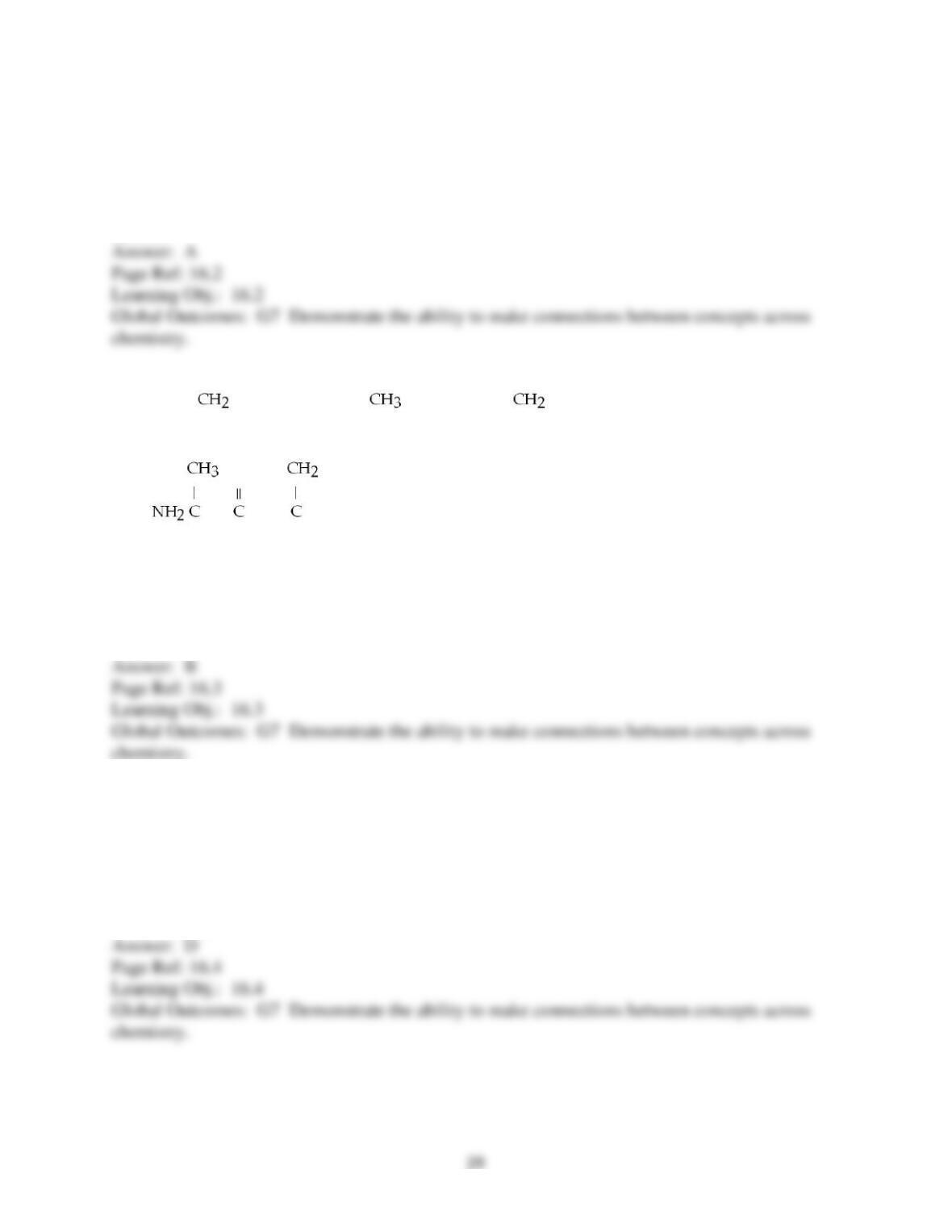
3) At what pH would you expect valine, with a pI of 6.0, to have a 1+ charge?
A) 1.0
B) 6.0
C) 7.0
D) 10.0
E) 14.0
4) Consider the R groups of the following amino acids:
cysteine: – SH; alanine: – ; serine: – OH
The name for the dipeptide shown below is ________.
O OH
H – – NH HCOOH
A) alanylcysteine
B) alanylserine
C) serylalanine
D) serylcysteine
E) serinealanine
5) In an enzyme, the polypeptide chain folds into a compact shape known as the ________
structure.
A) pleated
B) primary
C) secondary
D) tertiary
E) quaternary
6) When two protein chains combine to form an active protein, the structural level is ________.
A) pleated
B) primary
C) secondary
D) tertiary
E) quaternary
7) Hydrophobic interactions help to stabilize the ________ structure(s) of a protein.
A) primary
B) secondary
C) secondary and tertiary
D) tertiary and quaternary
E) secondary and quaternary
8) An enzyme that removes H atoms to form a double is a (an)
A) lyase.
B) isomerase.
C) hydrolase.
D) oxidoreductase.
E) transferase.
9) What process occurs when heat, acids, bases, and heavy metal ions cause a loss of biological
function of a protein?
A) denaturation
B) saponification
C) hydrogenation
D) amidation
E) esterification
16.3 Short Answer Questions
1) Collagen can be classified as a ________ protein.
2) The protein that transports oxygen in the blood is ________.
3) Proteins that stimulate immune response are known as ________.
4) Amino acids that are not synthesized in the body but must be ingested with the diet are called
________ amino acids.
5) The isoelectric point for any amino acid is the pH at which the amino acid has a net charge of
________.
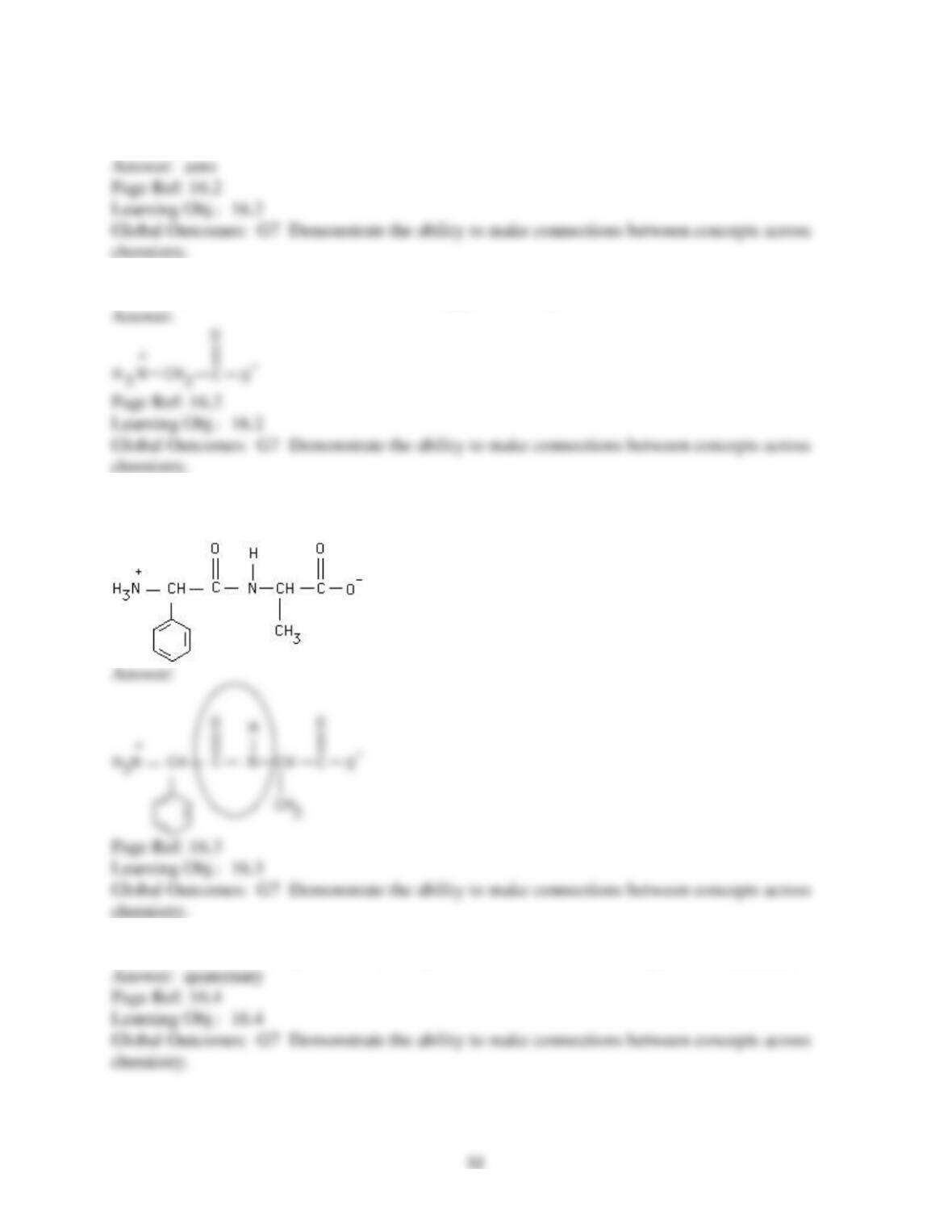
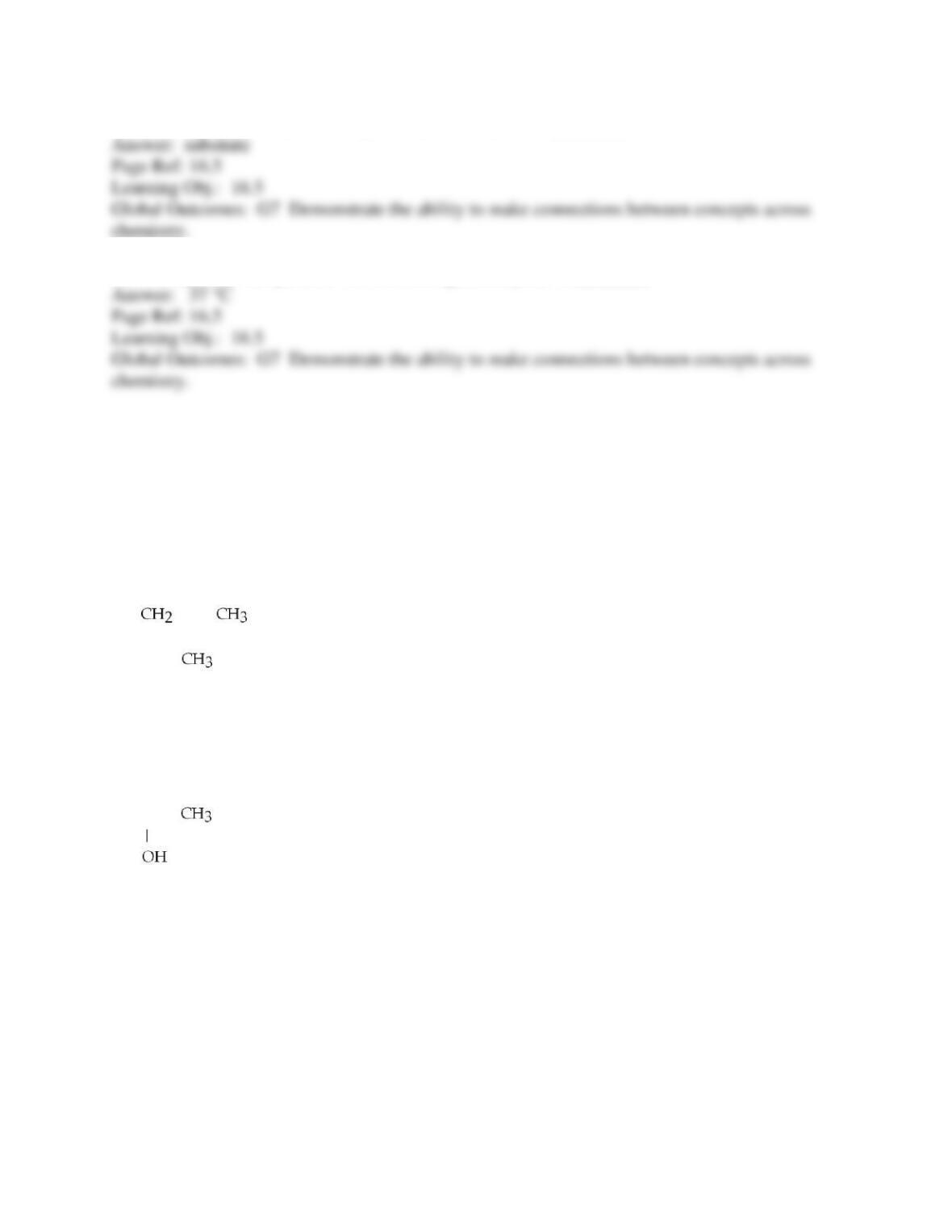
6) Write the condensed structural formula of glycine at its pI.
7) Circle the peptide bond in this structure.
8) The structural level represented by the presence of four units in hemoglobin is ________.
33
9) The molecules to which an enzyme binds are called the ________.
10) The optimum temperature for most biological enzymes is ________.
16.4 Matching Questions
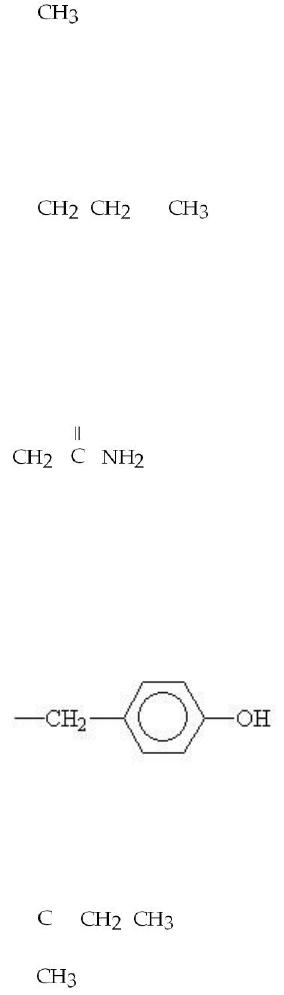
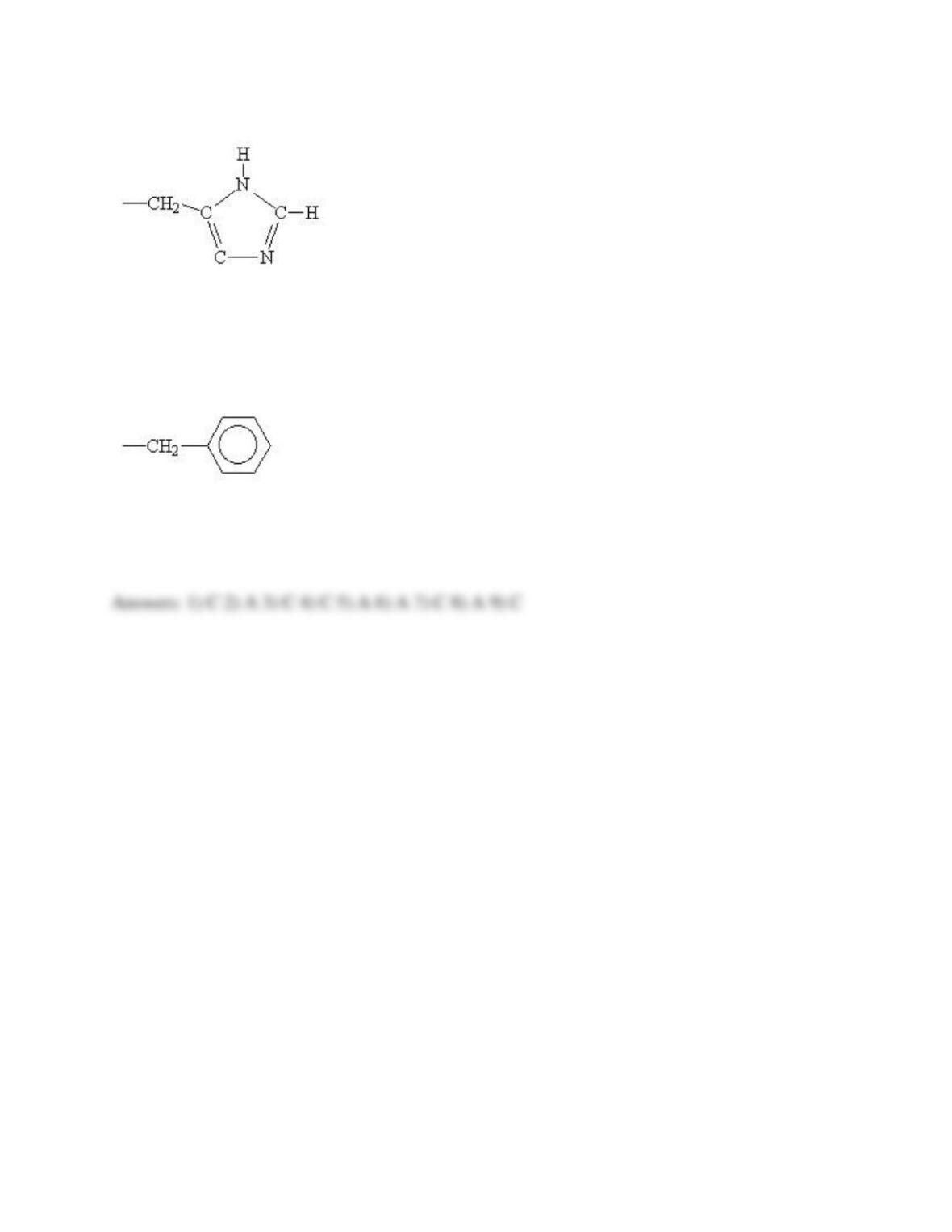
Would an amino acid with the given side chain be most likely to be found in the hydrophobic or
hydrophilic region of a protein?
A) hydrophilic
B) both
C) hydrophobic
1) – –CH–
∣
Page Ref: 16.1
Learning Obj.: 16.1
Global Outcomes: G7 Demonstrate the ability to make connections between concepts across
chemistry.
2) –CH–
Page Ref: 16.1
Learning Obj.: 16.1
Global Outcomes: G7 Demonstrate the ability to make connections between concepts across
chemistry.
34
3) –
Page Ref: 16.1
Learning Obj.: 16.1
Global Outcomes: G7 Demonstrate the ability to make connections between concepts across
chemistry.
4) – – –S–
Page Ref: 16.1
Learning Obj.: 16.1
Global Outcomes: G7 Demonstrate the ability to make connections between concepts across
chemistry.
5) O
– – –
Page Ref: 16.1
Learning Obj.: 16.1
Global Outcomes: G7 Demonstrate the ability to make connections between concepts across
chemistry.
6)
Page Ref: 16.1
Learning Obj.: 16.1
Global Outcomes: G7 Demonstrate the ability to make connections between concepts across
chemistry.
7) –H– –
|
Page Ref: 16.1
Learning Obj.: 16.1
Global Outcomes: G7 Demonstrate the ability to make connections between concepts across
chemistry.
35
8)
Page Ref: 16.1
Learning Obj.: 16.1
Global Outcomes: G7 Demonstrate the ability to make connections between concepts across
chemistry.
9)
Page Ref: 16.1
Learning Obj.: 16.1
Global Outcomes: G7 Demonstrate the ability to make connections between concepts across
chemistry.
Classify each protein by function.
A) structural
B) protection
C) transport
D) catalytic
E) contractile
10) trypsin for the hydrolysis of protein
Page Ref: 16.1
Learning Obj.: 16.1
Global Outcomes: G7 Demonstrate the ability to make connections between concepts across
chemistry.
11) lipoproteins in the blood
Page Ref: 16.1
Learning Obj.: 16.1
Global Outcomes: G7 Demonstrate the ability to make connections between concepts across
chemistry.

36
12) collagen in tendons and cartilage
Page Ref: 16.1
Learning Obj.: 16.1
Global Outcomes: G7 Demonstrate the ability to make connections between concepts across
chemistry.
13) antibodies
Page Ref: 16.1
Learning Obj.: 16.1
Global Outcomes: G7 Demonstrate the ability to make connections between concepts across
chemistry.
14) actin in muscle
Page Ref: 16.1
Learning Obj.: 16.1
Global Outcomes: G7 Demonstrate the ability to make connections between concepts across
chemistry.
Identify the structural level in each protein.
A) secondary structure
B) tertiary
C) quaternary
D) primary structure
15) The protein folds into a compact structure stabilized by interactions between R groups.
Page Ref: 16.4
Learning Obj.: 16.4
Global Outcomes: G7 Demonstrate the ability to make connections between concepts across
chemistry.
16) the combination of two or more protein molecules to form an active protein
Page Ref: 16.4
Learning Obj.: 16.4
Global Outcomes: G7 Demonstrate the ability to make connections between concepts across
chemistry.
17) pleated sheet
Page Ref: 16.4
Learning Obj.: 16.4
Global Outcomes: G7 Demonstrate the ability to make connections between concepts across
chemistry.
18) the sequence of amino acids
Page Ref: 16.4
Learning Obj.: 16.4
Global Outcomes: G7 Demonstrate the ability to make connections between concepts across
chemistry.
19) the structural level achieved when hydrogen bonds form between the carboxyl group of one
amino acid and the amino group of a different amino acid
Page Ref: 16.4
Learning Obj.: 16.4
Global Outcomes: G7 Demonstrate the ability to make connections between concepts across
chemistry.
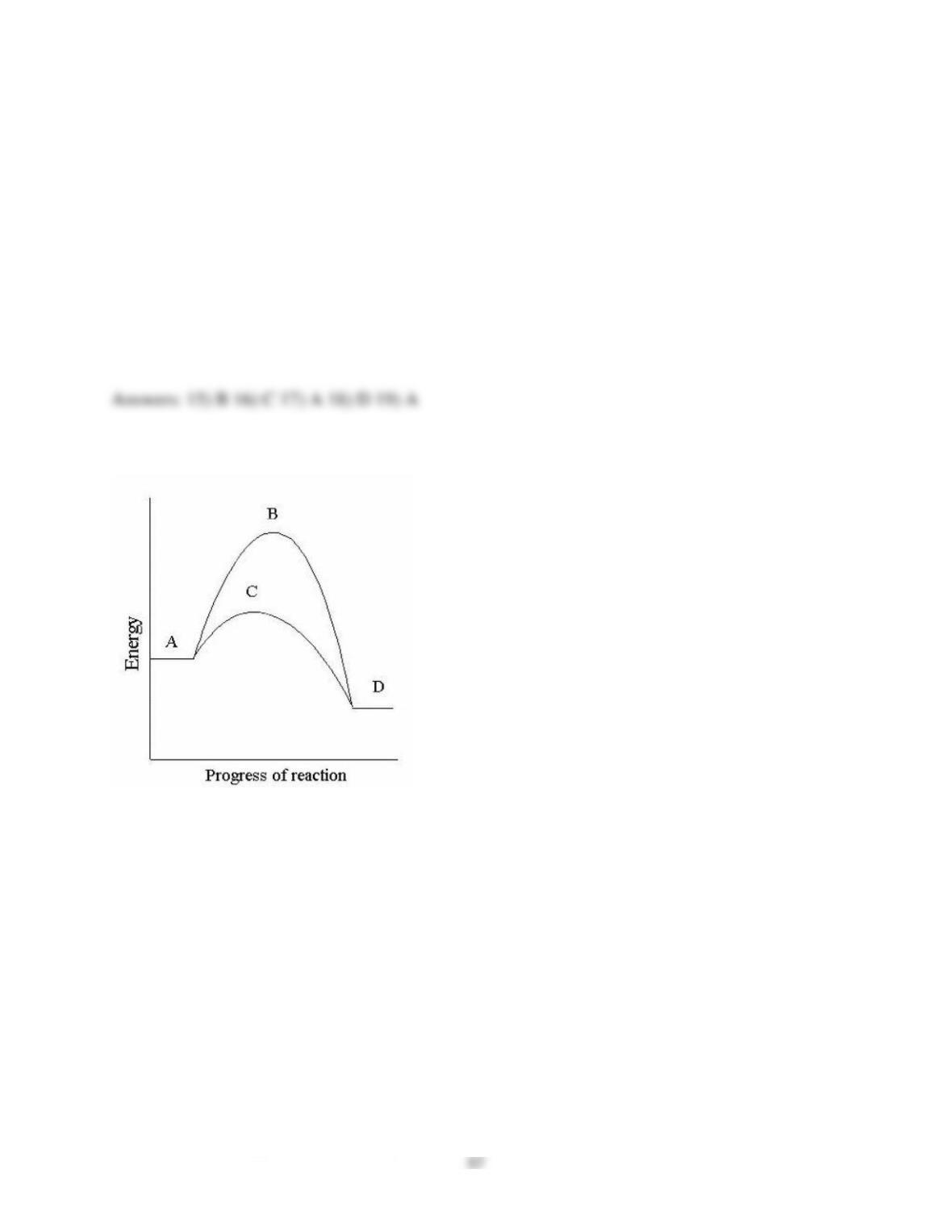
Identify each of the designated regions on the energy diagram for the conversion of a substrate
to product with and without an enzyme.
A) Region A
B) Region D
C) Region C
D) Region B
20) energy of the substrate
Page Ref: 16.5
Learning Obj.: 16.5
Global Outcomes: G4 Demonstrate the quantitative skills needed to succeed in chemistry.
21) energy of the product
Page Ref: 16.5
Learning Obj.: 16.5
Global Outcomes: G4 Demonstrate the quantitative skills needed to succeed in chemistry.
22) activation energy without the enzyme

Page Ref: 16.5
Learning Obj.: 16.5
Global Outcomes: G4 Demonstrate the quantitative skills needed to succeed in chemistry.
23) activation energy with the enzyme
Page Ref: 16.5
Learning Obj.: 16.5
Global Outcomes: G4 Demonstrate the quantitative skills needed to succeed in chemistry.
Match the correct term in enzyme action with each description.
A) lock-and-key model
B) active site
C) enzyme-substrate complex
24) the temporary combination of an enzyme with the compound on which it acts
Page Ref: 16.5
Learning Obj.: 16.5
Global Outcomes: G7 Demonstrate the ability to make connections between concepts across
chemistry.
25) the portion of an enzyme molecule where catalytic activity occurs
Page Ref: 16.5
Learning Obj.: 16.5
Global Outcomes: G7 Demonstrate the ability to make connections between concepts across
chemistry.
26) one theory that accounts for the unusual specificity of an enzyme
Page Ref: 16.5
Learning Obj.: 16.5
Global Outcomes: G7 Demonstrate the ability to make connections between concepts across
chemistry.

Identify the effect of the following on the activity of maltase, an enzyme that hydrolyzes maltose.
A) increases
B) has no effect
C) decreases
27) decreasing the concentration of maltose
Page Ref: 16.6
Learning Obj.: 16.6
Global Outcomes: G7 Demonstrate the ability to make connections between concepts across
chemistry.
28) adjusting the temperature to the optimum temperature
Page Ref: 16.6
Learning Obj.: 16.6
Global Outcomes: G7 Demonstrate the ability to make connections between concepts across
chemistry.
29) raising the pH to 11.0
Page Ref: 16.6
Learning Obj.: 16.6
Global Outcomes: G7 Demonstrate the ability to make connections between concepts across
chemistry.
30) increasing the concentration of maltase (enzyme) when the enzyme is saturated with
substrate
Page Ref: 16.6
Learning Obj.: 16.6
Global Outcomes: G7 Demonstrate the ability to make connections between concepts across
chemistry.
31) lowering the pH to 1.0
Page Ref: 16.6
Learning Obj.: 16.6
Global Outcomes: G7 Demonstrate the ability to make connections between concepts across
chemistry.

Identify the type of inhibition in each description.
A) competitive
B) noncompetitive
32) an inhibitor that resembles the structure of the substrate
Page Ref: 16.6
Learning Obj.: 16.6
Global Outcomes: G7 Demonstrate the ability to make connections between concepts across
chemistry.
33) Adding more substrate does not reverse the effect of this inhibitor.
Page Ref: 16.6
Learning Obj.: 16.6
Global Outcomes: G7 Demonstrate the ability to make connections between concepts across
chemistry.
34) The inhibition can be reversed by increasing the concentration of substrate.
Page Ref: 16.6
Learning Obj.: 16.6
Global Outcomes: G7 Demonstrate the ability to make connections between concepts across
chemistry.
35) The inhibitor does not resemble the substrate.
Page Ref: 16.6
Learning Obj.: 16.6
Global Outcomes: G7 Demonstrate the ability to make connections between concepts across
chemistry.