Larson_Calculus_10e ch16sec04
MULTIPLE CHOICE
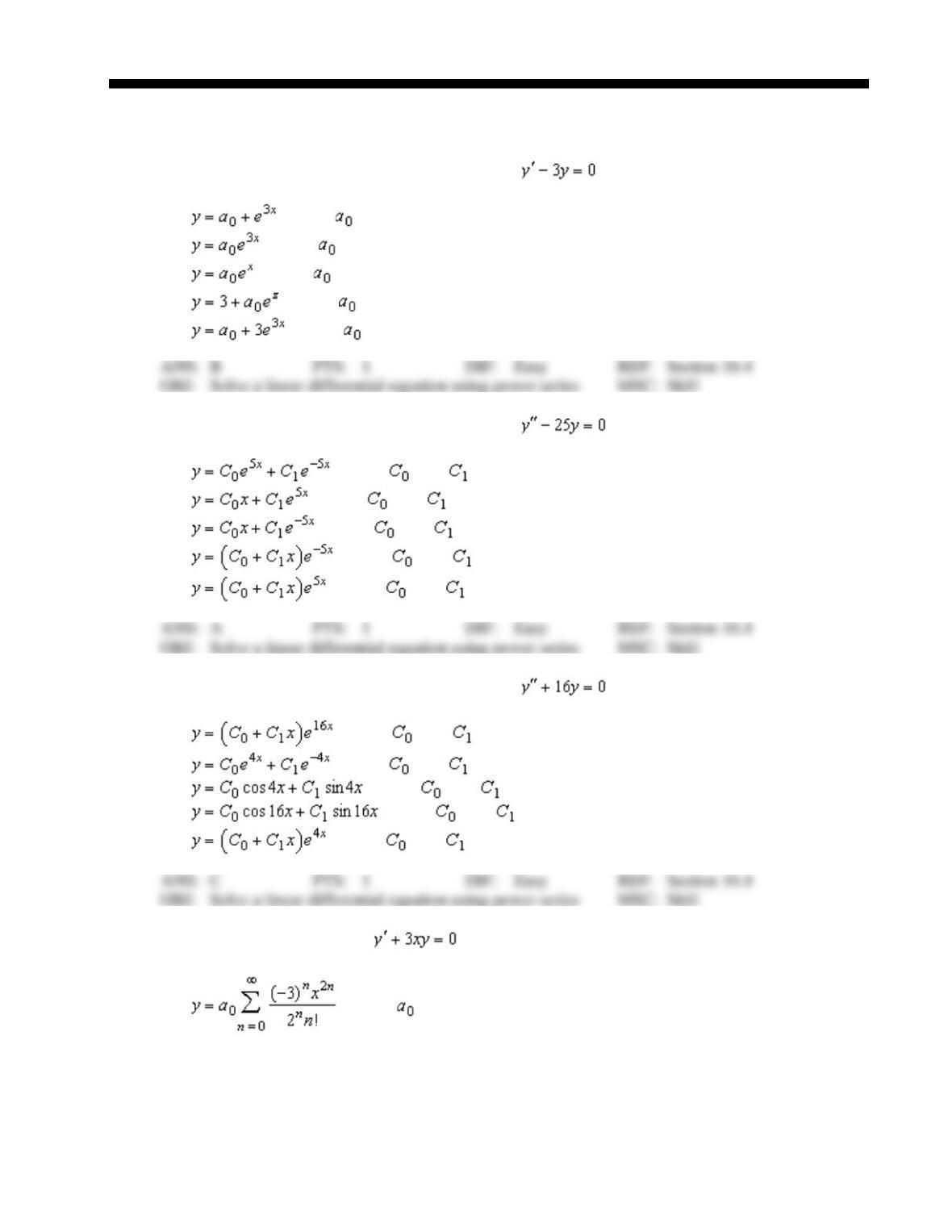
1. Use a power series to solve the differential equation .
a.
, where is an arbitrary constant
b.
, where is an arbitrary constant
c.
, where is an arbitrary constant
d.
, where is an arbitrary constant
e.
, where is an arbitrary constant
2. Use a power series to solve the differential equation .
a.
, where and are arbitrary constants
b.
, where and are arbitrary constants
c.
, where and are arbitrary constants
d.
, where and are arbitrary constants
e.
, where and are arbitrary constants
3. Use a power series to solve the differential equation .
a.
, where and are arbitrary constants
b.
, where and are arbitrary constants
c.
, where and are arbitrary constants
d.
, where and are arbitrary constants
e.
, where and are arbitrary constants
4. Solve the differential equation .
a.
, where is an arbitrary constant
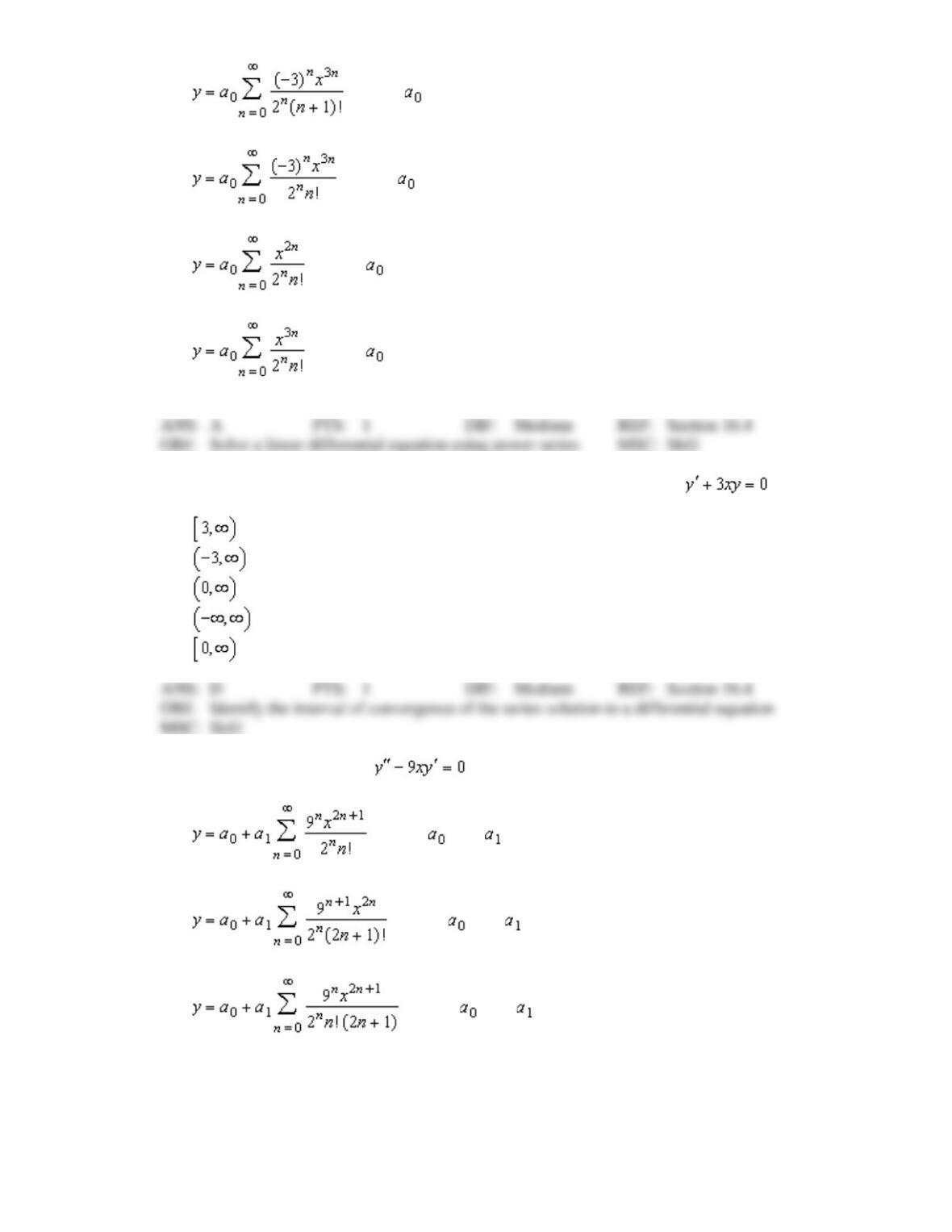
b.
, where is an arbitrary constant
c.
, where is an arbitrary constant
d.
, where is an arbitrary constant
e.
, where is an arbitrary constant
5. Find the interval of convergence for the solution of the differential equation .
a.
b.
c.
d.
e.
6. Solve the differential equation .
a.
, where and are arbitrary constants
b.
, where and are arbitrary constants
c.
, where and are arbitrary constants
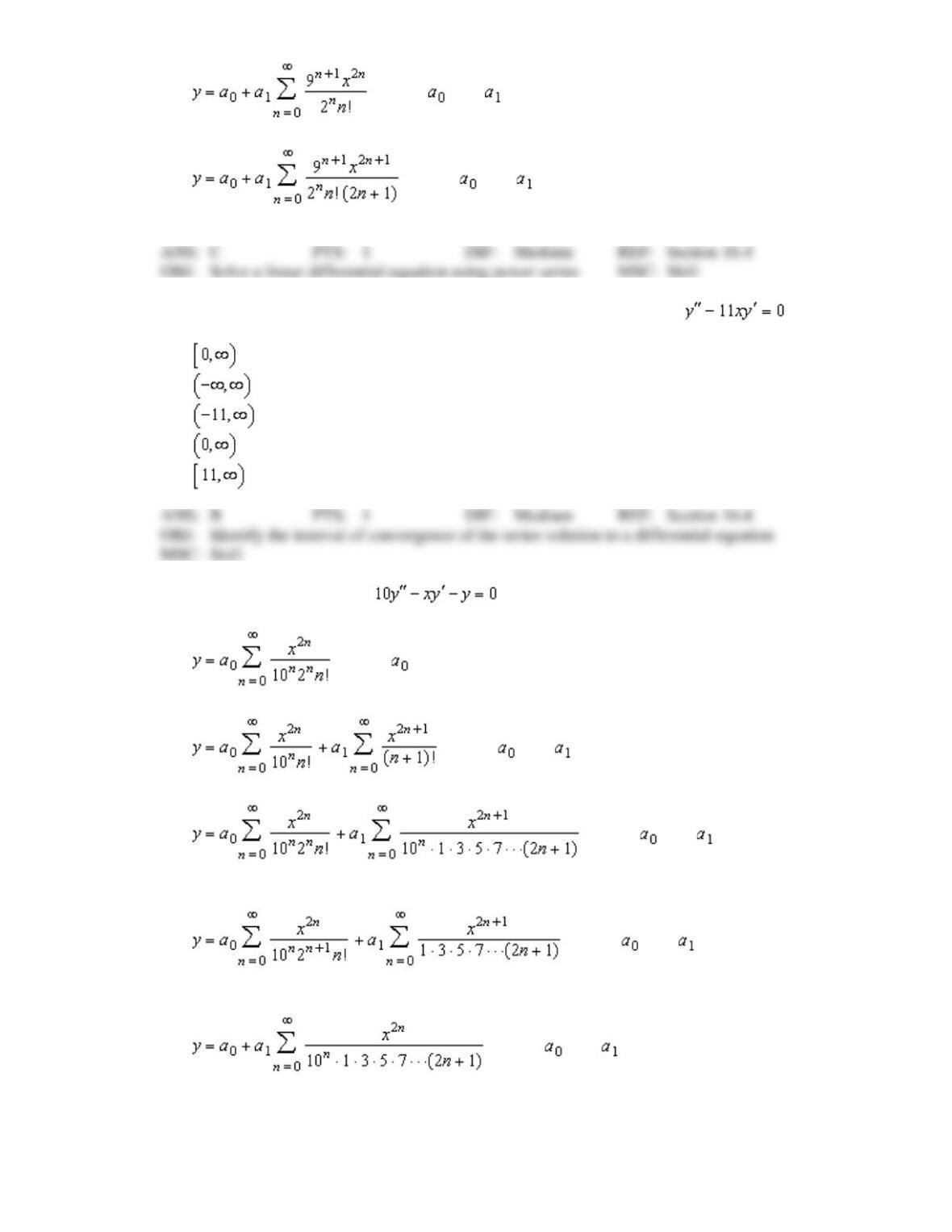
d.
, where and are arbitrary constants
e.
, where and are arbitrary constants
7. Find the interval of convergence for the solution of the differential equation .
a.
b.
c.
d.
e.
8. Solve the differential equation .
a.
, where is an arbitrary constant
b.
, where and are arbitrary constants
c.
, where and are arbitrary
constants
d.
, where and are arbitrary
constants
e.
, where and are arbitrary constants
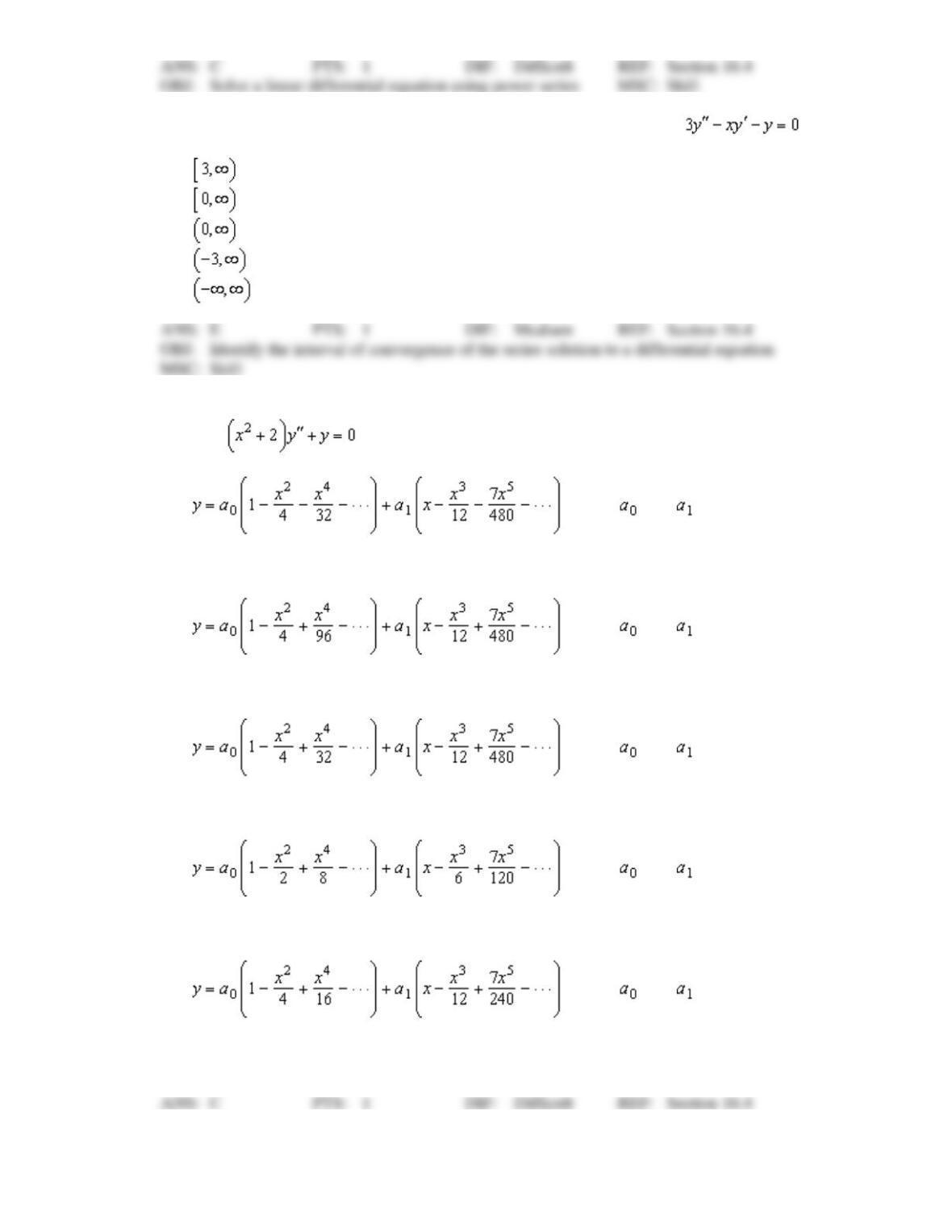
9. Find the interval of convergence for the solution of the differential equation .
a.
b.
c.
d.
e.
10. Find the first six terms of the power series representing independent solutions of the differential
equation .
a.
, where and are arbitrary
constants
b.
, where and are arbitrary
constants
c.
, where and are arbitrary
constants
d.
, where and are arbitrary
constants
e.
, where and are arbitrary
constants
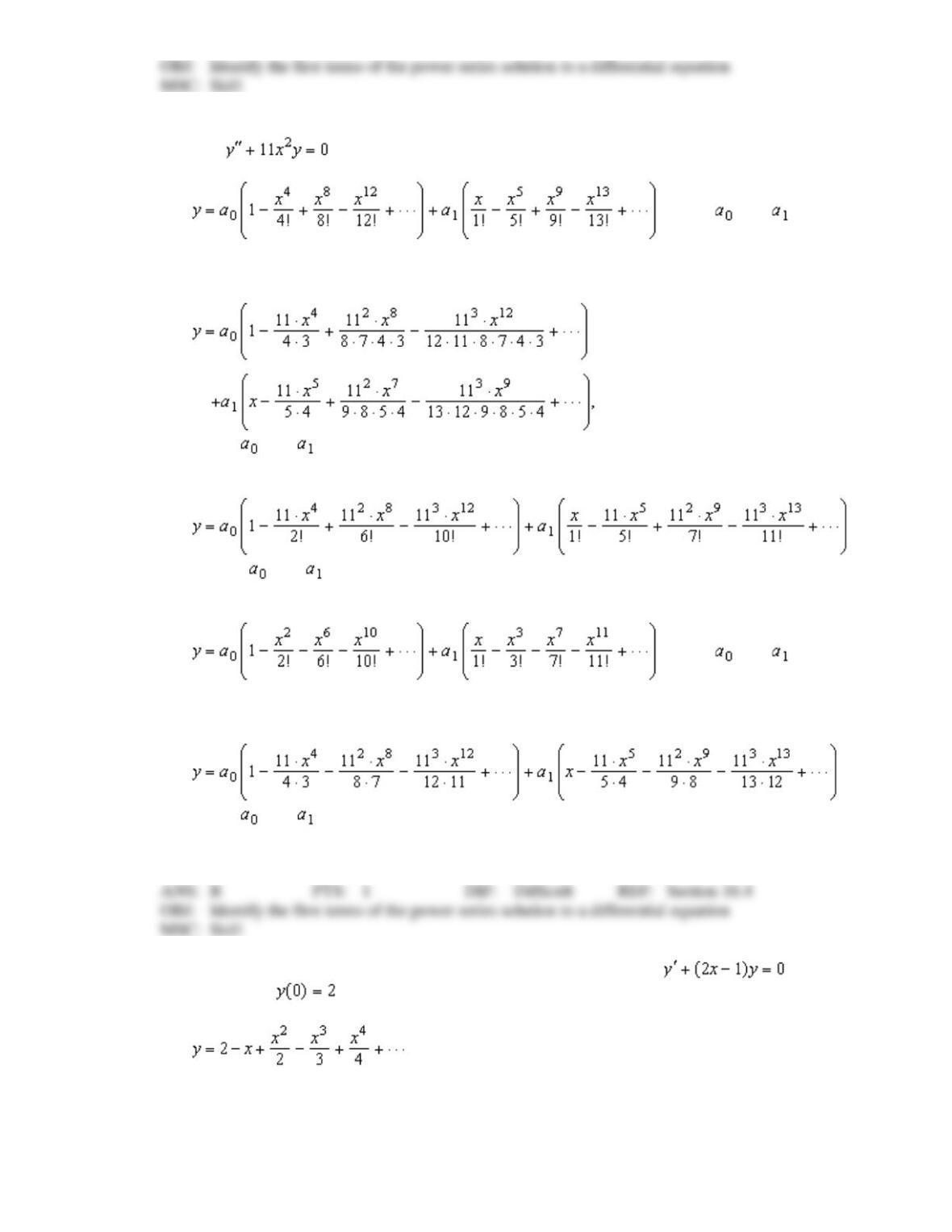
11. Find the first eight terms of the power series representing independent solutions of the differential
equation .
a.
, where and are
arbitrary constants
b.
where and are arbitrary constants
c.
, where and are arbitrary constants
d.
, where and are
arbitrary constants
e.
,
where and are arbitrary constants
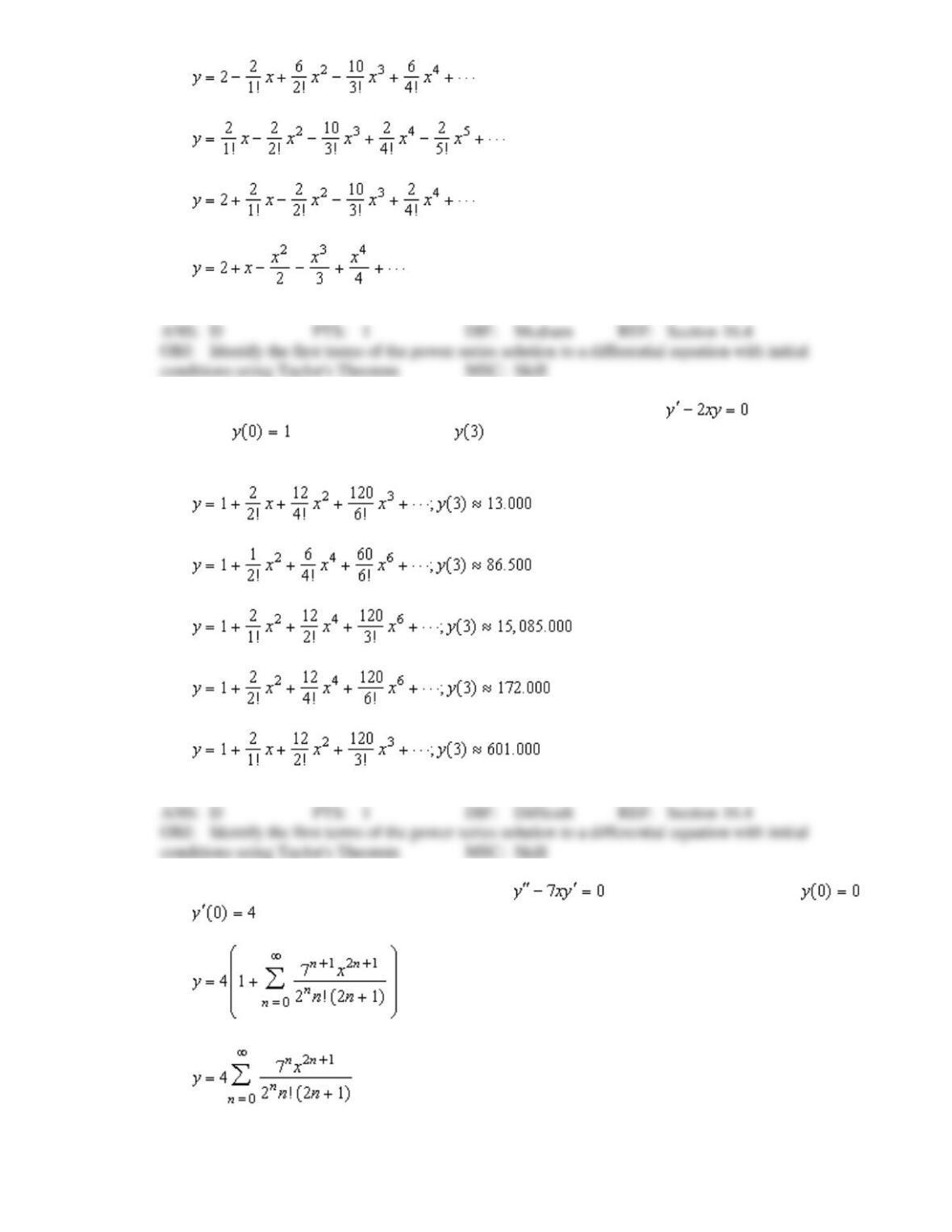
12. Use Taylor’s Theorem to find the first five terms of the series solution of given the
initial condition .
a.
b.
c.
d.
e.
13. Use Taylor’s Theorem to find the first four terms of the series solution of given the initial
condition and use it to calculate . Round your answer to three decimal places wherever
applicable.
a.
b.
c.
d.
e.
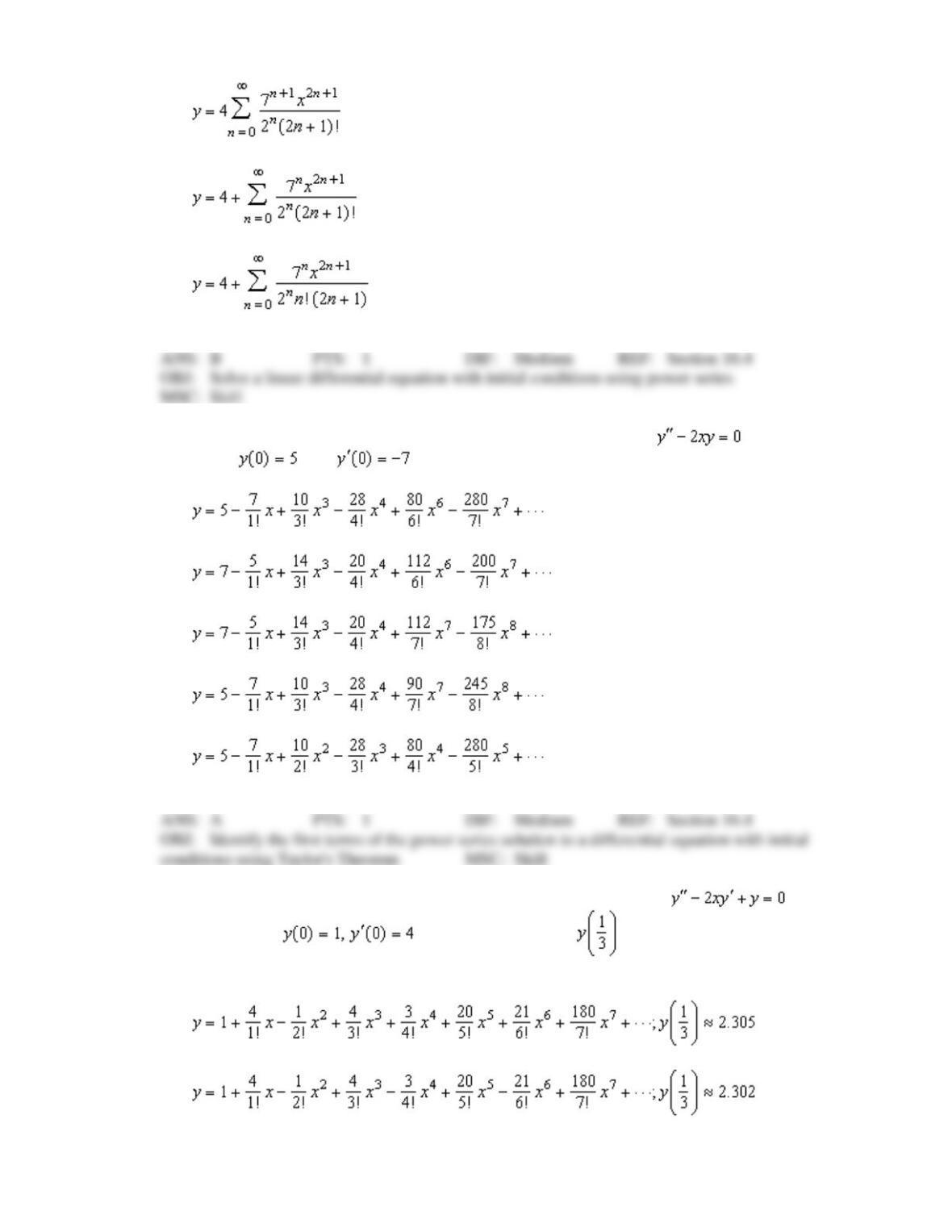
14. Find the series solution of the differential equation given the initial conditions
and .
a.
b.
c.
d.
e.
15. Use Taylor’s Theorem to find the first six terms of the series solution of given the initial
conditions and .
a.
b.
c.
d.
e.
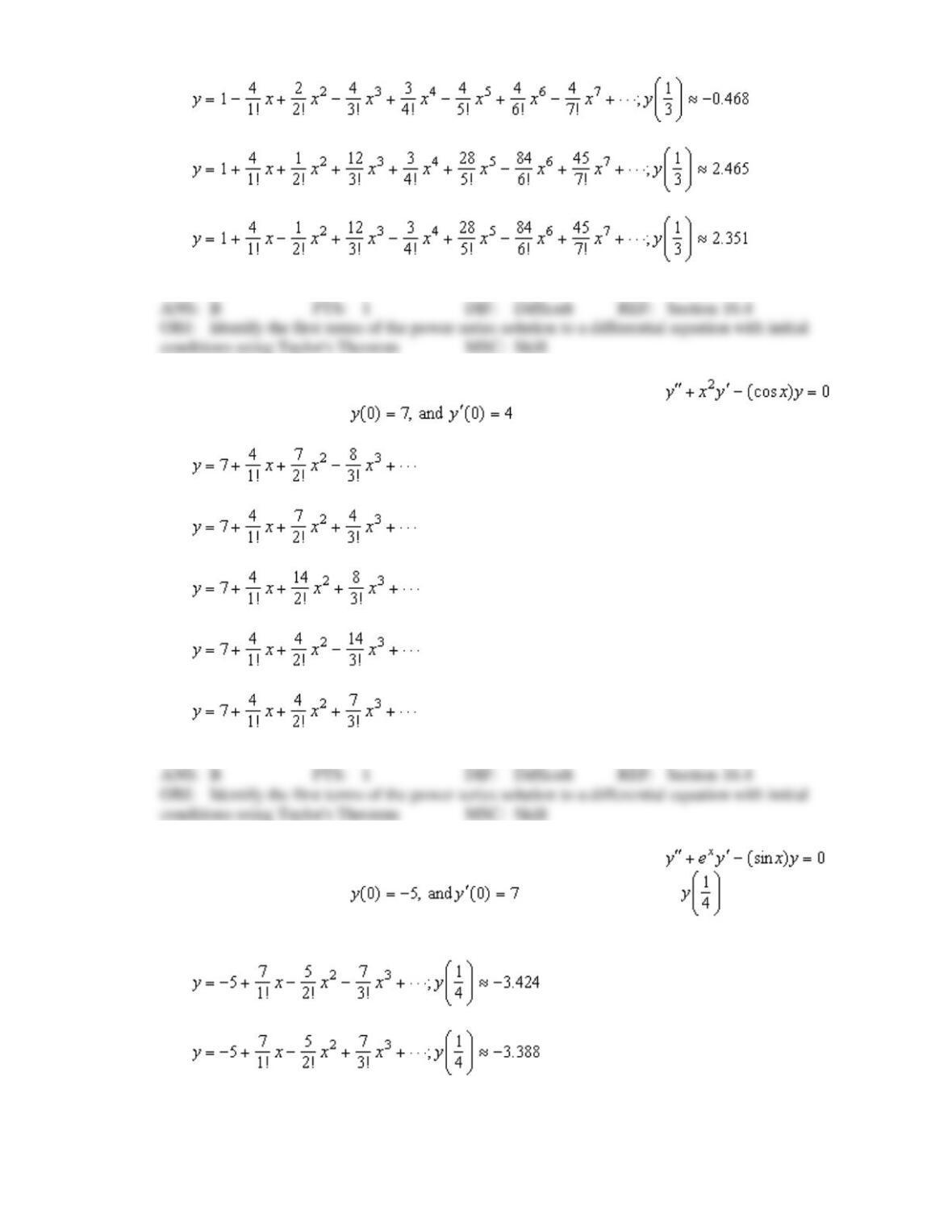
16. Use Taylor’s Theorem to find the first eight terms of the series solution of given the
initial conditions and use it to calculate . Round your answer to three
decimal places.
a.
b.
c.
d.
e.
17. Use Taylor’s Theorem to find the first four terms of the series solution of
given the initial conditions .
a.
b.
c.
d.
e.
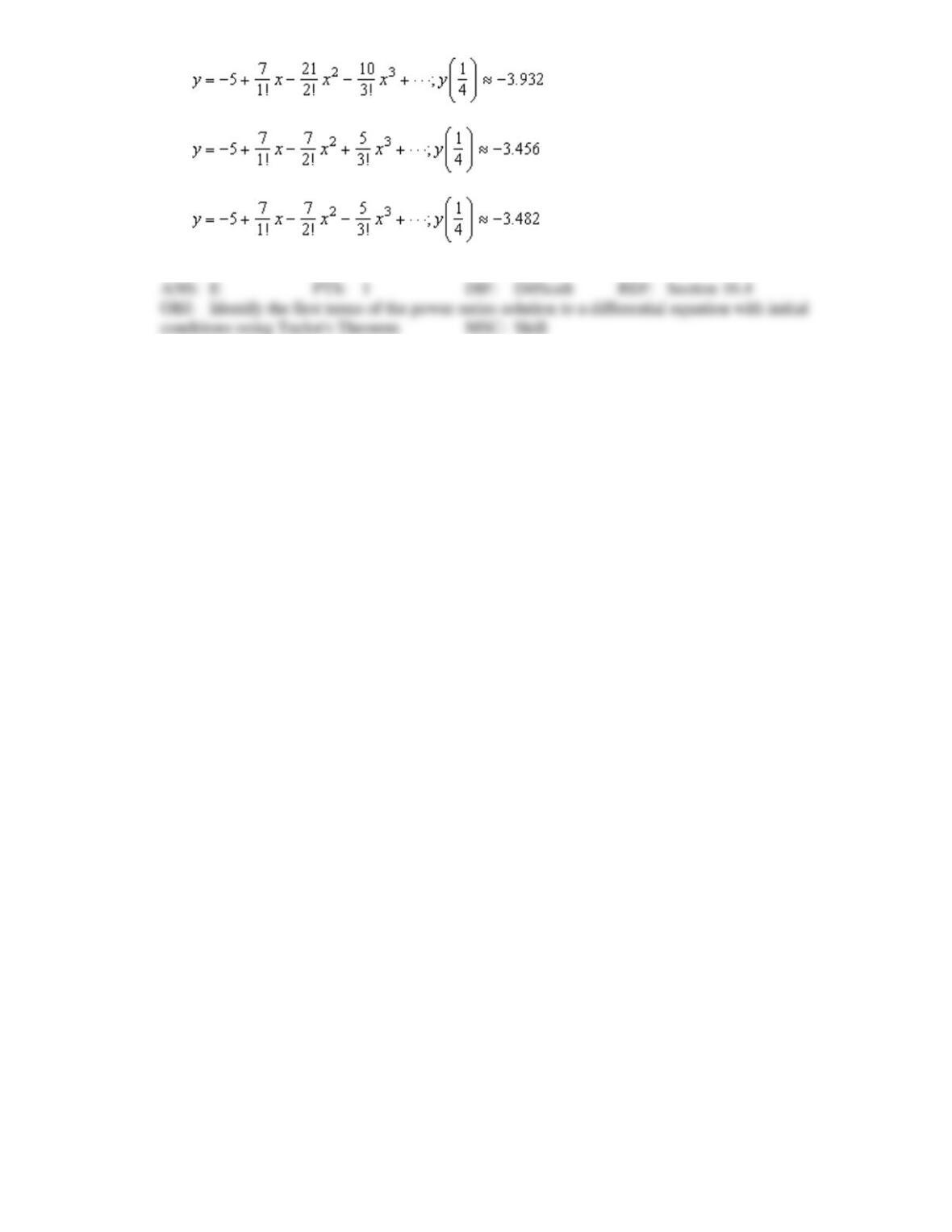
18. Use Taylor’s Theorem to find the first four terms of the series solution of
given the initial conditions and use it to calculate . Round your answer
to three decimal places.
a.
b.
c.
d.
e.