General, Organic & Biological Chemistry, 5e (Timberlake)
Chapter 16 Carboxylic Acids and Esters
16.1 Multiple-Choice Questions
1) Which functional group is a carboxylic acid?
A) – OH
B) O
– C – OH
C) O
– C – O –
D) OH
|
– C – OH
|
E) – CH2 – OH
2) The functional group in acetic acid is called the
A) hydroxyl group.
B) aldehyde group.
C) carbonyl group.
D) carboxyl group.
E) ester group.
3) Which of the following is found in vinegar?
A) nitric acid
B) formic acid
C) acetic acid
D) propionic acid
E) butyric acid
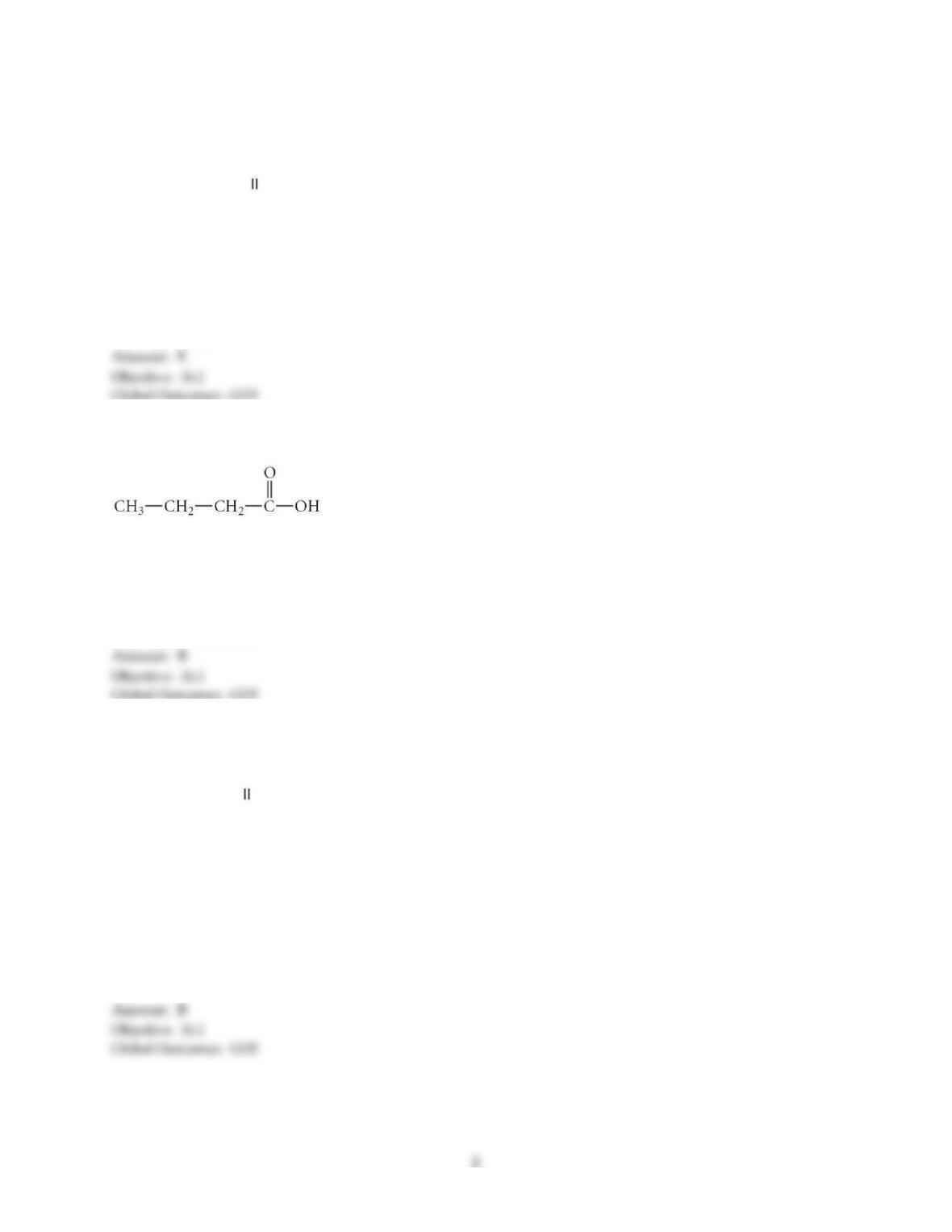
4) What is the common name of the compound?
O
CH3 – CH2 – CH2 – C – OH is
A) acetic acid
B) propanoic acid
C) propionic acid
D) butanoic acid
E) butyric acid
5) What is the IUPAC name of the following compound?
A) propyl butanoate
B) butanoic acid
C) 1-butanal
D) 1-butanoate
E) propyl methanoate
6) In the compound below, the hydroxyl group is in which position?
O
CH3 – CH2 – CH – C – OH
|
OH
A) 1
B) 2
C) 3
D) 4
E) 5
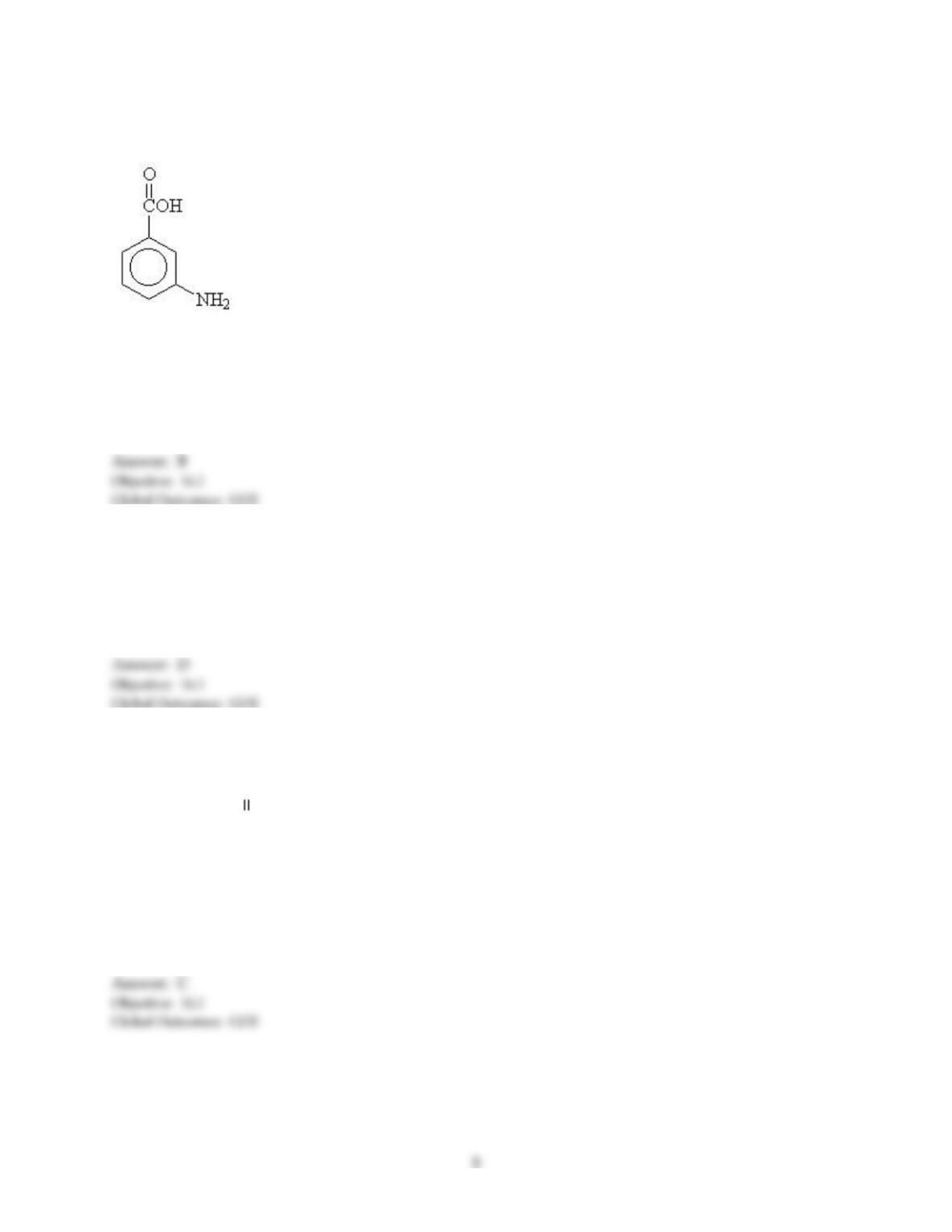
7) The compound below is named
A) benzoic acid amine.
B) 3-aminobenzoic acid.
C) 2-acid aniline.
D) benzamide.
E) 2-aminobenzoic acid.
8) Which of these functional groups is likely to give a sour taste to a food?
A) ester
B) ether
C) ketone
D) carboxylic acid
E) thiol
9) What is the IUPAC name for this compound?
CH3 O
|
CH3 – CH – CH2 – C – OH
A) pentanoic acid
B) γ-methylbutanoic acid
C) 3-methylbutanoic acid
D) γ-methyl butyric acid
E) 2-methyl-4-butanoic acid
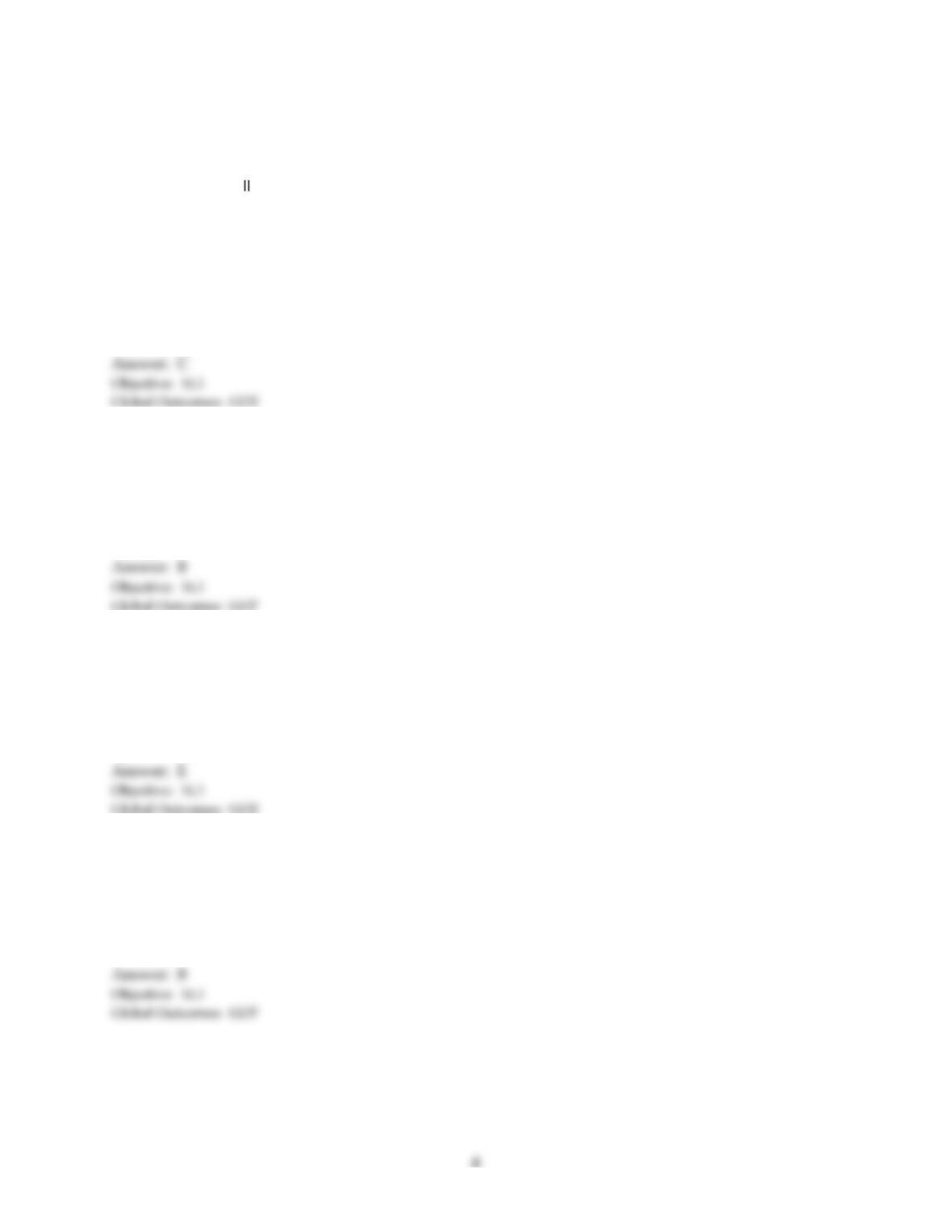
10) What is the IUPAC name for this compound?
CH3 O
|
CH3 – CH – CH2 – C – OH
A) pentanoic acid
B) 2-methylbutanoic acid
C) 3-methylbutanoic acid
D) 2-methyl butyric acid
E) 2-methyl-4-butanoic acid
11) What kind of taste do carboxylic acids have?
A) sweet
B) sour
C) fruity
D) slippery
E) oily
12) W hat is the common name for ethanoic acid?
A) butyric acid
B) formic acid
C) citric acid
D) stearic acid
E) acetic acid
13) What is the irritating acid found in ant and bee stings?
A) acetic acid
B) formic acid
C) citric acid
D) butyric acid
E) stearic acid
14) Which organic acid accounts for the odor of rancid butter?
A) propionic acid
B) acetic acid
C) formic acid
D) butyric acid
E) ethanoic acid
15) In the common naming convention for carboxylic acids, what is the correct Greek letter used for the
carbon adjacent to the carboxyl group?
A) α
B) β
C) γ
D) δ
E) ε
16) What therapeutic use is made of α-hydroxy acids?
A) ulcer treatment
B) fever reduction
C) antibiotic
D) reduction of skin pigmentation
E) sunscreen
17) What significant side effect is seen with α-hydroxy acid use?
A) UV sensitivity
B) increased thirst
C) nausea
D) increased susceptibility to infection
E) gastric irritation
18) What α–hydroxy acid is found predominantly in grapes?
A) tartaric acid
B) citric acid
C) lactic acid
D) glycolic acid
E) benzoic acid
19) What is the method of preparing carboxylic acids from alcohols or aldehydes?
A) reduction
B) hydration
C) oxidation
D) saponification
E) hydrolysis
20) A carboxylic acid is prepared from an aldehyde by
A) oxidation.
B) reduction.
C) hydrolysis.
D) neutralization.
E) hydrogenation.
21) The structural formula of the carboxylic acid produced by the oxidation of
2,2-dimethyl-1-propanol is
A) CH3 O
|
CH3 C – CH
|
CH3
B) CH3 O CH3
| |
CH3 C – C – O C CH3
| |
CH3 CH3
C) O
CH3CH2CH2CH2 C OH
D) CH3 O
|
CH3 C – C OH
|
CH3
E) CH3
|
CH3 C – OH
|
CH3
22) A carboxylic acid is named in the IUPAC system by replacing the -e in the name of the parent alkane
with
A) -oic acid.
B) -oic.
C) -carboxylic acid.
D) acid.
E) -oate.
23) Which carboxylic acid in the list below is an aromatic carboxylic acid?
A) acetic acid
B) benzoic acid
C) butyric acid
D) benzene
E) citric acid
24) What kind of intermolecular bonding occurs between carboxylic acids?
A) ionic bonding
B) nonpolar bonding
C) covalent bonding
D) hydrogen bonding
E) charge-transfer bonding
25) Why do carboxylic acids have higher boiling points than similar alcohols or aldehydes?
A) They form dimers that are relatively stable.
B) They are more water soluble.
C) They have higher molecular weights.
D) They have an additional oxygen atom.
E) The carboxylic acid chain is not linear.
26) What happens to water solubility as chain length increases in carboxylic acids?
A) It increases.
B) It decreases.
C) It stays the same.
27) What is the common use of monosodium glutamate?
A) as a preservative
B) as a disinfectant
C) as an anti-pyretic
D) as a flavor enhancer
E) as a spoilage inhibitor
28) What common use is made of sodium propionate and sodium benzoate?
A) flavor enhancer
B) preservative
C) pH adjuster
D) disinfectant
E) decongestant
29) What metabolic product of pyruvic acid is formed anaerobically during exercise?
A) lactic acid
B) citric acid
C) malic acid
D) acetic acid
E) β-ketoglutaric acid
30) Which of these is an acid formed in the citric acid cycle?
A) acetic acid
B) propionic acid
C) α-ketoglutaric acid
D) benzoic acid
E) palmitic acid
31) When compared to sulfuric acid, how strong are carboxylic acids?
A) stronger
B) just as strong
C) weaker
D) not acidic at all
32) In water solution, how does dilute acetic acid behave?
A) as a strong acid
B) as a weak acid
C) as a strong base
D) as a weak base
E) as a neutral compound
33) Which of the following is the reaction for the ionization of β-hydroxypropanoic acid in water?
A) O OH
|
HO – CH2 – CH2 – C – OH + H2O ↔ HO – CH2 – CH2 – CH – OH + H+
B) O O
HO – CH2 – CH2 – C – OH + H2O ↔ HO – CH2 – CH2 – C – O– + H3O+
C) O O
CH3 – CH – C – OH + H2O ↔ CH3 – CH – C – O–
+ H3O+
| |
OH OH
D) O O
HO – CH2 – CH2 – C – OH + 2 H2O ↔ –OCH2CH2 C O– + 2 H3O+
E) O O
CH3 CH C OH + H2O ↔ CH3 – CH – C – OH
+ H3O+
| |
OH O–
34) The neutralization of formic acid by NaOH produces
A) sodium formate as the only product.
B) formate ion and hydronium ion.
C) sodium formaldehyde.
D) methyl alcohol.
E) sodium formate and H2O.
11
35) Which of the following compounds is most soluble in water?
A) CH3 – CH2 – CH3
B) CH3 – CH2 – CH2
– O – CH3
C) CH3 – CH2 – CH2
– CH2 – OH
D) O
CH3 – CH2 – CH2
– CH2 – C – OH
E) O
CH3 – C – OH
36) Which of the following is the reaction for the neutralization of β-hydroxybutyric acid with NaOH?
A) OH O OH O
| |
CH3 – CH – CH2 – C- OH + NaOH → CH3 – CH – CH2 – C – O– Na+ + H2O
B) OH O OH O
| |
CH3 – CH – CH2 – C- OH + NaOH → CH3 – C – CH2 – C – OH + NaH
|
OH
C) OH O OH O
| |
CH3 – CH2 – CH – C- OH + NaOH → CH3 – CH2 – CH – C – O– Na+ + H2O
D) OH O O– Na+ O
| |
CH3 – CH – CH2 – C- OH + 2 NaOH → CH3 – CH – CH2 – C – O– Na+ + 2 H2O
E) O O
CH3 – CH2 – CH – C- OH + 2 NaOH → CH3 – CH2 – CH – C – O– Na+ + 2 H2O
| |
OH OH
37) Which compound below contains an ester functional group?
A) OH
|
CH3 – CH – CH2 – CH3
B) CH3 – CH2 – O – CH2– CH3
C) O
H – C – O – CH2– CH3
D) O
CH3 – C – CH2 – CH3
E) O
CH3 – C – OH
38) What is the product of the reaction of pentanoic acid with ethanol in the presence of a strong acid?
A) pentyl ethanoate
B) ethyl pentanoate
C) pentyl acetate
D) heptanoic acid
39) This functional group is known as a(n)
O
– C – O – C
A) ester.
B) carboxylic acid.
C) alcohol.
D) aldehyde.
E) acetal.