Larson_Calculus_10e ch16sec03
MULTIPLE CHOICE
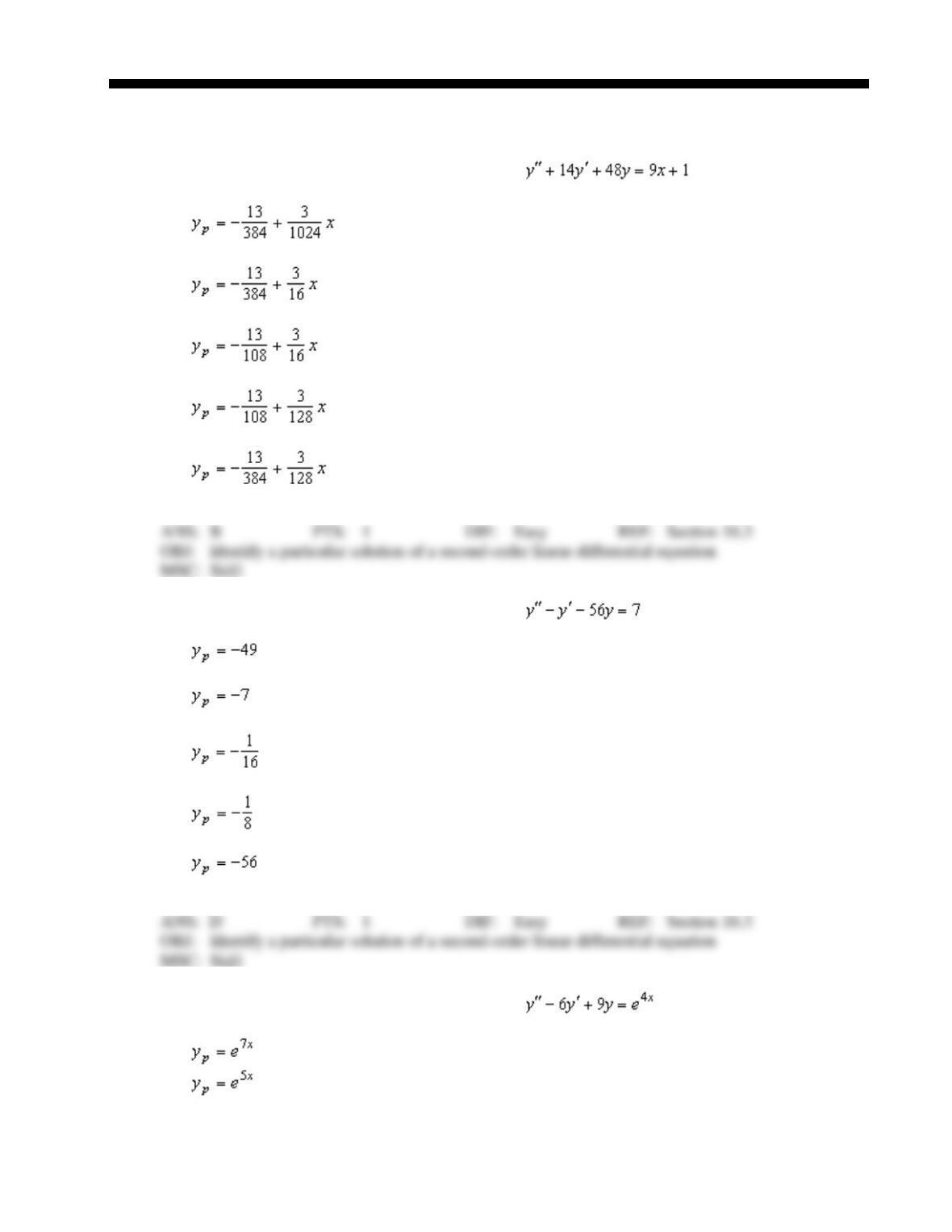
1. Find a particular solution of the differential equation .
a.
b.
c.
d.
e.
2. Find a particular solution of the differential equation .
a.
b.
c.
d.
e.
3. Find a particular solution of the differential equation .
a.
b.
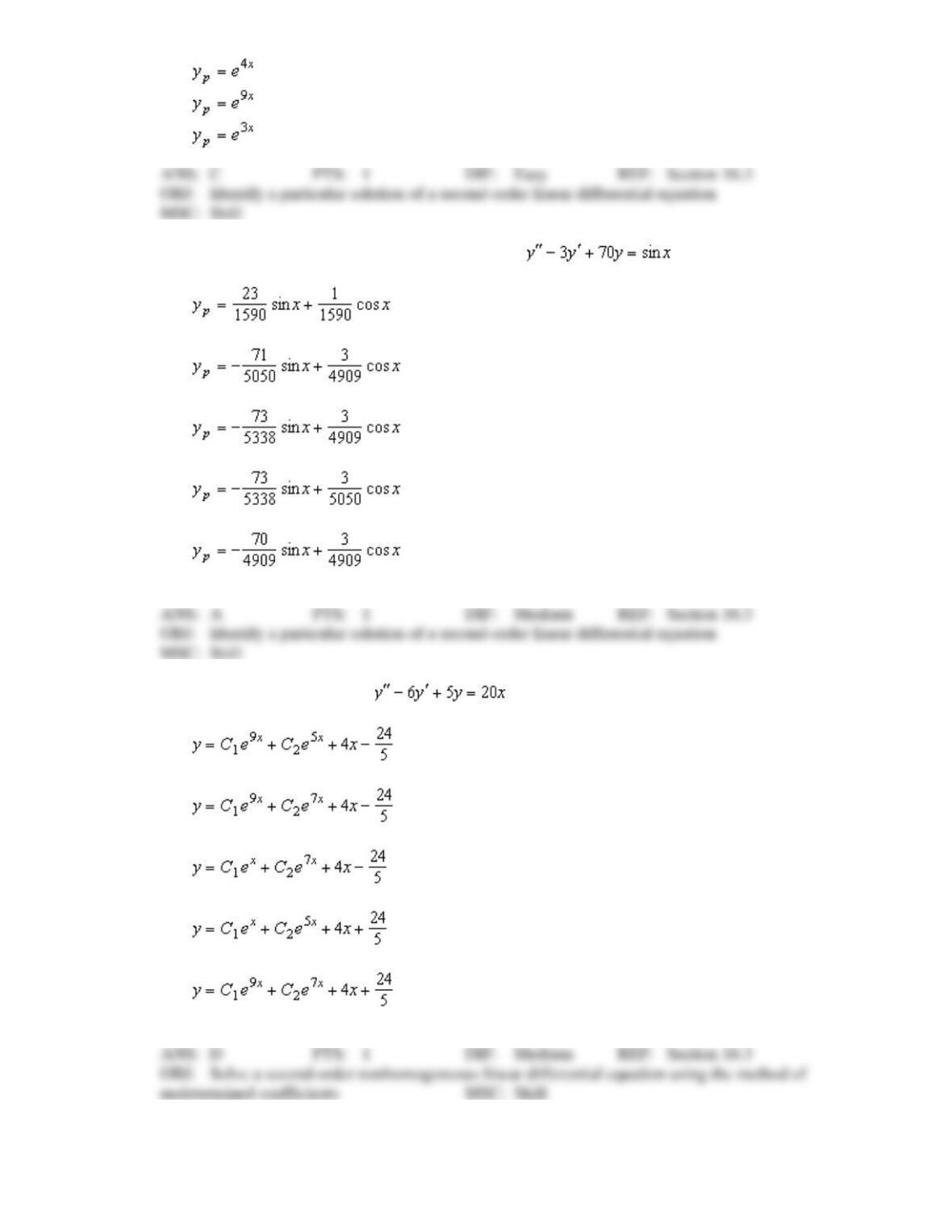
c.
d.
e.
4. Find a particular solution of the differential equation .
a.
b.
c.
d.
e.
5. Solve the differential equation by the method of undetermined coefficients.
a.
b.
c.
d.
e.
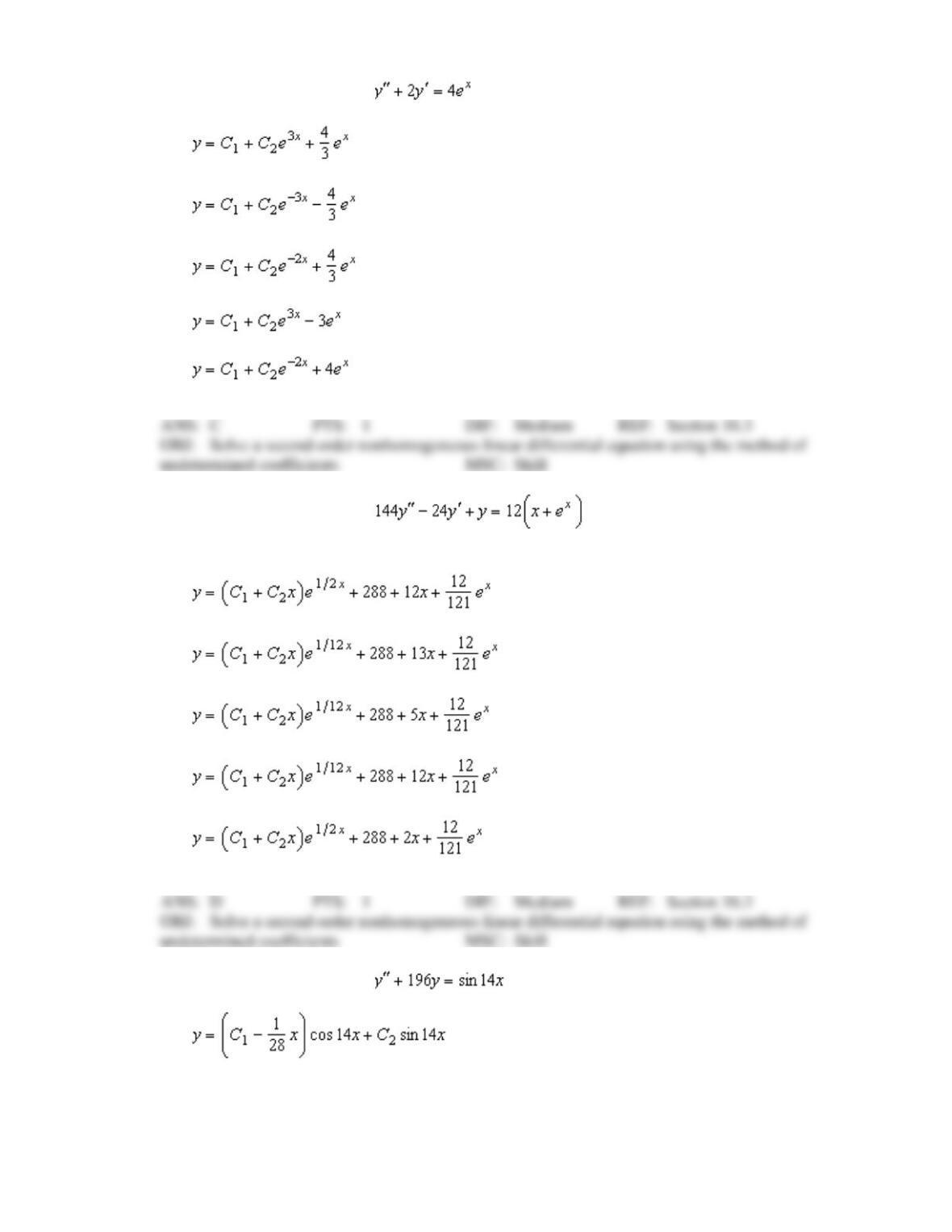
6. Solve the differential equation by the method of undetermined coefficients.
a.
b.
c.
d.
e.
7. Solve the differential equation by the method of undetermined
coefficients.
a.
b.
c.
d.
e.
8. Solve the differential equation by the method of undetermined coefficients.
a.
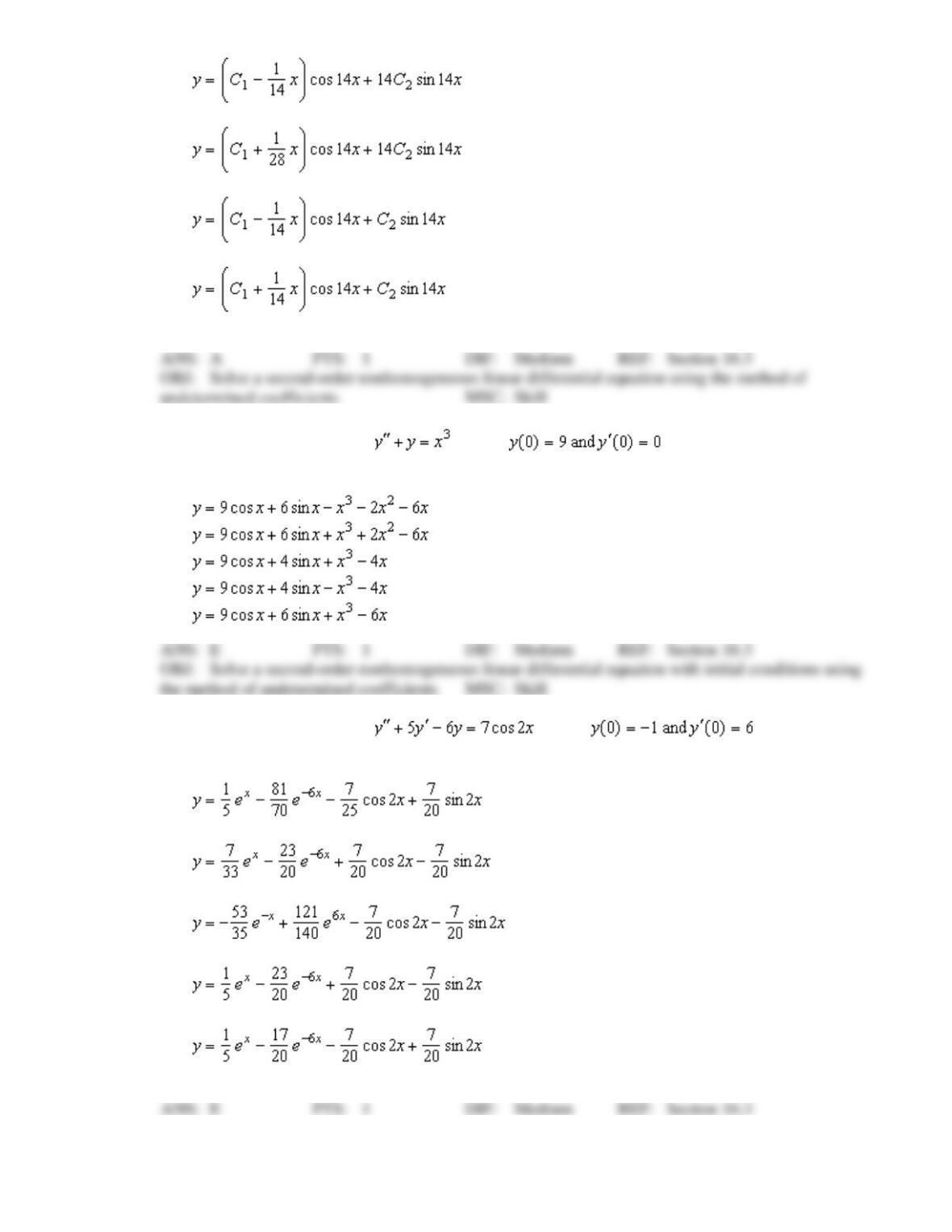
b.
c.
d.
e.
9. Solve the differential equation , where by the method of
undetermined coefficients.
a.
b.
c.
d.
e.
10. Solve the differential equation , where by the method
of undetermined coefficients.
a.
b.
c.
d.
e.
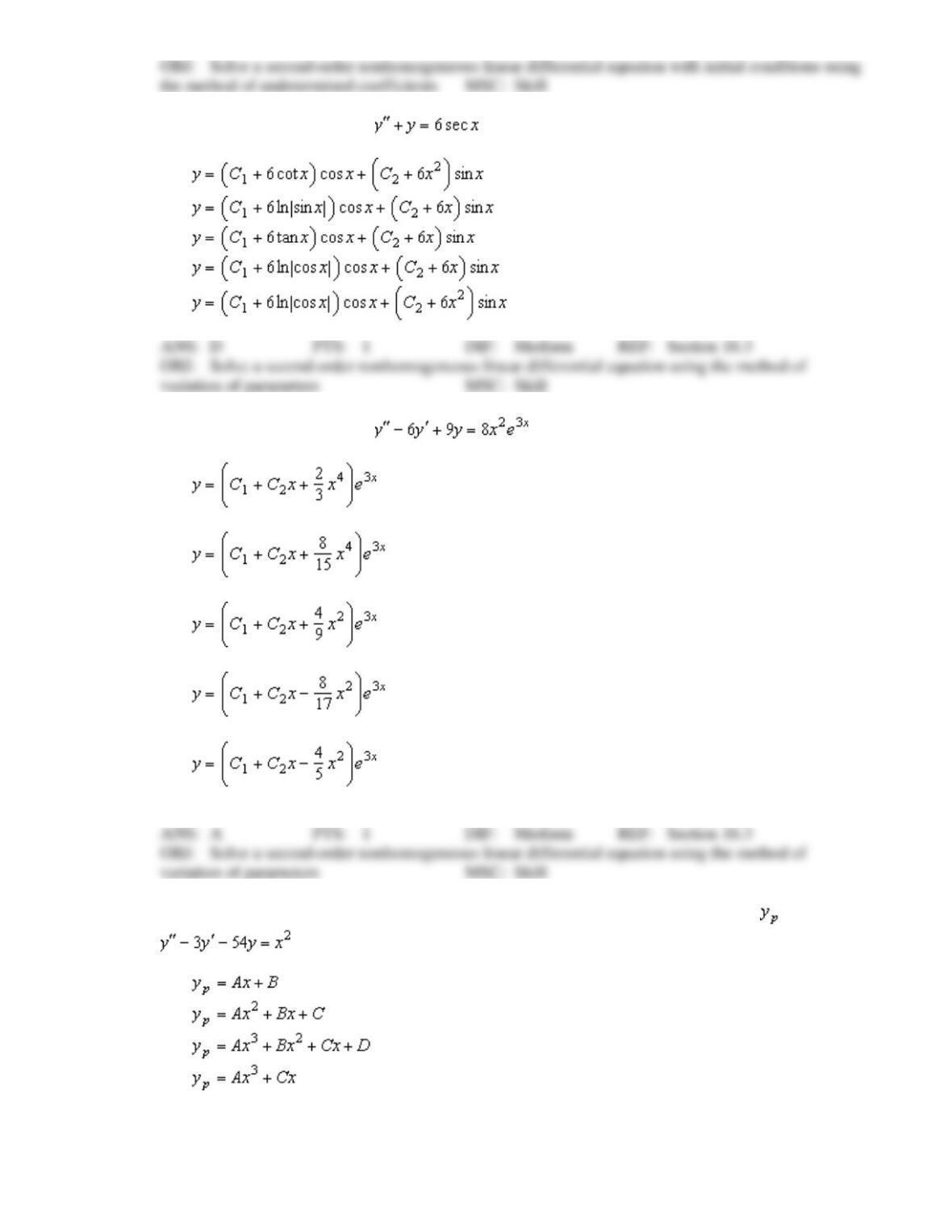
11. Solve the differential equation by the method of variation of parameters.
a.
b.
c.
d.
e.
12. Solve the differential equation by the method of variation of parameters.
a.
b.
c.
d.
e.
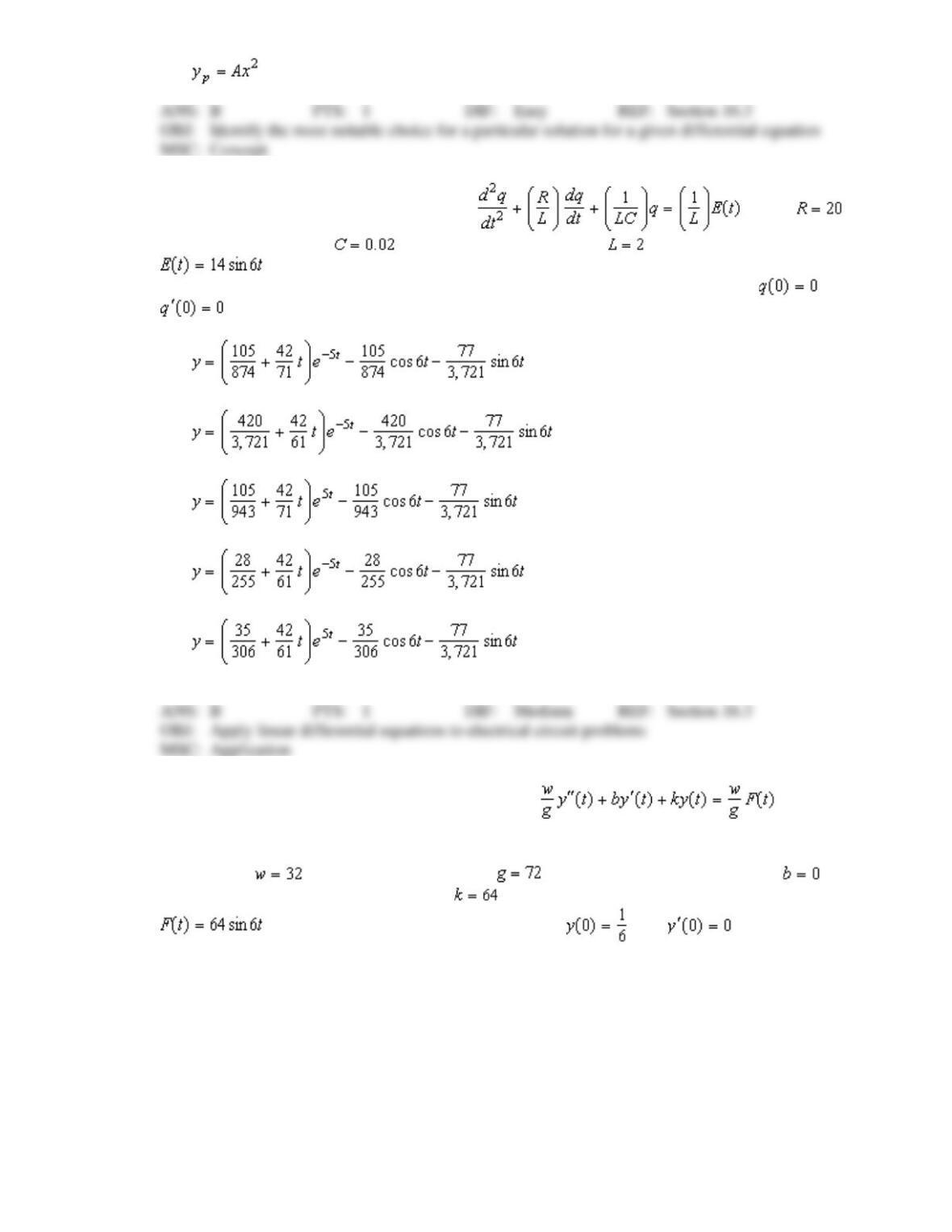
13. Using the method of undetermined coefficients, determine the most suitable choice for given
. (You do not need to solve the differential equation.)
a.
b.
c.
d.
e.
14. Use the electrical circuit differential equation where is
the resistance (in ohms), is the capacitance (in farads), is the inductance (in henrys),
is the electromotive force (in volts), and q is the charge on the capacitor (in coulombs).
Find the charge q as a function of time for the electrical circuit described. Assume that and
.
a.
b.
c.
d.
e.
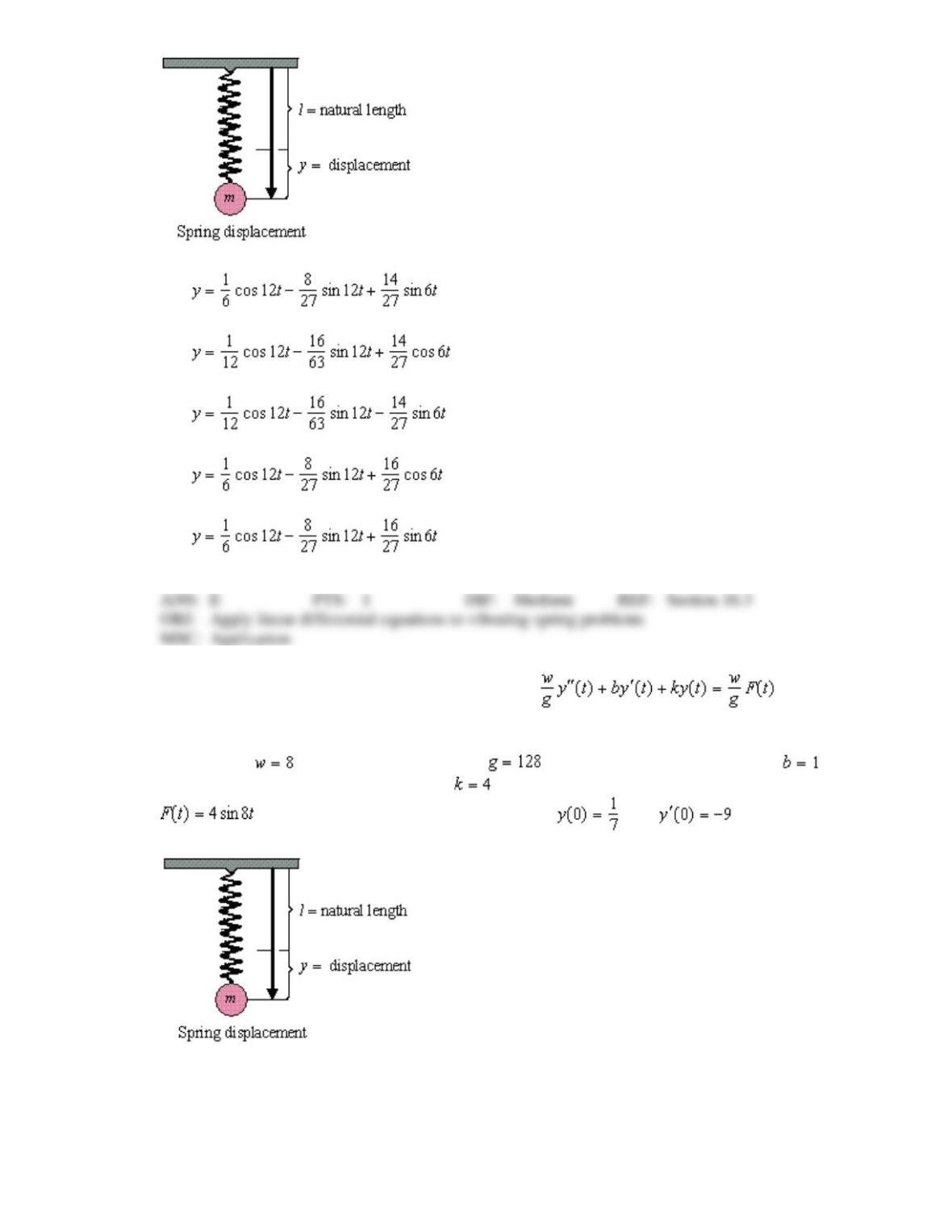
15. Find the particular solution of the differential equation for the
oscillating motion of an object on the end of a spring. In the equation, y is the displacement from
equilibrium (positive direction is downward) measured in feet, and t is the time in seconds (see figure).
The constant is the weight of the object, is the acceleration due to gravity, is the
magnitude of the resistance to the motion, is the spring constant from Hooke’s Law,
is the acceleration imposed on the system, and .
a.
b.
c.
d.
e.
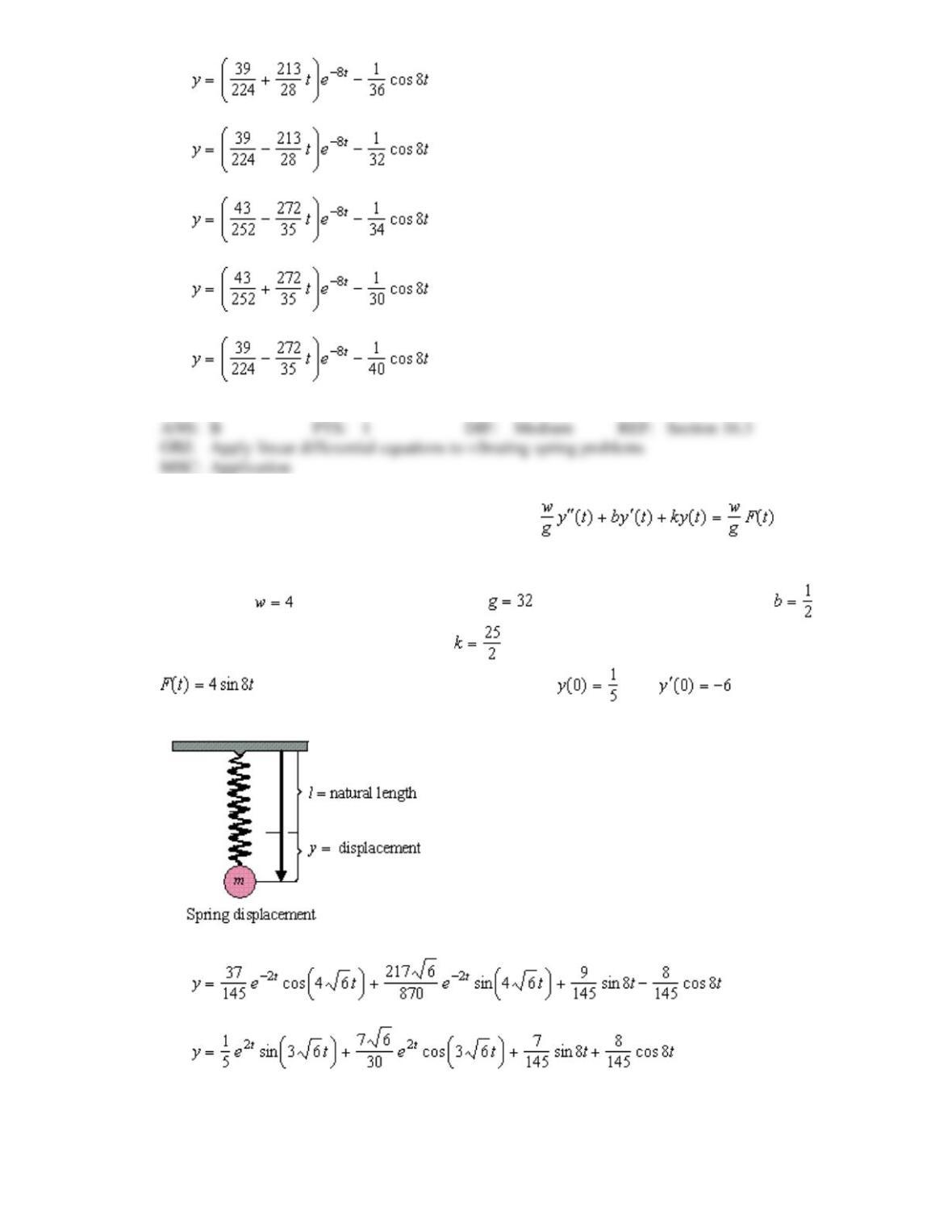
16. Find the particular solution of the differential equation for the
oscillating motion of an object on the end of a spring. In the equation, y is the displacement from
equilibrium (positive direction is downward) measured in feet, and t is the time in seconds (see figure).
The constant is the weight of the object, is the acceleration due to gravity, is the
magnitude of the resistance to the motion, is the spring constant from Hooke’s Law,
is the acceleration imposed on the system, and .
a.
b.
c.
d.
e.
17. Find the particular solution of the differential equation for the
oscillating motion of an object on the end of a spring. In the equation, y is the displacement from
equilibrium (positive direction is downward) measured in feet, and t is the time in seconds (see figure).
The constant is the weight of the object, is the acceleration due to gravity, is the
magnitude of the resistance to the motion, is the spring constant from Hooke’s Law,
is the acceleration imposed on the system, and .
a.
b.
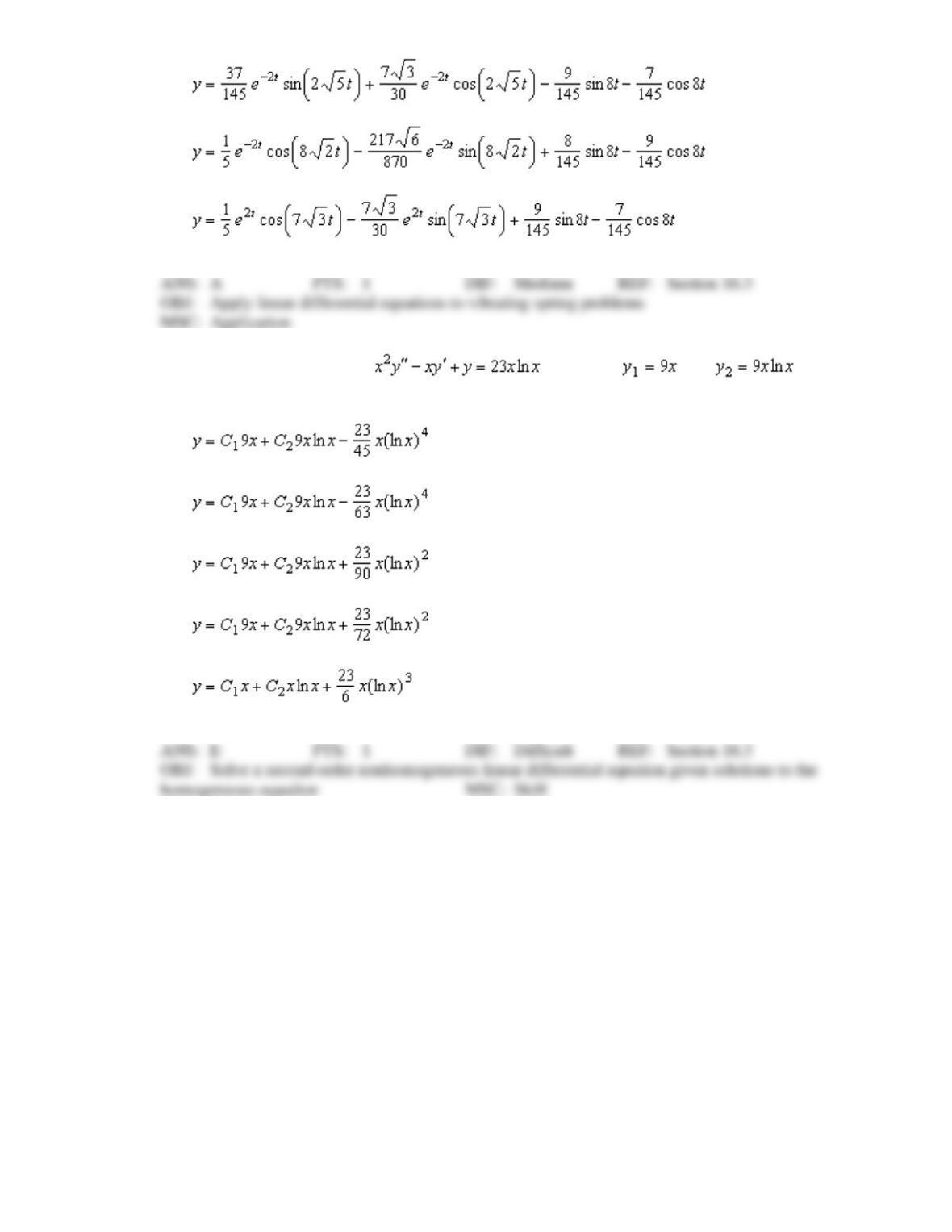
c.
d.
e.
18. Solve the differential equation given that and are
solutions of the corresponding homogeneous equation.
a.
b.
c.
d.
e.