Suppleme
ntal
Informati
on
For Fiscal
Year
Ended
May 31,
Year 4
(a)
Land costing $11,000 was sold for $14.500, resulting in a $3,500 gain.
(b)
During the year, a fire completely destroyed a building with an original cost of $24,000 and a net book value of $8,400. The insurance
settlement resulted in after-tax cash proceeds of $5,800 and an extraordinary loss (net of income taxes) of $2,600.
(c)
Equipment was purchased for cash at a cost $17,500.
(d)
On May 31, Year 4, the company leased equipment under a long-term capital lease, recording the lease at $7,700.
(e)
At the end of the year, bonds payable with a face value of $10,000 were issued at par.
(f)
A stock dividend was declared and issued during the year. The dividend involved 1,000 shares of $10 par common stock; the market
value of the stock on the date of issuance was $12 per share.
(g)
Taxable Income was less than pretax accounting income for the year, resulting in an increase in deferred income taxes payable of $200.
Required:
Using the indirect method, prepare the Statement of Cash Flows for Spring Corporation for the year ended May 31, Year 4. The statement should
comply with the requirements of Statements of Financial Accounting Standards No. 95, ‘Statement of Cash Flows,’ and be supported by appropriate
calculations.
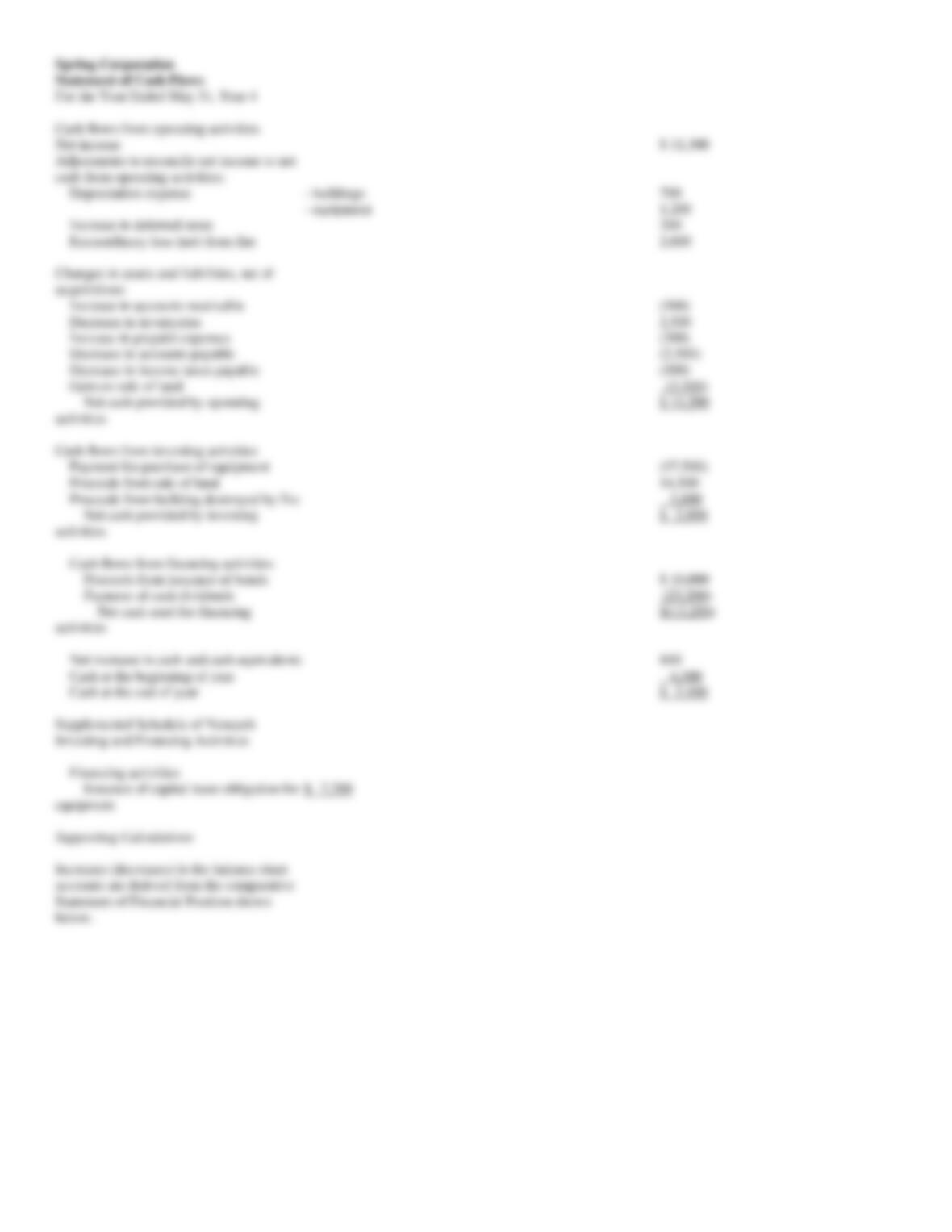
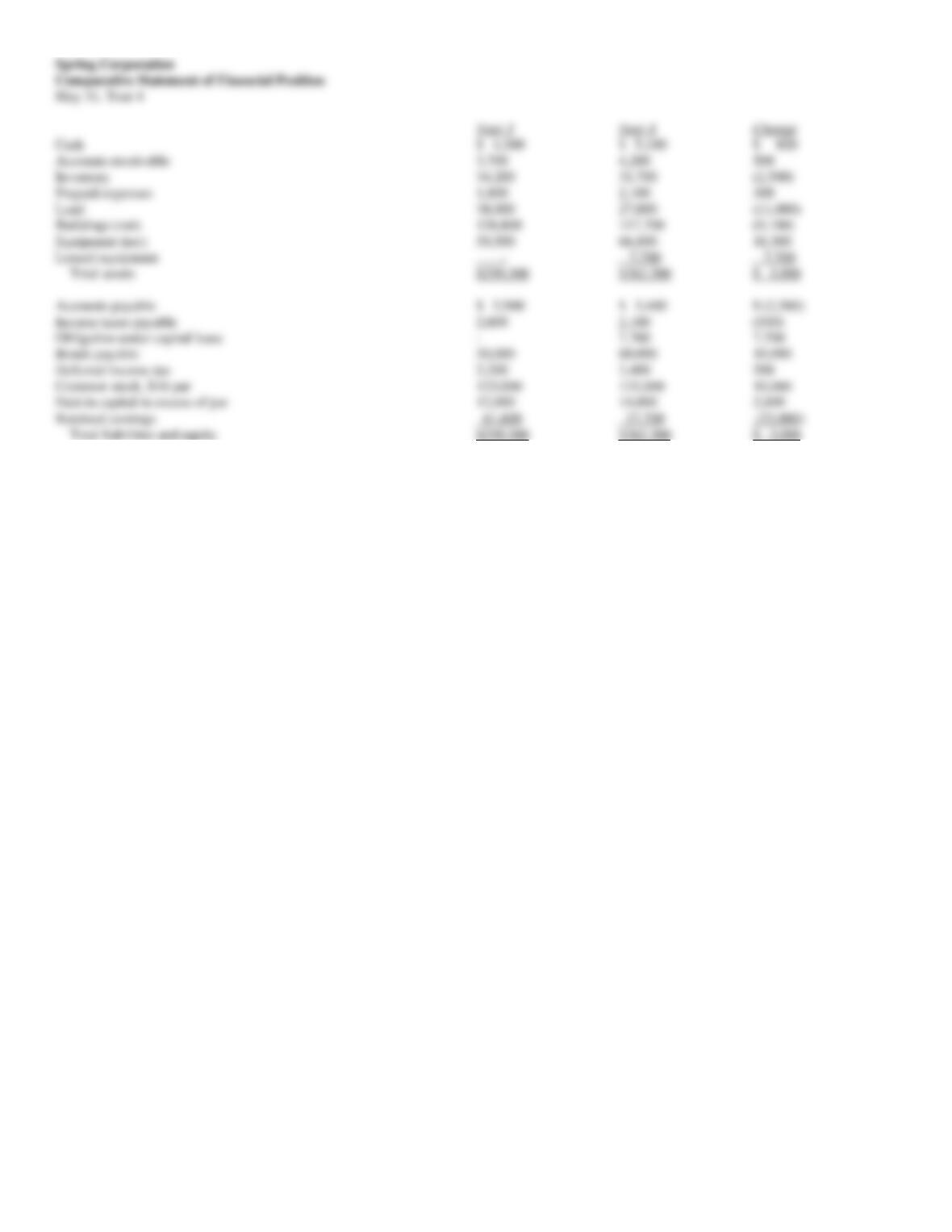
Spring Corporation’s statement of cash flows, prepared under the indirect method, for the year ended May 31,
Year 4, is presented below.

140. The following is Newton Corporation’s comparative balance sheets for 2014 and 2013:
December 31,
2014
2013
Cash
$ 400,000
$ 350,000
Accounts receivable
564,000
584,000
Inventories
925,000
857,500
Property, plant, and equipment
1,653,500
1,483,500
Accumulated depreciation
(582,500)
(520,000)
Investment in Trent
Corporation
152,500
137,500
Loan receivable
135,000
–
Total assets
$ 3,247,500
$ 2,892,500
Accounts payable
$ 507,500
$ 477,500
Income taxes payable
15,000
25,000
Dividends payable
40,000
45,000
Capital lease obligation
200,000
Capital stock, common, $1 par
250,000
250,000
Additional paid-in capital
750,000
750,000
Retained earnings
1,485,000
1,345,000
Total
liabilities
and
stockholders’
equity
$ 3,247,500
$ 2,892,500
Additional information:
1.
On December 31, 2013, Newton acquired 25 percent of Trent Corporation’s common stock for $137,500. On that date, the carrying
value of Trent’s net assets and liabilities (which approximated fair value) was $550,000. Trent reported income of $60,000 for the
year ended December 31, 2014. No dividend was paid on Trent’s common stock during the year.
2.
During 2014, Newton loaned $150,000 to Dalton Company, an unrelated entity. Dalton made the first semi-annual principal payment
of $15,000, plus interest at 10 percent, on October 1, 2014.
3.
On January 2, 2014, Newton sold equipment costing $30,000, with a carrying value of $17,500, for $20,000 cash.
4.
On January 2, 2014, Newton entered into a capital lease for an office building. The present value of the annual rental payments is
$200,000, which equals the fair value of the building. Newton made the first lease payment of $30,000 when due on January 2, 2015.
5.
Newton’s net income for 2014 was $180,000.
6.
Newton declared and paid cash dividends for 2014 and 2013 as follows:
2014
2013
Declared
Dec. 15, 2014
Dec. 15, 2013
Paid
Feb. 28, 2015
Feb. 28, 2014
Amount
$ 40,000
$ 45,000
Required:
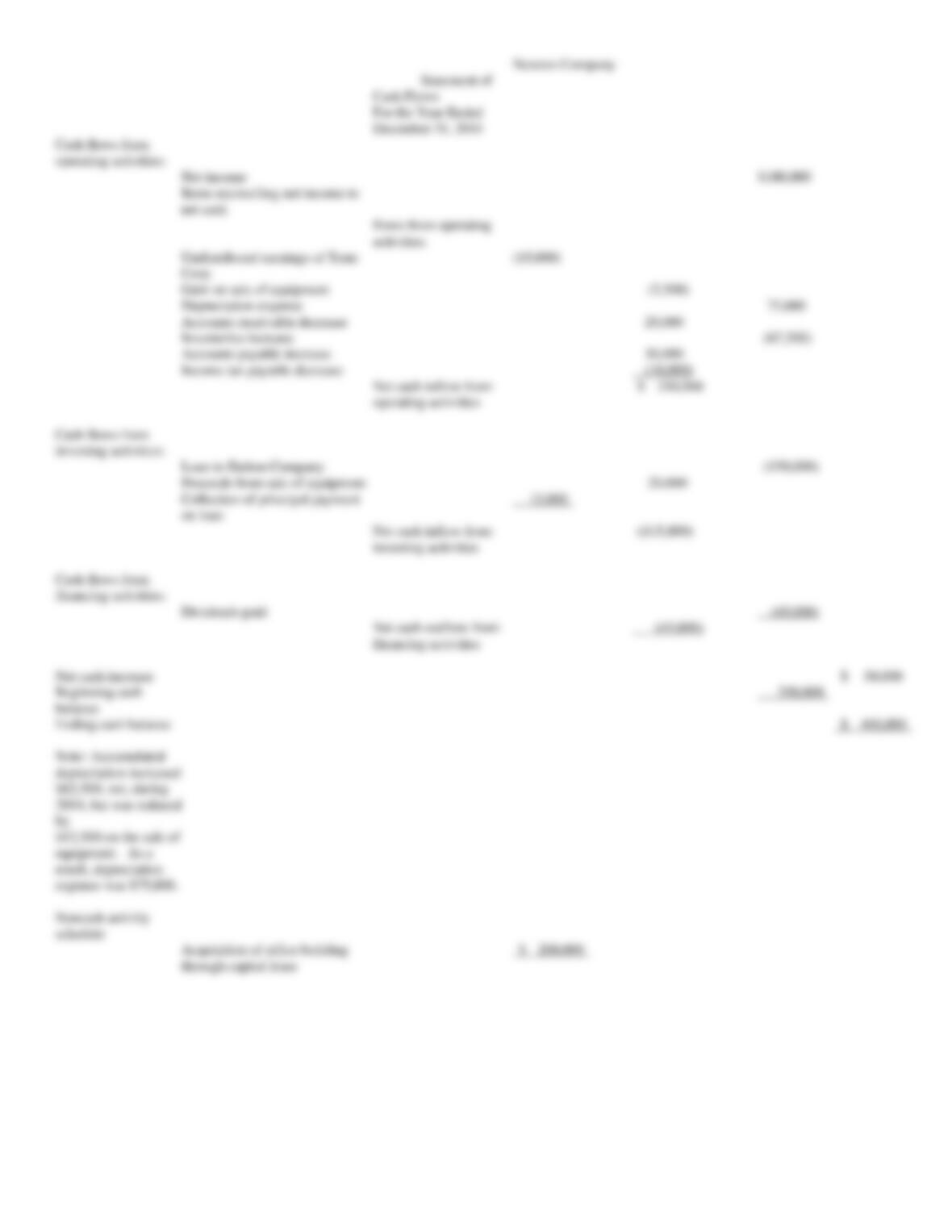
Prepare a statement of cash flows for Newton Company for 2014 using the indirect method. Include relevant supplemental schedules.

141. Financial information for Price Company at December 31, 2014, and for the year then ended, are presented
below:
Balance Sheet
December 31,
2014
2013
Cash
$ 31,000
$ 15,000
Accounts receivable
28,500
30,000
Allowance for doubtful
accounts
(2,000)
(1,500)
Inventory
15,000
10,000
Prepaid insurance
1,400
2,400
Property, plant, and
equipment
81,000
80,000
Accumulated
depreciation
(16,000)
(20,000)
Land
81,100
40,100
Total assets
$ 220,000
$ 156,000
Accounts payable
$ 11,000
$ 10,000
Wages payable
1,000
2,000
Interest payable
1,000
–
Notes payable, long-term
46,000
20,000
Common stock, nopar
136,000
100,000
Retained earnings
25,000
24,000
Total liabilities and
stockholders’ equity
$ 220,000
$ 156,000
Income Statement
Sales revenue
$ 80,000
Cost of goods sold
(35,000)
Depreciation expense
(5,000)
Bad debt expense
(1,000)
Insurance expense
(1,000)
Interest expense
(2,000)
Salaries and wages
expense
(12,000)
Income tax expense
(3,000)
Remaining expenses
(13,000)
Loss on sale of
operational assets
(2,000)
Net income
$ 6,000
Additional information:
1.
Wrote off $500 accounts receivable as uncollectible.
2.
Sold an operational asset for $4,000 cash (cost, $15,000, accumulated depreciation, $9,000).
3.
Issued common stock for $5,000 cash.
4.
Declared and paid a cash dividend of $5,000.
5.
Purchased land for $20,000 cash.
6.
Acquired land for $21,000, and issued common stock as payment in full.
7.
Acquired operational assets, cost $16,000; issued a $16,000, three-year, interest-bearing note payable.
8.
Paid a $10,000 long-term note installment by issuing common stock to the creditor.
9.
Borrowed cash on a long-term note, $20,000.
Required:
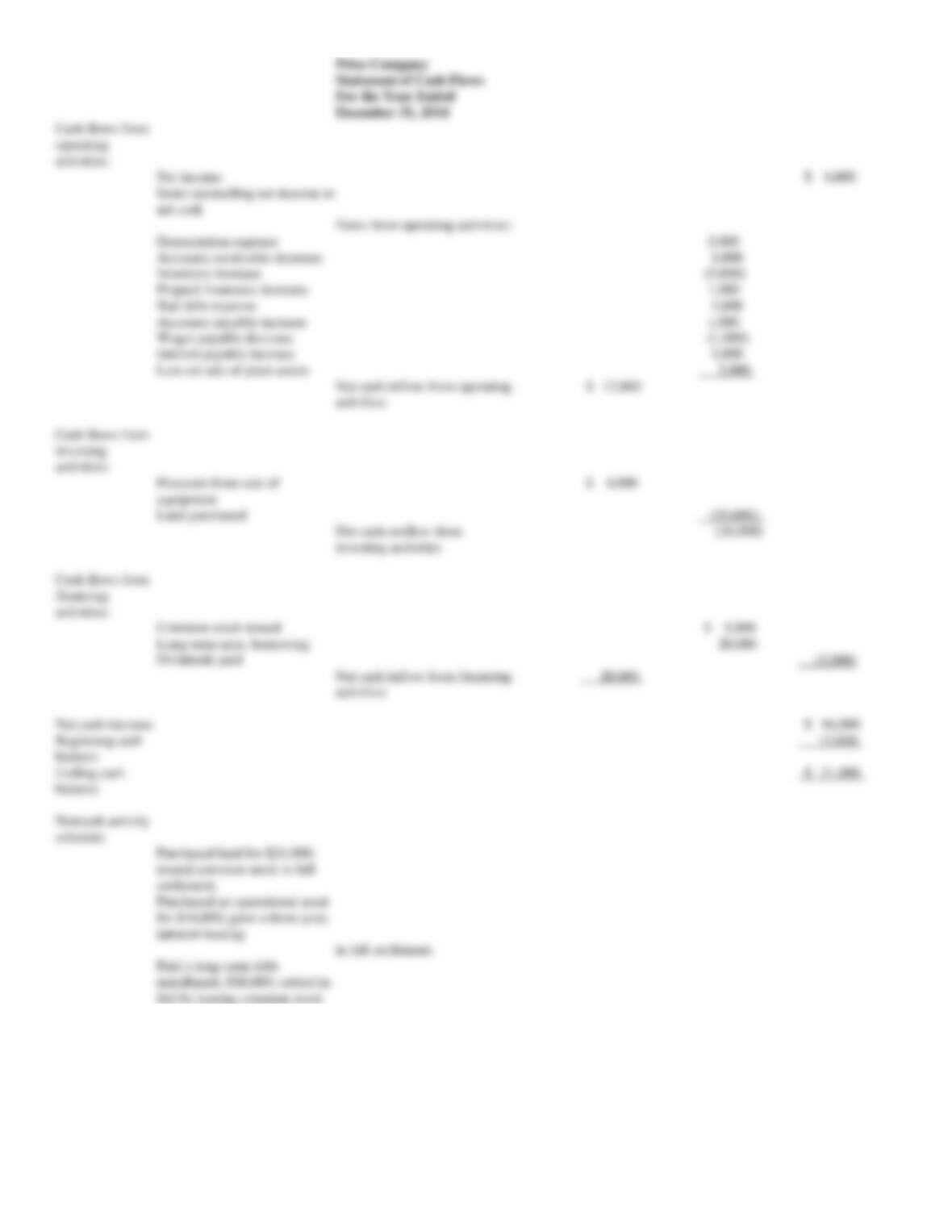
Prepare the statement of cash flows using the indirect method.
flows from operating activities:
Prepaid insurance decrease
1,000
Interest payable increase
1,000
Common stock issued
$ 5,000
in full settlement.
142. Discuss the concepts underlying the statement of cash flows.
143. Discuss the indirect and direct methods in deriving cash flow from operations.
144. Discuss the effects of transactions involving derivatives and the fair value option on the statements of cash
flows.
145. Describe the effects of transactions involving investments on the statement of cash flows.
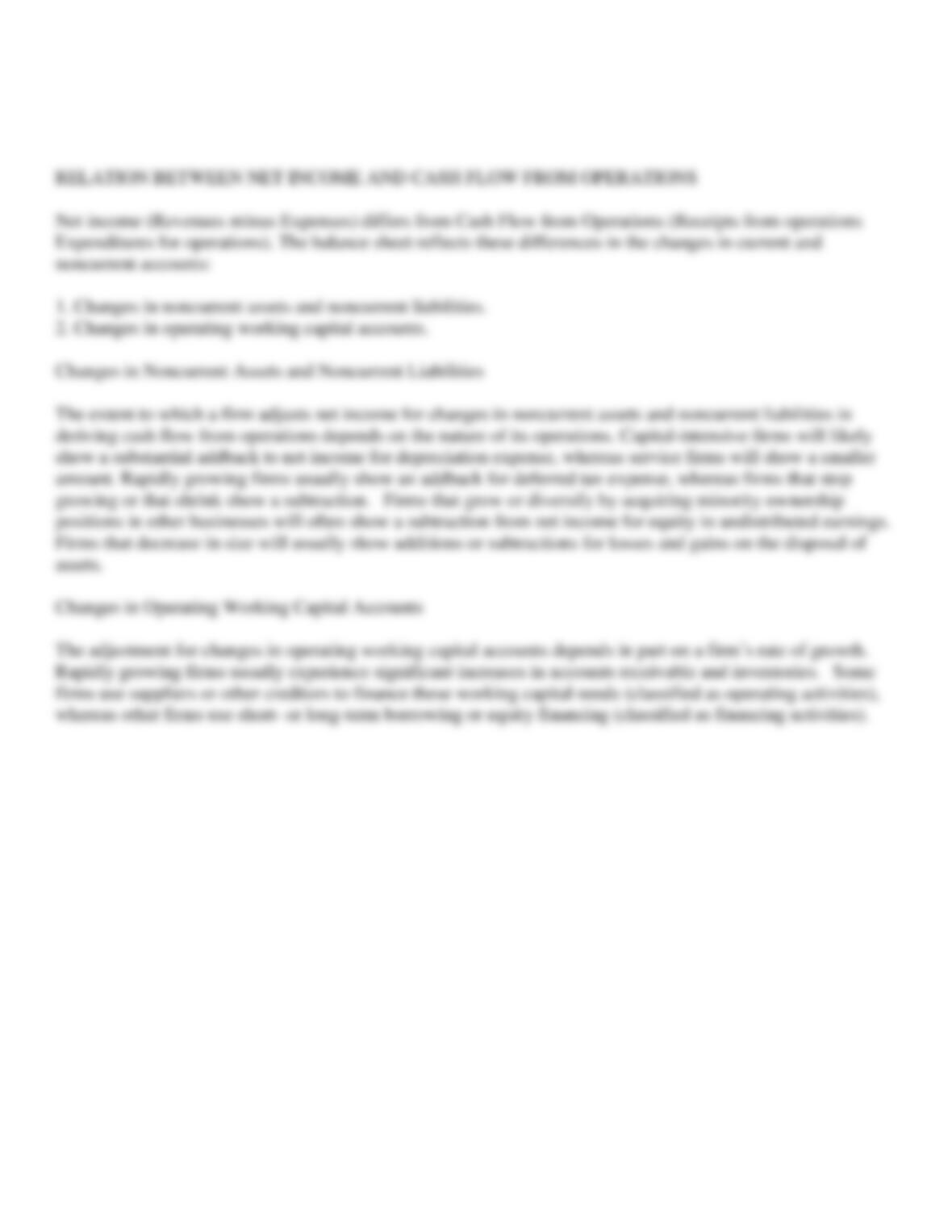
146. Discuss the relation between net income and cash flow from operations when interpreting the statement of
cash flows.
INTERPRETING THE STATEMENT OF CASH FLOWS
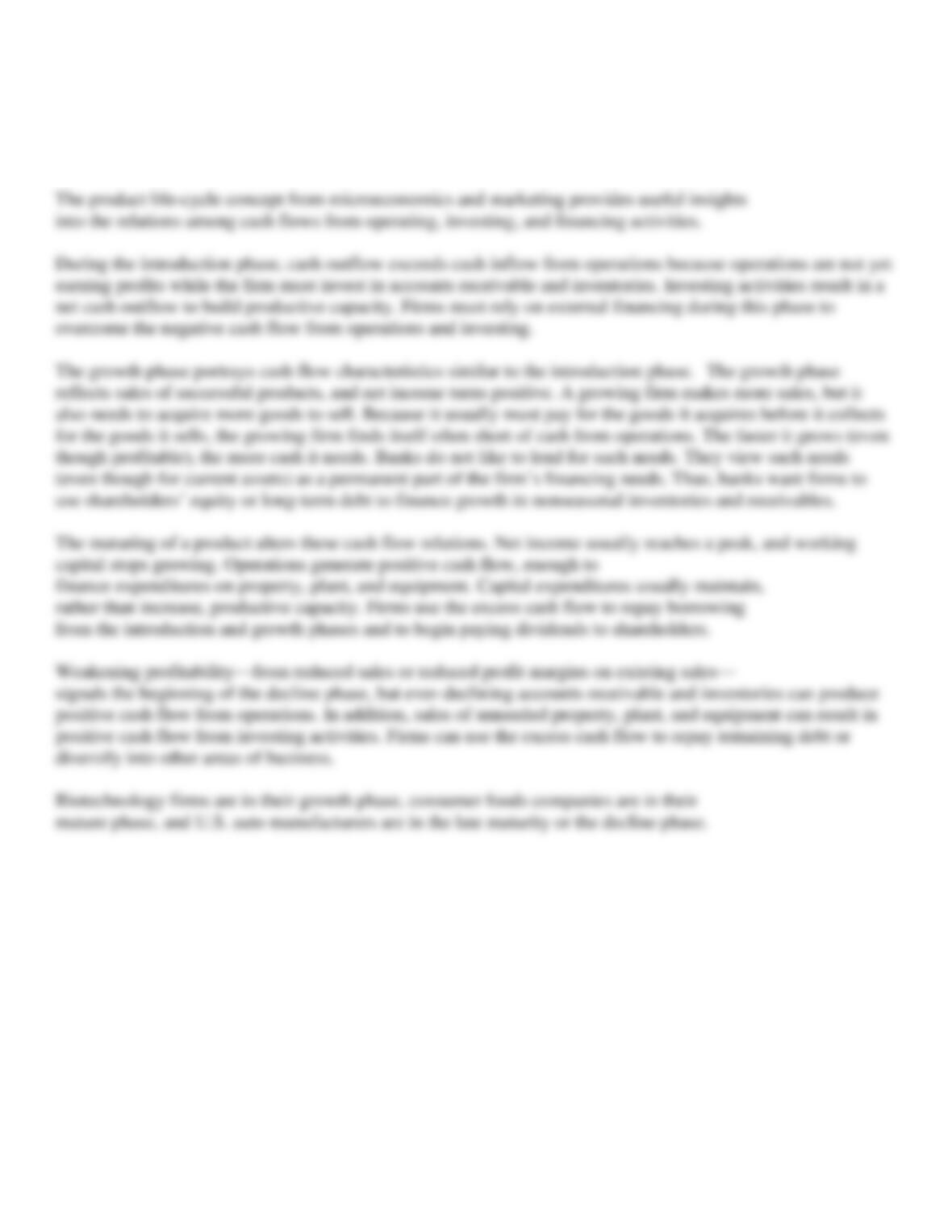
147. Discuss the relations among cash flows from operating, investing, and financing activities for firms in the
introduction, growth, mature, late maturity, and decline phases.
RELATIONS AMONG CASH FLOWS FROM OPERATING, INVESTING, AND FINANCING
ACTIVITIES
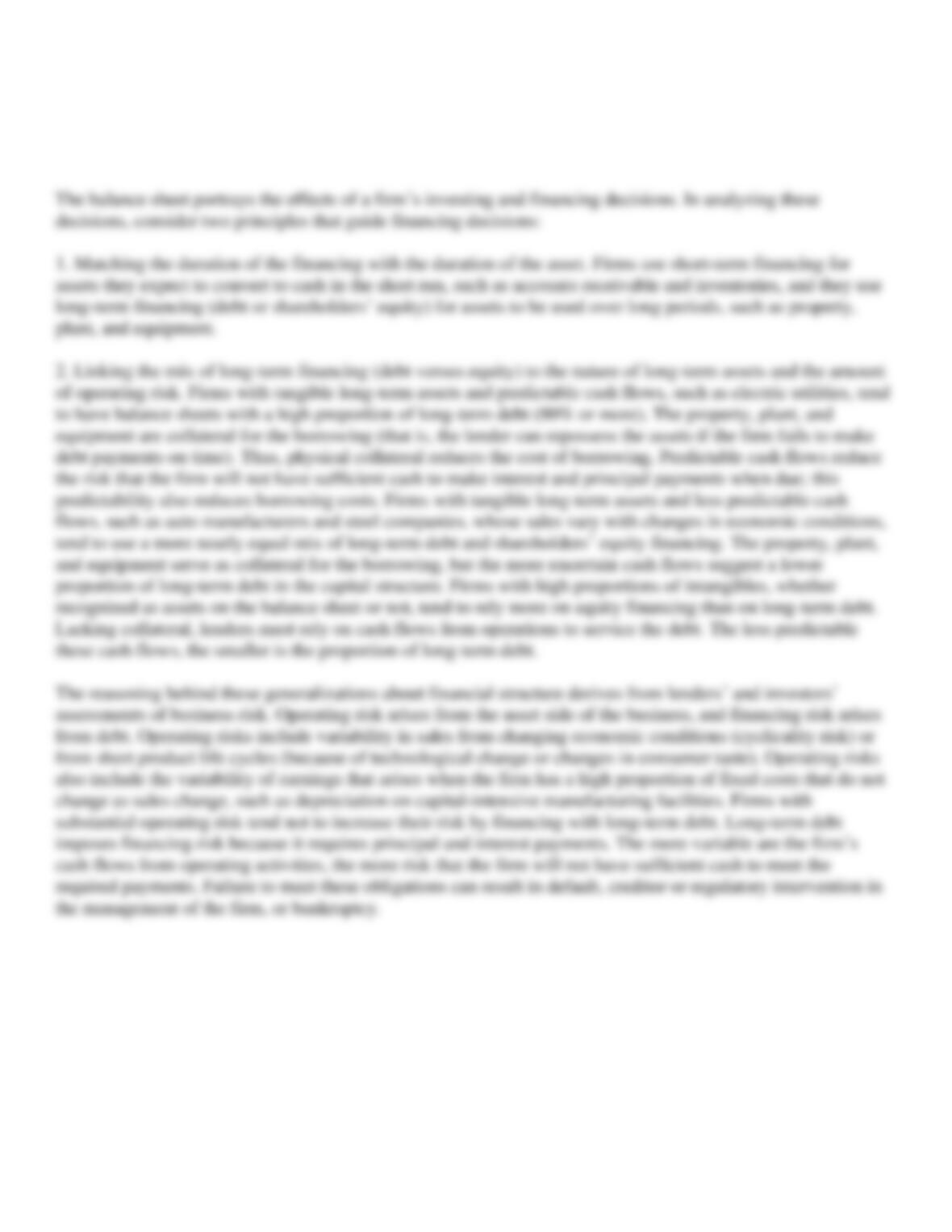
148. The balance sheet portrays the effects of a firm’s investing and financing decisions. In analyzing these
decisions, what two principles guide financing decisions?
BALANCE SHEET RELATIONS