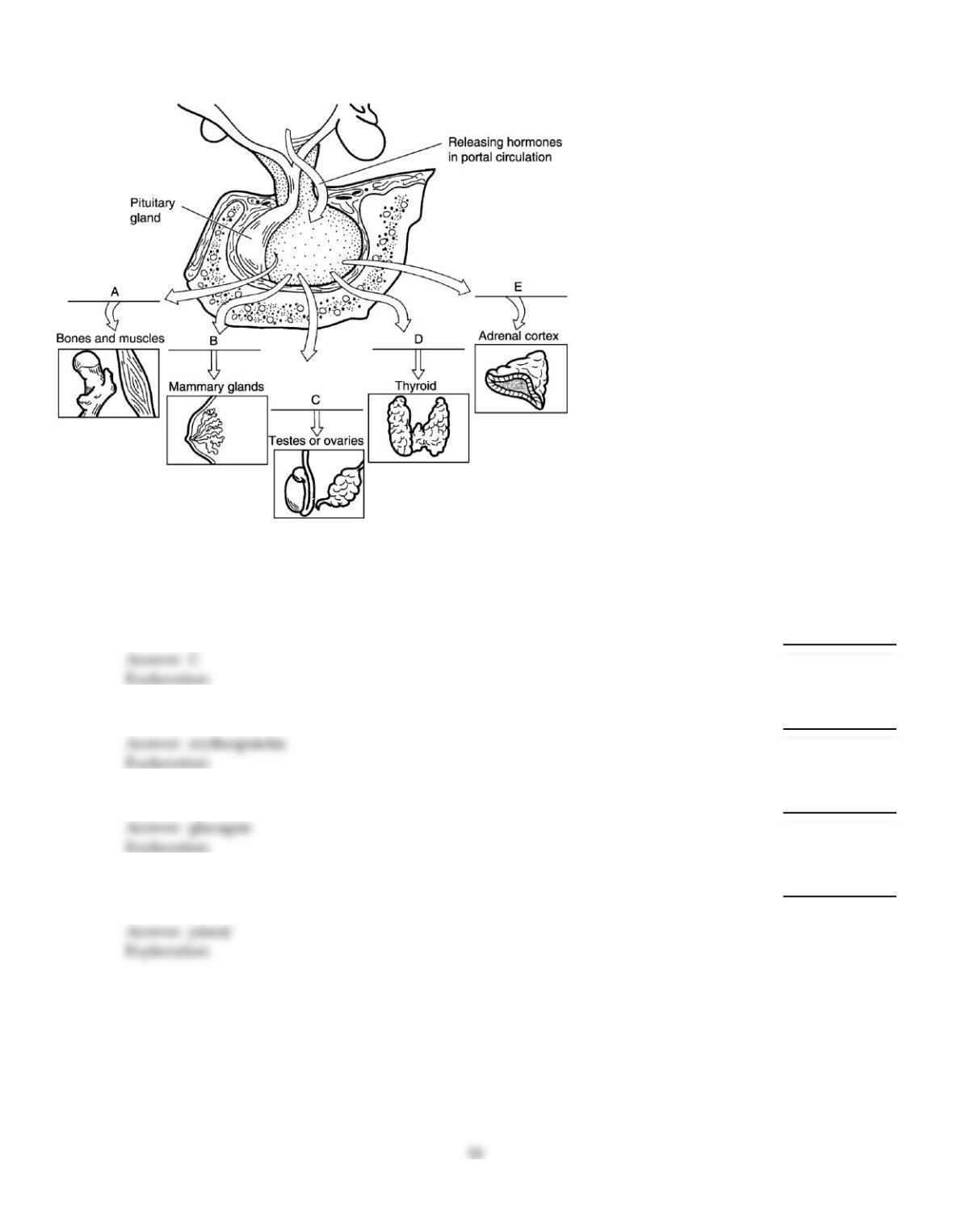
Figure 16.2
Using Figure 16.2, match the following hypothalamic hormones with the pituitary hormone targets:
63)
Follicle stimulating hormone
63)
64)
Which hormone stimulates production of RBCs?
64)
65)
Alpha islet cells produce ________, an extremely potent hyperglycemic hormone.
65)
66)
The ________ gland may influence our day/night cycles and even regulate the onset of
sexual maturity.
66)
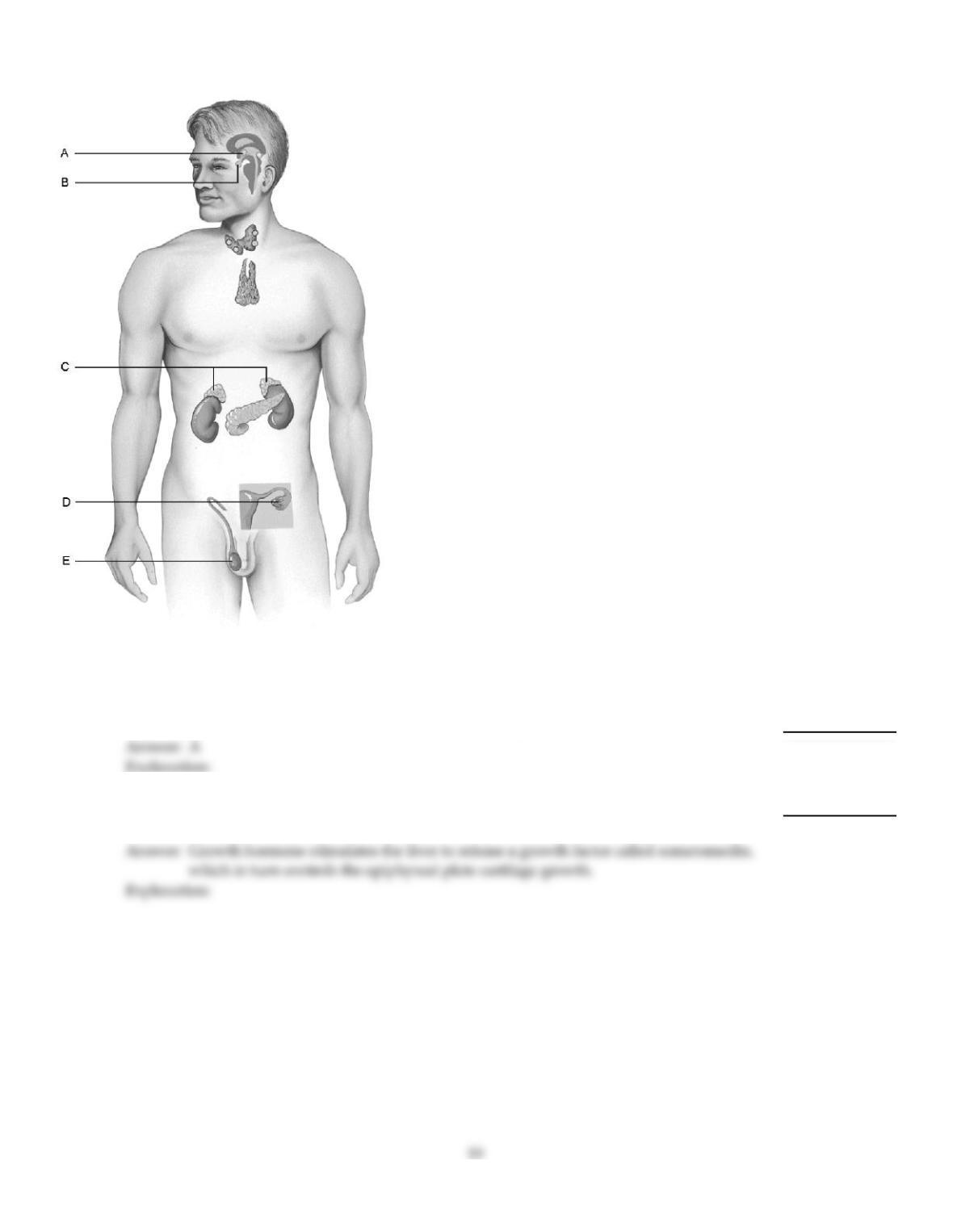
Figure 16.1
Using Figure 16.1, match the following:
67)
Produces hormones and is considered a neuroendocrine organ.
67)
68)
Growth hormones act indirectly to make the epiphyseal plate cartilage grow. What then
acts directly to make it grow?
68)
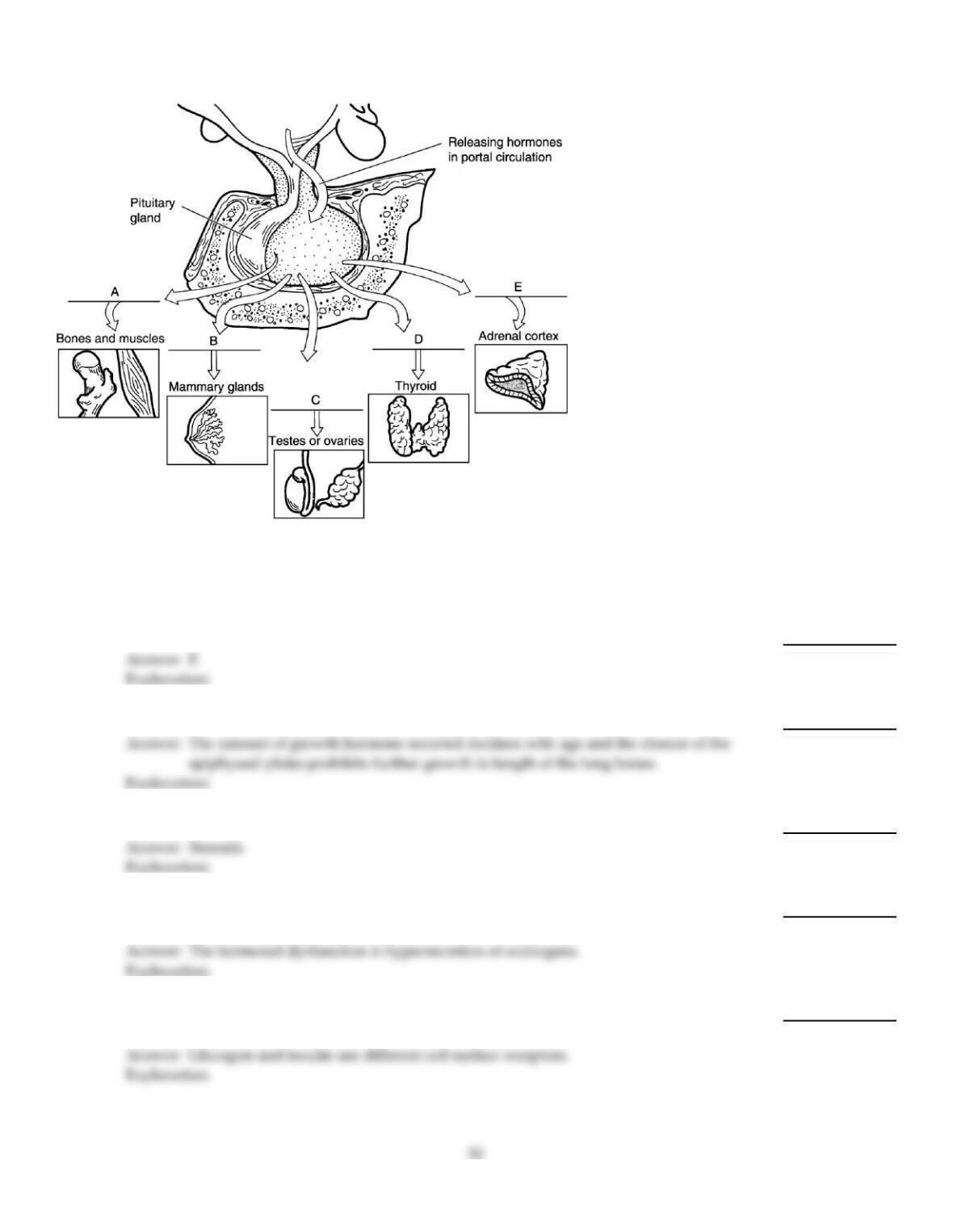
Figure 16.2
Using Figure 16.2, match the following hypothalamic hormones with the pituitary hormone targets:
69)
Adrenocorticotropic hormone
69)
70)
Why would one not expect to continue increasing in height with age?
70)
71)
Which hormones are synthesized from cholesterol?
71)
72)
A woman with excessive body hair, a deep voice, and an enlarged clitoris shows the
outward symptoms of which hormonal dysfunction?
72)
73)
Glucagon and insulin both target the cells of the liver and are both made in the pancreas,
yet they have very different effects on the cells they target. What accounts for this fact?
73)
E
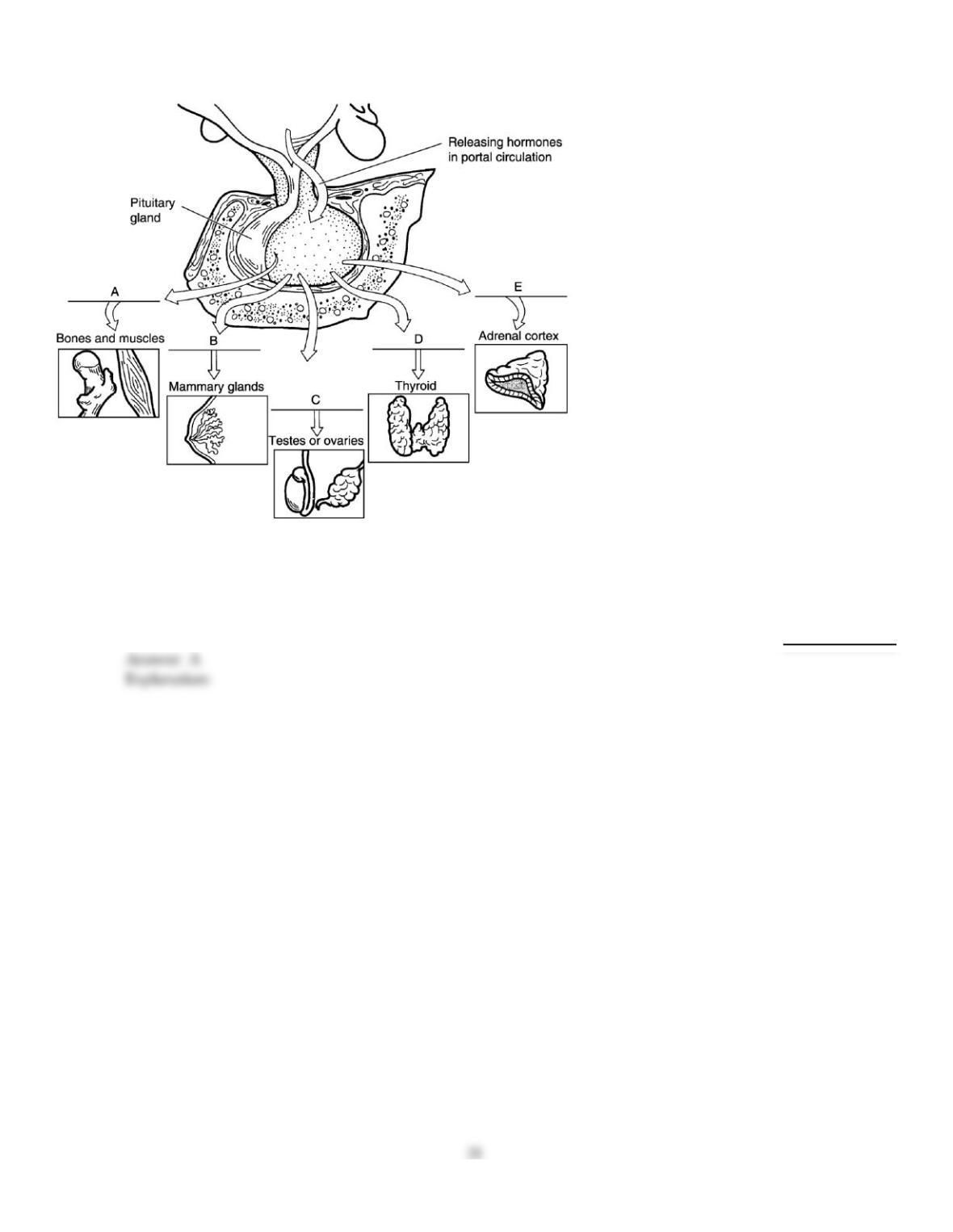
Figure 16.2
Using Figure 16.2, match the following hypothalamic hormones with the pituitary hormone targets:
74)
Growth hormone
74)
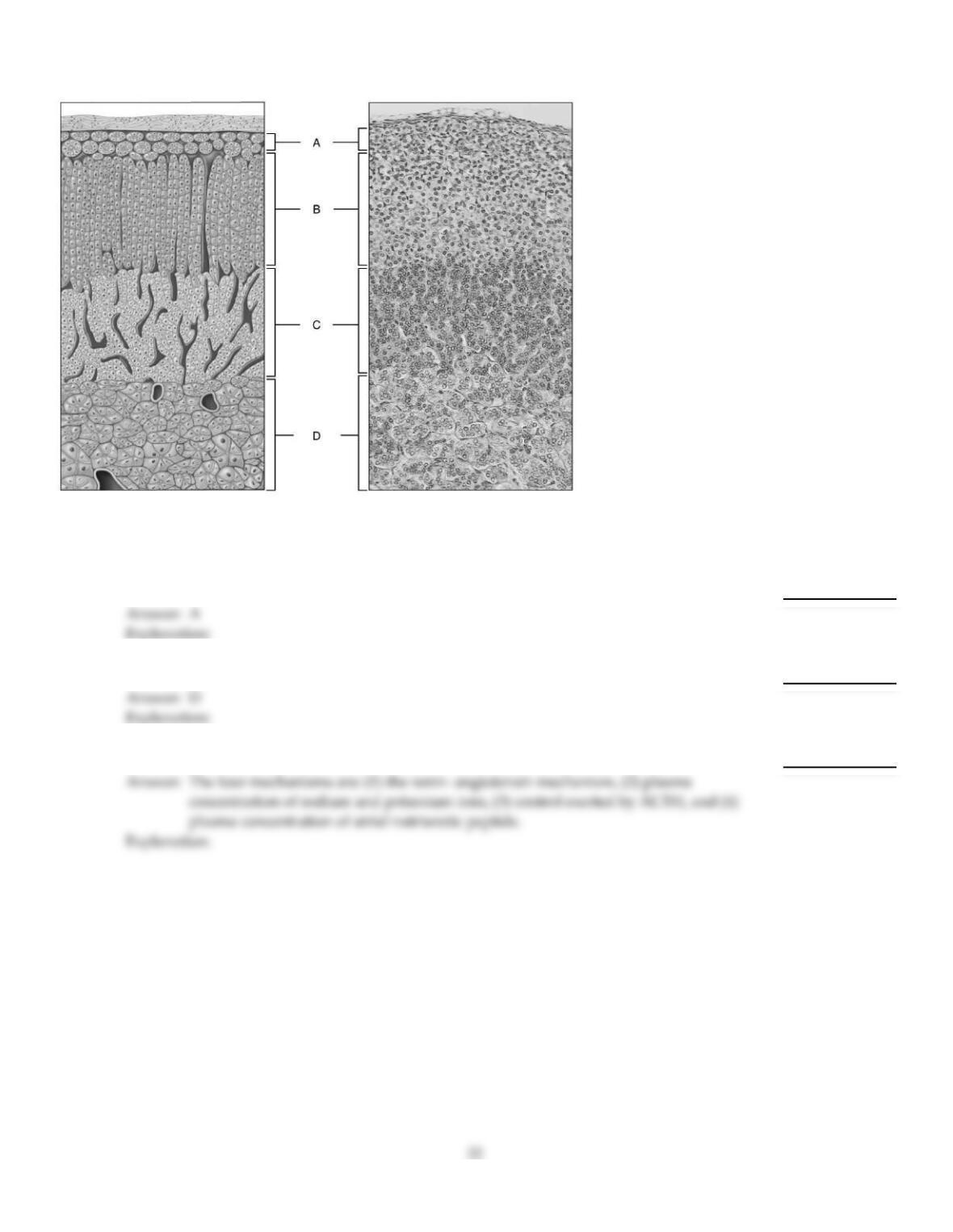
Figure 16.3
Using Figure 16.3, match the following:
75)
Produces aldosterone.
75)
76)
Produces epinephrine.
76)
77)
List the four mechanisms involved in the regulation of aldosterone secretion.
77)
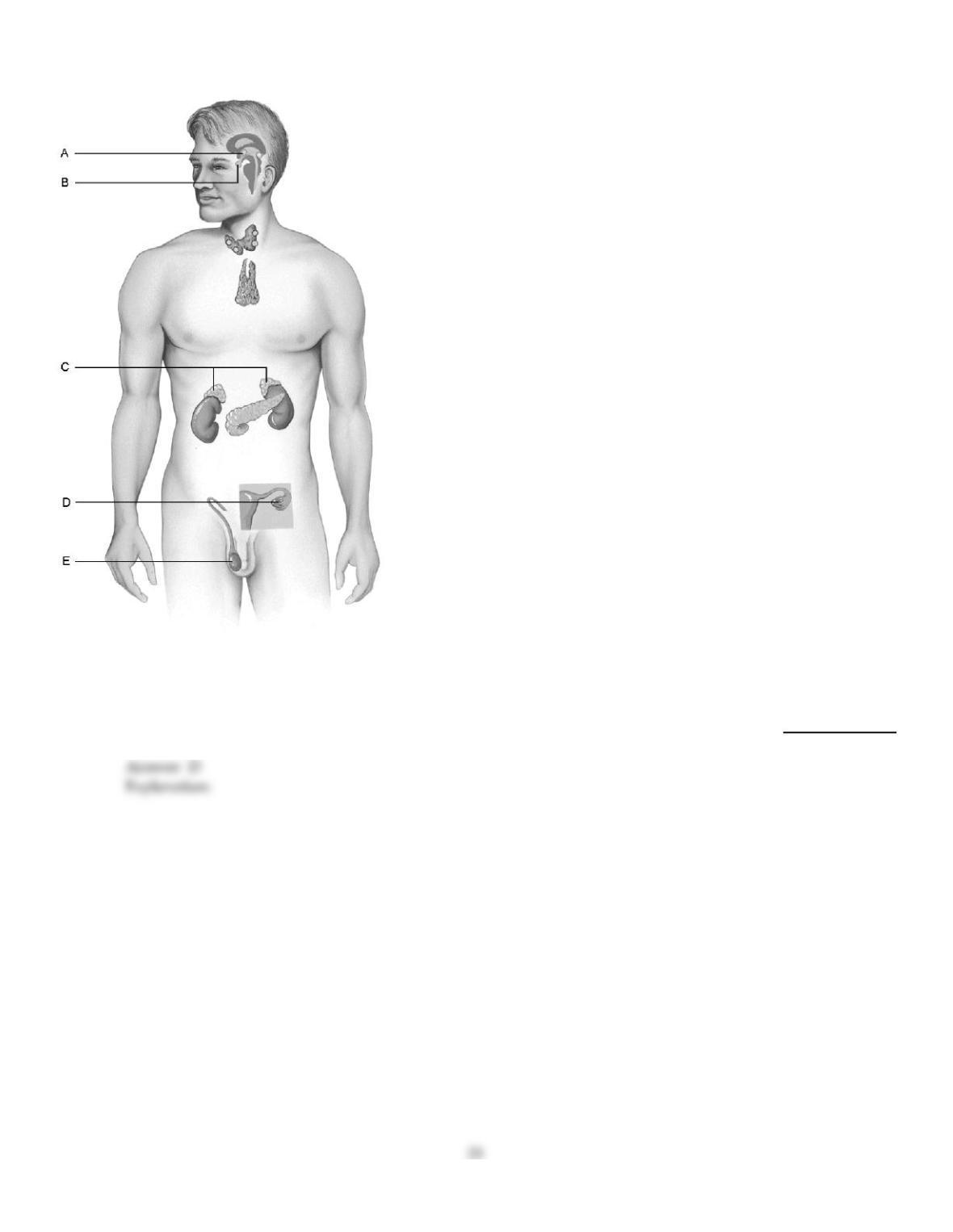
Figure 16.1
Using Figure 16.1, match the following:
78)
Produces the hormones that promote the development of the female secondary sexual
characteristics at puberty.
78)
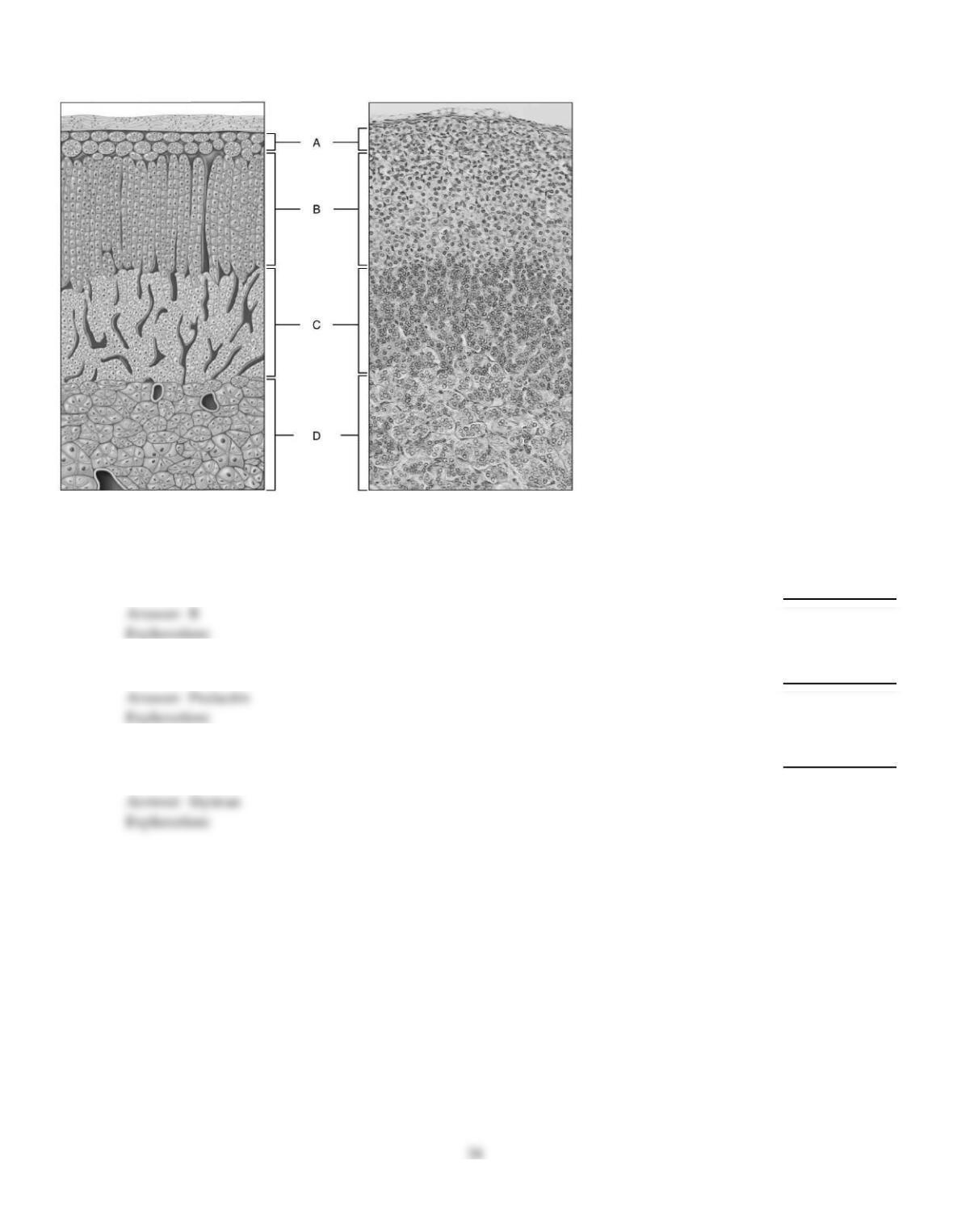
Figure 16.3
Using Figure 16.3, match the following:
79)
Excess hormone levels result in Cushing’s syndrome.
79)
80)
Which hormone has only one known effect: to stimulate milk production by the breasts?
80)
81)
The ________ gland is especially large in early childhood, then declines in size and
function with age.
81)
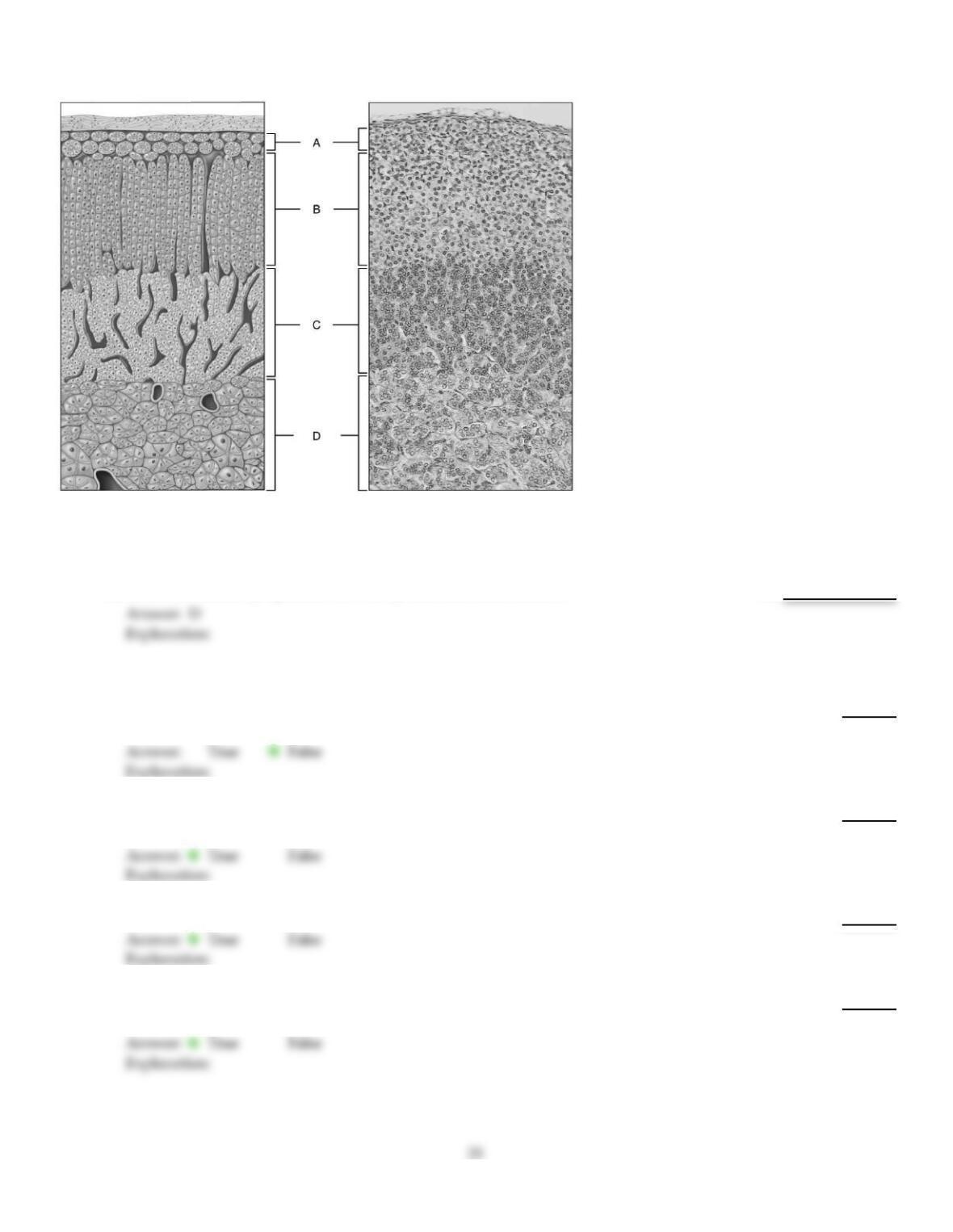
Figure 16.3
Using Figure 16.3, match the following:
82)
Hormones mimic sympathetic nervous system neurotransmitters.
82)
TRUE/FALSE. Write ‘T’ if the statement is true and ‘F’ if the statement is false.
83)
The endocrine gland that is probably malfunctioning if a person has a high metabolic rate is the
parathyroid.
83)
84)
Both “turn on” factors (hormonal, humoral, and neural stimuli) and “turn off” factors (feedback
inhibition and others) may be modulated by the activity of the nervous system.
84)
85)
Oxytocin is a strong stimulant of uterine contractions.
85)
86)
Enteroendocrine cells of the GI tract produce some hormones that are chemically identical to
neurotransmitters.
86)
87)
All peptide hormone synthesis requires gene activation that produces mRNA.
87)
88)
LH is also referred to as a gonadotropin.
88)
89)
Glucocorticoids are steroid hormones that usually enhance the immune responses when an
individual is suffering from severe stress.
89)
90)
The beta cells in the pancreatic islets produce insulin.
90)
91)
Most type 2 diabetics do not produce insulin.
91)
92)
Hypersecretion of catecholamines can result in hypertension.
92)
93)
The hormone that raises blood sugar levels is insulin.
93)
94)
All adenohypophyseal hormones except GH affect their target cells via a cyclic AMP second
messenger.
94)
95)
Oxytocin and ADH are produced in the posterior pituitary.
95)
96)
Aldosterone is the most potent mineralocorticoid produced in the adrenals but the least abundant.
96)
97)
In aged individuals, chronic stress may increase blood levels of cortisol and possibly contribute to
memory deterioration.
97)
98)
Atrial natriuretic peptide is a hormone that controls blood pressure in part by increasing the
urinary excretion of sodium.
98)
99)
The pineal gland is used as a brain orientation landmark for brain X rays.
99)
100)
Type 2 diabetics may reflect declining receptor sensitivity to insulin rather than decreased insulin
production.
100)
101)
Growth hormone solely exerts its influence by targeting other endocrine glands to produce
hormones.
101)
102)
The prime metabolic effect of cortisol is gluconeogenesis.
102)
103)
Many hormones synthesized in the gastrointestinal tract are chemically identical to brain
neurotransmitters.
103)
104)
Thyroid hormone production requires the presence of iodine and calcium.
104)
105)
Iodine is an essential element required for the synthesis of thyroxine.
105)
106)
Direct gene activation involves a second–messenger system.
106)
107)
Addison’s disease is due to a insufficient output of glucocorticoids only.
107)
108)
ACTH stimulates the adrenal cortex to release corticosteroid hormones.
108)

109)
The antagonistic hormones that regulate the blood calcium level are calcitonin–parathormone.
109)
MATCHING. Choose the item in column 2 that best matches each item in column 1.
Match the following:
110)
Hyposecretion of the pancreas.
110)
A)
Diabetes mellitus
Match the following:
111)
Hyposecretion of the thyroid in
infants.
A)
Cretinism
111)
Match the following:
112)
Hyposecretion of growth hormone.
A)
Pituitary dwarfism
112)
Match the following:
113)
Aldosterone production
114)
Testosterone production
A)
Hormonal stimulus
113)
114)
Match the following:
115)
Produces a hormone that controls
blood levels of calcium and potassium
by their removal from bone tissue.
A)
Parathyroid
115)
Match the following:
116)
Hypersecretion of growth hormone.
A)
Acromegaly
116)
Match the following:
117)
The gland that controls the
fight–or–flight reaction.
A)
Adrenal medulla
117)
Match the following:
118)
Hyposecretion of the adrenal cortex.
118)
A)
Addison’s disease
Match the following:
119)
Hypersecretion of the adrenal cortex.
A)
Cushing’s disease
119)
Match the following:
120)
Hypersecretion of growth hormone.
A)
Acromegaly
Match the following:
121)
The size and shape of a pea; produces
hormones that stimulate other
endocrine glands.
B
122)
Produces hormones that regulate
glucose levels in the body.
A
A)
Pancreas
B)
Hypophysis
121)
122)
Match the following:
123)
Hyposecretion of the thyroid in adults.
A
123)
A)
Myxedema
Match the following:
124)
Parathyroid hormone production
A
124)
A)
Humoral stimulus
Match the following:
125)
An autoimmune problem involving
the thyroid gland.
A
A)
Graves‘ disease
125)
Match the following:
126)
Produces the body’s major metabolic
hormones.
A
A)
Thyroid
126)
Match the following:
127)
Epinephrine production
A
127)
A)
Neural stimulus
ESSAY. Write your answer in the space provided or on a separate sheet of paper.
128)
The parents of a 17–year–old boy are concerned about his height because he is only 5 feet tall and they are both
close to 6 feet tall. After tests by their doctor, a certain hormone is prescribed for the boy. What is the probable
diagnosis, and what hormones were prescribed? Why might the child still expect to reach his growth potential?
129)
Mr. Sanchez makes an appointment to see his doctor for pain in his abdominal area. Tests and X rays reveal
kidney stones as well as bones with a moth–eaten appearance. Physical exam reveals hyporeflexia and
hypotonis (weakness). What is the problem and what treatment would be recommended?
A
120)
130)
What is the most important nursing intervention when caring for a patient with Cushing’s syndrome?
131)
John is a 26–year–old man who begins to notice a progressive enlargement of feet, hands, cranium, nose, and
lower jaw bone. His doctor recommends a pituitary gland operation. What is the most likely diagnosis? Why?
132)
Following workup for symptoms of decreased libido and erectile dysfunction, a patient is told that his pituitary
is hypersecreting prolactin. Is there need for concern about this young man?
133)
Thomas is a diabetic. While at work, he began to tremble, was somewhat disoriented, and showed signs similar
to that of a drunk. One of his colleagues gave him some hard candy, which seemed to help him return to normal
functions. Why? Was this a proper action, considering that Thomas is diabetic?
134)
Mrs. James appeared at the clinic complaining of extreme nervousness and sweating, saying that she could feel
and hear her heart thumping when she tried to sleep at night.She was found to have a severely elevated and
fluctuating blood pressure. Although laboratory testing revealed hyperglycemia and increased basal metabolic
rate, tests of thyroid function were normal. What is your diagnosis? What treatment should be used?
135)
It was often rumored that one of our deceased presidents was suffering from Addison’s disease (inadequate
synthesis of mineralocorticoids and glucocorticoids). What symptoms may have led to the diagnosis of this
condition?
136)
A 25–year–old male was admitted to the medical/surgical unit with a blood glucose of 600 mg/dl. On
assessment, the nurse observed his breathing was deep and rapid, and his breath smelled of acetone. His face
was flushed and his skin was dry. His pH was low. Describe the physiological response that is occurring.
137)
Explain how antidiuretic hormone can help regulate an abnormal increase in solute concentration in the
extracellular fluid.

Answer Key
Testname: C16
31
Answer Key
Testname: C16
32
Answer Key
Testname: C16
33
Answer Key
Testname: C16