Larson_Calculus_10e ch15sec08
MULTIPLE CHOICE
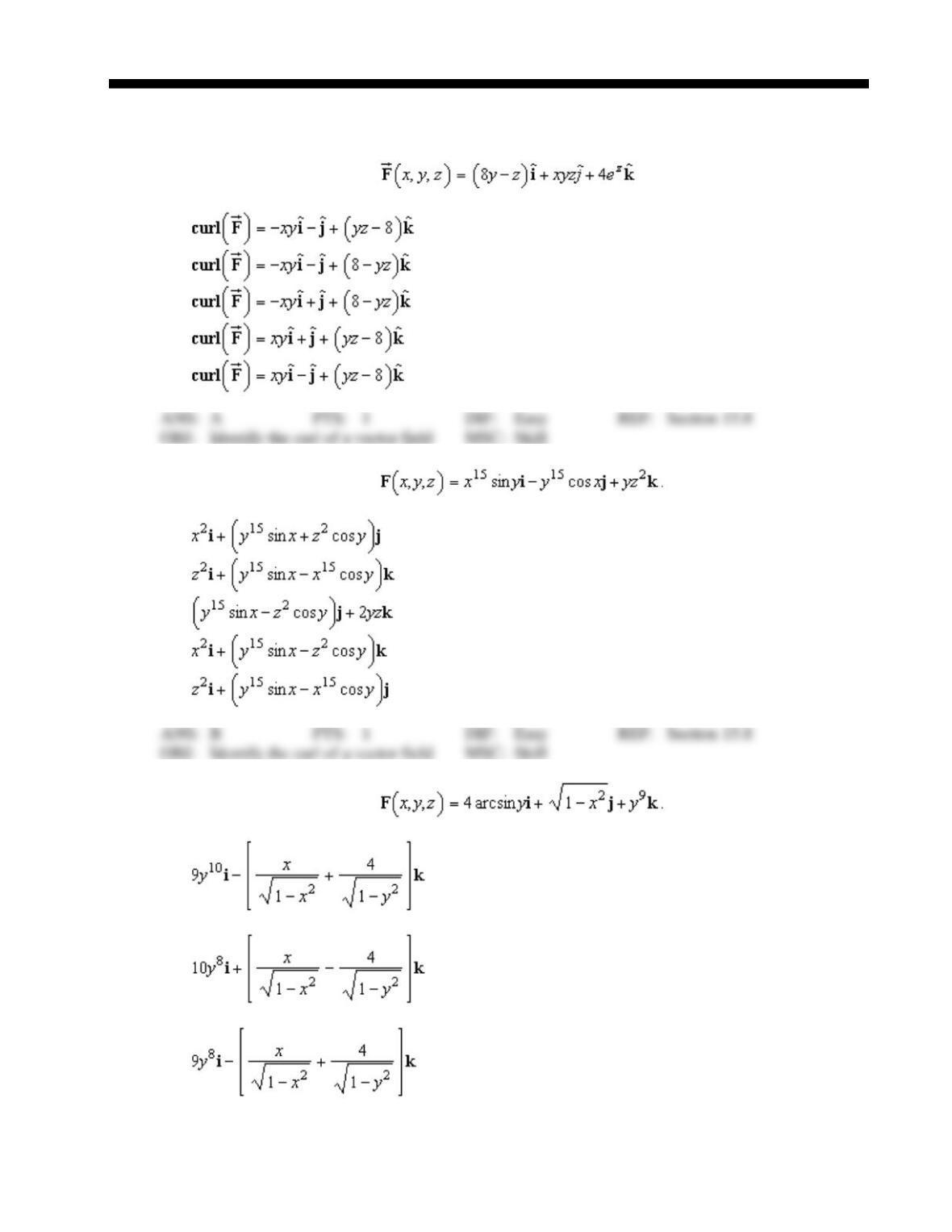
1. Find the curl of the vector field .
a.
b.
c.
d.
e.
2. Find the curl of the vector field
a.
b.
c.
d.
e.
3. Find the curl of the vector field
a.
b.
c.
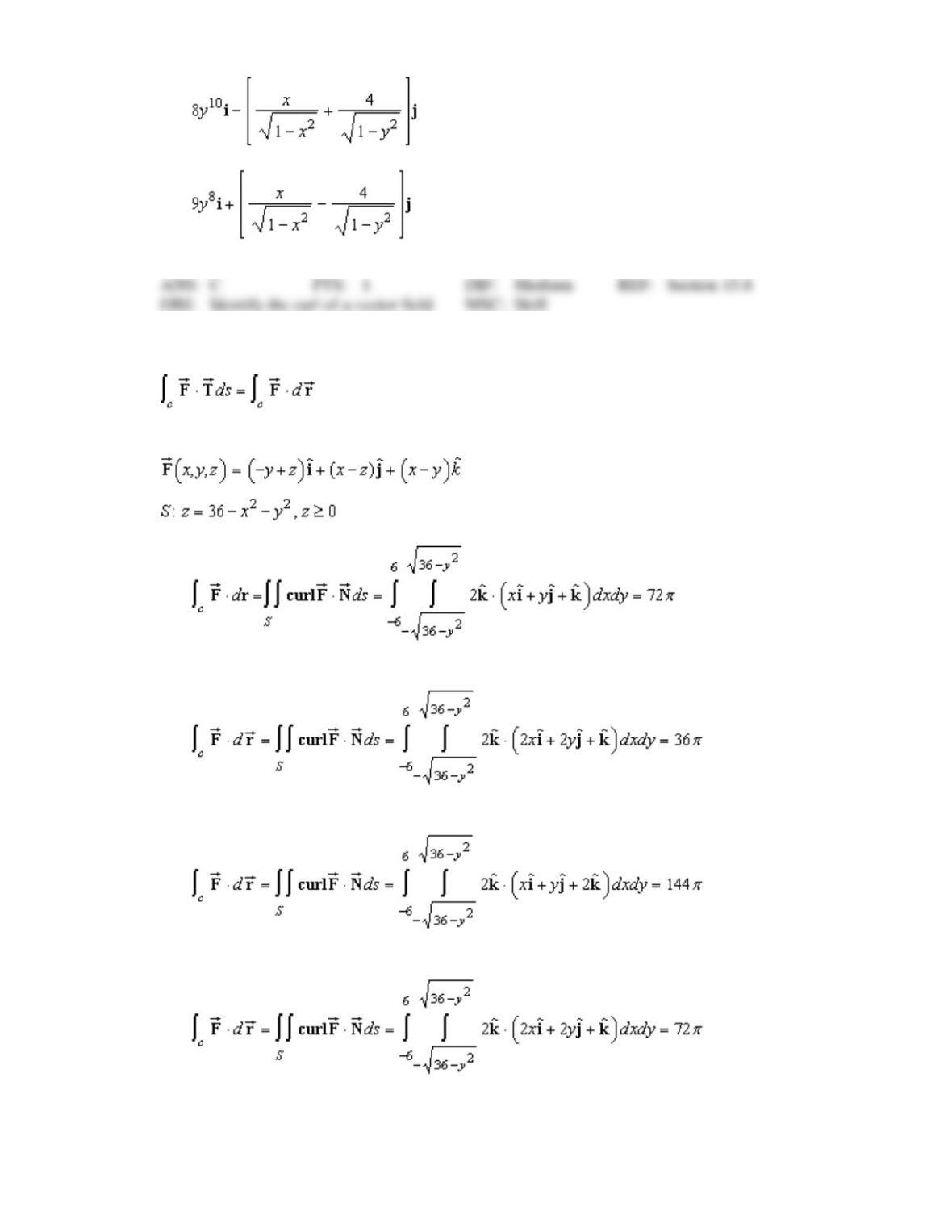
d.
e.
4. Verify Stokes’s Theorem by evaluating
as a line integral and as a double integral .
a.
b.
c.
d.
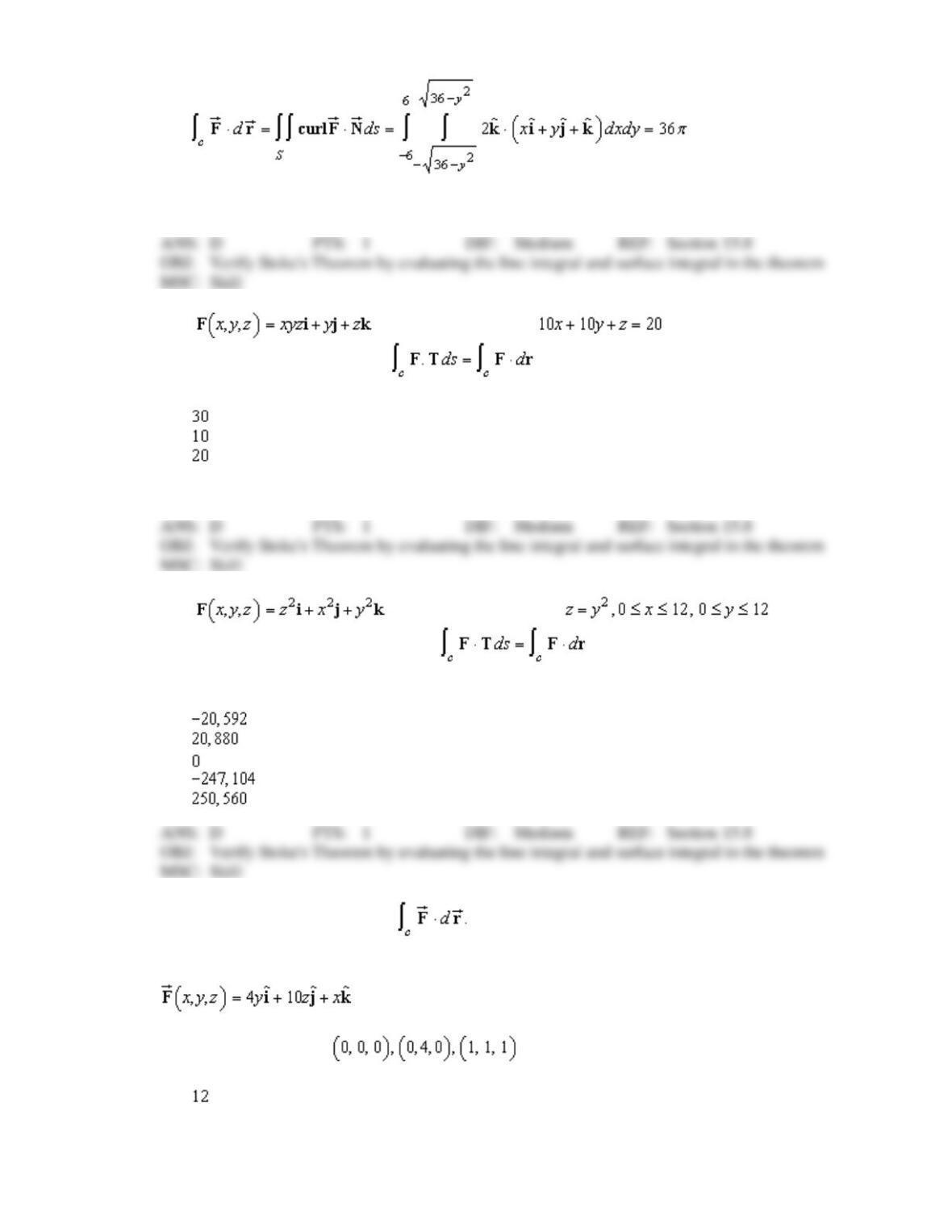
e.
5. Let and let S be the plane in the first octant. Verify
Stokes’s Theorem by evaluating as a line integral and as a double integral.
a.
b.
c.
d.
0
e.
1
6. Let and let S be the graph of .
Verify Stokes’s Theorem by evaluating as a line integral and as a double
integral.
a.
b.
c.
d.
e.
7. Use Stokes’s Theorem to evaluate Use a computer algebra system to verify your results.
Note: C is oriented counterclockwise as viewed from above.
C: triangle with vertices
a.
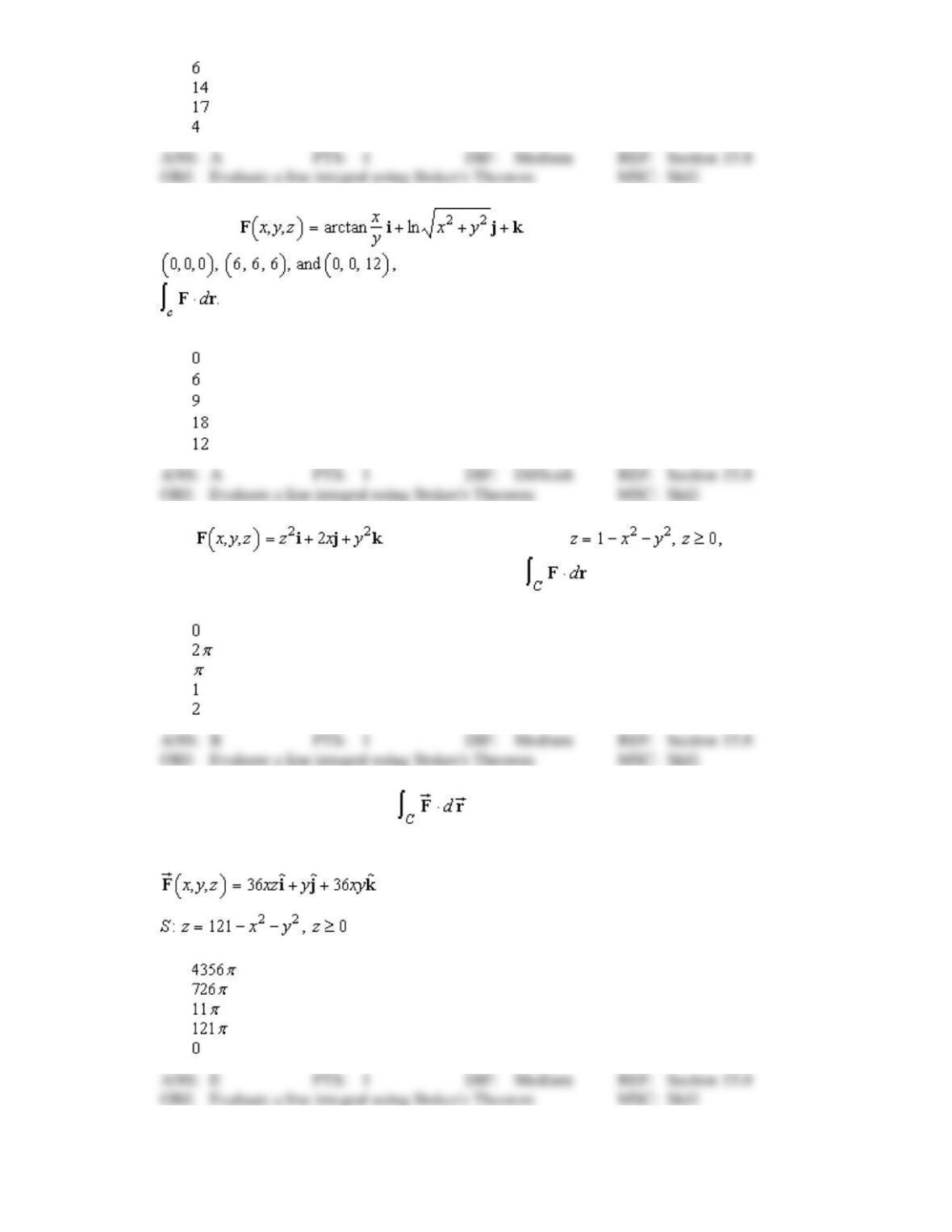
b.
c.
d.
e.
8. 143. Let and let C be the triangle with vertices of
oriented counterclockwise. Use Stokes’s Theorem to evaluate
a.
b.
c.
d.
e.
9. Let and let S be the graph of oriented
counterclockwise. Use Stokes’s Theorem to evaluate .
a.
b.
c.
d.
e.
10. Use Stokes’s Theorem to evaluate .Use a computer algebra system to verify your results.
Note: C is oriented counterclockwise as viewed from above.
a.
b.
c.
d.
e.
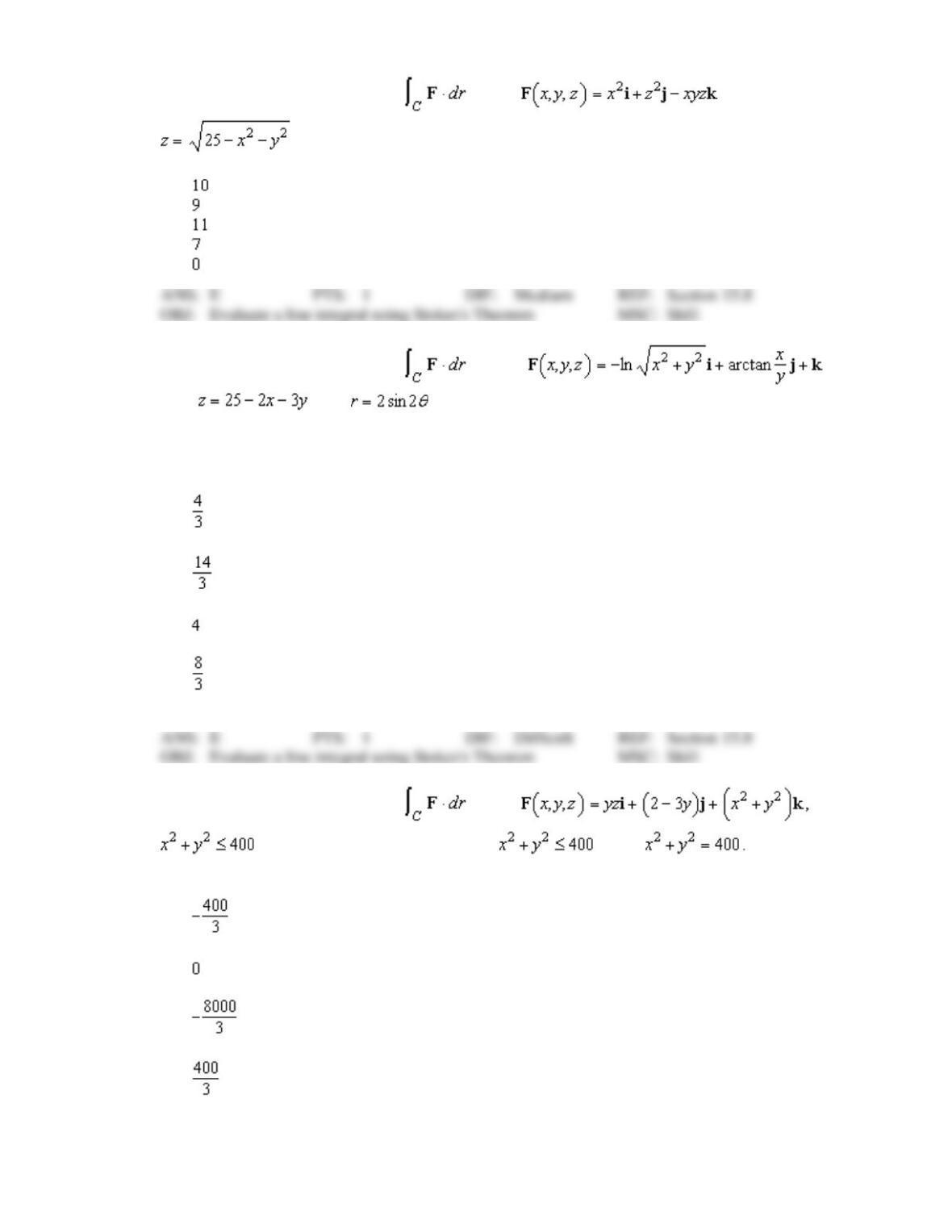
11. Use Stokes’s Theorem to evaluate where and S is
.Use a computer algebra system to verify your result.
a.
b.
c.
d.
e.
12. Use Stokes’s Theorem to evaluate where and
S is over in the first octant. Use a computer algebra system to verify
your result.
a.
0
b.
c.
d.
e.
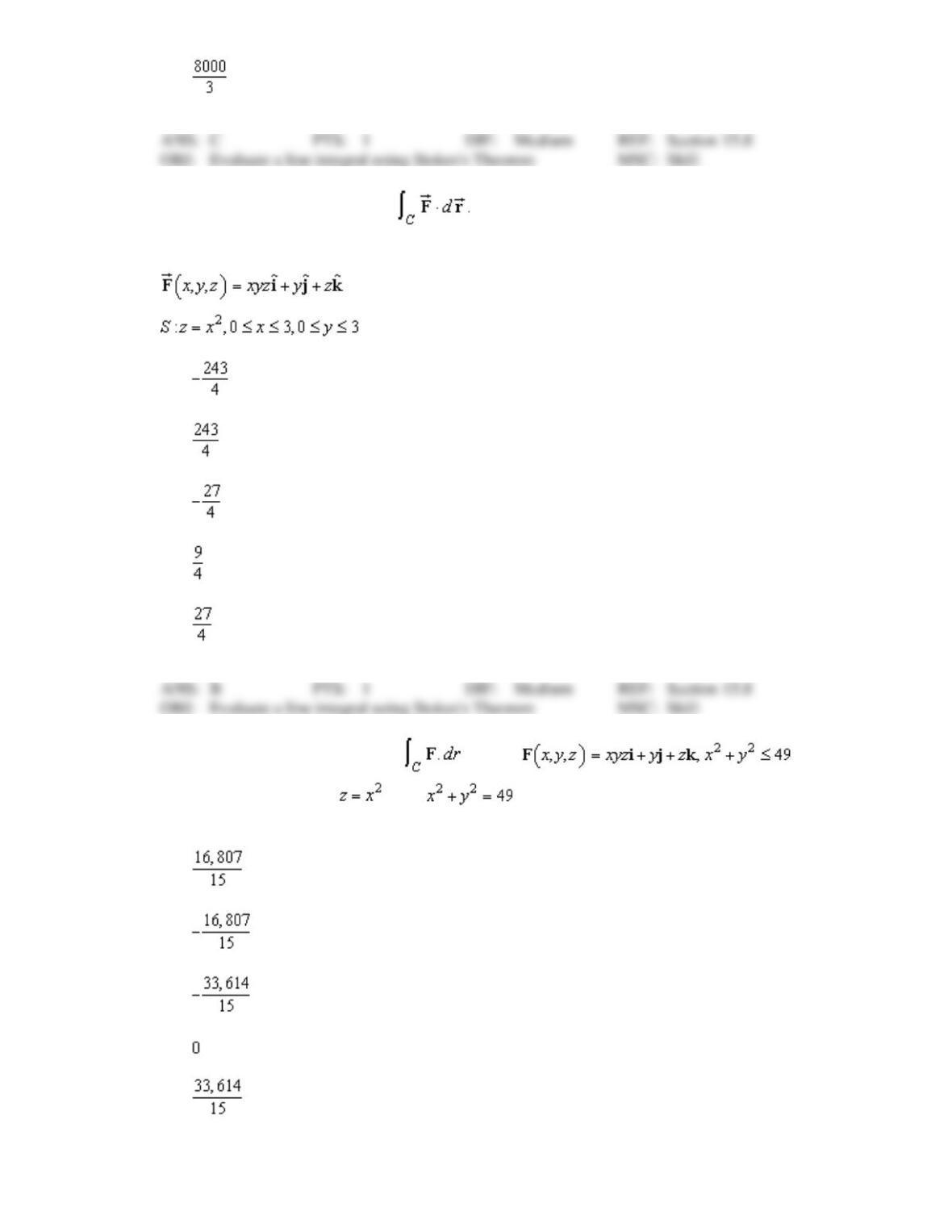
13. Use Stokes’s Theorem to evaluate where
and S is the first-octant portion of over Use a computer
algebra system to verify your result.
a.
b.
c.
d.
e.
14. Use Stokes’s Theorem to evaluate Use a computer algebra system to verify your results.
Note: C is oriented counterclockwise as viewed from above.
a.
b.
c.
d.
e.
15. Use Stokes’s Theorem to evaluate where and S is
the first-octant portion of over . Use a computer algebra system to verify your
result.
a.
b.
c.
d.
e.
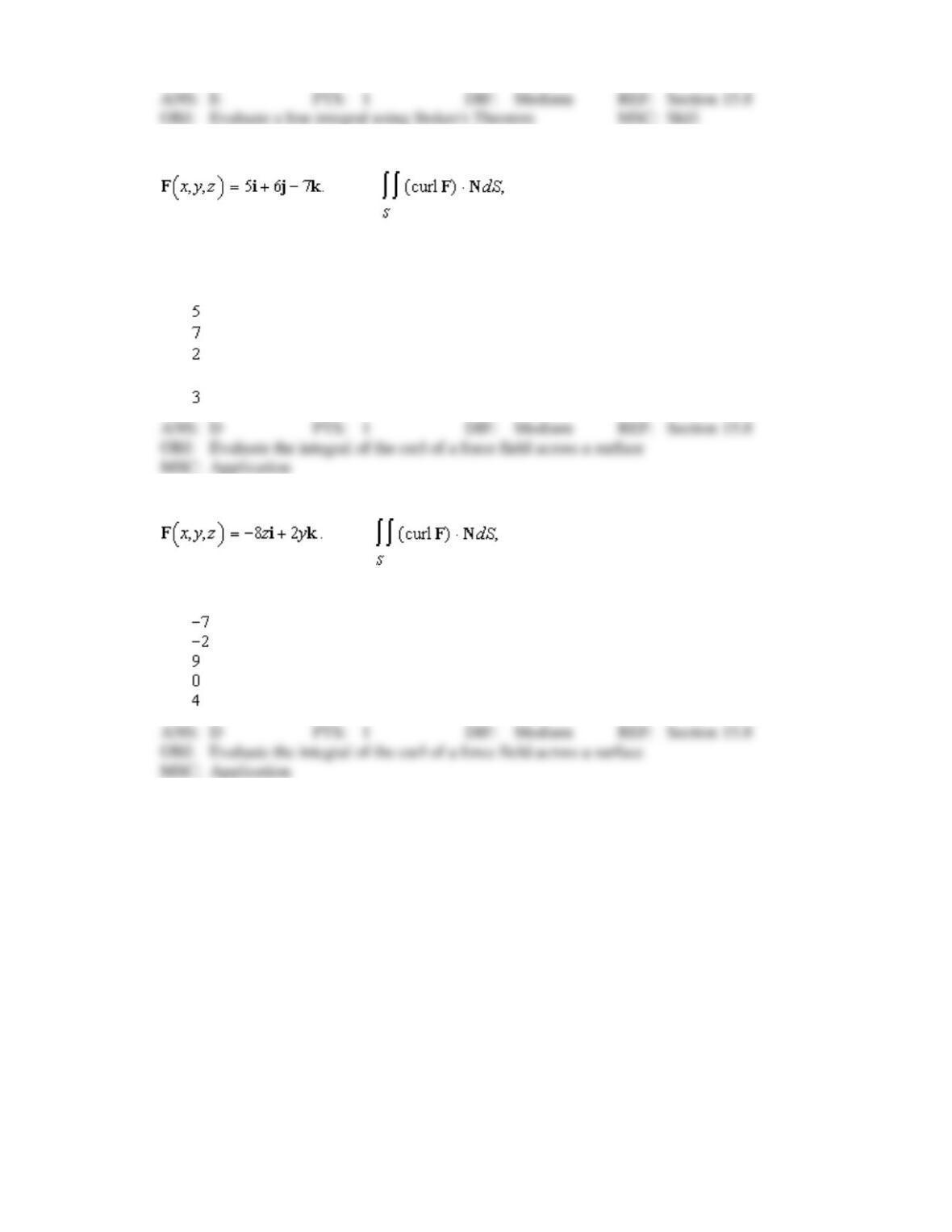
16. The motion of a liquid in a cylindrical container of radius 1 is described by the velocity field
Find where S is the upper surface of the cylindrical
container.
a.
b.
c.
d.
0
e.
17. The motion of a liquid in a cylindrical container of radius 1 is described by the velocity field
Find where S is the upper surface of the cylindrical
container.
a.
b.
c.
d.
e.