Chapter 15: Lean Accounting and Productivity Measurement
Materials (per pound)
$5.00
$5.50
Labor (per hour)
$7.00
$7.50
142. Information about Bodacious Corporation is as follows:
2014
2015
Output (units)
120,000
126,000
Selling price per unit
$25
$25
Input quantities:
Materials (pounds)
6,000
6,000
Labor (hours)
4,800
4,825
Input prices:
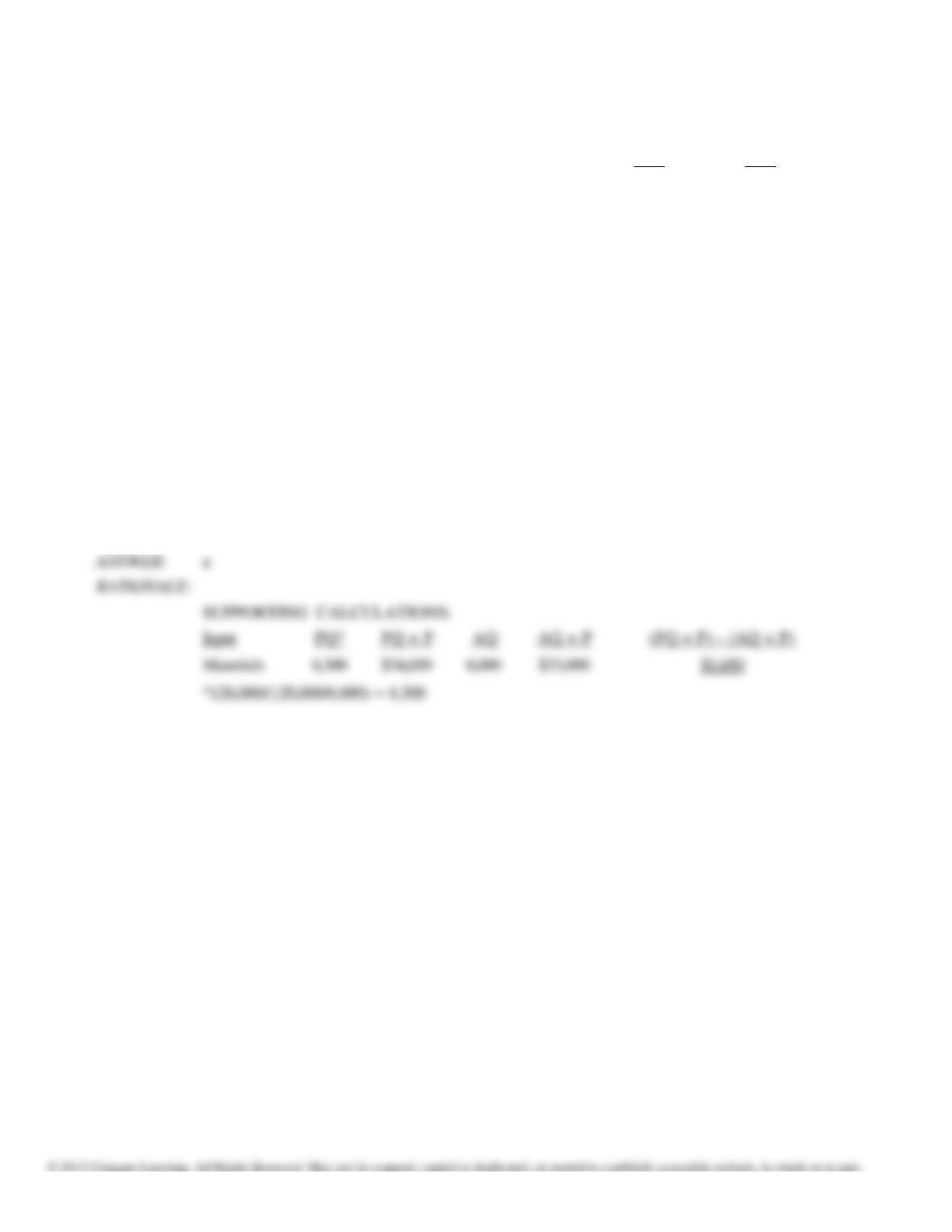
By how much did profits change as a result of changes in productivity related to materials?
a. $1,650.00 increase
b. $1,650.00 decrease
c. $937.50 decrease
d. $937.50 increase
Materials
Chapter 15: Lean Accounting and Productivity Measurement
Materials (per pound)
$5.00
$5.50
Labor (per hour)
$7.00
$7.50
143. Information about Bodacious Corporation is as follows:
2014
2015
Output (units)
120,000
126,000
Selling price per unit
$25
$25
Input quantities:
Materials (pounds)
6,000
6,000
Labor (hours)
4,800
4,875
Input prices:
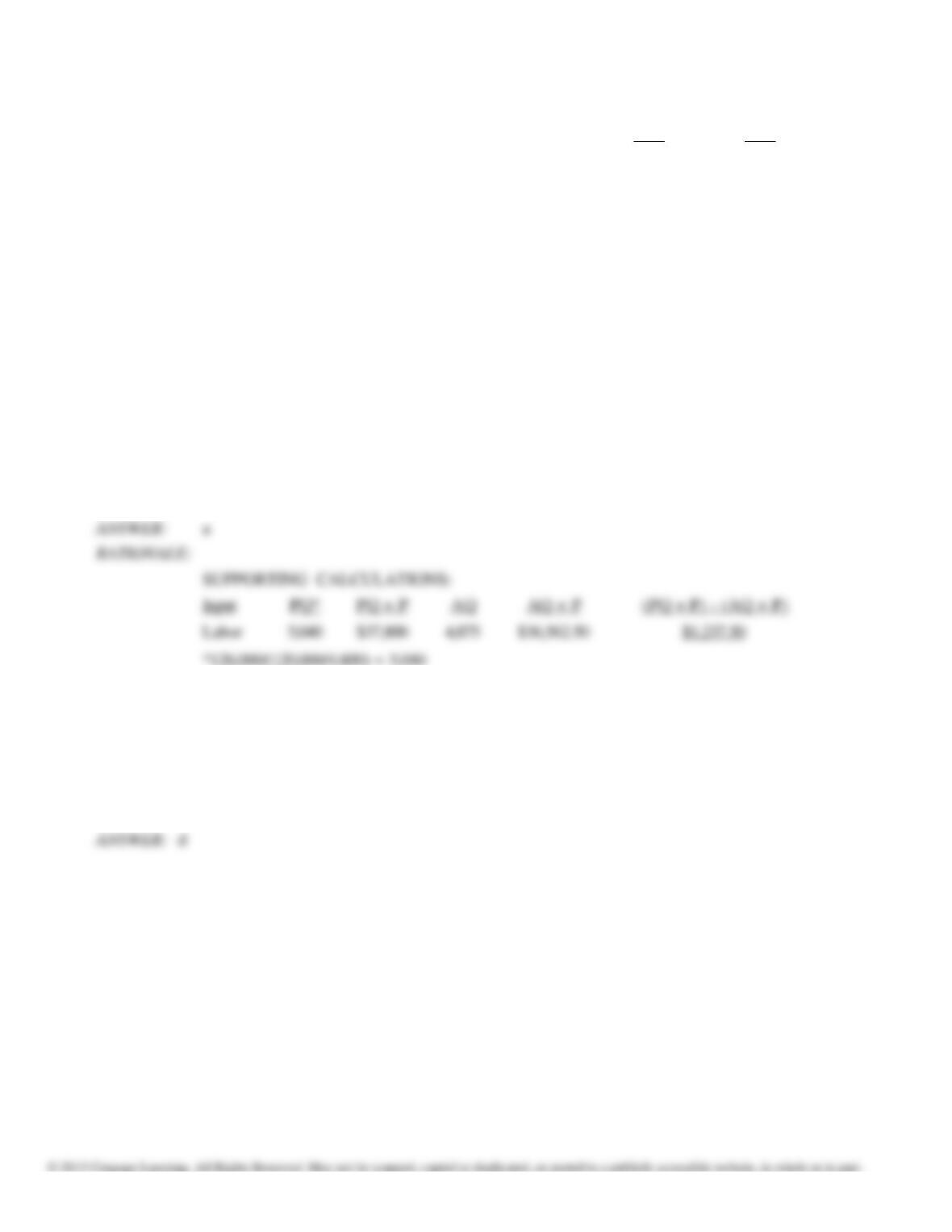
By how much did profits change as a result of changes in productivity related to labor?
a. $1,237.50 increase
b. $1,650.00 increase
c. $1,650.00 decrease
d. $1,237.50 decrease
144. The difference between the total profit change and the profit-linked productivity change is called:
a. Total productivity measurement
b. Profile measurement
c. Profit-linked productivity measurement
d. Price recovery component
Chapter 15: Lean Accounting and Productivity Measurement
145. At the end of 2014, Diatomic Company implemented a new labor process and redesigned its product with the
expectation that input usage efficiency would increase. Now, at the end of 2015, the president of the company
wants an assessment of the changes on the company’s productivity. The data needed for the assessment are as
follows:
2014
2015
Output
45,000
54,000
Output prices
$10
$10
Materials (lbs.)
22,500
22,950
Materials unit price
$3
$4
Labor (hrs.)
18,000
16,875
Labor rate per hour
$5
$5
Power (kwh)
11,250
14,625
Price per kwh
$2
$3
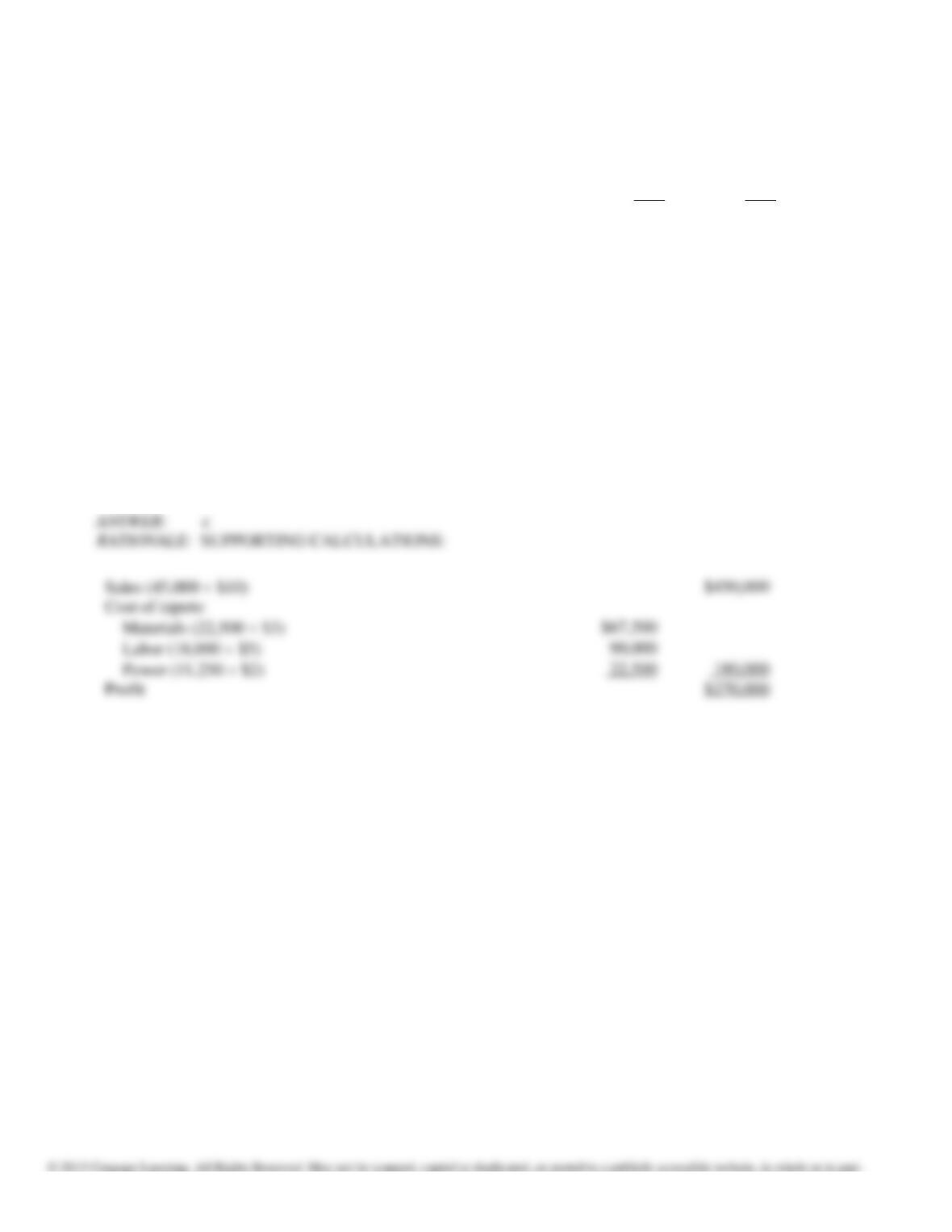
How much profit was generated in 2014?
a. $450,000
b. $292,500
c. $270,000
d. $180,000
Chapter 15: Lean Accounting and Productivity Measurement
146. At the end of 2014, Diatomic Company implemented a new labor process and redesigned its product with the
expectation that input usage efficiency would increase. Now, at the end of 2015, the president of the company
wants an assessment of the changes on the company’s productivity. The data needed for the assessment are as
follows:
2014
2015
Output
45,000
54,000
Output prices
$10
$10
Materials (lbs.)
22,500
22,950
Materials unit price
$3
$4
Labor (hrs.)
18,000
16,875
Labor rate per hour
$5
$5
Power (kwh)
11,250
14,625
Price per kwh
$2
$3
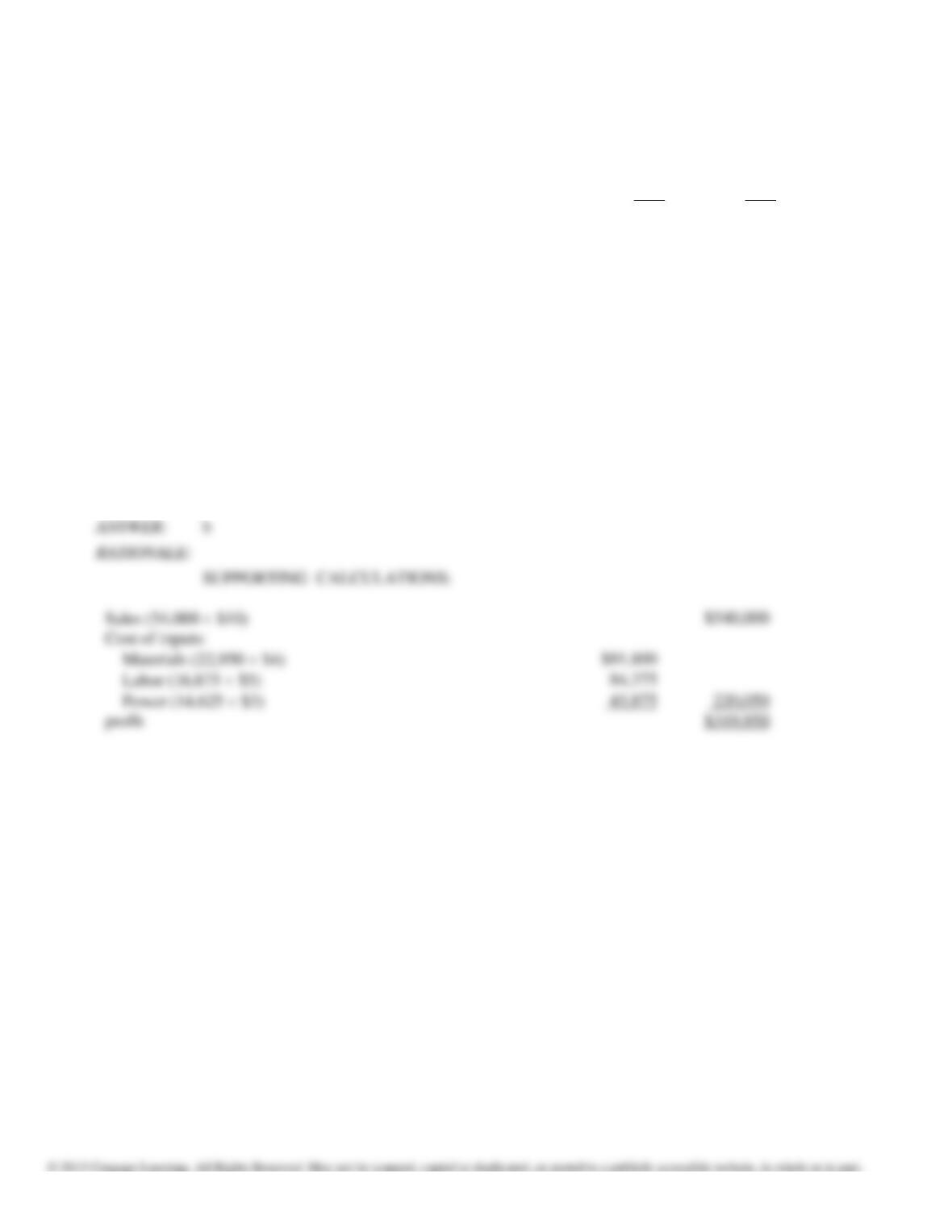
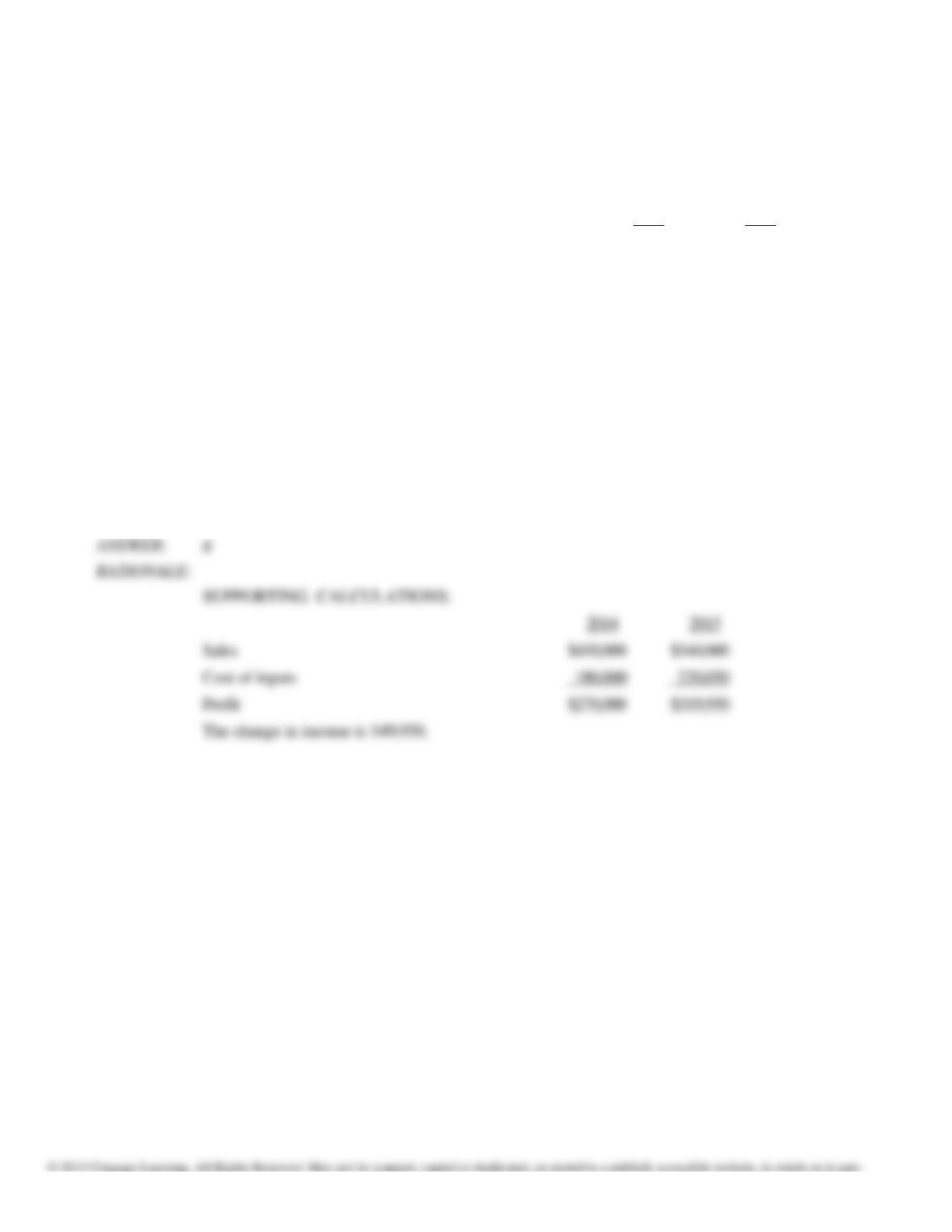
How much profit was generated in 2015?
a. $540,000
b. $319,950
c. $220,050
d. $270,000
Chapter 15: Lean Accounting and Productivity Measurement
147. At the end of 2014, Diatomic Company implemented a new labor process and redesigned its product with the
expectation that input usage efficiency would increase. Now, at the end of 2015, the president of the company
wants an assessment of the changes on the company’s productivity. The data needed for the assessment are as
follows:
2014
2015
Output
45,000
54,000
Output prices
$10
$10
Materials (lbs.)
22,500
22,950
Materials unit price
$3
$4
Labor (hrs.)
18,000
16,875
Labor rate per hour
$5
$5
Power (kwh)
11,250
14,625
Price per kwh
$2
$3
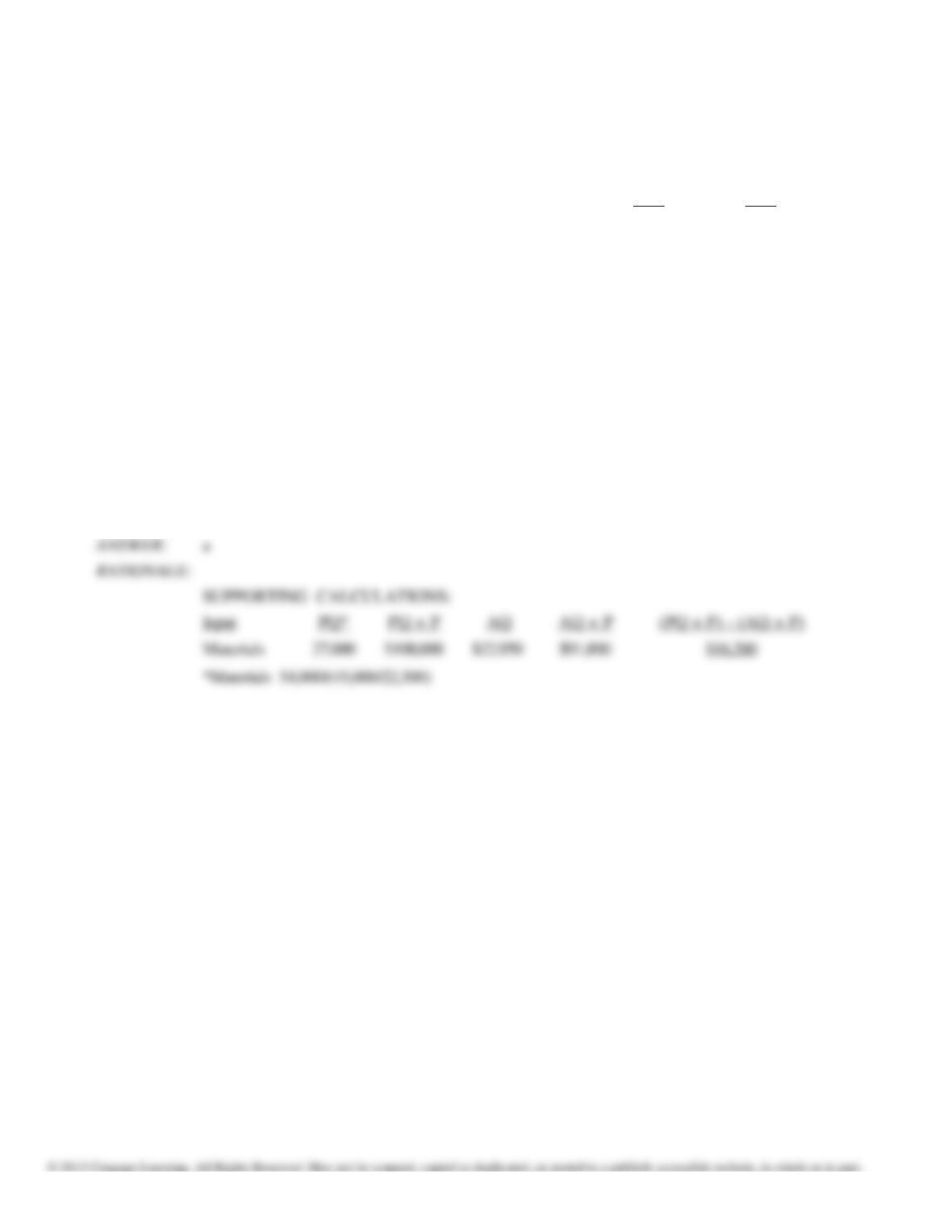
What is the total change in profits from 2014 to 2015?
a. $319,950
b. $270,000
c. $90,000
d. $49,950
Chapter 15: Lean Accounting and Productivity Measurement
148. At the end of 2014, Diatomic Company implemented a new labor process and redesigned its product with the
expectation that input usage efficiency would increase. Now, at the end of 2015, the president of the company
wants an assessment of the changes on the company’s productivity. The data needed for the assessment are as
follows:
2014
2015
Output
45,000
54,000
Output prices
$10
$10
Materials (lbs.)
22,500
22,950
Materials unit price
$3
$4
Labor (hrs.)
18,000
16,875
Labor rate per hour
$5
$5
Power (kwh)
11,250
14,625
Price per kwh
$2
$3
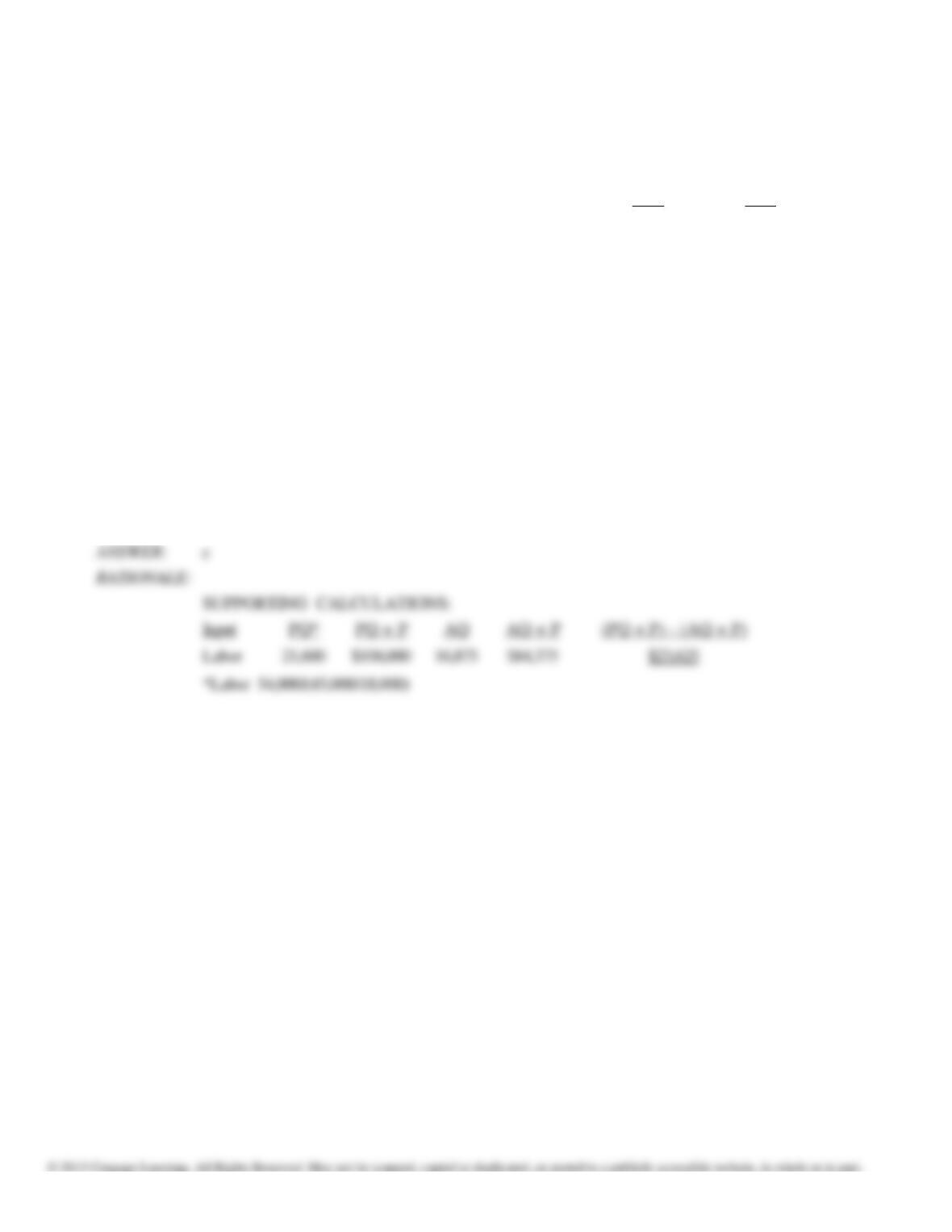
By how much did profit change as a result of profitability changes in materials?
a. $16,200 increase
b. $16,200 decrease
c. $36,000 decrease
d. $36,000 increase
Chapter 15: Lean Accounting and Productivity Measurement
149. At the end of 2014, Diatomic Company implemented a new labor process and redesigned its product with the
expectation that input usage efficiency would increase. Now, at the end of 2015, the president of the company
wants an assessment of the changes on the company’s productivity. The data needed for the assessment are as
follows:
2014
2015
Output
45,000
54,000
Output prices
$10
$10
Materials (lbs.)
22,500
22,950
Materials unit price
$3
$4
Labor (hrs.)
18,000
16,875
Labor rate per hour
$5
$5
Power (kwh)
11,250
14,625
Price per kwh
$2
$3
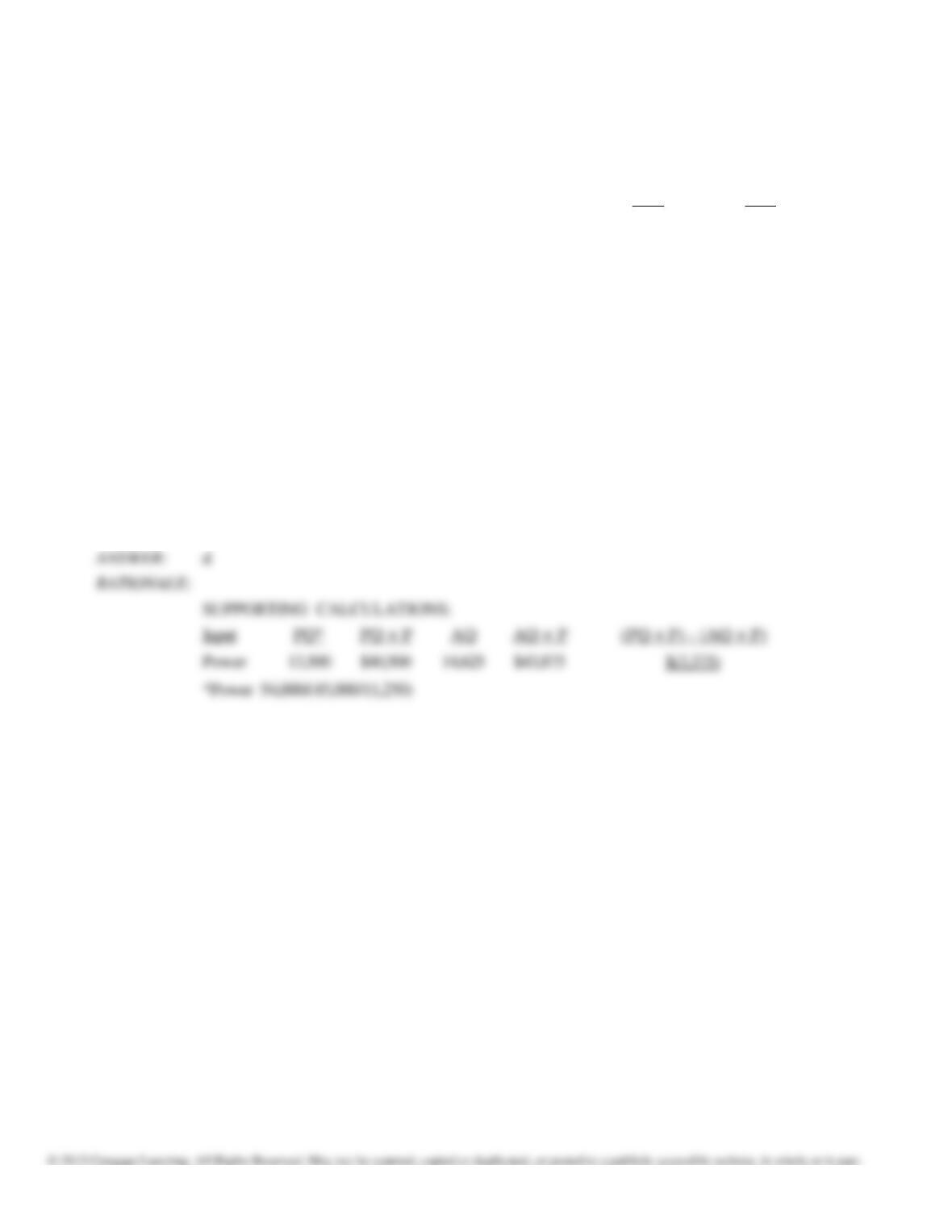
By how much did profit change as a result of profitability changes in labor?
a. $5,625 increase
b. $45,000 increase
c. $23,625 increase
d. $23,625 decrease
Chapter 15: Lean Accounting and Productivity Measurement
150. At the end of 2014, Diatomic Company implemented a new labor process and redesigned its product with the
expectation that input usage efficiency would increase. Now, at the end of 2015, the president of the company
wants an assessment of the changes on the company’s productivity. The data needed for the assessment are as
follows:
2014
2015
Output
45,000
54,000
Output prices
$10
$10
Materials (lbs.)
22,500
22,950
Materials unit price
$3
$4
Labor (hrs.)
18,000
16,875
Labor rate per hour
$5
$5
Power (kwh)
11,250
14,625
Price per kwh
$2
$3
By how much did profit change as a result of profitability changes in power?
a. $27,000 decrease
b. $10,125 decrease
c. $3,375 increase
d. $3,375 decrease
Chapter 15: Lean Accounting and Productivity Measurement
151. Information about Roosevelt Corporation is as follows:
2014
2015
Output (units)
10,000
12,000
Selling price per unit
$25
$25
Change in profits
$96,025
Profit-linked measurements:
Materials
$1,100
Labor
825
What is the price-recovery component?
a. $1,925
b. ($96,025)
c. $96,025
d. $94,100
152. Information about Kerkonian Corporation is as follows:
2014
2015
Output (units)
14,000
15,000
Selling price per unit
$8
$8
Change in profits
$5,687.50
Profit-linked measurements:
Materials
$(50.00)
Labor
(87.50)
What is the price-recovery component?
a.$5,825.00
b.$5,687.50
c.$5,550.00
d. $137.50

Chapter 15: Lean Accounting and Productivity Measurement
153. The profit linkage rate
a. calculates the cost of the inputs that would have been used in absence of any productivity change and
compares it to the cost of the inputs actually used for the current period.
b. calculates the cost of the inputs that would have been used in absence of any productivity change and
compares it to the cost of the inputs actually used for the prior period.
c. calculates the cost of the inputs that would have been used, plus any productivity changes and compares it to
the cost of the inputs actually used for the current period.
d. calculates the cost of the outputs that would have been produced and compares it to the cost of outputs
produced for the current period.
154. Information about DeLorean Corporation is as follows:
2014
2015
Output (units)
40,000
42,000
Selling price per unit
$25
$25
Change in profits
$48,012.50
Profit-linked measurements:
Materials
$550.00
Labor
412.50
What is the price-recovery component?
a. ($962.50)
b. $962.50
c. $40,012.50
d. $47,050.00
155. In calculating the profit linkage, PQ represents the productivity-neutral quantity of input. How is PQ calculated?
a. PQ = Current period output / Base period output
b. PQ = Current period output / Base period productivity ratio
c. PQ = Prior period output / Base period productivity ratio
d. PQ = Current period output / Standard quantity output
Chapter 15: Lean Accounting and Productivity Measurement
156. At the end of 2014, Cardigan Corporation implemented a new labor process and redesigned its product with the
expectation that input usage efficiency would increase. Now, at the end of 2015, the president of the company
wants an assessment of the changes on the company’s productivity. The data needed for the assessment are as
follows:
2014
2015
Output
20,000
24,000
Output prices
$10
$10
Change in profits
$22,200
Profit-linked measurements:
Materials
$ 7,200
Labor
10,500
Power
(1,500)
What is the price-recovery component?
a. ($6,000)
b. $16,200
c. $6,000
d. $22,200
157. Describe the objectives and characteristics of a Lean Manufacturing system.
Chapter 15: Lean Accounting and Productivity Measurement
158. Lampost Manufacturing provides the following
information: To produce a unit of product:
Mixing department 4 minutes per unit
Molding department 7 minutes per unit
Casting department 9 minutes per unit
Finishing department 5 minutes per unit
There is a wait time of 5 minutes before the mixing department begins a batch, 5 minutes between the mixing
and molding departments, a move and pre-wait between molding and casting of 10 minutes, and a move and
pre-wait between the casting and finishing departments of 8 minutes.
Required:
a. How long does it take to produce a batch of 20 units under a traditional
manufacturing approach?
b. What is the bottleneck department?
c. What is the production rate? What is the cycle time of operation?
d. What would be the time to produce the first unit under a cellular manufacturing setup?
Chapter 15: Lean Accounting and Productivity Measurement
159. Salvavidas Incorporated has the following departmental structure for producing its products:
A consultant designed a cellular manufacturing structure for the same product:
The times given represent the time required to process one unit of product.
Required:
a. Calculate the time required to produce a batch of 10 units using a batch
processing departmental structure.
b. Calculate the time required to produce 10 units using cellular manufacturing.
c. How much manufacturing time will the cellular manufacturing structure save for a
batch of 10 units?
Chapter 15: Lean Accounting and Productivity Measurement