Chapter 15
Multiple Choice
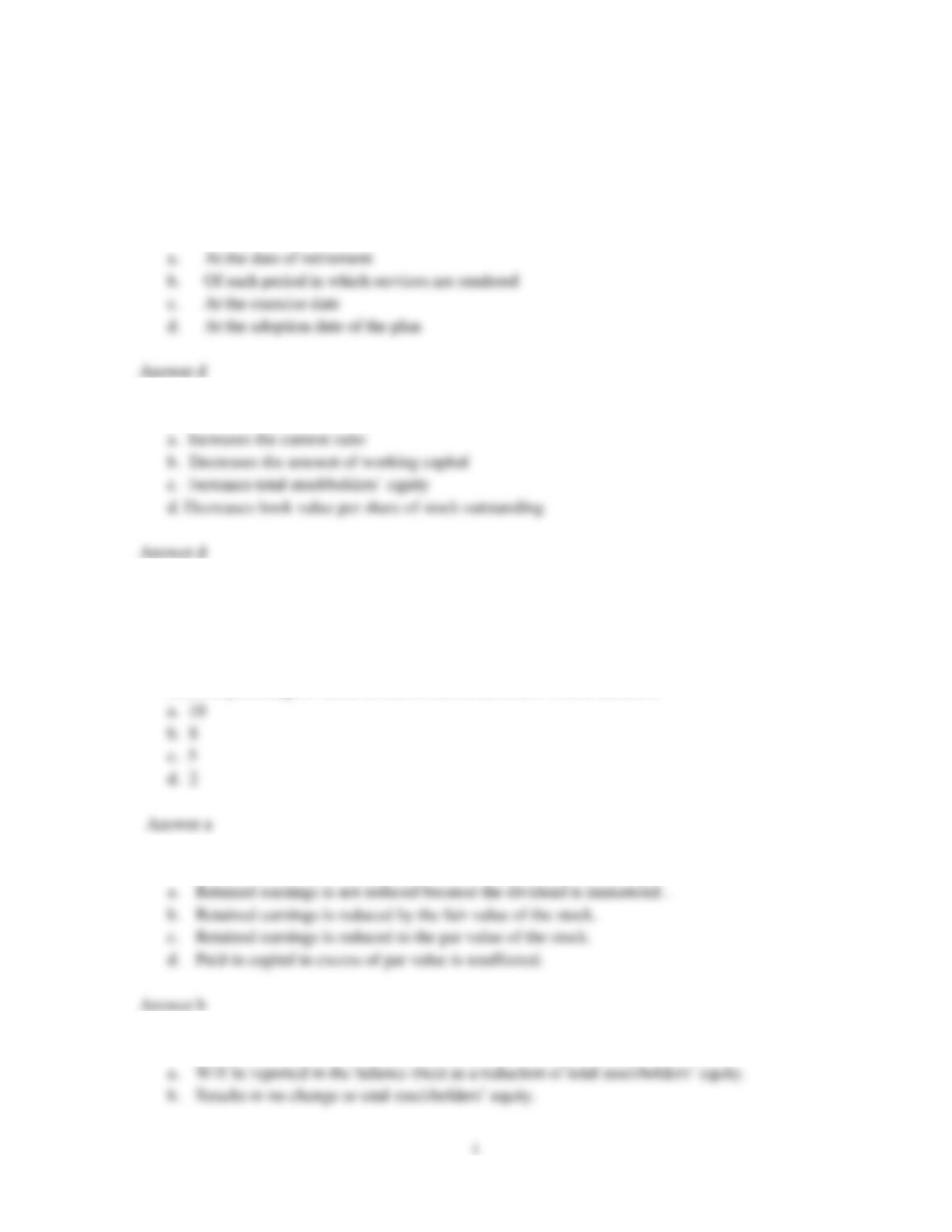
1. For a compensatory stock option plan for which the date of grant and measurement date are the
same, compensation cost should be recognized in the income statement
2. Payment of a dividend in stock
3. The directors of Corel Corporation, whose $40 par value common stock is currently selling at $50
per share, have decided to issue a stock dividend. The corporation has an authorization for
200,000 shares of common, has issued 110,000 shares of which 10,000 shares are now held as
treasury stock, and desires to capitalize $400,000 of the retained earnings balance. To accomplish
this, the percentage of stock dividend that the directors should declare is
4. When a stock dividend is small, for example a 10% stock dividend,
5. The par value method of reporting a treasury stock transaction
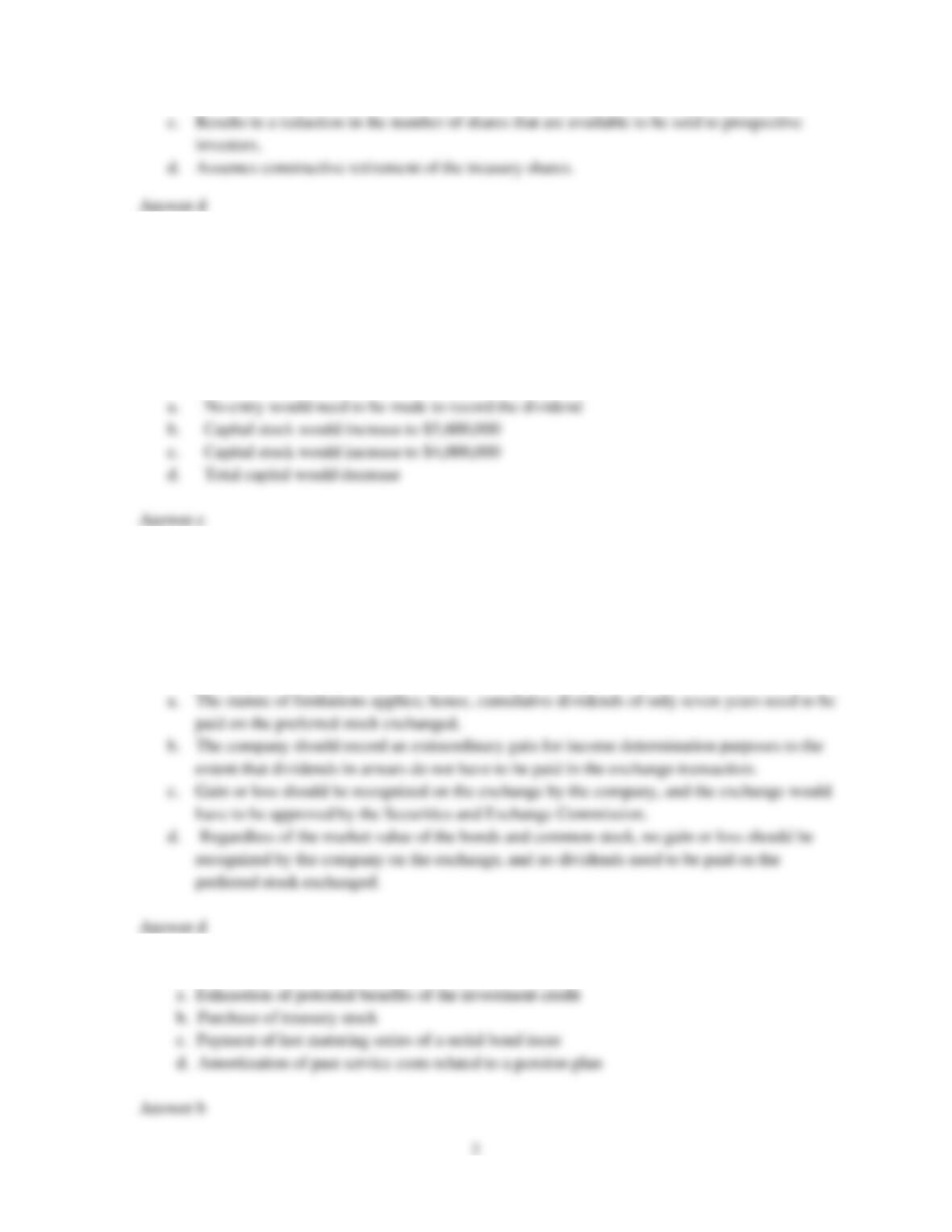
6. On December 31, 2014, when the Conn Company’s stock was selling at $36 per share, its capital
accounts were as follows:
Capital stock (par value $20, 100,000 shares issued) $2,000,000
Premium on capital stock 800,000
Retained Earnings 4,550,000
If a 100 percent stock dividend were declared and the par value per share remained at
$20
7. A company has not paid dividends on its cumulative nonvoting preferred stock for 20 years.
Healthy earnings have been reported each year, but they have been retained to support the growth
of the company. The board of directors appropriately authorized management to offer the
preferred shareholders an exchange of bonds and common stock for all the preferred stock. The
exchange is about to be consummated. Which of the following best describes the effect of the
exchange on the company?
8. A restriction of retained earnings is most likely to be required by the
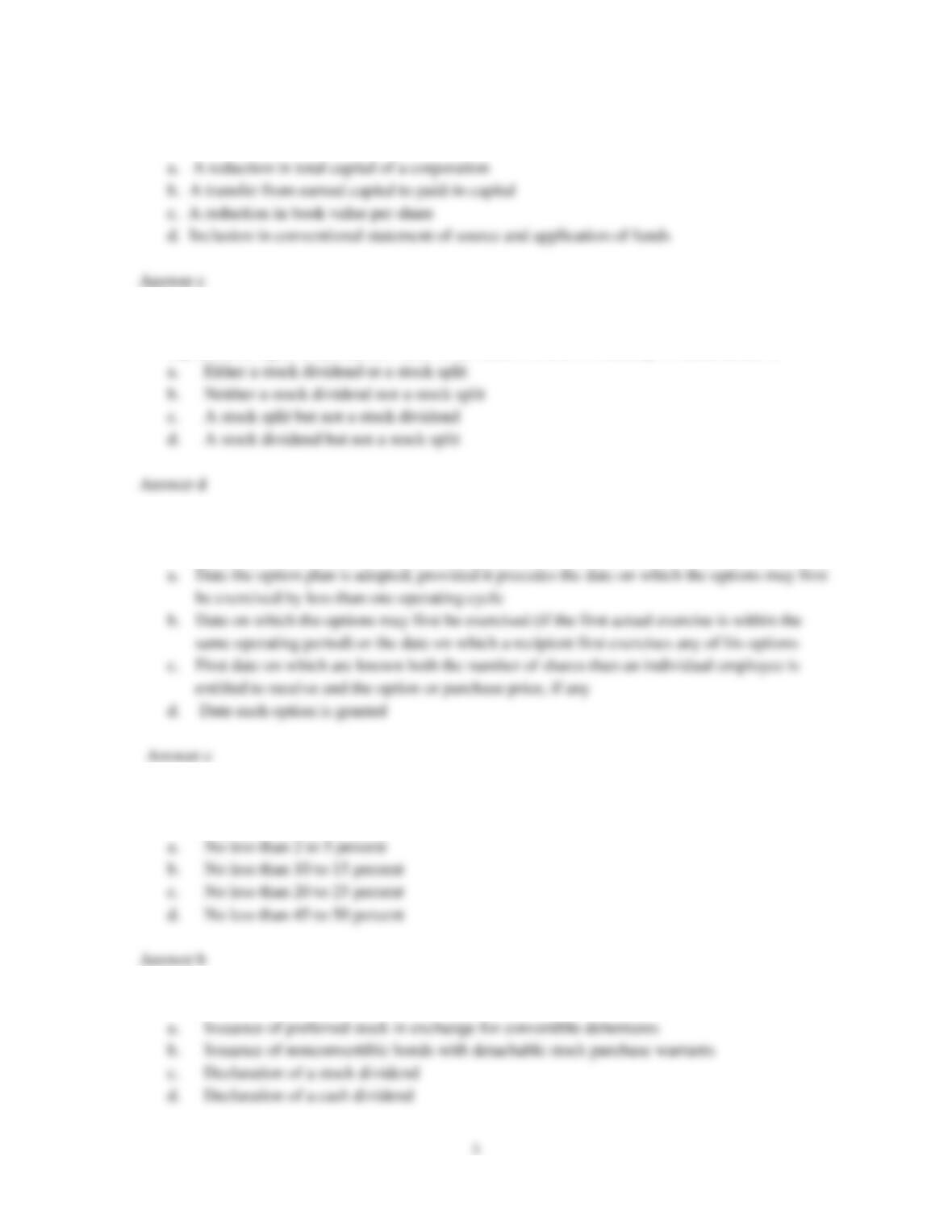
9. A feature common to both stock splits and stock dividends is
10. Assuming the issuing company has only one class of stock, a transfer from retained earnings to
capital stock equal to the market value of the shares issued is ordinarily a characteristic of
11. When a stock option plan for employees is compensatory, the measurement date for determining
compensation cost is the
12. As a minimum, how large in relation to total outstanding shares may a stock distribution be
before it should be accounted for as a stock split instead of a stock dividend?
13. The dollar amount of total stockholders’ equity remains the same when there is a (an)
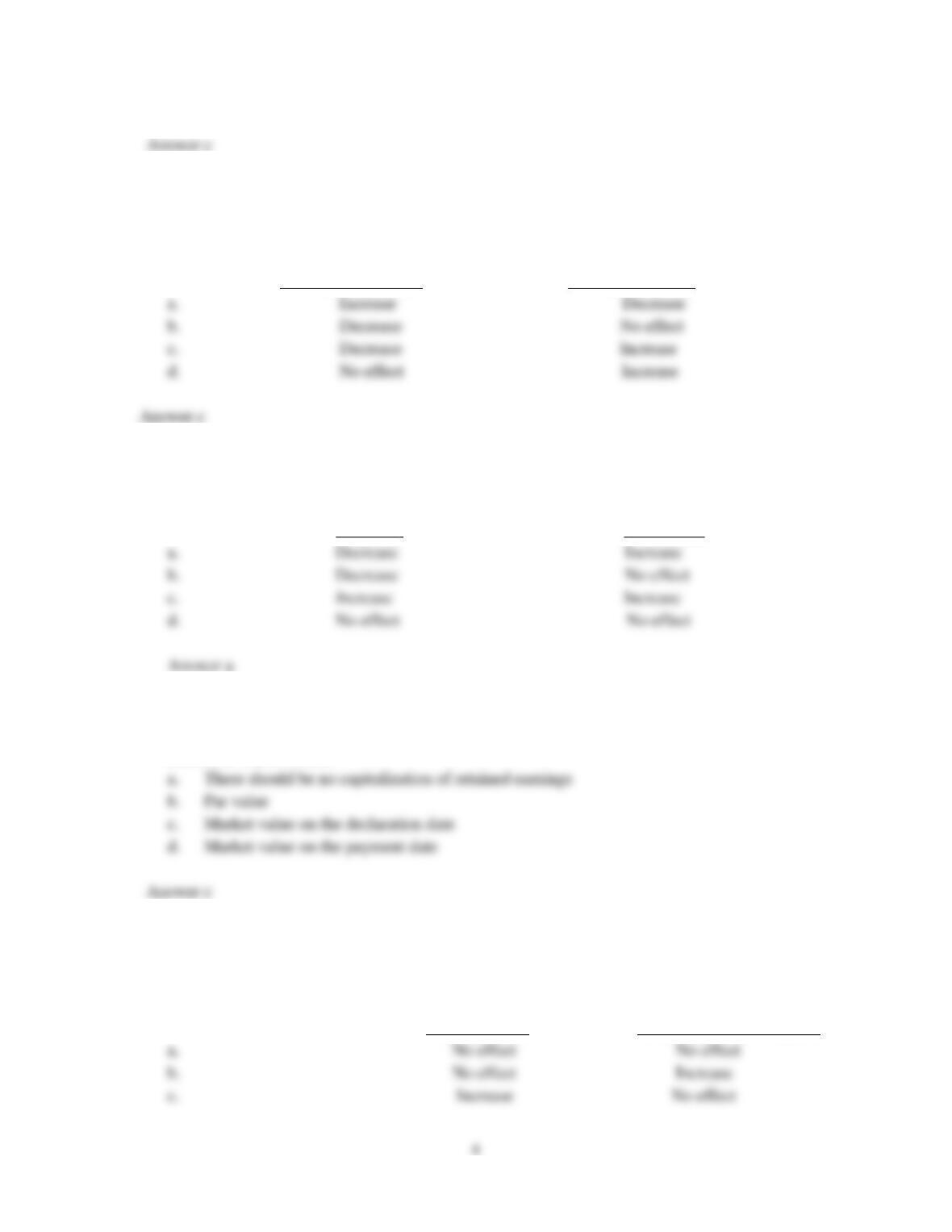
14. A company with a substantial deficit undertakes a quasi-reorganization. Certain assets will be
written down to their present fair market value. Liabilities will remain the same. How would the
entries to record the quasi-reorganization affect each of the following?
Contributed Capital Retained Earnings
15. What is the most likely effect of a stock split on the par value per share and the number of shares
outstanding?
Par Value Number of shares
Per share outstanding
16. Gilbert Corporation issued a 40percent stock split-up of its common stock that had a par value of
$10 before and after the split-up. At what amount should retained earnings be capitalized for the
additional shares issued?
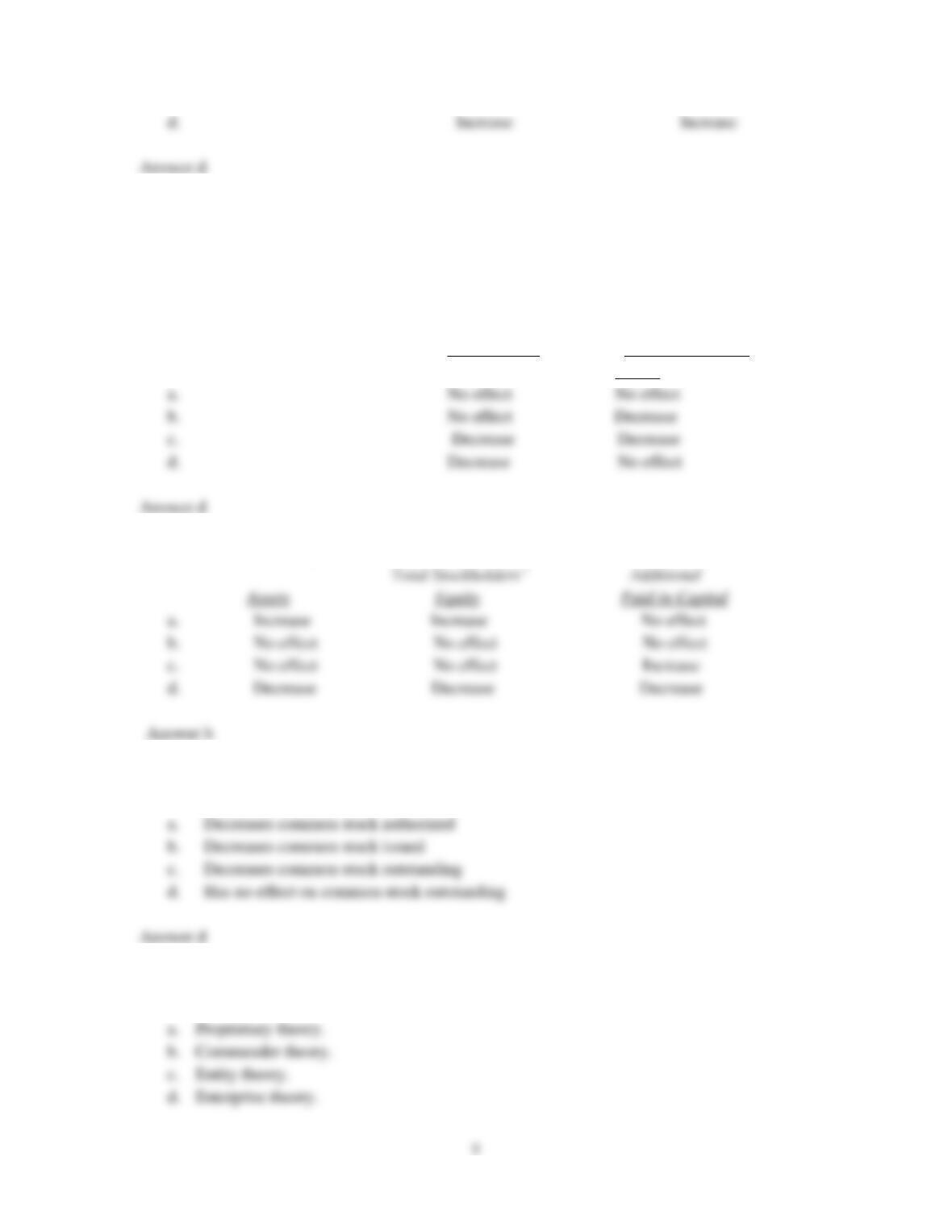
17. How would the declaration and subsequent issuance of a 10 percent stock dividend by the issuer
affect each of the following when the market value of the shares exceeds the par value of the
stock?
Common Stock Additional Paid-in Capital
18. A company with a $2,000,000 deficit undertakes a quasi-reorganization on November 1, 2014.
Certain assets will be written down by $400, 000 to their present fair market value. Liabilities will
remain the same. Capital stock was $3,000,000 and additional paid-in capital was $1,000,000
before the quasi-reorganization. How would the entries to accomplish these changes on
November 1, 2014, affect each of the following?
Capital Stock Total Stockholders’
Equity
19. How would a stock split affect each of the following?
20. The purchase of treasury stock
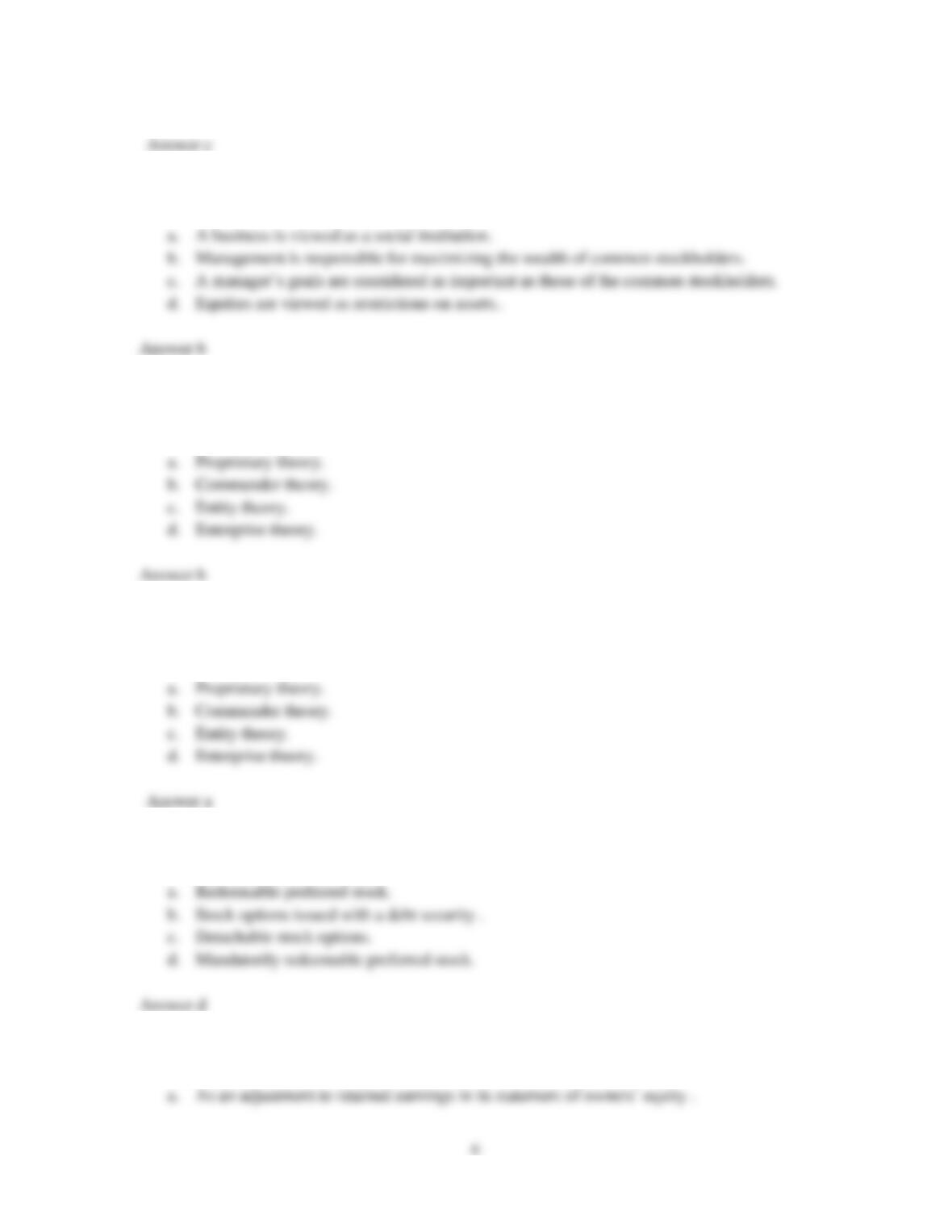
21. The equation, assets = equities, expresses which of the following theories of equity?
22. Under the residual equity theory
23. Under which of the theories of equity is a manager’s goals considered as important as those of the
common stockholder.
24. Which of the theories of equity is consistent with the definition of equity that is found in
Statement of Financial Accounting Concepts No. 6?
25. Which of the following securities must be reported as a liability because they have the
characteristics of both liabilities and equity, but the liability characteristic is dominant?
26. When a dividend paid to stockholders who own mandatorily redeemable preferred stock, the
company must report the dividend
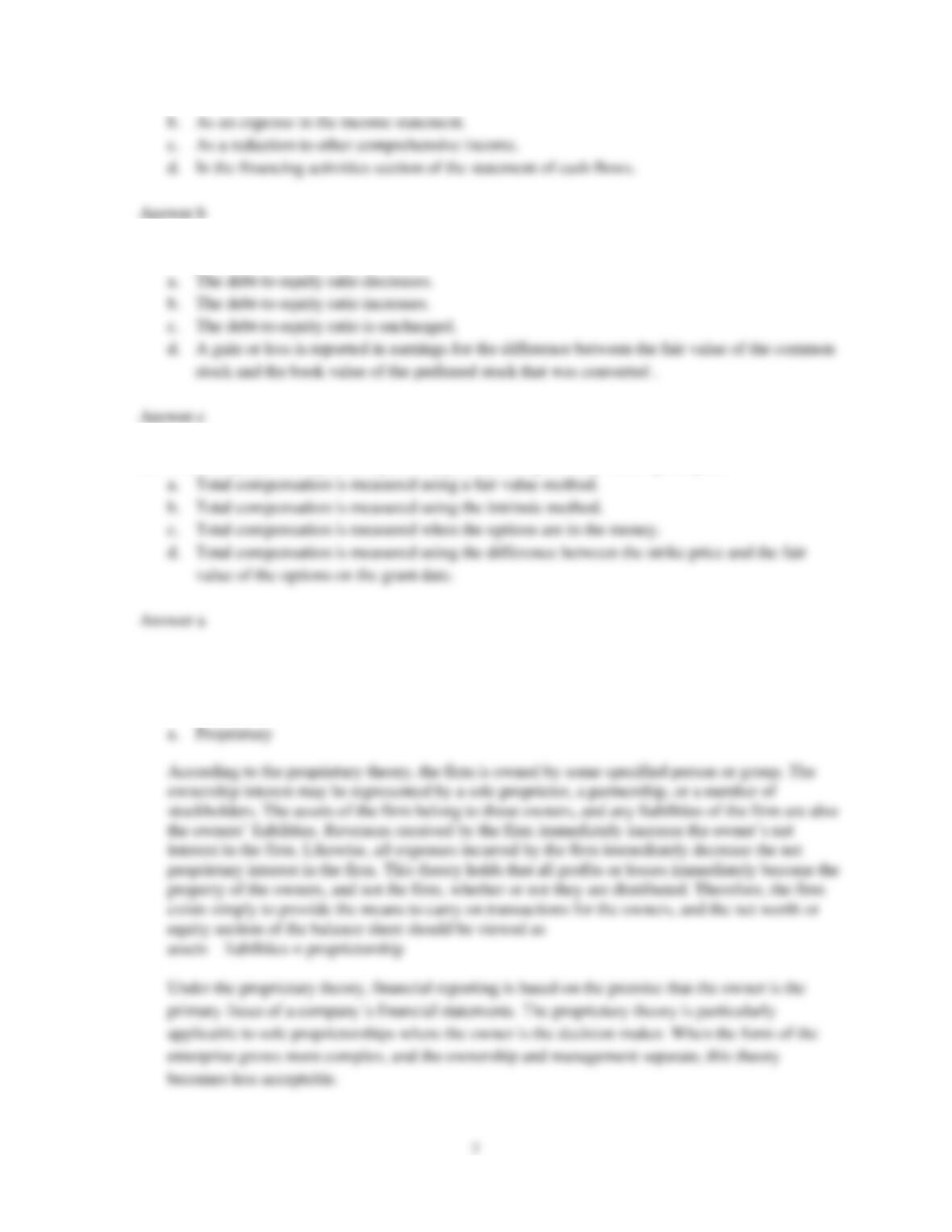
27. When preferred stock is converted to common stock
28. When employees are granted options as part of a compensatory stock option plan,
Essay
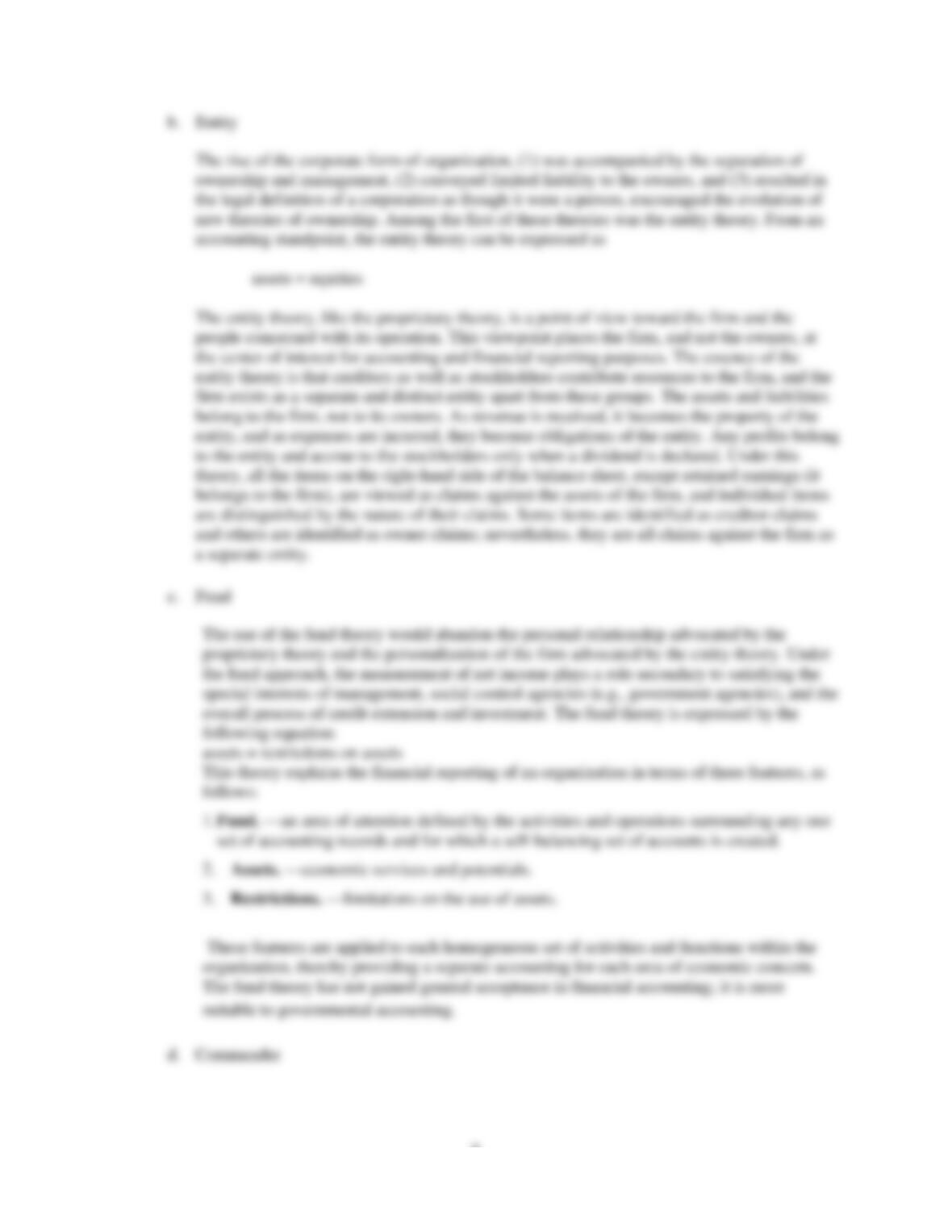
1. Discuss the following theories of equity:
8
10
2. What is mandatorily redeemable preferred stock and how is it accounted for under the provisions
of SFAS No. 150 (FASB ASC 480-10)?
3. List and discuss four advantages of the corporate form of organization..
4. Discuss the components of a corporation’s balance sheet capital section.
5. Discuss the following special features of preferred stock:
12
6. How did SFAS No. 123R change accounting for stock options?
7. Define and discuss accounting for stock warrants.
8. Discuss the difference between a stock dividend and a stock split. Include in your discussion, the
reasons a company might issue either a stock dividend or a stock split.
9. Define and discuss the two methods of accounting for treasury stock.
10. Obtain the financial statements of a company and ask the students to compute the: