Exam
Name___________________________________
MULTIPLE CHOICE. Choose the one alternative that best completes the statement or answers the question.
1)
The lowest and most precise level of the U.S. soil classification system is
1)
A)
soil order.
B)
soil group.
C)
soil series.
D)
soil family.
2)
The multiyear period of severe wind erosion and soil loss occurred in the Great Plains during the
1930s is known as
2)
A)
desertification.
B)
the Grapes of Wrath.
C)
the Dust Bowl.
D)
the Black Blizzard.
3)
Which of the following is CORRECT about the U.S. soil classification system?
3)
A)
The Soil Taxonomy is hierarchical, consisting of six categories from soil series to soil order.
B)
Soil variation is too complex for a single classification system, so many regional classification
systems are used within the U.S.
C)
It is primarily based on pedogenic regimes in which each soil–forming process is attached to a
climatic region.
D)
The soil classification system was finalized in 1975 and no additional changes to it will be
made.
4)
Worldwide, desertification is affecting an estimated ________ people.
4)
A)
100,000
B)
1,000,000
C)
5,000,000
D)
1,500,000,000
5)
Why is cation–exchange capacity (CEC) an important soil characteristic?
5)
A)
CEC is an indication of the soil permeability; the lower the CEC the higher the permeability.
B)
CEC is used to infer soil texture without having to use a soil texture triangle.
C)
CEC is a measure of soil fertility; the higher the CEC the higher the soil fertility.
D)
CEC is an indirect way to measure soil pH; it indicates whether the soil is neutral, alkaline, or
acidic.
6)
Salinization is likely to occur
6)
A)
in humid climate regions.
B)
in areas of high potential evapotranspiration.
C)
in the tropics.
D)
in areas characterized by coniferous forests.
7)
A plant that is unable to extract needed water from soil has reached its
7)
A)
field capacity.
B)
wilting point.
C)
permeability.
D)
porosity.
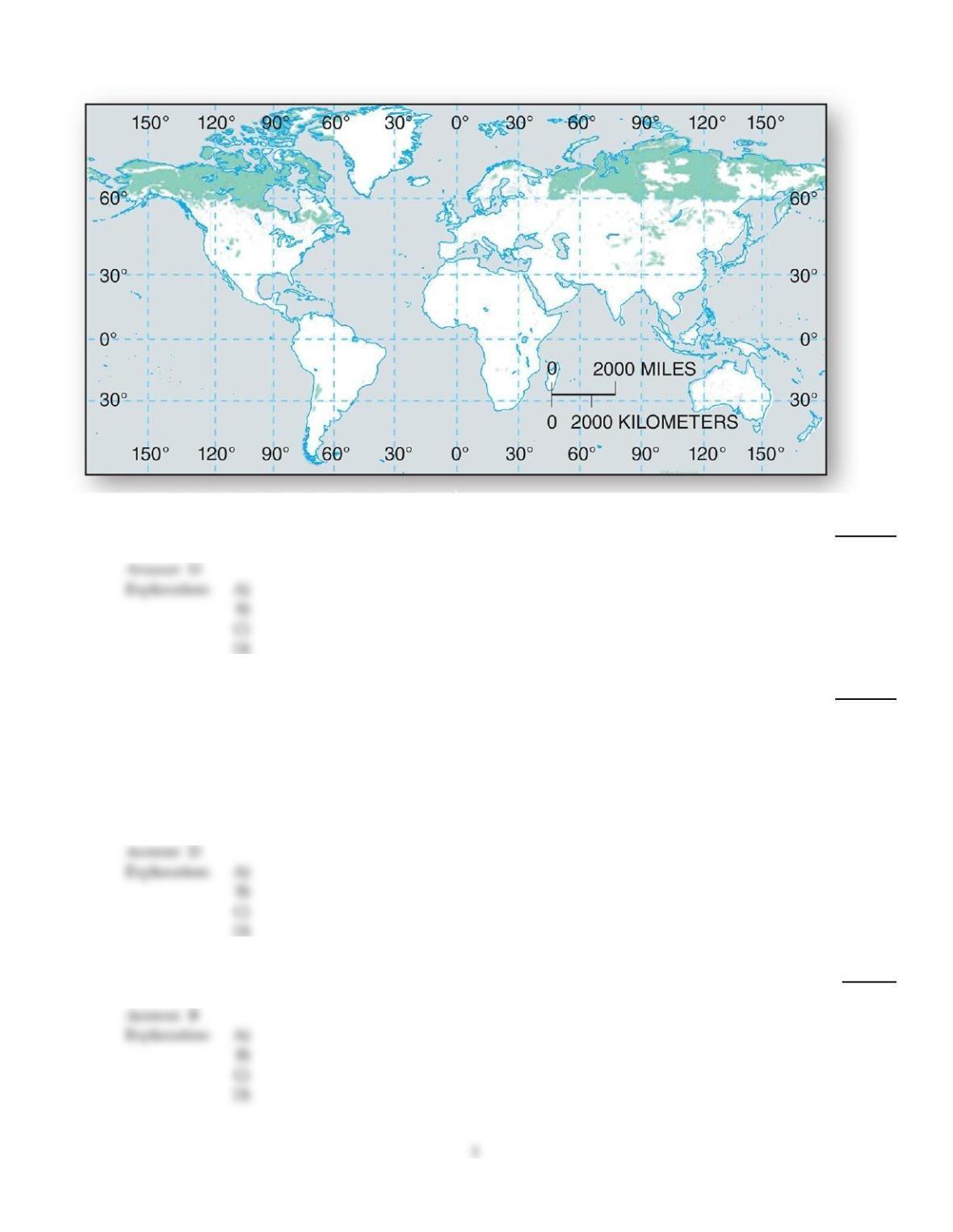
8)
These high–latitude, periglacial soils contain about half of the pool of global carbon.
8)
A)
Mollisols
B)
Oxisols
C)
Spodosols
D)
Gelisols
9)
Which of the following best describes the role of biological activity in soil development?
9)
A)
Broadleaf trees tend to increase the alkalinity of soil, whereas needleleaf trees increase the
acidity.
B)
Plant roots provide channels for air and water movement in soils.
C)
Earthworms increase soil porosity and contribute to soil movement and organic content.
D)
All organisms living in, on, and over the soil, influence soil development and characteristics:
they can influence the pH, the organic matter, chemical content, and biological content of
soils.
10)
Which soil order occupies the most land area worldwide?
10)
A)
Mollisols
B)
Aridisols
C)
Oxisols
D)
Andisols

11)
A vertical cross section of soil extending from the surface to the deepest extent of plant root activity
or to the regolith and bedrock is known as a
11)
A)
polypedon.
B)
pedon.
C)
soil profile.
D)
soil horizon.
12)
In terms of pedogenic regimes, the process that results in an accumulation of humus overlaying a
thick, water saturated layer of clay in cold, wet climates with poor drainage conditions is
12)
A)
podzolization.
B)
salinization.
C)
gleization.
D)
laterization
E)
calcification.
Explanation:
13)
Which of the following is NOT a physical property used to distinguish soils?
13)
A)
Temperature
B)
Porosity
C)
Texture
D)
Color
E)
Moisture
Explanation:
Explanation:
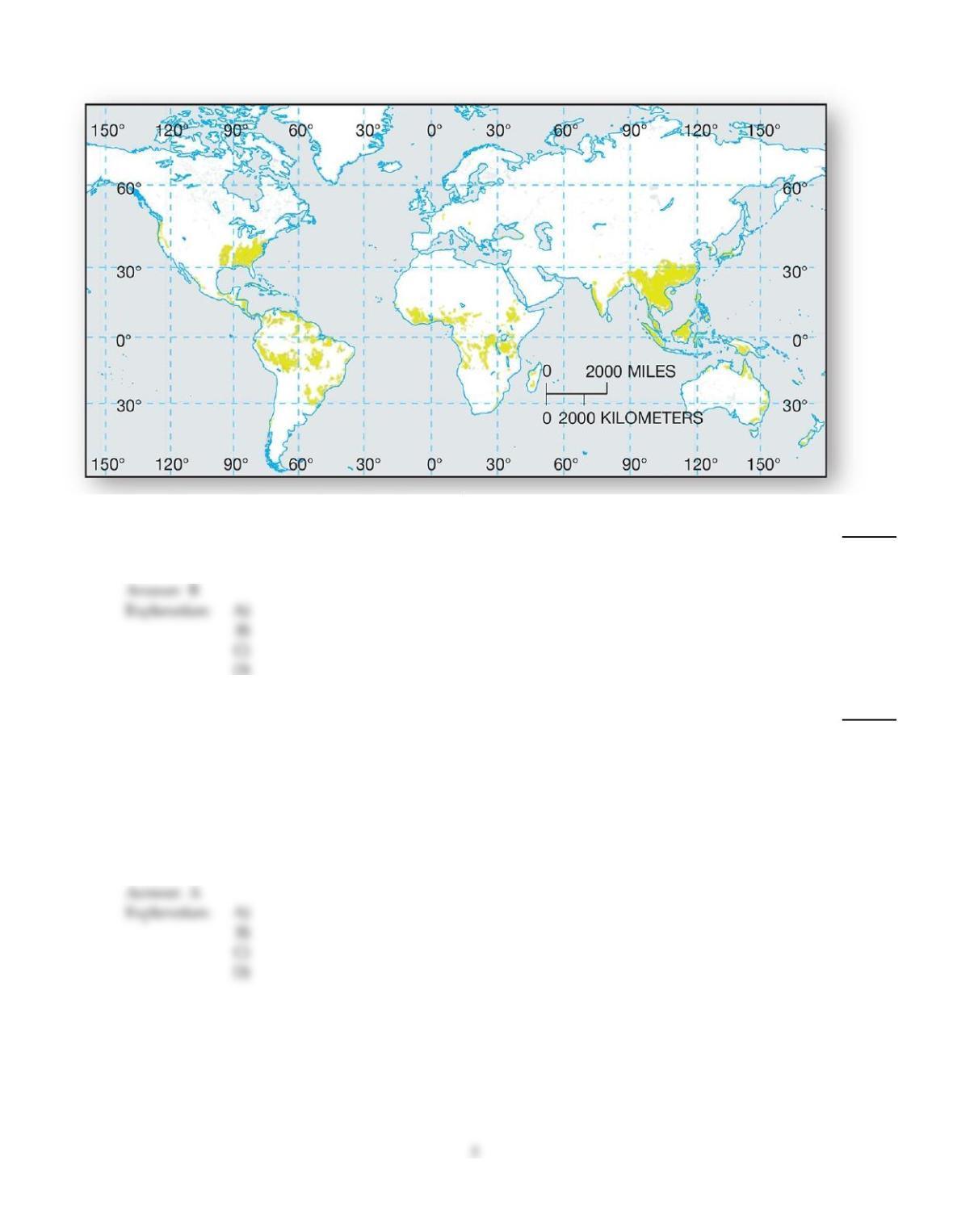
14)
Relatively high precipitation in the regions in which these soils are found cause greater mineral
alterations and more eluvial leaching than in other soils.
14)
A)
Oxisols
B)
Ultisols
C)
Gelisols
D)
Andisols
15)
In regards to soil–formation, which of the following best describes the role of climate?
15)
A)
Temperature and moisture determine the chemical reactions, organic activity, and water
movement within soils.
B)
Because all soils are ancient, they show the climatic conditions of the period in which they
formed.
C)
Relative humidity and atmospheric pressure are the dominant climatic factors that influence
soil development.
D)
Of the five principle soil–forming factors, climate is the least significant with little correlation
between soil and climates worldwide.
16)
In which of the following regions would one likely find Spodosols?
16)
A)
Tropical rainforests
B)
Northern coniferous forests
C)
Deserts and semiarid areas
D)
Savannas and grasslands
17)
Which of the following soil horizon designations is the CORRECT sequence from the surface to the
bedrock?
17)
A)
O, E, C, B, A
B)
A, B, C, O, R
C)
O, A, E, B, C
D)
S, O, I, L
18)
The practice of leaving crop residue on the field between plantings to help prevent soil erosion is
known as
18)
A)
shifting cultivation.
B)
no–till agriculture.
C)
swidden.
D)
slash and burn agriculture.
19)
The smallest natural lump or cluster of soil particles is known as a
19)
A)
profile.
B)
separate.
C)
horizon.
D)
ped.
20)
Which of the following is among the most mature soils on Earth?
20)
A)
Andisols
B)
Entisols
C)
Oxisols
D)
Inceptisols
21)
Which of the following is CORRECT regarding soil color?
21)
A)
Color reflects composition and chemical makeup of a soil.
B)
Soil color is a relatively unimportant physical property of soil.
C)
Soil color is used solely to determine the moisture content of soildarker soils have a higher
moisture content, whereas lighter soils have less water content.
D)
Dark soils always indicate high organic content.
22)
Carbon dioxide concentrations in soil are ________ than in the atmosphere because of ________.
22)
A)
lower; plant photosynthesis
B)
higher; ongoing respiration in the ground
C)
higher; decay of dead plants and animals
D)
lower; transpiration
23)
Soil structure can be defined as which of the following?
23)
A)
platy
B)
prismatic
C)
blocky
D)
crumb or granular
E)
Crumb or granular, platy, blocky, or prismatic are all type of soil structure.
24)
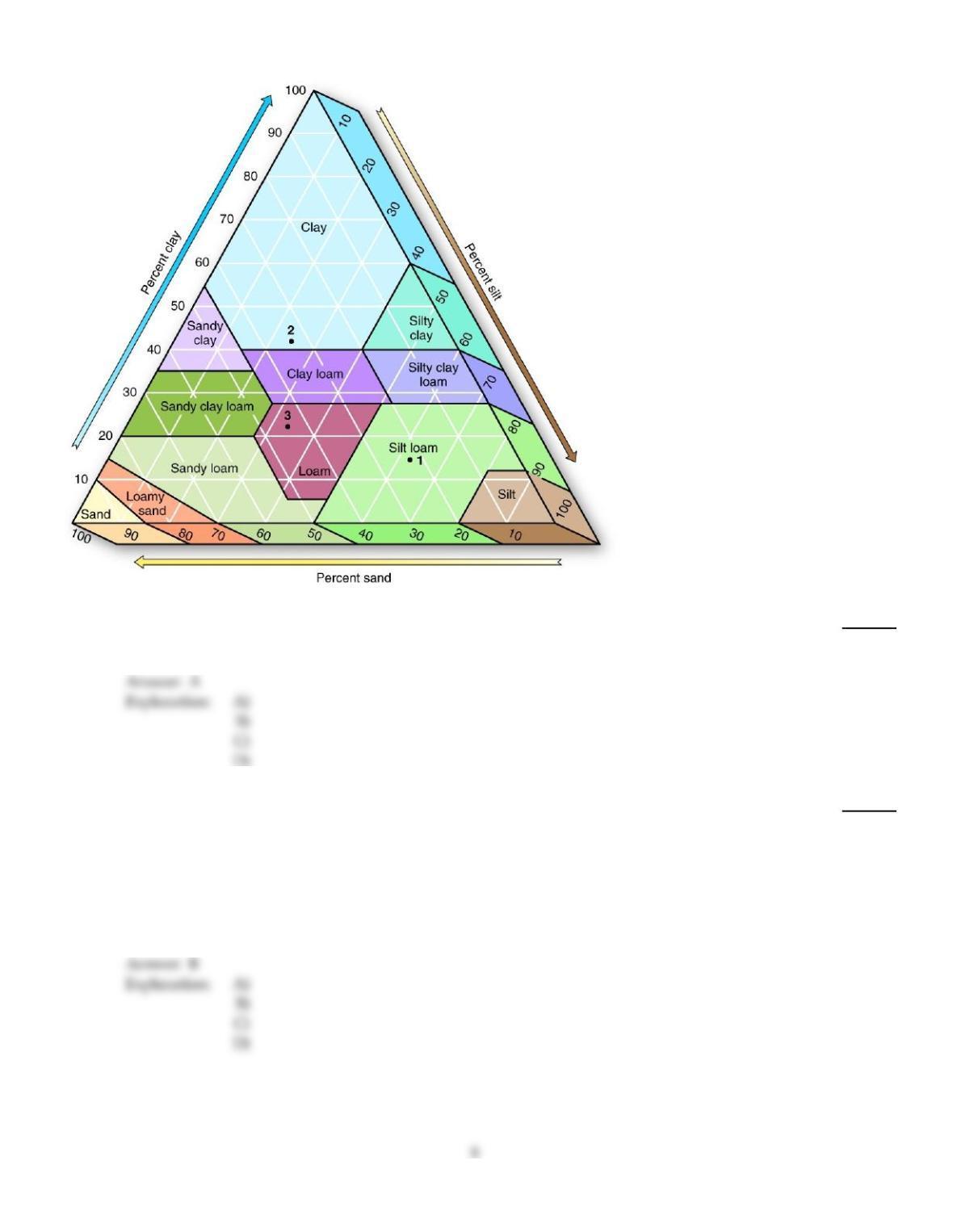
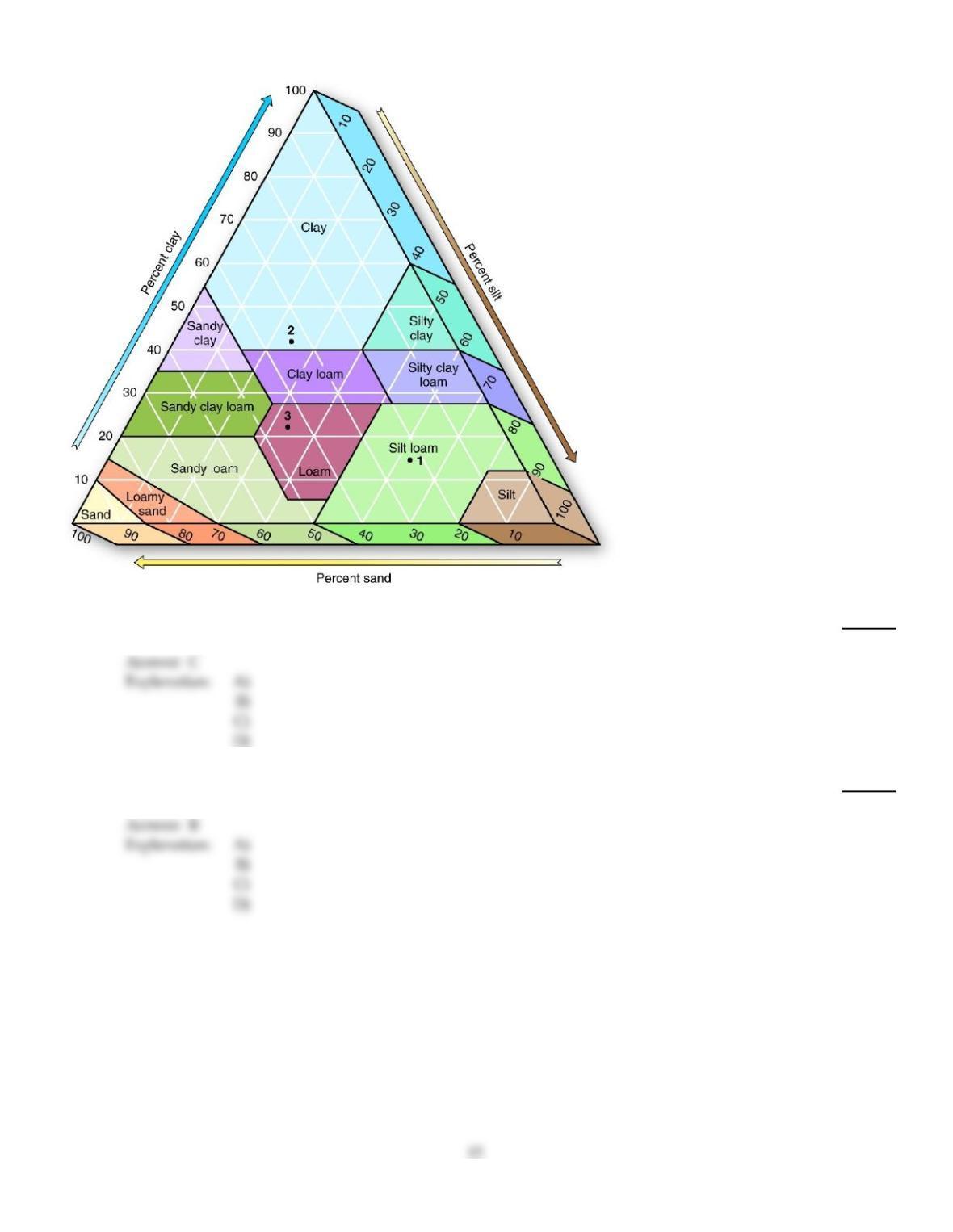
A soil that is 20% sand, 60% silt, and 20% clay is classified as
24)
A)
silt loam.
B)
sandy clay loam.
C)
clay loam.
D)
sandy clay.
25)
Which of the following best describes the composition of soil?
25)
A)
Soil is primarily mineral matter (approximately 72%), but also consists of organic matter
(10%), and water (18%).
B)
Soil is composed of about 45% mineral matter, 5% organic matter, and 50% pore space
containing air and water.
C)
Soil includes pebbles, gravel, cobbles, and a varying combination of sands, silts, and clays.
D)
Soil consists of approximately 45% organic matter, 50% mineral matter, and 5% water and/or
air.
26)
Which of the following best describes soil?
26)
A)
Soil lacks biological material.
B)
Soil is a renewable resource.
C)
Soil is composed of solely mineral fragments less than 2 mm in size.
D)
Soil is a dynamic natural material composed of water, air, mineral fragments, and organic
matter.
27)
The branch of soil science that deals with the origin, classification, distribution, and description of
soils is known as
27)
A)
geomorphology.
B)
geology.
C)
pedology.
D)
edaphology.
28)
Soils will develop at faster rates in which of the following environments?
28)
A)
Warm and humid
B)
Cold and dry
C)
Hot and dry
D)
In areas where they can develop directly from bedrock, regardless of climate conditions
29)
The term used to denote the part of a volume of soil that is filled with air, gases, or water is
29)
A)
porosity.
B)
soil structure.
C)
soil texture.
D)
permeability.
30)
Laterization is likely to occur
30)
A)
in areas of high potential evapotranspiration rates.
B)
in humid climate regions.
C)
in the tropics.
D)
in areas characterized by sandy soils and coniferous forests.
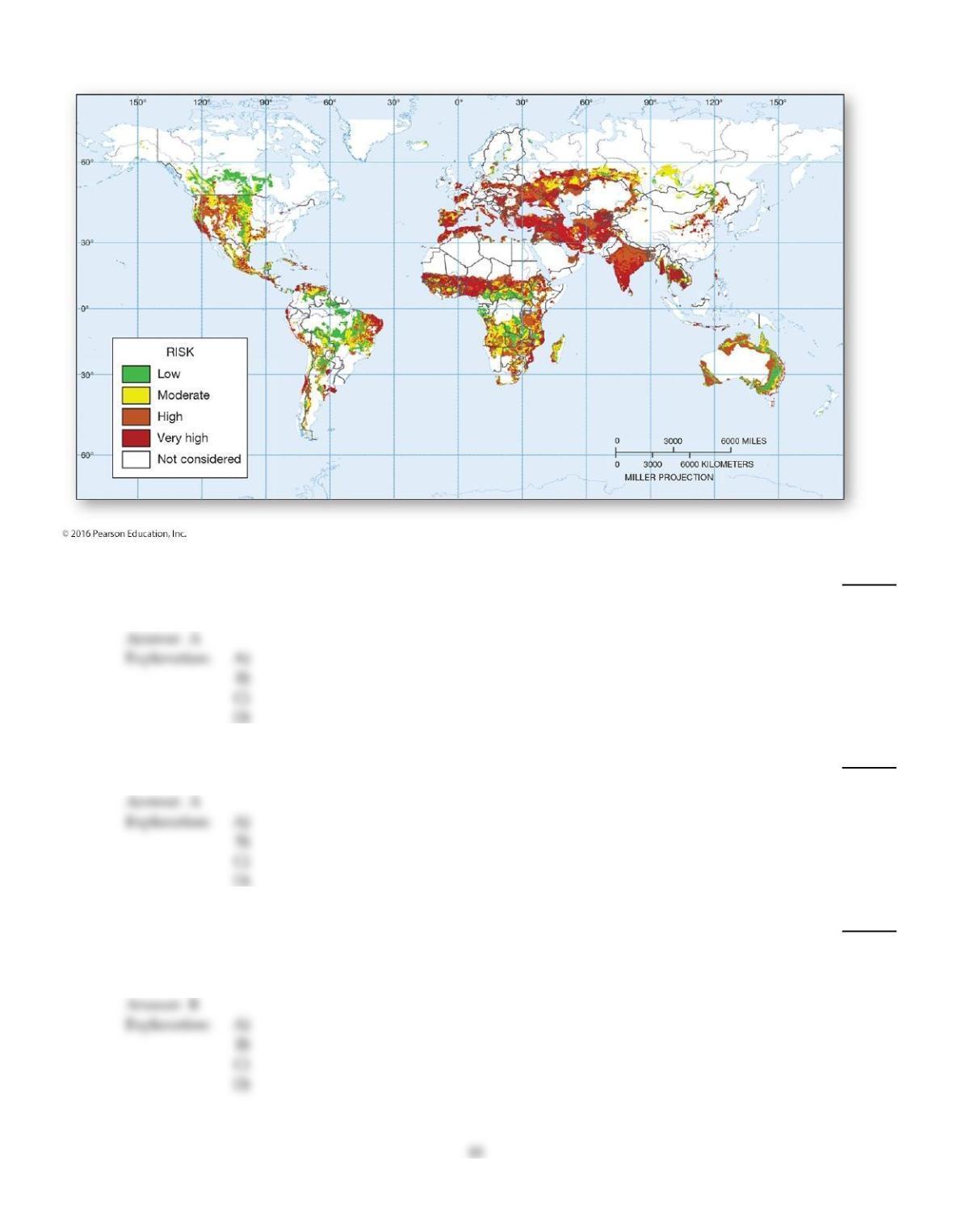
31)
Which of the following areas has the highest rick of desertification?
31)
A)
The Sahel (Sub–Saharan Africa)
B)
Central Asia
C)
Venezuela
D)
Northeastern Australia
32)
A roughly equal mix of sand, silt, and clay is called
32)
A)
loam.
B)
humus.
C)
regolith.
D)
solum.
33)
In a west to east transect across the 98th meridian in the United States, which of the following is the
CORRECT sequence of soil orders?
33)
A)
Alfisols, Aridisols, Ultisols
B)
Aridisols, Mollisols, Alfisols
C)
Aridisols, Oxisols, Mollisols
D)
Alfisols, Mollisols, Ultisols
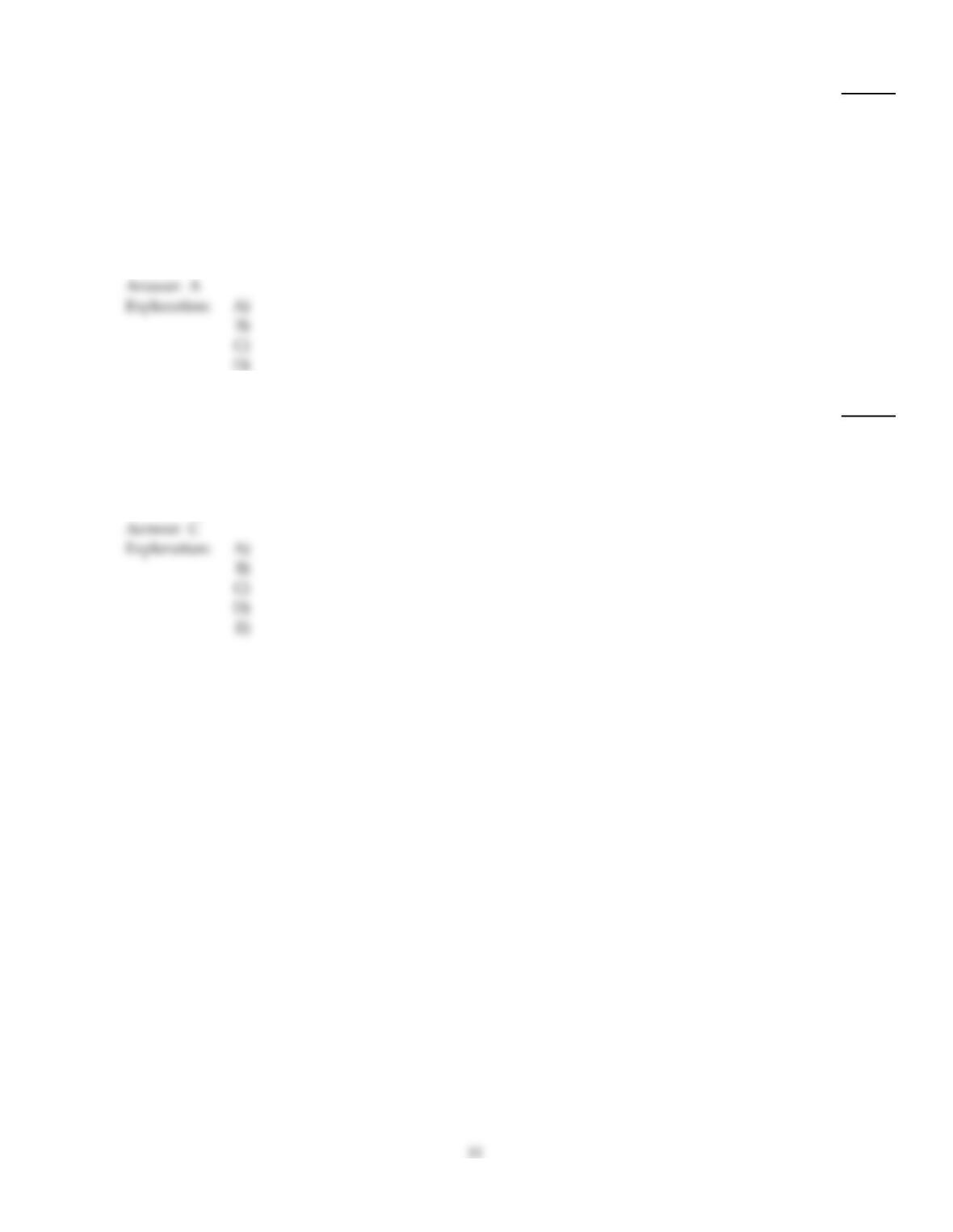
34)
Warming temperatures have accelerated the thawing of Gelisols. This efffect is of particular
concern because
34)
A)
Gelisols contain about half of the pool of global carbon in the form of frozen carbon dioxide
and methane and their release into the atmosphere could further affect warming climate.
B)
Gelisols are the youngest, least developed soils on the planet. Warming will further stifle the
horizontal development of these soils.
C)
Gelisols are an important soils for growing speciality cold weather crops. The thawing of the
Gelisols will adversely impact this lucrative market.
D)
as the permafrost melts, the meltwater will runoff, further contributing to global sea–level
rise.
35)
Which of the following is NOT one of the five primary soil–forming factors?
35)
A)
Climate
B)
Parent material
C)
Human activity
D)
Biological activity
E)
Topography
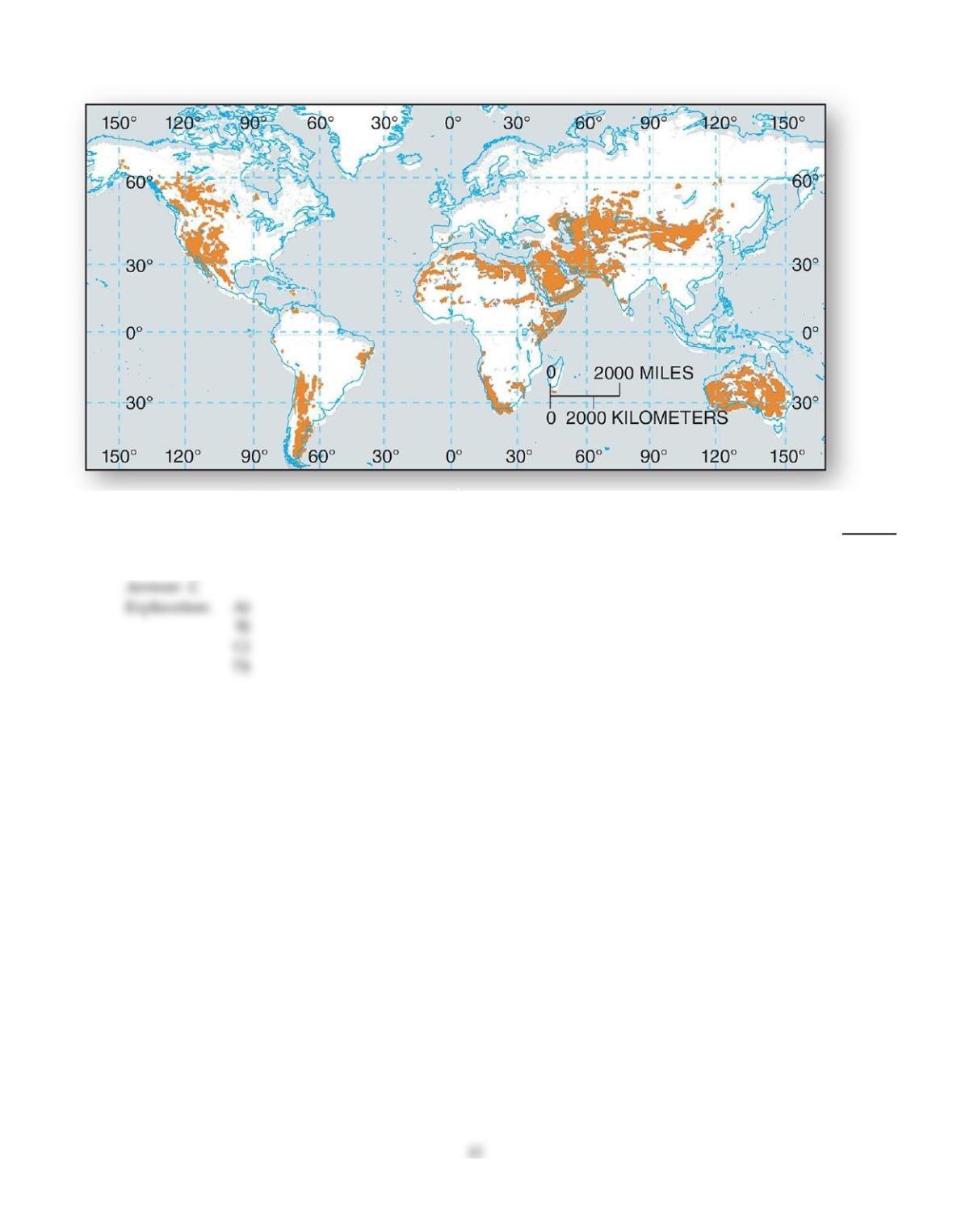
36)
This is the world’s largest soil order, occurring on 19% of Earth’s land surface in the world’s dry
regions.
36)
A)
Mollisols
B)
Andisols
C)
Aridisols
D)
Oxisols
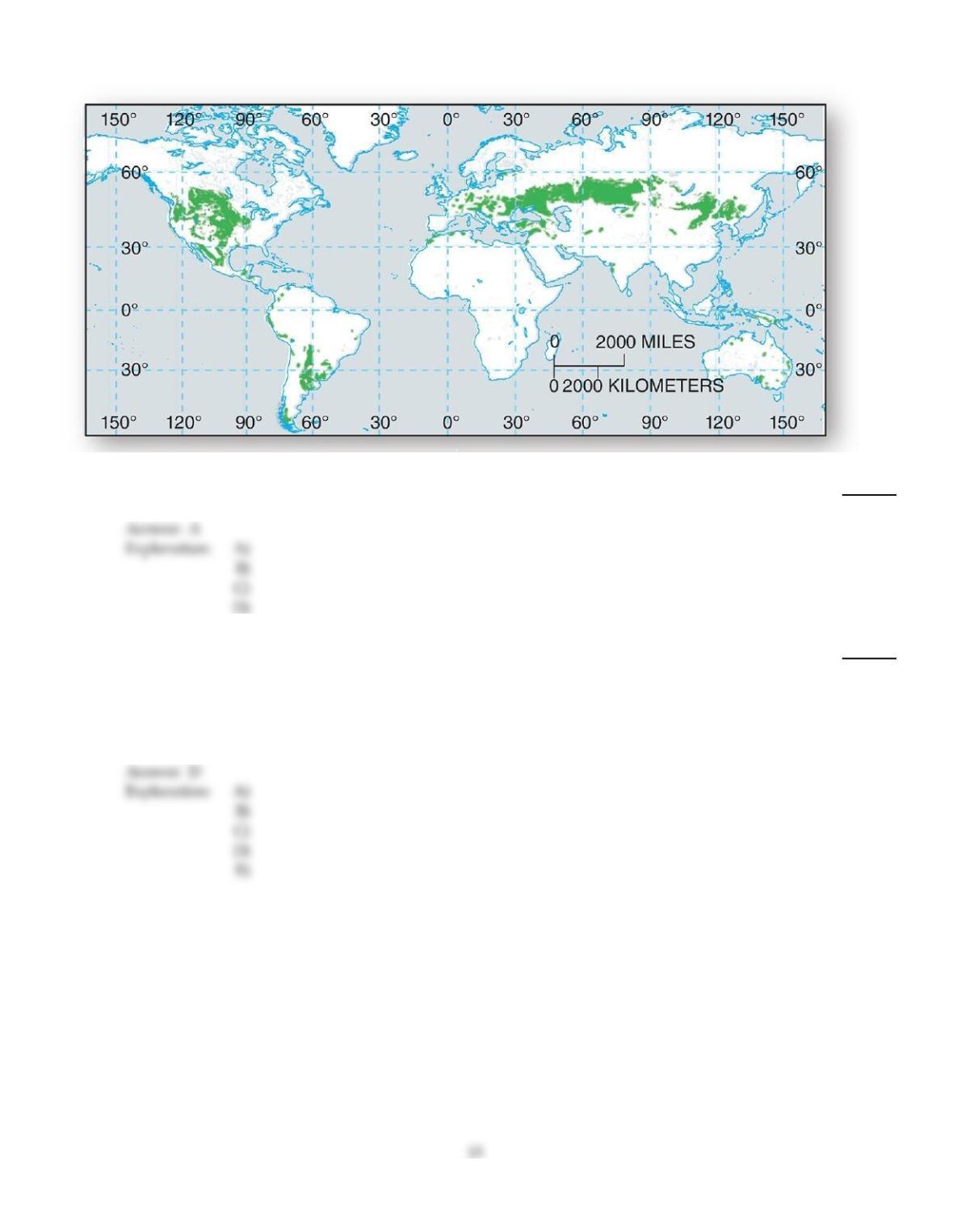
37)
These grassland soils are some of Earth’s most significant agricultural soils.
37)
A)
Mollisols
B)
Inceptisols
C)
Aridisols
D)
Gelisols
38)
In terms of pedogenic regimes, soil acidification associated with forest soils in cool climates is
38)
A)
salinization.
B)
laterization
C)
calcification.
D)
podzolization.
E)
gleization.
Explanation:
Explanation:
39)
In terms of pedogenic regimes, the leaching process in humid and warm climates is known as
39)
A)
salinization.
B)
gleization.
C)
podzolization.
D)
laterization
E)
calcification.
40)
________ refers to the size and shape of the aggregates of particles of soil.
40)
A)
Soil structure
B)
Soil consistence
C)
Soil plasticity
D)
Soil texture
Explanation:
Explanation:
41)
A soil that is 40% sand, 40% silt, and 20% clay is classified as
41)
A)
silt loam.
B)
clay loam.
C)
loam.
D)
silty clay.
42)
In soil science, the term to describe the cohesion of soil particles is
42)
A)
soil texture.
B)
consistence.
C)
permeability.
D)
soil structure.
43)
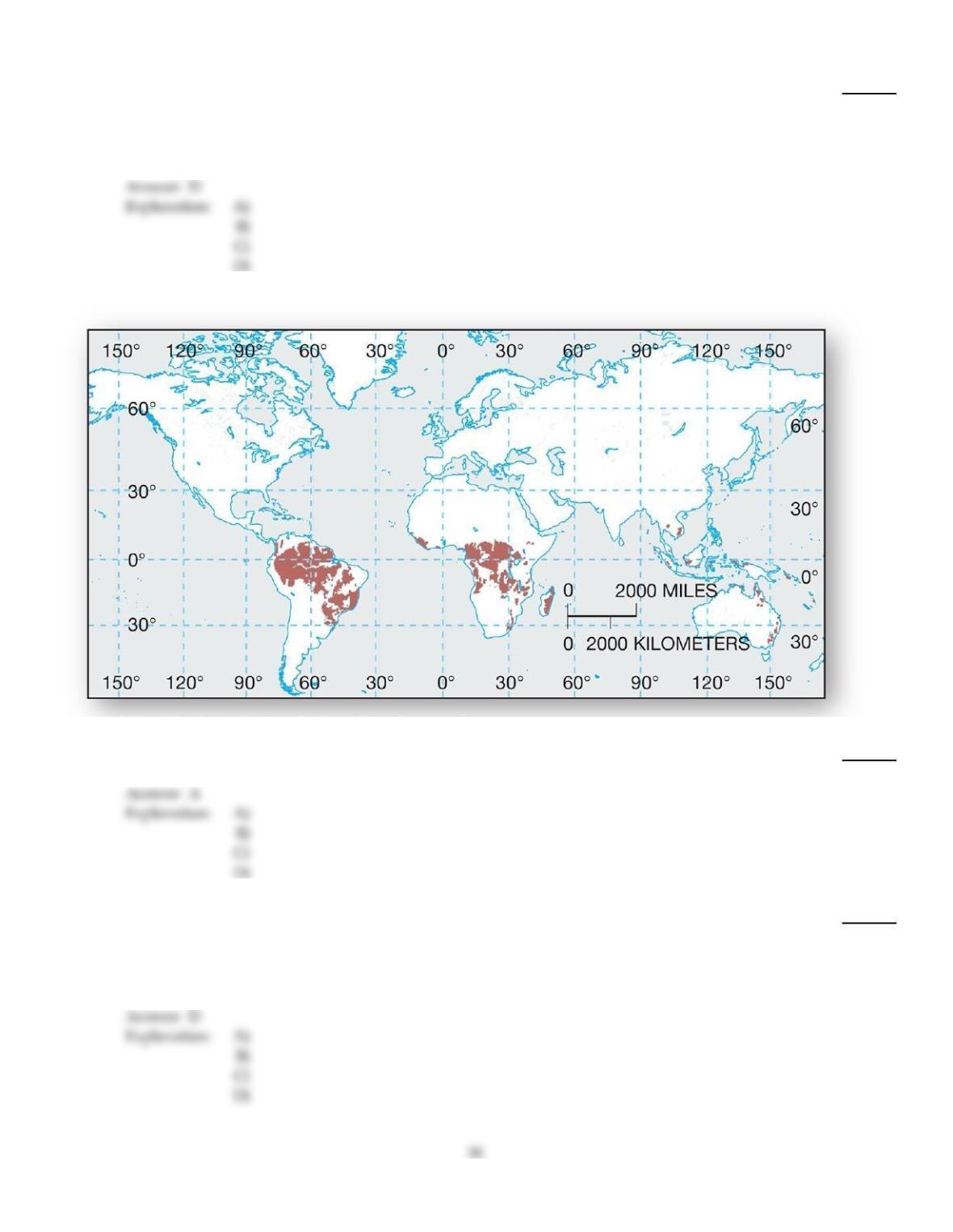
In which of the following areas would one likely find Oxisols?
43)
A)
In mountainous areas with steep slopes
B)
Higher latitudes, especially areas dominated by permafrost
C)
Primarily in grasslands
D)
Tropical regions
44)
These mature soils are found in the tropics.
44)
A)
Oxisols
B)
Andisols
C)
Mollisols
D)
Aridisols
45)
Soil texture refers to
45)
A)
the different soil horizons.
B)
pebbles, gravel, cobble, and other materials greater than 2 mm in diameter.
C)
differing soil colors in a pedon.
D)
the mixture and proportions individual mineral particles.
46)
The pedogenic process that produces an illuviated accumulation of calcium carbonate in
continental climates is
46)
A)
salinization.
B)
laterization
C)
gleization.
D)
calcification.
E)
podzolization.
47)
Most of the glacially derived till and outwash materials from New York through the Appalachians
are
47)
A)
Gelisols
B)
Spodosols
C)
Histosols
D)
Inceptisols
D
Explanation:
48)
Which of the following is NOT a factor contributing to desertification?
48)
A)
Climate change
B)
Salinization
C)
Overgrazing
D)
No–till agriculture
D
Explanation:
49)
Acidic soils
49)
A)
are exceptionally rare.
B)
are high in calcium, magnesium, potassium, and sodium ions.
C)
tend to be very fertile and excellent for agriculture purposes.
D)
cause more rapid weathering and leaching of nutrients.
D
Explanation:
50)
The southeastern United States is dominated by which soil order?
50)
A)
Oxisols
B)
Ultisols
C)
Mollisols
D)
Alfisols
B
Explanation:
D
Explanation:
51)
________ are hydric soils, forming in beds of former lakes and small, poorly drained depressions.
51)
A)
Aridisols
B)
Vertisols
C)
Histosols
D)
Andisols
52)
In which of the following areas would one likely find Aridisols?
52)
A)
The U.S. southwest
B)
Marine west coast climates
C)
Northern Europe
D)
The selva in Brazil
Explanation:
53)
The horizon that is commonly called topsoil is the ________ horizon.
53)
A)
A
B)
O
C)
E
D)
B
E)
C
Explanation:
54)
The pedogenic process that concentrates salts in soils in climates with high evapotranspiration is
54)
A)
salinization.
B)
laterization
C)
gleization.
D)
calcification.
E)
podzolization.
Explanation:
55)
The phenomenon of desert expansion along the margins of semiarid and arid lands is known as
55)
A)
permeability.
B)
erosion.
C)
desertification.
D)
deflation.
Explanation:
Explanation:
56)
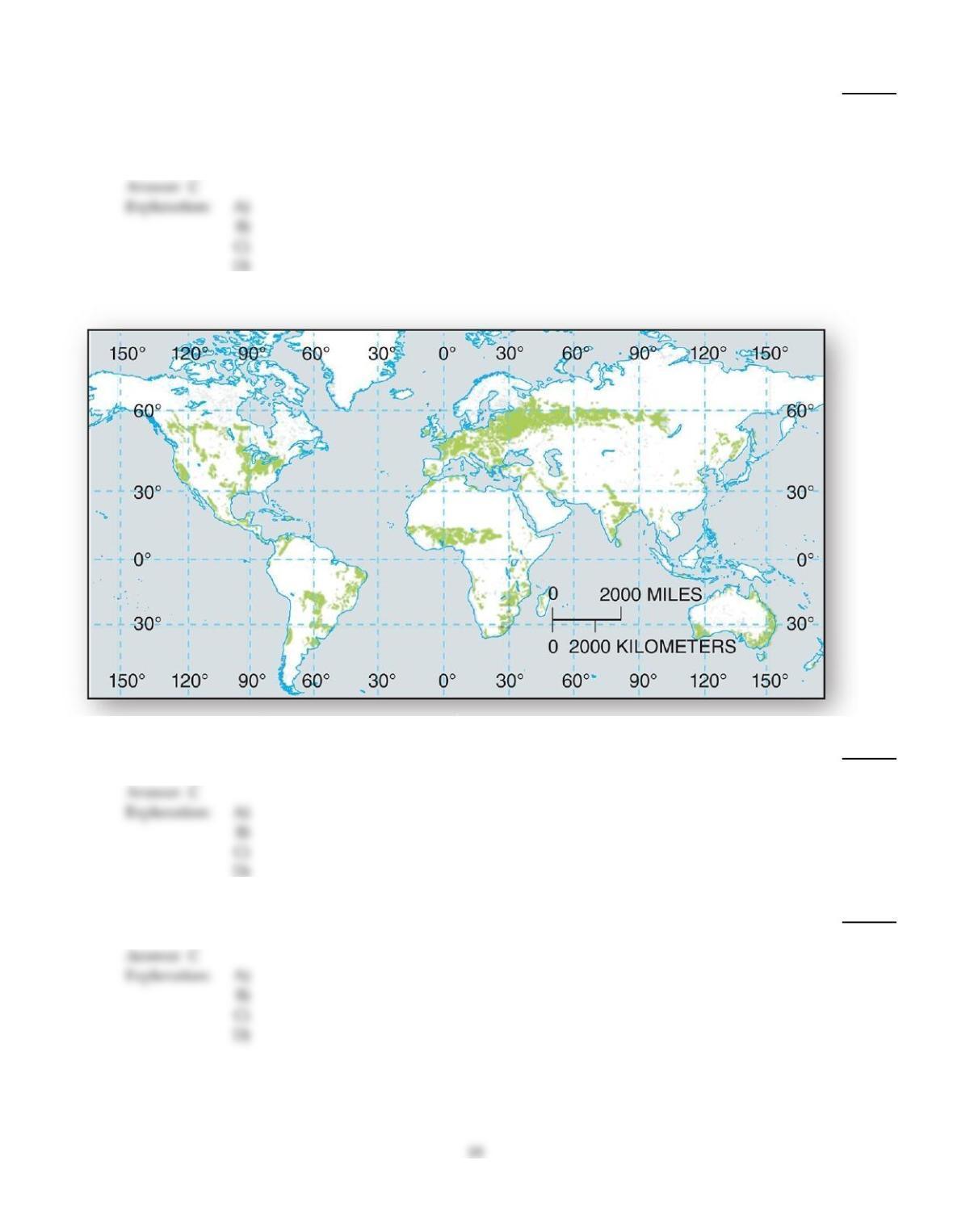
Which of the following is CORRECT regarding loess deposits?
56)
A)
They are principally composed of sands and gravels.
B)
They are found only in the United States.
C)
They are formed of fine–grained clays, silts, and fine sands.
D)
They only form following glacial activity.
57)
These soils are the most spatially widespread, extending from the equator to high latitudes.
57)
A)
Gelisols
B)
Entisols
C)
Alfisols
D)
Vertisols
58)
The basic soil sampling unit is
58)
A)
soil profile.
B)
soil horizon.
C)
pedon.
D)
polypedon.
59)
Oxisols have a ________ cation–exchange and, therefore, ________ fertility.
59)
A)
high; high
B)
high; low
C)
low; high
D)
low; low
60)
Which of the following human activities may make soils more prone to erosion?
60)
A)
forest clearance
B)
overcultivation
C)
overgrazing
D)
Overcultivation, overgrazing,and forest clearance may all make soils more prone to erosion.
D
61)
Where would one likely find the deepest soil development?
61)
A)
On steep slopes
B)
Over the oldest geological formations in an area, regardless of slope
C)
Level or nearly level ground
D)
Moderately sloping, south facing hills
C
62)
The horizon identified as regolith is the ________ horizon.
62)
A)
A
B)
O
C)
E
D)
B
E)
C
E
63)
Expandable clay, such as montmorillonite, characterizes this soil order.
63)
A)
Vertisols
B)
Mollisols
C)
Aridisols
D)
Oxisols
A
D
64)
The horizon in which leached materials are accumulated is the ________ horizon.
64)
A)
A
B)
O
C)
E
D)
B
E)
C
65)
The organic rich horizon found at the top of the soil profile is the ________ horizon.
65)
A)
A
B)
O
C)
E
D)
B
E)
C
66)
Which soil order is the most spatially widespread?
66)
A)
Alfisols
B)
Vertisols
C)
Entisols
D)
Gelisols
67)
________ are among Earth’s most agriculturally significant soils.
67)
A)
Inceptisols
B)
Entisols
C)
Aridisols
D)
Mollisols
68)
A vertical section of soil is generally organized into distinct horizontal layers called
68)
A)
polypedons.
B)
pedons.
C)
soil horizons.
D)
soil profiles.
69)
The branch of soil science that studies soil as a medium for sustaining the growth of higher plants is
known as
69)
A)
geomorphology.
B)
edaphology.
C)
geology.
D)
pedology.
70)
________ are recently developed soils lacking vertical horizon development.
70)
A)
Spodosols
B)
Oxisols
C)
Entisols
D)
Mollisols
71)
In which of the following areas would one likely find Mollisols?
71)
A)
Central Africa
B)
U.S. Great Plains
C)
U.S. Southeast
D)
Sub–Saharan Africa
72)
Calcification is likely to occur in
72)
A)
areas characterized by coniferous forests.
B)
arid, semiarid, and grassland environments.
C)
areas with Vertisols.
D)
tropical climate regions.
73)
Podzolization is likely to occur
73)
A)
in the tropics.
B)
in humid climate regions.
C)
in areas with broadleaf forests.
D)
in areas characterized coniferous forests.
74)
Rounded peds have ________ space between them than other peds, and are therefore ________ for
plant growth.
74)
A)
more; better
B)
less; better
C)
less; worse
D)
more; worse
75)
________ are high latitude soils containing permafrost and large amounts of organic matter.
75)
A)
Alfisols
B)
Inceptisols
C)
Ultisols
D)
Gelisols
76)
Between 1982 and 2007, soil erosion on U.S. cropland
76)
A)
increased by 25%
B)
decreased by 43%.
C)
decreased by 21%.
D)
increased by 13%.
77)
Ped formation enhances
77)
A)
permeability.
B)
soil horizons.
C)
soil texture.
D)
plasticity.
78)
The horizon in which water moves fine particles downward in a process called eluviation is the
________ horizon.
78)
A)
A
B)
O
C)
E
D)
B
E)
C
79)
Prime farmland soil that is a few centimeters thick may require ________ years to form.
79)
A)
10
B)
50
C)
100
D)
500
80)
Soils with volcanic parent material belong to which soil order?
80)
A)
Gelisols
B)
Vertisols
C)
Andisols
D)
Histosols
81)
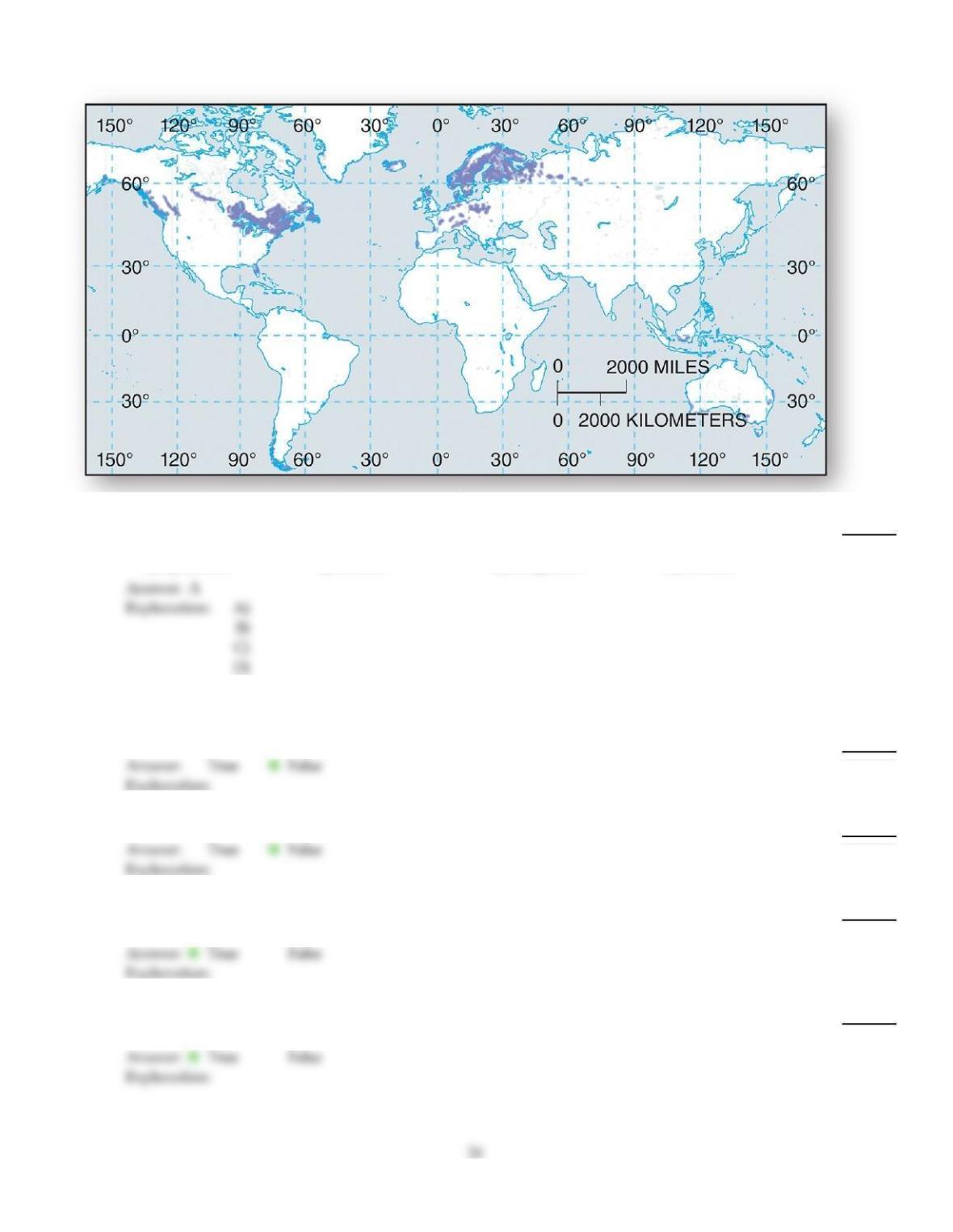
These soils primarily occur in the northern coniferous forests, but they may also occur with more
moderate properties under mixed or deciduous forests.
81)
A)
Spodosols
B)
Entisols
C)
Inceptisols
D)
Ultisols
TRUE/FALSE. Write ‘T’ if the statement is true and ‘F’ if the statement is false.
82)
Soils are remarkably uniform from the surface to bedrock.
82)
83)
Biological activity by plant roots or tunnelling animals tends to diminish porosity.
83)
84)
All organisms living in, on, and over the soil influence its organic content and chemical
characteristics.
84)
85)
In addition to designating horizons, soil scientists also identify subhorizons, such as those for
human activity or the presence of organic matter.
85)
86)
Both Gelisols and Histosols have high organic matter content.
86)
87)
Soil science is an interdisciplinary study, drawing on aspects of physics, chemistry, biology,
mineralogy, hydrology, taxonomy, climatology, and cartography.
87)
88)
Histosols tend to be very dry soils found primarily in the world’s arid regions.
88)
89)
Inceptisols are the largest single soil order, occupying approximately 22% of Earth’s land surface.
89)
90)
A dark colored soil always indicates high organic content.
90)
91)
Spodosols are solely associated with the northern coniferous forest and are never found within
mixed or deciduous forests.
91)
92)
Soils high in clay content may swell significantly when they absorb water.
92)
93)
Desertification is affecting over a billion people worldwide.
93)
94)
Soil is a natural, renewable resource.
94)
95)
Human activities, such as agriculture and cattle grazing, may affect soil development.
95)
96)
Before the U.S. Soil Taxonomy system, soils were classified based on pedogenic regimes.
96)
97)
Each differing and distinct mineral and organic strata within a soil column is called a horizon.
97)
98)
Between 1982 to 2007, there was actually a decrease in soil erosion on U.S. cropland.
98)
99)
Though Oxisols occur in the tropical rain forests, they tend to be poor in inorganic nutrients.
99)
100)
The O horizon is typically lacking in organic matter.
100)
101)
A soil order is the lowest and most precise level of the Soil Taxonomy system.
101)
102)
Oxisols are not very fertile.
102)
103)
Entisols are the least developed soils in the world.
103)
104)
The Soil Taxonomy is a hierarchical system consisting of six categories.
104)
105)
The U.S. soil classification system has not been updated since the mid–1970s.
105)
106)
Rounded peds have more pore space and permeability than do other ped shapes.
106)
107)
A high cation–exchange capacity (CEC) tends to indicate poor soil fertility.
107)
108)
Soil is composed of 70% mineral matter, 5% organic matter, and varying amounts of water and air
totaling 25%.
108)
109)
Pedology is concerned with the practical use of a soils as a medium for plant growth.
109)
110)
Practices such as no–till agriculture may help mitigate against soil erosion.
110)
111)
Oxygen concentrations are lower in soil than in atmospheric oxygen due to ongoing respiration
processes in the ground.
111)
112)
112)
113)
Thawing of Gelisols caused by warming climates could result in the release of carbon dioxide and
methane to the atmosphere.
113)
114)
Mollisols are widespread in the United States because they occur throughout the Great Plains
region.
114)
115)
Alifols, Mollisols, and Aridisols form an east to west continuum in the north–central United States
and southern Canadian prairies.
115)
116)
Prime farmland soil that is a few centimeters thick may require 500 years to mature.
116)
117)
Broadleaf trees tend to increase the acidity of soils.
117)
118)
Soils are the foundation of basic ecosystem function and are a critical resource for agriculture.
118)
119)
In the Northern Hemisphere, north facing slopes are generally colder, have slower snowmelt, lower
evapotranspiration rates, and more moisture for plants than south facing slopes do.
119)
120)
Over 15,000 soil series have been classified up to this time in the United States and Canada.
120)
121)
There is little evidence that human activity has an impact on soils.
121)
122)
The A horizon is also commonly called topsoil.
122)
123)
Soil texture is probably the most permanent property of a soil.
123)
124)
Salinization is often associated with Aridisols.
124)
125)
Entisols have several very distinct horizons.
125)
126)
Soil tends to develop profiles that are deeper on steep slopes than on level ground.
126)
ESSAY. Write your answer in the space provided or on a separate sheet of paper.
127)
What is the predominant soil order in the area in which you live? Describe the activities that occur on these soils
that reflect the characteristics thereof.
128)
Describe the NRCS Soil Taxonomy.
129)
What are some of the concerns regarding the rate and amount of soil loss in the United States. What does a cost
benefit analysis of soil loss prevention show?
130)
What are the five primary soil forming factors? Describe each using examples.
131)
Describe and explain the distribution of soil orders across the United States.
29
132)
What are the six main horizons found in soils? Briefly describe each.
133)
List and briefly describe the various physical properties used to differentiate soils.
134)
Soil science is an interdisciplinary study that incorporates aspects of physics, chemistry, biology, mineralogy,
hydrology, taxonomy, climatology, and cartography. Briefly describe how these various fields may be beneficial
to the study of soils.
135)
What do you think are the biggest challenges related to soil conservation and management in the coming
decades?
136)
List and briefly describe the various chemical properties used to differentiate soils.
Answer Key
Testname: C15
Answer Key
Testname: C15
34
35
Answer Key
Testname: C15
36