
General, Organic & Biological Chemistry, 5e (Timberlake)
Chapter 15 Carbohydrates
15.1 Multiple-Choice Questions
1) A carbohydrate that gives two molecules when it is completely hydrolyzed is known as a
A) monosaccharide.
B) disaccharide.
C) polysaccharide.
D) starch.
E) trisaccharide.
2) Which group of carbohydrates cannot be hydrolyzed to give smaller molecules?
A) monosaccharides
B) disaccharides
C) trisaccharides
D) oligosaccharides
E) polysaccharides
3) A monosaccharide that consists of 5 carbon atoms, one of which is in a ketone group, is classified as
a(n)
A) aldotetrose.
B) aldopentose.
C) aldohexose.
D) ketotetrose.
E) ketopentose.
4) A monosaccharide that contains 4 carbon atoms, one of which is in an aldehyde group, is classified as
a(n)
A) aldopentose.
B) aldohexose.
C) ketopentose.
D) aldotetrose.
E) ketotetrose.
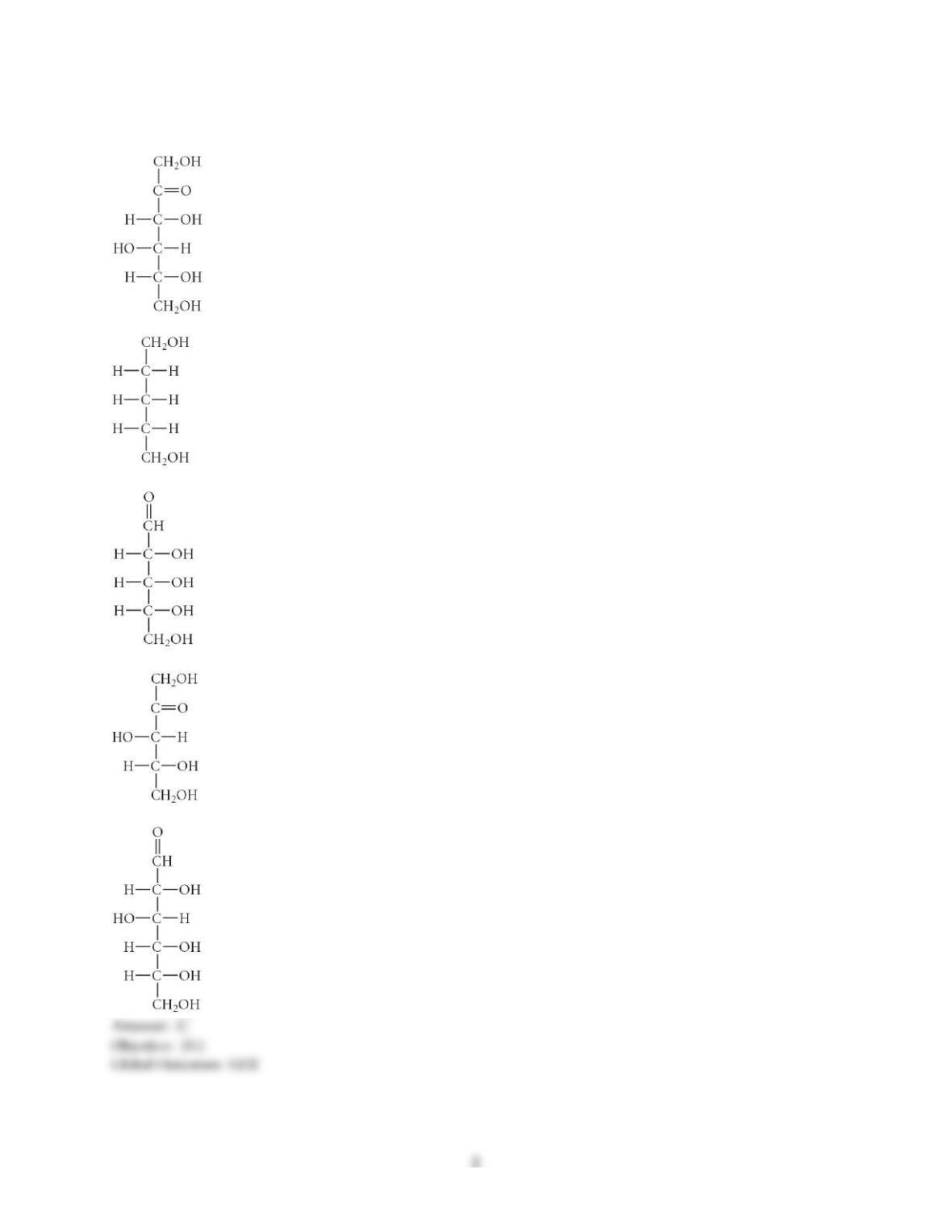
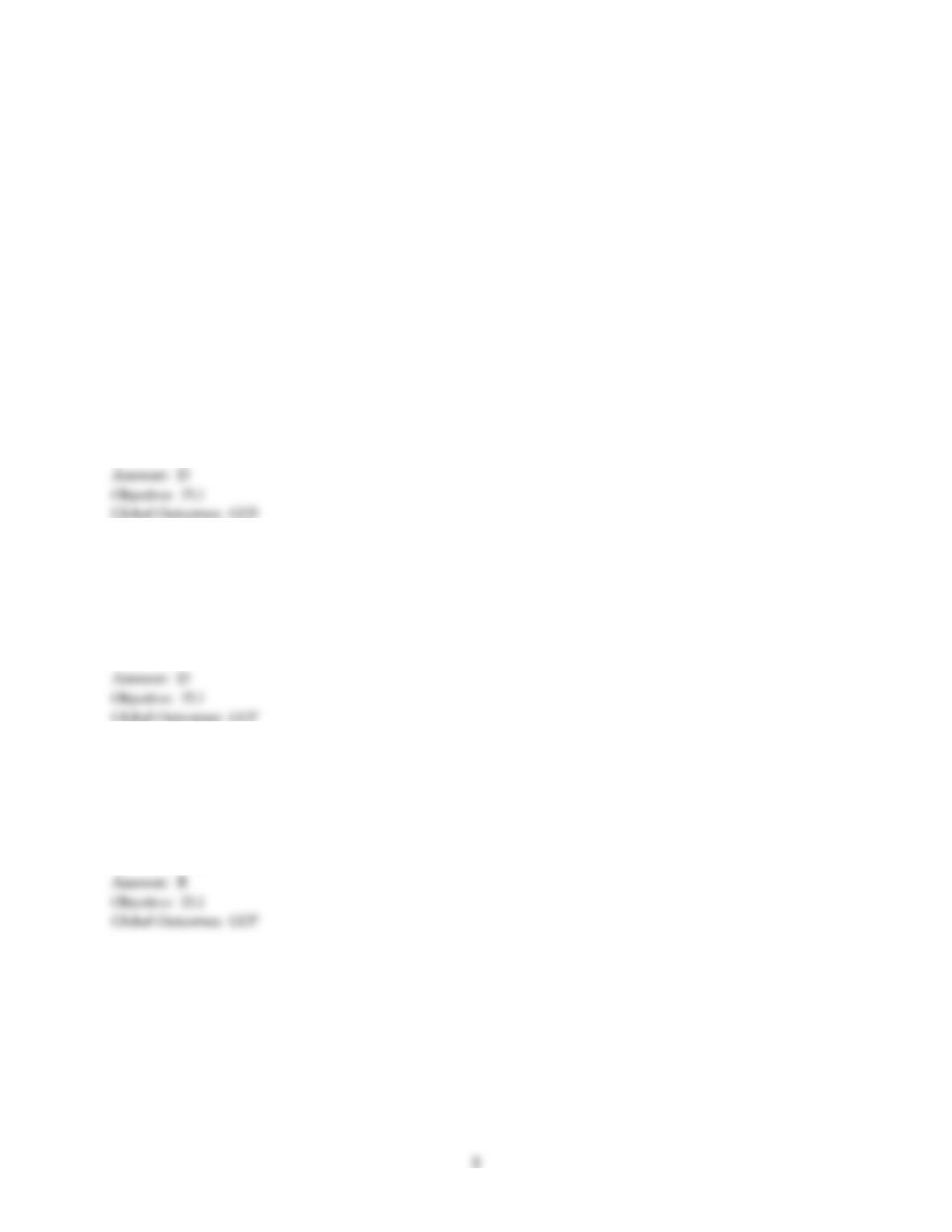
5) Which of the following is an example of an aldopentose?
A)
B)
C)
D)
E)
6) Ribulose has the following structural formula. To what carbohydrate class does ribulose belong?
CH2OH
∣
C = O
∣
H – C – OH
∣
H – C – OH
∣
CH2OH
A) aldotetrose
B) aldopentose
C) ketotetrose
D) ketopentose
E) ketohexose
7) During photosynthesis, carbon dioxide and water are converted to glucose and oxygen by
A) large animals.
B) insects.
C) mushrooms.
D) green plants.
E) earthworms.
8) The breakdown of carbohydrates to carbon dioxide and water in the body is called
A) reduction.
B) respiration.
C) photosynthesis.
D) anabolism.
E) mutarotation.
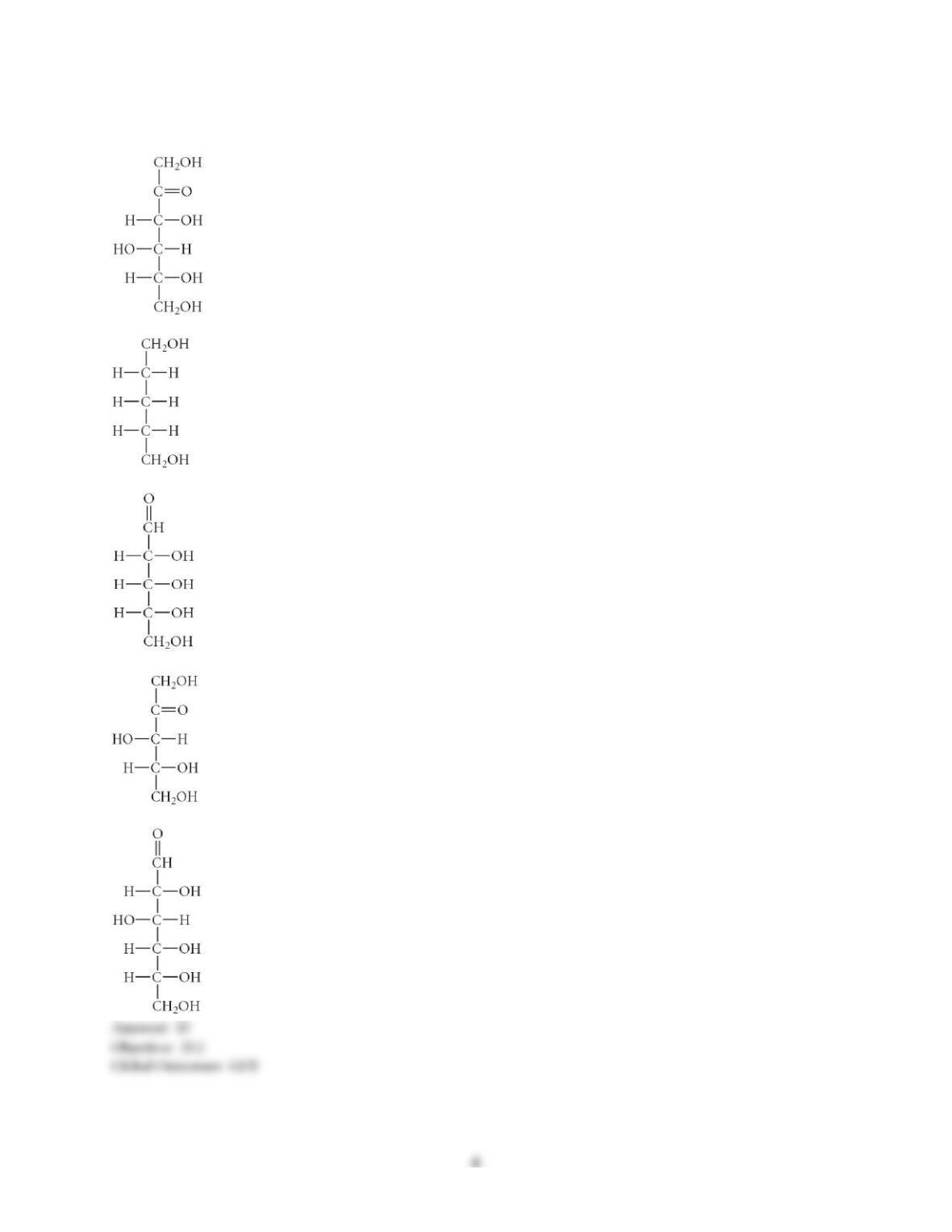
9) Which of the following is an example of a ketopentose?
A)
B)
C)
D)
E)
5
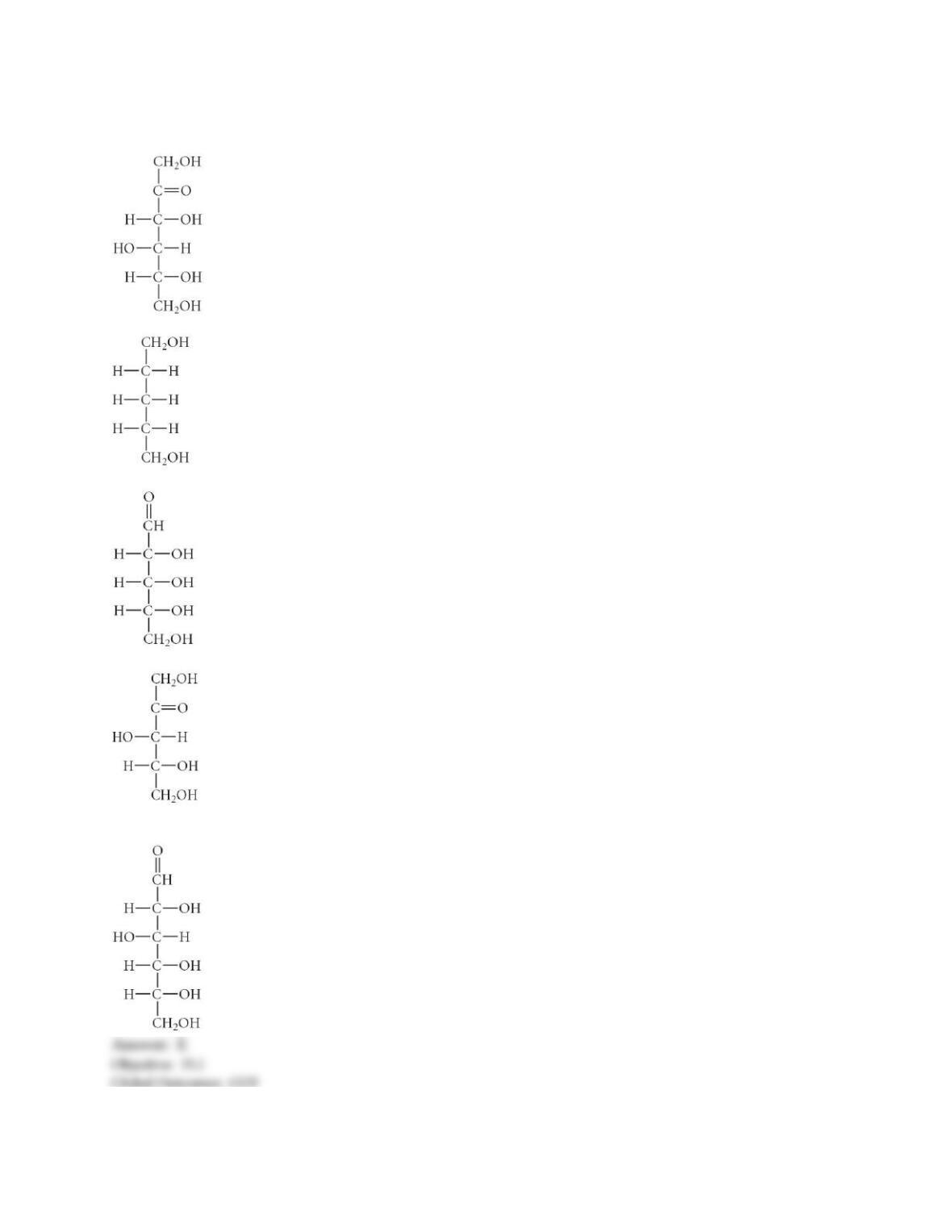
10) Which of the following is an example of an aldohexose?
A)
B)
C)
D)
E)
11) The breakdown of glucose to chemical energy for the cells to do work is an example of
A) oxidation.
B) respiration.
C) reduction.
D) anabolism.
E) mutarotation.
12) Photosynthesis uses ________ as an energy source.
A) glucose
B) carbon dioxide
C) chlorophyll
D) oxygen
E) sunlight
13) Fructose does not undergo hydrolysis because it is a
A) aldose.
B) hexose.
C) reducing sugar.
D) monosaccharide.
E) disaccharide.
14) Galactosemia is the name of a metabolic disorder. In this disorder, an enzyme is missing that is
needed to
A) make galactose from lactose.
B) make lactose from galactose.
C) convert galactose to glycogen.
D) convert galactose to glucose.
E) convert α-galactose to β-galactose.
15) Which Fischer projection is the mirror image of the structure given below?
Br
∣
HO — Cl
∣
CH3
A) Br
∣
HO — CH3
∣
Cl
B) Br
∣
Cl — OH
∣
CH3
C) OH
∣
CH3 — Cl
∣
Br
D) CH3
∣
Br — Cl
∣
OH
E) Br
∣
CH3 — Cl
∣
OH
16) In the L- isomer of a Fischer projection of a monosaccharide, the -OH group furthest from the
carbonyl is written
A) on the left of the top chiral carbon.
B) on the right of the top chiral carbon.
C) on the left of the middle chiral carbon.
D) on the left of the bottom chiral carbon.
E) on the right of the bottom chiral carbon.
17) One difference between D-glucose and L-glucose is
A) the open-chain form of L-glucose does not exist.
B) it is not possible to make L-glucose.
C) L-glucose has a 5-membered ring, and D-glucose has a 6-membered ring.
D) only D-glucose is found in disaccharides and polysaccharides.
E) L-glucose cannot form a closed structure.
18) Hyperglycemia is a condition in which
A) the glucose level in the blood is about 100 mg/dL.
B) the amount of glucose in the urine is lower than normal.
C) the glucose level in the blood is higher than normal.
D) the glucose level in the pancreas is lower than normal.
E) the glucose level in the liver is lower than normal.
19) Hypoglycemia is a condition in which
A) the glucose level in the blood is about 100 mg/dL.
B) the amount of glucose in the urine is higher than normal.
C) the glucose level in the blood is higher than normal.
D) the glucose level in the pancreas is higher than normal.
E) the glucose level in the blood is lower than normal.
20) The sugar also known as dextrose and blood sugar is
A) glucose.
B) galactose.
C) fructose.
D) lactose.
E) sucrose.
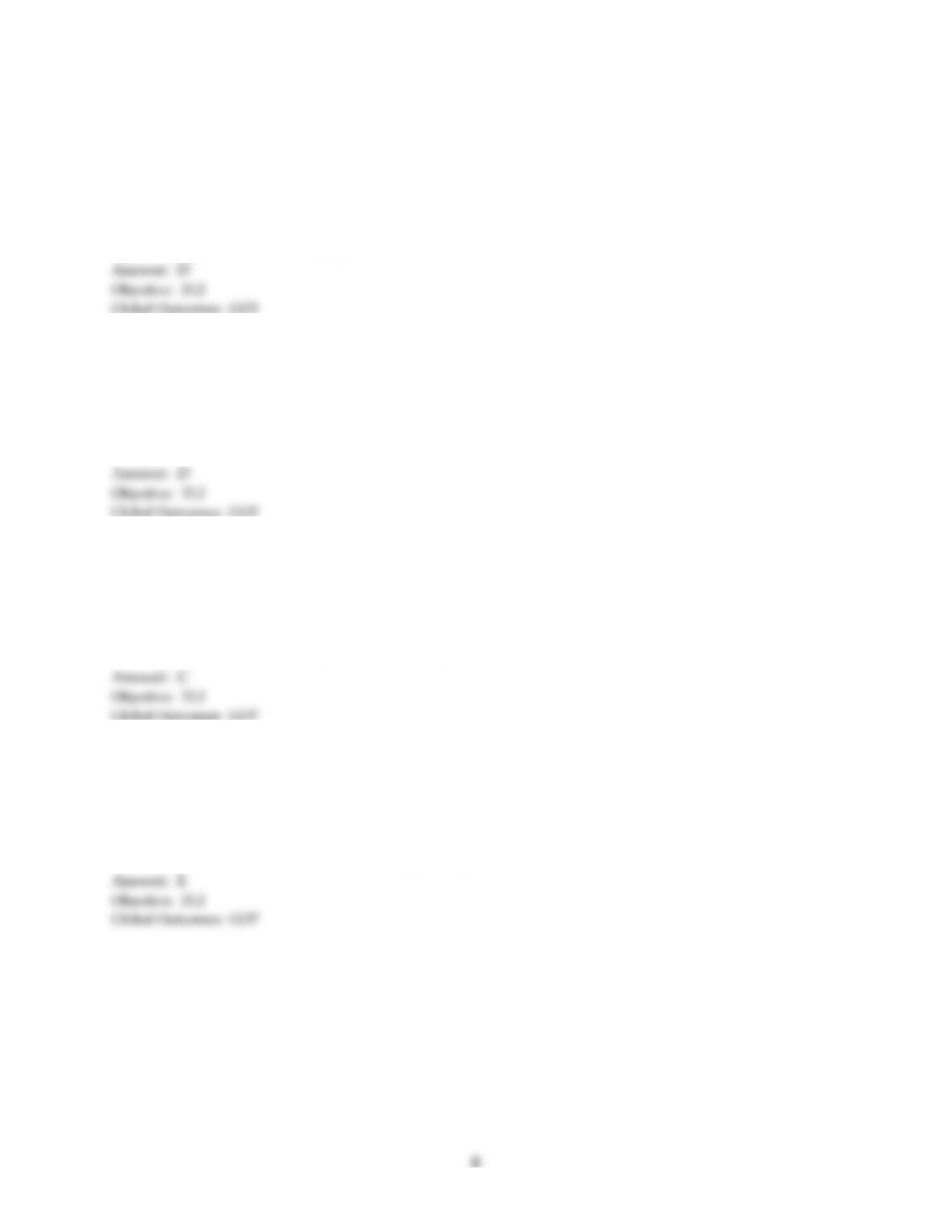
21) Galactose has the structure shown below. It can be classified as a(n)
A) ribose.
B) ketose.
C) disaccharide.
D) monosaccharide.
E) ketone.
22) Galactose has the structure shown below. Which anomer is shown?
A) the α anomer
B) the β anomer
C) the D anomer
D) the L anomer
E) none of the above
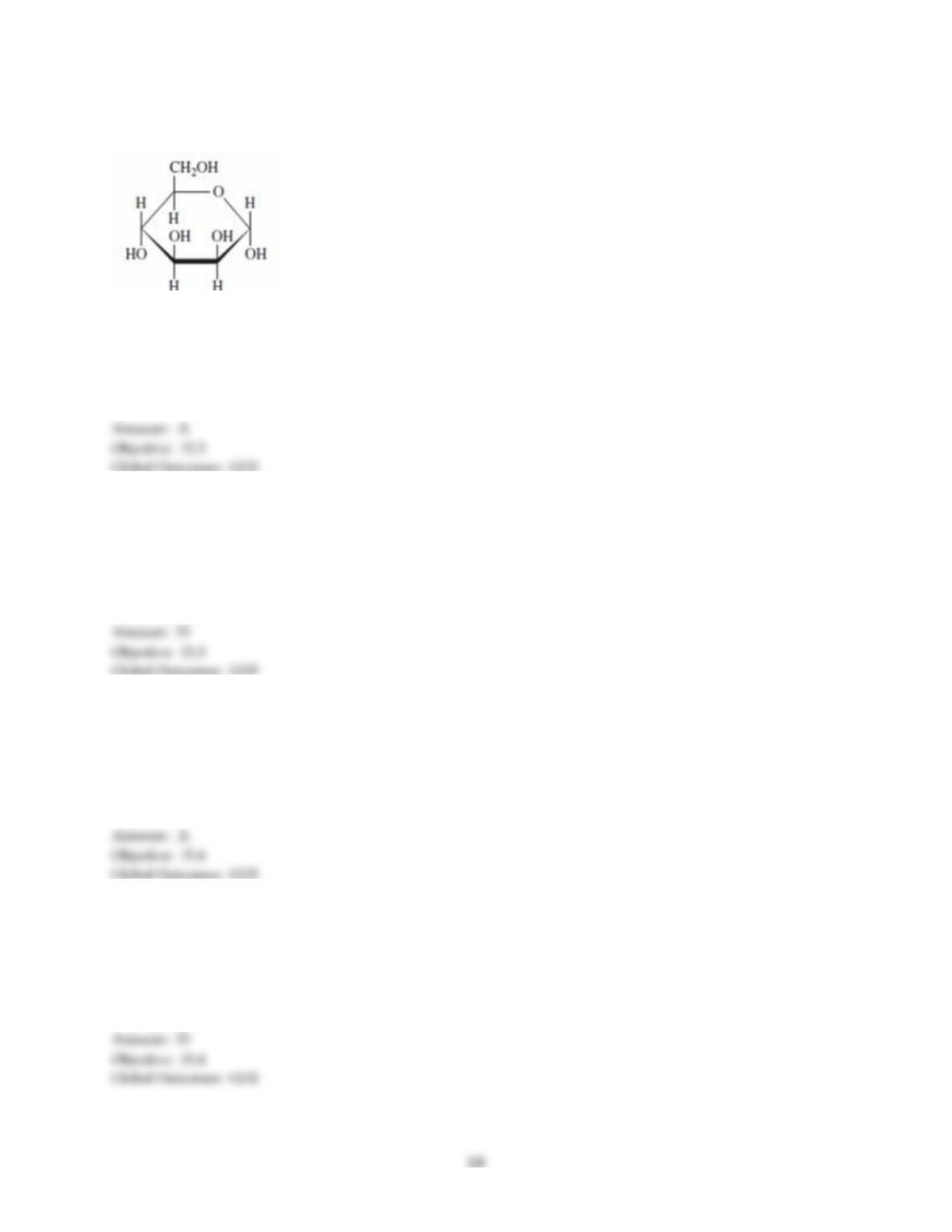
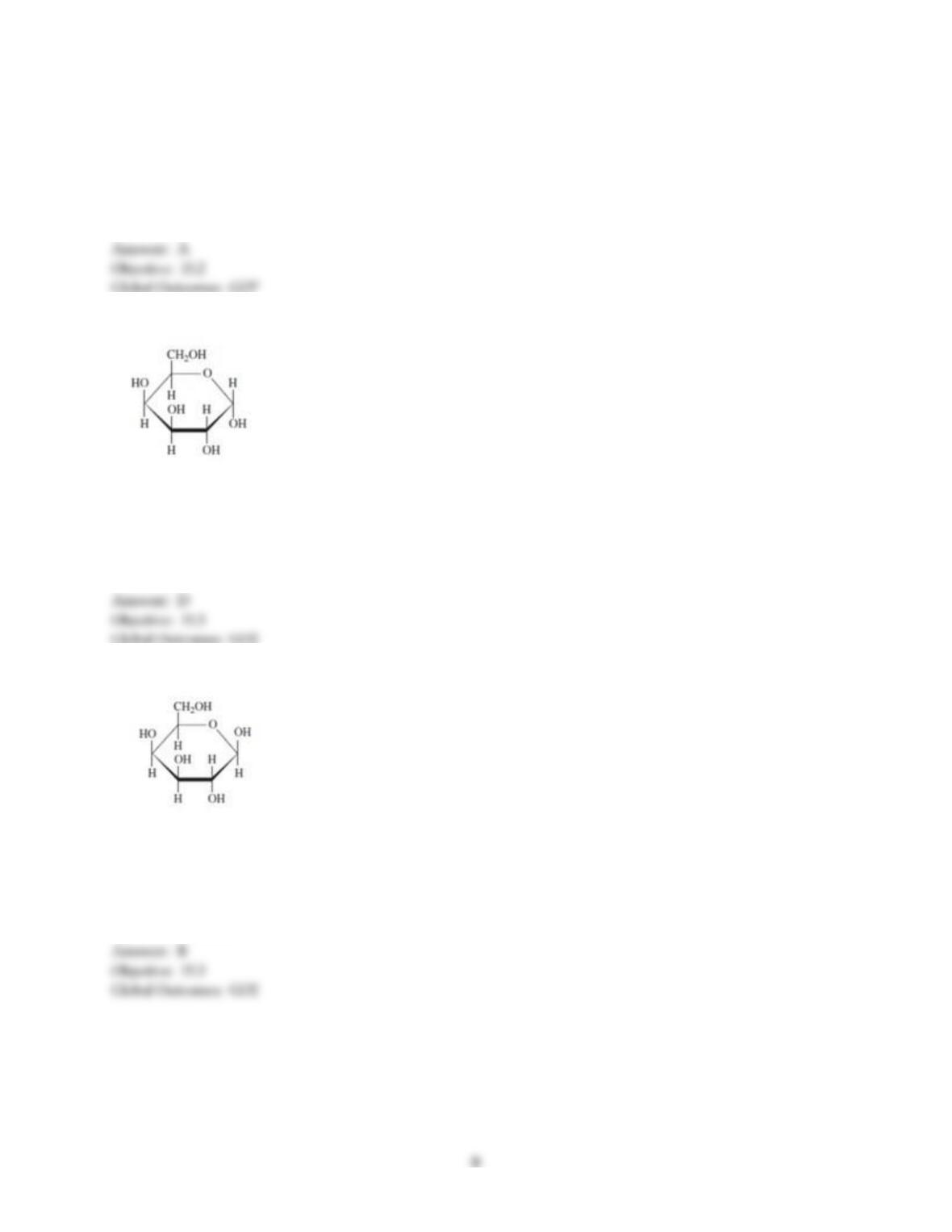
23) Mannose has the structure shown below. Which anomer is shown?
A) the α anomer
B) the β anomer
C) the D anomer
D) the L anomer
E) none of the above
24) The conversion between α and β anomers is called
A) oxidation.
B) reduction.
C) glycoside.
D) mutarotation.
E) hydrolysis.
25) The reduction of monosaccharides produces
A) sugar alcohols.
B) disaccharides.
C) trisaccharides.
D) sugar acids.
E) polysaccharides.
26) The oxidation of monosaccharides produces
A) sugar alcohols.
B) disaccharides.
C) trisaccharides.
D) sugar acids.
E) polysaccharides.

27) A glycosidic bond between two monosaccharides can also be classified as a(n)
A) double bond.
B) ester bond.
C) ether bond.
D) achiral bond.
E) alcohol bond.
28) In a disaccharide, two monosaccharides are joined by what kind of bond?
A) double
B) anomeric
C) alcohol
D) glycosidic
E) rotational
29) Which of the following contains a β–1,4-glycosidic bond?
A) galactose
B) lactose
C) maltose
D) sucrose
E) amylose
30) Which sugar is NOT a reducing sugar?
A) glucose
B) fructose
C) galactose
D) maltose
E) sucrose
31) Aspartame® and Saccharin® are two examples of
A) disaccharides.
B) polysaccharides.
C) chlorosaccharides.
D) alcohol sweeteners.
E) noncarbohydrate sweeteners.