CHAPTER 15
Evaluating and Grading Student Progress
ITEMS
1. A single grade that combines both achievement and nonachievement factors is likely to be more
valid than the one that reflects only achievement factors.
(a) True
(b) False
2. Which of the following is NOT an appropriate use of report card grades?
(a) To reward or punish students for their behavior or misbehavior.
(b) To record learning progress made in a marking period.
(c) To suggest that a student relearn the material.
(d) To request that a student’s placement be advanced.
3. When grades are used to compare students they are unlikely to motivate students.
(a) True
(b) False
4. The letters assigned as students’ grades are supposed to represent the levels of quality of students’
performance.
(a) True
(b) False
5. Penalizing students who turn in assignments late by deducting points from the score increases the
validity of the grade.
(a) True
(b) False
6. Assigning students’ grades helps schools to be accountable for student learning.
(a) True
(b) False
7. Grades should be used for formative assessment purposes.
(a) True
(b) False
8. The validity of grades you assign remains the same regardless of which stakeholder uses them.
(a) True
(b) False
9. Experienced teachers seldom put much effort into preparing for parent-teacher conferences.
(a) True
(b) False
10. The validity of grades depends on the
(a) components of the grade such as projects, tests, etc.
(b) ability of a teacher to weight and blend the component grades into one overall grade.
(c) validity of each component grade.
(d) reliability of each component grade.
(e) All of the above.
11. The validity of a student’ grades depends primarily on
(a) how well the teacher assessed the student when the grades were assigned.
(b) the way in which each stakeholder interprets the grade.
(c) how consistent the student’s performance is in the classroom.
12. You are likely to confuse students when the grade you assign combines your evaluation of the
students’ achievement and their classroom deportment.
(a) True
(b) False
13. Grades do not motivate those students who believe the attainment of important learning
objectives is beyond their ability.
(a) True
(b) False
14. Which of the following methods of reporting student progress is likely to be most reliable?
(a) Letter grades (A, B, C, etc.)
(b) Letter grades with qualifiers (A+, A, A-, B+, B, B-, etc.)
(c) Percentage grades (99, 98, 97, etc.)
(d) Two-category grades (pass-fail, satisfactory-unsatisfactory, etc.)
15. Which of the following methods of reporting student progress is likely to confuse parents the
most about their students’ learning progress?
(a) Letter grades
(b) Percentage grades
(c) Two-category grades
(d) Detailed checklist of objectives mastered
(e) Parent-teacher conference

16. You should always start a parent conference by reviewing the agenda you prepared ahead of time.
(a) True
(b) False
17. Even if a teacher disagrees with using standardized tests, the teacher must explain to parents the
meaning of scores (percentiles, grade-equivalents) that the tests provide.
(a) True
(b) False
18. Which of the following should you prepare before a parent conference begins?
(a) Examples of students’ work that parents will most benefit from seeing.
(b) An agenda for accomplishing the goals of the conference.
(c) Answers to questions that parents are most likely to ask concerning students’
performance.
(d) All of the above
(e) Only (a) and (b)
19. A multiple marking system reports students’ progress in different curriculum areas but NOT in
noncognitive areas.
(a) True
(b) False
Items 20, 21, and 22 refer to the directions below.
Read each numbered statement and decide which type of grading it illustrates. On your
answer sheet mark the letter:
A — if the statement illustrates norm-referenced grading
B — if the statement illustrates self-referenced grading
C — if the statement illustrates criterion-referenced grading
20. A teacher compares a student’s achievement during the marking period with the learning ability
she thinks the student has. The grades are awarded according to how well the student has lived
up to his capacity.
21. A teacher compares the performance of each student with the performances of other students in
the class. Grades are awarded according to the student’s rank relative to others.
22. A teacher compares the student’s performance with the learning objectives the student is expected
to attain during the marking period. Grades are awarded according to how many of the learning
objectives were mastered.
23. Which of the following variables is NOT a grading variable?
(a) Level of reading attained
(b) Quality of problem-solving in mathematics
(c) Achievement on a social studies project
(d) Motivation in learning new science concepts
24. You should report to parents your evaluation of students on all variables for which you have
information.
(a) True
(b) False
25. A school expects teachers to report students’ standing on certain dimensions such as science
achievement, study habits, motivation to learn, and leadership skills. This means that teachers are
expected to assign letter grades to students on each dimension.
(a) True
(b) False
26. If you assess the same set of learning objectives with two different summative assessments,
together they should have about twice as much weight in the students’ grades as a set of learning
objectives that was assessed only once.
(a) True
(b) False
27. Formative assessment results from quizzes, homework, and classroom activities should play a
major role in determining a student’s marking period grade.
(a) True
(b) False
28. In order to be flexible, good teachers seldom identify at the beginning of a marking period the
types of assessment results that will be used for assigning grades.
(a) True
(b) False
29. Which of the following is the most important consideration when deciding how much weight an
assessment result should carry in the students’ composite grade?
(a) How closely the assessment matches the most important learning objectives.
(b) How reliable the assessment results are.
(c) How closely the assessment matches what you emphasized in class.
(d) Whether the assessment gave all students equal opportunity to demonstrate their learning.
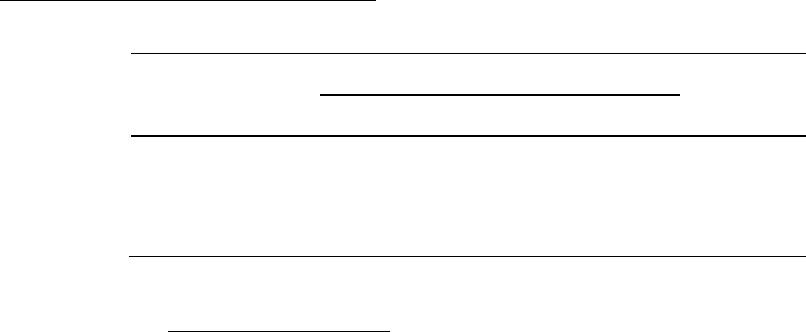
Question 30 refers to the table that follows
Components
Term paper
Exam 1
Exam 2
Total
Teacher’s weight
30%
30%
40%
100%
Theresa’s score
9
40
30
79
Maximum score
10
50
50
110
30. Suppose a fixed percentage method is used to create a composite grade. What is Theresa’s
weighted composite?
(a) 26.7
(b) 70.0
(c) 72.0
(d) 79.0
(e) Not given
31. In a marking period there are 100 possible points to earn. A teacher allowed a maximum of 20
points for homework and quizzes, 40 points for the midterm, and 40 points for the end-of-unit
exam. At the end of the marking period, the teacher summed up the scores for each student. On
the basis of the final sum, the teacher awarded grades to the students. What type of criterion–
referenced grading is the teacher using?
(a) Content based method
(b) Fixed percent method
(c) Quality level method
(d) Total points method
32. A fundamental assumption underlying the use of grading on the curve is that the
(a) ability being assessed is normally distributed.
(b) test scores of the student are normally distributed.
(c) relative standing of the individual is most important.
33. What is the most important drawback in using norm-referenced grading?
(a) Reference groups vary, making interpretation difficult.
(b) It does not indicate what learning objectives a student has learned.
(c) Students who improve their performance do not receive grades to match the
improvement.
34. Criterion-referenced grading should be used when a teacher bases grades on
(a) how each students’ performance compares with others.
(b) individual differences in performance among students.
(c) what each student has accomplished in relation to a clearly specified curriculum.

35. In certain school district the policy is to assign grades according to how well a student achieves
the state’s standards. A teacher gave Sophia a slightly higher grade even though she didn’t meet
all the standards, because she really tried very hard. Has the teacher acted in a manner consistent
with the school policy?
(a) Yes
(b) No
36. Grading on the curve is compatible with self-referencing at the formative evaluation stages.
(a) True
(b) False
37. A teacher has achievement test results showing that a student is only partially mastering skills in
reading. The student has a borderline “A/B” grade in English. Giving the student the lower grade
would be
(a) Valid and educationally advisable.
(b) Valid but educationally ill-advised.
(c) Invalid but educationally advisable.
(d) Invalid and educationally ill-advised.
38. Which of the following grading approaches is LEAST defensible when the purpose of grading is
to report a student’s achievement of learning objectives and standards?
(a) self-referenced grading
(b) norm-referenced grading
(c) criterion-referenced grading
39. Which of the following grading approaches is MOST defensible when the purpose of grading is
to provide students with feedback on how close they are to achieving learning objectives and
meeting standards?
(a) self-referenced grading
(b) norm-referenced grading
(c) criterion-referenced grading
40. Which of the following grading approaches is MOST defensible when the purpose of grading is
to provide students with feedback on how much progress they have made from their individual
starting points?
(a) self-referenced grading
(b) norm-referenced grading
(c) criterion-referenced grading
41. If your school district has a poor grading policy, your best course of action is to ignore it and use
a better system of grading.
(a) True
(b) False

42. A teacher used the following scales to mark each of the components going into the marking
period grade in social studies: each homework (0-5), each quiz (0-100), one map drawing (1-8),
end-of-unit test (0-100). Is it acceptable for the teacher to add these marks together to obtain the
marking period grade?
(a) Yes, just add them as is.
(b) Yes, but first change the scale of the map drawing from 1-8 to 0-8.
(c) No.
Items 43, 44, 45, and 46 refer to the directions below.
Each numbered statement below contains descriptions of two assessment tasks a teacher
used during her teaching of a unit. Read the descriptions of both tasks. Then, mark
answer space:
A — if the first task should have more weight in determining the unit grade.
B — if the second task should have more weight in determining the unit grade.
C — if the two tasks should have equal weight in determining the unit grade.
43. Lab reports the content of which assessed 2 of the 8 unit learning objectives, vs. Quizzes that
assessed 6 of the 8 unit learning objectives.
44. Student essays that were marked without using a scoring rubric vs. Student compositions that
were marked with a well-defined scoring rubric.
45. An indepth essay question covering 1 of the 8 unit learning objectives and marked with a well-
definied scoring rubric vs. A test comprised of short-answer and completion items covering 7 of
the 8 unit learning objectives.
46. An essay question requiring students to evaluate a new situation by using criteria taught in class
vs. An essay question requiring students to recall explanations and reasons that were taught in
class.
47. Sally does not turn in two homework assignments. Billy turns in the same two assignments but
his work is all wrong. According to Brookhart and Nitko’s textbook, the teacher should give both
students the same failing mark.
(a) True
(b) False
48. According to the Brookhart and Nitko textbook, a student who does not turn in an assignment
should be given
(a) a zero mark.
(b) the highest failing mark (e.g., 59%).
(c) an incomplete grade.
CHAPTER 15
Answers and Classification of Items