Larson_Calculus_10e ch14sec03
MULTIPLE CHOICE
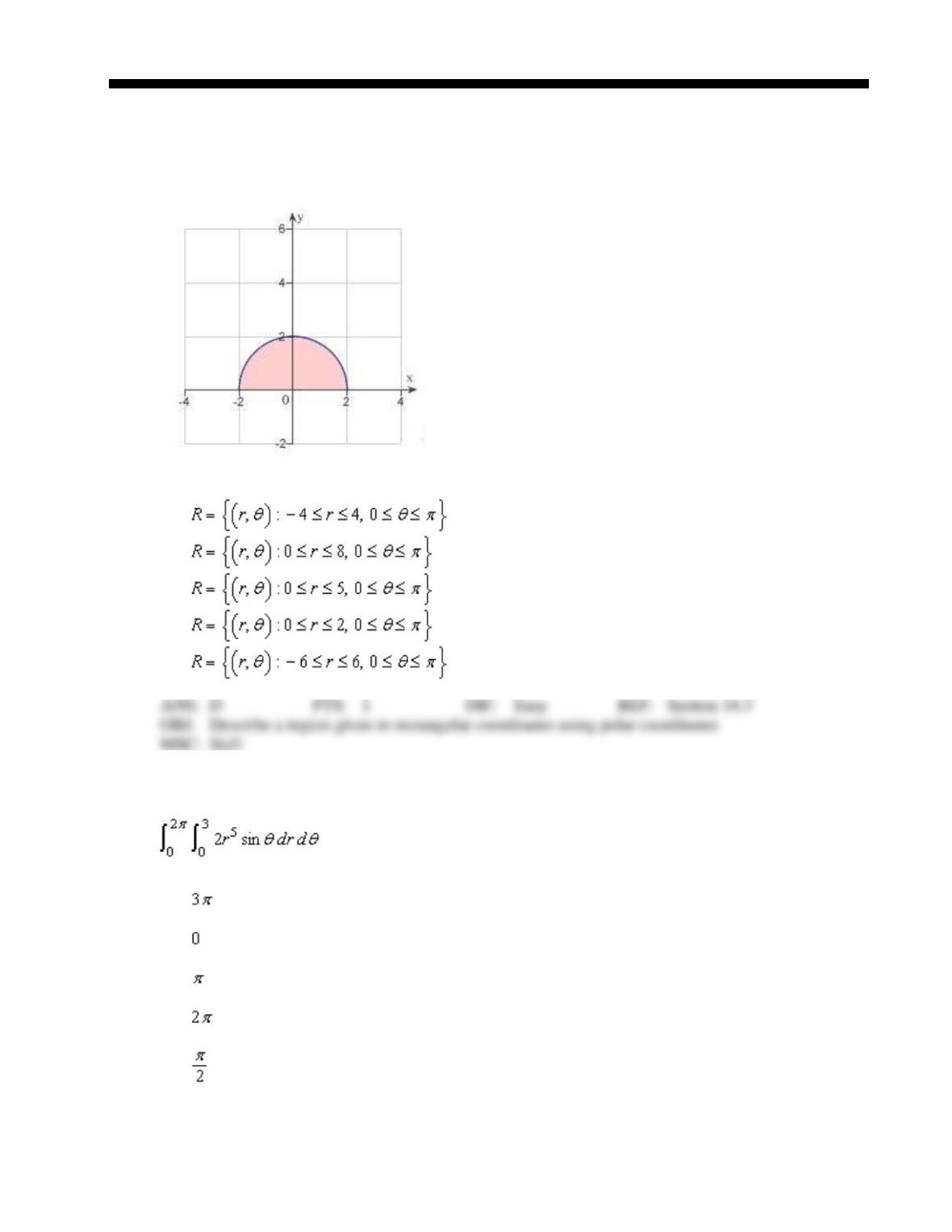
1. Use polar coordinates to describe the region as shown in the figure below:
a.
b.
c.
d.
e.
2. Evaluate the double integral below.
a.
b.
c.
d.
e.
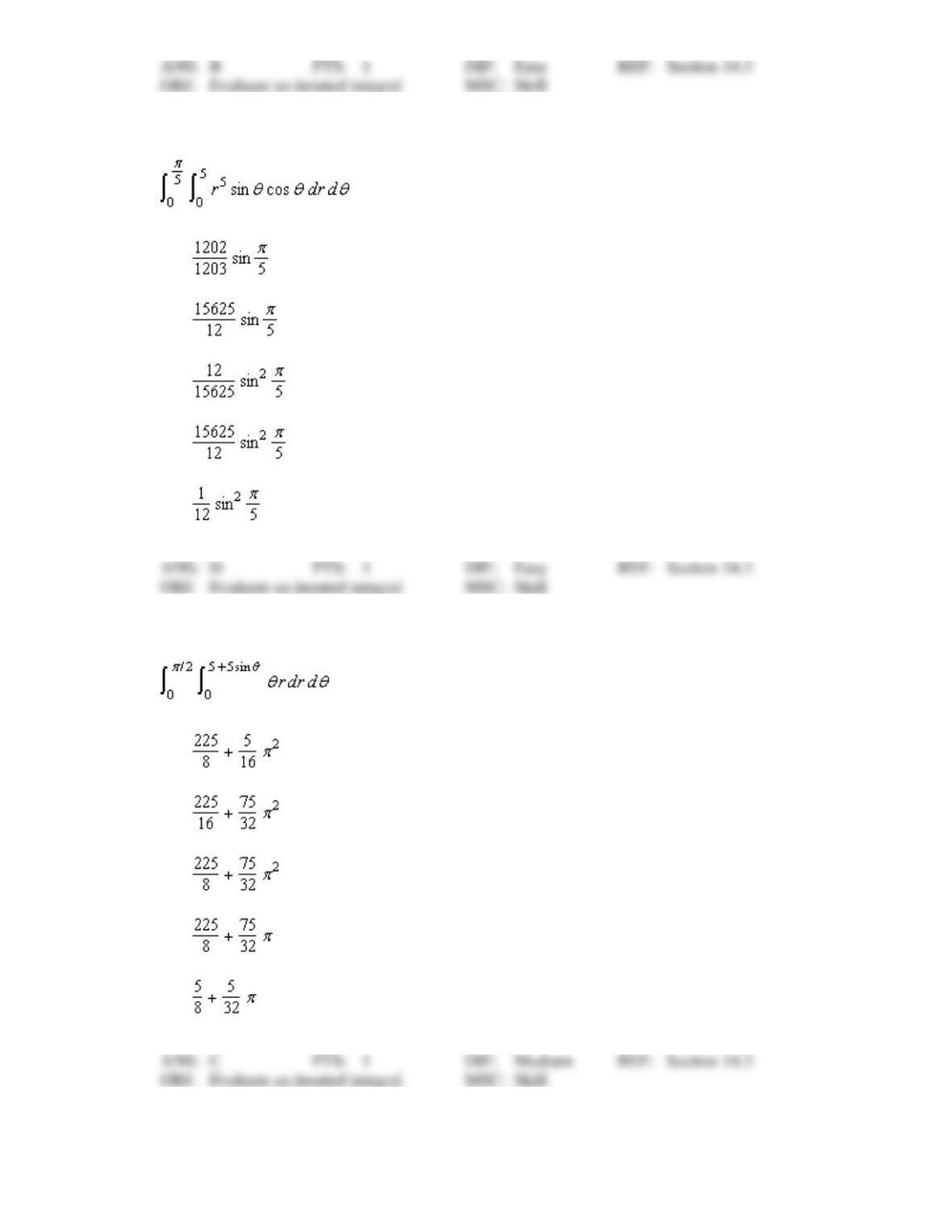
3. Evaluate the double integral below.
a.
b.
c.
d.
e.
4. Evaluate the double integral below.
a.
b.
c.
d.
e.
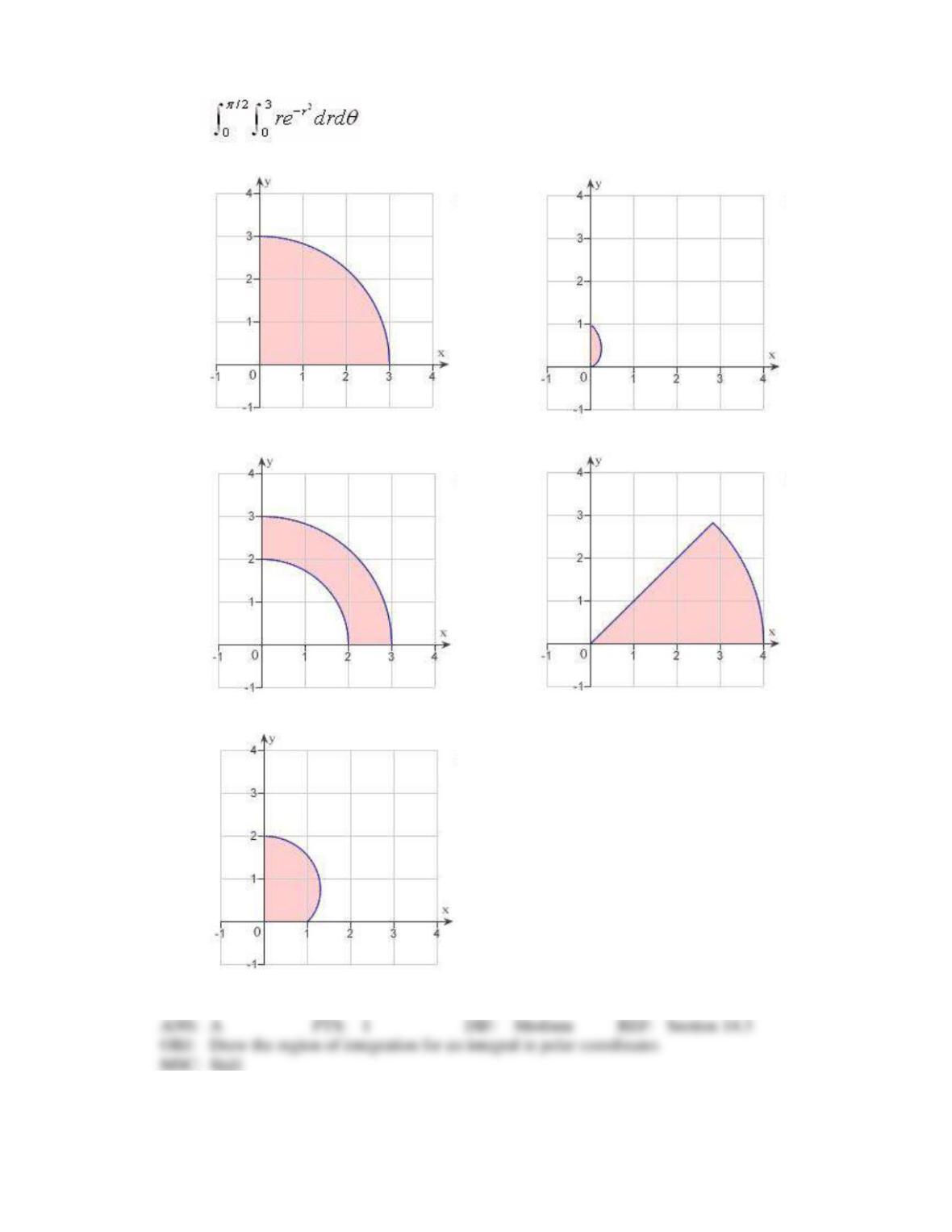
5. Identify the region of integration for the following integral.
a.
d.
b.
e.
c.
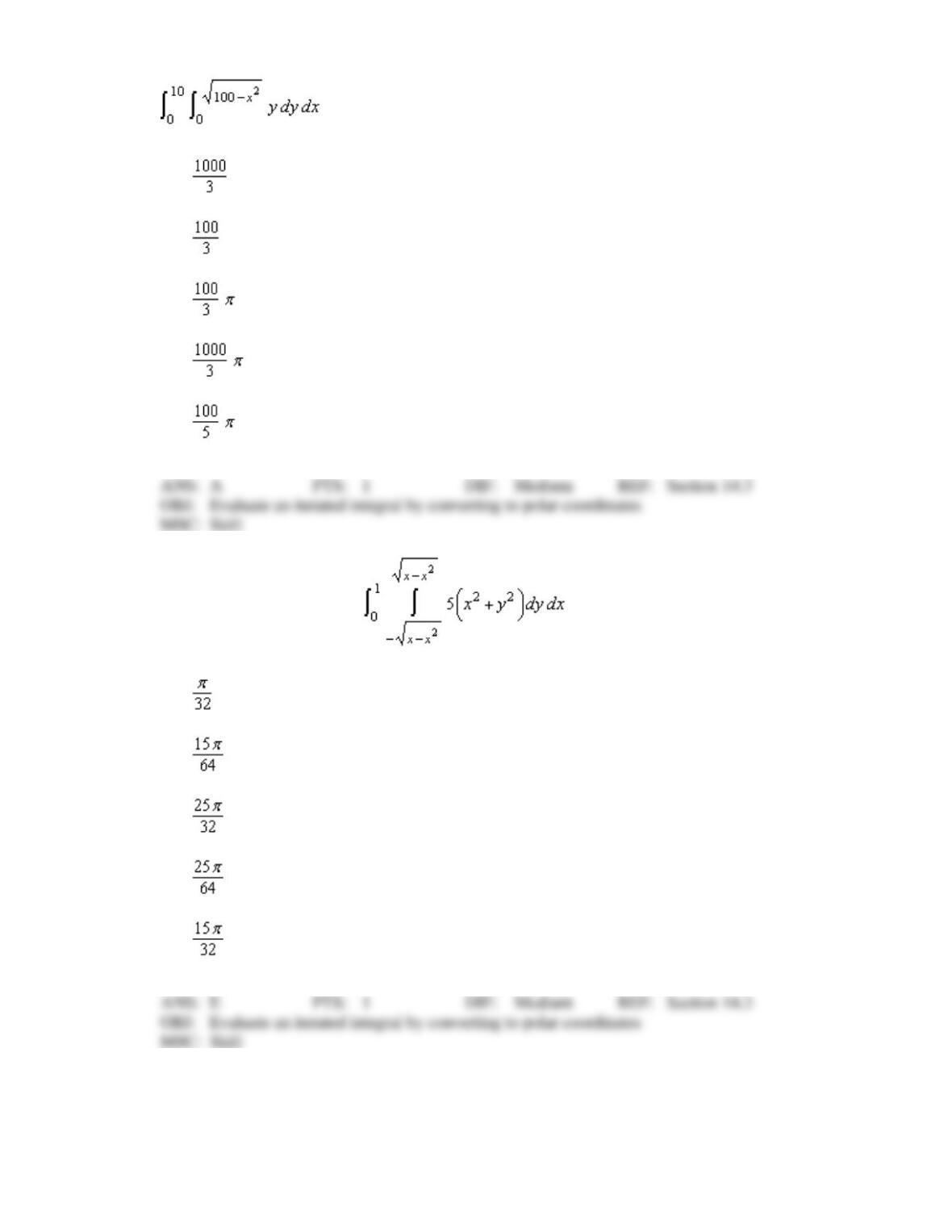
6. Evaluate the following iterated integral by converting to polar coordinates.
a.
b.
c.
d.
e.
7. Evaluate the iterated integral by converting to polar coordinates.
a.
b.
c.
d.
e.
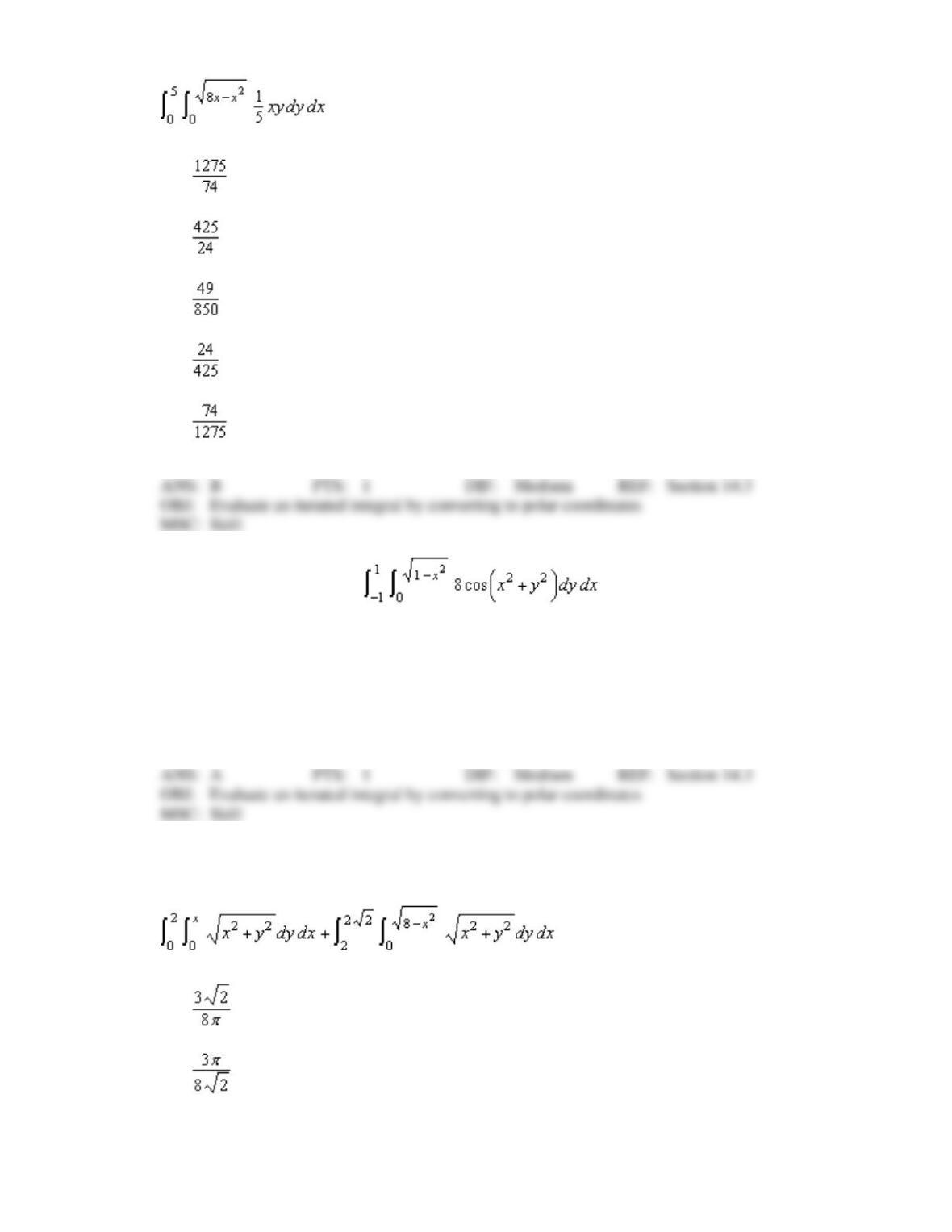
8.
Evaluate the following iterated integral by converting to polar coordinates.
a.
b.
c.
d.
e.
9. Evaluate the iterated integral by converting to polar coordinates.
Round your answer to four decimal places.
a.
10.5742
b.
13.5742
c.
17.5742
d.
28.5742
e.
14.5742
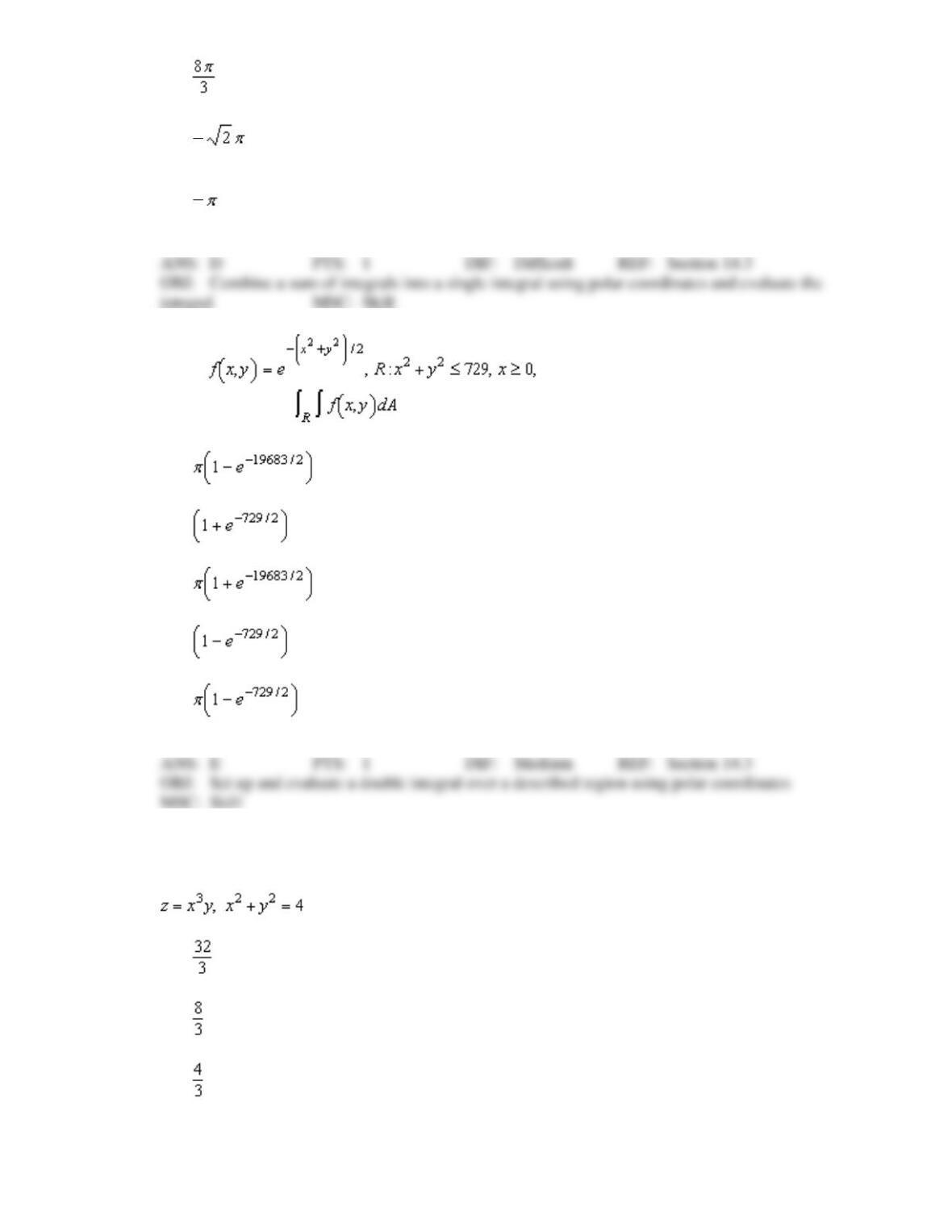
10. Combine the sum of the two iterated integrals into a single integral by converting to polar coordinates.
Evaluate the resulting iterated integral.
a.
b.
c.
d.
e.
11. Given use polar coordinates to set up and evaluate
the double integral .
a.
b.
c.
d.
e.
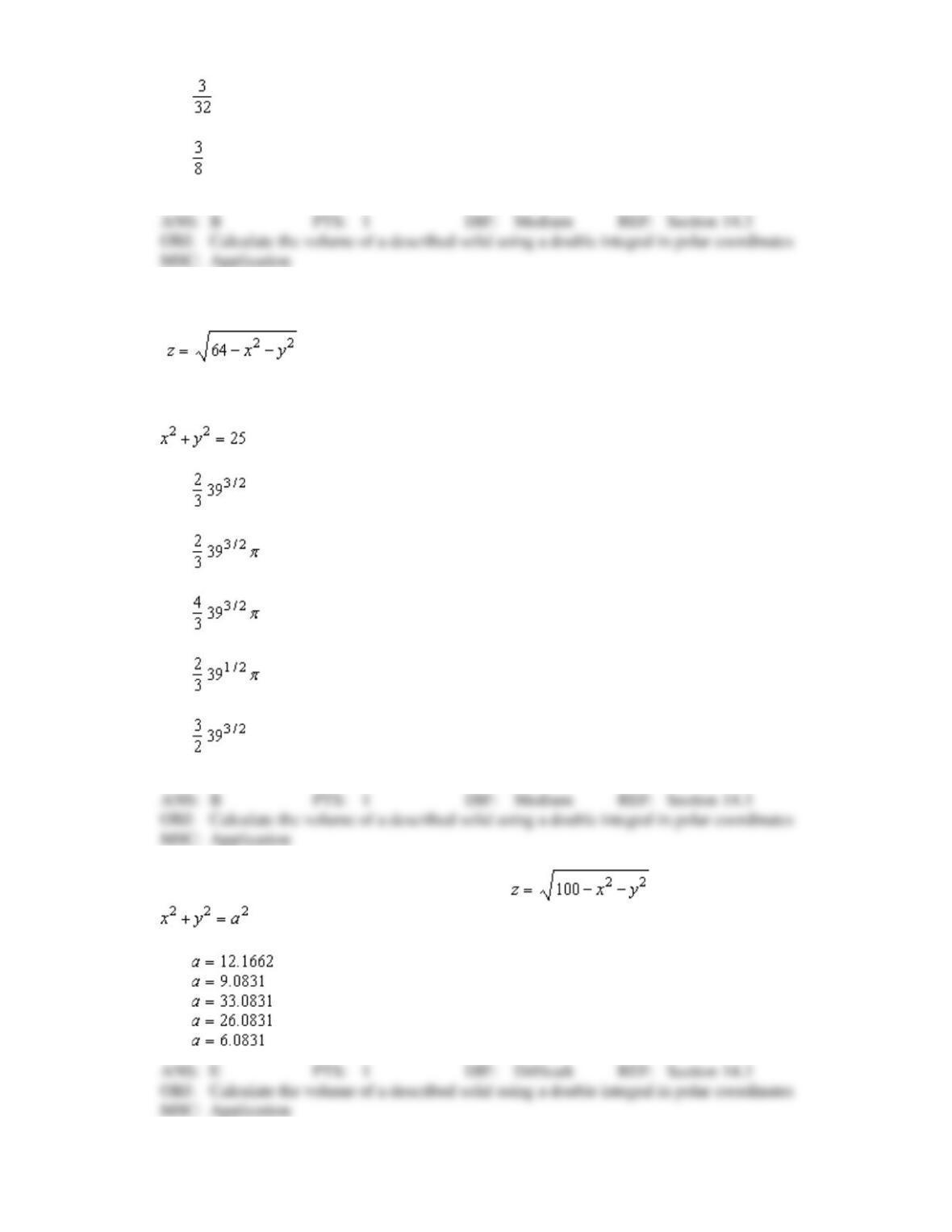
12. Use a double integral in polar coordinates to find the volume of the solid in the first octant bounded by
the graphs of the equations given below.
a.
b.
c.
4
3
4
3
d.
e.
13. Use a double integral in polar coordinates to find the volume of the solid inside the hemisphere
but outside the cylinder
.
a.
b.
c.
d.
e.
14. Find a such that the volume inside the hemisphere and outside the cylinder
is one-half the volume of the hemisphere. Round your answer to four decimal places.
a.
b.
c.
d.
e.
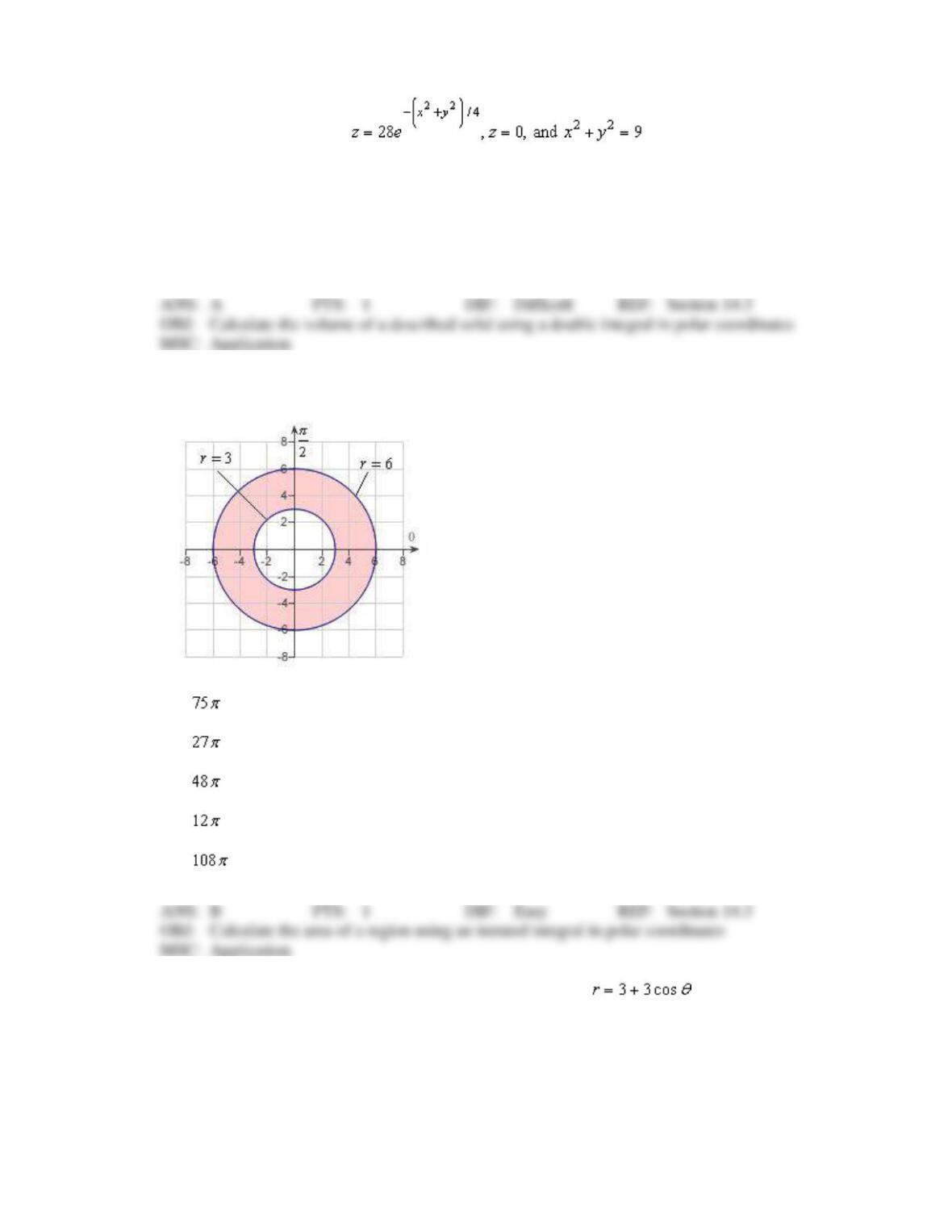
15. Determine the diameter of a hole that is drilled vertically through the center of the solid bounded by
the graphs of the equations if one-tenth of the volume of
the solid is removed. Round your answer to four decimal places.
a.
1.2245
b.
31.4490
c.
7.2245
d.
5.4490
e.
15.2245
16. Use a double integral to find the area of the shaded region as shown in the figure below.
a.
b.
c.
d.
e.
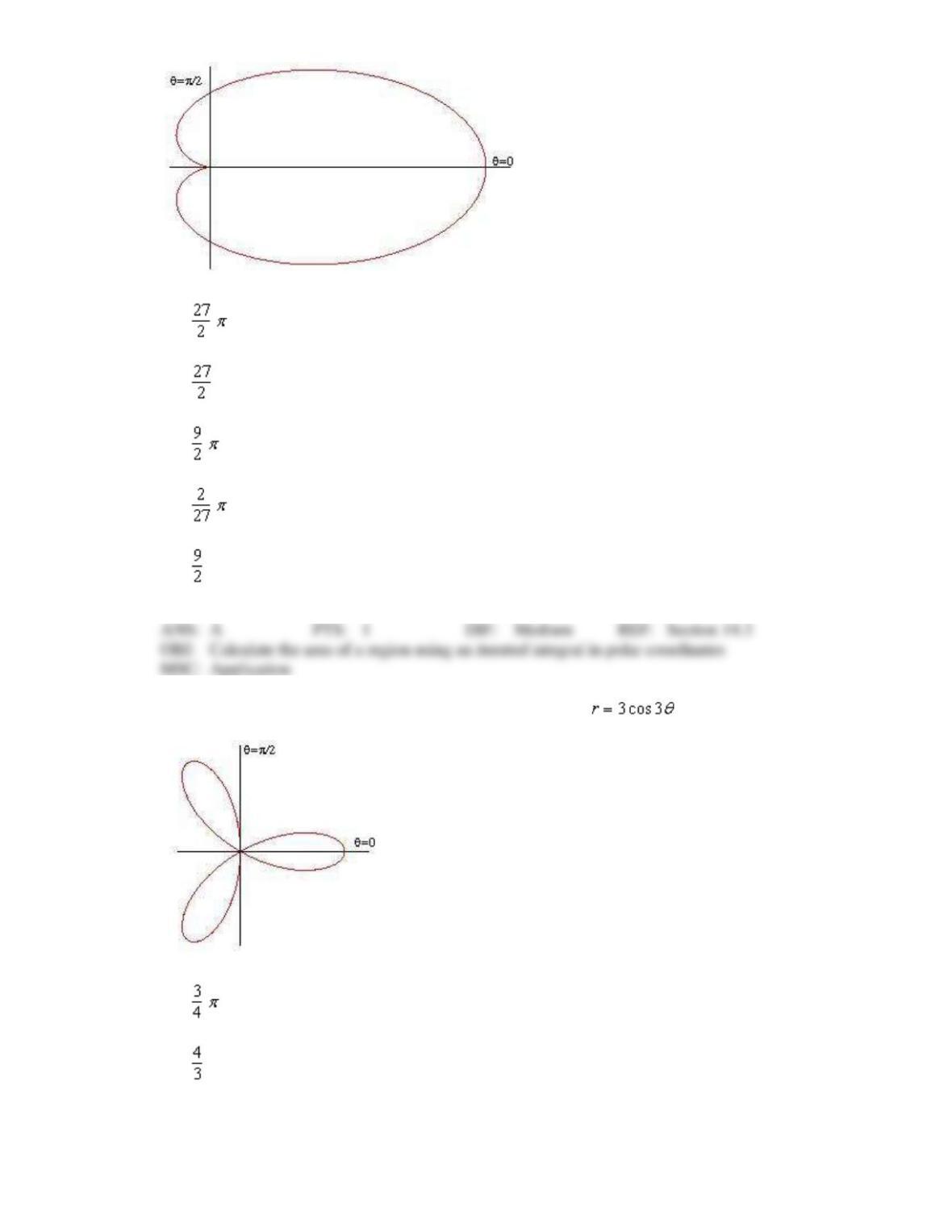
17. Use a double integral to find the area enclosed by the graph of .
a.
b.
c.
d.
e.
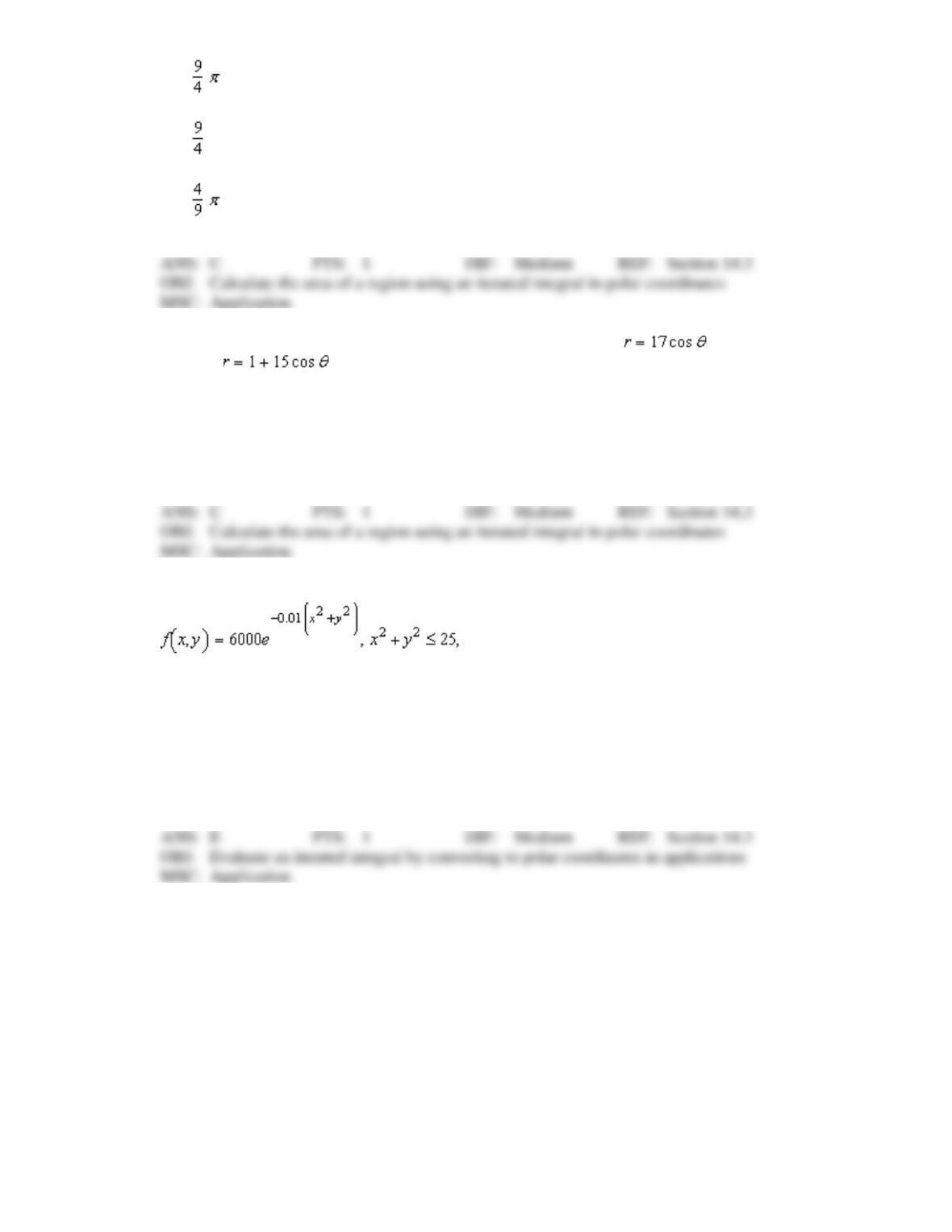
18. Use a double integral to find the area enclosed by the graph of .
a.
b.
c.
d.
e.
19. Use a double integral to find the area of the region inside the circle and outside the
cardioid . Round your answer to two decimal places.
a.
46.68
b.
58.34
c.
20.34
d.
55.34
e.
22.34
20. Suppose the population density of a city is approximated by the model
where x and y are measured in miles. Integrate the density
function over the indicated circular region to approximate the population of the city. Round your
answer to the nearest integer.
a.
417,127
b.
417,029
c.
833,901
d.
833,903
e.
416,951