Chapter 14—Mechanisms of Enzyme Action
MULTIPLE CHOICE
1. Enzymes have active sites which have the greatest complementarity to the:
a.
substrate.
b.
transition state.
c.
product.
d.
both substrate and product.
e.
none of the above.
2. All are true for the enzyme-transition state complex EXCEPT:
a.
It is designated as EX .
b.
The enzyme stabilizes the transition-state complex more than it stabilizes the substrate
complex.
c.
The enzyme is “designed” to bind the transition-state structure more tightly than the
substrate or product.
d.
The energy barrier between ES and EX is less than the energy barrier between S and X .
e.
All are true.
3. All are catalytic mechanisms or factors that contribute to the performance of enzymes EXCEPT:
a.
entropy gain in ES formation.
b.
covalent catalysis.
c.
general acid or base catalysis.
d.
proximity and orientation.
e.
all are true.
4. Which of the following statements regarding enzymes and transition states is true?
a.
stabilization of the transition state must be less than stabilization of ES for catalysis to
occur
b.
binding of substrate to an enzyme often causes strain, thus promoting transition state
formation
c.
the transition state conformation of an enzyme catalyzed reaction is identical to the
conformation seen in the uncatalyzed transition state
d.
formation of the transition state always assures that the reaction will proceed to product
e.
none of the above are true
5. Because the enzymatic reaction rate is determined by the difference in energy between ES and ____,
the tighter binding of the substrate, the ____ the rate of reaction.
a.
S; higher
b.
P; lower
c.
EX ; lower
d.
EX ; higher
e.
S; lower
Garrett/Grisham 5e Test Bank 2
6. An enzyme-catalyzed reaction rate will be increased if the energy level of ES can be increased. Which
of the following will not increase the energy level of ES?
a.
destabilization of ES by strain caused by non-covalent interactions between E and S.
b.
loss of entropy due to binding of E and S.
c.
destabilization of ES by distortion.
d.
destabilization of ES by solvation.
e.
destabilization of ES by electrostatic effects.
7. The transition state has an estimated life-time of about:
a.
microseconds (10−6 s).
b.
nanoseconds (10−9 s).
c.
(10−2 s).
d.
(10−14 to 10−13 s).
e.
milliseconds (10−3 s).
8. The good transition state analog is one which would serve also as an extremely effective:
a.
competitive inhibitor.
b.
noncompetitive inhibitor.
c.
allosteric inhibitor.
d.
mixed-noncompetitive inhibitor.
e.
irreversible inhibitor.
9. Transition-state analogs are:
a.
approximations of the transition state that bind more tightly than the substrate.
b.
compounds that compete for the active site, but are not necessarily very similar to the
substrate.
c.
stable molecules that can not be expected to resemble the true transition state too closely.
d.
stable chemically and structurally similar molecules to the transition state.
e.
all of the above.
10. Most covalent catalysis is carried out by enzymes using a:
a.
ping-pong kinetic mechanism.
b.
sequential bisubstrate kinetic mechanism.
c.
random bisubstrate kinetic mechanism.
d.
simple unimolecular kinetic mechanism.
e.
none of the above.
11. Since enzymes are not rigid molecules but rather flexible proteins, which of the following may be
attributed to this fact?
a.
active sites are able to conform to the shape of the substrate
b.
catalytic residues are oriented in such as way to aid in bond breakage and bond formation
c.
strain is placed upon the substrate while it binds to the enzyme
d.
near-attack conformations are achieved during formation of the transition state during an
enzyme catalyzed reaction
e.
all of the above are correct
Garrett/Grisham 5e Test Bank 3
12. Which of the following amino acids would NOT provide a nucleophilic center for covalent catalysis?
a.
alanine
b.
lysine
c.
glutamic acid
d.
serine
e.
cysteine
13. Because the pKa is near 7, ____ side-chains are often involved in general acid-base catalysis.
a.
cysteine
b.
aspartate
c.
glutamate
d.
lysine
e.
histidine
14. All are true for low-barrier hydrogen bonds EXCEPT:
a.
The hydrogen is centered between the two heteroatoms.
b.
The interactions are more covalent.
c.
The bond order approaches 0.5 for both O−H interactions.
d.
The barrier that the hydrogen atom must surmount to exchange oxygens becomes lower.
e.
All are true.
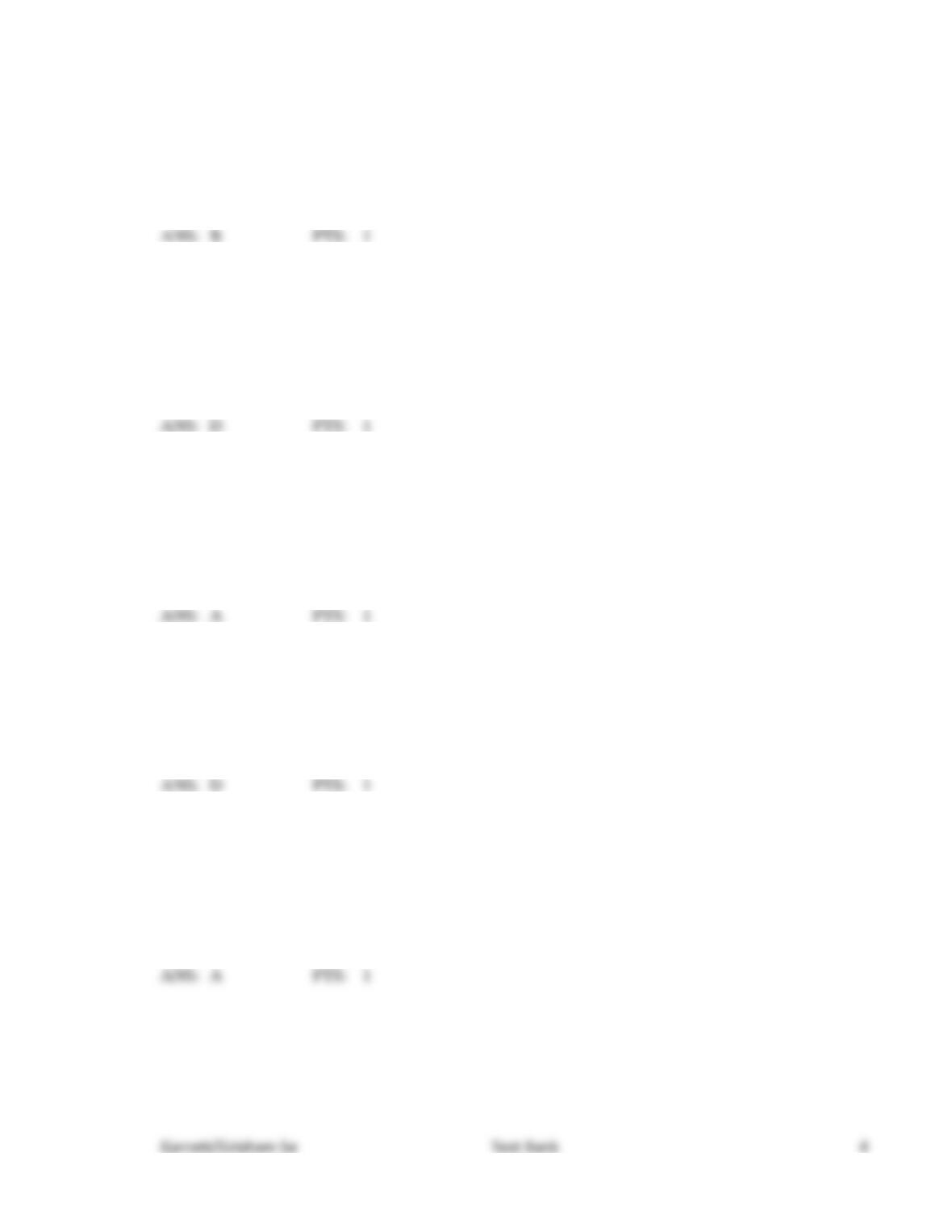
15. The catalytic mechanism below is an example of:
a.
covalent nucleophilic catalysis.
b.
covalent electrophilic catalysis.
c.
specific base catalysis.
d.
general base catalysis.
e.
low barrier hydrogen bond catalysis.
16. Metal ion catalysis include all EXCEPT:
a.
increased acidity of a nucleophile with an ionizable proton.
b.
metal ion requirement to maintain the stable, native state of the enzyme.
c.
metal binding weakly, perhaps only during the catalytic cycle.
d.
electrophilic catalysis, stabilizing the increased electron density or negative charge that
can develop during a reaction.
e.
all are true.
17. The mechanism of chymotrypsin involves which of the following elements?
a.
deprotonation of an active site Asp residue by His to start the reaction
b.
formation of an acyl-enzyme intermediate that must be hydrolyzed to complete the
reaction
c.
stabilization of the positively charged His by a Gln residue
d.
direct deprotonation of water by His to generate a hydroxide ion for initiation of the
reaction
e.
both a and b occur
18. In the catalytic triad common to many serine proteases, _____ increases the basicity of _____, thus
allowing deprotonation of _____ to serve as a nucleophile.
a.
Ser-His-Asp
b.
His-Ser-Asp
c.
Ser-His-His
d.
Asp-His-Ser
e.
Cys-His-Ser
19. In the hydrolysis of p-nitrophenylacetate by chymotrypsin all of the following are correct EXCEPT:
a.
the first product is acetic acid.
b.
an acetyl-enzyme intermediate forms during the mechanism.
c.
attack of a water molecule on the acyl-enzyme intermediate yields the second product.
d.
the active site contains a serine residue, an unprotonated histidine, and an unprotonated
aspartate residue at pH 7.0 prior to binding the substrate.
e.
none of the above.
20. Organic fluorophosphates are ____ inhibitors of serine proteases such as chymotrypsin.
a.
competitive
b.
uncompetitive
c.
noncompetitive
d.
irreversible
e.
mixed noncompetitive
21. The initial bond formation in the covalent intermediate in the chymotrypsin catalyzed reaction is
between:
a.
serine and the carbonyl carbon in the peptide backbone.
b.
serine and the nitrogen in the peptide backbone.
c.
histidine and the carbonyl carbon in the peptide backbone.
d.
histidine and the nitrogen in the peptide backbone.
e.
aspartate and the carbonyl carbon in the peptide backbone.
22. In the chymotrypsin reaction mechanism there is a low-barrier hydrogen bond (LBHB) formed
between:
a.
Asp102 and Ser195.
b.
Asp102 and His57.
c.
His57 and Ser195.
d.
Ser195 and carbonyl oxygen in the peptide bond.
e.
None of the above.
23. Aspartate proteases display a variety of substrate specificities, but normally they are most active in
cleavage of peptide bonds:
a.
on the carboxyl side of the basic amino acids.
b.
on the carboxyl side of aromatic amino acids.
c.
on the carboxyl side of small, neutral residues.
d.
between two hydrophobic amino acid residues.
e.
none of the above.
24. The mechanism of aspartate protease catalysis is proposed to be:
a.
covalent nucleophilic catalysis.
b.
covalent electrophilic catalysis.
c.
specific base catalysis.
d.
general base-general acid catalysis facilitated by a low barrier hydrogen bond.
e.
all of the above.
25. HIV-1 protease is different from most mammalian aspartic acid proteases in that it has:
a.
two subunits each with a two-aspartate active site.
b.
two subunits each contributing an aspartate to the active site.
c.
two active sites on one protein.
d.
two subunits, one with an active site, and the other with a regulatory activity.
e.
none of the above.
26. Effective HIV-1 protease inhibitors should have all of the following characteristics EXCEPT:
a.
effective delivery in sufficient quantities to the desired site(s) of action in the organism.
b.
relative specificity for the HIV-1 protease.
c.
a backbone −OH group that forms a weak association with the two active-site carboxyl
groups of the protease.
d.
results in inhibiting the production of new virus particles in cells of infected patients.
e.
broad spectrum enough to be effective against mutant viral forms.
27. Which of the following are relevant to the reaction catalyzed by chorismate mutase?
a.
the reaction involves a concerted intramolecular rearrangement of chorismate to
prephenate during the synthesis of phenylalanine.
b.
the enzyme catalyzed and uncatalyzed reactions follow almost identical routes
c.
the enzymatic reaction is thought to involve transition state stabilization by 12 electrostatic
and hydrogen bond interactions
d.
the geometry of the enzyme active site is such that the difference in energy between ES
and the near attack conformation is less than 1 kJ/mol
e.
all of the above are true
28. Which of the following statements regarding enzymes is true?
a.
stabilization of the transition state must be less than stabilization of ES for catalysis to
occur
b.
an enzyme mechanism is vastly different from the uncatalyzed reaction
c.
binding of substrate to an enzyme often causes strain, thus promoting transition state
formation
d.
a random single displacement mechanisms requires that substrates bind to the enzyme in a
specific order
e.
none of the above
29. If the transition state of an enzyme catalyzed reaction contained a positive charge, which of the
following amino acids would most likely be present in the active site to aid in transition state
formation?
a.
Lys
b.
Val
c.
Asn
d.
Glu
e.
Cys
30. If the substrate for an enzyme catalyzed reaction contained a negative charge, which of the following
amino acids would most likely be present in the active site to provide electrostatic destabilization of
the ES complex?
a.
Val
b.
Asp
c.
Arg
d.
Ser
e.
Gln