Chapter 14 – Determining Project Progress and Results
TRUE/FALSE
1. In order to determine that a project is progressing adequately, a project manager could use a balanced
scorecard approach to evaluate the organization along supplier, external business, risk and human
resource perspectives.
2. Project managers should empower team members to the extent possible, yet control to the extent
necessary.
3. Monitoring and controlling project work refers to the processes of tracking, reviewing and reporting
progress to meet the performance objectives defined in the project plan.
4. Two types of control are used extensively on projects: steering control and go / no go control.
5. In agile projects, communication is frequent and rapid. Progress report meetings are held every
morning as brief 15 minute standup meetings.
6. Perform Qualitative Risk Analysis is the process of implementing risk response plans, tracking
identified risks, monitoring residual risks, identifying new risks, and evaluating risk process
effectiveness throughout the project.
7. When discrepancies are identified during a project quality audit, the presumption must be that workers
failed to comply with procedures and should be reprimanded accordingly.
8. The control quality process deals with using correct policies and convincing stakeholders that the
project team is capable of producing good output.
9. Inspection is keeping errors out of process while prevention is trying to find errors so they do not get
to the customer.
10. It is often costly, difficult or even impossible to inspect an entire sample. When that is the case, it is
best to inspect the population.
11. A tolerance limit is what the customer will accept, whereas a control limit reflects what the process
can consistently deliver when things are behaving normally.
12. The purpose of a check sheet is to quickly understand the primary causes of a particular problem using
the 80/20 rule.
13. In a control chart, a point that occurs above the upper control limit typically means that some sort of
special cause is creating the variation and requires a specific intervention.
14. Some scope changes start as proposed changes to cost or schedule, just as some changes to cost or
schedule start as proposed scope changes.
15. When reporting performance to sponsors and management, it is often helpful to organize the
information in terms of three time horizons: past, current and future.
16. For risk events partially within project control, resolution strategies include working with clients to
reprioritize cost, schedule, scope or quality and carefully escalate problems.
17. Earned Value (EV) is the authorized budget assigned to the scheduled work.
18. When using earned value techniques, Actual Cost (AC) refers to realized cost incurred for the work
performed on an activity during a specific time period.
19. The Cost Variance (CV) is a measure of cost efficiency of budgeted resources on a project, expressed
as the ratio of earned value (EV) to actual cost (AC).
20. The Schedule Performance Index (SPI) is a measure of schedule efficiency on a project, expressed as
the ratio of earned value (EV) to planned value (PV).
MULTIPLE CHOICE
1. All of the following accurately describe skills that an owner’s representative can use during the project
when making tradeoffs EXCEPT:
a.
Managing change
b.
Inspecting quality into the project
c.
Team building
d.
Knowledge of criteria
2. The process of reviewing all change requests, approving changes, and managing changes to
deliverables, organizational process assets, project documents and project management plan; and
communicating their disposition, is known as:
a.
perform project monitoring.
b.
variance analysis and control.
c.
perform integrated change control.
d.
configuration management
3. Change control includes which of the following activities?
a.
identifying, documenting, approving or rejecting, modifications to documents,
deliverables, or baselines
b.
brainstorming, selecting and implementing new ideas
c.
recruiting, selecting and training new team members
d.
identifying and implementing changes to the project charter

4. Some organizations rely upon a formally chartered group of stakeholders responsible for reviewing,
evaluating and approving changes to the project. This group is typically known as a:
a.
stakeholder review board.
b.
change control board.
c.
project evaluation committee.
d.
steering committee
5. When a project manager asks clarifying questions and paraphrases what is being communicated to
them, he or she is using ?
a.
Passive listening
c.
Information gathering techniques
b.
Active listening
d.
Soft skills
6. While the manage communications process is underway, effective information distribution often
requires the project manager and team to accomplish all of the following activities EXCEPT:
a.
determine any information needs not already uncovered
b.
establish an information retrieval and distribution system
c.
develop responses to identifies risks
d.
report project performance to stakeholders
7. Which of these guidelines should be used to handle project information needs?
a.
target communications to as many people as possible
b.
replace communication methods as soon as new methods emerge
c.
provide information soon enough so that it is useful to the recipient
d.
use emails as the only form of communications
8. All of the following accurately apply to project performance reporting EXCEPT:
a.
Progress report meetings are a good way to capture lessons learned.
b.
Performance can be reported at fixed intervals or at key project milestones.
c.
Progress can be reported at varying degrees of frequency depending on the stakeholders.
d.
The same report format should be used for all stakeholders
9. One useful method of process improvement involves consideration of how another organization
performs a process with an eye toward determining how to improve your own performance. This
method is known as:
a.
comparative improvement.

b.
benchmarking.
c.
variance analysis.
d.
sensitivity analysis
10. Control quality generally includes all of the following EXCEPT:
a.
Using management by objectives
b.
Repairing defects
c.
Providing specific measurements for quality assurance
d.
Implementing approved changes as directed by the project’s integrated change control
system.
11. Project managers interested in controlling quality on projects will often concentrate upon project
inputs. Which of the following are important considerations for the project managers concentrating
on inputs to ensure project quality?
a.
ensure the workers assigned are capable of doing their work
b.
ensure that rework is kept to a minimum
c.
prove to the customer that the deliverables are correct
d.
ensure that all deliverables work before they are sent to the customer
12. Which of the following serves as an important guideline concerning project inspections?
a.
inspect after critical or expensive processes to make sure the inputs are good
b.
inspect immediately after prevention
c.
inspect at milestones identified in the project charter
d.
inspect only as a last resort
13. In which of the following tools would a normal or bell-shaped curve be expected if no special
conditions are occurring?
a.
flow chart
b.
cause and effect diagram
c.
check sheet
d.
histogram
14. All of the following accurately describe earned value management EXCEPT:
a.
It is used to make predictions concerning the project schedule and cost control until the
project’s conclusion.
b.
It enables a project team to understand progress in terms of both cost and schedule.
c.
It is good for performance reporting but not for forecasting
d.
It is used as a decision-making tool.
15. The Budget at Completion (BAC) is the sum of all budgets established for the work to be performed
on a project. As such it is equivalent to:
a.
the total planned value of the project.
b.
the total earned value of the project.
c.
the total actual cost of the project.
d.
the total value of the work completed to date
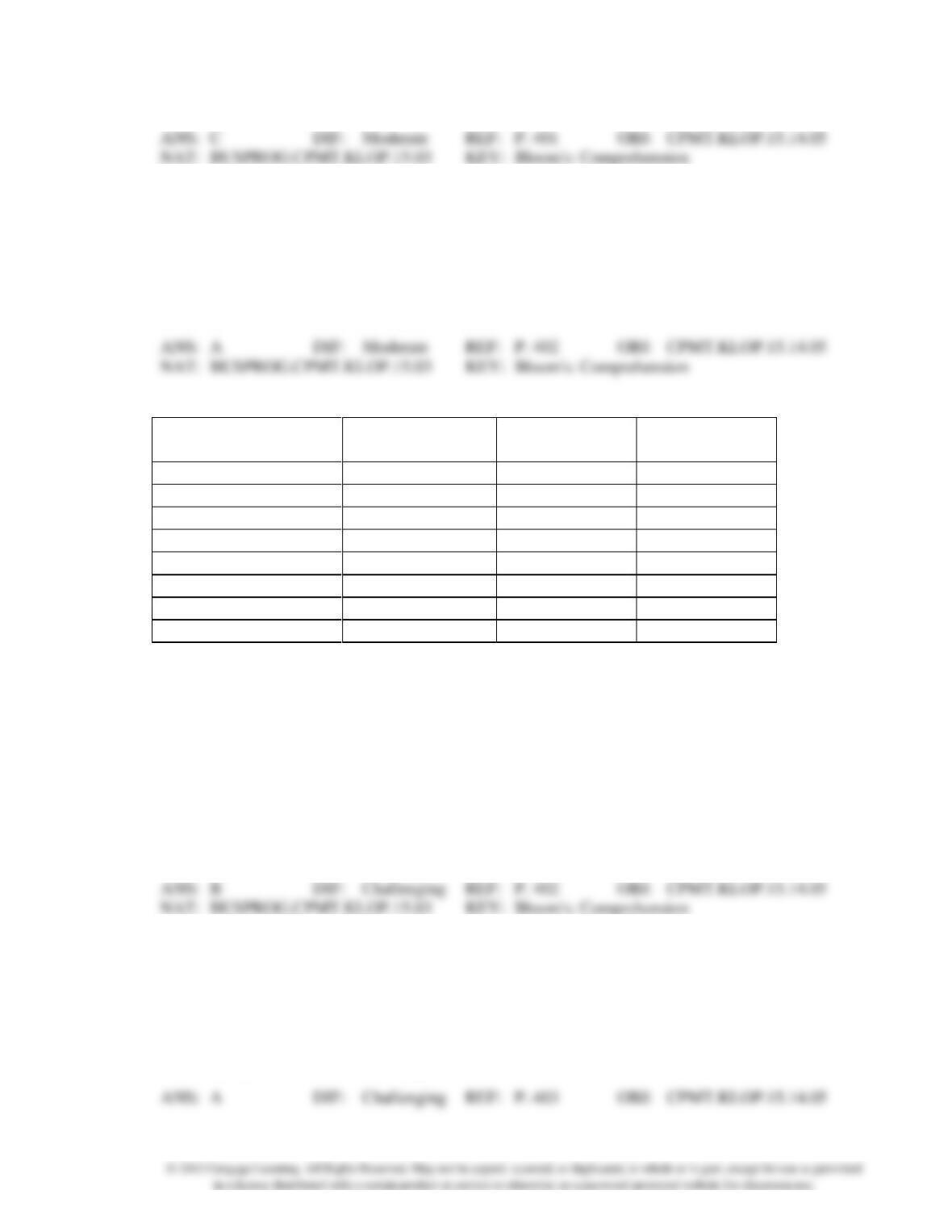
WBS Element
Planned Value
(PV)
Earned Value
(EV)
Actual Cost
(AC)
2.01 Airframe
48000
48000
50000
2.02 Engines
22000
21000
23000
2.03 Avionics
80000
60000
45000
2.04 Communications
30000
30000
30000
2.05 Tech. Manuals
42000
42000
48000
2.06 Spares
40000
35000
42000
2.07 Training
80000
80000
86000
Project Total
342000
316000
324000
Figure 14.1 Drug Surveillance Aircraft Project – Monthly Performance Report
(October 31, 20XX)
16. Consider the project performance report presented in figure 14.1. What valid conclusion can you
draw regarding the project schedule performance as of October 31, 20XX?
a.
The project is $18,000 behind schedule.
b.
The project is $26,000 behind schedule.
c.
The project is 18 days behind schedule.
d.
The project is $26,000 ahead of schedule.
17. Consider the project performance report presented in figure 14.1. What valid conclusion can you
draw regarding the project cost performance as of October 31, 20XX?
a.
The project is $8,000 over budget.
b.
The project is $18,000 over budget.
c.
The project is on budget.
d.
The project is $26,000 under budget.

18. Consider the project performance report presented in figure 14.1. Your analyst has determined that
your estimate to complete (ETC) is $226,000. Based on your performance to date and assuming
future performance will proceed at the same level of efficiency as past performance, what is your
estimate at completion (EAC)?
a.
$542,000
b.
$550,000
c.
$568,000
d.
It can not be determined from the information provided.
19. Consider the project performance report presented in figure 14.1. As a project manager, these results
should lead you to…
a.
take actions to understand and remedy the schedule performance on the active avionics
work packages.
b.
take actions to understand and resolve budgetary overruns on the active communications
work packages.
c.
take actions to understand and remedy the schedule performance on the active training
work packages.
d.
notify the project owner that you will not require all of the funding currently budgeted for
this project.
20. Which of the following measures is best suited for determining whether the project is on, ahead or
behind schedule?
a.
Estimate to Complete (ETC)
b.
Schedule Variance (SV)
c.
To Complete Performance Index (TCPI)
d.
Schedule Compliance (SC)
ESSAY
1. Describe how you would adopt a balanced score card approach to evaluate your project performance.
Your response should identify specific measures you would use as well as the approach you would
take to obtain the measures you identify.
2. Define integrated change control and briefly explain how it is accomplished in an organization.
3. Describe the three different categories of risk events that occur during the control risk process, and
some of the risk resolution strategies that might be used for each.
4. Your most recent project performance report indicates that your cumulative Schedule Performance
Index (SPI) is .85 and your cumulative Cost Performance Index (CPI) is .90. What conclusions can
you draw from these performance indices? What actions might you take to address project
performance based on these results?