Larson_Calculus_10e ch14sec08
MULTIPLE CHOICE
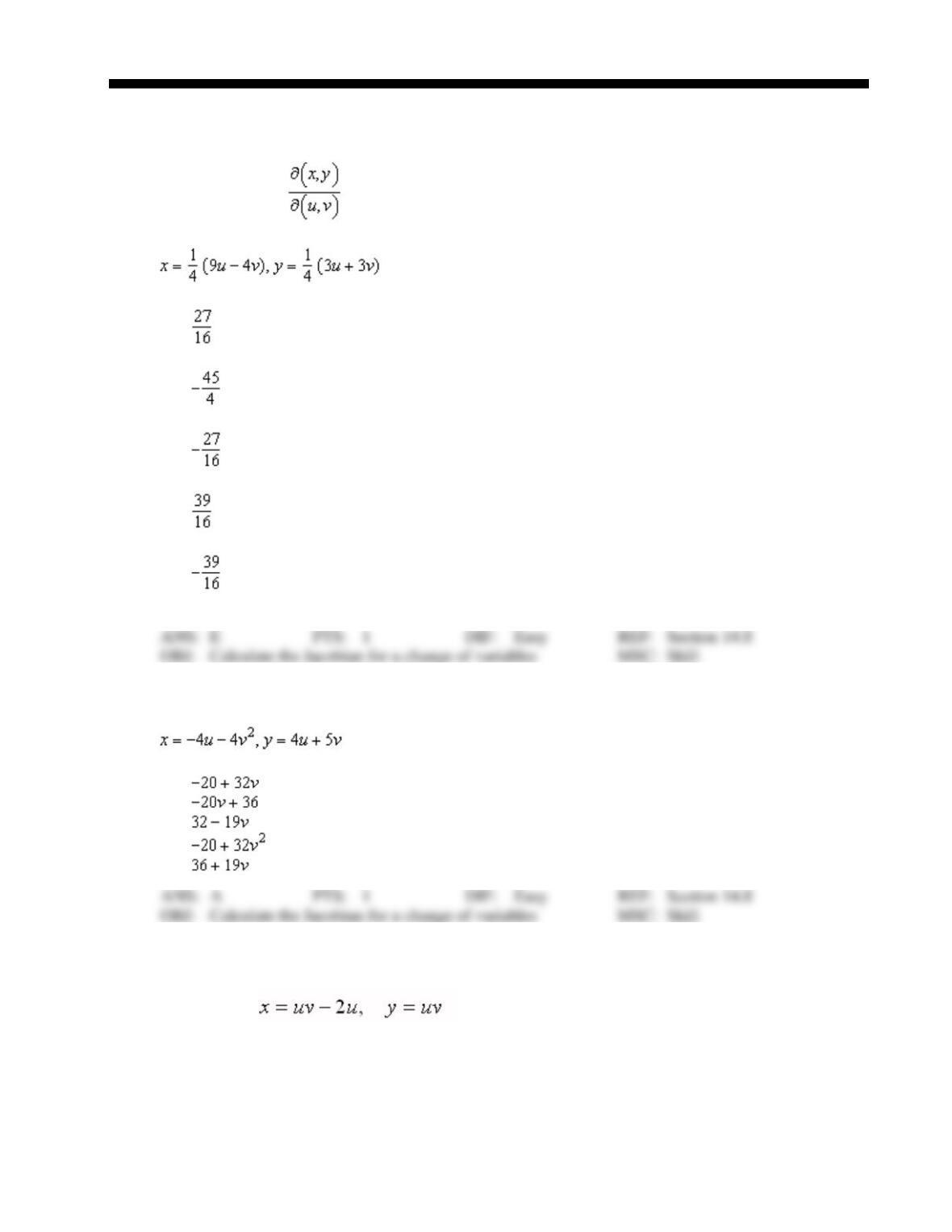
1. Find the Jacobian for the following change of variables:
a.
b.
c.
d.
e.
2. Find the Jacobian for the change of variables given below.
a.
b.
c.
d.
e.
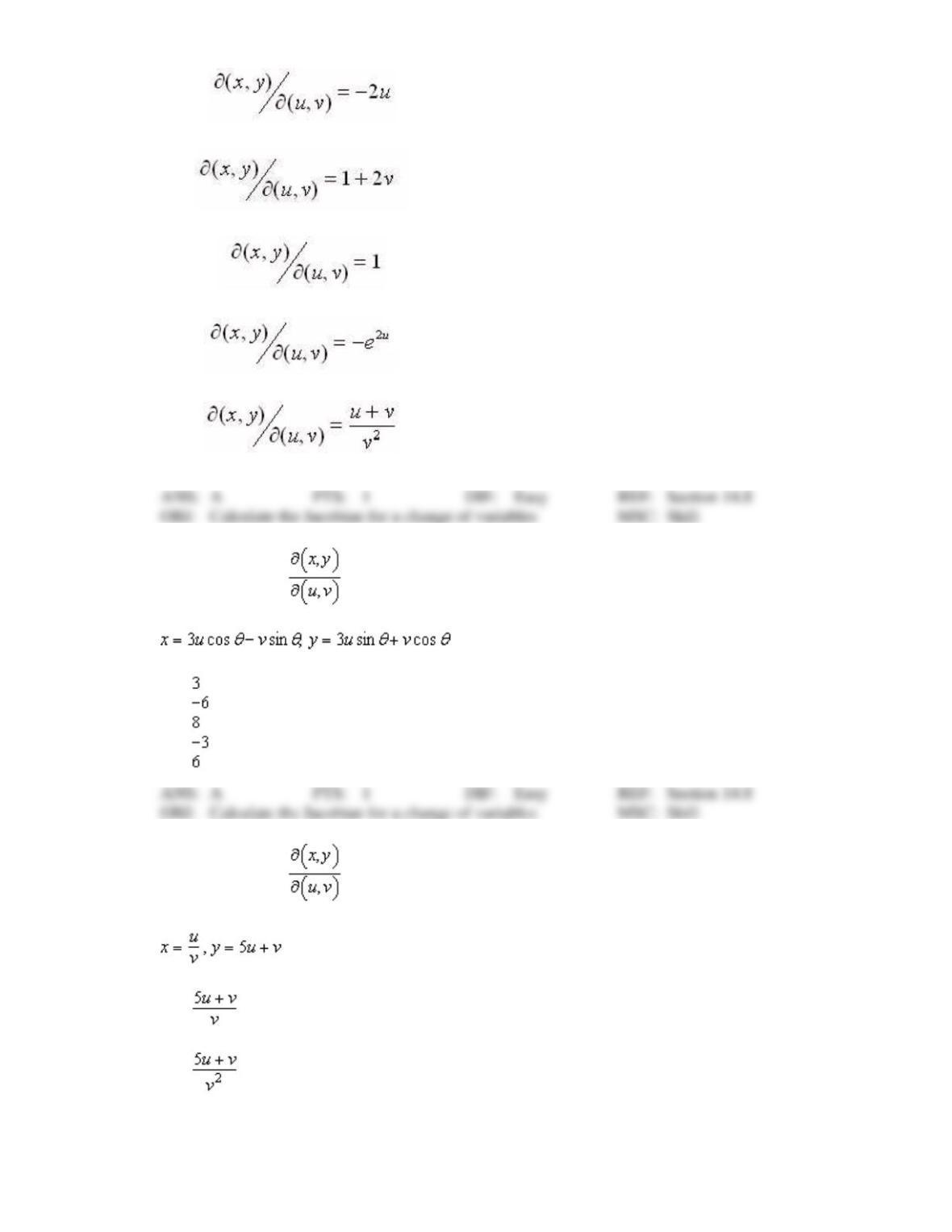
3. Find the Jacobian for the indicated change of variables.
a.
b.
c.
d.
e.
4. Find the Jacobian for the following change of variables:
a.
b.
c.
d.
e.
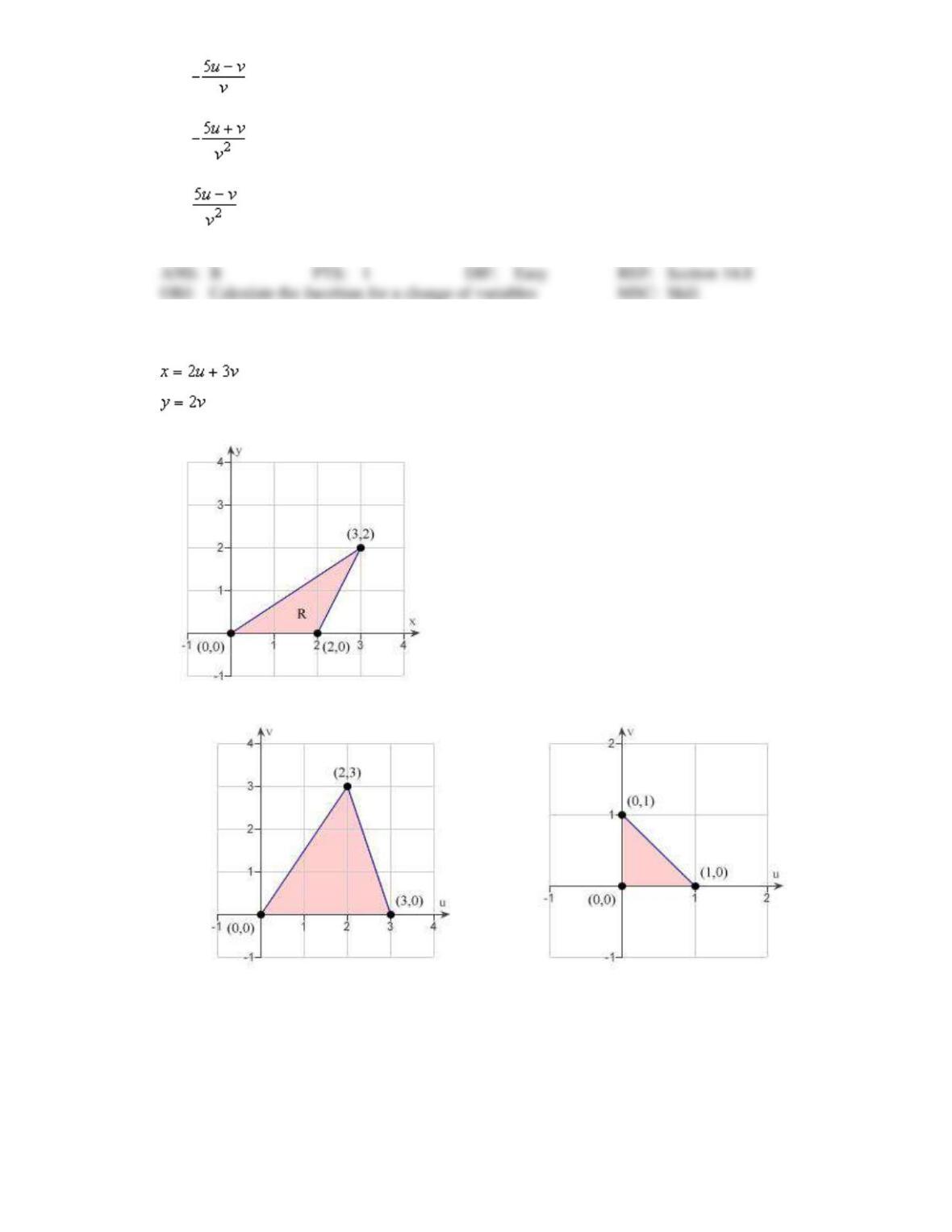
5. Find the Jacobian for the following change of variables:
a.
b.
c.
d.
e.
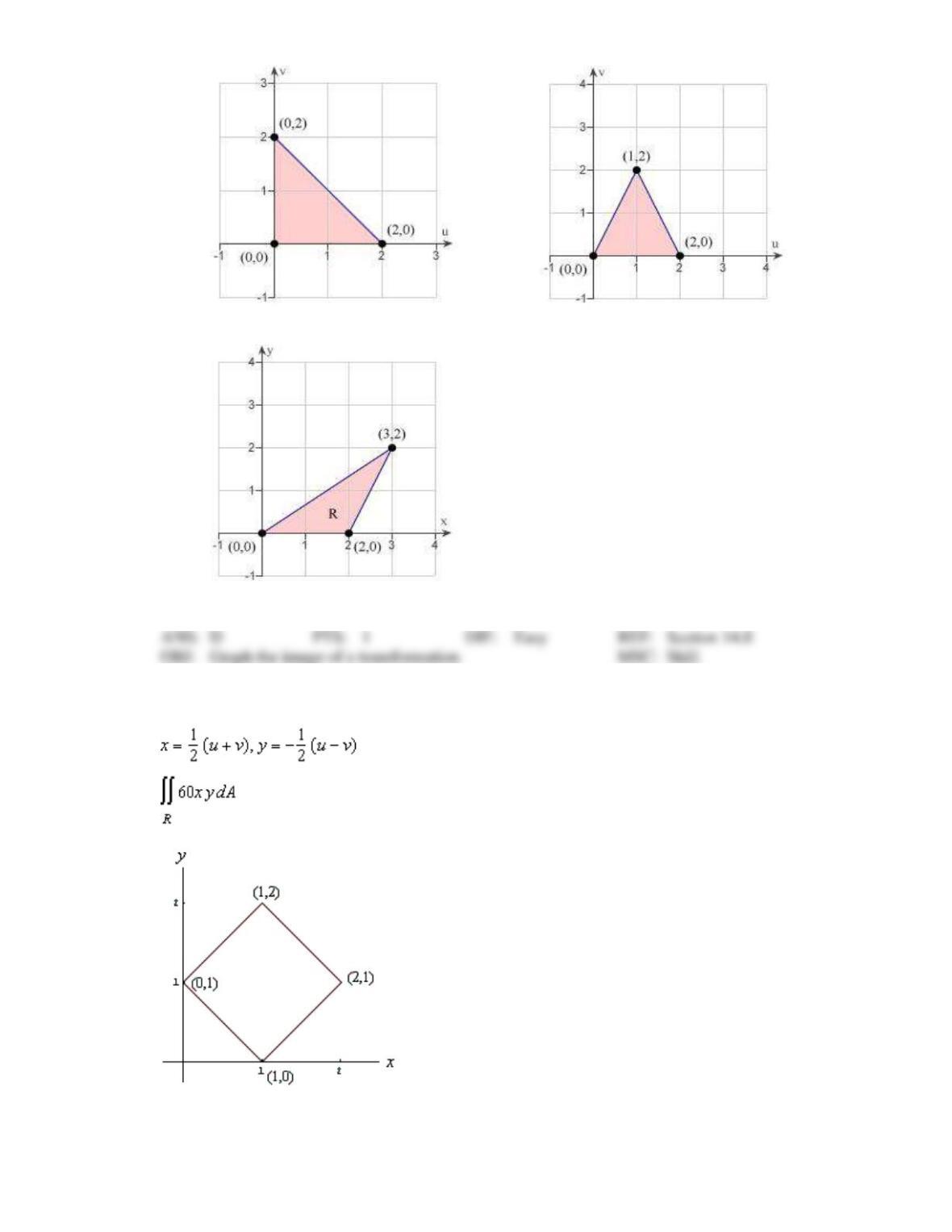
6. Sketch the image S in the uv–plane of the region R in the xy–plane using the given transformation.
a.
d.
b.
e.
c.
7. Use the indicated change of variables to evaluate the following double integral.
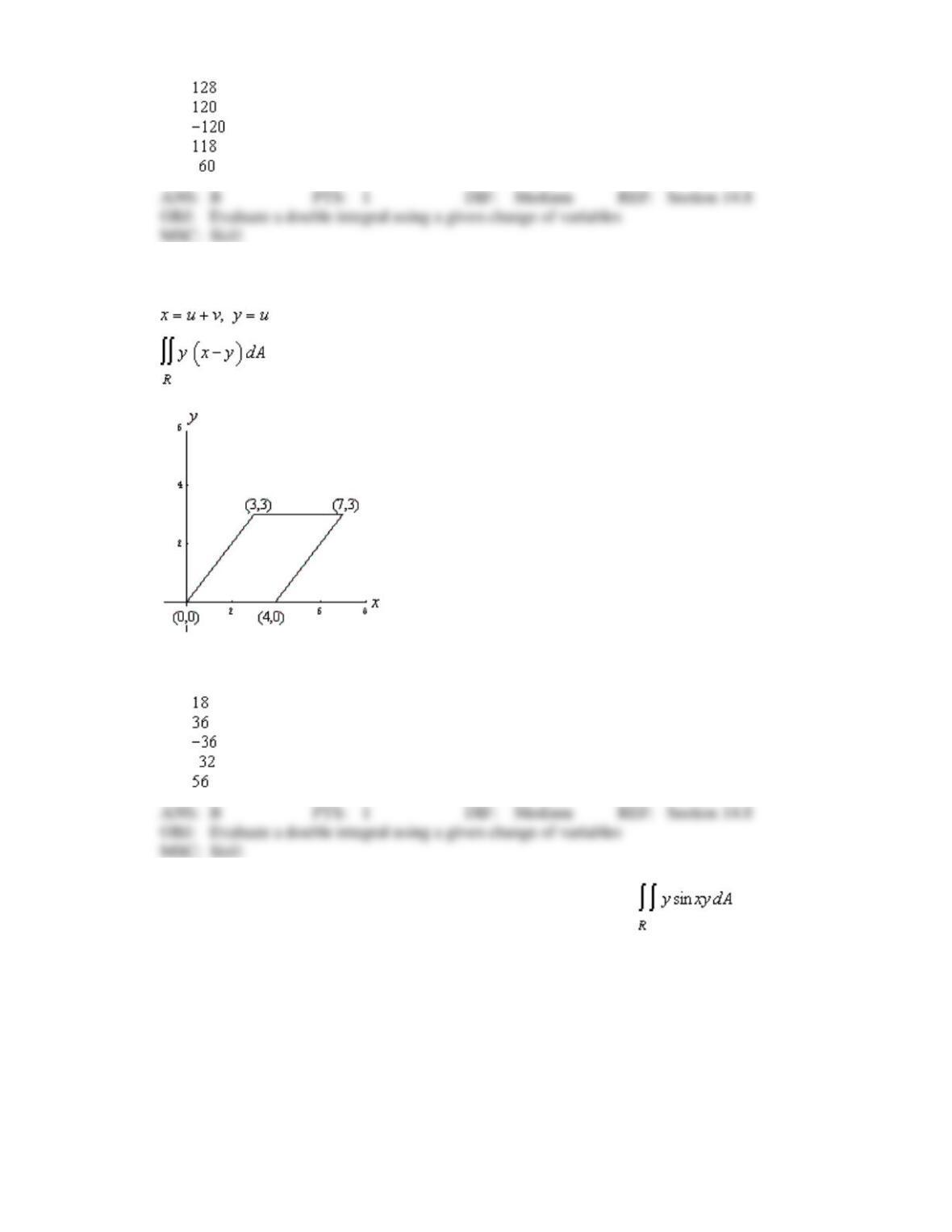
a.
b.
c.
d.
e.
8. Use the indicated change of variables to evaluate the following double integral.
a.
b.
c.
d.
e.
9. Use the following change of variables to evaluate the double integral .
Round your answer to four decimal places.
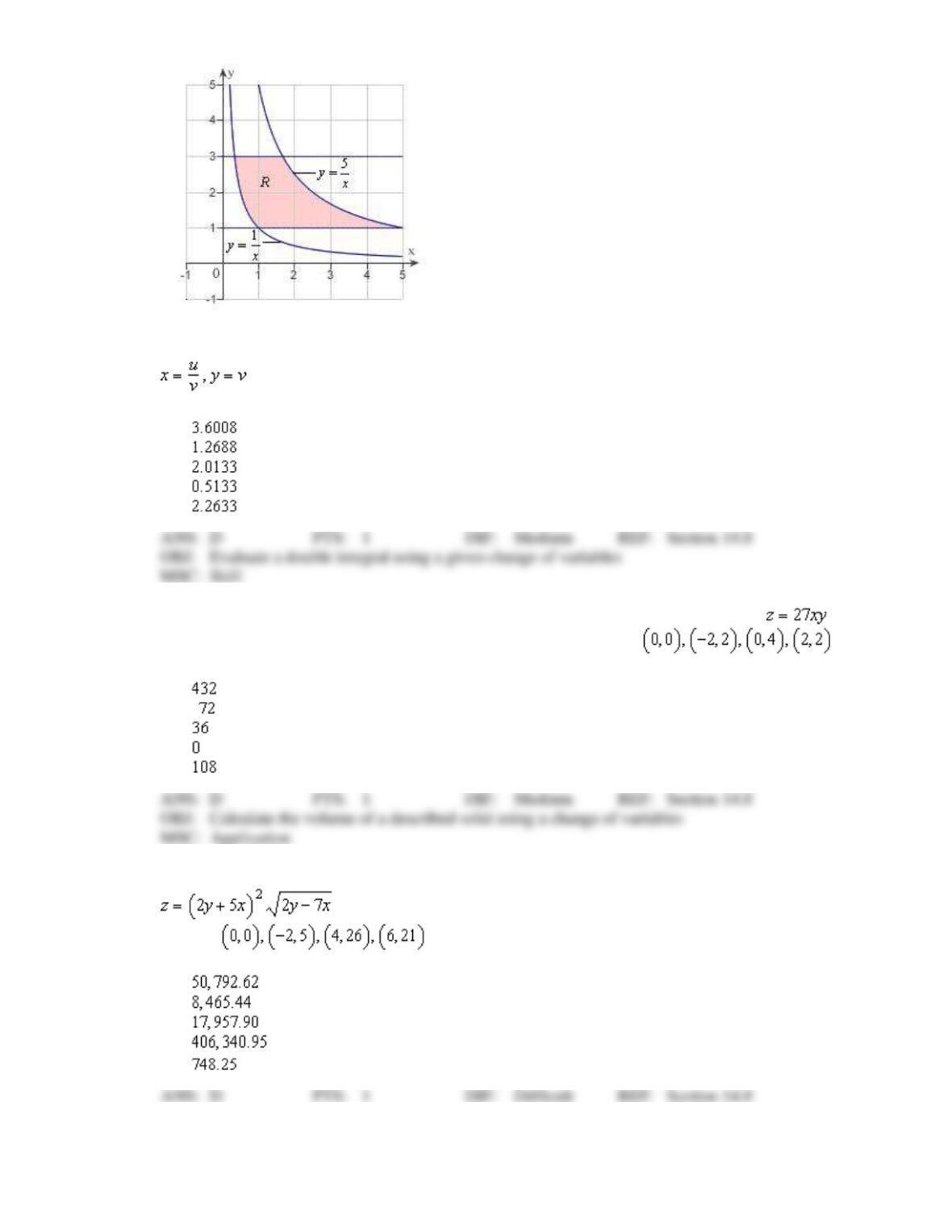
a.
b.
c.
d.
e.
10. Use a change of variables to find the volume of the solid region lying below the surface and
above the plane region R: region bounded by the square with vertices .
a.
b.
c.
d.
e.
11. Use a change of variables to find the volume of the solid region lying below the surface
and above the plane region R: region bounded by the parallelogram with
vertices . Round your answer to two decimal places.
a.
b.
c.
d.
e.
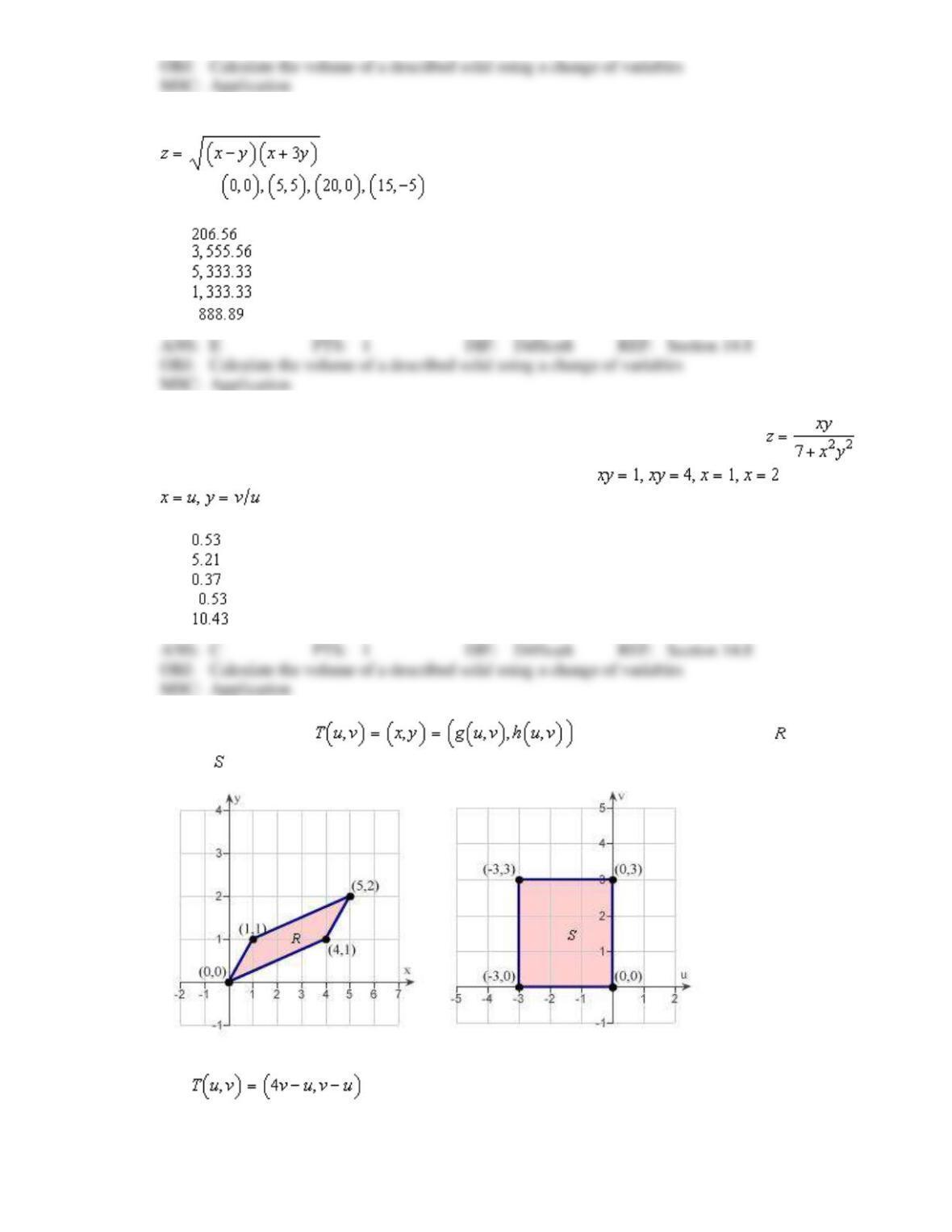
12. Use a change of variables to find the volume of the solid region lying below the surface
and above the plane region R: region bounded by the parallelogram with
vertices . Round your answer to two decimal places.
a.
b.
c.
d.
e.
13. Use a change of variables to find the volume of the solid region lying below the surface
and above the plane region R: region bounded by the graphs of (Hint: Let
.) Round your answer to two decimal places.
a.
b.
c.
d.
e.
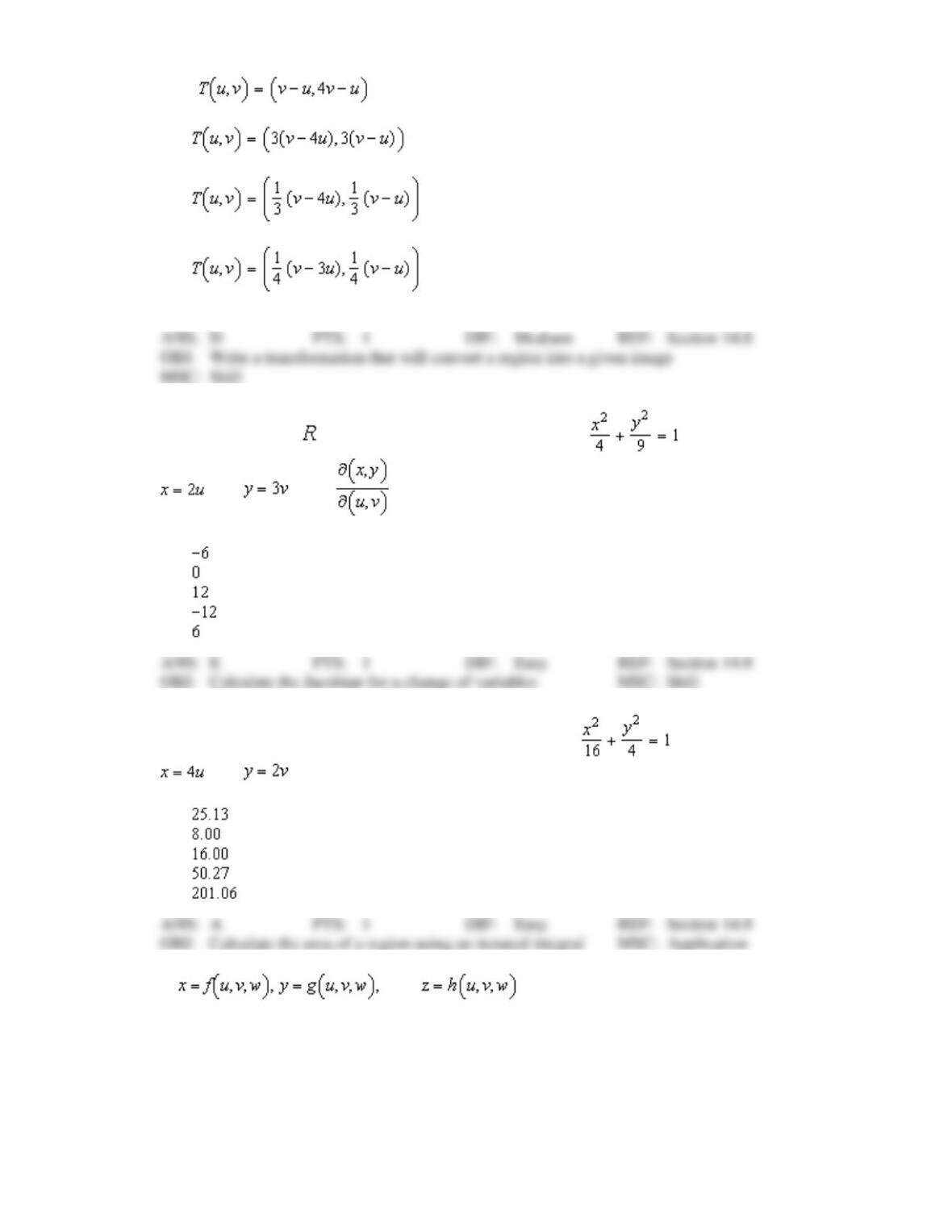
14. Find a transformation that when applied to region , its image
will be .
a.
b.
c.
d.
e.
15. Consider the region in the xy–plane bounded by the ellipse and the transformation
and . Find .
a.
b.
c.
d.
e.
16. Consider the region R in the xy–plane bounded by the ellipse and the transformation
and . Find the area of the ellipse. Round your answer to two decimal places.
a.
b.
c.
d.
e.
17. If and then the Jacobian of x, y, and z with
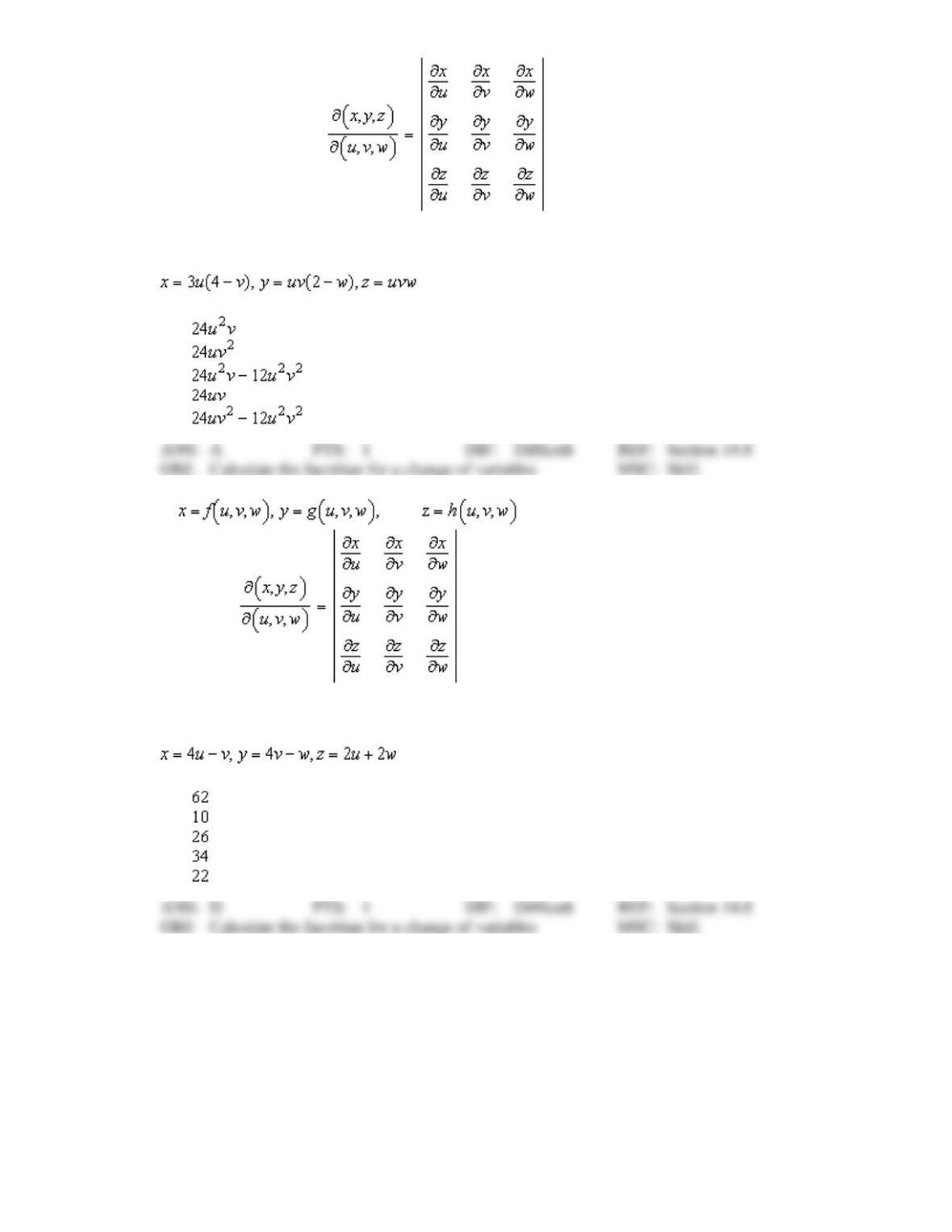
respect to u, v, and w is .
Find the Jacobian for the following change of variables:
a.
b.
c.
d.
e.
18. If and then the Jacobian of x, y, and z with respect to u,
v, and w is .
Find the Jacobian for the following change of variables:
a.
b.
c.
d.
e.