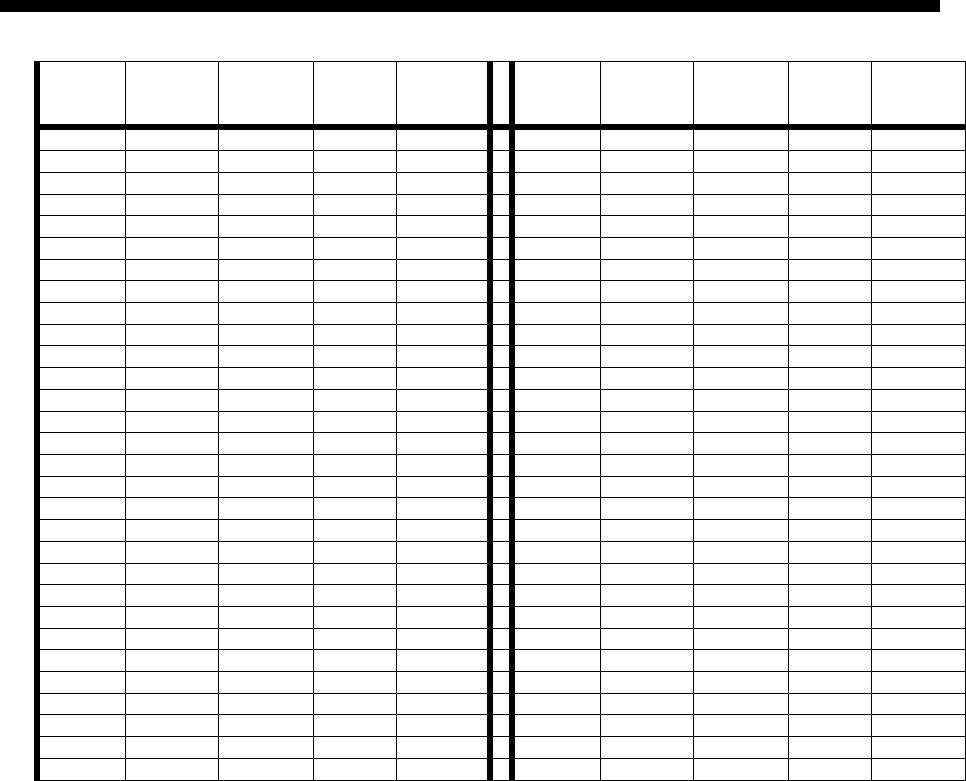
669
Chapter 14—Financial Statement Analysis
Multiple
Choice
Learning
Goal(s)
Level of
Difficulty
AACSB
Tag
AICPA
Tag
Multiple
Choice
Learning
Goal
(s)
Level of
Difficulty
AACSB
Tag
AICPA
Tag
1
1
Moderate
Analytic
Measure
31
4
Easy
Analytic
Measure
2
1
Moderate
Analytic
Measure
32
4
Easy
Analytic
Measure
3
1
Easy
Analytic
Reporting
33
4
Easy
Analytic
Measure
4
1
Easy
Analytic
Reporting
34
4
Moderate
Analytic
Measure
5
1
Easy
Analytic
Reporting
35
4
Moderate
Analytic
Measure
6
2
Easy
Analytic
Reporting
36
4
Easy
Analytic
Measure
7
2
Moderate
Analytic
Measure
37
4
Easy
Analytic
Measure
8
2
Easy
Analytic
Measure
38
4
Easy
Analytic
Measure
9
2,4
Easy
Analytic
Measure
39
4
Easy
Analytic
Measure
10
2
Easy
Analytic
Measure
40
5
Easy
Analytic
Measure
11
2
Easy
Analytic
Measure
41
5
Easy
Analytic
Measure
12
2
Easy
Analytic
Measure
42
5
Easy
Analytic
Measure
13
2
Easy
Analytic
Measure
43
5
Easy
Analytic
Measure
14
3
Easy
Analytic
Measure
44
5
Easy
Analytic
Measure
15
3
Moderate
Analytic
Measure
45
6
Easy
Analytic
Measure
16
3
Moderate
Analytic
Measure
46
7
Easy
Analytic
Measure
17
3
Difficult
Analytic
Measure
47
7
Easy
Analytic
Reporting
18
3
Easy
Analytic
Measure
48
7
Easy
Analytic
Reporting
19
3
Easy
Analytic
Measure
49
7
Easy
Analytic
Reporting
20
3
Easy
Analytic
Measure
50
2
Difficult
Analytic
Measure
21
3
Easy
Analytic
Measure
51
3
Difficult
Analytic
Measure
22
3
Moderate
Analytic
Measure
52
2
Difficult
Analytic
Measure
23
3
Easy
Analytic
Measure
53
2
Difficult
Analytic
Measure
24
3
Difficult
Analytic
Measure
54
2
Difficult
Analytic
Measure
25
3
Easy
Analytic
Measure
55
2
Difficult
Analytic
Measure
26
3
Easy
Analytic
Measure
56
2
Difficult
Analytic
Measure
27
3
Easy
Analytic
Measure
57
2
Difficult
Analytic
Measure
28
3
Easy
Analytic
Measure
58
3
Difficult
Analytic
Measure
29
3
Moderate
Analytic
Measure
59
3
Difficult
Analytic
Measure
30
4
Easy
Analytic
Measure
60
3
Difficult
Analytic
Measure
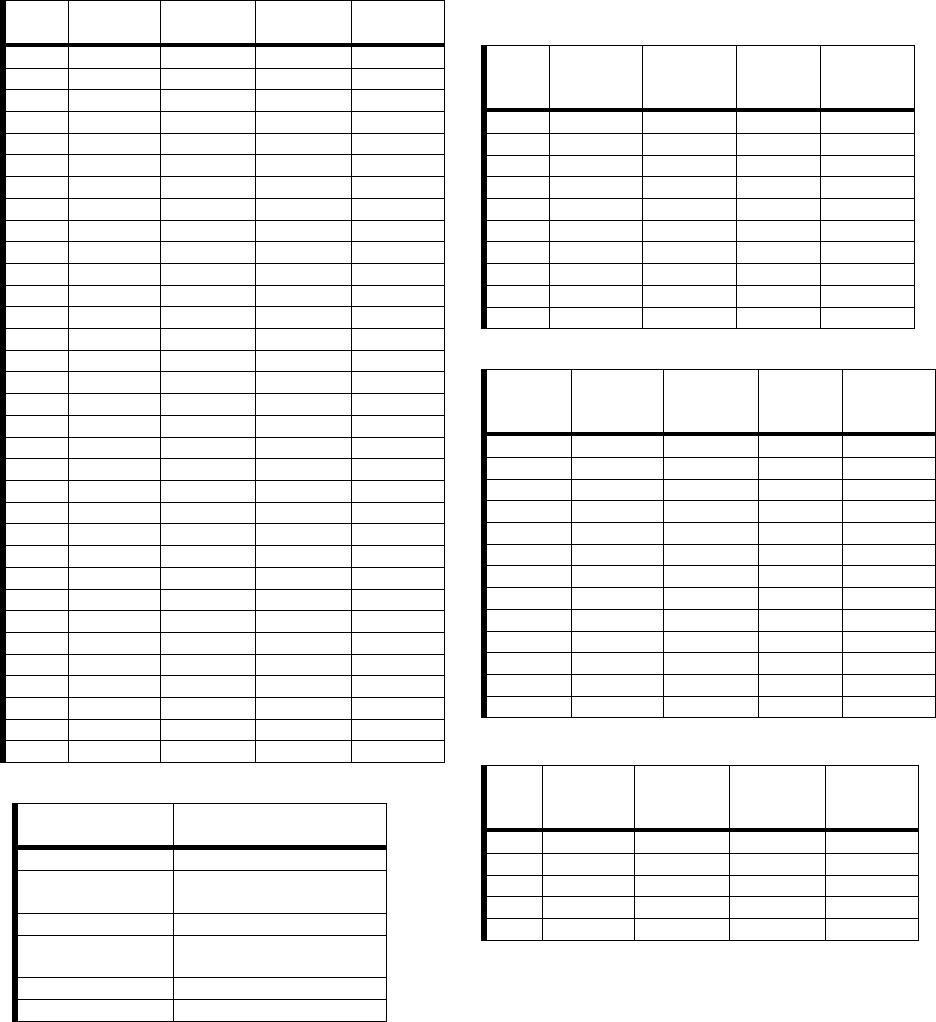
670 ♦ Chapter 14
True/
False
Learning
Goal(s)
Level of
Difficulty
AACSB
Tag
AICPA
Tag
1
1
Moderate
Analytic
Measure
2
1
Moderate
Analytic
Measure
3
1
Moderate
Analytic
Measure
4
1
Moderate
Analytic
Reporting
5
1
Moderate
Analytic
Reporting
6
1
Moderate
Analytic
Reporting
7
2
Moderate
Analytic
Measure
8
2
Easy
Analytic
Measure
9
2
Easy
Analytic
Measure
10
2
Easy
Analytic
Measure
11
2
Easy
Analytic
Measure
12
3
Moderate
Analytic
Measure
13
3
Moderate
Analytic
Measure
14
3
Moderate
Analytic
Measure
15
3
Moderate
Analytic
Measure
16
3
Moderate
Analytic
Measure
17
3
Moderate
Analytic
Measure
18
3
Moderate
Analytic
Measure
19
3
Moderate
Analytic
Measure
20
4
Moderate
Analytic
Measure
21
4
Moderate
Analytic
Measure
22
4
Moderate
Analytic
Measure
23
4
Moderate
Analytic
Measure
24
4
Moderate
Analytic
Measure
25
4
Moderate
Analytic
Measure
26
5
Moderate
Reflective
Measure
27
5
Moderate
Reflective
Measure
28
5
Moderate
Reflective
Measure
29
5
Moderate
Reflective
Measure
30
5
Moderate
Reflective
Measure
31
7
Moderate
Analytic
Measure
32
7
Moderate
Reflective
Reporting
33
7
Moderate
Reflective
Reporting
Essay
Learning
Goal
(s)
Level of
Difficulty
AACSB
Tag
AICPA
Tag
1
1
Moderate
Analytic
Measure
2
1
Moderate
Analytic
Measure
3
1
Moderate
Analytic
Reporting
4
1
Moderate
Analytic
Reporting
5
2
Moderate
Analytic
Reporting
6
2
Moderate
Analytic
Measure
7
3
Moderate
Analytic
Measure
8
3
Moderate
Analytic
Measure
9
3
Moderate
Analytic
Measure
10
4
Moderate
Analytic
Reporting
Problem
(s)
Learning
Goal
(s)
Level of
Difficulty
AACSB
Tag
AICPA
Tag
1
1
Difficult
Analytic
Measure
2
1
Difficult
Analytic
Measure
3
1
Difficult
Analytic
Reporting
4
2
Difficult
Analytic
Measure
5
2
Difficult
Analytic
Measure
6
3
Difficult
Analytic
Measure
7
3
Difficult
Analytic
Measure
8
3
Difficult
Analytic
Measure
9
3
Difficult
Analytic
Measure
10
4
Difficult
Analytic
Measure
11
4
Difficult
Analytic
Measure
12
4
Difficult
Analytic
Measure
13
4
Difficult
Analytic
Measure
Case
Learning
Goal
(s)
Level of
Difficulty
AACSB
Tag
AICPA
Tag
1
1
Difficult
Analytic
Reporting
2
2
Difficult
Analytic
Reporting
3
3
Difficult
Analytic
Reporting
4
5
Difficult
Analytic
Reporting
5
7
Difficult
Reflective
Reporting
Difficulty Ratings
Guide:
Easy
Taken nearly verbatim
from the text
Moderate
Using different expression
or application of concept
Difficult
Several reasoning steps

Financial Statement Analysis ♦ 671
MULTIPLE CHOICE
1. Horizontal analysis ____________.
a.
Compares the amount on the most recent financial statement with one or more earlier
statements by calculating the percentage change
b.
Compares the amount of one item with total assets or revenues by calculating a percentage
c.
Compares the amount on the most recent financial statement with the same item on
another company’s financial statement
d.
Compares the amount on the most recent financial statement with the industry average for
that item
2. Use horizontal analysis to determine the percentage increase in net income from 2006 to 2007
given the following (round answer to nearest whole percentage):
Net income 2007
$200,000
Net income 2006
$150,000
a.
200,000
b.
150,000
c.
33%
d.
75%
3. The financial statement analysis technique that shows the relationship of each component to the
total within a single statement by showing both the amount and the percentage is _____________.
a.
Horizontal analysis
b.
Vertical Analysis
c.
Common-size analysis
d.
Margin analysis

672 ♦ Chapter 14
4. In vertical analysis of the income statement, each item is stated as a percentage of ____________.
a.
Total Assets
b.
Net Income
c.
Stockholders’ equity
d.
Sales
5. In common size financial statements, all items are expressed in __________.
a.
Dollars
b.
Percentages
c.
Thousands
d.
Millions
6. The rate of return on total assets is computed by dividing __________.
a.
Net income by assets
b.
Net income by stockholders’ equity
c.
Net income by sales
d.
Net income by average total assets
7. The cost of capital is the cost of financing operations from __________.
a.
Debt and common stock
b.
Debt, common stock and preferred stock
c.
Debt only
d.
Stock only
8. It is often desirable to compute the rate of income from operations to total assets when
__________.
a.
Significant amounts of nonoperating income and expense are reported on the income
statement.
b.
Significant amounts of operating income and expense are reported on the income
statement.
c.
Significant amounts of cost of sales to net income is reported on the income statement.
d.
When horizontal and vertical analysis are used.
Financial Statement Analysis ♦ 673
9. Rate earned on stockholders’ equity can be expressed as __________.
a.
Rate earned on stockholders’ equity leverage
b.
Rate earned on stockholders’ equity Rate earned on total assets
c.
Leverage Rate earned on total assets
d.
None of the above, stockholders’ have no equity
10. Leverage is 1.0 when ____________.
a.
There is no equity
b.
There is equal amount of debt and equity
c.
There is no debt
d.
There is a net loss
11. The rate earned on stockholders’ equity (leverage formula) is __________.
a.
Net Income Average Total Assets
Average Stockholders’ Equity Average Stockholders’ Equity
b.
Net Income Average Total Assets
Average Total Assets Average Stockholders’ Equity
c.
Net Income Average Total Assets
Average Stockholders’ Equity Net Income
d.
None of the above, stockholders’ have no equity
12. The leverage term “average assets divided by average stockholders’ equity” measures the
__________.
a.
Rate of capital to stockholders’ equity dollars
b.
Number of stockholders’ equity dollars supported by each asset dollar.
c.
Number of asset dollars supported by each dollar of stockholders’ equity
d.
None of the above, stockholders’ have no equity
13. Asset turnover can be analyzed using
a.
ratio of fixed assets to long-term liabilities and ratio of total assets to stockholders’ equity
b.
accounts receivable turnover, inventory turnover, and fixed asset turnover
c.
cost of goods sold to sales and ratio of selling and general administrative expenses to sales
d.
current ratio and the quick ratio
674 ♦ Chapter 14
14. One way to summarize the relationship between the rate earned on total assets is the product of a
firm’s profit margins and the efficiency by which it uses its assets. This is called __________.
a.
Return on capital
b.
Return on investment
c.
Dunlop formula
d.
DuPont formula
15. The ratio of net income to sales is often called the __________.
a.
Gross profit ratio
b.
Measure of net income
c.
Net profit margin
d.
Sales to income ratio.
16. Which of the following is NOT a major component of total assets for a retailer?
a.
Accounts receivable
b.
Fixed assets
c.
Cost of merchandise sold
d.
Inventory
17. The profit margin can be analyzed in more detail using
a.
Asset efficiency analysis
b.
Leverage analysis
c.
Cost of capital analysis
d.
Common-size information
18. Accounts receivable turnover is computed by __________.
a.
Cash divided by accounts receivable.
b.
Accounts receivable divided by stockholders’ equity
c.
Accounts receivable divided by net sales
d.
Net sales divided by average net accounts receivable.

Financial Statement Analysis ♦ 675
19. Which of the following is an estimate of the length of time in days the accounts receivable have
been outstanding?
a.
Accounts receivable turnover
b.
Number of days’ sales in receivables
c.
Number of receivables in days’ sales.
d.
Number of days in a billing period
20. The relationship between credit sales and accounts receivable may be stated as __________.
a.
Accounts receivable turnover
b.
Collection solvency
c.
Accounts receivable analysis
d.
Asset turnover
21. Two measures useful for evaluating inventory efficiency are __________.
a.
Inventory turnover and Return on inventory
b.
Number of days’ sales in inventory and Receivable turnover
c.
Return on inventory and billing turnover
d.
Inventory turnover and number of days’ sales in inventory
22. In addition to reducing solvency, excess inventory also increases which of the following
expenses?
a.
Insurance expense
b.
Property taxes
c.
Storage costs
d.
each of the above items is correct
23. The relationship between the volume of goods sold and inventory may be stated as __________.
a.
Number of days’ sales in inventory
b.
Inventory turnover
c.
Economic order quantity
d.
Inventory volume
24. Which of the following inventory items would most likely have the highest inventory turnover?
a.
Diablo Lamborghini
b.
Scented bar soap
c.
Cheese and milk
d.
Spaghetti sauce

676 ♦ Chapter 14
25. A measure of the relationship between cost of goods sold and inventory is __________.
a.
Number of days’ sales in inventory
b.
Fixed asset turnover
c.
Economic order quantity
d.
Inventory volume
26. The number of days’ sales in inventory is a measure of the length of time it takes to __________.
a.
Manufacture inventory
b.
Acquire, sell, and replace inventory
c.
Collect cash from inventory sales
d.
None of the above
27. The fixed asset turnover measures __________.
a.
How often fixed assets are sold
b.
How often fixed assets are purchased
c.
The number of dollar sales generated from each dollar of average fixed assets
d.
The number of dollar sales required to purchase fixed assets.
28. The fixed asset turnover is calculated by dividing __________.
a.
Net sales by fixed assets
b.
Fixed assets by net sales
c.
Net sales by fixed assets sold
d.
Net sales by average fixed assets
29. Which of the following is NOT a measure of asset efficiency?
a.
Accounts receivable turnover
b.
Average fixed assets
c.
Inventory turnover
d.
Fixed asset turnover
30. The excess of the rate earned by stockholders’ equity over the rate earned on total assets is caused
by __________.
a.
Good management
b.
Return on capital
c.
Good investing
d.
Leverage
Financial Statement Analysis ♦ 677
31. Which of the following is NOT part of a long-term leverage analysis?
a.
Current ratio
b.
Ratio of fixed assets to long-term liabilities
c.
Ratio of liabilities to stockholders’ equity
d.
Number of times interest charges are earned
32. The current ratio is a measure of __________.
a.
Solvency
b.
Current liabilities
c.
Average current assets
d.
Quick ratio times two
33. A ratio that measures the instant debt-paying ability of a company is called __________.
a.
Current ratio
b.
Current liability payment ratio
c.
Cash on had ratio
d.
Quick ratio
34. Which of the following assets is NOT considered a quick asset?
a.
Cash
b.
Marketable securities
c.
Accounts receivable
d.
Supplies
35. The ratio of fixed assets to long-term liabilities is a leverage measure that indicates the
__________.
a.
Margin of safety of noteholders
b.
Ability to borrow
c.
Fixed assets divided by long-term liabilities
d.
None of the above
678 ♦ Chapter 14
36. Claims against the assets are divided into __________.
a.
Retained earnings and stockholders’ equity
b.
Creditors and owners
c.
Bondholders and noteholders or bondholders
d.
Vendors and suppliers
37. Which leverage measure indicates the margin of safety for creditors?
a.
The ratio of fixed assets to long-term liabilities
b.
The current ratio
c.
The ratio of liabilities to stockholders’ equity
d.
The ratio of creditors vs. owners
38. When the claims of creditors are large in relation to the equity of the stockholders, there are
usually __________.
a.
Significant interest payments
b.
Not a lot of shares outstanding
c.
Very little debts
d.
None of the above
39. The higher the number of times interest charges are earned ratio, the __________ that interest
payments will NOT be made if earnings decrease.
a.
Lower the risk
b.
Higher the risk
c.
Effect is negligible
d.
None of the above
40. A profitability measure often quoted by the press and normally reported in the income statement is
__________.
a.
Dividend growth
b.
Stockholders liability
c.
Earnings per share
d.
Quick ratio

Financial Statement Analysis ♦ 679
41. When computing earnings per share for a company with both common and preferred stock, before
calculating, what must net income be reduced by __________.
a.
Interest expense
b.
Income tax expense
c.
Preferred stock dividends
d.
Common stock dividends
42. The price-earnings ratio is important because __________.
a.
It shows the current market price of the stock
b.
It shows the current earnings of a company
c.
It indicates a firm’s earnings prospects
d.
It indicates future stock prices
43. Which ratio is used to indicate the relationship between dividends and earnings?
a.
Dividend yield
b.
Dividend payout
c.
Price-earnings
d.
Earnings per share
44. Rates of return are important measures to investors. Which ratio shows the rate of return to
common stockholders in terms of cash dividends?
a.
Dividend yield
b.
Dividend payout
c.
Price-earnings
d.
Earnings per share
45. Percentage analyses, ratios, turnovers, and other measures of financial position and operating
results are useful analytic measures to be considered in light of
a.
trends in the industry
b.
general economic conditions
c.
other businesses in the industry
d.
each of the above is correct

680 ♦ Chapter 14
46. Which of the following is usually NOT included in a corporate annual report?
a.
Financial highlights
b.
Internal Auditor’s Report
c.
Historical Summary
d.
Management Discussion
47. A required disclosure in the annual report filed with the SEC which provides information in
interpreting the financial statements and assessing the future of the company is the __________.
a.
Financial highlights
b.
Internal Auditor’s Report
c.
Historical Summary
d.
Management Discussion and Analysis
48. Which part of the annual report compares significant balance sheet items between successive years
to explain changes in liquidity and capital resources, as well as discussing significant risk
exposure?
a.
Financial highlights
b.
Internal Auditor’s Report
c.
Historical Summary
d.
Management Discussion and Analysis
49. Before issuing annual statements, all publicly held corporations are required to __________.
a.
Have a government review
b.
Have an internal audit report
c.
Have an independent audit.
d.
Get medical physicals for all key executives
Financial Statement Analysis ♦ 681
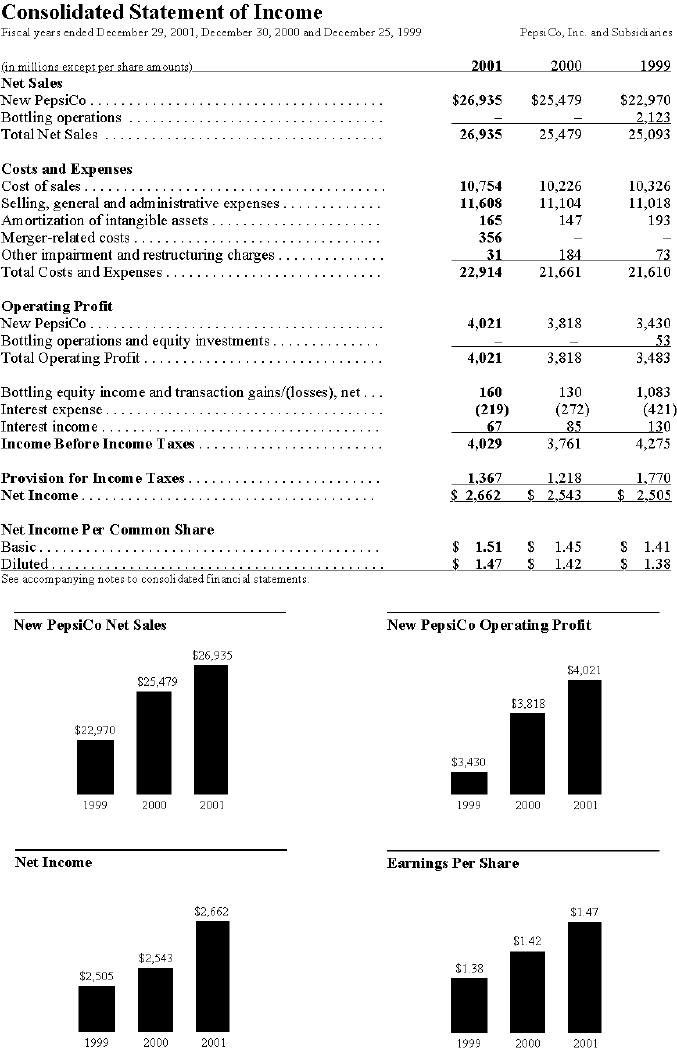
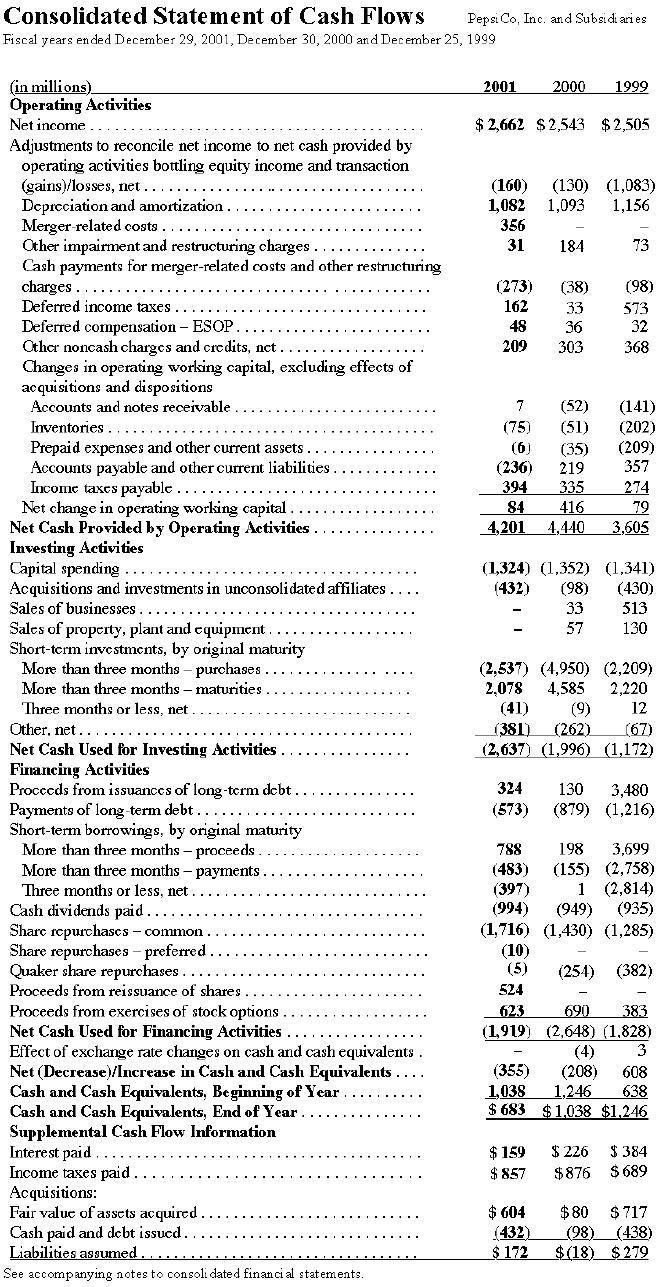
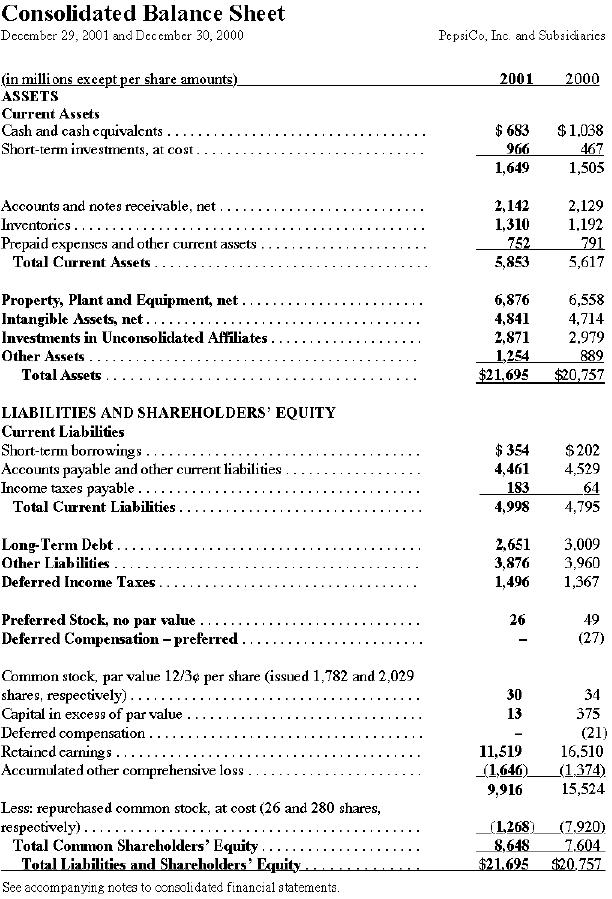
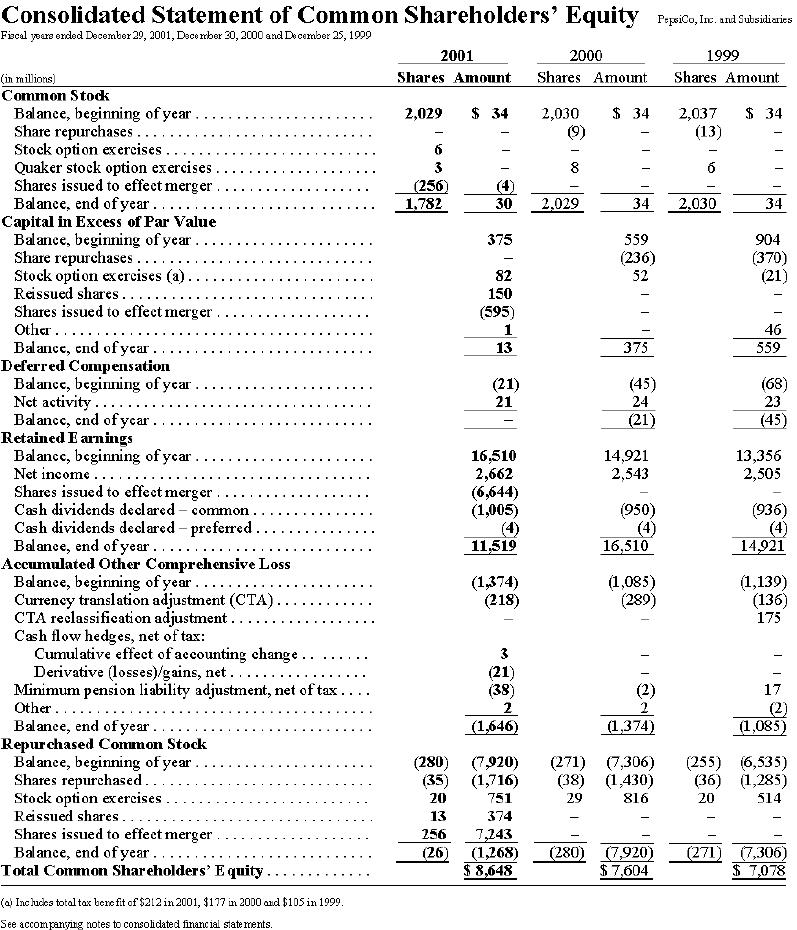
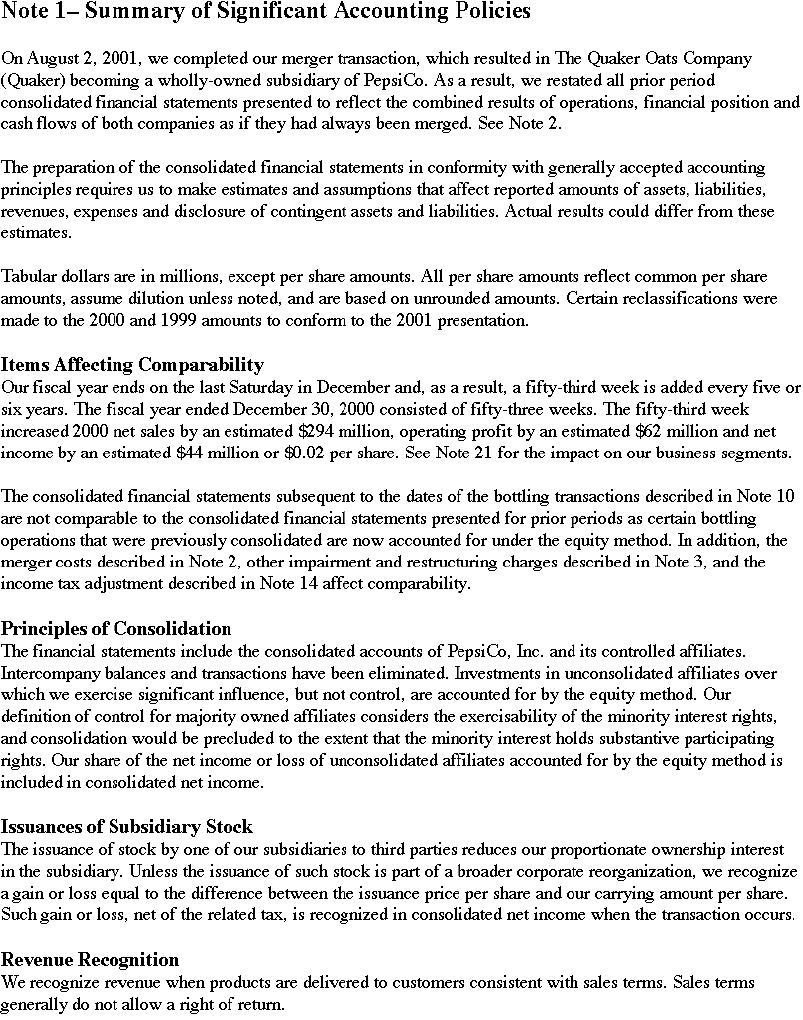
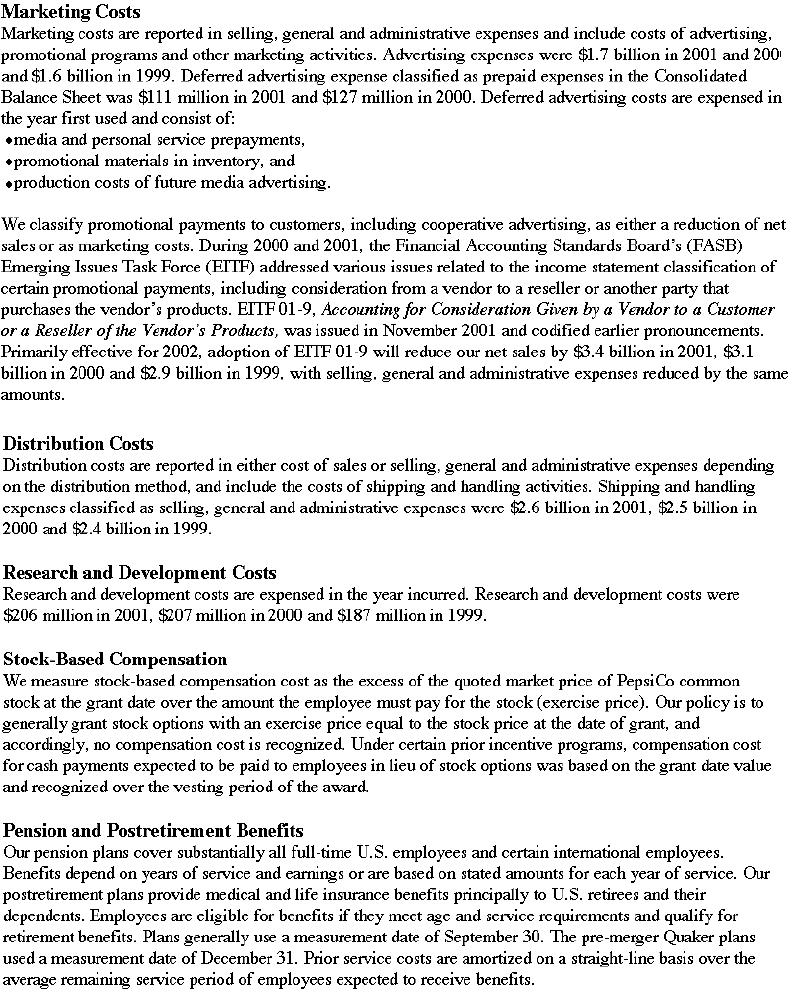
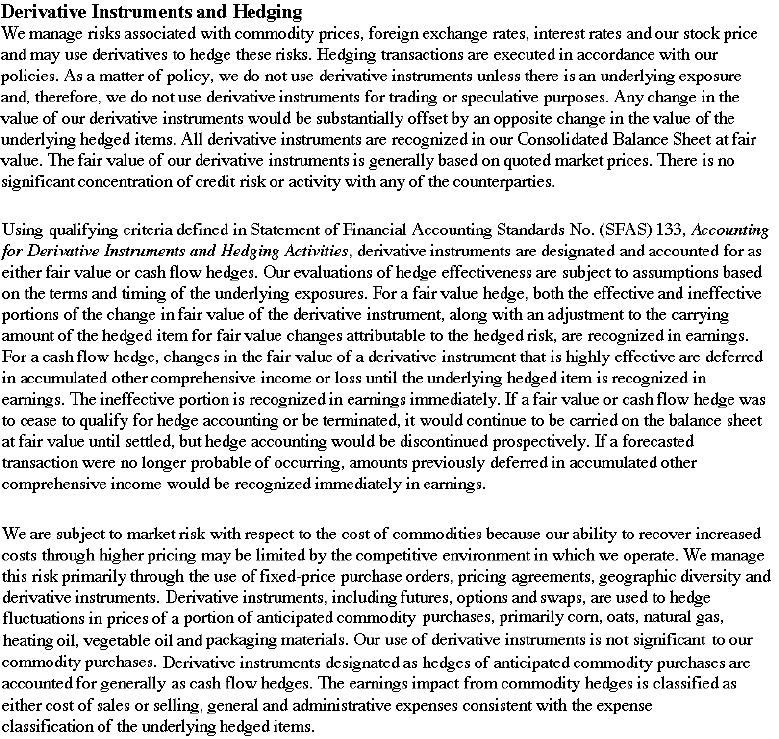
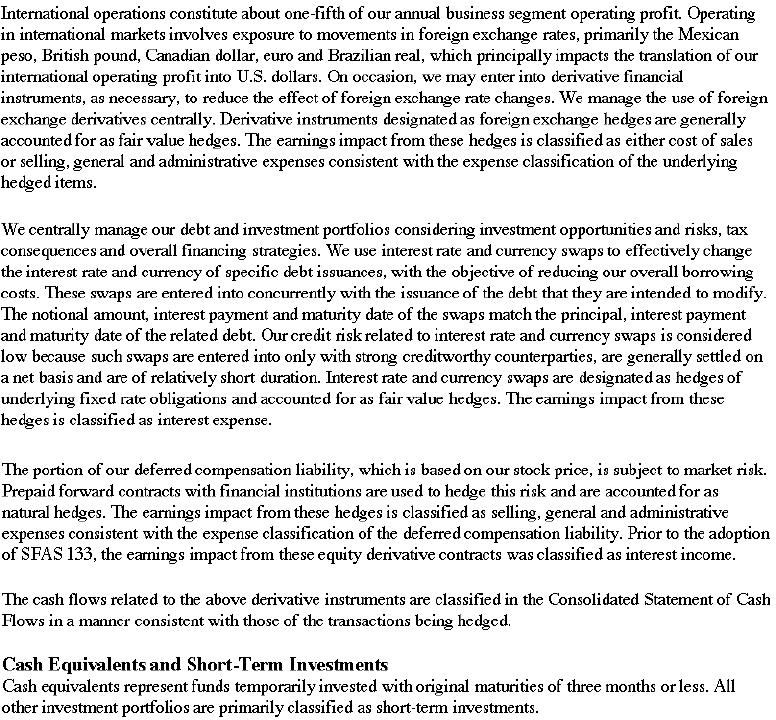
PepsiCo’s Financial Statements
Answer the following question(s) using these selected portions of PepsiCo’s financial statements.
682 ♦ Chapter 14
Financial Statement Analysis ♦ 683
684 ♦ Chapter 14
Financial Statement Analysis ♦ 685
686 ♦ Chapter 14
Financial Statement Analysis ♦ 687
688 ♦ Chapter 14