Chapter 13 – Appendix C Income Taxes in Capital Budgeting Decisions
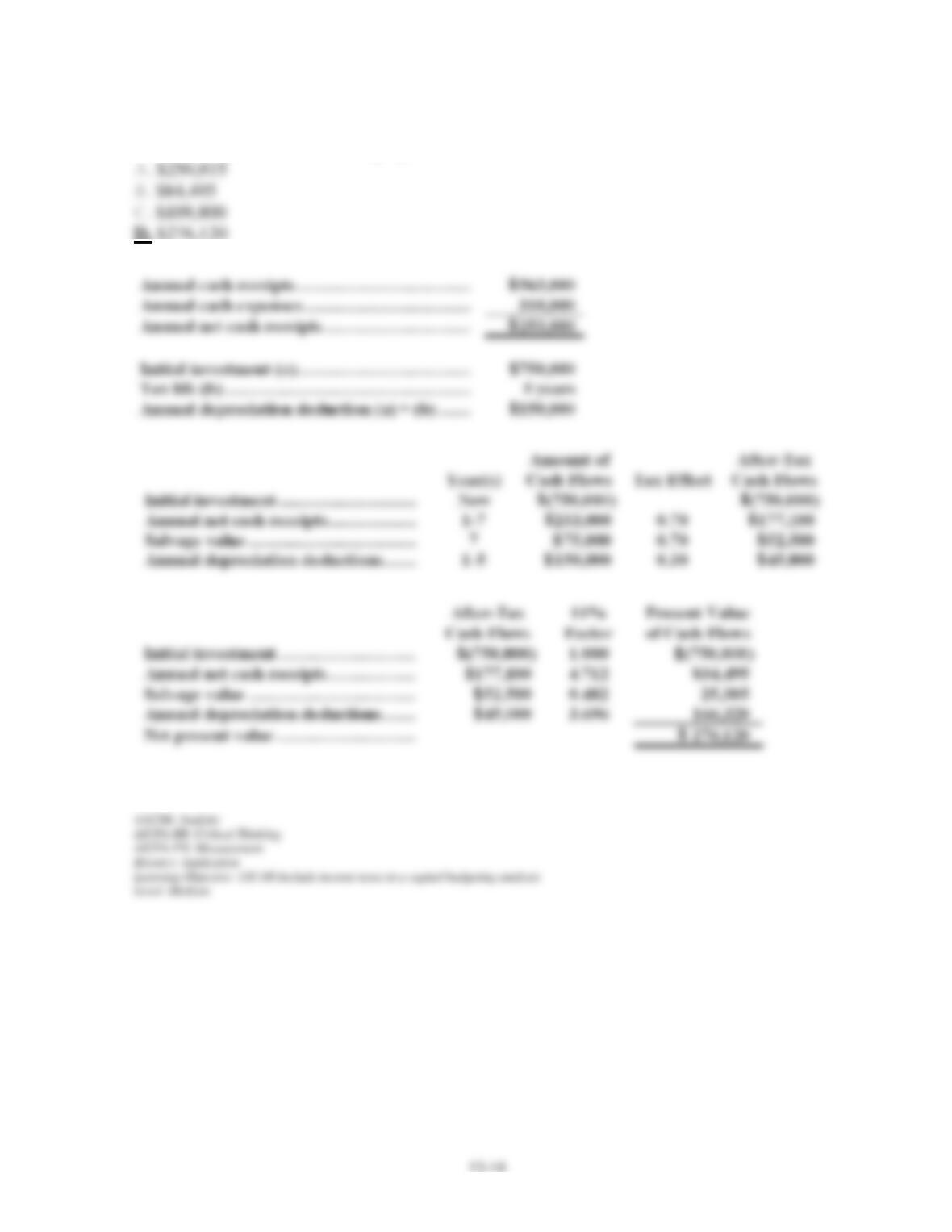
24. The net present value of the project is closest to:
Chapter 13 – Appendix C Income Taxes in Capital Budgeting Decisions
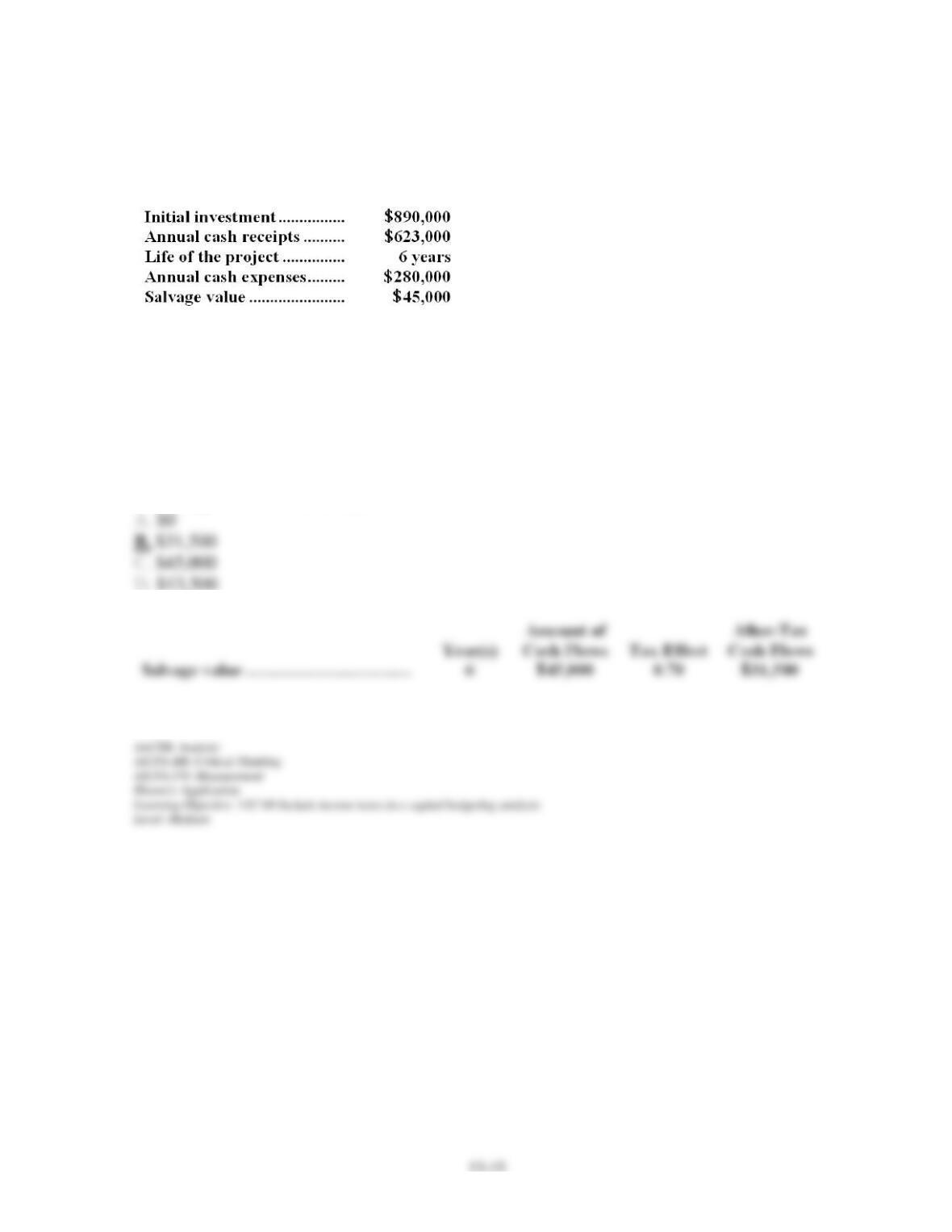
Jenny Inc. has provided the following data concerning an investment project that has been
proposed:
The company’s tax rate is 30%. For tax purposes, the entire initial investment will be
depreciated over 5 years without any reduction for salvage value. The company uses a
discount rate of 14%.
25. When computing the net present value of the project, what is the after-tax cash flow from
the salvage value in the final year?
Chapter 13 – Appendix C Income Taxes in Capital Budgeting Decisions
13–16
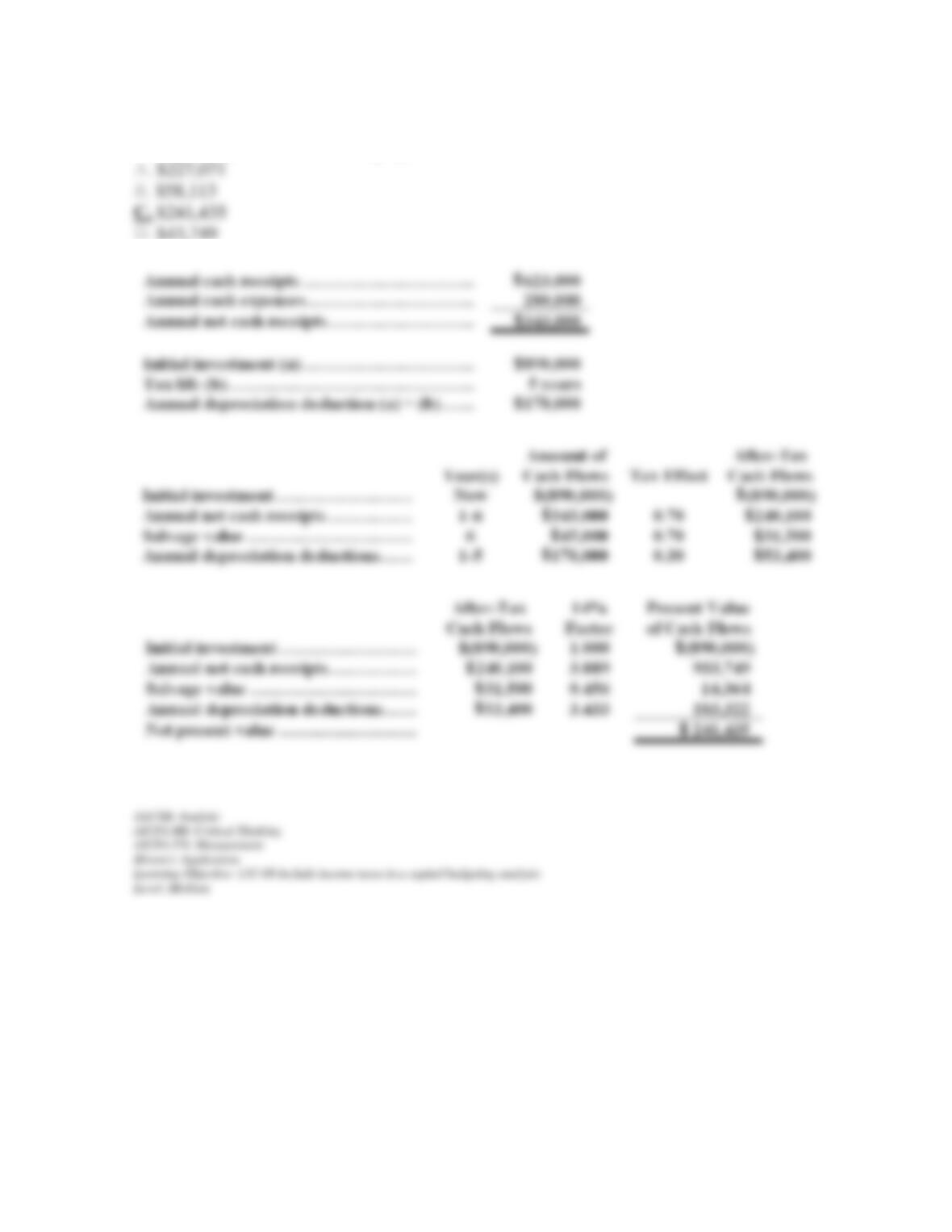
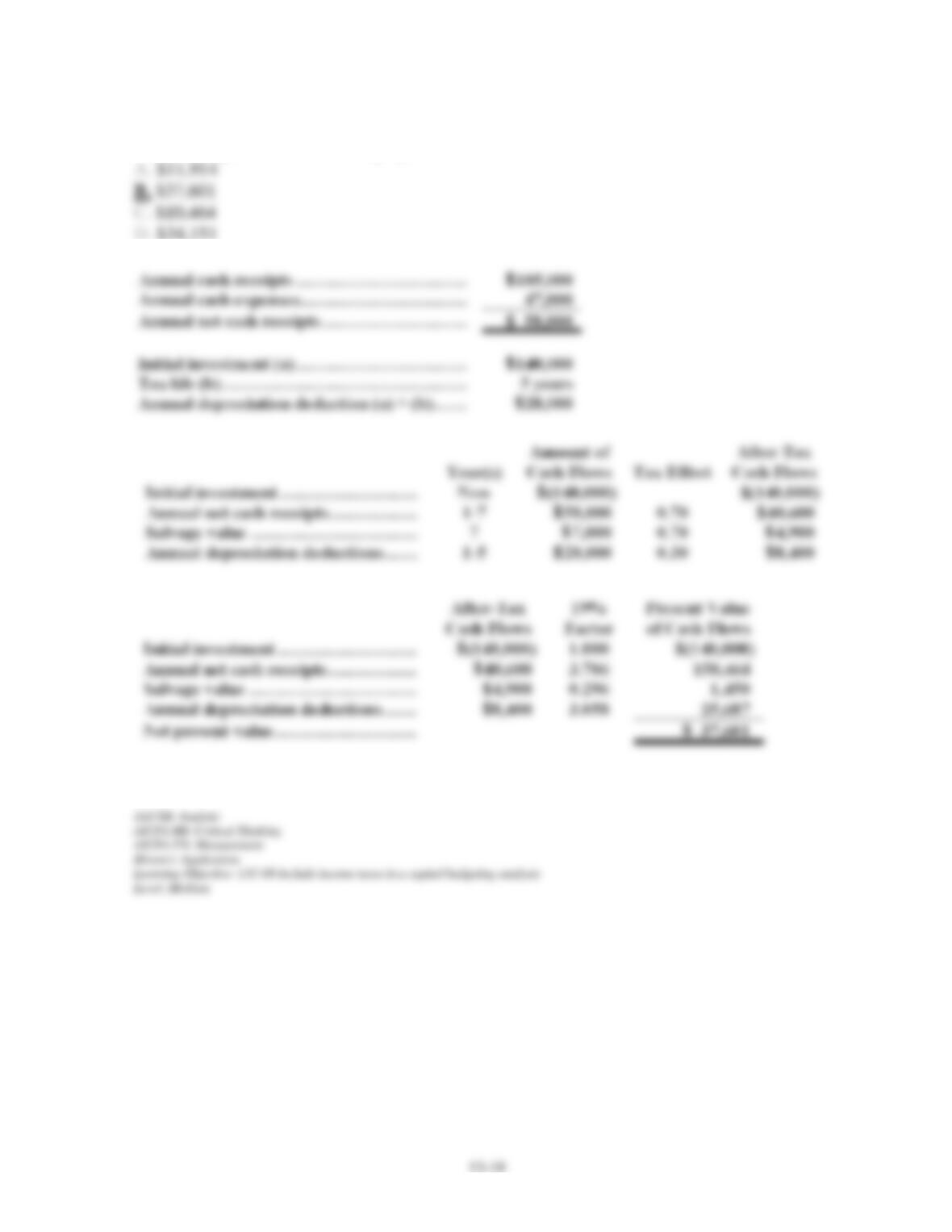
26. The net present value of the project is closest to:
Michelotti Inc. is considering an investment project that would require an initial investment
of $140,000 and that would last for 7 years. The annual cash receipts from the project would
be $105,000 and the annual cash expenses would be $47,000. The equipment used in the
project could be sold at the end of the project for a salvage value of $7,000. The company’s
tax rate is 30%. For tax purposes, the entire initial investment will be depreciated over 5 years
without any reduction for salvage value. The company uses a discount rate of 19%.
Chapter 13 – Appendix C Income Taxes in Capital Budgeting Decisions
13–17
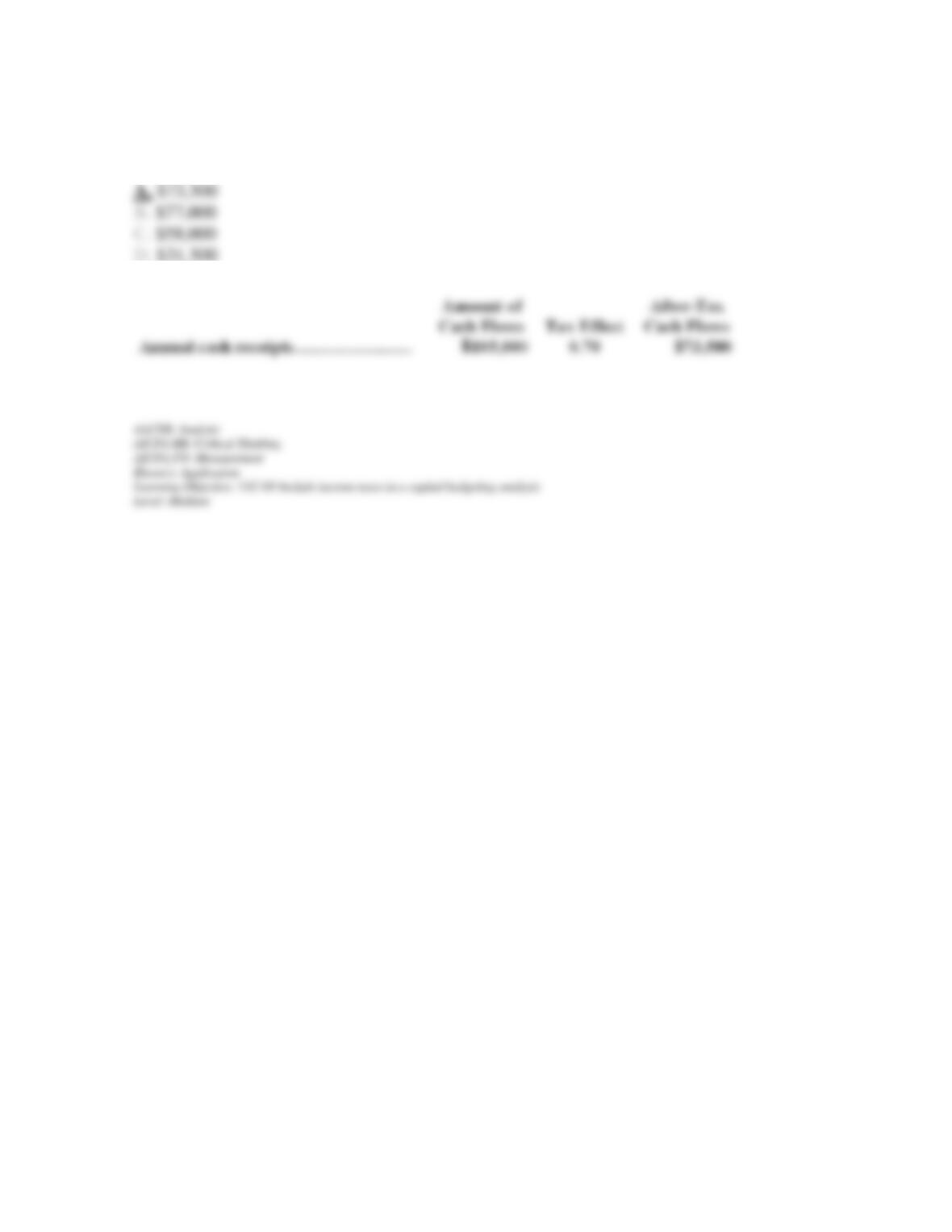
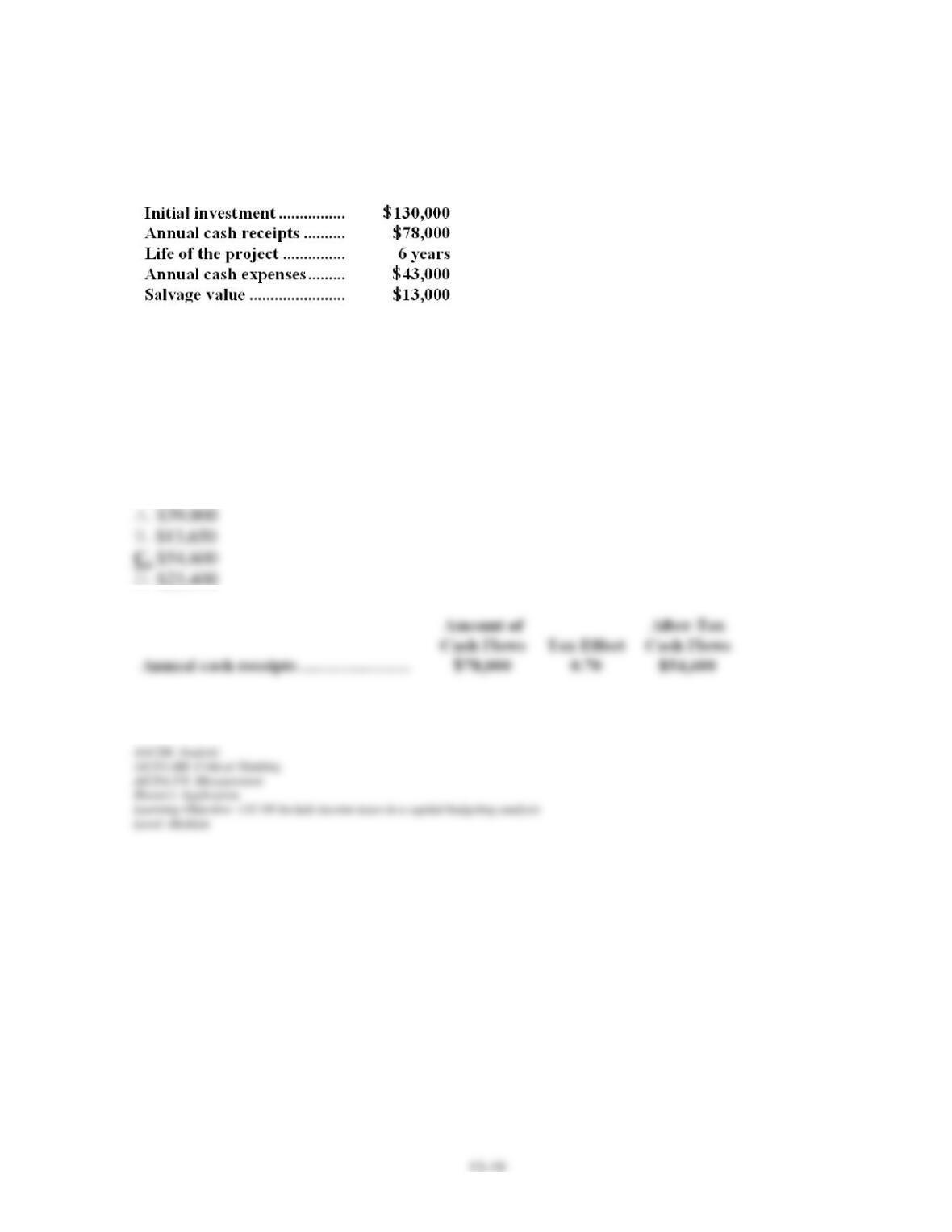
27. When computing the net present value of the project, what are the annual after-tax cash
receipts?
Chapter 13 – Appendix C Income Taxes in Capital Budgeting Decisions
28. The net present value of the project is closest to:
Chapter 13 – Appendix C Income Taxes in Capital Budgeting Decisions
Morgado Inc. has provided the following data to be used in evaluating a proposed investment
project:
The company’s tax rate is 30%. For tax purposes, the entire initial investment will be
depreciated over 5 years without any reduction for salvage value. The company uses a
discount rate of 19%.
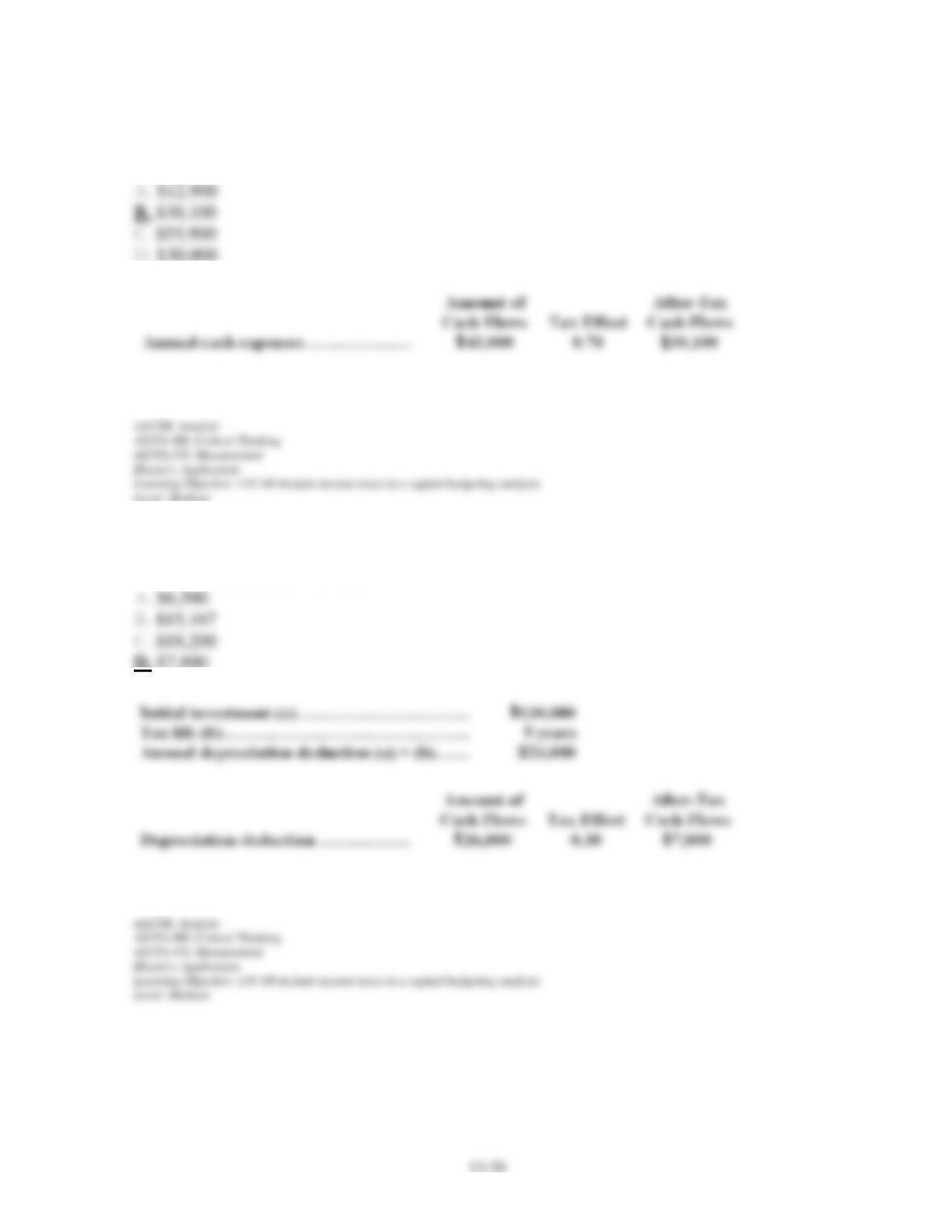
29. When computing the net present value of the project, what are the annual after-tax cash
receipts?
Chapter 13 – Appendix C Income Taxes in Capital Budgeting Decisions
30. When computing the net present value of the project, what are the annual after-tax cash
expenses?
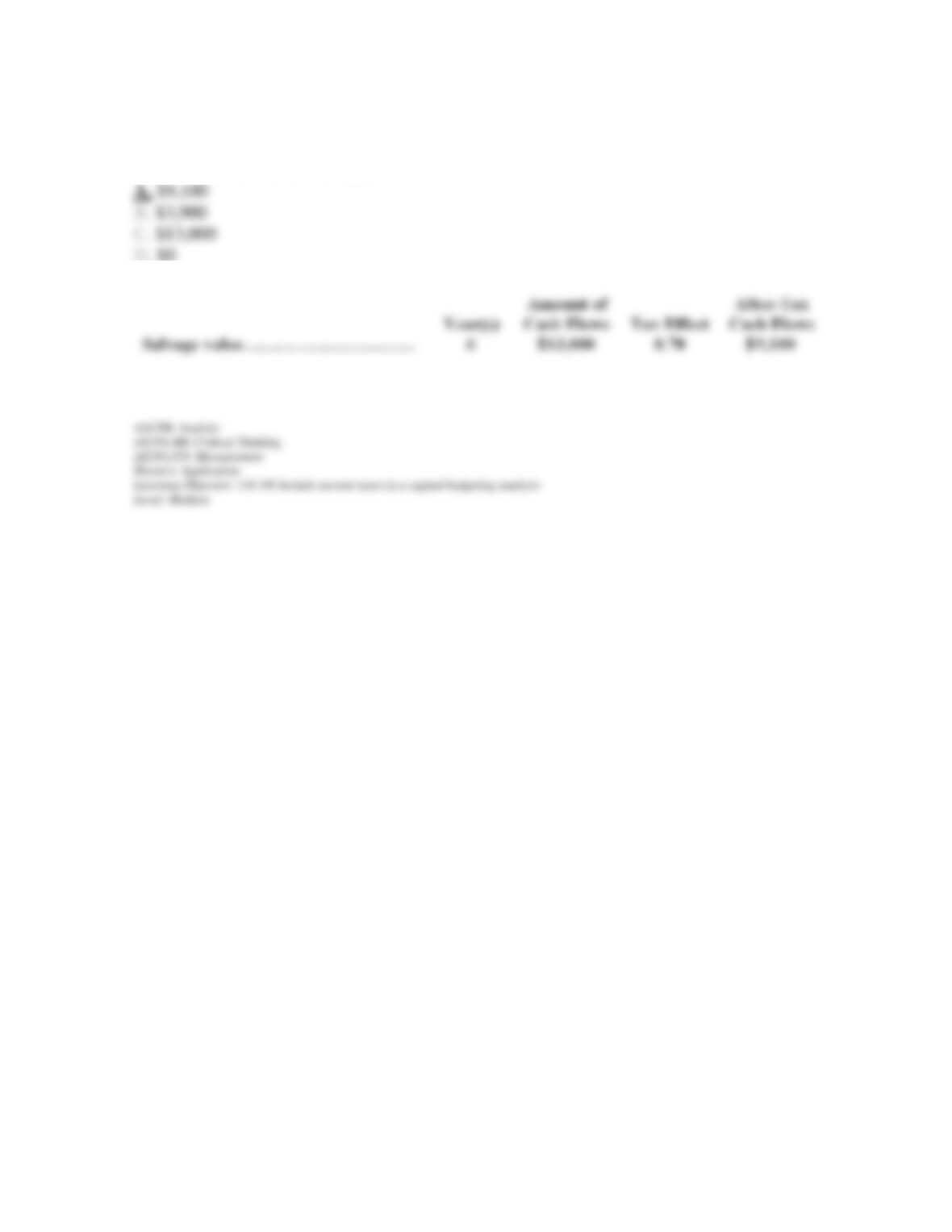
31. By how much does the depreciation deduction reduce taxes each year in which the
depreciation deduction is taken?
Chapter 13 – Appendix C Income Taxes in Capital Budgeting Decisions
13–21
32. When computing the net present value of the project, what is the after-tax cash flow from
the salvage value in the final year?
Chapter 13 – Appendix C Income Taxes in Capital Budgeting Decisions
Essay Questions
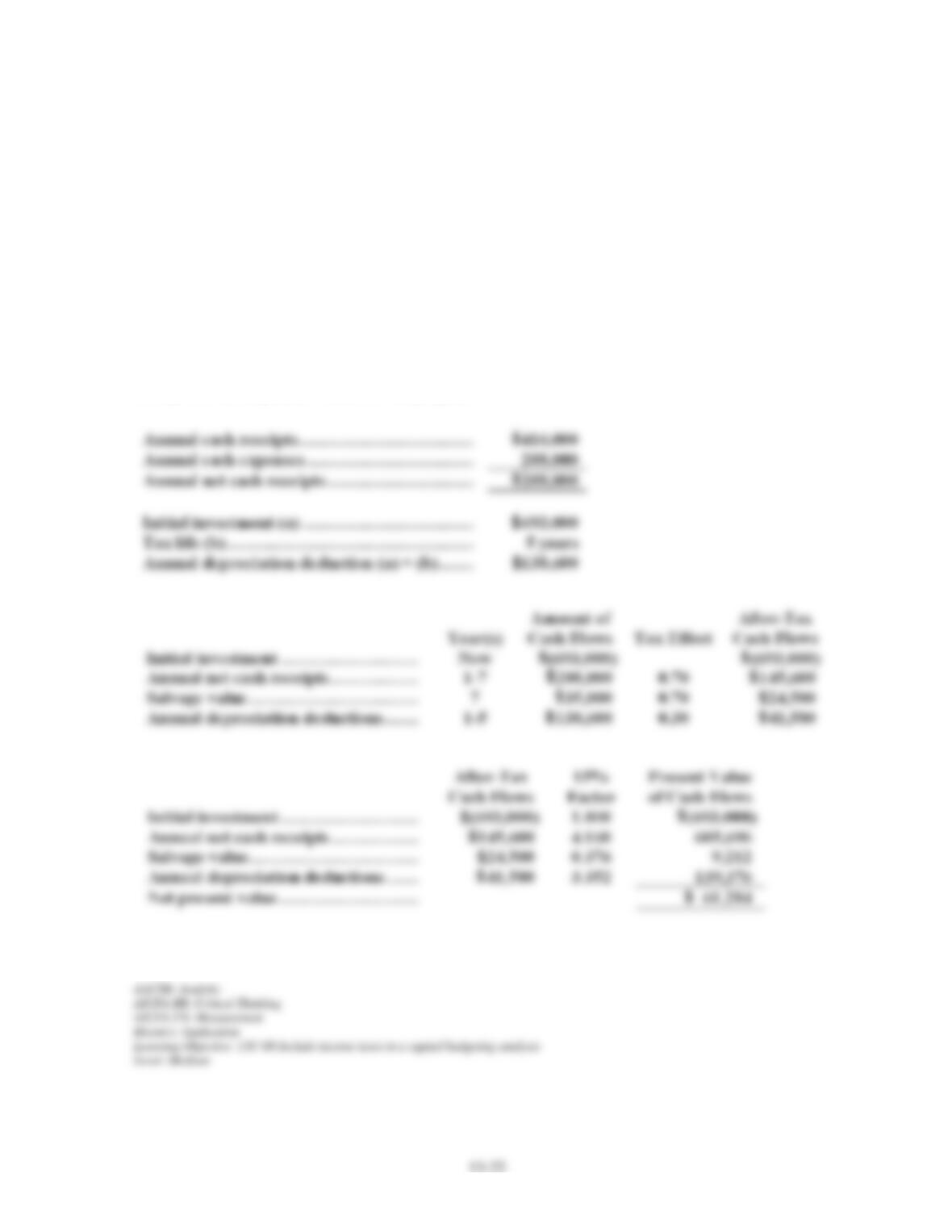
33. Sarafin Inc. is considering a project that would require an initial investment of $693,000
and would have a useful life of 7 years. The annual cash receipts would be $416,000 and the
annual cash expenses would be $208,000. The salvage value of the assets used in the project
would be $35,000. The company’s tax rate is 30%. For tax purposes, the entire initial
investment without any reduction for salvage value will be depreciated over 5 years. The
company uses a discount rate of 15%.
Required:
Compute the net present value of the project.
Chapter 13 – Appendix C Income Taxes in Capital Budgeting Decisions
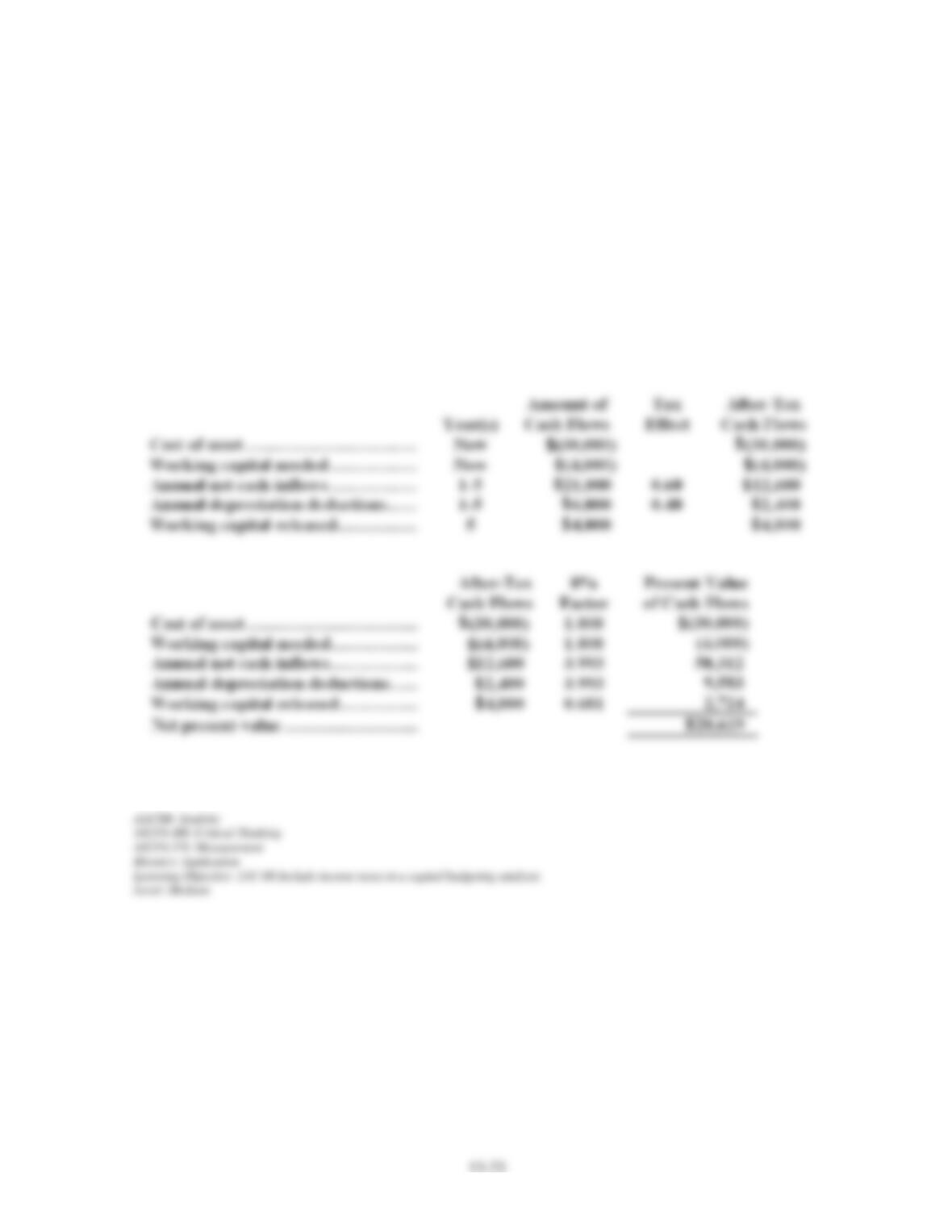
34. Management is considering purchasing an asset for $30,000 that would have a useful life
of 5 years and no salvage value. For tax purposes, the entire original cost of the asset would
be depreciated over 5 years using the straight-line method. The asset would generate annual
net cash inflows of $21,000 throughout its useful life. The project would require additional
working capital of $4,000, which would be released at the end of the project. The company’s
tax rate is 40% and its discount rate is 8%.
Required:
What is the net present value of the asset?
Chapter 13 – Appendix C Income Taxes in Capital Budgeting Decisions
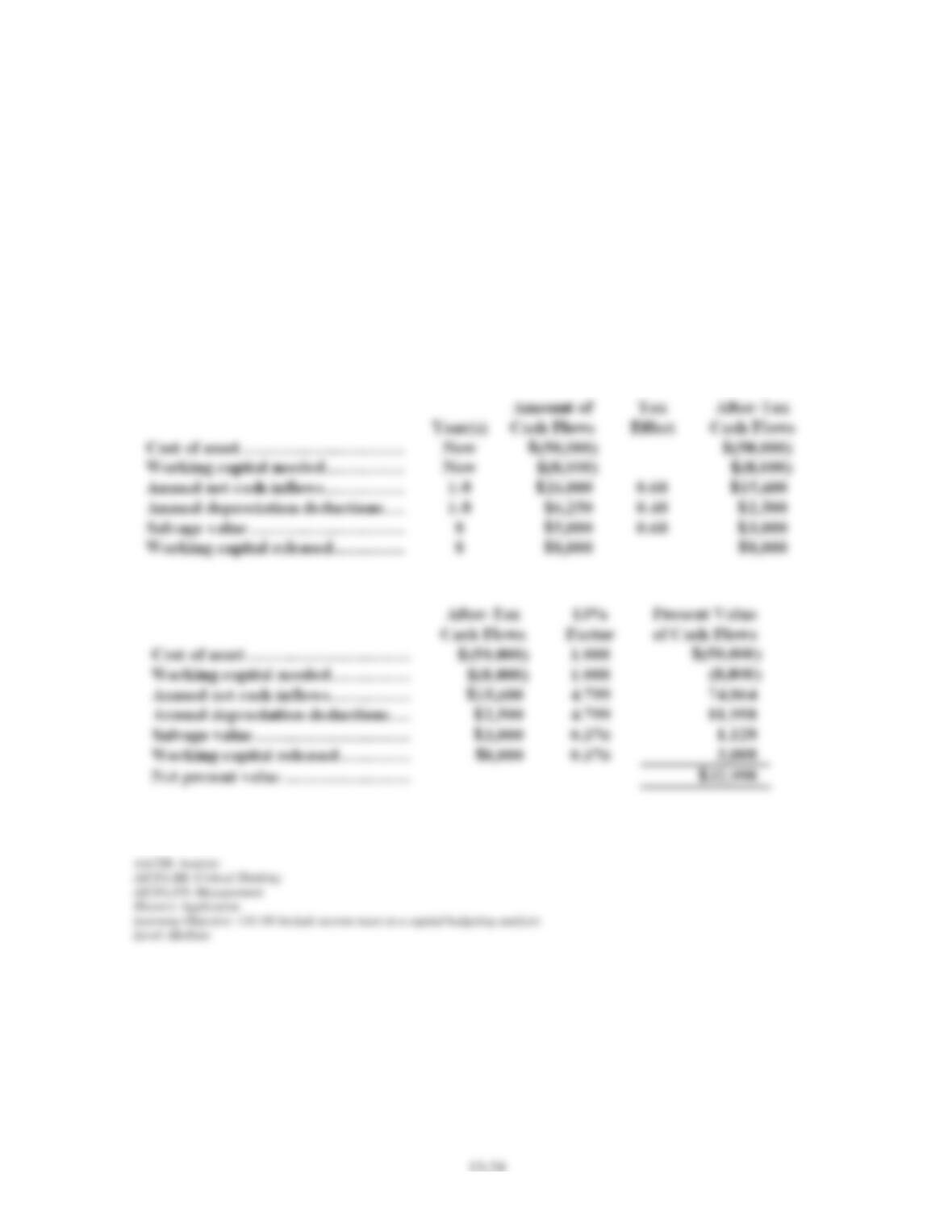
35. A company is considering purchasing an asset for $50,000 that would have a useful life of
8 years and would have a salvage value of $5,000. For tax purposes, the entire original cost of
the asset would be depreciated over 8 years using the straight-line method and the salvage
value would be ignored. The asset would generate annual net cash inflows of $26,000
throughout its useful life. The project would require additional working capital of $8,000,
which would be released at the end of the project. The company’s tax rate is 40% and its
discount rate is 13%.
Required:
What is the net present value of the asset?
Chapter 13 – Appendix C Income Taxes in Capital Budgeting Decisions
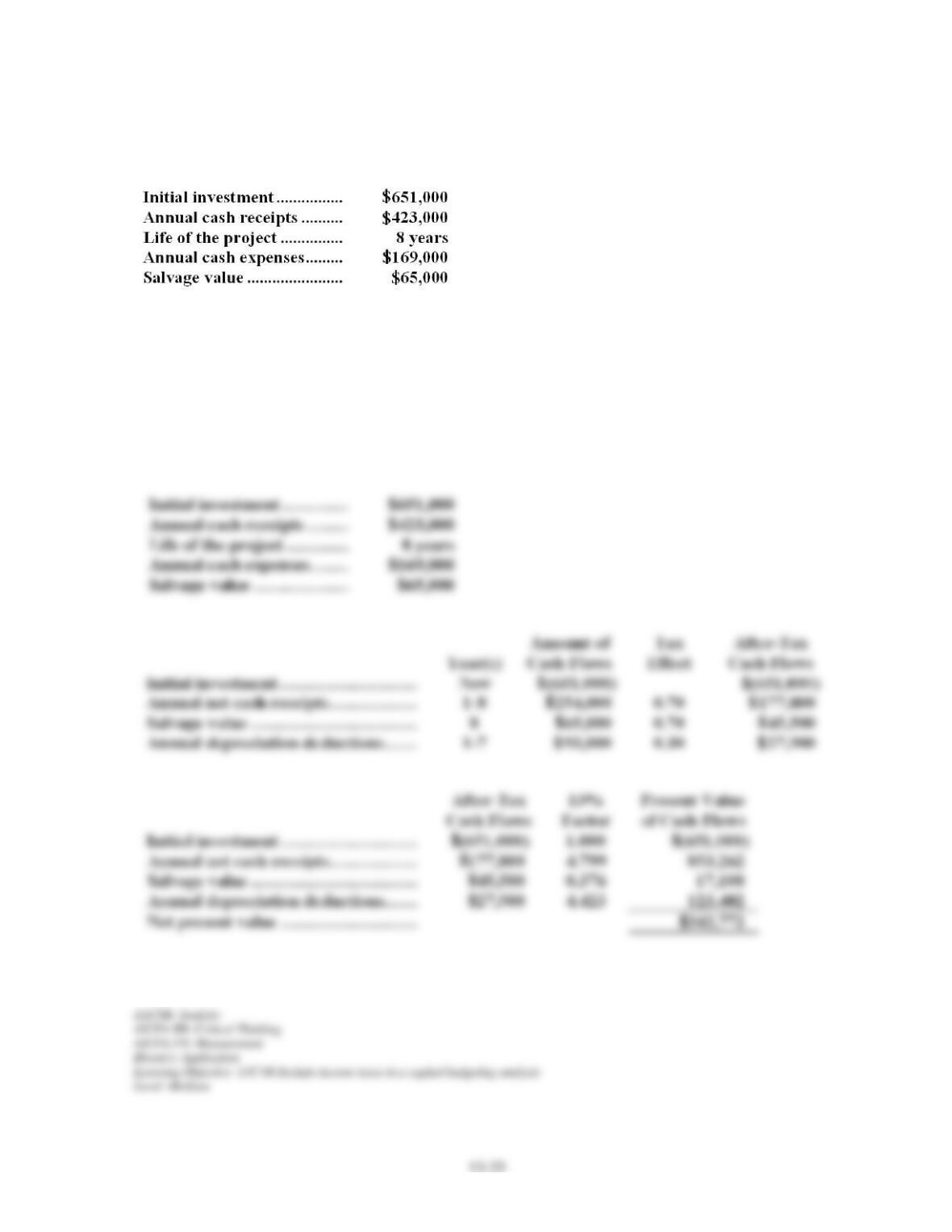
36. Eisenbeis Inc. has provided the following data concerning a proposed investment project:
The company’s tax rate is 30%. For tax purposes, the entire initial investment without any
reduction for salvage value will be depreciated over 7 years. The company uses a discount
rate of 13%.
Required:
Compute the net present value of the project.