Chapter 13: Joint Management of Revenues and Costs
Learning Questions
True /
False
Multiple Choice
Matching
Exercises
Short
Answer
Problems
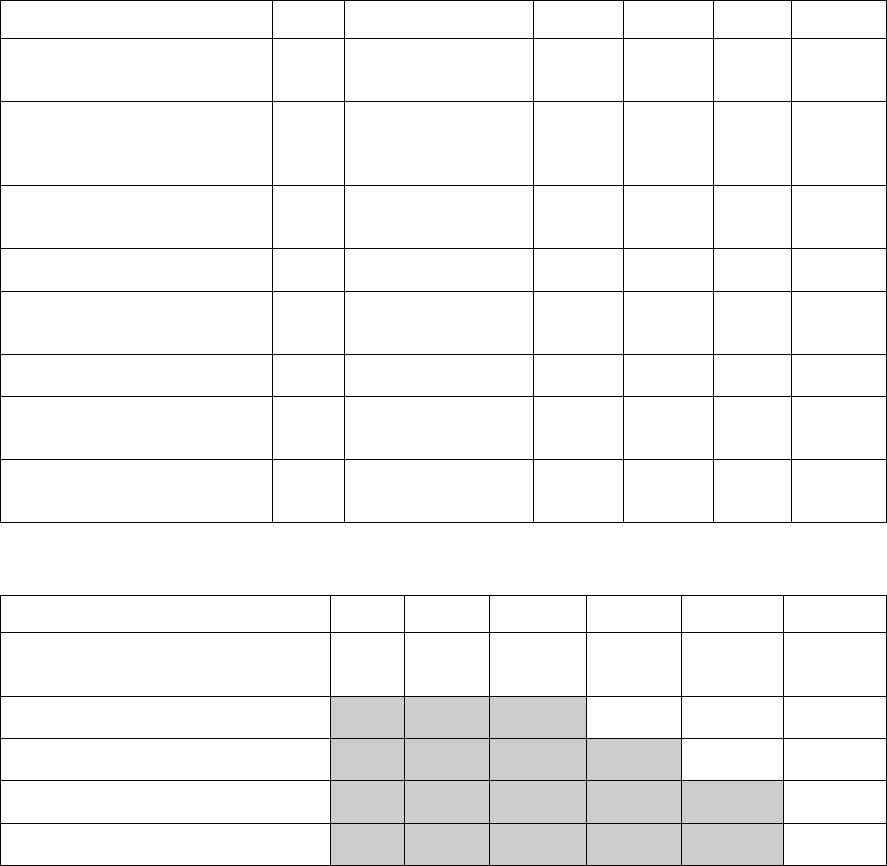
1. Why and how do accountants
analyze production and
service systems?
1-5
1-10
S: 76,77
W: 100, 101, 106, 109
1
10, 11
4
2. What is target costing, and
how is it performed?
6-10
11–20
S: 72-75, 78, 79, 83,
86
W: 92, 99, 108, 110
1, 3
3, 6, 7
1, 2, 4
3. What is kaizen costing, and
how does it compare to target
costing?
11–15
21–30
S: 80
W: 93
2, 3
4, 7
1, 2, 4
4. What is life cycle costing?
16–20
31–35
S: 81, 85
5
4
5. How are cost-based prices
established?
21–23
36–39
S: 84
W: 102, 107
3
2
1, 3
6. How are market-based prices
established?
24, 25
40–51
W: 95, 97
2, 3
1, 8
3
7. What are the uses and
limitations of cost-based and
market-based pricing?
26
52–55
W: 96, 103, 105
9
3
8. What additional factors affect
prices?
27–30
56–71
S: 82, 87-91
W: 94, 98, 104
2
S: Questions from the study guide
W: Questions from web quizzes on the student web site
Level of Complexity*
True /
False
Multiple
Choice
Matching
Exercises
Short
Answer
Problems
Foundation: Repeat or paraphrase
information; Reason to single correct
solution; Perform computations; etc.
All
All
All
All
3
1, 2, 3
Step 1: Identify the problem, relevant
information, and uncertainties
1, 2, 4, 5,
6, 8, 9
1, 3, 4
Step 2: Explore interpretations and
connections
7, 10, 11
2, 4
Step 3: Prioritize alternatives and
implement conclusions
Step 4: Envision and direct strategic
innovation
*Based on level in Steps for Better Thinking (Exhibit 1.10, textbook p. 16):
Note: Step 1, 2, 3, and 4 questions in this test bank are intentionally open-ended and subjective, giving students the
opportunity to demonstrate skills such as judgment, reasoning, identification of uncertainties, identification or analysis of
pros and cons, and so on. Therefore, student answers may not exactly match those shown in the solutions.

13-2 Cost Management
True / False
1. A value chain is the sequence of business processes in which value is added to a product or service.
2. An organization’s value chain often includes suppliers and customers.
3. Activities in the value chain are classified as value-added or non-value-added in many organizations.
4. The supply chain involves suppliers, but not customers.
5. Because inventory level information is in a company’s internal accounting records, suppliers cannot
access it.
6. Target costing is a technique to improve long-term profitability by considering product costs at the
design phase.
7. A target cost is the minimum cost a company should strive for to obtain its desired profit margin.
8. The decisions made during the design phase affect a large portion of product and manufacturing
process costs. Therefore, target costing focuses on the design phase.
9. Target costing involves not only cost, but also product quality and functionality.
10. Target costing works best when production processes are simple, rather than complex.
11. Kaizen costing is a technique aimed at improvement of short-term profitability.
12. Kaizen costing and target costing are two names for the same thing.
13. Kaizen costing is concerned with continuous improvement in product cost, quality, and functionality.
14. Kaizen costing relies on price forecasts.
15. In kaizen costing, after targeted cost reduction goals are set, each department is assigned
responsibility for specific cost reduction amounts.
16. Life cycle costing focuses on costs incurred in production, but not on those incurred when an
operation is closed down and requires costly cleanup activities.
17. Life cycle costing is an alternative to job order and process costing.
18. Life cycle costing is incompatible with activity-based costing.
19. Life cycle costing is used when a product is initially sold at a high profit.
20. Life cycle costing considers cash flows over the entire life of products that have high development or
decommissioning costs.
21. To establish a cost-based price, managers need data on consumer demand.
22. In cost-based pricing, managers must use only variable costs in the cost base.
23. In cost-based pricing, markup percentages often originate from general industry practice.
24. Market-based prices are typically based on some measure of customer demand.
25. Market-based prices are influenced by product differentiation and competition.
26. In an economic downturn, a problem with cost-based pricing is a potential death spiral.
27. Not-for-profit organizations price products in the same manner as for-profit organizations.
28. Peak load pricing refers to the illegal practice of charging different prices at different times to reduce
capacity constraints.
29. A penetration price is the price charged for transactions that take place within a single organization.
30. Predatory pricing is illegal in the United States.

Chapter 13: Joint Management of Revenues and Costs 13-3
Multiple Choice
1. A value chain is the sequence of business processes in which
a. Costs are determined with activity-based principles
b. Value is added to a product or service
c. All non-value-added activities are eliminated
d. Managers determine prices
2. An organization’s value chain can incorporate its
I. Own customers
II. Own suppliers
III. Customers’ customers
IV. Suppliers’ suppliers
a. I and II
b. I and III
c. II and IV
d. I, II, III, and IV
3. Implementing a wireless network to reduce non-value added paperwork and improve inventory
tracking would result most directly from
a. Target costing
b. Kaizen costing
c. Value chain analysis
d. Life cycle budgeting
4. Which of the following activities is not typically considered to be part of a manufacturing
organization’s value chain?
a. Making journal entries
b. Handling customer complaints
c. Designing and engineering new products
d. Manufacturing products
5. Which of the following activities is unique to a manufacturing organization’s value chain?
a. Distribution management
b. Customer service
c. Product manufacture
d. Marketing and sales
6. Which of the following immediately follows product and process design in the typical manufacturing
value chain?
a. Research and development
b. Supplier and raw material management
c. Distribution management
d. Marketing and sales
7. Managers often break activities into four groups for value chain analysis. Which of the following is
not an activity category among those four groups?
a. Unnecessary activities that cannot be eliminated
b. Necessary activities that could be changed to improve the process
c. Necessary activities that cannot be improved upon at this time
d. Unnecessary activities that can be eliminated quickly
13-4 Cost Management
8. The Internet can often give suppliers information about their customers’ inventory levels. Suppliers
can then use this information to
I. Time deliveries to their customers
II. Improve their own production planning
III. Prepare financial statements
a. I and II
b. II and III
c. I and III
d. I, II, and III
9. Which of the following terms is typically associated with just–in-time systems?
a. Demand-push system
b. Manufacturing cells
c. Non-value-added activities
d. Linear regression
10. Which of the following is not typically associated with successful implementation of just-in-time
(JIT) systems?
a. Find high quality suppliers
b. Locate suppliers with short transit times
c. Use as many suppliers as possible to minimize the risk of non-delivery
d. Develop management commitment to the JIT process
Use the following information for the next 3 questions.
BBM Corporation’s managers are attempting to build a new product, a better mousetrap. They began by
determining the features customers wanted and what they would pay for those features. BBM’s engineers
then reverse-engineered a competitor’s product to understand its design and related production processes.
Their analysis indicated that customers would pay $10.00 for a better mousetrap.
11. What process did BBM use according to the preceding scenario?
a. Kaizen costing
b. Value chain costing
c. Target costing
d. Life cycle costing
12. If BBM’s required profit margin is 25%, the target cost of a better mousetrap is:
a. $2.50
b. $7.50
c. $12.50
d. None of the above
13. Why was it important for BBM’s engineers to understand the product design and production
processes of its competitor?
a. Most of the mousetrap’s product costs are committed by that point in the value chain
b. They needed to explain them to customers to justify the better mousetrap’s cost
c. The better mousetrap will only succeed if it is identical to their competitor’s product
d. Understanding product design and production processes is not typically important; the engineers
just wanted to better understand the process.
14. Which of the following steps occurs first in a target costing design cycle?
a. Evaluate feasibility using a pilot project.
b. Make product design choices to achieve the target cost.
c. Determine the target cost.
d. Determine product target price, quality, and functionality.
Chapter 13: Joint Management of Revenues and Costs 13-5
15. Rebekah is an accountant for CHC Corporation. Her boss has asked her to participate in a target
costing project for a pen that will write upside down. Which of the following information sources
would Rebekah use to determine a competitive price?
a. Consumer surveys
b. Reverse-engineering reports
c. Life cycle costing analyses
d. Rebekah does not need to determine a competitive price because the project is focused on a target
cost
16. Consumer surveys, focus groups, and market research are
a. Value-added activities.
b. Information sources for target costing projects.
c. Always part of a company’s value chain.
d. Information sources for cost-based pricing.
17. After establishing a target cost for a product or service, managers assemble a product design team.
The product design team usually comprises
I. Product engineers
II. Marketing personnel
III. Accountants
a. I and II
b. I and III
c. II and III
d. I, II, and III
18. Target costing is most likely to be successful when the
a. Manufacturer is solely responsible for managing costs
b. Product is a commodity
c. Production process is complex
d. Managers and accountants make all of the decisions
19. In target costing, managers can
a. Focus on motivating customers to pay a higher price
b. Push some cost reductions to suppliers
c. Try to establish their product as a commodity
d. Justify higher costs by making production processes more complex
20. Which of the following industries is least likely to implement target costing?
a. Food products and beverages
b. Heavy equipment manufacturers
c. Car manufacturers
d. Bicycle manufacturers
21. Kaizen costing is
a. Another name for target costing
b. Focused only on cost reduction
c. Continuous improvement in cost, quality, and functionality
d. A method for budgeting
22. When does kaizen costing typically occur?
a. Before the product has been designed
b. After the product has been designed, but before the first production cycle is complete
c. After the product has been designed and after the first production cycle is complete
d. After the first production cycle is complete, but before the product has been designed
13-6 Cost Management
23. Kaizen costing relies on
a. Sales forecasts of prices and volumes
b. Commodity markets
c. Zero-based budgeting processes
d. Classification based on cost behavior
24. Kaizen costing is similar to a budget except that kaizen costing
a. Does not use dollar amounts
b. Cannot be implemented in service organizations
c. Requires the use of the high-low method to forecast revenues
d. Provides for explicit cost reductions
25. Kaizen costing concepts can be applied to
a. Variable costs only
b. Fixed costs only
c. Both variable and fixed costs
d. Mixed costs only
26. Under kaizen costing, accountants forecast
a. Declining prices and establish cost reduction goals to maintain a desired profit margin
b. Cost reduction goals and desired profit margins, then adjust prices accordingly
c. Declining profit margins and establish revenue and cost goals to meet them
d. Increasing profit margins and establish revenue and cost goals to meet them
27. Managers can achieve planned cost reductions in a kaizen costing system through
I. Value chain analysis
II. Gain-sharing programs with employees
III. Supply chain analysis
a. I and II
b. I and III
c. II and III
d. I, II, and III
Use the following information for the next 3 questions.
WDY Corporation currently sells its primary product for $85 per unit, with a profit margin of 30%. Cost of
goods sold totals 40% of the product’s total cost. WDY’s managers are considering implementing a kaizen
costing system.
28. WDY’s current product cost (direct costs and manufacturing overhead) per unit is
a. $25.50
b. $59.50
c. $23.80
d. $15.30
29. As part of its kaizen costing project, WDY’s accountants estimate the price of the product will decline
by 20% next year. To maintain the same profit margin, the total cost per unit will have to be reduced
by
a. Less than 20%
b. Exactly 20%
c. More than 20%
d. Cannot be determined
Chapter 13: Joint Management of Revenues and Costs 13-7
30. If WDY is successful in achieving its kaizen goal, the reduced nonmanufacturing cost (i.e., the cost
excluding the product cost) per unit will be
a. $47.60
b. $28.56
c. $19.04
d. $20.40
31. Life-cycle costing is a
a. Decision-making method that considers costs from the time the product is introduced through a
number of years
b. Decision-making method that considers a target cost
c. Decision-making method that considers improvements in cost and quality over a product’s life
d. Pricing method based on demand
32. FRM Corporation’s managers have recently introduced new, more efficient equipment for feeding
chickens. Under which of the following assumptions would life cycle costing be best applied?
a. The product is being sold at a loss
b. The product is being sold at a small profit
c. The product is being sold at a loss, but expected to add to profits over time
d. The product is being sold at a small profit, which is expected to decline over time
33. Life cycle costing can be used to focus managers’ attention on
I. Development costs
II. Decommissioning costs
III. Marketing costs
a. I and II
b. I and III
c. II and III
d. I, II and III
34. Life cycle costing can be used to identify unprofitable products due to high costs at the end of a
product’s life. Which of the following is the best example of such a product?
a. Nuclear reactors
b. Cherry orchards
c. CPA firms
d. Universities
35. Although products are initially sold at a loss, under life cycle costing managers usually expect
I. Sales volume increases for the product or related products over time
II. A shift to a commodity market over time
III. Cost reductions over time
a. I and II
b. II and III
c. I and III
d. I, II, and III
13-8 Cost Management
Use the following information for the next 4 questions.
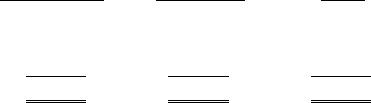
BLG Corporation produces and sells yachts for wealthy customers. BLG’s accountants produced the data
shown below as a basis for client negotiations for the coming year:
Big Winner Sport Star CEO
Basic yacht $ 600 $ 600 $ 600
Customization costs 300 500 200
Marketing costs 100 400 300
Total costs $1,000 $1,500 $1,100
Assume that all the preceding costs are avoidable. The company will incur an additional $800 in unavoidable
costs during the coming year. BLG’s managers want to achieve a profit margin of 80% based on total costs.
36. BLG’s system is best described as
a. Market-based pricing
b. Life cycle costing
c. Cost-based pricing
d. Kaizen costing
37. If unavoidable costs are allocated as a percentage of avoidable costs, the total cost of Sport Star’s
yacht will be
a. $1,500
b. $2,300
c. $1,833
d. $1,167
38. Which customer’s yacht will have the lowest total cost if unavoidable costs are allocated based on the
cost of a basic yacht?
a. Big Winner
b. Sport Star
c. CEO
d. Costs will be equal for all three customers
39. Suppose BLG allocates unavoidable corporate costs based on total avoidable costs. The selling price
of Sport Star’s yacht will be
a. $1,833
b. $3,300
c. $1,467
d. $2,200
40. Market-based prices are least likely to be influenced by
a. The degree of product differentiation
b. Competition
c. Whether or not the product is a commodity
d. The cost to produce the product
41. Which of the following is a formal method for incorporating demand into prices?
a. Cost-based pricing
b. Market-based pricing
c. Price elasticity of demand
d. Price elasticity of supply
42. Which of the following formulas calculates price elasticity of demand?
a. ln (1 + % change in quantity sold) / ln (1 + % change in price)
b. (1 + % change in quantity sold) / (1 + % change in price)
c. % change in quantity sold / % change in price
d. ln (1 – % change in quantity sold) / ln (1 – % change in price)
Chapter 13: Joint Management of Revenues and Costs 13-9
43. Which of the following formulas calculates the profit-maximizing price?
a. Total variable cost + total fixed cost
b. (Total variable cost + total fixed cost) / price elasticity of demand
c. Variable cost × [elasticity / (elasticity + 1)]
d. Total cost × [elasticity / (elasticity + 1)]
44. Which of the following factors affect a product’s profit-maximizing price?
I. Fixed costs
II. Price elasticity of demand
III. Variable costs
a. I and III
b. II and III
c. I and II
d. I, II, and III
45. Market-based prices are normally determined using some measure of
a. Supplier prices
b. Supplier demand
c. Customer demand
d. Degree of governmental regulation
46. Managers determine what a customer is willing to pay for a product or service under which one of
these pricing method
a. Market-based
b. Cost-based
c. Activity-based
d. Life cycle
47. Market-based prices are influenced by all of the following except
a. Customer demand
b. Product differentiation
c. Competition
d. Allocated costs
48. When an organization using market-based prices cannot differentiate its product due to extensive
competition, the product
a. Is considered a commodity
b. Is considered a regulated price
c. Involves more non-value-added activities than value-added activities
d. Cannot be sold at a profit
49. The Internet is likely to
a. Decrease price elasticity of demand because transactions are numerous and quick
b. Have no impact on price elasticity of demand because few people do business on the Internet
c. Increase price elasticity of demand because of the availability of substitute products
d. Decrease price elasticity of demand because of the availability of complementary products
Use the following information for the next 2 questions.
TTV Corporation’s managers estimate that a 50% increase in price would cause an 80% reduction in the
quantity of product sold. Total fixed costs for the product are $5,000 and total variable costs are $4,000,
based on production of 400 units. The following values may be useful:
ln (0.2) = -1.609 ln (1.5) = 0.405
ln (0.5) = -0.693 ln (4,000) = 8.294
ln (0.8) = -0.223 ln (5,000) = 8.517
13-10 Cost Management
50. TTV’s price elasticity of demand is
a. -3.973
b. -0.252
c. +0.322
d. +3.108
51. TTV’s profit maximizing price is
a. $2.44
b. $3.37
c. $7.57
d. $13.36
52. A major drawback of cost-based pricing is that it
a. Ignores the full cost of a product
b. Ignores the relationship between customer demand and price
c. Ignores variable costs and includes only fixed costs
d. Can be used only when all costs have been incurred
53. The “death spiral” may be a problem when managers use
a. Market-based prices
b. Cost-based prices
c. Profit-maximizing prices
d. Regulated prices
54. Which of the following is the main disadvantage of market-based pricing?
a. Difficulty in estimating market demand and prices
b. Subjectivity of market demand
c. Inability to operate profitably
d. Tendency to make poor decisions relative to cost-based pricing
55. The most commonly used pricing method in the United States is
a. Market-based pricing
b. Life cycle pricing
c. Zero-based pricing
d. Cost-based pricing
56. Charging different prices at different times to reduce capacity constraints is called
a. Penetration pricing
b. Transfer pricing
c. Peak load pricing
d. Price skimming
57. The practice of charging higher prices for products or services when they are first introduced is
known as
a. Transfer pricing
b. Price skimming
c. Peak load pricing
d. Price gouging
58. Which pricing method is used to capture market share by charging low introductory prices
a. Penetration pricing
b. Price gouging
c. Price skimming
d. Peak load pricing
Chapter 13: Joint Management of Revenues and Costs 13-11
59. When managers take advantage of an unusual event by charging prices that consumers believe are too
high, they are practicing
a. Predatory pricing
b. Price gouging
c. Cost-based pricing
d. Illegal pricing
60. Which of the following statements about price discrimination is true?
a. It is always illegal in the United States
b. Organizations can use cost differences as a defense against price discrimination charges
c. Price elasticity of demand can justify price discrimination
d. It is legal if it results in less competition
61. Which of the following are generally illegal in the United States?
I. Price discrimination
II. Predatory pricing
III. Price gouging
a. I and II
b. I and III
c. II and III
d. I, II, and III
62. Setting prices low to drive competitors out of the market and then raising prices is called
a. predatory pricing.
b. market-based pricing.
c. price dumping.
d. collusive pricing.
63. When two or more organizations conspire to set prices above a competitive price, they are engaging
in
a. predatory pricing
b. price gouging
c. collusive pricing
d. price discrimination
64. Low prices are not considered predatory if
a. They can be justified by cost differences
b. They are collusive
c. Customers do not complain about them
d. Price elasticity of demand is above 1.00
65. The price does not need to cover costs for what kinds of organizations?
a. All types of for-profit organizations
b. For profit retail sales organizations
c. Not-for-profit organizations
d. For profit manufacturing organizations
66. Because of grants, donations, and interest from endowed funds, not-for-profit organizations generally
a. Operate at a profit
b. Must use market-based pricing
c. Do not expect to recover all their costs from the fees they charge
d. Are not allowed to use market-based pricing

13-12 Cost Management
67. In the United States, illegal pricing practices include
I. Dumping
II. Market-based pricing
III. Predatory pricing
a. I and II
b. II and III
c. I and III
d. I, II, and III
68. To combat the practice of dumping, the United States
a. Imposes an anti-dumping tariff
b. Allows limited instances of collusive pricing
c. Encourages the development of oligopolies
d. Does nothing, because dumping is not illegal in the United States
69. Anti-dumping tariffs in the United States are set so that
a. A foreign product’s price will be equivalent to the price charged by U.S. companies
b. A foreign product’s price will be higher than the price charged by U.S. companies
c. A U.S. company’s price will be lower than the price charged by a foreign company
d. Customers will always be motivated to purchase products from U.S. companies
70. Certain highways in California require users to pay a toll for their use. Toll prices vary according to
the time of day, demonstrating the use of
a. Penetration pricing
b. Cost-based pricing
c. Price skimming
d. Peak load pricing
71. Under what circumstances is penetration pricing considered legal in the U.S.?
a. Penetration pricing is never considered legal in the U.S.
b. Penetration pricing is not legal if the industry is regulated
c. Penetration pricing is not legal if it is considered predatory pricing
d. Penetration pricing is legal only if the industry is regulated
Multiple Choice from Study Guide
Use the following information for the next 4 questions.
Sportstuff, Inc. is investigating the feasibility of adding a new skateboard to its line up of products. The
marketing department believes that 10,000 units can be sold at $90 each. Sportstuff requires a 25% profit
margin (i.e. cost is 75% of selling price) on all products.
s72. To achieve its goal, Sportstuff must keep total costs equal to or below
a. $225,000
b. $675,000
c. $506,250
d. $900,000
s73. To achieve its goal, Sportstuff must earn revenues on the product of
a. $225,000
b. $675,000
c. $506,250
d. $900,000
Chapter 13: Joint Management of Revenues and Costs 13-13
s74. To achieve its goal, Sportstuff must keep per-unit costs equal to or less than
a. $22.50
b. $67.50
c. $50.63
d. $90.00
s75. If it achieves its goal, Sportstuff will have operating income on this product of
a. $225,000
b. $675,000
c. $506,250
d. $900,000
s76. Product design, product production, and customer service are business processes that are part of the
a. Supply chain
b. Value chain
c. Distribution channel
d. Management of inventory levels
s77. Value-added costs
a. Must be eliminated
b. Include the costs of repairing defective units of production
c. Are costs that a customer is willing to see incorporated into the product’s price
d. Do not need to be monitored because they increase the product’s value
s78. Which of the following concentrates on reducing costs at the design phase of a product?
a. Life cycle costing
b. Target costing
c. Kaizen costing
d. Value costing
s79. Which of the following is not likely to be a feature of target costing?
a. The selling price is taken as given
b. Product development time is decreased
c. Relationships with suppliers are reviewed
d. Product design changes are made to decrease production costs
s80. Which of the following concentrates on reducing costs at the production phase of a product?
a. Life cycle costing
b. Target costing
c. Kaizen costing
d. Value costing
s81. Which of the following assigns product design costs over several years?
a. Life cycle costing
b. Target costing
c. Kaizen costing
d. Value costing
s82. Which of the following statements is false?
a. When demand is inelastic, a price increase will have little effect on the number of units sold.
b. An increase in variable costs will increase the profit-maximizing selling price.
c. Penetration pricing is illegal.
d. Kaizen costing is a continuous improvement process that decreases waste and increases
production efficiency.
13-14 Cost Management
s83. Place the following tasks involved in target costing in the correct order
1. Determine the target cost
2. Determine the target selling price
3. Perform value chain analysis
a. 1, 2, 3
b. 2, 3, 1
c. 2, 1, 3
d. 3, 2, 1
s84. In cost-based pricing, which costs are appropriately included in the cost base?
a. Variable production costs only
b. Production costs only
c. All production and non-production costs
d. Any of the above may be used
s85. Which of the following statements about life cycle costing is false?
a. It is long-term in nature
b. It is appropriate in situations where production costs are expected to increase over time
c. It is appropriate in situations where a product is initially expected to sell at a loss
d. It is appropriate in situations where the product’s selling price is expected to decrease over time
s86. Which of the following statements about target costing is false?
a. It is likely to increase product development time
b. It may be performed for a product that is eventually never produced
c. The product’s selling price is determined after the target cost is computed
d. Value chain analysis is used to find the cost reductions necessary to meet the target cost
s87. Just before the landfall of hurricane Ivan, a convenience store manager decided to raise the price on a
bottle of water from $1 to $7. This is an example of
a. Price gouging
b. Predatory pricing
c. Penetration pricing
d. Price skimming
s88. A company with a new product decides to set the initial price low so that customers will try the
product. This is an example of
a. Price gouging
b. Predatory pricing
c. Penetration pricing
d. Price skimming
s89. A company with a new product decides to set the initial price low so that the competition is
destroyed. This is an example of
a. Price gouging
b. Predatory pricing
c. Penetration pricing
d. Price skimming
s90. A company with a new product decides to set the initial price high because there are some customers
who will pay this high price for a newly introduced product. This is an example of
a. Price gouging
b. Predatory pricing
c. Penetration pricing
d. Price skimming

Chapter 13: Joint Management of Revenues and Costs 13-15
s91. Under U.S. laws, which of the following statements is the best example of the process known as
dumping?
a. A U. S. company with excess inventory sells its product for a price below cost
b. A foreign company sells its products in the U.S. for less than the market value in the country
where the products are manufactured.
c. A foreign company with excess inventory sells it in its home country for a price below the normal
selling price
d. A company with a new product sells it in the U.S. for a price above the normal selling price
Multiple Choice from Web Quizzes (Available on Student Web Site)
w92. Target costing is a
a. Pricing method based on variable cost
b. Decision-making technique for deciding whether to produce a product
c. Pricing method based on total cost
d. Technique for costing inventory for financial statements
w93. Kaizen costing
I. Is a goal setting process
II. Involves continuous improvements
III. Can create high pressure for employees
a. I
b. II
c. I and III
d. I, II, and III
w94. In the United States, predatory pricing occurs when
a. A foreign company dumps product in the United States at prices below the market value in the
country where they were manufactured
b. Two organizations conspire to set prices
c. An organization prices products or services very low to drive out competition and increase market
share
d. An organization sets a low price to introduce a new product
w95. Price elasticity of demand
a. Is a price based on total cost with a desired markup
b. Indicates the sensitivity of sales to changes in price
c. Is a price based on variable cost with a desired markup
d. Is a calculation that relates changes in costs to changes in volume of sales
w96. The death spiral is
I. Setting prices very low
II. Two organizations conspiring to set prices
III. A problem of prices based on average cost and declining sales
a. I
b. III
c. I and III
d. II and III
w97. Market-based pricing
a. Uses a traditional markup
b. Calculates price based on total cost
c. Considers demand and competitors’ prices
d. Considers current costs and future costs in setting prices
13-16 Cost Management
w98. In the United States, dumping is
I. Selling a product at a price that is below the market price
II. Not a legal problem for U.S. companies that have no foreign subsidiaries
III. Prosecuted by setting tariffs
a. I and II
b. I, II, and III
c. I and III
d. II and III
w99. The target costing cycle
a. Focuses on reducing costs in the design phase of a product and manufacturing process
b. Is a cost-based pricing method
c. Is finished when the product is designed
d. Considers cost over the life cycle of the product
w100. A just-in-time manufacturing system
a. Uses an assembly line for manufacturing
b. Is a process that requires a lot of storage area for inventories
c. Is a process in which it is difficult to maintain product quality
d. Is a demand-pull system
w101. Value chain analysis examines
I. Business processes
II. Value added and non-value added activities
III. Supply chains in addition to other processes
a. I
b. I and III
c. I, II, and III
d. III
w102. Cost-based pricing
a. Considers price elasticity of demand
b. Is not commonly used
c. Uses a markup percentage
d. Is always based on variable cost
w103. Prices that are calculated using elasticities
a. Always result in profit maximization
b. Are very common
c. Ignore customer demand
d. Develop a markup for variable cost
w104. Not-for-profit pricing decisions
I. Are made using the same practices as for-profit pricing decisions
II. Sometimes result in different prices for different customers
III. Sometimes subsidize particular groups of people
a. I and II
b. II and III
c. I, II, and III
d. III
w105. The Internet and global competition
a. Have not changed pricing practices
b. Have increased the use of market-based pricing
c. Do not provide more information about prices
d. Have increased the use of cost-based pricing
Chapter 13: Joint Management of Revenues and Costs 13-17
w106. The Internet
a. Makes it more difficult to use JIT production systems
b. Has not affected the relationship between manufacturers and suppliers
c. Allows suppliers to monitor their customers’ inventory levels and provide new inventories just as
needed
d. Makes it more difficult to practice target costing
w107. Dyggur Traders wishes to earn a 30% return on its $100,000 investment in equipment used to produce
dog toys. Based on estimated sales of 10,000 toys next year, the costs per unit would be as follows:
Variable cost $5.00
Fixed selling and administrative costs 2.00
Fixed manufacturing cost 1.00
At how much per unit should dog toys be priced for sale?
a. $11.00
b. $9.00
c. $12.00
d. None of the above
w108. Dyggur Traders wishes to earn a 20% return on its $100,000 investment in equipment used to produce
dog toys. The fixed costs cannot be changed, but the company wants to set a target cost for the
variable portion. Based on estimated sales of 10,000 toys next year, the price and fixed costs per unit
are: Price $9.00
Fixed selling and administrative costs 2.00
Fixed manufacturing cost 1.00
What is the target variable cost per unit?
a. $3.00
b. $2.00
c. $4.00
d. $5.00
w109. (CMA) The series of activities in which customer usefulness is added to the product is the definition
of
a. A value chain
b. Process value analysis
c. Integrated manufacturing
d. Activity based costing
w110. (CMA) In target costing
a. The market price of the product is taken as a given
b. Only raw materials, labor, and variable overhead cannot exceed a threshold target
c. Both labor and manufacturing overhead are charged directly to conversion costs
d. Only raw materials cannot exceed a threshold target

13-18 Cost Management
Matching
1. A value chain is the sequence of business processes in which value is added to a product or service.
Consider a manufacturing company that produces and sells dog food. Match each business activity
listed on the left with the element of the value chain that best describes it from the list on the right.
Each numbered item has only one correct answer. Each lettered item may be used only once.
____ 1. Advertising products to consumers
____ 2. Combining material, labor and overhead
to produce dog food
____ 3. Developing manufacturing methods for
efficient dog food production
____ 4. Enforcing time and quality standards for
raw material suppliers
____ 5. Investigating ways to produce more
nutritious dog food
____ 6. Responding to customer complaints
____ 7. Selecting retailers to sell dog food to end
consumers
A. Research and development
B. Product and process
design
C. Supplier and raw material
management
D. Product manufacture
E. Marketing and sales
F. Distribution management
G. Customer service
2. Several terms related to product pricing are listed below on the left. Potential definitions are listed on
the right. Match the lettered items on the right with the appropriate item on the left. Each numbered
item has only one correct answer. Each lettered item may be used only once.
____ 1. Collusive pricing
____ 2. Death spiral
____ 3. Dumping
____ 4. Peak load pricing
____ 5. Penetration pricing
____ 6. Predatory pricing
____ 7. Price discrimination
____ 8. Price gouging
____ 9. Price skimming
____ 10. Transfer pricing
A. Associated with an organization’s internal
transactions
B. Can be justified by cost differences
C. Charging higher prices when a product is first
introduced
D. Charging prices that consumers see as
excessive
E. May occur when sales volumes
inappropriately influence prices
F. Multiple organizations work together to set
prices above competitive levels
G. Often counteracted in the U.S. by imposing
tariffs
H. Often used to deal with capacity constraints
I. Setting different prices for different
customers
J. Setting lower prices during product
introduction to capture market share

Chapter 13: Joint Management of Revenues and Costs 13-19
Exercises
1. Deluxe Doll Manufacturing produces several different types of dolls. Product demand escalates
during the holiday season in December. In the past, the company filled customer orders by
anticipating demand increases and then manufacturing inventories in advance.
Recently, competition from other toymakers has escalated. Deluxe needs to reduce prices and,
therefore, cut costs. The current cost for Deluxe’s best seller, Bouncy Baby Doll, is $12. To be
competitive, the marketing manager believes that the price should be 10% lower than the current
price. The company currently achieves a pretax return of 10% on sales of the dolls, and the top
managers want to continue this rate of return.
Following are the per-unit costs for baby dolls, based on production of 500,000 per year:
Direct materials (variable) $ 4.50
Direct labor (variable) 1.00
Machining costs (fixed depreciation and maintenance) 5.00
Inspection costs (variable) 0.50
Marketing costs (fixed) 0.25
Administrative costs (fixed) 0.75
Total cost $12.00
a. Calculate the price recommended by the marketing department.
b. Given the price you calculated in Part (a), calculate the new contribution margin and the target
cost.
c. Calculate the target cost reduction for each cost category, assuming proportional cost reduction
across categories.
2. SRB Corporation manufactures and sells espresso machines for $80 each. In a recent accounting
period, SRB incurred the following costs to produce 5,000 espresso machines:
Direct material $ 18,250
Direct labor 36,250
Variable manufacturing overhead 22,250
Fixed manufacturing overhead 19,000
Variable nonmanufacturing costs 19,750
Fixed nonmanufacturing costs 21,000
Total $136,500
Assume that SRB plans to increase the price of its current espresso machines by 30% next year, with
a resultant 40% drop in unit sales. Use the appropriate natural logarithms below to calculate the
indicated amounts.
ln (0.1) = -2.303 ln (0.6) = -0.511 ln (1.1) = 0.095
ln (0.3) = -1.204 ln (0.7) = -0.357 ln (1.3) = 0.262
a. Price elasticity of demand
b. Profit maximizing price
c. Total cost per unit to achieve a 30% profit margin
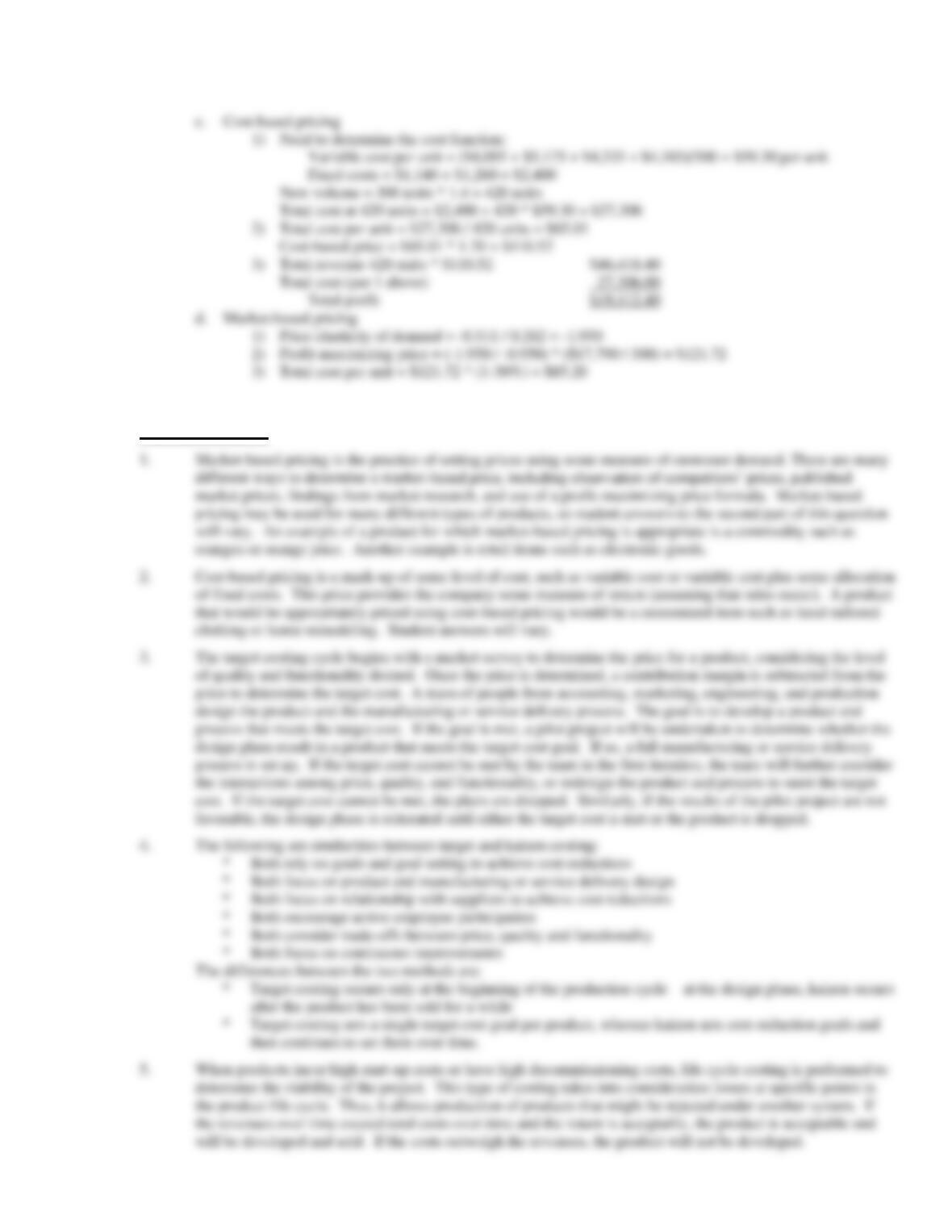
3. GYG Corporation manufactures and sells wine racks for $120 each. In a recent accounting period,
GYG incurred the following costs to produce 300 racks:
Direct material $ 4,095
Direct labor 5,175
Variable manufacturing overhead 4,335
Fixed manufacturing overhead 1,140
Variable nonmanufacturing costs 4,185
Fixed nonmanufacturing costs 1,260
Total $20,190

13-20 Cost Management
a. GYG’s marketing research department has proposed developing a better quality rack, which
would sell for a price of $120. Top management will accept the proposal provided the profit
margin is 40%. Calculate the target cost per unit for the new wine racks.
b. Recent market research has suggested GYG should sell the existing wine racks for $100 each.
Calculate the percentage decrease required for each cost category listed above, assuming a 40%
profit margin and proportional cost reduction across categories.
c. Ignore the information in part (b). Suppose GYG anticipates that the quantity demanded for its
current wine racks will increase by 40% in the coming year. Assume that operations remain
within the relevant range. Calculate the following amounts assuming GYG uses a 70% markup
on total cost (including per-unit fixed costs) to determine product prices:
1) Total costs
2) Price per wine rack
3) Total profit
d. Ignore the information in parts (b) and (c). Assume that GYG plans to increase the price of its
current wine rack by 30% next year and expects a resultant 40% drop in unit sales. Use the
appropriate natural logarithms below to calculate the indicated amounts.
ln (0.1) = -2.303 ln (0.6) = -0.511 ln (1.1) = 0.095
ln (0.3) = -1.204 ln (0.7) = -0.357 ln (1.3) = 0.262
1) Price elasticity of demand
2) Profit maximizing price
3) Total cost per unit to achieve a 30% profit margin
Short Answer
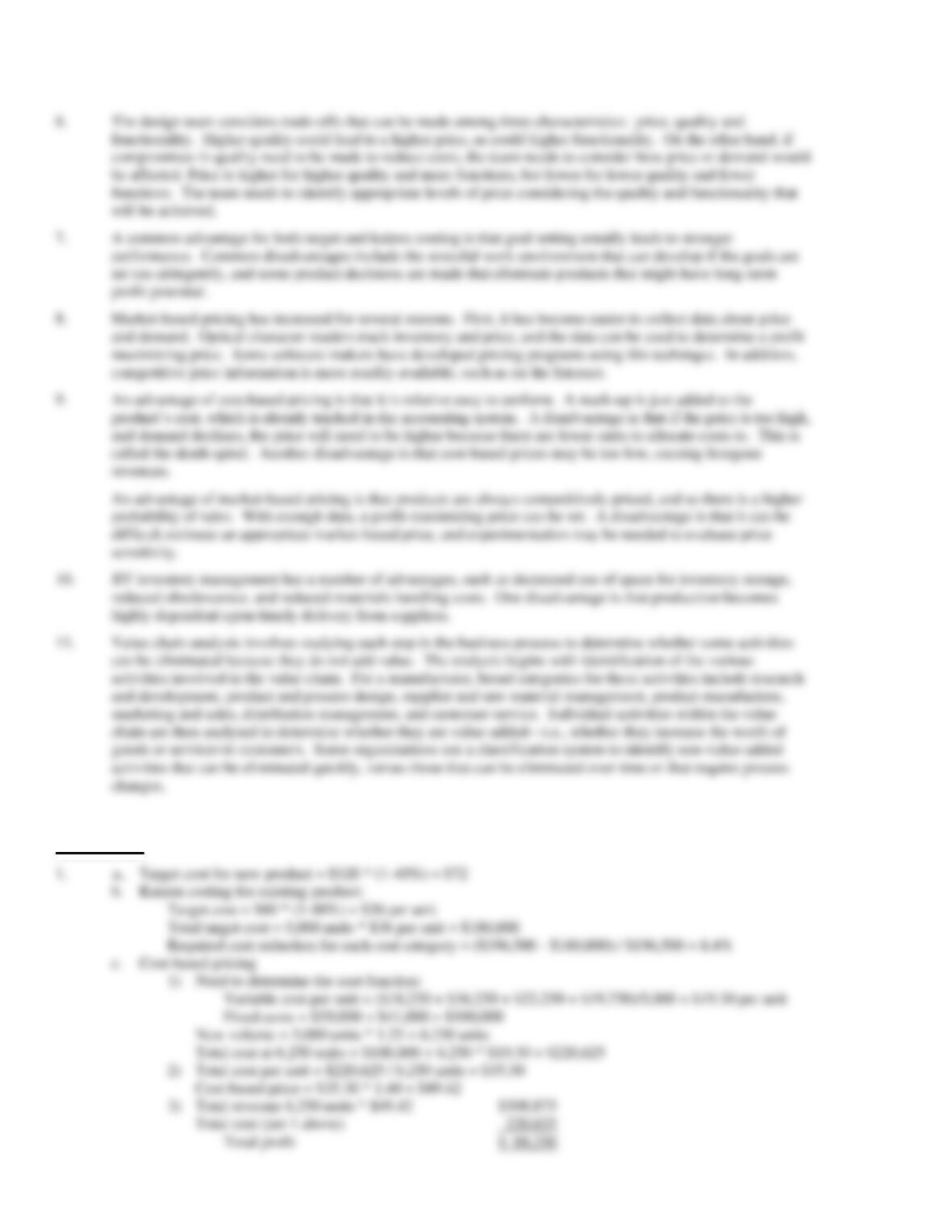
1. Describe market-based pricing and give an example of a product for which this pricing method would
be appropriate.
2. Describe cost-based pricing and give an example of a product for which this pricing method would be
appropriate.
3. Give a complete but concise explanation of the target costing cycle.
4. Compare and contrast target costing with kaizen costing.
5. Roland’s Recycling accepts and recycles or disposes of hazardous waste for the city. It charges the
city for waste disposal based on the amount of waste handled. Its contract specifies that the sites that
have been set up for waste drop-off will be cleaned up completely when the contract eventually
expires. The owners of Roland’s have been contacted by the county to set up a similar service for
people who live in the county. Roland’s accountant is preparing an analysis for the owners.
Recommend an appropriate costing method. Describe the method and explain the reasons for your
choice.
6. List the three product characteristics that a target costing design team would choose to enhance or
minimize as they make trade-offs to achieve the target cost. Describe two of the types of trade-offs
they may consider.
7. List one advantage and one disadvantage for using target and kaizen costing.
8. Explain why market-based pricing has increased in recent years.
9. List one advantage and one disadvantage for each of the following pricing methods: market-based
and cost-based.
10. List one advantage and one disadvantage of just-in–time inventory management.

Chapter 13: Joint Management of Revenues and Costs 13-21
11. Explain how value chain analysis helps managers identify value-added and non-value-added
activities.
Problems
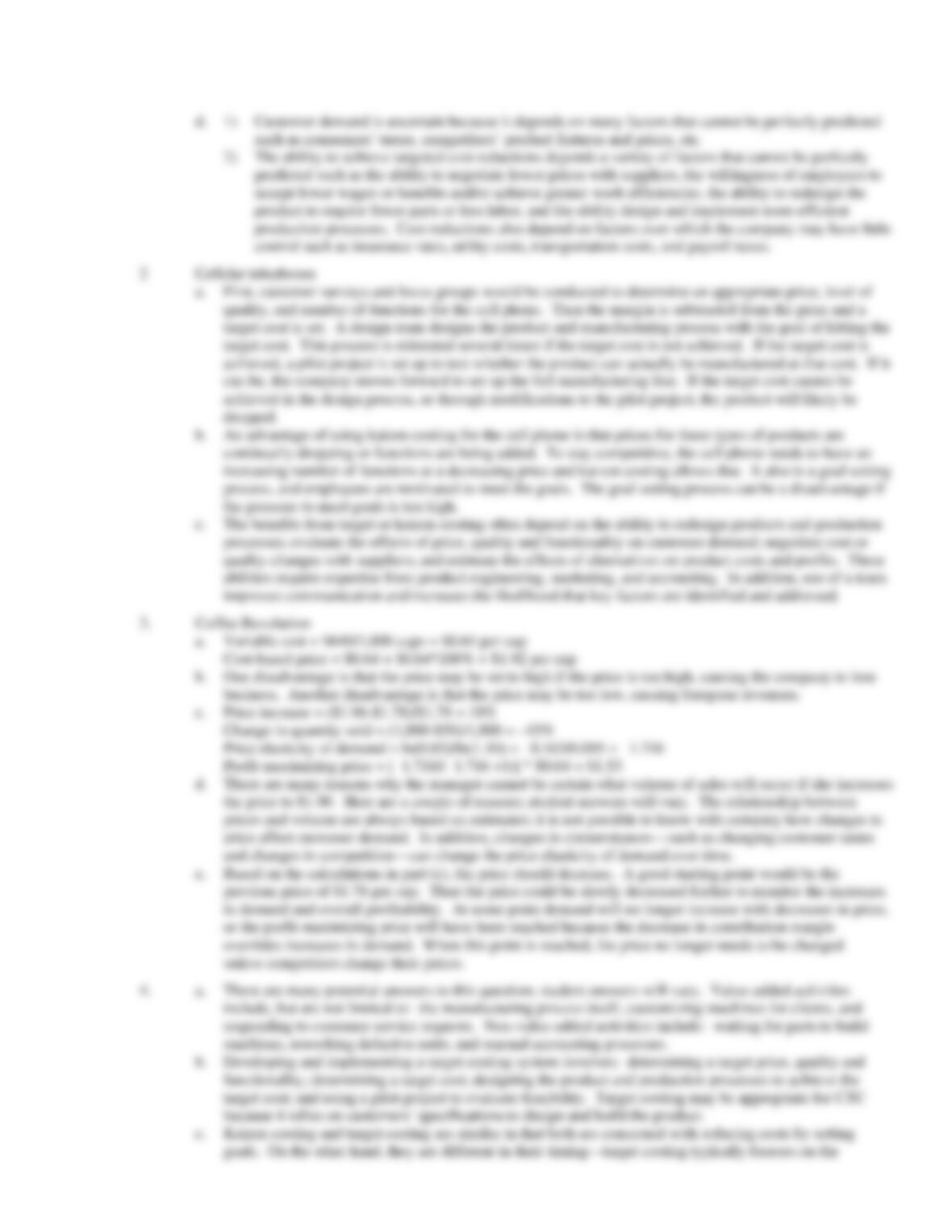
1. SRB Corporation manufactures and sells espresso machines for $80 each. In a recent accounting
period, SRB incurred the following costs to produce 5,000 espresso machines:
Direct material $ 18,250
Direct labor 36,250
Variable manufacturing overhead 22,250
Fixed manufacturing overhead 59,000
Variable nonmanufacturing costs 19,750
Fixed nonmanufacturing costs 41,000
Total $196,500
a. SRB’s marketing research department has proposed developing a better quality espresso machine,
which would sell for a price of $120. Top management will accept the proposal provided the
profit margin is 40%. Calculate the target cost per unit for the new wine racks.
b. Recent market research has suggested SRB should sell the existing espresso machines for $60
each. Calculate the percentage decrease required for each cost category listed above, assuming a
40% profit margin and proportional cost reduction across categories.
c. Ignore the information in part (b). SRB anticipates demand for its current espresso machines will
increase by 25% in the coming year. Assume that operations remain within the relevant range.
Calculate the following amounts assuming SRB uses a 40% markup on total cost (including per–
unit fixed costs) to determine product prices:
1) Total costs
2) Price per espresso machine
3) Total profit
d. Explain why each of the following is uncertain:
1) Expected customer demand for the espresso machines.
2) Ability to achieve the cost reduction identified in part (b).
2. Assume that you work for a cellular telephone manufacturer and have been assigned to the
development team for a new line of cell phones that includes a personal digital assistant, camera, and
music player. Assume that this type of cell phone was developed under the target costing system
approach rather than the traditional cost-plus approach.
a. Identify the steps you would take in the target costing cycle, using this cell phone as the product.
b. After the phone has been developed, kaizen costing will be used to improve quality and to reduce
costs in the future. List one advantage and one disadvantage of using kaizen costing for this type
of product (i.e., cell phones).
c. Explain why a team of personnel from product engineering, marketing, and accounting can
contribute to the success of a target or kaizen costing system.
3. The Coffee Revolution sells beverages in a variety of coffee flavors. Data for a recent week appear
below: Revenue (1,000 cups @ $1.78 each) $1,780
Cost of ingredients $640
Rent 500
Store attendant 360 1,500
Income $ 280
13-22 Cost Management
a. Suppose the company’s policy is to set prices based on a 200% markup above variable cost.
Calculate the cost-based price per cup.
b. Describe one disadvantage of the pricing policy described in part (a).
c. The manager estimates that if she were to increase the price of beverages from $1.78 to $1.96
each, weekly volume would be reduced to 850 cups. Estimate the profit-maximizing price per
cup. Use the following values in your computations as needed:
ln (0.1) = –2.303 ln (0.85) = –0.163 ln (1.1) = 0.095
ln (0.15) = –1.897 ln (0.9) = –0.105 ln (1.15) = 0.140
d. Explain why the manager cannot be certain what volume of sales will occur if she increases the
price to $1.96.
e. Should Coffee Revolution increase or decrease the current price? What advice can you give the
managers on making these changes? Why?
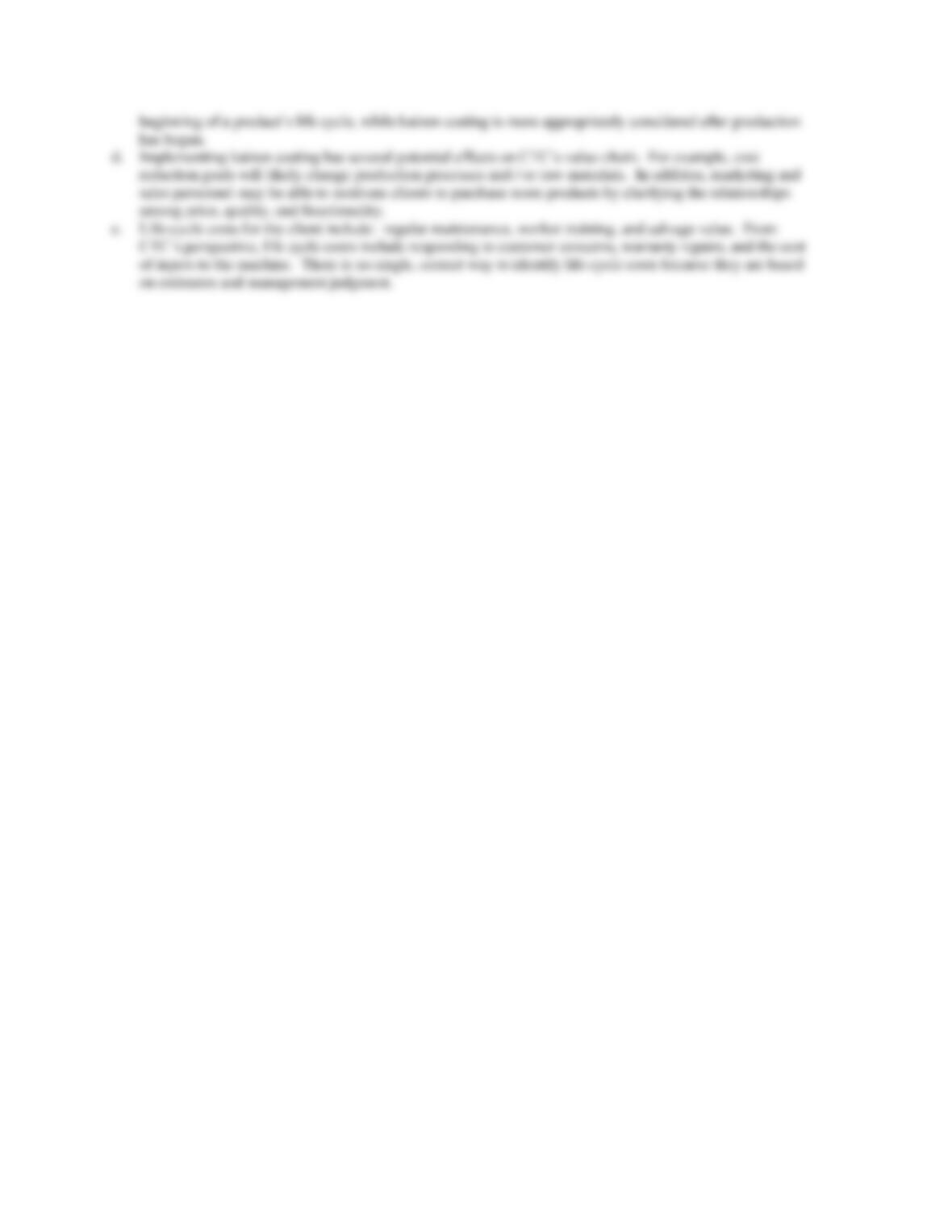
4. Capitol Trencher Corporation (CTC) builds and sells heavy equipment used for digging house
foundations and similar applications. It operates in a job costing environment where machines are
made to order. Average manufacturing time is 3 months, but can be as short as 1 month or as long as
6 months, depending upon the customer’s specifications.
CTC’s two engineers constantly seek new and better ways to manufacture the company’s equipment.
They also devote energy to improving the materials the company uses in its finished products. The
marketing and sales department has three employees, who focus on referrals from previous clients
and attend professional organizations, such as the local contractors association, to find potential
customers. Each machine CTC sells has a five-year warranty, during which customers can call the
engineering staff, the production staff, and/or the sales staff for assistance.
a. Using the preceding description and your own knowledge of business processes, identify one
activity the company might have that would be considered value-added. Identify another activity
the company might have that would be considered non-value-added.
b. A management consultant has suggested that CTC use a target costing system to improve its
profitability. Is target costing appropriate for CTC? Why or why not?
c. CTC’s vice president of manufacturing recently read an article about kaizen costing and has
asked your opinion about its application at CTC. List and discuss one similarity and one
difference between kaizen costing and target costing.
d. Suggest two specific ways the implementation of kaizen costing might affect CTC’s value chain.
e. Life cycle costing is a decision-making method that considers changes in price and costs over the
entire life cycle of a good or service. Consider a machine CTC recently sold to a long-time client.
From the client’s point of view, list one cost (other than the cost of the machine) associated with
the machine’s life cycle. List one life cycle cost from CTC’s perspective.
Chapter 13: Joint Management of Revenues and Costs 13-23
Answers
True / False
Multiple Choice
13-24 Cost Management
Matching
Exercises
Chapter 13: Joint Management of Revenues and Costs 13-25
Short Answer
13-26 Cost Management
Problems
Chapter 13: Joint Management of Revenues and Costs 13-27
13-28 Cost Management