Larson_Calculus_10e ch13sec06
MULTIPLE CHOICE
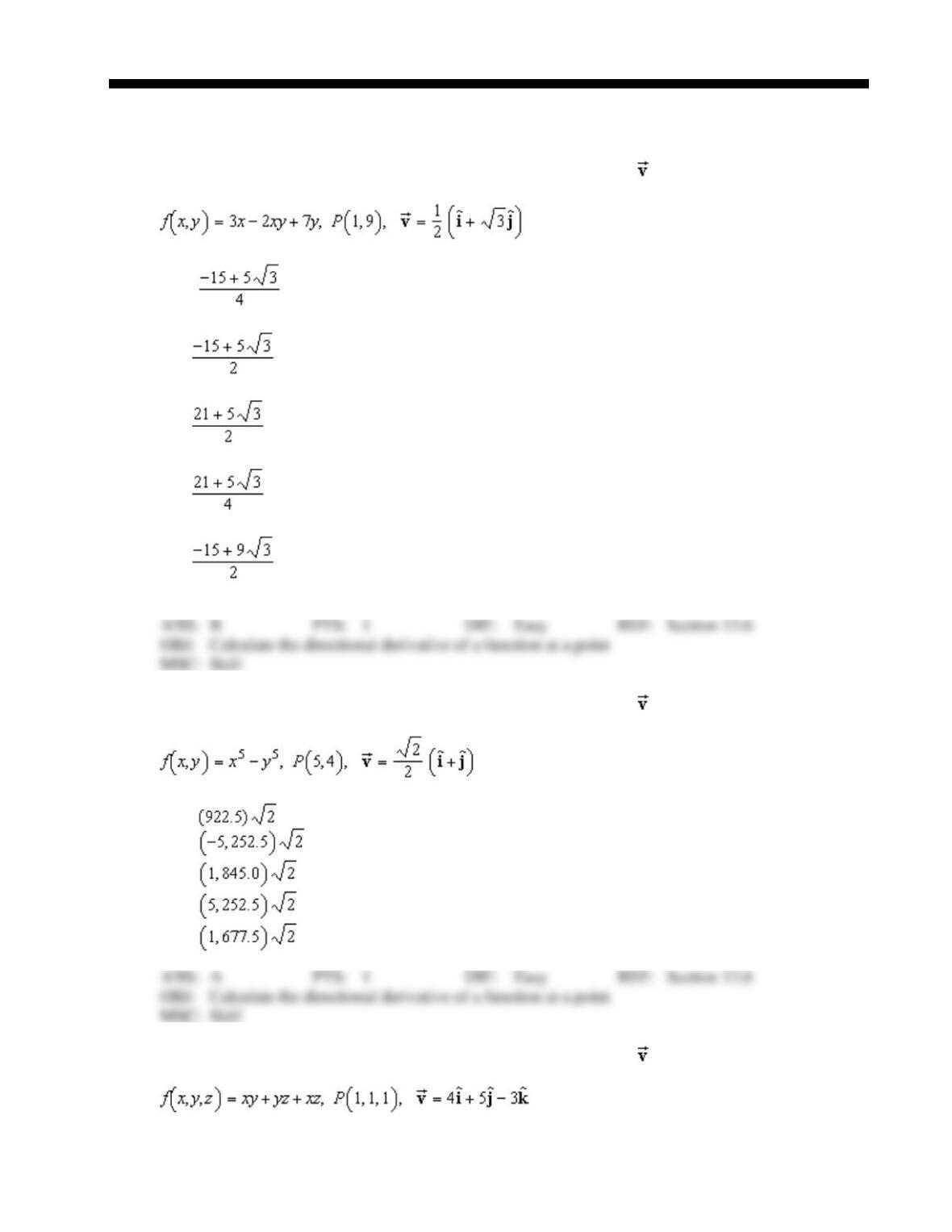
1. Find the directional derivative of the function at P in the direction of .
a.
b.
c.
d.
e.
2. Find the directional derivative of the function at P in the direction of .
a.
b.
c.
d.
e.
3. Find the directional derivative of the function at P in the direction of .
a.
4/
b.
–8/
c.
12/
d.
24/
e.
–24/
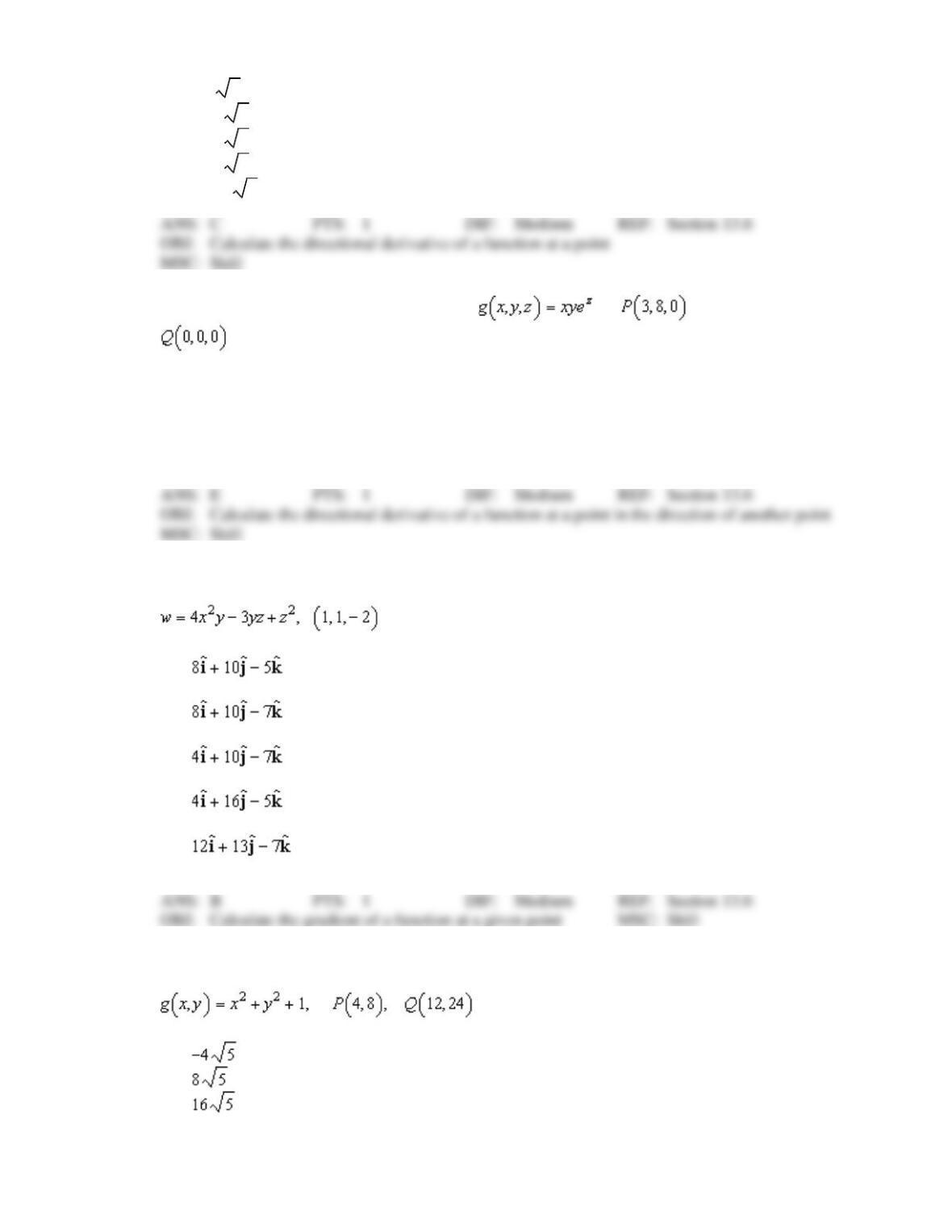
4. Find the directional derivative of the function at in the direction of
. Round your answer to two decimal places.
a.
–11.64
b.
–1.87
c.
–5.86
d.
–0.70
e.
–5.62
5. Find the gradient of the function at the given point.
a.
b.
c.
d.
e.
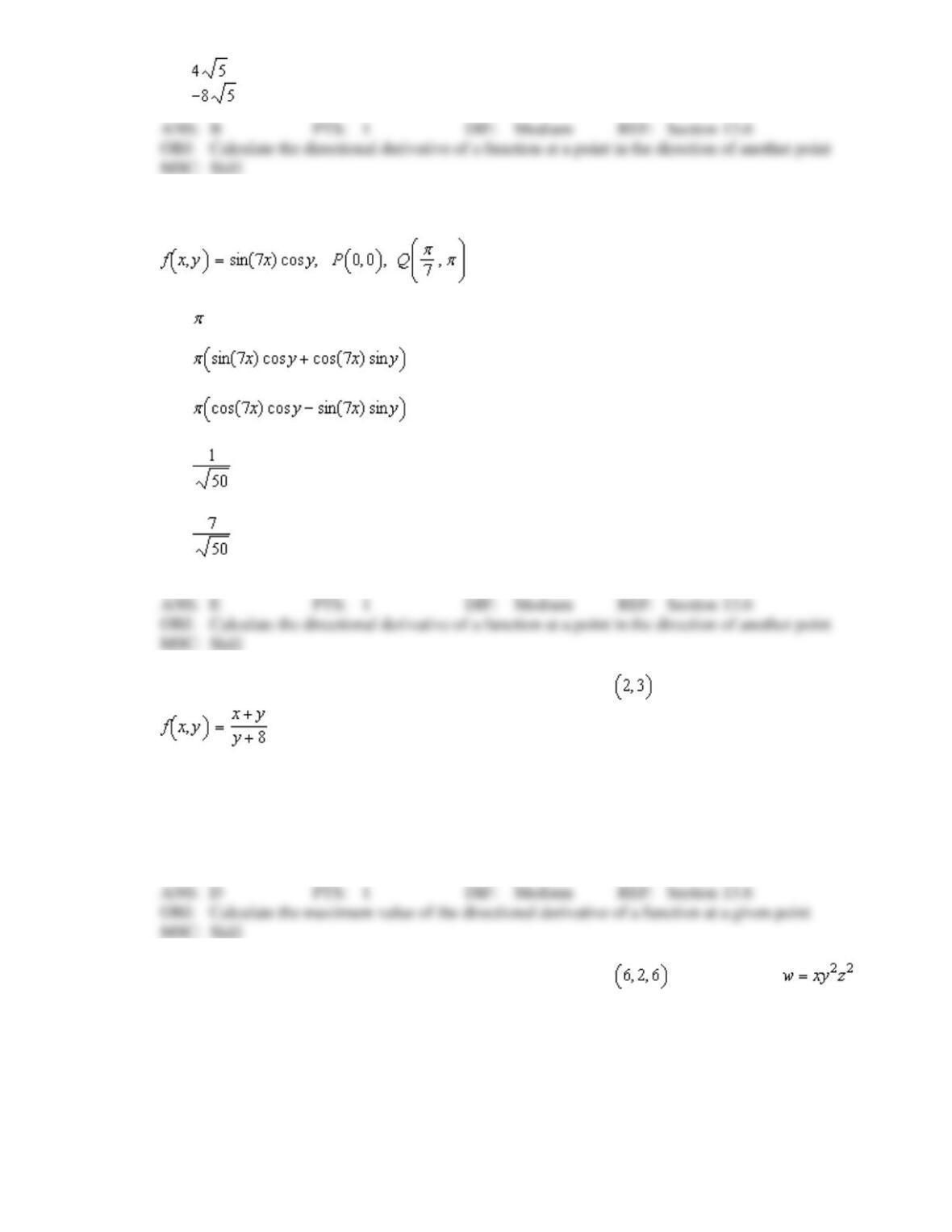
6. Use the gradient to find the directional derivative of the function at P in the direction of Q.
a.
b.
c.
5 2
5 2
5 2
5 2
5 2
d.
e.
7. Use the gradient to find the directional derivative of the function at P in the direction of Q.
a.
b.
c.
d.
e.
8. Find the maximum value of the directional derivative at the point of the function
. Round your answer to two decimal places.
a.
0.55
b.
0.14
c.
0.56
d.
0.10
e.
0.06
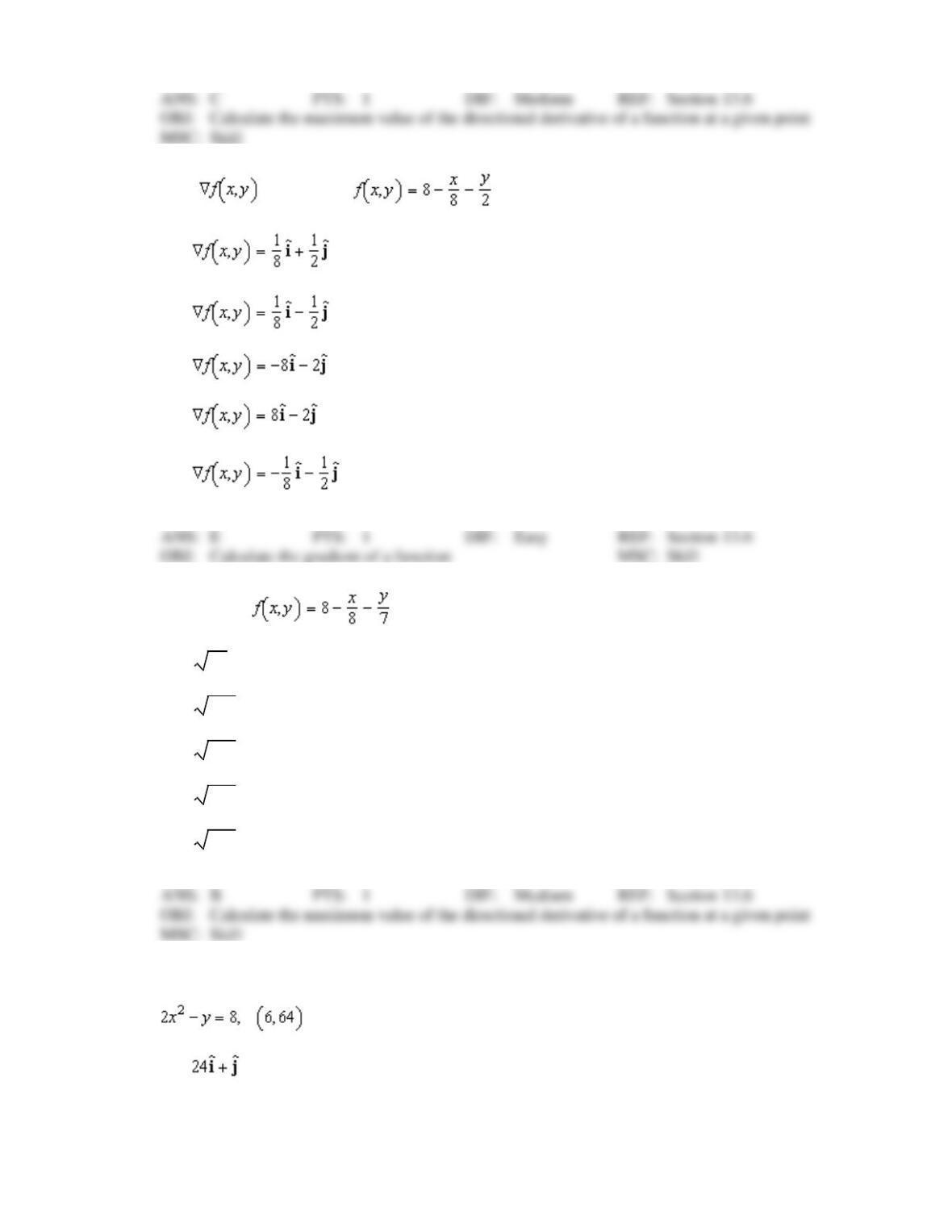
9. Find the maximum value of the directional derivative at the point of the function .
Round your answer to two decimal places.
a.
899.28
b.
814.59
c.
922.05
d.
933.23
e.
538.80
10. Find for function .
a.
b.
c.
d.
e.
11. For function , find the maximum value of the directional derivative at (3,2).
a.
/8
b.
/56
c.
/224
d.
/112
e.
/168
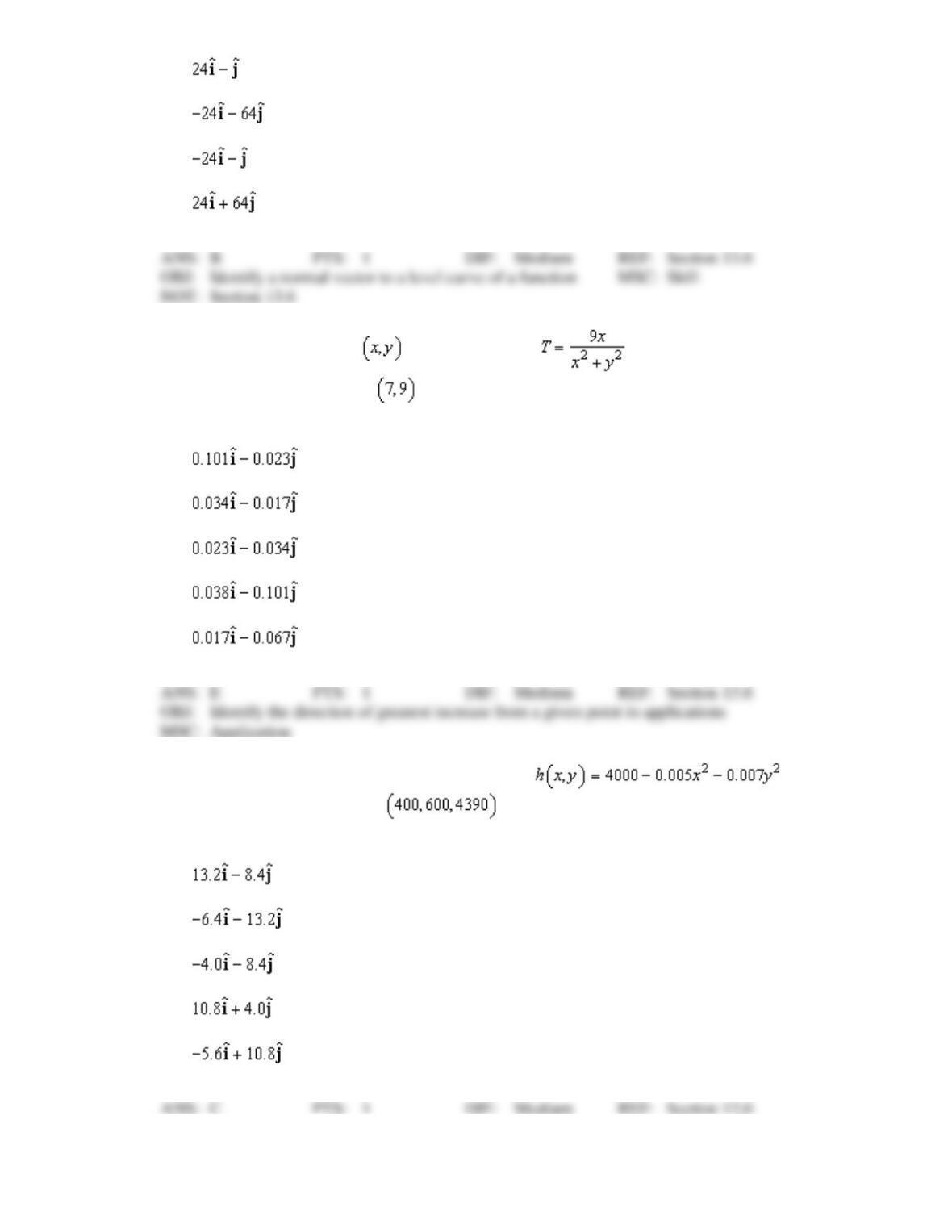
12. Use the gradient to find a normal vector to the graph of the equation at the given point.
a.
15
113
113
113
113
b.
c.
d.
e.
13. The temperature at the point on a metal plate is . Find the direction of greatest
increase in heat from the point . Round all numerical values in your answer to three decimal
places.
a.
b.
c.
d.
e.
14. The surface of a mountain is modeled by the equation . A
mountain climber is at the point . In what direction should the climber move in order
to ascend at the greatest rate? Round all numerical values in your answer to one decimal place.
a.
b.
c.
d.
e.
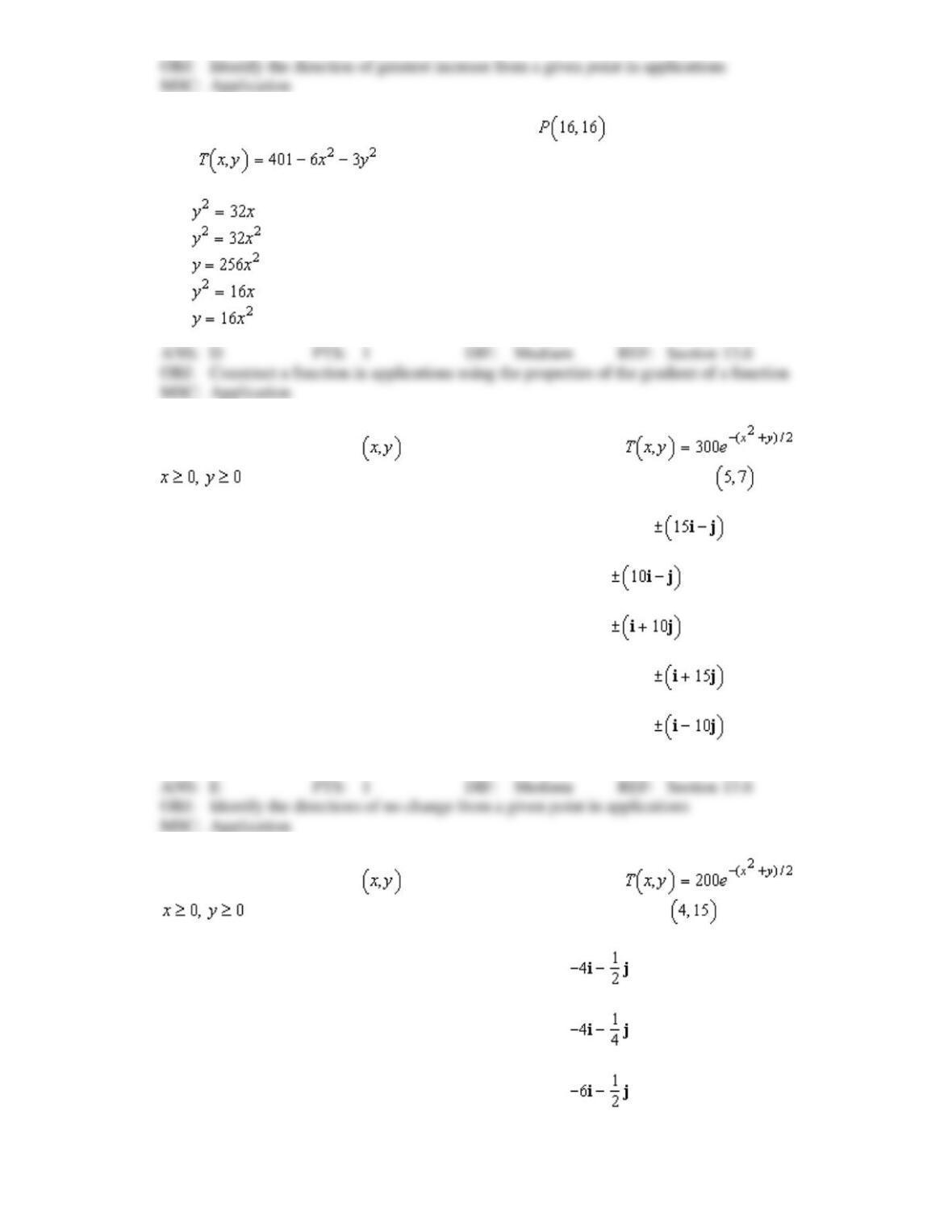
15. Find the path of a heat-seeking particle placed at point on a metal plate with a temperature
field .
a.
b.
c.
d.
e.
16. The temperature at the point on a metal plate is modeled by ,
. Find the directions of no change in heat on the plate from the point .
a.
There will be no change in directions perpendicular to the gradient .
b.
There will be no change in directions parallel to the gradient .
c.
There will be no change in directions parallel to the gradient .
d.
There will be no change in directions perpendicular to the gradient .
e.
There will be no change in directions perpendicular to the gradient .
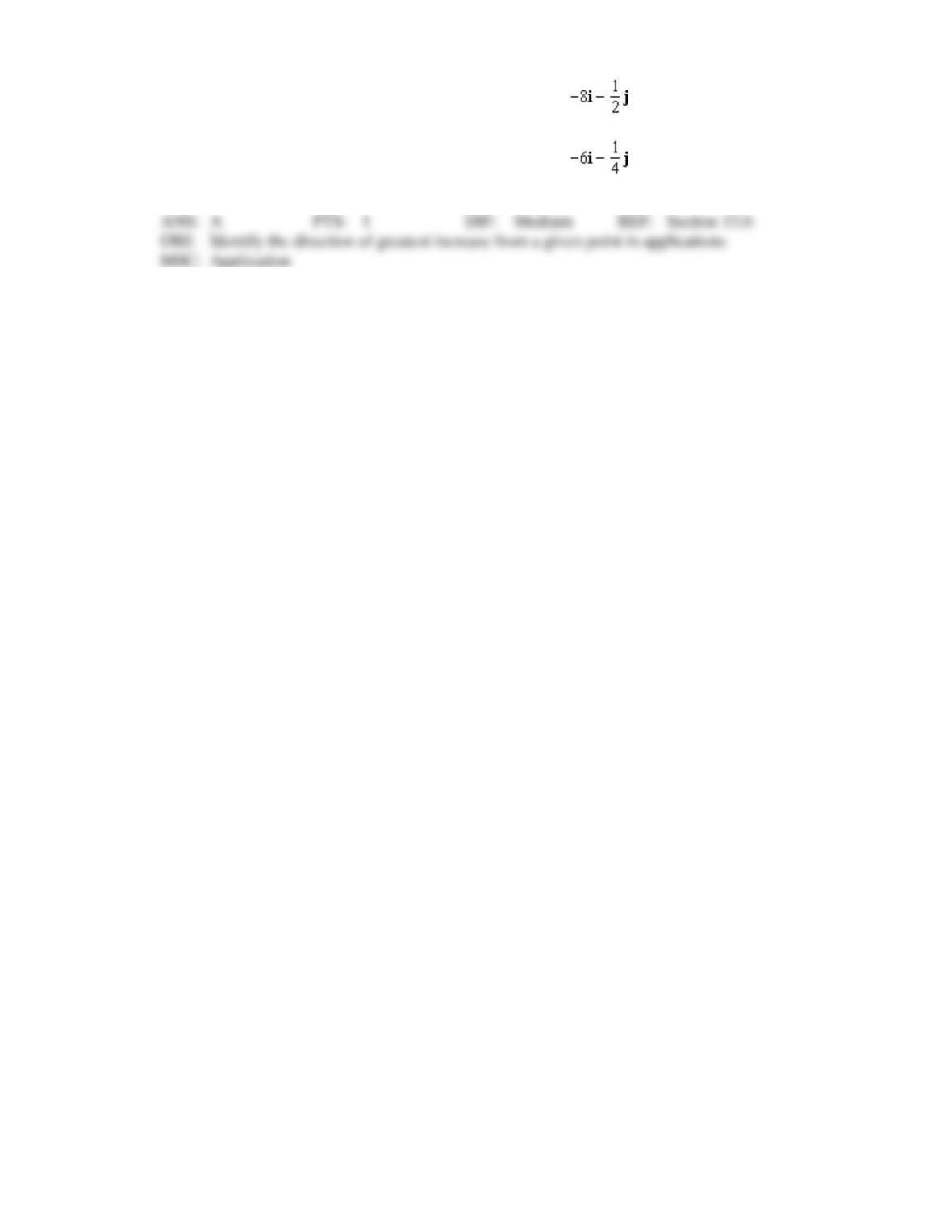
17. The temperature at the point on a metal plate is modeled by ,
. Find the direction of greatest increase in heat from the point .
a.
The greatest increase is in the direction of the gradient .
b.
The greatest increase is in the direction of the gradient .
c.
The greatest increase is in the direction of the gradient .
d.
The greatest increase is in the direction of the gradient .
e.
The greatest increase is in the direction of the gradient .