Chapter 13 Test Bank KEY
1. Prior to the 1930s, union membership growth was relatively
2. “Yellow-dog contracts”
3. A court order to prevent actions such as picketing, striking, and boycotting is called a(n)
4. The “twin rights” of labor (self-organization and collective bargaining) were guaranteed by the
5. Of the following laws, which one contributed most to union membership?
6. Which of the following outlawed company unions?
7. Which of the following gave states the option to pass so-called “right-to-work” laws?
8. Public sector union growth was most encouraged by
9. According to the Taft-Hartley Act, which of the following is not an unfair labor practice by unions?
10. The Landrum-Griffin Act
11. Which one of the following laws most dramatically increased union bargaining power?
12. The prohibition of secondary boycotts
13. Which of the following increased management’s bargaining power?
14. Which of the following established unfair labor practices by unions?
15. Which of the following established unfair labor practices by employers?
16. According to the Wagner Act, which of the following is not an unfair labor practice by employers?
17. Which one of the following required unions to hold regularly scheduled elections of union officers?
18. The federally mandated minimum wage
19. A majority of the workers earning the minimum wage
20. Refer to the diagram below, which shows a competitive low-wage labor market.
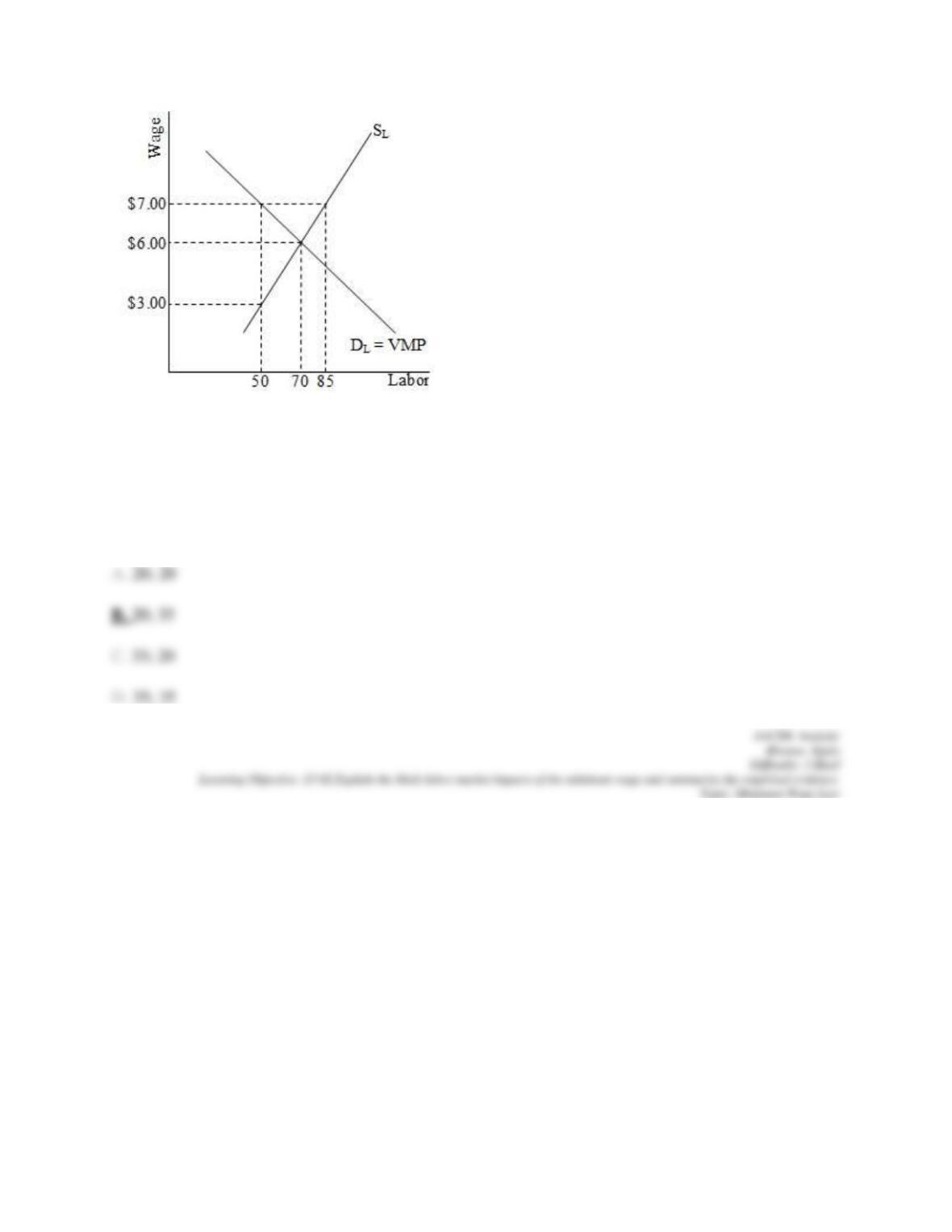
Consider the diagram. Suppose the government establishes a minimum wage of $7.00 in this market.
Employment would decline by _____ workers, and unemployment would increase by _____ workers.
21. Refer to the diagram below, which shows a competitive low-wage labor market.
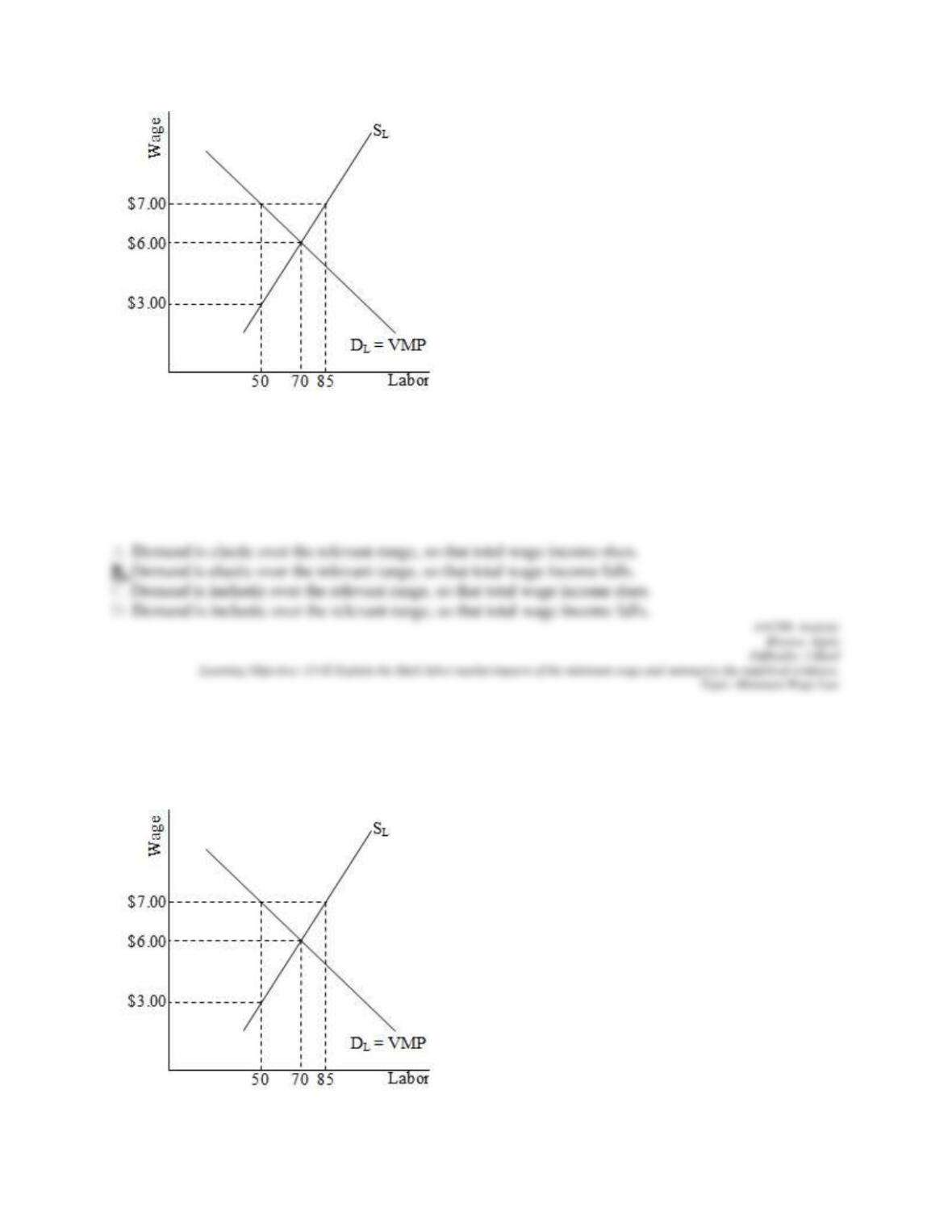
Consider the diagram. Suppose the government establishes a minimum wage of $7.00 in this market.
Which of the following is a true statement?
22. Refer to the diagram below, which shows a competitive low-wage labor market.
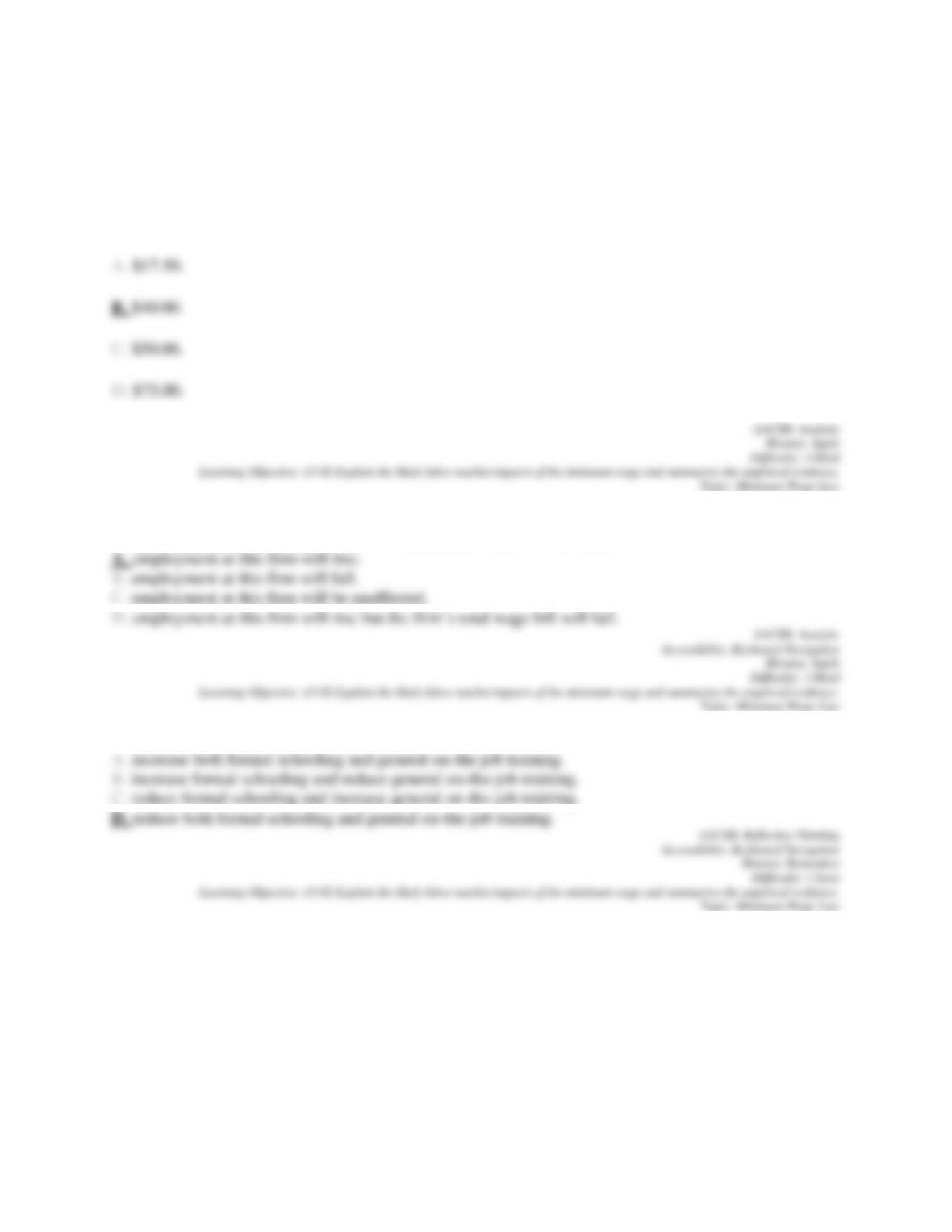
Consider the diagram. Suppose the government establishes a minimum wage of $7.00 in this market. If all
displaced workers subsequently contribute an amount equal to their next most productive employment,
the net loss of domestic output is
23. A monopsonist is currently paying its 1,000 workers $5.00 per hour. However, its marginal wage cost
is $6.00 per hour. If the government sets a minimum wage of $5.50, then
24. Increases in the minimum wage tend to
25. Refer to the following diagram.
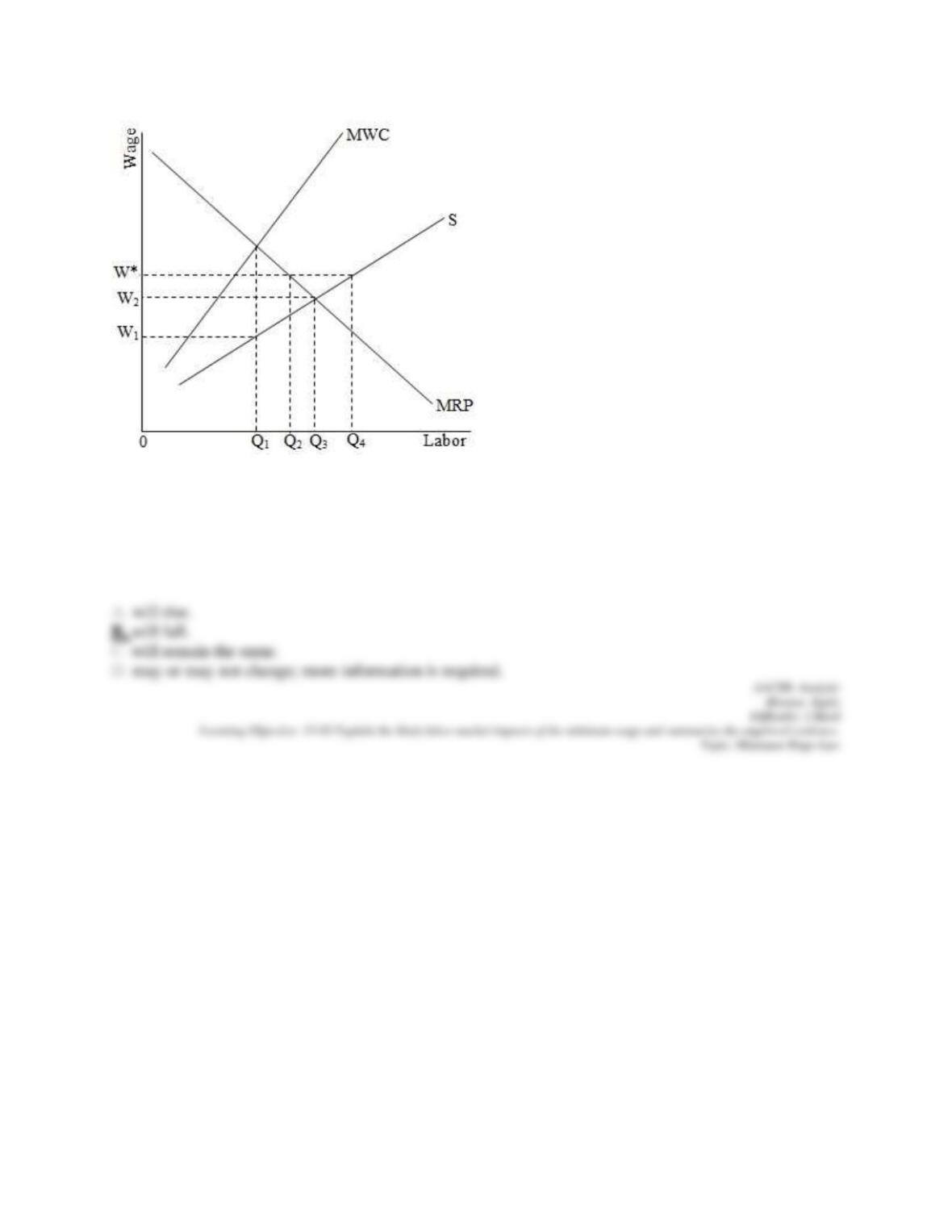
Suppose this labor market is competitive, so that the wage rate is W2 and employment is Q3. If W* is
imposed as the minimum wage, then employment in this market
26. Refer to the following diagram.
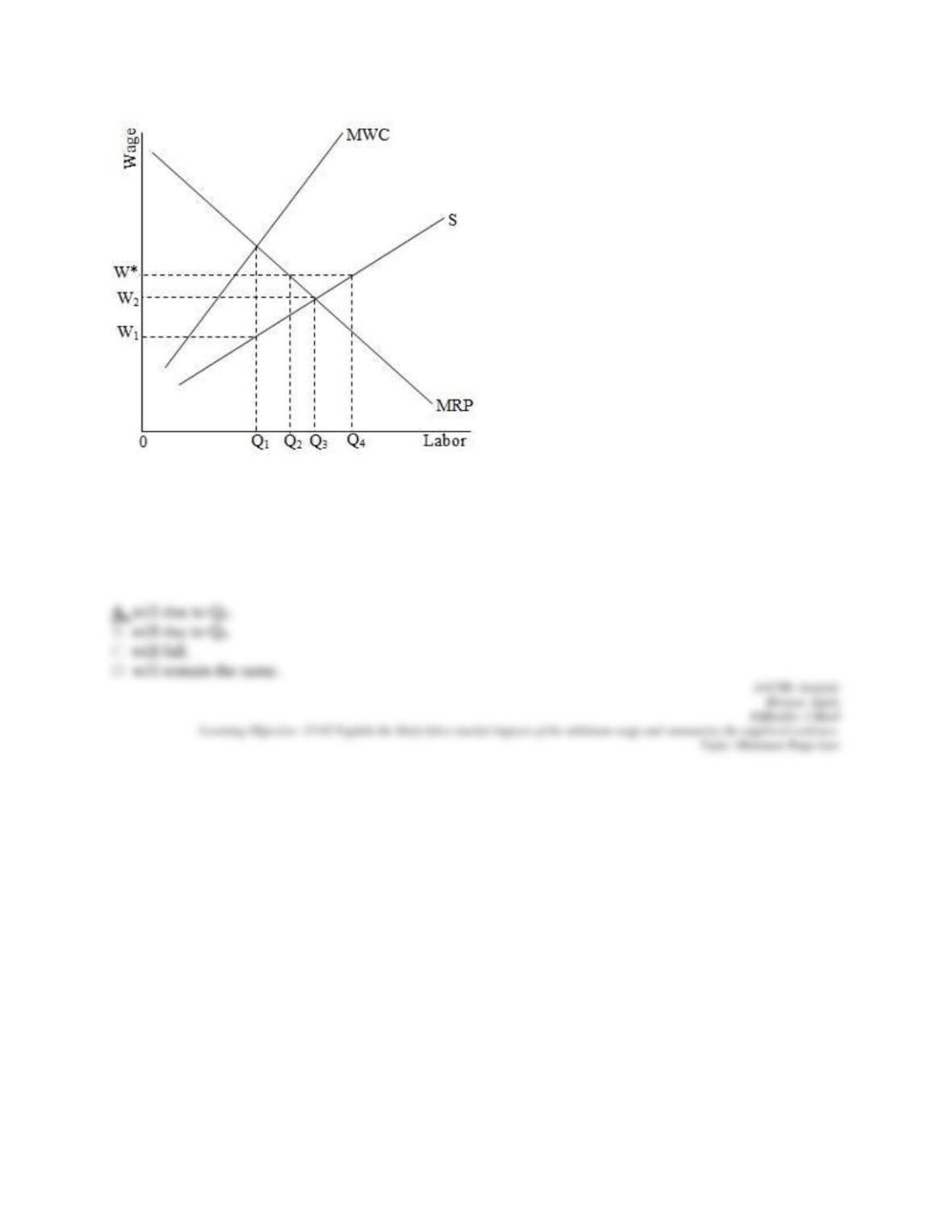
Suppose this labor market is monopsonistic, so that the wage is W1 and employment is Q1. If W* is
imposed as the minimum wage, then employment in this market
27. Refer to the following diagram.
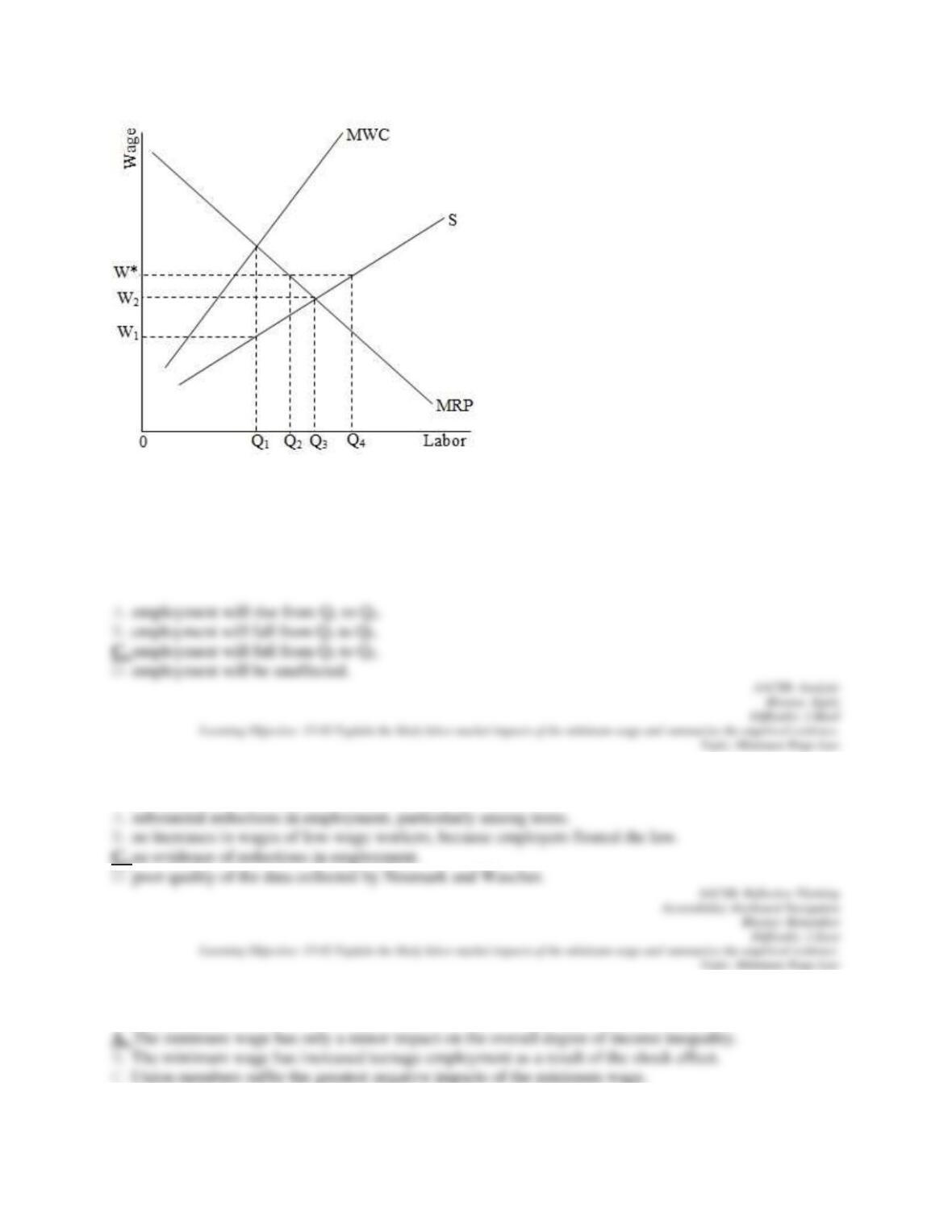
Suppose this firm is a perfectly discriminating monopsonist. If W* is imposed as the minimum wage,
then
28. Examining evidence on the impacts of increases in state minimum wages in New Jersey and
California, Card and Krueger found
29. Which one of the following claims concerning the minimum wage is generally supported by empirical
evidence?
30. The provision of job safety is generally subject to the law of diminishing returns, which implies that
31. Firms will reduce job safety as long as
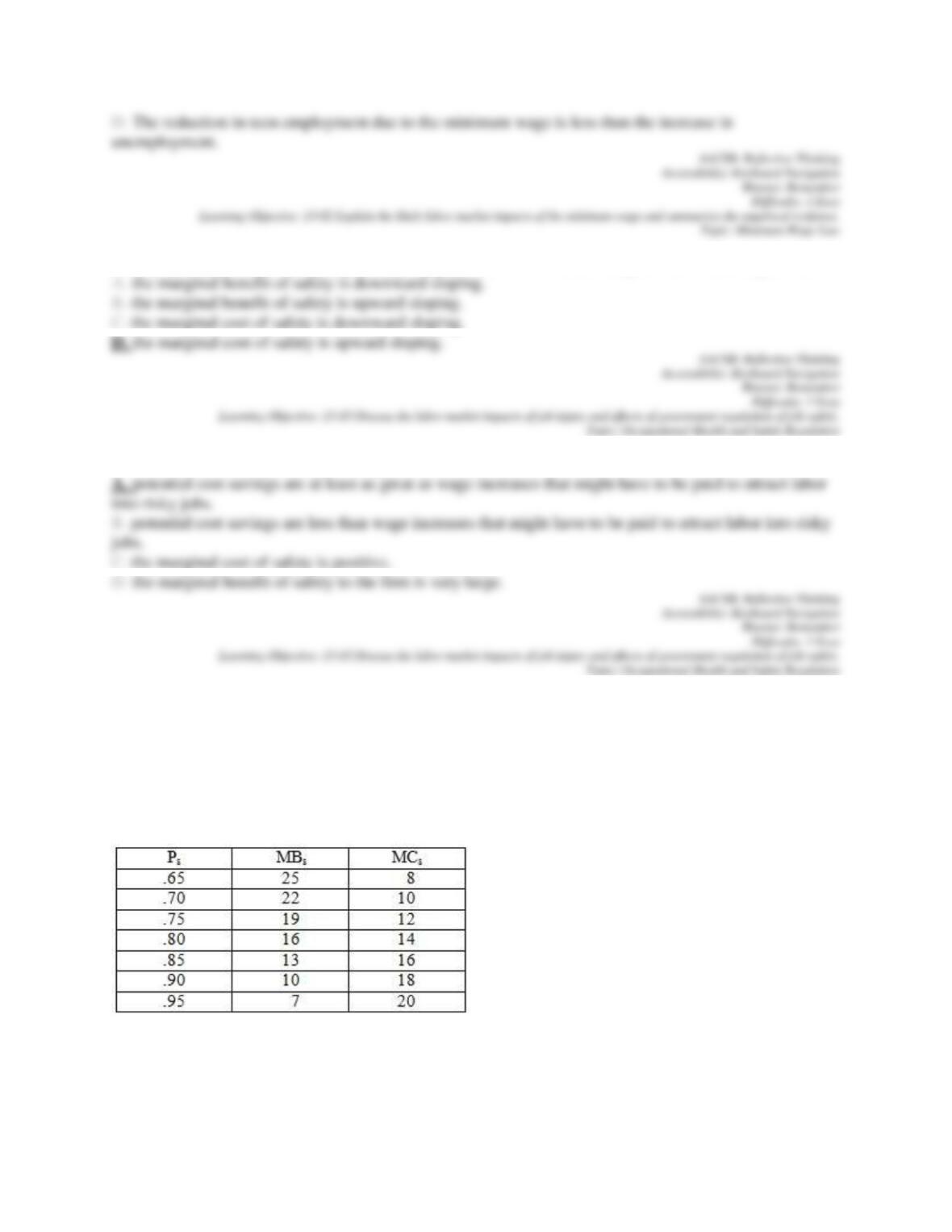
32. Refer to the following table, in which MBs and MCs are the marginal benefit and marginal cost of
safety, respectively. Ps is the probability that a worker will not suffer an injury on the job during a one-
year period and is thus a measure of job safety.
The profit-maximizing level of job safety is a probability level of
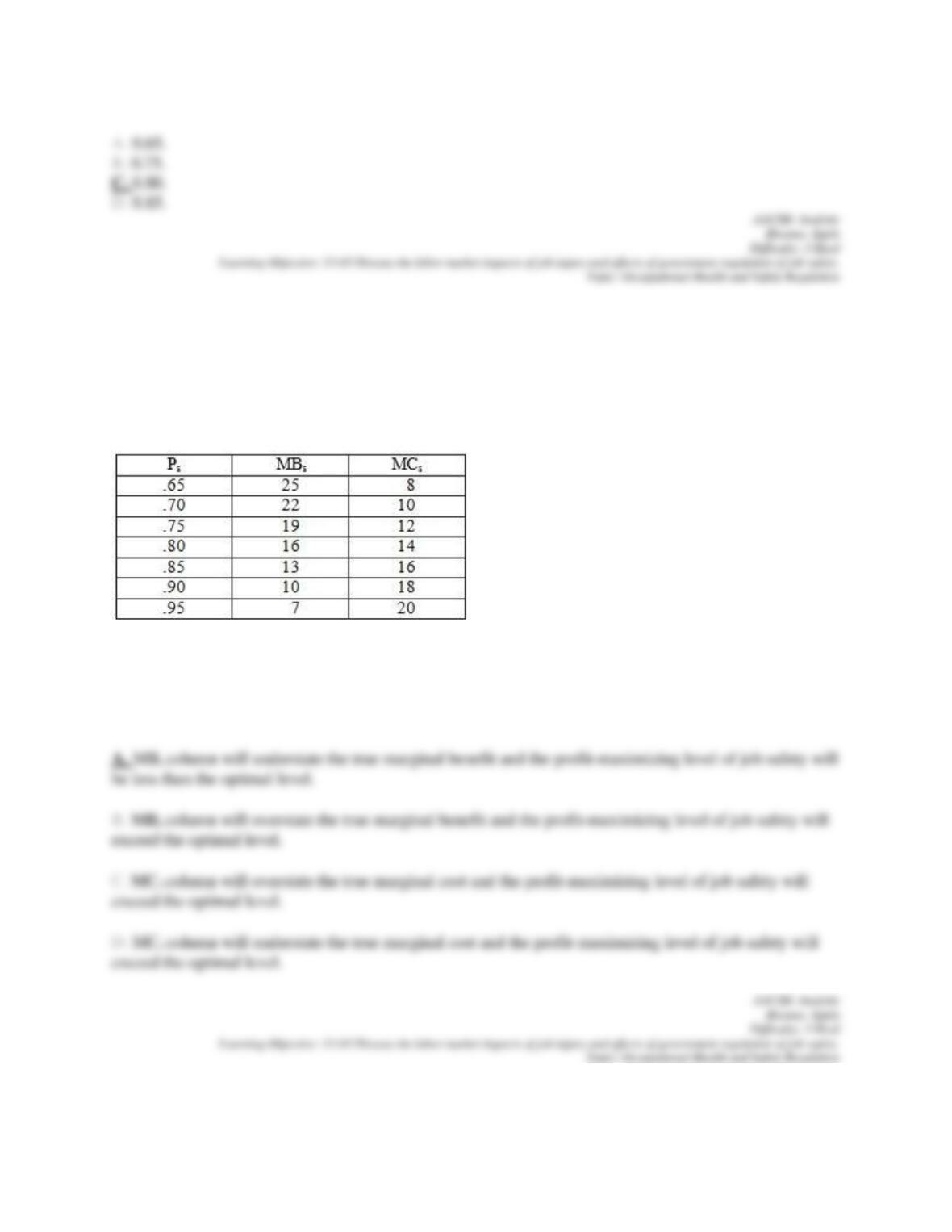
33. Refer to the following table, in which MBs and MCs are the marginal benefit and marginal cost of
safety, respectively. Ps is the probability that a worker will not suffer an injury on the job during a one-
year period and is thus a measure of job safety.
If workers underestimate the actual amount of risk associated with the job because of imperfect
information, the values in the
34. Which of the following best describes the amount of job safety?
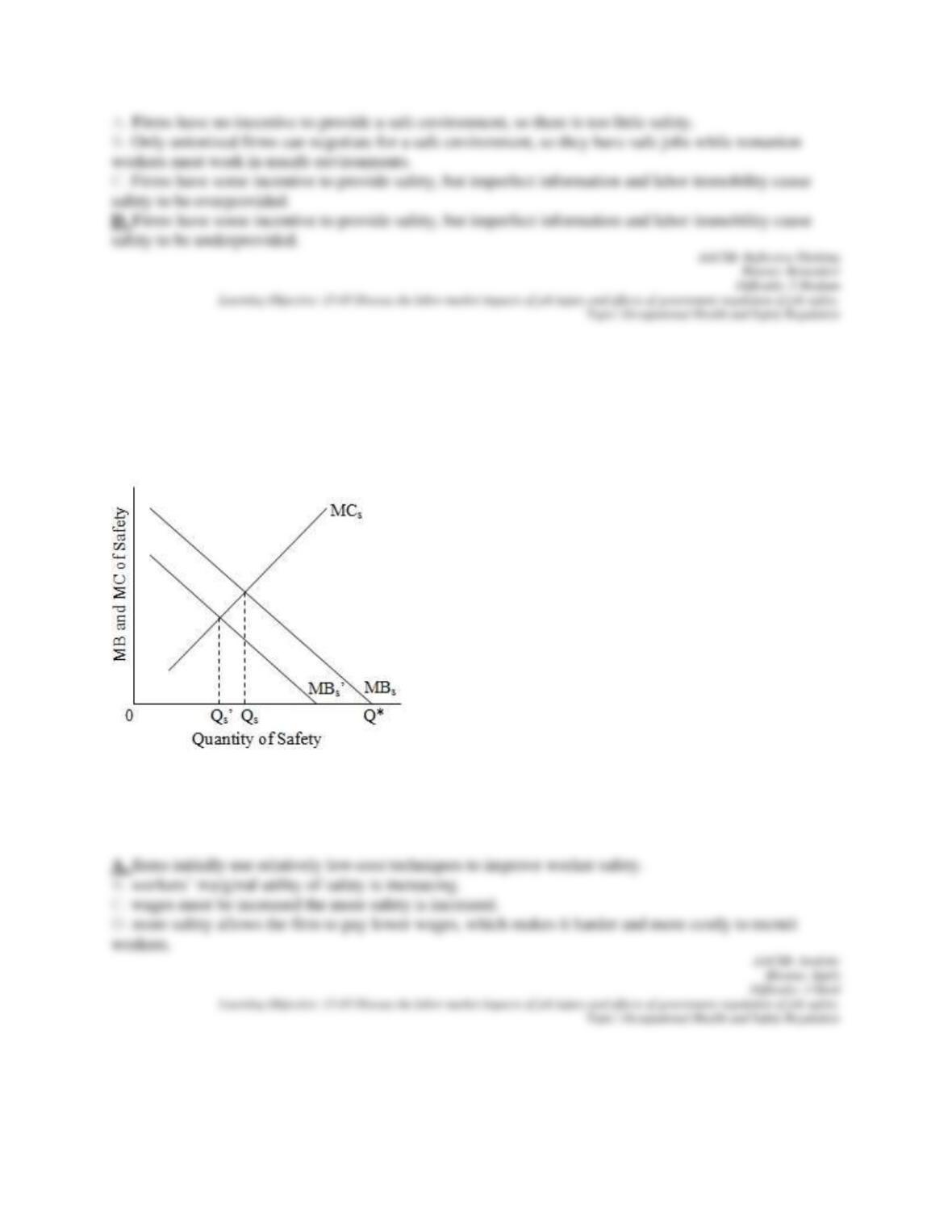
35. Refer to the following diagram. MCs is the firm’s marginal cost of providing safety, while MBs is the
marginal benefit to society of one more unit of safety. Because of imperfect information and costly
worker mobility, MBs’ is the firm’s perceived marginal benefit of safety.
The MCs curve is upward sloping because
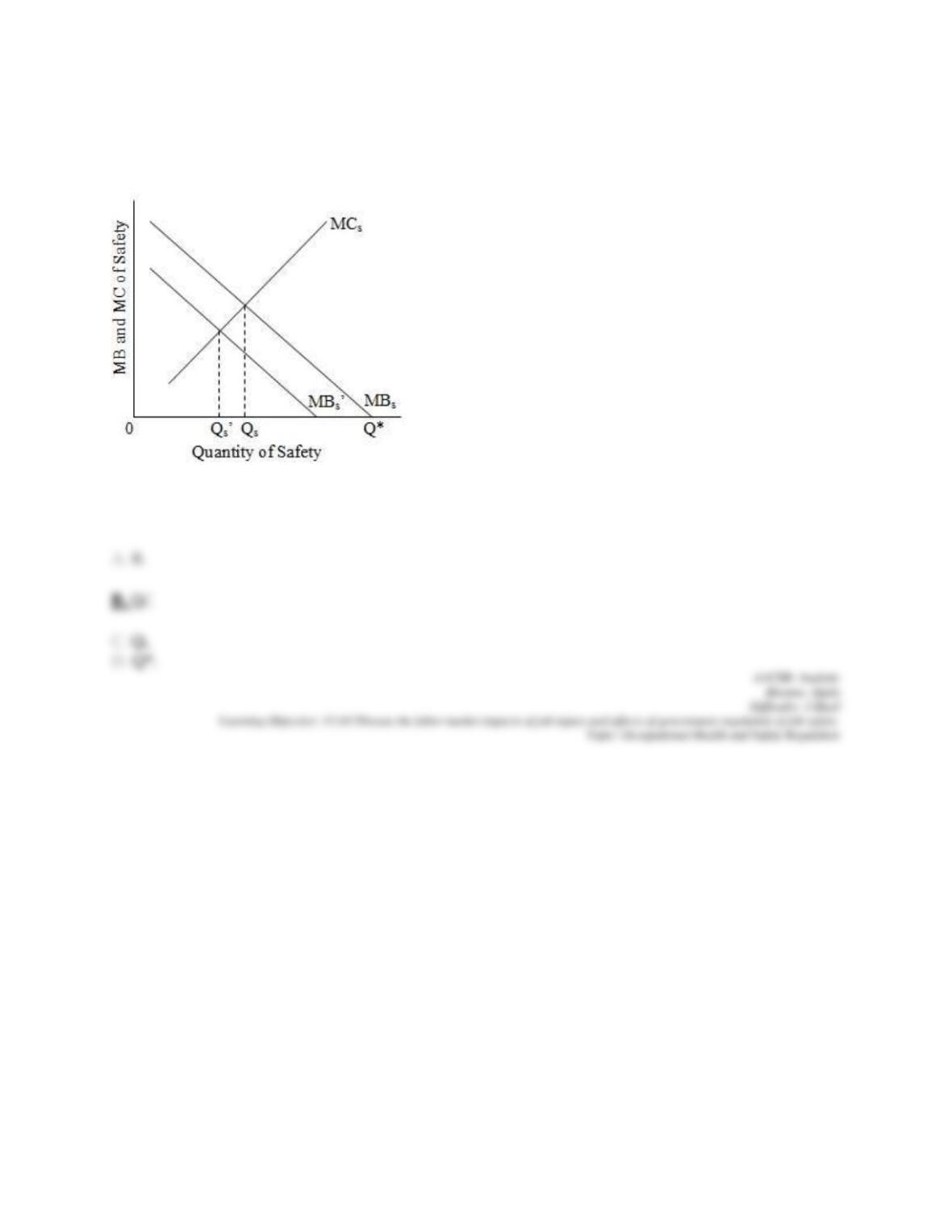
36. Refer to the following diagram. MCs is the firm’s marginal cost of providing safety, while MBs is the
marginal benefit to society of one more unit of safety. Because of imperfect information and costly
worker mobility, MBs’ is the firm’s perceived marginal benefit of safety.
The firm’s profit-maximizing level of safety is
37. Refer to the following diagram. MCs is the firm’s marginal cost of providing safety, while MBs is the
marginal benefit to society of one more unit of safety. Because of imperfect information and costly
worker mobility, MBs’ is the firm’s perceived marginal benefit of safety.
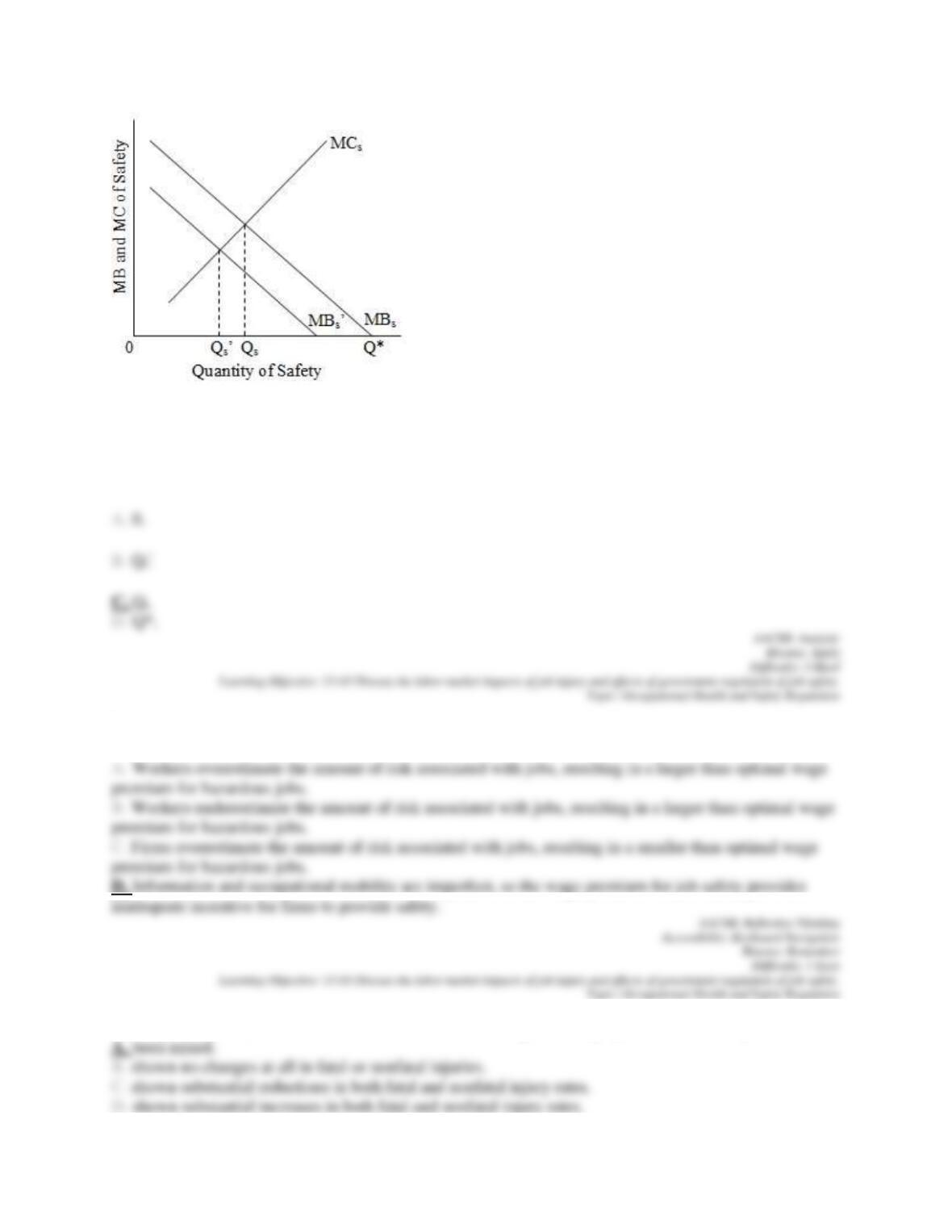
From society’s standpoint, the optimal level of safety is
38. Which of the following is given as a justification of the health and safety standards established by
OSHA?
39. Empirical estimates of OSHA’s effectiveness at reducing risk of injury and death on the job have
40. If OSHA were to become increasingly effective in reducing workplace hazards, then
41. Consider a proposed law to deregulate the hair care industry. Barbers would be allowed to do work
previously confined to stylists, and the latter would no longer be required to pass strict licensure exams.
Which outcome would you expect to result from this deregulation?
42. Suppose a state law is passed which prohibits the state liquor board from issuing any new liquor
licenses. (Such licenses are required to sell liquor.) The law would allow prospective tavern operators to
purchase an existing license on the open market from a willing current owner of such a license. Which
outcome would you expect to result from this regulation?
43. Refer to the following diagram.
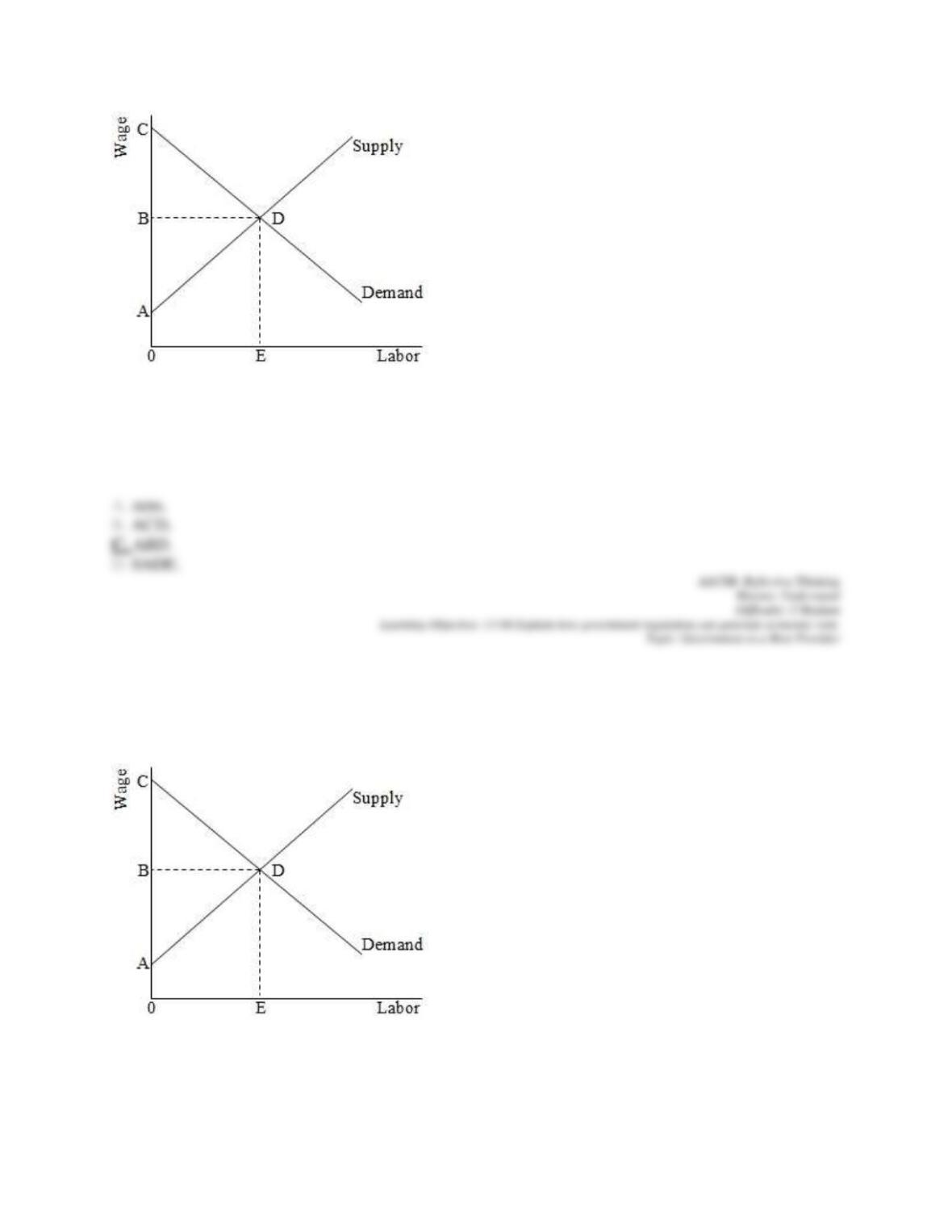
The collective amount of economic rent being earned by workers in this competitive market is
44. Refer to the following diagram.
Suppose this represents the market for U.S. autoworkers. If the government were to pass legislation
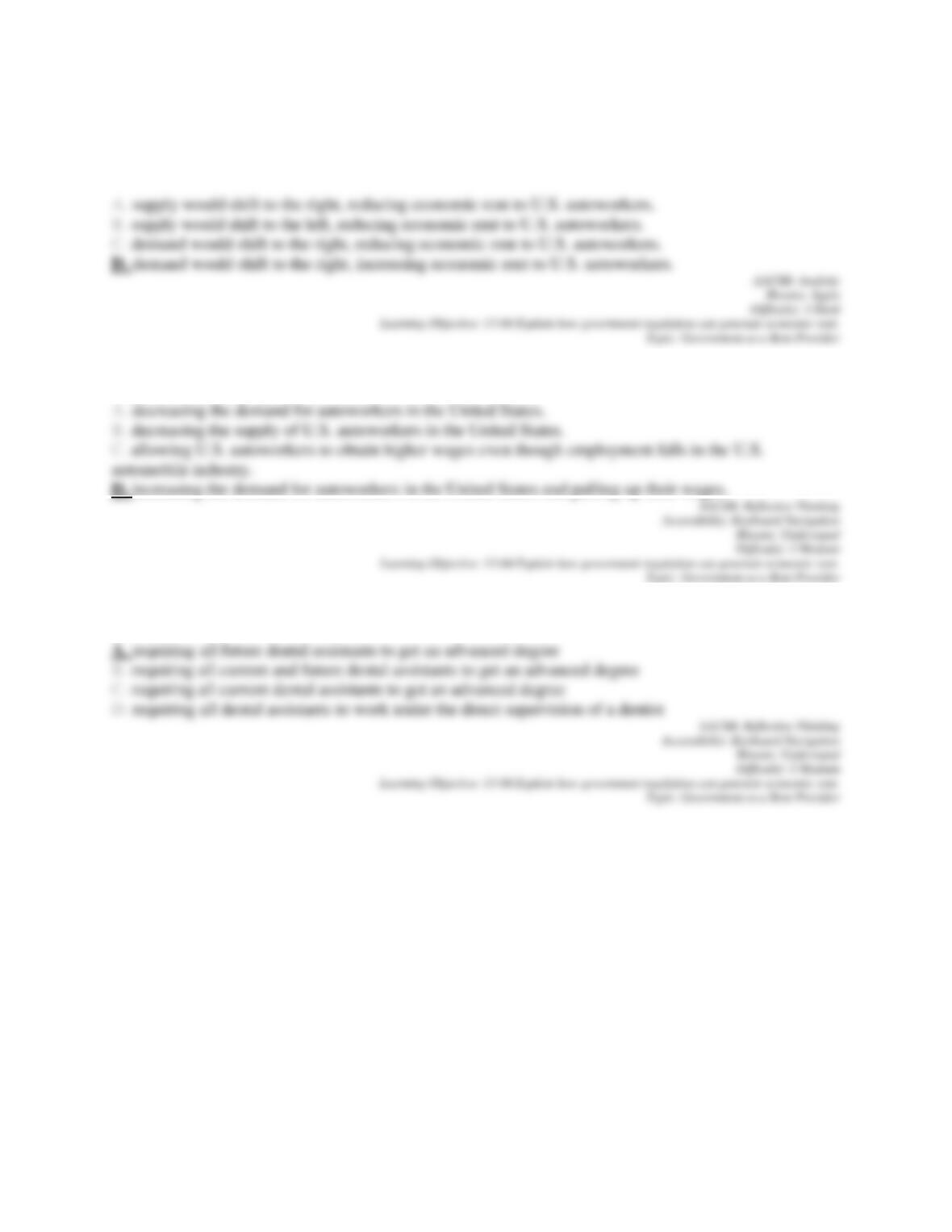
mandating that all vehicles sold in the United States contain at least 50% domestically produced or
assembled components, then
45. A “domestic content” law for automobiles would increase the economic rent of workers in the U.S.
automobile industry by
46. Which of the following would unambiguously increase the economic rent of current dental
assistants?
47. Refer to the following diagram.
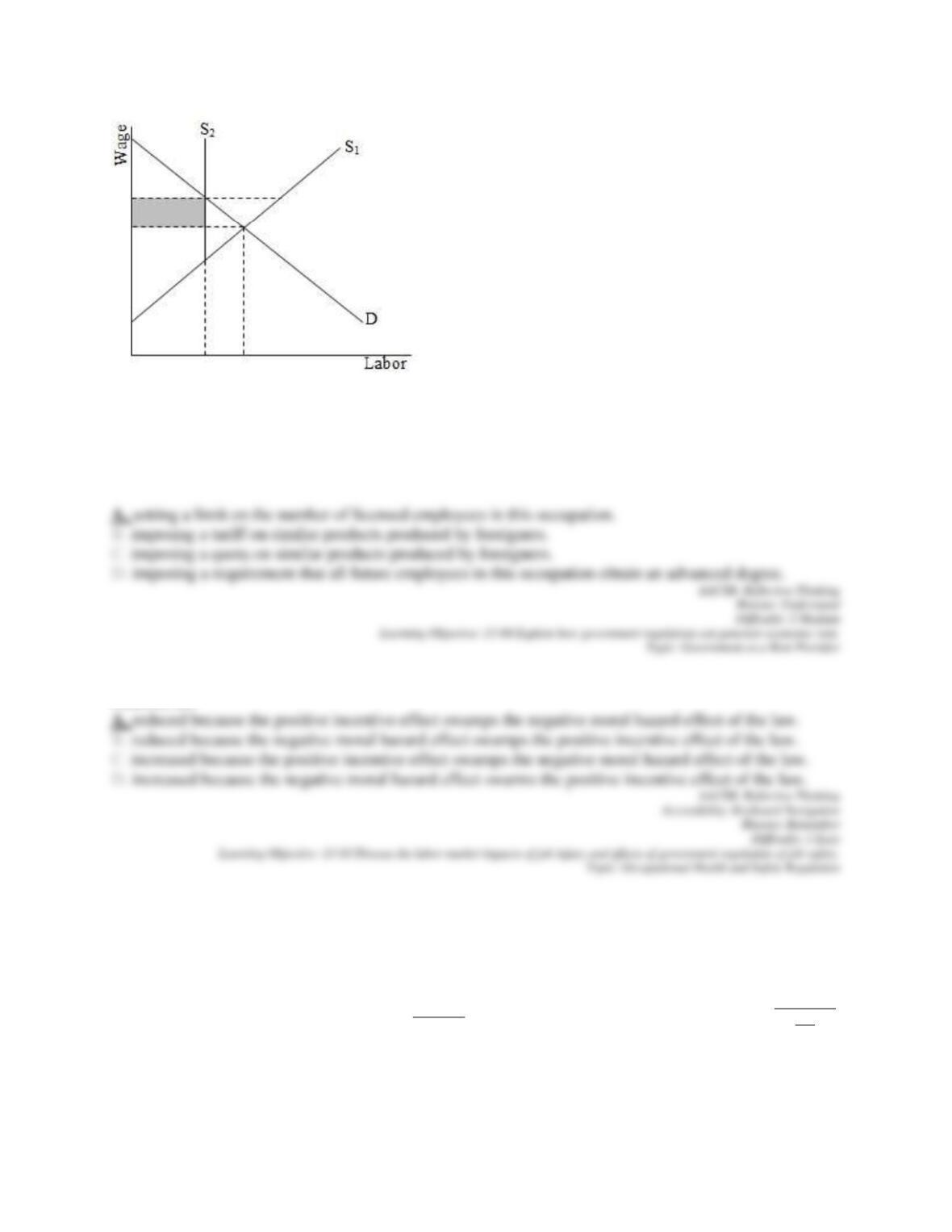
The increase in economic rent shown in the diagram is consistent with
48. With respect to workers? compensation insurance, research by Moore and Viscusi indicates that job
fatalities are
Chapter 13 Test Bank Summary
Category
# of Questi
ons
AACSB: Analytic
13
AACSB: Reflective Thinking
35
Accessibility: Keyboard Navigation
33
Blooms: Apply
13
Blooms: Remember
28
Blooms: Understand
7
Difficulty: 1 Easy
27
Difficulty: 2 Medium
8
Difficulty: 3 Hard
13
Learning Objective: 13-
01 Explain the effects of the major labor laws on union bargaining power and union me
mbership.
17
Learning Objective: 13-
02 Explain the likely labor market impacts of the minimum wage and summarize the e
mpirical evidence.
12
Learning Objective: 13-
03 Discuss the labor market impacts of job injury and effects of government regulation
of job safety.
12
Learning Objective: 13-
04 Explain how government regulation can generate economic rent.
7
Topic: Government as a Rent Provider
7
Topic: Labor Law
17
Topic: Minimum Wage Law
12
Topic: Occupational Health and Safety Regulation
12