c.
Would require active intervention by the government
d.
Both a and b
54. The classical gold standard
a.
Existed from early 1800’s to early 1900’s
b.
Did not allow for imports and exports of gold
c.
Led to the outflow of gold from surplus nations
d.
Led to the inflow of gold to deficit nations
a
Easy
United States – BPROG: Reflective Thinking – BPROG: Analysis
United States – PA – DISC: International trade and fi – DISC: International trade and finance
Price Adjustments
BLOOM’S: Knowledge
55. The classical economists assumed
a.
That the volume of final output is fixed at the full-employment level in the long-run
b.
The velocity of money is constant
c.
The velocity of money depends on physical, structural, and institutional factors
d.
All of the above
Moderate
United States – BPROG: Reflective Thinking – BPROG: Analysis
United States – PA – DISC: International trade and fi – DISC: International trade and finance
Income Adjustments
BLOOM’S: Comprehension
56. Under a fixed exchange rate system, adjustment mechanisms work for the automatic return to current-account balance
after the initial balance has been disrupted.
a.
True
b.
False
True
Easy
United States – BPROG: Reflective Thinking – BPROG: Analysis
United States – PA – DISC: International trade and fi – DISC: International trade and finance
Price Adjustments
a
Moderate
United States – BPROG: Reflective Thinking – BPROG: Analysis
United States – PA – DISC: International trade and fi – DISC: International trade and finance
Income Adjustments
BLOOM’S: Comprehension
57. When a country’s current account moves into disequilibrium, automatic adjustments in tariffs and quotas occur which
move the current account back into equilibrium.
a.
True
b.
False
Easy
58. Prices, interest rates, and income are the automatic adjustment variables that help restore current-account equilibrium
under a system of fixed exchange rates.
a.
True
b.
False
True
Easy
59. That the balance of payments could be adjusted by prices and interest rates, under a fixed exchange rate system,
originated with Keynesian theory during the 1930s.
a.
True
b.
False
False
Moderate
60. David Hume’s price-adjustment mechanism supported the mercantilist view that a nation could maintain a trade
surplus indefinitely.
a.
True
b.
False
False
Moderate
61. Under the price-adjustment mechanism, a government’s efforts to maintain a current-account surplus is self defeating
over the long run because a nation’s current account automatically moves toward equilibrium.
a.
True
b.
False
True
Moderate
62. Under the gold standard of the 1800s, exchange rates were allowed to float freely in the currency markets.
a.
True
b.
False
False
Easy
63. Under the gold standard, each participating nation defined the mint price of gold in terms of its national currency was
prepared to buy and sell gold at that price.
a.
True
b.
False
True
Easy
64. Under the gold standard, a nation with a current-account surplus would realize gold outflows, a decrease in its money
supply, and a fall in its domestic price level.
a.
True
b.
False
Easy
65. The essence of the classical price-adjustment mechanism is embodied in the quantity theory of money.
a.
True
b.
False
True
Moderate
66. According to the equation of exchange, the total expenditures on final goods equals the monetary value of the final
goods sold.
a.
True
b.
False
True
Moderate
67. Regarding the equation of exchange, the classical economists assumed that final output was below its maximum level
while the velocity of money was volatile.
a.
True
b.
False
False
Moderate
68. According to the quantity theory of money, a change in the money supply will induce an inverse and less-than-
proportionate change in the price level.
a.
True
b.
False
False
Moderate
69. Under the price-adjustment mechanism, a trade-surplus nation would realize gold inflows, an increase in its money
supply, and a loss of international competitiveness.
a.
True
b.
False
True
Moderate
70. The price-adjustment mechanism’s relevance to the real world has been questioned on the grounds that national output
is generally not at the full-employment level and that the velocity of money is not always constant.
a.
True
b.
False
True
Moderate
71. According to the price-adjustment mechanism, trade deficits can occur only in the long run rather than in the short run.
a.
True
b.
False
False
Moderate
72. Under the price-adjustment mechanism, trade-deficit nations realize price inflation and a loss of competitiveness while
trade surplus nations realize price deflation and an improvement in competitiveness.
a.
True
b.
False
False
73. Under the classical gold standard, adjustments in domestic prices and short-term interest rates automatically promoted
balance-of-payments equilibrium over the long run.
a.
True
b.
False
True
Moderate
74. Under the classical gold standard, a trade surplus nation would realize gold inflows, an increase in its money supply,
rising interest rates, and net investment inflows.
a.
True
b.
False
False
Moderate
75. The gold standard’s “rules of the game” required central bankers in a surplus country to initiate contractionary
monetary policies which lead to higher interest rates and net investment inflows.
a.
True
b.
False
False
Moderate
76. The gold standard’s “rules of the game” required central bankers in a trade deficit nation to expand the money supply,
leading to falling interest rates and net investment outflows.
a.
True
b.
False
False
Moderate
77. The “rules of the game” served to reinforce and speed up the interest-rate-adjustment mechanism under a system of
fixed exchange rates.
a.
True
b.
False
True
Moderate
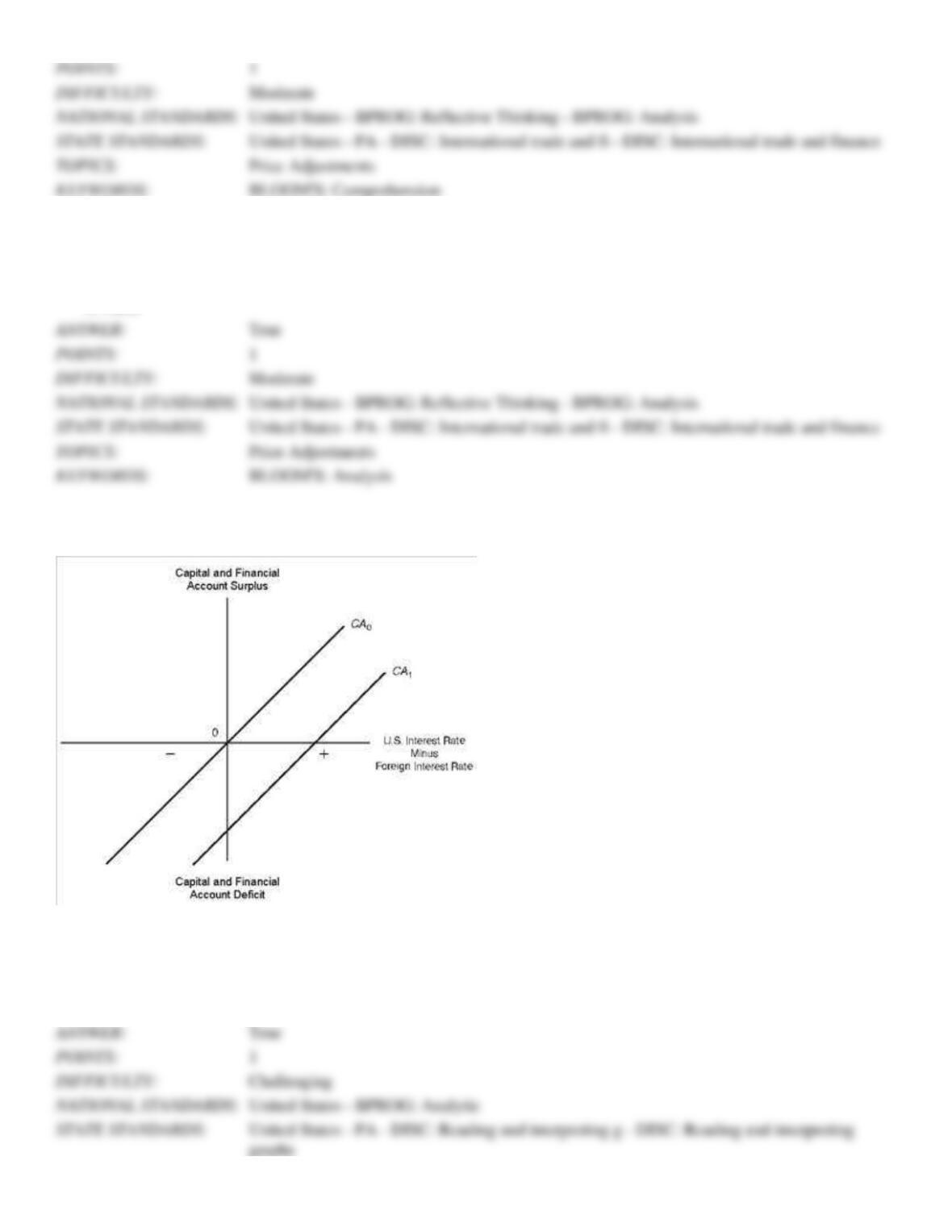
Figure 13.3. U.S. Capital and Financial Account Under a Fixed Exchange Rate System
78. Refer to Figure 13.3. As U.S. interest rates rise relative to foreign interest rates, the U.S. slides upward along schedule
CA0, thus moving towards capital and financial account surplus.
a.
True
b.
False
True
Challenging
graphs
Moderate
79. Refer to Figure 13.3. Decreases in U.S. interest rates relative to foreign interest rates would shift U.S. capital and
financial account schedule CA0 downward toward CA1, resulting in net financial outflows from the United States.
a.
True
b.
False
False
Challenging
United States – BPROG: Analytic
Financial Flows and Interest-Rate Differentials
BLOOM’S: Analysis
80. Refer to Figure 13.3. Falling investment profitability in the United States, relative to investment profitability abroad,
would shift the U.S. capital and financial account schedule downward from CA0 to CA1, resulting in net financial
outflows from the United States.
a.
True
b.
False
True
Challenging
graphs
Financial Flows and Interest-Rate Differentials
BLOOM’S: Analysis
81. Refer to Figure 13.3. As the U.S. government decreases taxes on income earned by U.S. residents from foreign
investments, the U.S. capital and financial account schedule shifts downward from CA0 to CA1 and the United States
realizes net financial outflows.
a.
True
b.
False
True
Challenging
United States – BPROG: Analytic
Financial Flows and Interest-Rate Differentials
BLOOM’S: Analysis
82. Refer to Figure 13.3. If the political and economic stability of foreign countries worsens relative to that of the United
States, the U.S. capital and financial account schedule would shift downward from CA0 to CA1, resulting in net financial
outflows from the United States.
Financial Flows and Interest-Rate Differentials
BLOOM’S: Analysis
a.
True
b.
False
83. According to the Keynesian income-adjustment mechanism, income differentials among nations guarantee current–
account equilibrium in a world of fixed exchange rates.
a.
True
b.
False
False
Moderate
84. Keynesian theory asserts that, under a system of fixed exchange rates, the influence of income changes in surplus and
deficit countries will automatically promote current-account equilibrium.
a.
True
b.
False
True
Moderate
85. The Keynesian income-adjustment mechanism contends that a trade-surplus nation tends to realize falling income and
falling imports, thus accentuating the trade surplus.
a.
True
b.
False
False
Moderate
False
Challenging
86. The foreign-trade multiplier equals the sum of the marginal propensity to import and the marginal propensity to save.
a.
True
b.
False
87. If the marginal propensity to save equals 0.2 and the marginal propensity to import equals 0.3, the foreign-trade
multiplier equal 2.0.
a.
True
b.
False
True
Moderate
88. For an open economy subject to international trade, equilibrium income occurs where saving plus investment equals
imports plus exports.
a.
True
b.
False
False
Moderate
89. If the marginal propensity to save equals 0.1 and the marginal propensity to import equals 0.3, an autonomous increase
in exports of $1,000 would expand domestic income by $2,500 which leads to an increase in imports of $750.
a.
True
b.
False
True
Moderate
False
Challenging
90. If the marginal propensity to save equals 0.2 and the marginal propensity to import equals 0.3, an autonomous
decrease in investment spending of $1 million leads to a $2 million decrease in domestic income and a $600,000 decrease
in imports.
a.
True
b.
False
91. For the income adjustment mechanism to reverse a trade deficit, economic policymakers must be willing to permit
domestic income to increase which leads to rising imports.
a.
True
b.
False
False
Moderate
92. Reliance on an automatic adjustment process tends to be unacceptable in trade-deficit nations since it requires them to
accept price deflation and/or falling income as a cost of reducing imports.
a.
True
b.
False
True
Moderate
93. An “automatic” adjustment mechanism would require a trade-surplus nation to accept price deflation and/or falling
income as the cost of increasing imports.
a.
True
b.
False
False
Moderate
True
Moderate
KEYWORDS:
BLOOM’S: Comprehension
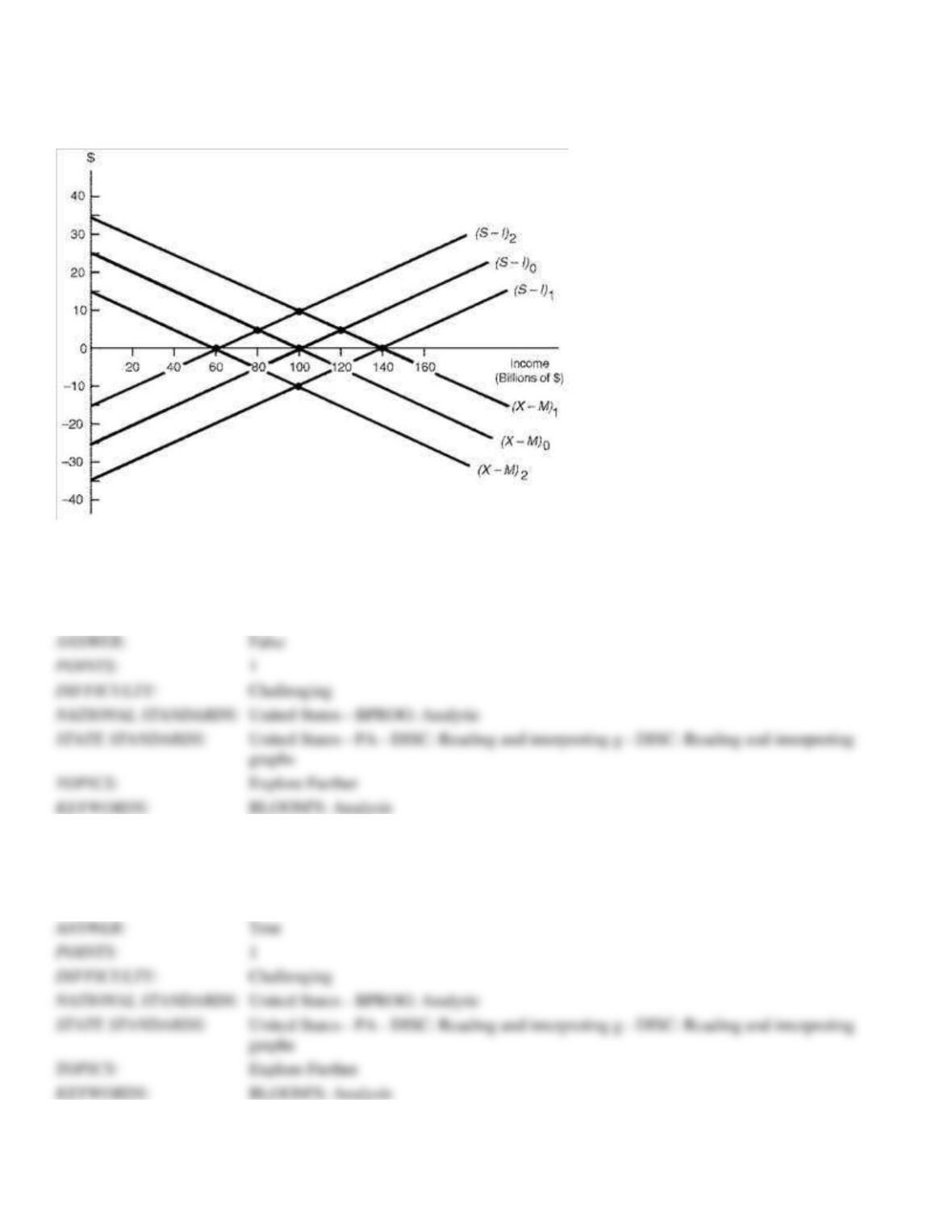
Figure 13.4. Canadian Economy Under a Fixed Exchange Rate System
94. Referring to Figure 13.4, Canada’s marginal propensity to save equals 0.25 and marginal propensity to import equal
0.5.
a.
True
b.
False
95. Referring to Figure 13.4, Canada’s foreign-trade multiplier equals 2.0.
a.
True
b.
False
ANSWER:
True
POINTS:
DIFFICULTY:
Challenging
United States – BPROG: Analytic
KEYWORDS:
BLOOM’S: Analysis
96. Refer to Figure 13.4. Starting at equilibrium income $100 billion, where (S – I)0 intersects (X – M)0, an autonomous
POINTS:
DIFFICULTY:
Challenging
United States – BPROG: Analytic
TOPICS:
Explore Further
KEYWORDS:
BLOOM’S: Analysis
decrease in Canadian imports of $10 billion leads to a $20 billion decrease in income and a trade deficit of $5 billion.
a.
True
b.
False
97. Refer to Figure 13.4. Starting at equilibrium income $100 billion, where (S – I)0 intersects (X – M)0, an autonomous
increase in Canadian investment of $10 billion leads to a $20 billion increase in income and no change in the country’s
trade account.
a.
True
b.
False
False
Challenging
98. Refer to Figure 13.4. Starting at equilibrium income $100 billion, where (S – I)0 intersects (X – M)0, an autonomous
decrease in saving of $10 billion leads to a $20 billion increase in income and a trade deficit of $5 billion.
a.
True
b.
False
True
Challenging
99. Refer to Figure 13.4. Starting at equilibrium income $100 billion, where (S – I)0 intersects (X – M)0, an autonomous
decrease in Canadian exports of $10 billion leads to a $20 decrease in income and a trade deficit of $5 billion.
a.
True
b.
False
True
Challenging
False
Challenging
graphs
100. According to the monetary approach, balance-of-payments disequilibriums are the result of imbalances in a country’s
money supply and money demand.
a.
True
b.
False
True
Moderate
101. The monetary approach contends that, under a fixed exchange rate system, an excess supply of money leads to a
trade surplus.
a.
True
b.
False
False
Moderate
102. The monetary approach contends that, under a fixed exchange rate system, an excess demand for money leads to a
trade deficit.
a.
True
b.
False
False
Moderate
103. The monetary approach contends that, under a fixed exchange rate system, policies that increase the supply of money
relative to the demand for money lead to a trade surplus.
a.
True
b.
False
False
104. Compared to classical economists, how did Keynesian economics change the discussion of trade adjustment?
105. What is the foreign repercussion effect?
106. Explain David Hume’s theory of automatic adjustment for balance of payments disequilibria.
107. Is the monetary approach to the balance-of-payments part of the traditional adjustment theories?