29.
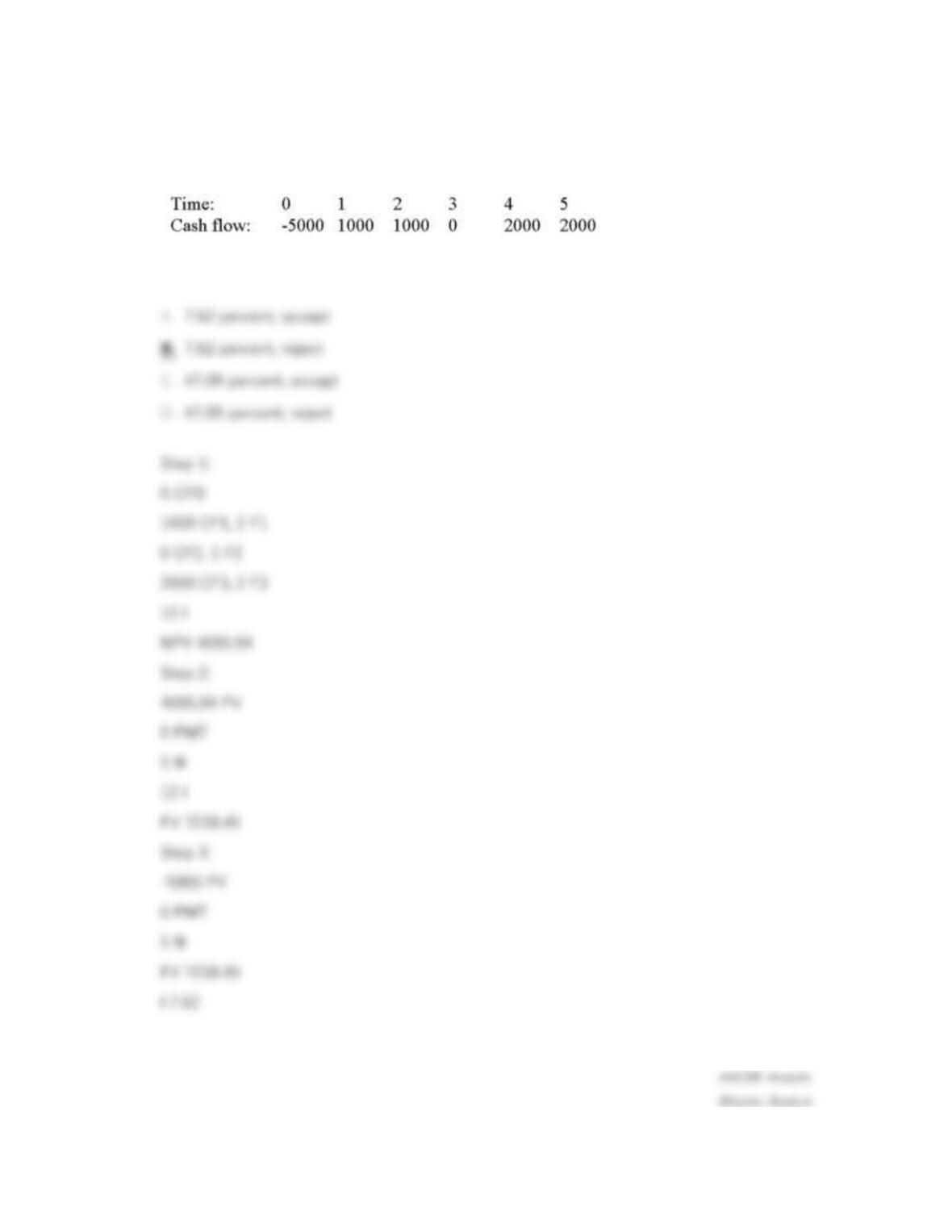
Compute the MIRR for Project Y and accept or reject the project with the cash flows
shown as follows if the appropriate cost of capital is 12 percent.
30.
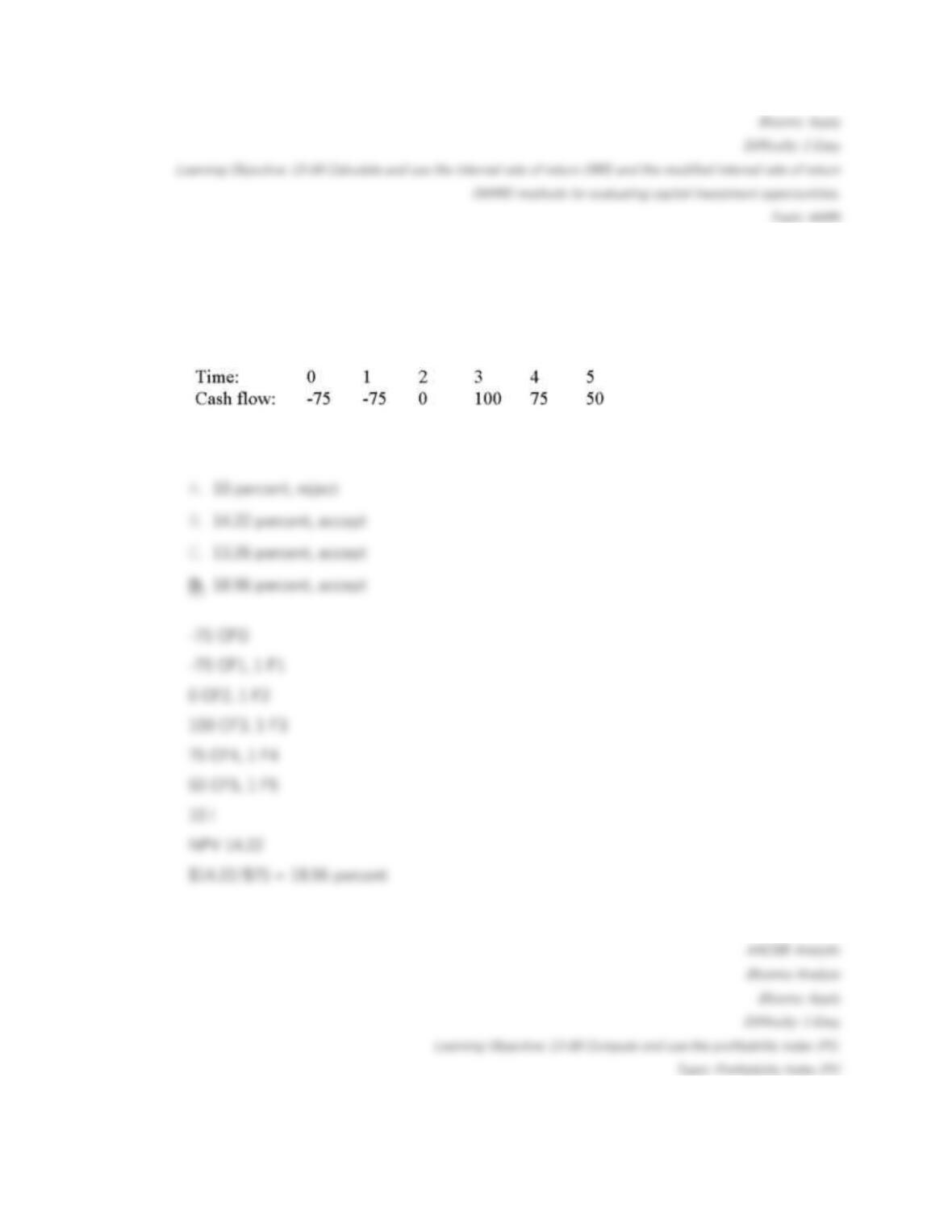
Compute the PI statistic for Project X and note whether the firm should accept or reject
the project with the cash flows shown as follows if the appropriate cost of capital is 10
percent.
31.
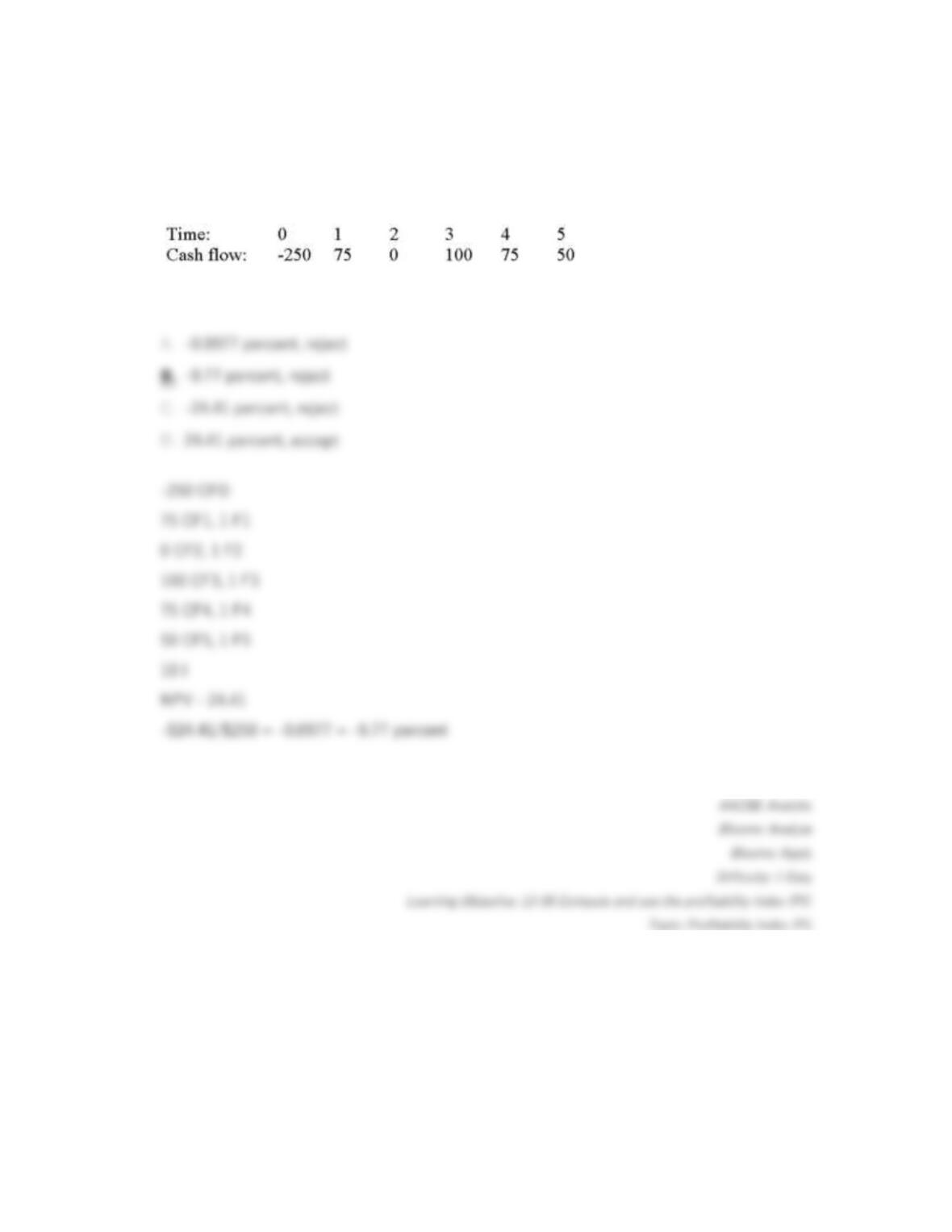
Compute the PI statistic for Project X and note whether the firm should accept or reject
the project with the cash flows shown as follows if the appropriate cost of capital is 10
percent.
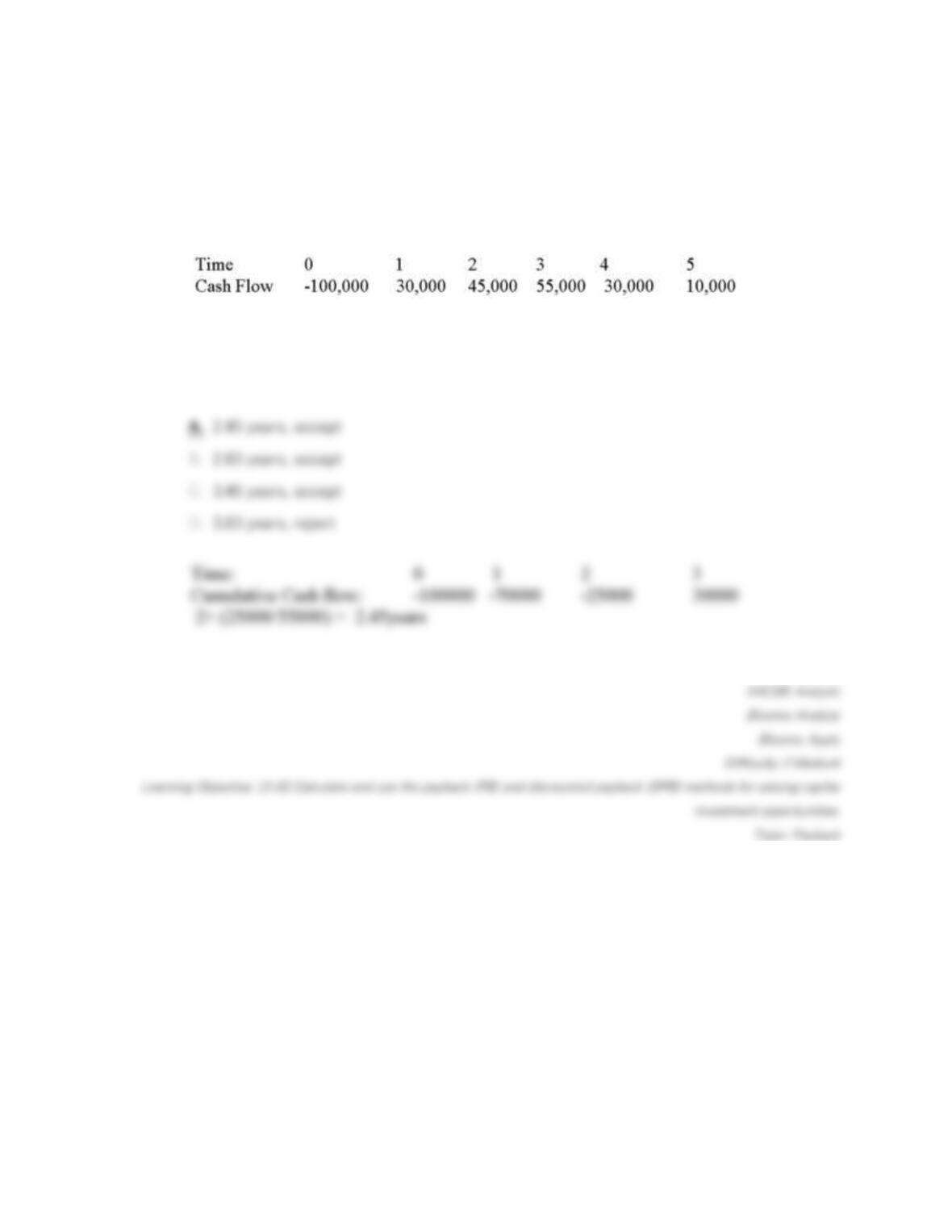
32.
Suppose your firm is considering investing in a project with the cash flows shown as
follows, that the required rate of return on projects of this risk class is 8 percent, and that
the maximum allowable payback and discounted payback statistic for the project are three
and three and a half years, respectively.
Use the payback decision rule to evaluate this project; should it be accepted or rejected?
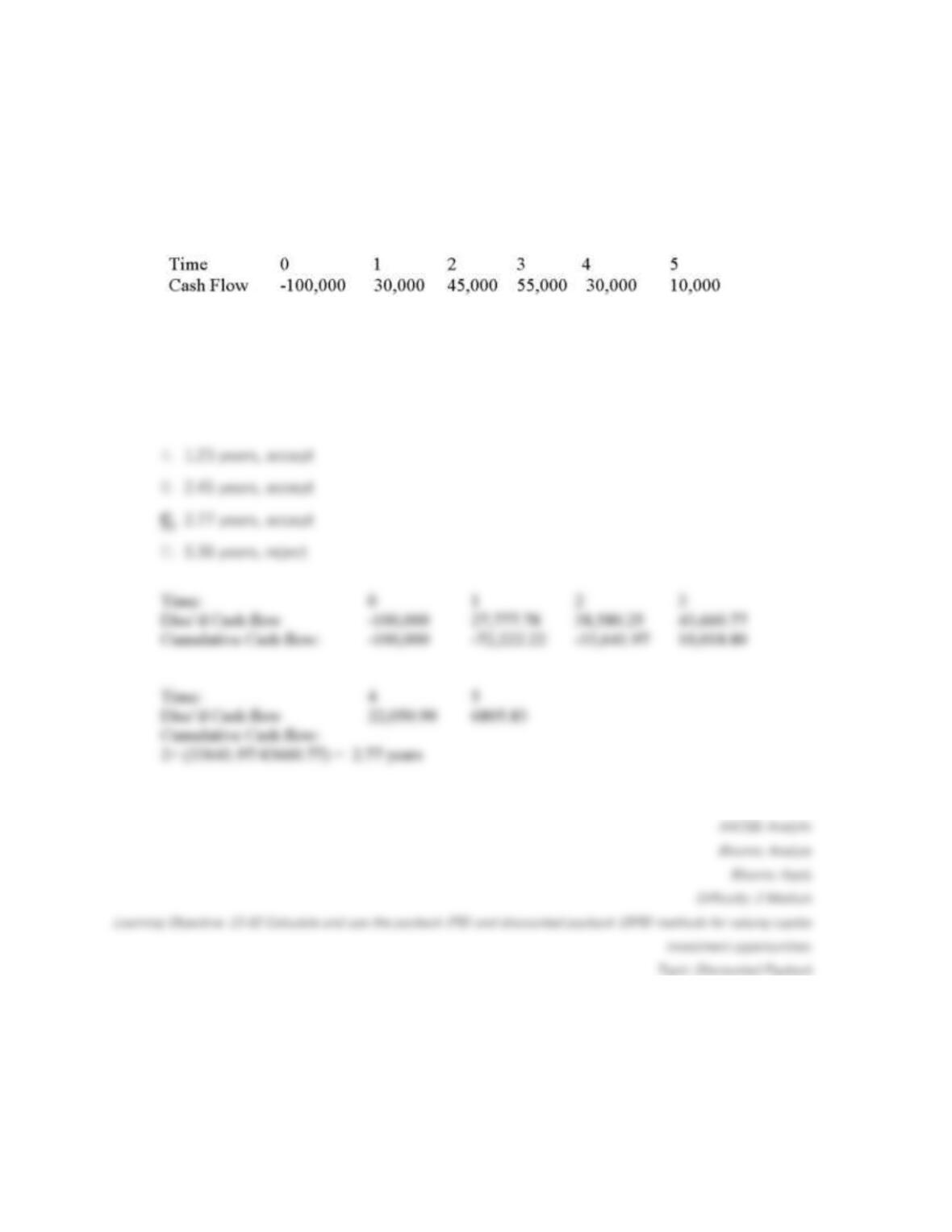
33.
Suppose your firm is considering investing in a project with the cash flows shown as
follows, that the required rate of return on projects of this risk class is 8 percent, and that
the maximum allowable payback and discounted payback statistic for the project are three
and three and a half years, respectively.
Use the discounted payback decision rule to evaluate this project; should it be accepted or
rejected?
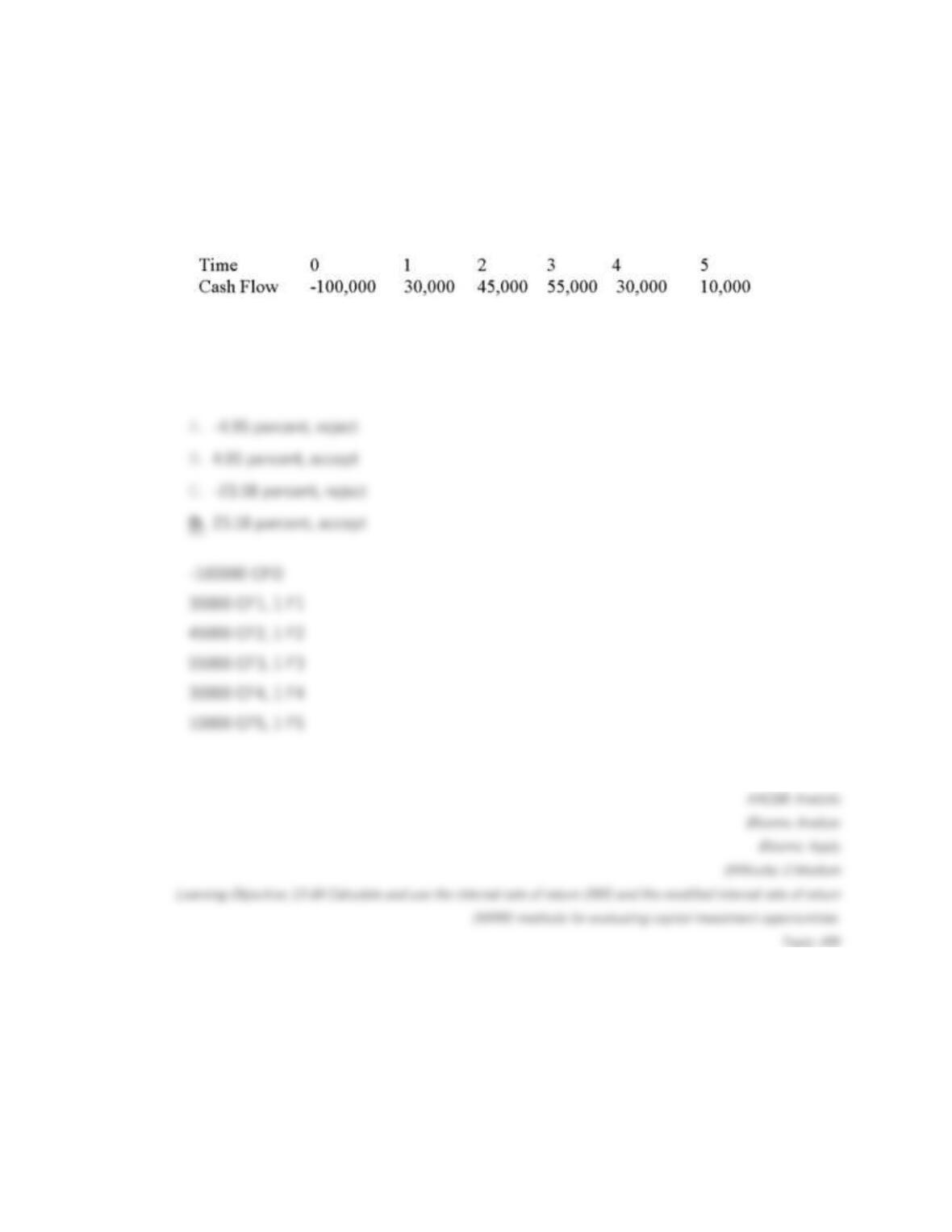
34.
Suppose your firm is considering investing in a project with the cash flows shown as
follows, that the required rate of return on projects of this risk class is 8 percent, and that
the maximum allowable payback and discounted payback statistic for the project are three
and three and a half years, respectively.
Use the IRR decision rule to evaluate this project; should it be accepted or rejected?
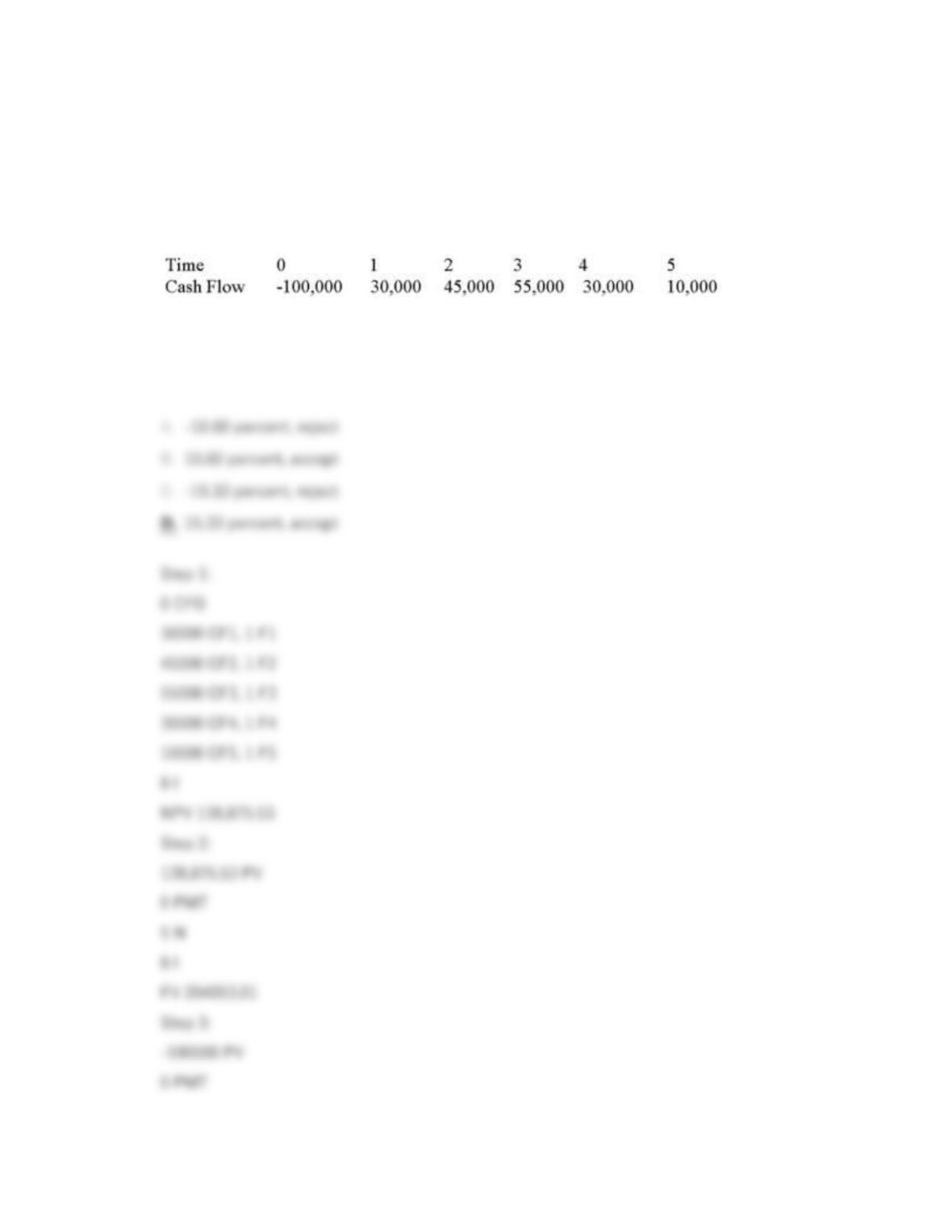
35.
Suppose your firm is considering investing in a project with the cash flows shown as
follows, that the required rate of return on projects of this risk class is 8 percent, and that
the maximum allowable payback and discounted payback statistic for the project are three
and three and a half years, respectively.
Use the MIRR decision rule to evaluate this project; should it be accepted or rejected?
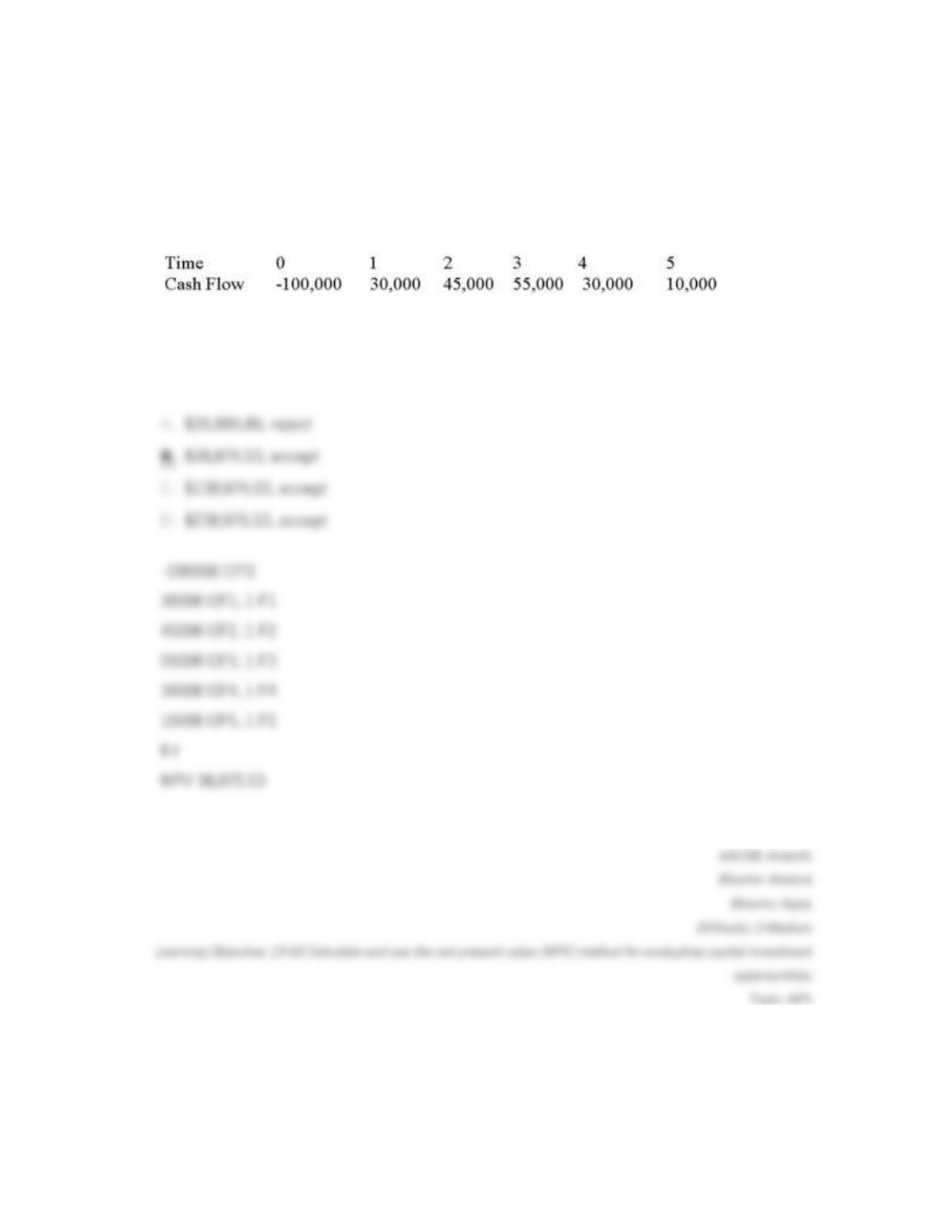
36.
Suppose your firm is considering investing in a project with the cash flows shown as
follows, that the required rate of return on projects of this risk class is 8 percent, and that
the maximum allowable payback and discounted payback statistic for the project are three
and three and a half years, respectively.
Use the NPV decision rule to evaluate this project; should it be accepted or rejected?

37.
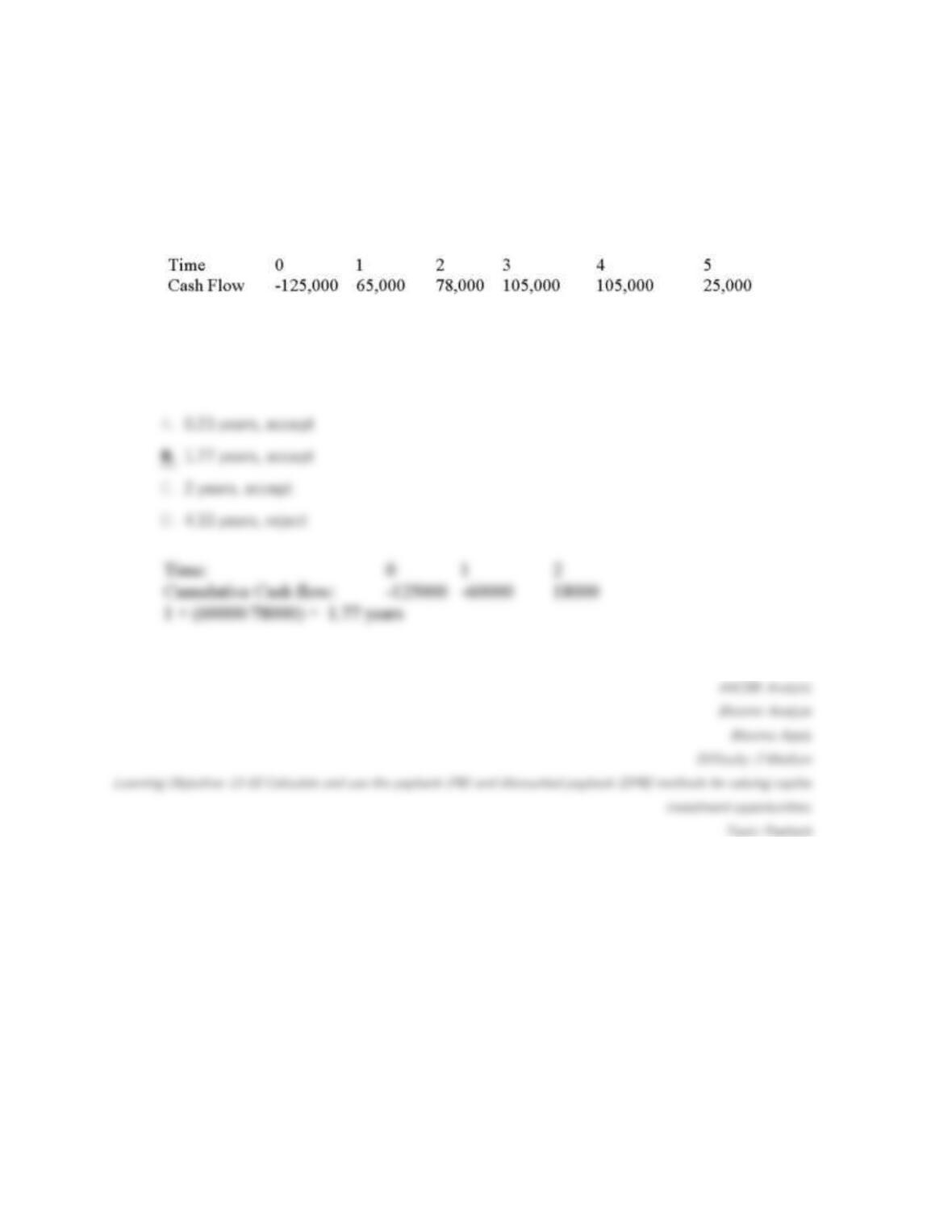
Suppose your firm is considering investing in a project with the cash flows shown as
follows, that the required rate of return on projects of this risk class is 8 percent, and that
the maximum allowable payback and discounted payback statistic for the project are three
and three and a half years, respectively.
Use the PI decision rule to evaluate this project; should it be accepted or rejected?
38.
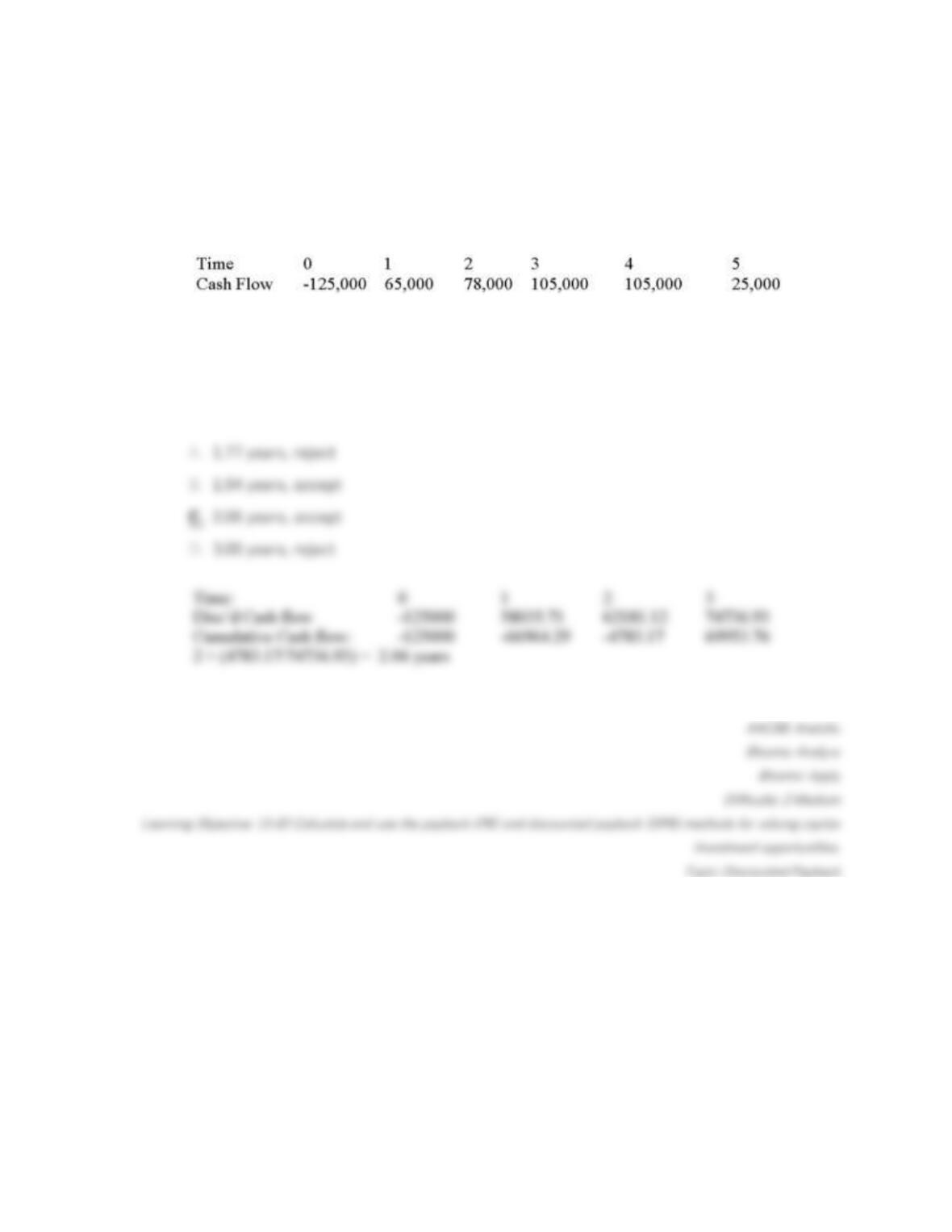
Suppose your firm is considering investing in a project with the cash flows shown as
follows, that the required rate of return on projects of this risk class is 12 percent, and that
the maximum allowable payback and discounted payback statistic for the project are two
and two and a half years, respectively.
Use the payback decision rule to evaluate this project; should it be accepted or rejected?
39.
Suppose your firm is considering investing in a project with the cash flows shown as
follows, that the required rate of return on projects of this risk class is 12 percent, and that
the maximum allowable payback and discounted payback statistic for the project are two
and two and a half years, respectively.
Use the discounted payback decision rule to evaluate this project; should it be accepted or
rejected?
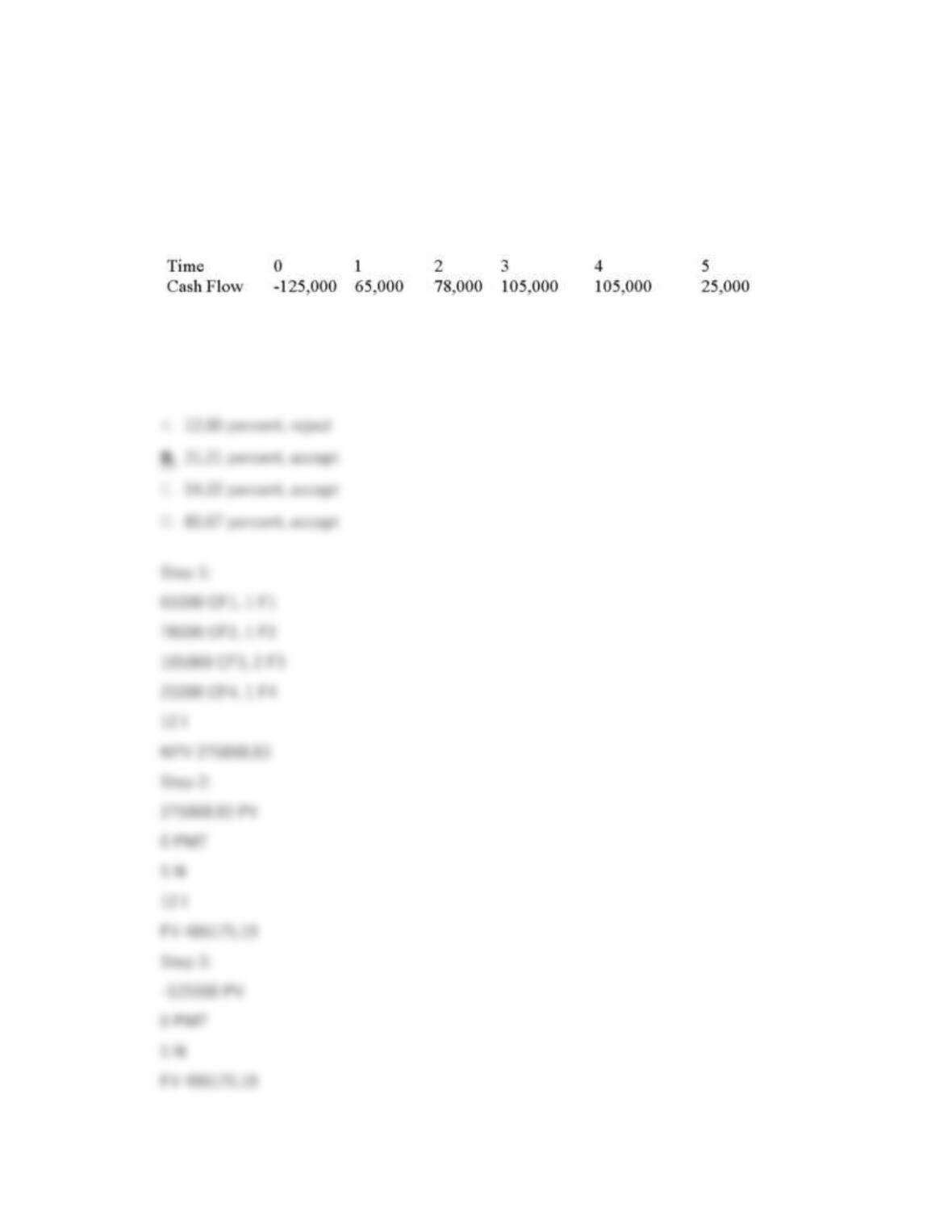
40.
Suppose your firm is considering investing in a project with the cash flows shown as
follows, that the required rate of return on projects of this risk class is 12 percent, and that
the maximum allowable payback and discounted payback statistic for the project are two
and two and a half years, respectively.
Use the MIRR decision rule to evaluate this project; should it be accepted or rejected?
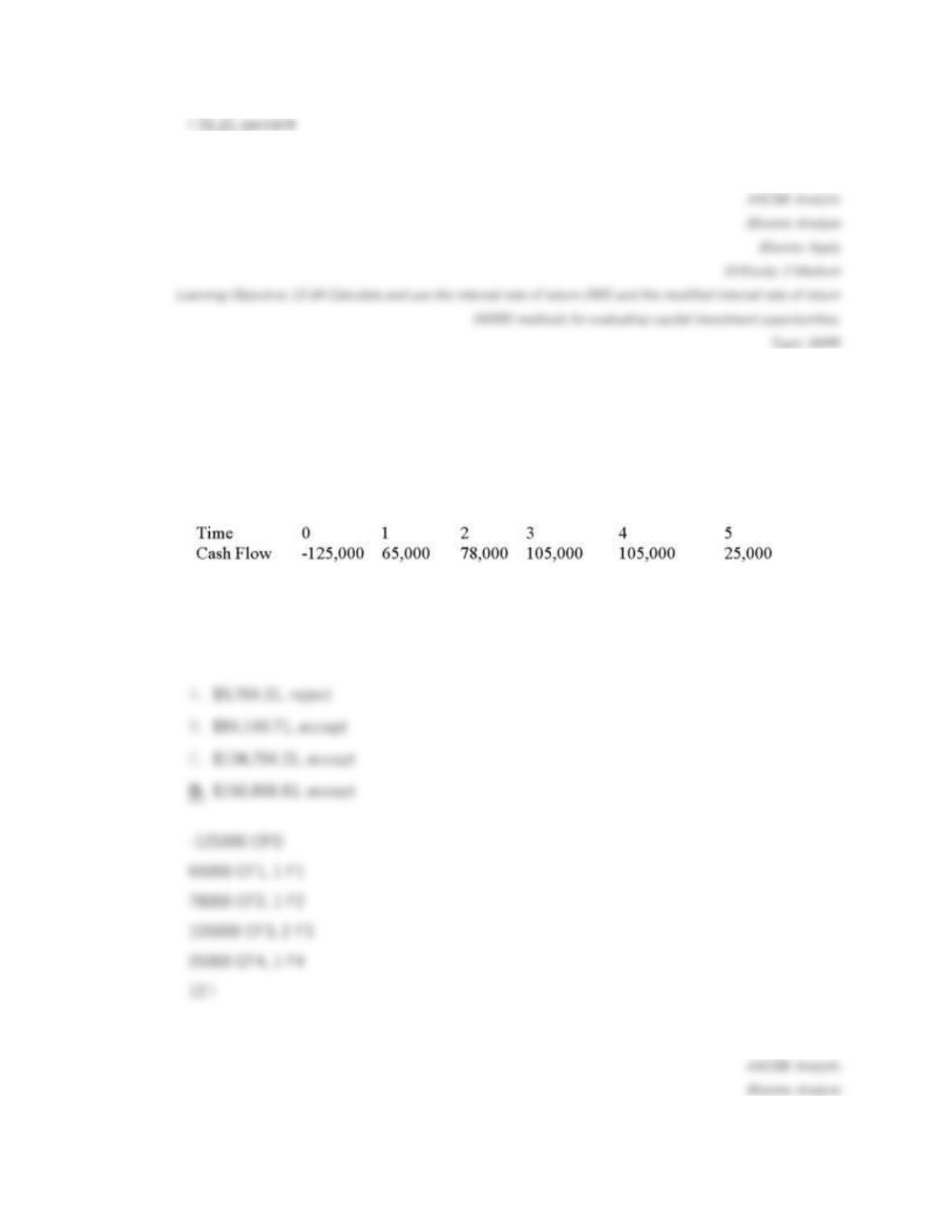
41.
Suppose your firm is considering investing in a project with the cash flows shown as
follows, that the required rate of return on projects of this risk class is 12 percent, and that
the maximum allowable payback and discounted payback statistic for the project are two
and two and a half years, respectively.
Use the NPV decision rule to evaluate this project; should it be accepted or rejected?

42.
Suppose your firm is considering investing in a project with the cash flows shown as
follows, that the required rate of return on projects of this risk class is 12 percent, and that
the maximum allowable payback and discounted payback statistic for the project are two
and two and a half years, respectively.
Use the PI decision rule to evaluate this project; should it be accepted or rejected?
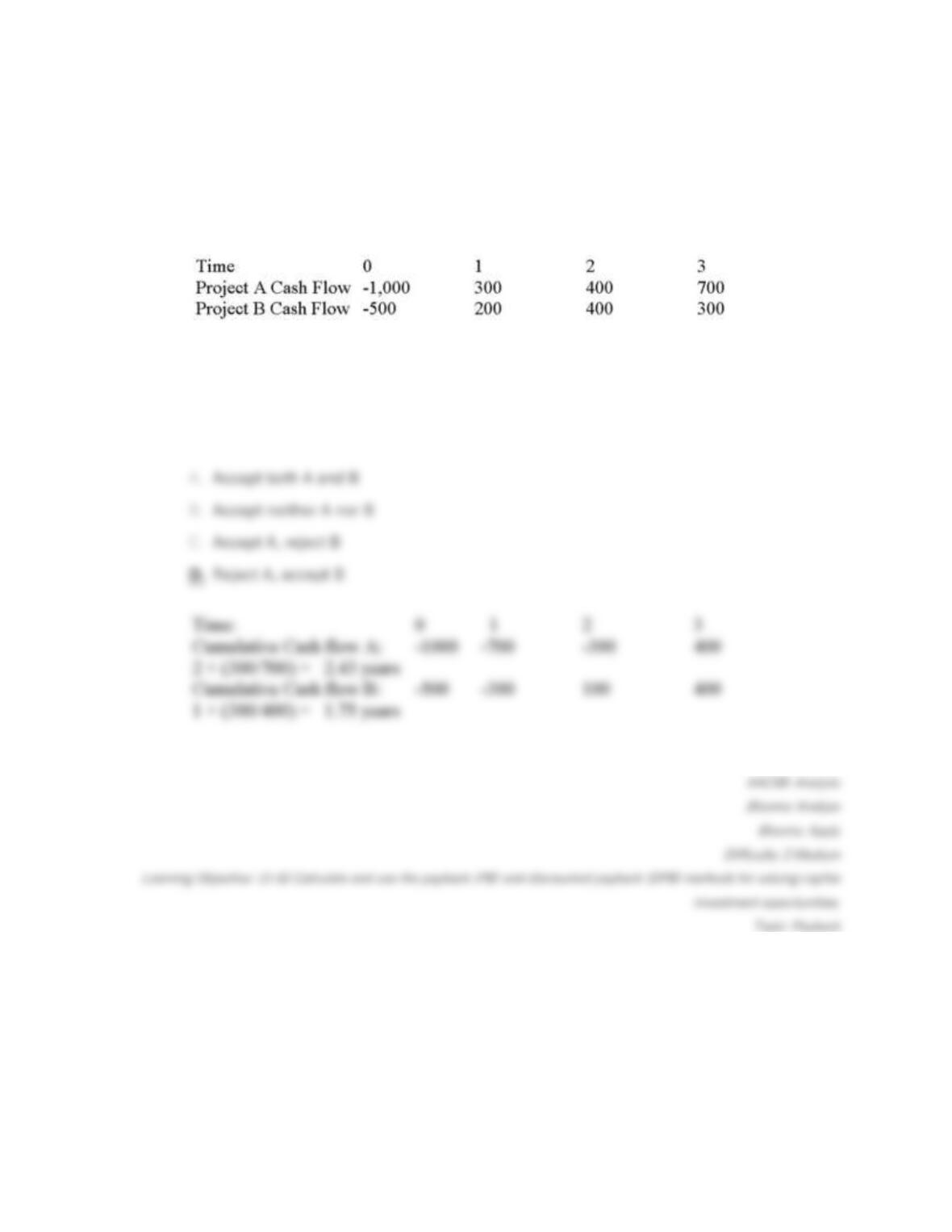
43.
Suppose your firm is considering two mutually exclusive, required projects with the cash
flows shown as follows. The required rate of return on projects of both of their risk class is
10 percent, and the maximum allowable payback and discounted payback statistic for the
projects are two and a half and three and a half years, respectively.
Use the payback decision rule to evaluate these projects; which one(s) should be
accepted or rejected?
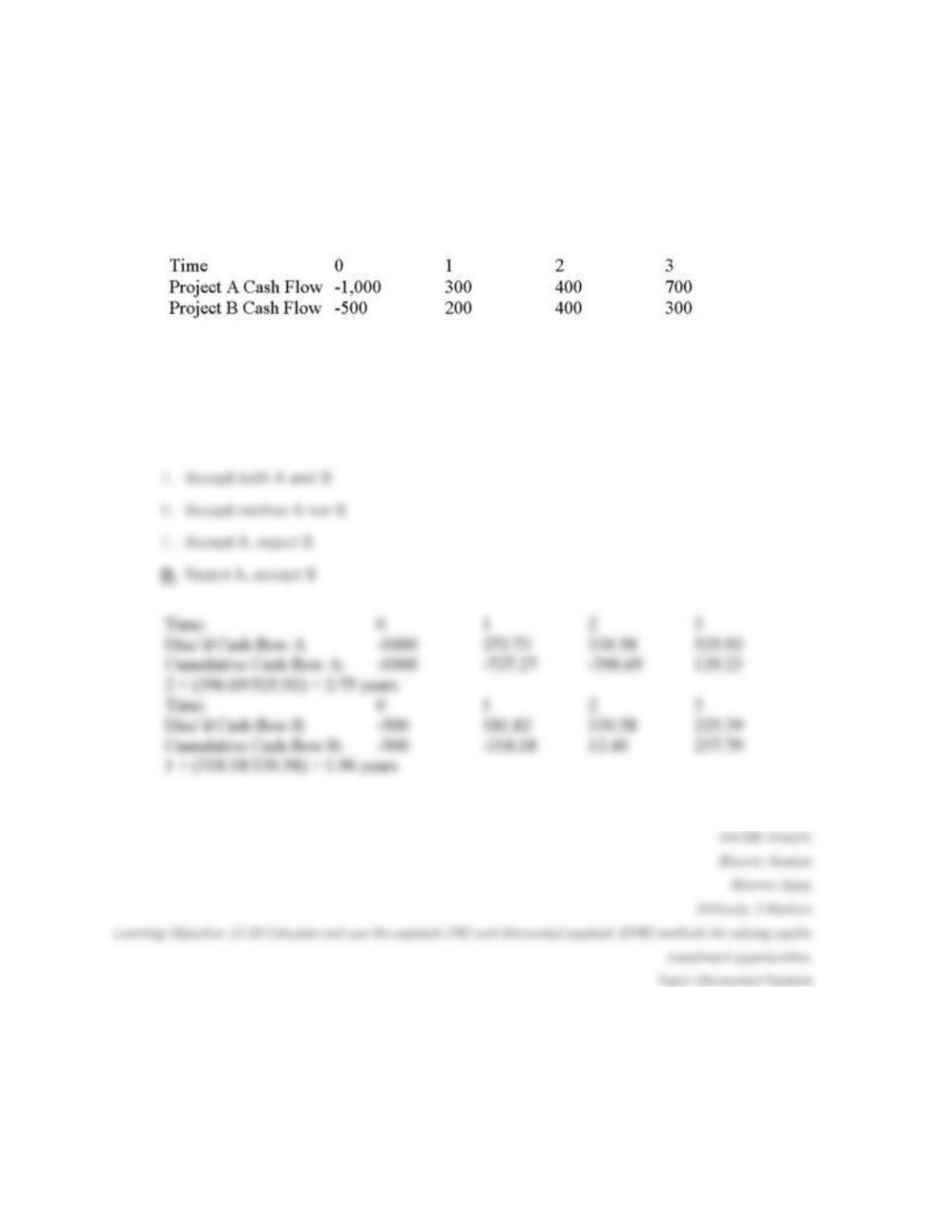
44.
Suppose your firm is considering two mutually exclusive, required projects with the cash
flows shown as follows. The required rate of return on projects of both of their risk class is
10 percent, and the maximum allowable payback and discounted payback statistic for the
projects are two and a half and three and a half years, respectively.
Use the discounted payback decision rule to evaluate these projects; which one(s) should
be accepted or rejected?
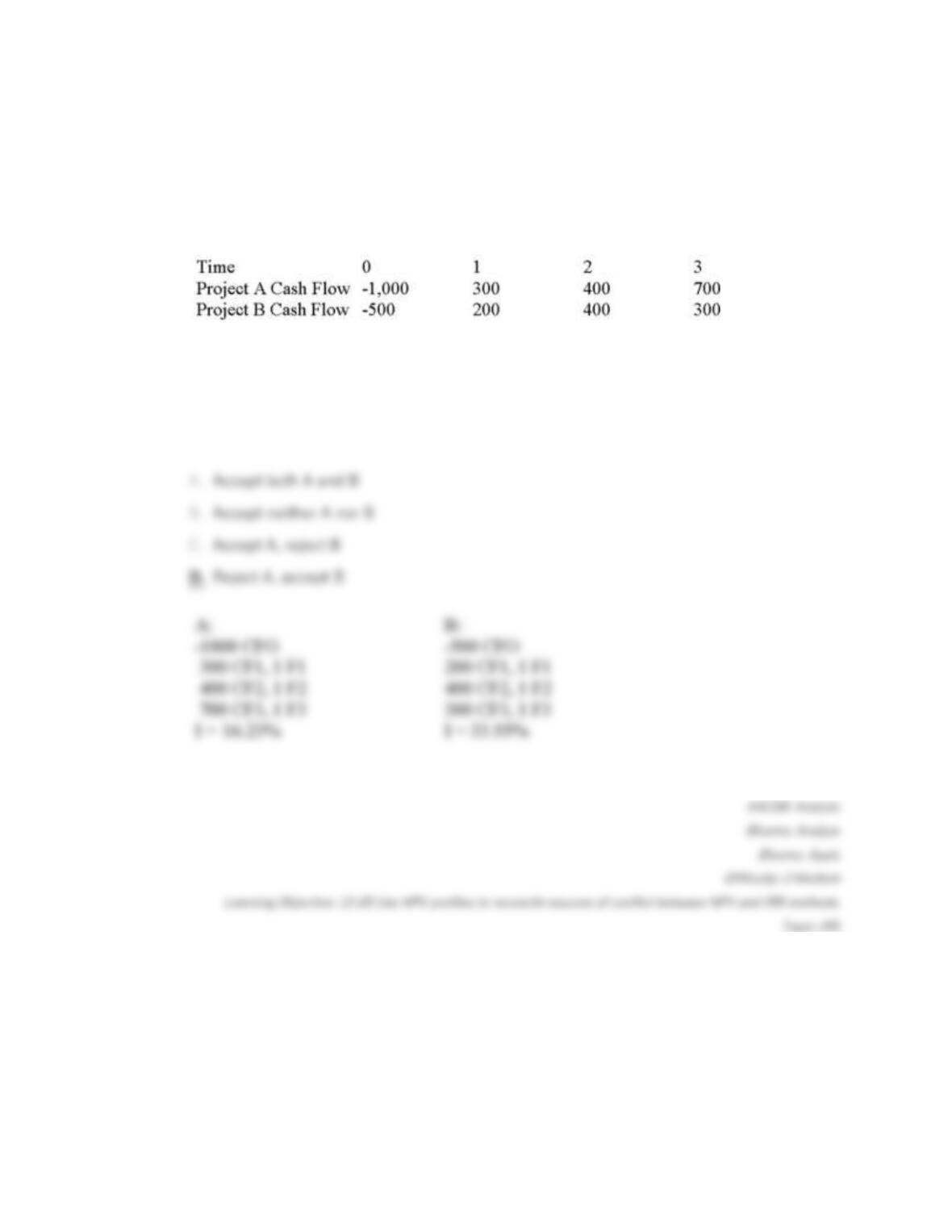
45.
Suppose your firm is considering two mutually exclusive, required projects with the cash
flows shown as follows. The required rate of return on projects of both of their risk class is
10 percent, and the maximum allowable payback and discounted payback statistic for the
projects are two and a half and three and a half years, respectively.
Use the IRR decision rule to evaluate these projects; which one(s) should be accepted or
rejected?
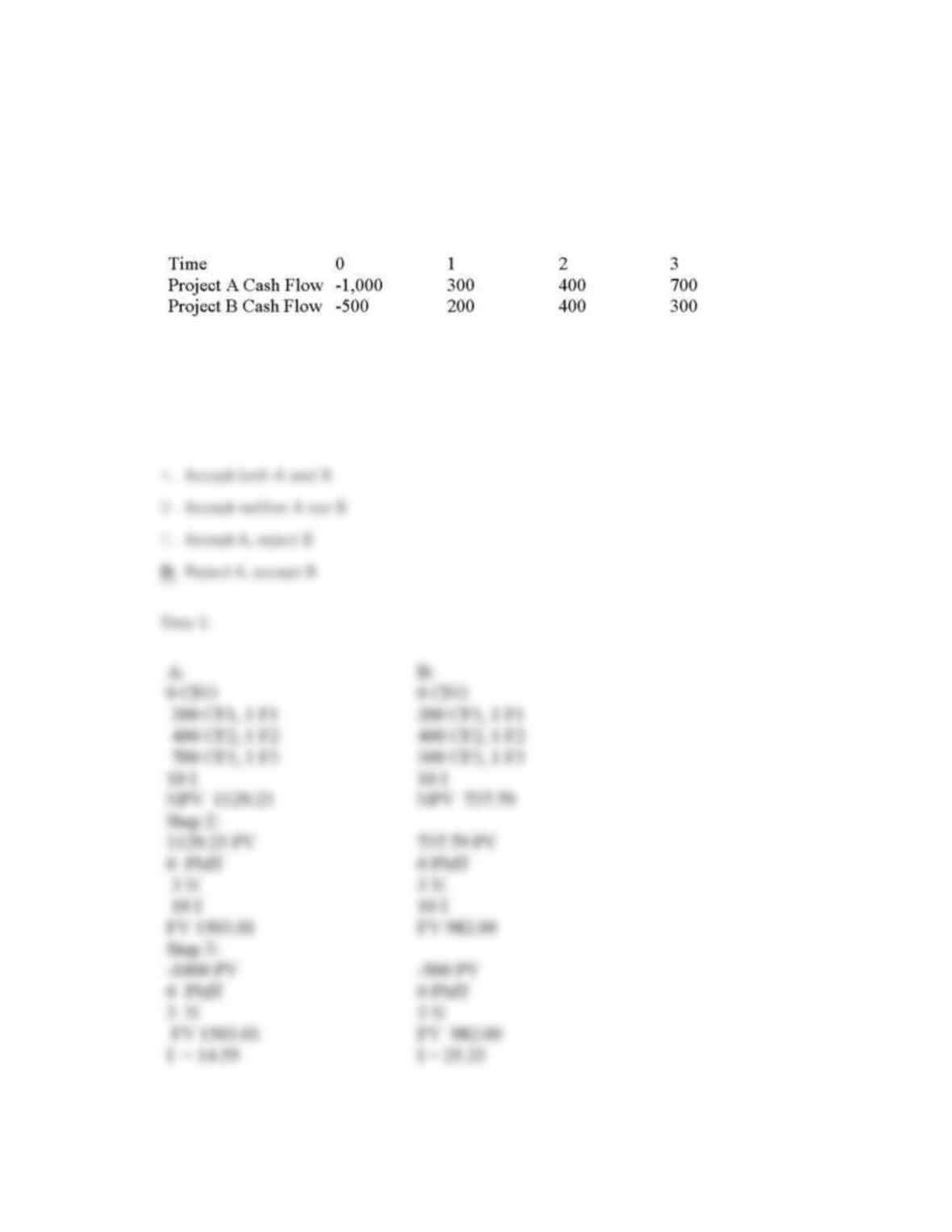
46.
Suppose your firm is considering two mutually exclusive, required projects with the cash
flows shown as follows. The required rate of return on projects of both of their risk class is
10 percent, and the maximum allowable payback and discounted payback statistic for the
projects are two and a half and three and a half years, respectively.
Use the MIRR decision rule to evaluate these projects; which one(s) should be accepted
or rejected?