1
Test Items
Chapter 13: Understanding Students with Traumatic Brain Injury
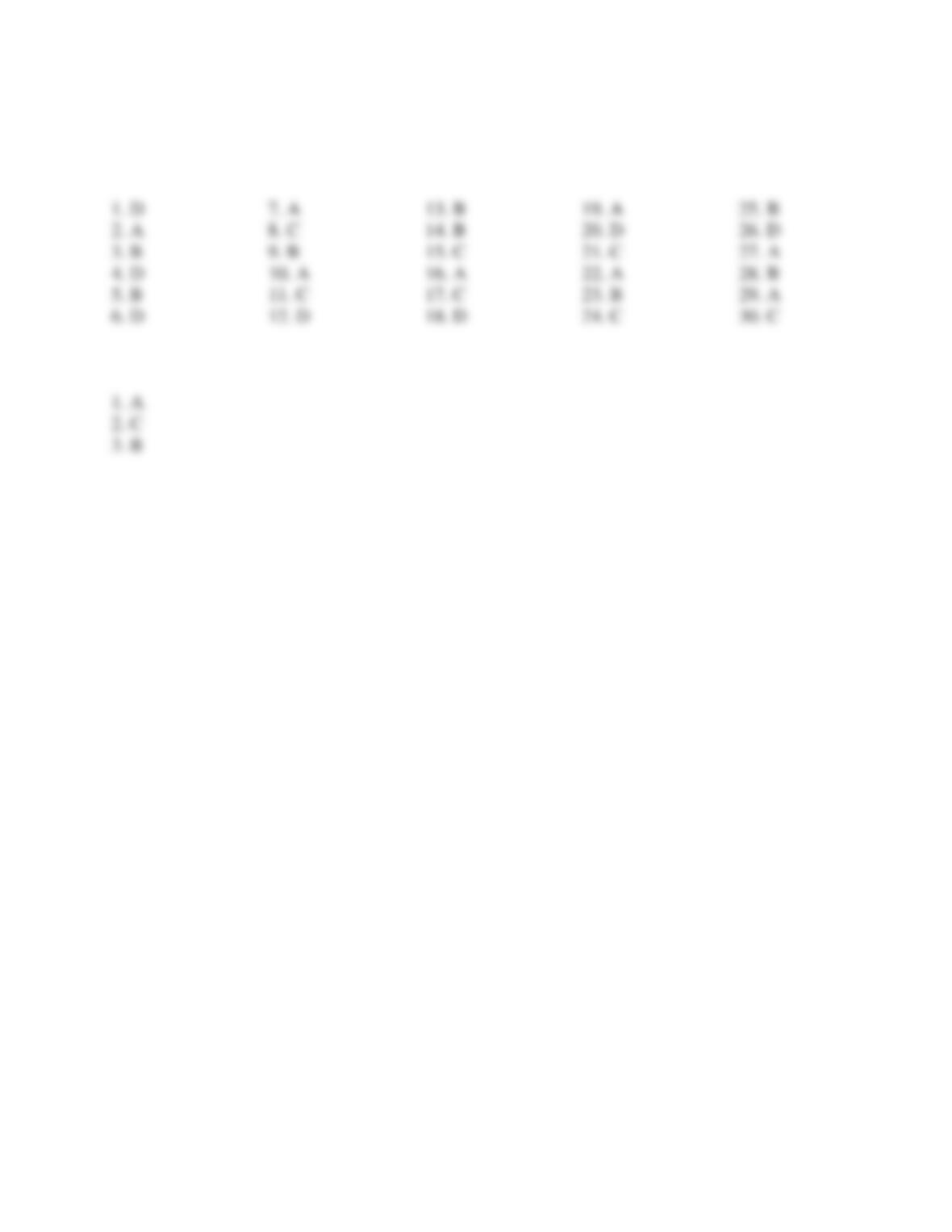
Multiple Choice
1. The definition of traumatic brain injury includes all of the following aspects EXCEPT:
A. TBI must be a acquired after a child is born
B. TBI must be caused by an external force
C. TBI applies to both closed and open head injuries
D. TBI is acquired during the birth process
2. Inflammation of the brain is:
A. Encephalitis
B. Meningitis
C. Epilepsy
D. Congenital
3. An injury that does not involve penetration or fracture of the bones of the skull but results
from an external blow or from the brain being whipped back and forth rapidly is which of the
following?
A. An open head injury
B. A closed head injury
C. An acquired injury
D. A congenital injury
4. What percent of all students are classified as having a traumatic brain injury?
A. More than 0.5%
B. About 5%
C. More than 5%
D. Approximately 0.5%
5. Between 2002 and 2006 there was:
A. A decrease in emergency room visits but an increase in hospitalizations due to TBI
B. An increase in emergency room visits and an increase in hospitalizations due to TBI
C. An increase in emergency room visits but a decrease in hospitalizations due to TBI
D. A decrease in both emergency room visits and hospitalizations due to TBI
2
6. Students with TBI often share similar characteristics with students who have:
A. Autism
B. Visual impairments
C. Learning disabilities
D. AD/HD
7. What percent of TBIs are classified as “mild?”
A. 80–90%
B. 10–20%
C. 50–60%
D. 30–40%
8. The term for lost or reduced muscle strength is:
A. Rigidity
B. Ataxia
C. Atrophy
D. Spacticity
9. Weakness, fatigue, and which of the following are common side effects of TBI?
A. Sleeplessness
B. Coordination problems
C. Immobility
D. Repetitive movements
10. The two factors affecting cognitive functioning of students with TBI are the extent of the
injury and:
A. The age at the time of injury
B. The location of the injury
C. Cause of the injury
D. Size of the injury
11. Each of the following is true of TBI EXCEPT:
A. One year after the injury, they are more likely to show improvements in cognitive
skills than in behavioral skills.
B. Students with TBI are more likely to be diagnosed with obsessive compulsive
disorders, anxiety, and depression.
C. Approximately 10% of students experience post traumatic stress disorder in the first
three months following TBI.
D. Behavioral problems occur in 35 to 70% of students with TBI.
3
12. Which of the following refers to TBI resulting from a caregiver who has shaken a child
violently, often in situations when the caregiver is frustrated because of the child’s crying?
A. Child abuse
B. Concussion
C. Sudden infant death syndrome
D. Shaken baby syndrome
13. The number one cause of TBI is:
A. Car accidents
B. Falls
C. Abuse
D. Gun injuries
14. The pediatric version of the Glasgow Outcomes Scale includes each of the following
EXCEPT:
A. Eyes open
B. Leg extension
C. Best verbal response
D. Best motor response
15. Each of the following is a functional domain of a TBI classroom observation checklist
EXCEPT:
A. Retaining information
B. Attention and maintaining activity
C. Peer relationships
D. Awareness
16. Students moving from a hospital setting back to a school setting may require a(n):
A. Reentry IEP
B. Revised IEP
C. Interim IEP
D. Temporary IEP
17. Following a routine schedule, keeping appointments, taking medications, remembering to
perform a new task, and marking when to start or end a task are uses for:
A. A TBI classroom observation checklist
B. An interim IEP
C. Electronic memory aids
D. A classroom aide
4
18. Varying how fast you present information and how often you ask your students to respond is:
A. Monitoring responses
B. Frequent student responses
C. Adequate processing time
D. Appropriate instructional pacing
19. Allowing students varying times to respond, taking into account their processing capacity
and giving some students more “think” time than others, is which of the following?
A. Adequate processing time
B. Frequent student responses
C. Appropriate instructional pacing
D. Monitoring responses
20. Considering the quality and nature of students’ replies and work to determine if they are
mastering content is:
A. Adequate processing time
B. Frequent student responses
C. Appropriate instructional pacing
D. Monitoring responses
21. Principle components of collaborative teaming include each of the following EXCEPT:
A. Building team structure
B. Learning teamwork skills
C. Taking individual action
D. Improving communication
22. Positive interdependence and individual accountability are characteristics of:
A. Cooperative learning
B. Collaborative teaming
C. Wraparound
D. Problem-solving
23. Which of the following refers to linking students together so one cannot succeed unless all
group members succeed?
A. Problem-solving
B. Positive interdependence
C. Collaborative teaming
D. Evidence-based instructional strategy
5
24. One way of assessing students individually during cooperative learning activities is to:
A. Watch the group to see who is working
B. Have the students rate each others’ performance
C. Assign each student a discrete task that contributes to the whole group
D. Individual assessment is not appropriate for cooperative learning activities
25. Each of the following is a skill typically involved in teaching problem solving EXCEPT:
A. Solution generation
B. Asking for help
C. Problem identification
D. Problem definition
26. Identifying relevant alternative options, identifying consequences of the alternative,
identifying the probability of each consequence, determining the value placed on each option
or alternative, and integrating values and consequences to select a preferred option are steps
of which of the following?
A. Collaborative teaming
B. Problem solving
C. Cooperative learning
D. Decision making
27. What percent of students with TBI spend 80-100% of their time in general education
settings?
A. About 45%
B. 23%
C. Only 9%
D. Over 70%
28. Which of the following is a scale developed by a teacher as a guide to scoring a student’s
performance?
A. A checklist
B. A rubric
C. A report card
D. An IEP
29. A scale developed by a teacher as a guide to scoring a student’s performance should focus
on:
A. Outcomes rather than a process
B. Process rather than outcomes
C. Only tasks the student can complete easily
D. State standards
6
30. Which of the following is a recommended accommodation for students with TBI?
A. Large print tests
B. Allow oral responses
C. Use multiple choice rather than essay
D. Use essay rather than multiple choice
Praxis style questions
1. Judy is a student in your class who has suffered a closed head traumatic brain injury in a car
accident. When Judy returns to your classroom after the accident, you notice changes in her
behavior that include temper outbursts, anxiety, fatigue, and depressions. The best way to help
Judy with her behavior is which of the following?
A. Teach problem-solving skills to reduce frustration and behaviors.
B. Create a 504 behavior plan that has strict consequences for Judy’s behavior.
C. When Judy exhibits her poor behavior, have her removed from the classroom.
D. Discuss the behaviors with Judy and tell her they will not be accepted in your
classroom.
2. Jamaal is a student in your class with traumatic brain injury. He seems to have difficulty
processing information during lessons and does not contribute to class discussions or answer
questions. Which of the following evidence-based instructional strategies might help Jamaal?
A. Use large-print text.
B. Monitor his progress.
C. Adjust instructional pacing.
D. Use visual aids.
3. Cindy is a student with TBI. She becomes confused about expectations of assignments. Your
best course of action to help Cindy is to do which of the following?
A. Have Cindy repeat the instructions three times.
B. Use rubrics to delineate the expectations for assignments.
C. Ask Cindy’s parents to buy her a planner so she can keep track of her work.
D. Have Cindy stay with you at recess or after school to go over assignments.
7
Short Answer
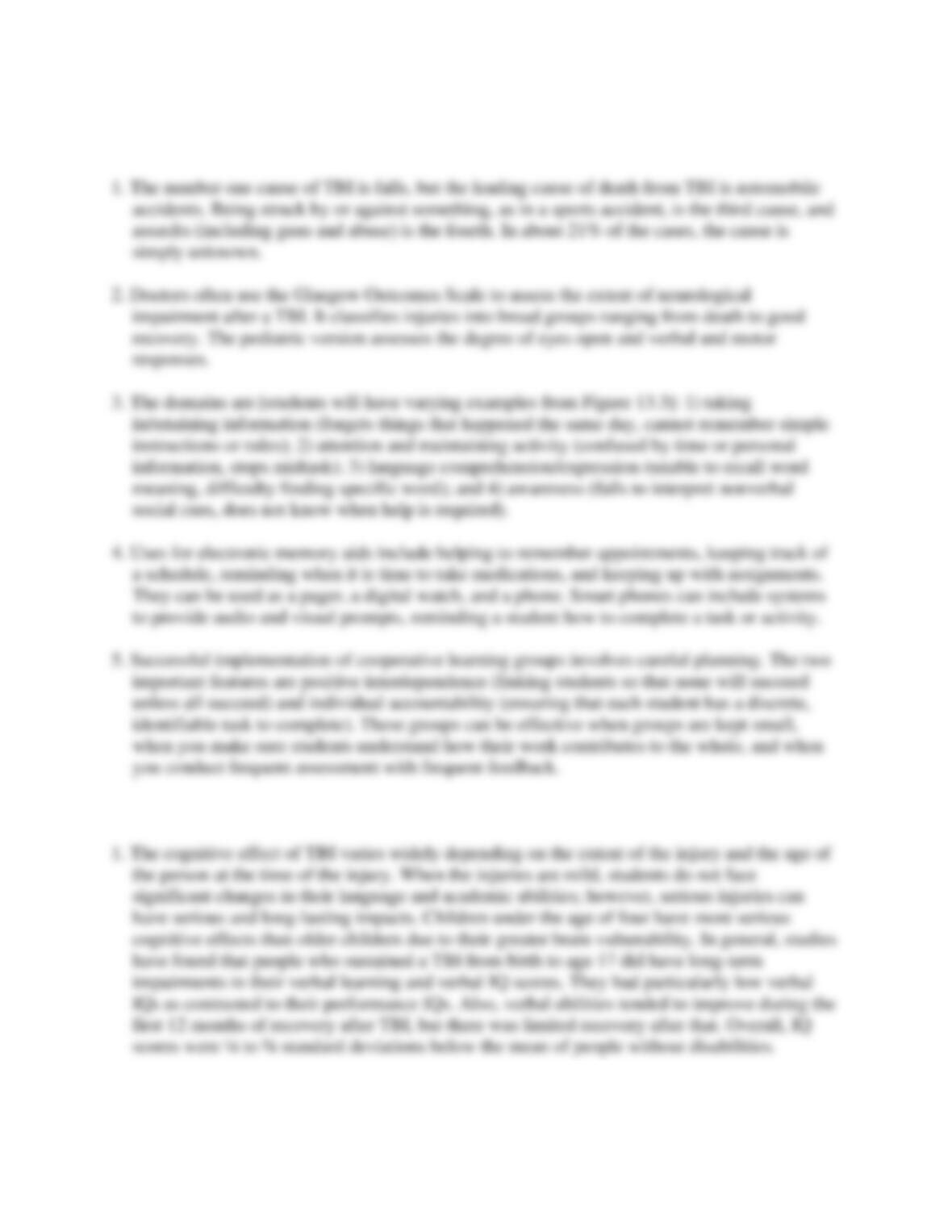
1. Identify the major causes of TBI.
2. Explain how doctors make the determination of TBI.
3. Identify the functional domains of a classroom observation checklist for students with TBI and
give 2 examples of problems in each domain.
4. Identify potential uses for electronic memory aids for students with TBI.
5. Discuss the use of cooperative learning groups and the two primary characteristics of these
groups.
Essay
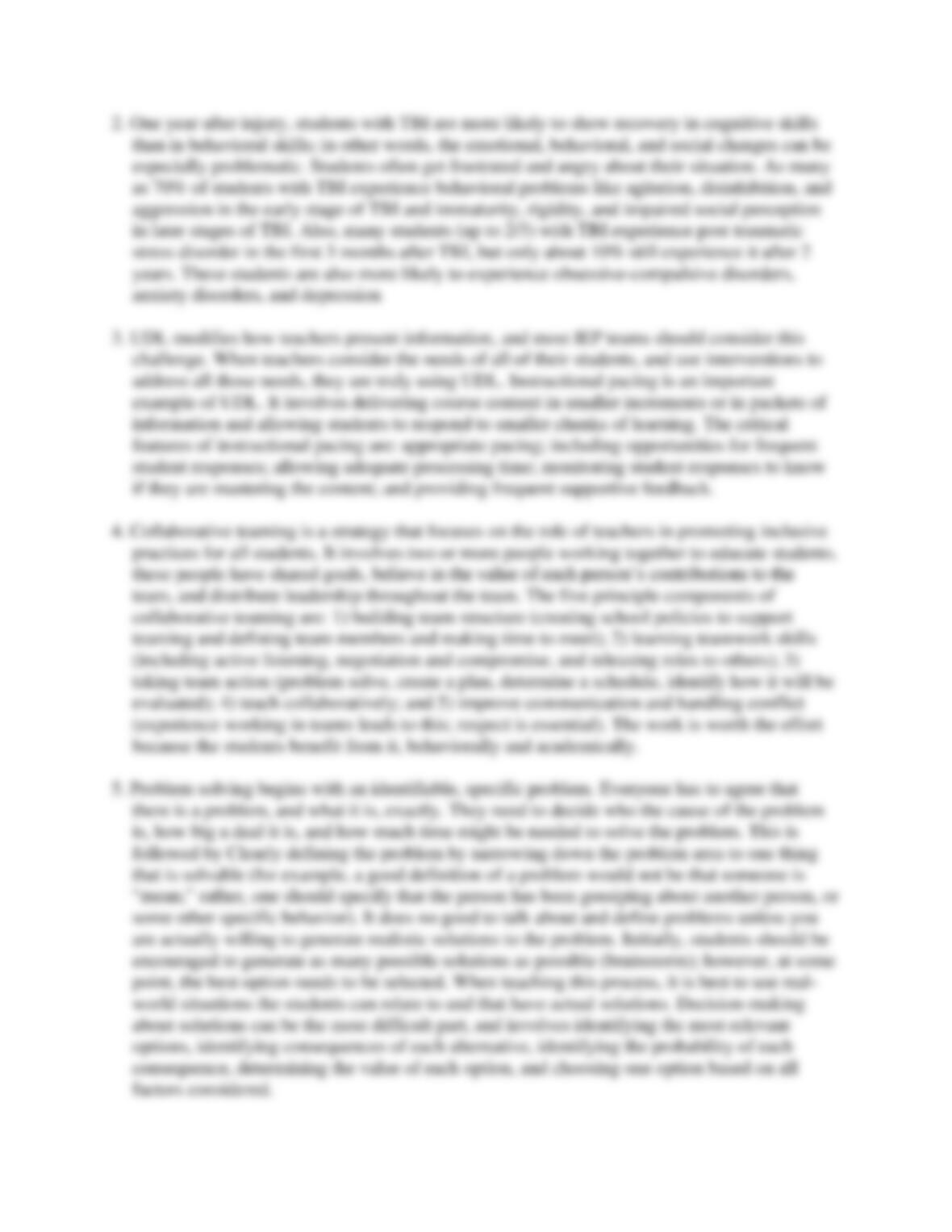
1. Describe the characteristics of cognitive change in students with traumatic brain injury.
2. Describe the emotional, behavioral, and social changes of students with TBI.
3. What are some instructional strategies that could be used when planning for universal design
for learning?
4. Identify and explain the five principle components of collaborative teaming.
5. Describe the steps to teaching problem-solving skills.
8
Chapter 13
Multiple Choice
Praxis
9
Short Answer
Essay
10
11