STA: DISC: Measuring the Economy TOP: Poverty KEY: Bloom’s: Knowledge
64. Which of the following government programs provides recipients with in-kind benefits?
a.
Temporary Assistance to Needy Families (TANF).
b.
Social Security.
c.
The food stamp program.
d.
Unemployment compensation.
65. In the United States since 1970, the poverty rate for blacks has been about:
a.
1−2 percentage points higher than the poverty rate for whites.
b.
twice the poverty rate for whites.
c.
three times the poverty rate for whites.
d.
five times the poverty rate for whites.
66. Which of the following government programs provides recipients with unrestricted cash payments?
a.
Temporary Assistance to Needy Families (TANF).
b.
Medicaid.
c.
The food stamp program.
d.
Housing assistance programs.
67. Which of the following statements is true?
a.
All people in poverty are on welfare.
b.
Unemployment compensation is an example of an in-kind transfer.
c.
Temporary Assistance to Needy Families (TANF) is an example of a cash payment made
by government to the impoverished.
d.
After cash assistance and in-kind transfers are considered the distribution of income in the
United States is more unequal.
e.
All of these.
68. Which one of the following examples is a cash assistance program used to fight poverty in the United
States?
a.
Medicaid.
b.
Food stamps.
c.
Home energy assistance.
d.
Head Start.
e.
Temporary Assistance to Needy Families (TANF).
69. Which of the following program(s) is (are) in-kind assistance to fight poverty in the United States?
a.
b and e.
b.
Medicaid.
c.
Unemployment benefits.
d.
Temporary Assistance to Needy Families (TANF).
e.
Food stamps.
70. Medicaid and food stamps are:
a.
available only to families.
b.
counterproductive.
c.
forms of in-kind assistance.
d.
forms of cash assistance.
e.
both c and d.
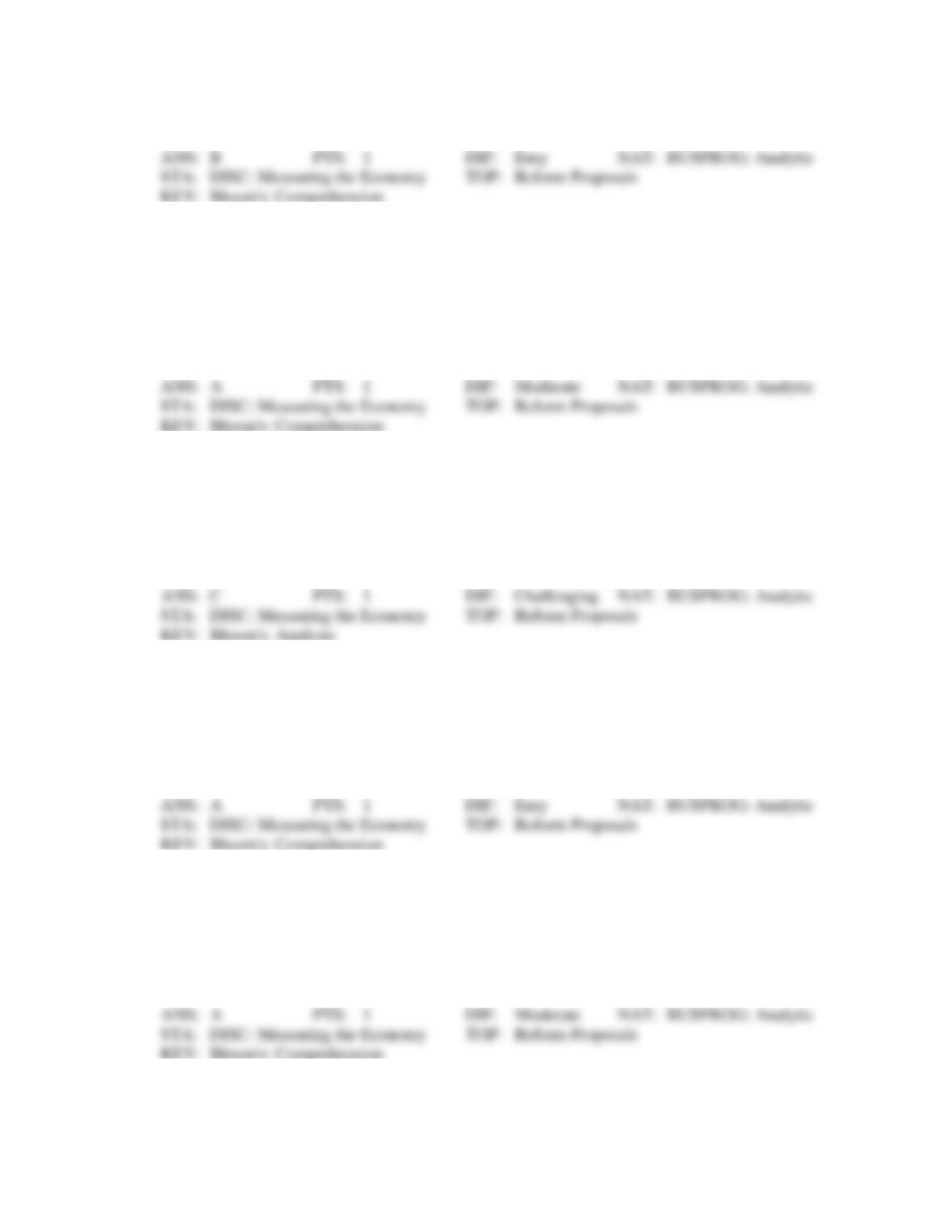
Exhibit 12-7 Negative income tax
71. As shown in Exhibit 12-7, a family of four pays income taxes at:
a.
an income of $5,000.
b.
any income between zero and $40,000.
c.
all levels of income.
d.
any income above $40,000.
72. As shown in Exhibit 12-7, a family of four with no earned income receives ____ from the government.
a.
zero payment.
c.
a $20,000 payment.
b.
the break-even income of $40,000.
d.
a $20,000 tax deferment.
73. Under the negative income tax scheme in Exhibit 12-7, families earning between $10,000 and $40,000
would:
a.
receive the maximum negative income tax payment of $20,000.
b.
receive payments under the negative income tax.
c.
pay no income taxes, but receive no payments.
d.
None of these is true.
74. Under a negative income tax program,
a.
the government guarantees a minimum level of family income.
b.
a family must pay income taxes on its welfare check.
c.
a family receives a stated amount of money from the government plus its members can
keep all income earned through work.
d.
the government reduces the welfare payment by any income earned through work.
e.
a family’s income is lower if its members work.
75. The incentive to work is an ingredient of the negative income tax because:
a.
if families do work, they will be eliminated from the program.
b.
if families don’t work, they will be eliminated from the program.
c.
the more income earned in the workplace, the higher the family’s after-tax income.
d.
the more income earned in the workplace, the higher the payment from the government.
e.
the amount earned in the workplace is not subject to income taxes.
76. A negative income tax program is:
a.
b, c, d, and e.
b.
basically an income tax in reverse.
c.
based on government cash payments to the poor that are linked to their income levels.
d.
designed to provide a minimum level of income to the poor.
e.
based on cash payments that decline as income level increases.
77. The main attractive feature(s) of a negative income tax program is (are):
a.
c and d.
b.
c, d, and e.
c.
it is simple.
d.
it avoids the stigma of hand-outs.
e.
it only subsidizes the unemployed.
78. A negative income tax system would provide all households, including the poor, with:
a.
cash payments.
b.
incentives to earn income.
c.
higher income levels.
d.
medical assistance.
e.
lower tax bills than it does .
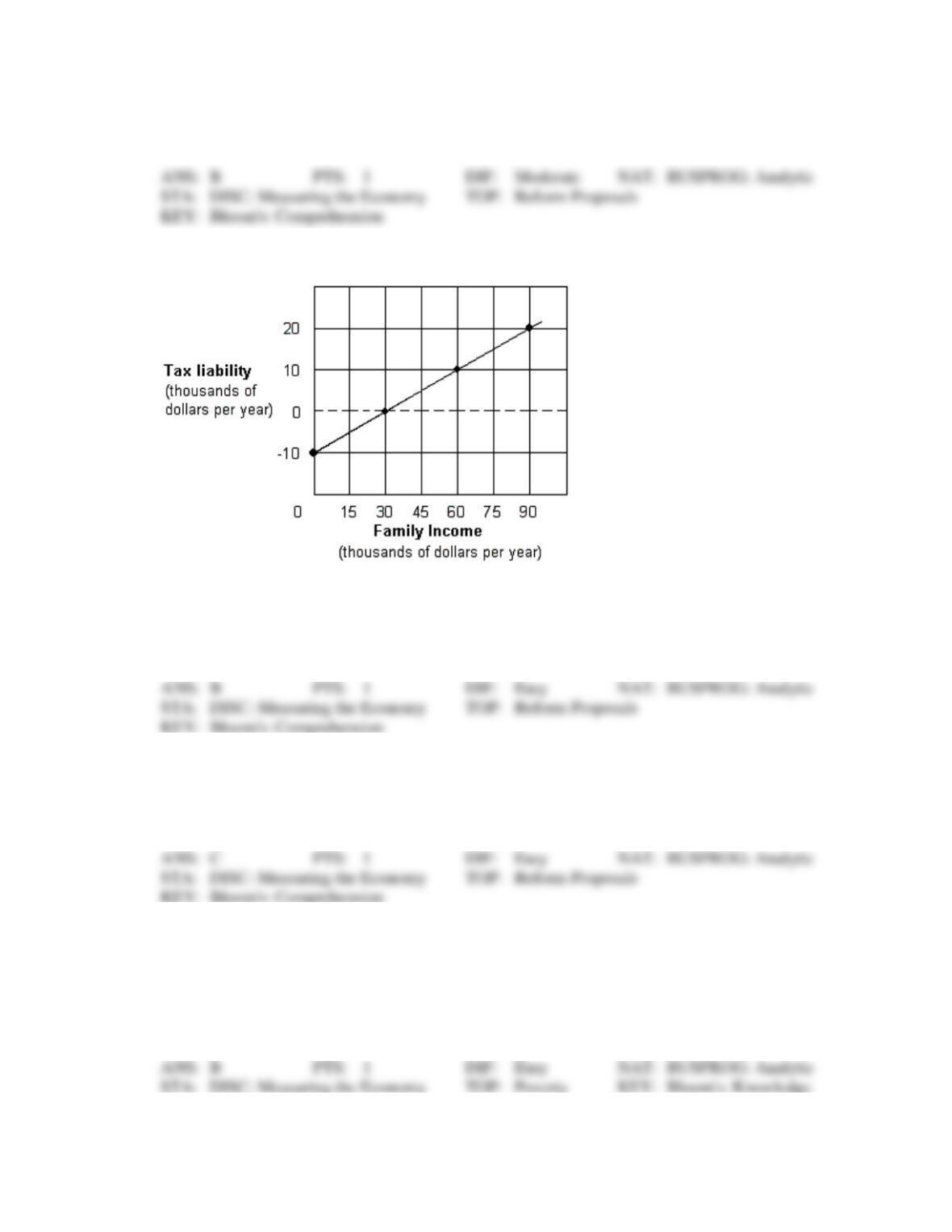
Exhibit 12-8 Negative income tax for a family
79. Under the negative income tax shown in Exhibit 12-8, what cash payment would a family with no
earned income receive from the government?
a.
$0.
c.
$15,000.
b.
$10,000.
d.
$30,000.
80. In Exhibit 12-8, consider a family that earns less than the break-even income level. For each $1 of
earned income, this family’s government payment will be reduced by:
a.
$0.10.
c.
$0.33.
b.
$0.25.
d.
$0.50.
81. Starting in 1964, the U.S. government has defined the poverty line as income at or below ________
the amount of money needed to buy a minimum diet for all family members.
a.
two times
b.
three times
c.
four times
d.
five times
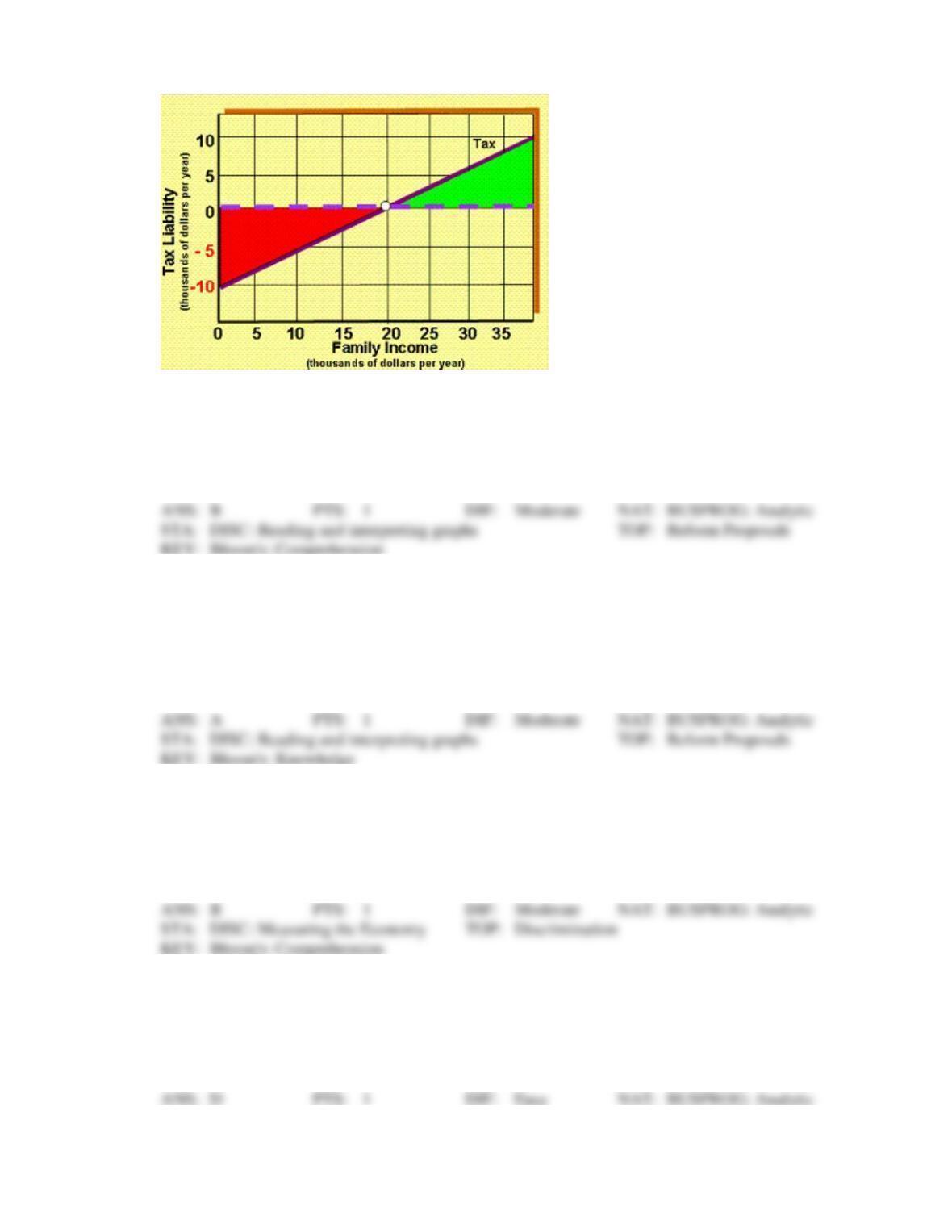
82. Exhibit 12-9 Negative Income Tax
As shown in Exhibit 12-9, a family of four does not pay income taxes at:
a.
an income of $25,000.
b.
any income between zero and $20,000.
c.
all levels of income.
d.
any income above $20,000.
83. As shown in Exhibit 12-9, a family of four with an income of $20,000 receives ____ from the
government:
a.
zero payment
b.
the break-even income of $20,000
c.
a $10,000 payment
d.
a $10,000 tax deferment
84. If there is employment discrimination against minorities, this will cause the:
a.
supply of their services to increase, and their wages to fall.
b.
demand for their services to decline, and their wages to fall.
c.
supply of their services to decline, and their wages to rise.
d.
demand for their services to decline, and their wages to rise.
85. Which of the following might increase the supply curve of labor?
a.
Elimination of discrimination against blacks.
b.
Elimination of discrimination against females.
c.
Easing licensing requirements.
d.
All of these.
86. Which of the following is a result of discrimination?
a.
Two groups of workers earning different wages.
b.
Two groups of workers paid the same wage, but proportionally fewer of one group are
employed.
c.
Equal pay and equal employment opportunities for two groups of workers with different
productivities.
d.
No workers from a particular group are employed.
87. Which of the following might increase the supply curve of labor?
a.
Increasing licensing requirements.
b.
Increasing discrimination against females.
c.
Increasing discrimination against blacks.
d.
All of the above.
e.
None of the above.
88. Consider a law that limits women’s access to certain “dangerous” occupations like coal mining and
military combat service. Such a law would likely reduce women’s wages because:
a.
women would be overqualified for “non-dangerous” jobs.
b.
labor supply in female-intensive occupations would increase.
c.
women would be less likely to obtain college degrees.
d.
comparable worth would no longer exist between men’s and women’s occupations.
89. Which of the following statements is true?
a.
Discrimination against women and blacks reduces the demand for these workers resulting
in lower wages paid these workers.
b.
Discrimination is no longer a problem in the United States.
c.
A negative income tax system is a plan where everyone pays the same percentage of their
income as taxes.
d.
A negative income tax system is a plan where those below a certain income receive a cash
payment from government.
90. Comparable worth is the principle that:
a.
goods and services priced the same have about the same worth.
b.
the wage rate equals the value of productivity.
c.
men and women should be paid comparably.
d.
employees who perform comparable jobs should be paid the same wage.
91. Some people believe that employees should be paid the same wages when their jobs, although
different, require similar levels of education, training, experience, and responsibility. This principle is
known as:
a.
the equal-pay-for-equal work doctrine.
c.
marginal productivity theory.
b.
Lorenz equivalence.
d.
comparable worth.
TRUE/FALSE
1. In recent years, the poorest 20 percent of the U.S. population received approximately 15 percent of the
total income.
2. The distribution of income has become more equal since 1929.
3. Critics of an equal distribution of income argue that the effect would be to reduce the incentive to be
productive.
4. Contrary to popular belief, the richest families in the United States became slightly poorer in recent
years.
5. Since the 1970s, the percentage of total income earned by the poorest 20 percent of American families
has fallen.
6. Critics of an equal distribution of income argue that the effect would be to raise the incentive to be
productive.
7. The Lorenz curve represents the distribution of income.
8. The Lorenz curve is best used to measure international competitiveness.
9. The Lorenz curve represents the distribution of non-cash benefits.
10. The Lorenz curve is best used to measure the distribution of income.
11. If a country finds that its Lorenz curve is moving further away from the diagonal, this means its
income is becoming more unevenly distributed over time.
12. Economists can illustrate an uneven distribution of income by sketching a Lorenz curve that lies above
the diagonal.
13. The distribution of income in developed countries is less egalitarian than less developed countries.
14. Food stamps and Medicaid are in-kind transfer programs.
15. In determining the poverty level, the Census Bureau counts cash transfers, but not in-kind transfers,
thereby understating the actual amount of antipoverty transfers made.
16. The government defines poverty as an income level less than four times the cost of a minimal diet.
17. When determining whether a family’s income is below the official poverty rate, non-cash benefits from
the government, such as food stamps, housing and medical benefits, are also included.
18. Since 1959 the fraction of persons below the poverty line has fallen.
19. Wage discrimination means workers with equal productivity are paid unequal wages, or workers with
unequal productivity are paid equal wages.
20. The geographic region in the United States with the highest poverty rate is the South.
21. In the United States, families headed by single women have higher poverty rates than families headed
by single men or by married couples.
22. Official figures indicate that the percentage of persons below the poverty level in the U.S. is more
today than it was in 1959.
23. The government defines poverty as an income level less than three times the cost of a minimal diet.
24. In-kind assistance programs are based on the direct transferring of goods and services to the poor.
25. Medicaid is an example of a cash assistance poverty program.
26. An example of in-kind assistance to the poor is TANF.
27. Negative income tax plans have the advantage of increasing work incentives in comparison to existing
welfare programs without work incentives.
28. If a negative income tax system were implemented, then the poor would have no incentive to find
work.
29. Negative income tax plans have the disadvantage of decreasing work incentives in comparison to
existing welfare programs without work incentives.
30. Under a negative income tax system, people can make payments to or receive them from the IRS.
31. A negative income tax program provides a simple way to assist the unemployed.
32. Under a negative income tax program, the higher the income earned in the marketplace, the higher will
be the family’s after-tax income.
33. Discrimination lowers the average wage of members of one group of workers in spite of laws that
require equal pay for all workers.
34. Wage discrimination means minority workers are paid unequal wages.
35. Discrimination raises the average wage of members of one group of workers in spite of laws that
require equal pay for all workers.
ESSAY
1. Make a case for income inequality.
2. What is the official definition of the poverty line? What are some causes of poverty?
3. Describe the advantages that a negative income tax has over other programs that have the same
purpose.
4. Describe the comparable worth controversy?