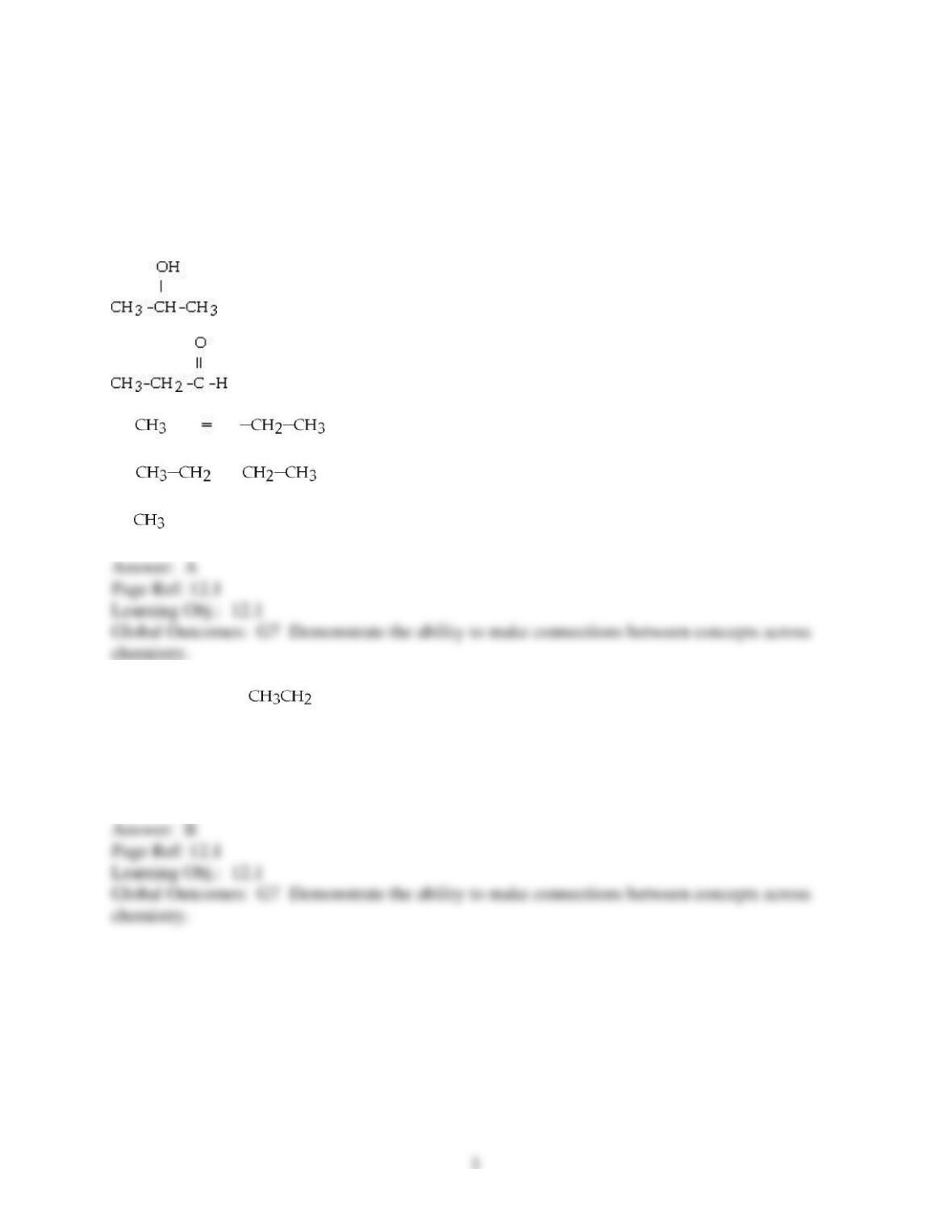
Introduction to General, Organic & Biological Chemistry, 12e (Timberlake)
Chapter 12 Alcohols, Thiols, Ethers, Aldehydes, and Ketones
12.1 Multiple-Choice Questions
1) Which one of the following compounds is an alcohol?
A)
B)
C) –CH CH
D) –O–
E) –S–H
2) The compound –SH is in the organic family known as ________.
A) ethers
B) thiols
C) alcohols
D) sulfides
E) amino acids
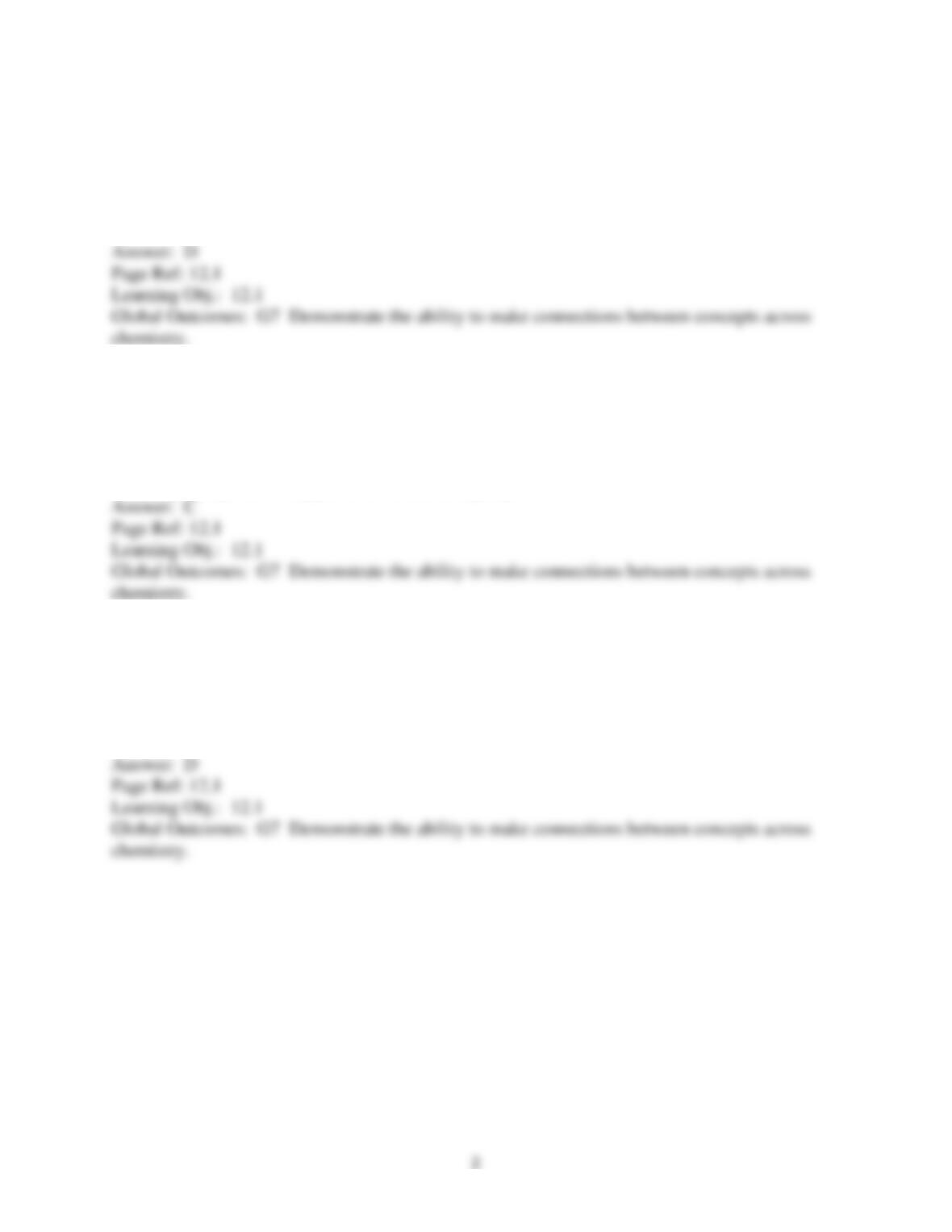
3) A phenol has an -OH group bonded to a(n) ________.
A) singly substituted or unsubstituted carbon
B) disubstituted carbon
C) trisubstituted carbon
D) carbon. in a benzene ring
E) tetrasubstituted carbon
4) Thiols have structures similar to alcohols except that they contain ________.
A) three alcohol groups
B) more than one carbon
C) sulfur in place of oxygen in the functional group
D) lithium in place of oxygen in the functional group
E) nitrogen in place of oxygen in the functional group
5) Thiols are strong-smelling compounds responsible for ________.
A) fruity odors
B) sharp odors
C) flowery odors
D) skunky or bad smelling odors
E) salty odors
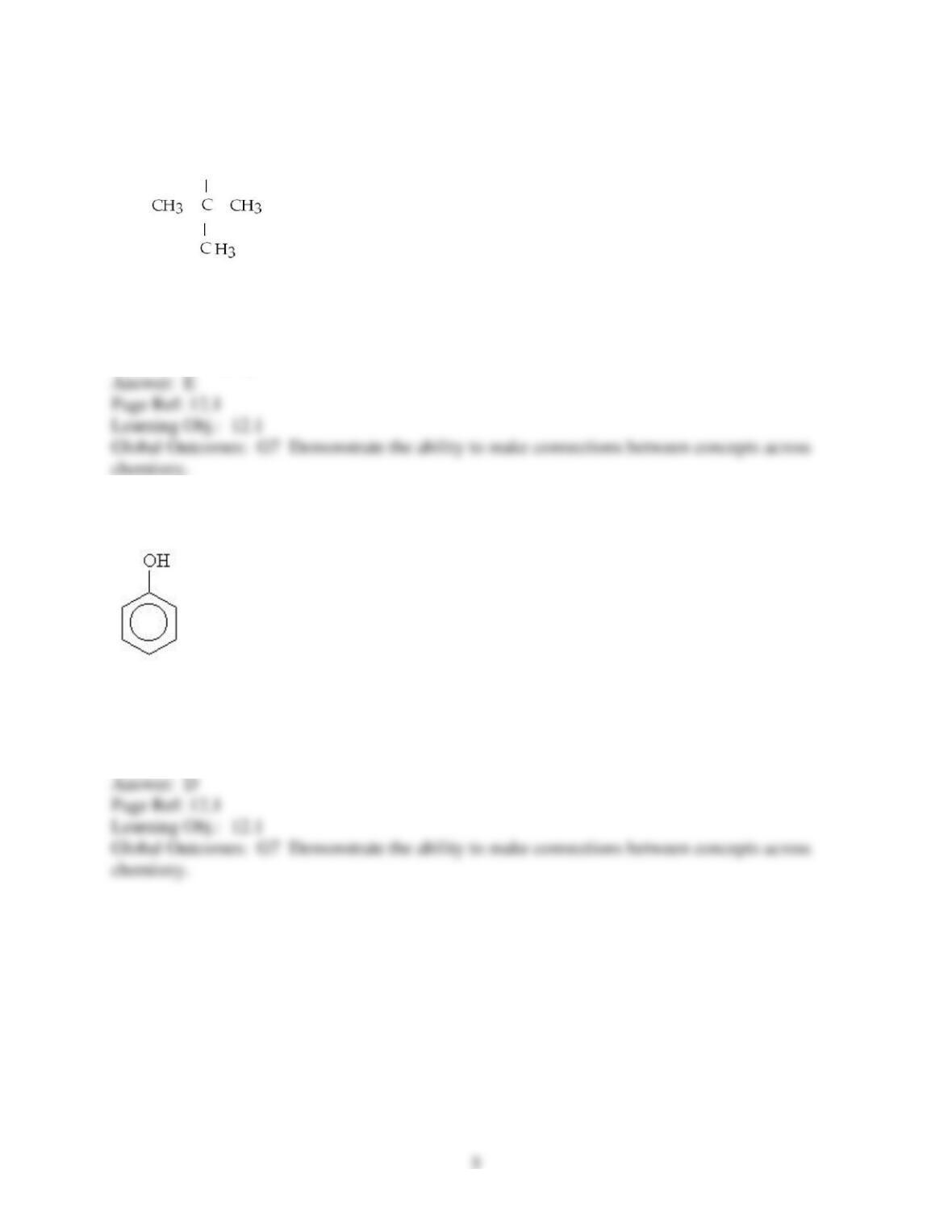
6) What is the IUPAC name of this compound?
OH
– –
A) butanol
B) propanol
C) 2-propanol
D) 2-methylbutanol
E) 2-methyl-2-propanol
7) What is the IUPAC name for this compound?
A) cyclopentanol
B) cyclohexanol
C) cyclobenzenol
D) phenol
E) glycerol
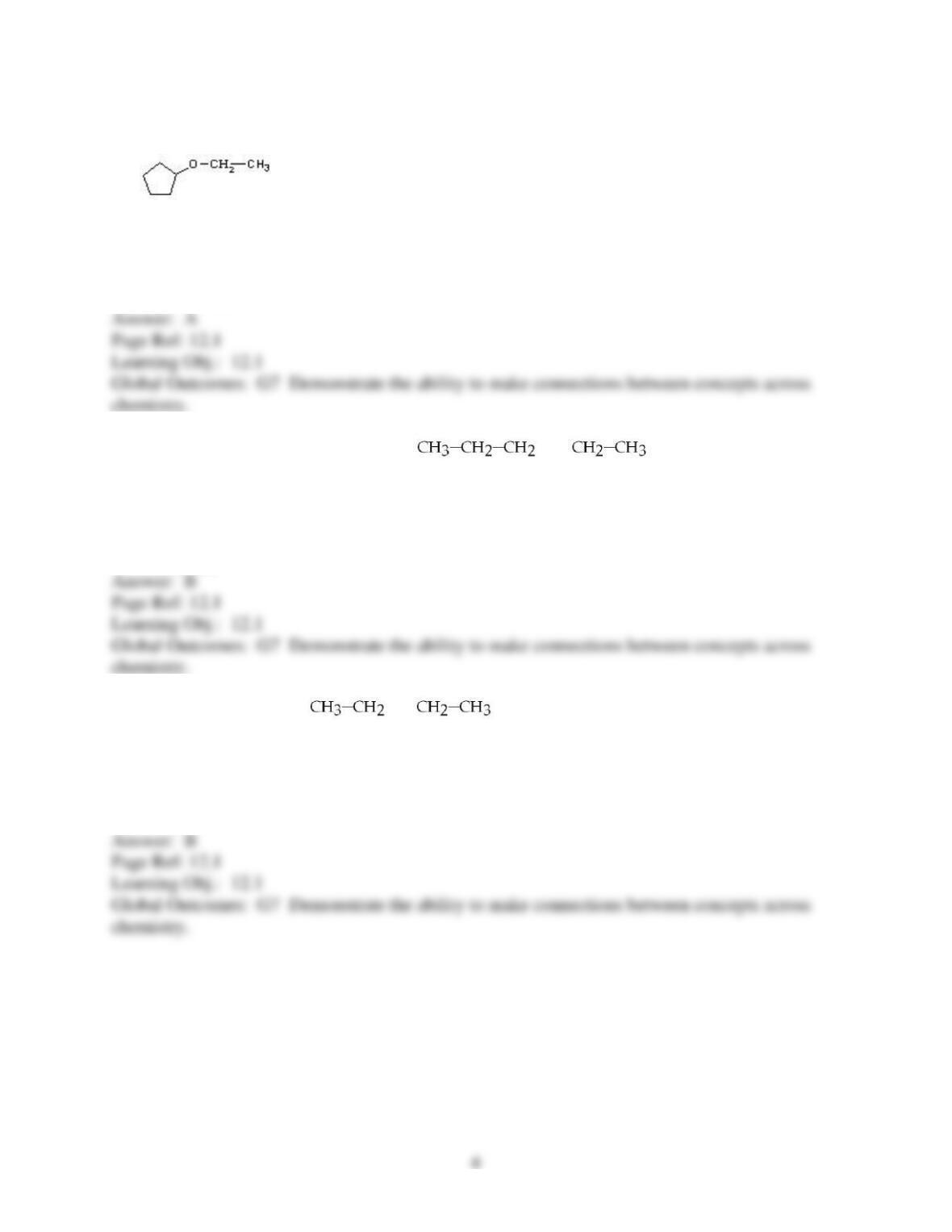
8) What is the common name of this compound?
A) cyclopentyl ethyl ether
B) cyclopentyl ethyl ketone
C) 1-cyclopropyl-1-ethylalcohol
D) ethylcyclopentanol
E) 3-cyclopentylethanol
9) The common name for the compound – O– is ________.
A) 3-pentanol
B) ethyl propyl ether
C) 3-hexanol
D) 3-ether pentane
E) ethyl propyl ketone
10) The common name of –O– is ________.
A) dimethyl ether
B) diethyl ether
C) 2-etherbutane
D) butyl ether
E) dibutyl ether
11) Alcohols contain which functional group?
A) amine
B) amide
C) hydroxyl
D) thiol
12) Which of the following compounds contains an alcohol functional group?
A)
– –O–H
B) O
– –H
C) –O–
D) O
– – –
E) –O–CH2
6
13) Which of the following compounds contains an ether functional group?
A)
– –O–H
B) O
– –H
C) –O–
D) O
– – –
E) –O–H
14) A primary alcohol has a hydroxyl group bonded to a(n) ________.
A) carbon bonded to one alkyl group
B) carbon bonded to two alkyl groups
C) carbon bonded to three alkyl groups
D) aromatic carbon
15) A secondary alcohol has a hydroxyl group bonded to a(n) ________.
A) carbon bonded to one alkyl group
B) carbon bonded to two alkyl groups
C) carbon bonded to three alkyl groups
D) aromatic carbon.
16) Atertiary alcohol has a hydroxyl group bonded to a(n) ________.
7
A) carbon bonded to one alkyl group
B) carbon bonded to two alkyl groups
C) carbon bonded to three alkyl groups
D) aromatic carbon.
17) Which of the following compounds is a weak acid?
A) ethanol
B) ethanal
C) phenol
D) hexanol
E) acetone
18) The alcohol in this list that would be most soluble in water is ________.
A) ethanol
B) 1-octanol
C) 1-pentanol
D) 1-hexanol
E) 1-heptanol
19) What kind of attractive forces do alcohols form between individual molecules?
A) oxygen bonds
B) hydrogen bonds
C) single bonds
D) carbon bonds
E) ionic bonds
20) Which of the following compounds is a secondary alcohol?
A) – CH–O–
B) –O–H
C) OH
D)
– –CH3
H
E) – CH – OH
21) In a tertiary alcohol, how many alkyl groups are attached to the carbon atom bonded to the –
OH group?
A) none
B) one
C) two
D) three
E) four
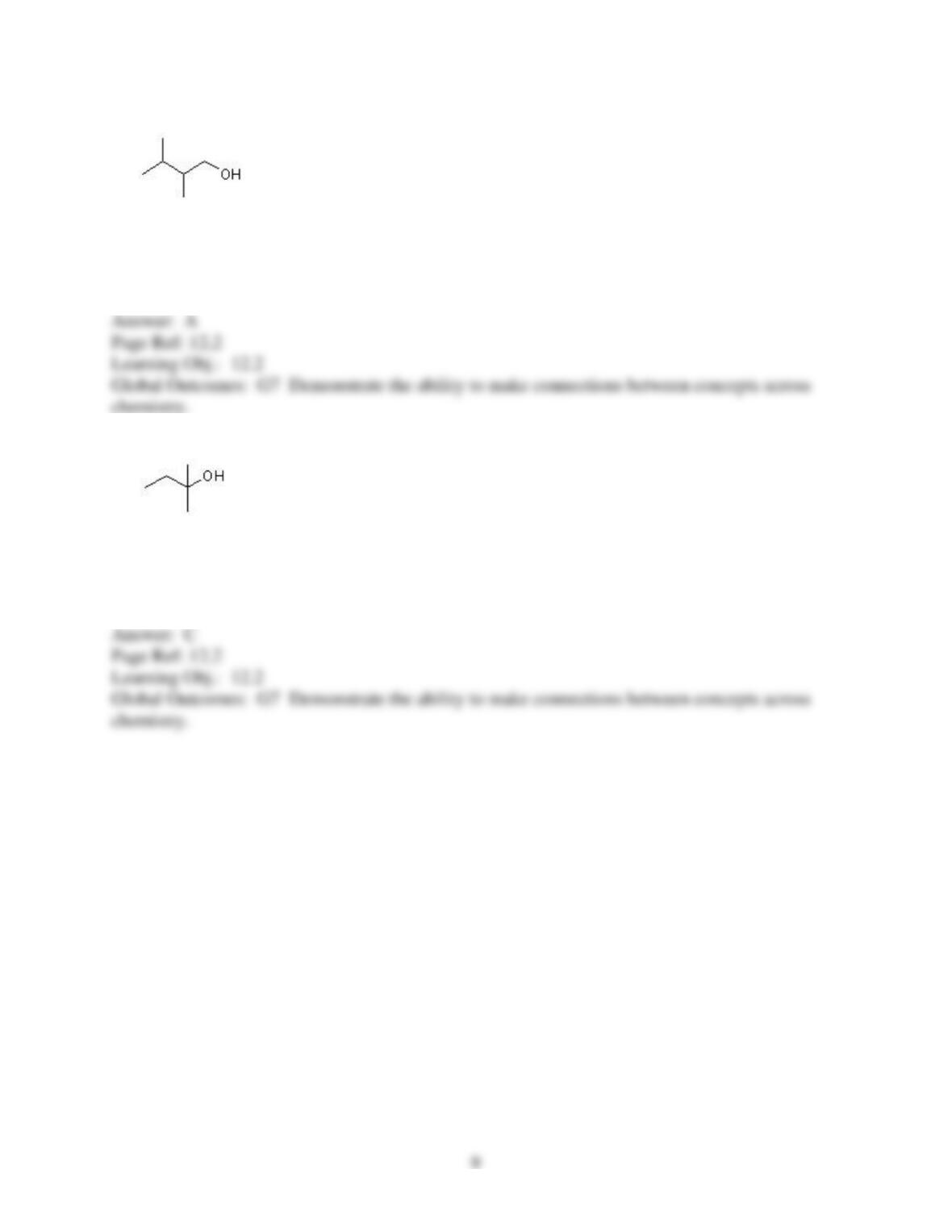
22) The skeletal formula represents what type of alcohol?
A) primary
B) secondary
C) tertiary
D) quaternary
E) none
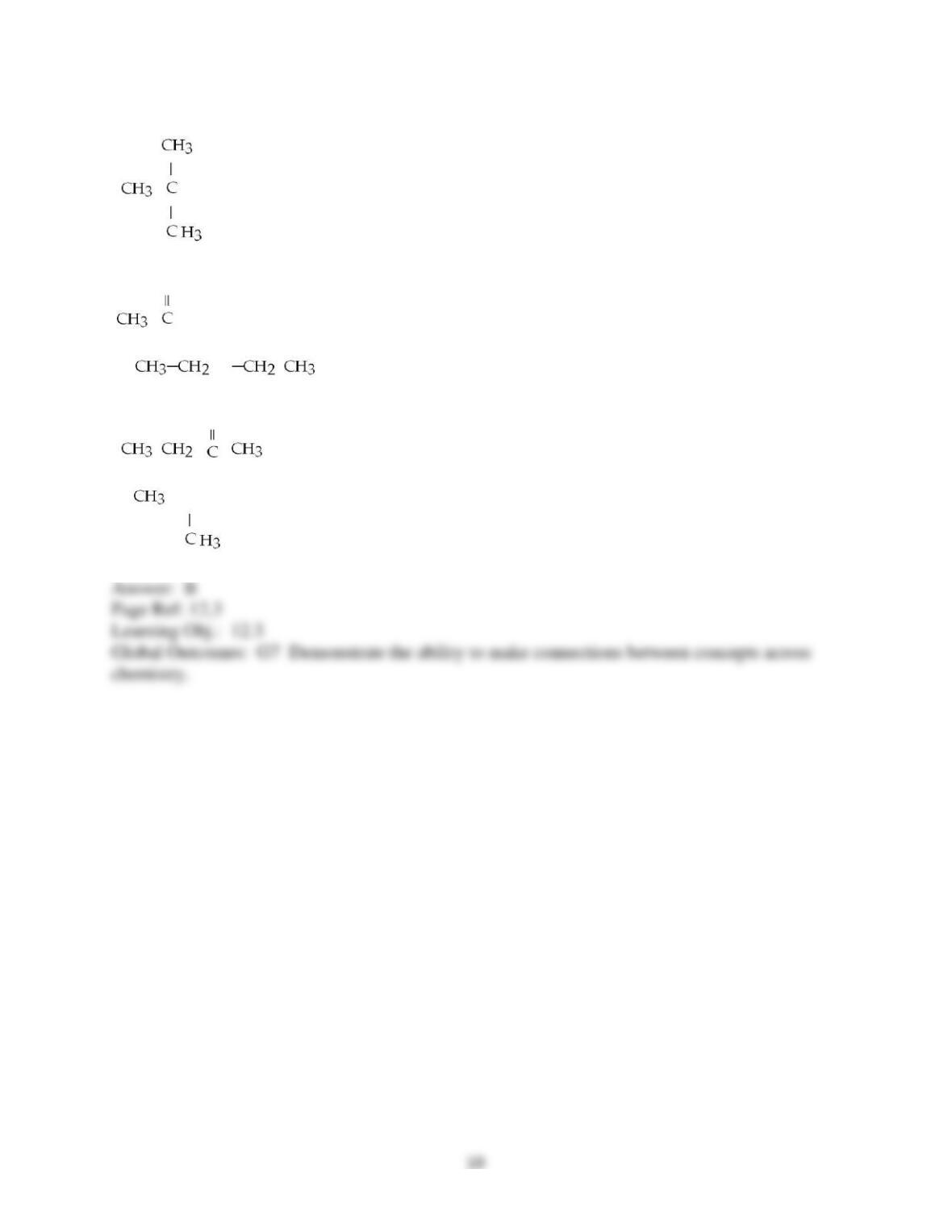
23) The skeletal formula represents what type of alcohol?
A) primary
B) secondary
C) tertiary
D) quaternary
E) none
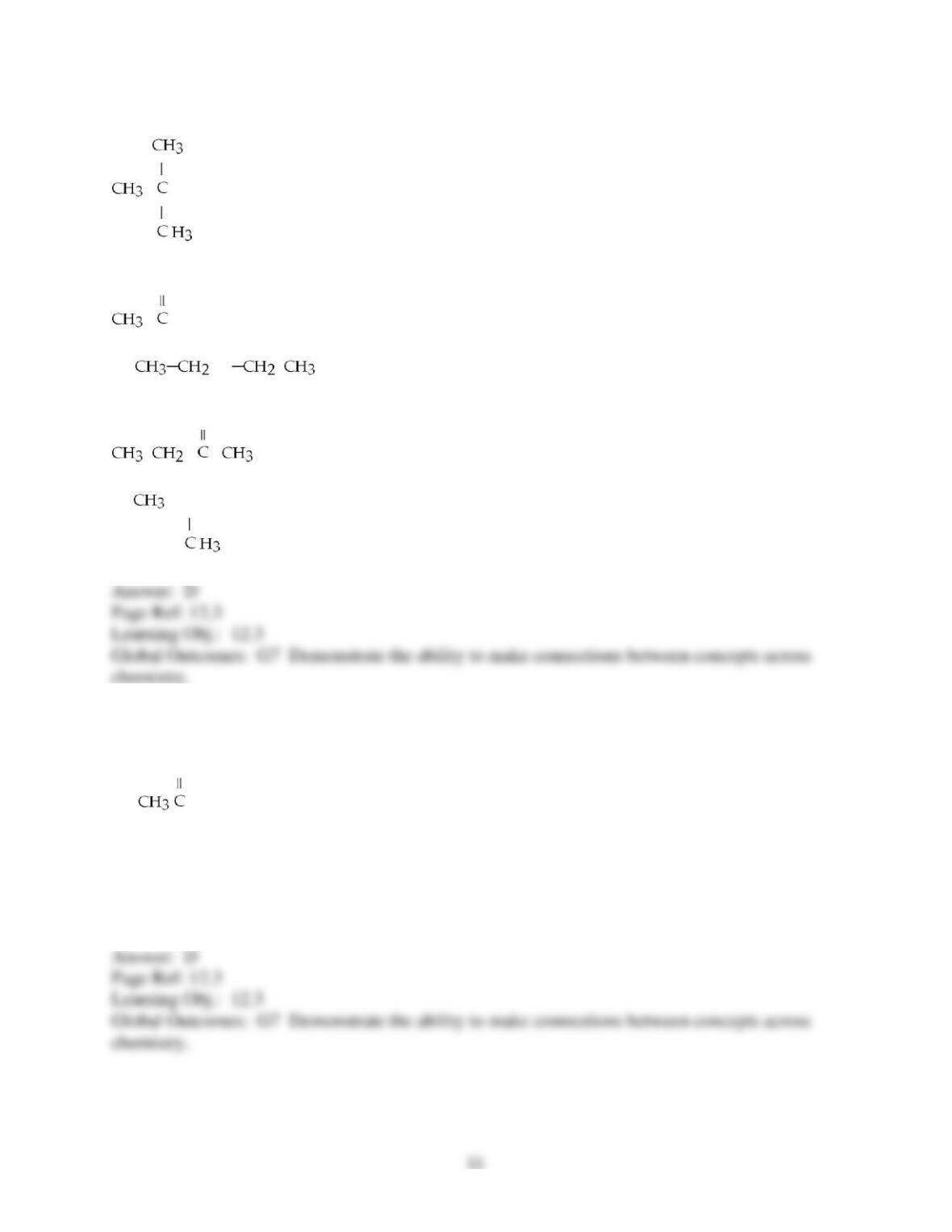
24) Which of the following compounds contains an aldehyde functional group?
A)
– –O–H
B) O
– –H
C) –O–
D) O
– – –
E) – O – CH2
25) Which of the following compounds contains a ketone functional group?
A)
– –O–H
B) O
– –H
C) –O–
D) O
– – –
E) – O – CH2
26) What is the IUPAC name for this compound?
O
H
A) methyl aldehyde
B) 1-ethanaldehyde
C) 1-ethanone
D) ethanal
E) methanal
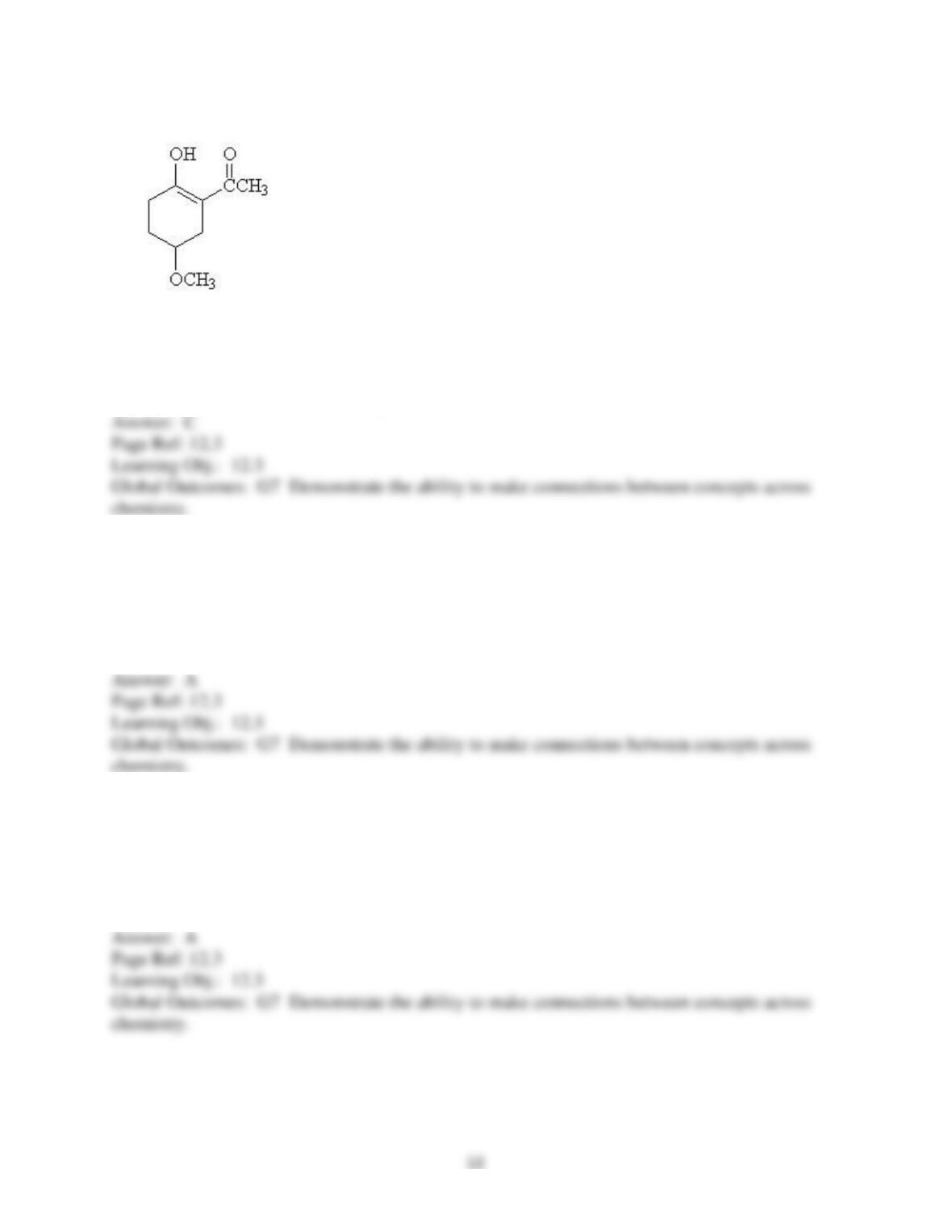
27) Three functional groups found in this compound are ________.
A) alcohol, aromatic, and ether
B) alcohol, aldehyde, and ether
C) alcohol, ether, and ketone
D) aldehyde, ether, and carboxylic acid
E) cycloalkene, alcohol, and carboxylic acid
28) In all aldehydes except formaldehyde, the carbonyl group is bonded to how many hydrogen
atoms?
A) one
B) two
C) three
D) four
29) In a ketone, the carbonyl group is bonded to how many hydrogen atoms?
A) none
B) one
C) two
D) three
E) four
30) The carbonyl group consists of ________.
A) carbon-oxygen-hydrogen attached by single bonds
B) carbon and oxygen attached by a single bond
C) carbon and oxygen attached by a double bond
D) carbon and oxygen attached by a triple bond
E) a carbon-oxygen-carbon attached by single bonds
31) In the IUPAC naming system, a ketone is named by replacing the -e in the corresponding
alkane name with ________.
A) yne
B) ene
C) al
D) one
E) ol
32) In the IUPAC naming system, an aldehyde is named by replacing the e of the name of the
corresponding alkane with ________.
A) yne
B) ene
C) al
D) one
E) ol
33) Acetone is a ketone commonly used as a ________.
A) preservative
B) flavoring agent
C) fuel
D) solvent
E) drain cleaner
34) The common name for butanone, a readily available solvent, is ________.
A) methyl acetone
B) ethyl methyl ketone
C) β-butanone
D) butyl ketone
E) butyl ether
35) Formaldehyde is used industrially to make ________.
A) polymers
B) insulating materials
C) carpeting
D) all of the above
E) none of the above
36) Formalin is ________.
A) another name for formaldehyde.
B) a plastic.
C) an aqueous solution of formaldehyde.
D) an excellent solvent.
E) a polymer.
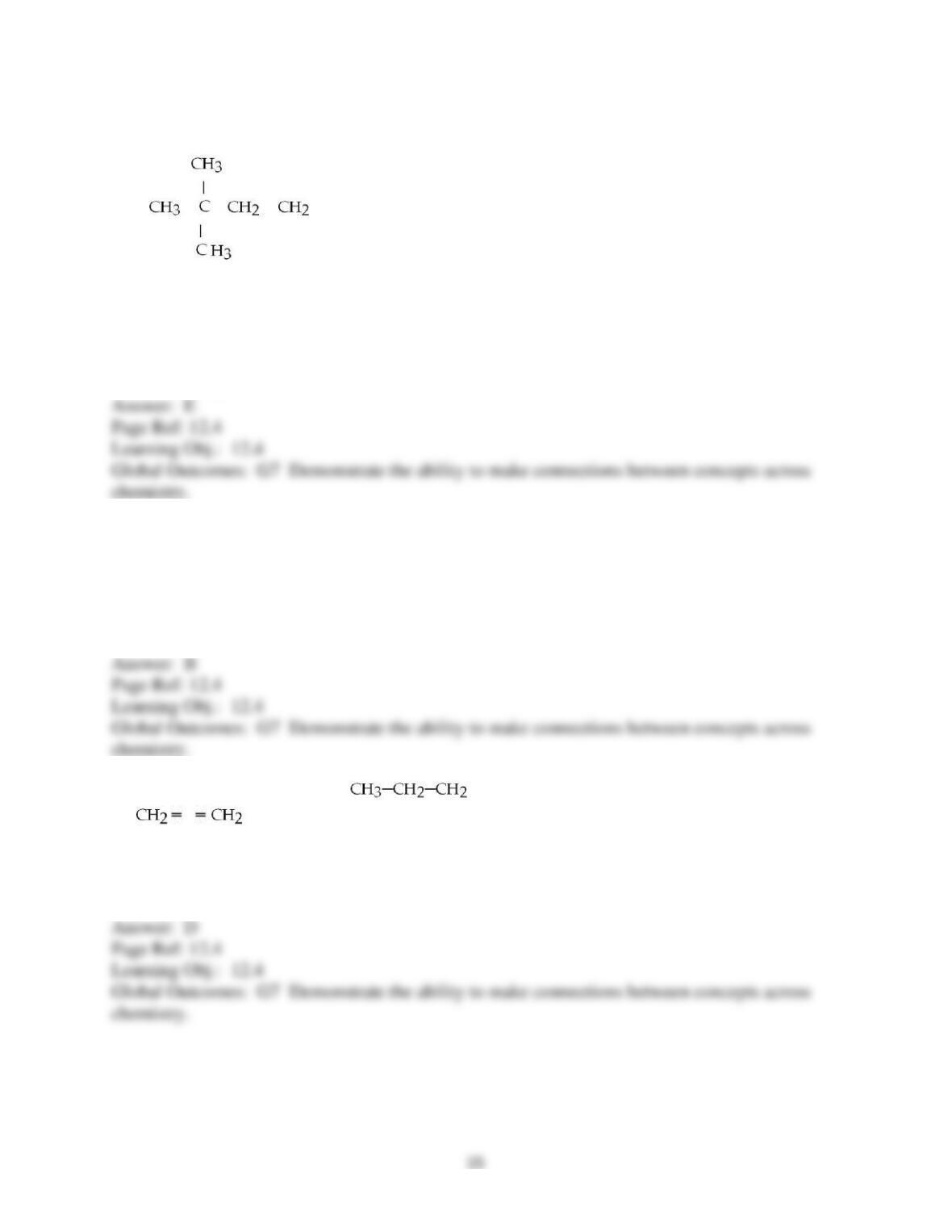
37) What is the product when this compound undergoes gentle oxidation?
– – – – OH
A) hexanal
B) 2,2-dimethylbutanal
C) 2,2-dimethyl-4-butanone
D) 3,3-dimethyl-1-butanone
E) 3,3-dimethylbutanal
38) The dehydration of an alcohol in the presence of a strong acid yields ________.
A) an alkane.
B) an alkene.
C) a ketone.
D) an alcohol.
E) an aldehyde.
39) The dehydration product of –O–H in the presence of acid is ________.
A) C
B) cyclopropane
C) cyclopropene
D) propene
E) propyne
40) When 2-methyl-2-butanol undergoes dehydration in acid, one product is ________.
A) 2-methyl-2-butene
B) 2-methylbutanone
C) 2-pentanone
D) 2-methylbutanal
E) hexene
41) In the oxidation of an alcohol to a ketone, there is ________.
A) a loss of hydrogen
B) a loss of oxygen
C) a loss of carbon
D) a gain of hydrogen
E) a gain of oxygen
42) What classification of alcohol undergoes oxidation to yield a ketone?
A) primary alcohol
B) both primary and secondary alcohols
C) secondary alcohol
D) all classes of alcohols
E) both secondary and tertiary alcohols
43) Tertiary alcohols cannot be oxidized because ________.
A) there are no oxygen atoms to remove from the alcohol carbon
B) there are no hydrogen atoms attached to the alcohol carbon
C) the alcohol carbon is bonded to four groups so no oxygen can be added to it
D) the alcohol carbon is bonded to four groups so no hydrogen can be added to it
E) the alcohol carbon is too electronegative to have hydrogen removed from it
44) What classification of alcohol is resistant to oxidation?
A) primary
B) secondary
C) tertiary
D) quaternary
E) none
45) In the dehydration of an alcohol to an alkene, what is produced in addition to the alkene?
A) water
B) hydrogen
C) oxygen
D) carbon dioxide
E) carbon monoxide
46) When a primary alcohol is strongly oxidized, the product is ________.
A) another alcohol
B) a carboxylic acid
C) an aldehyde
D) an alkane
E) a ketone
47) Secondary alcohols are oxidized to ________.
A) carboxylic acids
B) ketones
C) aldehydes
D) esters
E) ethers
48) Tertiary alcohols are oxidized to ________.
A) secondary alcohols
B) ketones
C) aldehydes
D) carboxylic acids
E) none of the above
49) Thiols can be oxidized to ________.
A) disulfides
B) aldehydes
C) ketones
D) carboxylic acids
E) thioethers
50) An aldehyde forms a carboxylic acid by ________.
A) oxidation
B) reduction
C) hydrolysis
D) neutralization
E) hydrogenation
51) Which of the following compounds would give a positive Tollens’ test?
A) methanol
B) acetone
C) diethyl ether
D) phenol
E) butanal
12.2 True/False Questions
1) Alcohols, ethers, and phenols contain only carbon-oxygen only single bonds.
2) Ethyl ether has been replaced by halogenated anesthetics, which have fewer side effects.
3) Ethers can only be straight chain compounds.
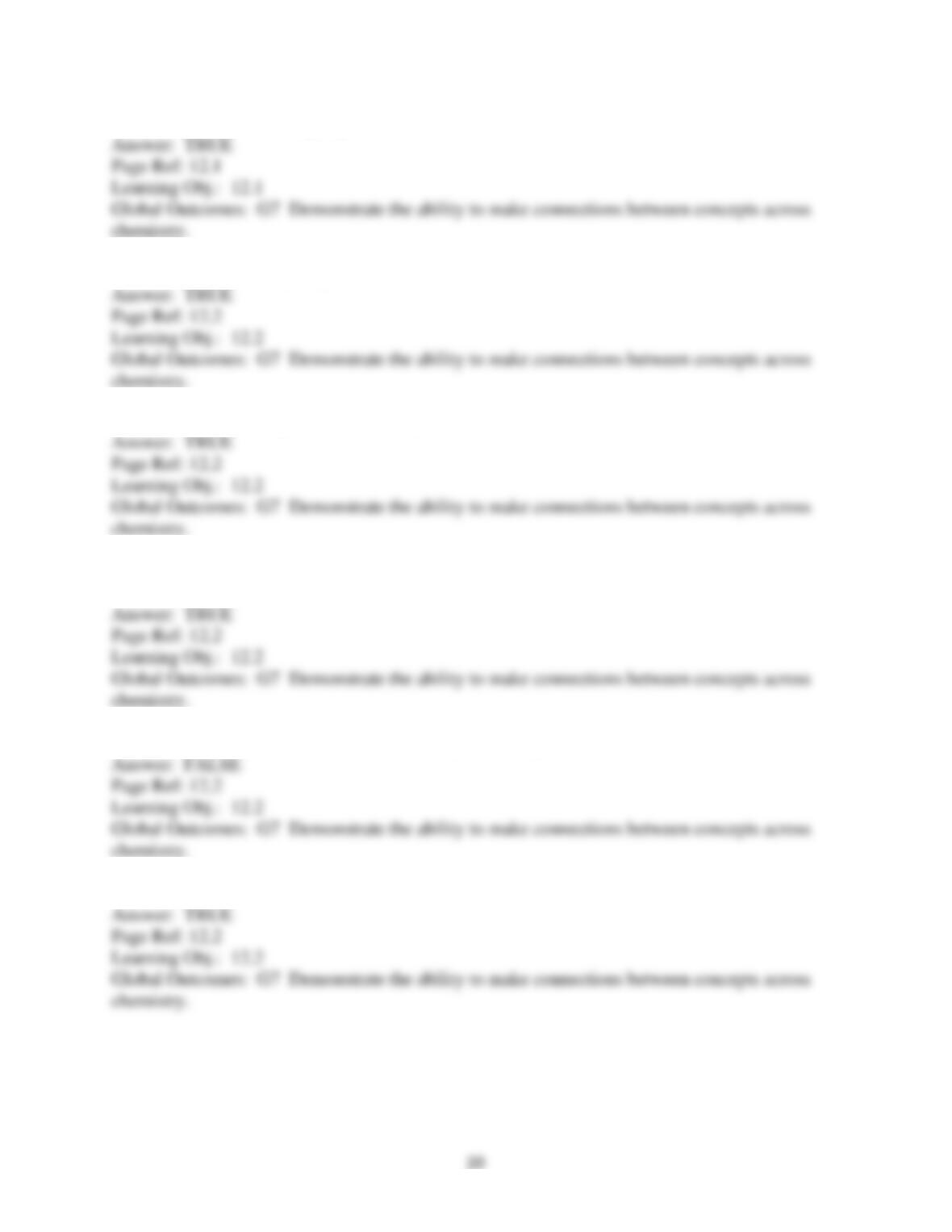
4) This is the skeletal formula for an ether.
5) Thiols contain the -SH group.
6) Alcohols can form hydrogen bonds.
7) Phenol was formerly used as an antiseptic.
8) Alcohols form hydrogen bonds; this accounts for their higher solubility when compared to
similar-sized alkanes.
9) The oxygen atom in alcohols decreases water solubility of the molecule.
10) Phenols behave as weak acids in water.
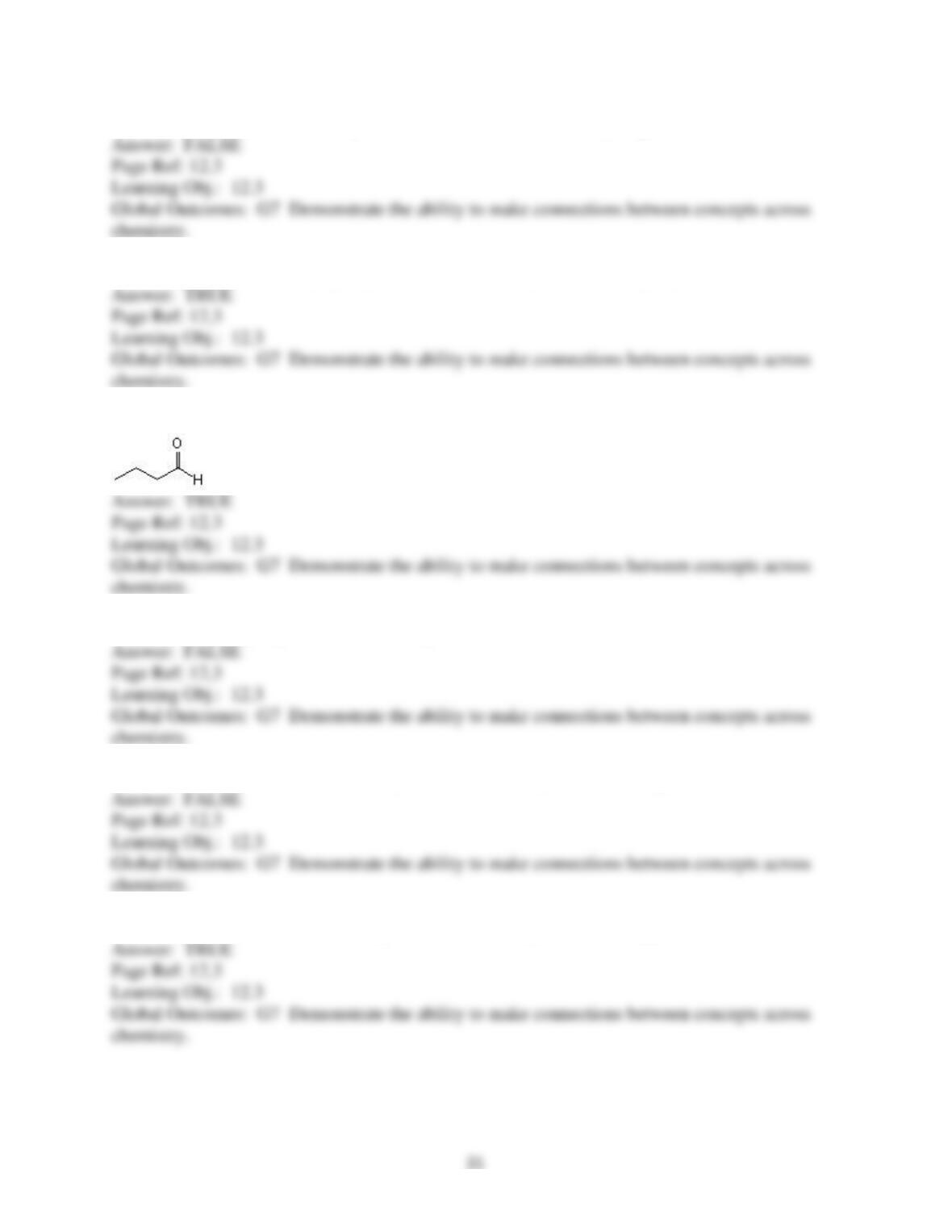
11) All aldehydes have a carbonyl carbon bonded to at least two hydrogens.
12) In a ketone, the carbonyl group is bonded to two alkyl or aromatic groups.
13) This compound is an aldehyde.
14) The carbonyl group does not have a dipole.
15) The suffix -one indicates an aldehyde in the IUPAC system of naming.
16) The suffix -al indicates an aldehyde in the IUPAC system of naming.
17) Acetone is a three-carbon aldehyde.
18) Acetone is sometimes produced in pathological conditions such as diabetes or following
extreme diets.
19) Formaldehyde is used in solution as a germicide and preservative.
20) A secondary alcohol can be easily oxidized to a carboxylic acid.
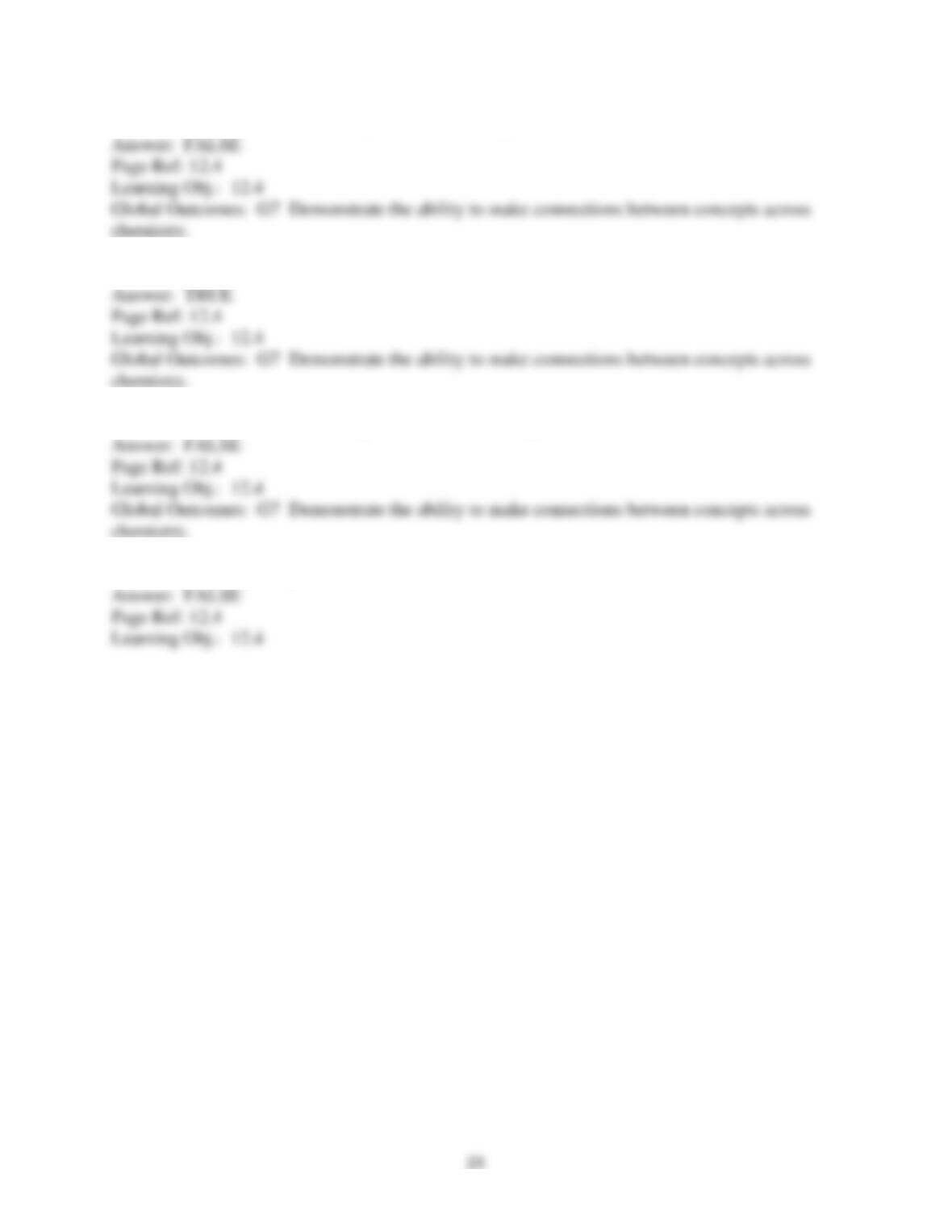
21) This alcohol can be oxidized to a ketone.
22) Alcohols can be dehydrated to form alkenes.
23) Primary alcohols can be oxidized to either aldehydes or ketones.
24) Secondary alcohols can be oxidized to ketones.
25) A tertiary alcohol can be easily oxidized to a carboxylic acid.
26) Ketones will give a positive Tollens’ test.
24
12.3 Matching Questions
Match the structural formula with the correct functional group.
A) aldehyde
B) ether
C) ketone
D) thiol
E) alcohol
1) –O–H
Page Ref: 12.1
Learning Obj.: 12.1
Global Outcomes: G7 Demonstrate the ability to make connections between concepts across
chemistry.
2) –O–
Page Ref: 12.1
Learning Obj.: 12.1
Global Outcomes: G7 Demonstrate the ability to make connections between concepts across
chemistry.
3) –S–H
Page Ref: 12.1
Learning Obj.: 12.1
Global Outcomes: G7 Demonstrate the ability to make connections between concepts across
chemistry.
4) O
–C–H
Page Ref: 12.3
Learning Obj.: 12.3
Global Outcomes: G7 Demonstrate the ability to make connections between concepts across
chemistry.
5)
Page Ref: 12.3
Learning Obj.: 12.3
Global Outcomes: G7 Demonstrate the ability to make connections between concepts across
chemistry.
Select the correct name for the following.
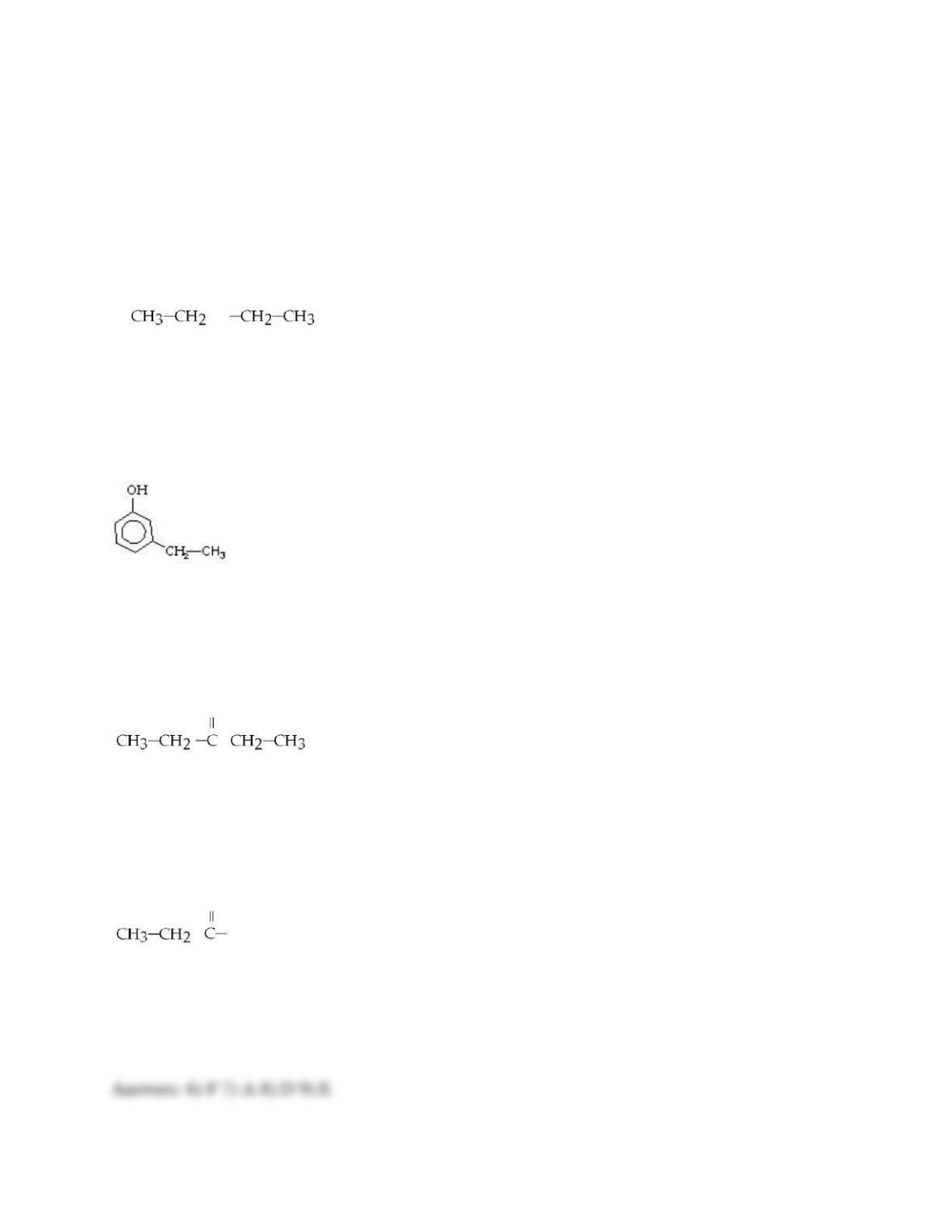
25
A) 3-ethylphenol
B) 1-propanone
C) 3-propanone
D) diethyl ketone
E) propanal
F) diethyl ether
G) 1-ethyl-3-hydroxycyclohexene
6) –O
Page Ref: 12.1
Learning Obj.: 12.1
Global Outcomes:
G7 Demonstrate the ability to make connections between concepts across chemistry.
7)
Page Ref: 12.1
Learning Obj.: 12.1
Global Outcomes: G7 Demonstrate the ability to make connections between concepts across
chemistry.
8) O
–
Page Ref: 12.3
Learning Obj.: 12.3
Global Outcomes: G7 Demonstrate the ability to make connections between concepts across
chemistry.
9) O
–H
Page Ref: 12.3
Learning Obj.: 12.3
Global Outcomes: G7 Demonstrate the ability to make connections between concepts across
chemistry.
Classify the alcohols shown in column 1 as primary, secondary, or tertiary.
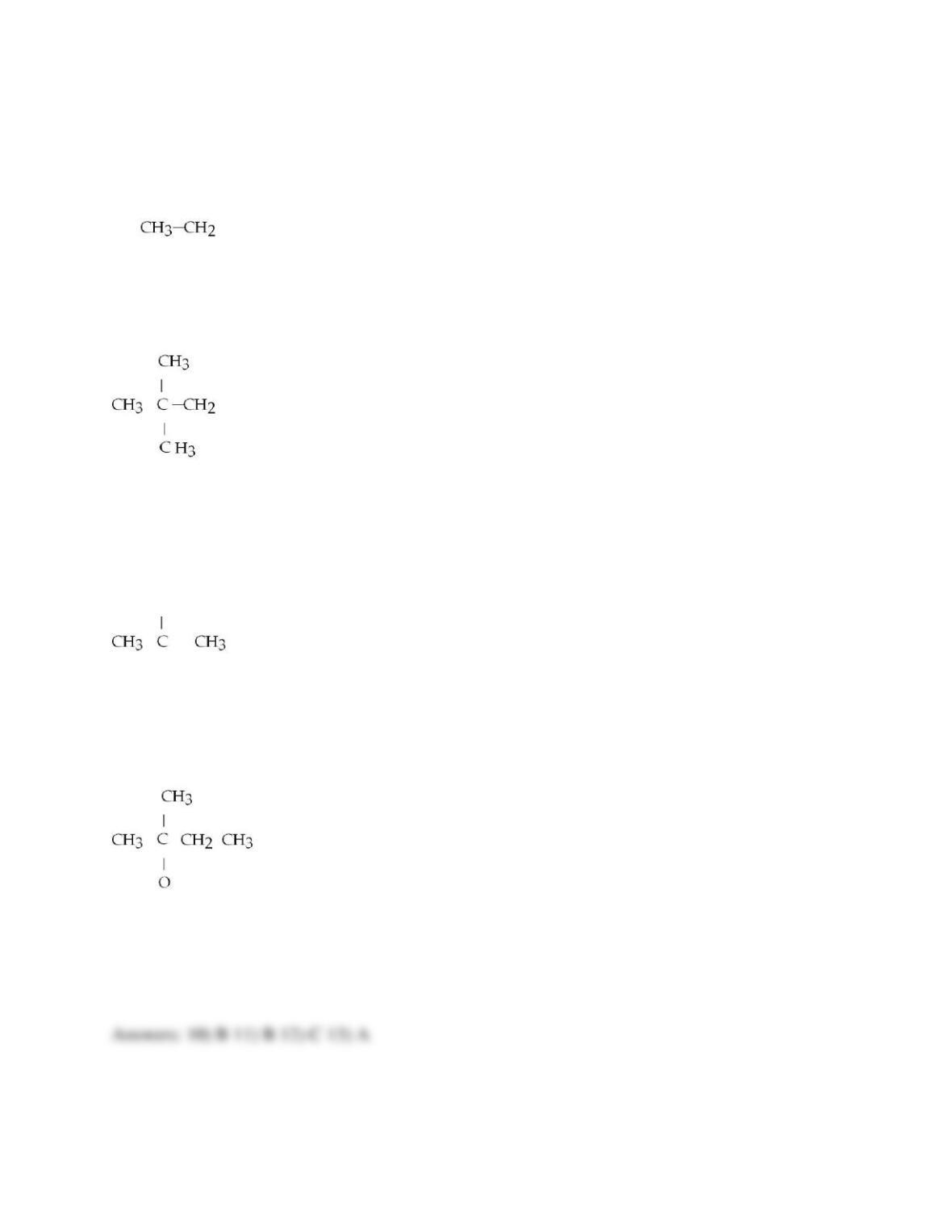
26
A) tertiary
B) primary
C) secondary
10) –O–H
Page Ref: 12.2
Learning Obj.: 12.2
Global Outcomes: G7 Demonstrate the ability to make connections between concepts across
chemistry.
11)
– –O–H
Page Ref: 12.2
Learning Obj.: 12.2
Global Outcomes: G7 Demonstrate the ability to make connections between concepts across
chemistry.
12) OH
–H–
Page Ref: 12.2
Learning Obj.: 12.2
Global Outcomes: G7 Demonstrate the ability to make connections between concepts across
chemistry.
13)
–––
H
Page Ref: 12.2
Learning Obj.: 12.2
Global Outcomes: G7 Demonstrate the ability to make connections between concepts across
chemistry.
Identify the family for each of the following compounds.
A) alcohol
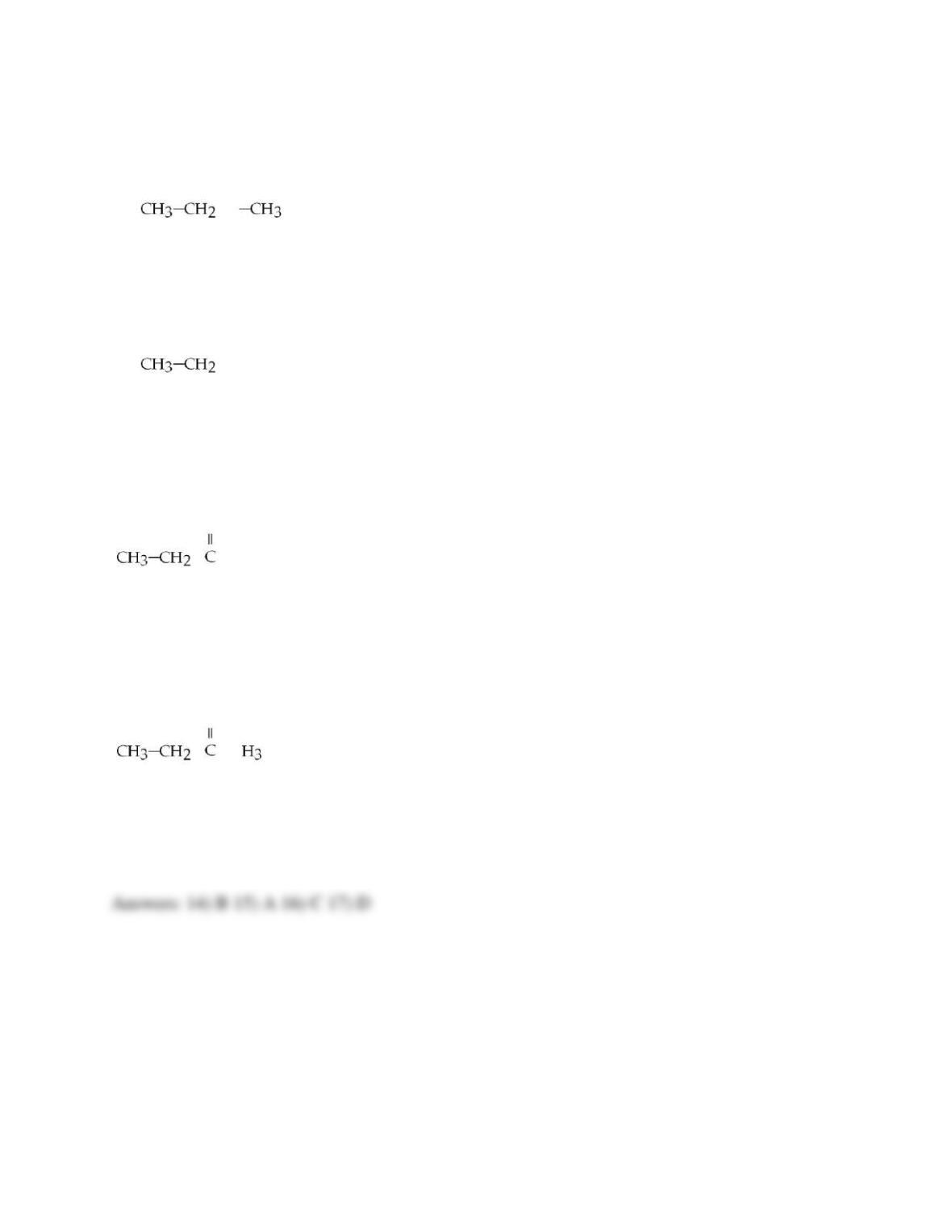
27
B) ether
C) aldehyde
D) ketone
14) –O
Page Ref: 12.1
Learning Obj.: 12.1
Global Outcomes: G7 Demonstrate the ability to make connections between concepts across
chemistry.
15) –OH
Page Ref: 12.1
Learning Obj.: 12.1
Global Outcomes: G7 Demonstrate the ability to make connections between concepts across
chemistry.
16) O
– –H
Page Ref: 12.3
Learning Obj.: 12.3
Global Outcomes: G7 Demonstrate the ability to make connections between concepts across
chemistry.
17) O
– –C
Page Ref: 12.3
Learning Obj.: 12.3
Global Outcomes: G7 Demonstrate the ability to make connections between concepts across
chemistry.
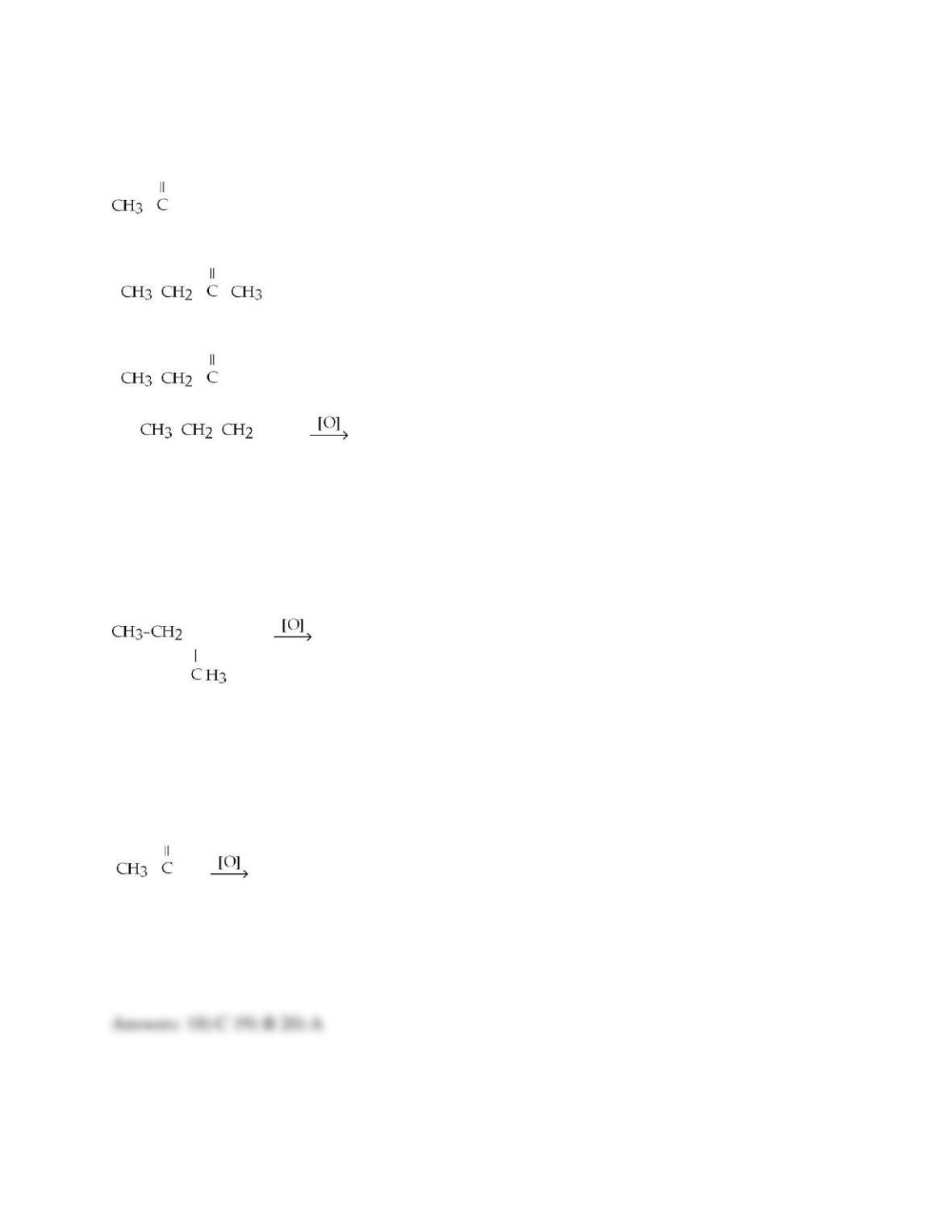
28
Identify the product, if any, that would form in each of the following reactions.
A) O
– –O–H
B) O
– – –
C) O
– – –H
18) –––O–H
Page Ref: 12.4
Learning Obj.: 12.4
Global Outcomes: G7 Demonstrate the ability to make connections between concepts across
chemistry.
19)
–CH–O–H
Page Ref: 12.4
Learning Obj.: 12.4
Global Outcomes: G7 Demonstrate the ability to make connections between concepts across
chemistry.
20) O
– –H
Page Ref: 12.4
Learning Obj.: 12.4
Global Outcomes: G7 Demonstrate the ability to make connections between concepts across
chemistry.