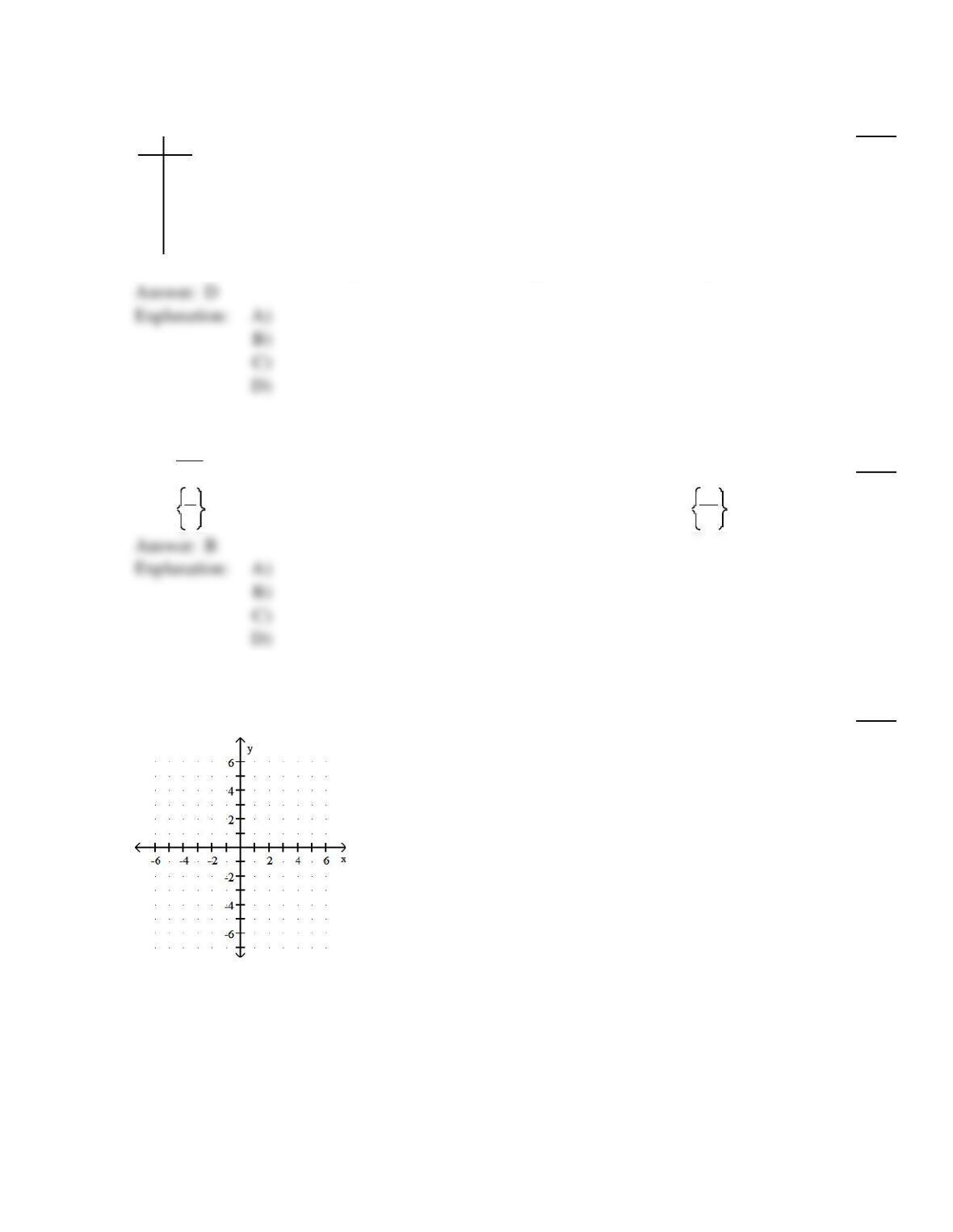
Determine whether the values in the table belong to an exponential function, a logarithmic function, a linear function,
or a quadratic function.
158)
158)
x y
0 1
1 4
216
364
4256
A)
linear
B)
quadratic
C)
logarithmic
D)
exponential
Solve the equation by expressing each side as a power of the same base and then equating exponents.
159)
5–x=1
125
159)
A)
1
3
B)
{3}
C)
{–3}
D)
1
25
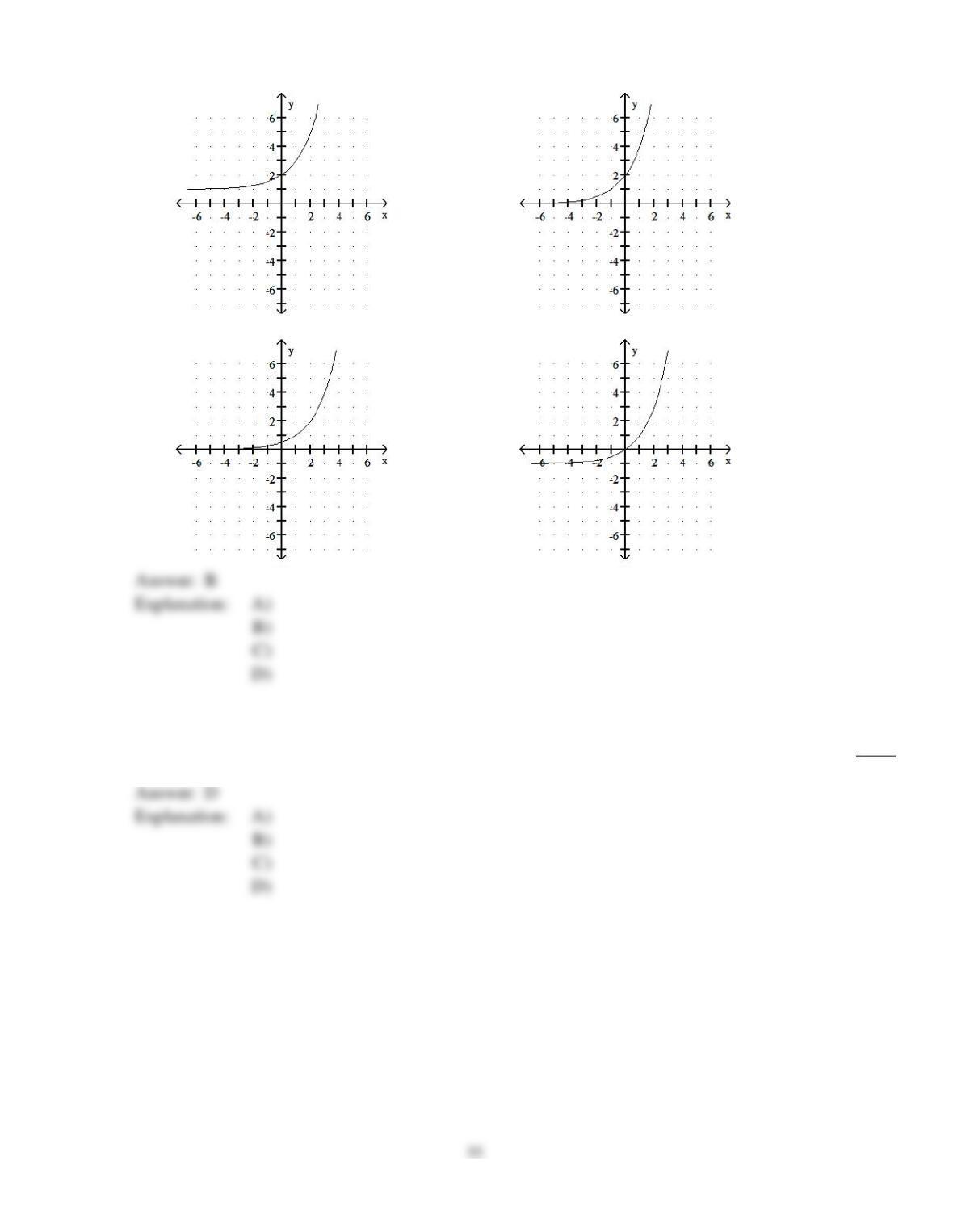
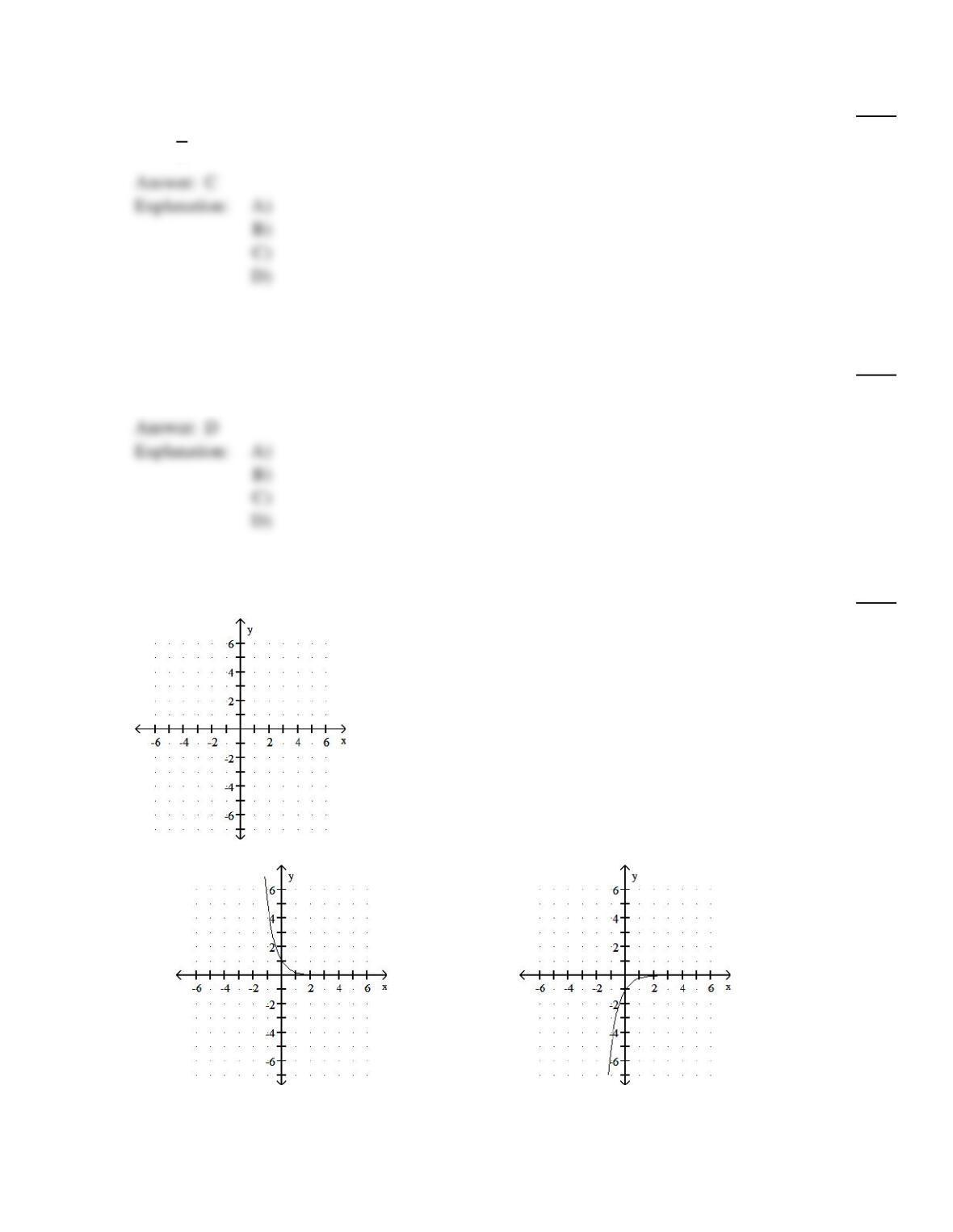
Graph the function.
160)
Use the graph of f(x) =2x to obtain the graph of g(x) =2x +1.
160)
54
A)
B)
C)
D)
Solve the equation by expressing each side as a power of the same base and then equating exponents.
161)
3x=81
161)
A)
{5}
B)
{27}
C)
{3}
D)
{4}
Use properties of logarithms to condense the logarithmic expression. Write the expression as a single logarithm whose
coefficient is 1. Where possible, evaluate logarithmic expressions.
162)
162)
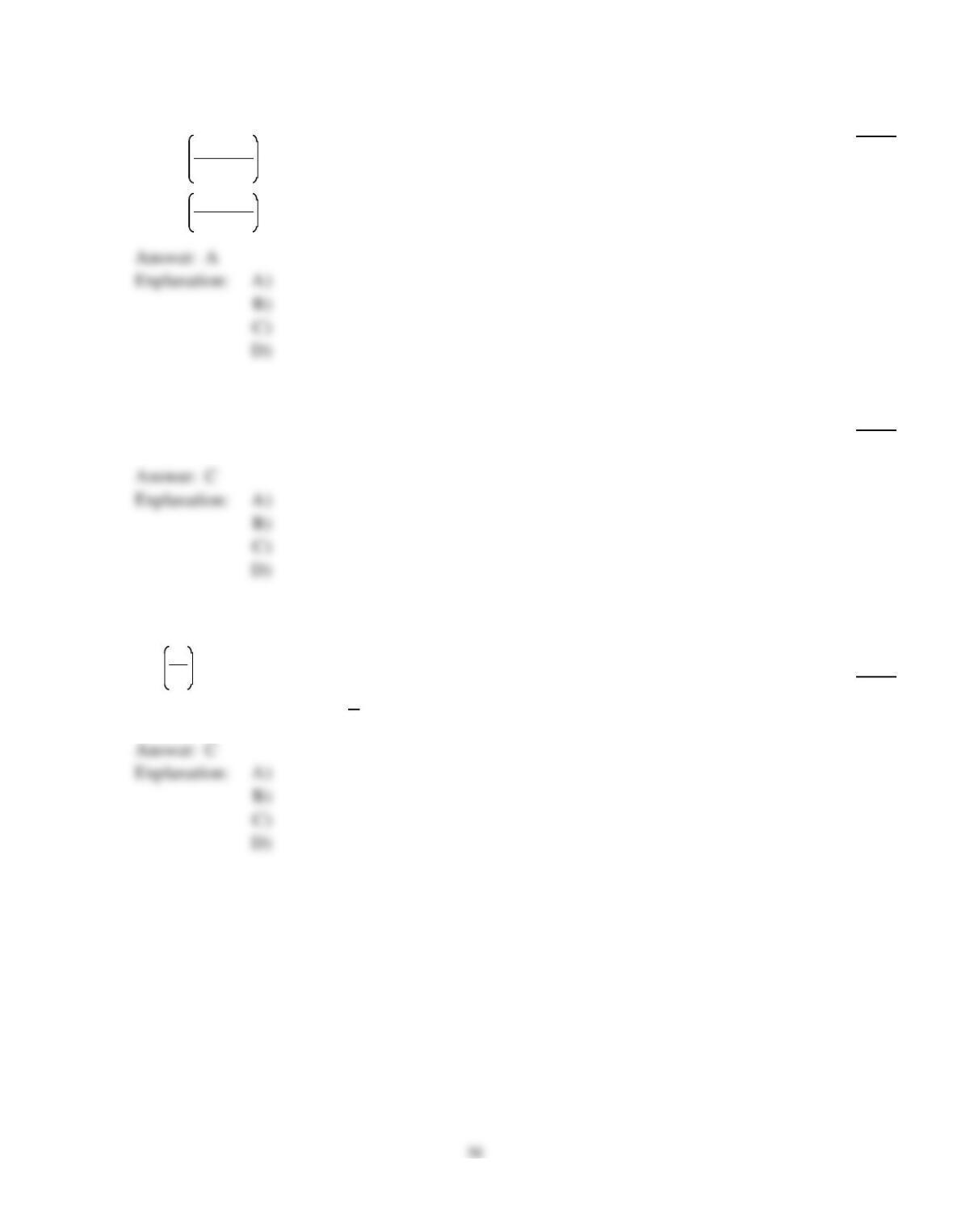
3 ln(x –11) –10 ln x
A)
ln (x –11)3
x10
B)
ln(30x(x –11))
C)
ln 3(x –11)
10x
D)
ln(x10(x –11)3)
Write the equation in its equivalent exponential form.
163)
163)
3=log2x
A)
32= x
B)
x3=2
C)
23= x
D)
2x=3
Use properties of logarithms to expand the logarithmic expression as much as possible. Where possible, evaluate
logarithmic expressions without using a calculator.
164)
log5
25
x
164)
A)
10 –log5 x
B)
2
x
C)
2–log5 x
D)
–2log5 x
165)
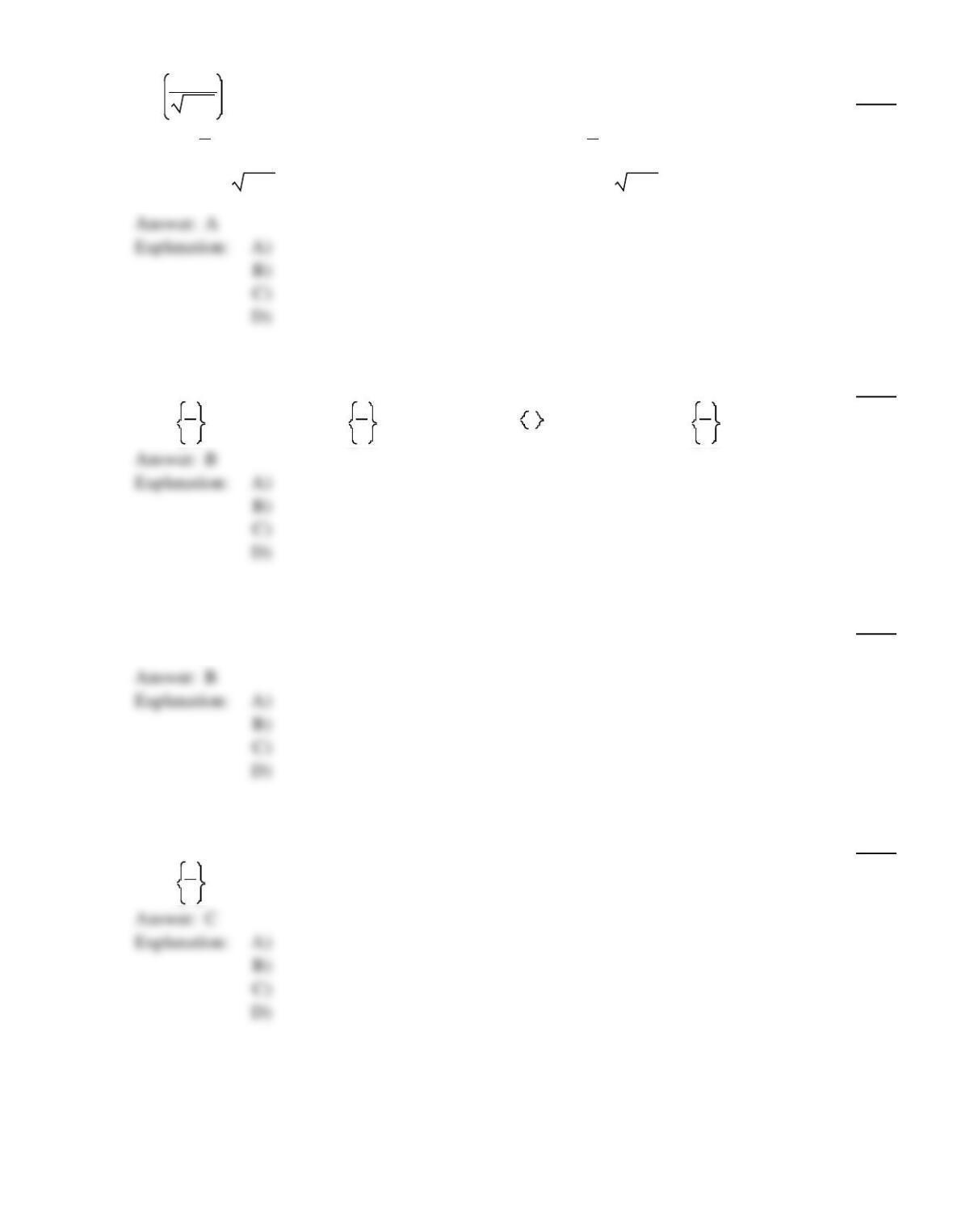
log3
81
x – 1
165)
A)
4–1
2log3(x – 1)
B)
4log33–1
2log3(x – 1)
C)
4–log3x – 1
D)
log381 –log3x – 1
Solve the logarithmic equation. Give an exact answer.
166)
166)
log46–log4 x =2
A)
8
3
B)
3
8
C)
3
D)
3
4
Write the equation in its equivalent logarithmic form.
167)
52=25
167)
A)
log225 =5
B)
log525 =2
C)
log52=25
D)
log255=2
Solve the logarithmic equation. Give an exact answer.
168)
log 3x2=log 3(6x + 7)
168)
A)
7
3
B)
C)
{7, –1}
D)
{7}
57
Evaluate the expression without using a calculator.
169)
ln e9
169)
A)
–9
B)
9
C)
log 9
D)
1
9
Determine whether the values in the table belong to an exponential function, a logarithmic function, a linear function,
or a quadratic function.
170)
170)
x y
1
5–1
1 0
5 1
25 2
125 3
A)
quadratic
B)
logarithmic
C)
exponential
D)
linear
Solve the equation by expressing each side as a power of the same base and then equating exponents.
171)
4(5 – 3x) =1
256
171)
A)
{128}
B)
1
64
C)
{–3}
D)
{3}
Solve the logarithmic equation. Give an exact answer.
172)
log8x2= 4
172)
A)
{256}
B)
{64, –64}
C)
{4096}
D)
{4 2, –4 2}
173)
173)
log(x + 4) = log(4x – 2)
A)
6
5
B)
1
3
C)
–2
D)
2
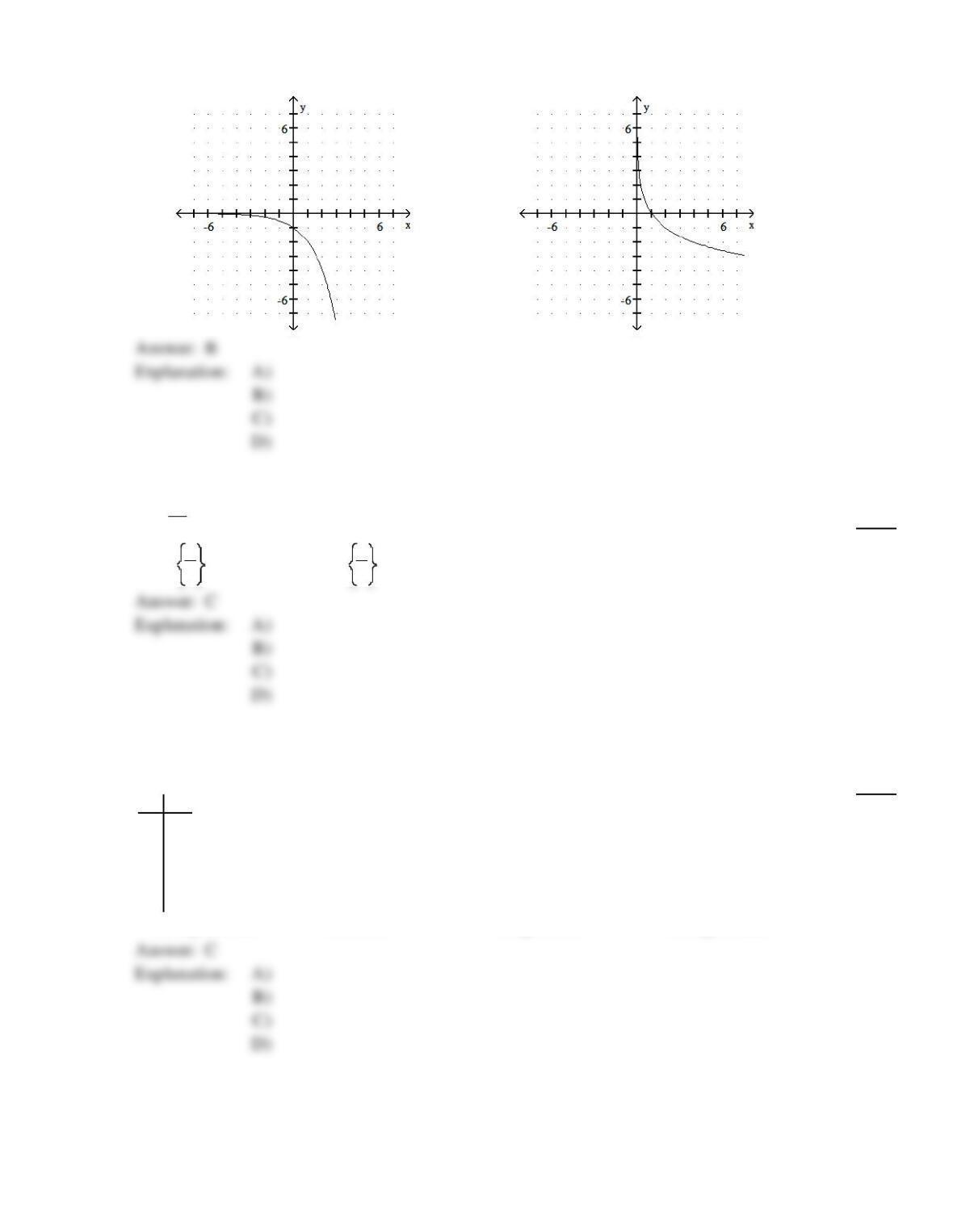
Graph the function.
174)
174)
f(x) =log2x
A)
B)
59
C)
D)
Solve the equation by expressing each side as a power of the same base and then equating exponents.
175)
2x=1
16
175)
A)
1
8
B)
1
4
C)
{–4}
D)
{4}
Determine whether the values in the table belong to an exponential function, a logarithmic function, a linear function,
or a quadratic function.
176)
176)
x y
025
1 5
2 0
3 5
425
A)
exponential
B)
linear
C)
quadratic
D)
logarithmic
60
Simplify the expression.
177)
177)
logaa
A)
a2
B)
1
C)
0
D)
2a
Use the compound interest formulas A = P 1 +r
n
nt and A = Pert to solve.
178)
178)
Suppose that you have $9000 to invest. Which investment yields the greater return over 7 years:
7.5% compounded continuously or 7.6% compounded semiannually?
A)
Both investment plans yield the same return.
B)
$9000 invested at 7.5% compounded continuously over 7 years yields the greater return.
C)
$9000 invested at 7.6% compounded semiannually over 7 years yields the greater return.
Use properties of logarithms to condense the logarithmic expression. Write the expression as a single logarithm whose
coefficient is 1. Where possible, evaluate logarithmic expressions.
179)
179)
ln 4–7 ln x
A)
ln 4
x7
B)
ln 4
ln x7
C)
ln 4
7x
D)
ln 4
x
11
Solve the equation.
180)
3(3x – 1) =243
180)
A)
{1}
B)
{3}
C)
{2}
D)
{4}
Evaluate the expression without using a calculator.
181)
181)
log88
A)
1
8
B)
8
C)
1
D)
0
Use properties of logarithms to expand the logarithmic expression as much as possible. Where possible, evaluate
logarithmic expressions without using a calculator.
182)
182)
log10(10,000x)
A)
40 +log10 x
B)
4log10 x
C)
4x
D)
4+log10 x
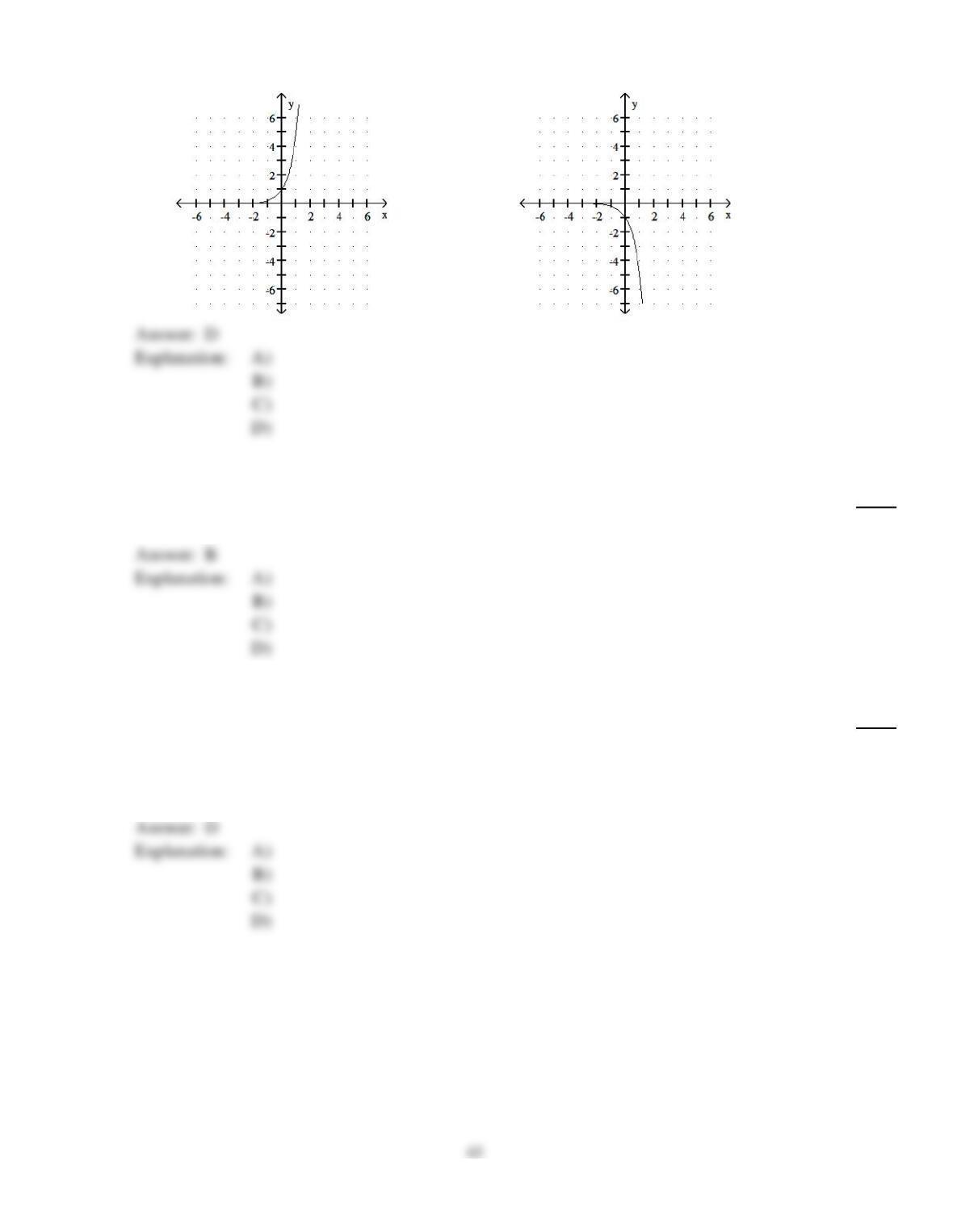
Graph the function.
183)
Use the graph of f(x) =5x to obtain the graph of g(x) = – 5x.
183)
A)
B)
62
C)
D)
Write the equation in its equivalent exponential form.
184)
184)
log4256 = x
A)
x4=256
B)
4x=256
C)
2564= x
D)
256x=4
Solve.
185)
185)
The pH of a solution ranges from 0 to 14. An acid has a pH less than 7. Pure water is neutral and
has a pH of 7. The pH of a solution is given by pH = – log x where x represents the concentration
of the hydrogen ions in the solution in moles per liter. Find the pH if the hydrogen ion
concentration is 1 ×
10–6.
A)
8
B)
–6
C)
–8
D)
6
Solve the logarithmic equation. Give an exact answer.
186)
186)
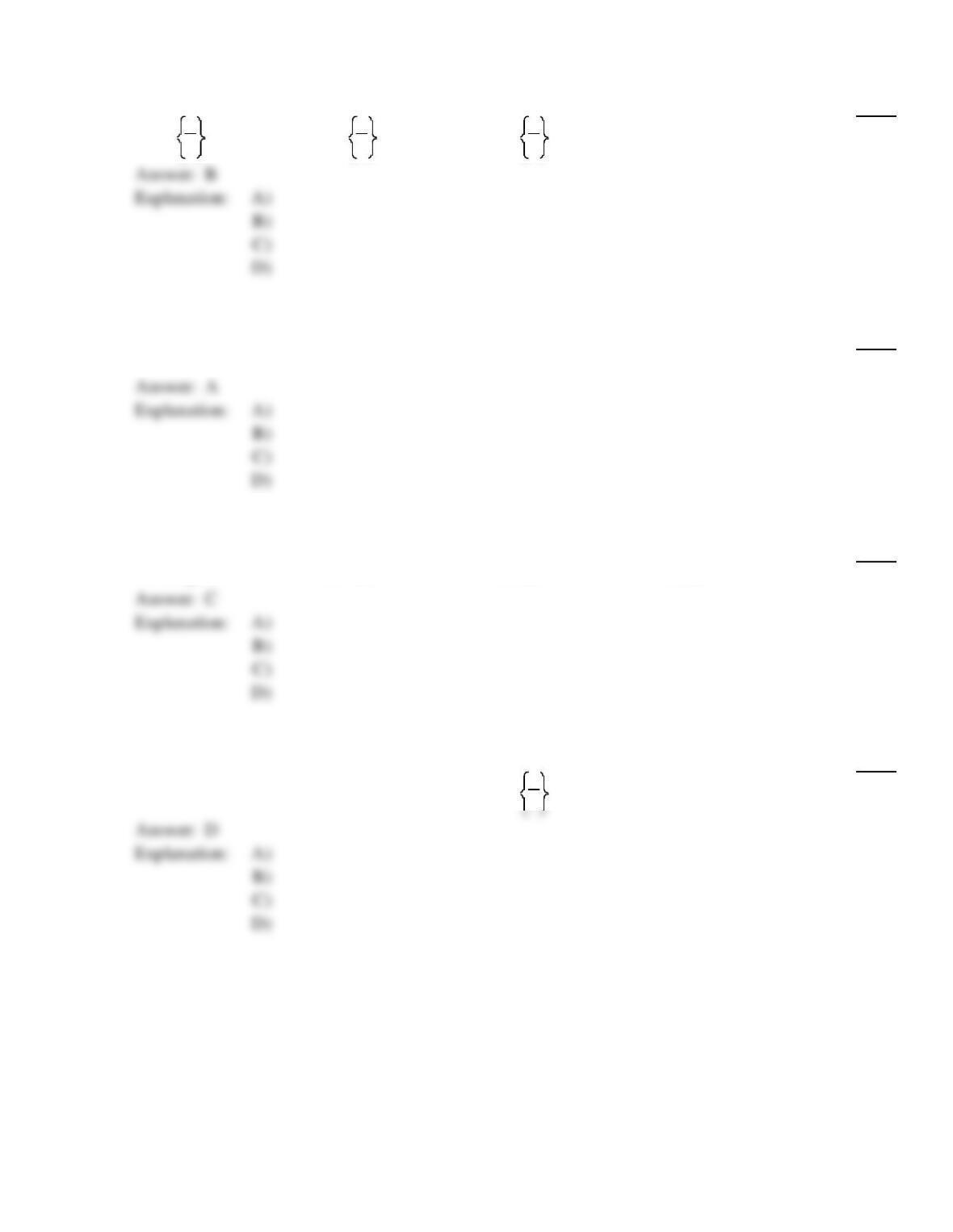
ln 6+ ln(x – 1) = 0
A)
1
6
B)
7
6
C)
6
7
D)
{1}
Approximate the number using a calculator. Round the answer to three decimal places.
187)
e1.3
187)
A)
3.669
B)
3.534
C)
3.969
D)
2.040
Evaluate the expression without using a calculator.
188)
ln e4.3
188)
A)
log 4.3
B)
–4.3
C)
4.3
D)
43
Solve the logarithmic equation. Give an exact answer.
189)
189)
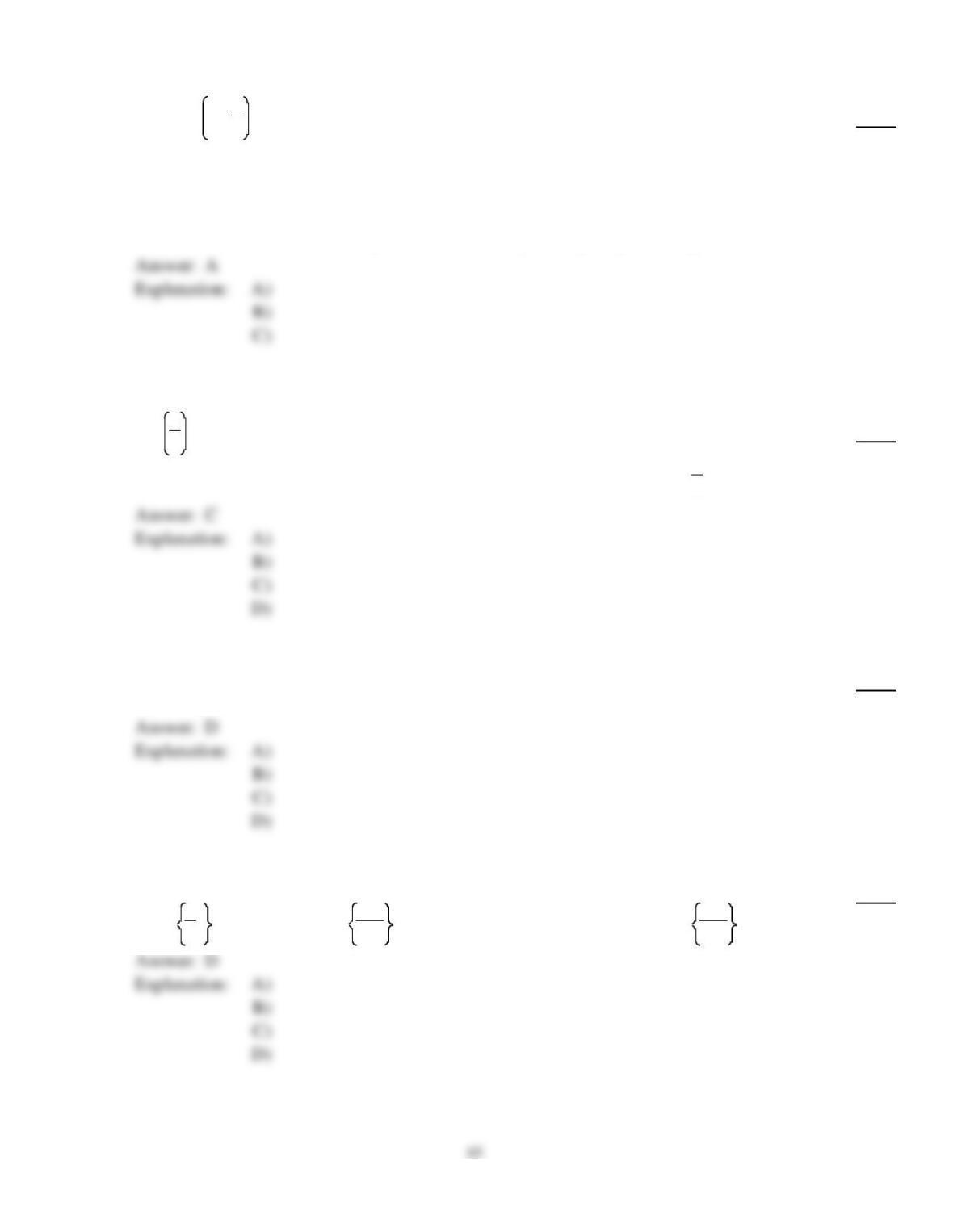
log(4+ x) – log(x – 2) = log 3
A)
{–5}
B)
C)
1
2
D)
{5}
64
Provide an appropriate response.
190)
Use A = P 1 +r
n
nt and A = Pert to solve this problem.
Suppose that you have $12,000 to invest. Which investment yields the greater return over 7 years:
7.5% compounded continuously or 7.6% compounded semiannually?
190)
A)
$12,000 invested at 7.5% compounded continuously over 7 years yields the greater return.
B)
Both investment plans yield the same return.
C)
$12,000 invested at 7.6% compounded semiannually over 7 years yields the greater return.
Use properties of logarithms to expand the logarithmic expression as much as possible. Where possible, evaluate
logarithmic expressions without using a calculator.
191)
log6
6
x
191)
A)
6
B)
–log6 x
C)
1 –log6 x
D)
1
x
Approximate the number using a calculator. Round the answer to three decimal places.
192)
41.1
192)
A)
1.464
B)
4.400
C)
4.895
D)
4.595
Solve the exponential equation by taking the logarithm on both sides. Express the solution set in terms of logarithms.
193)
e5x =2
193)
A)
2
5e
B)
ln 5
2
C)
{5 ln 2}
D)
ln 2
5
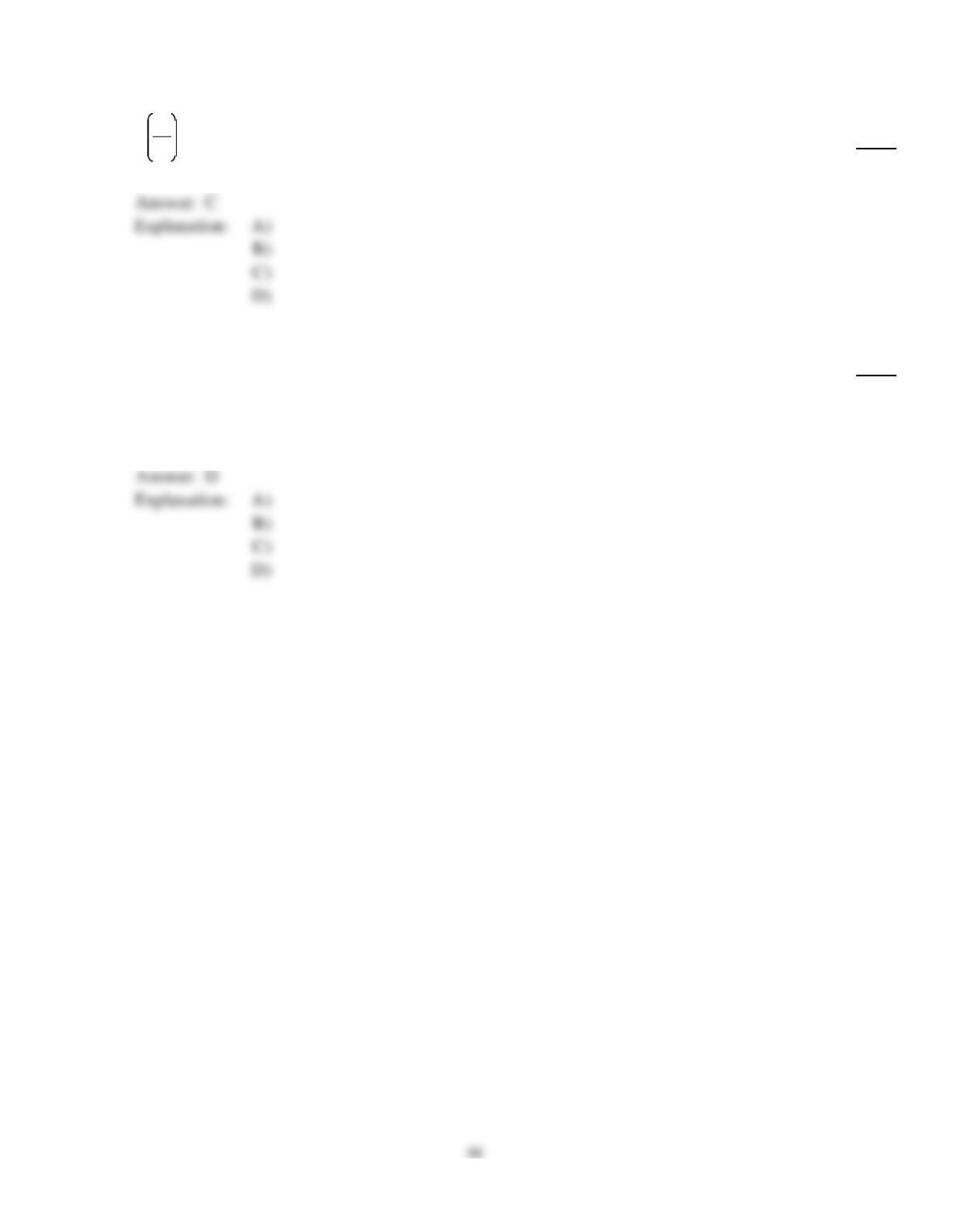
Use properties of logarithms to expand the logarithmic expression as much as possible. Where possible, evaluate
logarithmic expressions without using a calculator.
194)
ln e3
2
194)
A)
3+ ln 2
B)
ln e3+ ln 2
C)
3– ln 2
D)
ln e3– ln 2
Solve.
195)
195)
The value of a particular investment follows a pattern of exponential growth. You invested
money in a money market account. The value of your investment t years after your initial
investment is given by the exponential growth model A =5000e0.069t. How much did you
initially invest in the account?
A)
$5357.18
B)
$2500.00
C)
$345.00
D)
$5000.00