General, Organic & Biological Chemistry, 5e (Timberlake)
Chapter 12 Introduction to Organic Chemistry: Hydrocarbons
12.1 Multiple-Choice Questions
1) In the three-dimensional structure of methane, CH4, the hydrogen atoms attached to a carbon atom are
aligned
A) in a straight line.
B) at the corners of a square.
C) at the corners of a tetrahedron.
D) at the corners of a rectangle.
E) at the corners of a cube.
2) In a molecule with a symmetrical arrangement of polar bonds, the overall molecule is
A) highly polar.
B) somewhat polar.
C) nonpolar.
D) reverse polar.
E) strongly reverse polar.
3) Generally, a solution of an organic compound in water will be electrically
A) highly conductive.
B) highly ionized.
C) nonconductive.
D) insulated.
E) charged.
4) VSEPR theory predicts that simple carbon compounds will form bonds that are
A) as far apart as possible.
B) as close together as possible.
C) arranged in a straight line.
D) pointed to the corners of a cube.
E) pointed to the corners of a triangle.
5) A molecule containing a carbon atom bonded to four chlorine atoms has the shape of a
A) triangle.
B) rhombus.
C) square.
D) cube.
E) tetrahedron.
6) The bond angles of tetravalent carbon are all approximately
A) 90°.
B) 109°.
C) 60°.
D) 100°.
E) 45°.
7) As carbon bonds with atoms of increasingly higher electronegativities, the polarity of the bond
A) decreases.
B) increases.
C) stays the same.
D) reverses.
E) becomes inverted.
8) Carbon tetrachloride has a polar C-Cl bond. What is the overall polarity of the carbon tetrachloride
molecule?
A) weakly polar
B) strongly polar
C) reversed polarity
D) nonpolar
E) inverse polarity
9) Which of the following is NOT typical of most organic compounds?
A) high melting point
B) poor solubility in water
C) low boiling point
D) covalent bonding
E) high flammability
10) Which one of the following is NOT an organic substance?
A) an antibiotic
B) nylon
C) coal
D) silk
E) salt, sodium chloride
11) A hydrocarbon contains only the elements
A) hydrogen and oxygen.
B) carbon and oxygen.
C) carbon and hydrogen.
D) carbon, hydrogen, and oxygen.
E) carbon, hydrogen, and nitrogen.
12) Organic chemistry is the study of the chemistry of compounds of
A) oxygen.
B) hydrogen.
C) living things.
D) polymers.
E) carbon.
13) How does a molecule of a vitamin synthesized in the laboratory behave when compared to the
behavior of the same vitamin isolated from a natural source (e.g., vitamin C synthesized, compared to
vitamin C from rose hips)?
A) identical in every way
B) usually identical
C) Some effects are the same.
D) Few effects are the same.
E) The natural vitamin is better.
14) How many valence electrons does carbon have?
A) one
B) two
C) three
D) four
E) five
15) Carbon atoms always have how many covalent bonds?
A) one
B) two
C) three
D) four
E) five
16) An organic compound composed of carbon and hydrogen connected only by single bonds is an
A) alkane.
B) alkene.
C) alkyne.
D) aromatic compound.
E) alcohol.
17) In a condensed structural formula, each carbon atom is
A) shown with all individual atoms and bonds drawn.
B) shown with only the other carbon atoms.
C) grouped with its bonded hydrogen atoms.
D) not explicitly shown.
E) written in lowercase letters.
18) A formula that shows the arrangement of all bonds in a molecule is called a(n)
A) molecular formula.
B) complete structural formula.
C) condensed structural formula.
D) condensed molecular formula.
E) isomeric formula.
19) Which of these formulas is the expanded structural formula for an alkane with three carbon atoms?
A) C3H6
B) C3H8
C) CH3–CH2–CH3
D) C – C – C
E) H H H
| | |
H – C – C – C – H
| | |
H H H
20) What is the condensed structural formula for an alkane with four carbon atoms?
A) CH3-CH=CH–CH3
B) CH3–CH2–CH2–CH3
C) C4H10
D) C – C – C – C
E) H H H H
| | | |
H – C – C – C – C – H
| | | |
H H H H
21) What is the name of the continuous chain alkane with six carbon atoms?
A) butane
B) pentane
C) hexane
D) heptane
E) octane
22) What is the name of this compound?
CH3– CH2– CH2– CH2– CH2– CH2– CH3
A) hexane
B) heptane
C) octane
D) butane
E) pentane
23) What is the name of this compound?
CH3– CH2– CH2– CH2– CH3
A) pentane
B) hexane
C) heptane
D) octane
E) methylbutane
24) What is the name of CH3– CH2– CH2– CH3?
A) ethane
B) propane
C) butane
D) pentane
E) hexane
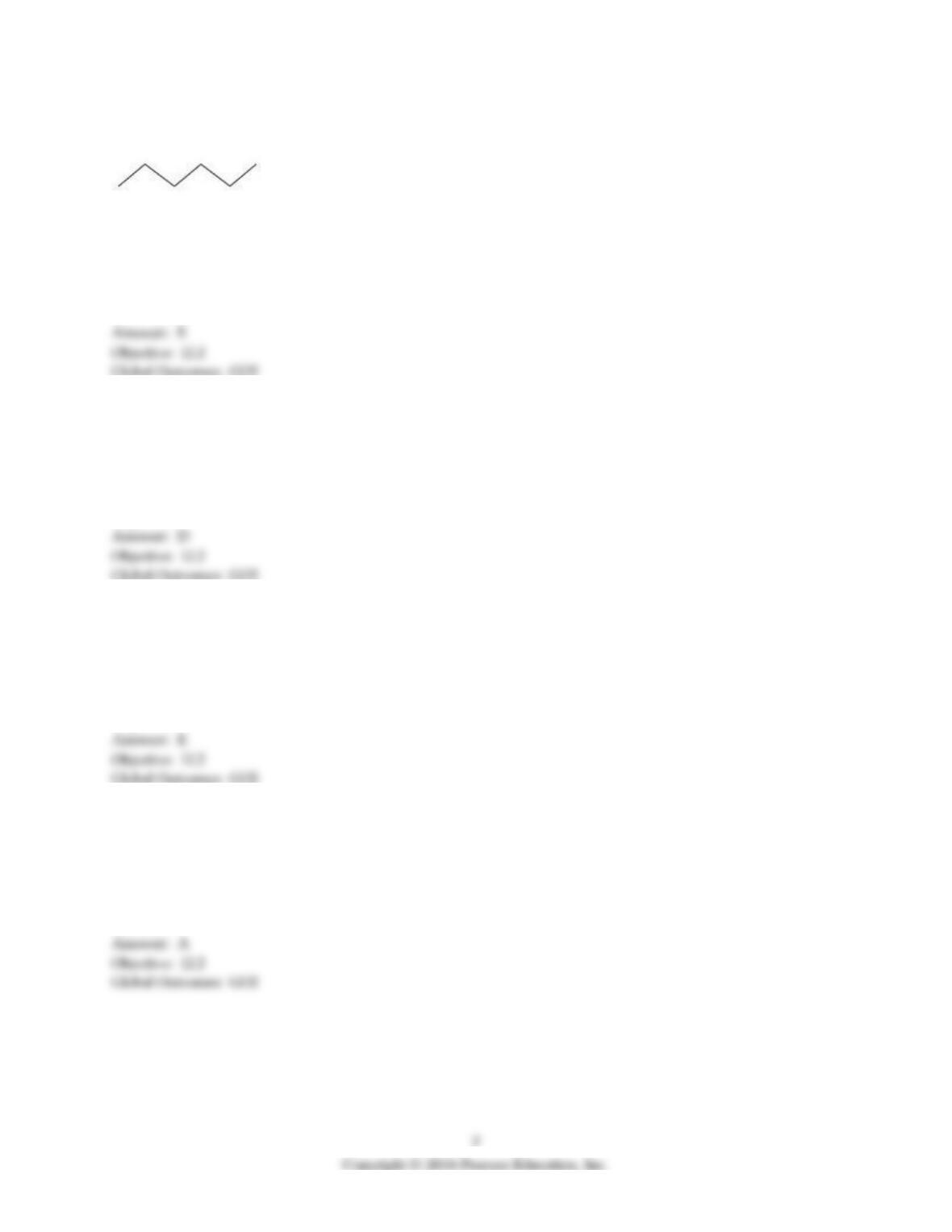
25) What is the name of this compound?
A) ethane
B) propane
C) butane
D) pentane
E) hexane
26) What is the name for a four-carbon continuous-chain alkane?
A) methane
B) ethane
C) propane
D) butane
E) pentane
27) What is the name for a five-carbon continuous-chain alkane?
A) methane
B) ethane
C) propane
D) butane
E) pentane
28) What is the mame for a six-carbon continuous-chain alkane?
A) hexane
B) heptane
C) octane
D) nonane
E) decane
29) What is the name for a seven-carbon continuous-chain alkane?
A) hexane
B) heptane
C) octane
D) nonane
E) decane
30) What is the name for an eight-carbon continuous-chain alkane?
A) hexane
B) heptane
C) octane
D) nonane
E) decane
31) What is the name for a nine-carbon continuous-chain alkane?
A) hexane
B) heptane
C) octane
D) nonane
E) decane
32) What is the name for a ten-carbon continuous-chain alkane?
A) hexane
B) heptane
C) octane
D) nonane
E) decane
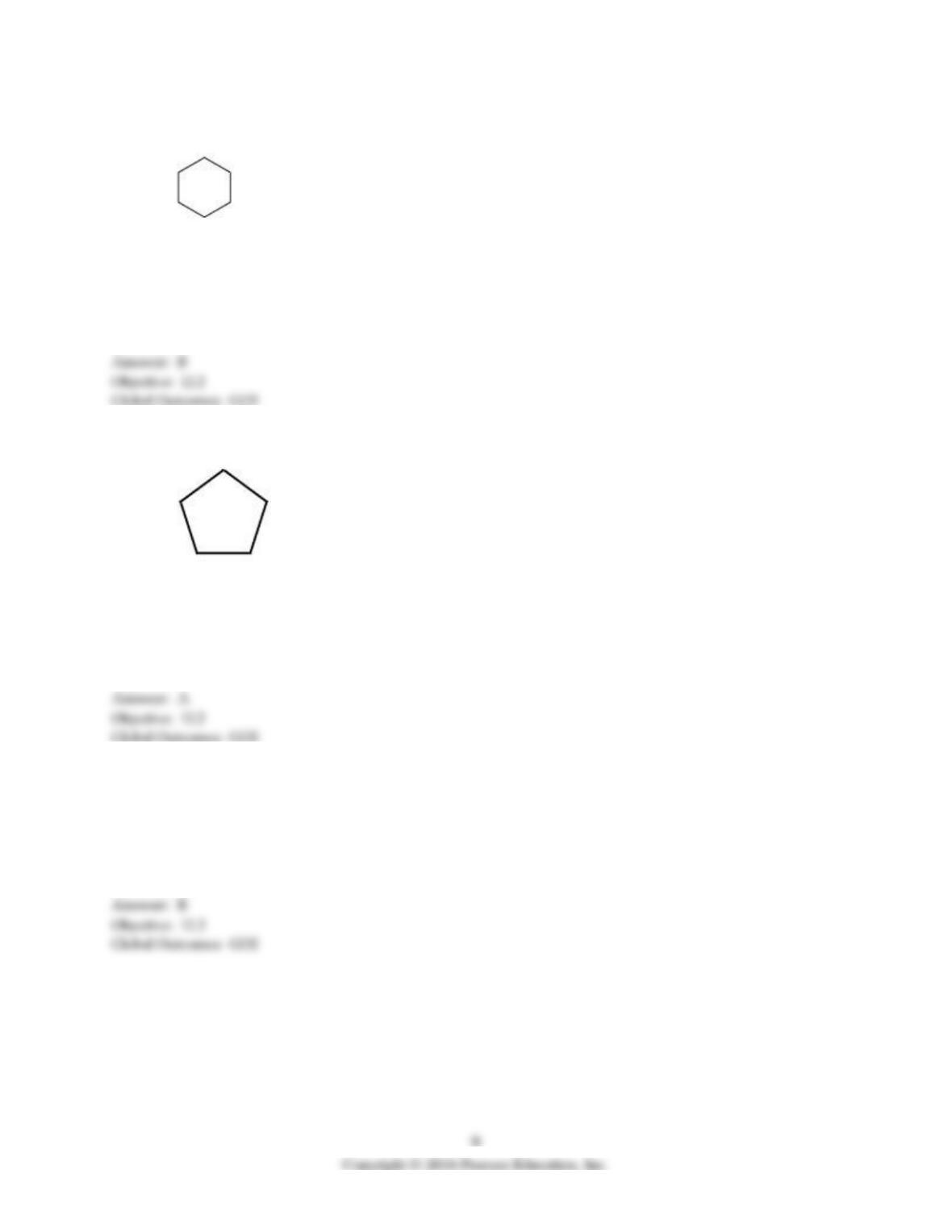
33) What is the name of this compound?
A) cyclopentane
B) cyclohexane
C) cycloheptane
D) cyclooctane
E) hexane
34) What is the name of this compound?
A) cyclopentane
B) cyclohexane
C) cycloheptane
D) cyclooctane
E) pentane
35) The IUPAC name for CH3 -Cl is
A) methyl chloride.
B) chloromethane.
C) methanechlorine.
D) chloroethane.
E) methane chloride.
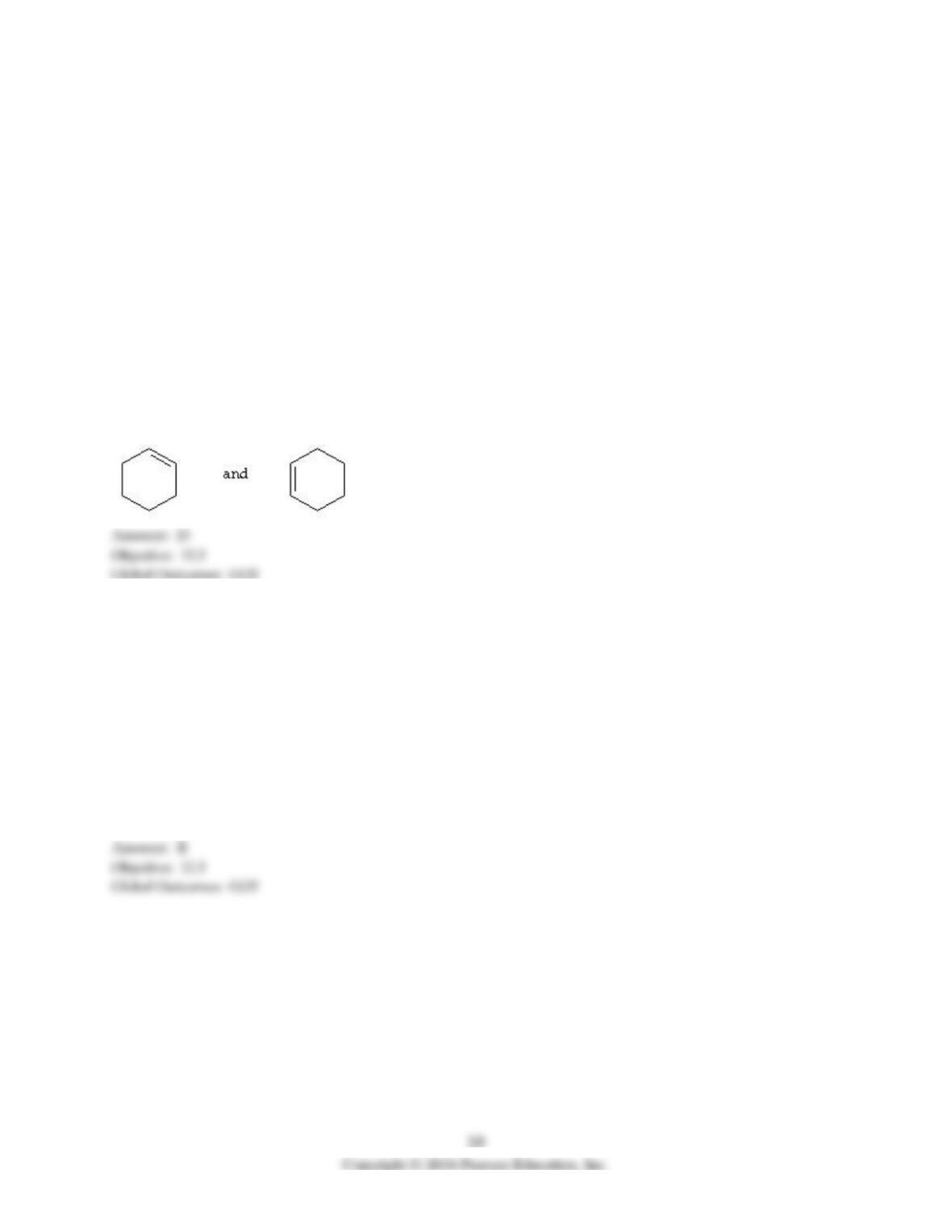
36) Which of the following pairs of compounds are structural isomers?
A) Cl Cl
| |
CH3 C HCH2 CH3 and CH3CH2 C HCH3
B) ClCH2CH2CH2CH3 and CH3CH2CH2CH2Cl
C) CH3CHCH3 and CH3CHCH2Cl
| |
CH2Cl CH3
D) Cl
|
CH3CHCH3 and CH3 C CH3
| |
CH2Cl CH3
E)
37) What is the IUPAC name for the following?
CH3
∣
CH3–CH2–CH2–CH– CH2–CH3
A) 4-methylhexane
B) 3-methylhexane
C) heptane
D) methylhexane
E) 2-methylhexane
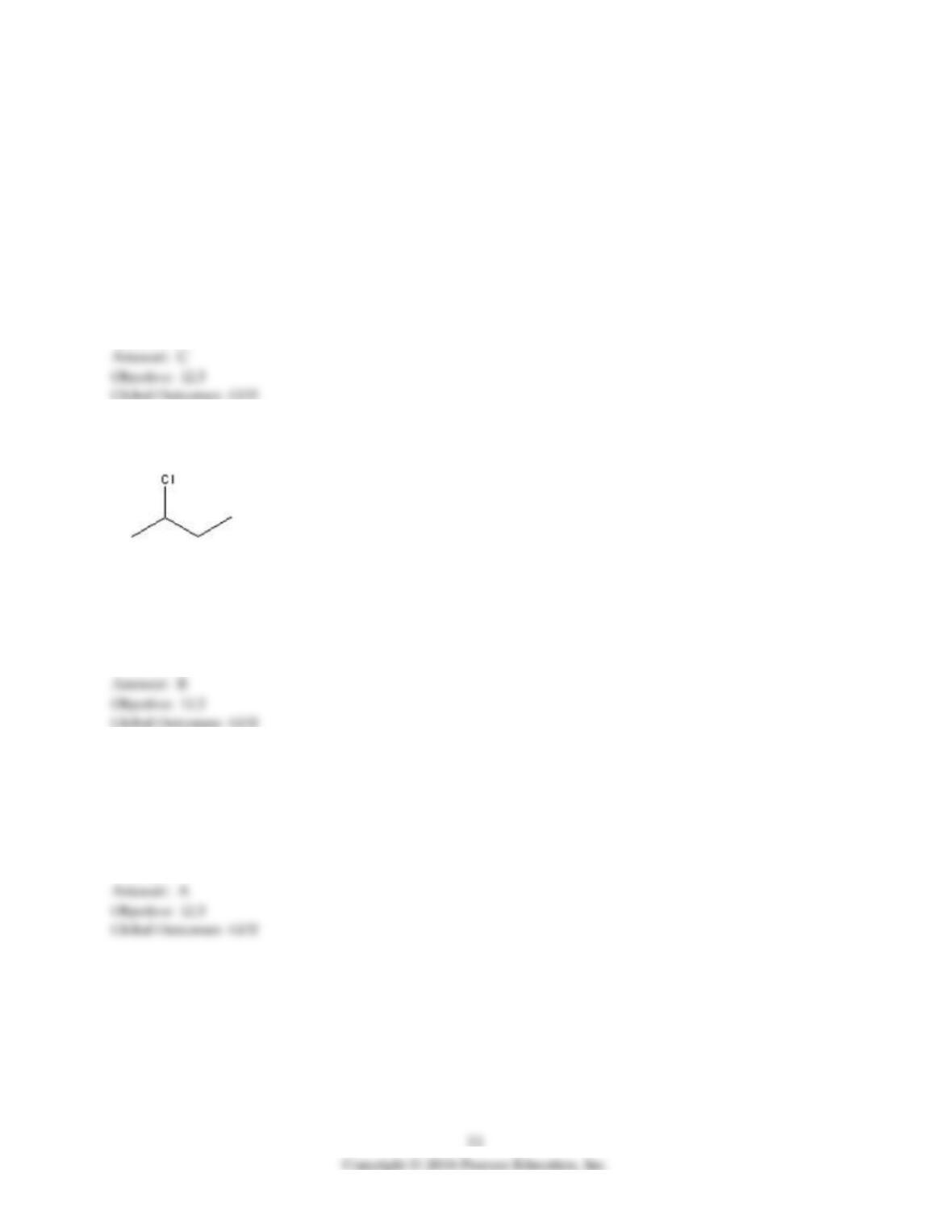
38) What is the IUPAC name for the following?
CH3
│
CH2–CH2–CH2–CH3
A) 1-methylbutane
B) 4-methylbutane
C) pentane
D) butane
E) hexane
39) What is the IUPAC name for the following?
A) 1-chlorobutane
B) 2-chlorobutane
C) 3-chlorobutane
D) 2-chloropropane
E) chlorobutane
40) What is the IUPAC name for Cl–CH2 –CH2 – CH2-Cl?
A) 1,3-dichloropropane
B) 1,1-dichloropropane
C) dichloropropane
D) 1,3-dichlorobutane
E) propane dichloride
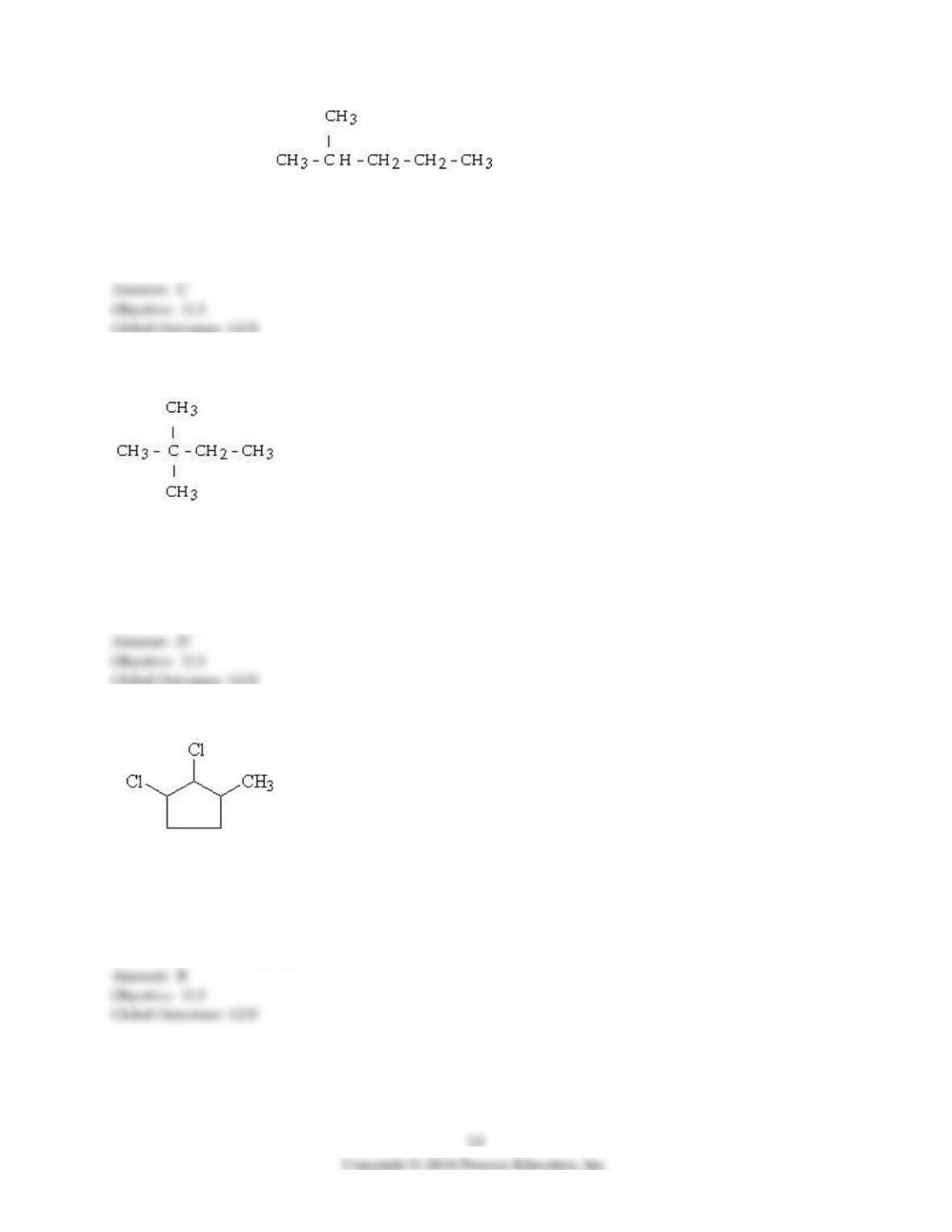
41) What is the name of ?
A) pentane
B) methylpentane
C) 2-methylpentane
D) 4-methylpentane
E) hexane
42) What is the name for the following?
A) hexane
B) dimethylbutane
C) 3,3-dimethylbutane
D) 2,2-dimethylbutane
E) 2-dimethylbutane
43) What is the IUPAC name for the following?
A) 1,2-dichloro-3-methylpentane
B) 1,2-dichloro-3-methylcyclopentane
C) 1-methyl-2,3-dichlorocyclopentane
D) 3-methyl-1,2-dichlorocyclopentane
E) 1,2-dichloro-3-methylcyclobutane
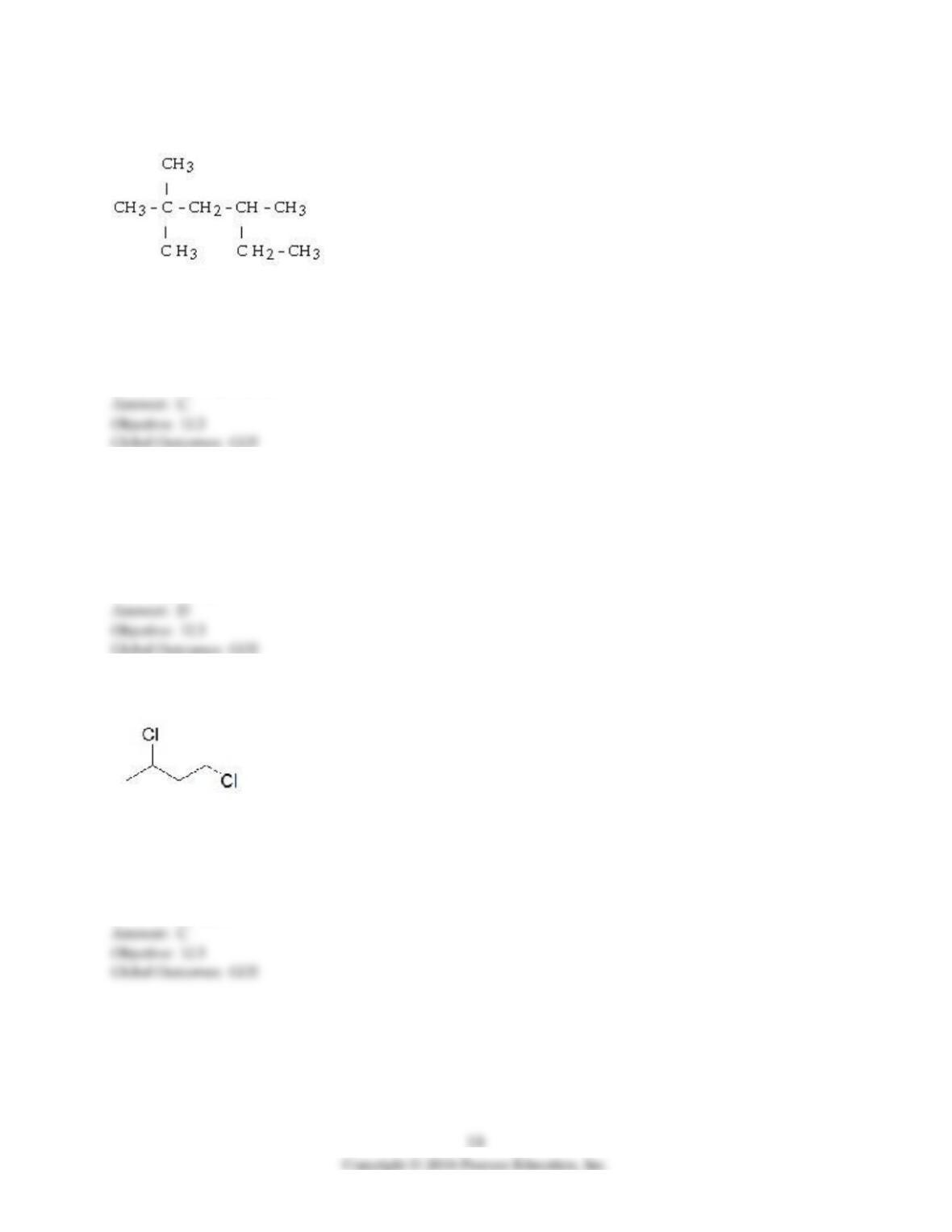
44) What is the IUPAC name of this alkane?
A) 4-ethyl-2,2-dimethylpentane
B) 2-ethyl-4,4-dimethylpentane
C) 2,2,4-trimethylhexane
D) 2-ethyl-2,2-dimethylpentane
E) 3,5,5-trimethylhexane
45) Which of the following compounds could have the molecular formula C7H16?
A) hexane
B) pentane
C) 2-methylheptane
D) 2,3-dimethylpentane
E) 3-ethylhexane
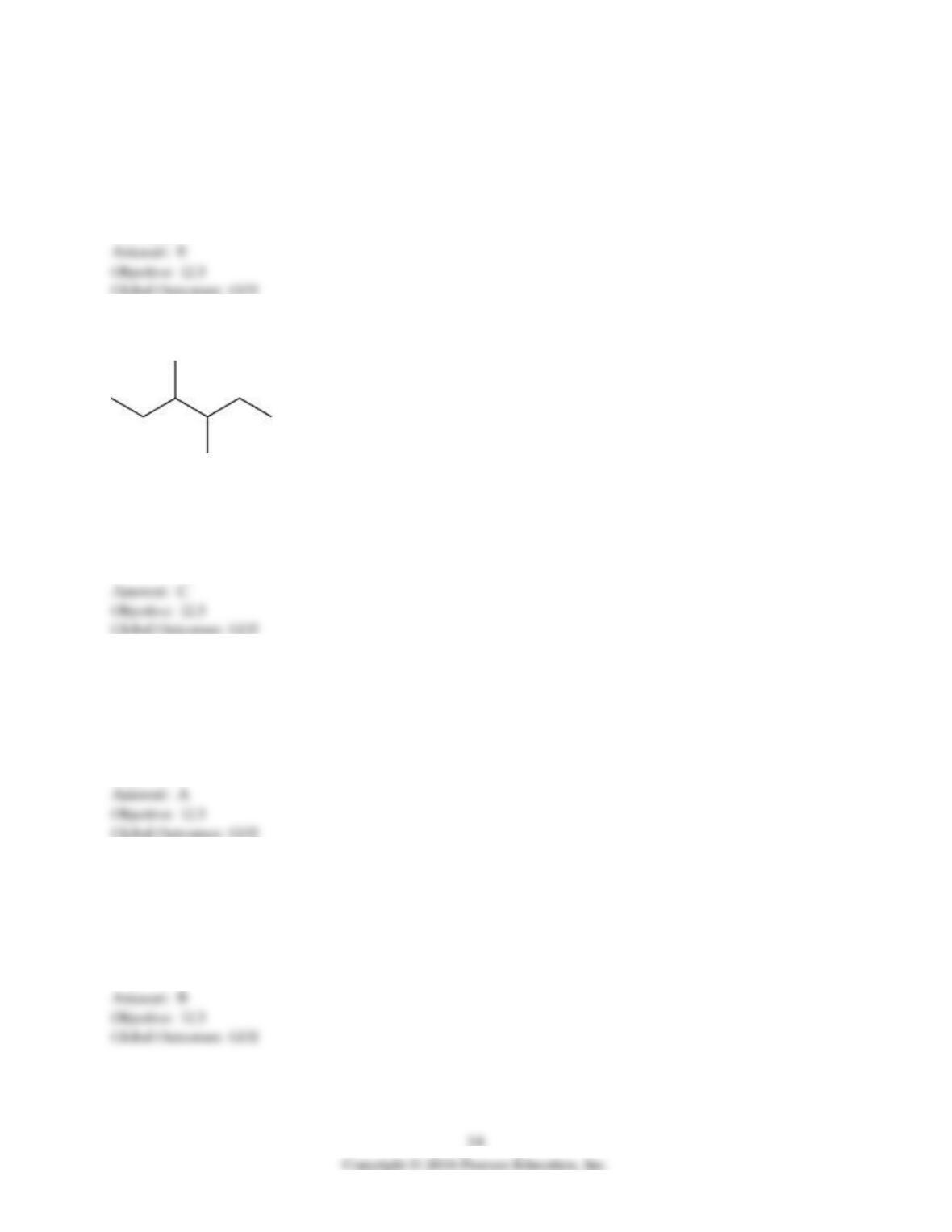
46) What is the name of this compound?
A) 1,1-dichlorobutane
B) 1,2,-dichlorobutane
C) 1,3-dichlorobutane
D) 1,4-dichlorobutane
E) dichlorobutane
47) What is the name of the alkyl group CH3–CH2–CH2-?
A) propane
B) methyl
C) ethane
D) ethyl
E) propyl
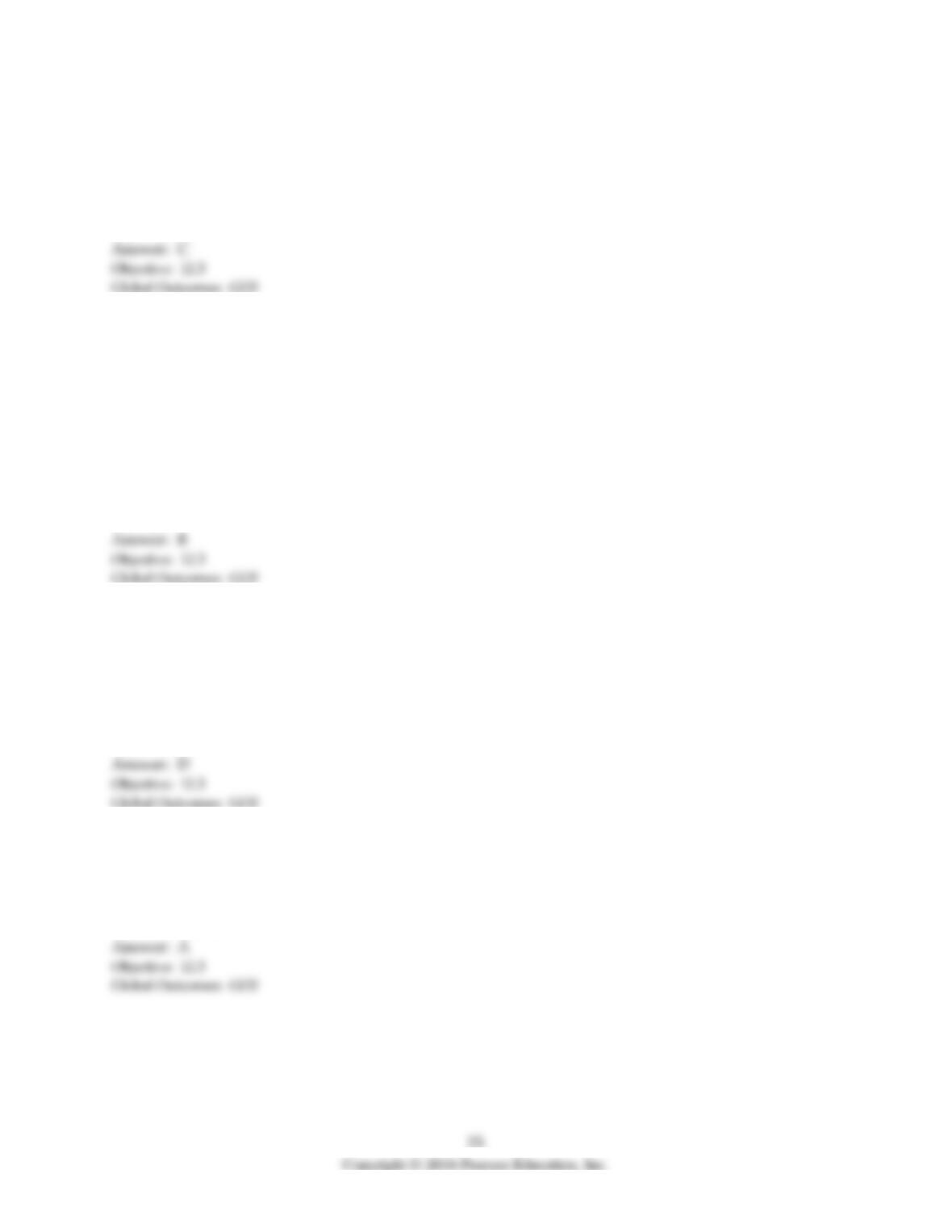
48) What is the IUPAC name for this alkane?
A) 2-ethyl-3-methylpentane
B) 4-ethyl-3-methylpentane
C) 3, 4-dimethylhexane
D) 2, 3-diethylbutane
E) octane
49) What is the name for a one-carbon alkyl substituent?
A) methyl
B) ethyl
C) propyl
D) butyl
E) pentyl
50) What is the name for a two-carbon alkyl group?
A) methyl
B) ethyl
C) propyl
D) butyl
E) pentyl
51) What is the name for a three–carbon alkyl group?
A) methyl
B) ethyl
C) propyl
D) butyl
E) pentyl
52) What is the name for this three-carbon alkyl group?
CH3 – CH – CH3
|
A) n-propyl
B) iso-propyl
C) butyl
D) iso-butyl
E) ethyl
53) According to the IUPAC convention for chemical naming, which part of a hydrocarbon is selected as
the main chain for a hydrocarbon chain?
A) the most highly branched chain
B) the shortest chain
C) the longest chain drawn in a straight line
D) the longest continuous chain, regardless of bends
E) the chain with the most substituted carbons in it
54) According to the IUPAC convention, alkyl group names should be located ________ of the name of
the main chain.
A) in front
B) at the end
C) in the middle
55) According to the IUPAC convention, alkyl substituents on a hydrocarbon chain should be listed in
which order?
A) alphabetical including prefixes
B) alphabetical without considering prefixes
C) in order with the substituent having the highest number of carbons first
D) in order with the substituent having the lowest number of carbons first
E) in order with the substituent having the highest total number of carbons first
56) When drawing a structural formula, the first step is to draw
A) the substituents.
B) the most highly substituted carbons.
C) the saturated carbons.
D) the main carbon chain.
E) the functional group.
57) In the equation for the combustion of pentane, the coefficient of carbon dioxide is
A) one
B) two.
C) three.
D) four.
E) five.
58) The reaction for the combustion of heptane is
C7H16 + 11O2 → 7CO2 + 8H2O.
How many liters of CO2 at STP are produced from the complete combustion of 2.00 moles of heptane?
A) 44.8 L
B) 22.4 L
C) 157 L
D) 246 L
E) 314 L
59) Which of the following is true of nonane, C9H20, which has a density of 0.79 g/mL, melts at -51 °C,
and boils at 157 °C?
A) Nonane is soluble in water.
B) Nonane is a gas at room temperature.
C) Nonane is a solid at room temperature.
D) Nonane does not undergo combustion.
E) Nonane floats on the surface of water.
60) Organic compounds that are poorly soluble in water behave that way because they are
A) highly polar.
B) moderately polar.
C) covalently bonded.
D) generally nonpolar.
E) ionically bonded.
61) Hydrocarbons are the primary constituents of
A) drugs.
B) food flavors.
C) fossil fuels.
D) fruit juices.
E) disinfectants.
62) The reaction of butane with oxygen is called
A) substitution.
B) addition.
C) neutralization.
D) combustion.
E) titration.
63) What is(are) the product(s) of the complete combustion of any hydrocarbon?
A) CO only
B) CO2 only
C) CO + H2O
D) CO2 + H2O
E) H2O only
64) The balanced equation for the complete combustion of C5H12 will give which of these product(s)?
A) CO2 only
B) C5H12O5 only
C) 5CO2 + 5H2O
D) 5CO2 + 6H2O
E) 10CO + 12H2O
65) What type of compound is CH3–CH2–CH3?
A) alkane
B) branched alkane
C) cycloalkane
D) haloalkane
E) isomer
66) An alkene is always a carbon compound that contains a ________ bond.
A) single
B) double
C) triple
D) aromatic
E) hydrogen