67) An alkyne is always a carbon compound that contains a ________ bond.
A) single
B) double
C) triple
D) aromatic
E) hydrogen
68) A hydrocarbon with a double bond is a(n)
A) alkane.
B) alkene.
C) alkyne.
D) alcohol.
E) saturated compound.
69) The carbon atoms in saturated hydrocarbons
A) have only single bonds.
B) contain at least one double bond.
C) contain at least one triple bond.
D) contain a benzene ring.
E) contain both a double and a triple bond.
70) Which of the compounds is a cycloalkene?
A) CH2 = CH-CH = CH2
B)
C) CH3-C = CH2
D)
E)
71) An unsaturated compound always
A) is a cycloalkane.
B) contains a double bond.
C) contains a triple bond.
D) contains at least one double or triple bond.
E) is aromatic.
72) Which of the following compounds is an alkyne?
A) CH3–CH2–CH3
B) C3H6
C) CH3–CH2–C ≡ CH
D) H2C = CH-CH = CH2
E) 2-pentene
73) The IUPAC name of CH3–CH = CH-CH3 is
A) 2-butene.
B) 2-butane.
C) 1-butene.
D) butene.
E) 2-butyne.
74) When naming an alkene, the parent chain is the longest carbon chain
A) that does not contain the double bond.
B) regardless of whether or not it contains the double bond.
C) that contains at least one of the carbon atoms of the double bond.
D) that contains both atoms of the double bond.
E) that contains a branch.
75) The IUPAC name for CH3–CH2–C ≡ C–CH3 is
A) 3-pentyne.
B) 2-pentyne.
C) pentyne.
D) 1-methylbutyne.
E) 2-propene.
76) The IUPAC name for ethylene is
A) ethane.
B) cycloethane.
C) ethyne.
D) ethanene.
E) ethene.
77) What is the condensed structural formula of the compound propene?
A) CH3–CH2–CH3
B) H3C = CH2–CH3
C) H2C = C = CH2
D) CH3–CH = CH2
E) HC ≡ C–CH3
78) What is the condensed structural formula for the compound 3-hexene?
A) CH3
|
CH3–CH2-C H-CH2–CH3
B) CH2 = CH-CH2 –CH2 –CH2 –CH3
C) CH3–CH2-CH = CH–CH2–CH3
D) CH3–CH2–CH2-CH = CH-CH3
E) CH3-CH = CH-CH2–CH2–CH3
79) The compound 1-butyne contains
A) all single bonds.
B) a double bond.
C) a triple bond.
D) a ring structure.
E) a bromine atom.
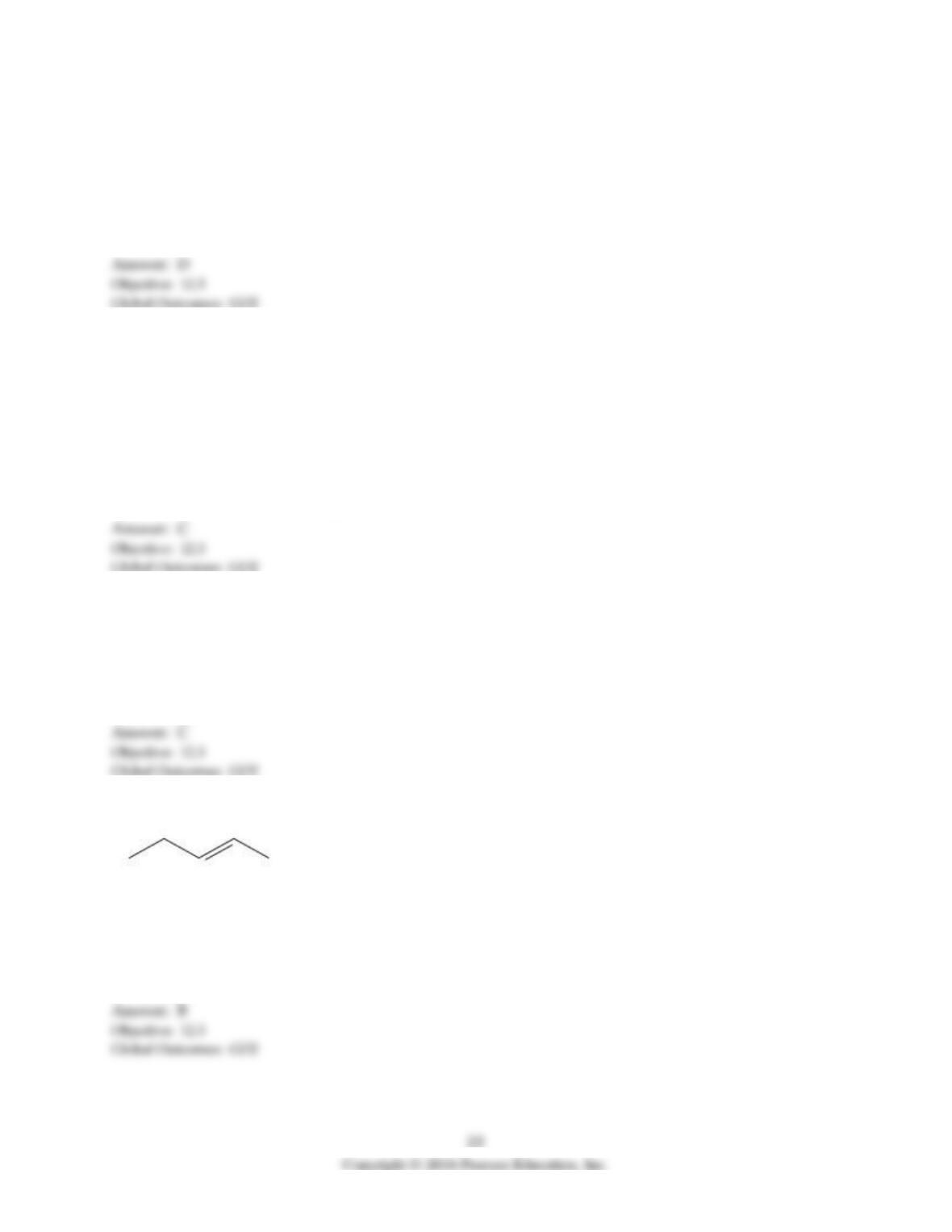
80) What is the IUPAC name for the following compound?
A) 1-pentene
B) 2-pentene
C) 3-pentene
D) 1-methylbutene
E) 2-pentyne
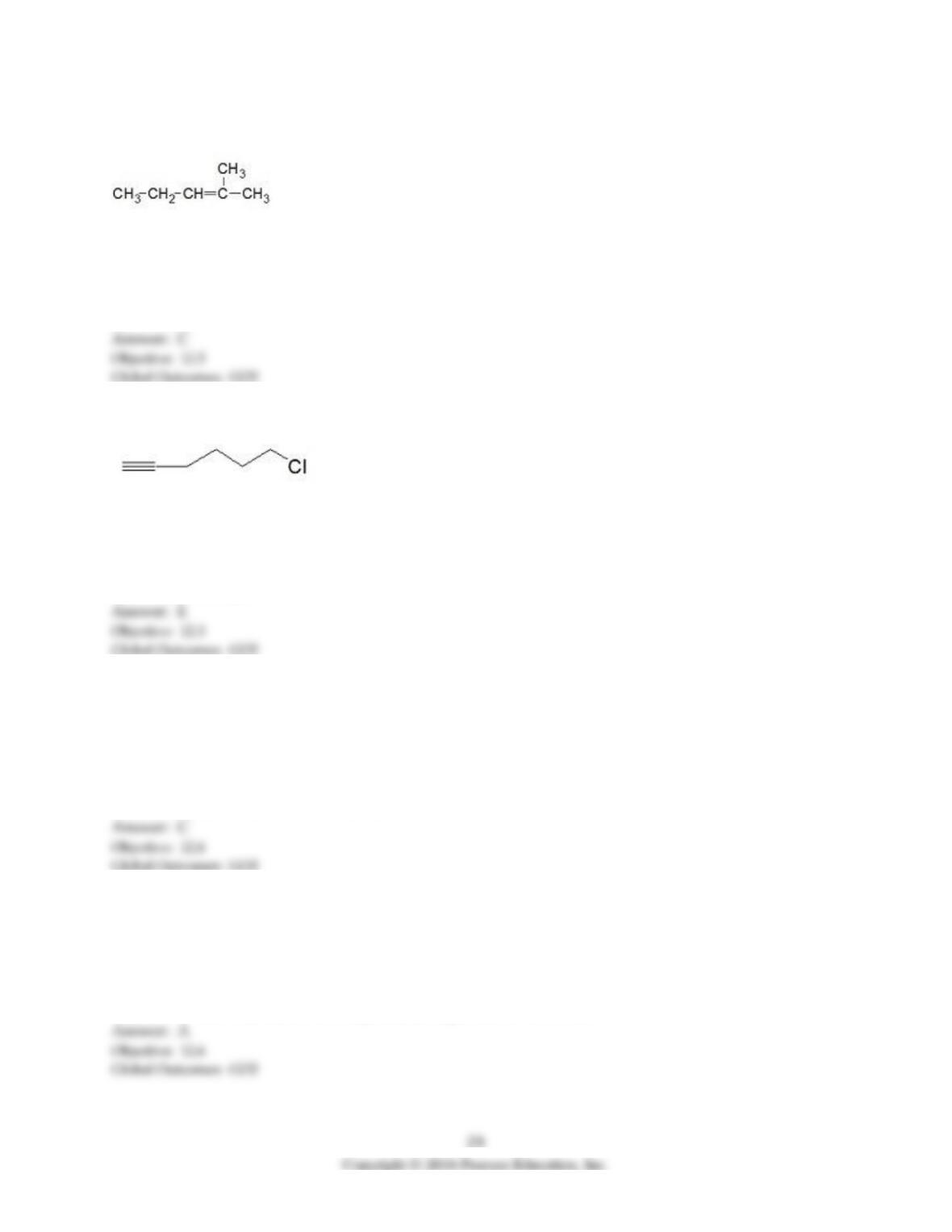
81) What is the IUPAC name for the following compound?
A) 3-methyl-4-pentene
B) 4-methyl-3-pentene
C) 2-methyl-2-pentene
D) 2-methyl-3-pentene
E) hexene
82) What is the IUPAC name for the following compound?
A) 6-chloro-2-pentyne
B) 6-chloro-1-pentyne
C) 1-chloro-5-hexyne
D) 6-chloro-1-heptyne
E) 6-chloro-1-hexyne
83) Which of the following compounds have cis-trans isomers?
A) CH2 = CH – CH3
B) CCl2 = CBr2
C) CH3 – CH = CH – CH3
D) CCl2 = CHBr
E) All of the above have cis-trans isomers.
84) Some alkenes have cis-trans isomers because
A) the carbon atoms in the double bond cannot rotate.
B) each of the carbon atoms in the double bond has four different groups attached to it.
C) one of the carbon atoms in the double bond has two identical groups attached to it.
D) the carbon atoms in the double bond are free to rotate.
E) all of the carbon atoms in the compound are rigid and cannot rotate.
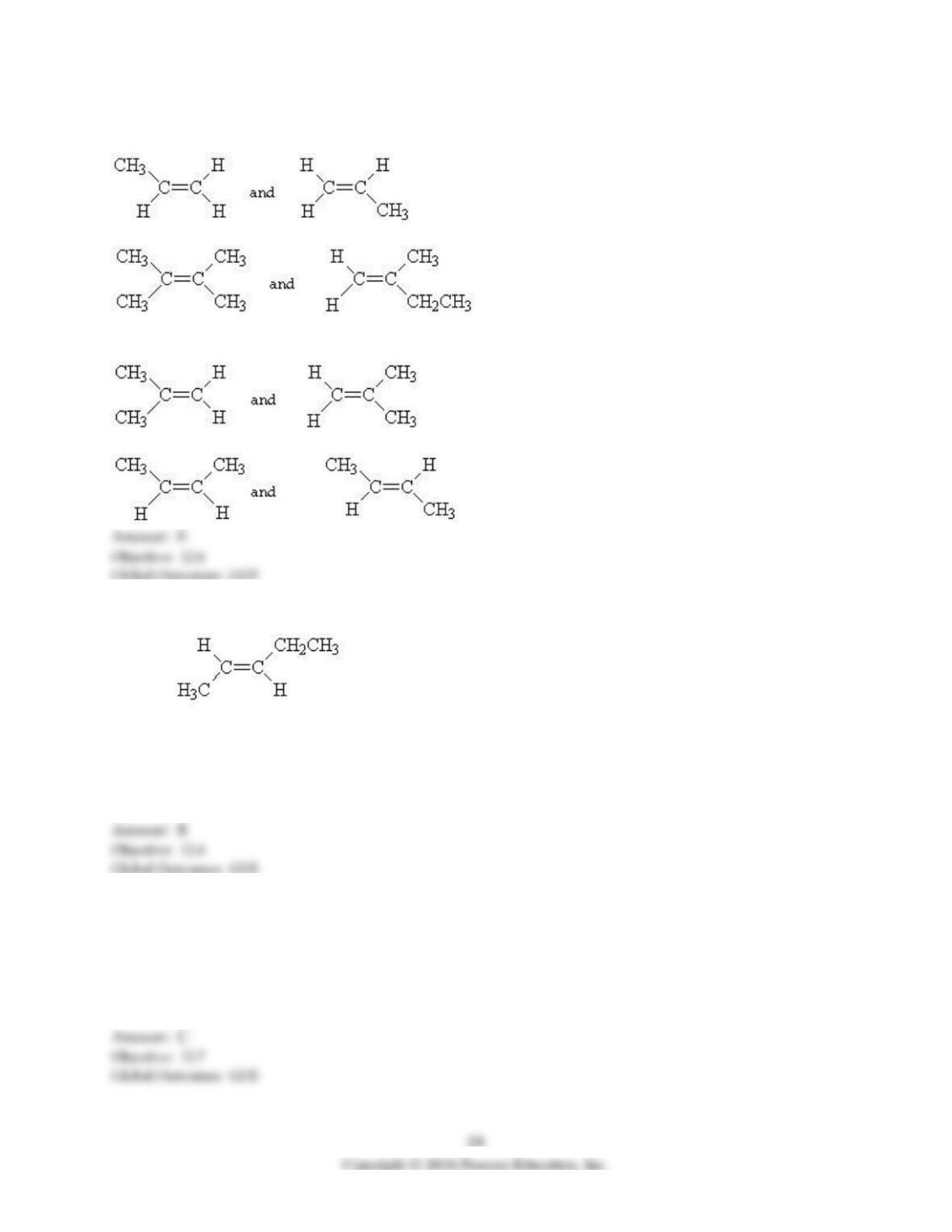
85) Which of the following pairs of compounds are cis-trans isomers?
A)
B)
C) HC ≡ C – CH3 and CH3 – C ≡ CH
D)
E)
86) What is the name of the compound shown below?
A) 2-pentene
B) trans-2-pentene
C) trans-3-pentene
D) cis-2-pentene
E) cis-3-pentene
87) The reaction of hydrogen (H2) and propene using a platinum catalyst is called
A) combustion.
B) substitution.
C) addition.
D) neutralization.
E) condensation.
88) The hydrogenation of an alkene gives a(n)
A) alkane.
B) alkene.
C) alkyne.
D) benzene.
E) isomer.
89) What is the condensed structural formula for the product of the hydrogenation of 2-butene using a
platinum catalyst?
A) CH3-CH= CH-CH3
B) Cl
|
CH3–CH2– CH–CH3
C) CH3–CH2–CH2–CH3
D) CH3
|
CH3– CH–CH3
E) OH
|
CH3– CH–CH3
90) According to Markovnikov’s rule, the hydrogen in HOH (water) adds to the carbon in the double
bond
A) attached to the end carbon.
B) that has the smaller number of hydrogen atoms attached.
C) that has the greater number of hydrogen atoms attached.
D) that has the smaller number of carbon atoms attached.
E) that has the greater number of carbon atoms attached.
91) The reaction of an alkene and water in the presence of an acid catalyst to produce an alcohol is called
A) hydrolysis.
B) alkoholysis.
C) halogenation.
D) hydration.
E) hydrohydration.
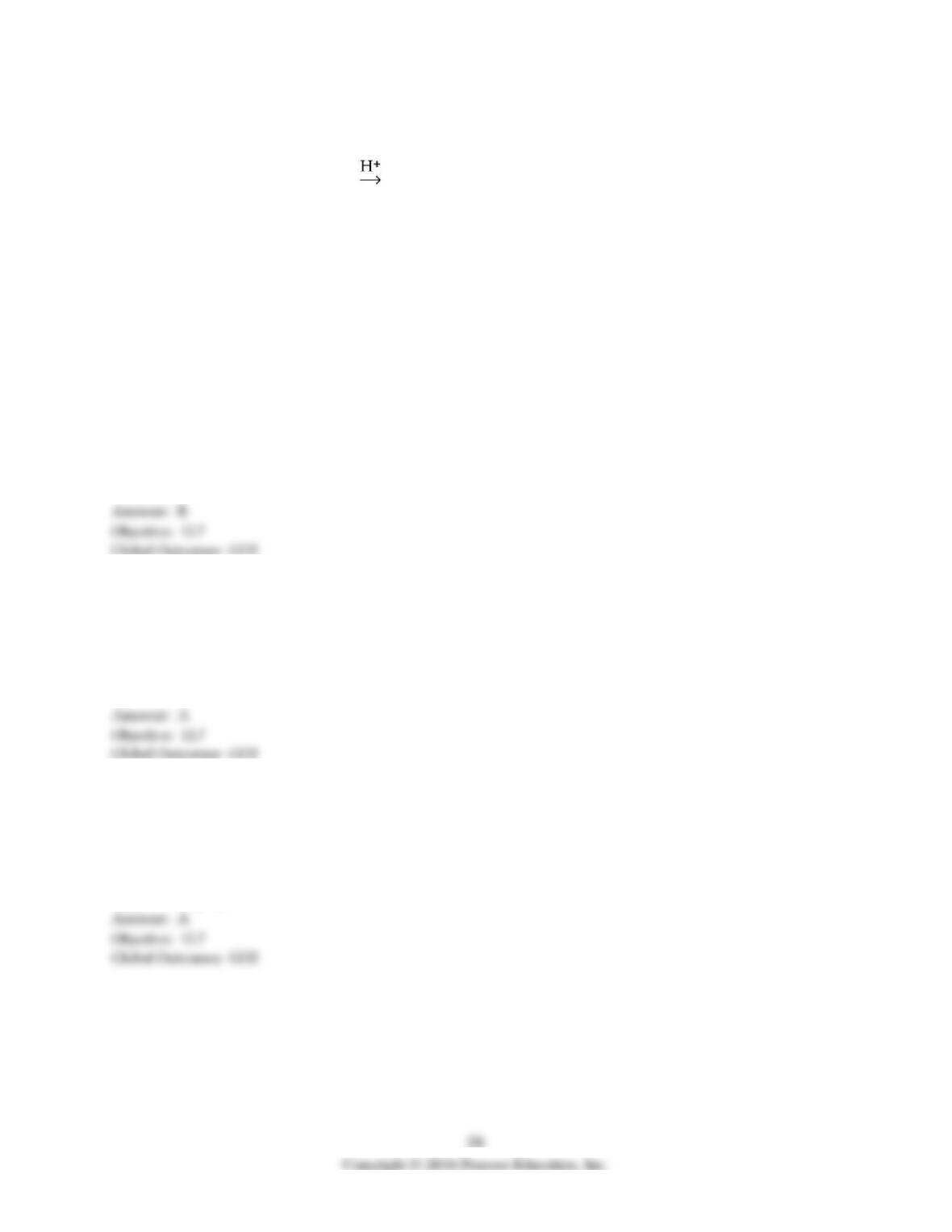
92) What is the major product of the reaction shown below?
CH3– CH2– CH = CH2 + HOH
A) OH OH
| |
CH3 – CH2 – CH – CH2
B) OH
|
CH3 – CH2 – CH – CH3
C) CH3 – CH2 – CH2 – CH2 OH
D) OH OH
| |
CH3 – CH – CH – CH3
E) OH
|
CH3 – CH2 – C – CH2
93) Long-chain molecules that consist of many repeating units are called
A) polymers.
B) monomers.
C) organic compounds.
D) alkenes.
E) alkanes.
94) Small molecules that make up the repeat unit in polymers are called
A) monomers.
B) alkenes.
C) alkynes.
D) minipolymers.
E) synthetic polymers.
95) What is the starting monomer for the polymer Teflon®?
F F F F
| | | |
– C – C – C – C –
| | | |
F F F F
A) F
|
F – C – F
|
F
B) F
|
H – C – H
|
F
C) F F
| |
F – C – C – F
| |
F F
D) C F
E) F F
| |
F – C C – F
96) Which of the following would result from the polymerization of ethene?
A) CH3 CH3
| |
– C – CH2 – C – CH2 –
| |
CH3 CH3
B) CH3 CH3 CH3 CH3
| | | |
– C – C – C – C –
| | | |
H H H H
C) H H H H
| | | |
– C = C – C = C –
D) = C = C = C = C =
E) – CH2 – CH2 – CH2 – CH2 –
97) The structural formula of benzene is often represented as a
A) ring of five carbon atoms.
B) ring of six carbon atoms with six double bonds.
C) ring of six carbon atoms with a circle in the center.
D) cycloalkane.
E) cycloalkyne.
98) A compound that contains the ring structure of benzene is called a(n)
A) alkane.
B) cycloalkane.
C) alkyl group.
D) aromatic compound.
E) hydrocarbon.
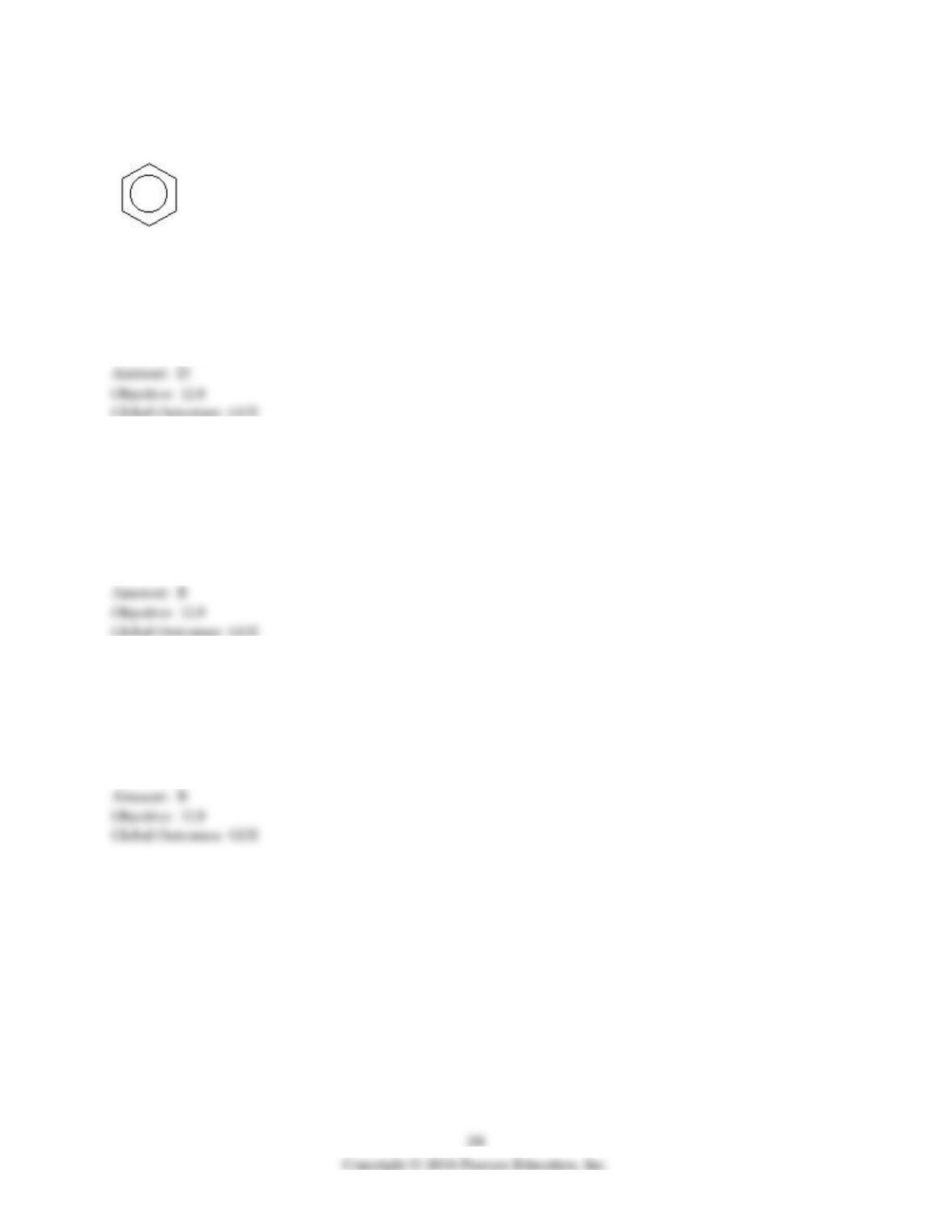
99) The compound below is named
A) cyclohexane.
B) cyclohexene.
C) cyclohexyne.
D) benzene.
E) cyclobenzene.
100) What is the molecular formula of benzene?
A) C6H4
B) C6H6
C) C6H8
D) C6H10
E) C6H12
101) All of the carbon-carbon bonds in benzene are
A) composed of only two types, single and double.
B) identical.
C) double bonds.
D) single bonds.
E) circular bonds.
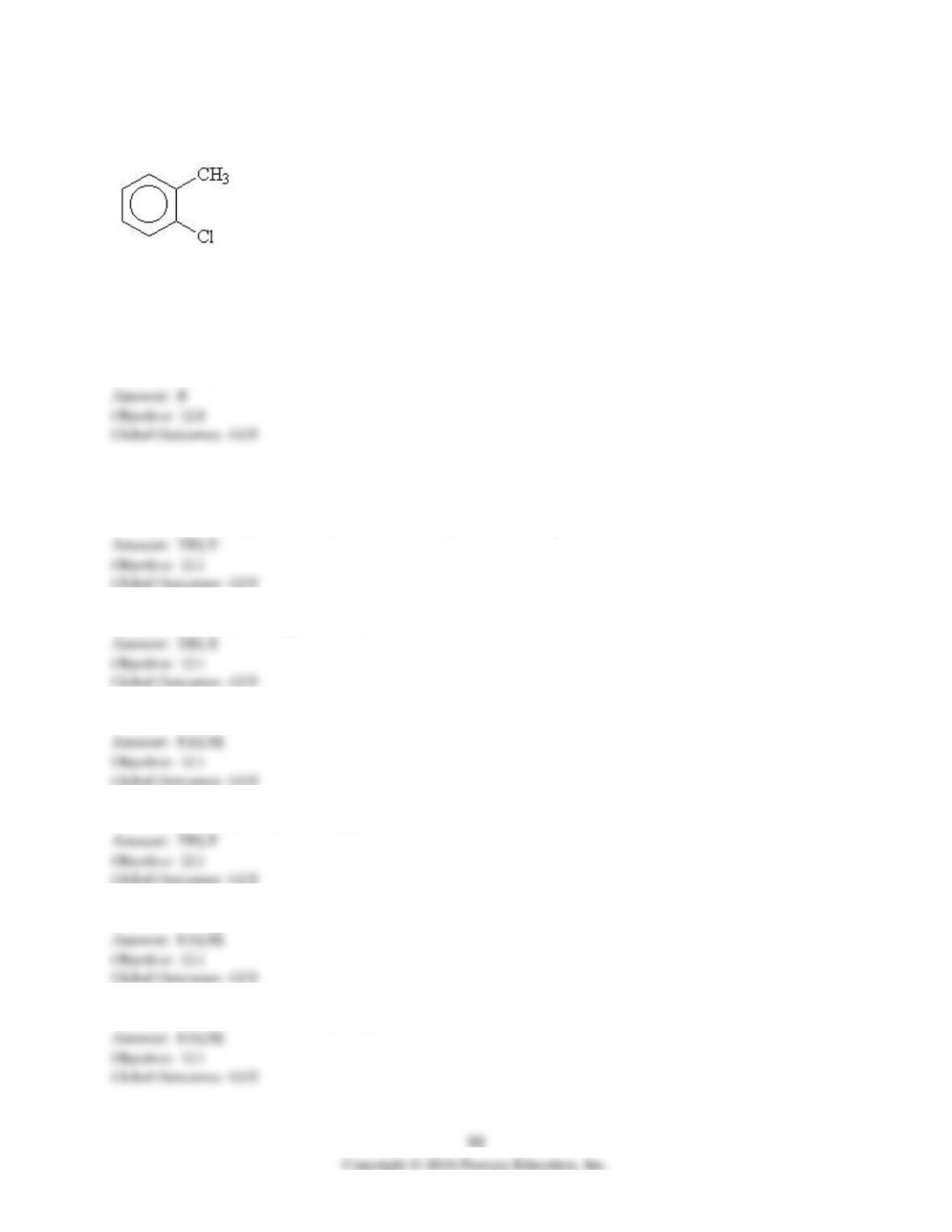
102) What is the name of the compound below?
A) 1-chlorotoluene
B) 2-chlorotoluene
C) 3-chlorotoluene
D) 4-chlorotoluene
E) 5-chlorotoluene
12.2 True/False Questions
1) Organic chemistry is the study of the chemistry of carbon compounds.
2) There are millions of organic compounds.
3) Carbon has six valence electrons.
4) Methane has a tetrahedral structure.
5) The bond angles in a tetrahedral molecule are 90°.
6) Organic compounds are always highly water soluble.
7) Most organic compounds are flammable.
8) Organic compounds can only be made by living things because a “vital force” is needed for their
creation.
9) Most prescription drugs are organic molecules.
10) Pentane contains six carbon atoms.
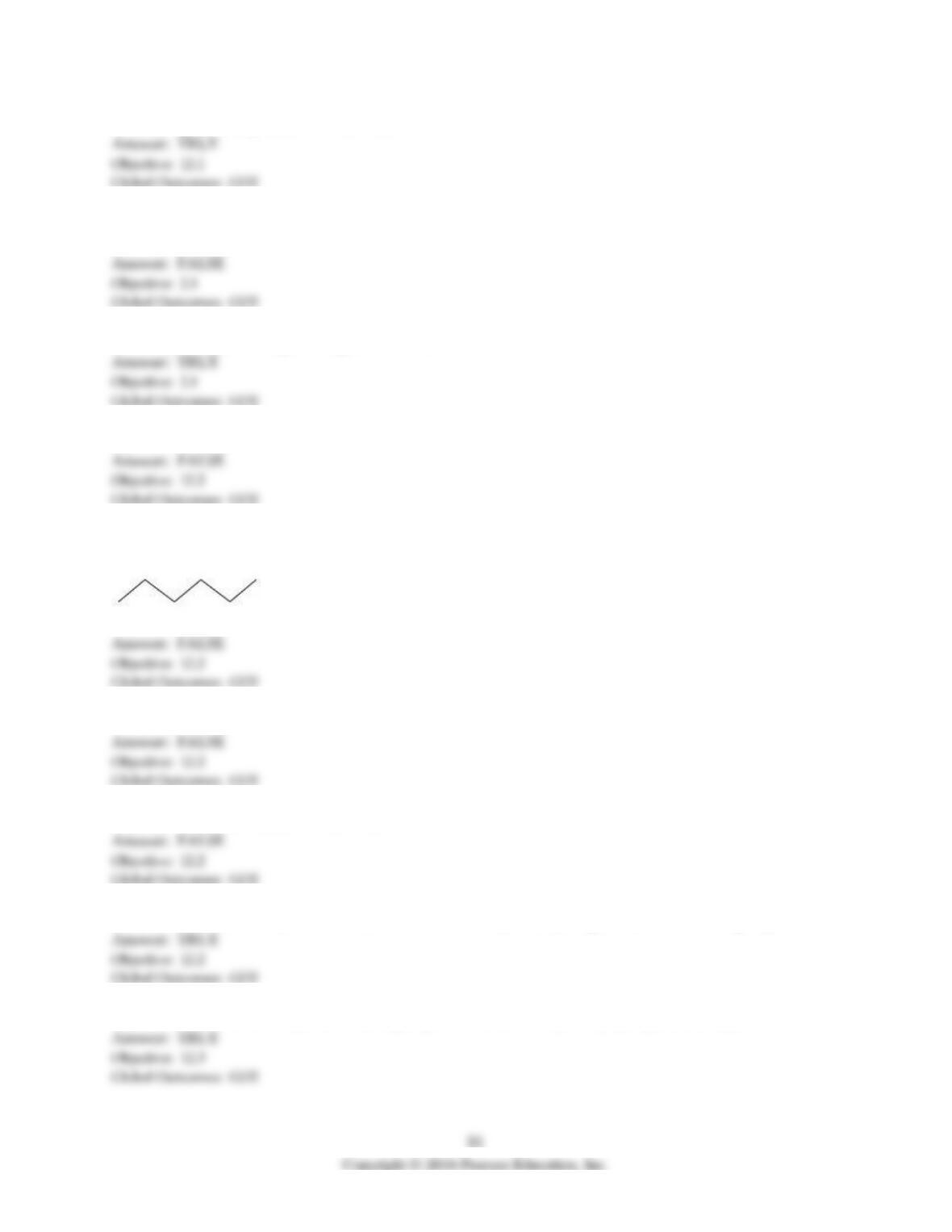
11) The name of this alkane is pentane.
12) Octane is a seven-carbon continuous chain alkane.
13) Octane is a seven-carbon linear alkane.
14) In a condensed structural formula, the carbon and attached hydrogens are written as a group.
15) The first four linear alkyl substituent groups are named methyl, ethyl, propyl, and butyl.
16) When naming an alkane, the main chain is the longest continuous carbon chain regardless of bends.
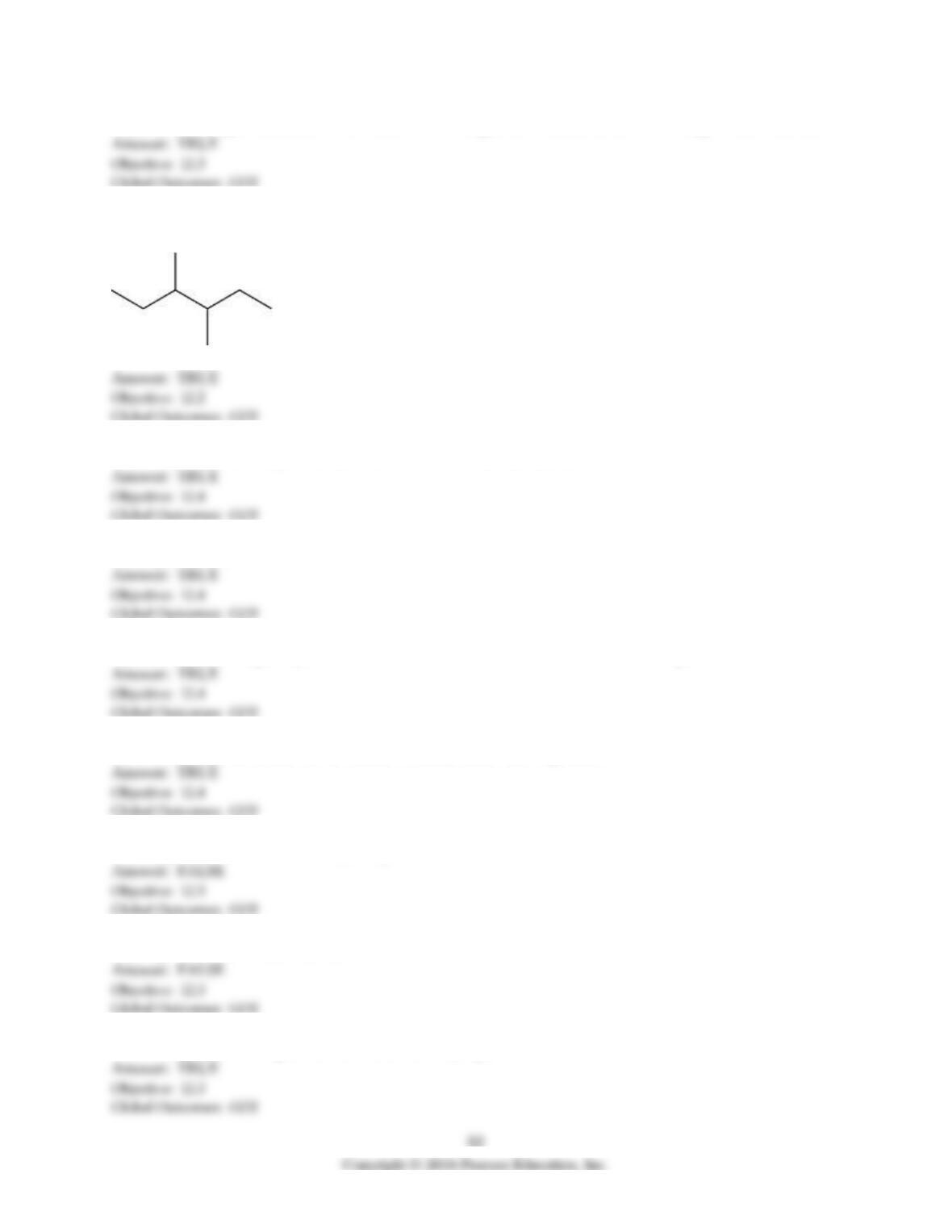
17) The name of this alkane is 3,4-dimethylhexane.
18) The products of complete combustion are carbon dioxide and water.
19) Organic liquids are often less dense than water.
20) Mineral oil is a liquid hydrocarbon used as a laxative and lubricant in medical practice.
21) Solid alkanes are found on the surface of many fruits and vegetables.
22) Propylene is used to induce ripening in fruits.
23) Alkynes contain double bonds.
24) An alkyne containing three carbons is named propyne.
25) Light-induced cis-trans isomerization is an important step in vision.
26) In a cis alkene, the groups are on the same side of the double bond.
27) In a trans alkene, the groups are on the same side of the double bond.
28) All alkenes show cis-trans isomerism.
29) Alkynes can show cis-trans isomerism.
30) Hydrogenation is used to convert alkenes to alkanes.
31) Hydration is used to convert alkenes to alkanes.
32) Hydrogenation of unsaturated vegetable oils raises the melting point and makes them more solid.
33) Water can be added to alkenes to produce acids.
34) Polymers are large molecules consisting of repeating units.
35) Nylon, polyester, and most other plastics are carbon compounds.
36) One essential building block of aspirin, ibuprofen, and acetaminophen is the benzene ring.
37) All polycyclic aromatic compounds cause cancer.
38) The chemical formula for benzene is C6H12.
12.3 Matching Questions
Identify the following as more characteristic of an organic compound or an inorganic compound.
A) organic
B) inorganic
1) high melting point
Objective: 12.1
Global Outcomes: GO2
2) flammable
Objective: 12.1
Global Outcomes: GO2
3) covalent bonds
Objective: 12.1
Global Outcomes: GO2
4) insoluble in water
Objective: 12.1
Global Outcomes: GO2
5) ionic bonds
Objective: 12.1
Global Outcomes: GO2
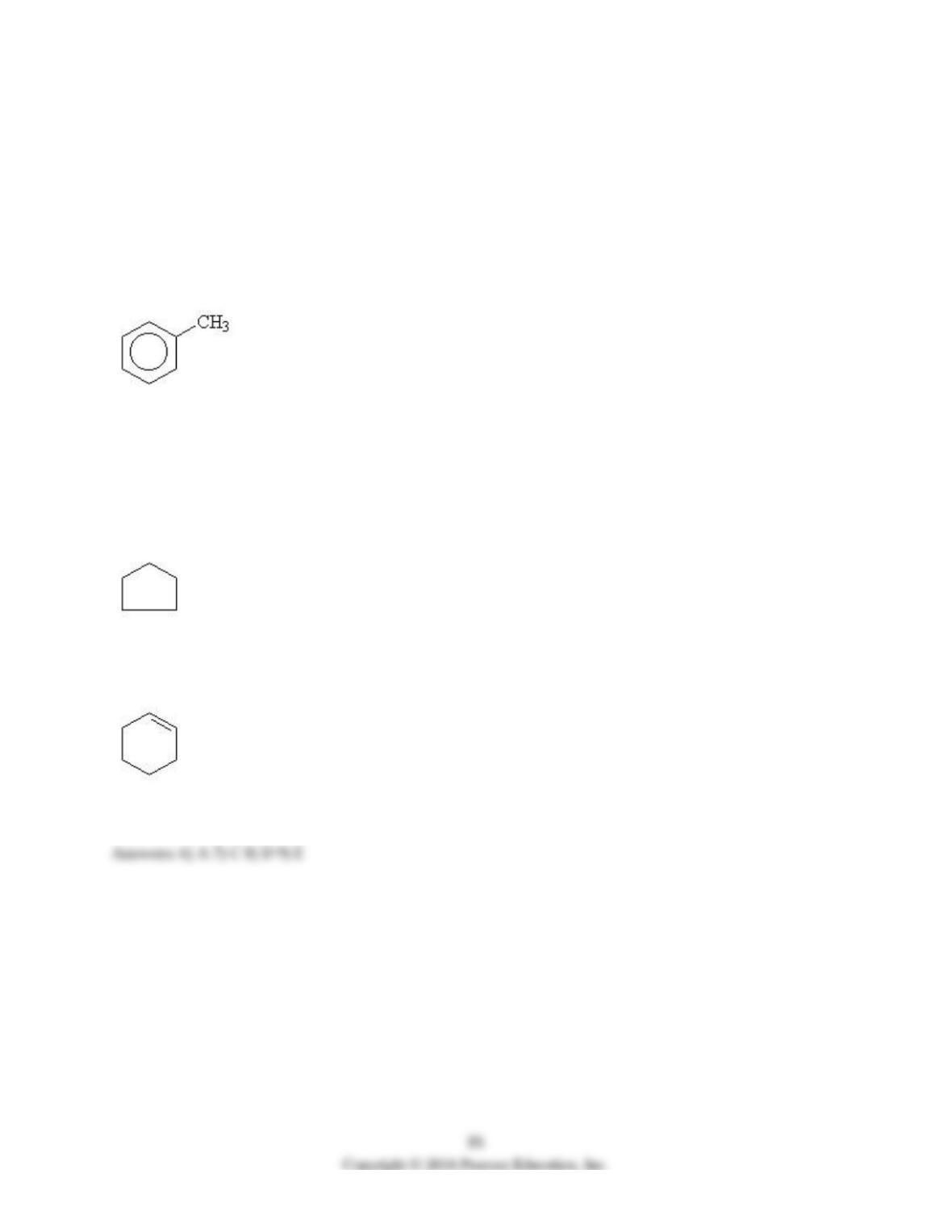
Match the following organic structures with the appropriate classification.
A) aromatic compound
B) alkene aromatic
C) alkane
D) cycloalkane
E) cycloalkene
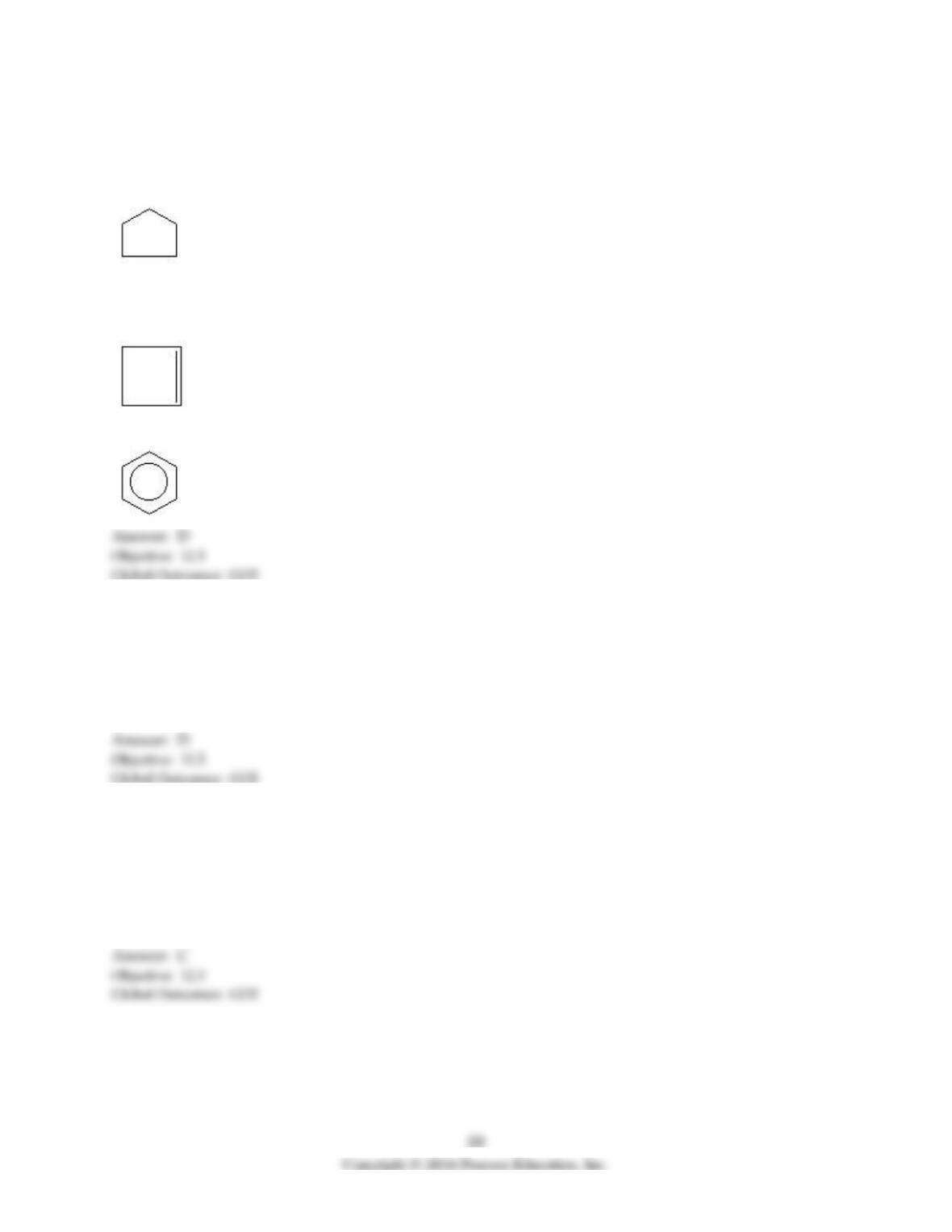
6)
Objective: 12.5
Global Outcomes: GO2
7) CH3–CH2–CH2–CH3
Objective: 12.5
Global Outcomes: GO2
8)
Objective: 12.5
Global Outcomes: GO2
9)
Objective: 12.5
Global Outcomes: GO2
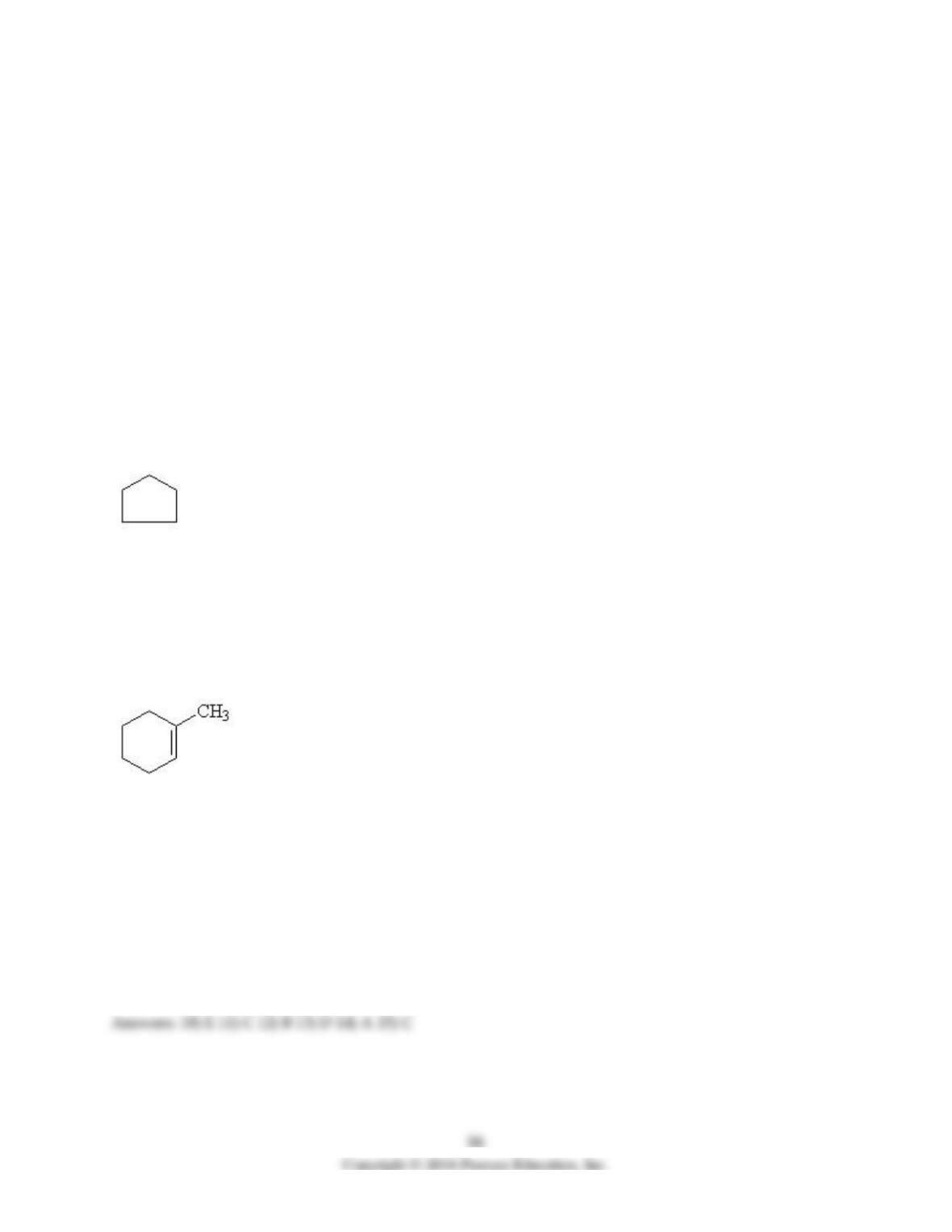
Choose the type of compound from Column 2 that best matches each item in Column 1.
A) cycloalkene
B) cycloalkane
C) alkane
D) haloalkane
E) alkene
10) CH3– CH = CH – CH3
Objective: 12.5
Global Outcomes: GO2
11) CH4
Objective: 12.5
Global Outcomes: GO2
12)
Objective: 12.5
Global Outcomes: GO2
13) CH3–CH2–Cl
Objective: 12.5
Global Outcomes: GO2
14)
Objective: 12.5
Global Outcomes: GO2
15) CH3
|
CH2
|
CH3
Objective: 12.5
Global Outcomes: GO2