Larson_Calculus_10e ch12sec01
MULTIPLE CHOICE
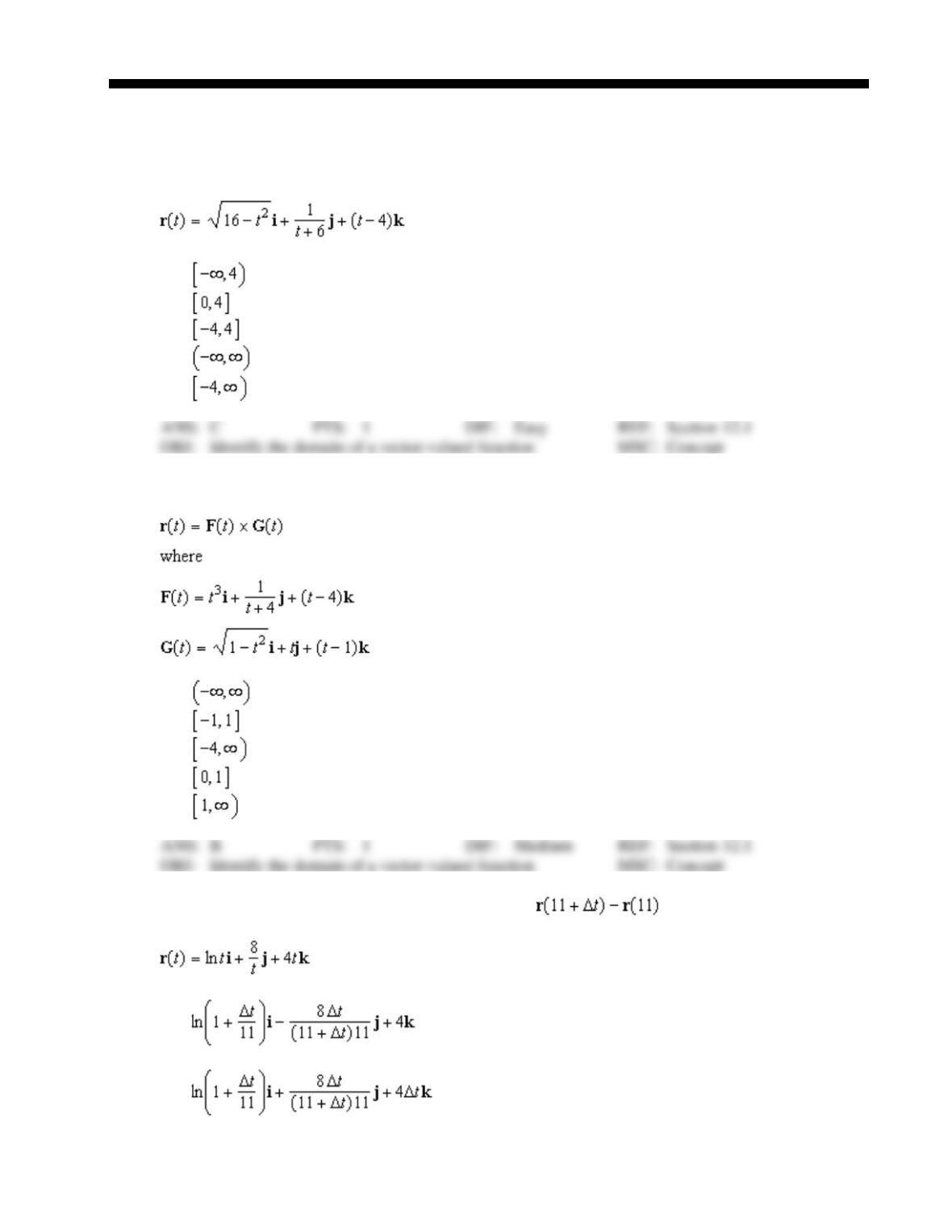
1. Find the domain of the vector-valued function given below.
a.
b.
c.
d.
e.
2. Find the domain of the vector-valued function given below.
a.
b.
c.
d.
e.
3. Given the vector-valued function below, evaluate .
a.
b.
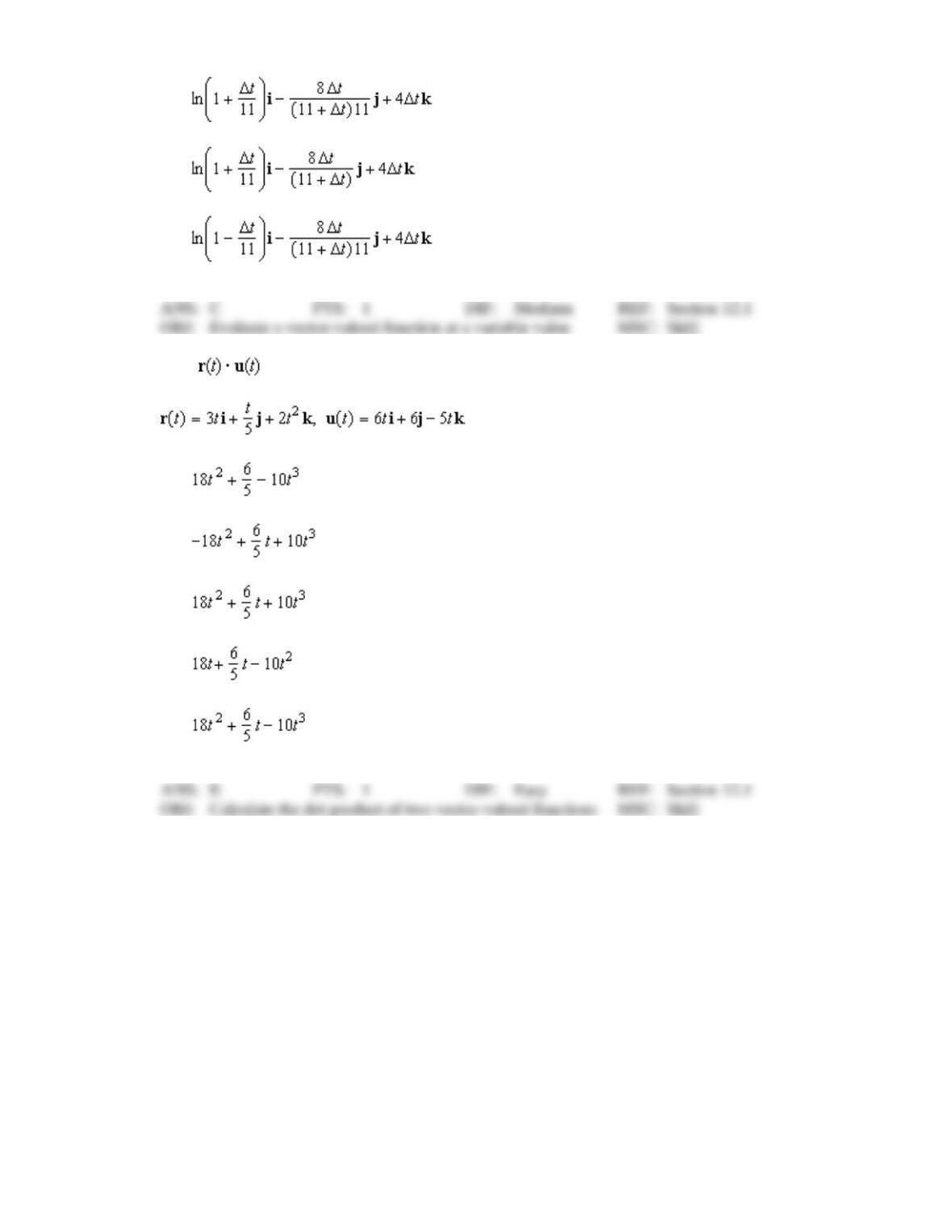
c.
d.
e.
4. Find given the functions below.
a.
b.
c.
d.
e.
5. Match the equation with the graph shown in red below.
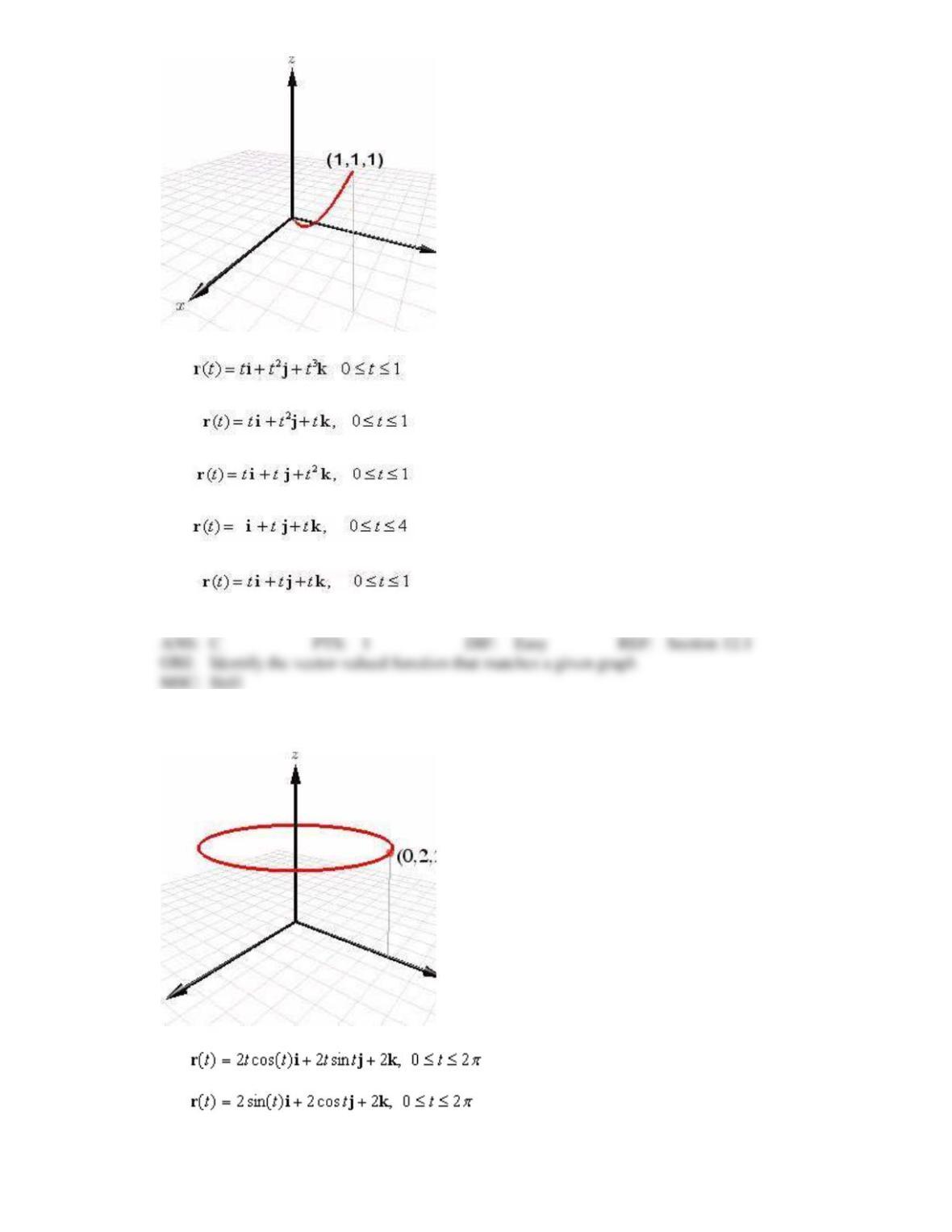
a.
b.
c.
d.
e.
6. The graph below is most likely the graph of which of the following equations?
a.
b.
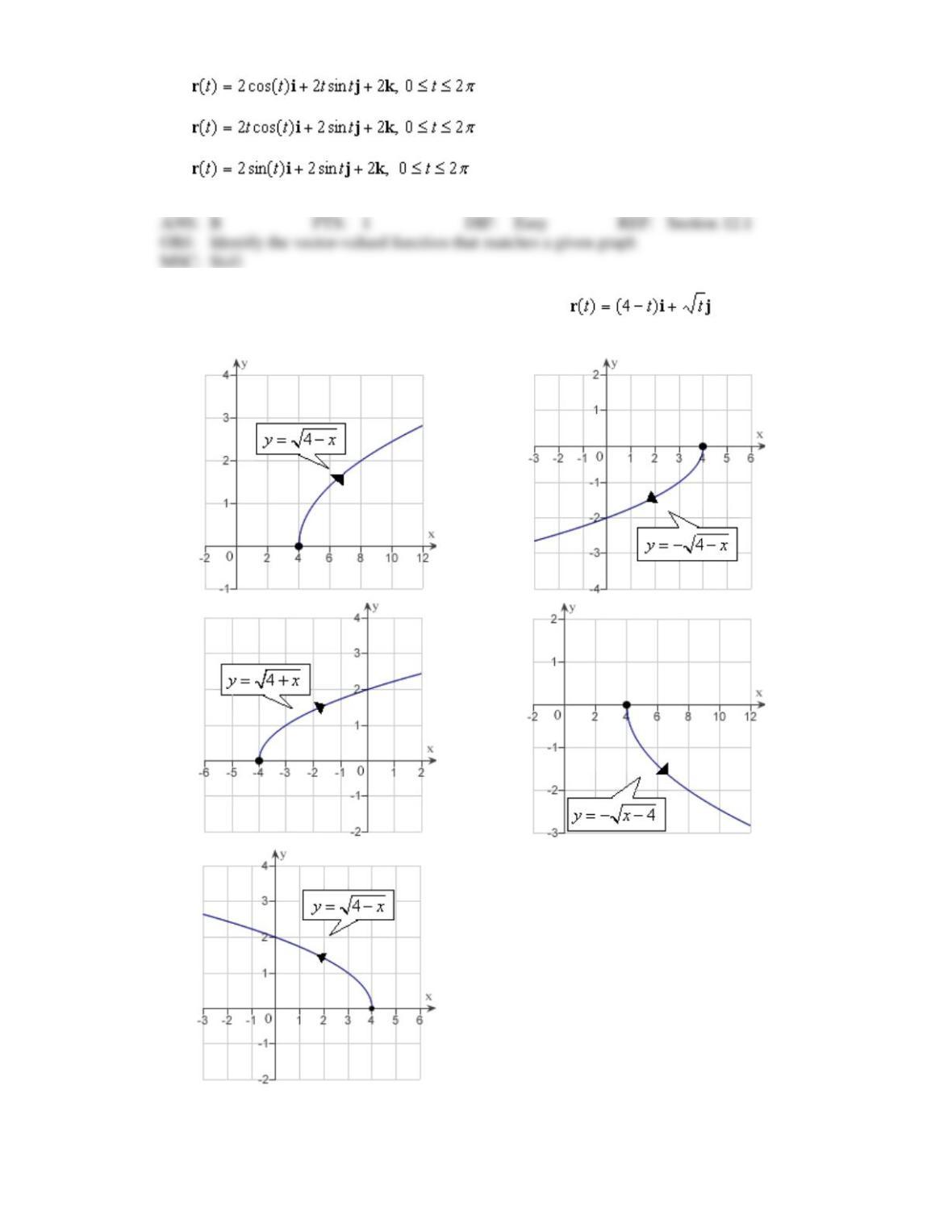
c.
d.
e.
7. Sketch the curve represented by the vector-valued function and give the
orientation of the curve.
a.
d.
b.
e.
c.
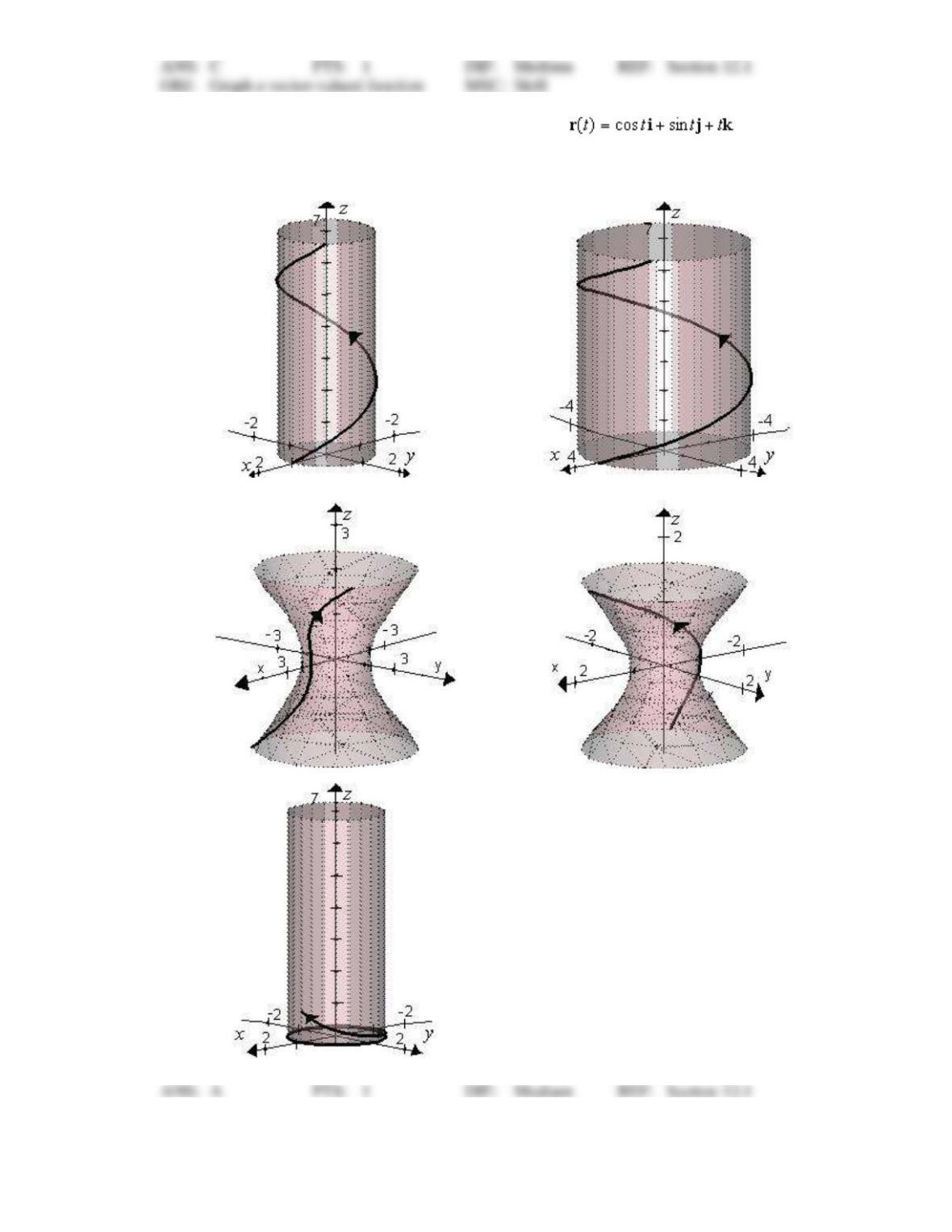
8. Sketch the curve represented by the vector-valued function and give the
orientation of the curve.
a.
d.
b.
e.
c.
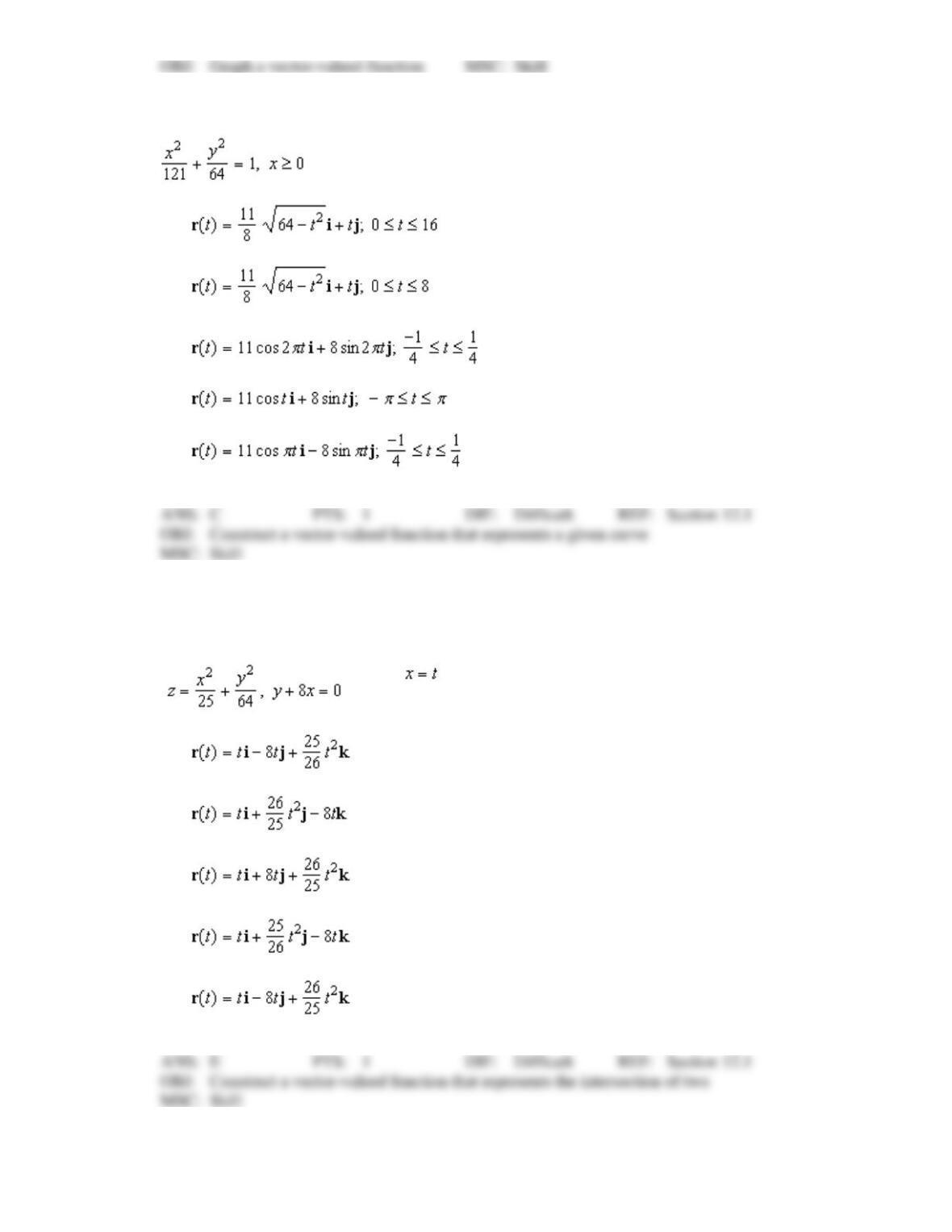
9. Represent the following curve by a vector-valued function.
a.
b.
c.
d.
e.
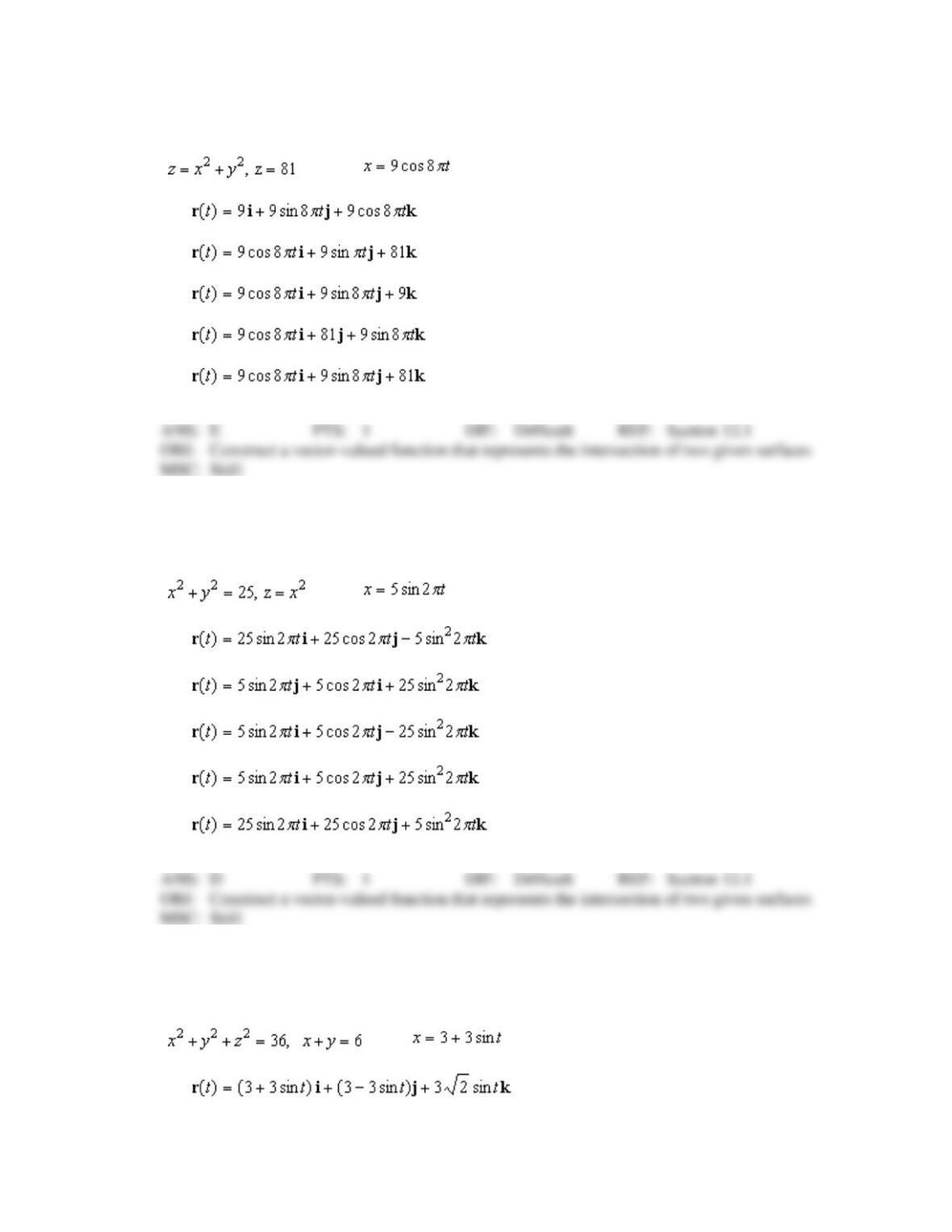
10. Find a vector-valued function, using the given parameter, to represent the intersection of the surfaces
given below.
Surfaces
Parameter
a.
b.
c.
d.
e.
11. Find a vector-valued function, using the given parameter, to represent the intersection of the surfaces
given below.
Surfaces
Parameter
a.
b.
c.
d.
e.
12. Find a vector-valued function, using the given parameter, to represent the intersection of the surfaces
given below.
Surfaces
Parameter
a.
b.
c.
d.
e.
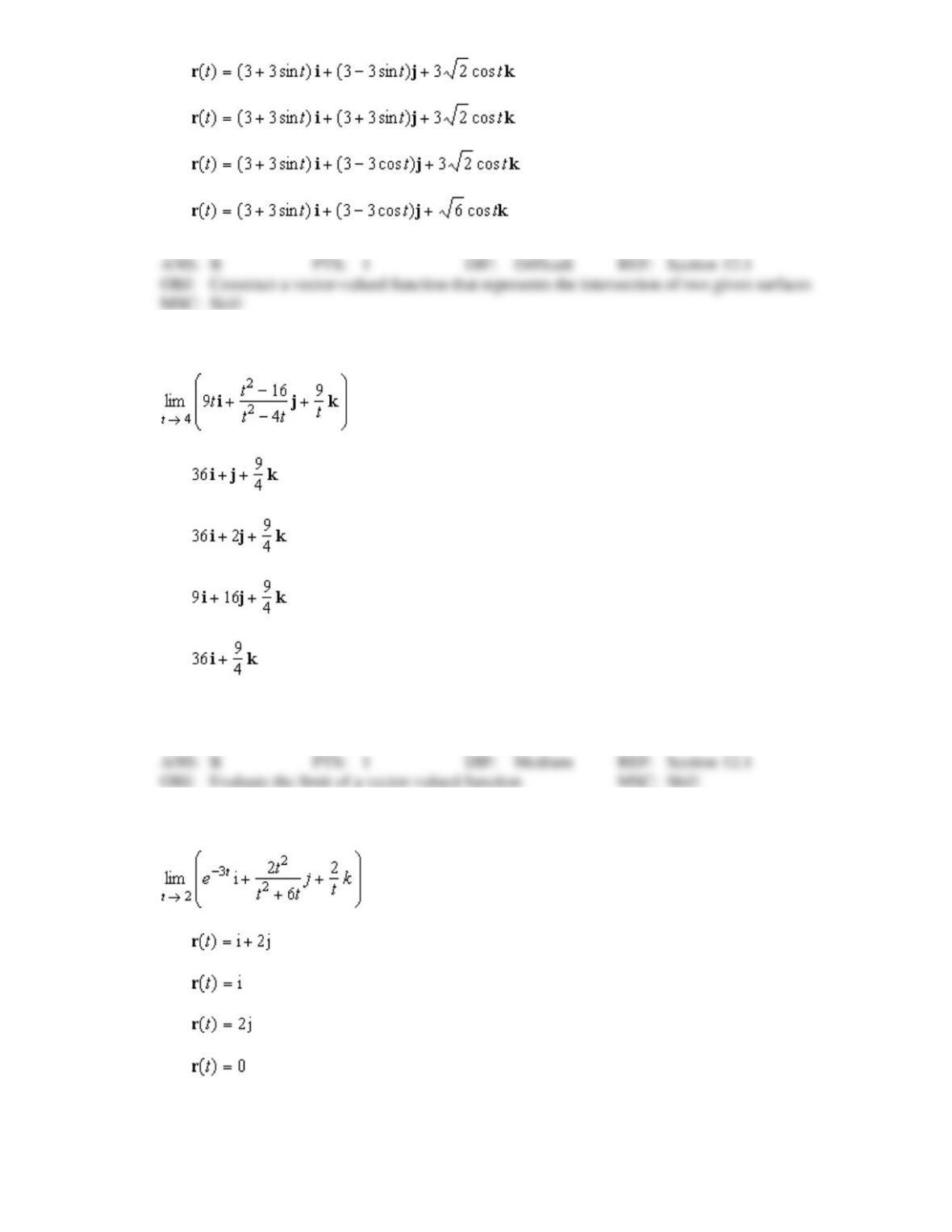
13. Find a vector-valued function, using the given parameter, to represent the intersection of the surfaces
given below.
Surfaces
Parameter
a.
b.
c.
d.
e.
14. Evaluate the limit given below.
a.
b.
c.
d.
e.
The limit does not exist.
15. Evaluate the limit given below.
a.
b.
c.
d.
e.
The limit does not exist.
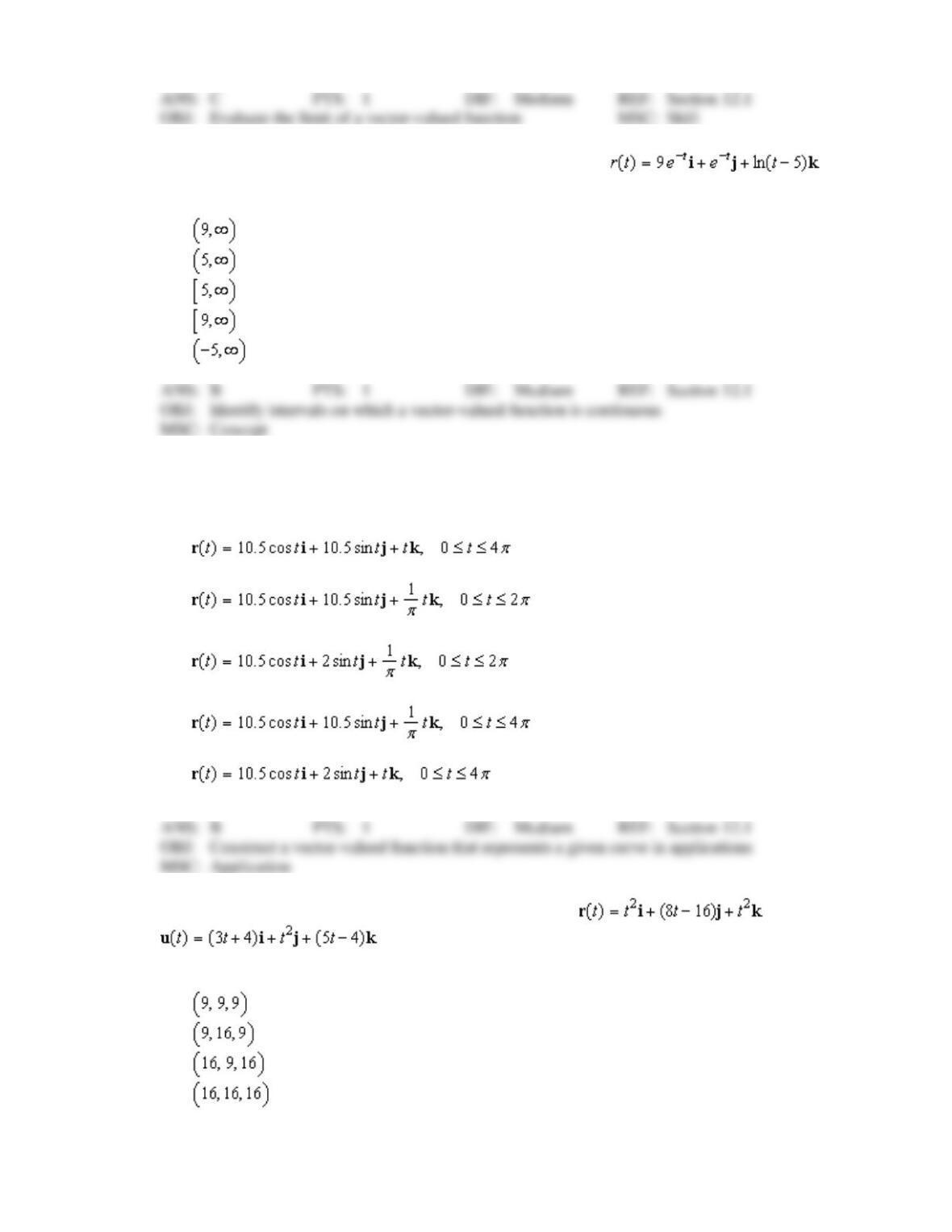
16. Determine the interval on which the vector-valued function is
continuous.
a.
b.
c.
d.
e.
17. Suppose the outer edge of a playground slide is in the shape of a helix of radius 10.5 meters. The slide
has a height of 2 meters and makes one complete revolution from top to bottom. Find a vector-valued
function for the helix.
a.
b.
c.
d.
e.
18. Suppose the two particles travel along the space curves and
. A collision will occur at the point of intersection P if both
particles are at P at the same time. Find the point of collision.
a.
b.
c.
d.
e.