Chapter 12 – Differential Analysis: The Key to Decision Making
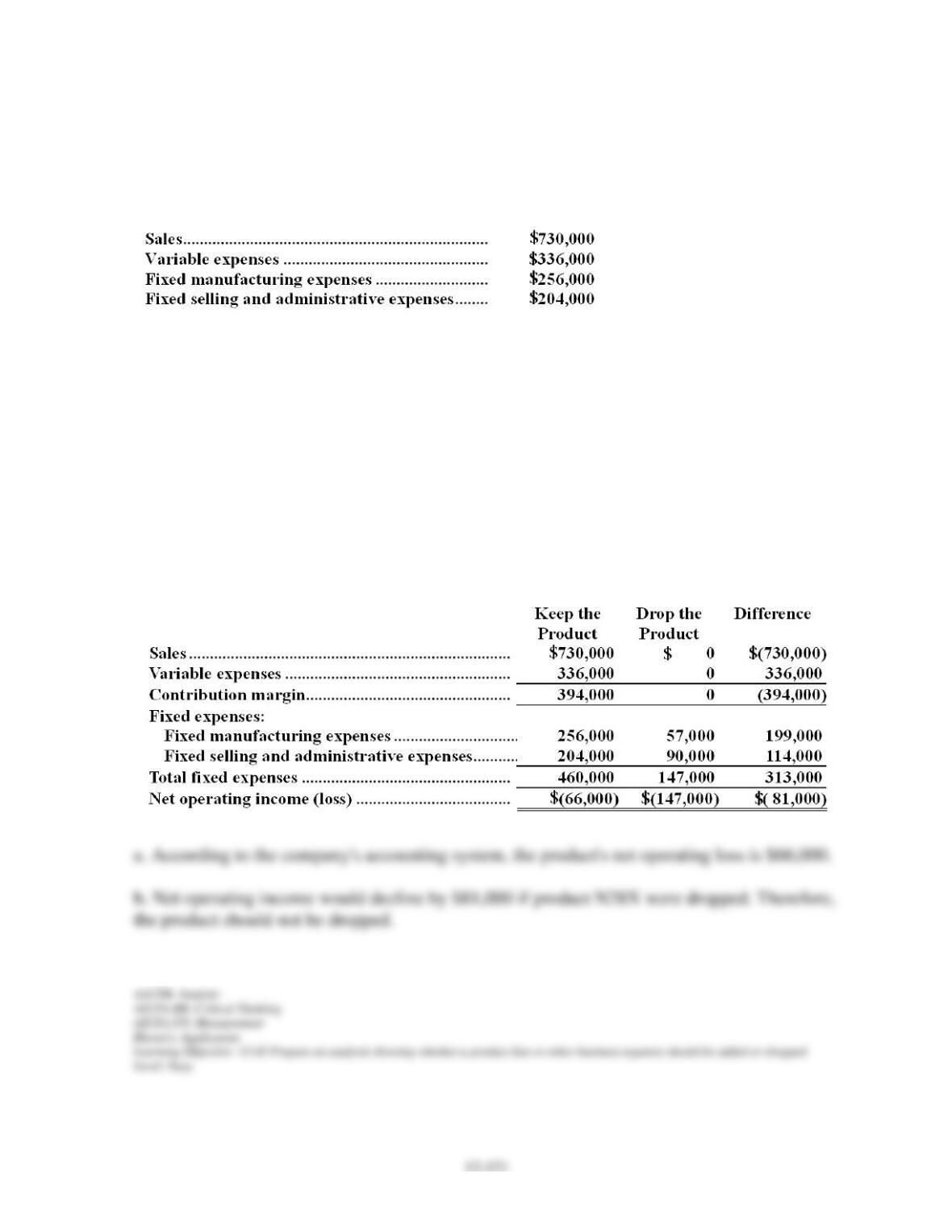
130. Nutall Corporation is considering dropping product N28X. Data from the company’s
accounting system appear below:
All fixed expenses of the company are fully allocated to products in the company’s accounting
system. Further investigation has revealed that $199,000 of the fixed manufacturing expenses
and $114,000 of the fixed selling and administrative expenses are avoidable if product N28X
is discontinued.
Required:
a. According to the company’s accounting system, what is the net operating income earned by
product N28X? Show your work!
b. What would be the effect on the company’s overall net operating income of dropping
product N28X? Should the product be dropped? Show your work!
Chapter 12 – Differential Analysis: The Key to Decision Making
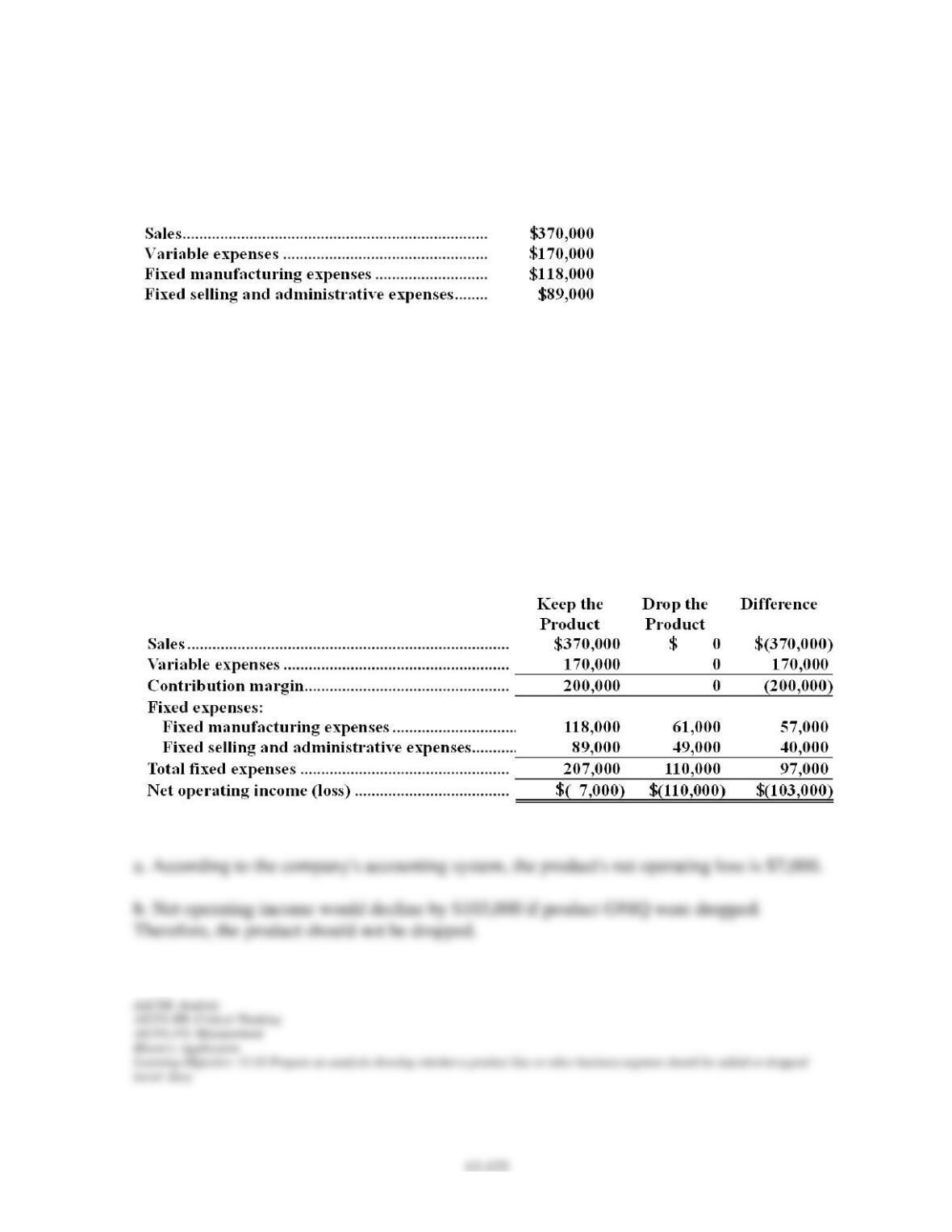
131. The management of Rodarmel Corporation is considering dropping product G91Q. Data
from the company’s accounting system appear below:
All fixed expenses of the company are fully allocated to products in the company’s accounting
system. Further investigation has revealed that $57,000 of the fixed manufacturing expenses
and $40,000 of the fixed selling and administrative expenses are avoidable if product G91Q is
discontinued.
Required:
a. What is the net operating income earned by product G91Q according to the company’s
accounting system? Show your work!
b. What would be the effect on the company’s overall net operating income of dropping
product G91Q? Should the product be dropped? Show your work!
Chapter 12 – Differential Analysis: The Key to Decision Making
12-123
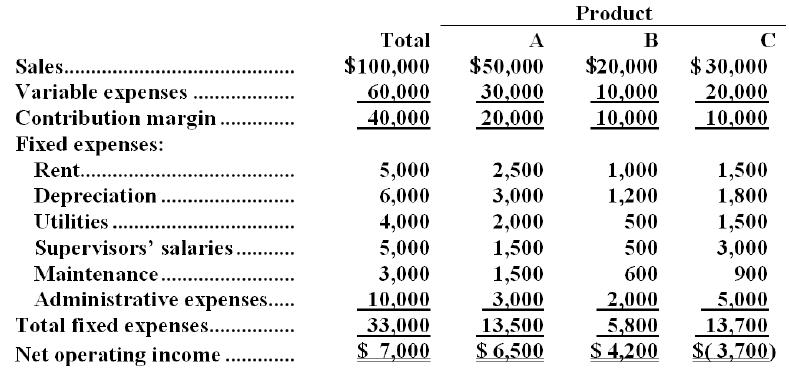
132. Mr. Earl Pearl, accountant for Margie Knall Co., Inc., has prepared the following
product-line income data:
The following additional information is available:
* The factory rent of $1,500 assigned to Product C is avoidable if the product were dropped.
* The company’s total depreciation would not be affected by dropping C.
* Eliminating Product C will reduce the monthly utility bill from $1,500 to $800.
* All supervisors’ salaries are avoidable.
* If Product C is discontinued, the maintenance department will be able to reduce monthly
expenses from $3,000 to $2,000.
* Elimination of Product C will make it possible to cut two persons from the administrative
staff; their combined salaries total $3,000.
Required:
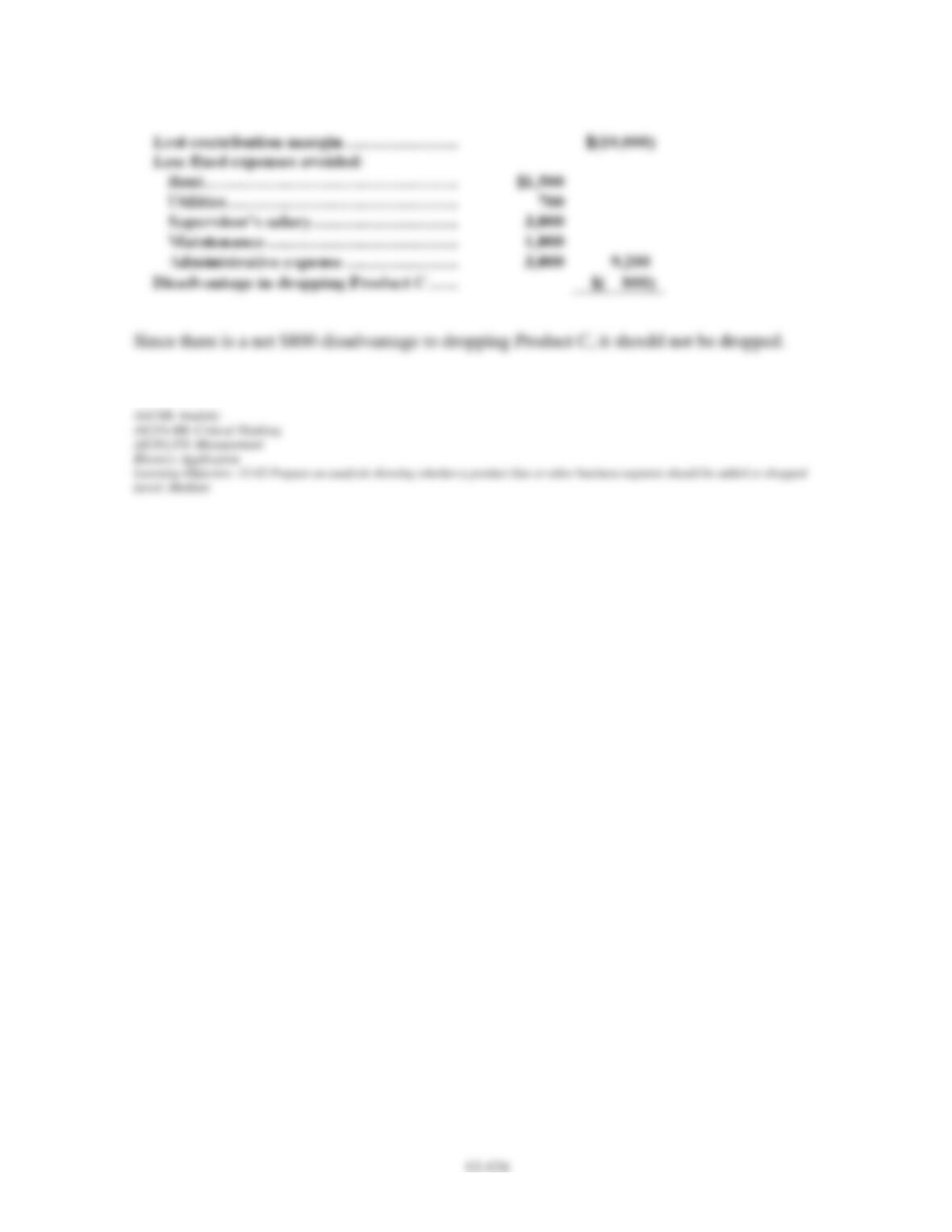
Prepare an analysis showing whether Product C should be eliminated.
Chapter 12 – Differential Analysis: The Key to Decision Making
Chapter 12 – Differential Analysis: The Key to Decision Making
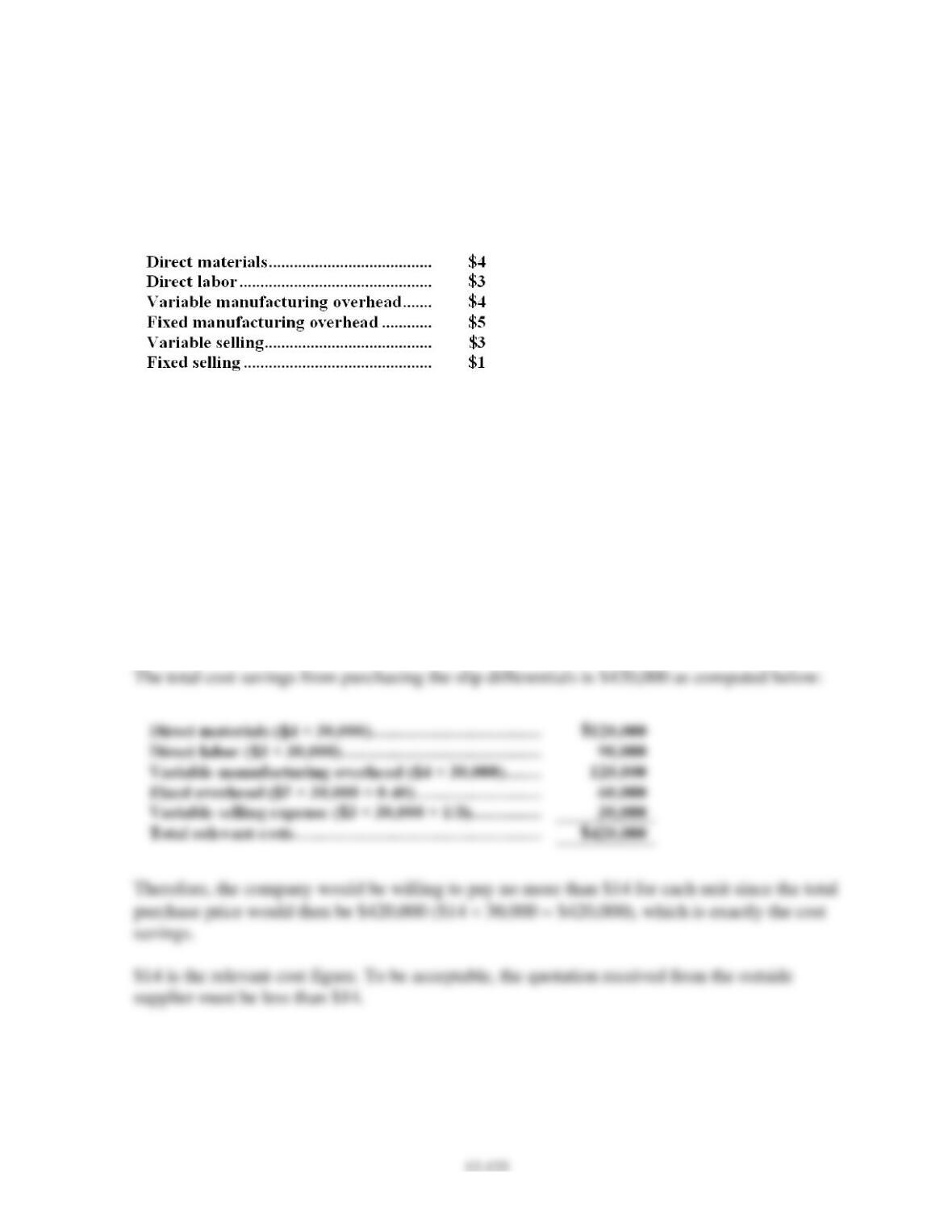
133. The Hayes Company manufactures and sells several products, one of which is called a
slip differential. The company normally sells 30,000 units of the slip differential each month.
At this activity level, unit costs are:
An outside supplier has offered to produce the slip differentials for the Hayes Company, and
to ship them directly to the Hayes Company’s customers. This arrangement would permit the
Hayes Company to reduce its variable selling expenses by one third (due to elimination of
freight costs). The facilities now being used to produce the slip differentials would be idle and
fixed manufacturing overhead would continue at 60 percent of its present level. The total
fixed selling expenses of the company would be unaffected by this decision.
Required:
What is the maximum acceptable price quotation for the slip differentials from the outside
supplier?

Chapter 12 – Differential Analysis: The Key to Decision Making
Chapter 12 – Differential Analysis: The Key to Decision Making
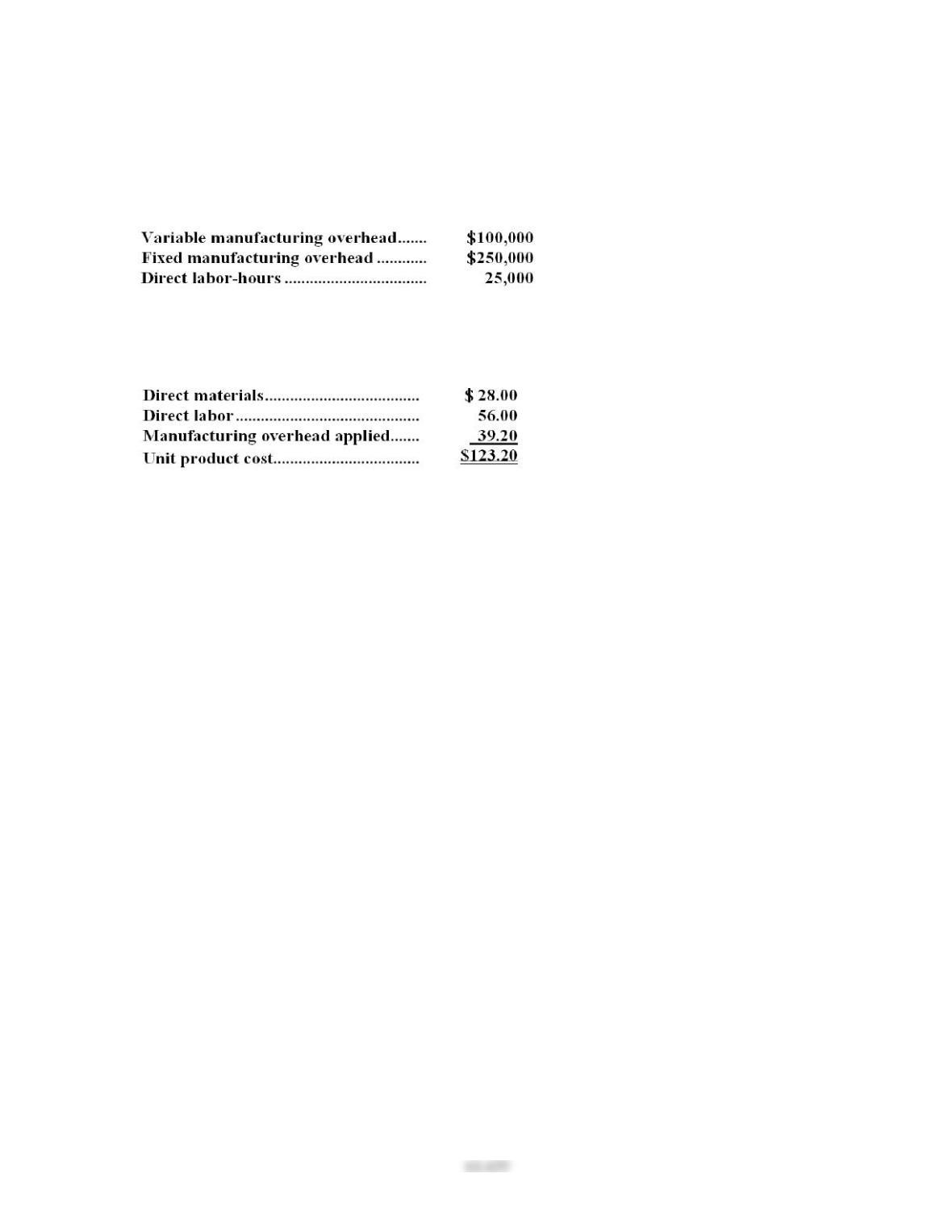
134. Bady Inc. makes a range of products. The company’s predetermined overhead rate is $14
per direct labor-hour, which was calculated using the following budgeted data:
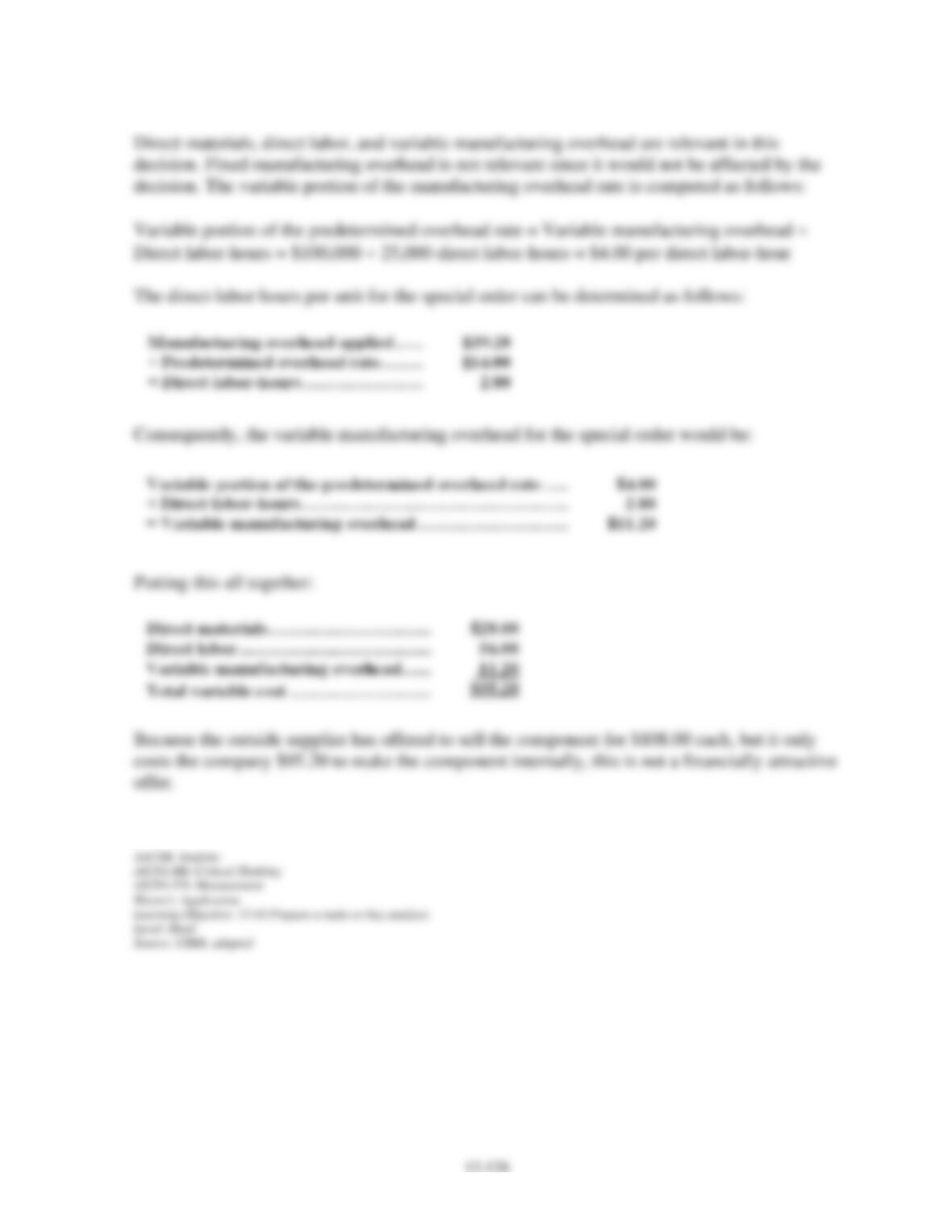
Component M3 is used in one of the company’s products. The unit cost of the component
according to the company’s cost accounting system is determined as follows:
An outside supplier has offered to supply component M3 for $108 each. The outside supplier
is known for quality and reliability. Assume that direct labor is a variable cost, variable
manufacturing overhead is really driven by direct labor-hours, and total fixed manufacturing
overhead would not be affected by this decision. Bady chronically has idle capacity.
Required:
Is the offer from the outside supplier financially attractive? Why?
Chapter 12 – Differential Analysis: The Key to Decision Making
Chapter 12 – Differential Analysis: The Key to Decision Making
12-129
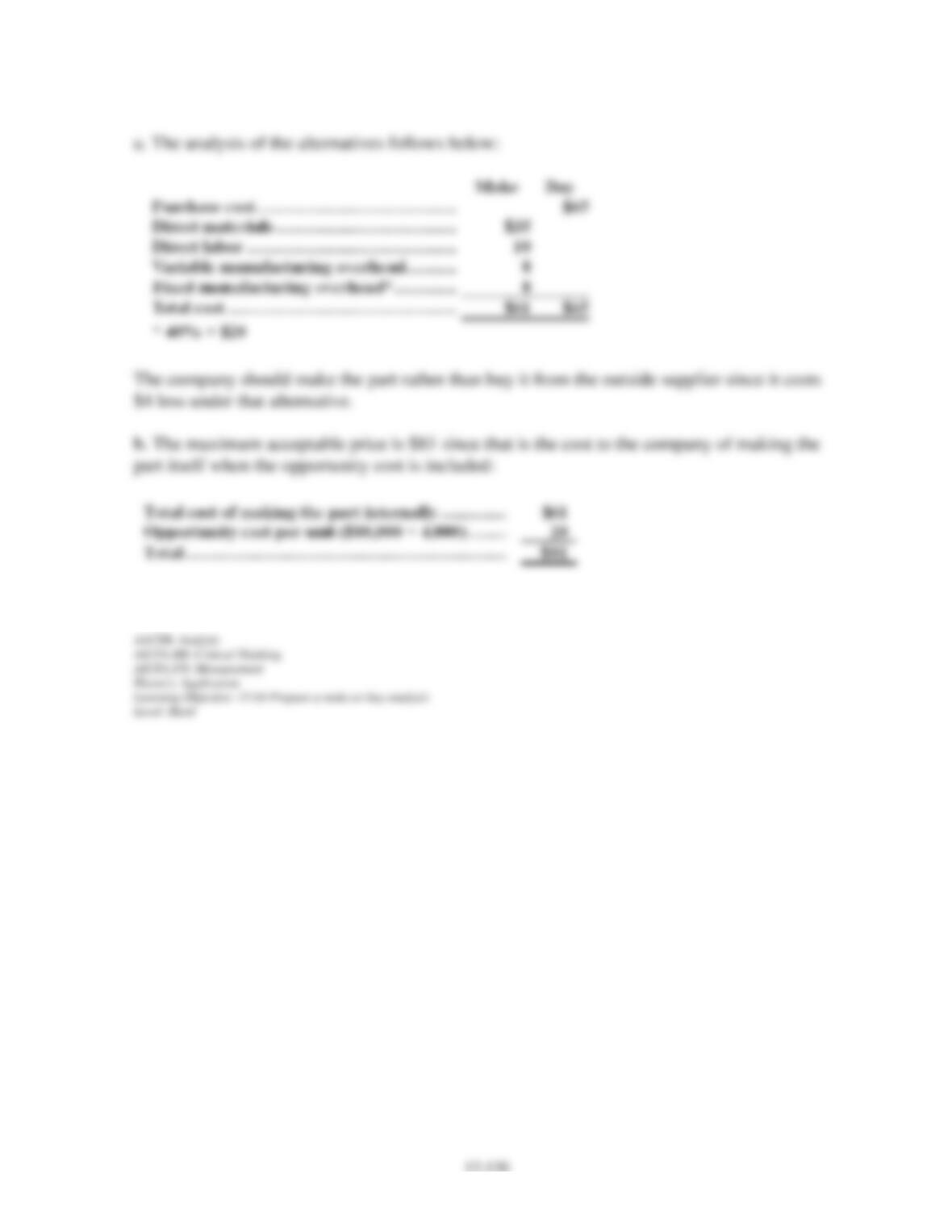
135. Kramer Company makes 4,000 units per year of a part called an axial tap for use in one
of its products. Data concerning the unit production costs of the axial tap follow:
An outside supplier has offered to sell Kramer Company all of the axial taps it requires. If
Kramer Company decided to discontinue making the axial taps, 40% of the above fixed
manufacturing overhead costs could be avoided. Assume that direct labor is a variable cost.
Required:
a. Assume Kramer Company has no alternative use for the facilities presently devoted to
production of the axial taps. If the outside supplier offers to sell the axial taps for $65 each,
should Kramer Company accept the offer? Fully support your answer with appropriate
calculations.
b. Assume that Kramer Company could use the facilities presently devoted to production of
the axial taps to expand production of another product that would yield an additional
contribution margin of $80,000 annually. What is the maximum price Kramer Company
should be willing to pay the outside supplier for axial taps?
Chapter 12 – Differential Analysis: The Key to Decision Making
Chapter 12 – Differential Analysis: The Key to Decision Making
12-131
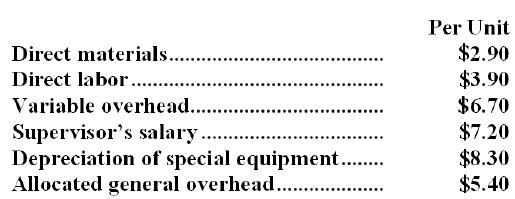
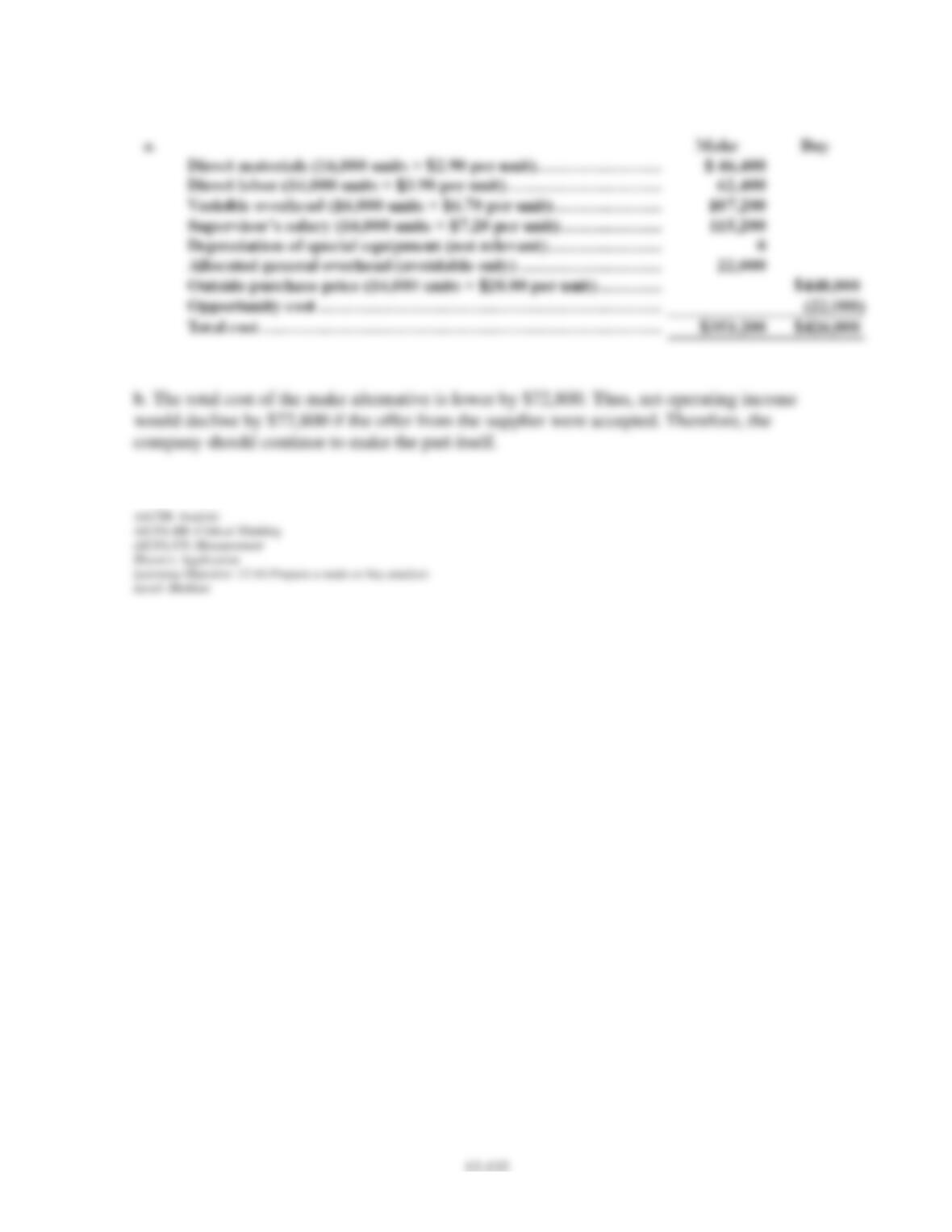
136. Masse Corporation uses part G18 in one of its products. The company’s Accounting
Department reports the following costs of producing the 16,000 units of the part that are
needed every year.
An outside supplier has offered to make the part and sell it to the company for $28.00 each. If
this offer is accepted, the supervisor’s salary and all of the variable costs, including direct
labor, can be avoided. The special equipment used to make the part was purchased many
years ago and has no salvage value or other use. The allocated general overhead represents
fixed costs of the entire company. If the outside supplier’s offer were accepted, only $22,000
of these allocated general overhead costs would be avoided. In addition, the space used to
produce part G18 could be used to make more of one of the company’s other products,
generating an additional segment margin of $22,000 per year for that product.
Required:
a. Prepare a report that shows the effect on the company’s total net operating income of
buying part G18 from the supplier rather than continuing to make it inside the company.
b. Which alternative should the company choose?
Chapter 12 – Differential Analysis: The Key to Decision Making
Chapter 12 – Differential Analysis: The Key to Decision Making
12-133
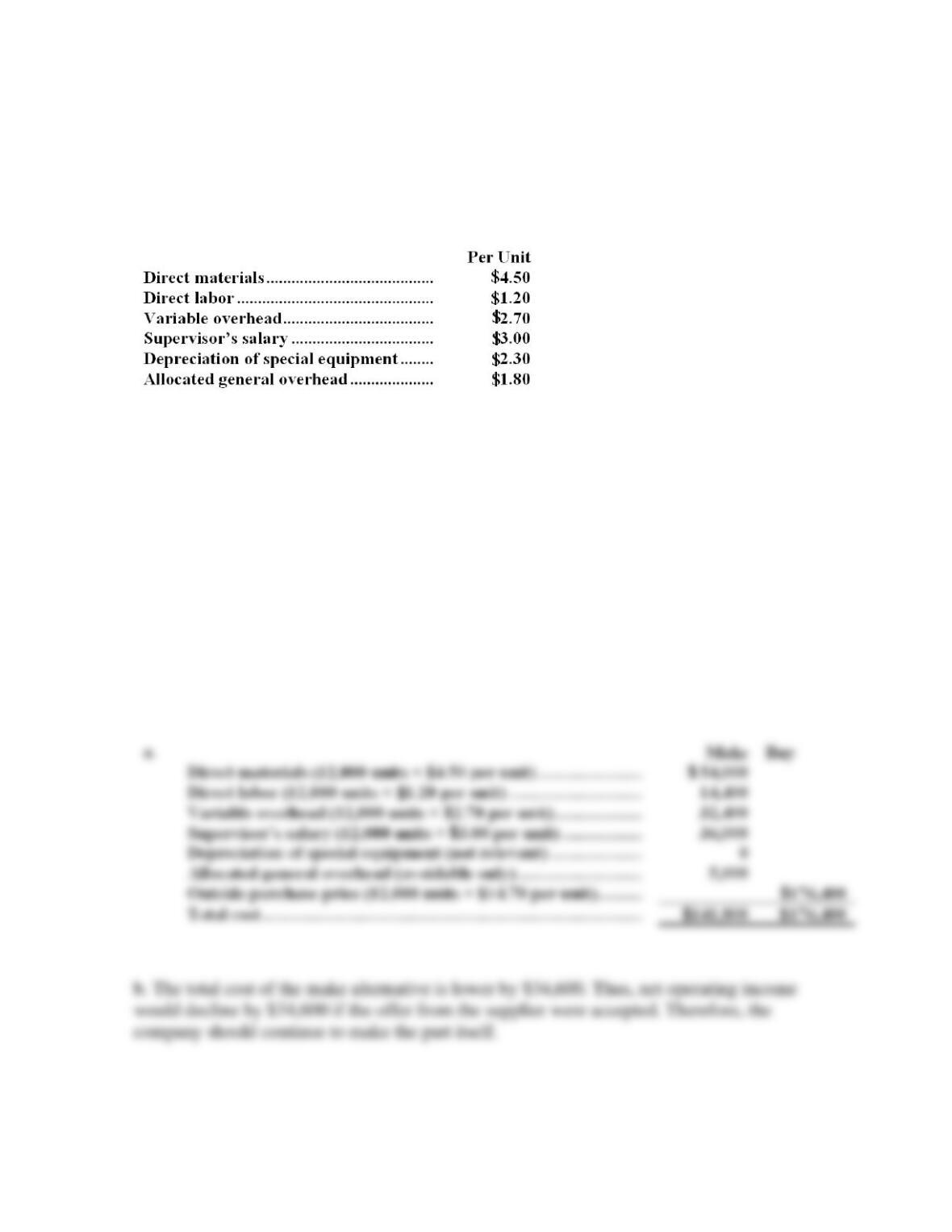
137. Part E43 is used in one of Ran Corporation’s products. The company’s Accounting
Department reports the following costs of producing the 12,000 units of the part that are
needed every year.
An outside supplier has offered to make the part and sell it to the company for $14.70 each. If
this offer is accepted, the supervisor’s salary and all of the variable costs, including direct
labor, can be avoided. The special equipment used to make the part was purchased many
years ago and has no salvage value or other use. The allocated general overhead represents
fixed costs of the entire company. If the outside supplier’s offer were accepted, only $5,000 of
these allocated general overhead costs would be avoided.
Required:
a. Prepare a report that shows the effect on the company’s total net operating income of
buying part E43 from the supplier rather than continuing to make it inside the company.
b. Which alternative should the company choose?
Chapter 12 – Differential Analysis: The Key to Decision Making
12-134
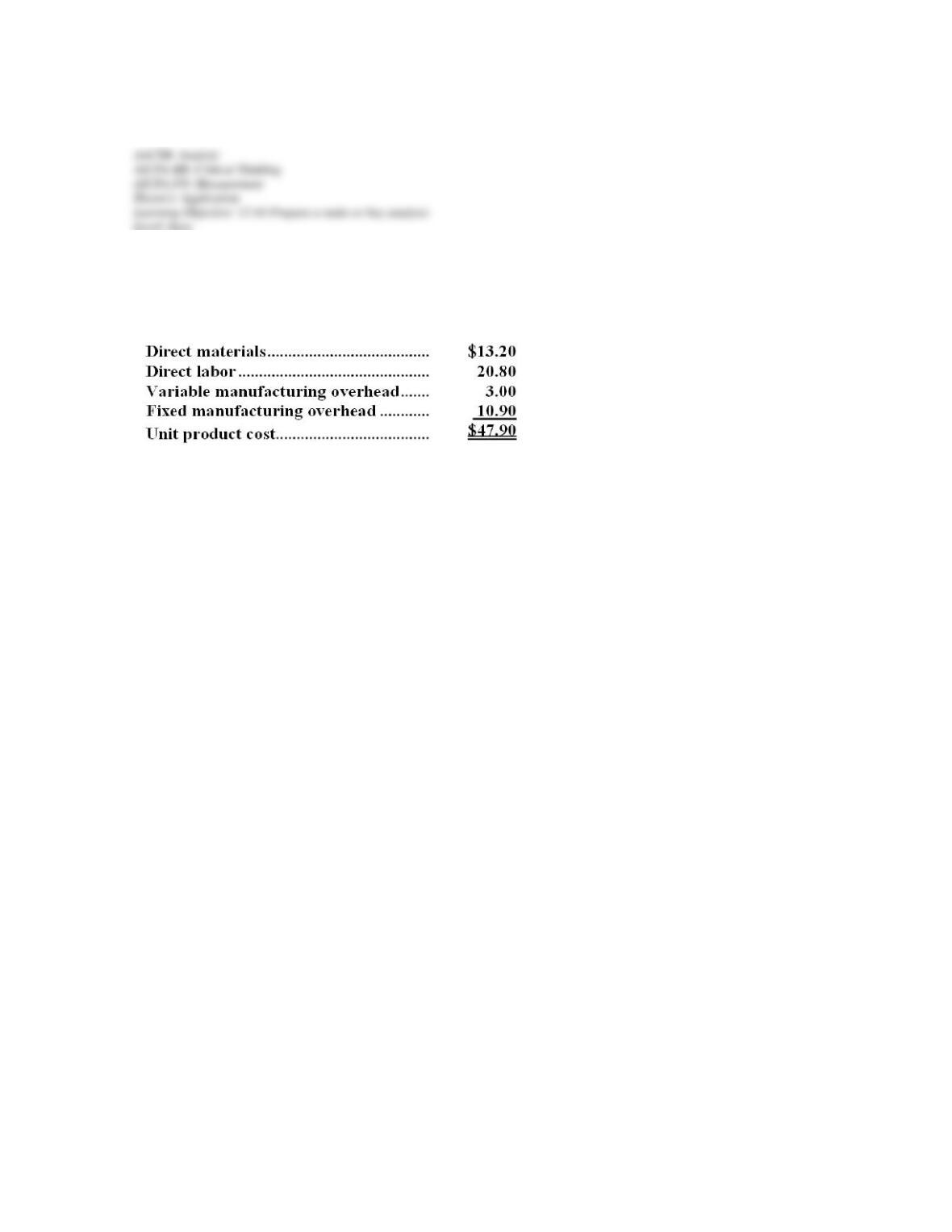
138. Foulds Company makes 10,000 units per year of a part it uses in the products it
manufactures. The unit product cost of this part is computed as follows:
An outside supplier has offered to sell the company all of these parts it needs for $42.30 a
unit. If the company accepts this offer, the facilities now being used to make the part could be
used to make more units of a product that is in high demand. The additional contribution
margin on this other product would be $39,000 per year.
If the part were purchased from the outside supplier, all of the direct labor cost of the part
would be avoided. However, $6.40 of the fixed manufacturing overhead cost being applied to
the part would continue even if the part were purchased from the outside supplier. This fixed
manufacturing overhead cost would be applied to the company’s remaining products.
Required:
a. How much of the unit product cost of $47.90 is relevant in the decision of whether to make
or buy the part?
b. What is the net total dollar advantage (disadvantage) of purchasing the part rather than
making it?
c. What is the maximum amount the company should be willing to pay an outside supplier per
unit for the part if the supplier commits to supplying all 10,000 units required each year?
Chapter 12 – Differential Analysis: The Key to Decision Making
Chapter 12 – Differential Analysis: The Key to Decision Making
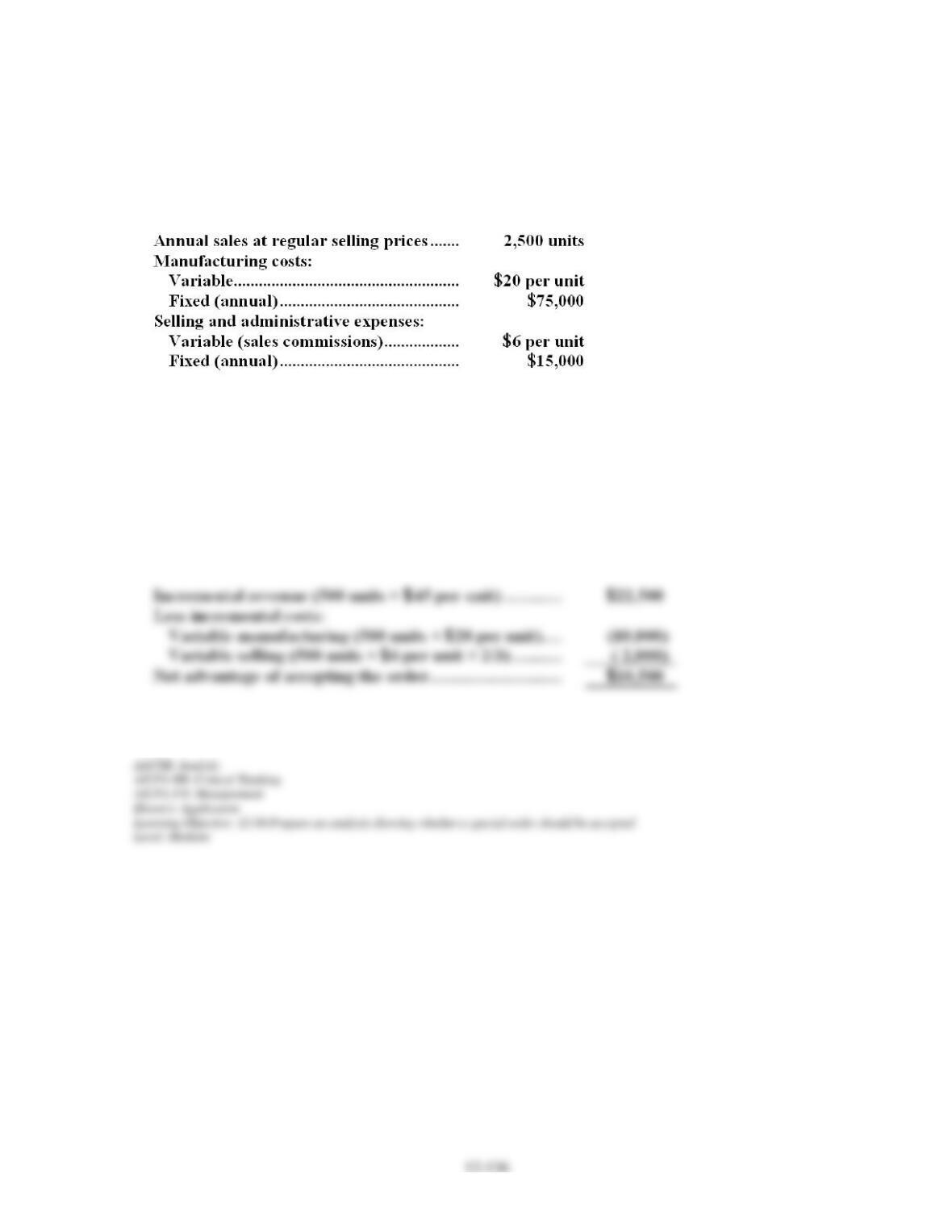
139. Jerston Company has an annual plant capacity of 3,000 units. Data concerning this
product are given below:
The company has received a special order for 500 units at a selling price of $45 each. Regular
sales would not be affected, and sales commissions on the 500 units would be reduced by one-
third. This special order would have no impact on total fixed costs.
Required:
Determine whether the company should accept the special order. Show all computations.
Chapter 12 – Differential Analysis: The Key to Decision Making
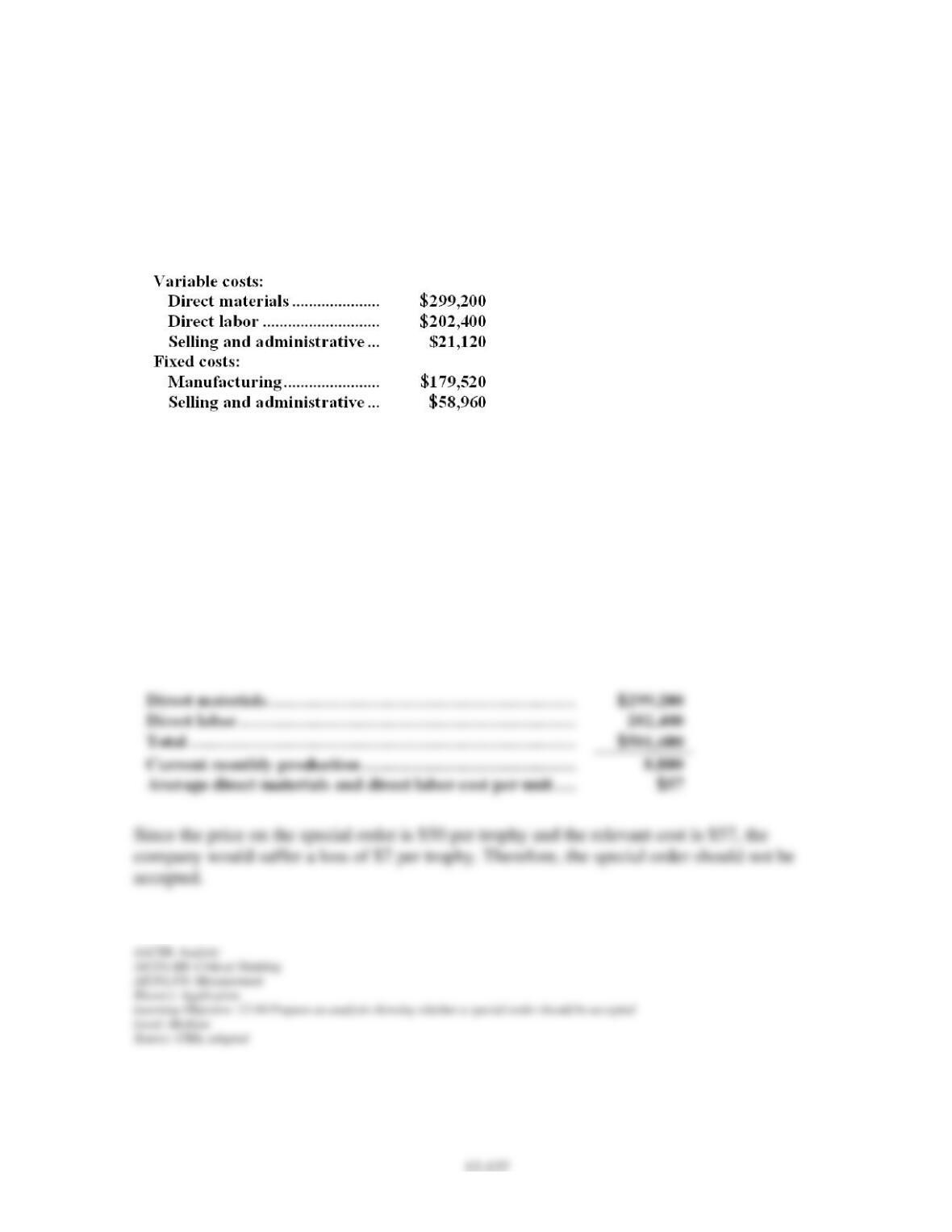
140. Nowlan Co. manufactures and sells trophies for winners of athletic and other events. Its
manufacturing plant has the capacity to produce 11,000 trophies each month; current monthly
production is 8,800 trophies. The company normally charges $87 per trophy. Cost data for the
current level of production are shown below:
The company has just received a special one-time order for 500 trophies at $50 each. For this
particular order, no variable selling and administrative costs would be incurred. This order
would also have no effect on fixed costs.
Required:
Should the company accept this special order? Why?
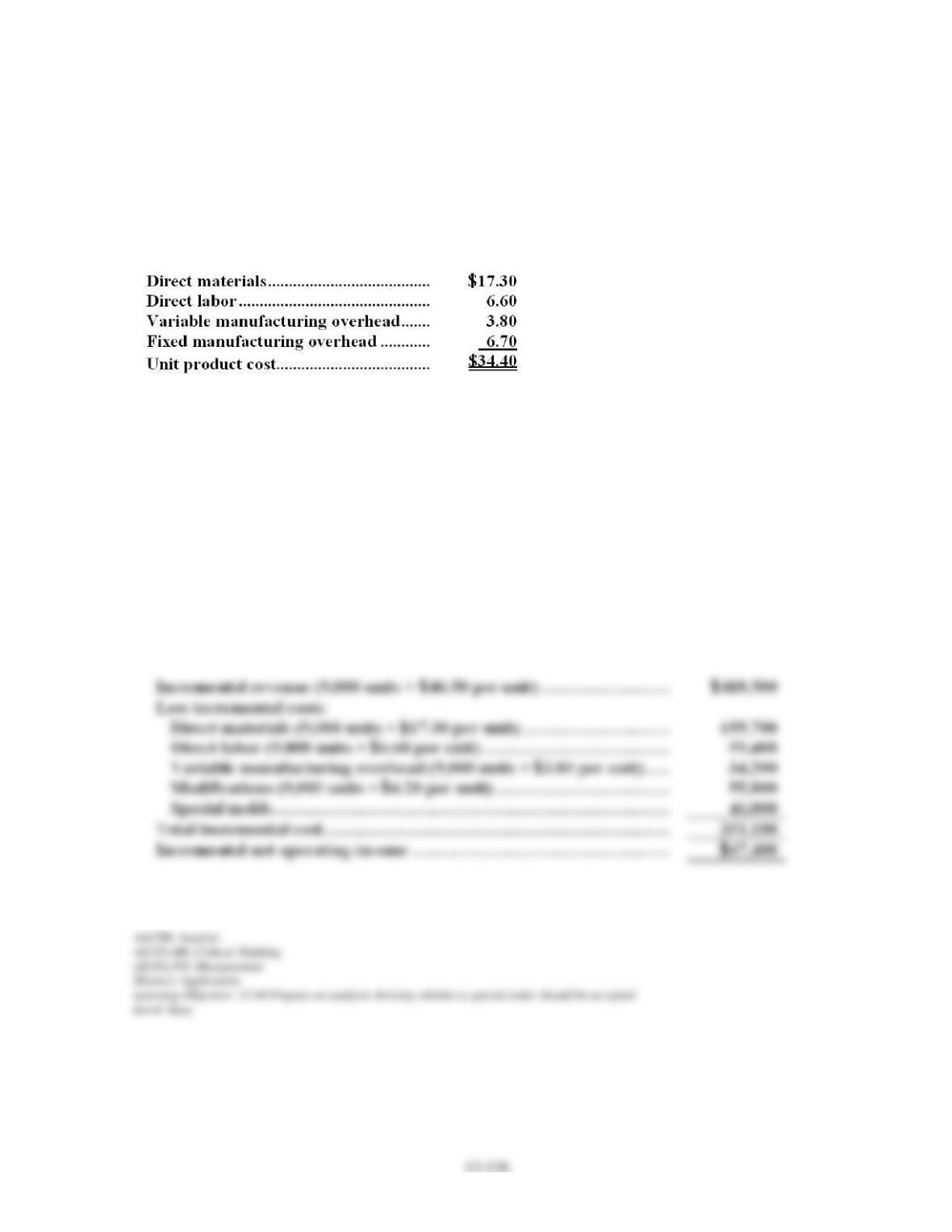
Only the direct materials and direct labor costs are relevant in this decision. To make the
decision, we must compute the average direct materials and direct labor cost per unit.
Chapter 12 – Differential Analysis: The Key to Decision Making
141. Holtrop Corporation has received a request for a special order of 9,000 units of product
Z74 for $46.50 each. The normal selling price of this product is $51.60 each, but the units
would need to be modified slightly for the customer. The normal unit product cost of product
Z74 is computed as follows:
Direct labor is a variable cost. The special order would have no effect on the company’s total
fixed manufacturing overhead costs. The customer would like some modifications made to
product Z74 that would increase the variable costs by $6.20 per unit and that would require a
one-time investment of $46,000 in special molds that would have no salvage value. This
special order would have no effect on the company’s other sales. The company has ample
spare capacity for producing the special order.
Required:
Determine the effect on the company’s total net operating income of accepting the special
order. Show your work!
Chapter 12 – Differential Analysis: The Key to Decision Making
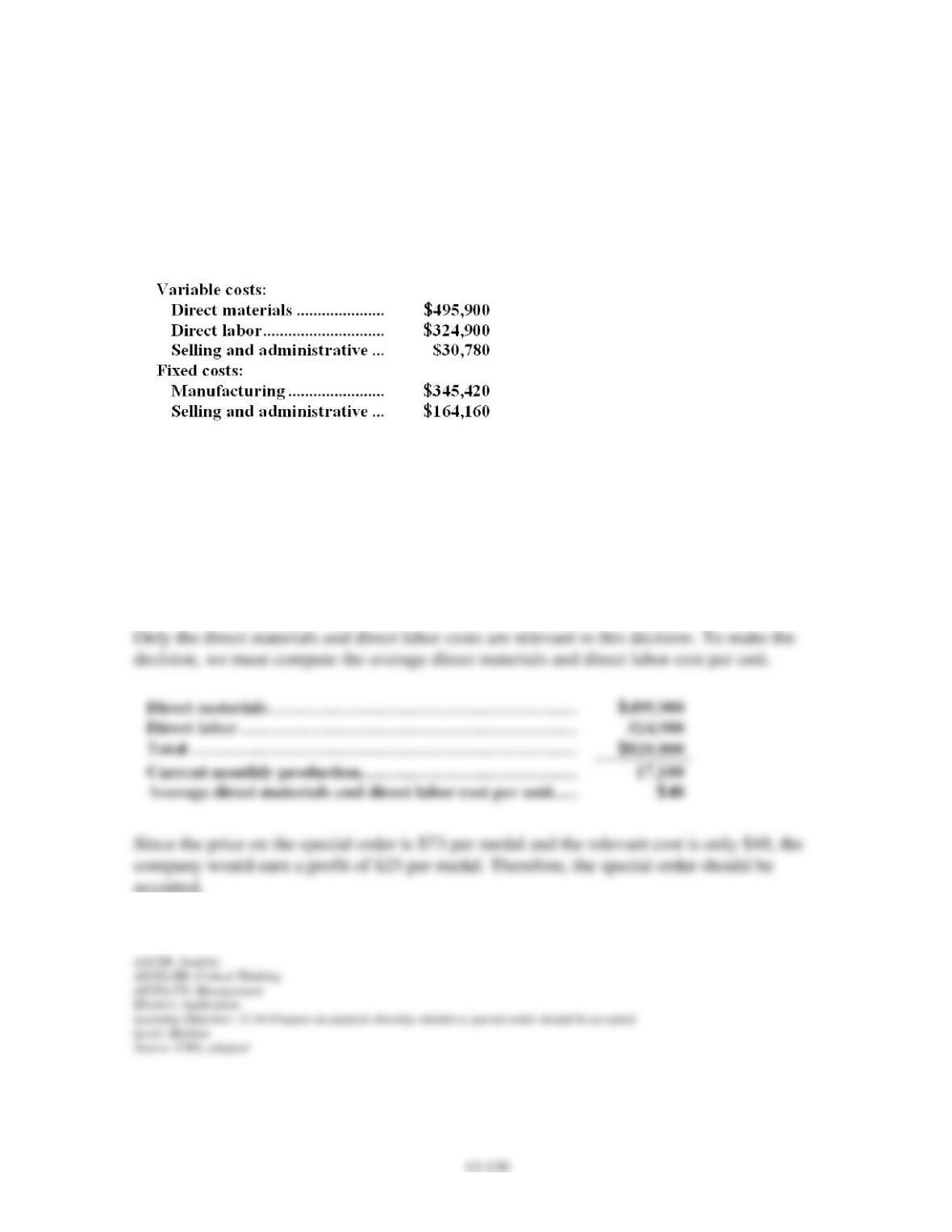
142. Rothery Co. manufactures and sells medals for winners of athletic and other events. Its
manufacturing plant has the capacity to produce 18,000 medals each month; current monthly
production is 17,100 medals. The company normally charges $88 per medal. Cost data for the
current level of production are shown below:
The company has just received a special one-time order for 600 medals at $73 each. For this
particular order, no variable selling and administrative costs would be incurred. This order
would also have no effect on fixed costs.
Required:
Should the company accept this special order? Why?