Chapter 12 – Differential Analysis: The Key to Decision Making
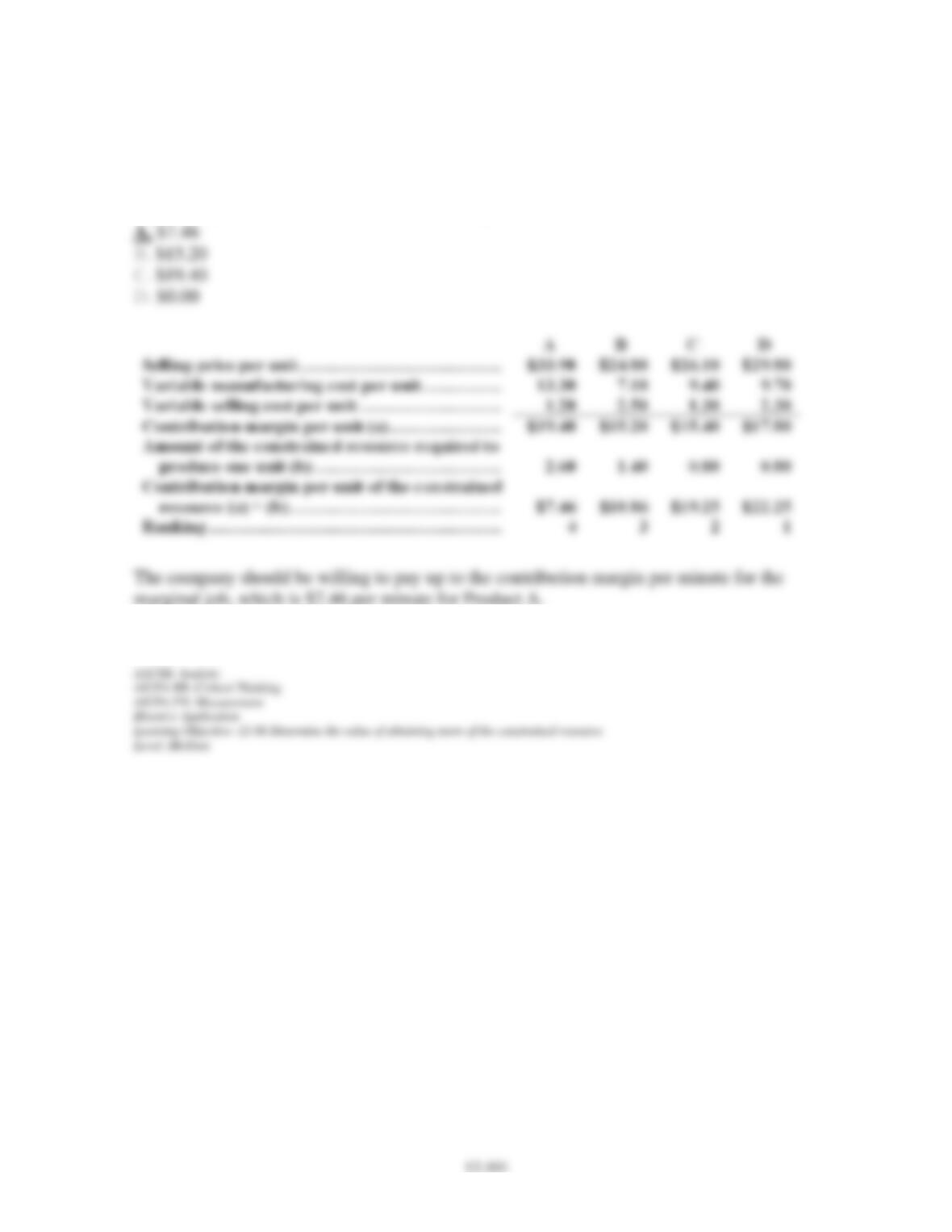
109. Up to how much should the company be willing to pay for one additional minute of
milling machine time if the company has made the best use of the existing milling machine
capacity? (Round off to the nearest whole cent.)
Chapter 12 – Differential Analysis: The Key to Decision Making
12-102
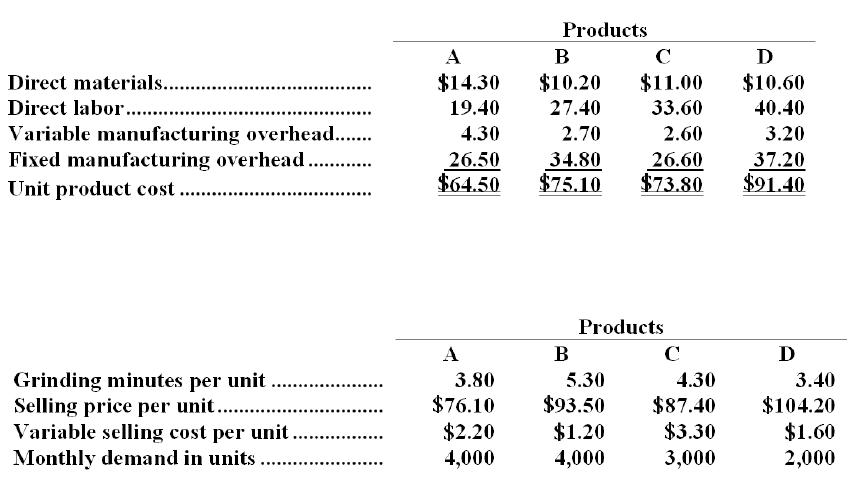
Broze Company makes four products in a single facility. These products have the following
unit product costs:
Additional data concerning these products are listed below.
The grinding machines are potentially the constraint in the production facility. A total of
53,600 minutes are available per month on these machines.
Direct labor is a variable cost in this company.
Chapter 12 – Differential Analysis: The Key to Decision Making
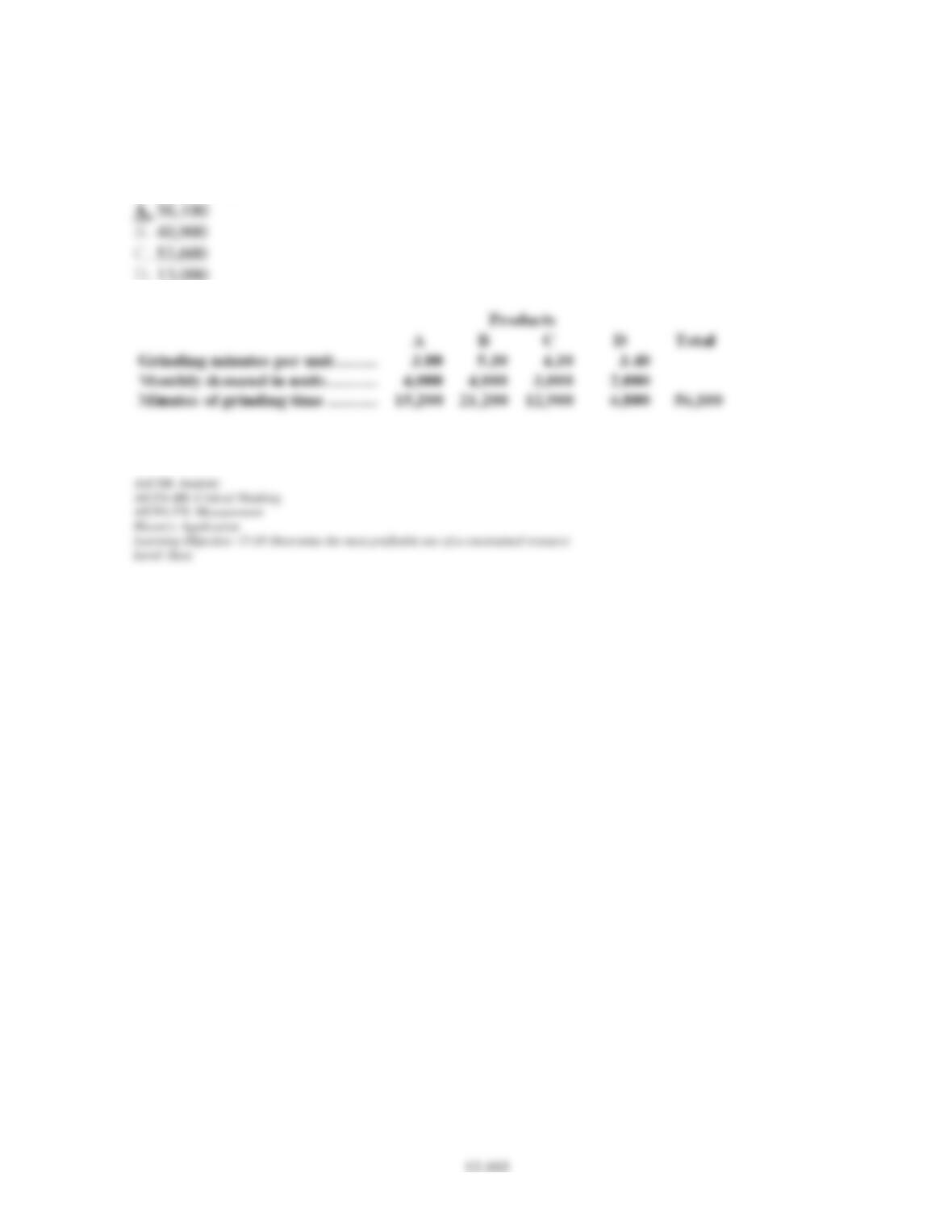
110. How many minutes of grinding machine time would be required to satisfy demand for all
four products?
Chapter 12 – Differential Analysis: The Key to Decision Making
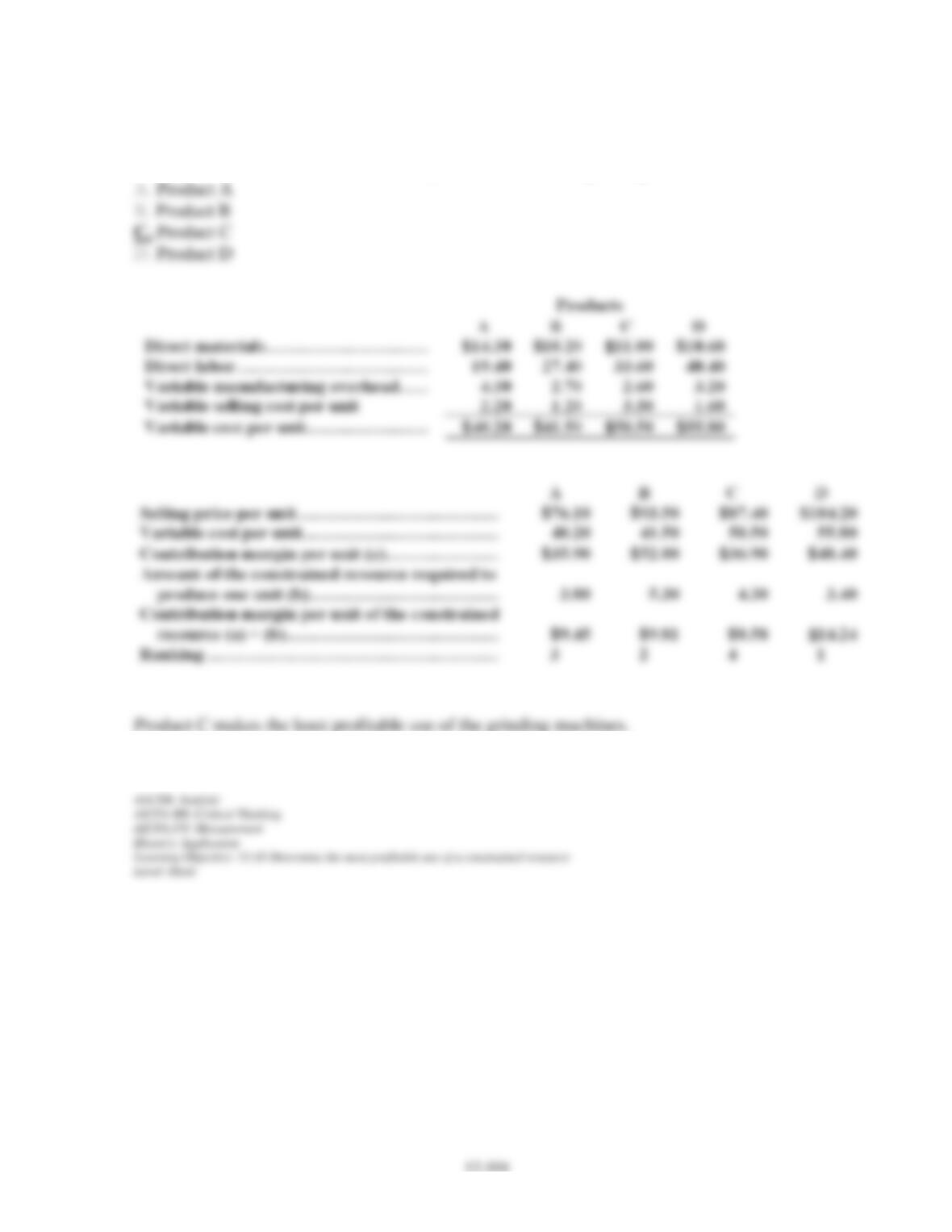
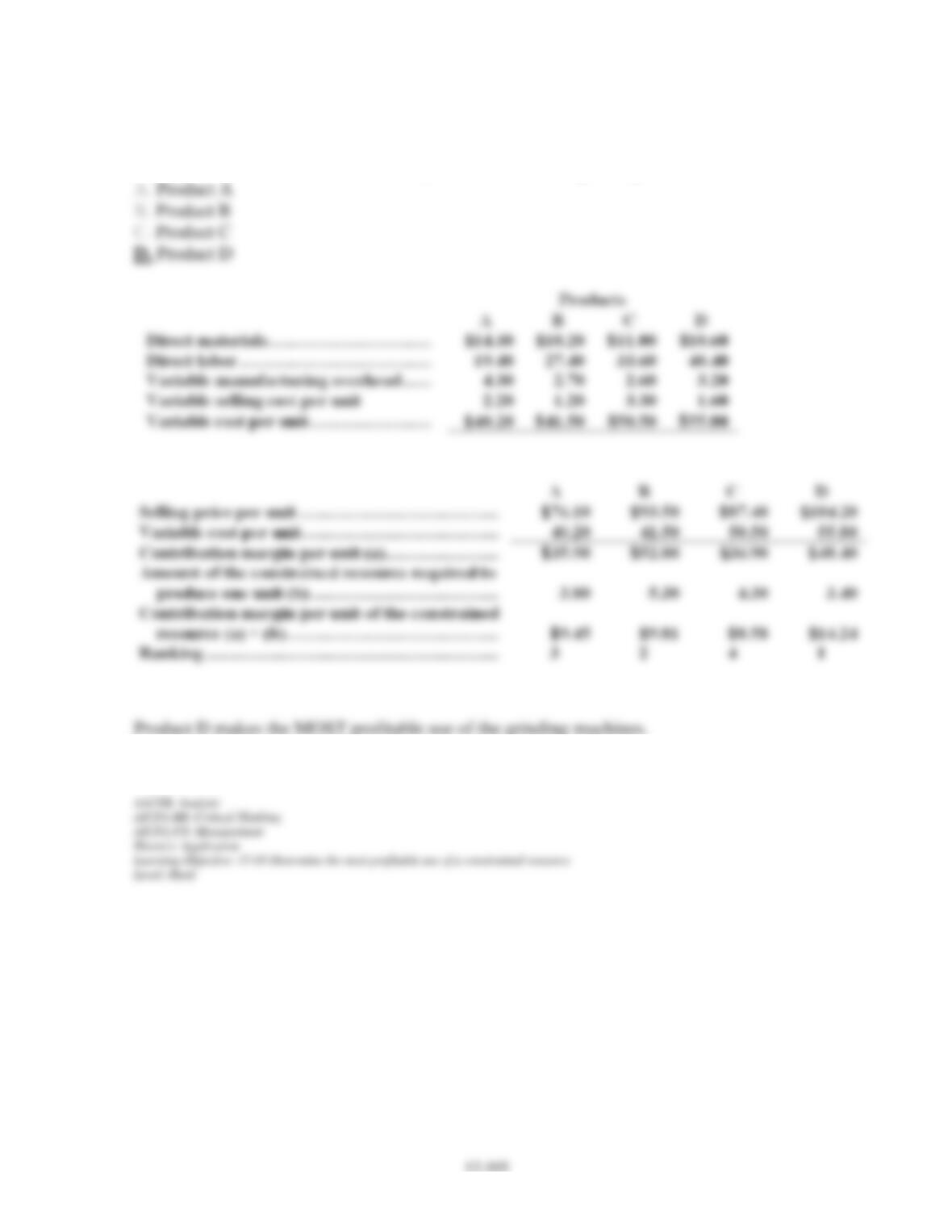
111. Which product makes the LEAST profitable use of the grinding machines?
Chapter 12 – Differential Analysis: The Key to Decision Making
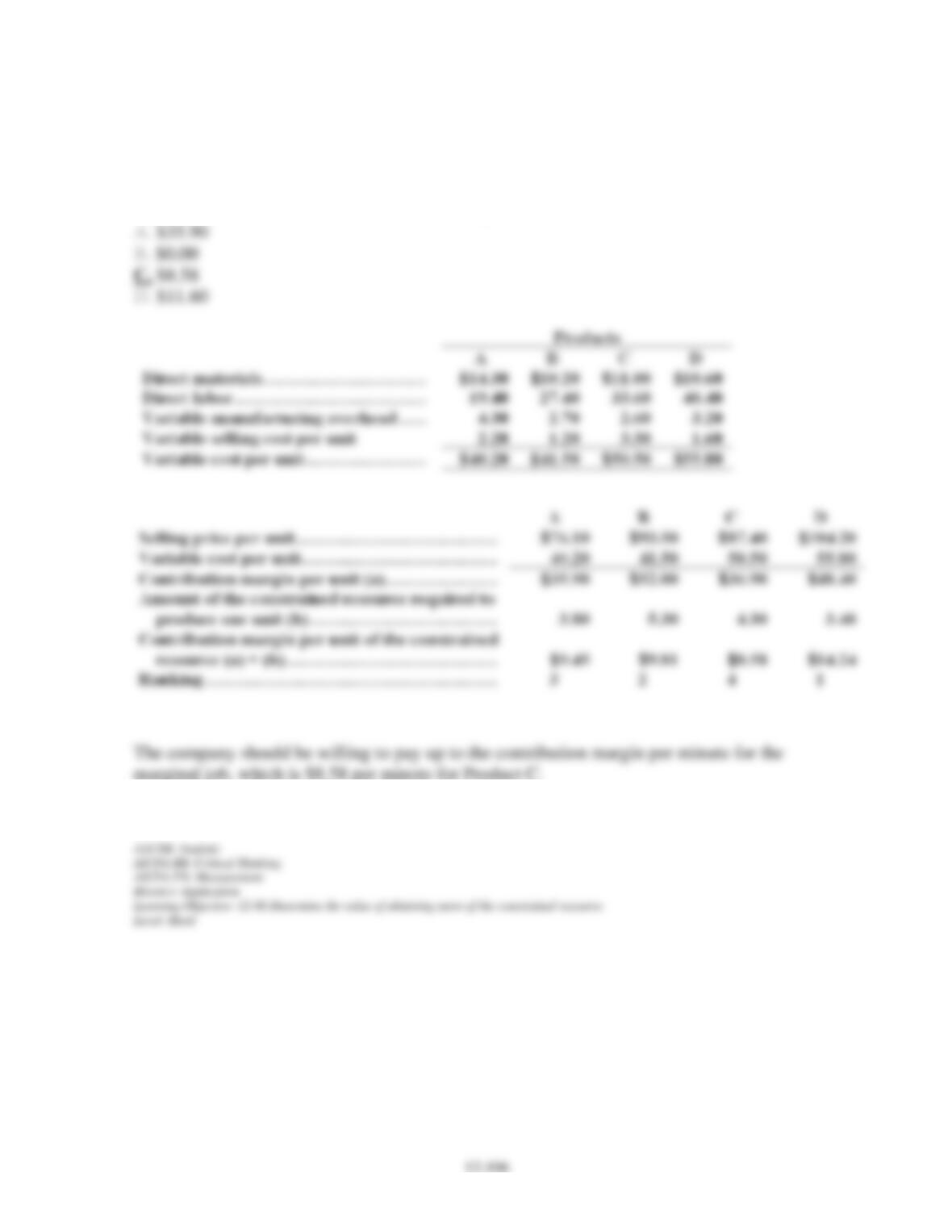
112. Which product makes the MOST profitable use of the grinding machines?
Chapter 12 – Differential Analysis: The Key to Decision Making
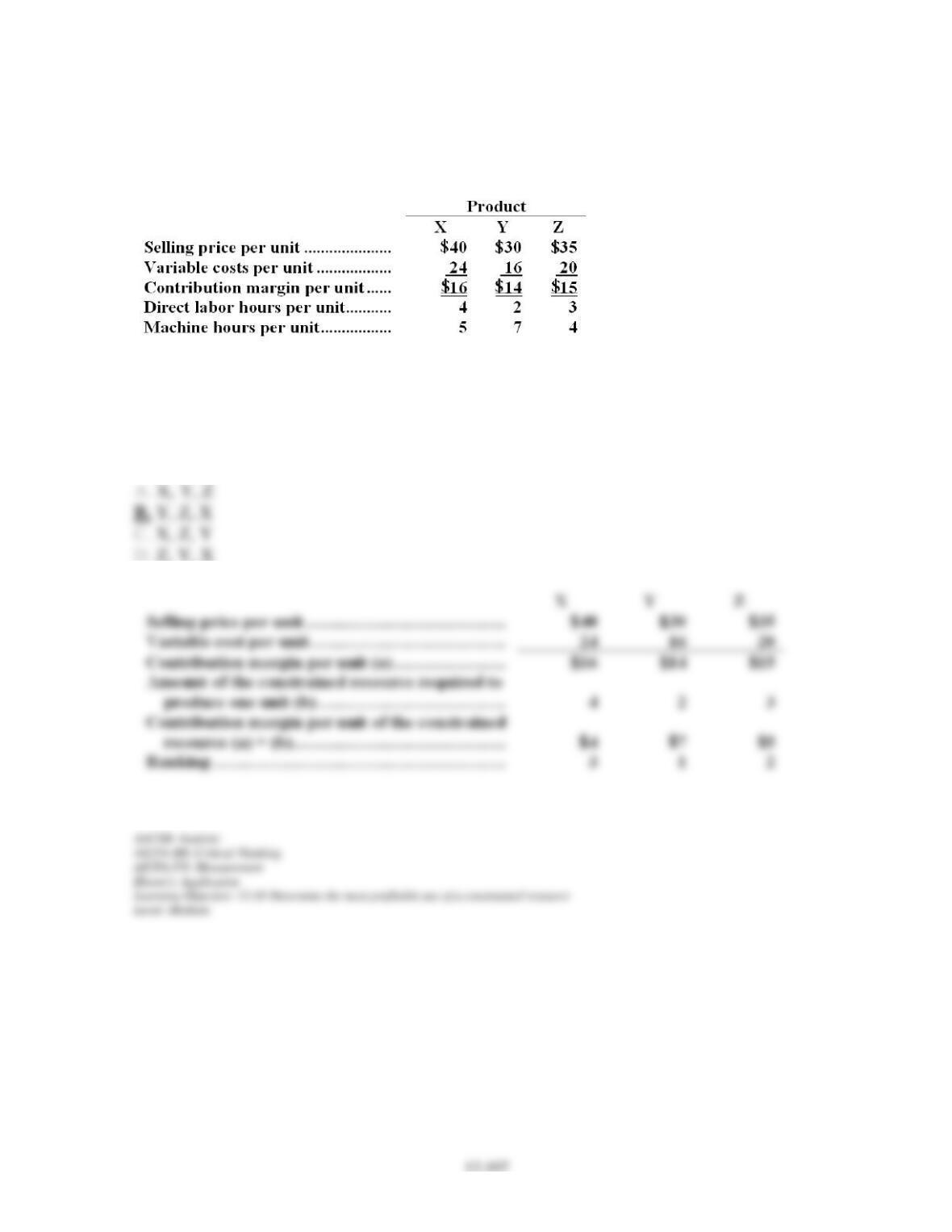
113. Up to how much should the company be willing to pay for one additional minute of
grinding machine time if the company has made the best use of the existing grinding machine
capacity? (Round off to the nearest whole cent.)
Chapter 12 – Differential Analysis: The Key to Decision Making
Dunford Company produces three products with the following costs and selling prices:
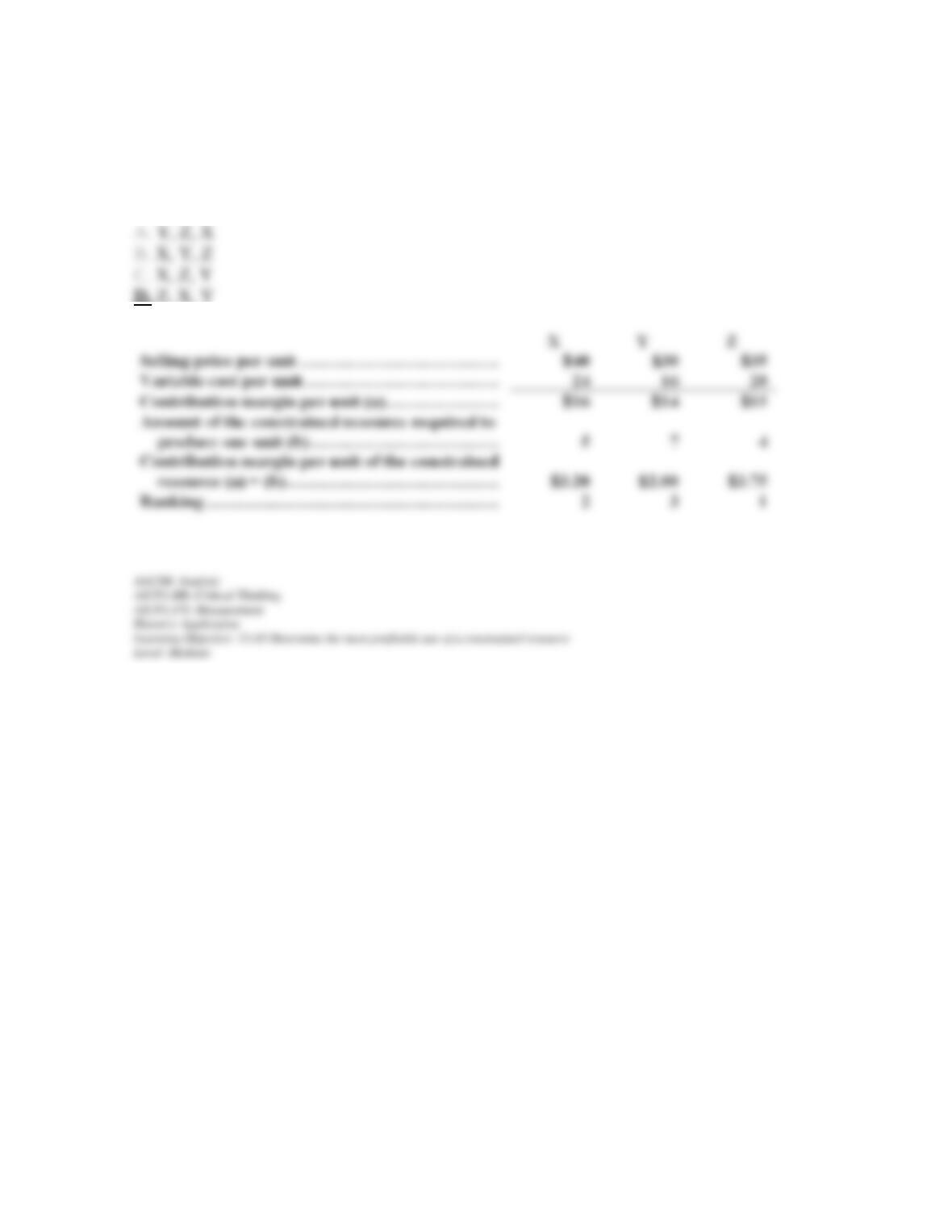
114. If Dunford has a limit of 20,000 direct labor hours but no limit on units sold or machine
hours, then the ranking of the products from the most profitable to the least profitable use of
the constrained resource is:
Chapter 12 – Differential Analysis: The Key to Decision Making
12-108
115. If Dunford has a limit of 30,000 machine hours but no limit on units sold or direct labor
hours, then the ranking of the products from the most profitable to the least profitable use of
the constrained resource is:
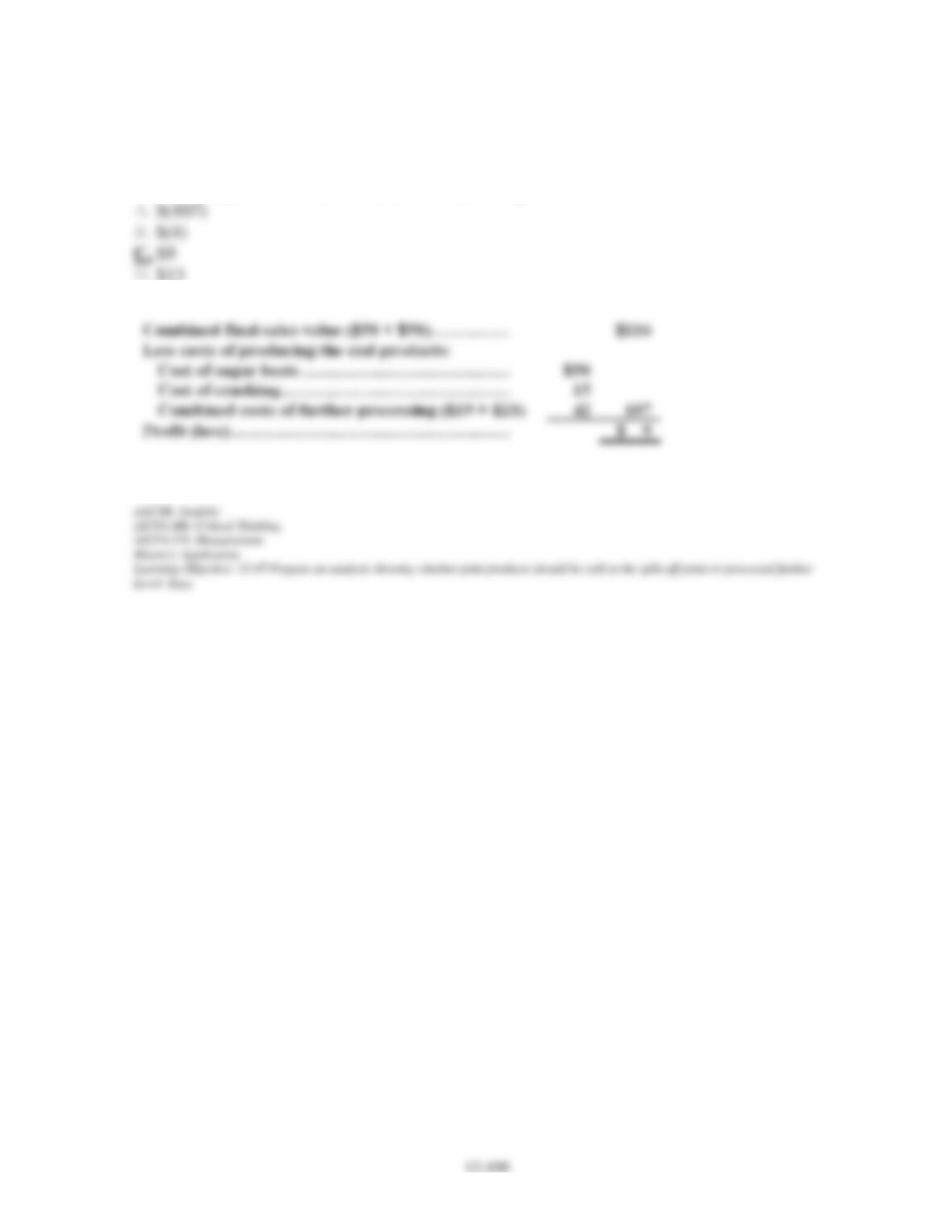
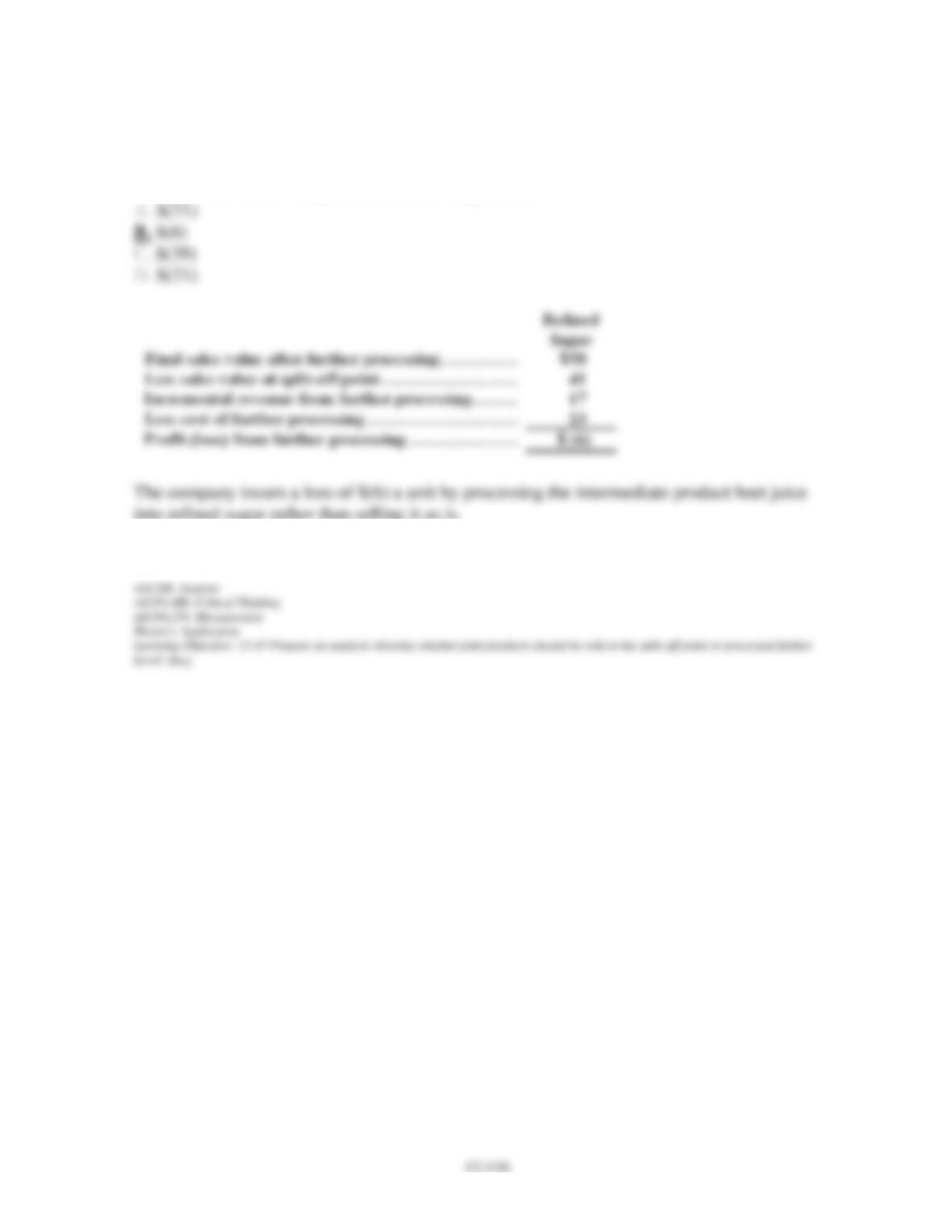
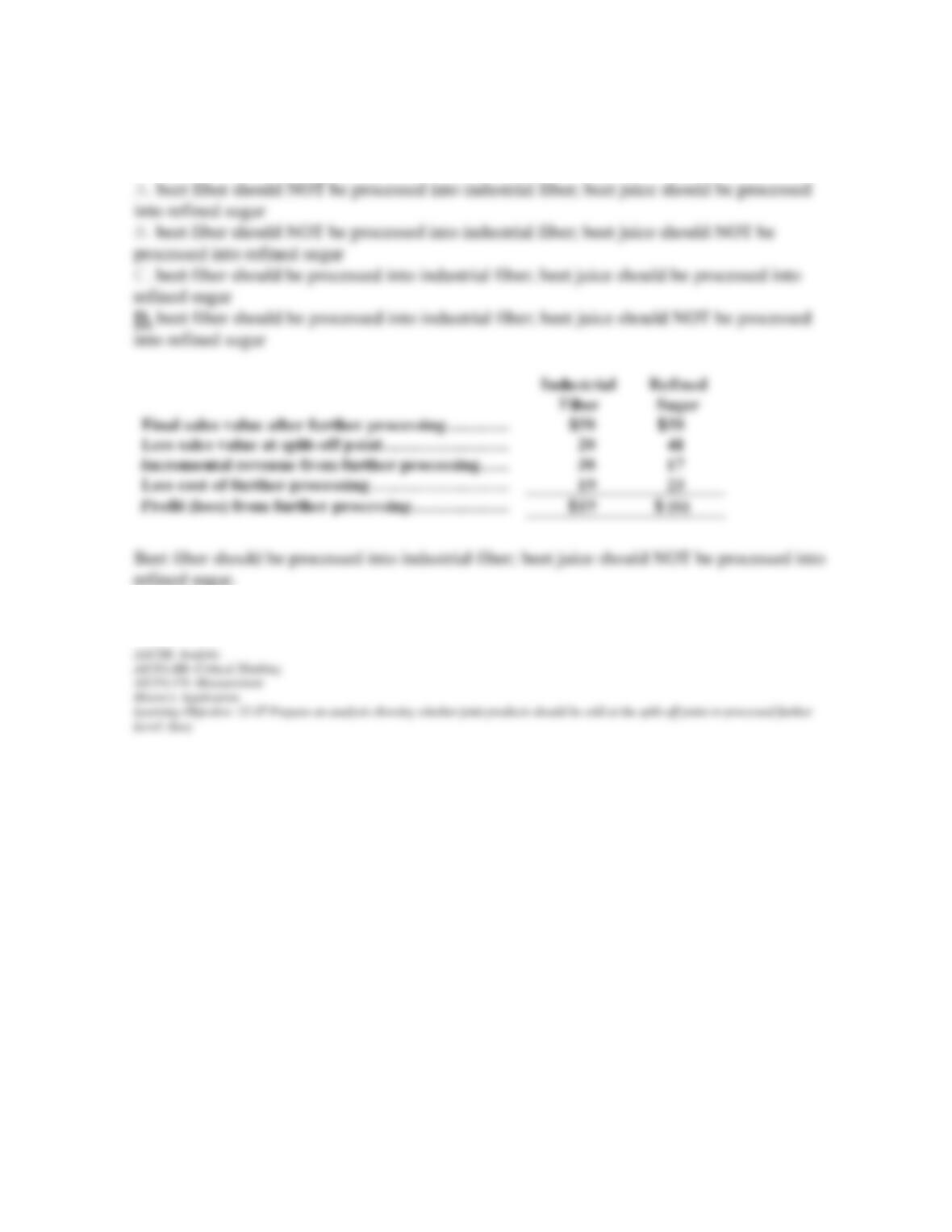
Sohr Corporation processes sugar beets that it purchases from farmers. Sugar beets are
processed in batches. A batch of sugar beets costs $50 to buy from farmers and $15 to crush
in the company’s plant. Two intermediate products, beet fiber and beet juice, emerge from the
crushing process. The beet fiber can be sold as is for $20 or processed further for $19 to make
the end product industrial fiber that is sold for $58. The beet juice can be sold as is for $41 or
processed further for $23 to make the end product refined sugar that is sold for $58.
Chapter 12 – Differential Analysis: The Key to Decision Making
116. How much profit (loss) does the company make by processing one batch of sugar beets
into the end products industrial fiber and refined sugar?
Chapter 12 – Differential Analysis: The Key to Decision Making
117. How much profit (loss) does the company make by processing the intermediate product
beet juice into refined sugar rather than selling it as is?
Chapter 12 – Differential Analysis: The Key to Decision Making
12-111
118. Which of the intermediate products should be processed further?
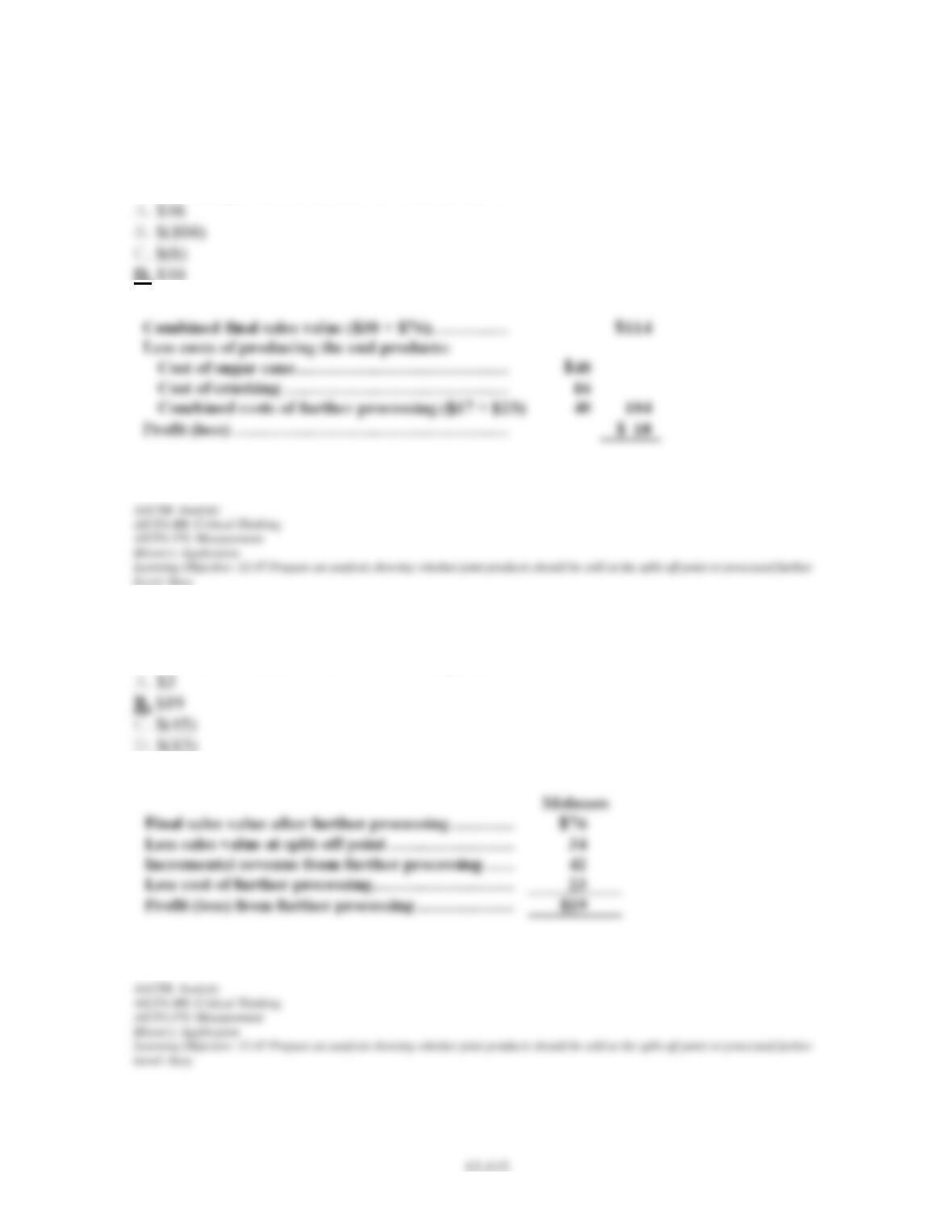
Resendes Refiners, Inc., processes sugar cane that it purchases from farmers. Sugar cane is
processed in batches. A batch of sugar cane costs $48 to buy from farmers and $16 to crush in
the company’s plant. Two intermediate products, cane fiber and cane juice, emerge from the
crushing process. The cane fiber can be sold as is for $24 or processed further for $17 to make
the end product industrial fiber that is sold for $38. The cane juice can be sold as is for $34 or
processed further for $23 to make the end product molasses that is sold for $76.
Chapter 12 – Differential Analysis: The Key to Decision Making
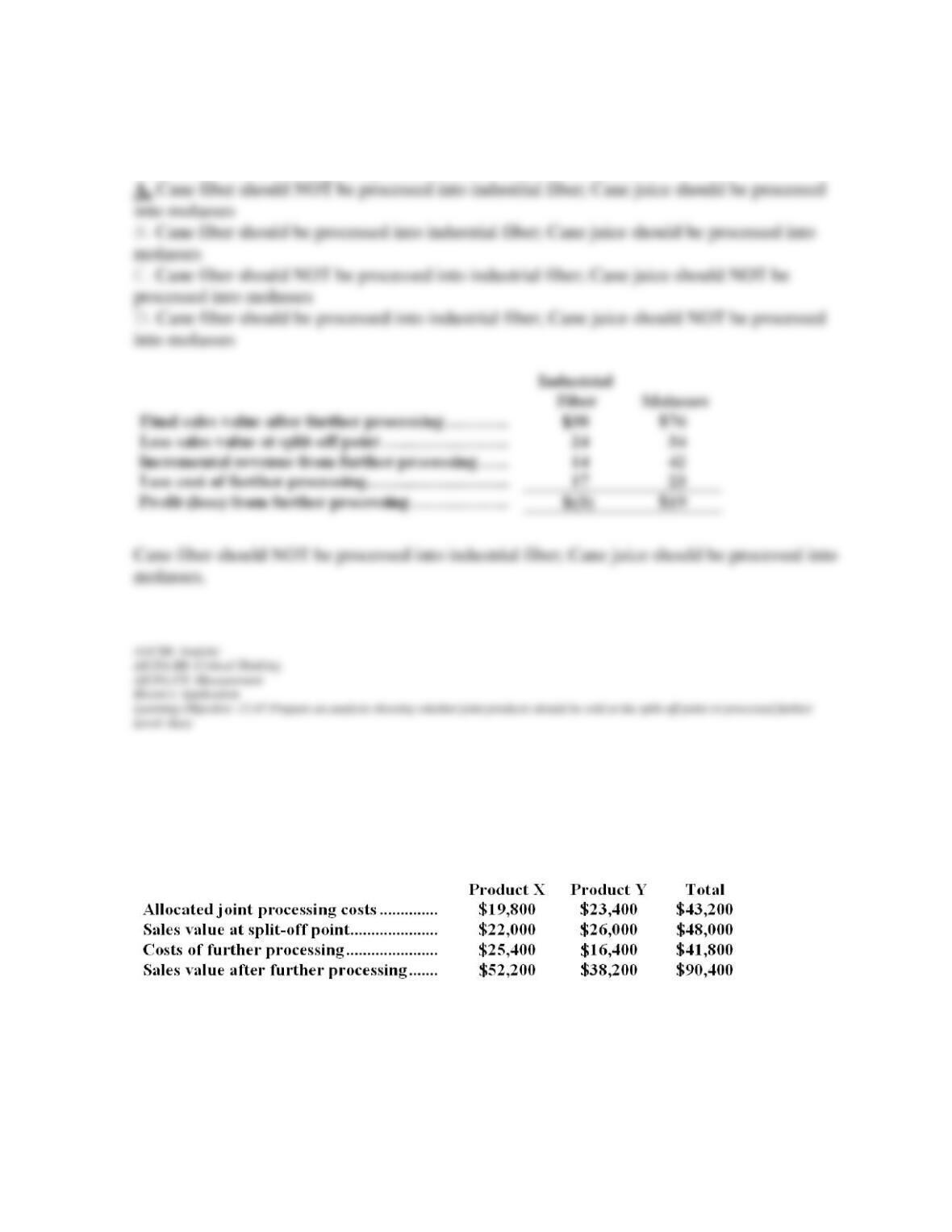
119. How much profit (loss) does the company make by processing one batch of sugar cane
into the end products industrial fiber and molasses?
120. How much profit (loss) does the company make by processing the intermediate product
cane juice into molasses rather than selling it as is?
Chapter 12 – Differential Analysis: The Key to Decision Making
12-113
121. Which of the intermediate products should be processed further?
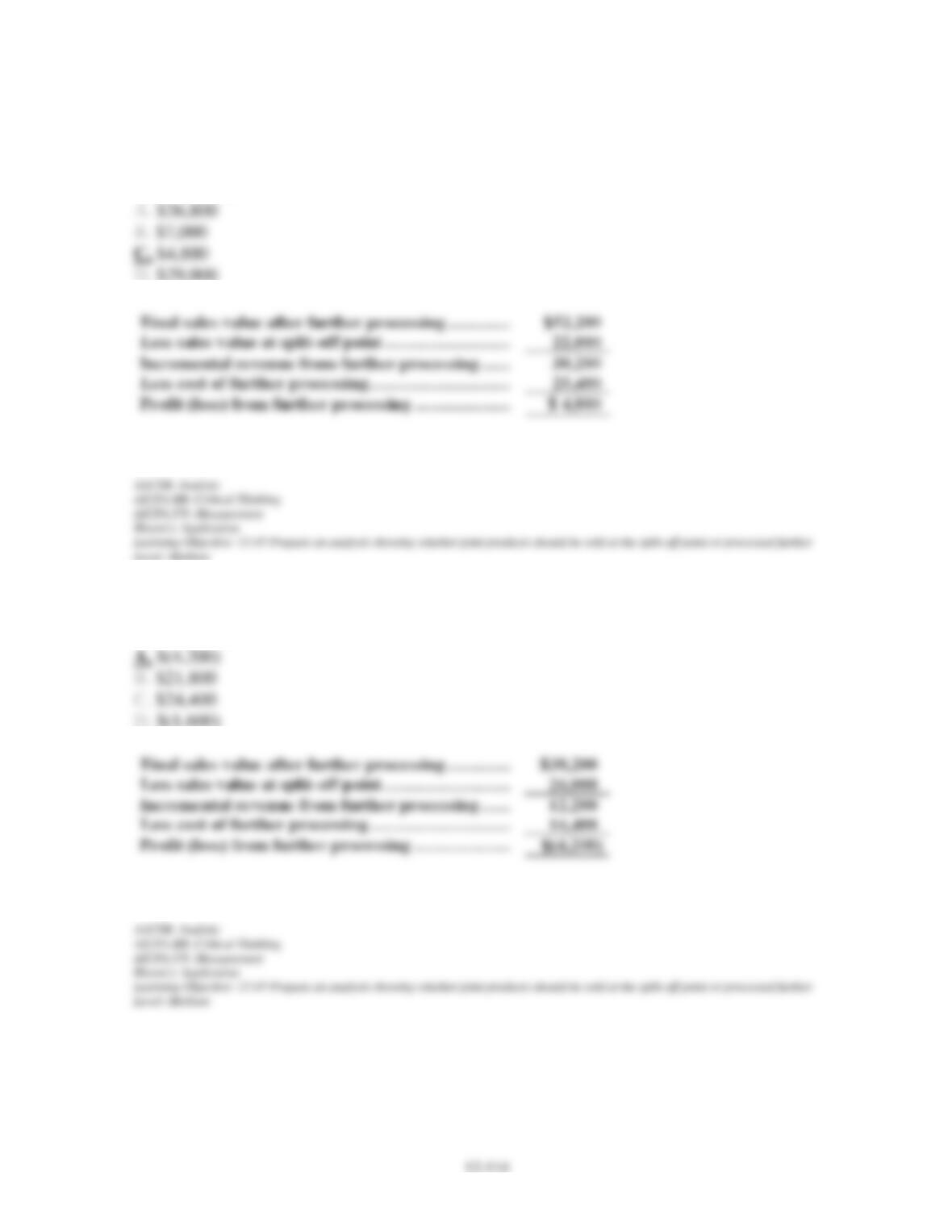
Dodrill Company makes two products from a common input. Joint processing costs up to the
split-off point total $43,200 a year. The company allocates these costs to the joint products on
the basis of their total sales values at the split-off point. Each product may be sold at the split-
off point or processed further. Data concerning these products appear below:
Chapter 12 – Differential Analysis: The Key to Decision Making
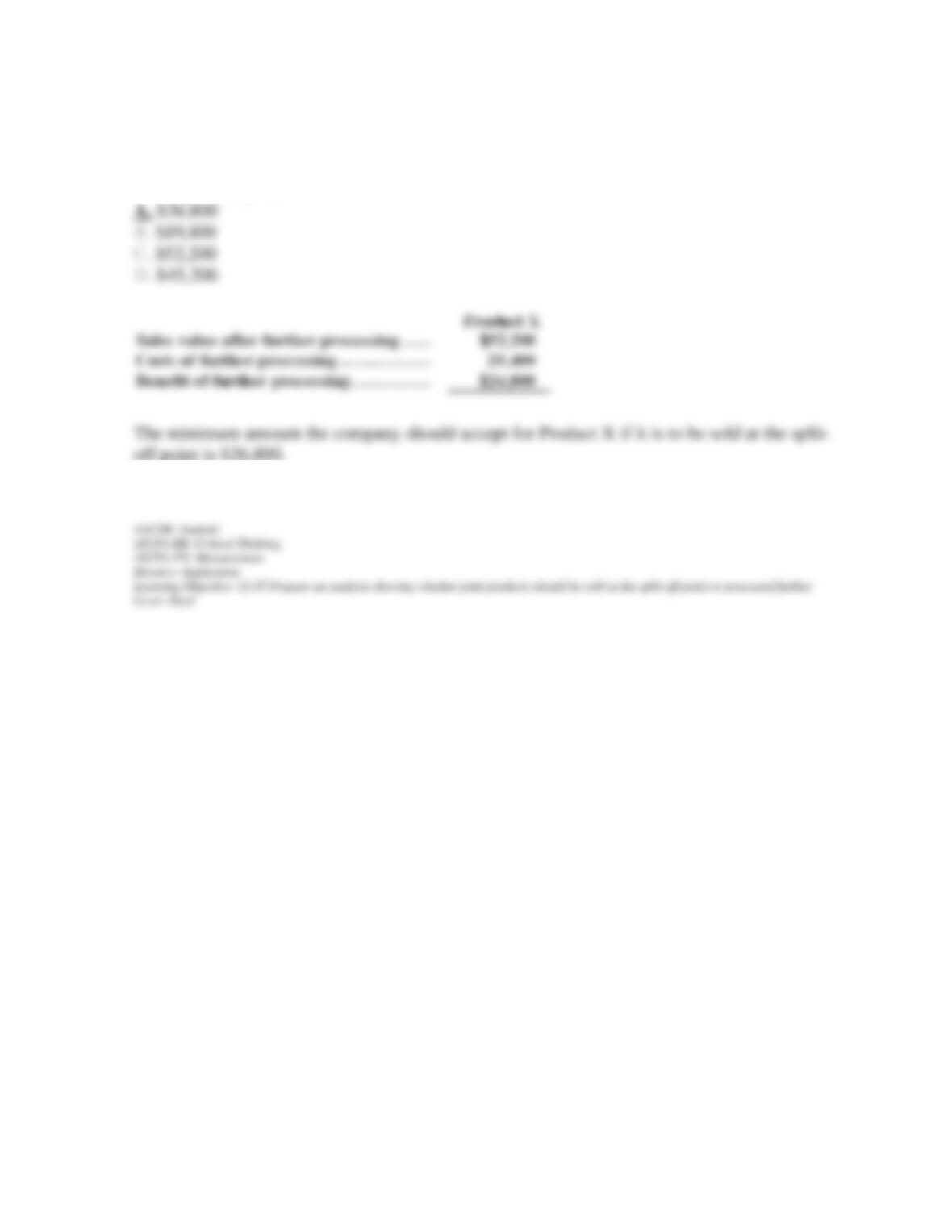
122. What is the net monetary advantage (disadvantage) of processing Product X beyond the
split-off point?
123. What is the net monetary advantage (disadvantage) of processing Product Y beyond the
split-off point?
Chapter 12 – Differential Analysis: The Key to Decision Making
12-115
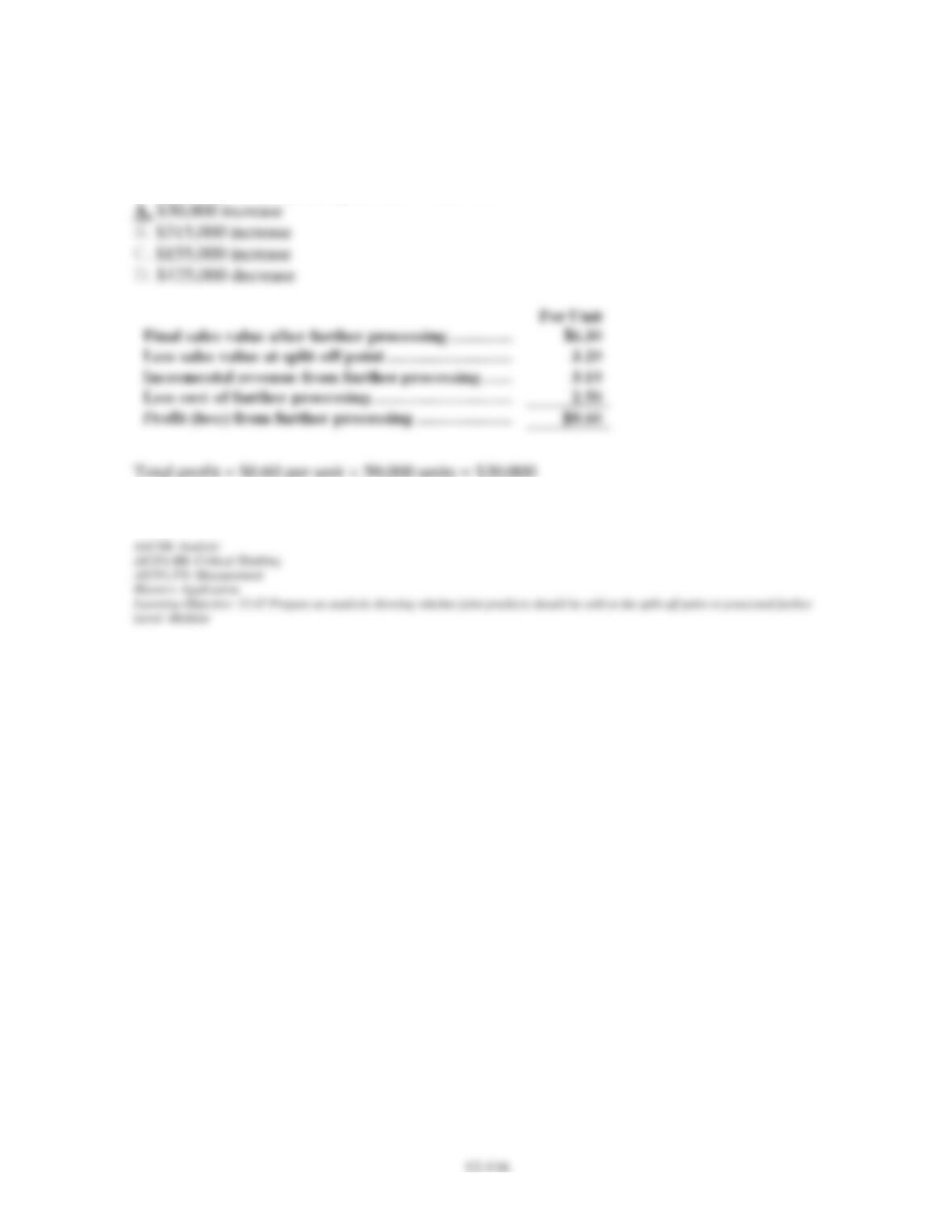
124. What is the minimum amount the company should accept for Product X if it is to be sold
at the split-off point?
Payne Company makes two products, M and N, in a joint process. At the split-off point,
40,000 units of M and 50,000 units of N are available each month. Monthly joint production
costs are $270,000.
Product M can be sold at the split-off point for $4.20 per unit. Product N can either be sold at
the split-off point for $3.20 per unit or it can be processed further and sold for $6.30 per unit.
If N is processed further, additional processing costs of $2.50 per unit will be incurred.
Chapter 12 – Differential Analysis: The Key to Decision Making
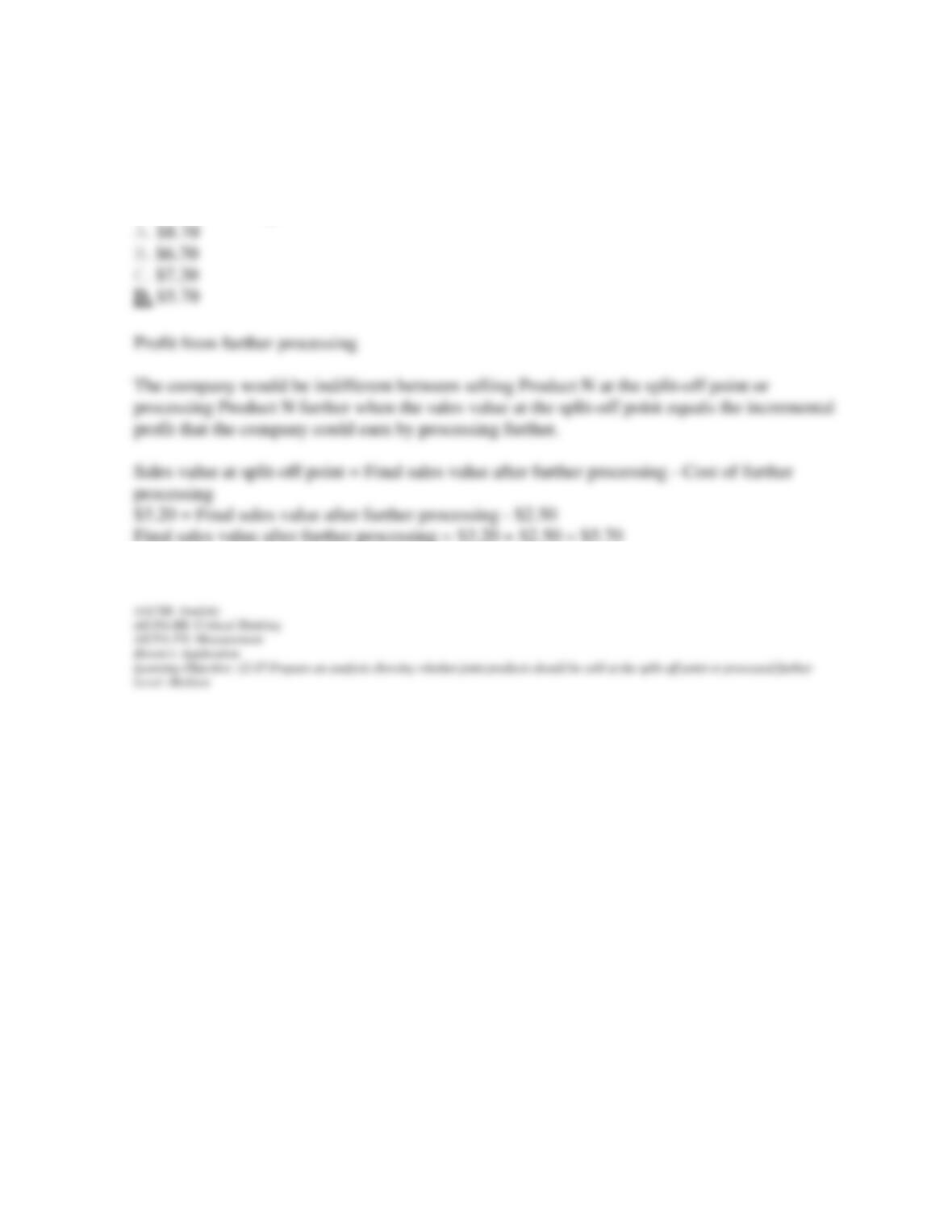
125. If N is processed further and then sold, rather than being sold at the split-off point, the
change in monthly operating income would be a:
Chapter 12 – Differential Analysis: The Key to Decision Making
12-117
126. What would the selling price per unit of product N need to be after further processing in
order for Payne Company to be economically indifferent between selling N at the split-off
point or processing N further?
Essay Questions
Chapter 12 – Differential Analysis: The Key to Decision Making
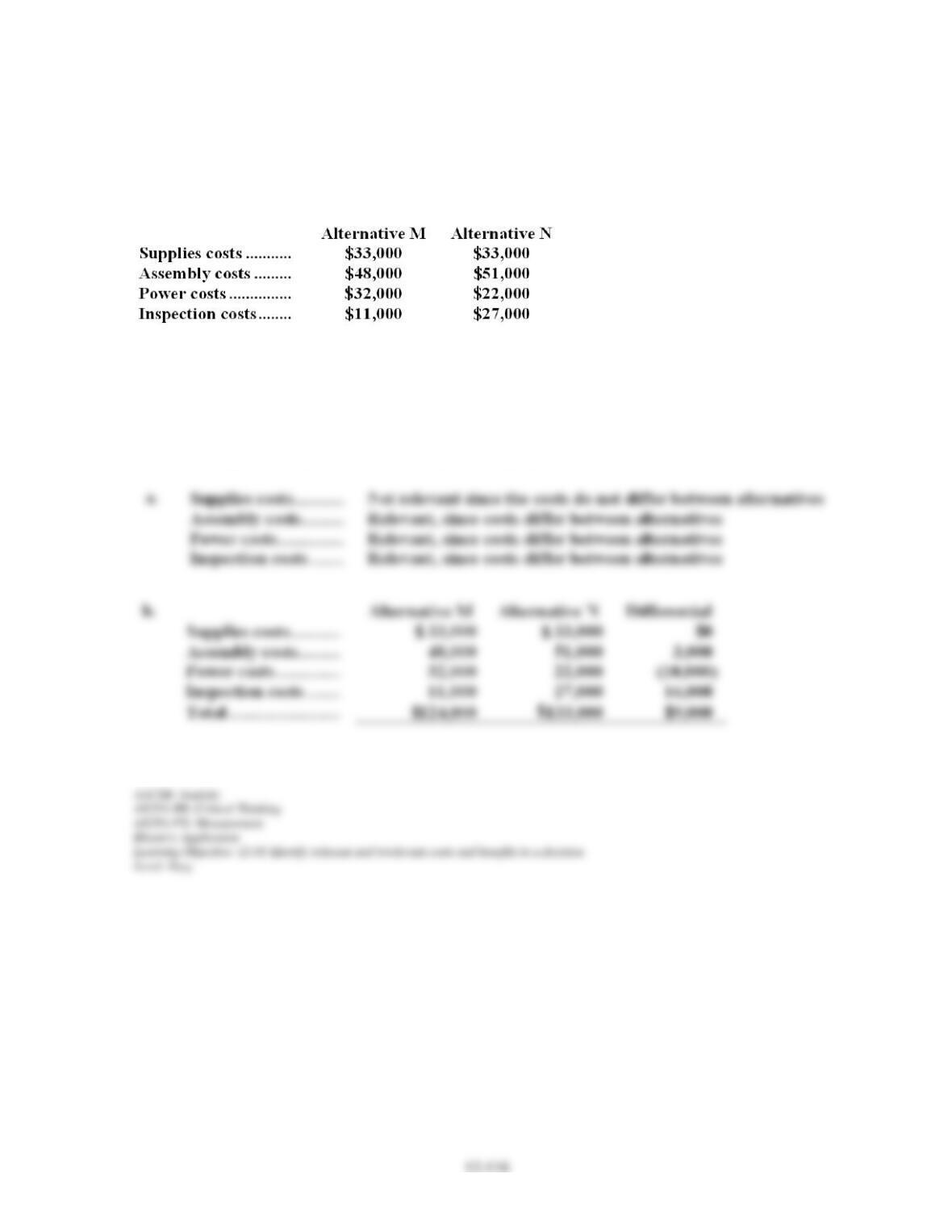
127. Marcell Corporation is considering two alternatives that are code-named M and N. Costs
associated with the alternatives are listed below:
Required:
a. Which costs are relevant and which are not relevant in the choice between these two
alternatives?
b. What is the differential cost between the two alternatives?
Chapter 12 – Differential Analysis: The Key to Decision Making
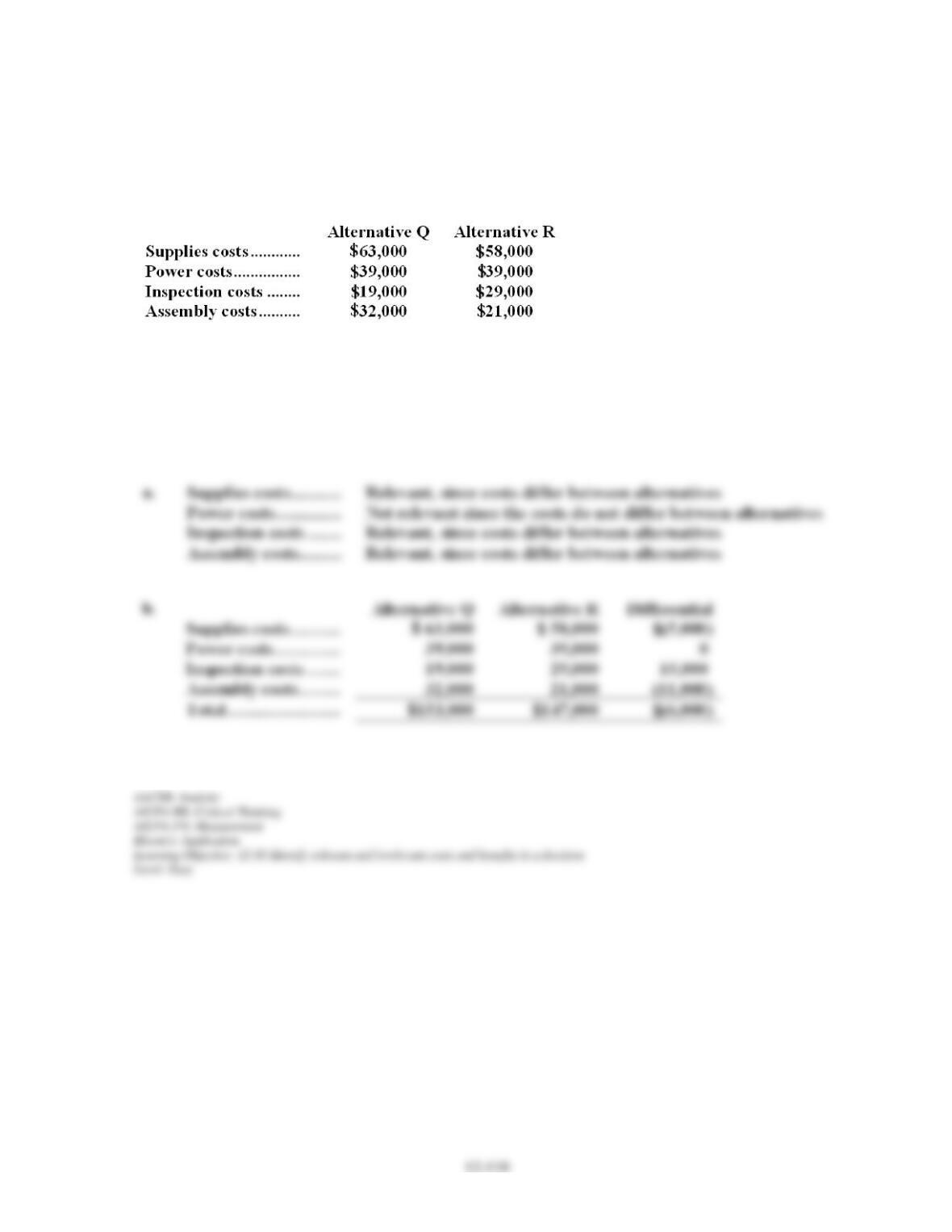
128. Costs associated with two alternatives, code-named Q and R, being considered by
Corniel Corporation are listed below:
Required:
a. Which costs are relevant and which are not relevant in the choice between these two
alternatives?
b. What is the differential cost between the two alternatives?
Chapter 12 – Differential Analysis: The Key to Decision Making
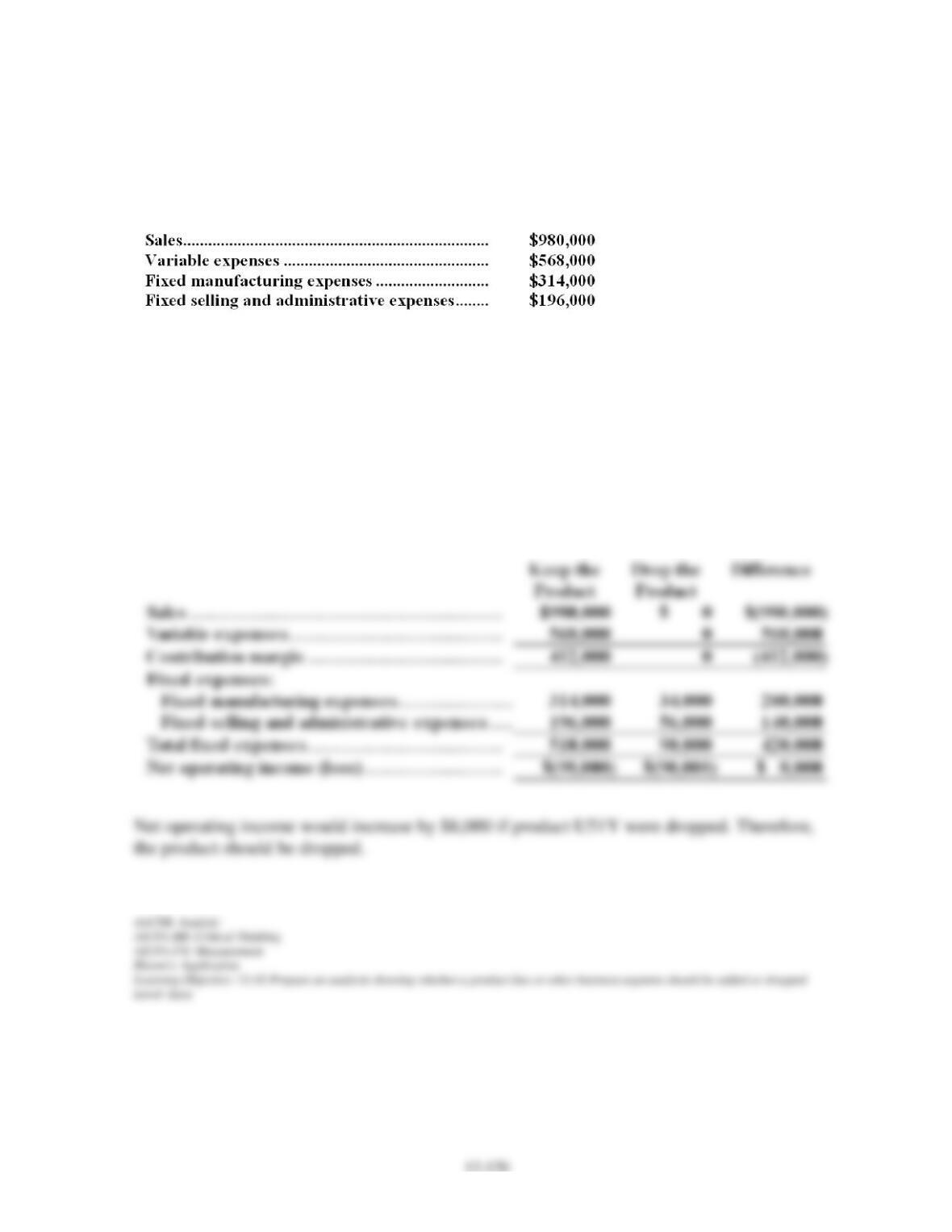
129. The management of Therriault Corporation is considering dropping product U51Y. Data
from the company’s accounting system appear below:
All fixed expenses of the company are fully allocated to products in the company’s accounting
system. Further investigation has revealed that $280,000 of the fixed manufacturing expenses
and $140,000 of the fixed selling and administrative expenses are avoidable if product U51Y
is discontinued.
Required:
What would be the effect on the company’s overall net operating income if product U51Y
were dropped? Should the product be dropped? Show your work!