Chapter 12 – Differential Analysis: The Key to Decision Making
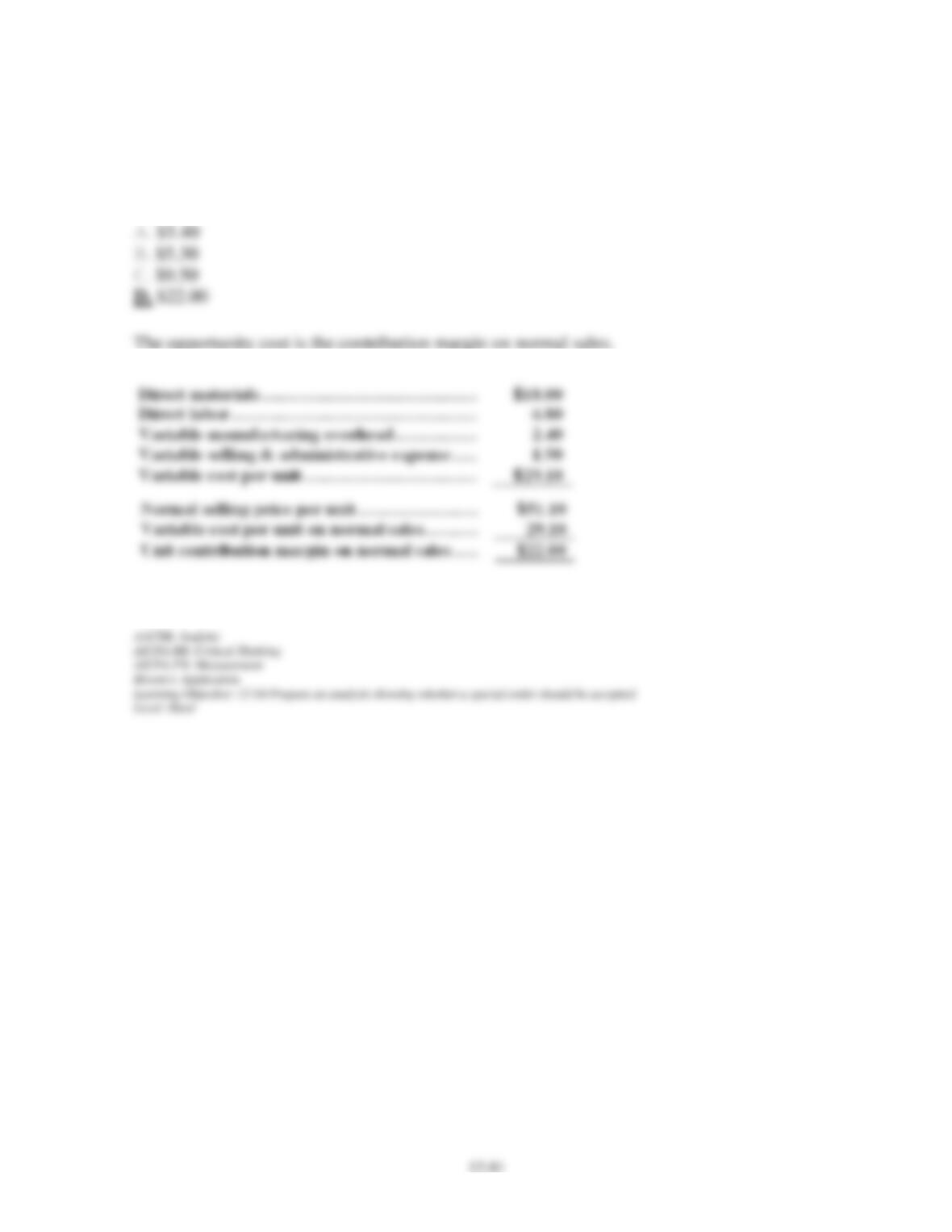
91. Suppose the company is already operating at capacity when the special order is received
from the overseas customer. What would be the opportunity cost of each unit delivered to the
overseas customer?
Chapter 12 – Differential Analysis: The Key to Decision Making
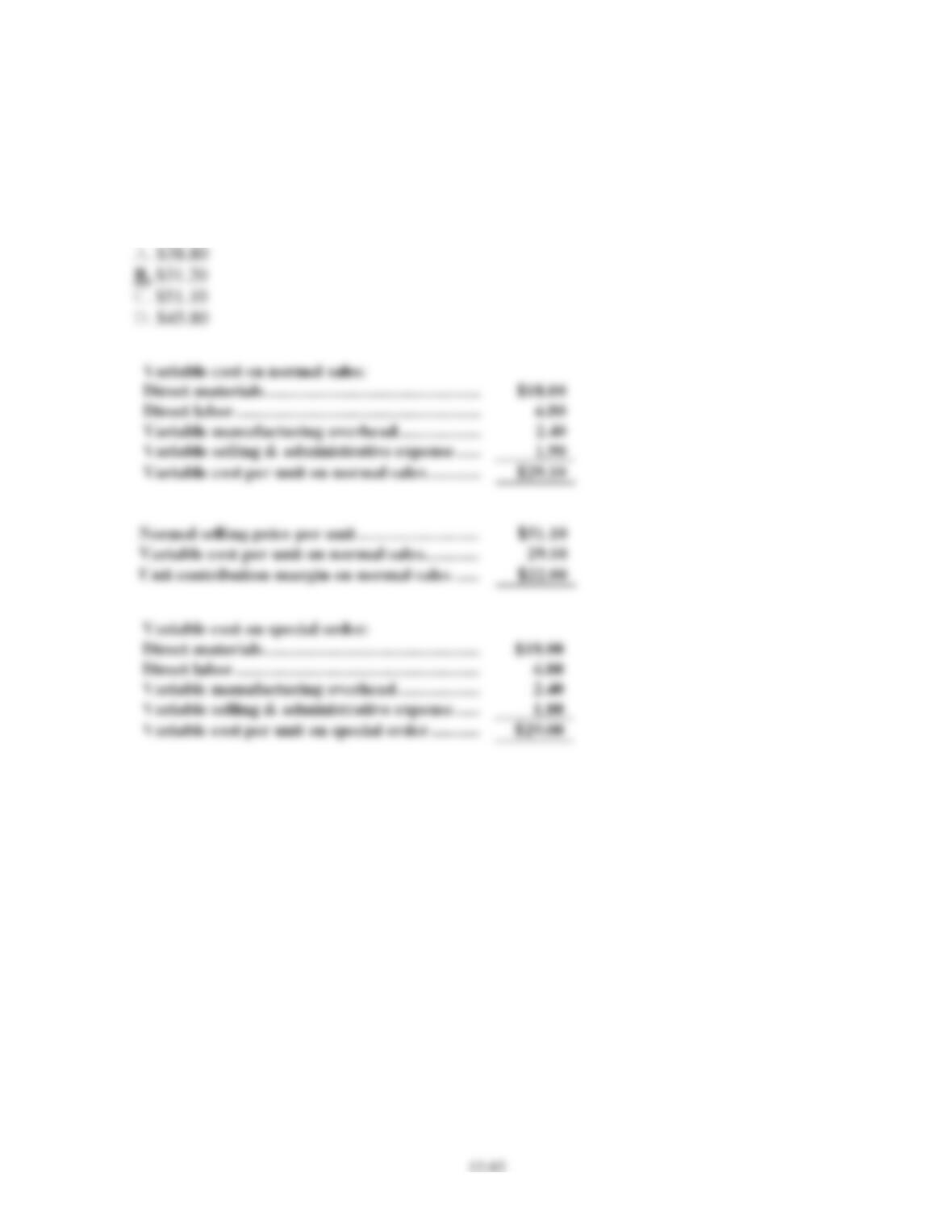
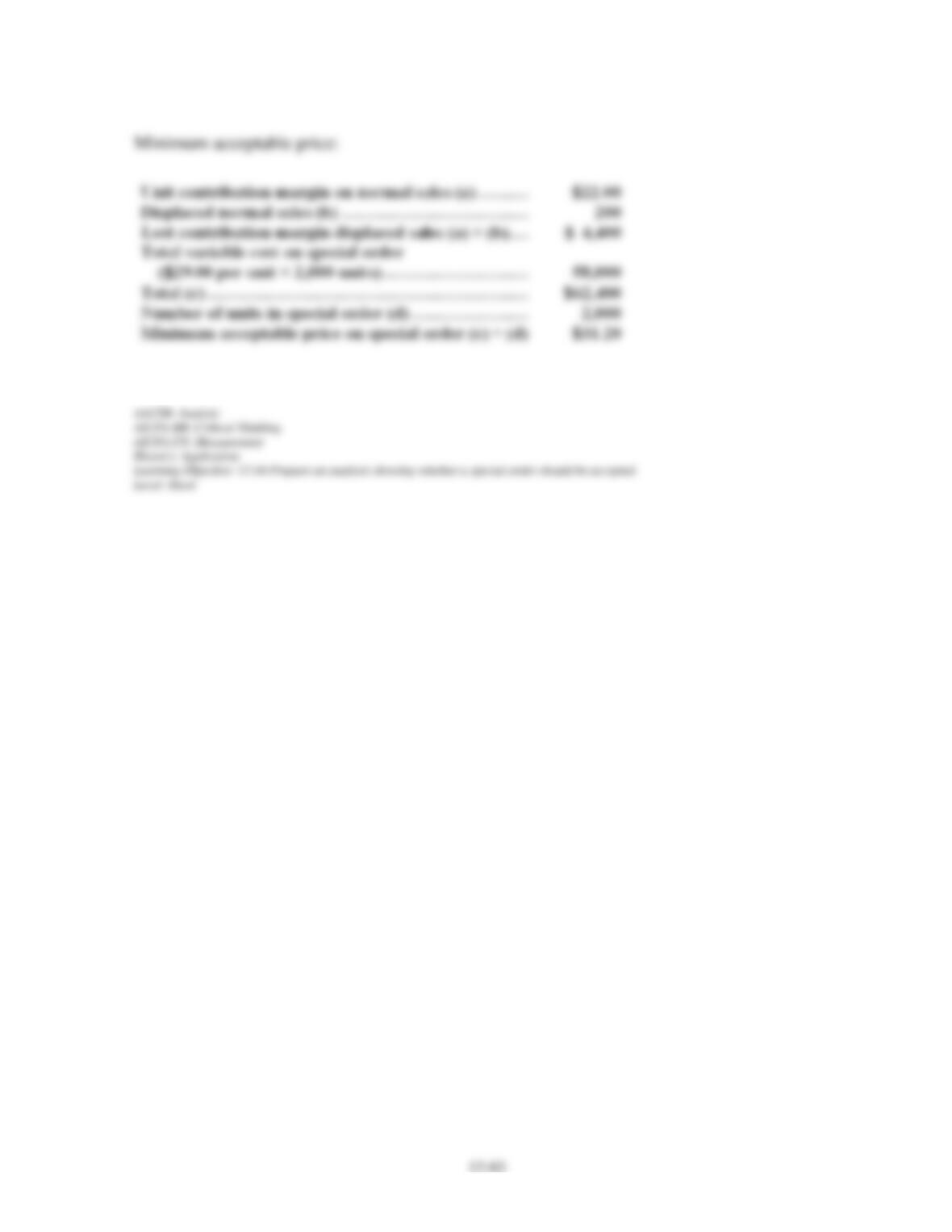
92. Suppose there is not enough idle capacity to produce all of the units for the overseas
customer and accepting the special order would require cutting back on production of 200
units for regular customers. The minimum acceptable price per unit for the special order is
closest to:
Chapter 12 – Differential Analysis: The Key to Decision Making
Chapter 12 – Differential Analysis: The Key to Decision Making
12–84
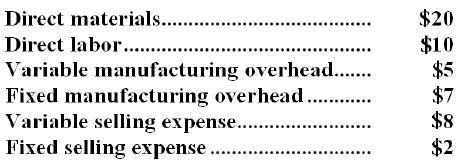
The Varone Company makes a single product called a Hom. The company has the capacity to
produce 40,000 Homs per year. Per unit costs to produce and sell one Hom at that activity
level are:
The regular selling price for one Hom is $60. A special order has been received at Varone
from the Fairview Company to purchase 8,000 Homs next year at 15% off the regular selling
price. If this special order were accepted, the variable selling expense would be reduced by
25%. However, Varone would have to purchase a specialized machine to engrave the
Fairview name on each Hom in the special order. This machine would cost $12,000 and it
would have no use after the special order was filled. The total fixed costs, both manufacturing
and selling, are constant within the relevant range of 30,000 to 40,000 Homs per year.
Assume direct labor is a variable cost.
Chapter 12 – Differential Analysis: The Key to Decision Making
93. If Varone can expect to sell 32,000 Homs next year through regular channels and the
special order is accepted at 15% off the regular selling price, the effect on net operating
income next year due to accepting this order would be a:
Chapter 12 – Differential Analysis: The Key to Decision Making
94. If Varone can expect to sell 32,000 Homs next year through regular channels, at what
special order price from Fairview should Varone be economically indifferent between either
accepting or not accepting this special order?
Chapter 12 – Differential Analysis: The Key to Decision Making
95. If Varone has an opportunity to sell 37,960 Homs next year through regular channels and
the special order is accepted for 15% off the regular selling price, the effect on net operating
income next year due to accepting this order would be a:
Chapter 12 – Differential Analysis: The Key to Decision Making
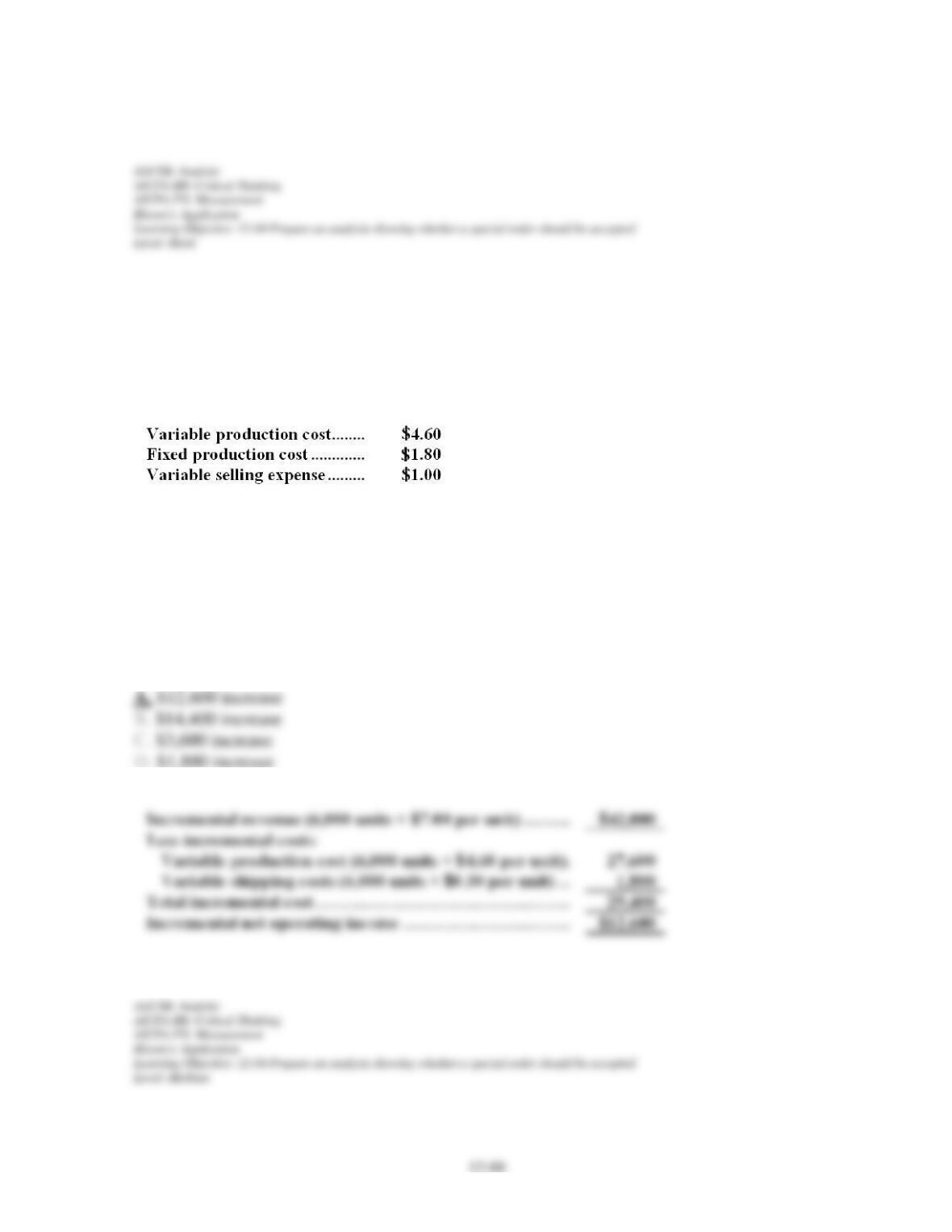
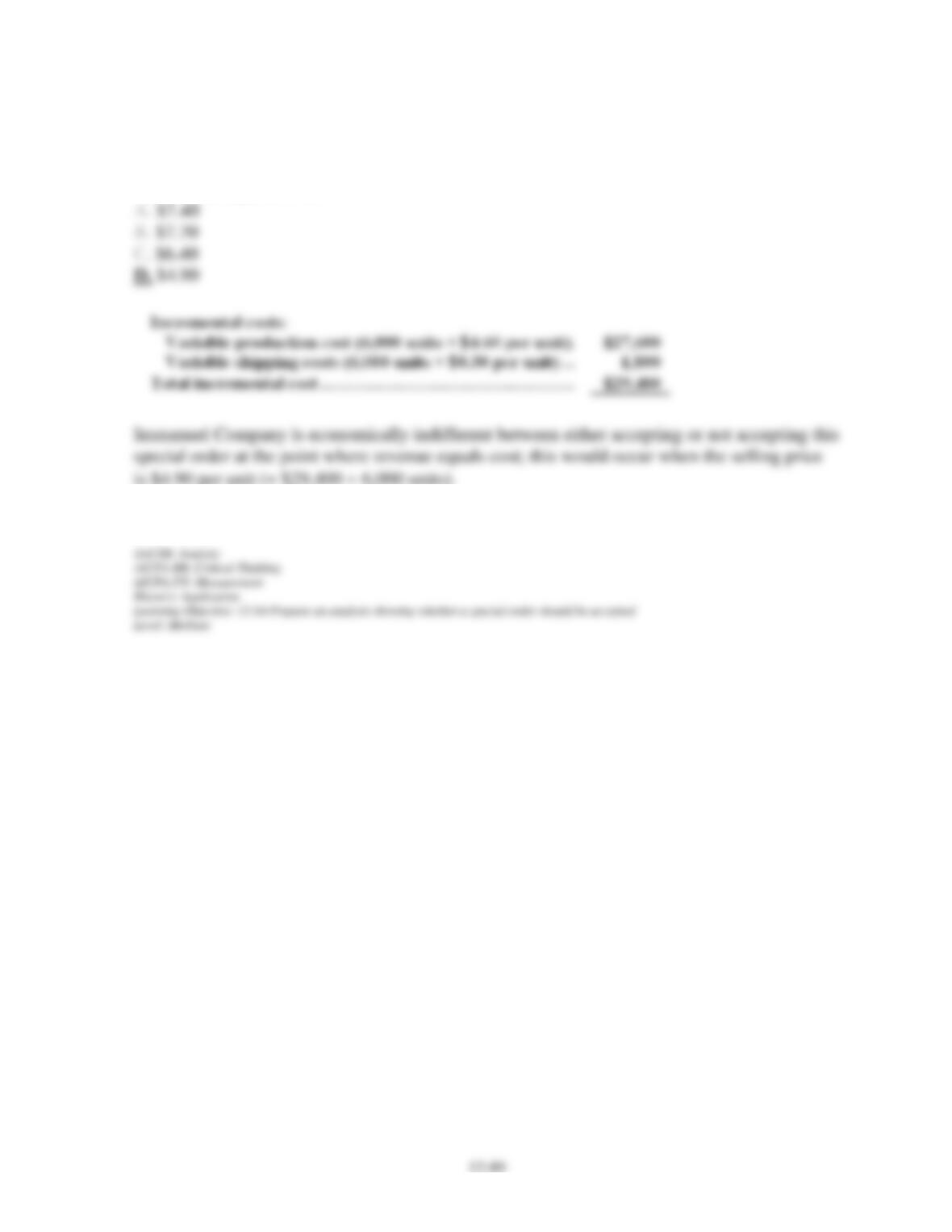
The Immanuel Company has just obtained a request for a special order of 6,000 jigs to be
shipped at the end of the month at a selling price of $7 each. The company has a production
capacity of 90,000 jigs per month with total fixed production costs of $144,000. At present,
the company is selling 80,000 jigs per month through regular channels at a selling price of
$11 each. For these regular sales, the cost for one jig is:
If the special order is accepted, Immanuel will not incur any selling expense; however, it will
incur shipping costs of $0.30 per unit. Total fixed production cost would not be affected by
this order.
96. If Immanuel accepts this special order, the change in monthly net operating income will
be a:
Chapter 12 – Differential Analysis: The Key to Decision Making
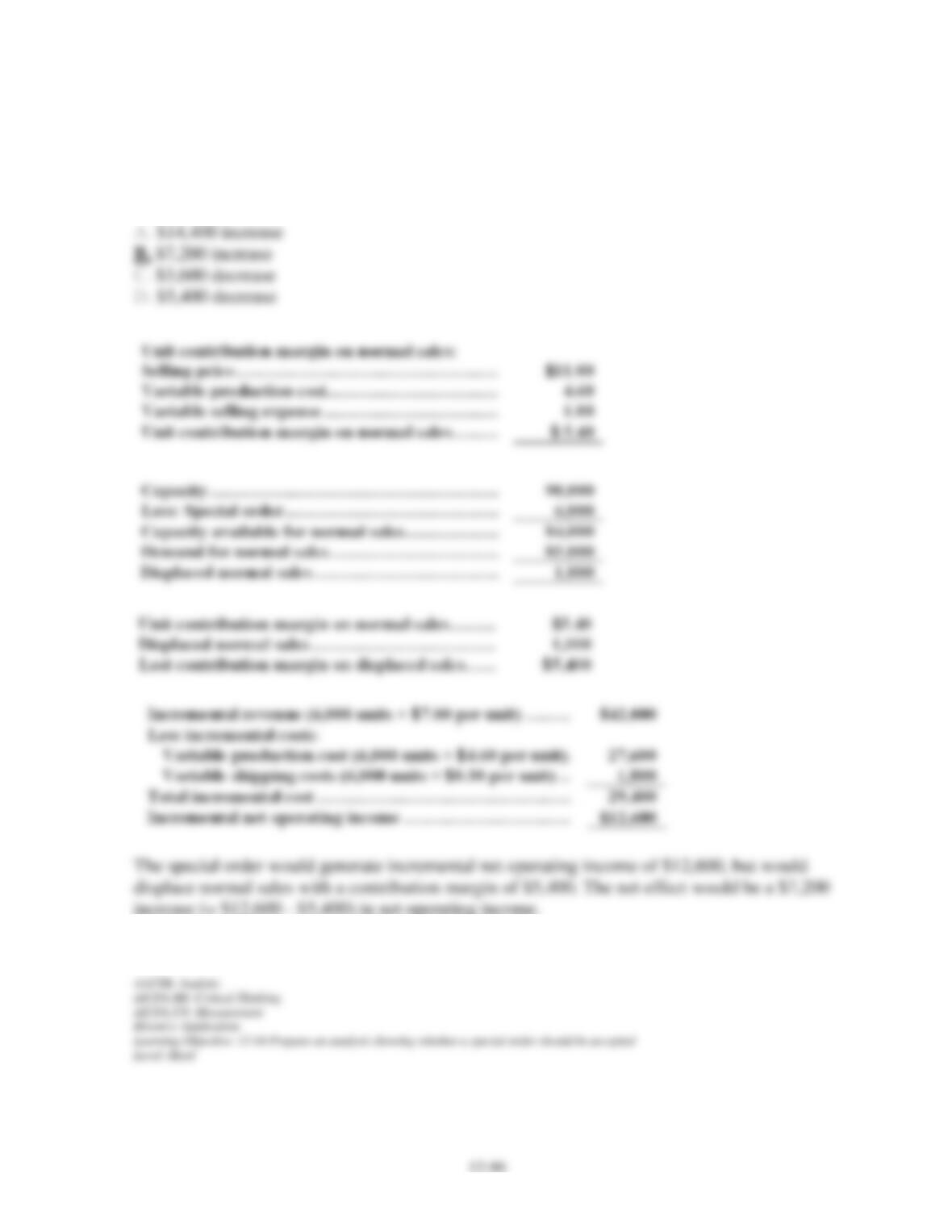
97. At what selling price per unit should Immanuel be indifferent between accepting or
rejecting the special offer?
Chapter 12 – Differential Analysis: The Key to Decision Making
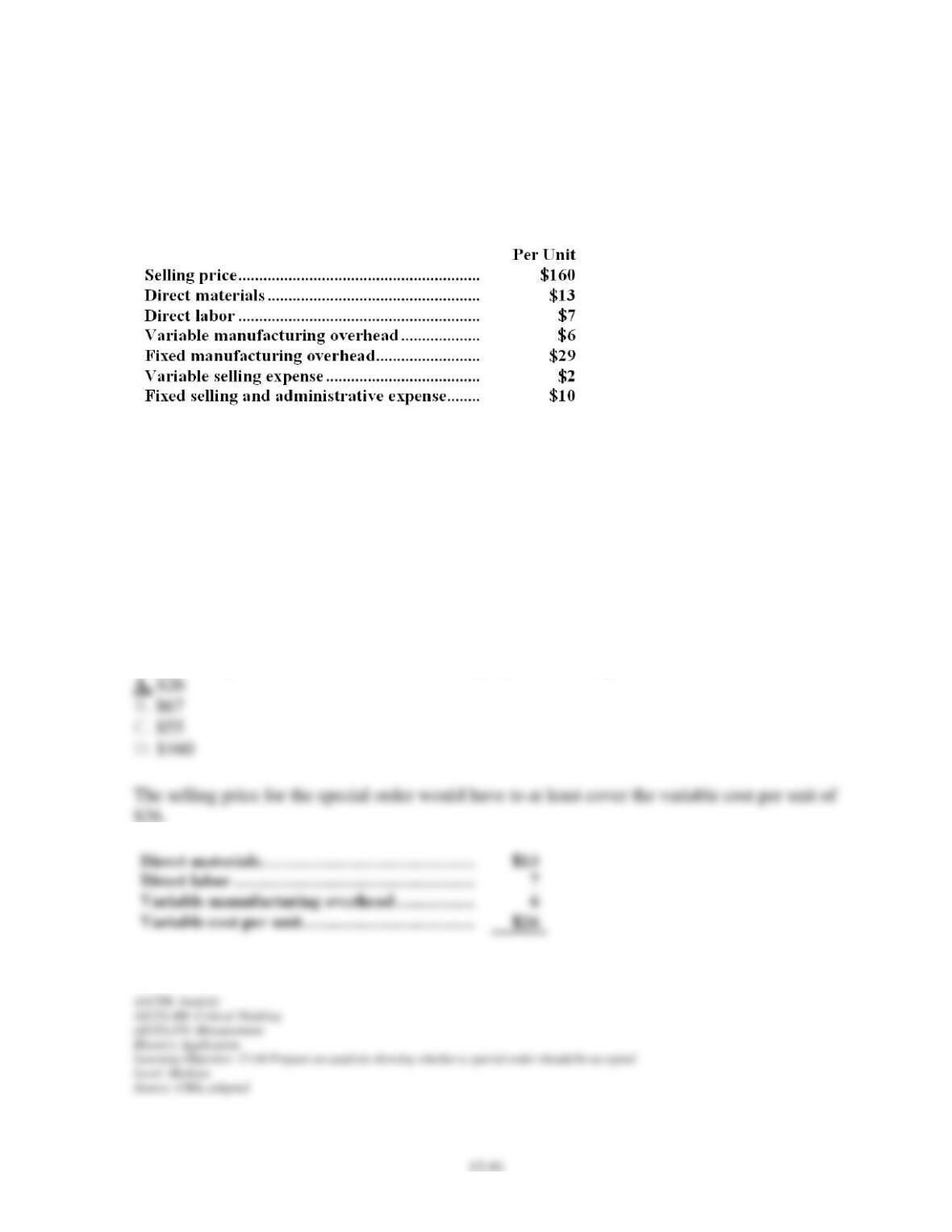
98. Suppose that regular sales of jigs total 85,000 units per month. All other conditions remain
the same. If Immanuel accepts the special order, the change in monthly net operating income
will be:
Chapter 12 – Differential Analysis: The Key to Decision Making
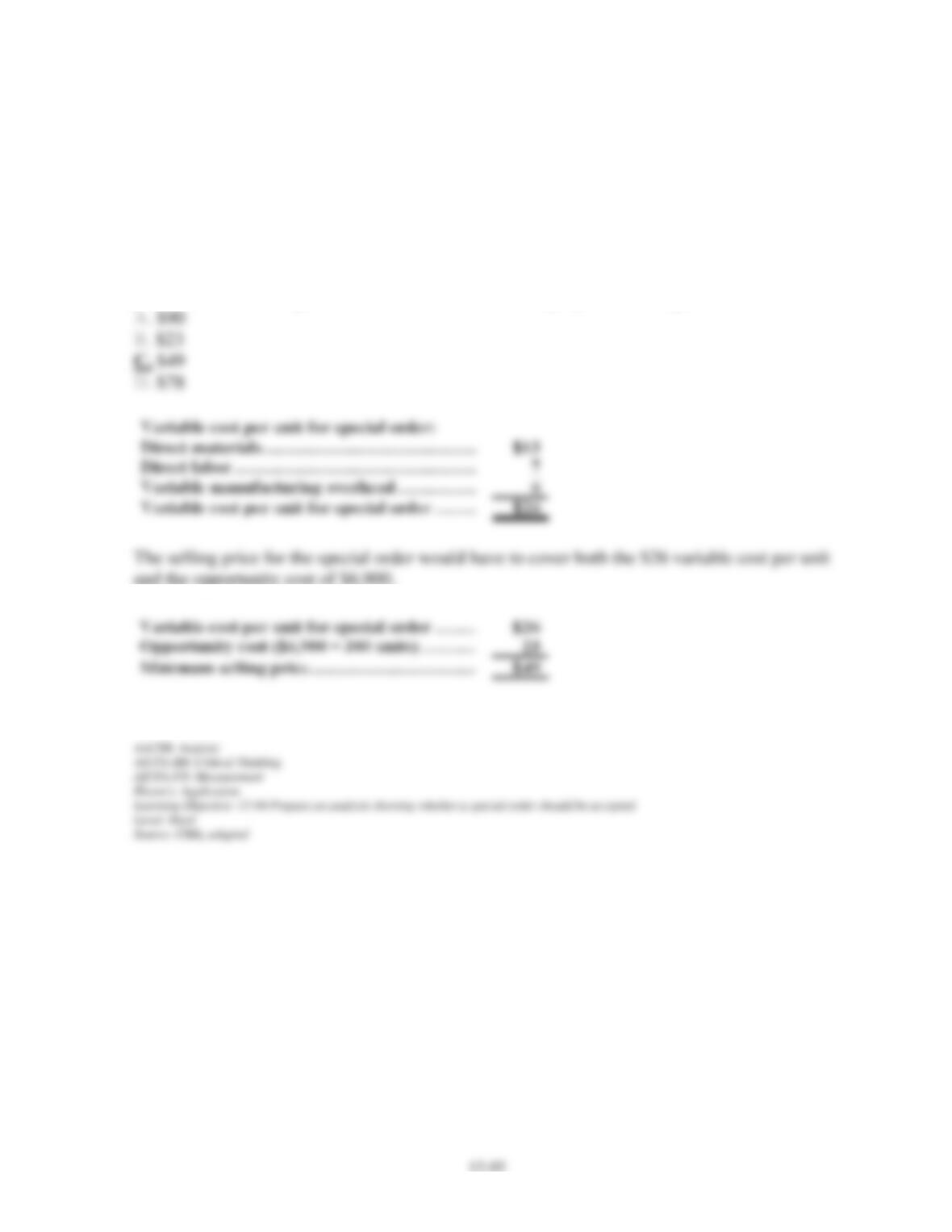
Mckerchie Inc. manufactures industrial components. One of its products, which is used in the
construction of industrial air conditioners, is known as G62. Data concerning this product are
given below:
The above per unit data are based on annual production of 9,000 units of the component.
Direct labor can be considered to be a variable cost.
99. The company has received a special, one-time-only order for 300 units of component G62.
There would be no variable selling expense on this special order and the total fixed
manufacturing overhead and fixed selling and administrative expenses of the company would
not be affected by the order. Assuming that Mckerchie has excess capacity and can fill the
order without cutting back on the production of any product, what is the minimum price per
unit on the special order below which the company should not go?
Chapter 12 – Differential Analysis: The Key to Decision Making
100. The company has received a special, one-time-only order for 300 units of component
G62. There would be no variable selling expense on this special order and the total fixed
manufacturing overhead and fixed selling and administrative expenses of the company would
not be affected by the order. However, assume that Mckerchie has no excess capacity and this
special order would require 50 minutes of the constraining resource, which could be used
instead to produce products with a total contribution margin of $6,900. What is the minimum
price per unit on the special order below which the company should not go?
Chapter 12 – Differential Analysis: The Key to Decision Making
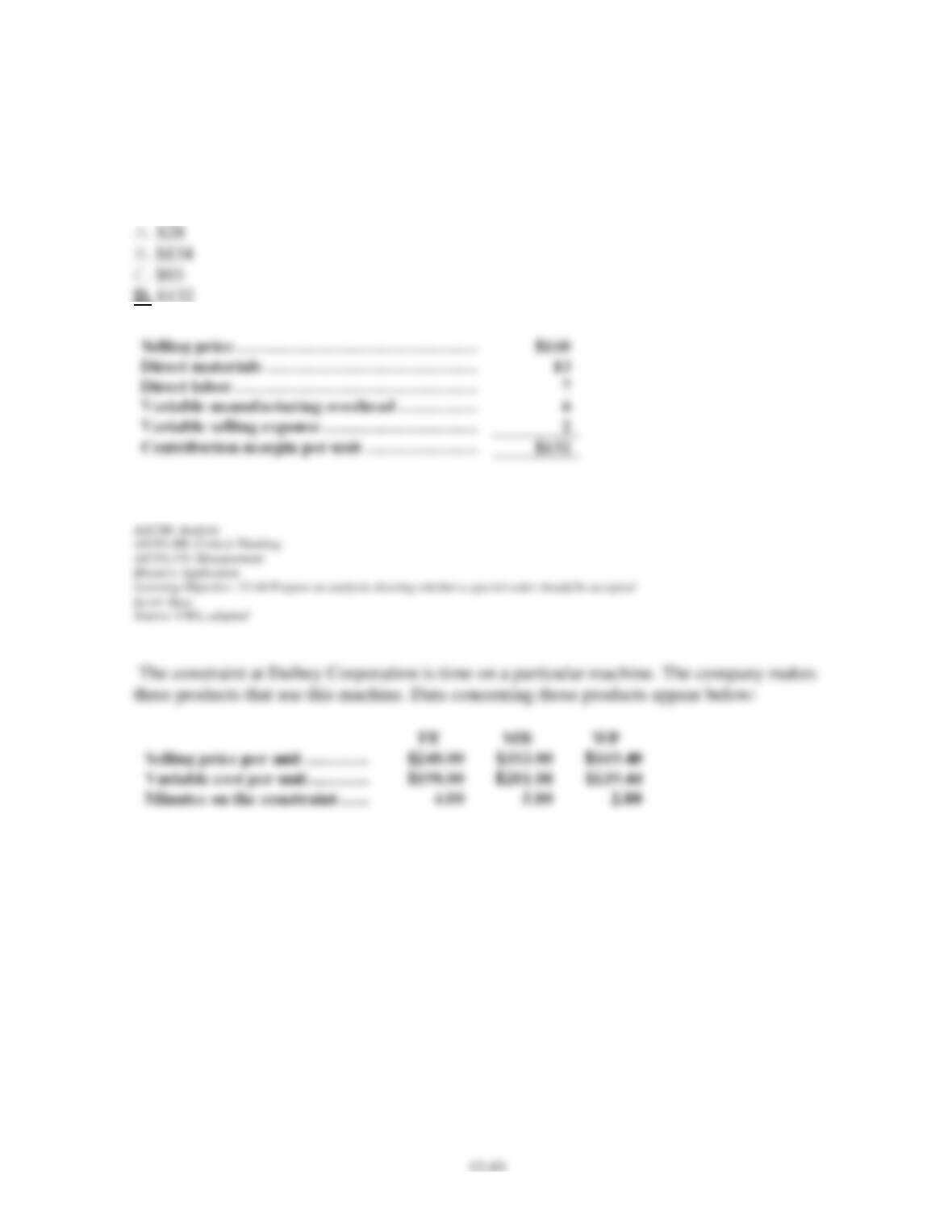
101. Refer to the original data in the problem. What is the current contribution margin per unit
for component G62 based on its selling price of $160 and its annual production of 9,000
units?
Chapter 12 – Differential Analysis: The Key to Decision Making
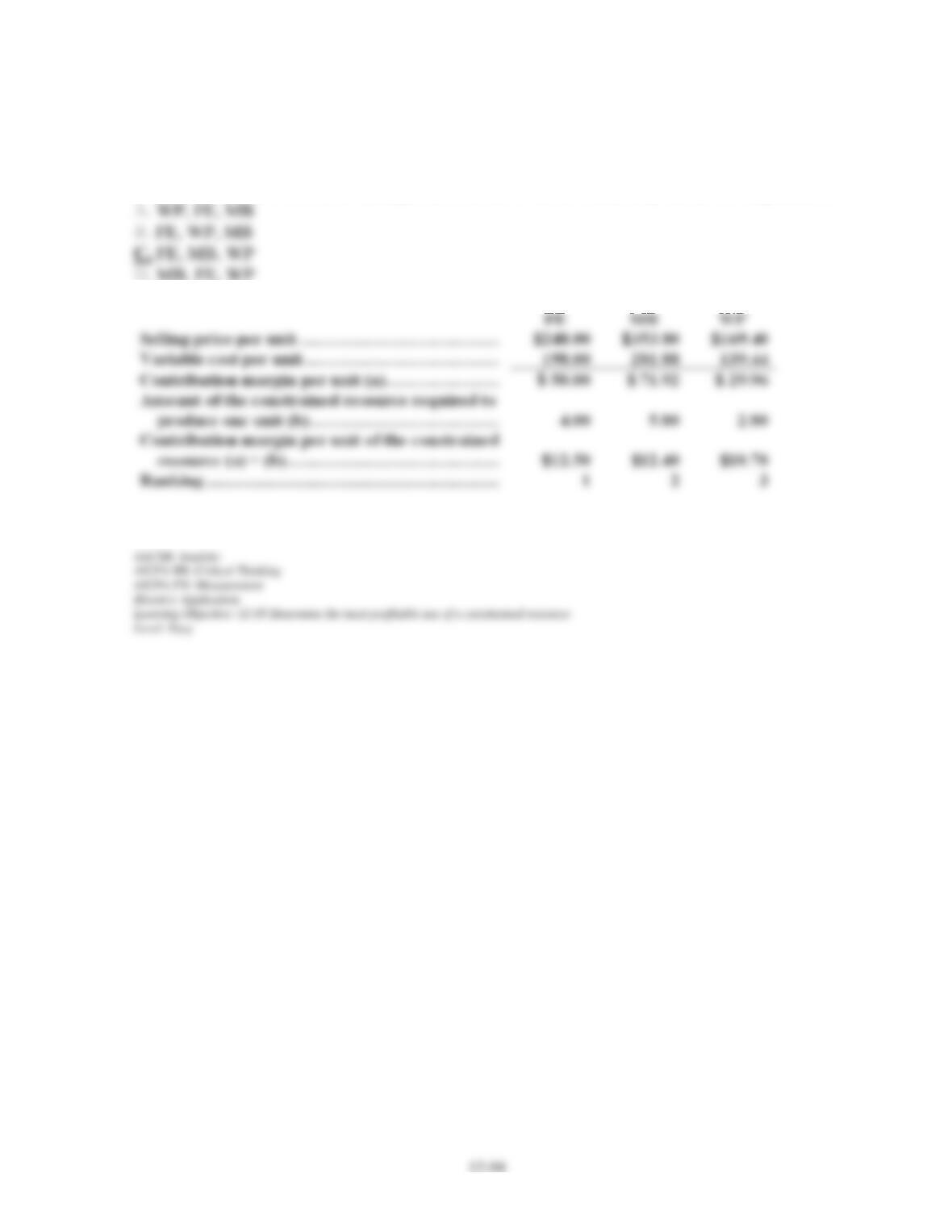
102. Rank the products in order of their current profitability from most profitable to least
profitable. In other words, rank the products in the order in which they should be emphasized.
Chapter 12 – Differential Analysis: The Key to Decision Making
12–95
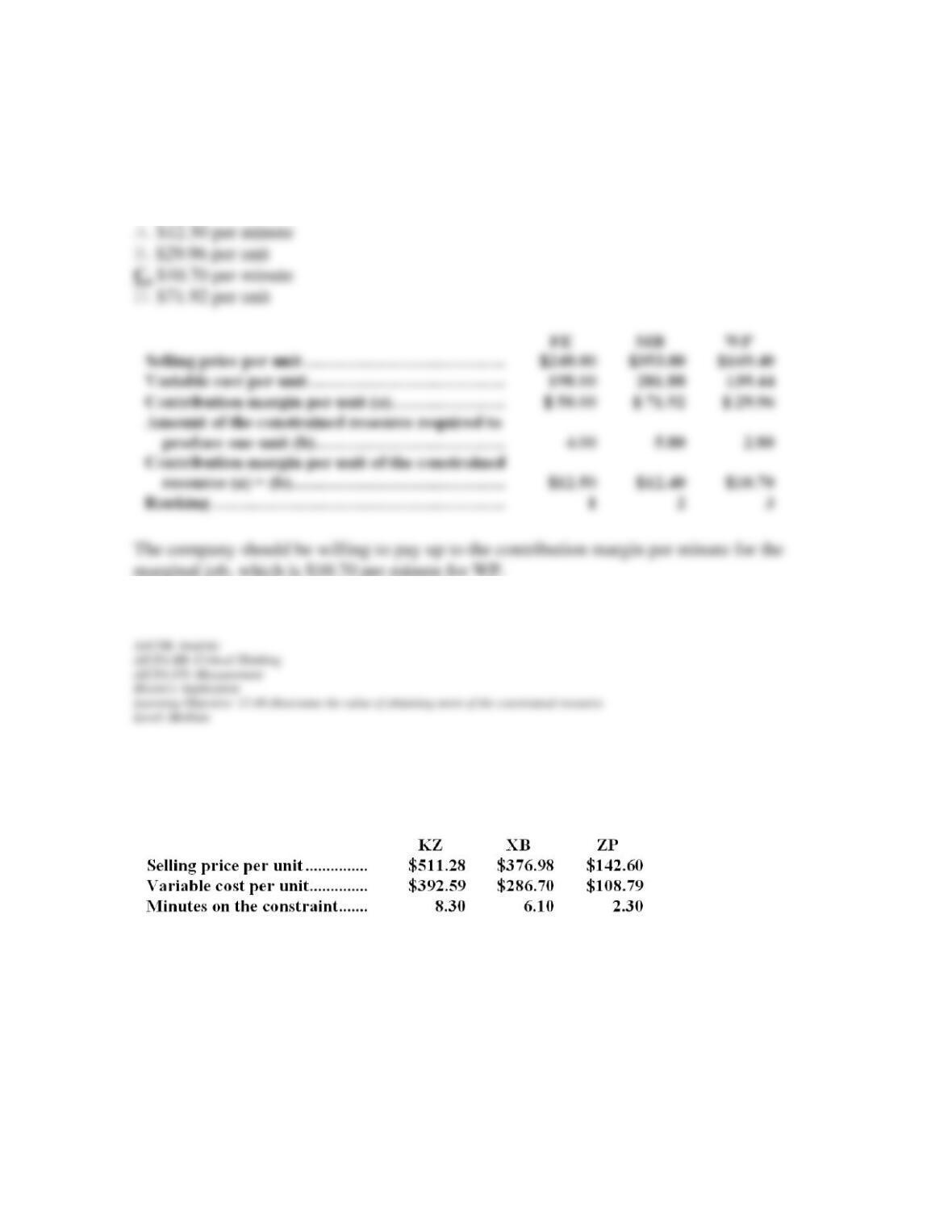
103. Assume that sufficient time is available on the constrained machine to satisfy demand for
all but the least profitable product. Up to how much should the company be willing to pay to
acquire more of this constrained resource?
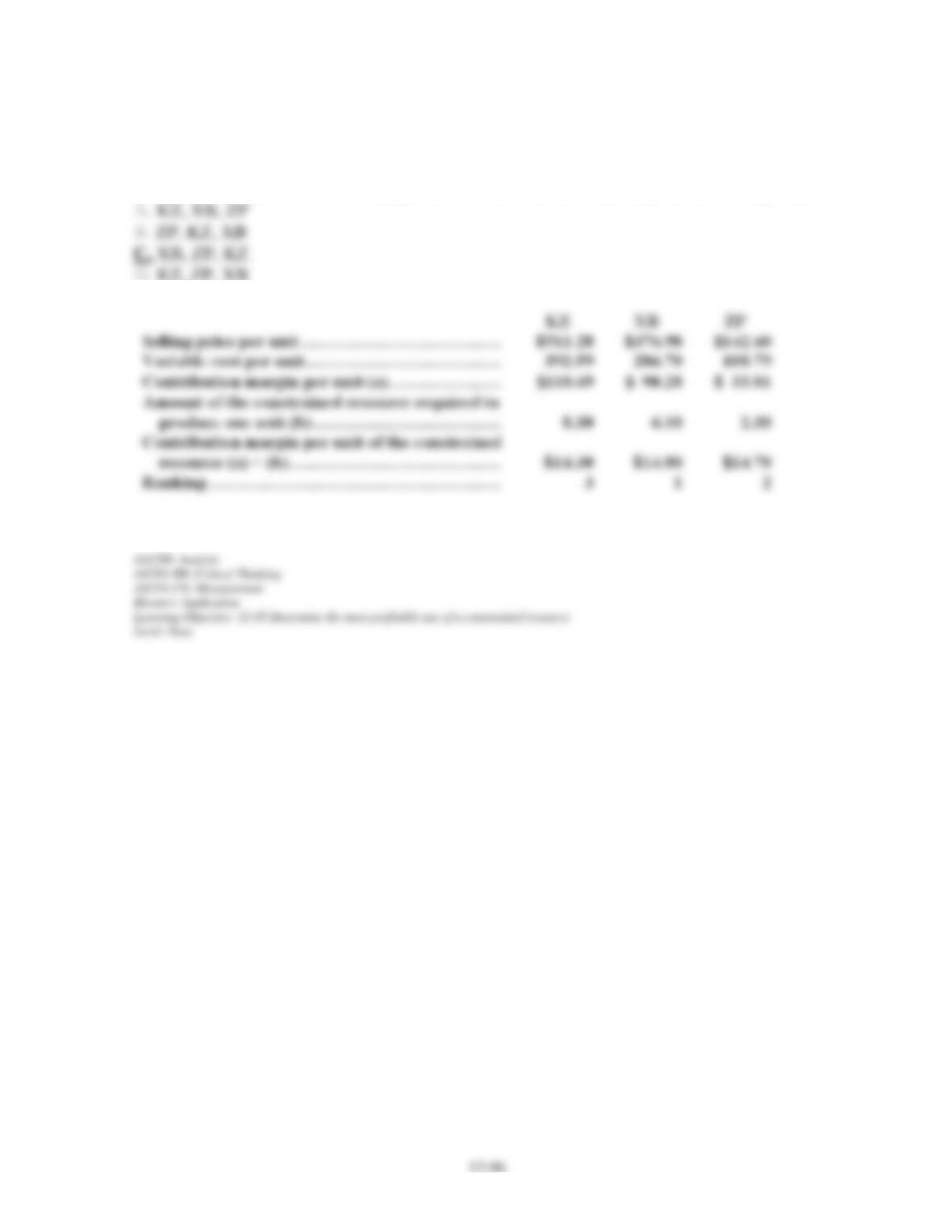
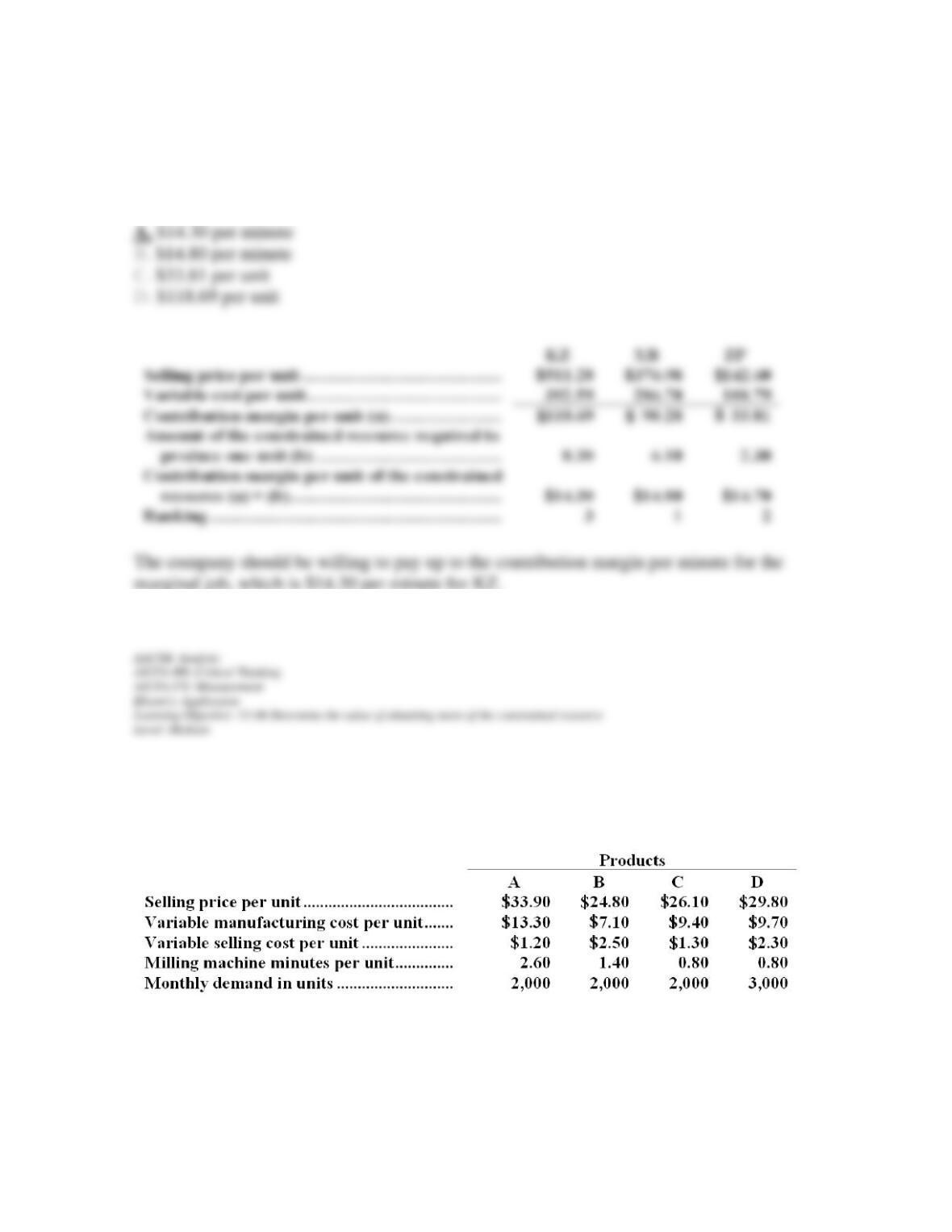
Marrin Corporation makes three products that use the current constraint-a particular type of
machine. Data concerning those products appear below:
Chapter 12 – Differential Analysis: The Key to Decision Making
104. Rank the products in order of their current profitability from most profitable to least
profitable. In other words, rank the products in the order in which they should be emphasized.
Chapter 12 – Differential Analysis: The Key to Decision Making
12–97
105. Assume that sufficient constraint time is available to satisfy demand for all but the least
profitable product. Up to how much should the company be willing to pay to acquire more of
the constrained resource?
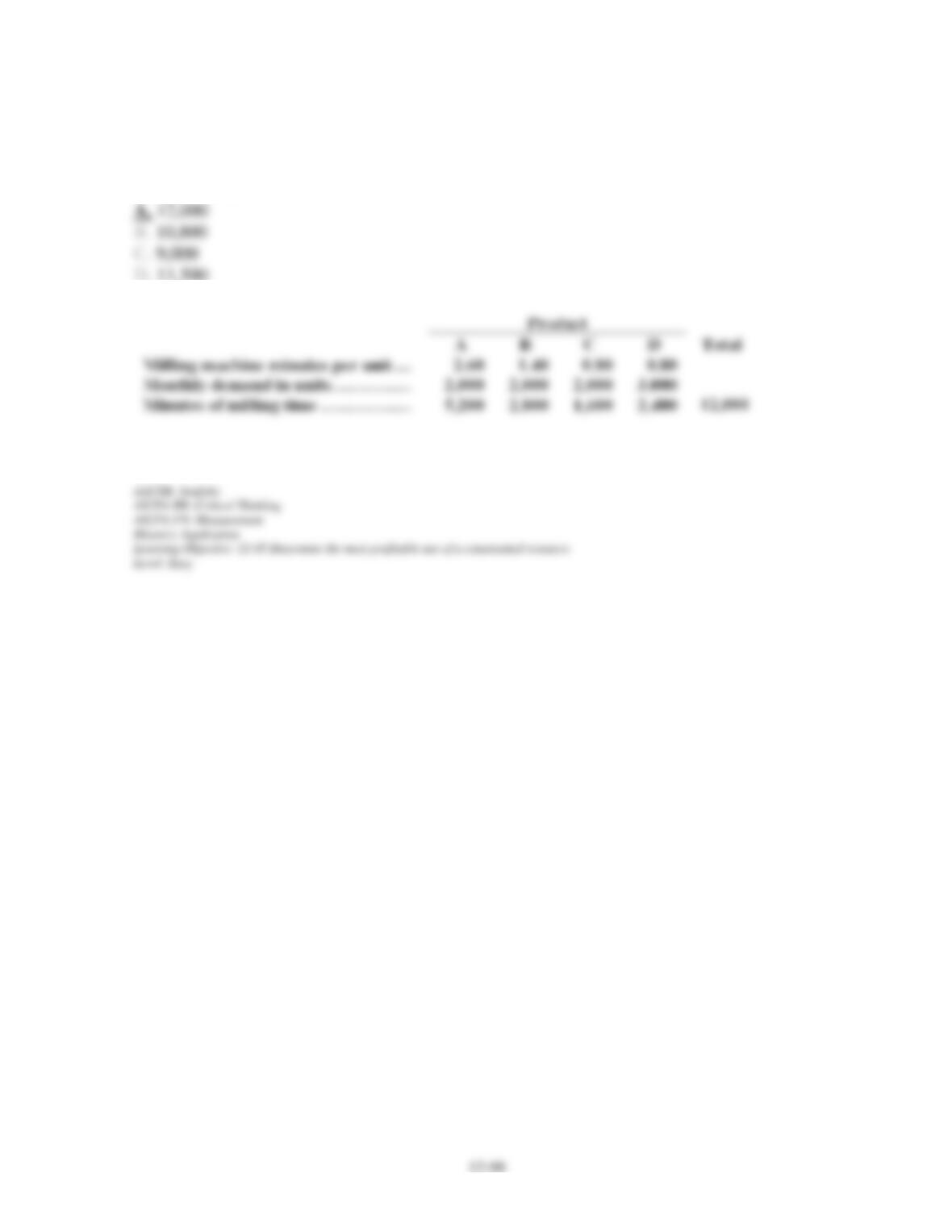
Cress Company makes four products in a single facility. Data concerning these products
appear below:
The milling machines are potentially the constraint in the production facility. A total of
11,500 minutes are available per month on these machines.
Chapter 12 – Differential Analysis: The Key to Decision Making
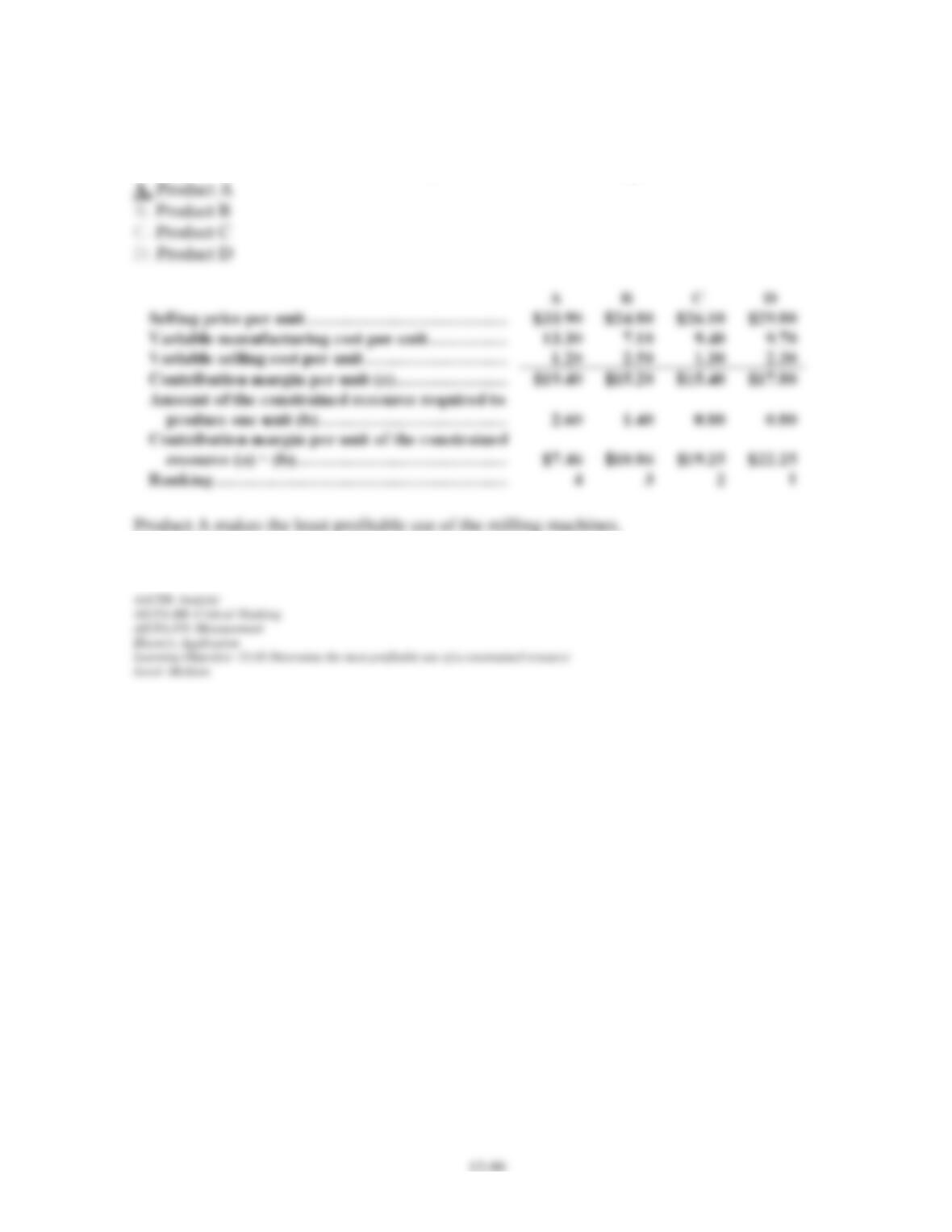
106. How many minutes of milling machine time would be required to satisfy demand for all
four products?
Chapter 12 – Differential Analysis: The Key to Decision Making
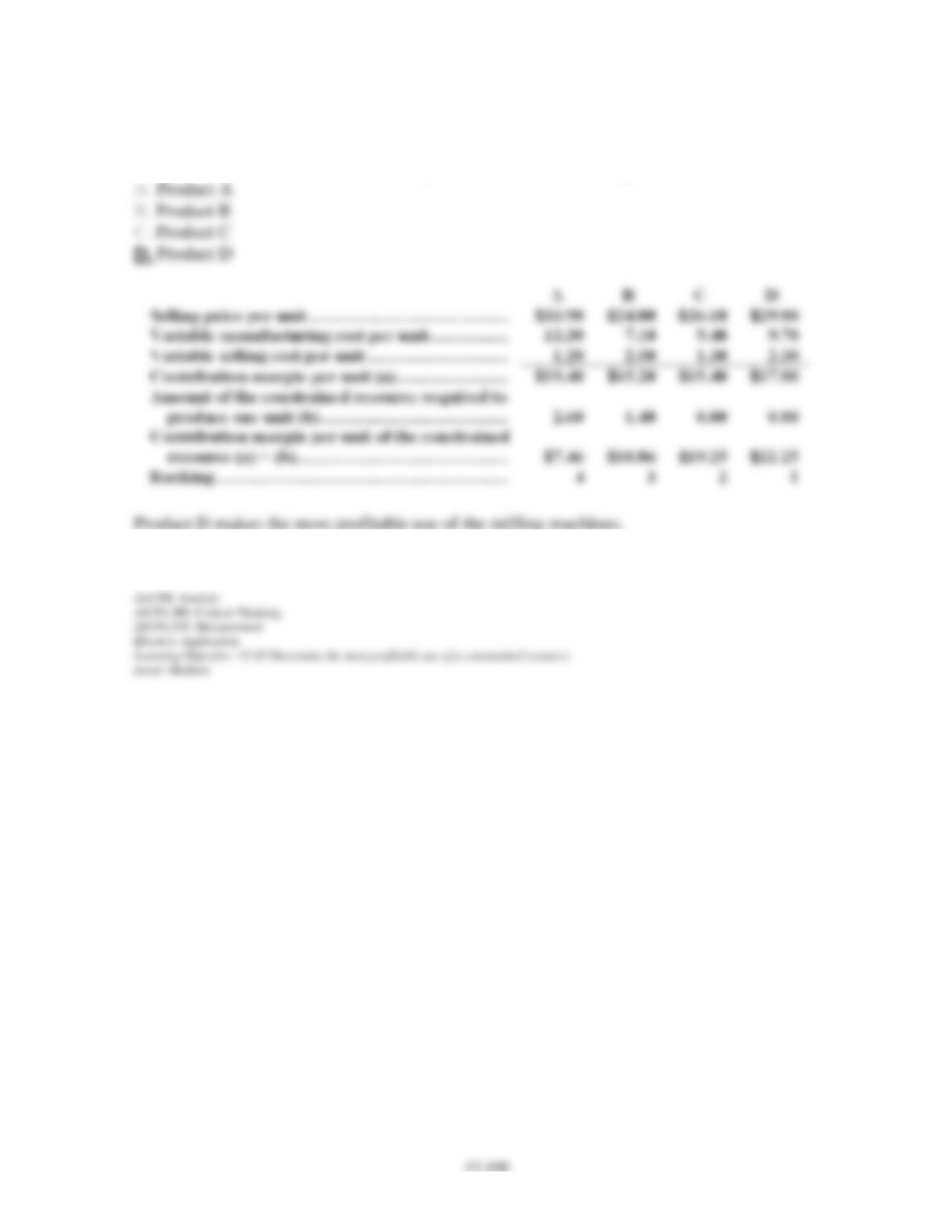
107. Which product makes the LEAST profitable use of the milling machines?
Chapter 12 – Differential Analysis: The Key to Decision Making
108. Which product makes the MOST profitable use of the milling machines?