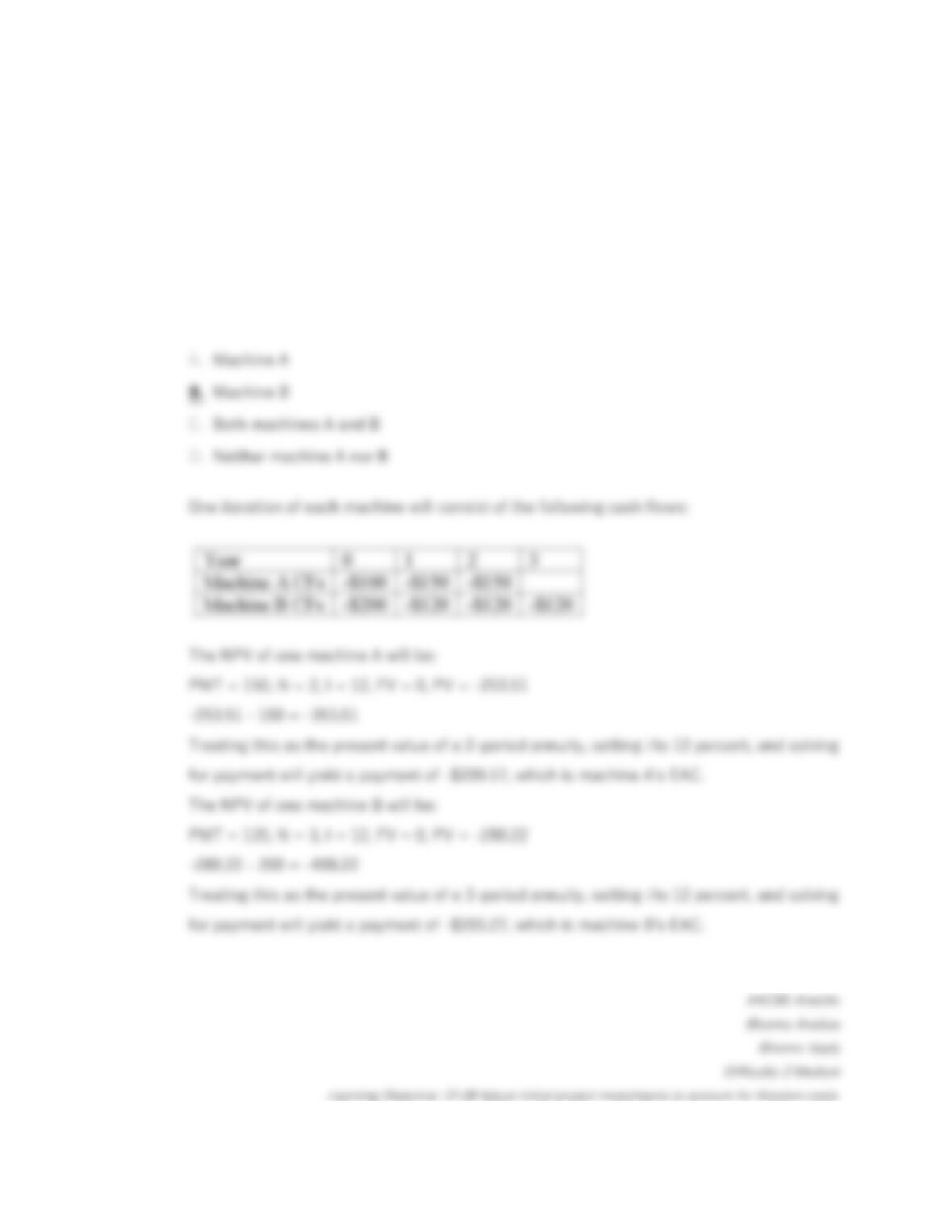
30.
You are considering the purchase of one of two machines used in your manufacturing
plant. Machine A has a life of two years, costs $100 initially, and then $150 per year in
maintenance costs. Machine B costs $200 initially, has a life of three years, and requires
$120 in annual maintenance costs. Either machine must be replaced at the end of its life
with an equivalent machine. Which is the better machine for the firm? The discount rate is
12 percent and the tax rate is zero.
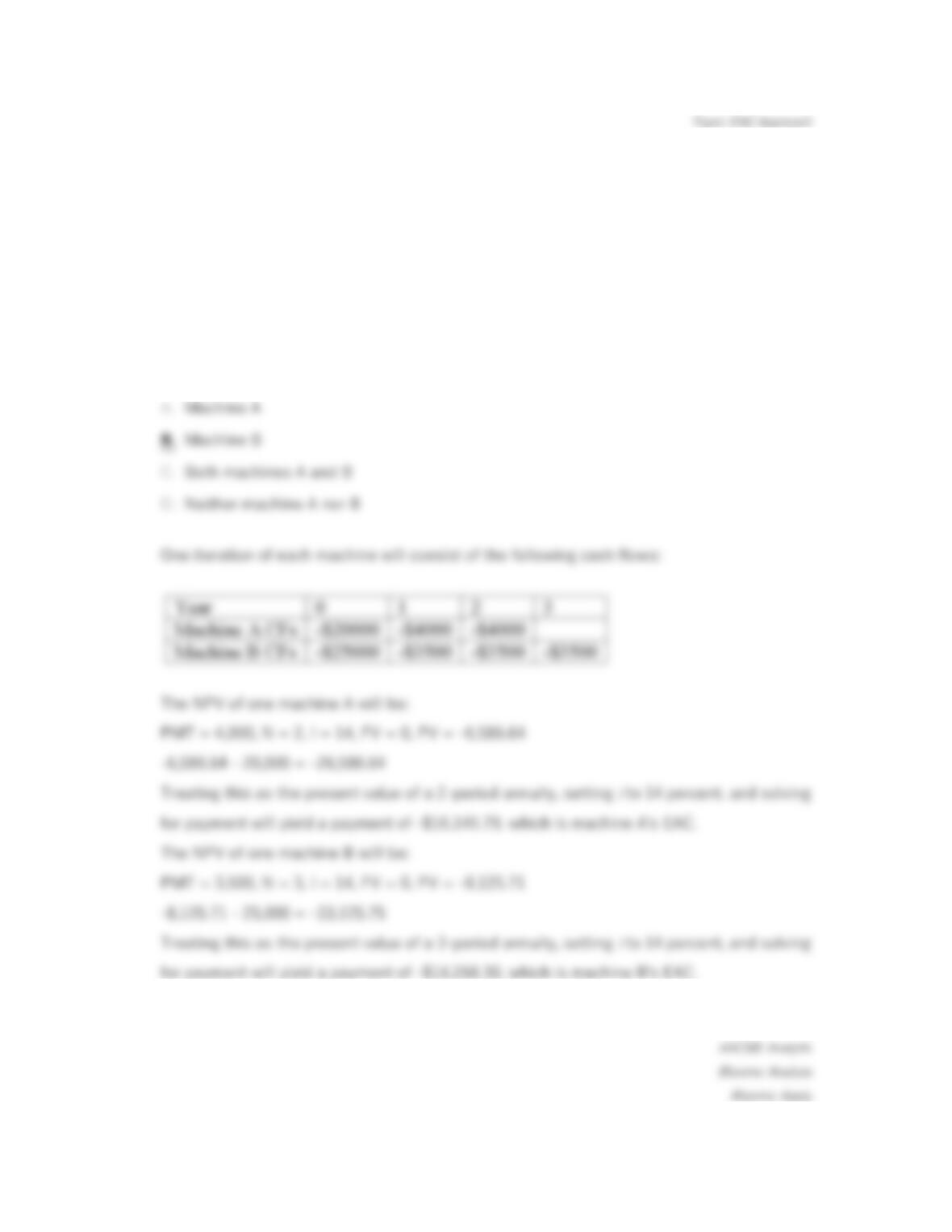
31.
You are considering the purchase of one of two machines used in your manufacturing
plant. Machine A has a life of two years, costs $20,000 initially, and then $4,000 per year in
maintenance costs. Machine B costs $25,000 initially, has a life of three years, and
requires $3,500 in annual maintenance costs. Either machine must be replaced at the end
of its life with an equivalent machine. Which is the better machine for the firm? The
discount rate is 14 percent and the tax rate is zero.
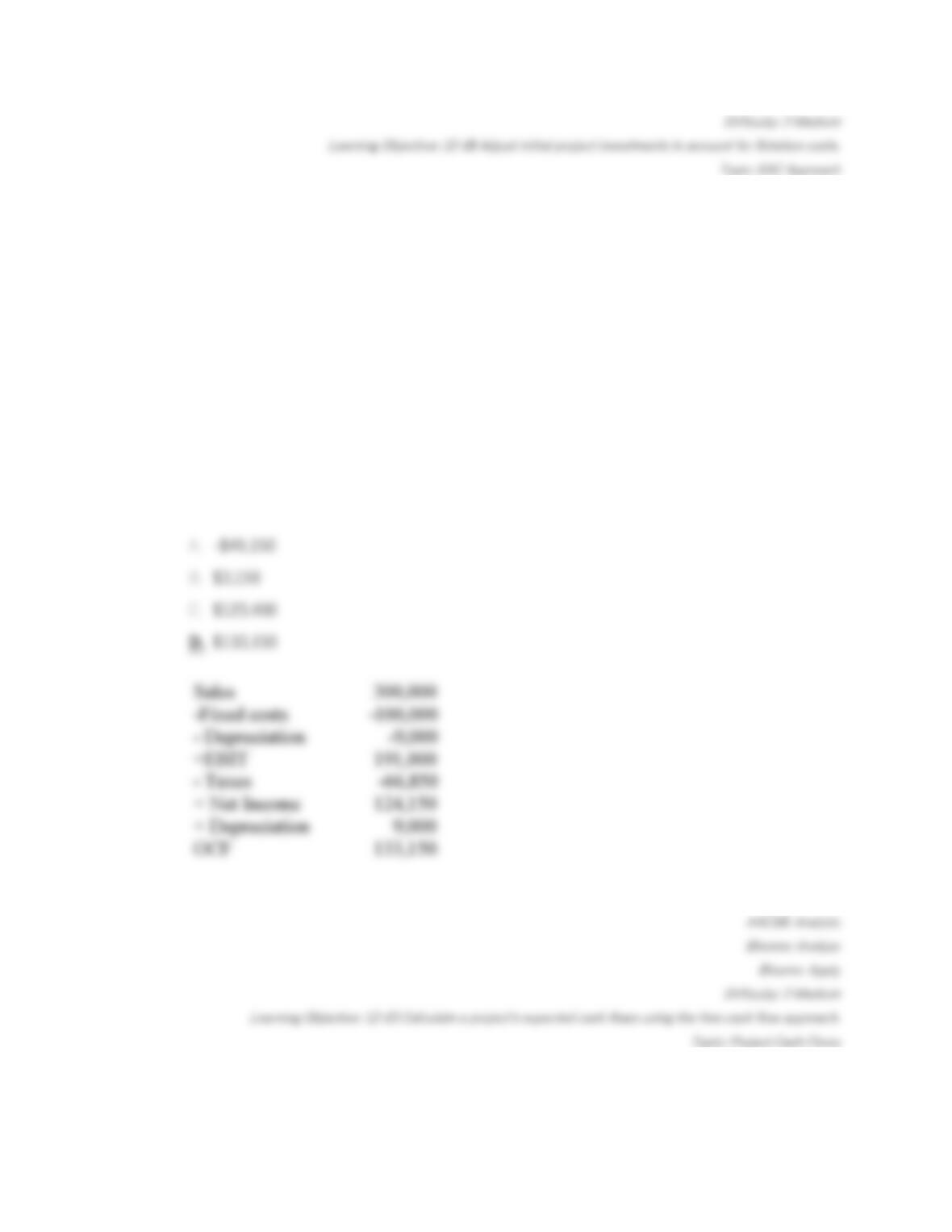
32.
Your company has spent $200,000 on research to develop a new computer game. The firm
is planning to spend $40,000 on a machine to produce the new game. Shipping and
installation costs of the machine will be capitalized and depreciated; they total $5,000. The
machine has an expected life of five years, a $25,000 estimated resale value, and falls
under the MACRS five-year class life. Revenue from the new game is expected to be
$300,000 per year, with costs of $100,000 per year. The firm has a tax rate of 35 percent,
an opportunity cost of capital of 14 percent, and it expects net working capital to increase
by $50,000 at the beginning of the project. What will be the operating cash flow for year
one of this project?
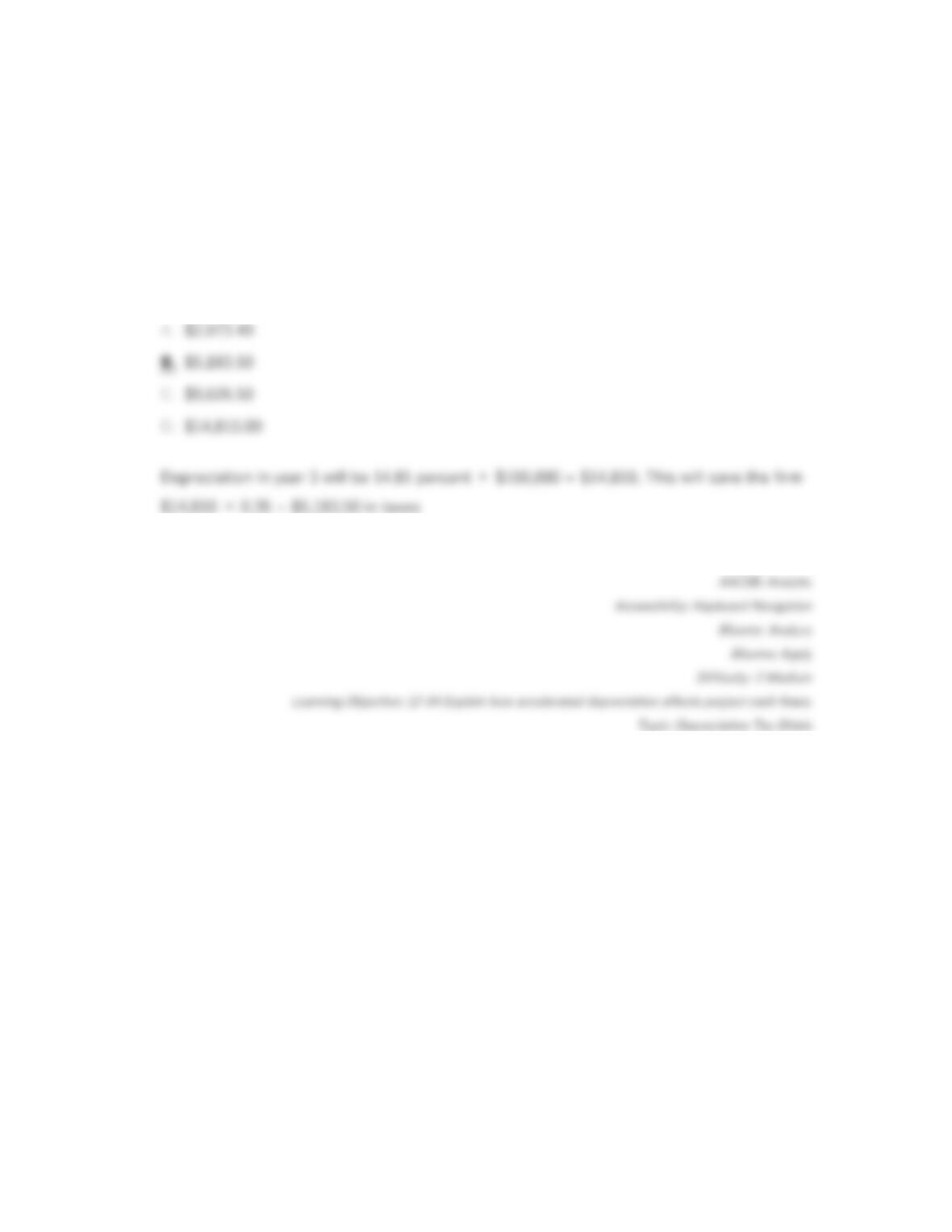
33.
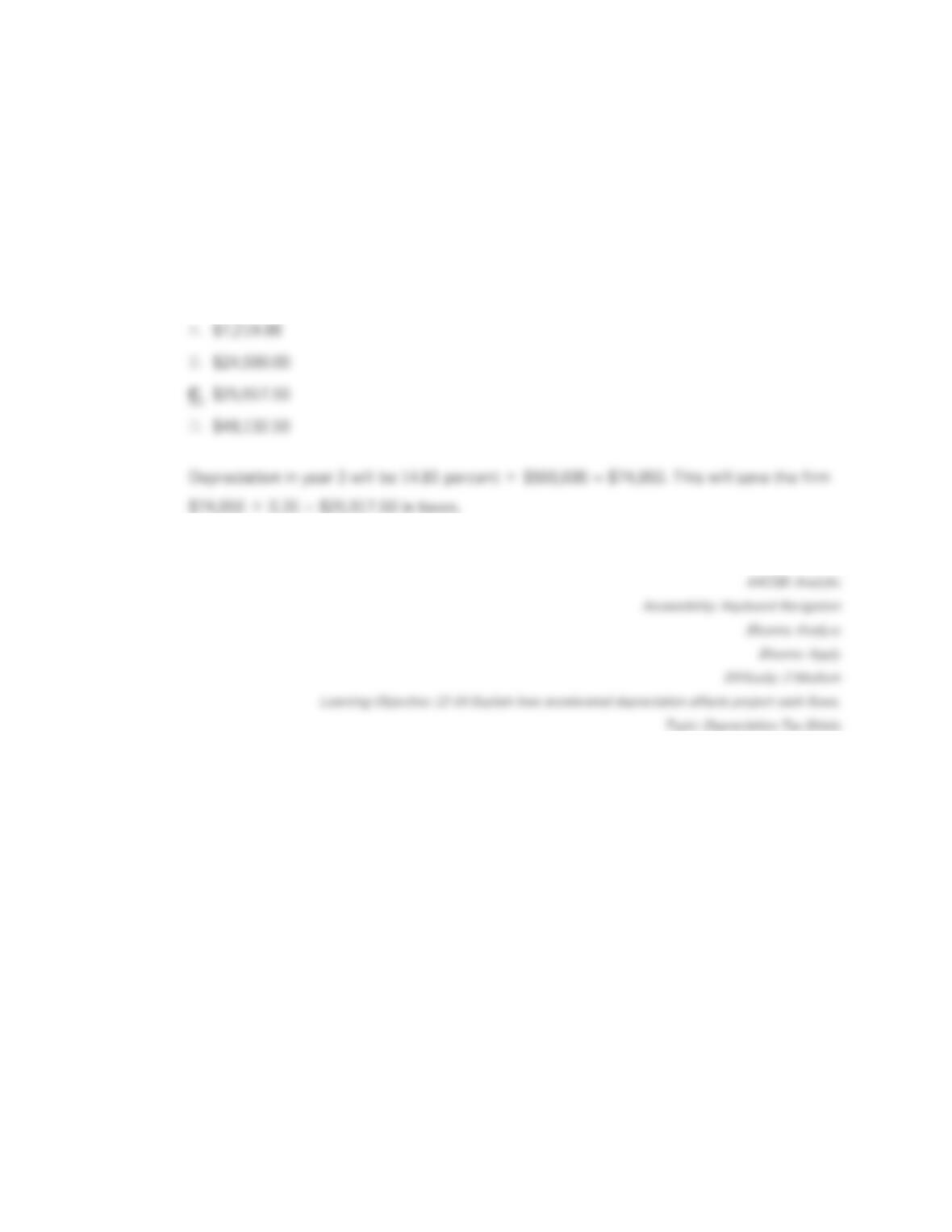
Your firm needs a machine which costs $100,000, and requires $25,000 in maintenance for
each year of its three-year life. After three years, this machine will be replaced. The
machine falls into the MACRS three-year class life category. Assume a tax rate of 35
percent and a discount rate of 14 percent. What is the depreciation tax shield for this
project in year 3?
34.
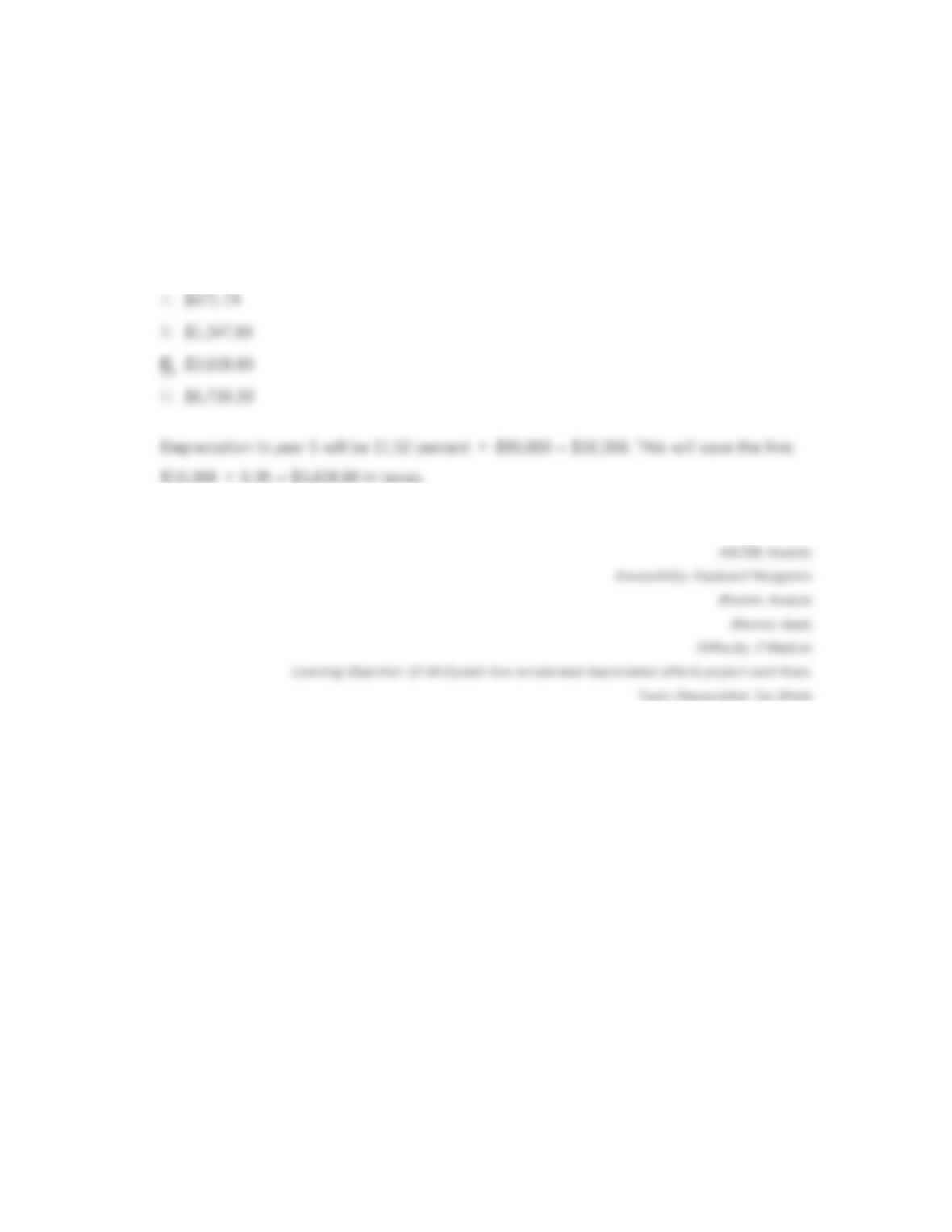
Your firm needs a machine which costs $500,000, and requires $10,000 in maintenance for
each year of its three-year life. After three years, this machine will be replaced. The
machine falls into the MACRS three-year class life category. Assume a tax rate of 35
percent and a discount rate of 15 percent. What is the depreciation tax shield for this
project in year 3?
35.
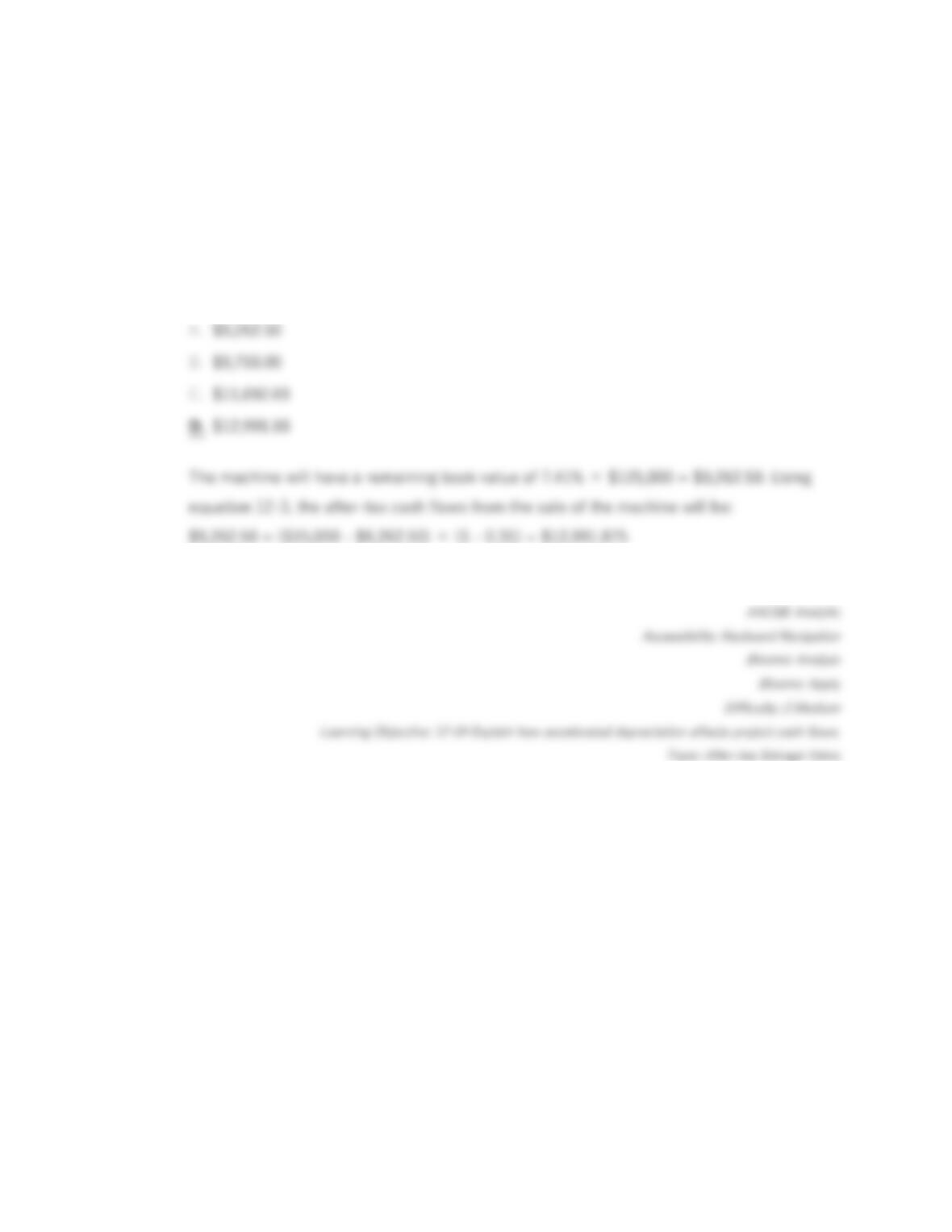
Your firm needs a machine which costs $90,000, and requires $30,000 in maintenance for
each year of its five-year life. After five years, this machine will be replaced. The machine
falls into the MACRS five-year class life category. Assume a tax rate of 35 percent and a
discount rate of 13 percent. What is the depreciation tax shield for this project in year 5?
36.
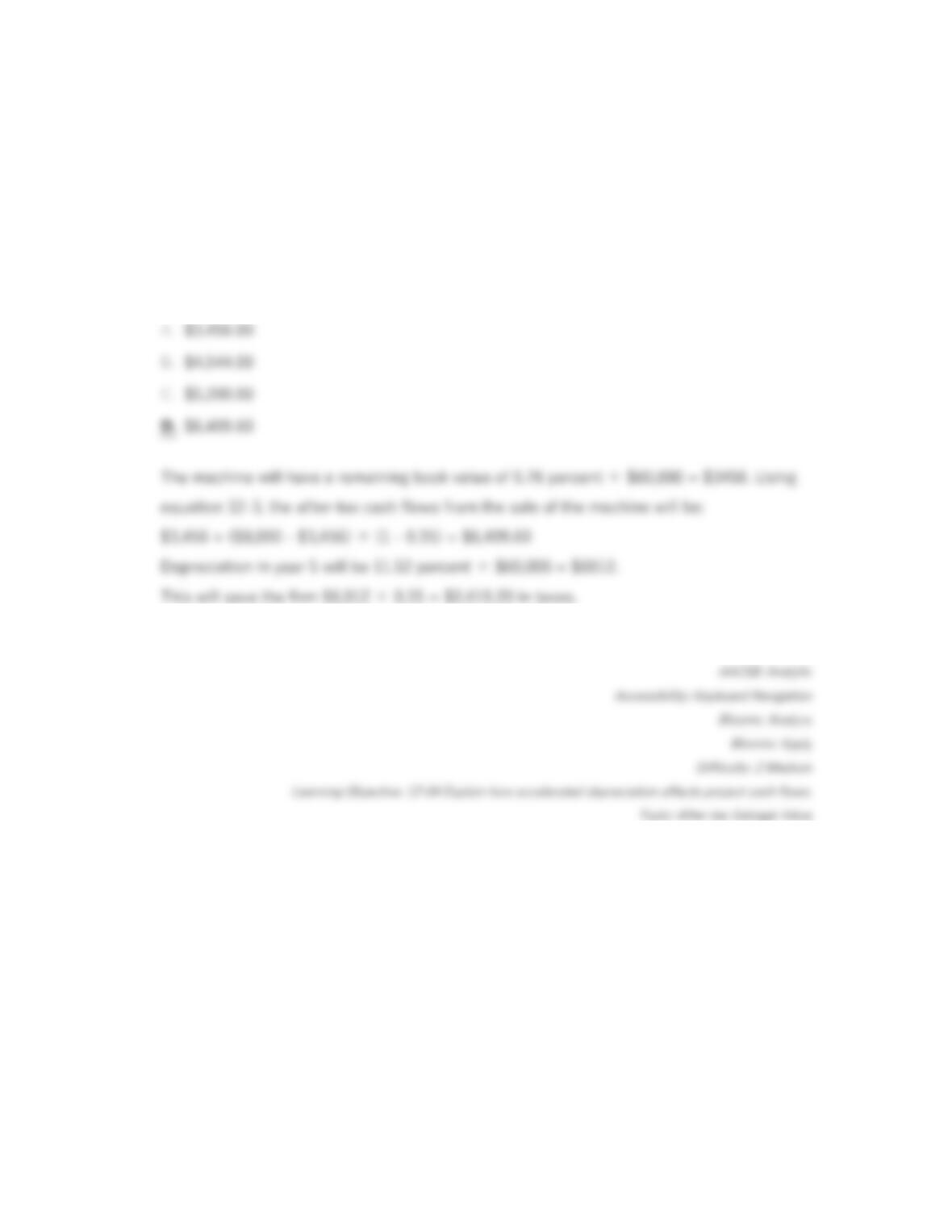
Your firm needs a machine which costs $125,000, and requires $5,000 in maintenance for
each year of its three-year life. After three years, this machine will be replaced. The
machine falls into the MACRS three-year class life category. Assume a tax rate of 35
percent and a discount rate of 10 percent. If this machine can be sold for $15,000 at the
end of year 3, what is the after-tax salvage value?
37.
Your firm needs a machine which costs $60,000, and requires $15,000 in maintenance for
each year of its five-year life. After five years, this machine will be replaced. The machine
falls into the MACRS five-year class life category. Assume a tax rate of 35 percent and a
discount rate of 10 percent. If this machine can be sold for $8,000 at the end of year 5,
what is the after-tax salvage value?
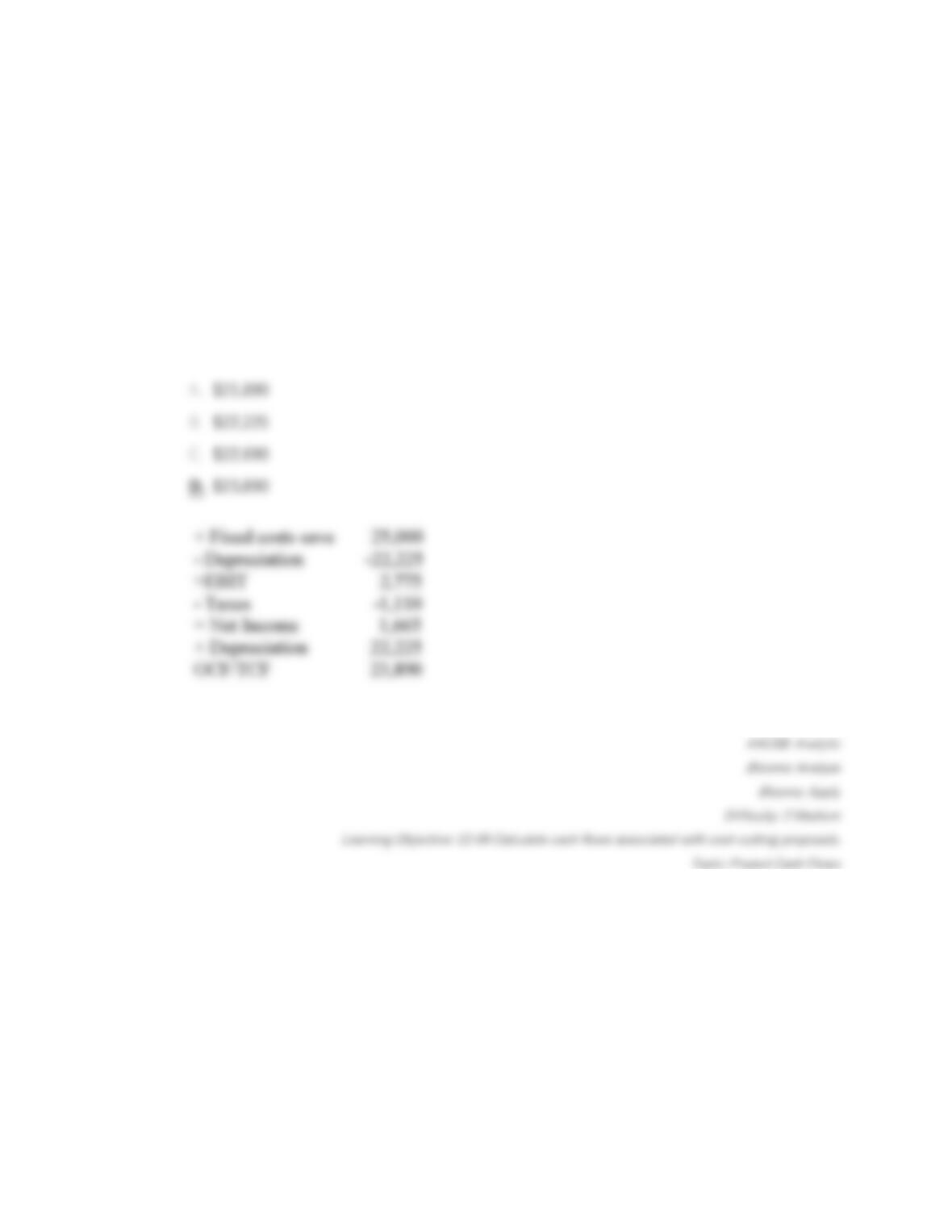
38.
You have been asked by the president of your company to evaluate the proposed
acquisition of a new special-purpose truck for $50,000. The truck falls into the MACRS
three-year class, and it will be sold after three years for $5,000. Use of the truck will
require an increase in NWC (spare parts inventory) of $2,000. The truck will have no effect
on revenues, but it is expected to save the firm $25,000 per year in before-tax operating
costs, mainly labor. The firm’s marginal tax rate is 40 percent. What will the operating cash
flow for this project be during year 2?
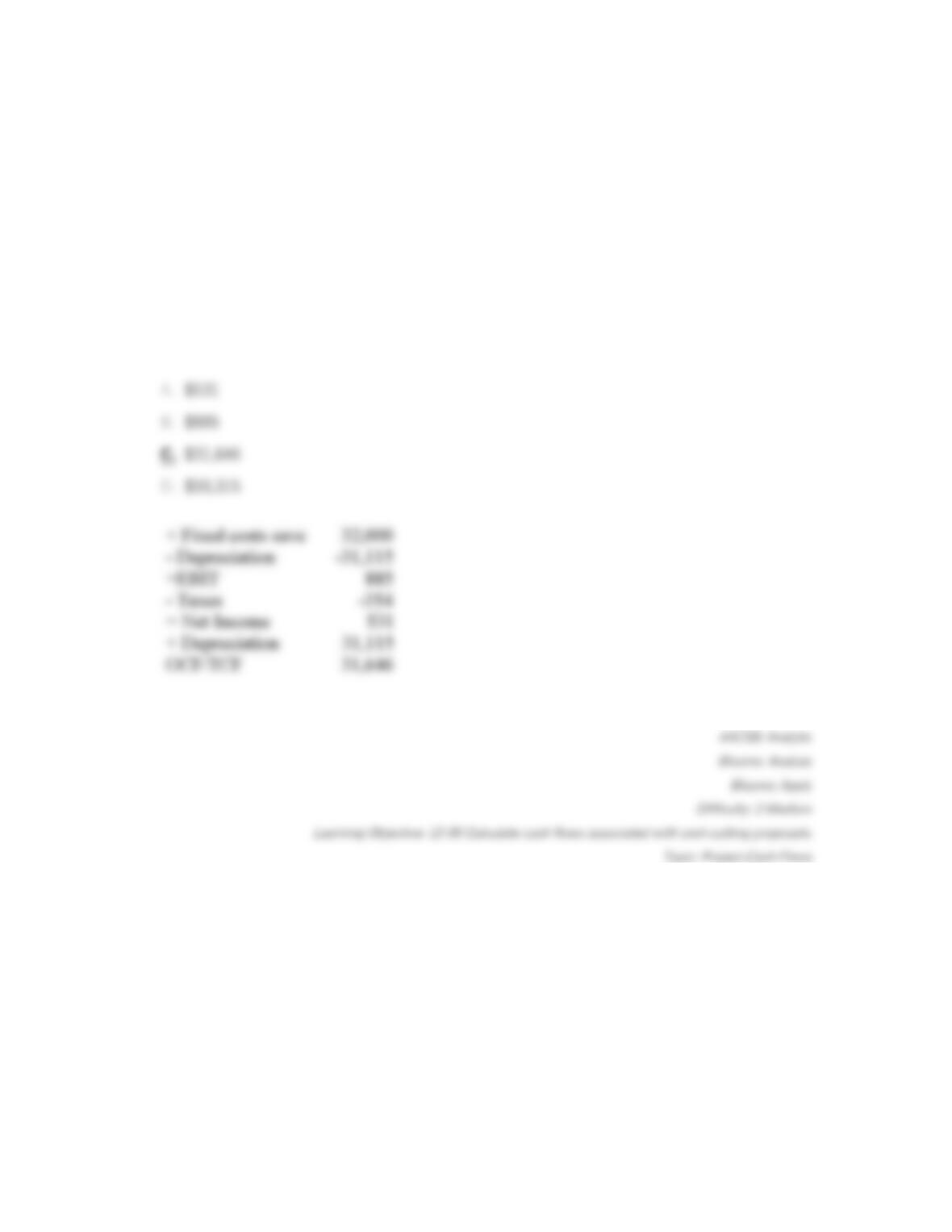
39.
You have been asked by the president of your company to evaluate the proposed
acquisition of a new special-purpose truck for $70,000. The truck falls into the MACRS
three-year class, and it will be sold after three years for $5,000. Use of the truck will
require an increase in NWC (spare parts inventory) of $10,000. The truck will have no
effect on revenues, but it is expected to save the firm $32,000 per year in before-tax
operating costs, mainly labor. The firm’s marginal tax rate is 40 percent. What will the
operating cash flow for this project be during year 2?
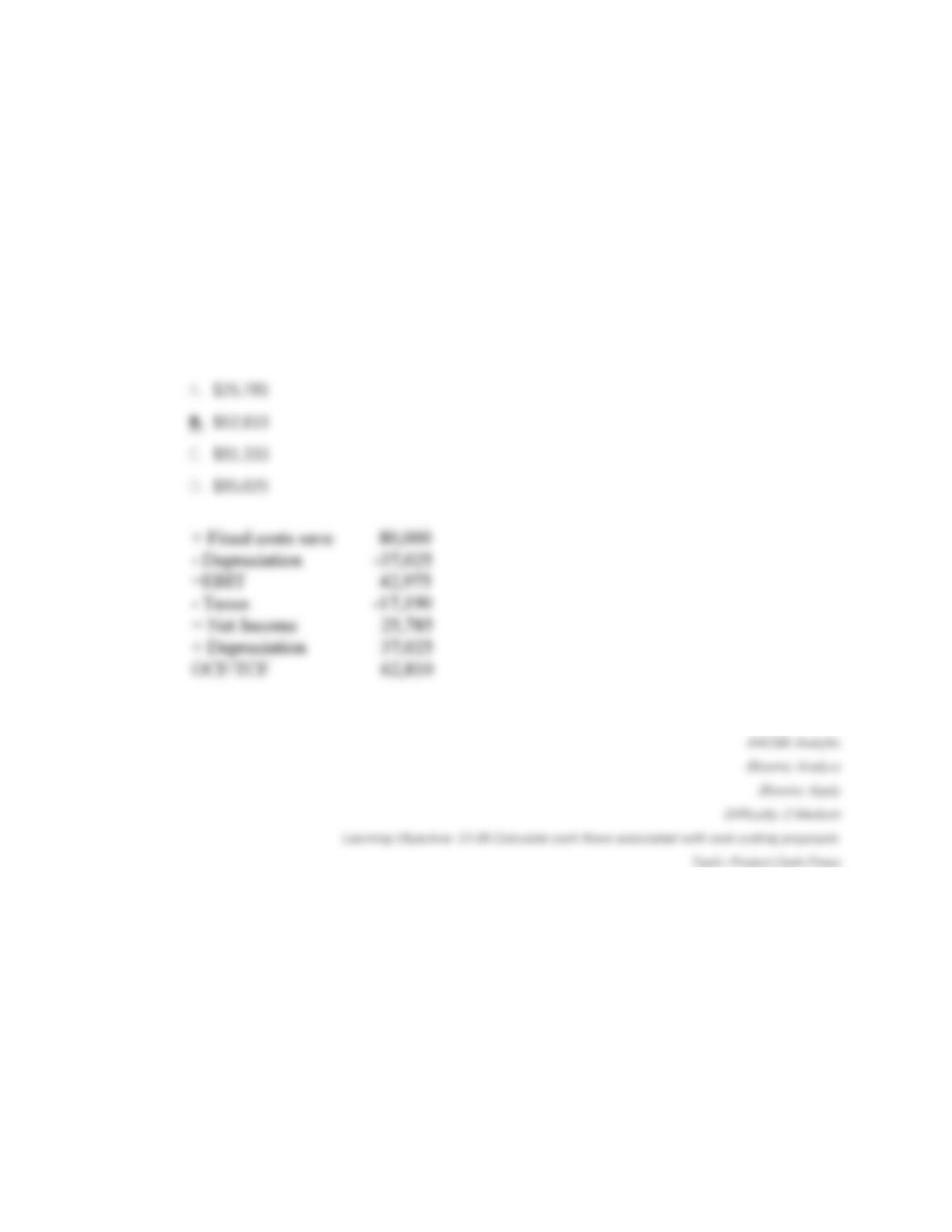
40.
You have been asked by the president of your company to evaluate the proposed
acquisition of a new special-purpose truck for $250,000. The truck falls into the MACRS
three-year class, and it will be sold after three years for $50,000. Use of the truck will
require an increase in NWC (spare parts inventory) of $5,000. The truck will have no effect
on revenues, but it is expected to save the firm $80,000 per year in before-tax operating
costs, mainly labor. The firm’s marginal tax rate is 40 percent. What will the operating cash
flow for this project be during year 3?
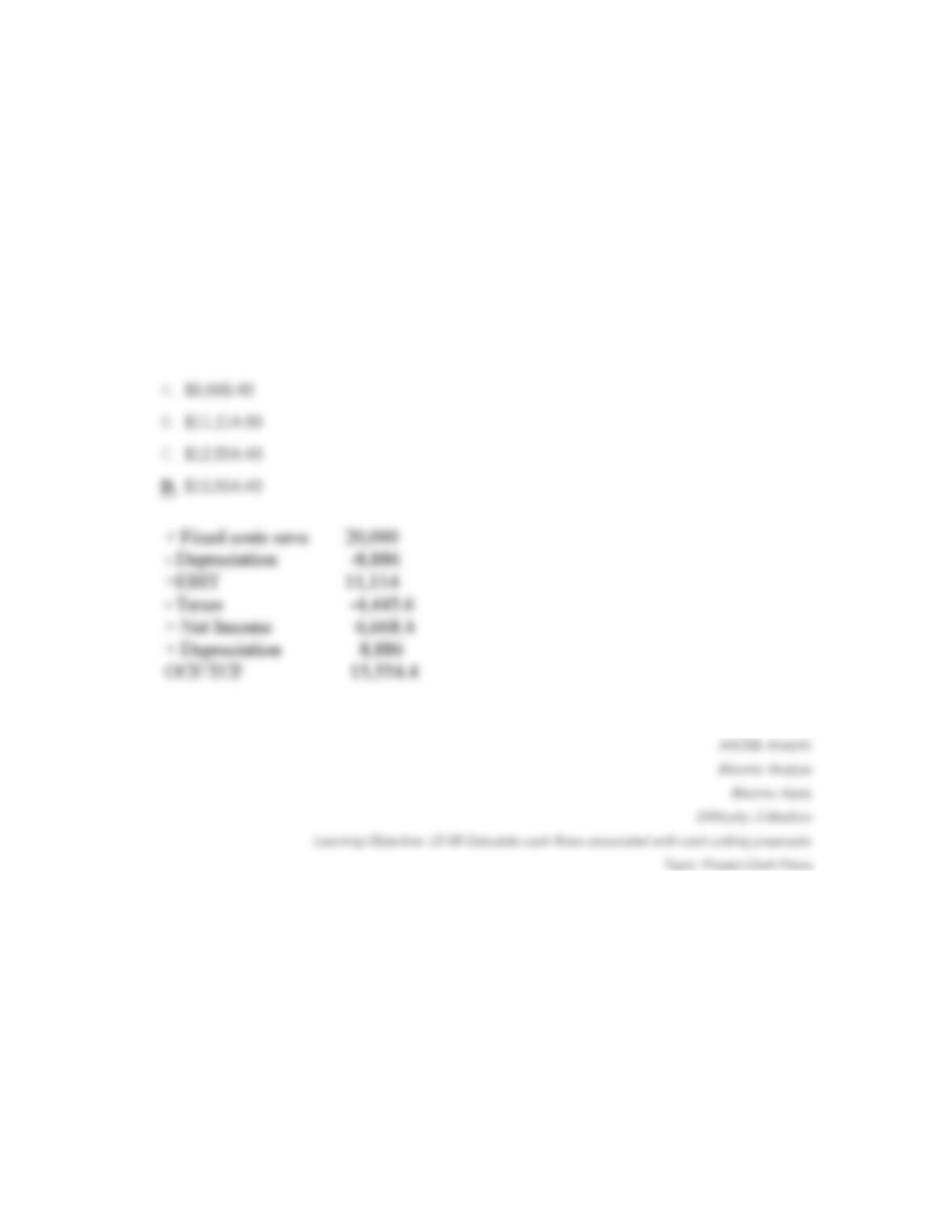
41.
You have been asked by the president of your company to evaluate the proposed
acquisition of a new special-purpose truck for $60,000. The truck falls into the MACRS
three-year class, and it will be sold after three years for $14,000. Use of the truck will
require an increase in NWC (spare parts inventory) of $3,000. The truck will have no effect
on revenues, but it is expected to save the firm $20,000 per year in before-tax operating
costs, mainly labor. The firm’s marginal tax rate is 40 percent. What will the operating cash
flow for this project be during year 3?
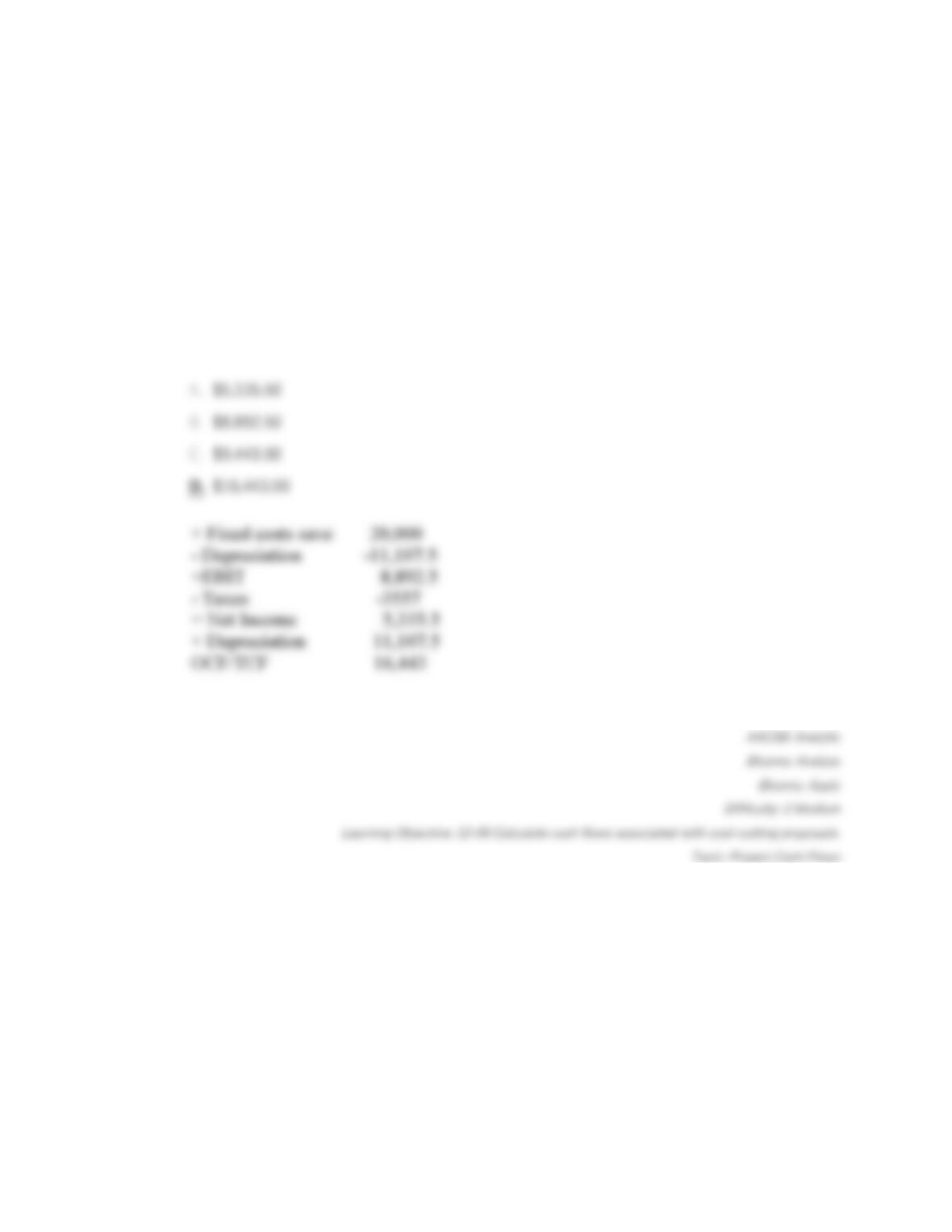
42.
You have been asked by the president of your company to evaluate the proposed
acquisition of a new special-purpose truck for $75,000. The truck falls into the MACRS
three-year class, and it will be sold after three years for $13,000. Use of the truck will
require an increase in NWC (spare parts inventory) of $5,000. The truck will have no effect
on revenues, but it is expected to save the firm $20,000 per year in before-tax operating
costs, mainly labor. The firm’s marginal tax rate is 40 percent. What will the operating cash
flow for this project be during year 3?
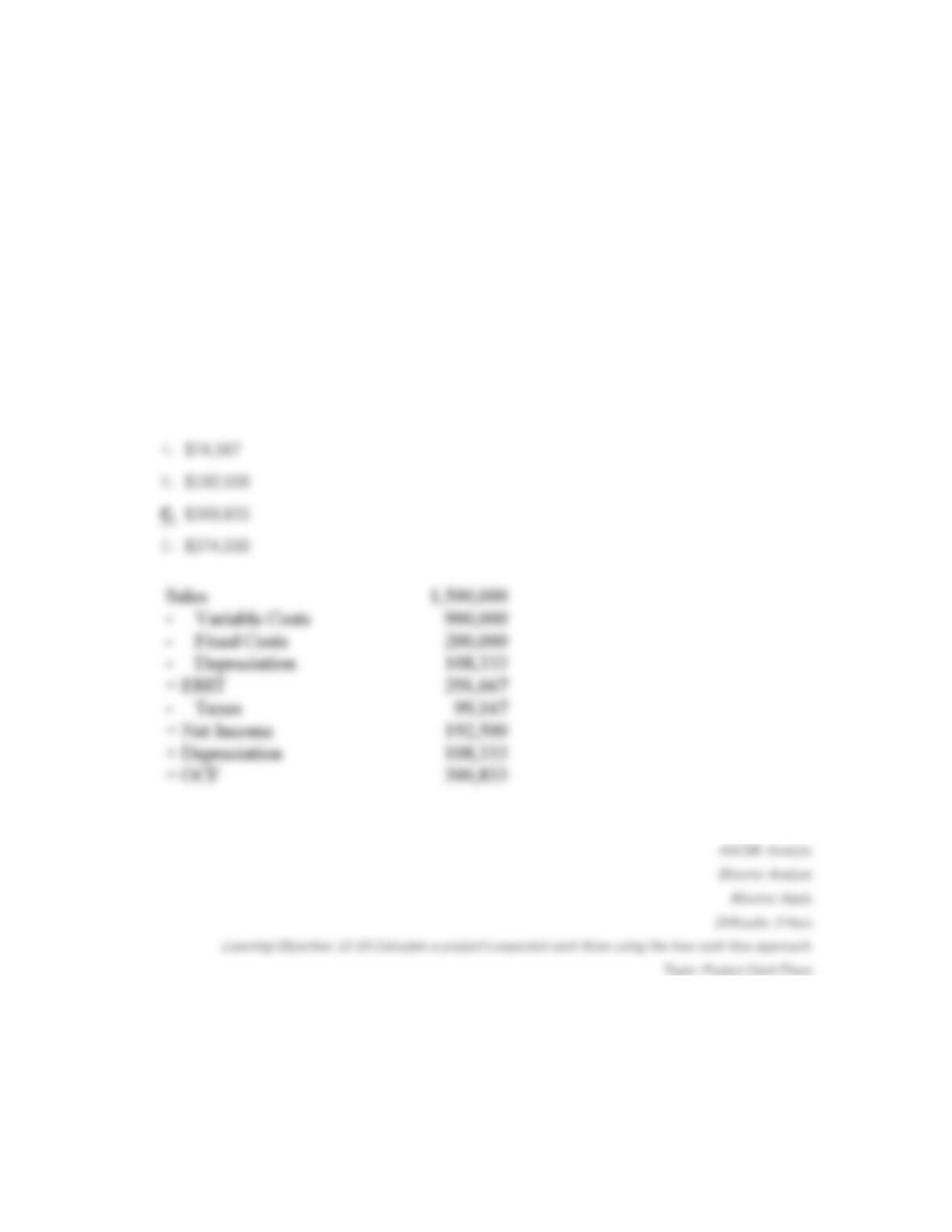
43.
You are evaluating a project for your company. You estimate the sales price to be $500 per
unit and sales volume to be 2000 units in year 1; 3000 units in year 2; and 1500 units in
year 3. The project has a three-year life. Variable costs amount to $300 per unit and fixed
costs are $200,000 per year. The project requires an initial investment of $325,000 in
assets that will be depreciated straight-line to zero over the three-year project life. The
actual market value of these assets at the end of year 3 is expected to be $50,000. NWC
requirements at the beginning of each year will be approximately 25 percent of the
projected sales during the coming year. The tax rate is 34 percent and the required return
on the project is 12 percent. What is the operating cash flow for the project in year 2?
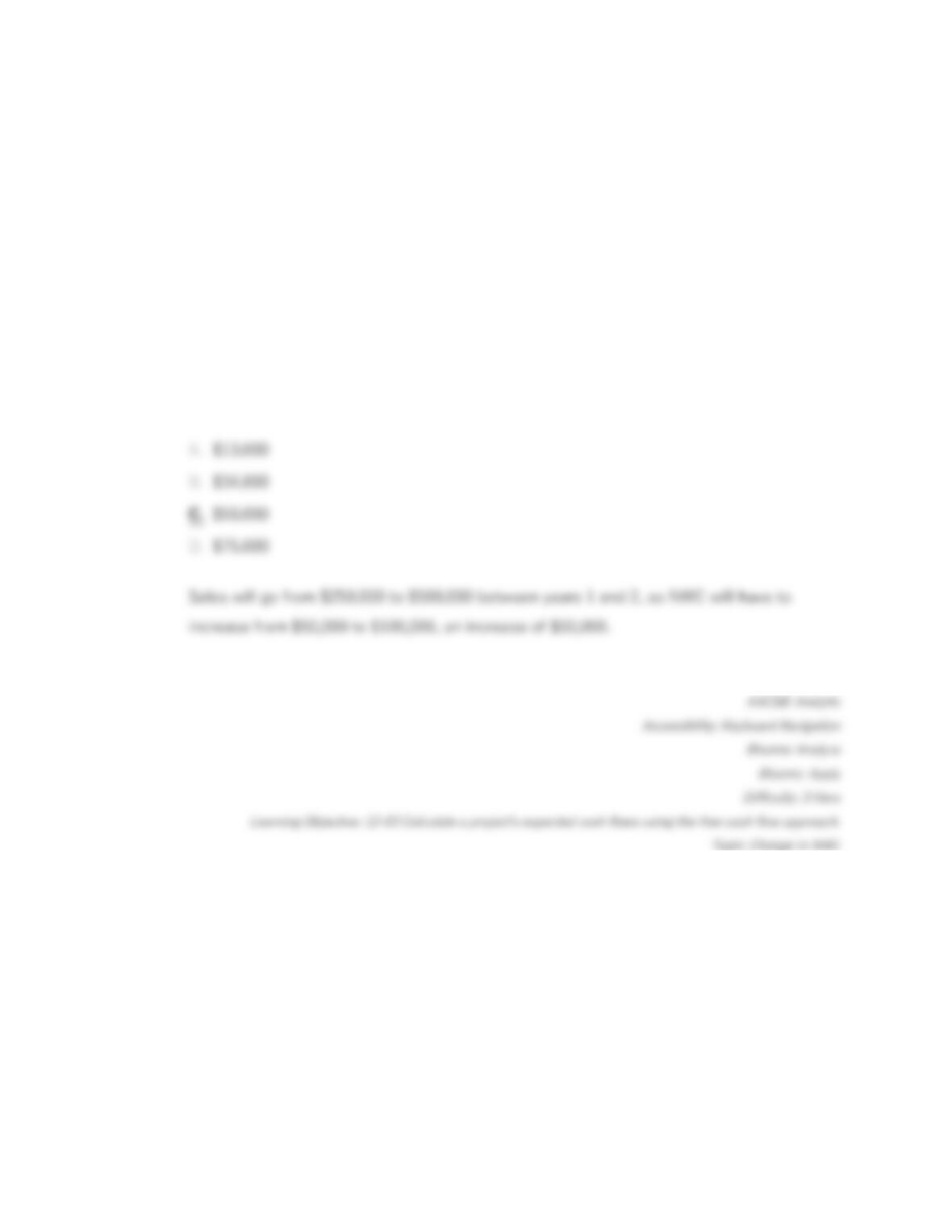
44.
You are evaluating a project for your company. You estimate the sales price to be $50 per
unit and sales volume to be 5,000 units in year 1; 10,000 units in year 2; and 2,500 units in
year 3. The project has a three-year life. Variable costs amount to $10 per unit and fixed
costs are $75,000 per year. The project requires an initial investment of $25,000 in assets
that will be depreciated straight-line to zero over the three-year project life. The actual
market value of these assets at the end of year 3 is expected to be $5,000. NWC
requirements at the beginning of each year will be approximately 20 percent of the
projected sales during the coming year. The tax rate is 34 percent and the required return
on the project is 13 percent. What change in NWC occurs at the end of year 1?
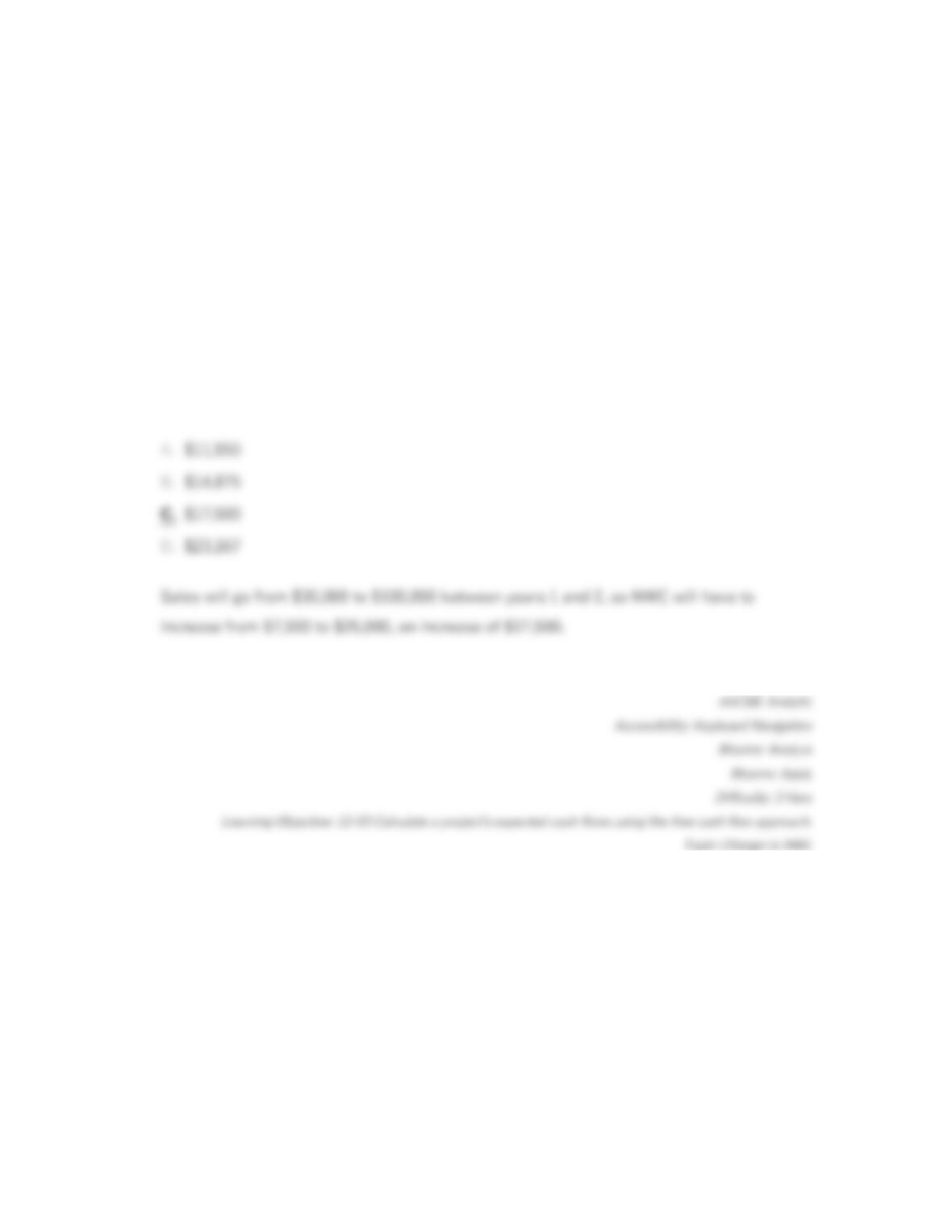
45.
You are evaluating a project for your company. You estimate the sales price to be $10 per
unit and sales volume to be 3,000 units in year 1; 10,000 units in year 2; and 1,000 units in
year 3. The project has a three-year life. Variable costs amount to $3 per unit and fixed
costs are $25,000 per year. The project requires an initial investment of $50,000 in assets
that will be depreciated straight-line to zero over the three-year project life. The actual
market value of these assets at the end of year 3 is expected to be $10,000. NWC
requirements at the beginning of each year will be approximately 25 percent of the
projected sales during the coming year. The tax rate is 34 percent and the required return
on the project is 15 percent. What change in NWC occurs at the end of year 1?
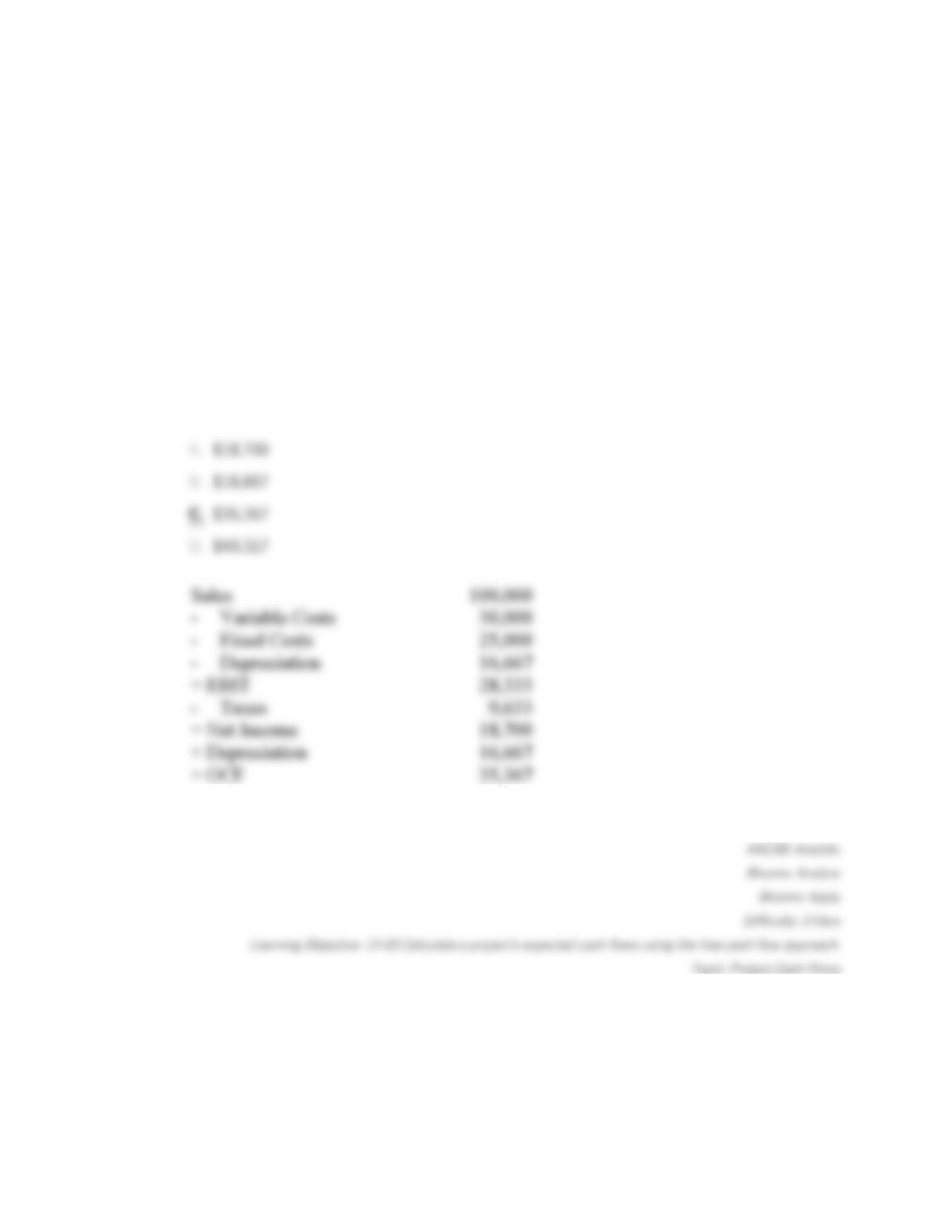
46.
You are evaluating a project for your company. You estimate the sales price to be $10 per
unit and sales volume to be 3,000 units in year 1; 10,000 units in year 2; and 1,000 units in
year 3. The project has a three-year life. Variable costs amount to $3 per unit and fixed
costs are $25,000 per year. The project requires an initial investment of $50,000 in assets
that will be depreciated straight-line to zero over the three-year project life. The actual
market value of these assets at the end of year 3 is expected to be $10,000. NWC
requirements at the beginning of each year will be approximately 25 percent of the
projected sales during the coming year. The tax rate is 34 percent and the required return
on the project is 15 percent. What is the operating cash flow for the project in year 2?
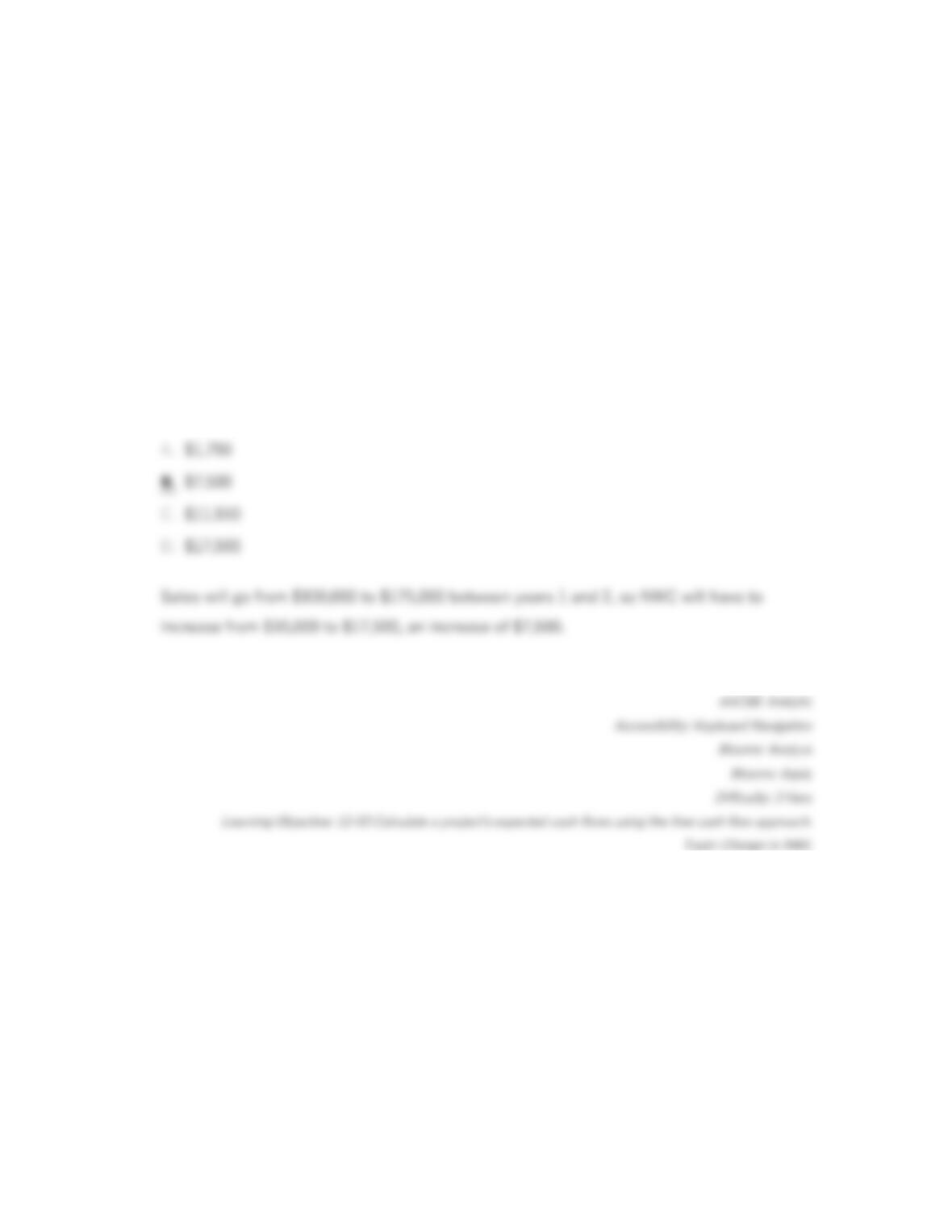
47.
You are evaluating a project for your company. You estimate the sales price to be $25 per
unit and sales volume to be 4,000 units in year 1; 7,000 units in year 2; and 1,000 units in
year 3. The project has a three-year life. Variable costs amount to $10 per unit and fixed
costs are $50,000 per year. The project requires an initial investment of $10,000 in assets
that will be depreciated straight-line to zero over the three-year project life. The actual
market value of these assets at the end of year 3 is expected to be $1,000. NWC
requirements at the beginning of each year will be approximately 10 percent of the
projected sales during the coming year. The tax rate is 34 percent and the required return
on the project is 10 percent. What change in NWC occurs at the end of year 1?
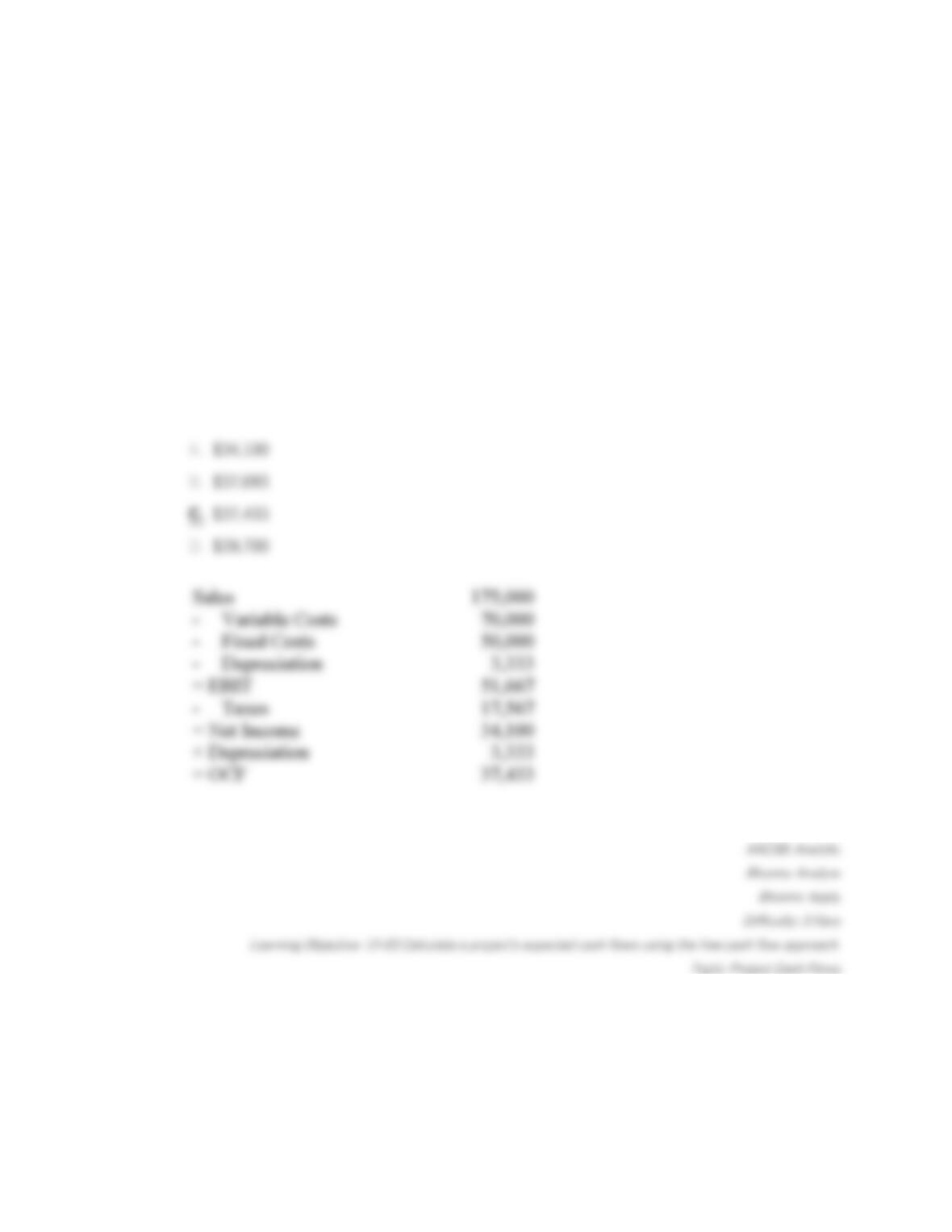
48.
You are evaluating a project for your company. You estimate the sales price to be $25 per
unit and sales volume to be 4,000 units in year 1; 7,000 units in year 2; and 1,000 units in
year 3. The project has a three-year life. Variable costs amount to $10 per unit and fixed
costs are $50,000 per year. The project requires an initial investment of $10,000 in assets
that will be depreciated straight-line to zero over the three-year project life. The actual
market value of these assets at the end of year 3 is expected to be $1,000. NWC
requirements at the beginning of each year will be approximately 10 percent of the
projected sales during the coming year. The tax rate is 34 percent and the required return
on the project is 10 percent. What is the operating cash flow for the project in year 2?
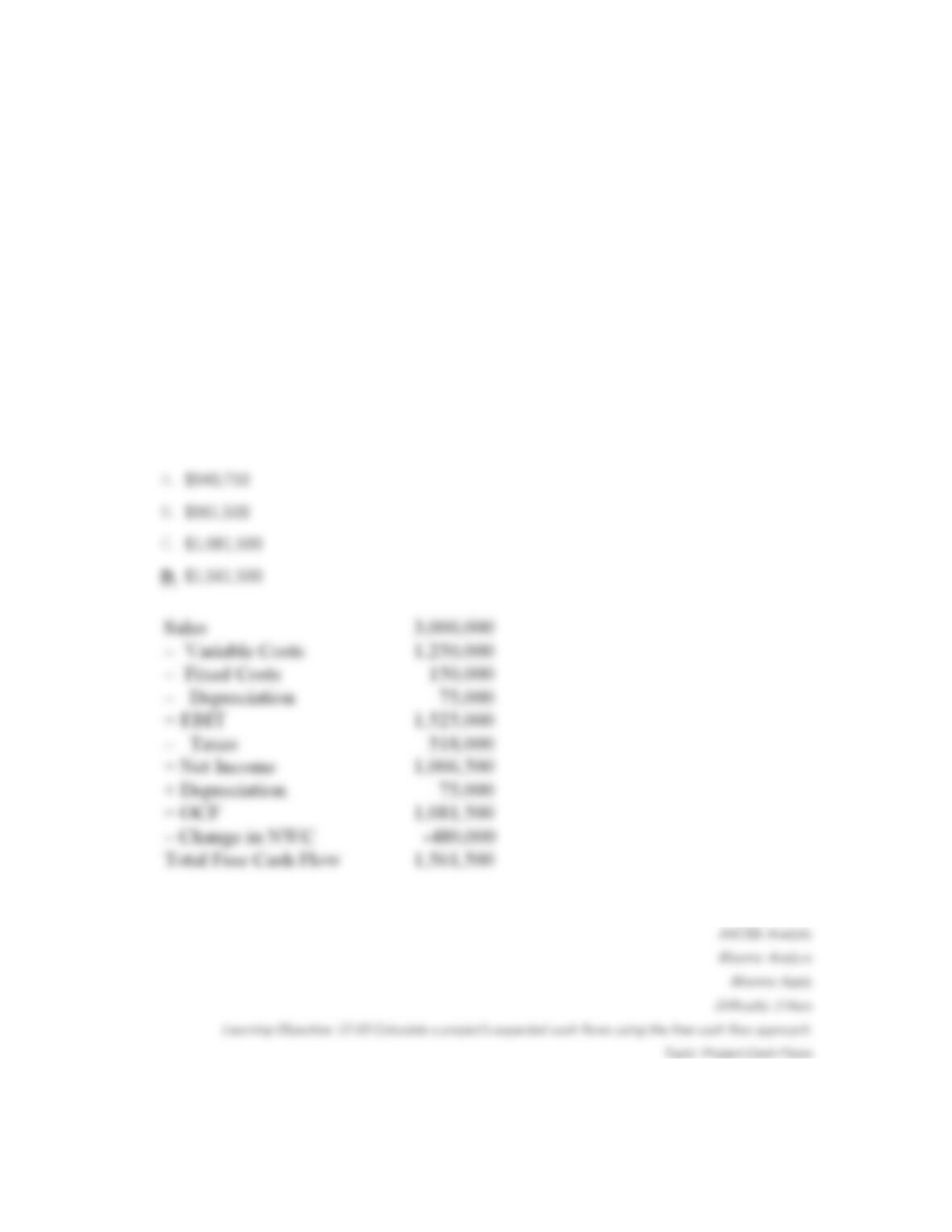
49.
You are evaluating a product for your company. You estimate the sales price of product to
be $300 per unit and sales volume to be 8,000 units in year 1; 10,000 units in year 2; and
2,000 units in year 3. The project has a three-year life. Variable costs amount to $125 per
unit and fixed costs are $150,000 per year. The project requires an initial investment of
$225,000 in assets that will be depreciated straight-line to zero over the three-year project
life. The actual market value of these assets at the end of year 3 is expected to be
$25,000. NWC requirements at the beginning of each year will be approximately 20
percent of the projected sales during the coming year. The tax rate is 34 percent and the
required return on the project is 14 percent. What will the year 2 free cash flow for this
project be?