63. Which of the following should be maximized when allocating a scarce resource among various production
alternatives?
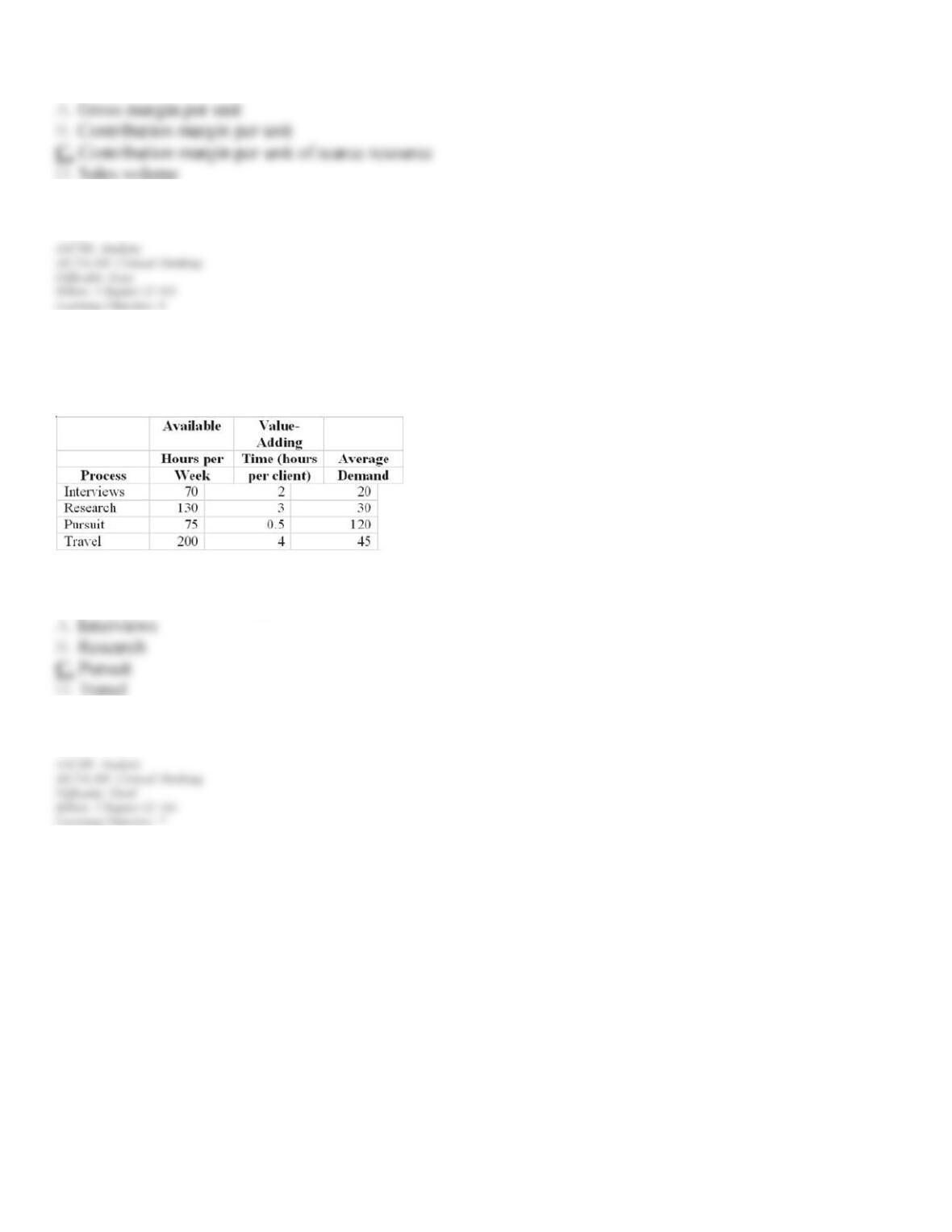
64. Ketchem All Detective Agency is evaluating their system. They gathered the information below
Practical capacity is 75% for each process
Which process is most likely to be a current bottleneck.?
Use the following to answer questions 65-66:
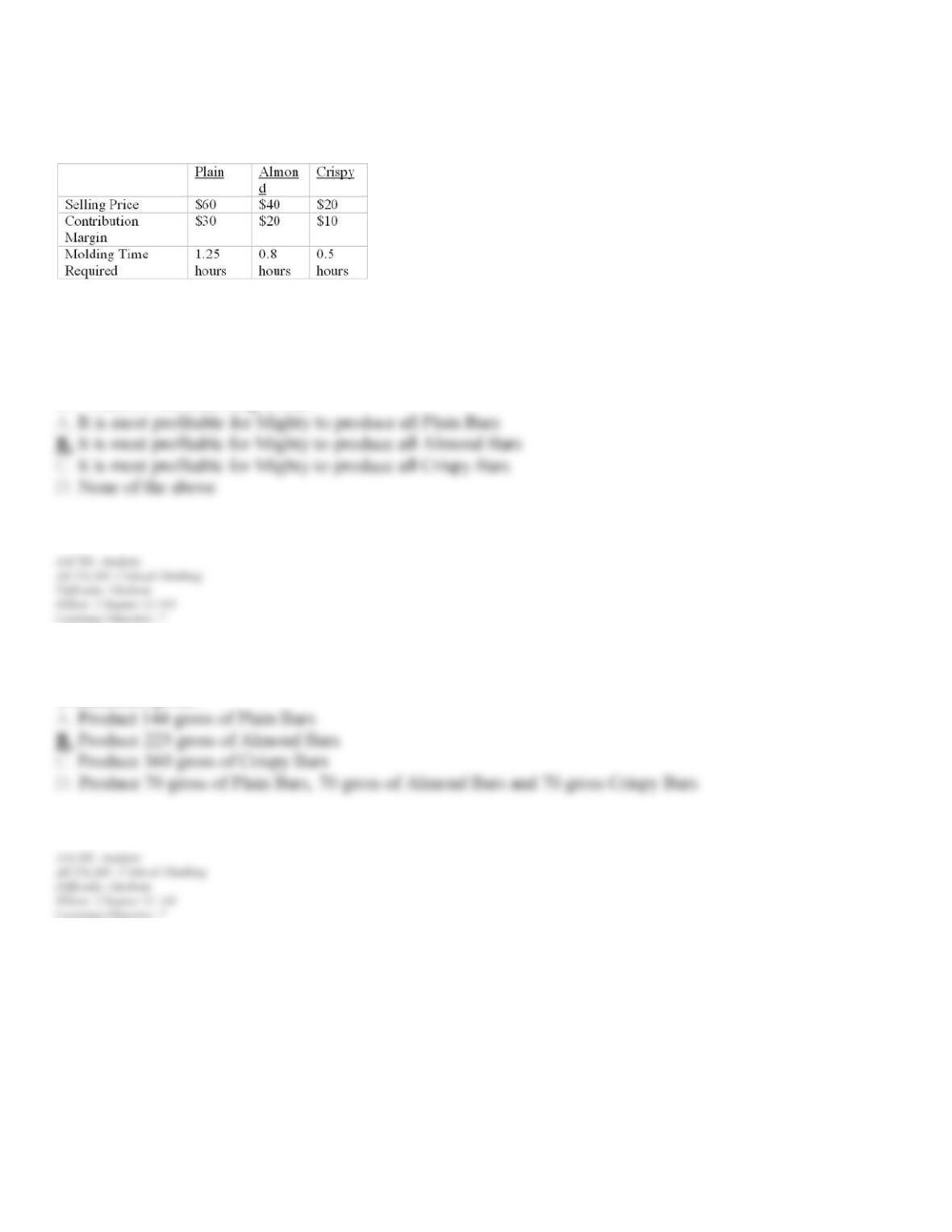
Mighty Chocolate manufactures three chocolate bars; plain, almond and crispy. Because of their outstanding
quality. Mighty can sell all of the bars they produce. Select (per gross) data follows.
Hilton – Chapter 12
65. Which of the following is true?
66. Molding time is limited to 180 hours per month. If fixed cost per month are $2,000, what should Mighty do
to maximize profit?
67. According to the theory of constraints, bottlenecks can be found in
Use the following to answer questions 68-69:
Melnick Enterprises manufactures two products, boat wax and car wax, in two departments, the Mixing
Department and the Packaging Department. The Mixing Department has 800 hours per month available, and the
Packaging Department has 1,200 hours per month available. Production of the two products cannot exceed
36,000 pounds. Data on the two products follow:
Hilton – Chapter 12
68. (Appendix B. The objective function for the linear program Melnick would use to determine the optimal
monthly production of each wax would be:
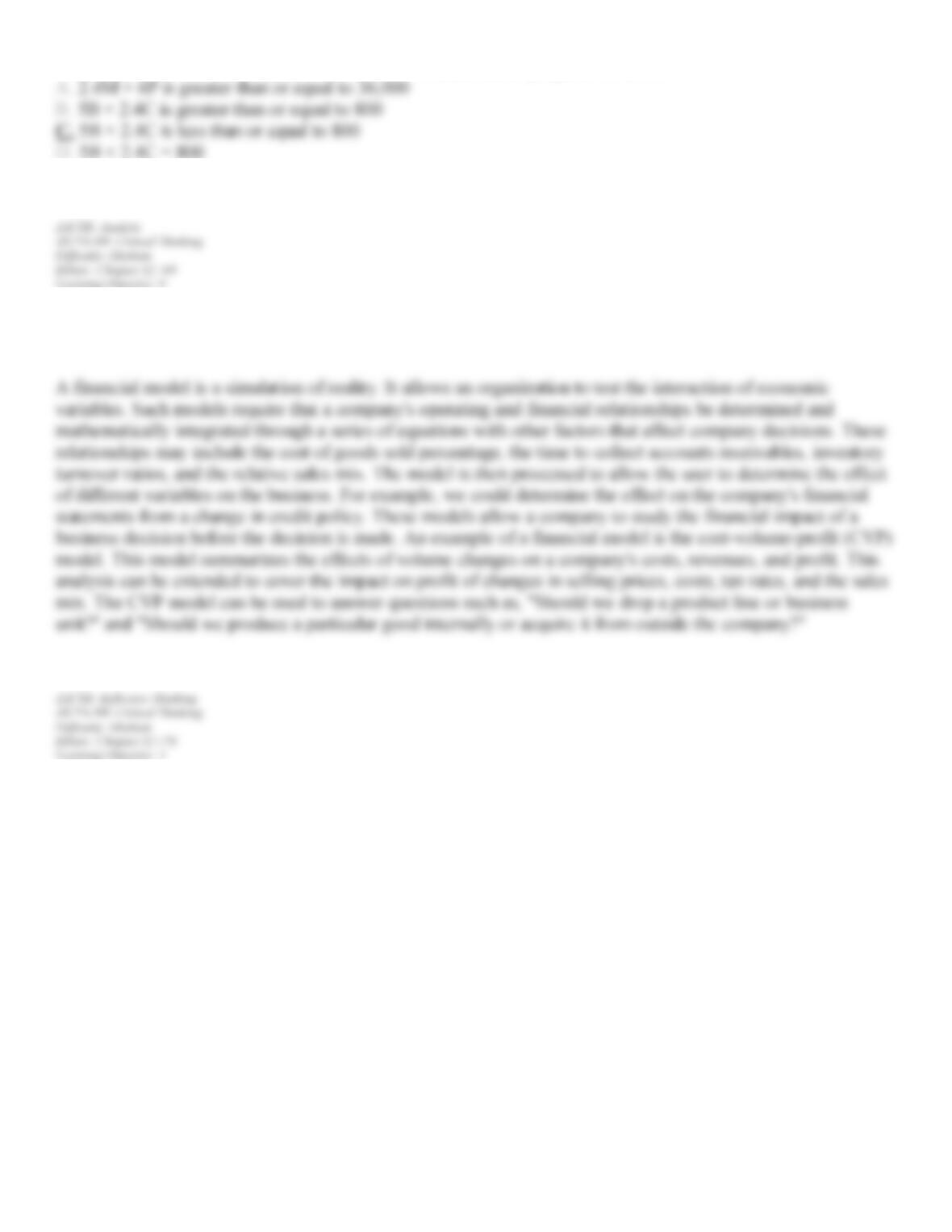
69. (Appendix B. The mixing constraint for the Melnick linear program would be:
70. What is a financial model? Give an example of one.
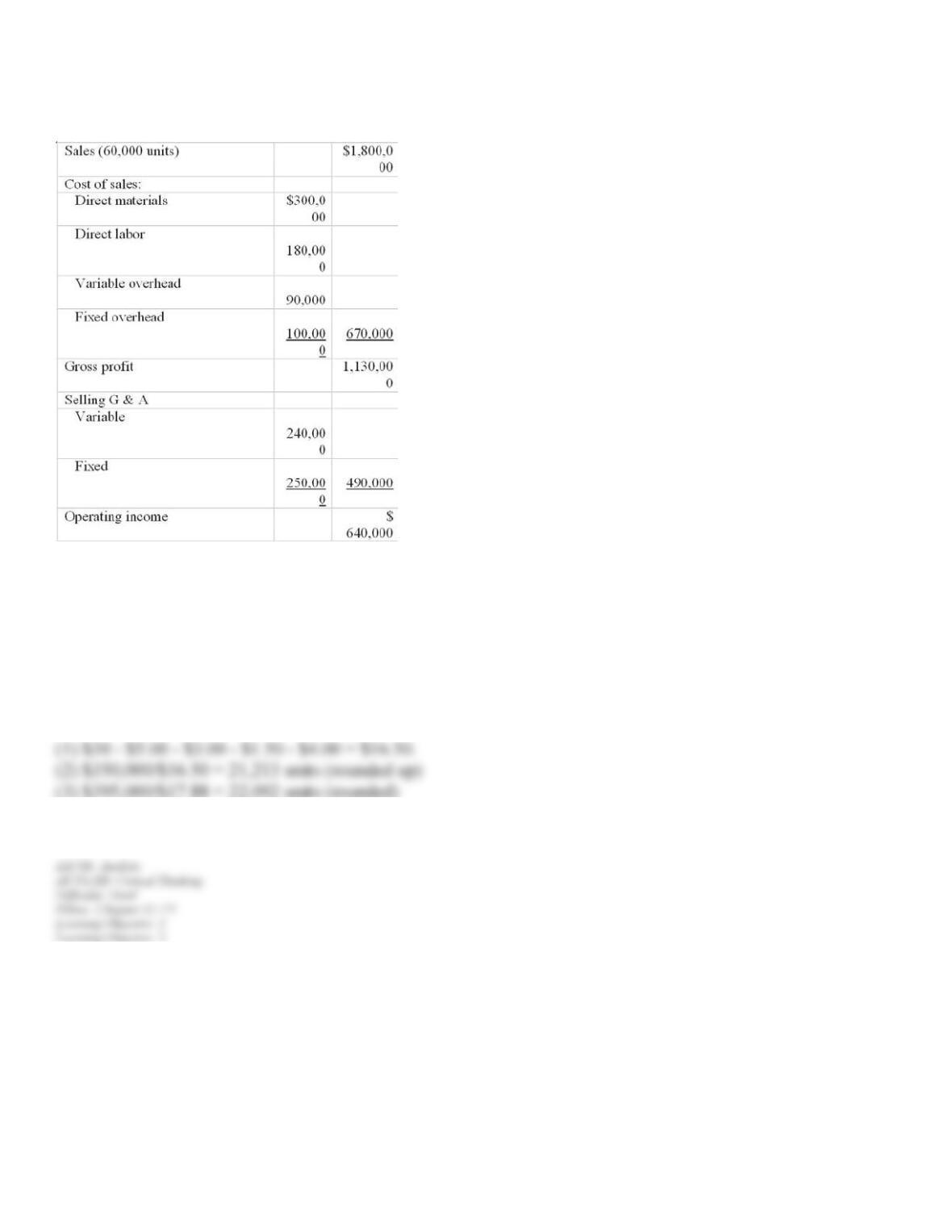
71. Yoni Corporation manufactures skateboards and is in the process of preparing next year‘s budget. The pro
forma income statement for the current year is presented below:
Compute the following:
(1) What is contribution margin per unit? __________
(2) What is the breakeven point in units? __________
(3) Assume that for the coming year, the management of Yoni anticipates a 10 percent increase in the sales
price, a 12 percent increase in variable costs, and a $45,000 increase in fixed expenses. What would be the
breakeven point in units for the coming year? _____
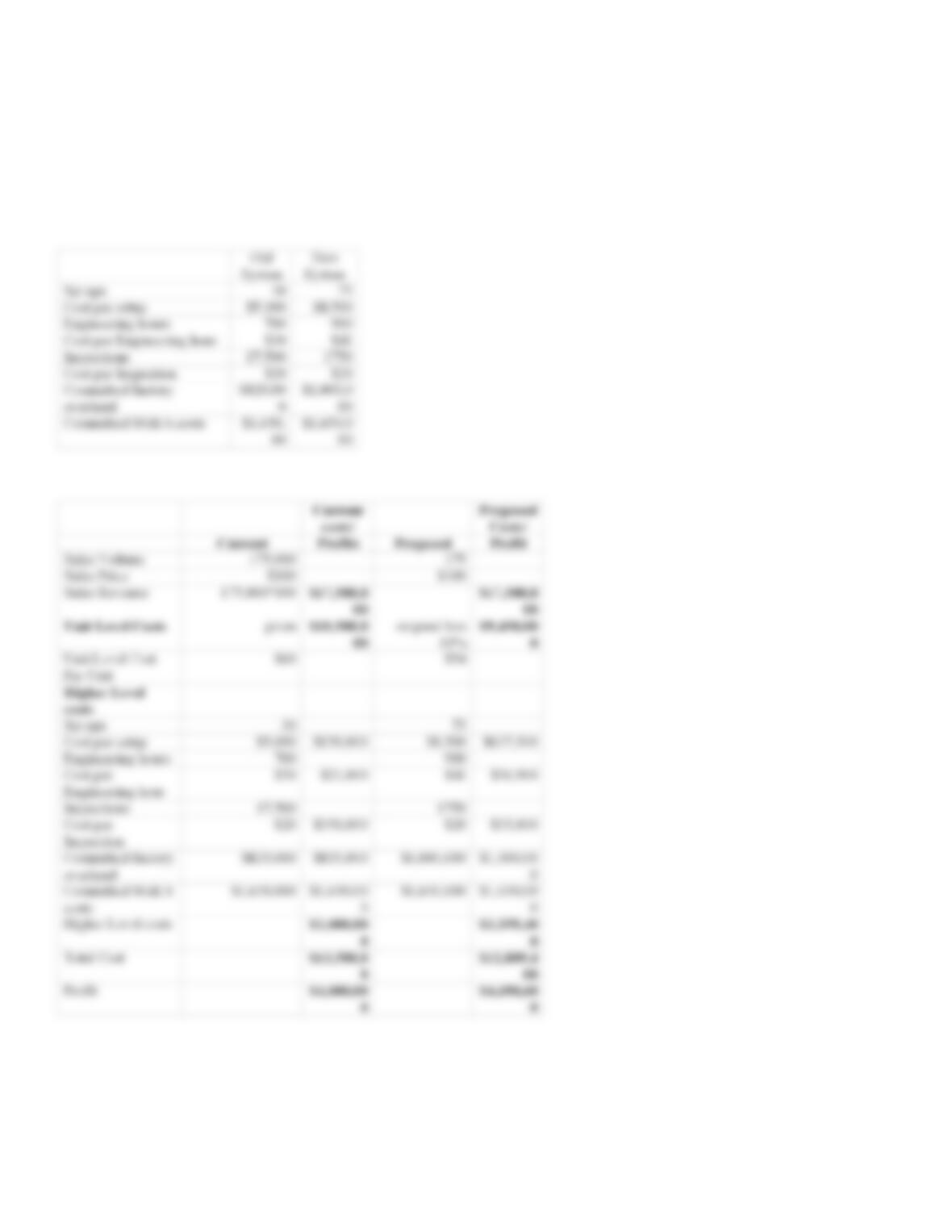
72. Maya Zuck produces diving gear. Last Year, Ms Zuck sold 175,000 diving sets at $100. Total costs were
$13,500,000 of which $10,500,000 were unit level costs and the remaining costs of were thought to be fixed.
Ms Zuck is considering the purchase of an automated manufacturing system. The salesman selling the system
tells her that her cost are not truly fixed. Below are the current costs and related activities as well as the changes
resulting from the new system. Additionally, the new system will reduce unit level costs by 10%. Use a
computer spreadsheet to model the system.
Using the spread sheet, determine profit if the same number of units are sold at the same price
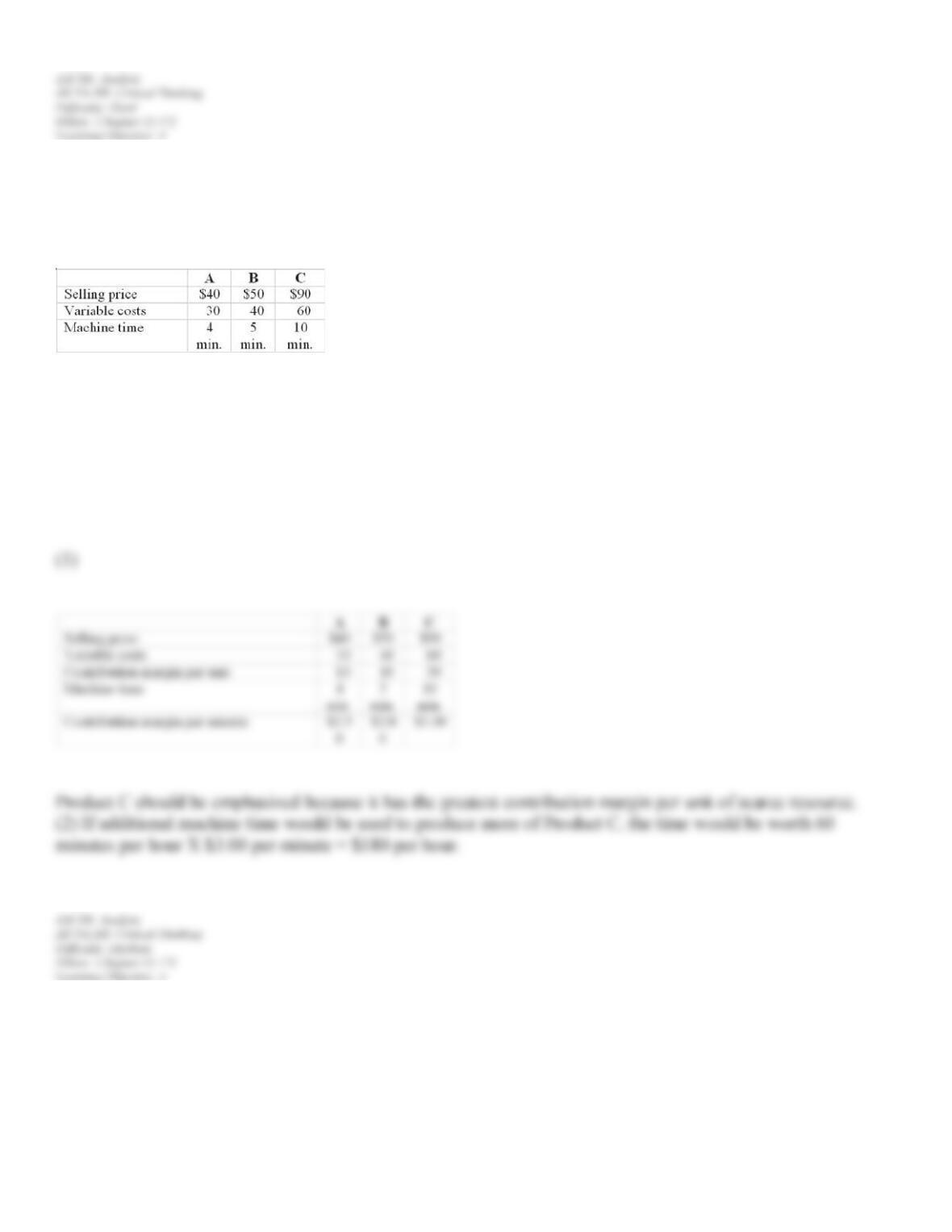
73. Bachman Corp. produces three products. Data concerning the selling prices and unit costs of the three
products appear below:
The fixed costs incurred in the factory are $100,000 per year. Demand for the three products exceed the
company’s productive capacity. The machine time is the constraint, with only 3,000 minutes of machine time
available this week.
Required:
(1) Given the machine time constraint, which product would be emphasized?
(2) Assuming that there is still unfilled demand for the product that the company should emphasize in part (1)
above, up to how much should the company be willing to pay for an additional hour of machine time?
74. (CMA adapted) Mac Company manufactures and sells adjustable canopies that attach to motor homes and
trailers. The market covers both new unit purchases as well as replacement canopies. Mac developed its 2000
business plan based on the assumption that canopies would sell at a price of $400 each. The variable costs for
each canopy were projected at $200, and the annual fixed costs were budgeted at $100,000. Mac’s after-tax
profit objective was $240,000; the company’s effective tax rate is 40 percent.
While Mac‘s sales usually rise during the second quarter, the May financial statements reported that sales were
not meeting expectations. For the first five months of the year, only 350 units had been sold at the established
price, with variable costs as planned, and it was clear that the 2000 after–tax profit projection would not be
reached unless some actions were taken. Mac’s president assigned a management committee to analyze the
situation and develop several alternative courses of action. The following mutually exclusive alternatives were
presented to the president:
Alternative 1:
Reduce the sales price by $40. The sales organization forecasts that with the significantly reduced sales price,
2,700 units can be sold during the remainder of the year. Total fixed and variable unit costs will stay as
budgeted.
Alternative 2:
Lower variable costs per unit by $25 through the use of less expensive raw materials and slightly modified
manufacturing techniques. The sales price will also be reduced by $30, and sales of 2,200 units for the
remainder of the year are forecast.
Alternative 3:
Cut fixed costs by $10,000 and lower the sales price by 5 percent. Variable costs per unit will be unchanged.
Sales of 2,000 units are expected for the remainder of the year.
Required:
(A) If no changes are made to the selling price or cost structure, determine the number of units that Mac
Company must sell:
(1) in order to break even.
(2) to achieve its after-tax profit objective.
(B) Determine which one of the alternatives Mac Company should select to achieve its annual after-tax profit
objective. Be sure to support your selection with appropriate calculations.
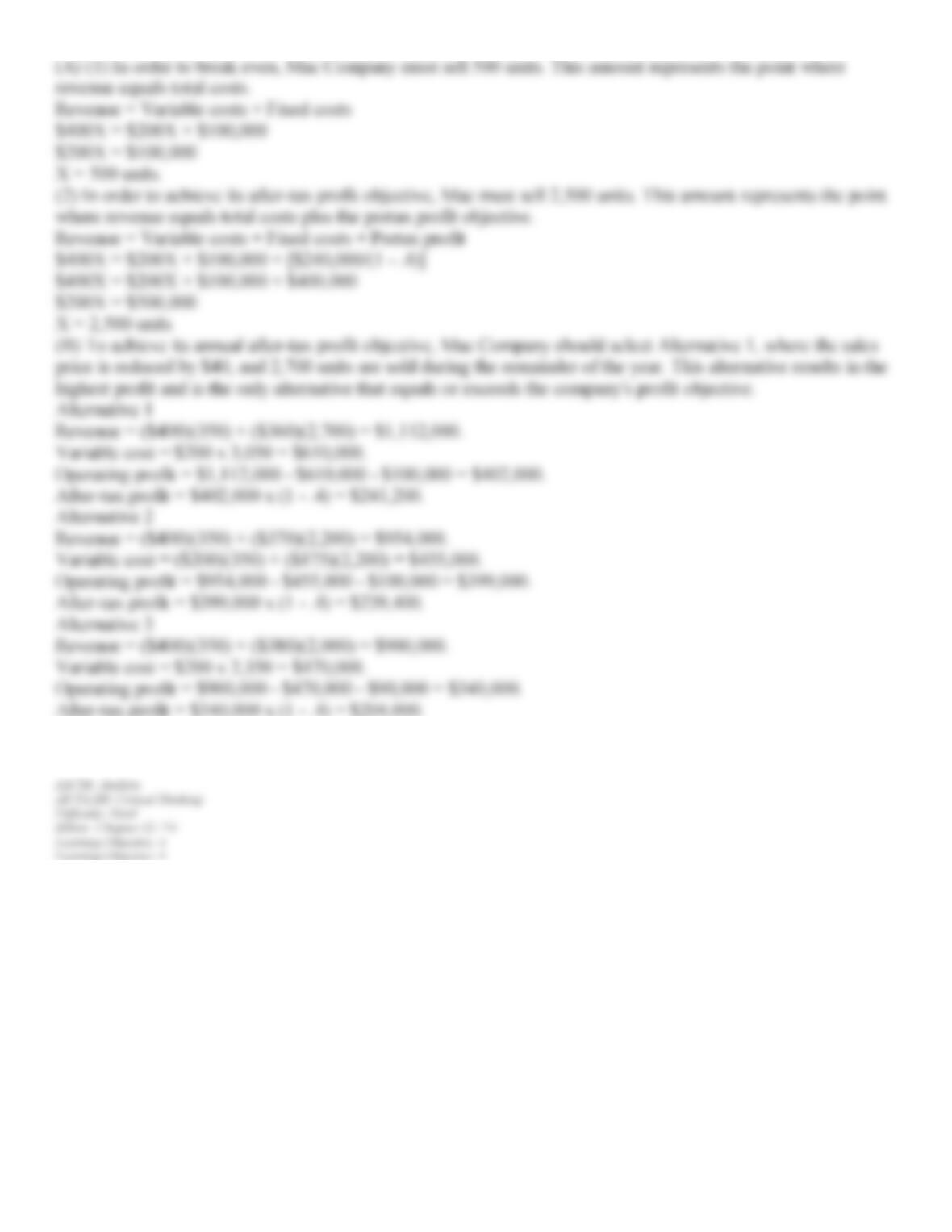
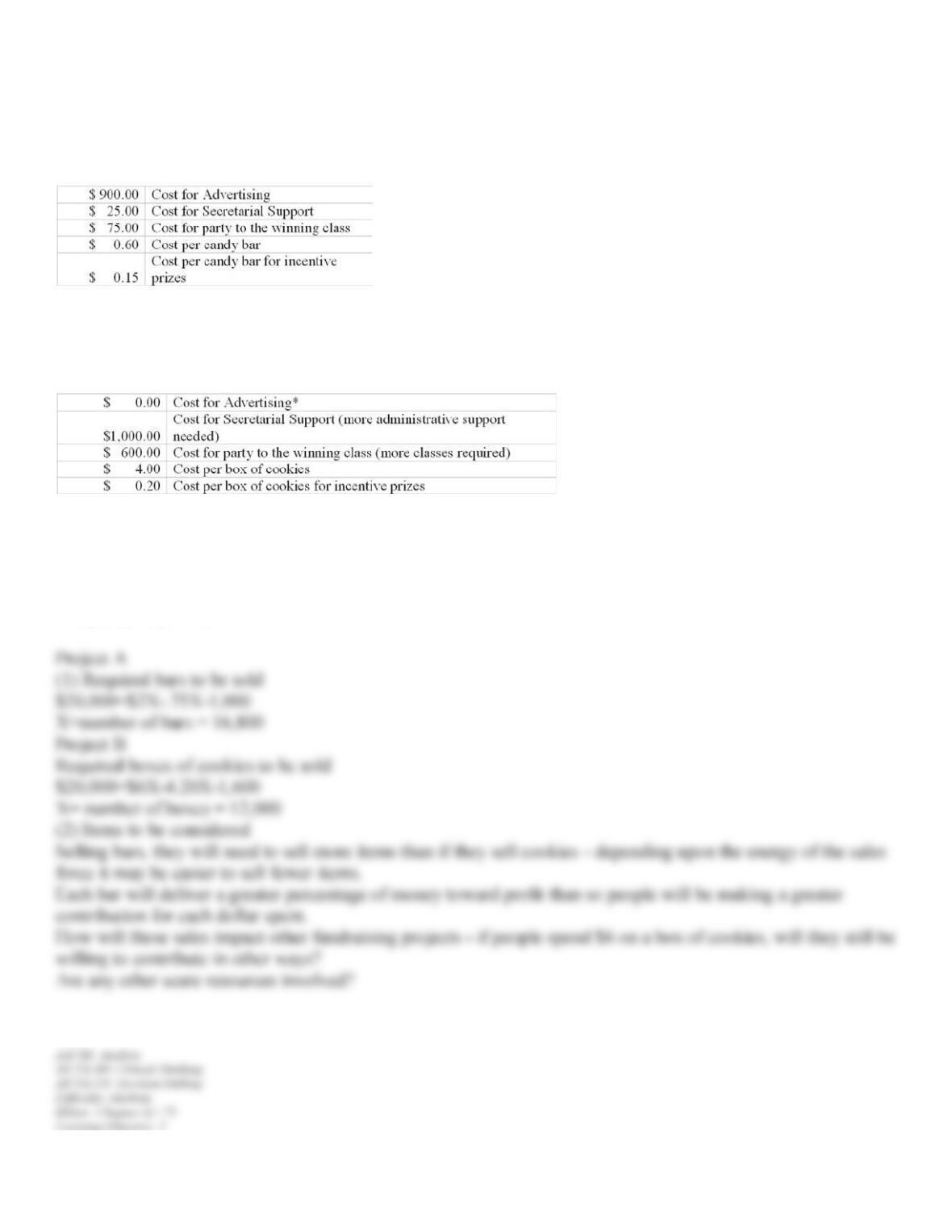
75. A large school desires to earn $20,000 for a new playground. They are considering the following two
projects.
Cost Information
Project A – Candy Bar Sale
The bars sell for $2.00 per bar.
Project B – Cookie Sale
Advertising is provided by supplier
The cookies sell for $6 per box.
(1) For each project, compute the number of items that must be sold to earn the desired profit.
(2) Recommend on project and explain your answer. Identify other information you would obtain to improve
the quality of your decision.
76. (CMA adapted) Rum Company has developed a new product that will be marketed for the first time during
the next fiscal year. Although Rum’s Marketing Department estimates that 35,000 units could be sold at $36 per
unit, Rum’s management has allocated only enough manufacturing capacity to produce a maximum of 25,000
units of the new product annually. The fixed costs associated with the new product are budgeted at $475,000 for
the year. The variable costs of the new product are $16 per unit.
Required:
(1) How many units of the new product must Rum sell during the next fiscal year in order to breakeven on the
product? __________
(2) What is the profit Rum would earn on the new product if all the manufacturing capacity allocated by
management is used and the product is sold for $36 per unit? __________
(3) The Marketing Department would like more manufacturing capacity to be devoted to the new product. What
would be the percentage increase in net income for the new product if its unit sales could be expanded by 10%
without any increase in fixed expenses and without any change in the unit selling price and unit variable cost?
___________
(4) Rum’s management has stipulated that the new product must earn a profit of at least $125,000 in the next
fiscal year. What unit selling price would achieve this target profit if all of the manufacturing capacity allocated
by management is used and all of the output can be sold at that selling price? _____
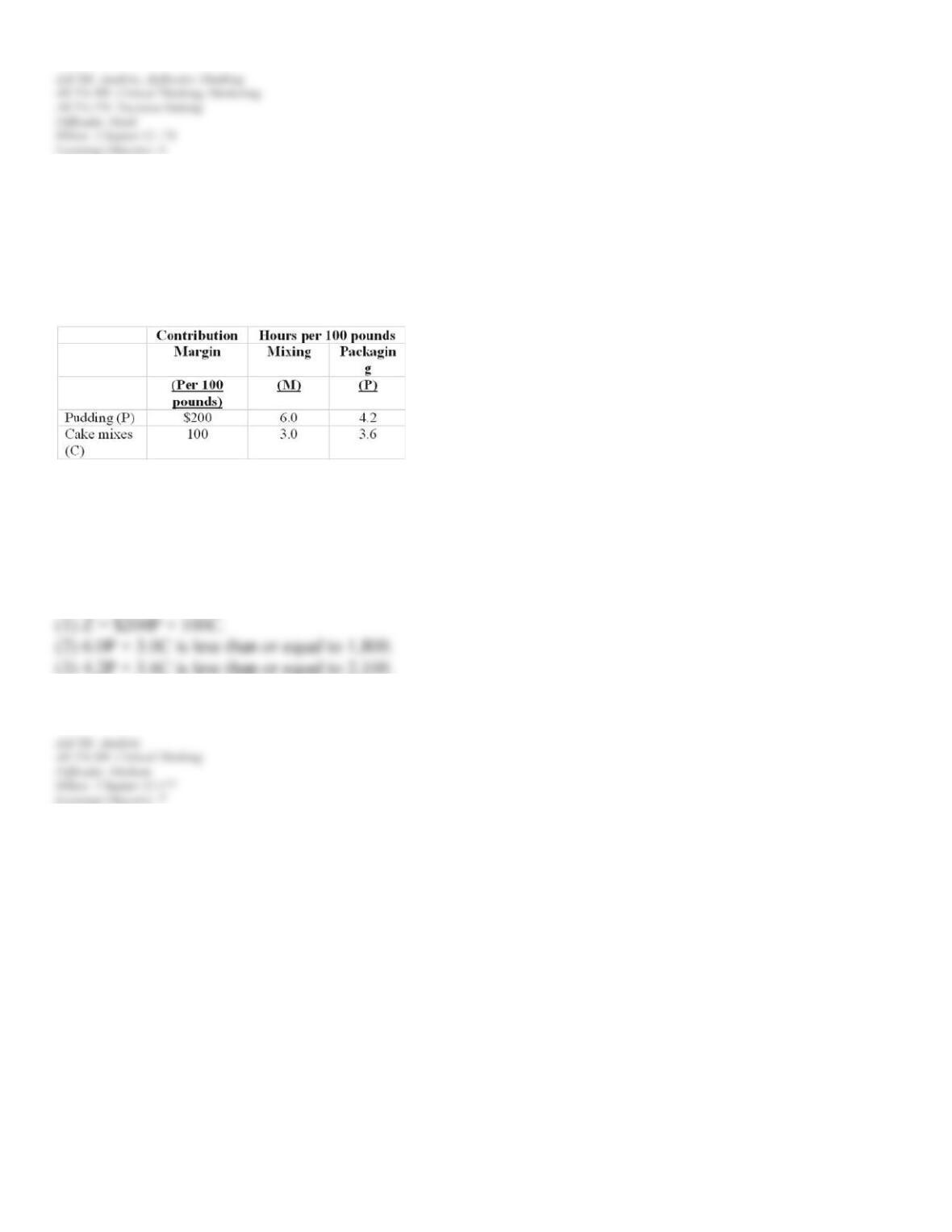
77. (Appendix B. Sax Corp. manufactures two products, pudding and cake mixes, in two departments, the
Mixing Department and the Packaging Department. The Mixing Department has 1,800 hours per month
available, and the Packaging Department has 2,100 hours per month available. Production of the two products
cannot exceed 40,000 pounds. Data on the two products follow:
Required:
(1) What is the objective function for the linear program Sax would use to determine the optimal monthly
production for each product? ___________
(2) What is the mixing constraint for the Sax linear program? __________
(3) What is the packaging constraint for the Sax linear program? ______
78. (Appendix B) What is linear programming and what are its basic components?
79. (Computer Required)
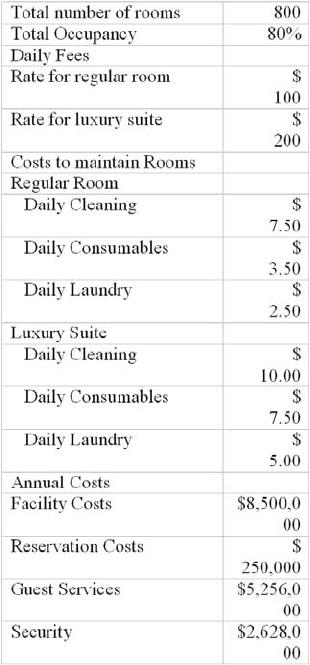
Marvelous Motels, located in small Midwestern town is considering a remodeling plan that will turn some of
their rooms into luxury suites. Using the profit planning model, consider the information below to evaluate the
three proposed scenarios. Company owners expect a target profit of $2,000,000.
Required:
What is the profit (ignoring taxes) if
a) The company converts 50 rooms into 10 suites (assume the occupancy rate remains constant)
b) The company converts 75 rooms into 15 suites (assume the occupancy rate remains constant)
c) The company converts 100 rooms into 20 suites (assume the occupancy rate remains constant)