91. Figure 12-6.
Present value of $1
Periods
4%
6%
8%
10%
12%
14%
1
0.962
0.943
0.926
0.909
0.893
0.877
2
0.925
0.890
0.857
0.826
0.797
0.769
3
0.889
0.840
0.794
0.751
0.712
0.675
4
0.855
0.792
0.735
0.683
0.636
0.592
5
0.822
0.747
0.681
0.621
0.567
0.519
6
0.790
0.705
0.630
0.564
0.507
0.456
7
0.760
0.665
0.583
0.513
0.452
0.400
8
0.731
0.627
0.540
0.467
0.404
0.351
9
0.703
0.592
0.500
0.424
0.361
0.308
10
0.676
0.558
0.463
0.386
0.322
0.270
Present value of an Annuity of $1
Periods
4%
6%
8%
10%
12%
14%
1
0.962
0.943
0.926
0.909
0.893
0.877
2
1.886
1.833
1.783
1.736
1.690
1.647
3
2.775
2.673
2.577
2.487
2.402
2.322
4
3.630
3.465
3.312
3.170
3.037
2.914
5
4.452
4.212
3.993
3.791
3.605
3.433
6
5.242
4.917
4.623
4.355
4.111
3.889
7
6.002
5.582
5.206
4.868
4.564
4.288
8
6.733
6.210
5.747
5.335
4.968
4.639
9
7.435
6.802
6.247
5.759
5.328
4.946
10
8.111
7.360
6.710
6.145
5.650
5.216
Refer to Figure 12-6. Roman Knoze is considering two investments. Each will cost $20,000 initially. Project 1 will return annual cash flows of
$10,000 in each of three years. Project 2 will return $5,000 in year 1, $10,000 in year 2, and $15,000 in year 3. Roman requires a minimum rate of
return of 10%. What is the net present value of Project 1? (Note: there may be rounding error depending on the table you use to compute your
answer. Choose the answer closest to the one you calculate.)
92. Figure 12-6.
Present value of $1
Periods
4%
6%
8%
10%
12%
14%
1
0.962
0.943
0.926
0.909
0.893
0.877
2
0.925
0.890
0.857
0.826
0.797
0.769
3
0.889
0.840
0.794
0.751
0.712
0.675
4
0.855
0.792
0.735
0.683
0.636
0.592
5
0.822
0.747
0.681
0.621
0.567
0.519
6
0.790
0.705
0.630
0.564
0.507
0.456
7
0.760
0.665
0.583
0.513
0.452
0.400
8
0.731
0.627
0.540
0.467
0.404
0.351
9
0.703
0.592
0.500
0.424
0.361
0.308
10
0.676
0.558
0.463
0.386
0.322
0.270
Present value of an Annuity of $1
Periods
4%
6%
8%
10%
12%
14%
1
0.962
0.943
0.926
0.909
0.893
0.877
2
1.886
1.833
1.783
1.736
1.690
1.647
3
2.775
2.673
2.577
2.487
2.402
2.322
4
3.630
3.465
3.312
3.170
3.037
2.914
5
4.452
4.212
3.993
3.791
3.605
3.433
6
5.242
4.917
4.623
4.355
4.111
3.889
7
6.002
5.582
5.206
4.868
4.564
4.288
8
6.733
6.210
5.747
5.335
4.968
4.639
9
7.435
6.802
6.247
5.759
5.328
4.946
10
8.111
7.360
6.710
6.145
5.650
5.216
Refer to Figure 12-6. Roman Knoze is considering two investments. Each will cost $20,000 initially. Project 1 will return annual cash flows of
$10,000 in each of three years. Project 2 will return $5,000 in year 1, $10,000 in year 2, and $15,000 in year 3. Roman requires a minimum rate of
return of 10%. What is the net present value of Project 2?
93. Figure 12-6.
Present value of $1
Periods
4%
6%
8%
10%
12%
14%
1
0.962
0.943
0.926
0.909
0.893
0.877
2
0.925
0.890
0.857
0.826
0.797
0.769
3
0.889
0.840
0.794
0.751
0.712
0.675
4
0.855
0.792
0.735
0.683
0.636
0.592
5
0.822
0.747
0.681
0.621
0.567
0.519
6
0.790
0.705
0.630
0.564
0.507
0.456
7
0.760
0.665
0.583
0.513
0.452
0.400
8
0.731
0.627
0.540
0.467
0.404
0.351
9
0.703
0.592
0.500
0.424
0.361
0.308
10
0.676
0.558
0.463
0.386
0.322
0.270
Present value of an Annuity of $1
Periods
4%
6%
8%
10%
12%
14%
1
0.962
0.943
0.926
0.909
0.893
0.877
2
1.886
1.833
1.783
1.736
1.690
1.647
3
2.775
2.673
2.577
2.487
2.402
2.322
4
3.630
3.465
3.312
3.170
3.037
2.914
5
4.452
4.212
3.993
3.791
3.605
3.433
6
5.242
4.917
4.623
4.355
4.111
3.889
7
6.002
5.582
5.206
4.868
4.564
4.288
8
6.733
6.210
5.747
5.335
4.968
4.639
9
7.435
6.802
6.247
5.759
5.328
4.946
10
8.111
7.360
6.710
6.145
5.650
5.216
Refer to Figure 12-6. Jan Rigby is considering an investment that will cost $20,000 initially, and return annual cash flows of $10,000 in each of
three years. Jan requires a minimum rate of return of 8%. What is the present value of the cash inflows? (Note: there may be rounding error
depending on the table you use to compute your answer. Choose the answer closest to the one you calculate.)
94. Elizabeth Myers invested in a project that required an initial amount of $1,560, and returned one cash inflow
of $12,000 at the end of the 18th year. A partial table of the present value of an annuity of $1 in arrears is as
follows:
Year
2%
4%
6%
8%
10%
12%
14%
16%
18
0.700
0.494
0.350
0.250
0.180
0.130
0.095
0.069
What is the internal rate of return for this investment?
95. Jerry Hall invested in a project that required an initial amount of $52,160, and returned cash inflows of
$10,000 per year for 10 years. A partial table of the present value of an annuity of $1 in arrears is as follows:
Year
2%
4%
6%
8%
10%
12%
14%
16%
10
7.983
8.111
7.360
6.710
6.145
5.650
5.216
4.833
What is the internal rate of return for this investment?
96. Amatra, Inc., has the opportunity to invest in new equipment that will cost $113,000. The net cash inflows
for ten years equal $20,000 per year. What is the internal rate of return for the investment? A partial table of the
present value of an annuity of $1 in arrears is as follows:
Year
2%
4%
6%
8%
10%
12%
14%
16%
10
7.983
8.111
7.360
6.710
6.145
5.650
5.216
4.833
97. Shoring Company is considering a project with an internal rate of return of 14.5%. Shoring requires a
minimum rate of return of 12%. The net present value of the project is
98. An investment of $2,000 provides an average net cash flows of $480 with zero salvage value. Depreciation
is $40 per year. The accounting rate of return using the original investment is

99. Buster Evans is considering investing $20,000 in a project with the following annual cash revenues and
expenses:
Cash Revenues
Cash Expenses
Year 1
$8,000
$8,000
Year 2
$12,000
$8,000
Year 3
$15,000
$9,000
Year 4
$20,000
$10,000
Year 5
$20,000
$10,000
Depreciation will be $4,000 per year.
What is the accounting rate of return on the investment?
100. Figure 12-8:
Osler Company is considering an investment with the following data:
Initial cost
$200,000
Annual net cash inflows
$25,000
Expected life
10 years
Salvage value
none
Depreciation will be taken on a straight-line basis over the expected life of the investment.
Refer to Figure 12-8. What is the accounting rate of return for the investment?
101. Figure 12-8:
Osler Company is considering an investment with the following data:
Initial cost
$200,000
Annual net cash inflows
$25,000
Expected life
10 years
Salvage value
none
Depreciation will be taken on a straight-line basis over the expected life of the investment.
Refer to Figure 12-8. The company requires a minimum rate of return of 4%. What is the net present value of the investment? The present value of
an annuity of $1 in arrears for 4% for 10 years is:
Period
1
2
3
4
5
6
7
8
9
10
4%
0.962
1.886
2.775
3.630
4.452
5.242
6.002
6.773
7.435
8.111
102. Coriander Company is considering a project with an initial investment of $426,800 in new equipment that
will yield annual net cash flows of $80,000, and will be depreciated at $53,350 per year over its eight year
life.What is the accounting rate of return?
103. Figure 12-7.
Present value of an Annuity of $1 in Arrears
Periods
4%
6%
8%
10%
12%
14%
1
0.962
0.943
0.926
0.909
0.893
0.877
2
1.886
1.833
1.783
1.736
1.690
1.647
3
2.775
2.673
2.577
2.487
2.402
2.322
4
3.630
3.465
3.312
3.170
3.037
2.914
5
4.452
4.212
3.993
3.791
3.605
4.433
6
5.242
4.917
4.623
4.355
4.111
3.889
7
6.002
5.582
5.206
4.868
4.564
4.288
8
6.733
6.210
5.747
5.335
4.968
4.639
9
7.435
6.802
6.247
5.759
5.328
4.946
10
8.111
7.360
6.710
6.145
5.650
5.216
Refer to Figure 12-7. Coriander Company is considering a project with an initial investment of $426,800 in new equipment that will yield annual net
cash flows of $80,000, and will be depreciated at $53,350 per year over its eight year life. What is the internal rate of return?
104. Figure 12-7.
Present value of an Annuity of $1 in Arrears
Periods
4%
6%
8%
10%
12%
14%
1
0.962
0.943
0.926
0.909
0.893
0.877
2
1.886
1.833
1.783
1.736
1.690
1.647
3
2.775
2.673
2.577
2.487
2.402
2.322
4
3.630
3.465
3.312
3.170
3.037
2.914
5
4.452
4.212
3.993
3.791
3.605
4.433
6
5.242
4.917
4.623
4.355
4.111
3.889
7
6.002
5.582
5.206
4.868
4.564
4.288
8
6.733
6.210
5.747
5.335
4.968
4.639
9
7.435
6.802
6.247
5.759
5.328
4.946
10
8.111
7.360
6.710
6.145
5.650
5.216
Refer to Figure 12-7. Galway Company is considering a project with an initial investment of $124,450 that will yield annual net cash flows of
$32,000, and will be depreciated at $20,742 per year over its six year life. What is the internal rate of return?
105. Figure 12-9
Boleyn Company is considering two projects.
Project A
Project B
Initial investment
$100,000
$25,000
Annual cash flows
$18,750
$8,580
Life of the project
8 years
4 years
Depreciation per year
$25,000
$6,250
Present value of an Annuity of $1 in Arrears
Periods
8%
10%
12%
14%
1
0.926
0.909
0.893
0.877
2
1.783
1.736
1.690
1.647
3
2.577
2.487
2.402
2.322
4
3.312
3.170
3.037
2.914
5
3.993
3.791
3.605
4.433
6
4.623
4.355
4.111
3.889
7
5.206
4.868
4.564
4.288
8
5.747
5.335
4.968
4.639
9
6.247
5.759
5.328
4.946
10
6.710
6.145
5.650
5.216
Refer to Figure 12-9. Which of the two projects, A or B, is better in terms of internal rate of return?
106. Figure 12-9
Boleyn Company is considering two projects.
Project A
Project B
Initial investment
$100,000
$25,000
Annual cash flows
$18,750
$8,580
Life of the project
8 years
4 years
Depreciation per year
$25,000
$6,250
Present value of an Annuity of $1 in Arrears
Periods
8%
10%
12%
14%
1
0.926
0.909
0.893
0.877
2
1.783
1.736
1.690
1.647
3
2.577
2.487
2.402
2.322
4
3.312
3.170
3.037
2.914
5
3.993
3.791
3.605
4.433
6
4.623
4.355
4.111
3.889
7
5.206
4.868
4.564
4.288
8
5.747
5.335
4.968
4.639
9
6.247
5.759
5.328
4.946
10
6.710
6.145
5.650
5.216
Refer to Figure 12-9. Suppose that Boleyn Company requires a minimum rate of return of 8%. Which project is better in terms of net present value?
107. Which of the following is not a benefit of post audits of capital investments?
108. A follow-up analysis of a capital investment after it is implemented is called a

109. The best person/group in a firm to perform a post audit of a capital investment is usually:
110. Figure 12-6.
Present value of $1
Periods
4%
6%
8%
10%
12%
14%
1
0.962
0.943
0.926
0.909
0.893
0.877
2
0.925
0.890
0.857
0.826
0.797
0.769
3
0.889
0.840
0.794
0.751
0.712
0.675
4
0.855
0.792
0.735
0.683
0.636
0.592
5
0.822
0.747
0.681
0.621
0.567
0.519
6
0.790
0.705
0.630
0.564
0.507
0.456
7
0.760
0.665
0.583
0.513
0.452
0.400
8
0.731
0.627
0.540
0.467
0.404
0.351
9
0.703
0.592
0.500
0.424
0.361
0.308
10
0.676
0.558
0.463
0.386
0.322
0.270
Present value of an Annuity of $1
Periods
4%
6%
8%
10%
12%
14%
1
0.962
0.943
0.926
0.909
0.893
0.877
2
1.886
1.833
1.783
1.736
1.690
1.647
3
2.775
2.673
2.577
2.487
2.402
2.322
4
3.630
3.465
3.312
3.170
3.037
2.914
5
4.452
4.212
3.993
3.791
3.605
3.433
6
5.242
4.917
4.623
4.355
4.111
3.889
7
6.002
5.582
5.206
4.868
4.564
4.288
8
6.733
6.210
5.747
5.335
4.968
4.639
9
7.435
6.802
6.247
5.759
5.328
4.946
10
8.111
7.360
6.710
6.145
5.650
5.216
Refer to Figure 12-6. Jimmy Reynolds is considering investing $10,000 in a project with the following cash revenues and expenses:
Revenues
Expenses
Year 1
$20,000
$18,000
Year 2
$22,000
$19,000
Year 3
$22,000
$20,000
Year 4
$22,000
$17,000
Year 5
$25,000
$17,000
Jimmy requires a minimum rate of return of 8%.
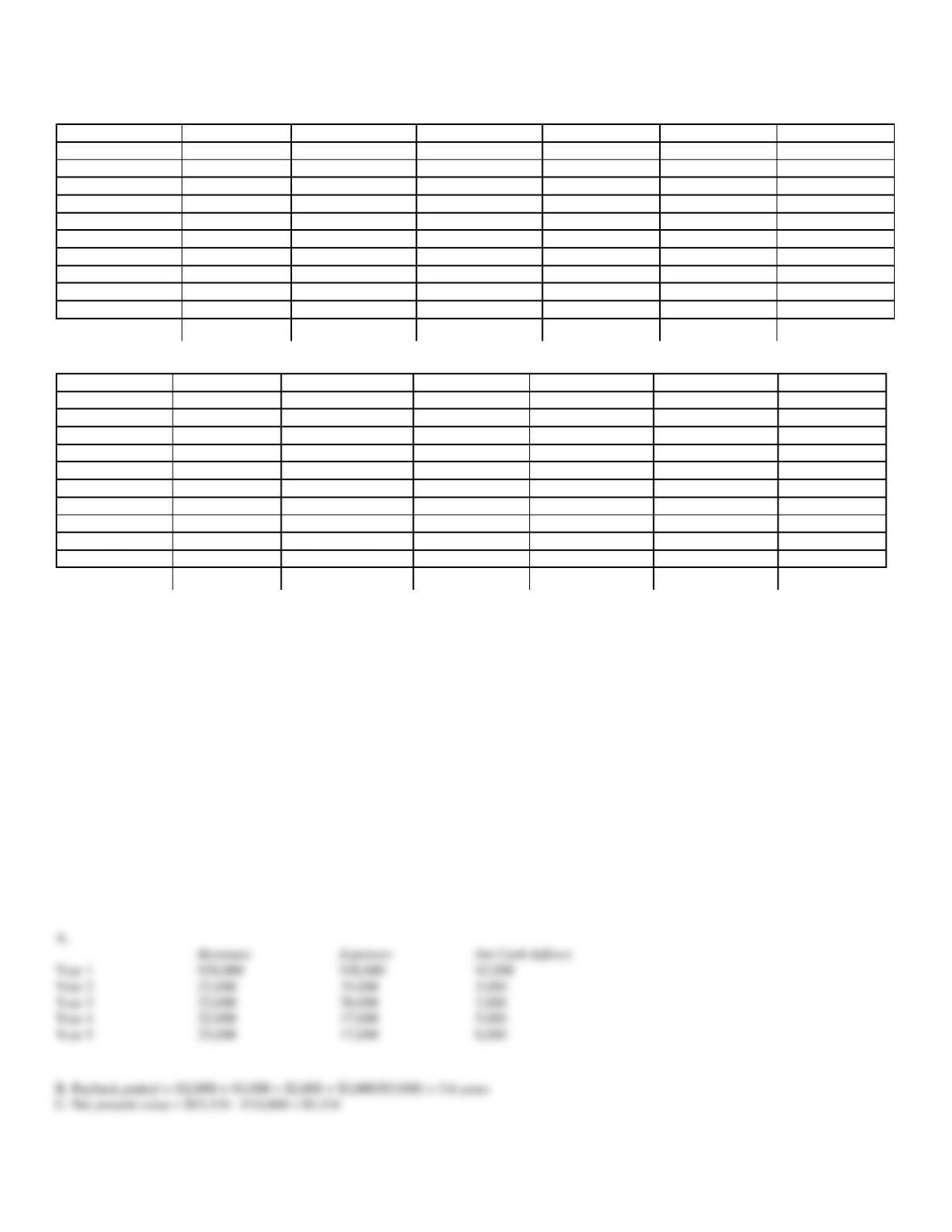
A. Calculate the net cash inflows in each of the five years.
B. What is the payback period?
C. What is the net present value of the investment?
Revenues
Expenses
Net Cash Inflows
Year 1
$20,000
$18,000
$2,000
Year 2
22,000
19,000
3,000
Year 3
22,000
20,000
2,000
Year 4
22,000
17,000
5,000
Year 5
25,000
17,000
8,000
111. Figure 12-6.
Present value of $1
Periods
4%
6%
8%
10%
12%
14%
1
0.962
0.943
0.926
0.909
0.893
0.877
2
0.925
0.890
0.857
0.826
0.797
0.769
3
0.889
0.840
0.794
0.751
0.712
0.675
4
0.855
0.792
0.735
0.683
0.636
0.592
5
0.822
0.747
0.681
0.621
0.567
0.519
6
0.790
0.705
0.630
0.564
0.507
0.456
7
0.760
0.665
0.583
0.513
0.452
0.400
8
0.731
0.627
0.540
0.467
0.404
0.351
9
0.703
0.592
0.500
0.424
0.361
0.308
10
0.676
0.558
0.463
0.386
0.322
0.270
Present value of an Annuity of $1
Periods
4%
6%
8%
10%
12%
14%
1
0.962
0.943
0.926
0.909
0.893
0.877
2
1.886
1.833
1.783
1.736
1.690
1.647
3
2.775
2.673
2.577
2.487
2.402
2.322
4
3.630
3.465
3.312
3.170
3.037
2.914
5
4.452
4.212
3.993
3.791
3.605
3.433
6
5.242
4.917
4.623
4.355
4.111
3.889
7
6.002
5.582
5.206
4.868
4.564
4.288
8
6.733
6.210
5.747
5.335
4.968
4.639
9
7.435
6.802
6.247
5.759
5.328
4.946
10
8.111
7.360
6.710
6.145
5.650
5.216
Refer to Figure 12-6. Jasmine Company is considering an investment costing $20,000. The investment would return $8,000 per year in each of three
years. Jasmine requires a minimum rate of return of 6%.
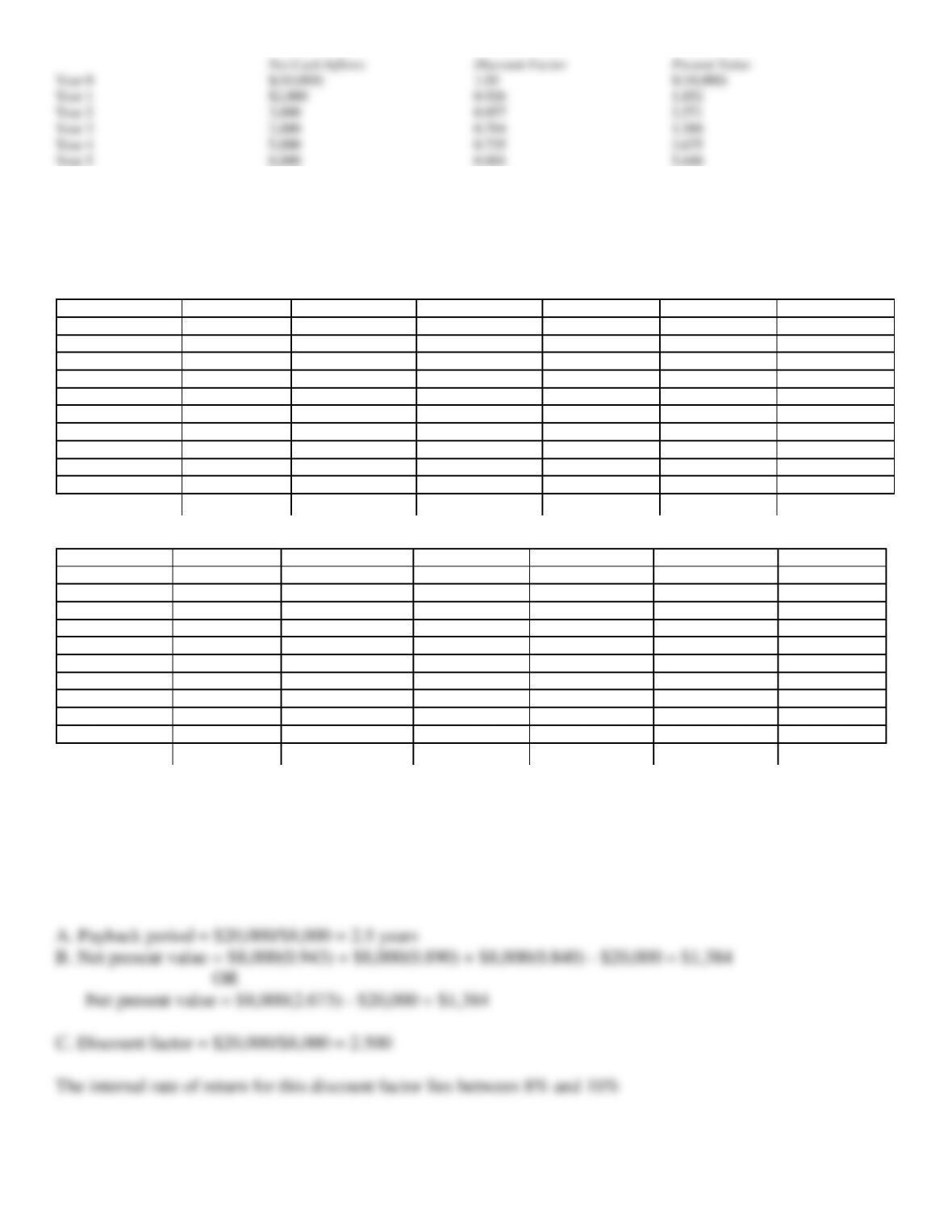
A. What is the payback period for the investment?
B. What is the net present value of the investment?
C. The internal rate of return is great than __________________% and less than __________________%.
Net Cash Inflows
Discount Factor
Present Value
Year 0
$(10,000)
1.00
$(10,000)
Year 1
$2,000
0.926
1,852
Year 2
3,000
0.857
2,571
Year 3
2,000
0.794
1,588
Year 4
5,000
0.735
3,675
Year 5
8,000
0.681
5,448
112. Figure 12-6.
Present value of $1
Periods
4%
6%
8%
10%
12%
14%
1
0.962
0.943
0.926
0.909
0.893
0.877
2
0.925
0.890
0.857
0.826
0.797
0.769
3
0.889
0.840
0.794
0.751
0.712
0.675
4
0.855
0.792
0.735
0.683
0.636
0.592
5
0.822
0.747
0.681
0.621
0.567
0.519
6
0.790
0.705
0.630
0.564
0.507
0.456
7
0.760
0.665
0.583
0.513
0.452
0.400
8
0.731
0.627
0.540
0.467
0.404
0.351
9
0.703
0.592
0.500
0.424
0.361
0.308
10
0.676
0.558
0.463
0.386
0.322
0.270
Present value of an Annuity of $1
Periods
4%
6%
8%
10%
12%
14%
1
0.962
0.943
0.926
0.909
0.893
0.877
2
1.886
1.833
1.783
1.736
1.690
1.647
3
2.775
2.673
2.577
2.487
2.402
2.322
4
3.630
3.465
3.312
3.170
3.037
2.914
5
4.452
4.212
3.993
3.791
3.605
3.433
6
5.242
4.917
4.623
4.355
4.111
3.889
7
6.002
5.582
5.206
4.868
4.564
4.288
8
6.733
6.210
5.747
5.335
4.968
4.639
9
7.435
6.802
6.247
5.759
5.328
4.946
10
8.111
7.360
6.710
6.145
5.650
5.216
Refer to Figure 12-6. Geary Company is considering an investment costing $110,000. The investment would return $45,000 per year in each of three
years. Geary requires a minimum rate of return of 10%.
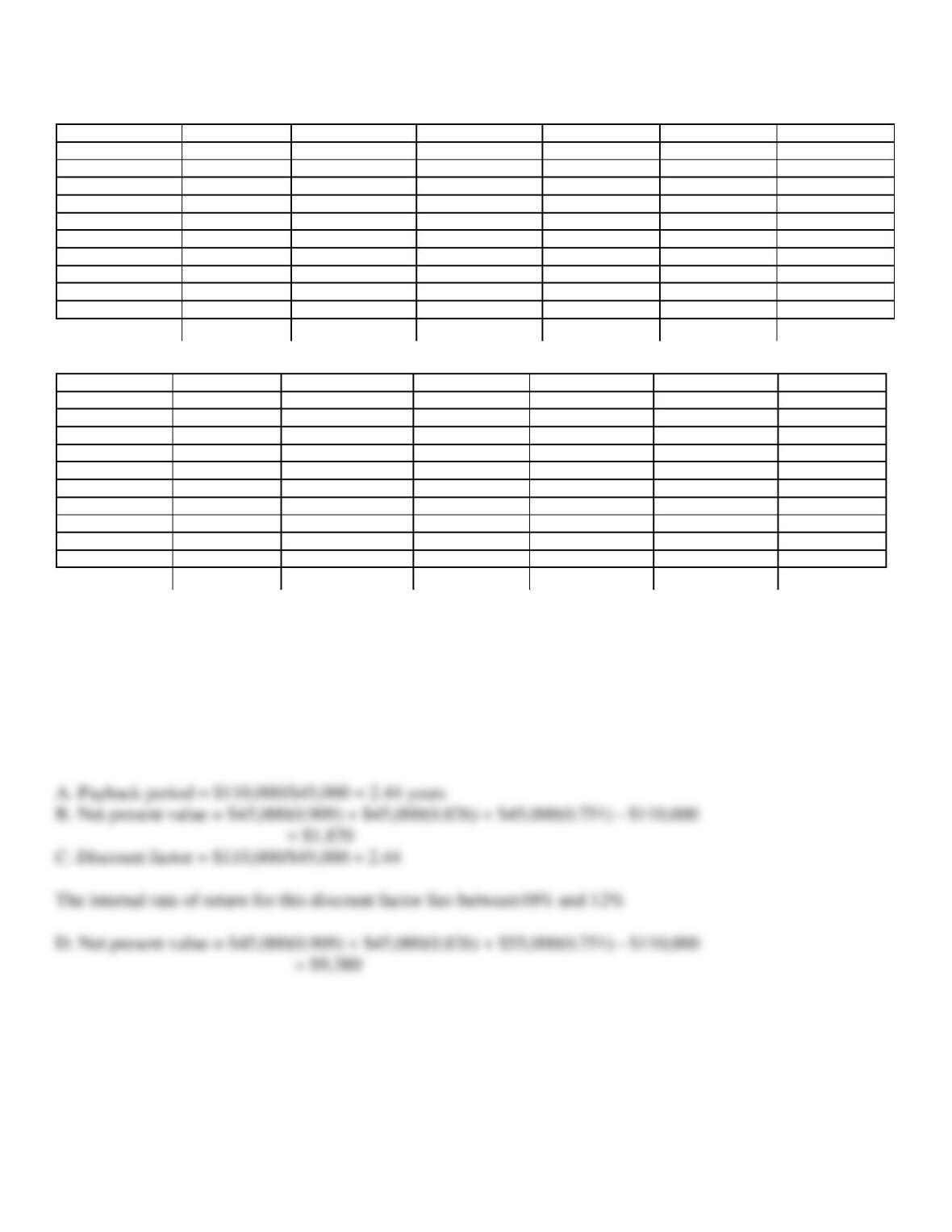
A. What is the payback period for the investment?
B. Using the Present Value of $1 table, calculate the net present value of the investment.
C. The internal rate of return is great than __________________% and less than __________________%.
D. Now assume that the investment includes equipment that can be sold at the end of the third year for $10,000. What is the present value of this
investment?
113. Figure 12-6.
Present value of $1
Periods
4%
6%
8%
10%
12%
14%
1
0.962
0.943
0.926
0.909
0.893
0.877
2
0.925
0.890
0.857
0.826
0.797
0.769
3
0.889
0.840
0.794
0.751
0.712
0.675
4
0.855
0.792
0.735
0.683
0.636
0.592
5
0.822
0.747
0.681
0.621
0.567
0.519
6
0.790
0.705
0.630
0.564
0.507
0.456
7
0.760
0.665
0.583
0.513
0.452
0.400
8
0.731
0.627
0.540
0.467
0.404
0.351
9
0.703
0.592
0.500
0.424
0.361
0.308
10
0.676
0.558
0.463
0.386
0.322
0.270
Present value of an Annuity of $1
Periods
4%
6%
8%
10%
12%
14%
1
0.962
0.943
0.926
0.909
0.893
0.877
2
1.886
1.833
1.783
1.736
1.690
1.647
3
2.775
2.673
2.577
2.487
2.402
2.322
4
3.630
3.465
3.312
3.170
3.037
2.914
5
4.452
4.212
3.993
3.791
3.605
3.433
6
5.242
4.917
4.623
4.355
4.111
3.889
7
6.002
5.582
5.206
4.868
4.564
4.288
8
6.733
6.210
5.747
5.335
4.968
4.639
9
7.435
6.802
6.247
5.759
5.328
4.946
10
8.111
7.360
6.710
6.145
5.650
5.216
Refer to Figure 12-6. Howard-Parr Company is considering an investment that will have an initial cost of $500,000 yield annual net cash inflows of
$130,000. Yearly depreciation will be $100,000. The equipment is expected to be useful for 5 years, at which point it will be scrapped with no
salvage value. Howard-Parr requires a minimum rate of return of 10%.
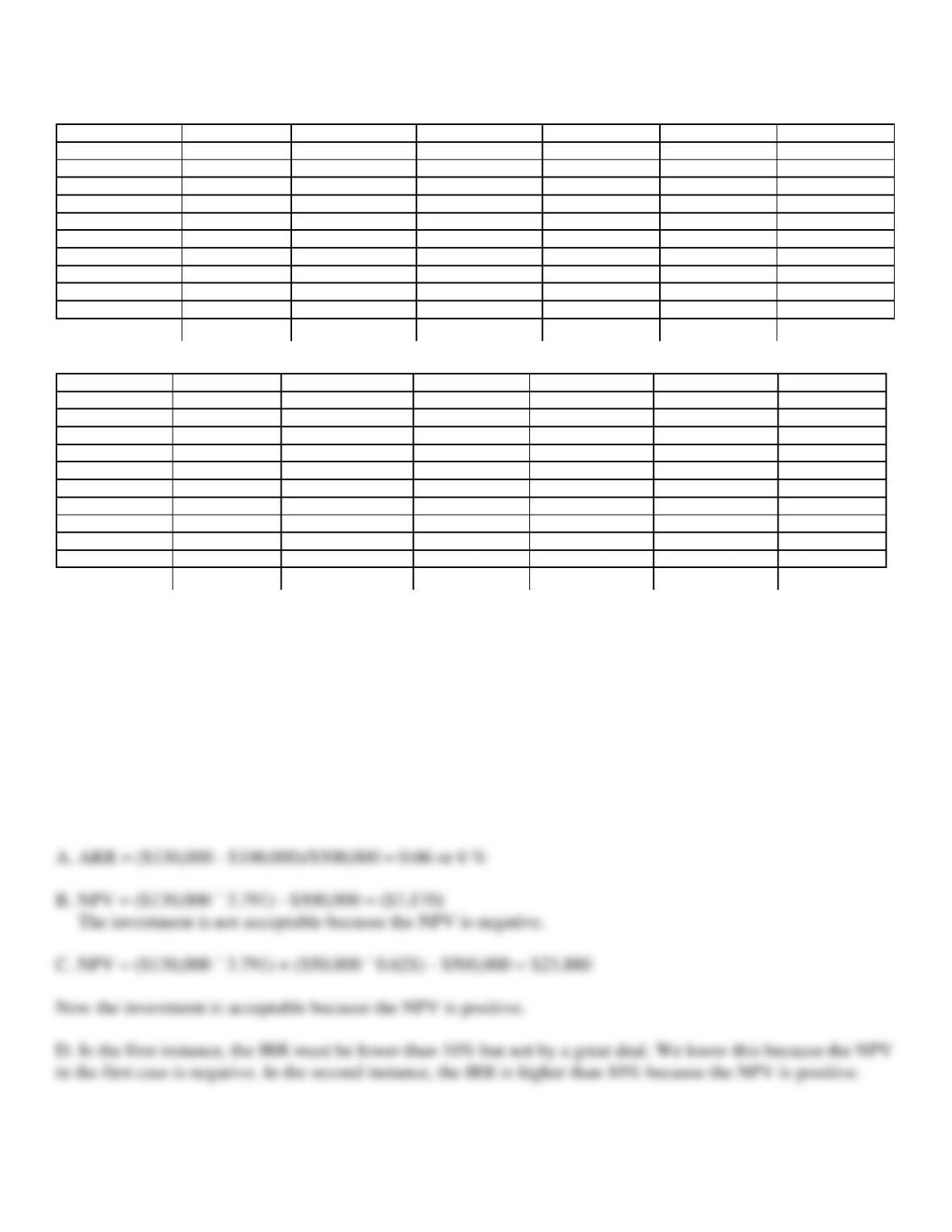
A. What is the accounting rate of return?
B. What is the net present value? Is the investment acceptable?
C. Now suppose that Howard-Parr believes it can sell the equipment at the end of 5 years for $50,000. What is the net present value? Is the
investment acceptable?
D. What can you say about the IRR in the first case (no salvage value) versus the IRR in the second case ($50,000 salvage value)?
114. Figure 12-6.
Present value of $1
Periods
4%
6%
8%
10%
12%
14%
1
0.962
0.943
0.926
0.909
0.893
0.877
2
0.925
0.890
0.857
0.826
0.797
0.769
3
0.889
0.840
0.794
0.751
0.712
0.675
4
0.855
0.792
0.735
0.683
0.636
0.592
5
0.822
0.747
0.681
0.621
0.567
0.519
6
0.790
0.705
0.630
0.564
0.507
0.456
7
0.760
0.665
0.583
0.513
0.452
0.400
8
0.731
0.627
0.540
0.467
0.404
0.351
9
0.703
0.592
0.500
0.424
0.361
0.308
10
0.676
0.558
0.463
0.386
0.322
0.270
Present value of an Annuity of $1
Periods
4%
6%
8%
10%
12%
14%
1
0.962
0.943
0.926
0.909
0.893
0.877
2
1.886
1.833
1.783
1.736
1.690
1.647
3
2.775
2.673
2.577
2.487
2.402
2.322
4
3.630
3.465
3.312
3.170
3.037
2.914
5
4.452
4.212
3.993
3.791
3.605
3.433
6
5.242
4.917
4.623
4.355
4.111
3.889
7
6.002
5.582
5.206
4.868
4.564
4.288
8
6.733
6.210
5.747
5.335
4.968
4.639
9
7.435
6.802
6.247
5.759
5.328
4.946
10
8.111
7.360
6.710
6.145
5.650
5.216
Refer to Figure 12-6. A company is considering two modifications to its current manufacturing process. The after-tax cash flows associated with the
two investments are:
Year
Project I
Project II
0
$(37,500)
$(150,000)
1
—
91,075
2
$50,460
91,075
The company’s cost of capital is 12%.
A. Compute the net present value for each investment.
B. Computer the internal rate of return for each investment.
C. Which project is better? Explain your reasoning.
115. Figure 12-7.
Present value of an Annuity of $1 in Arrears
Periods
4%
6%
8%
10%
12%
14%
1
0.962
0.943
0.926
0.909
0.893
0.877
2
1.886
1.833
1.783
1.736
1.690
1.647
3
2.775
2.673
2.577
2.487
2.402
2.322
4
3.630
3.465
3.312
3.170
3.037
2.914
5
4.452
4.212
3.993
3.791
3.605
4.433
6
5.242
4.917
4.623
4.355
4.111
3.889
7
6.002
5.582
5.206
4.868
4.564
4.288
8
6.733
6.210
5.747
5.335
4.968
4.639
9
7.435
6.802
6.247
5.759
5.328
4.946
10
8.111
7.360
6.710
6.145
5.650
5.216
Refer to Figure 12-7. Aragon Company is considering an investment in equipment that will have an initial cost of $560,290 yield annual net cash
inflows of $83,500. Yearly depreciation will be $56,000. The equipment is expected to be useful for 10 years, then it will be scrapped. Aragon
requires a minimum rate of return of 10%.
A. What is the payback period?
B. What is the accounting rate of return?
C. What is the net present value?
C. What is the internal rate of return?
116. Figure 12-7.
Present value of an Annuity of $1 in Arrears
Periods
4%
6%
8%
10%
12%
14%
1
0.962
0.943
0.926
0.909
0.893
0.877
2
1.886
1.833
1.783
1.736
1.690
1.647
3
2.775
2.673
2.577
2.487
2.402
2.322
4
3.630
3.465
3.312
3.170
3.037
2.914
5
4.452
4.212
3.993
3.791
3.605
4.433
6
5.242
4.917
4.623
4.355
4.111
3.889
7
6.002
5.582
5.206
4.868
4.564
4.288
8
6.733
6.210
5.747
5.335
4.968
4.639
9
7.435
6.802
6.247
5.759
5.328
4.946
10
8.111
7.360
6.710
6.145
5.650
5.216
Refer to Figure 12-7. Cleves Company is considering two projects.
Project X
Project Y
Initial investment
$500,000
$100,000
Annual cash flows
$88,500
$34,320
Life of the project
10 years
4 years
Depreciation per year
$50,000
$25,000
Cleves requires a minimum rate of return of 8%.
A. What is the accounting rate of return for each project?
B. What is the net present value for each project?
C. What is the internal rate of return for each project?
D. Which project should be chosen? Explain your reasoning.
117. What is a capital investment decision and how does it differ from a tactical decision? Give an example of
each.
118. Name two nondiscounting capital investment models. What is meant by “nondiscounting”?
119. Which model of capital investment decision making is most widely used? Why?
120. Which model is better for independent projects – net present value or internal rate of return? For mutually
exclusive projects? Explain your reasoning for each case.
121. What is a post audit? What are the advantages and disadvantages of the post audit?

122. What are some reasons why firms use the payback period model in capital investment decision making?