92. In its first year of operations, Lear Company reported financial statement income (prior to income tax
expense) of $100,000. In the same year, Lear Company reported $80,000 of taxable income, the difference
being due to temporary differences. Assuming the enacted tax rate for the current year and all future years is
30%, what is Lear’s current year adjustment for deferred income taxes?
93. In any given accounting period, the amount a firm reports as income before income taxes for financial
reporting in comparison to the amount of taxable income that appears on its income tax return may differ due to
temporary differences. Temporary differences include
94. In any given accounting period, the amount a firm reports as income before income taxes for financial
reporting in comparison to the amount of taxable income that appears on its income tax return may differ due to
permanent differences. Permanent differences include

95. Gordon Corporation
Information relating to Gordon Corporation for Year 1 and Year 2 is as follows:
Year 1
Year 2
Income before taxes
$5,000,000
$4,000,000
Interest income included above that was not subject to income
taxes
100,000
100,000
·
Income before income taxes in Year 1 included rent revenue of $80,000 that was not subject to income tax until its receipt in Year 2
·
Gordon was subject to an effective income tax rate of 40% in Year 1 and 2.
(CMA adapted, Jun 86 #7) Refer to the Gordon Corporation example. The amount of current income tax expense that would have been reported on
Gordon Corporation’s Income Statement for the year ended December 31, Year 1 is
96. Gordon Corporation
Information relating to Gordon Corporation for Year 1 and Year 2 is as follows:
Year 1
Year 2
Income before taxes
$5,000,000
$4,000,000
Interest income included above that was not subject to income
taxes
100,000
100,000
·
Income before income taxes in Year 1 included rent revenue of $80,000 that was not subject to income tax until its receipt in Year 2
·
Gordon was subject to an effective income tax rate of 40% in Year 1 and 2.
(CMA adapted, Jun 86, #9) Refer to the Gordon Corporation example. Gordon Corporation’s current income tax expense for Year 2 was
97. Gordon Corporation
Information relating to Gordon Corporation for Year 1 and Year 2 is as follows:
Year 1
Year 2
Income before taxes
$5,000,000
$4,000,000
Interest income included above that was not subject to income
taxes
100,000
100,000
·
Income before income taxes in Year 1 included rent revenue of $80,000 that was not subject to income tax until its receipt in Year 2
·
Gordon was subject to an effective income tax rate of 40% in Year 1 and 2.
(CMA adapted, Jun 86 #10) Refer to the Gordon Corporation example. The amount of deferred income taxes that would have been reported on
Gordon Corporation’s Statement of Financial Position on December 31, Year 2, is
98. In any given accounting period, the amount a firm reports as income before income taxes for financial
reporting in comparison to the amount of taxable income that appears on its income tax return may differ due to
99. When faced with uncertainty, firms may want to keep liabilities off their balance sheets. Such firms may
attempt to engage in off-balance-sheet financing.
Required:
a.
Why might firms want to keep liabilities off their balance sheets?
b.
How might firms attempt to keep liabilities off their balance sheets?

100. Do firms confront ethical issues when engaging in off-balance-sheet financing?
101. Using accounts receivable to achieve off-balance-sheet financing. Marvel Appliance Store has $100,000 of
accounts receivable on its books on January 2, 2013. These receivables are due on December 31, 2013. The firm
wants to use these accounts receivables to obtain financing.
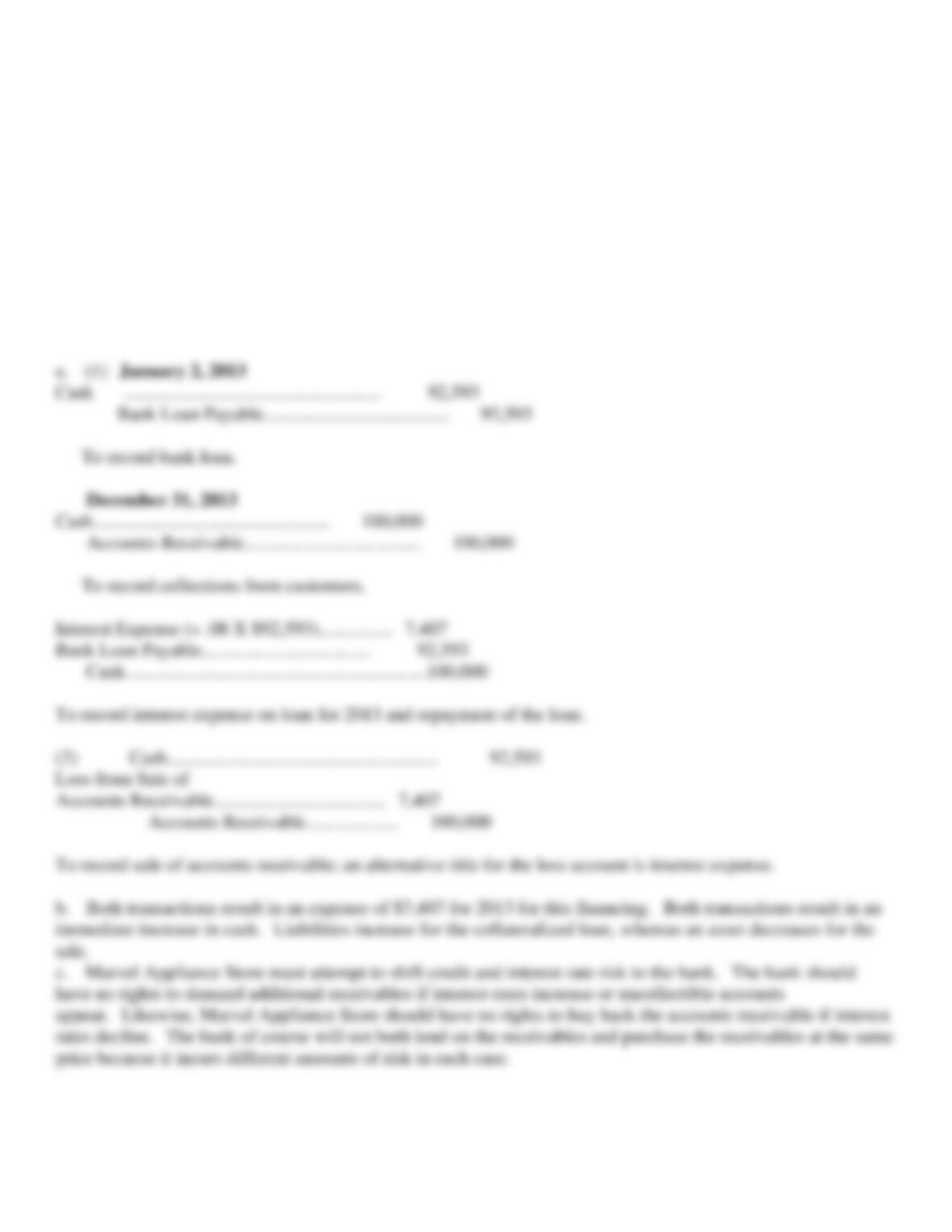
a. Prepare journal entries during 2013 for the transactions in parts (i) and (ii) below:
(1) The firm borrows $100,000 from its bank, using the accounts receivable as collateral. The loan is
repayable on December 31, 2013, with interest at 8%.
(2) The firm sells the accounts receivable to the bank for $92,593. It collects amounts due from customers on
these accounts and remits the cash to the bank.
b. Compare and contrast the income statement and balance sheet effects of these two transactions.
c. How should Marvel Appliance Store structure this transaction to ensure that it qualifies as a sale instead of a
collateralized loan?
(Marvel Appliance Store; using accounts receivable to achieve off-balance-sheet financing.)
102. Barry Company grows and ages tobacco. On January 2, 2013, the firm has aging tobacco with a cost of
$200,000 and a current market value of $300,000. Barry Company wants to use this tobacco to obtain financing.
The firm uses a December 31 year-end.
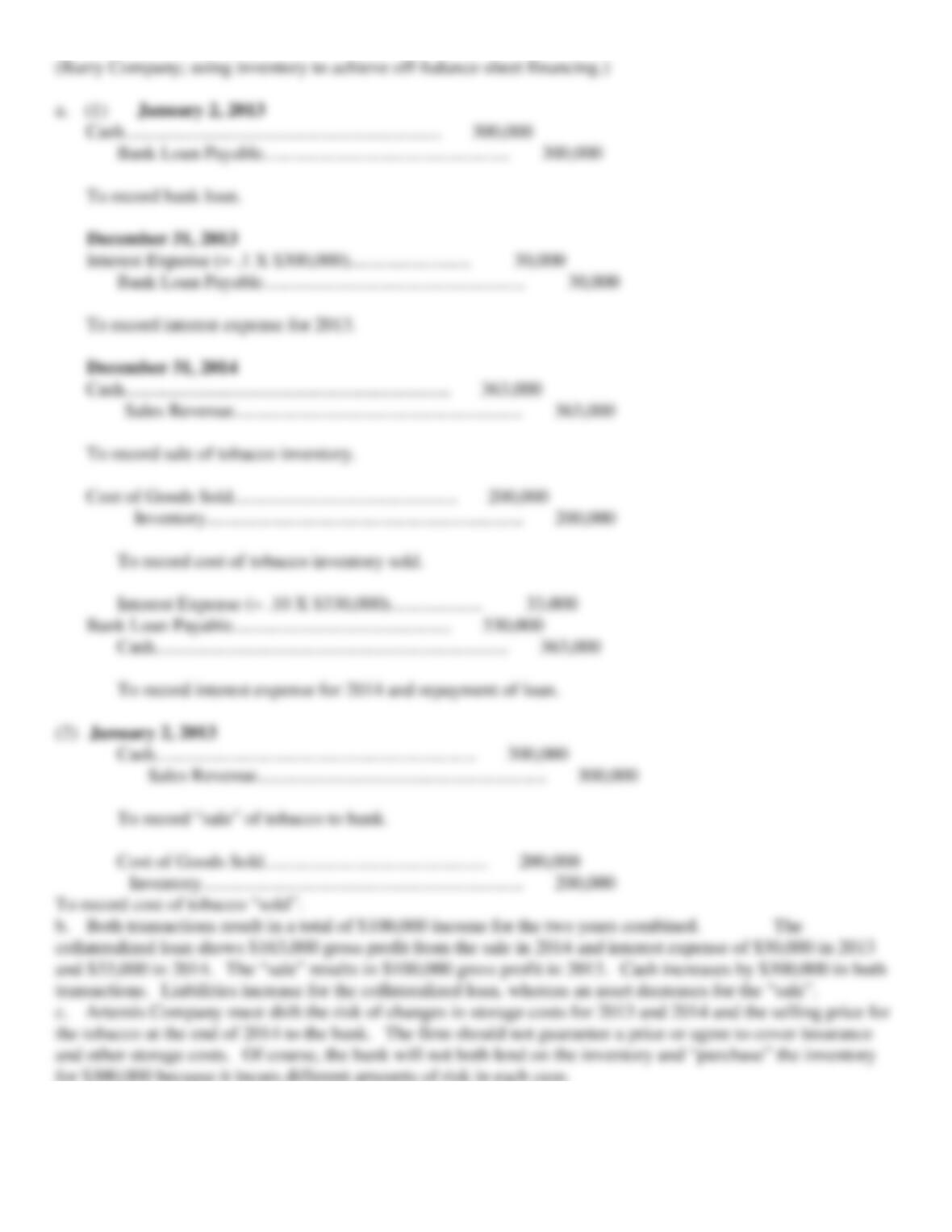
a. Prepare journal entries during 2013 and 2014 for the transactions in parts (i) and (ii) below:
(1) The firm borrows $300,000 from its bank, using the tobacco inventory as collateral. The loan is repayable
on December 31, 2014, with interest at 10% per year compounded annually. Assume zero storage costs. The
firm expects to sell the tobacco on December 31, 2014, for $363,000.
(2) The firm sells the tobacco inventory to the bank for $300,000. It promises to sell the inventory on behalf of
the bank at the end of two years and remit the proceeds to the bank.
b. Compare and contrast the income statement and balance sheet effects of these two transactions.
c. How should Barry Company structure this transaction to ensure that it qualifies as a sale instead of a
collateralized loan?
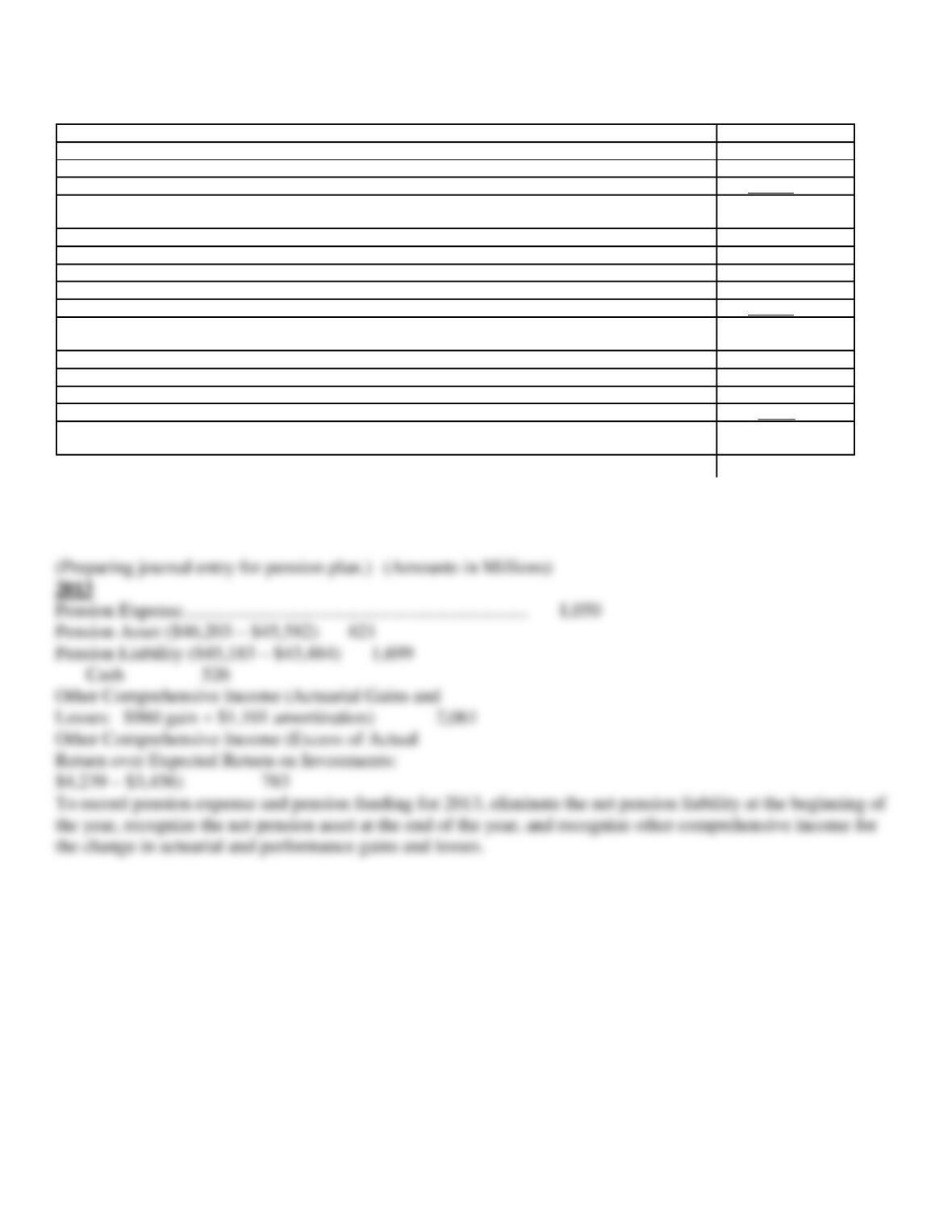
103. The Venus Manufacturing Company reports the following information related to its only pension plan for
2013 (amounts in millions).
Pension Plan Assets, Beginning of 2013.. . . . . . . . . . . . . . . . . . . . . . . . . . .
$43,484
Plus Actual Return on Investments . . . . . . . . . . . . . . . . . . . . . . . . . . . . . . .
4,239
Plus Employer Contribution . . . . . . . . . . . . . . . . . . . . . . . . . . . . . . . . . . . . .
526
Less Benefits Paid . . . . . . . . . . . . . . . . . . . . . . . . . . . . . . . . . . . . . . . . . . .
(2,046)
Pension Plan Assets, End of 2013 . . . . . . . . . . . . . . . . . . . . . . . . . . . . . . . .
$46,203
======
Pension Plan Liability, Beginning of 2013 . . . . . . . . . . . . . . . . . . . . . . . . . . .
$45,183
Plus Service Cost . . . . . . . . . . . . . . . . . . . . . . . . . . . . . . . . . . . . . . . . . . . .
908
Plus Interest Cost . . . . . . . . . . . . . . . . . . . . . . . . . . . . . . . . . . . . . . . . . .
2,497
Less Actuarial Gain . . . . . . . . . . . . . . . . . . . . . . . . . . . . . . . . . . . . . . . . . .
(960)
Less Benefits Paid . . . . . . . . . . . . . . . . . . . . . . . . . . . . . . . . . . . . . . . . . . .
(2,046)
Pension Plan Liability, End of 2013 . . . . . . . . . . . . . . . . . . . . . . . . . . . . . . .
$45,582
======
Service Cost . . . . . . . . . . . . . . . . . . . . . . . . . . . . . . . . . . . . . . . . . . . . . .
$908
Interest Cost . . . . . . . . . . . . . . . . . . . . . . . . . . . . . . . . . . . . . . . . . . . . . . .
2,497
Expected Return on Pension Plan Investments . . . . . . . . . . . . . . . . . . . . . . .
(3,456)
Amortization of Actuarial Losses. . . . . . . . . . . . . . . . . . . . . . . . . . . . . . . . .
1,101
Net Pension Expense. . . . . . . . . . . . . . . . . . . . . . . . . . . . . . . . . . . . . . . . .
$ 1,050
======
Give a single journal entry on the books of the Venus Manufacturing Company to recognize pension expense, the pension plan contribution, and the
change in the net pension asset or net pension liability for 2013. Be sure to consider needed entries in Other Comprehensive Income, supporting the
entry in this account with amounts from the disclosures above. Ignore income taxes.
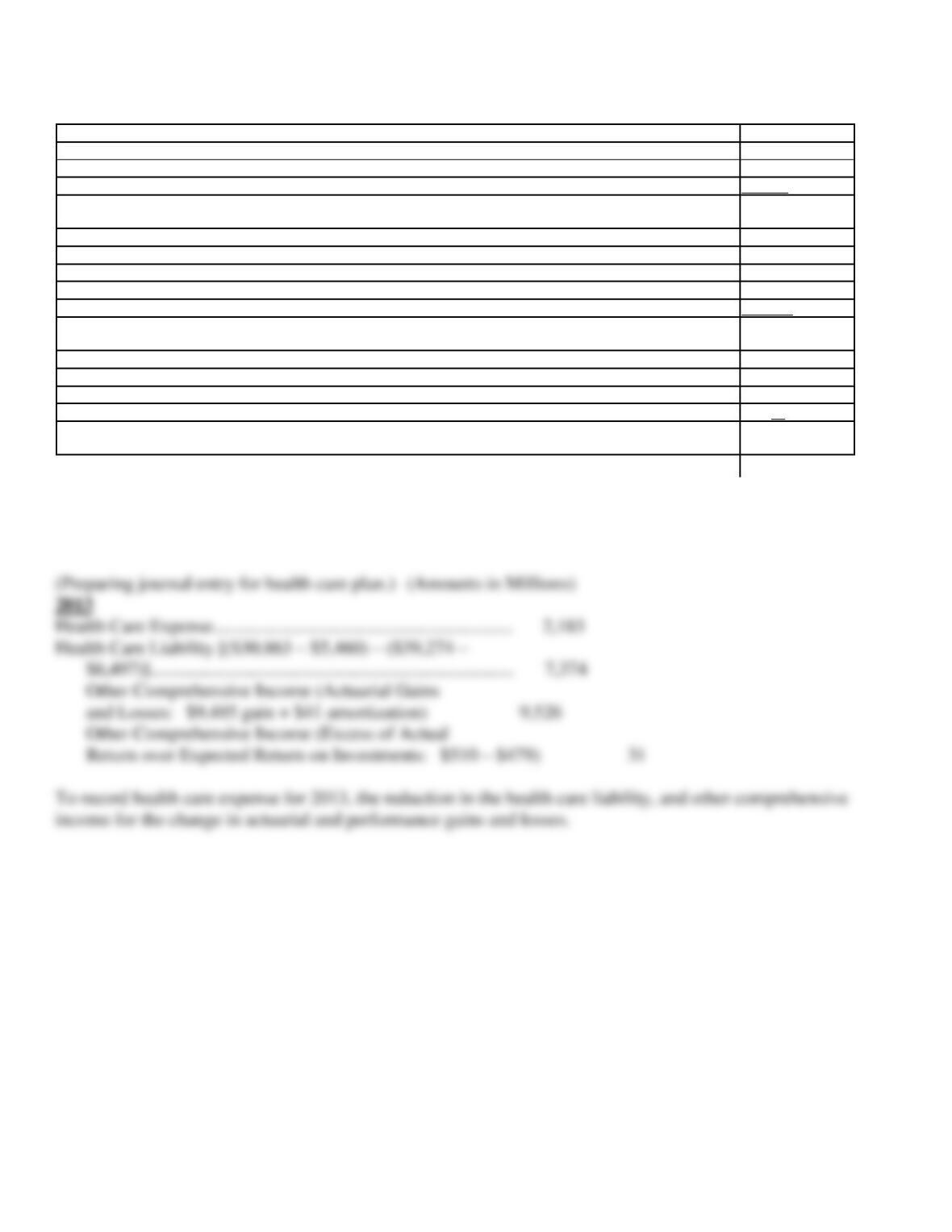
104. Fortune, an automobile manufacturer reports the following information related to its health care plan for
2013 (amounts in millions).
Health Care Plan Assets, Beginning of 2013………………….………………..
$ 6,497
Plus Actual Return on Investments……………………………………………..……..
510
Plus Employer Contribution …………..……..………………..………………..…….
0
Less Benefits Paid………..……..………..……..………………..…..……………….
(1,547)
Health Care Plan Assets, End of 2013…………………………………………….
$ 5,460
=====
Health Care Plan Liability, Beginning of 2013………..…………………………
$39,274
Plus Service Cost……….……..…………..……..………………..………………..…….
617
Plus Interest Cost ……………..…………..……..………………..………………..……
2,004
Less Actuarial Gain………….……..………..……..………………..……..…………..
(9,485)
Less Benefits Paid………..……..………..……..………………..……..………………
(1,547)
Health Care Plan Liability, End of 2013 ……………………………………………
$30,863
======
Service Cost..…………………………..……….………………..………………..………...
$ 617
Interest Cost..…………………………..……….………………..………………..………...
2,004
Expected Return on Health Care Plan Investments. …………..……………….
(479)
Amortization of Actuarial Losses………………………………………………………
41
Net Health Care Benefits Expense………..……..………………..……..………..
$ 2,183
======
Give a single journal entry for the Fortune, to recognize health care benefits expense, the health care plan contribution, and the change in the net
health care benefits asset or net health care benefits liability for 2013. Be sure to consider needed entries in Other Comprehensive Income, supporting
the entry in this account with amounts from the preceding disclosures. Ignore income taxes.
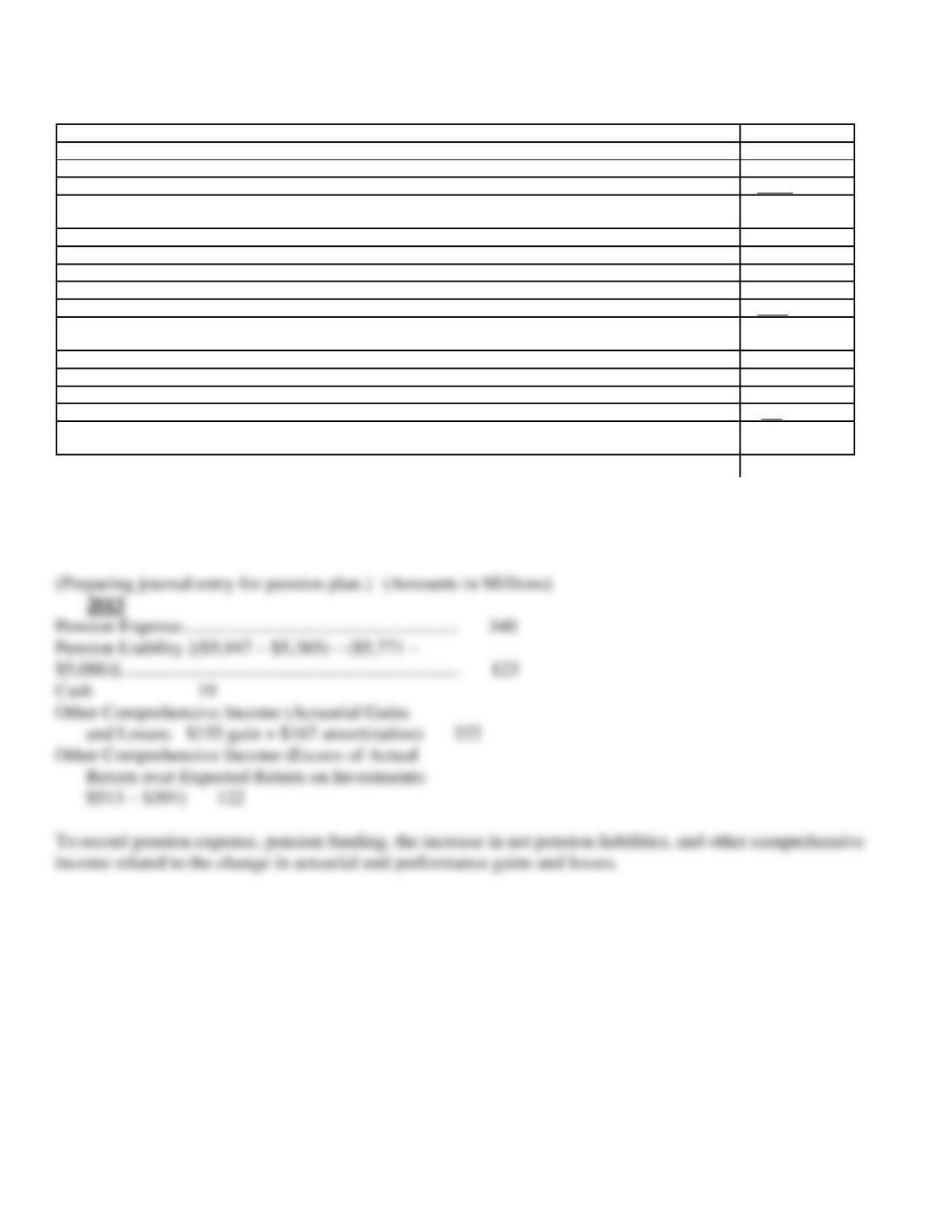
105. Garvin, a consumer foods company reports the following information related to its only pension plan for
2013 (amounts in millions).
Pension Plan Assets, Beginning of 2013………………………..………………………..
$5,086
Plus Actual Return on Investments………………………………………………………..
513
Plus Employer Contribution.…………..……..………………..………………..……….…
19
Less Benefits Paid………..……..………..……..………………..……..………………….
(233)
Pension Plan Assets, End of 2013…………..……..………………..……..…………....
$5,385
======
Pension Plan Liability, Beginning of 2013………………….……………………………
$5,771
Plus Service Cost……….……..…………..…….……………..………………..………….
245
Plus Interest Cost……….……..…………..……..………………..………………..……..
319
Less Actuarial Gain……………..………..……..………………..………………..………
(155)
Less Benefits Paid………..……..………..……..………………..……..…………………
(233)
Pension Plan Liability, End of 2013……….……..……..………………..…………..…
$5,947
=====
Service Cost..…………………………..……….………………..………………..………...
$ 245
Interest Cost..……………………………………….……..………………..………………..
319
Expected Return on Pension Plan Investments …………………..…………………..
(391)
Amortization of Actuarial Losses………………………….……………………………..
167
Net Pension Expense
$340
====
Give a single journal entry for the Garvin to recognize pension expense, the pension plan contribution, and the change in the net pension asset or net
pension liability for 2009. Be sure to consider needed entries in Other Comprehensive Income, supporting the entry in this account with amounts
from the disclosures above. Ignore income taxes.
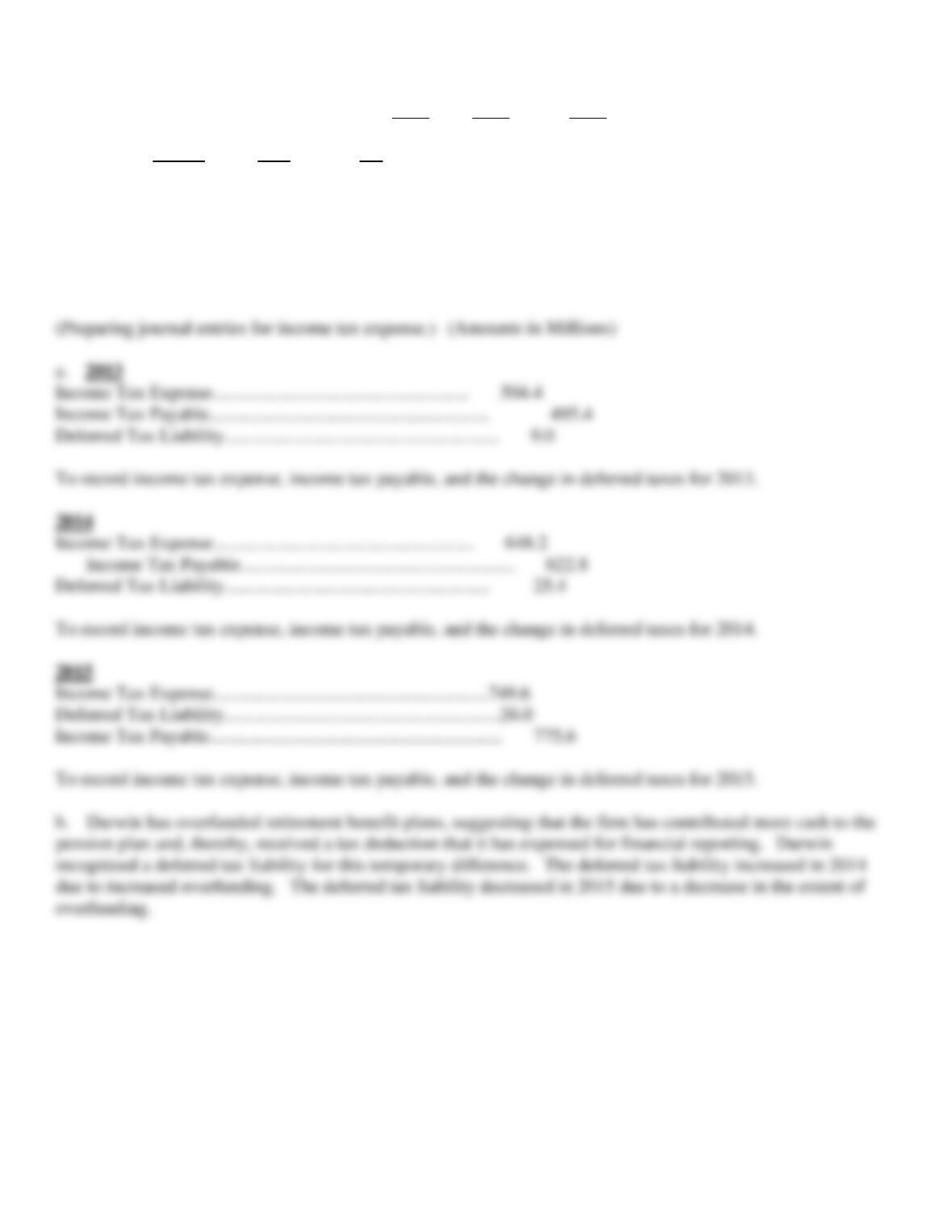
106. Darwin, an athletic shoe company, reports the following information about its income taxes for three
recent years (amounts in millions):
Components of Income Tax Expense 2015 2014 2013
Currently Payable $775.6 $622.8 $495.4
Deferred (26.0) 25.4 9.0
Total Income Tax Expense $749.6 $648.2 $504.4
===== ====== =====
a. Give the journal entries to record income tax expense for 2013, 2014, and 2015.
b. Describe the likely reasons for the pattern of taxes currently payable and deferred for each year. Assume
that the deferred taxes relate primarily to retirement benefits. The effective tax rate was relatively stable for the
three years.
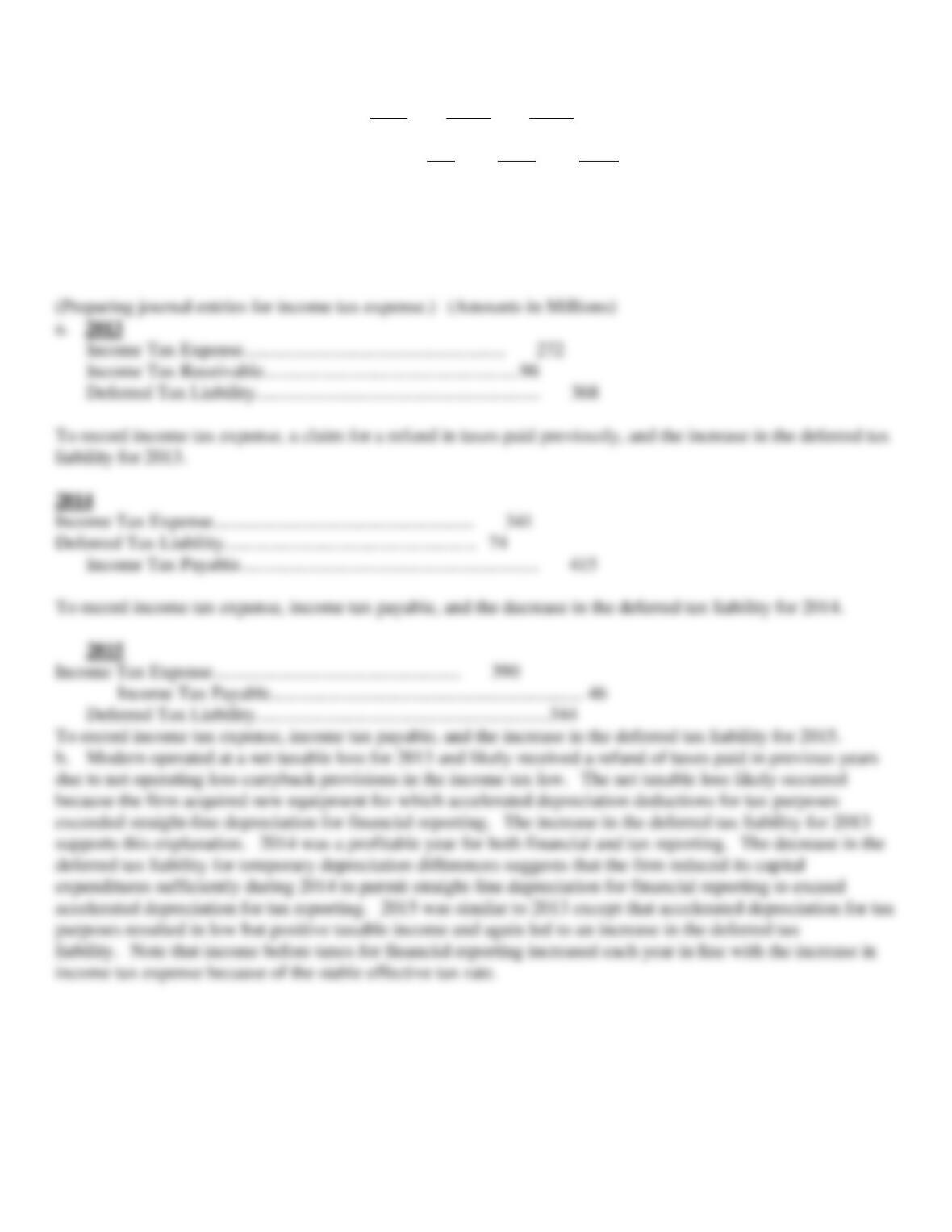
107. Modern, an electric utility, reports the following information about its income taxes for three recent years
(amounts in millions):
Components of Income Tax Expense 2015 2014 2013
Currently Payable . . . . . . . . . . . . . . . . . . . . . $ 46 $415 $ (96)
Deferred . . . . . . . . . . . . . . . . . . . . . . . . . . 344 (74) 368
Total Income Tax Expense . . . . . . . . . . . . . . . $390 $341 $ 272
a. Give the journal entries to record income tax expense for 2013, 2014, and 2015.
b. Describe the likely reasons for the pattern of taxes currently payable and deferred for each year. Assume
that deferred taxes relate primarily to depreciation temporary differences. The effective tax rate was relatively
stable for the three years.
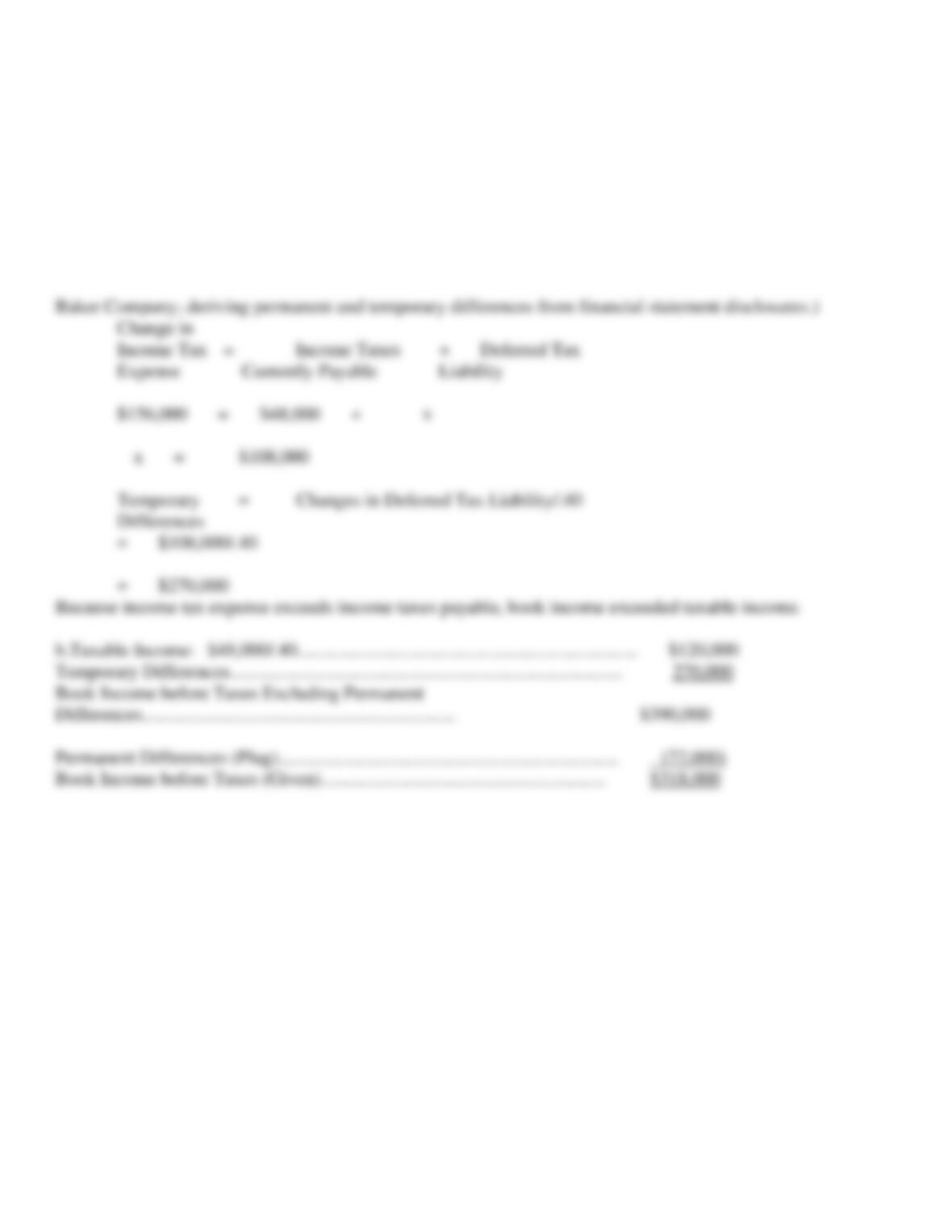
108. Baker Company reports the following information for a year:
Book Income Before Income Taxes……………………………………$318,000
Income Tax Expense……………………………………………………… 156,000
Income Taxes Payable for the Year…………………………………. 48,000
Income Tax Rate on Taxable Income ……………………………… 40%
Baker has both permanent and temporary differences between book income and taxable income.
a. What is the amount of temporary differences for the year? Give the amount, and indicate whether the effect
is to make book income larger or smaller than taxable income.
b. What is the amount of permanent differences for the year? Give the amount, and indicate whether the effect
is to make book income larger or smaller than taxable income.
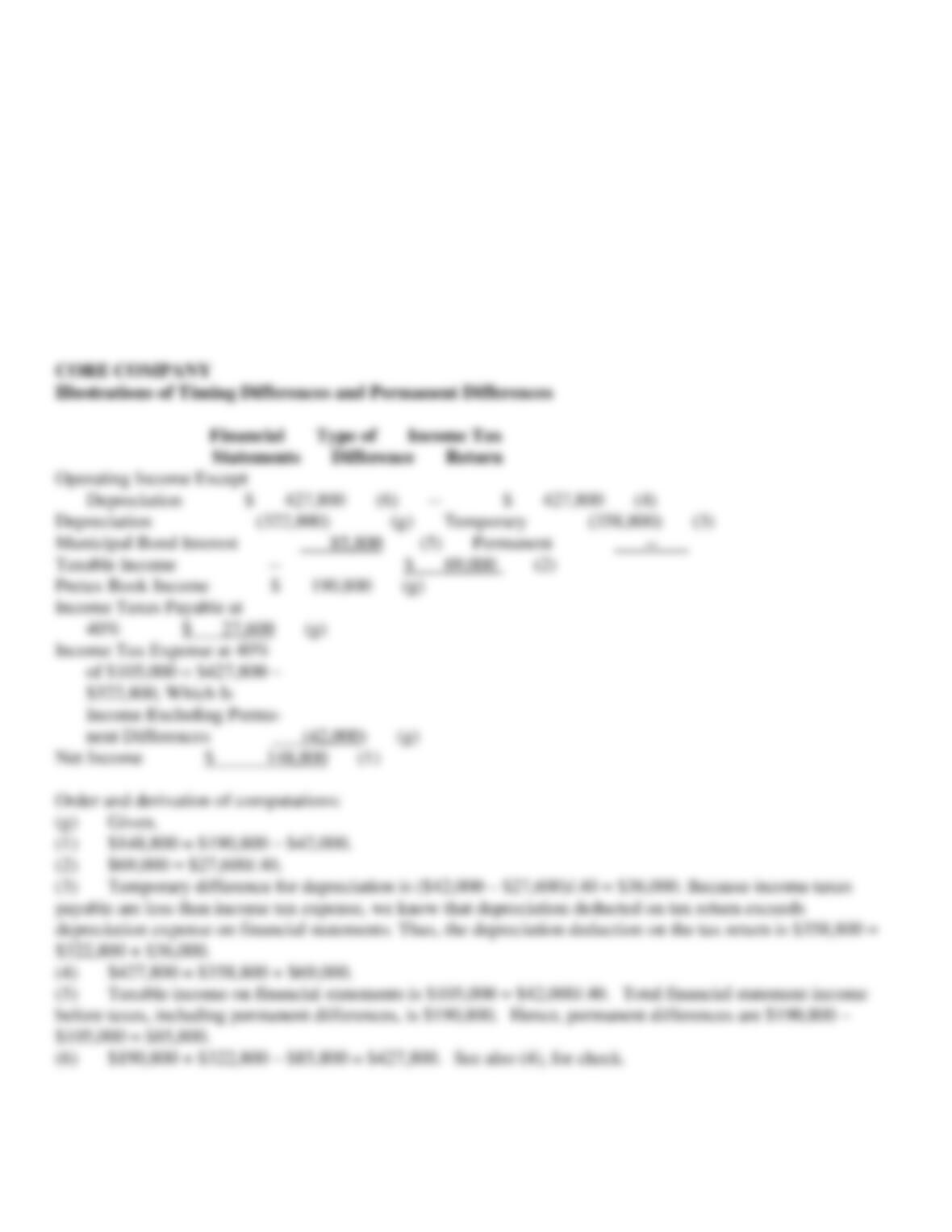
109. Core Company reports the following information about its financial statements and tax return for a year:
Depreciation Expense from Financial Statements $322,800
Financial Statement Pretax Book Income 190,800
Income Tax Expense from Financial Statements 42,000
Income Taxes Payable from Tax Returns 27,600
Together the federal and state governments tax taxable income at a rate of 40%. Permanent differences result
from municipal bond interest that appears as revenue in the financial statements but is exempt from income
taxes. Temporary differences result from the use of accelerated depreciation for tax returns and straight-line
depreciation for financial reporting. Reconstruct the income statement for financial reporting and for tax
reporting for the year, identifying temporary differences and permanent differences.
(Core Company; reconstructing information about income taxes.)