Solve the problem.
117)
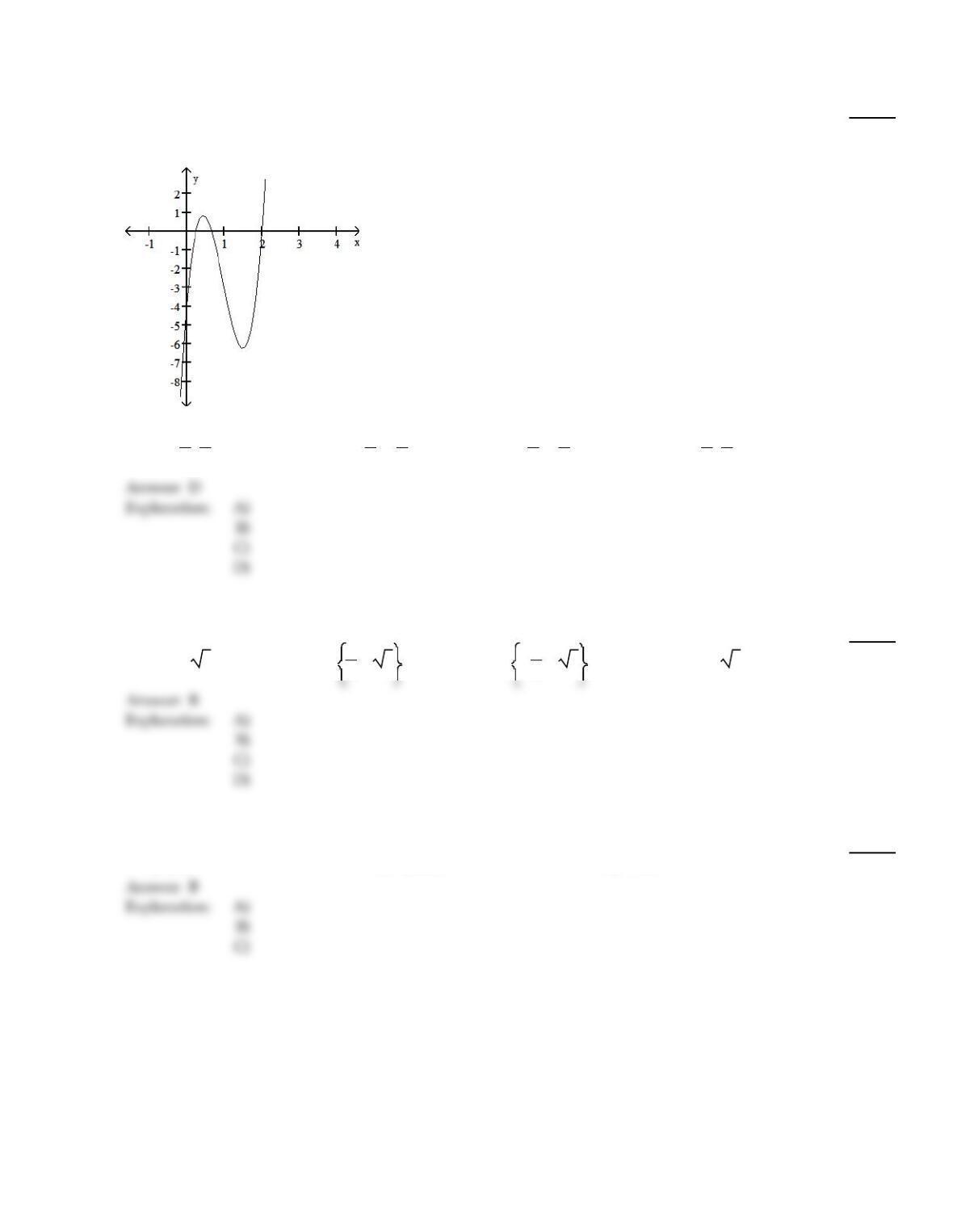
The graph of f(x) =12x3– 35x2+24x –4 is shown in the figure.
a. Based on the graph of f, find the root of the equation 12x3– 35x2+24x –4= 0 that is an integer.
b. Use synthetic division to find the other two roots of 12x3– 35x2+24x –4= 0.
117)
A)
a. 1
b. 1
4, 2
3
B)
a. 2
b. –1
4, –2
3
C)
a. 2
b. 1
4, –2
3
D)
a. 2
b. 1
4, 2
3
Solve the equation.
118)
3x3–x2–21x +7= 0
118)
A)
{3, ±7}
B)
1
3, ±7
C)
–1
3, ±7
D)
{–3, ±7}
Determine whether the function is even, odd, or neither.
119)
f(x) = x3+ x2+ 5
119)
A)
Odd
B)
Neither
C)
Even
Graph the function.
53
120)
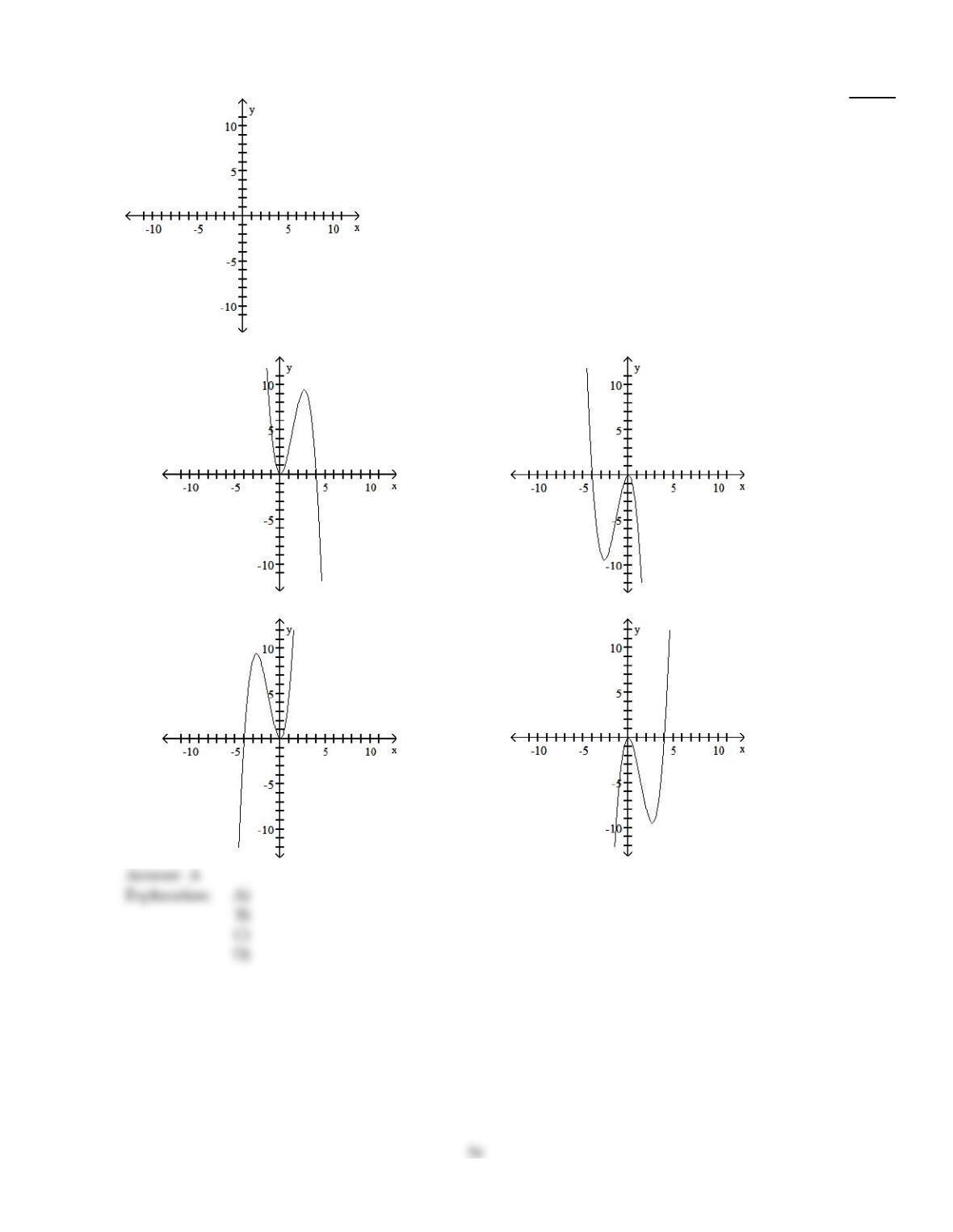
f(x) =4x2–x3
120)
A)
B)
C)
D)
Use Descartes’s Rule of Signs to determine the possible number of positive and negative real zeros for the given function.
121)
f(x) = – 5x9+x7–x2+3
121)
A)
2 or 0 positive zeros, 2 or 0 negative zeros
B)
3 or 1 positive zeros, 3 or 1 negative zeros
C)
3 or 1 positive zeros, 2 or 0 negative zeros
D)
2 or 0 positive zeros, 3 or 1 negative zeros
Solve.
122)
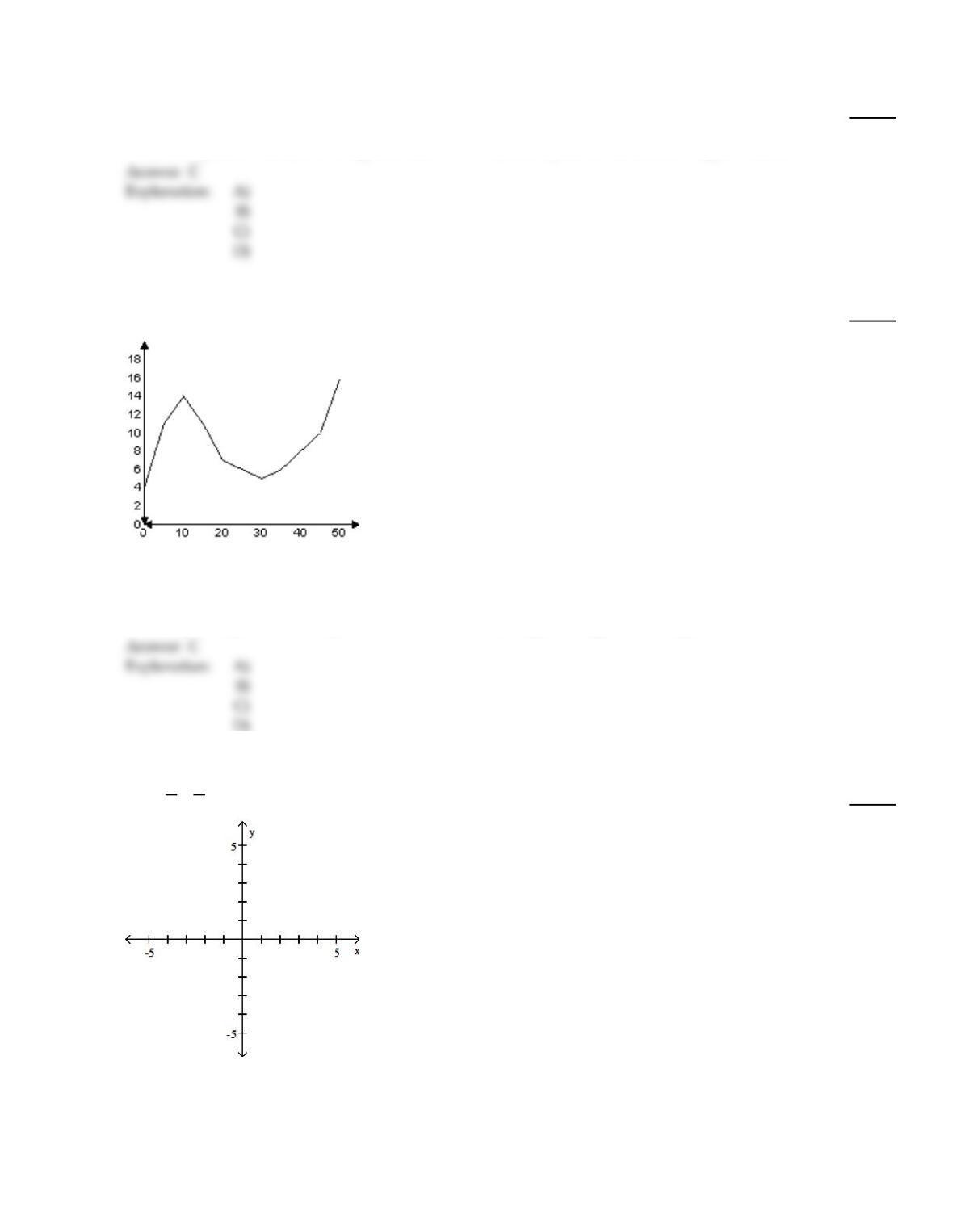
Suppose that a polynomial function is used to model the data shown in the graph below.
Determine the degree of the polynomial function of best fit and the sign of the leading coefficient.
122)
A)
Degree 4; positive leading coefficient
B)
Degree 3; negative leading coefficient
C)
Degree 3; positive leading coefficient
D)
Degree 4; negative leading coefficient
Graph the function.
123)
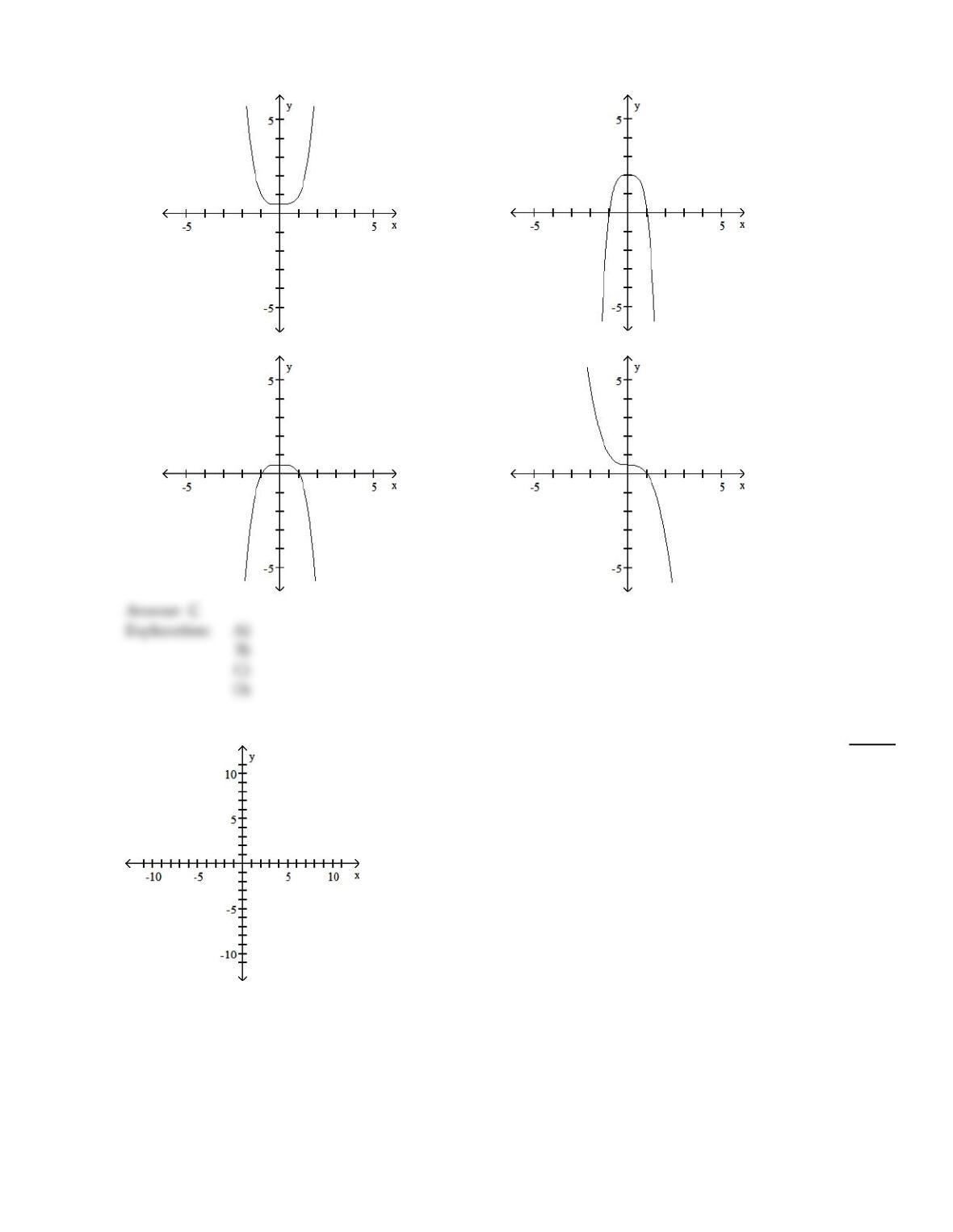
f(x) =1
2–1
2x4
123)
55
A)
B)
C)
D)
124)
f(x) =x3+ 2x2– 5x – 6
124)
56
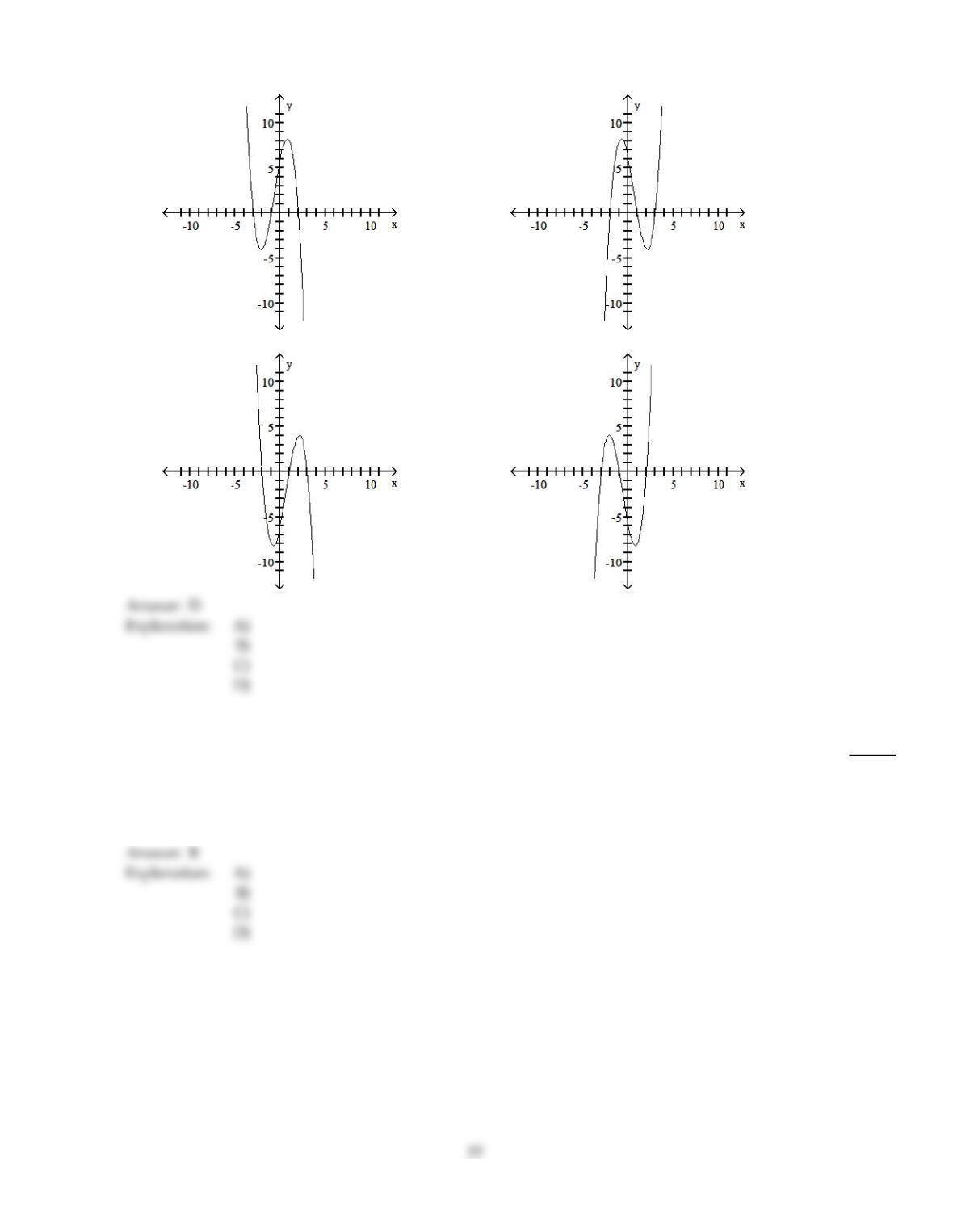
A)
B)
C)
D)
Solve the problem.
125)
Use Descartes‘s Rule of Signs to determine the possible number of positive and negative real zeros
of
f(x) =5x4– 4x3+x2–8x +8.
125)
A)
4 positive zeros, no negative zeros
B)
4, 2 or 0 positive zeros, no negative zeros
C)
4 or 2 positive zeros, no negative zeros
D)
4, 2 or 0 positive zeros, 1 negative zero
Find the horizontal asymptote, if any, of the graph of the rational function.
126)
f(x) =7x
7x + 6
126)
A)
y = – 6
7
B)
y = 0
C)
y = 1
D)
no horizontal asymptote
Find all the rational zeros of the polynomial function.
127)
f(x) =x3+ 2x2– 9x – 18
127)
A)
–3, –2, and 3
B)
–3, 2, and 3
C)
–2
D)
–3
Graph the rational function.
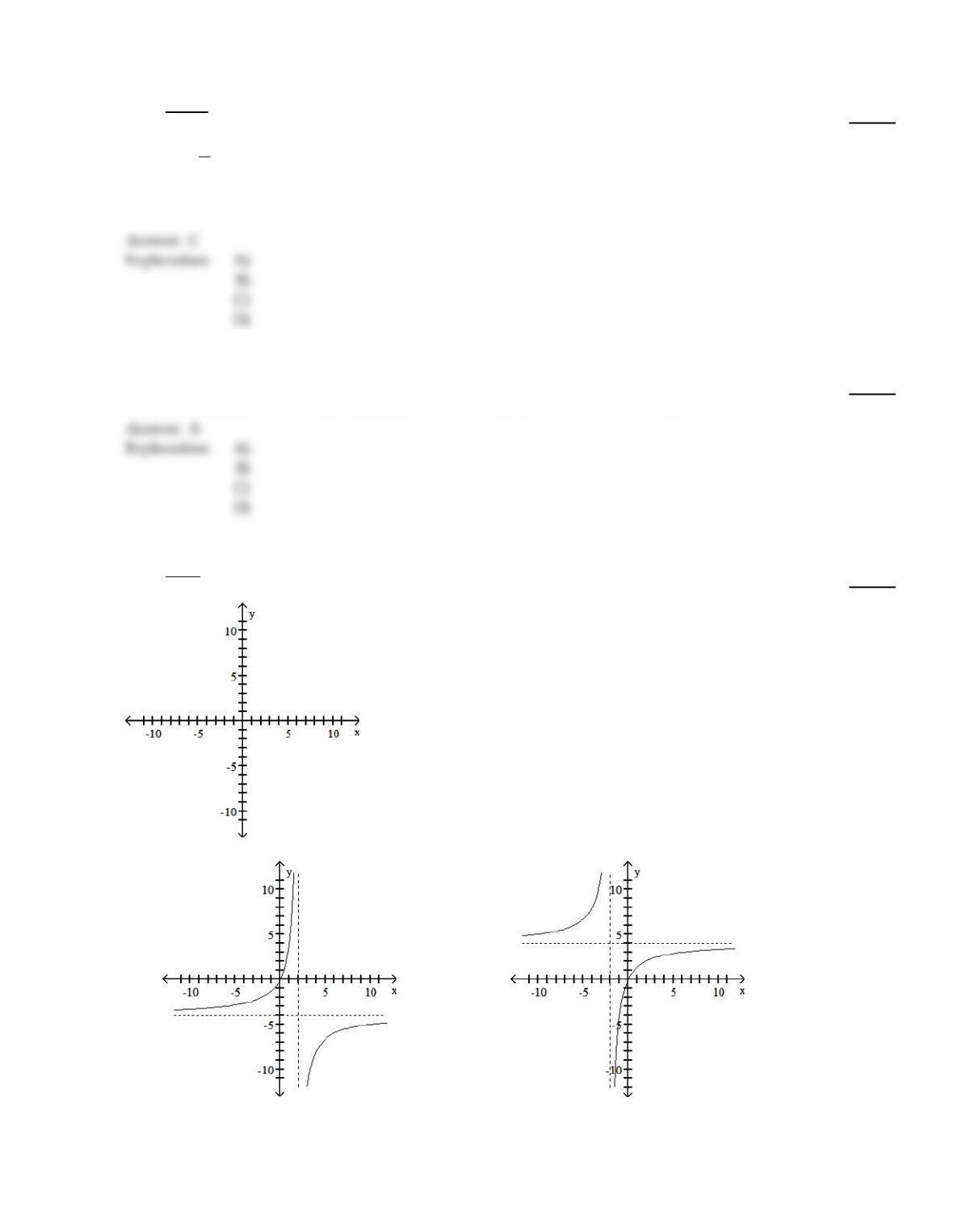
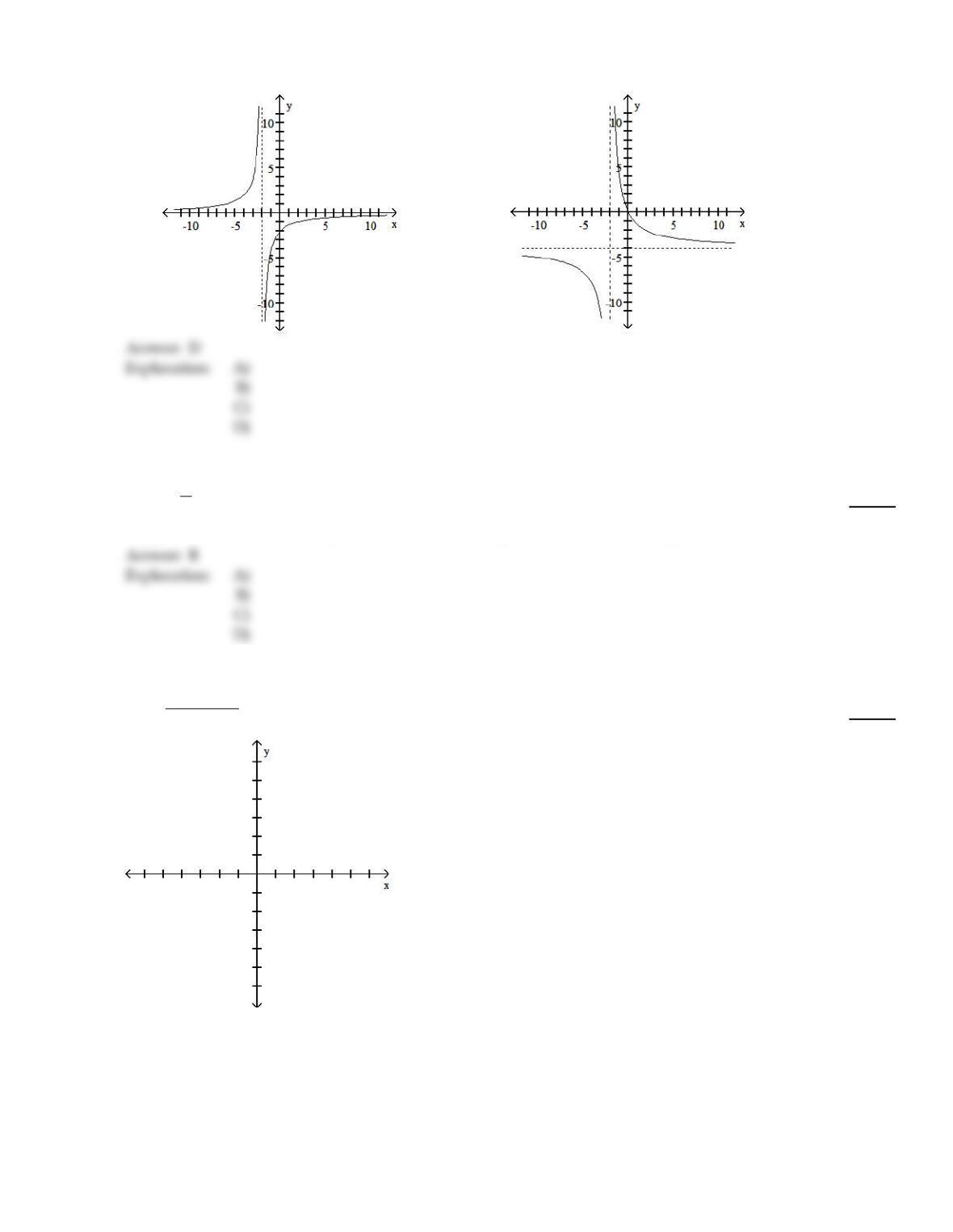
128)
f(x) =–4x
x + 2
128)
A)
B)
58
C)
D)
Determine the maximum possible number of turning points for the graph of the function.
129)
g(x) = – 3
2x +5
129)
A)
1
B)
0
C)
3
D)
2
Graph the rational function.
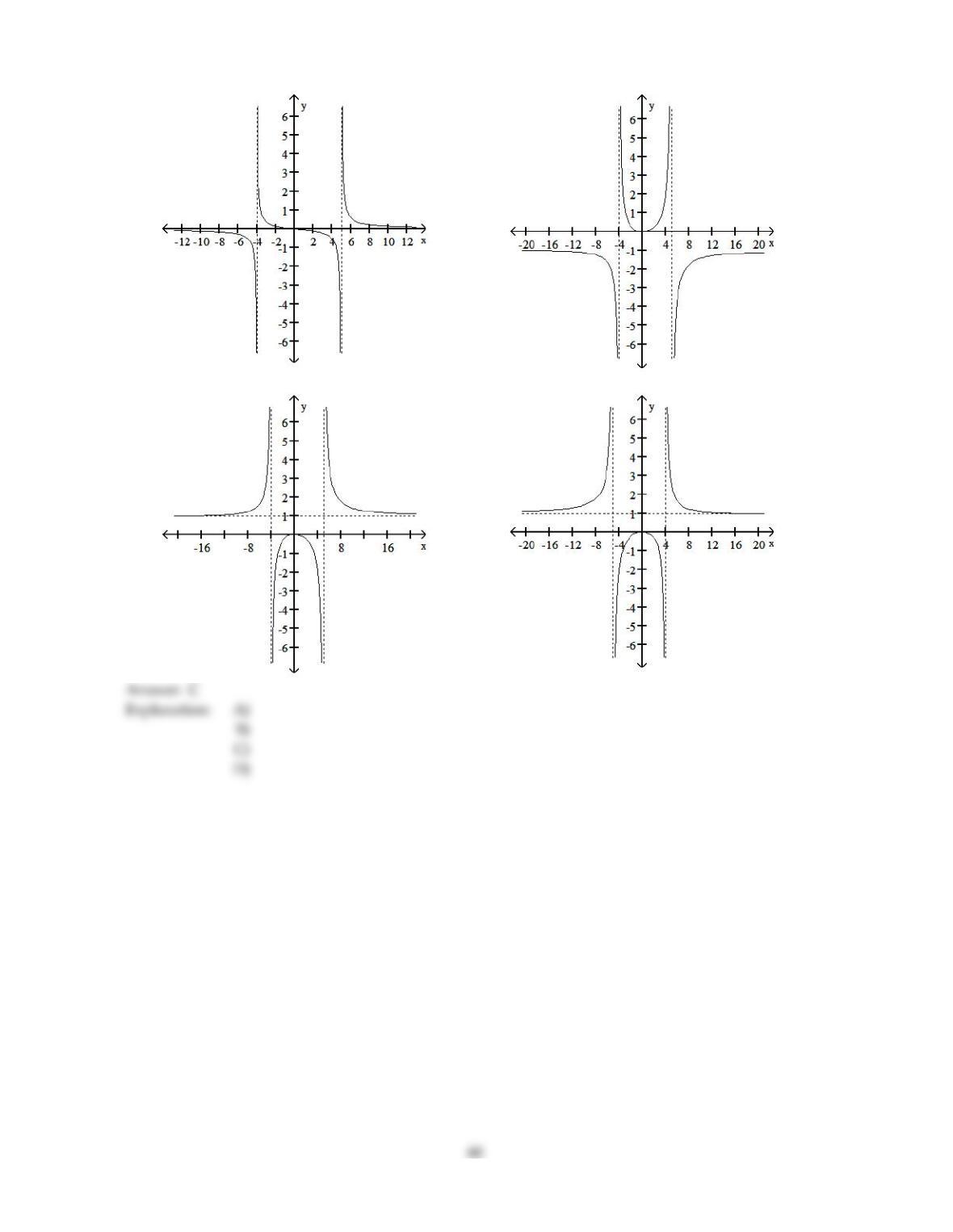
130)
f(x) =x2
x2– x – 20
130)
59
A)
B)
C)
D)
Answer Key
Testname: C11
Answer Key
Testname: C11
Answer Key
Testname: C11
Answer Key
Testname: C11
64