53.
Rings N Things Industries has 40 million shares of common stock outstanding, 20 million
shares of preferred stock outstanding, and 50 thousand bonds. If the common shares are
selling for $25 per share, the preferred shares are selling for $15 per share, and the bonds
are selling for 100 percent of par ($1,000), what would be the weights used in the
calculation of Rings’ WACC for common stock, preferred stock, and bonds, respectively?
54.
Accessory Industries has 2 million shares of common stock outstanding, 1 million shares
of preferred stock outstanding, and 100 thousand bonds. If the common shares are selling
for $22 per share, the preferred shares are selling for $10.50 per share, and the bonds are
selling for 96 percent of par ($1,000), what would be the weights used in the calculation of
Accessory’s WACC for common stock, preferred stock, and bonds, respectively?
55.
Suppose that Tan Lines’ common shares sell for $20 per share, are expected to set their
next annual dividend at $1.00 per share, and that all future dividends are expected to grow
by 5 percent per year, indefinitely. If Tan Lines faces a flotation cost of 10 percent on new
equity issues, what will be the flotation-adjusted cost of equity?
56.
Suppose that Wave Runners’ common shares sell for $35 per share, are expected to set
their next annual dividend at $2.00 per share, and that all future dividends are expected to
grow by 10 percent per year, indefinitely. If Wave faces a flotation cost of 15 percent on
new equity issues, what will be the flotation-adjusted cost of equity?
57.
Suppose that Beach Blanket’s common shares sell for $55 per share, are expected to set
their next annual dividend at $3.00 per share, and that all future dividends are expected to
grow by 8 percent per year, indefinitely. If Beach faces a flotation cost of 10 percent on
new equity issues, what will be the flotation-adjusted cost of equity?
58.
Suppose that Tan Lotion’s common shares sell for $18 per share, are expected to set their
next annual dividend at $1.00 per share, and that all future dividends are expected to grow
by 7 percent per year, indefinitely. If Tan Lotion faces a flotation cost of 12 percent on new
equity issues, what will be the flotation-adjusted cost of equity?
59.
A firm has 1,000,000 shares of common stock outstanding, each with a market price of
$10.00 per share. It has 15,000 bonds outstanding, each selling for $900 (with a face value
of $1,000). The bonds mature in 15 years, have a coupon rate of 10 percent, and pay
coupons semi-annually. The firm’s equity has a beta of 1.5, and the expected market
return is 20 percent. The tax rate is 35 percent and the WACC is 16 percent. What is the
risk-free rate?
60.
A firm has 4,000,000 shares of common stock outstanding, each with a market price of
$12.00 per share. It has 25,000 bonds outstanding, each selling for $980. The bonds
mature in 20 years, have a coupon rate of 9 percent, and pay coupons semi–annually. The
firm’s equity has a beta of 1.5, and the expected market return is 15 percent. The tax rate
is 30 percent and the WACC is 15 percent. What is the risk-free rate?
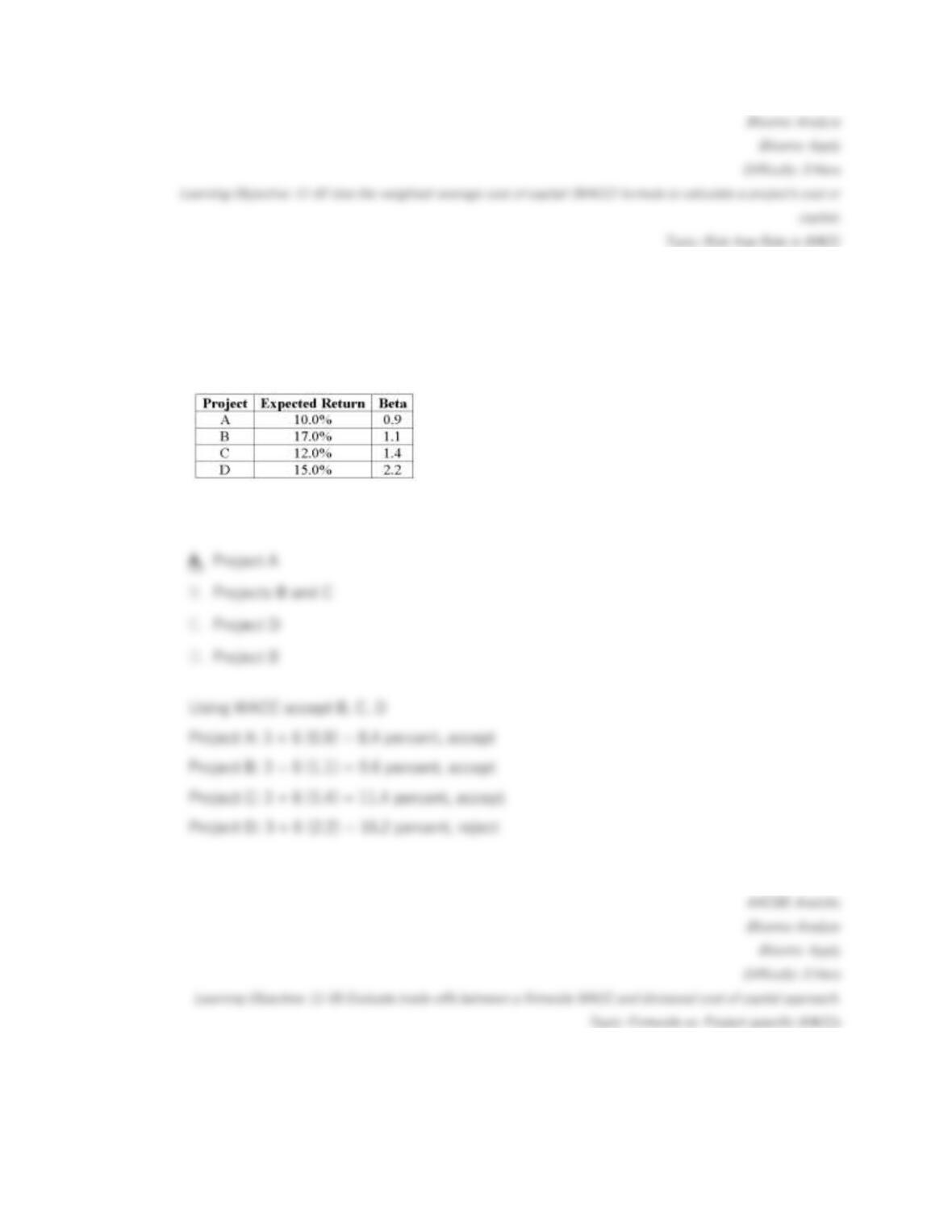
61.
An all-equity firm is considering the projects shown as follows. The T-bill rate is 3 percent
and the market risk premium is 6 percent. If the firm uses its current WACC of 12 percent
to evaluate these projects, which project(s) will be incorrectly rejected?
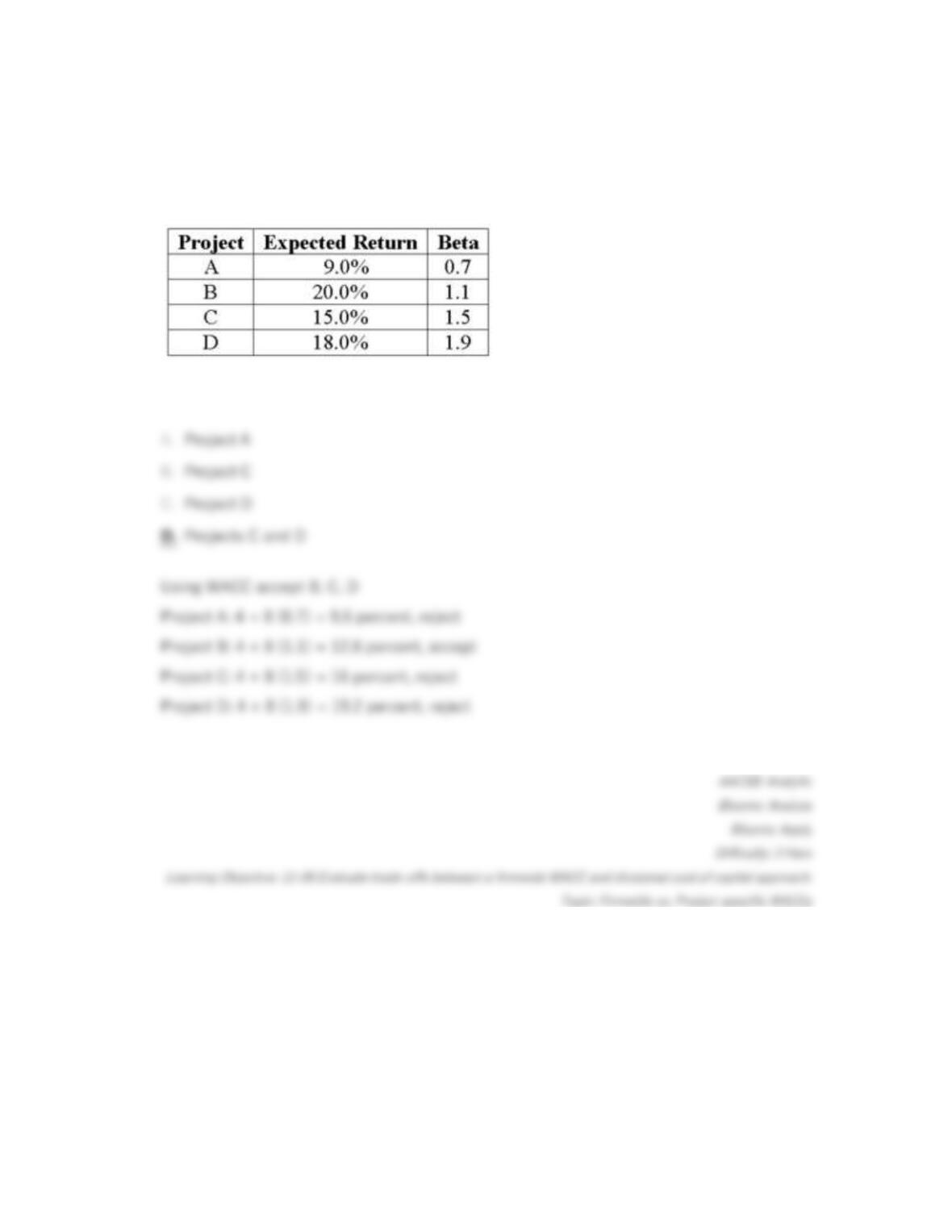
62.
An all-equity firm is considering the projects shown as follows. The T-bill rate is 4 percent
and the market risk premium is 8 percent. If the firm uses its current WACC of 13 percent
to evaluate these projects, which project(s) will be incorrectly accepted?
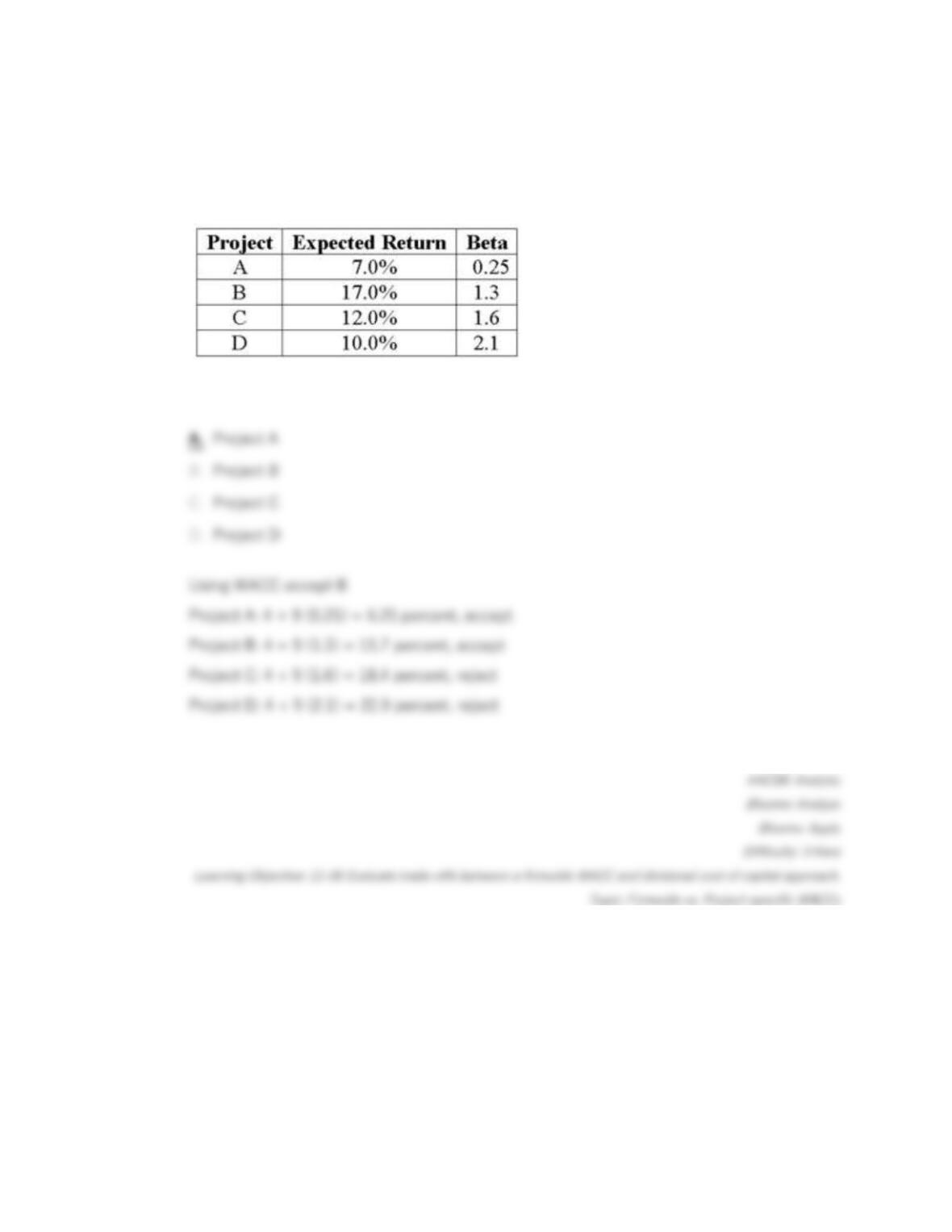
63.
An all-equity firm is considering the projects shown as follows. The T-bill rate is 4 percent
and the market risk premium is 9 percent. If the firm uses its current WACC of 14 percent
to evaluate these projects, which project(s) will be incorrectly rejected?
64.
Diddy Corp. stock has a beta of 1.0, the current risk-free rate is 5 percent, and the
expected return on the market is 15.5 percent. What is Diddy’s cost of equity?
65.
JaiLai Cos. stock has a beta of 1.7, the current risk-free rate is 6.2 percent, and the
expected return on the market is 11 percent. What is JaiLai’s cost of equity?
66.
Oberon Inc. has a $20 million ($1,000 face value) 10-year bond issue selling for 99 percent
of par that pays an annual coupon of 7.25 percent. What would be Oberon’s before-tax
component cost of debt?
67.
KatyDid Clothes has a $150 million ($1,000 face value) 15-year bond issue selling for 106
percent of par that carries a coupon rate of 8 percent, paid semi-annually. What would be
KatyDid’s before-tax component cost of debt?
68.
KatyDid Clothes has a $150 million ($1,000 face value) 15-year bond issue selling for 86
percent of par that carries a coupon rate of 8 percent, paid semi-annually. What would be
KatyDid’s before-tax component cost of debt?
69.
Marme Inc. has preferred stock selling for 137 percent of par that pays an 11 percent
annual dividend. What would be Marme’s component cost of preferred stock?
70.
FarCry Industries, a maker of telecommunications equipment, has 6 million shares of
common stock outstanding, 1 million shares of preferred stock outstanding, and 10
thousand bonds. If the common shares are selling for $27 per share, the preferred shares
are selling for $15 per share, and the bonds are selling for 119 percent of par ($1,000),
what weight should you use for debt in the computation of FarCry’s WACC?
71.
OMG Inc. has 4 million shares of common stock outstanding, 3 million shares of preferred
stock outstanding, and 50 thousand bonds. If the common shares are selling for $21 per
share, the preferred shares are selling for $10 per share, and the bonds are selling for 111
percent of par ($1,000), what weight should you use for debt in the computation of OMG’s
WACC?
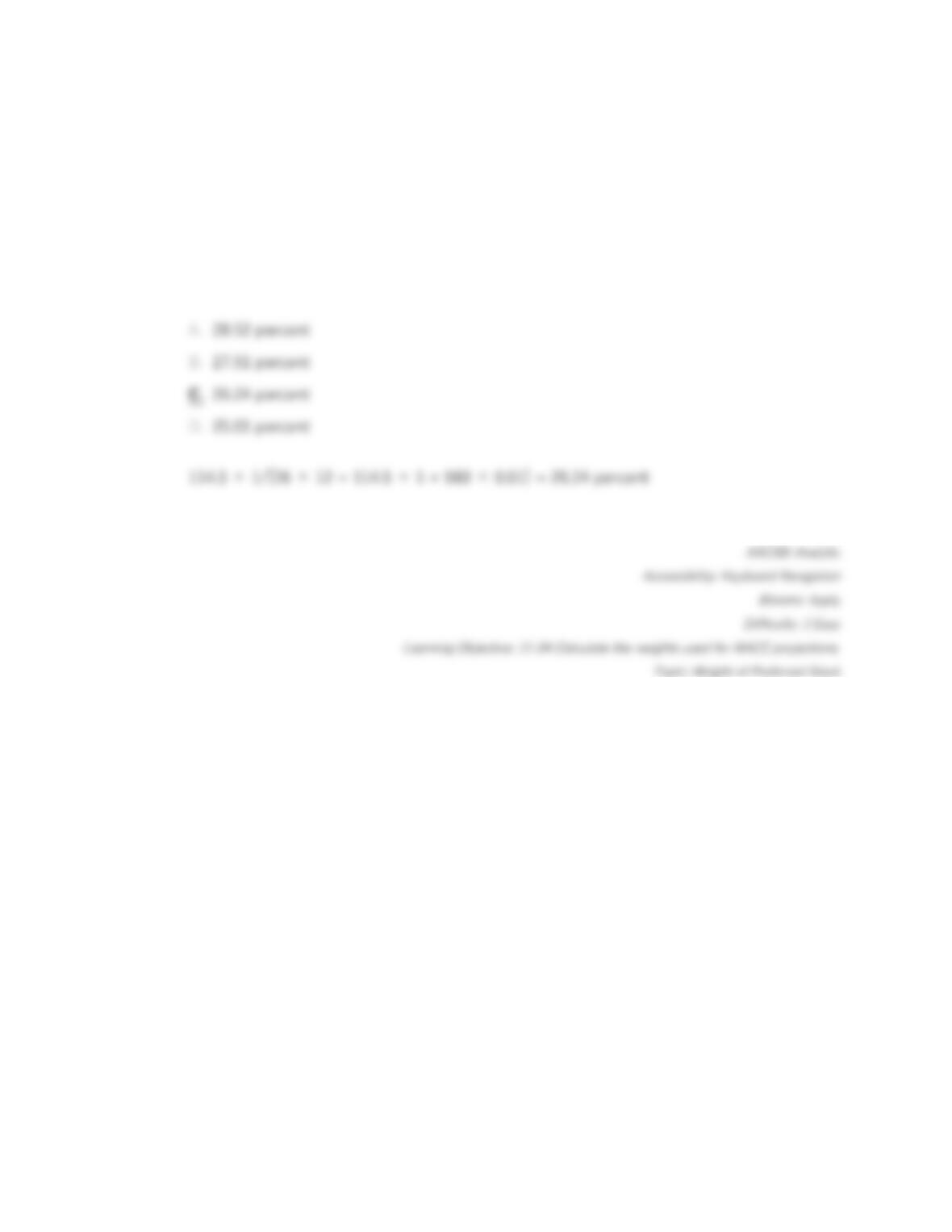
72.
FarCry Industries, a maker of telecommunications equipment, has 26 million shares of
common stock outstanding, 1 million shares of preferred stock outstanding, and 10
thousand bonds. If the common shares sell for $12 per share, the preferred shares sell for
$114.50 per share, and the bonds sell for 98 percent of par ($1,000), what weight should
you use for preferred stock in the computation of FarCry’s WACC?
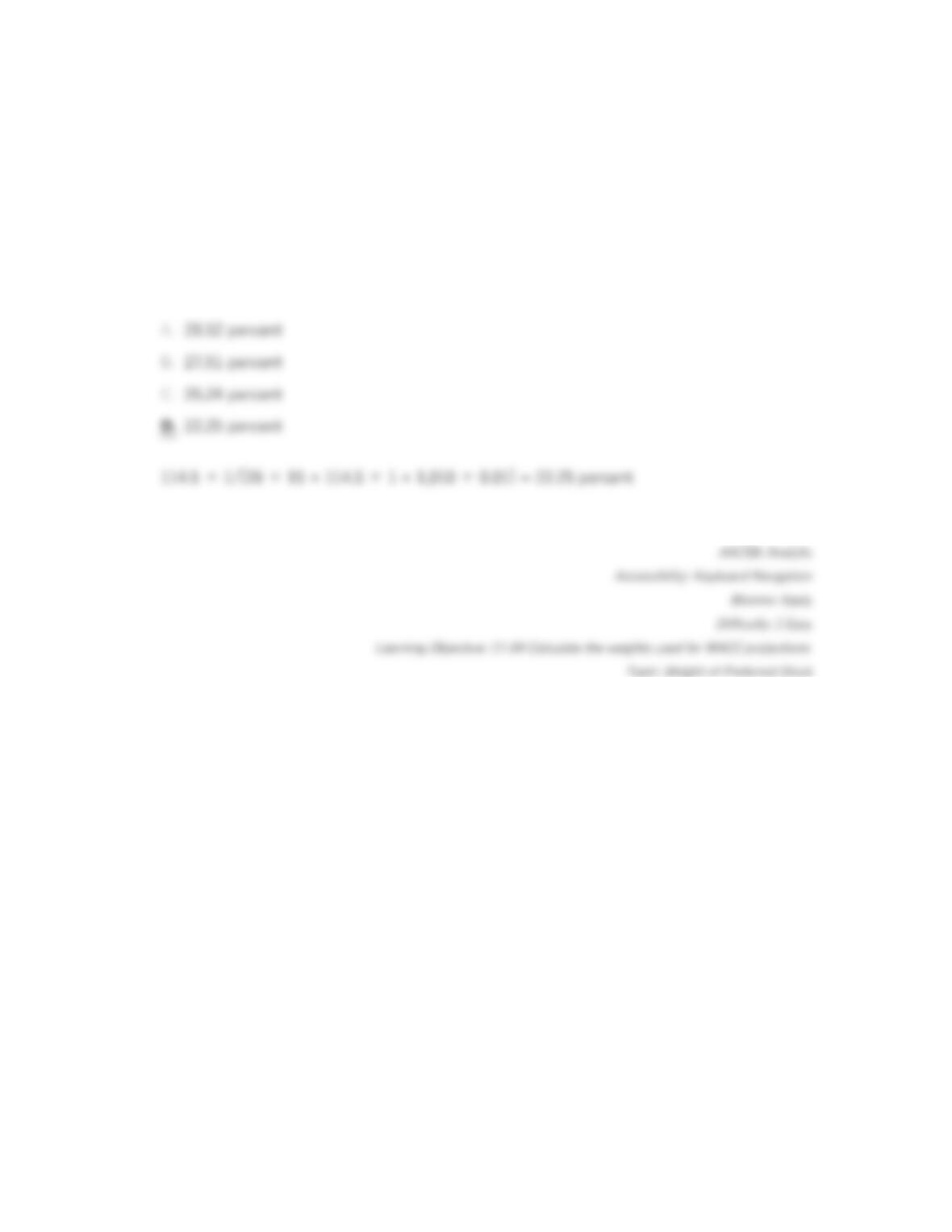
73.
FarCry Industries, a maker of telecommunications equipment, has 26 million shares of
common stock outstanding, 1 million shares of preferred stock outstanding, and 10
thousand bonds. If the common shares sell for $15 per share, the preferred shares sell for
$114.50 per share, and the bonds sell for 101 percent of par ($1,000), what weight should
you use for preferred stock in the computation of FarCry’s WACC?
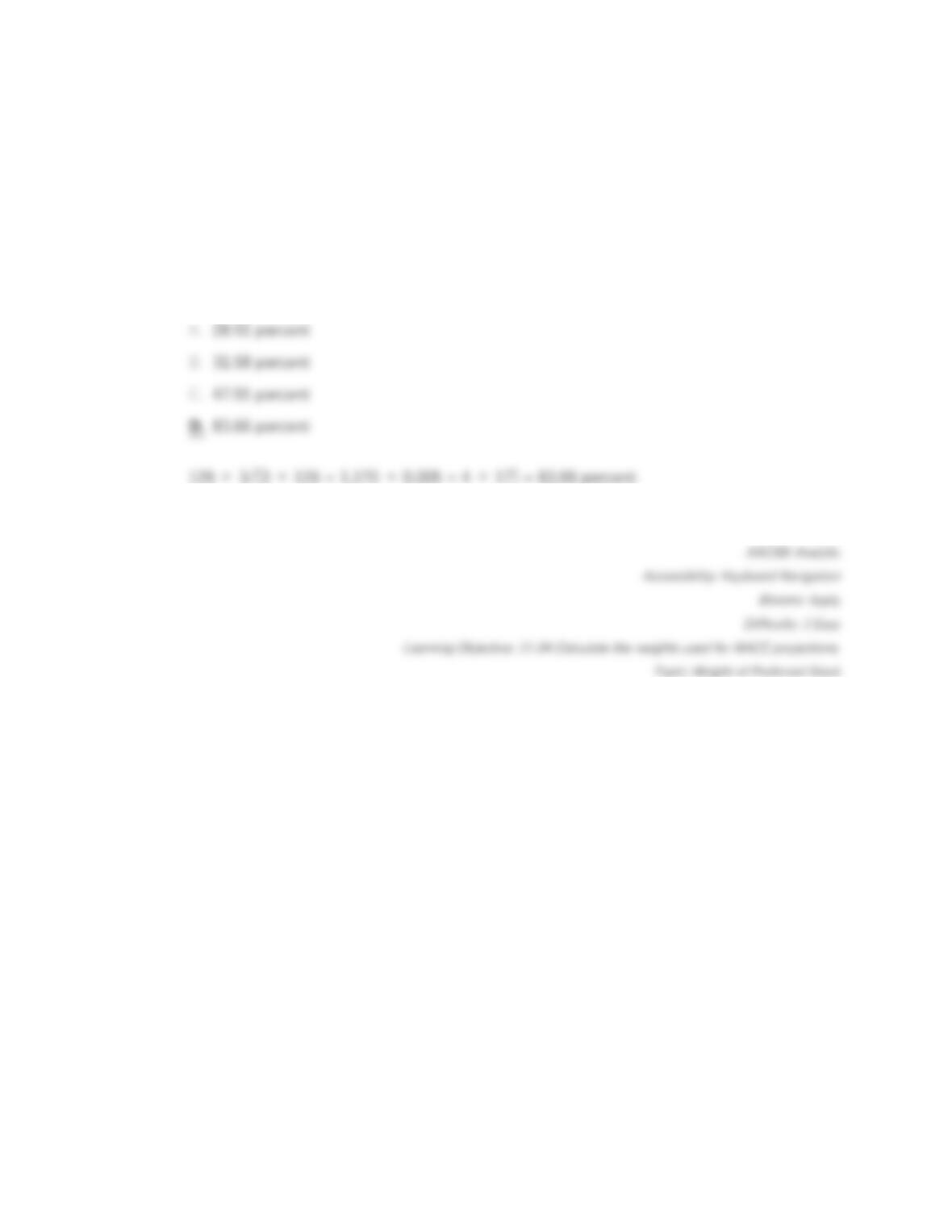
74.
OMG Inc. has 4 million shares of common stock outstanding, 3 million shares of preferred
stock outstanding, and 5 thousand bonds. If the common shares sell for $17 per share, the
preferred shares sell for $126 per share, and the bonds sell for 117 percent of par
($1,000), what weight should you use for preferred stock in the computation of OMG’s
WACC?
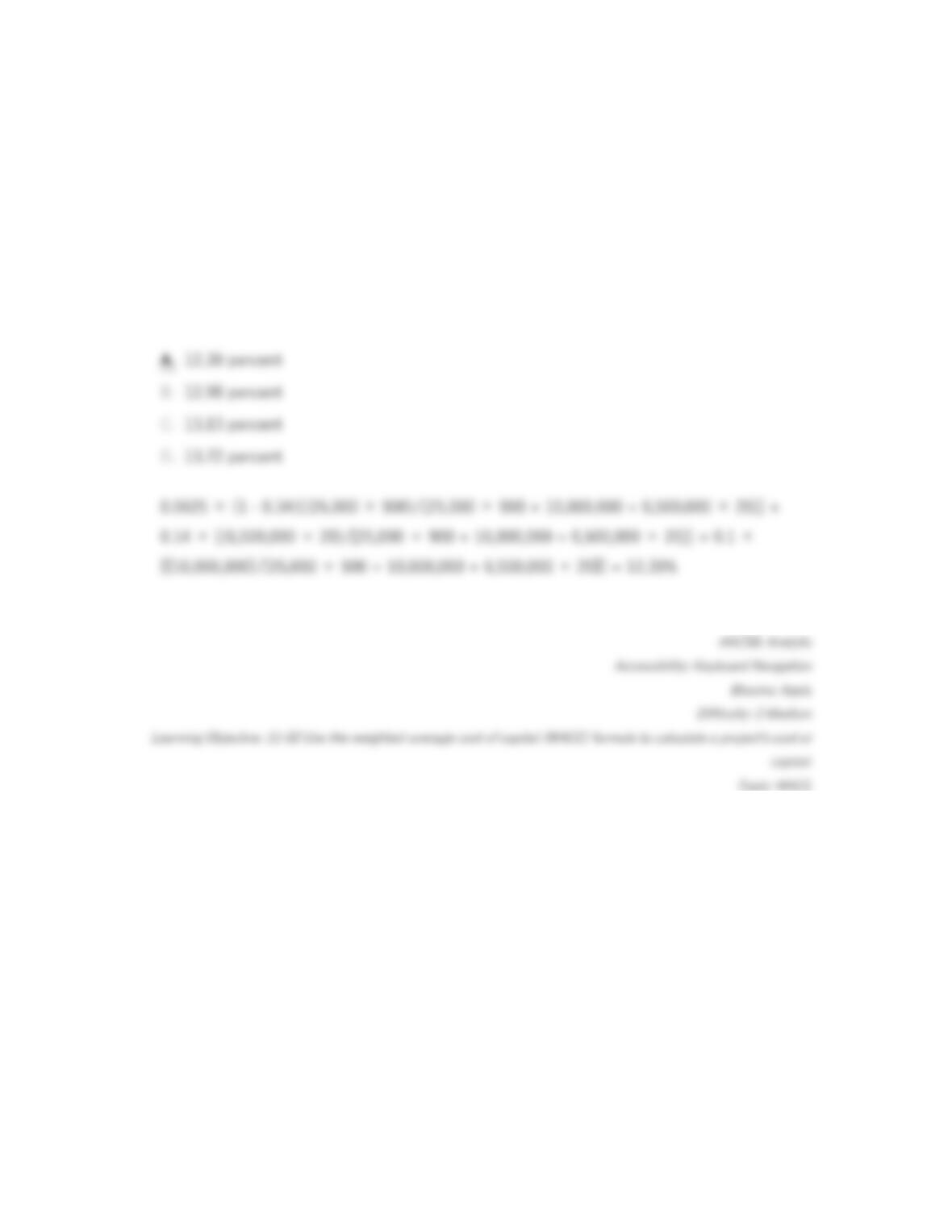
75.
JLP Industries has 6.5 million shares of common stock outstanding with a market price of
$20.00 per share. The company also has outstanding preferred stock with a market value
of $10 million, and 25,000 bonds outstanding, each with face value $1,000 and selling at
90 percent of par value. The cost of equity is 14 percent, the cost of preferred is 10
percent, and the cost of debt is 6.25 percent. If JLP’s tax rate is 34 percent, what is the
WACC?