Exam
Name___________________________________
SHORT ANSWER. Write the word or phrase that best completes each statement or answers the question.
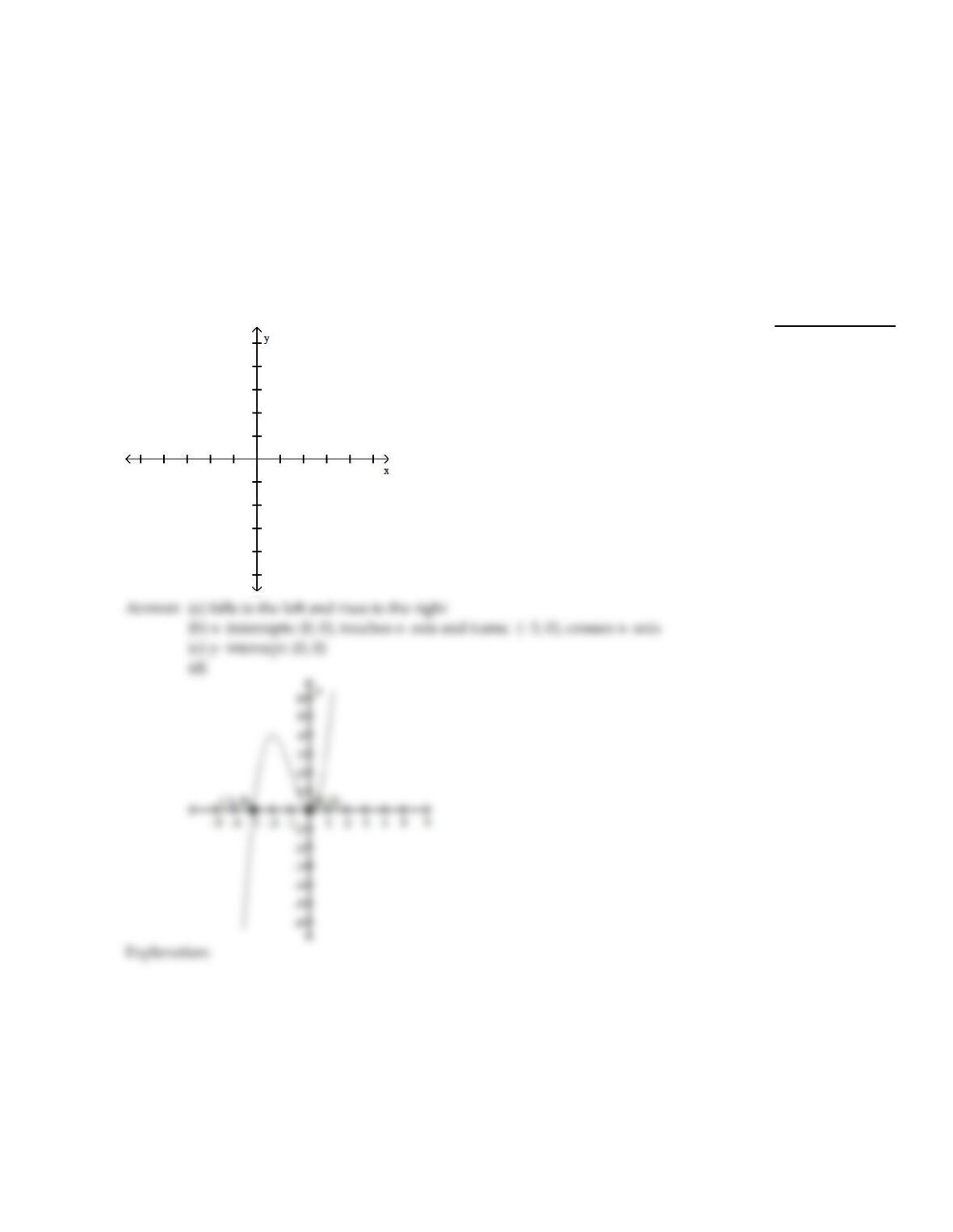
Complete the following:
(a) Use the Leading Coefficient Test to determine the graph’s end behavior.
(b) Find the x–intercepts. State whether the graph crosses the x–axis or touches the x–axis and turns around at each
intercept.
(c) Find the y–intercept.
(d) Graph the function.
1)
f(x) =x2(x +3)
1)
1
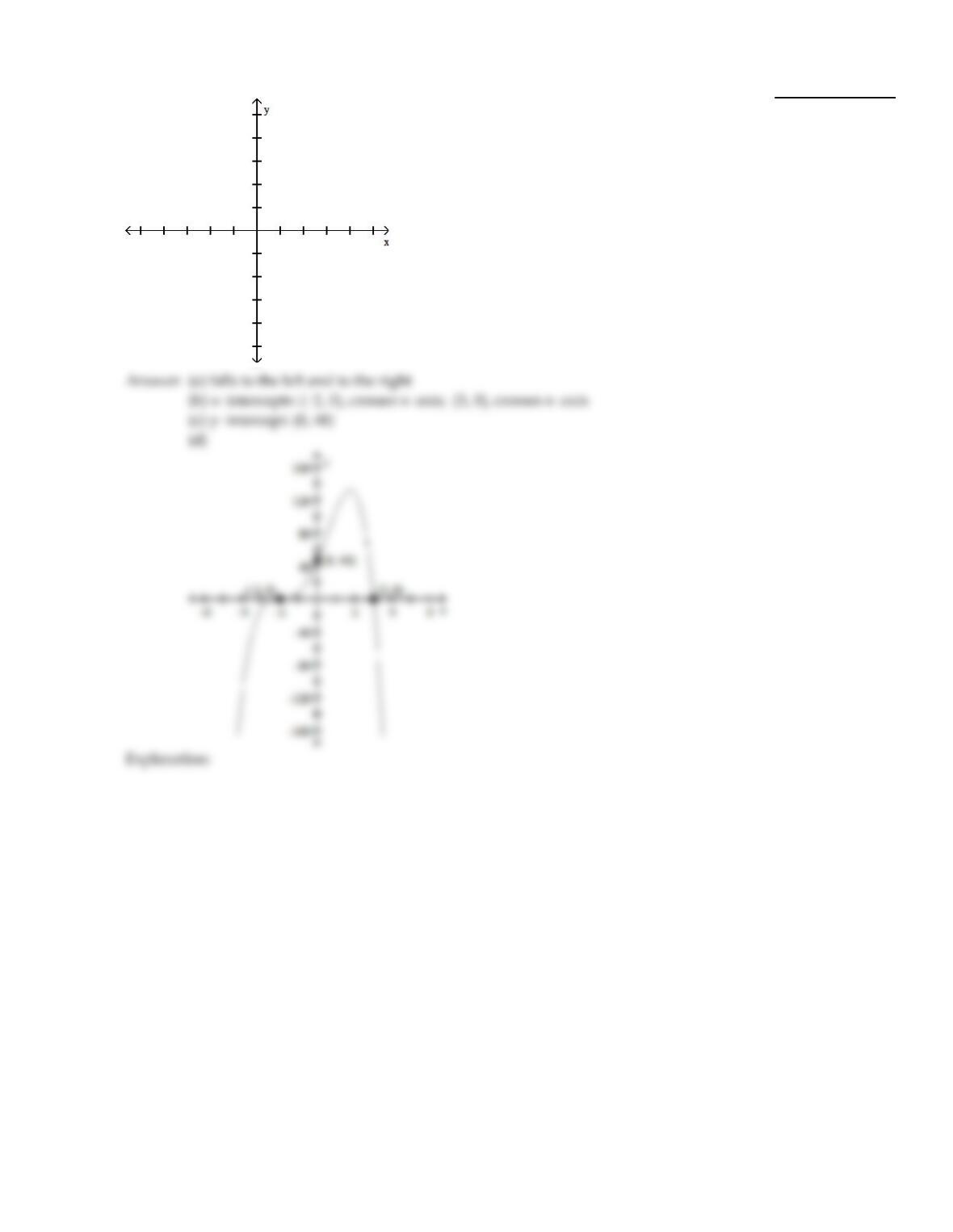
2)
f(x) = – 2(x –3)(x +2)3
2)
2
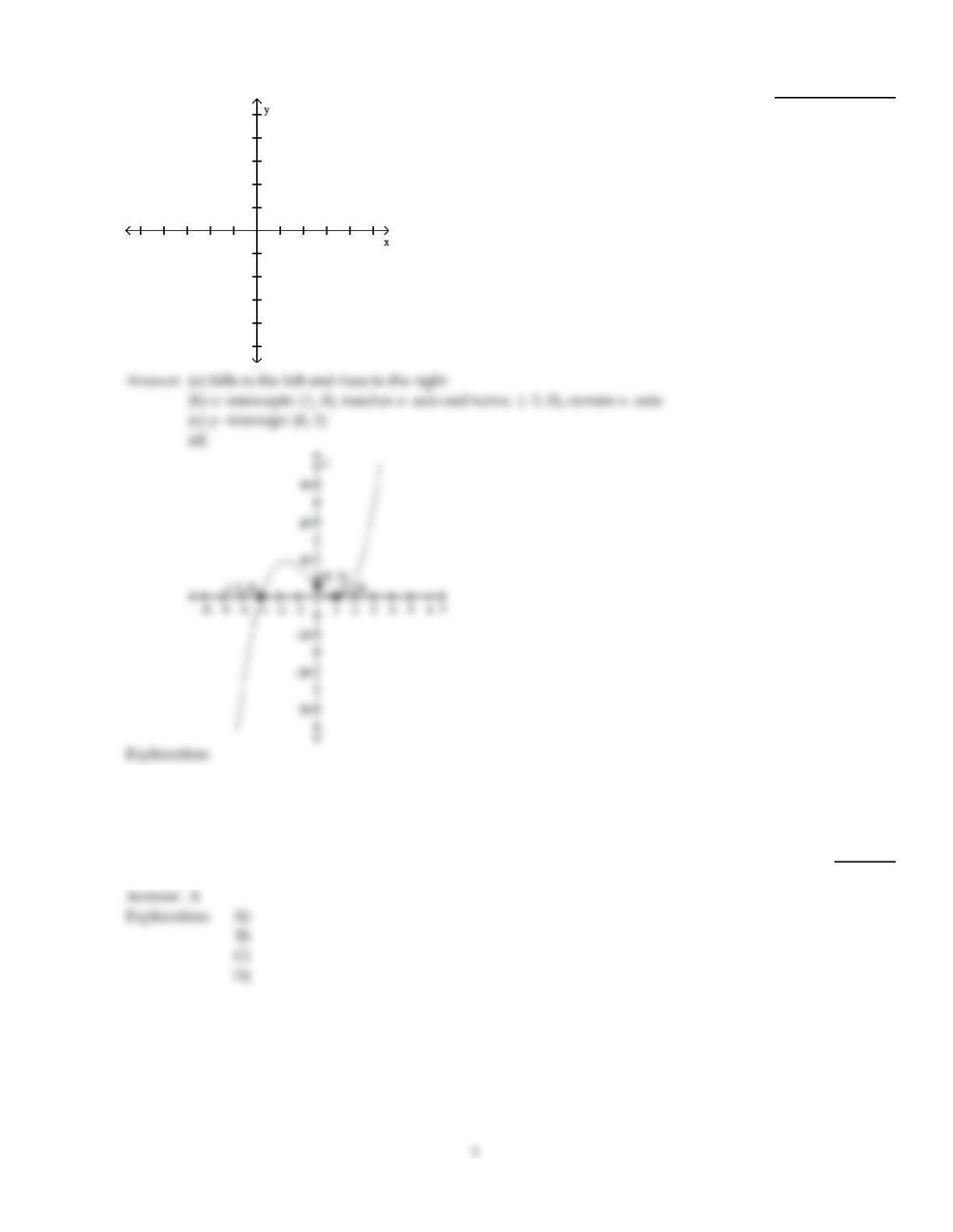
3)
f(x) = (x +3)(x –1)2
3)
MULTIPLE CHOICE. Choose the one alternative that best completes the statement or answers the question.
Determine the maximum possible number of turning points for the graph of the function.
4)
f(x) =9x3– 6x2– 7x –6
4)
A)
2
B)
0
C)
3
D)
9
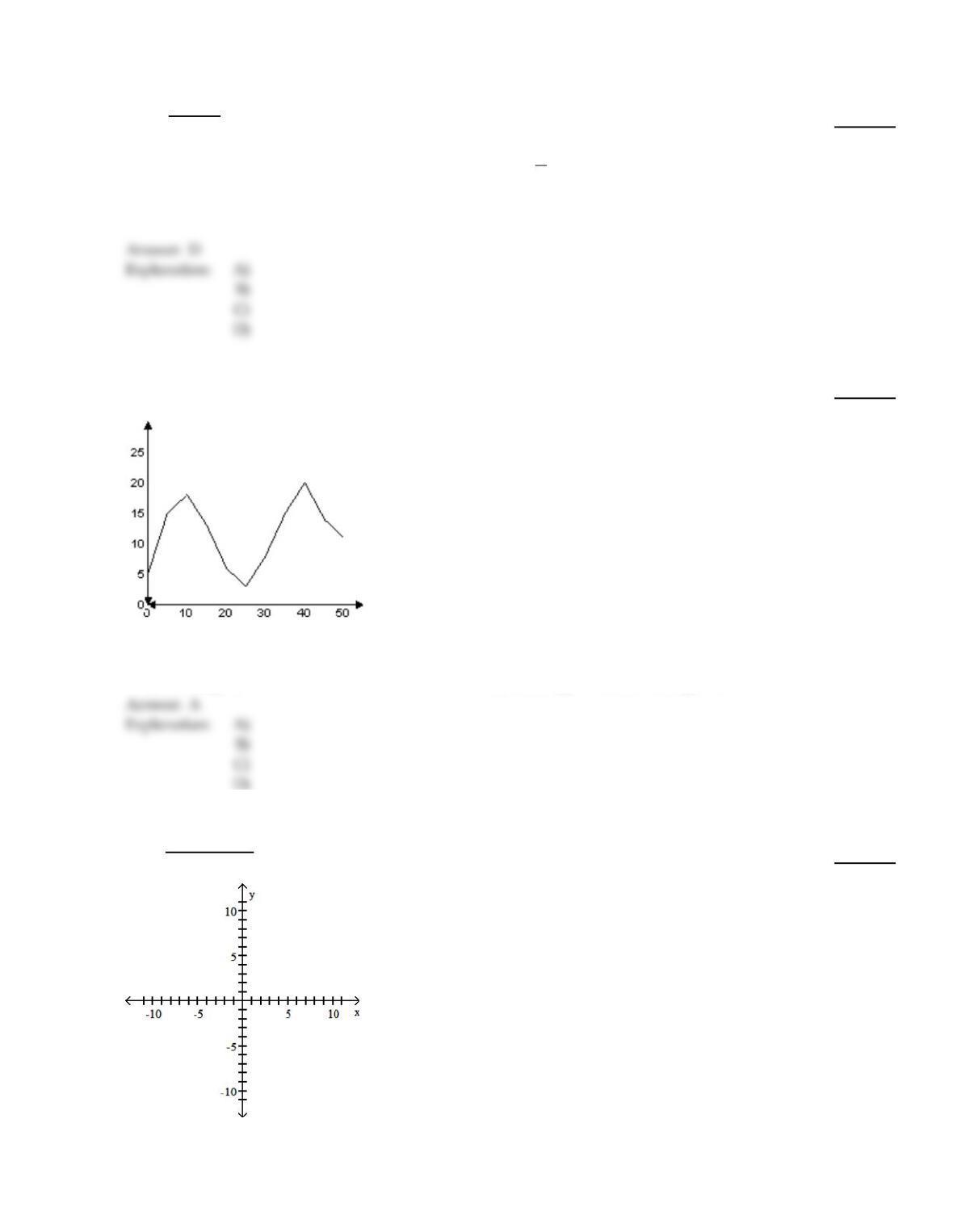
Find the horizontal asymptote, if any, of the graph of the rational function.
5)
h(x) =8x3
2x2+ 1
5)
A)
y =4
B)
y =1
4
C)
y = 0
D)
no horizontal asymptote
Solve.
6)
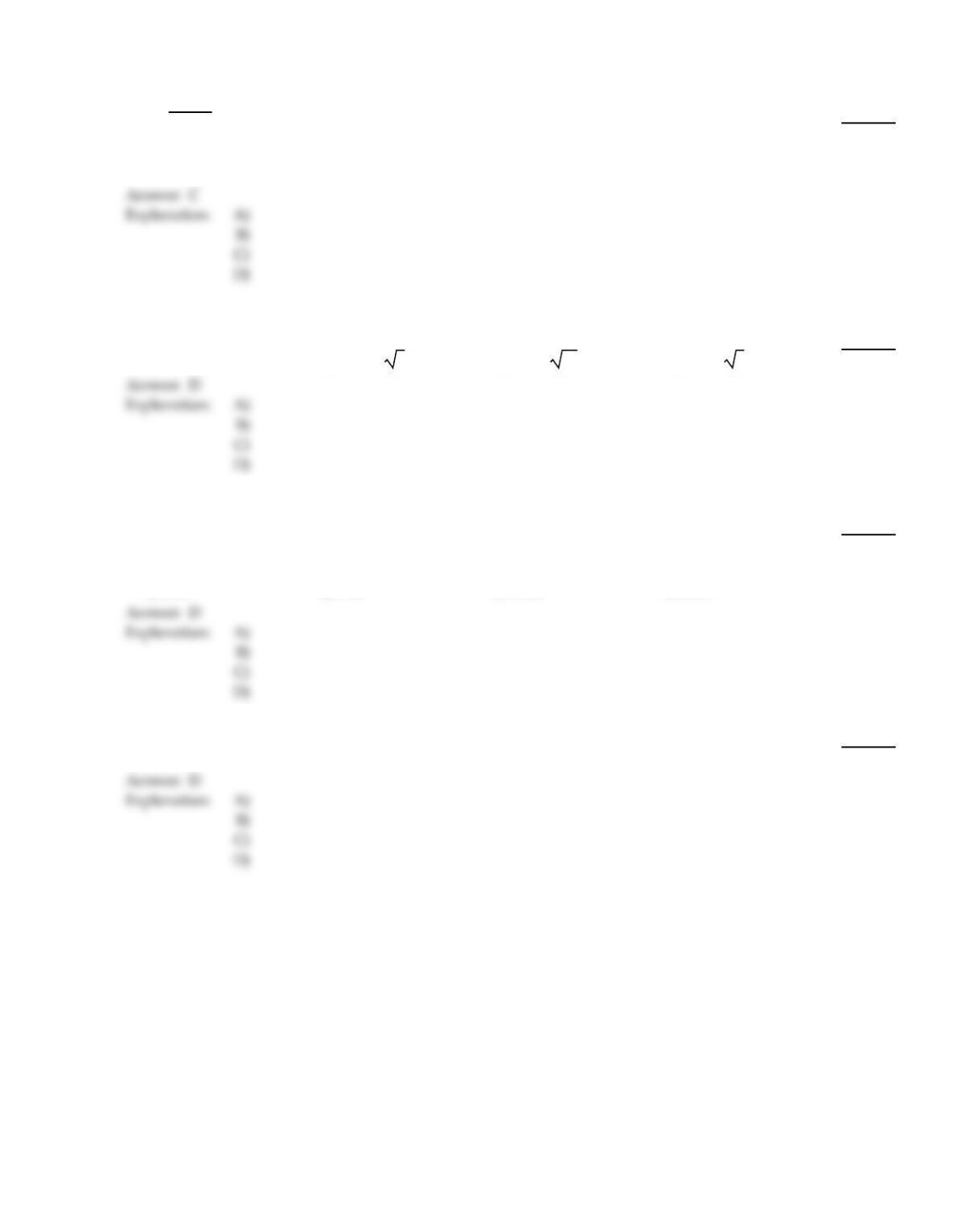
Suppose that a polynomial function is used to model the data shown in the graph below.
For what intervals is the function increasing?
6)
A)
0 through 10 and 25 through 40
B)
10 through 25 and 40 through 50
C)
0 through 40
D)
0 through 10 and 20 through 50
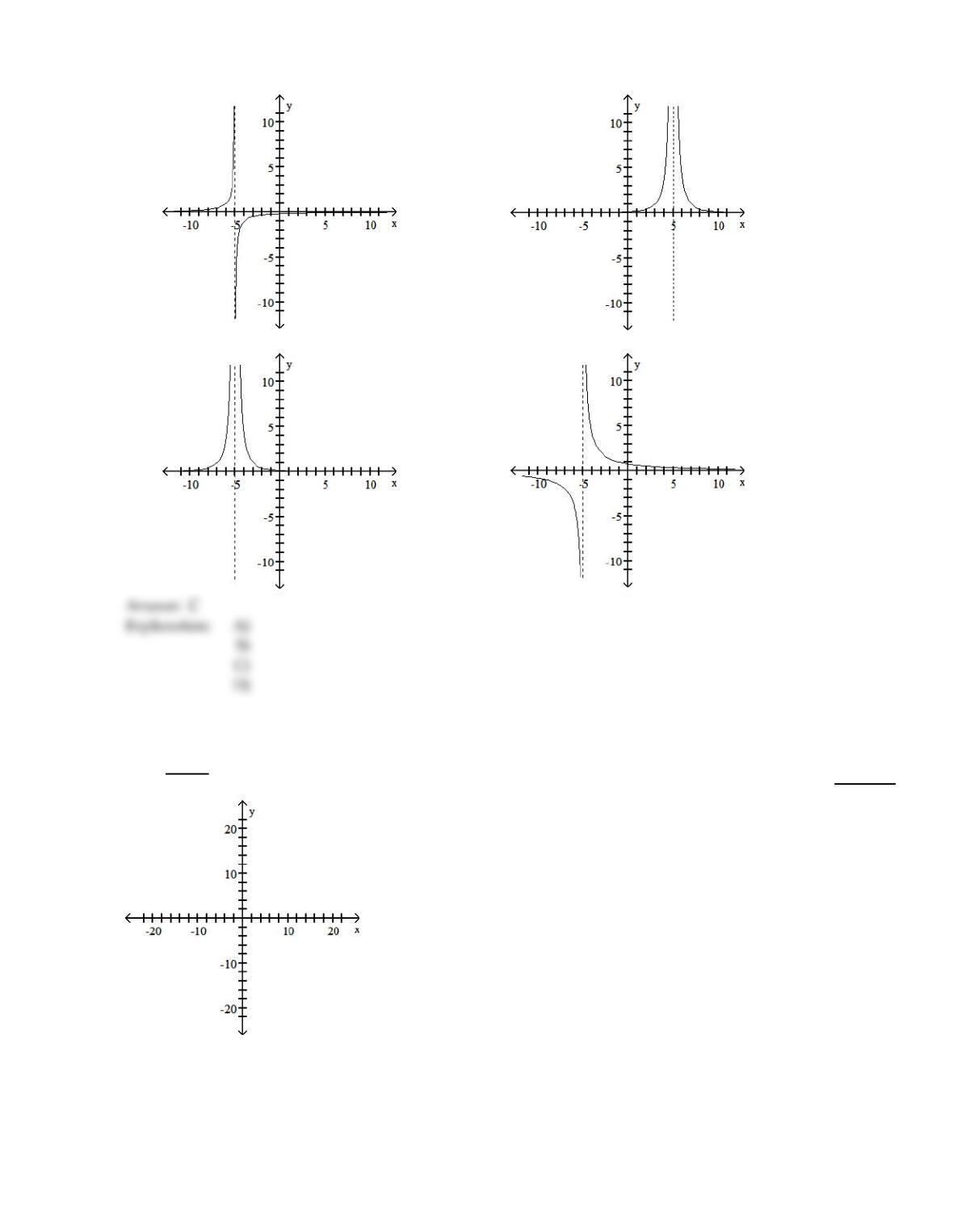
Graph the rational function.
7)
f(x) =4
x2+10x +25
7)
4
A)
B)
C)
D)
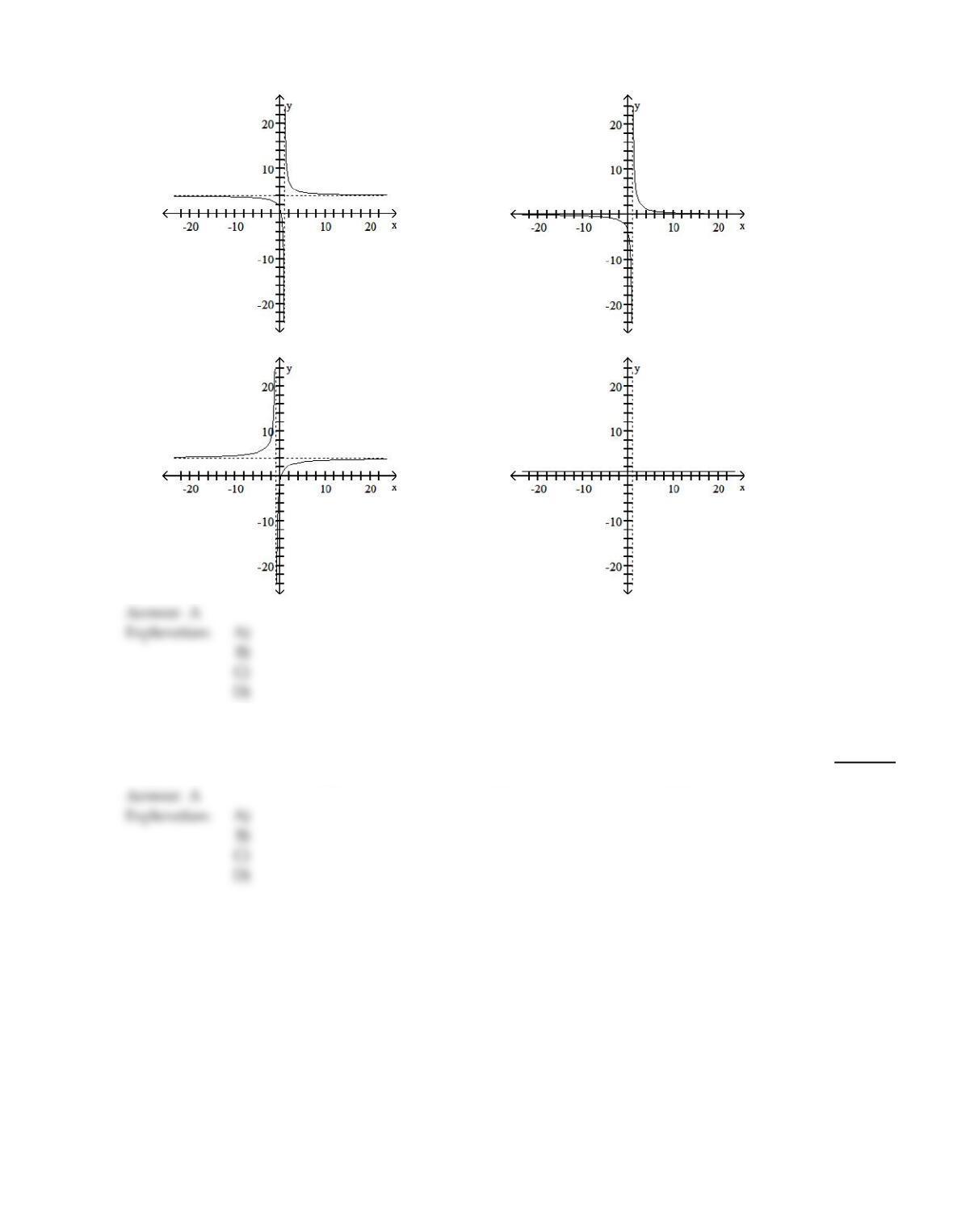
Find the vertical asymptotes, if any, and the horizontal asymptote, if one exists, of the graph of the rational function.
Then graph the rational function.
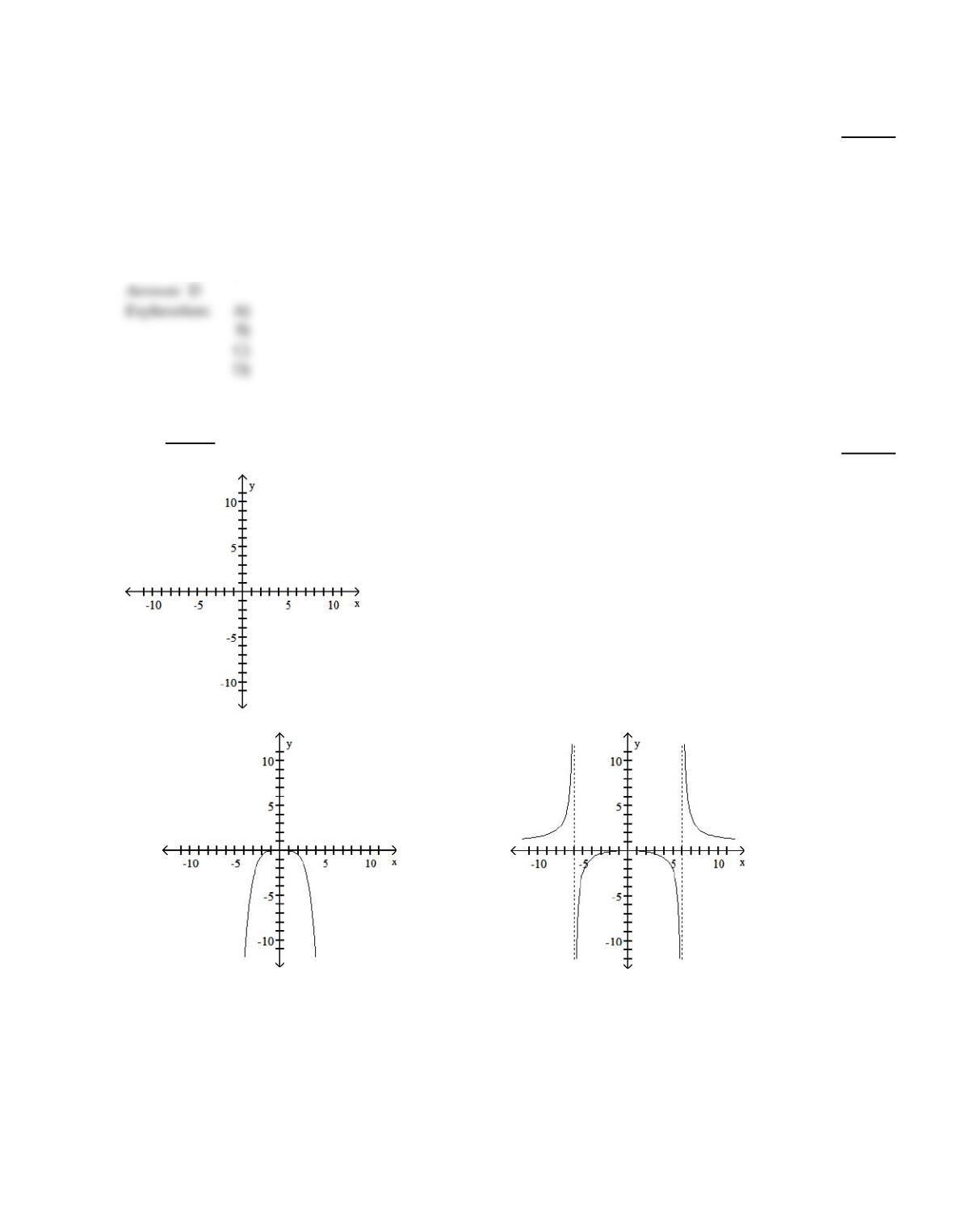
8)
f(x) =4x – 1
x – 1
8)
5
A)
x =1; y =4
B)
x =1; y = 0
C)
x = – 1; y =4
D)
x =1; y = 1
Determine the maximum possible number of turning points for the graph of the function.
9)
f(x) = (x + 1)(x – 1)(7x + 3)
9)
A)
2
B)
0
C)
7
D)
3
6
Solve the equation.
10)
2x4– 17x3+ 71x2– 153x + 117 = 0
10)
A)
–3, 3
2, 2±3i
B)
–3, –3
2, 3±2i
C)
3, –3
2, 3±2i
D)
3, 3
2, 2±3i
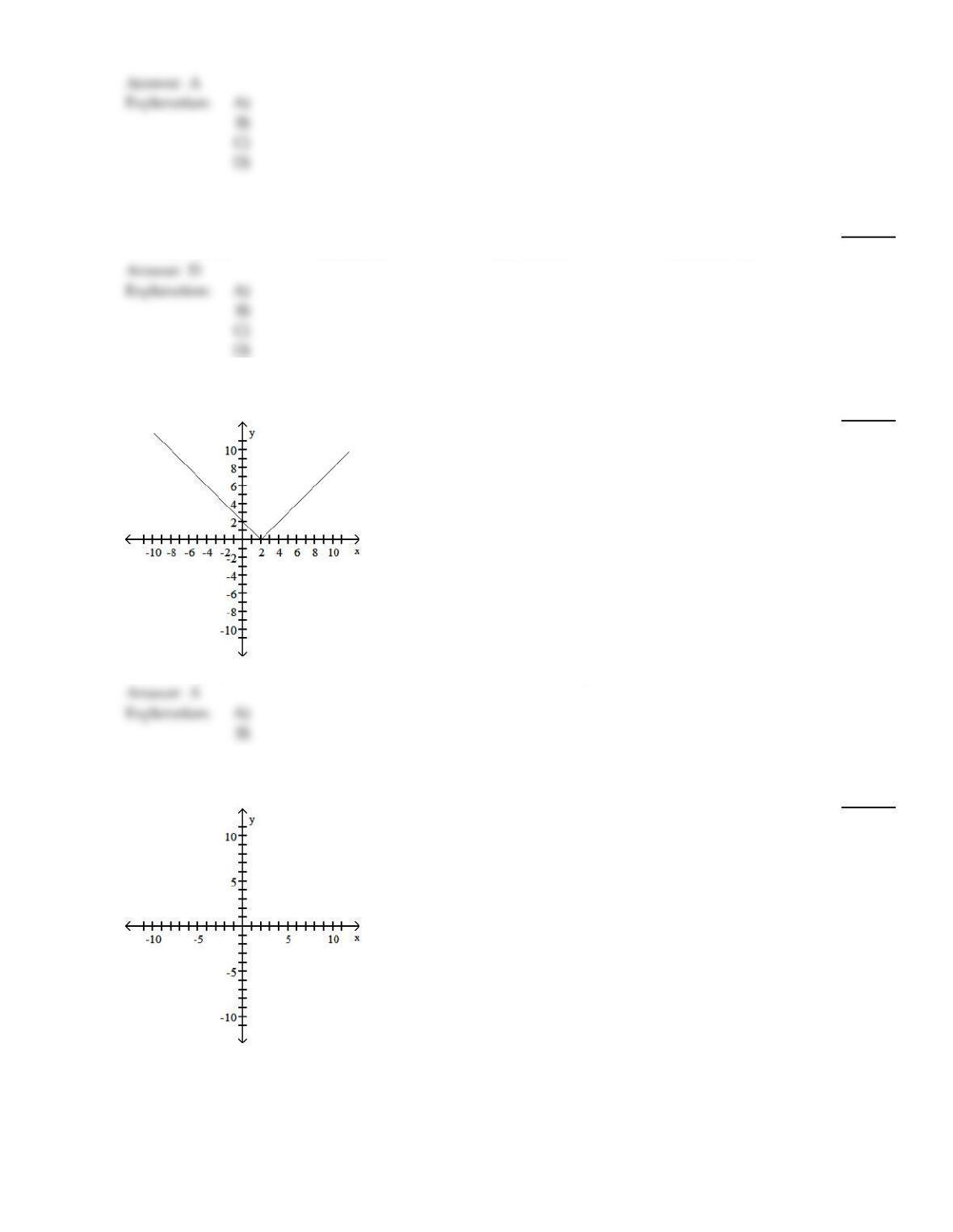
Graph the function.
11)
f(x) = – 2x(x – 1)3
11)
A)
B)
C)
D)
7
Solve the equation.
12)
x3+ 4x2– x – 4 = 0
12)
A)
{5, –1, –4}
B)
{1, 2, 4}
C)
{–1, 1, 4}
D)
{–1, 1, –4}
Determine whether the graph shown is the graph of a polynomial function.
13)
13)
A)
not a polynomial function
B)
could be a polynomial function
Graph the function.
14)
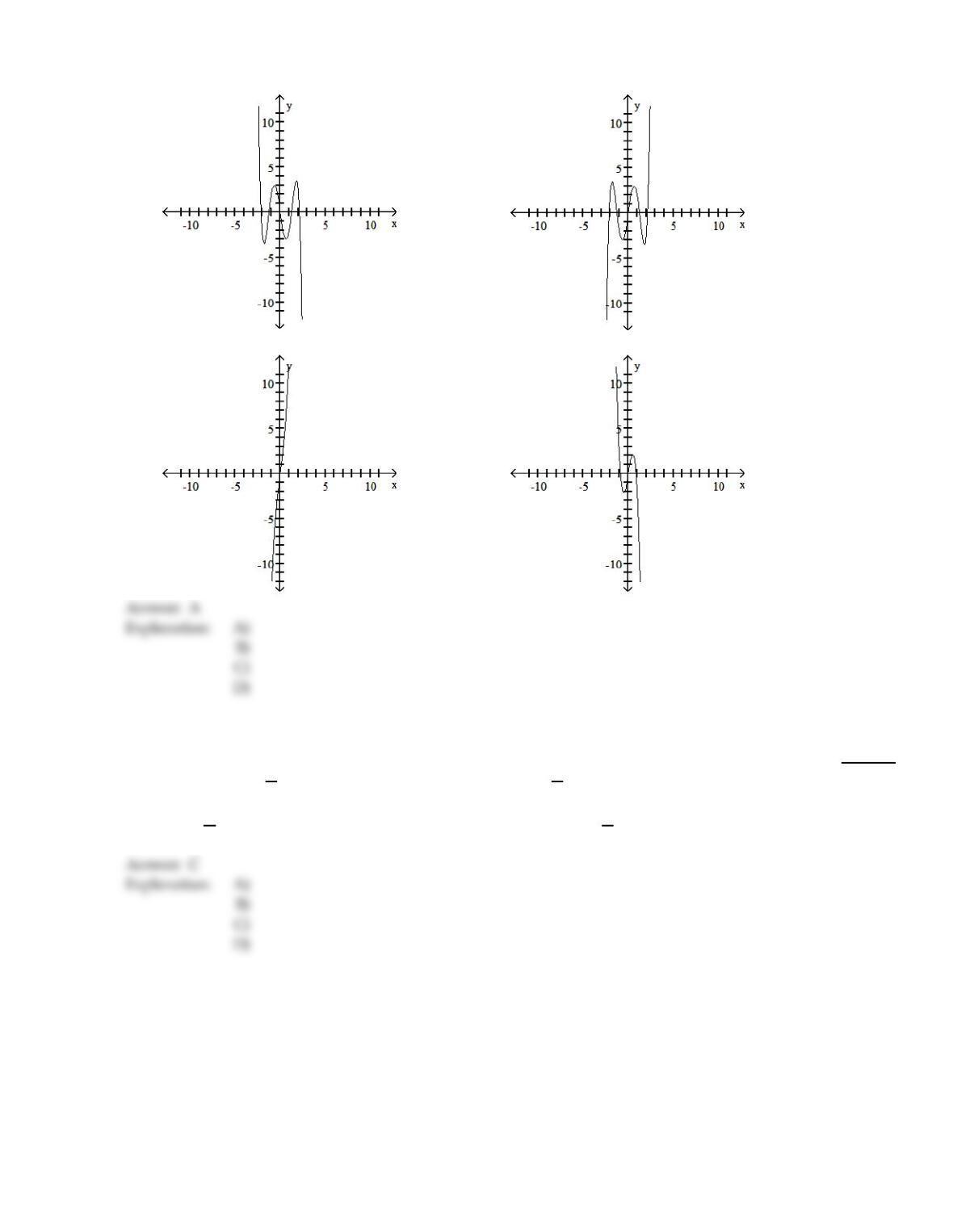
f(x) =6x3–7x –x5
14)
8
A)
B)
C)
D)
Find all the rational zeros of the polynomial function.
15)
f(x) =3x4–5x3+8x2–10x +4
15)
A)
–2, –1, 1, and –2
3
B)
2 and 2
3
C)
1 and 2
3
D)
–2, –1, 1, and 2
3
Solve the problem.
9
16)
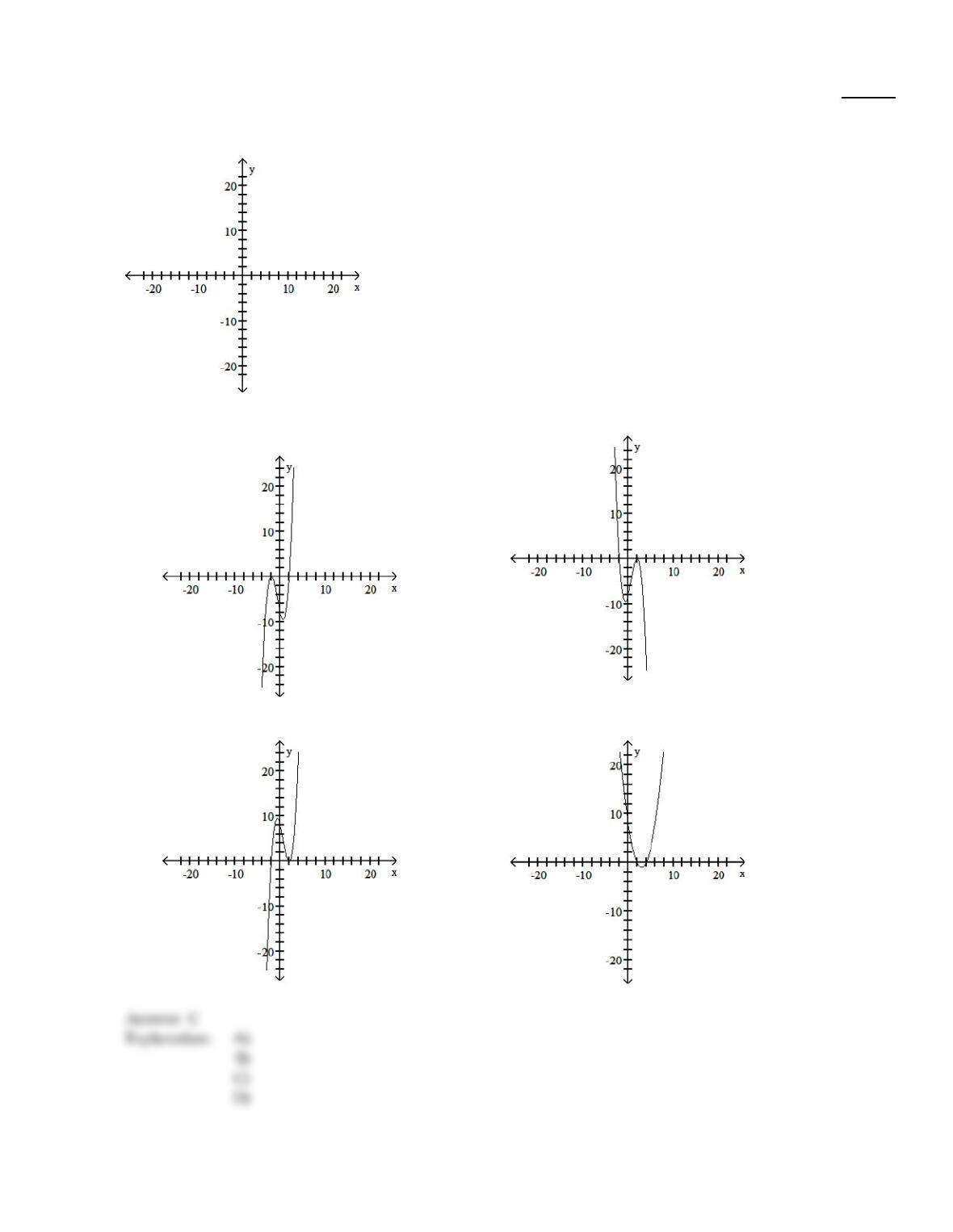
Consider the function f(x) =x3–2x2–4x +8.
a. Use factoring to find all zeros of f.
b. Use the Leading Coefficient Test and the zeros of f to graph the function.
16)
A)
a. –2, 2, and –2
b.
B)
a. –2, 2, and 2
b.
C)
a. –2, 2, and 2
b.
D)
a. 4 and 2
b.
10
Use the Rational Zero Theorem to list all possible rational zeros for the given function.
17)
f(x) =x3+x2–3x –3
17)
A)
± 1, ±3
B)
±3
C)
± 1, ±1
3, ±3
D)
± 1, ±1
3
Determine whether the graph shown is the graph of a polynomial function.
18)
18)
A)
could be a polynomial function
B)
not a polynomial function
Determine whether the function is even, odd, or neither.
19)
19)
A)
Odd
B)
Even
C)
Neither
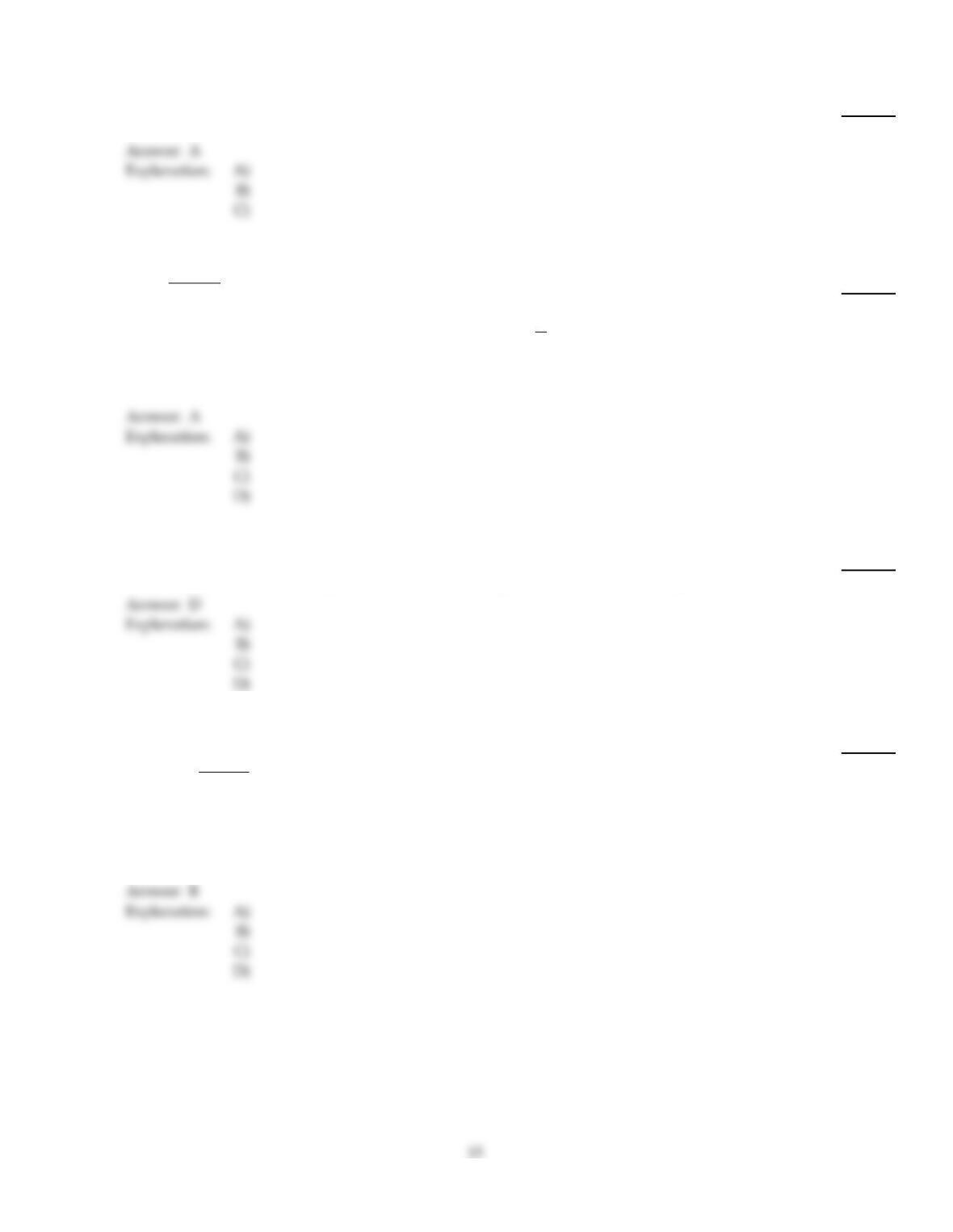
Graph the function.
11
20)
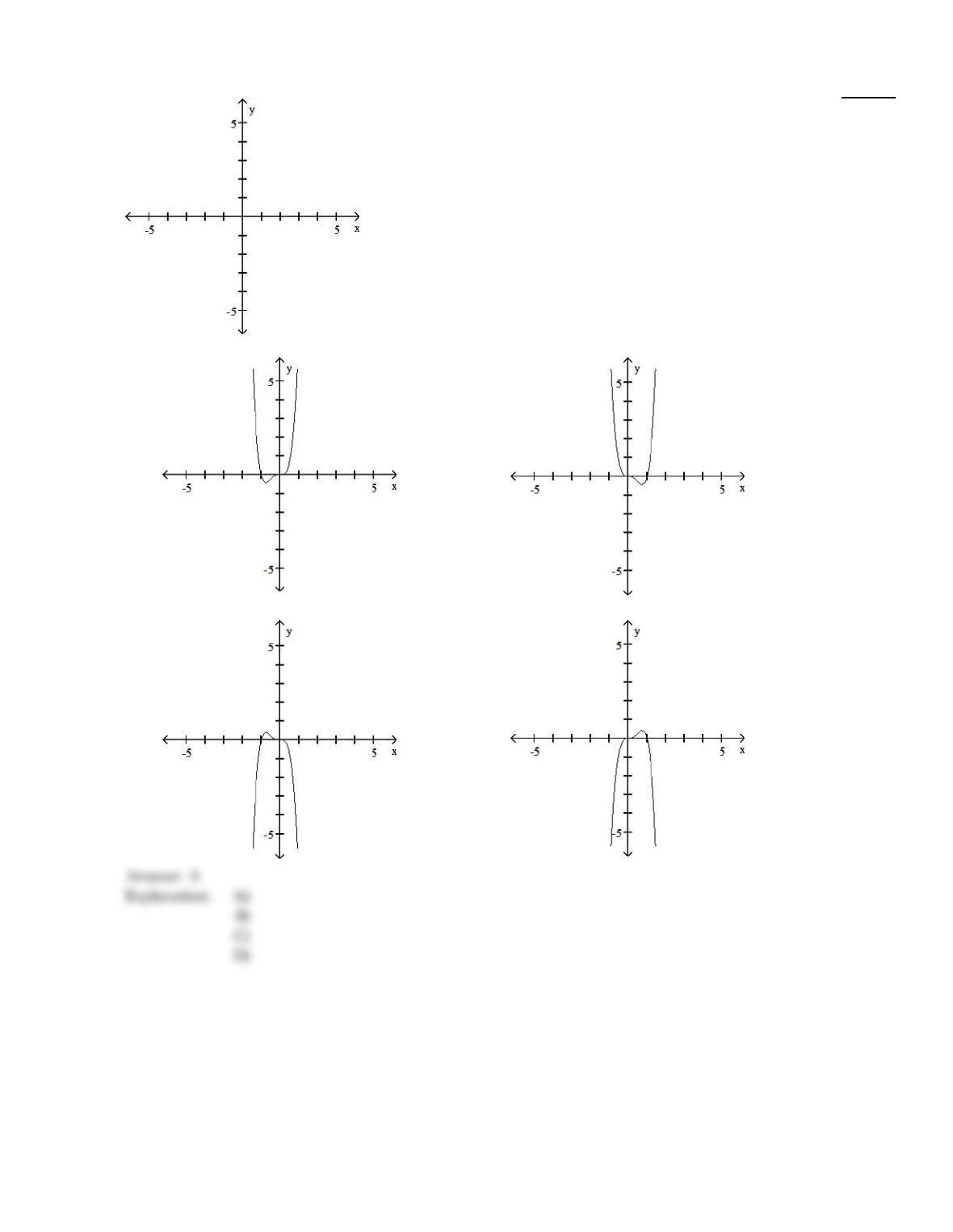
f(x) =4x4+ 4x3
20)
A)
B)
C)
D)
12
Determine whether the function is even, odd, or neither.
21)
f(x) = x3– 4x
21)
A)
Odd
B)
Neither
C)
Even
Find the horizontal asymptote, if any, of the graph of the rational function.
22)
g(x) =10x2
5x2+ 1
22)
A)
y =2
B)
y =1
2
C)
y = 0
D)
no horizontal asymptote
Find the zeros of the polynomial function by factoring.
23)
f(x) =x3– 10x2+25x
23)
A)
1 and 5
B)
5
C)
0 and –5
D)
0 and 5
Solve the problem.
24)
The rational function
C(x) =135x
100 – x ,0 x < 100
describes the cost, C, in millions of dollars, to inoculate x% of the population against a particular
strain of the flu. Determine the difference in cost between inoculating 85% of the population and
inoculating 35% of the population. (Round to the nearest tenth, if necessary.)
24)
A)
$2.4 million
B)
$692.3 million
C)
$692.4 million
D)
$2.3 million
Find the vertical asymptotes, if any, of the graph of the rational function.
25)
g(x) =x
x2– 1
25)
A)
x =1
B)
x = – 1
C)
x =1, x = – 1
D)
no vertical asymptote
Solve the equation.
26)
x3– 8x2+ 19x – 14 = 0
26)
A)
{1, –1, 14}
B)
{–2, 6±2}
C)
{2, 6±14}
D)
{2, 3±2}
Solve the problem.
27)
The concentration, in parts per million, of a particular drug in a patient’s blood x hours after the
drug is administered is given by the function f(x) = – x4+ 8x3– 23x2+ 28x. How many hours after
the drug is administered will it be eliminated from the bloodstream.
27)
A)
2 hr
B)
7 hr
C)
11 hr
D)
4 hr
28)
Solve: x3– 8x2– x + 8 = 0.
28)
A)
{–1, 2, –4}
B)
{1, 2, 4}
C)
{1, –1, –8}
D)
{1, –1, 8}
14
Solve.
29)
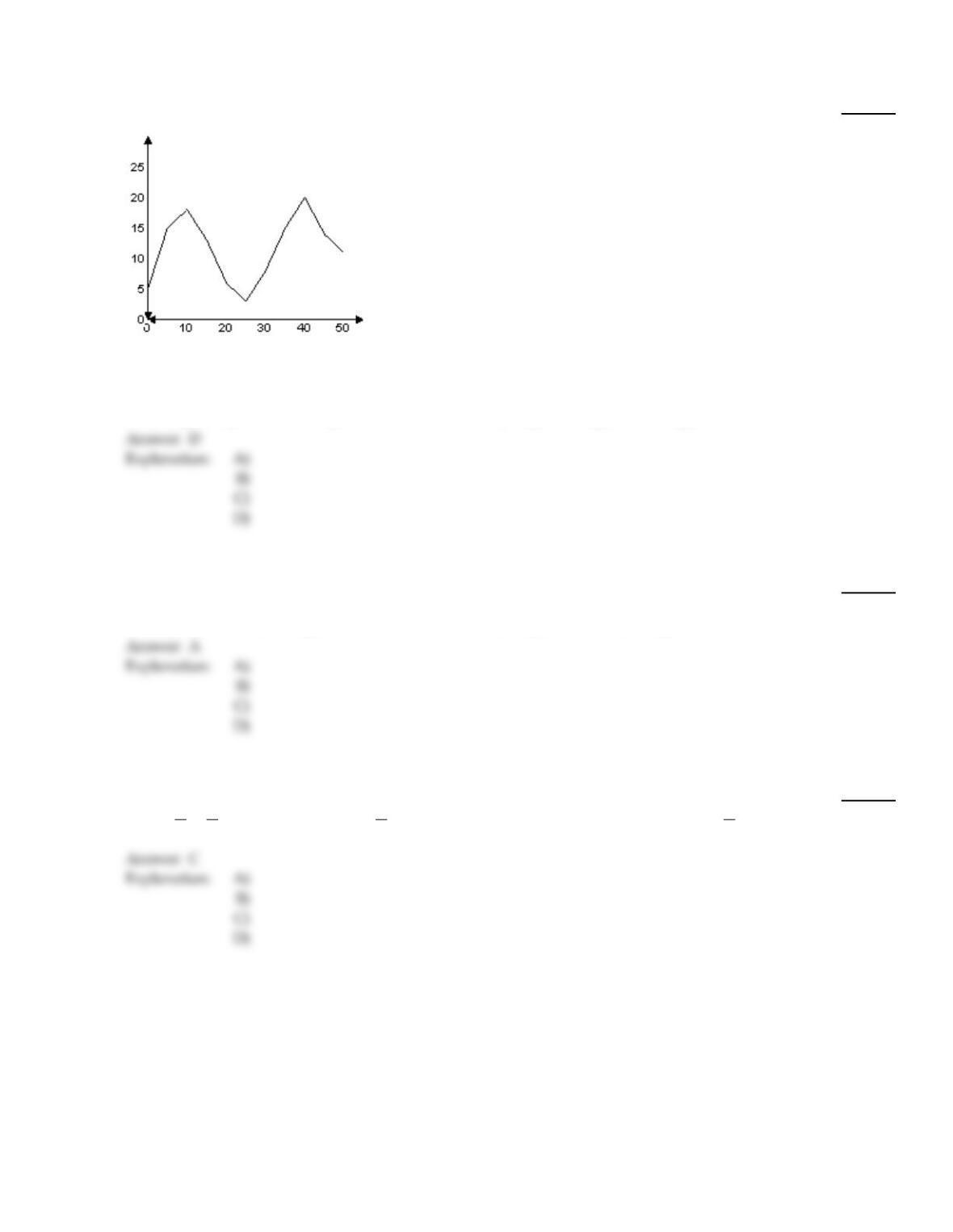
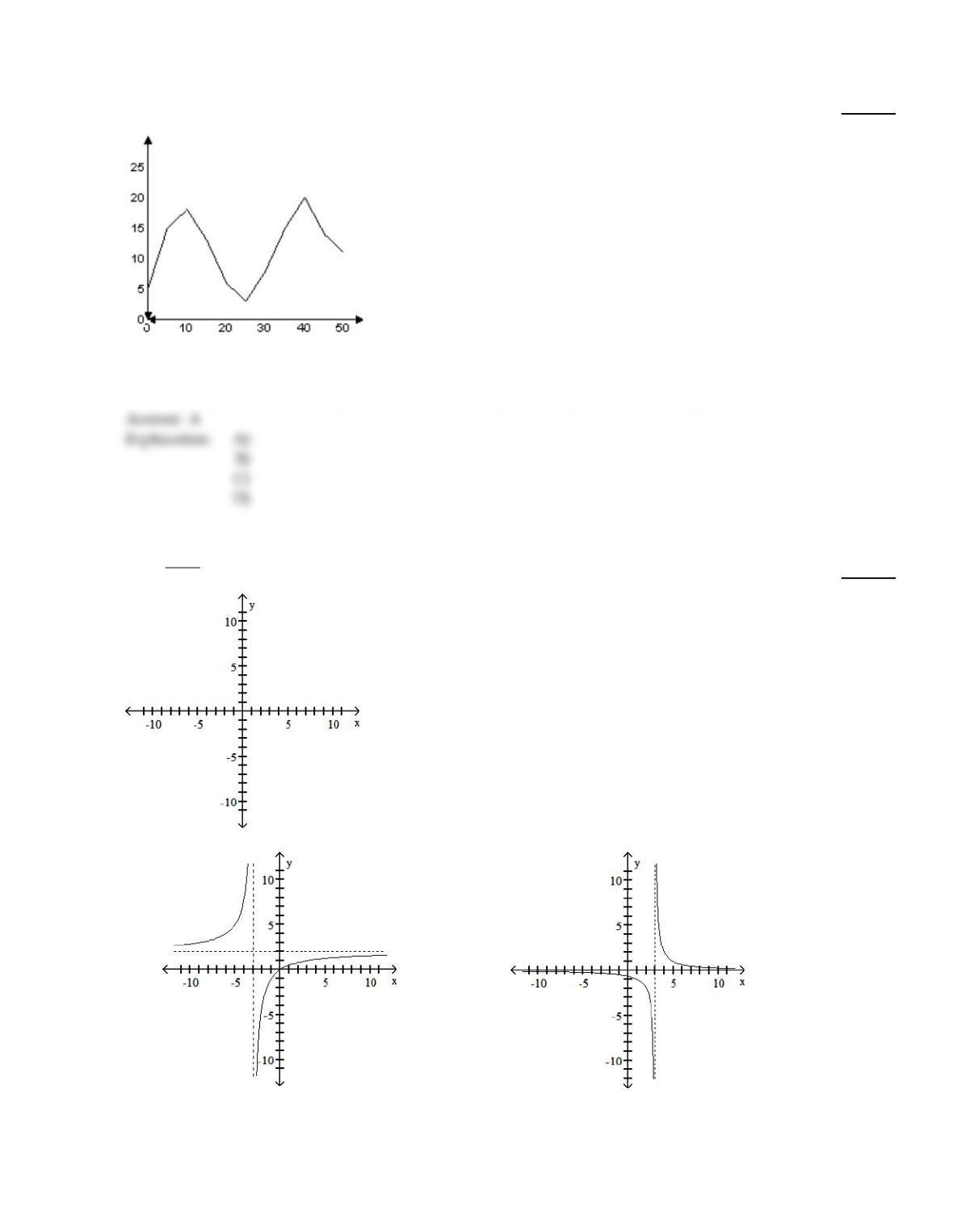
Suppose that a polynomial function is used to model the data shown in the graph below.
Determine the degree of the polynomial function of best fit and the sign of the leading coefficient.
29)
A)
Degree 5; positive leading coefficient
B)
Degree 5; negative leading coefficient
C)
Degree 4; positive leading coefficient
D)
Degree 4; negative leading coefficient
Use Descartes’s Rule of Signs to determine the possible number of positive and negative real zeros for the given function.
30)
f(x) =x2–14
30)
A)
1 positive zero, 1 negative zero
B)
no positive zeros, no negative zeros
C)
1 positive zero, no negative zeros
D)
no positive zeros, 1 negative zero
Use the Rational Zero Theorem to list all possible rational zeros for the given function.
31)
f(x) =x5–3x2+6x +2
31)
A)
±1
3, ±2
3, ±2
B)
± 1, ±1
2
C)
± 1, ±2
D)
±2, ±1
2
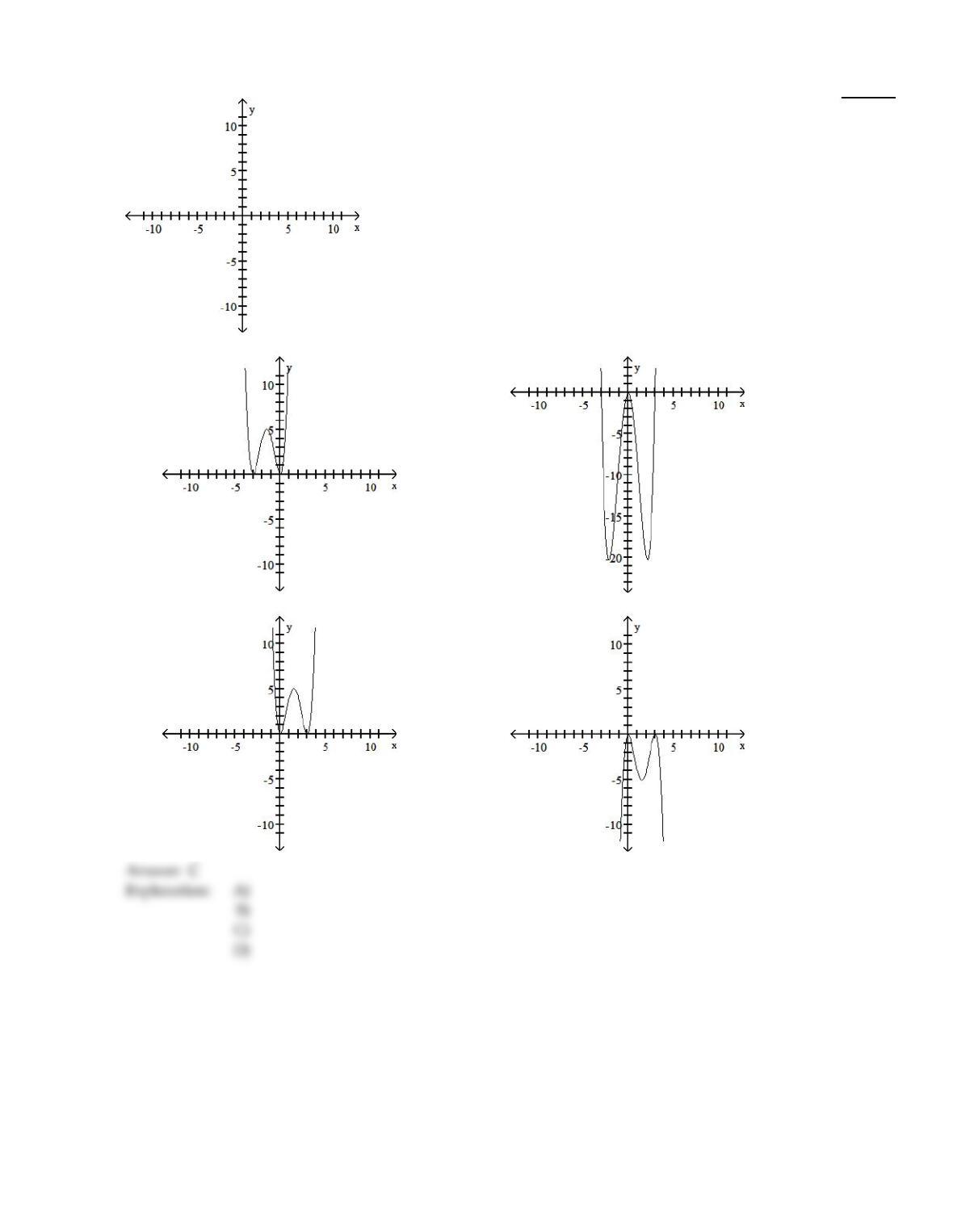
Graph the function.
15
32)
f(x) =x4– 6x3+ 9x2
32)
A)
B)
C)
D)
16
Solve.
33)
Suppose that a polynomial function is used to model the data shown in the graph below.
For what intervals is the function decreasing?
33)
A)
10 through 25 and 40 through 50
B)
10 through 50
C)
0 through 10 and 25 through 40
D)
10 through 25 and 40 through 45
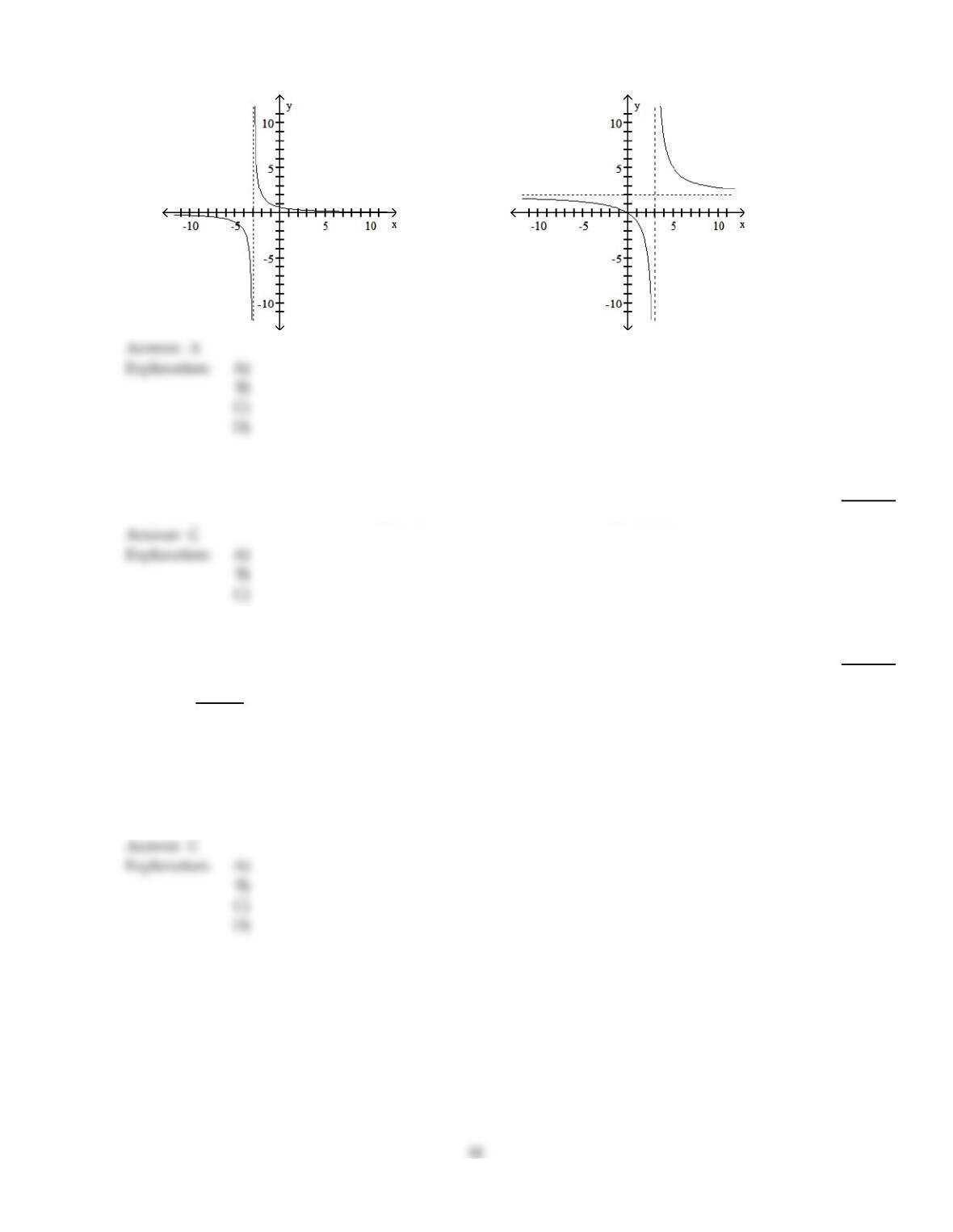
Graph the rational function.
34)
f(x) =2x
x + 3
34)
A)
B)
17
C)
D)
Determine whether the function is even, odd, or neither.
35)
f(x) = x4– x3
35)
A)
Odd
B)
Even
C)
Neither
Solve the problem.
36)
A drug is injected into a patient and the concentration of the drug is monitored. The drug’s
concentration, C(t), in milligrams after t hours is modeled by
C(t) =5t
3t2+2.
What is the horizontal asymptote for this function? Describe what this means in practical terms.
36)
A)
y =1.67; After 1.67 hours, the concentration of the drug is at its greatest.
B)
y =1.67; Over time, the drug’s concentration will approach 1.67 milligrams.
C)
y = 0; Over time, the drug’s concentration will approach 0 milligrams.
D)
y =1.00; After 1.00 hours, the concentration of the drug is at its greatest.
Find the zeros for the polynomial function and give the multiplicity for each zero. State whether the graph crosses the
x–axis, or touches the x–axis and turns around, at each zero.
37)
f(x) =x3+ 3x2– 4x – 12
37)
A)
3 with multiplicity 1, touches x–axis and turns; 2 with multiplicity 1, touches x–axis and
turns; –2 with multiplicity 1, touches x–axis and turns
B)
3 with multiplicity 1, crosses x–axis; 2 with multiplicity 1, crosses x–axis; –2 with
multiplicity 1, crosses x–axis
C)
–3 with multiplicity 1, crosses x–axis; 4 with multiplicity 2, touches x–axis and turns
D)
–3 with multiplicity 1, crosses x–axis; 2 with multiplicity 1, crosses x–axis; –2 with
multiplicity 1, crosses x–axis
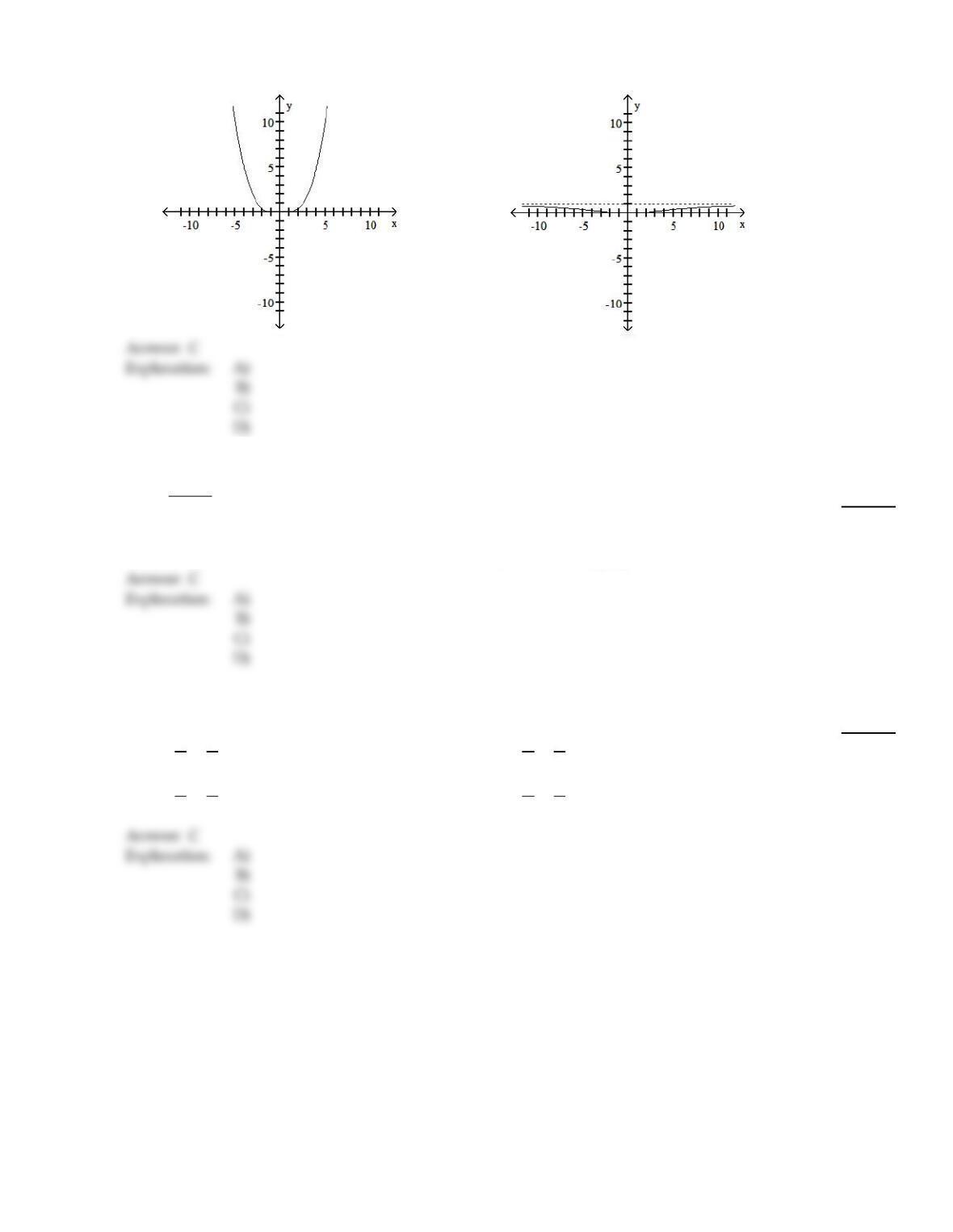
Graph the rational function.
38)
f(x) =x4
x2+ 36
38)
A)
B)
19
C)
D)
Find the vertical asymptotes, if any, of the graph of the rational function.
39)
h(x) =x +3
x2– 9
39)
A)
x = – 3
B)
x =3, x = – 3
C)
x =3
D)
no vertical asymptote
Use the Rational Zero Theorem to list all possible rational zeros for the given function.
40)
f(x) =3x4–x2+2
40)
A)
±1
3, ±1
2, ± 1, ±2, ±3
B)
±1
3, ±2
3, ± 1, ±2, ±3
C)
±1
3, ±2
3, ± 1, ±2
D)
±1
2, ±3
2, ± 1, ±3
Graph the function.
20