1
Environment: Science Behind the Stories, 2e Cdn. Ed. (Withgott)
Chapter 11 Mineral Resources and Mining
11.1 Graph and Figure Interpretation Questions
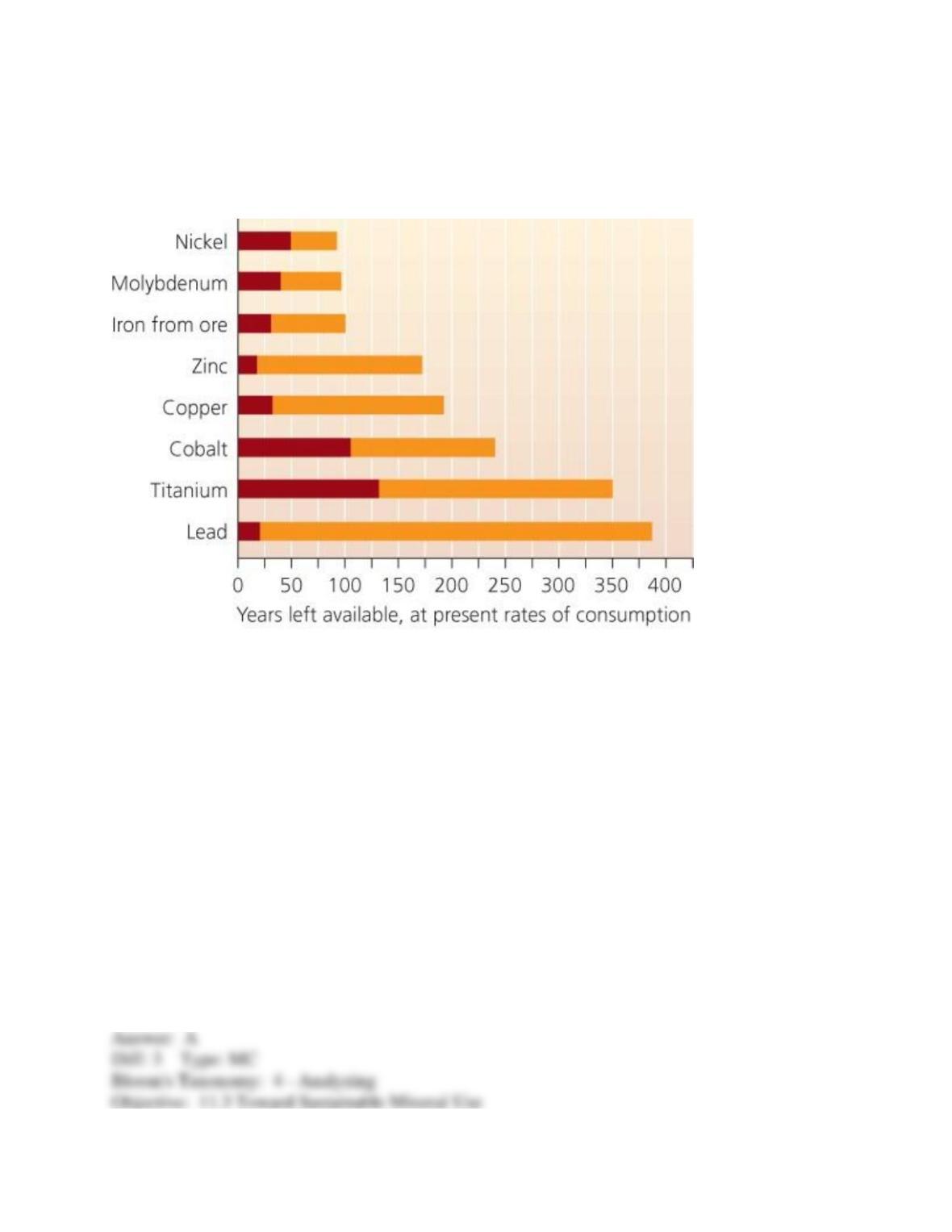
Figure 11.1. In this figure, the dark bars correspond to the remaining years that certain metals
are estimated to be economically recoverable at current prices, given known global reserves and
assuming current rates of consumption. The entire lengths of the bars (dark red plus orange
segments) show the remaining years that shown metals are estimated to be available using
current technology on all known deposits, whether economically recoverable or not. All these
time lengths could increase, if more reserves are found, or decrease, if consumption rates rise.
Use Figure 11.1 to answer the following questions.
1) Refer to Figure 11.1. Assuming today’s rate of consumption and no discoveries of new
reserves, the price of which metal from those listed below is likely to increase most (in
percentage of current value) in the next 25 years?
A) zinc
B) iron from ore
C) copper
D) cobalt
E) titanium
2) Refer to Figure 11.1. If the demand for molybdenum doubled and no more technically
recoverable resources for this metal were found, we would run out molybdenum in about
________ years.
A) 50
B) 20
C) 100
D) 140
E) 160
3) Refer to Figure 11.1. The costs of mining which metal from those listed below is likely to
increase most (in percentage of its current value) in the next 50 years?
A) molybdenum
B) iron from ore
C) cobalt
D) titanium
E) lead
11.2 Matching Questions
Match the following.
A) in situ recovery
B) strip mining
C) smelting
D) subsurface
E) manganese
F) tailings
G) gangue
H) iron
I) platinum
J) open-pit
K) refining
L) iridium
1) The type of mining most dangerous to its workers
2) Heating ore beyond its melting point and combining it with other metals or chemicals
3) Large amounts of this metal are in small ball-shaped accretions that are scattered across parts
of the ocean floor
4) The most economical method of extraction of minerals occurring in shallow horizontal
deposits near the surface
5) Remnants that are left over after metals have been extracted from ores
6) Metal used in a car’s catalytic converter
Diff: 1 Type: MA
Bloom’s Taxonomy: 1 – Remembering
Objective: 11.3 Toward Sustainable Mineral Use
11.3 Short Answer Questions
1) Name a few properties of a metal.
2) ________ involves heating ore beyond its melting point and combining it with other
metals or chemicals.
3) Diamonds from the Northwest Territories are laser-inscribed as originating in Canada to
distinguish them from ________.
4) Name four mineral resources extracted using strip mining.
5) A mine is opened. What process will create an acid mine drainage problem?
6) What is placer mining, and how is using this method to mine gold damaging to the
environment?
7) What mineral resources come from our oceans?
8) Which areas of the deep oceans are most promising for mining metals and why?
9) Can technological progress change economically recoverable reserves of a given mineral
resource? Can it change technically recoverable reserves of a given mineral resource? Why?
10) A ________ is a pit mine used to extract clay, gravel, sand, or stone.
11.4 Multiple–Choice Questions
1) Which of the following is a metal needed for your cell phone (a metal that fuels brutal wars in
central Africa)?
A) tantalum
B) unobtainium
C) pandorium
D) coltanium
E) nokium
2) Brass is made by melting and combining copper and zinc. Therefore, brass is an example of
a(n) ________.
A) alloy
B) chemical compound
C) virgin metal
D) bimetal
E) element
3) “Blood diamonds” are to non-metallic minerals what ________ is to metallic minerals.
A) coltan
B) carborum
C) calcite
D) manganese
E) gangue
4) The most commonly mined mineral resources is/are ________.
A) sand and gravel
B) coal
C) iron ore
D) calcite
E) uranium ore
5) Canada is NOT one of the main world producers of ________.
A) iron
B) potash
C) uranium
D) indium
E) diamonds
6) Waste rock and nonvaluable minerals associated with ores is called ________.
A) gangue
B) alloy
C) smeltite
D) extract rock
E) probit
7) Leachate is NOT ________.
A) always caused by aerobic reactions
B) always a liquid
C) forming in landfills
D) forming in mines
E) toxic
8) Acid drainage is NOT ________.
A) usually a problem in a reducing environment
B) a natural phenomenon
C) usually associated with oxidizing sulphides
D) serious problem in Canada
E) helping grasses to outcompete other plants in reclaimed lands
9) Subsurface mines can be as deep as ________ km.
A) 4
B) 8
C) 3
D) 2
E) 1
10) Regulations in developed countries require that waste heaps from mining have to be covered
with clay mainly to ________.
A) reduce the exposure of the heaps to water and oxygen
B) increase oxidation of the toxic compounds in the heaps
C) neutralize acids by reactions with clay particles
D) lower emissions of greenhouse gases
E) reduce emissions of hydrogen sulphide from the heaps
11) Which of the following is the LEAST likely to pose a danger to miners in subsurface coal
mines?
A) acid burns from acid drainage
B) methane explosions
C) toxic fumes
D) coal dust ignition
E) rock bursts
12) Which are the LEAST likely problems associated with strip mines?
A) methane explosions
B) acid drainage
C) aquifer pollution
D) massive land disruption
E) habitat loss
13) Placer mining ________.
A) is used by artisanal miners
B) is a mining type often used in Canada
C) is used by uranium miners in Congo
D) often releases mercury or cyanide
E) is used by zinc miners
14) Mountaintop removal is NOT ________.
A) less damaging to the environment than subsurface mining
B) used to mine coal in the United States
C) similar to strip mining
D) similar to tar-sands mining in Alberta
E) clogging streams and rivers
15) Solution mining ________.
A) is more similar to subsurface mining than to strip mining
B) exerts more environmental impact than other mining techniques
C) is used to mine gold
D) does not cause large underground cavities
E) is also called “in vito recovery”
16) Manganese nodules can be extracted using ________.
A) vacuum-cleaner like dredges
B) solution mining
C) conveyor systems of strip mining
D) machines operating in subsurface shafts
E) placer mining
17) In the ocean, a good place to extract gold, silver, and zinc is ________.
A) a hydrothermal vent, because vents emit dissolved metals from volcanic activity
B) a continental shelf, because that is where minerals eroded on land end up
C) a shelf break, because that is where minerals eroded on land end up
D) at the deep trenches near the coasts, because that is where minerals eroded on land end up
E) in seawater itself, because seawater contains significant concentrations of dissolved gold and
other metals
18) Which of the following is NOT one of the reasons why areas reclaimed after mining are
often covered with grasses instead of the original vegetation?
A) Grasses take advantage of a symbiotic relationship with fungi, which grow better in acidified
soils.
B) Grasses are used to stabilize the ground and to control the erosion.
C) Grasses can grow on compacted soils.
D) Grasses can grow on nutrient-poor soils.
E) Grasses can grow on acidified soils.
19) It takes ________ times more energy to produce 1 kg of aluminum starting from aluminium
ore compared to the same 1 kg produced from recycled sources.
A) 20
B) 10
C) 5
D) 3
E) 1
20) Which of the following is NOT a problem that has been often caused by placer mining?
A) poisoning rivers with hydrogen sulphide
B) poisoning rivers with mercury
C) poisoning rivers with cyanide
D) polluting water with large amounts of suspended debris
E) causing erosion
21) The top three metals (by weight) that can be recovered from old cell phones are, in
descending order (i.e., the first being the highest weight) ________.
A) copper, silver, gold
B) copper, palladium, gold
C) copper, silver, tantalum
D) silver, copper, gold
E) silver, copper, tantalum
11.5 True/False Questions
1) Unlike open-pit mining, in mountaintop coal mining there is no need to fill adjacent valleys
with waste rock, because after the removal of coal, the remaining waste rock will occupy less
volume than the original mountaintop rock.
2) Unlike most non-metallic resources, most metals are found in a pure state in Earth’s crust.
3) 25% of old cell phones in Canada are recycled.
4) The non-fuel mining industry, together with processors and manufacturers of products from
mined materials, employs more than 5% of all Canadians.
5) Reclamation of mine sites typically does not restore the natural plant communities.
6) Strip mining is the method of choice used by many small-scale, or artisanal, miners in
developing countries.
11.6 Essay Questions
1) Discuss the environmental impacts of processing minerals.
2) Give a few examples of metals that are effectively recycled. What are the environmental and
social benefits of recycling these metals?
3) What are some problems associated with open-pit mining and mountaintop removal?
4) Why have some predictions of future mineral availability missed the mark? Give examples.
5) A mine has closed. What should be done to reclaim the site? What are some problems with
such reclamation? Does the replanted vegetation resemble the one destroyed by mining? Why?
6) What is solution mining? What are its pros and cons?

16
11.7 Scenario-Based Questions
Read the following scenario and answer the questions below.
Acid drainage is one of the most prevalent environmental impacts of mining. Mining exposes
rock walls to air, sulphide minerals in the rock react with water and oxygen from air, forming
sulphuric acid. Metals began to leach from the rock walls into the acidic water, including iron,
zinc, aluminum, manganese, nickel, cadmium, cobalt, arsenic, and copper. The metals react with
sulphuric acid to form metal sulphates. High concentrations of these dissolved metals make the
water toxic to wildlife, and waterfowl landing at the site is often found dead. To alleviate this
problem, a group of scientists proposed a cleanup using a bioreactor, in which sulphate-reducing
bacteria take sulphate ions ( SO42–) from the mine water and use carbon-based organic
compounds (CH2O) to create hydrogen sulphide (H2S), which smells like rotten eggs, and
bicarbonate (HCO3– ): SO42–+ 2CH2O → H2S + 2HCO3–. The produced hydrogen sulphide is
removed from the bioreactor and fed back to the metal precipitation tanks, where it drives
reactions in which metal ions bond to sulphur atoms to form dark-coloured metal sulphides,
which are insoluble in water and thus precipitate into a solid, settling to the bottom. For example,
with the metal zinc (Zn), the equation would be as follows: H2S+Zn2+ → ZnS + 2H+. The metal
sulphides are then removed from the precipitation tanks. Precipitates of the various metals
ranged in purity from 75% to 98%. The acidity associated with hydrogen ions H+ is buffered
with the help of bicarbonate produced by the bacteria.
1) Which of the following is NOT true?
A) Sulphate-reducing bacteria are chemoautotrophic.
B) The method mimics some natural processes.
C) Metal sulphates are more soluble in water than metal sulphides.
D) Bicarbonate can be used to prevent a lowering of pH.
E) Zinc in solids is less dangerous to wildlife than zinc in its dissolved form.
2) The bacteria in the bioreactor are ________.
A) heterotrophic
B) photosynthetic
C) chemoautotrophic
D) autotrophic
E) sulphide-reducing
3) The treatment described above improves the quality of water because it ________.
A) precipitates toxic metals and increases pH
B) precipitates toxic metals and decreases pH
C) dissolves toxic metals and increases pH
D) dissolves toxic metals and decreases pH
E) oxidizes sulphates and increases pH
4) The treatment described above does NOT ________.
A) require adding bicarbonate ions to the bioreactor
B) recover valuable metals from waste waters
C) neutralize acidity of waste water
D) remove toxic substances from waste water
E) require adding organic matter to the bioreactor
5) Acid mine drainage is not the only source of acidic pollution of the surface waters. Another
source is acid rain, which is created when we burn fossil fuels. Based on what you have learned
about acid drainage, you might predict that acid rains ________.
A) may cause accumulation of toxic metals in fish in rivers and lakes
B) are made more acidic by reaction with bicarbonates
C) cause precipitation of metal ions dissolved in water
D) dissolve zinc sulphates in the rocks exposed to the rain
E) cause precipitation of zinc
6) The mud of swamps is rich in decaying organic matter, dark in colour, and smells of rotten
eggs. Based on what you read in this scenario, which of the following is NOT true?
A) The water draining out of swamp contains more dissolved toxic metals than the water flowing
into the swamp.
B) Swamps are inhabited by sulphur-reducing bacteria.
C) Swamps are inhabited by heterotrophic bacteria.
D) Swamps emit H2S.
E) Bacteria in swamps reduce sulphates to sulphides.
i
v