Chapter 10 – From Proteins to Phenotypes
atoTrue / False
1. People who can taste PTC are more likely than non-tasters to dislike broccoli and Brussels sprouts.
a.
True
b.
False
True
10-8 Pharmacogenetics and Pharmacogenomics
2. In most human populations, lactase levels are highest soon after birth and drop off in middle-to-late childhood.
a.
True
b.
False
True
10-6 Genes and Enzymes of Carbohydrate Metabolism
3. Dr. Asbjorn Folling discovered that the blood of children affected by PKU reacted with ferric chloride to produce a
green color indicating the presence of phenylalanine.
a.
True
b.
False
10-1 Protein Malfunctions Cause Genetic Disorders
as a metabolic disease.
4. Even if detected early, PKU cannot be treated to prevent the development of intellectual disability.
a.
True
b.
False
False
10-1 Protein Malfunctions Cause Genetic Disorders
as a metabolic disease.
5. Proteins are essential parts of all structures and biological processes in cells.
a.
True
b.
False
True
10-2 Proteins Are the Link Between Genes and the Phenotype
6. Enzymatic reactions convert products into substrates.
a.
True
b.
False
False
10-3 Enzymes and Metabolic Pathways
how biochemical reactions in the cell are linked together to form metabolic pathways.
7. In people with PKU, phenylalanine from dietary proteins cannot be converted to tyrosine.
a.
True
b.
False
True
10-4 Phenylketonuria: A Mutation That Affects an Enzyme
8. In genetic goitrous cretinism, the phenotype is caused by accumulation of thyroid hormone and its breakdown products.
a.
True
b.
False
False
10-5 Other Metabolic Disorders in the Phenylalanine Pathway
9. Linus Pauling and his colleagues discovered that a mutant gene involved in the synthesis of hemoglobin causes sickle
cell anemia.
a.
True
b.
False
True
10-7 Defects in Transport Proteins: Hemoglobin
10. Parathion is effective and highly toxic to only about 5% of the human population.
a.
True
b.
False
False
10-9 Ecogenetics
11. In the early years of the twentieth century, ____ proposed that some genetic disorders and abnormalities of
metabolism are related.
a.
Sir Archibald Garrod
b.
Francis Crick
c.
Linus Pauling
d.
Linda Bartoshuk
e.
Gregor Mendel
Bloom’s: Remember
10-3 Enzymes and Metabolic Pathways
eliminate or alter the activity of an enzyme.
12. Dietary treatment of galactosemia ____.
a.
need not begin until one or two months after birth
b.
consists of very low protein intake
c.
can usually be discontinued by the age of twelve
d.
completely eliminates symptoms of the disease
e.
should be started within a few days after birth
Bloom’s: Understand
10-6 Genes and Enzymes of Carbohydrate Metabolism
metabolism, and describe the causes and symptoms of galactosemia and lactose intolerance.
13. The hemoglobin molecule ____.
a.
transports oxygen from the lungs to the cells of the body
b.
prevents sickle cell anemia when present in high enough concentrations in the blood
c.
is involved in amino acid metabolism
d.
acts as a cell surface receptor
e.
is controlled by a single gene
Bloom’s: Understand
10-7 Defects in Transport Proteins: Hemoglobin
understanding of the molecular relationship among genes, proteins, and human disease.
14. Results from the study of globin variants indicate that ____.
a.
all amino acid substitutions cause severe phenotypic effects
b.
a change in a single nucleotide is sufficient to cause a genetic disorder
c.
extended chains of phosphorus molecules function to carry oxygen
genotype and detoxification of chemicals in the human body.
Chapter 10 – From Proteins to Phenotypes
d.
all of the changes in globin are due to changes in amino acid sequences
e.
sickle cell anemia is not primarily an inherited disease
b
Bloom’s: Understand
10-7 Defects in Transport Proteins: Hemoglobin
understanding of the molecular relationship among genes, proteins, and human disease.
15. Thalassemias are associated with a(n) ____.
a.
amino acid substitution
b.
extended chain in beta globin
c.
imbalance in the production of alpha or beta globin
d.
excessive synthesis of beta globin
e.
altered rate of oxygen transport
Bloom’s: Understand
10-7 Defects in Transport Proteins: Hemoglobin
cell anemia.
16. Galactosemia is an inherited disorder caused by ____ galactose.
a.
the overproduction of
b.
the excess break down of the protein
c.
the inability to break down
d.
metabolizing excess fat molecules and attaching them to
e.
the over-consumption of
Bloom’s: Understand
10-6 Genes and Enzymes of Carbohydrate Metabolism
metabolism, and describe the causes and symptoms of galactosemia and lactose intolerance.
17. Lactose intolerance is caused by a(n) ____.
a.
nucleotide substitution that prevents lactose production
b.
variant manifestation of galactosemia
c.
accumulation of galactose-1-phosphate
d.
inability to digest lactose
e.
excess in lactose production
d
Bloom’s: Understand
10-6 Genes and Enzymes of Carbohydrate Metabolism
metabolism, and describe the causes and symptoms of galactosemia and lactose intolerance.
18. The red blood cells of people with sickle cell anemia have abnormal shapes due to ____.
a.
hemoglobin molecules with mutant beta globin subunits sticking together and forming long fibers in the
cytoplasm
b.
destruction of the hemoglobin molecules
c.
loss of hemoglobin through leaky cell membranes
d.
the attachment of phosphate groups to the hemoglobin molecules
e.
the binding of methyl groups to the heme group of the hemoglobin molecule causing desiccation of the cells
a
Bloom’s: Understand
10-7 Defects in Transport Proteins: Hemoglobin
summarize the history, metabolic pathway disruption, symptoms, and treatments for sickle
cell anemia.
19. The presence of phenylpyruvic acid in urine is directly linked to ____.
a.
heart disease
b.
colon cancer
c.
intellectual disability
d.
spina bifida
e.
liver cirrhosis
c
Bloom’s: Understand
10-1 Protein Malfunctions Cause Genetic Disorders
as a metabolic disease.
20. Supertasters for the chemical PTC are ____ for the trait.
a.
homozygous dominant
b.
heterozygous
c.
homozygous recessive
d.
either homozygous dominant or homozygous recessive
e.
either homozygous dominant or heterozygous
a
Bloom’s: Understand
10-8 Pharmacogenetics and Pharmacogenomics
chemical phenylthiocarbamide (PTC) and in the variance in olfactory functioning.
21. Women with breast cancers that are estrogen-sensitive ____.
a.
become ill when taking prescription estrogen
b.
can exacerbate their symptoms with only a small increase in estrogen levels
c.
are in danger of faster growth of cancer cells in the presence of estrogen
d.
will often experience cancer remission with increased uptake of estrogen
e.
do not produce their own estrogen and must obtain it through diet or supplements
c
22. In the 1930s, Dr. Asbjor Folling described the metabolic disorder he called ____.
a.
phenylketonuria
b.
galactosemia
c.
sickle cell anemia
d.
lactose intolerance
e.
phenylthiocarbamide
a
Bloom’s: Remember
10-1 Protein Malfunctions Cause Genetic Disorders
as a metabolic disease.
23. Phenylalanine is a(n) ____ and the starting point for a network of metabolic pathways.
a.
lactase precursor molecules
b.
carbohydrate by-products of respiration
c.
essential amino acid
d.
sub-types of hemoglobin
e.
phenylthiocarbamides
c
Bloom’s: Understand
10-4 Phenylketonuria: A Mutation That Affects an Enzyme
prognosis, and reproductive implications of the disorder
24. The ability to taste PTC and other bitter chemicals is controlled by ____.
a.
hormone levels that change throughout life
b.
the presence of fats and sugars in the food being eaten
c.
the amount of PTC exposure as a child
d.
the amount of capsaicin present in taste buds
e.
proteins on the surface of receptor cells
e
Bloom’s: Understand
10-8 Pharmacogenetics and Pharmacogenomics
chemical phenylthiocarbamide (PTC) and in the variance in olfactory functioning.
25. In the United States, parathion is the most widely used member of a class of ____.
a.
organophosphate herbicides
b.
organophosphate insecticides
Bloom’s: Understand
10-8 Pharmacogenetics and Pharmacogenomics
the interactions between genotype and therapeutic drugs is important when treating patients.
Chapter 10 – From Proteins to Phenotypes
c.
chlorophosphate fungicides
d.
chlorophosphate herbicides
e.
chlorophosphate insecticides
b
Bloom’s: Remember
10-9 Ecogenetics
genotype and detoxification of chemicals in the human body.
26. Enzymes in the body catalyze biochemical reactions and ____.
a.
are chemically changed at the end of the reaction
b.
are destroyed at the end of the reaction
c.
are processed into substrate molecules
d.
convert substrate molecules into products
e.
convert products into substrate molecules
d
Bloom’s: Understand
10-3 Enzymes and Metabolic Pathways
how biochemical reactions in the cell are linked together to form metabolic pathways.
27. Genetic goitrous cretinism and alkaptonuria are metabolic disorders in the ____ pathway.
a.
nucleic acid
b.
thalassemia
c.
phenylalanine
d.
paraoxonase
e.
lipid biochemical
c
Bloom’s: Understand
10-5 Other Metabolic Disorders in the Phenylalanine Pathway
genetic goitrous cretinism and alkaptonuria.
28. The ability to smell ____.
a.
manifests as a 1:1 relationship between an odor and a specific receptor
b.
specific chemicals can indicate a possible reaction to a chemically related drug
c.
specific chemicals will predict the effectiveness of antidepressants
d.
is mediated by a family of about 400 genes
e.
is mediated by the synthesis of olfactory receptors in the brain
d
Bloom’s: Understand
10-8 Pharmacogenetics and Pharmacogenomics
chemical phenylthiocarbamide (PTC) and in the variance in olfactory functioning.
29. In addition to several other factors, the overall risks of environmental chemicals depend on genetically determined
variations in the ____ involved in transport, metabolism, and excretion of these chemicals.
a.
proteins
b.
body’s oxygen levels
c.
body’s pH
d.
ribosomes
e.
disaccharides
a
Bloom’s: Understand
10-9 Ecogenetics
the genotype of the individual exposed to the chemical.
30. Women with PKU who eat a normal diet during pregnancy will have children with ____.
a.
only a 25% chance of developing PKU
b.
intellectual disability only if the child’s phenotype is homozygous recessive
c.
intellectual disability only if the child’s phenotype is heterozygous
d.
intellectual disability regardless of the child’s genotype
e.
no greater chance of having PKU than if she ate a special PKU diet
d
Bloom’s: Understand
10-4 Phenylketonuria: A Mutation That Affects an Enzyme
prognosis, and reproductive implications of the disorder
Completion
31. Archibald Garrod called genetic disorders of biochemical pathways ____________________.
inborn errors of metabolism
Bloom’s: Understand
10-3 Enzymes and Metabolic Pathways
how biochemical reactions in the cell are linked together to form metabolic pathways.
32. Certain anticancer drugs change patterns of gene expression and have created a new and effective treatment for
____________________.
sickle cell anemia
Bloom’s: Understand
10-7 Defects in Transport Proteins: Hemoglobin
cell anemia.
33. A mutation that leads to the buildup of homogentisic acid causes ____________________.
alkaptonuria
34. Proteins that act as ____________________ catalyze biochemical reactions and are vital components of the cell’s
metabolic pathways.
35. Different genotypes for the CYP2D6 gene produce significantly different responses to tamoxifen, the medication often
used to treat ____________________.
36. Genetic variations in enzymes that metabolize drugs can produce a(n) ______________ range of drug responses.
37. Human diet must be varied enough to provide ____________________ of the 20 amino acids from the foods we eat.
38. The specific chemical compound that is acted on by an enzyme is called a(n) ____________________.
39. The study of genetic variations that affect people’s responses to environmental agents, including man-made chemicals,
is called ____________________.
40. Even the replication of DNA and the expression of genes depend on the action of ____________________.
41. A branch of genetics known as ____________________ studies genetic variations that underlie differences in the
body’s response to drugs, while ____________________ is focused on the development of drugs that are tailored to an
individual’s genetic makeup.
42. ____________________ are organic molecules that include simple sugars, starches, glycogens, and celluloses.
43. The simplest sugars are called ____________________, and two of these sugars linked together form a(n)
____________________.
44. Metabolism is the sum of all _____________________ by which cells convert and utilize energy
45. Hemoglobin is a(n) ____________________-containing protein in red blood cells.
46. Paraoxon is a toxic compound that disrupts the transmission of signals in the ____________________ system and can
cause headaches, blurred vision, tremors, unconsciousness, and death by ____________________ arrest.
47. The first sign of PKU in newborns is abnormally high levels of ____________________ in the blood and urine.
48. The use of ____________________ is banned or restricted in more than 23 countries due to its toxicity.
49. There is a direct link between a person’s ____________________, the proteins a person makes, and that person’s
____________________.
50. An autosomally recessive metabolic disorder in the phenylalanine pathway that was first investigated by Garrod at the
beginning of the twentieth century is ____________________.
51. Explain how the field of human biochemical genetics had its beginnings partly through the persistence of a young
mother.
52. Discuss how mutations in proteins can be used to examine the link between a person’s genotype and that person’s
phenotype.
53. Discuss how the therapy for PKU would be different if the disease was not caused by the essential amino acid
phenylalanine, but rather by a non-essential amino acid. Would the disorder be potentially more or less life-threatening?
Explain your reasoning.
54. Discuss how mutations that eliminate or alter the activity of an enzyme can cause phenotypic effects.
55. Discuss how only one blocked metabolic pathway, such as the one leading from phenylalanine, has the potential to
cause many different disorders.
56. Identify several ways in which the study of hemoglobin variants led to an understanding of the molecular relationship
among genes, proteins, and human disease.
57. Discuss factors that must be taken into account when setting standards for safe levels of exposure to potentially
harmful chemicals in the environment. Explain why setting these standards is such a complex task.
58. Using breast cancer as an example, describe the importance of understanding the interactions of an individual’s
genotype with therapeutic drugs when treating patients
59. Explain why lactose intolerance is considered a variation in gene expression rather than a genetic disorder.
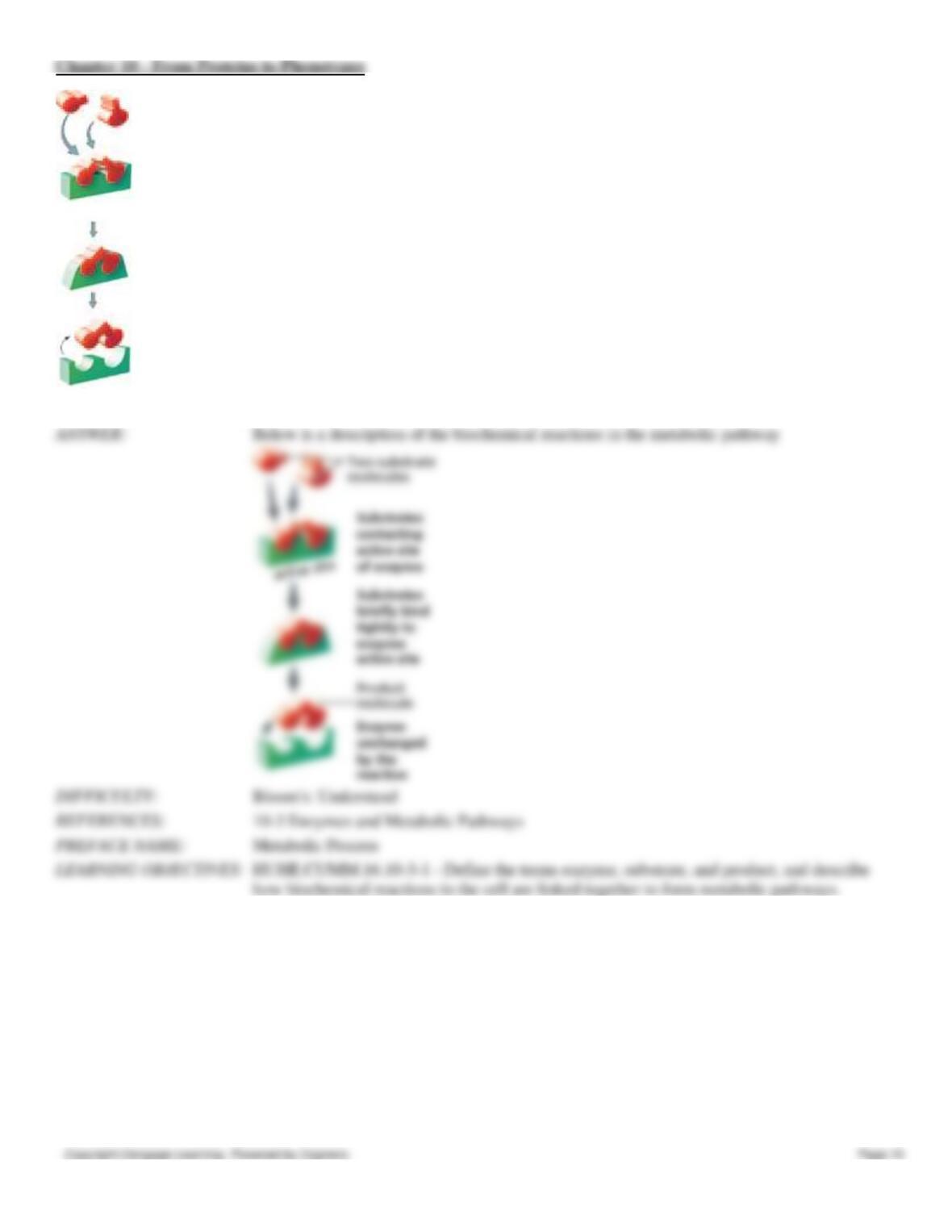
60. Summarize the metabolic process represented in the accompanying diagram.