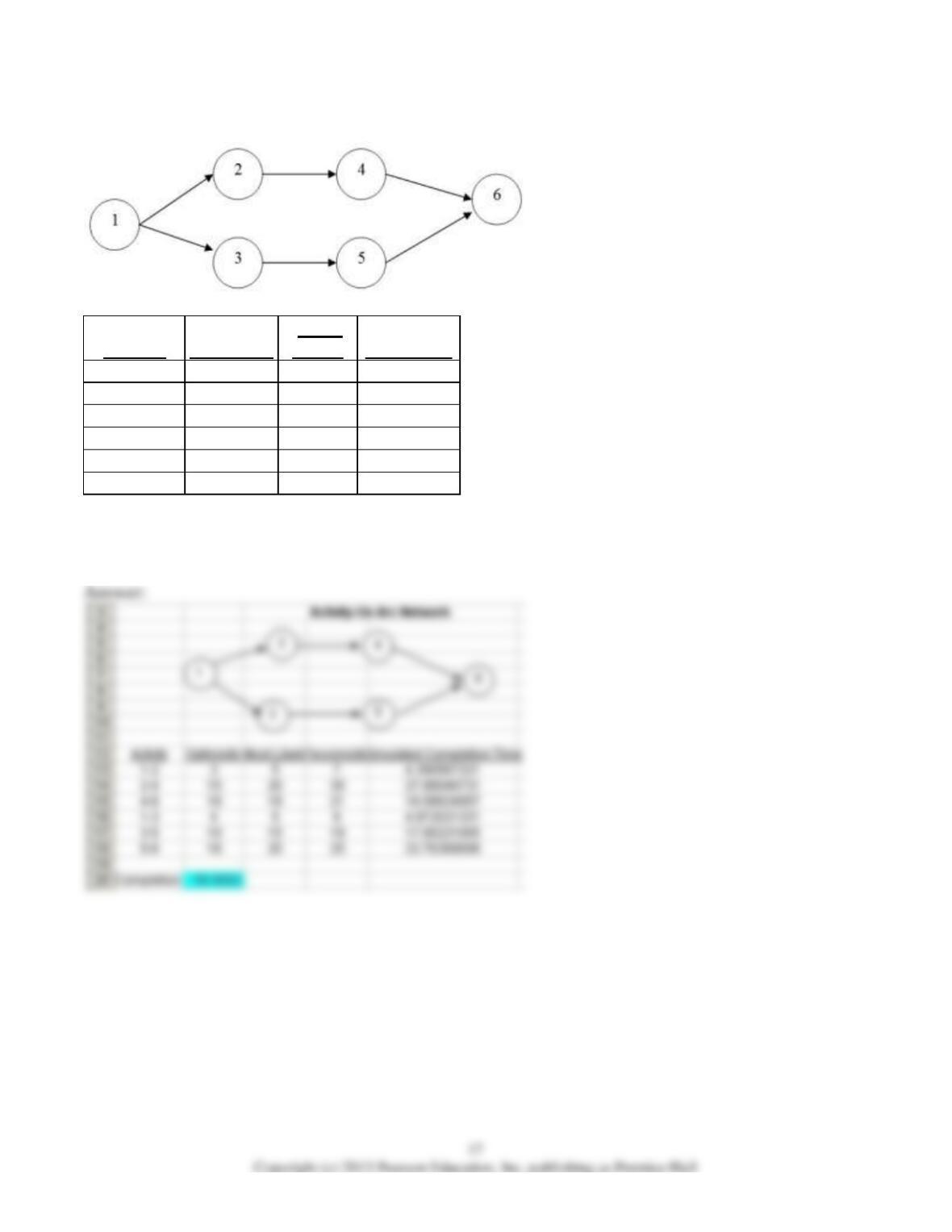
12) Consider the following PERT network, along with the completion times for each activity, in days.
Use Crystal Ball to enumerate the completion times of all paths in the network. Typically, the longest
path in the network dictates the project completion time. Use 1000 replications.
Activity
Optimistic
Most
Likely
Pessimistic
1-2
3
5
7
2-4
15
20
30
4-6
16
18
21
1-3
4
5
6
3-5
10
15
19
5-6
16
20
25
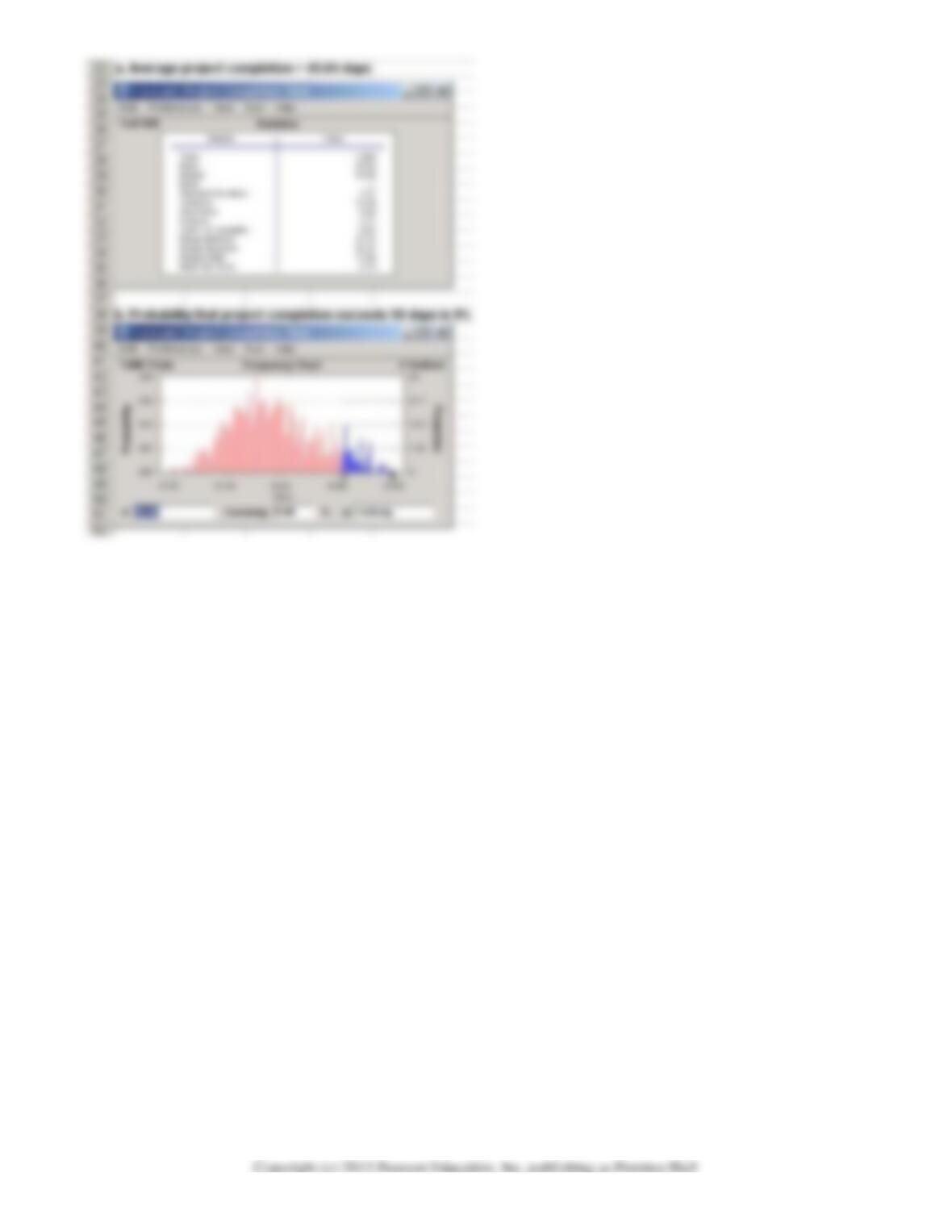
a. What is the average project completion time?
b. What is the probability that the project completion time will exceed 50 days?
18
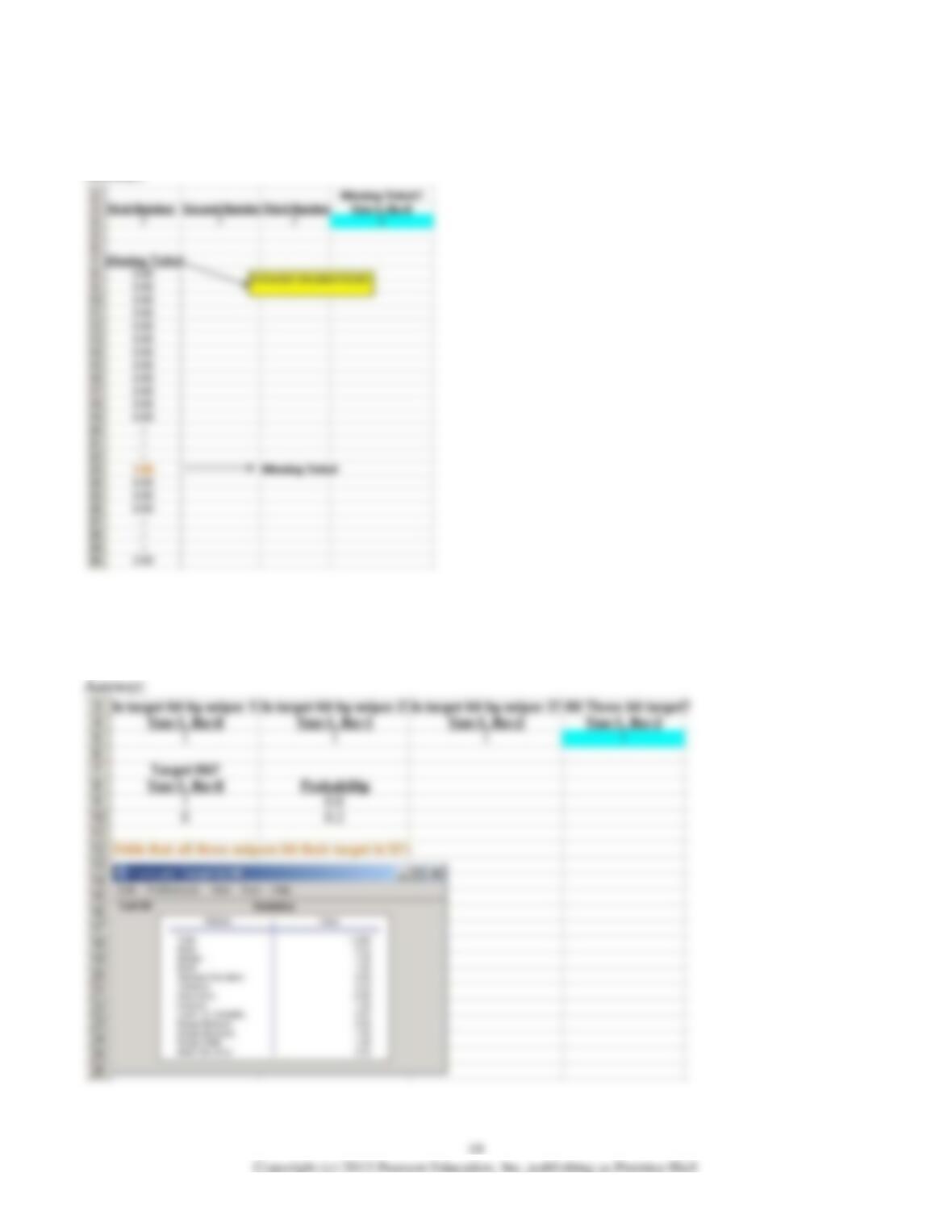
13) For the daily lottery in a given state, participants select three numbers between 0 and 9. You feel
lucky and buy 1000 tickets from a 7-Eleven store. Suppose that the winning number is 999. Using
Crystal Ball, simulate the outcomes of 1000 tickets to compute the odds of winning the lottery. Note
that it is possible for 2 or more of your tickets to have the winning numbers.
14) The probability that a sniper hits his target is 80%. If three snipers aim at the same target, use
Crystal Ball to compute the odds that all three snipers will hit their target. Use 1000 replications.
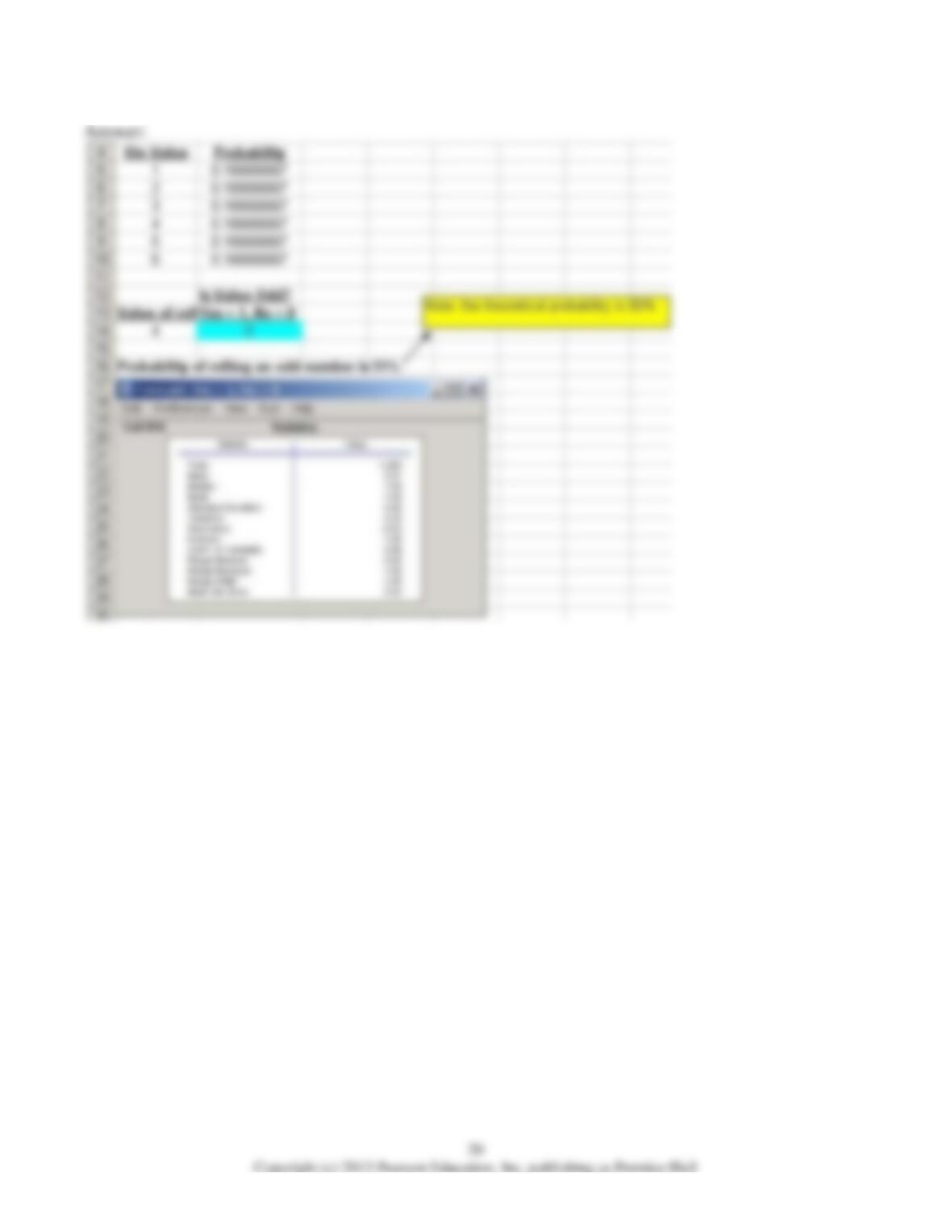
15) When rolling a die once, what is the probability that the face of the die is odd? Use Crystal Ball to
simulate the event of rolling a single die 1000 times in order to compute the requested probability.
Use this information to answer the following questions.
A supermarket stocks 150 apple pies each week. Weekly demand for apple pies ranges between 90 and
160 pies, all occurring with equal probability. Each unsold pie incurs an inventory carrying cost of
$2.00. Unmet demand costs the supermarket $4.00 per pie.
16) Refer to the information above. Use Crystal Ball to find the average weekly costs (i.e., shortage and
carrying costs) if the supermarket stocks 150 pies weekly.
17) Refer to the information above. Suppose that the manager wishes to examine the effect of different
stocking levels on the average weekly total costs. In specific, the manager wishes to consider stocking
levels of 90 pies, 110 pies, 130 pies, and 150 pies. Use Crystal Ball’s Decision Table to find the
stocking level that minimizes average weekly total costs. Use 1000 replications.
18) Suppose that someone offers you a job at a casino in Las Vegas with the following two options: you
can either earn $68.00 per night working behind a change counter, or you can serve cocktail drinks. If
the latter is chosen, your earnings potential is based on the number of patrons frequenting the casino
each night. You can make $100 in tips on a busy night, $75 in tips on a normal night, and $50 in tips on
a slow night. The probabilities of a busy, normal, or slow night are, respectively, 0.4, 0.3, and 0.3.
a. Which option maximizes your long-run average nightly earnings? Use Crystal Ball with 1000
replications.
b. How would your answer change if you can earn $85 per night working behind a counter?
Use this information to answer the following questions.
The manager of an opera theater is concerned about overbooking one of his upcoming concerts. The
theater has 300 seats, but sometimes there are empty seats. Tickets cost $50 per seat. Historical records
demonstrate that about 9% of reservation holders do not show up. If the manager overbooks and more
than 300 individuals show up, some of them will be given guaranteed reservations and VIP seats to the
next coming show. Moreover, to keep his customers happy, the manager gives each individual who is
bumped $20 worth of gift certificates.
19) Refer to the information above. The manager wishes to explore the impact on profitability if 310
reservations are accepted. Use Crystal Ball with 1000 replications.
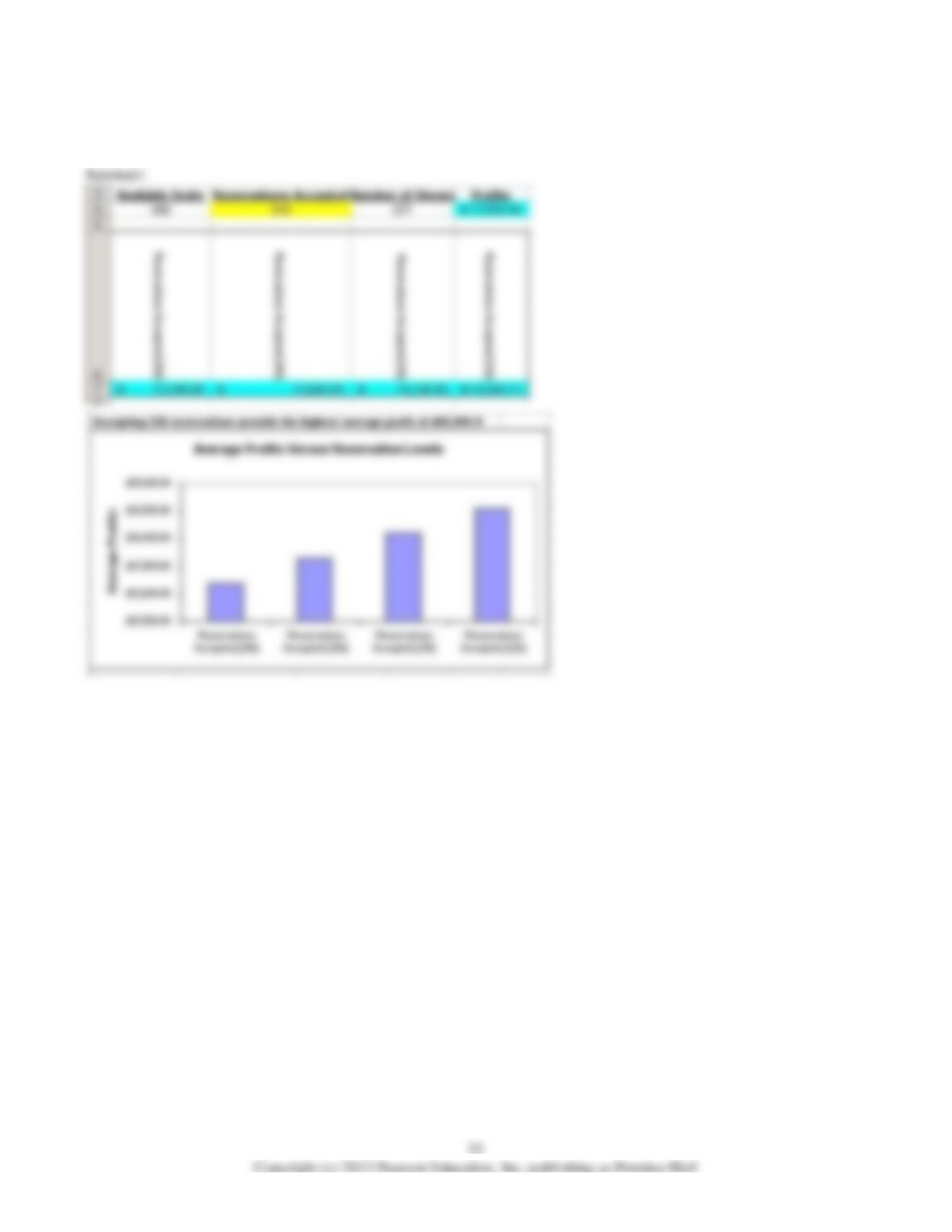
20) Refer to the information above. Suppose that the manager wishes to examine the effect of different
reservation levels on the average weekly total costs. In specific, the manager wishes to consider levels
of 290, 300, 310, and 320. Use Crystal Ball’s Decision Table to find the reservation level that
maximizes average profit. Use 1000 replications.
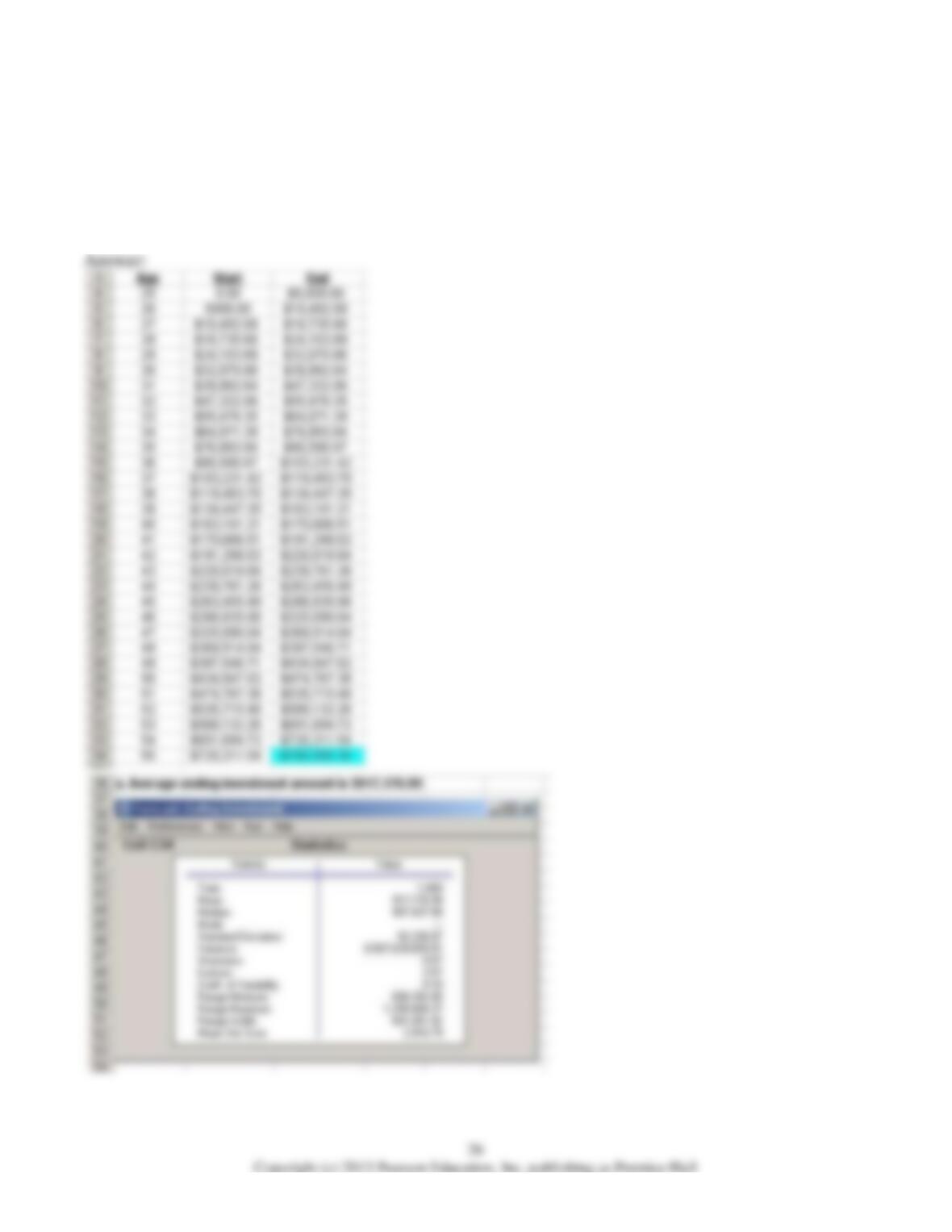
21) You have just graduated with an MBA degree and accepted your first job at the age of 25. You are
thinking ahead for early retirement and you plan on saving $5000 at the end of each year. You expect
each year’s return to be modeled as a normal distribution with a mean of 10% and standard deviation of
2.5%. Suppose you intend to retire at the age of 55. Use Crystal Ball to simulate the ending investment
value. Use 1000 replications.
a. What is the average amount of money that you will have at retirement?
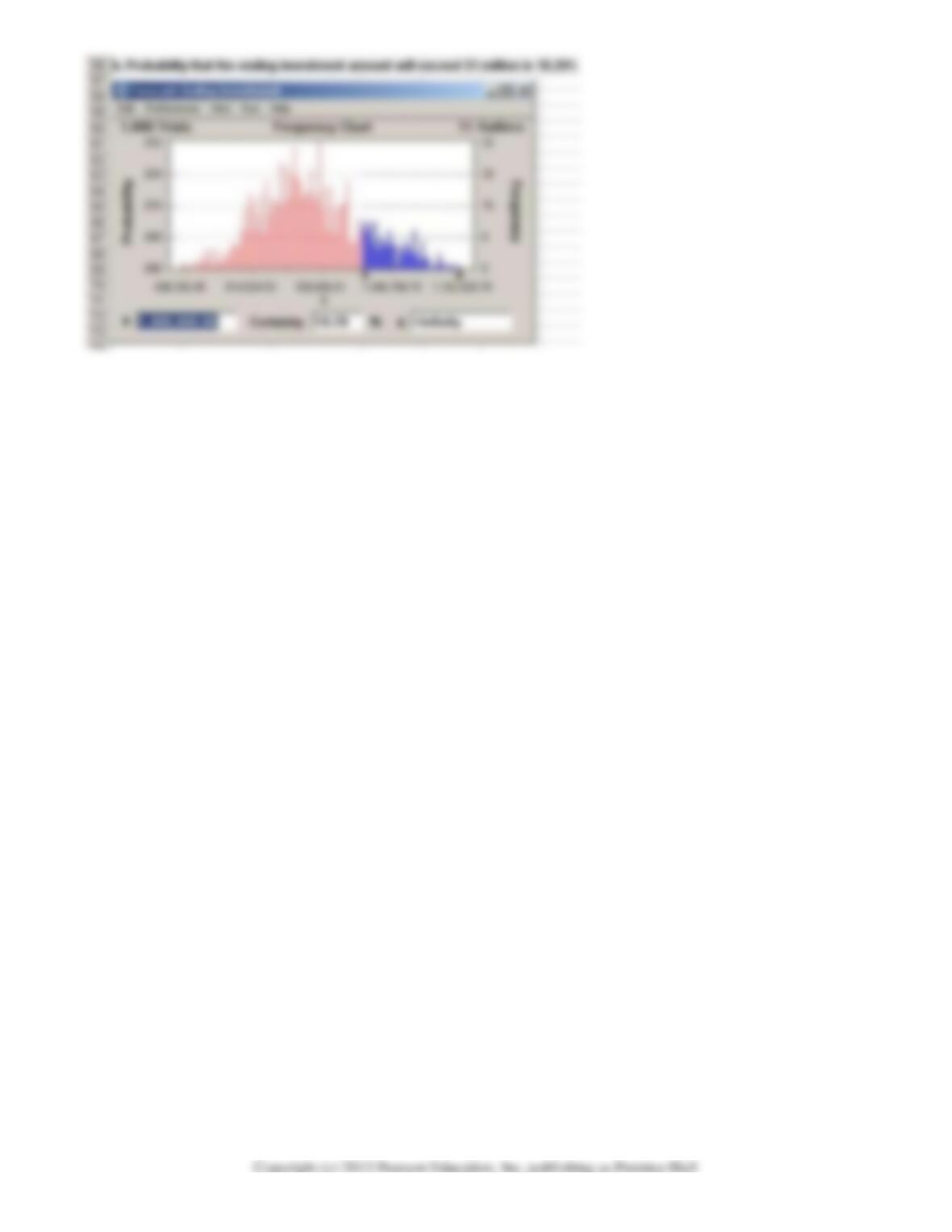
b. What is the probability of having more than $1,000,000 at retirement?
27
Use this information to answer the following questions.
A call center receives an average of 20 calls per minute. You may assume that the numbers of calls are
independent of each other, and that the average number of calls remains the same for each minute
interval.
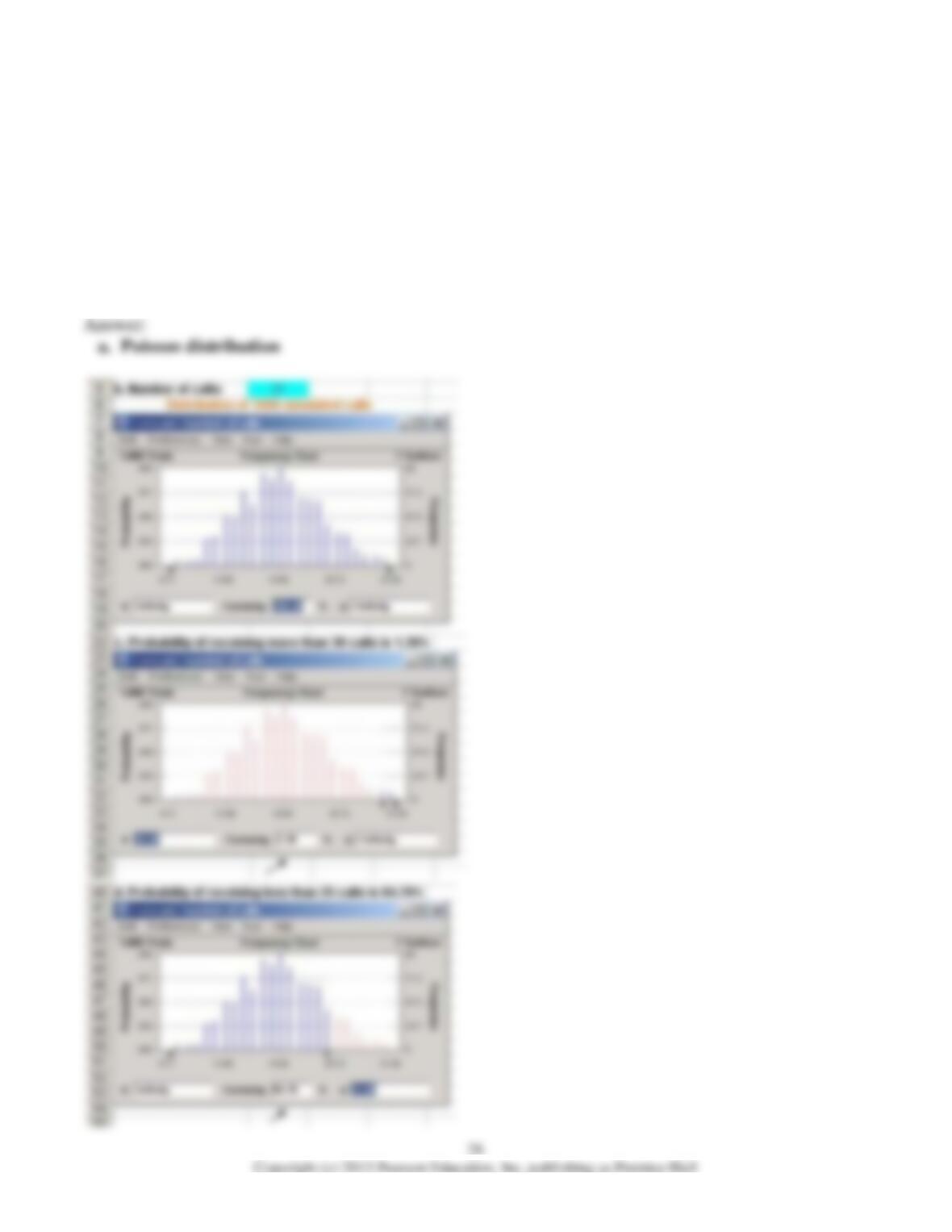
22) Refer to the information above.
a. What type of distribution describes the number of calls received?
b. Use Crystal Ball to simulate the number of calls received per minute. Use 1000 replications.
c. What is the probability that the call center will receive more than 30 calls per minute?
d. What is the probability that the call center will receive less than 25 calls per minute?
23) Refer to the information above. Suppose that the call center is interested in describing the time
between successive telephone calls. You may assume that time has no effect on future telephone calls.
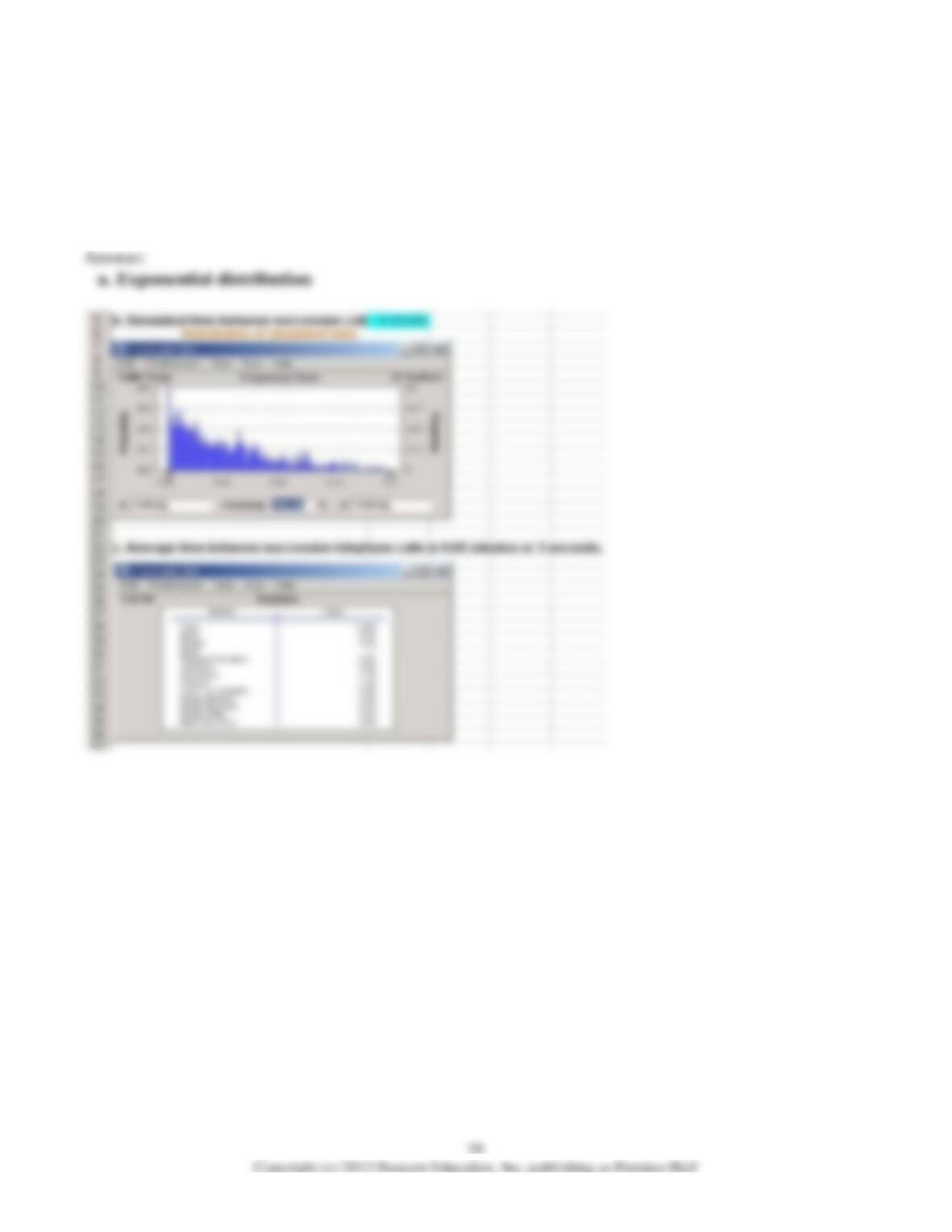
a. What type of distribution describes the time between successive telephone calls?
b. Use Crystal Ball to simulate the time between successive telephone calls. Use 1000 replications.
c. What is the average time between successive telephone calls?
24) Suppose that IQ scores are normally distributed with a mean of 100 and a standard deviation of 15.
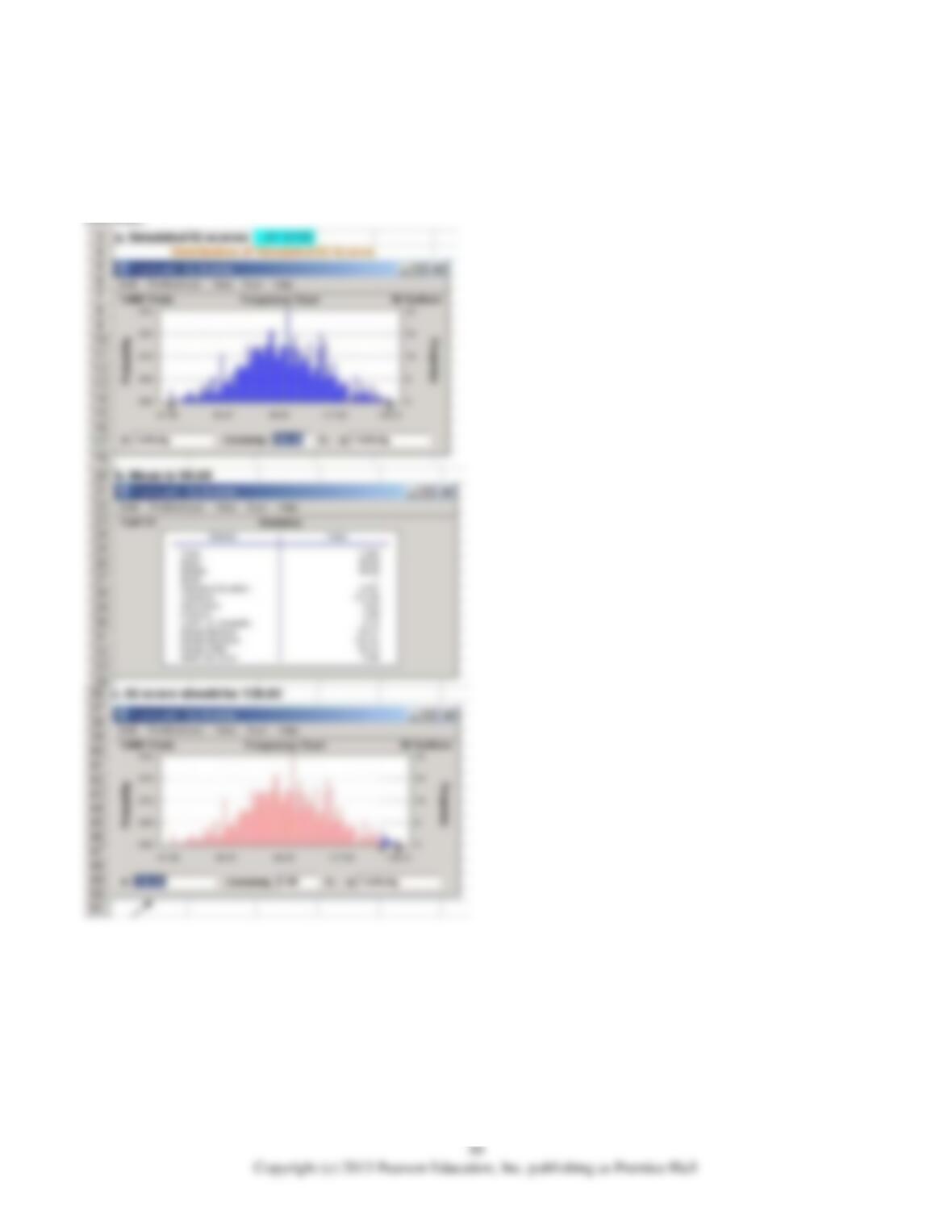
a. Suppose that 1000 individuals took the IQ examination. Use Crystal Ball to simulate their scores.
b. What is the mean of the simulated IQ scores?
c. Suppose that being in the top 2% qualifies an individual as a genius. Using the simulated IQ
scores, what should the IQ score be to qualify as a genius?
25) Suppose that the time needed to complete a final examination in a particular course is normally
distributed with a mean of 60 minutes and a standard deviation of 10 minutes.
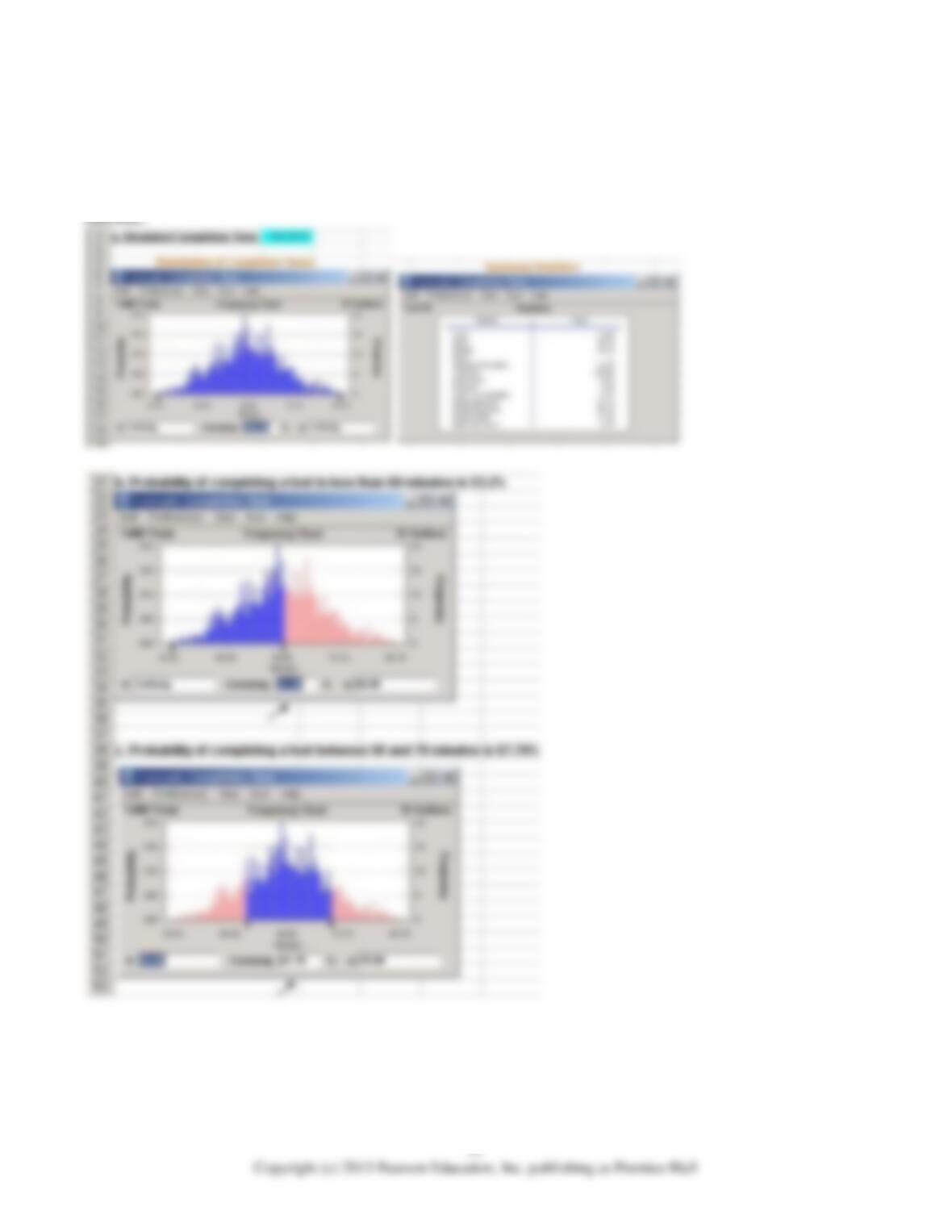
a. Use Crystal Ball to simulate 1000 test scores.
b. What is the probability of completing a test in less than 60 minutes?
c. What is the probability of completing a test between 50 minutes and 70 minutes?
26) Daily demand for bananas at a grocery store is normally distributed with a mean of 100 lbs and
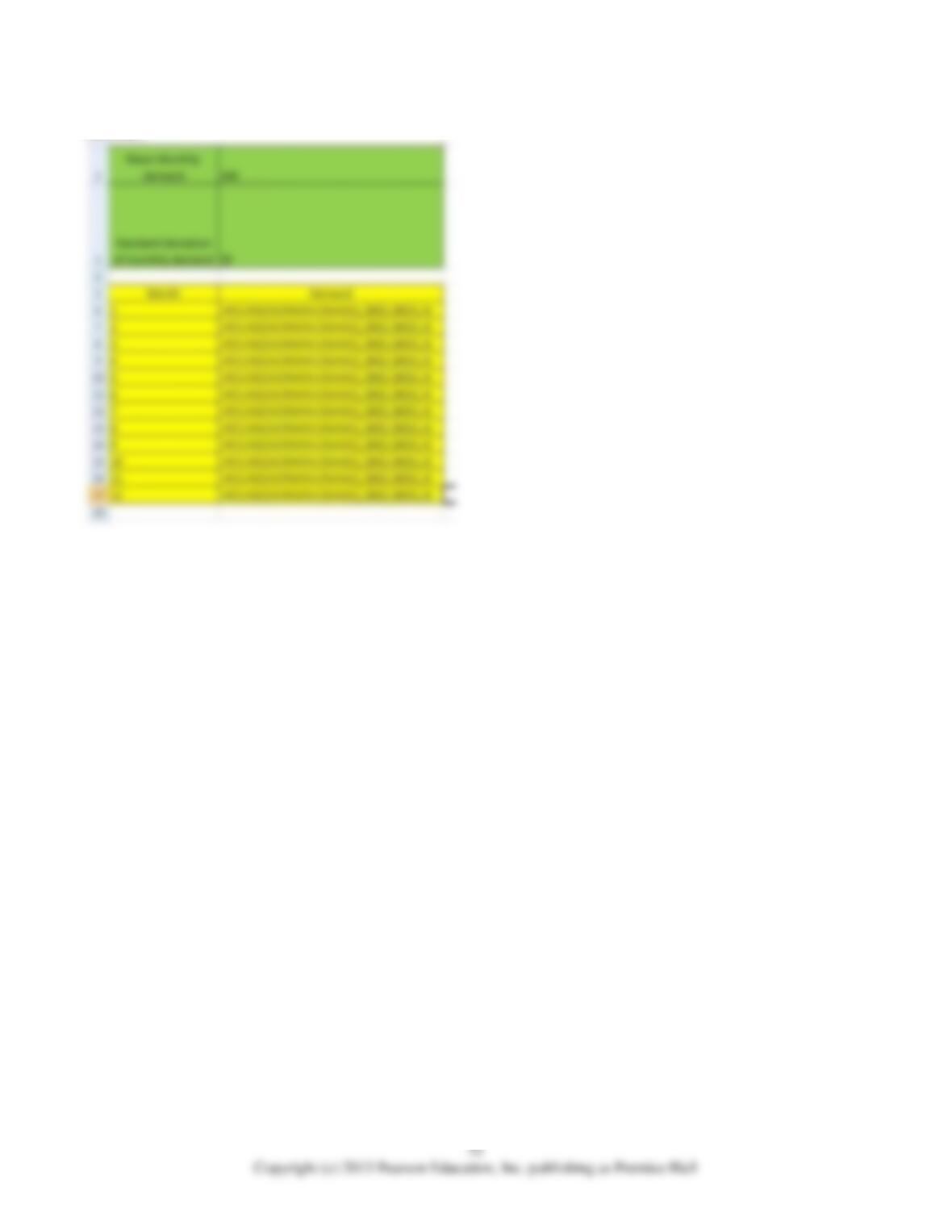
standard deviation of 20. Use Excel to set up a Monte Carlo simulation of 12 months.
Answer: