The Cultural Landscape, 11e (Rubenstein)
Chapter 10 Food and Agriculture
1) Geographer Derwent Whittlesey divided the world into ________ agricultural regions (not
including his area of nonexistent agriculture).
A) 11
B) 12
C) 5
D) 3
E) 16
2) Geographer Derwent Whittlesey divided the world into agricultural regions (not including his
area of nonexistent agriculture), ________ of which were classified as found in MDCs and
________ as found in LDCs.
A) 6; 5
B) 1; 10
C) 8; 11
D) 10; 1
E) 11; 1
3) Pigs were domesticated in
A) Southeast Asia.
B) South America.
C) Ethiopia.
D) northern China.
E) Southwest Asia
4) Potatoes were domesticated in
A) Southeast Asia.
B) Southwest Asia.
C) Ethiopia.
D) northern China.
E) the Americas.
5) Lima beans were domesticated in
A) Southeast Asia.
B) Southwest Asia.
C) Ethiopia.
D) northern China.
E) the Americas.
6) The earliest known domesticated wheat, barley, and rice crops are thought to have originated
in Asia about
A) 10,000 years ago.
B) 100,000 years ago.
C) 1.1 million years ago.
D) 1,000 years ago.
E) 10 million years ago.
7) The earliest known domesticated squash crops are thought to have originated in the Americas
more than
A) 9,000 years ago.
B) 90,000 years ago.
C) 1.1 million years ago.
D) 900 years ago.
E) 10 million years ago.
8) The first people to domesticate lentils and olives were in
A) western India.
B) northern China.
C) Ethiopia.
D) Southwest Asia.
E) South America.
9) Seed agriculture probably reached Europe from
A) western India.
B) northern China.
C) Ethiopia.
D) Southwest Asia.
E) Southeast Asia.
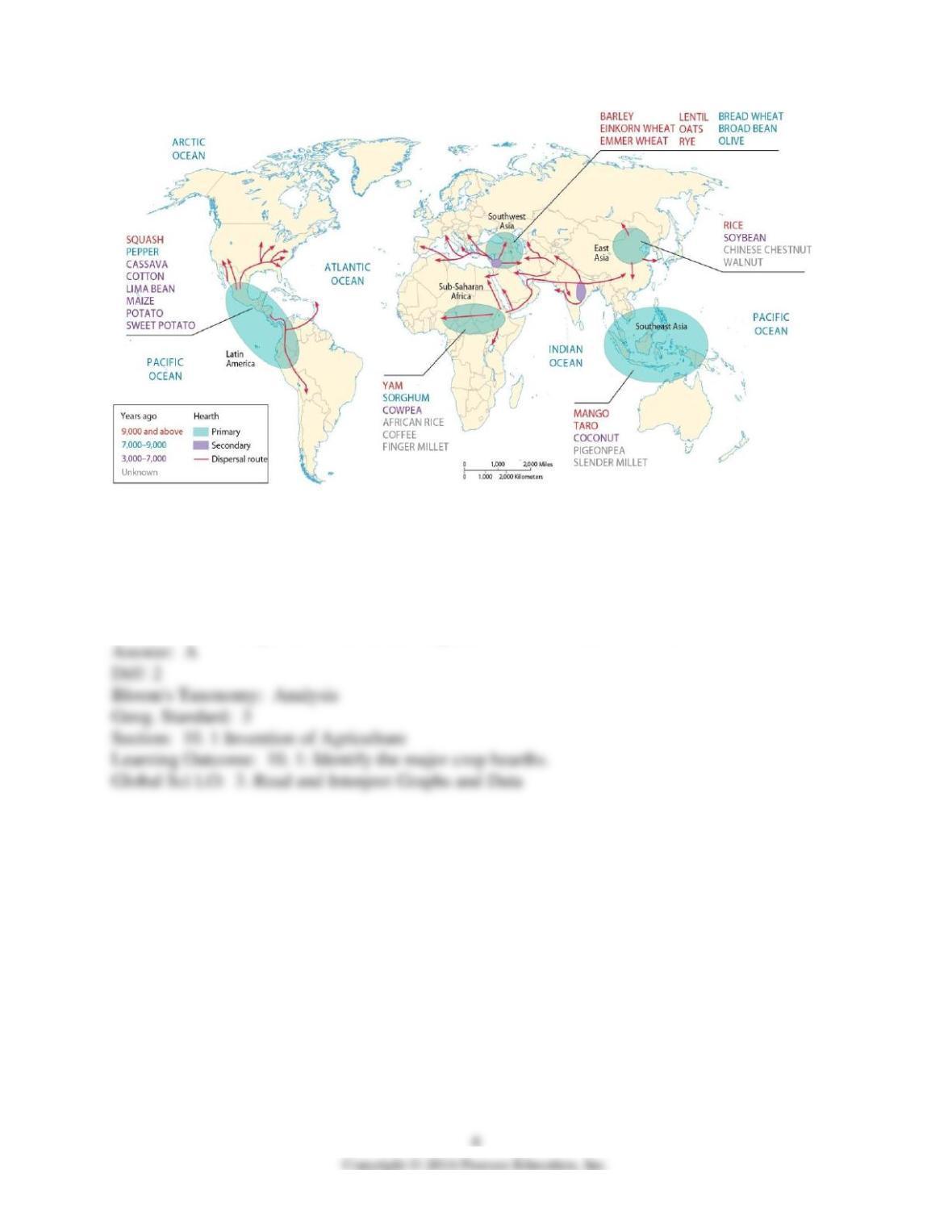
10) The map of crop hearths indicates that
A) maize, potatoes, squash, and peppers were first domesticated in the Americas.
B) specific crops can be grown only in and near their crop hearths.
C) potatoes, peppers, and sorghum were first domesticated in Europe.
D) coconuts, pigeonpeas, maize, and tomatoes were first domesticated in Southeast Asia.
E) soybeans, rice, squash, coconuts, and sorghum were first domesticated in East Asia.
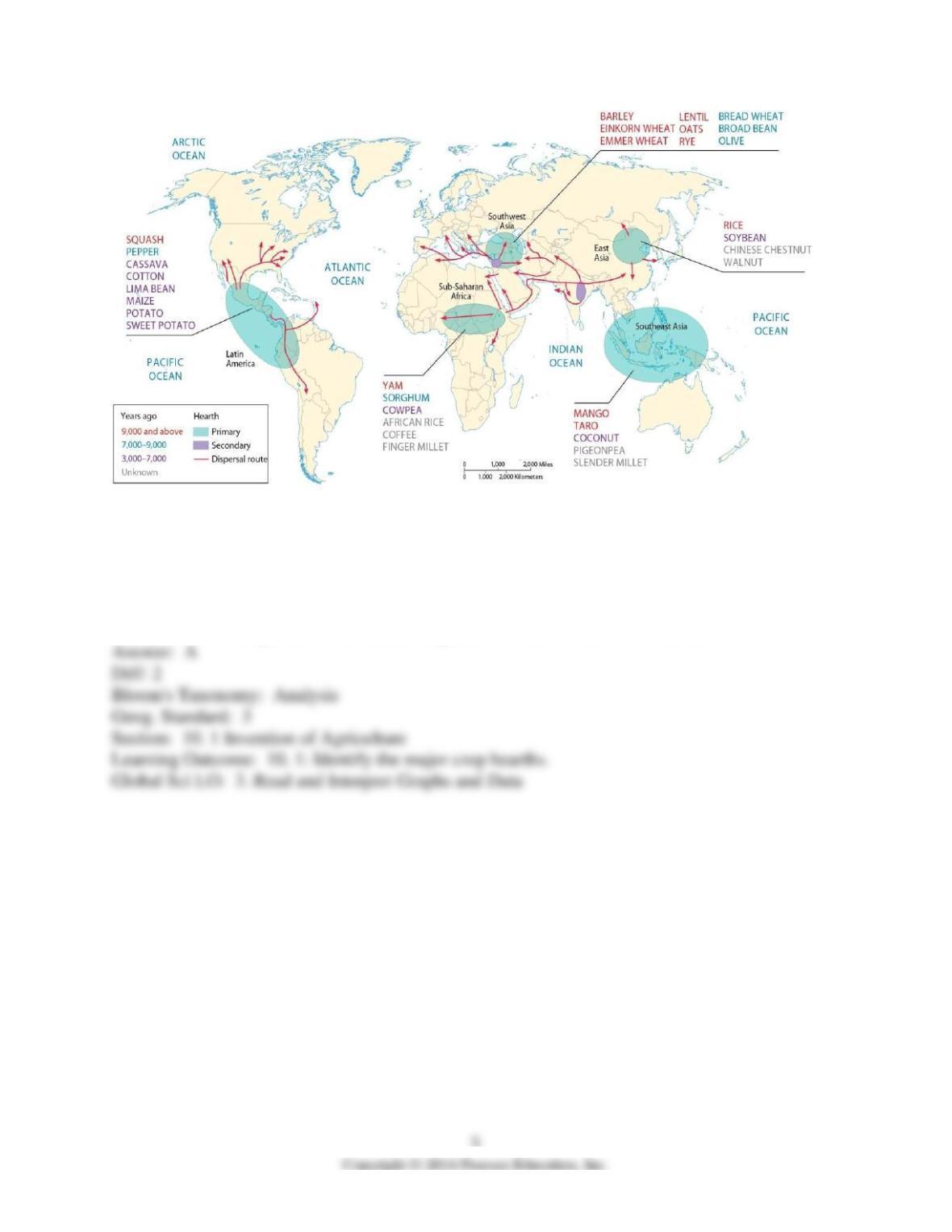
11) The map of crop hearths indicates that
A) coconuts, pigeonpeas, mango, and taro were first domesticated in Southeast Asia.
B) specific crops can be grown only in and near their crop hearths.
C) potatoes, peppers, and sorghum were first domesticated in Europe.
D) potatoes, peppers, squash, soybeans, and rice were first domesticated in the Americas.
E) soybeans, rice, squash, coconuts, and sorghum were first domesticated in East Asia.
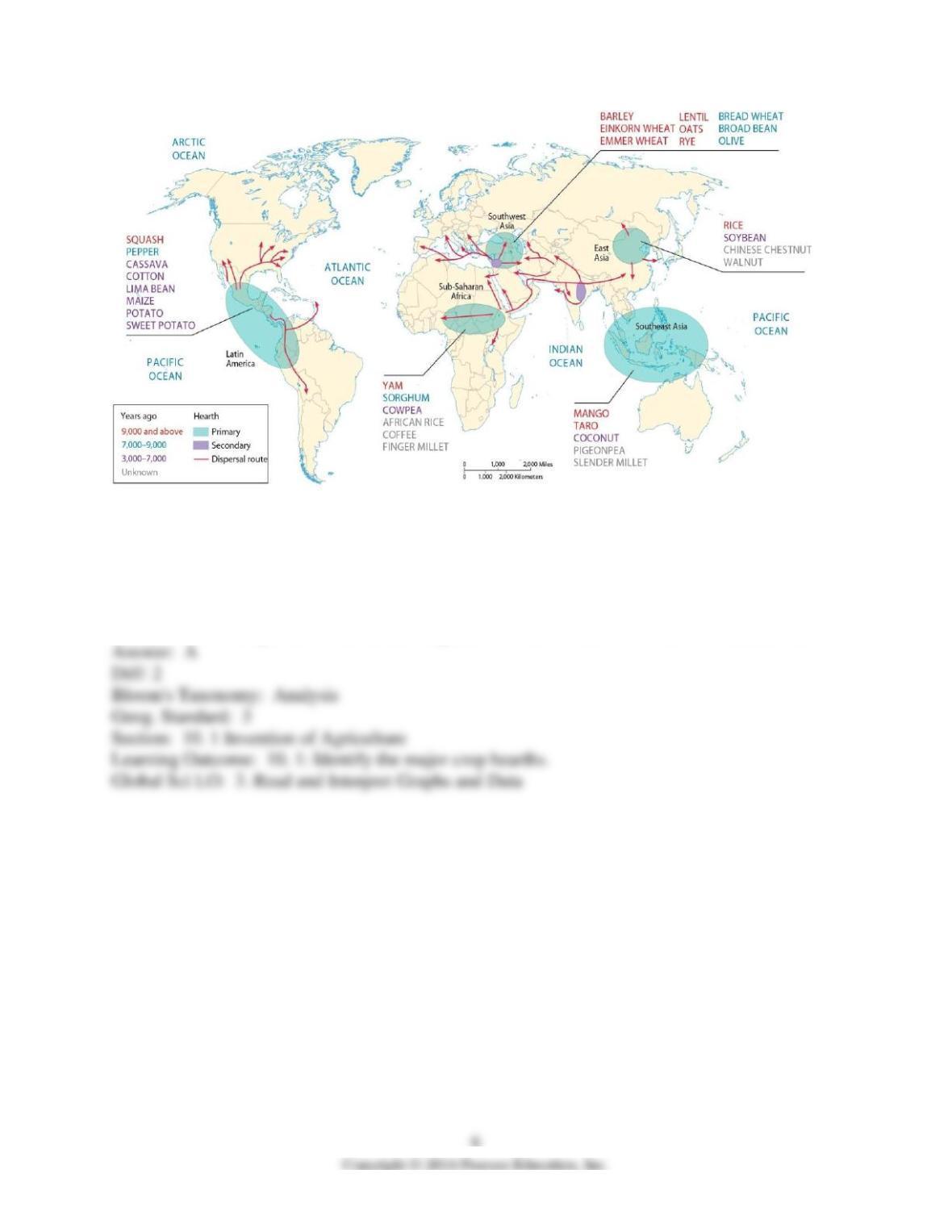
12) The map of crop hearths indicates that
A) yams, sorghum, coffee, and cowpeas were first domesticated in Sub-Saharan Africa.
B) maize, potatoes, squash, and taro were first domesticated in Sub-Saharan Africa.
C) potatoes, tomatoes, peppers, and sorghum were first domesticated in Sub-Saharan Africa.
D) coconuts, pigeonpeas, cowpeas, and coffee were first domesticated in Sub-Saharan Africa.
E) soybeans, rice, squash, coconuts, and sorghum were first domesticated in Sub-Saharan Africa.
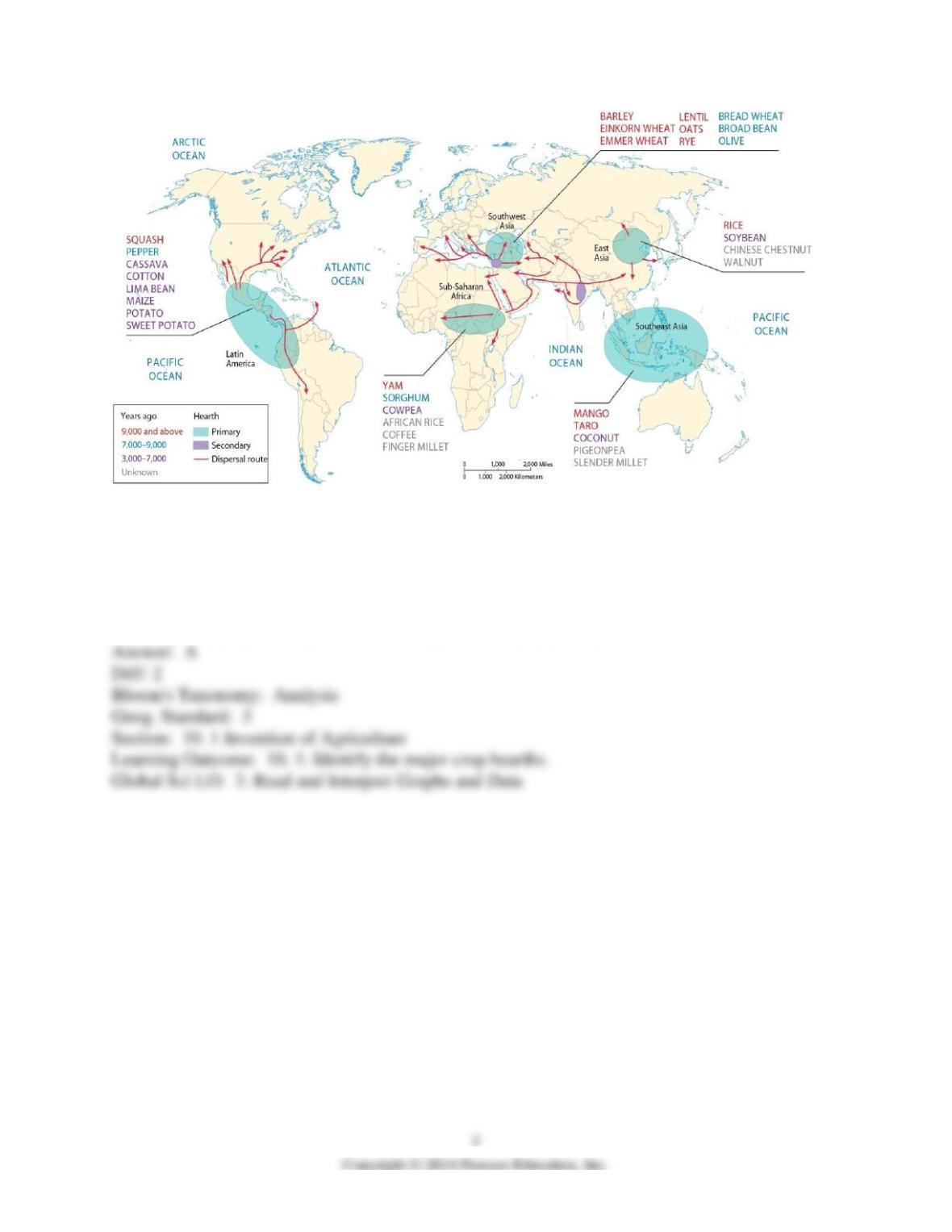
13) The map of crop hearths indicates that
A) rice, soybeans, and walnuts were first domesticated in East Asia.
B) maize, potatoes, squash, and peppers were first domesticated in East Asia.
C) yams, sorghum, and cowpeas were first domesticated in East Asia.
D) coconuts, pigeonpeas, cowpeas, and coffee were first domesticated in East Asia.
E) mango, taro, and coconuts were first domesticated in East Asia.
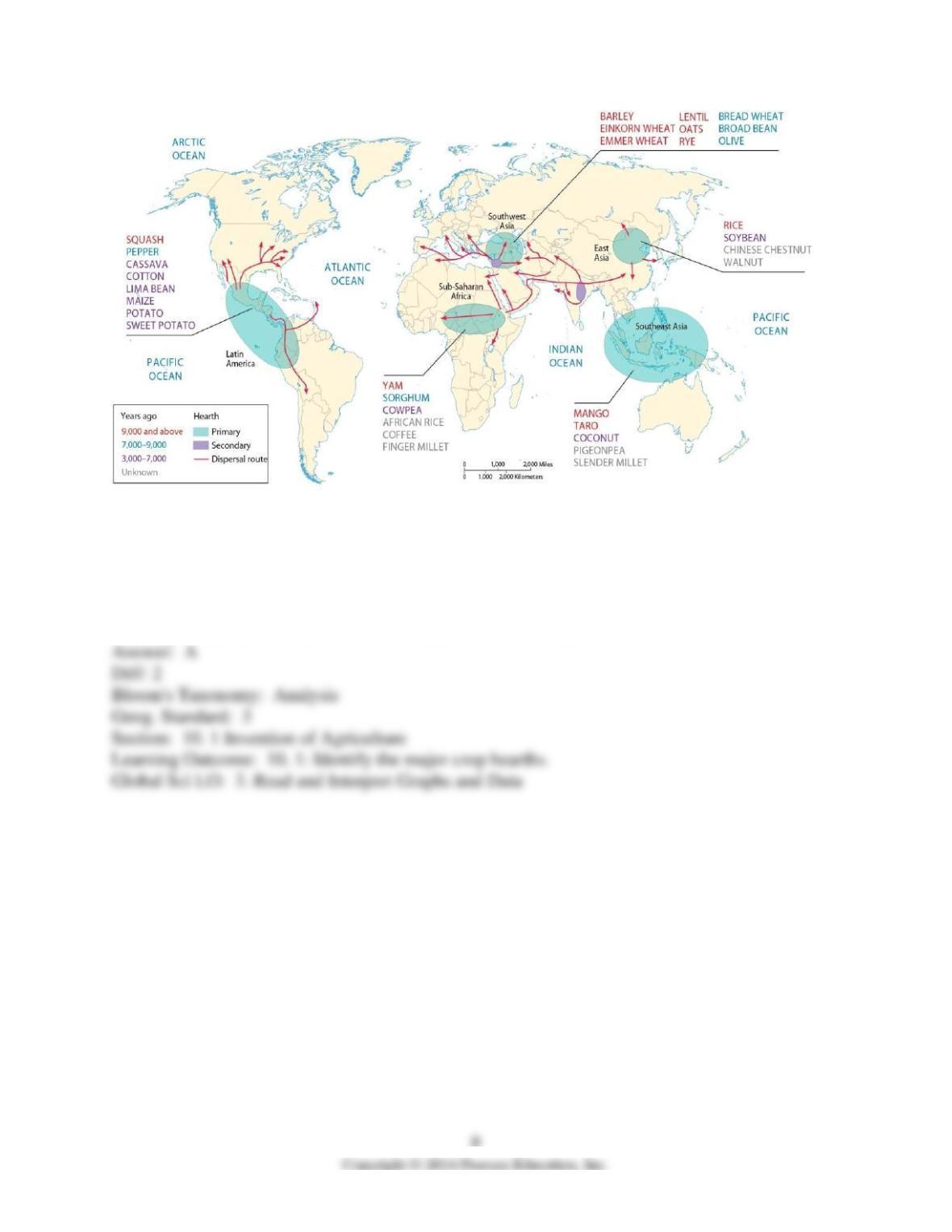
14) The map of crop hearths indicates that
A) rye, lentils, olives, and oats were first domesticated in Southwest Asia.
B) maize, potatoes, squash, and Lima beans were first domesticated in Southwest Asia.
C) yams, sorghum, and cowpeas were first domesticated in Southwest Asia.
D) coconuts, pigeonpeas, cowpeas, and coffee were first domesticated in Southwest Asia.
E) mango, taro, and coconuts were first domesticated in Southwest Asia.
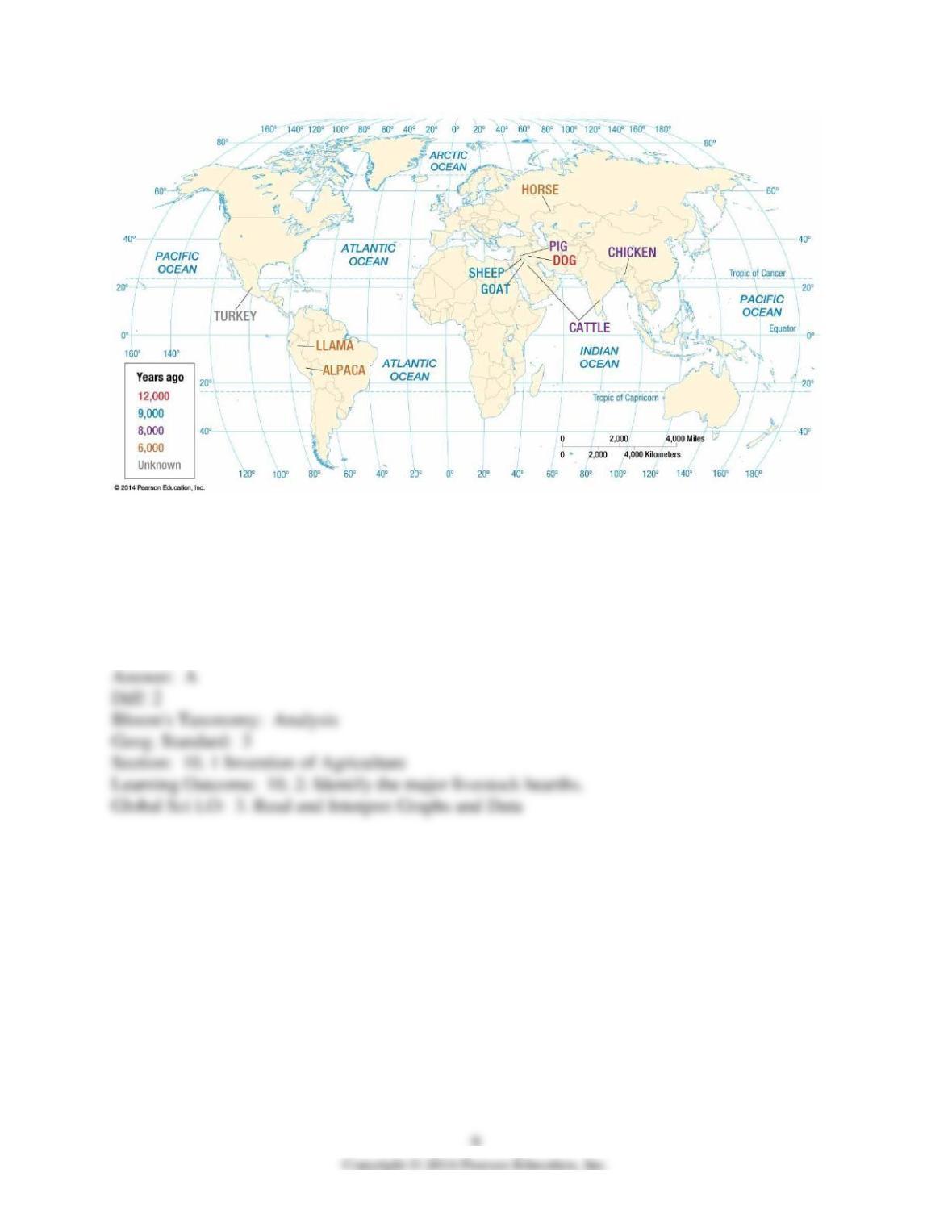
15) The map of animal hearths indicates that
A) llamas, alpacas, and turkeys were domesticated in the Americas.
B) animals can be raised only in and near specific hearths, owing to the limited number of
climates in the world.
C) pigs, goats, and sheep were domesticated in the Americas.
D) chickens were domesticated in the Americas.
E) horses were domesticated in the Americas.
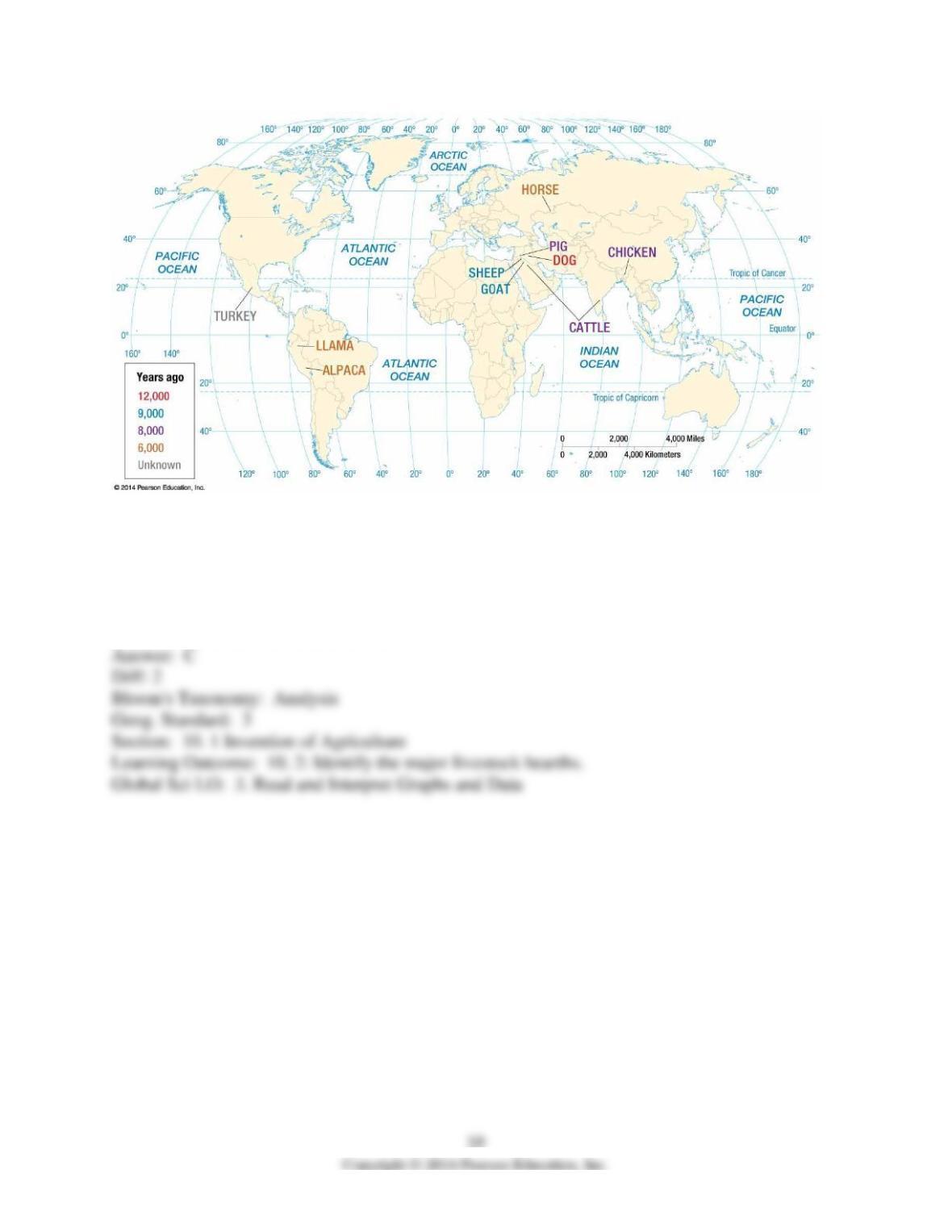
16) The map of animal hearths indicates that
A) llamas, alpacas, and turkeys were domesticated in the Southwest Asia.
B) cattle were domesticated in the Americas.
C) pigs, goats, and sheep were domesticated in the Southwest Asia.
D) chickens were domesticated in Southwest Asia.
E) horses were domesticated in the Americas.
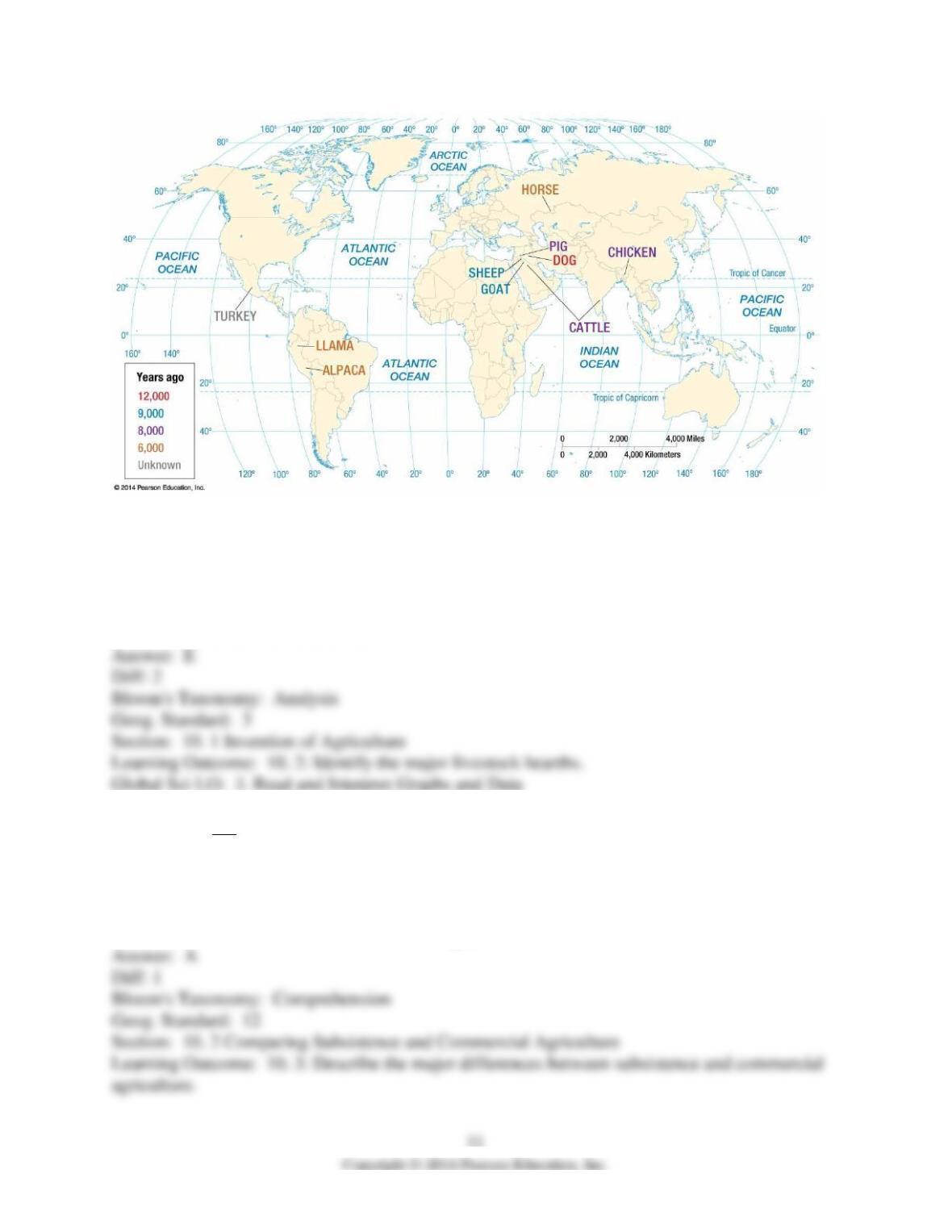
17) The map of animal hearths indicates that
A) llamas, alpacas, and turkeys were domesticated in Europe.
B) cattle were domesticated in China.
C) pigs, goats, and sheep were domesticated in the Americas.
D) chickens were domesticated in Europe.
E) horses were domesticated in Asia.
18) Which is not a form of subsistence agriculture?
A) Mediterranean
B) shifting cultivation
C) pastoral nomadism
D) intensive
E) All of the above are forms of subsistence agriculture.
19) Hunting and gathering societies
A) include about 15 percent of the world’s people.
B) are found in isolated places in the world.
C) are characterized by large concentrations of people.
D) occur nearly everywhere but are especially common in Europe.
E) are responsible for most of the environmental degradation of the planet.
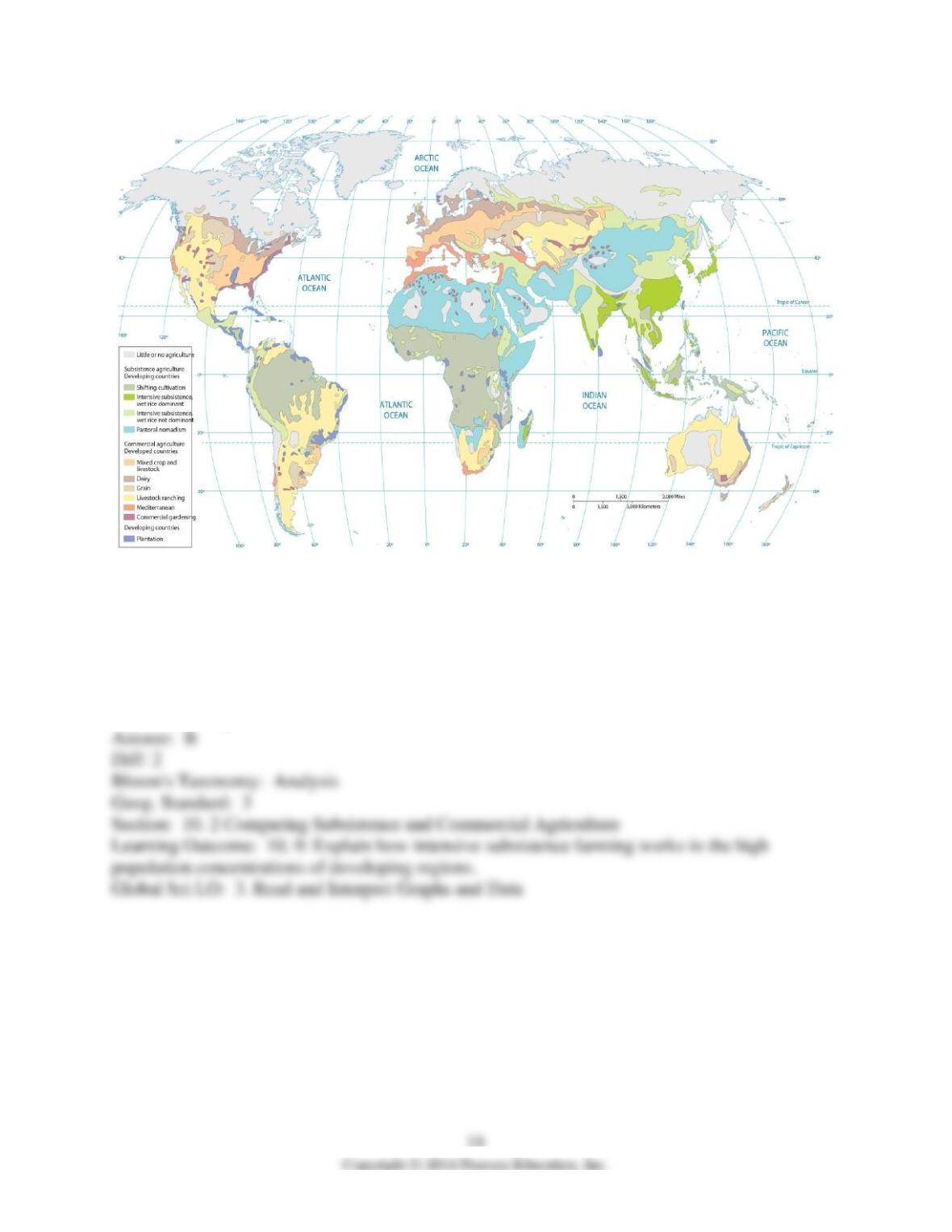
20) As indicated by the map of agricultural regions, the largest proportion of farmers in Asia
practice
A) hunting and gathering.
B) intensive subsistence.
C) pastoral nomadism.
D) shifting cultivation.
E) plantation agriculture.
21) The direction and frequency of hunter-gatherer migration depended on
A) the movement of game and the seasonal growth of plants.
B) the shifting of climate patterns.
C) the arrival of imperial armies and other invading forces.
D) each group’s size and the ability to run over long distances.
E) mathematical processes.
22) According to the map of dietary energy by source, wheat is the leading energy source in
A) Pakistan, Iran, and Saudi Arabia.
B) Pakistan, Afghanistan, and India.
C) Algeria, Sudan, and Ethiopia.
D) Bolivia, Peru, and Brazil.
E) Mexico, Canada, and the United States.
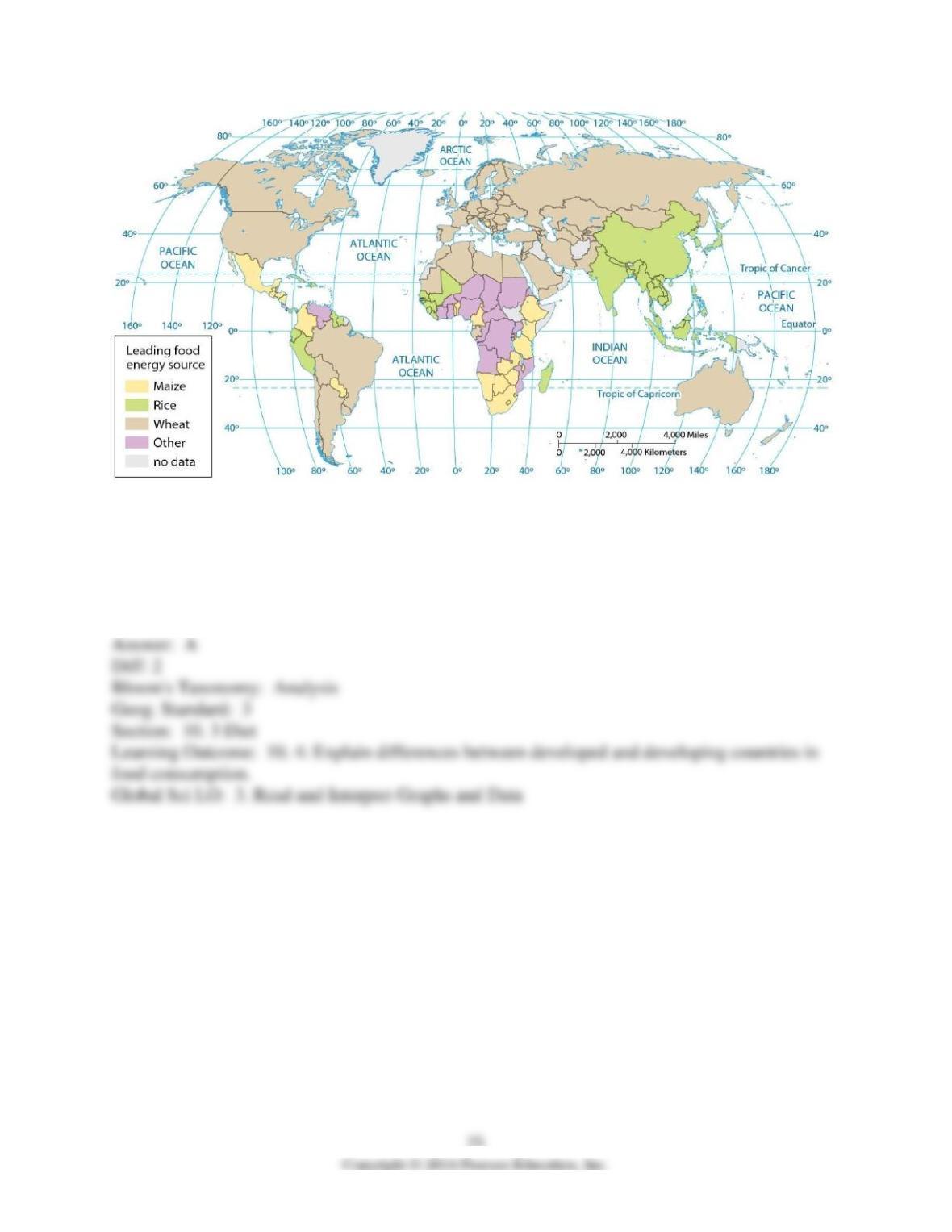
23) According to the map of dietary energy by source, rice is the leading energy source in
A) Peru, India, and Ecuador.
B) Pakistan, Iran, and India.
C) Algeria, Sudan, and Ethiopia.
D) Bolivia, Peru, and Brazil.
E) Peru, Brazil, and Mexico.
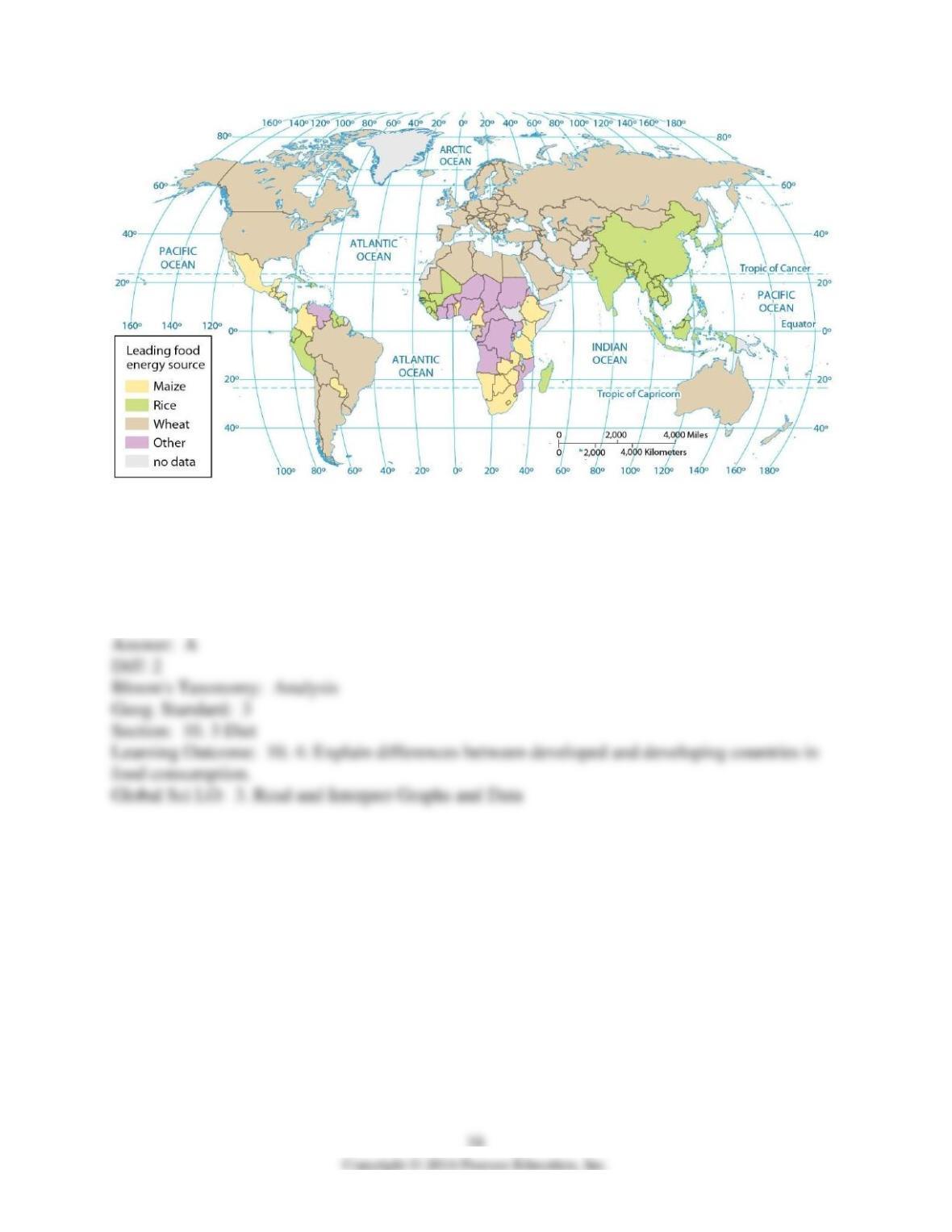
24) According to the map of dietary energy by source, maize is the leading energy source in
A) Ethiopia, Mexico, and Guatemala.
B) Ethiopia, Iran, and India.
C) Ethiopia, Sudan, and South Africa.
D) Mexico, Peru, and Brazil.
E) Mexico, Canada, and the United States.
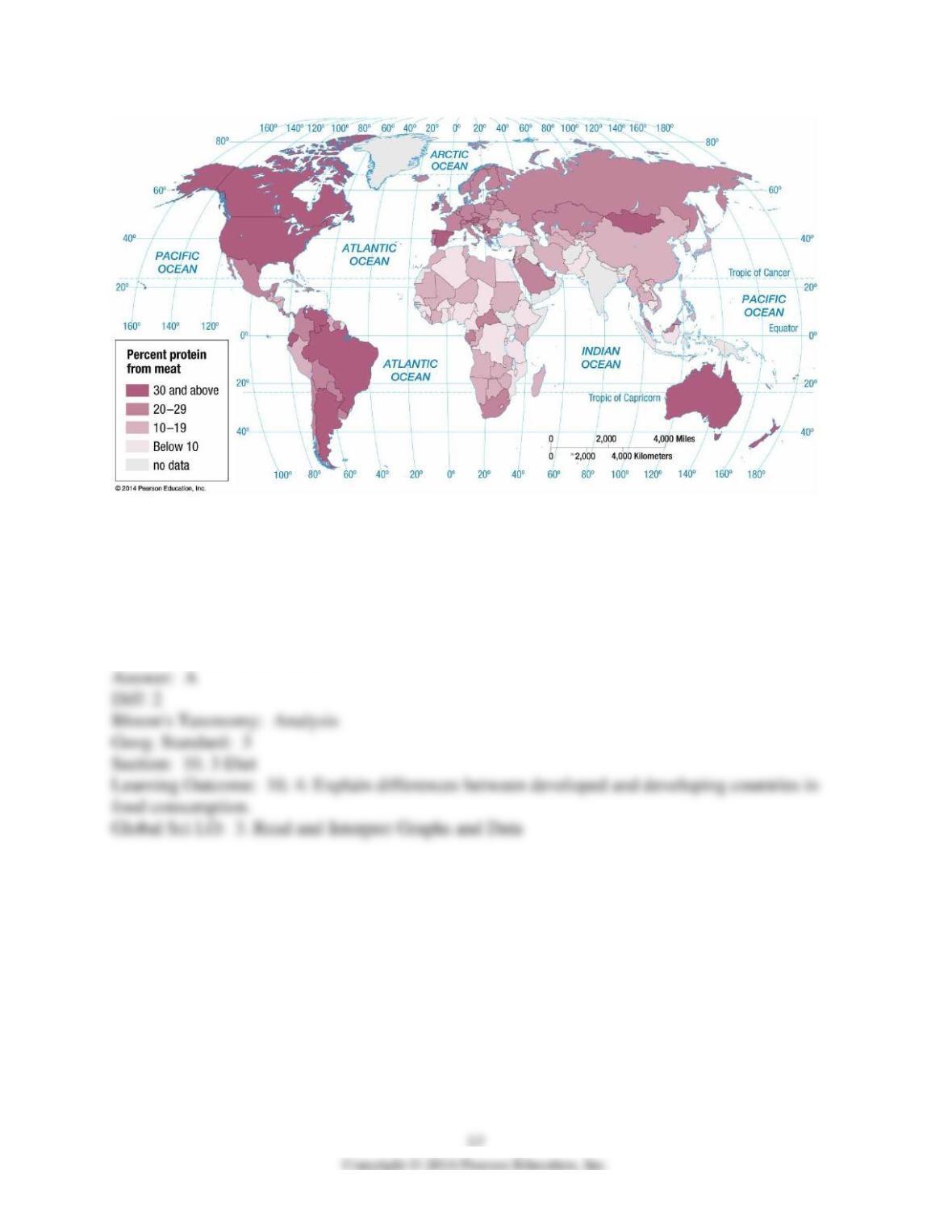
25) According to the map of protein from meat, meats provide at least 25 percent of the protein
consumed in
A) Brazil, Argentina, and Spain.
B) Ethiopia, Iran, and India.
C) Argentina, Australia, and South Africa.
D) Brazil, Australia, and India.
E) Brazil, Canada, and India.
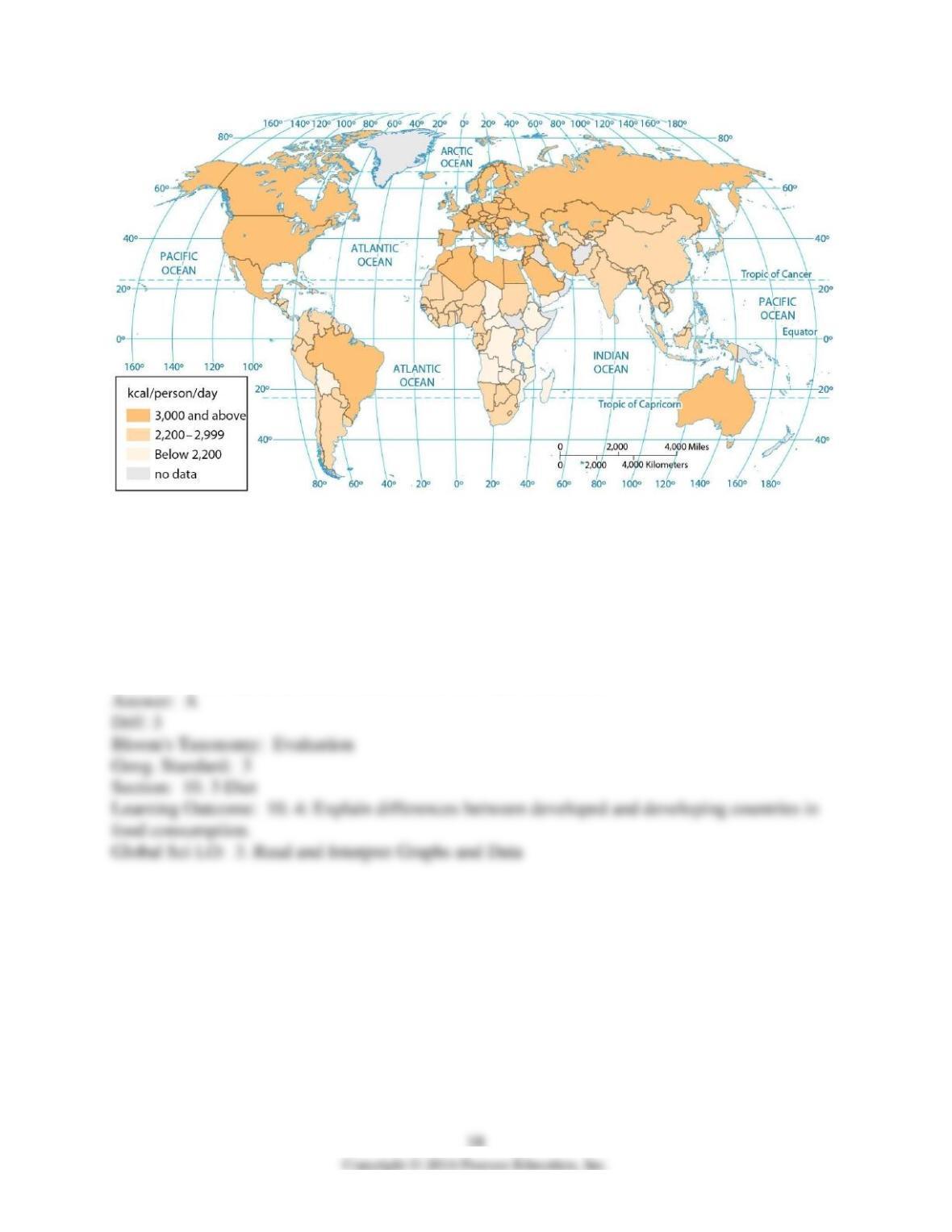
26) Using the map of dietary energy consumption as a reference (and momentarily ignoring other
cultural and economic factors), we could predict that among the following countries, those most
likely to suffer an obesity epidemic in the near future would be
A) the United States, Mexico, Canada, Australia, and Russia.
B) the United States, Canada, Australia, Egypt, and Iraq.
C) the United States, Spain, the United Kingdom, and Argentina.
D) the United States, Mexico, Argentina, Peru, Brazil, and Ecuador.
E) the United States, Australia, China, Russia, Pakistan, and India.
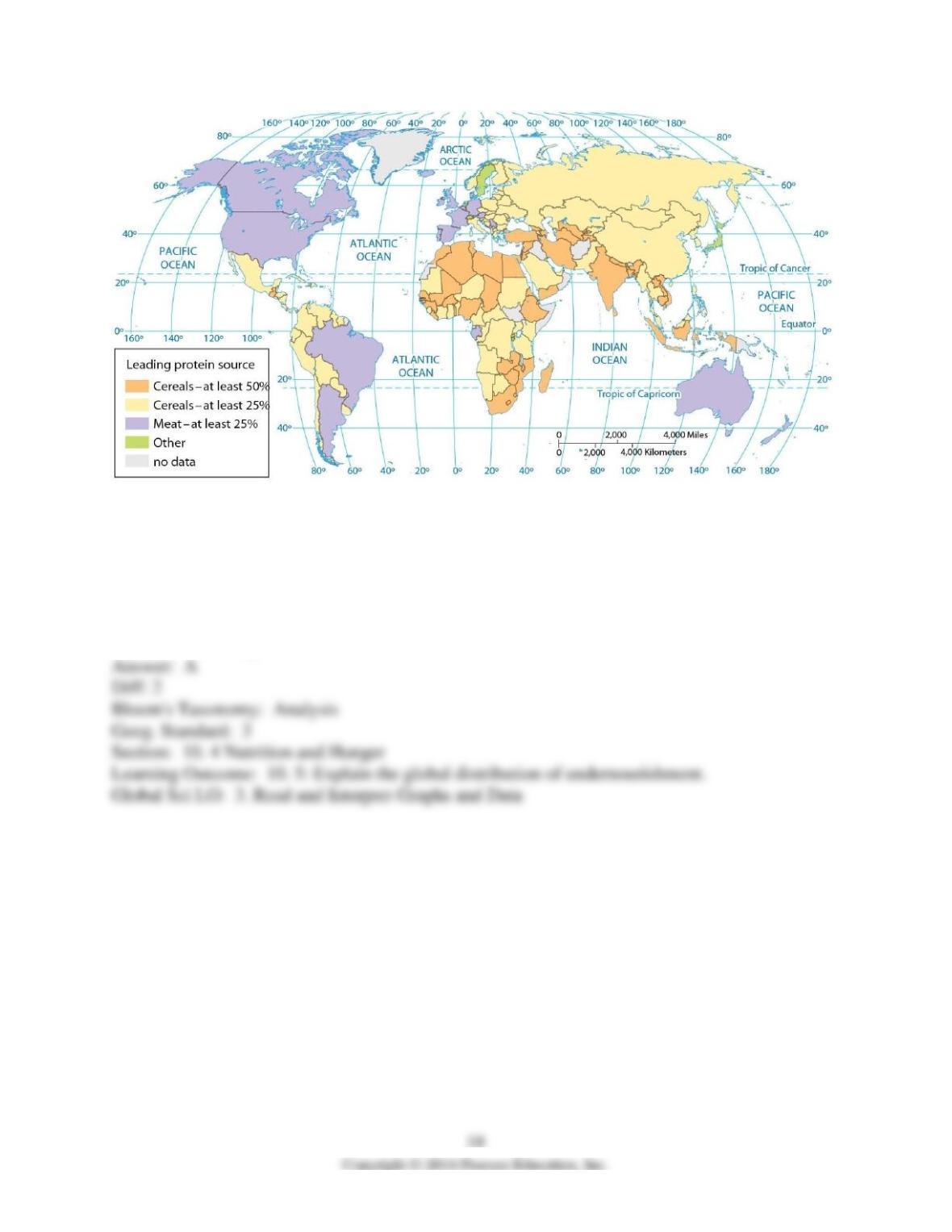
27) According to the map of protein sources, cereals provide at least 50 percent of the protein
consumed in
A) Ethiopia and India.
B) Ethiopia and Brazil.
C) Egypt and Australia.
D) Brazil and Egypt.
E) Mexico and Argentina.
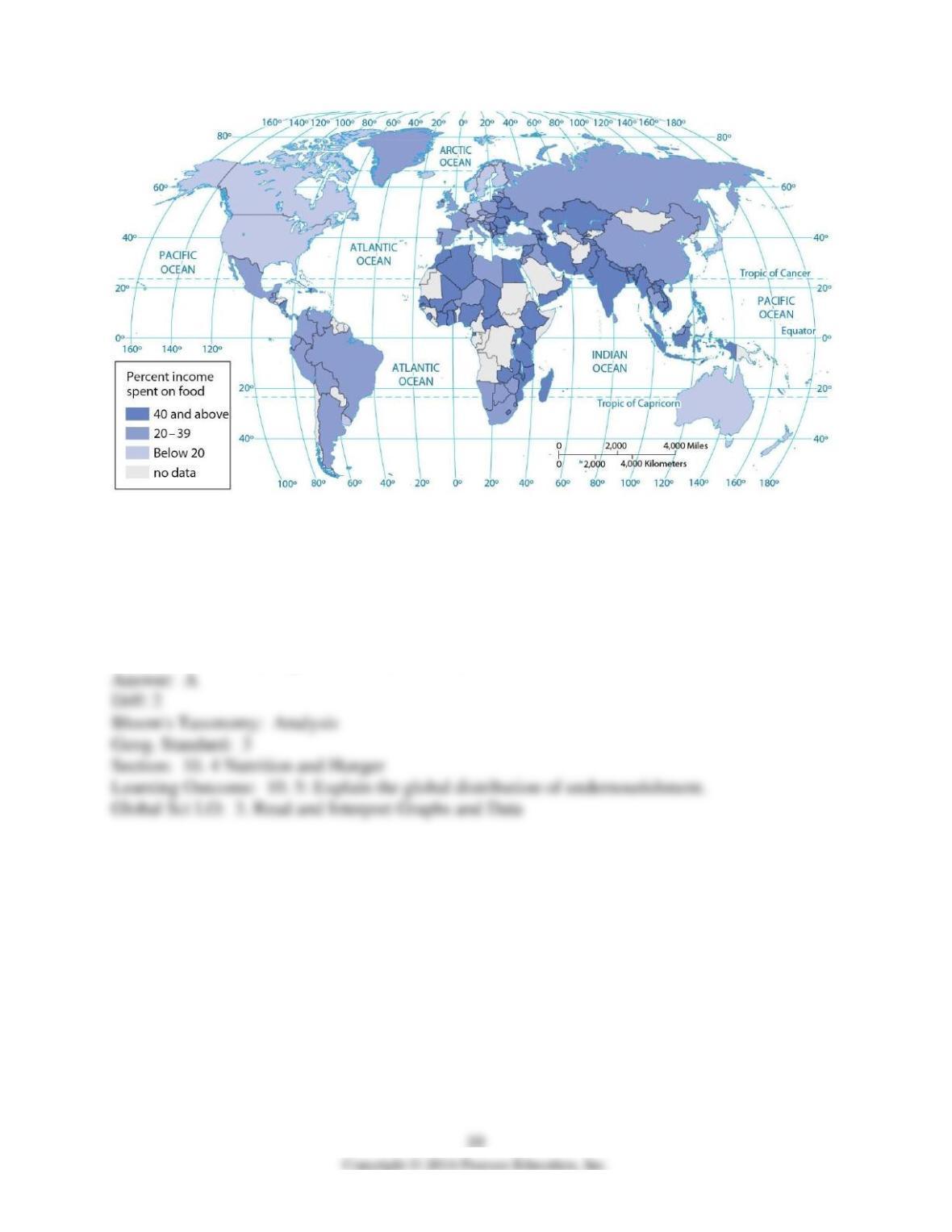
28) According to the map of income spent on food, less than 20 percent of average income is
spent on food in
A) Sweden, Finland, the United States, Canada, Australia, and Germany.
B) Sweden, Finland, Canada, Afghanistan, the United States, and Mexico.
C) Germany, Finland, Canada, Australia, Mongolia, and Saudi Arabia.
D) Canada, Australia, the United States, and Mexico.
E) the United States, Argentina, Peru, Ecuador, and Brazil.