Larson_Calculus_10e ch10sec03
MULTIPLE CHOICE
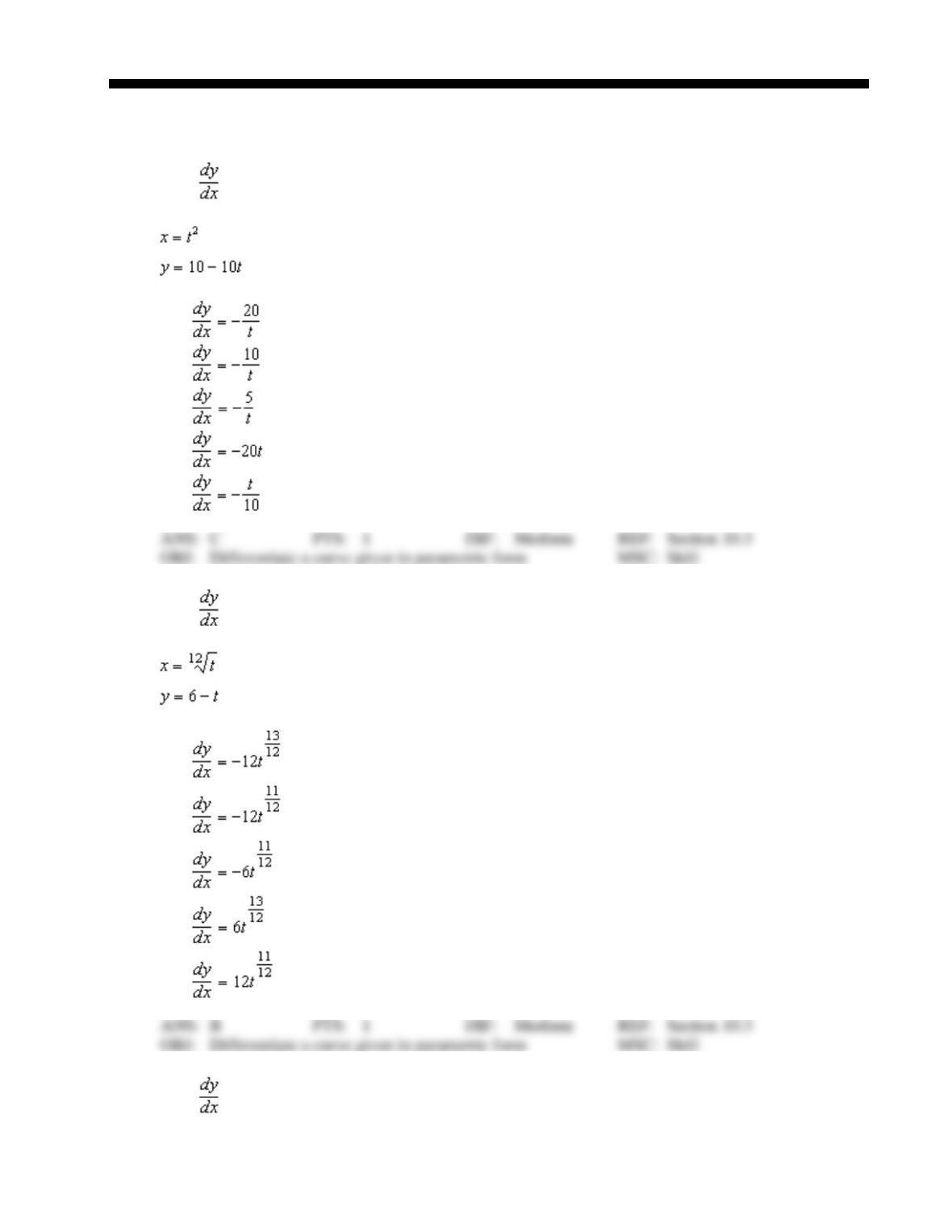
1. Find .
a.
b.
c.
d.
e.
2. Find .
a.
b.
c.
d.
e.
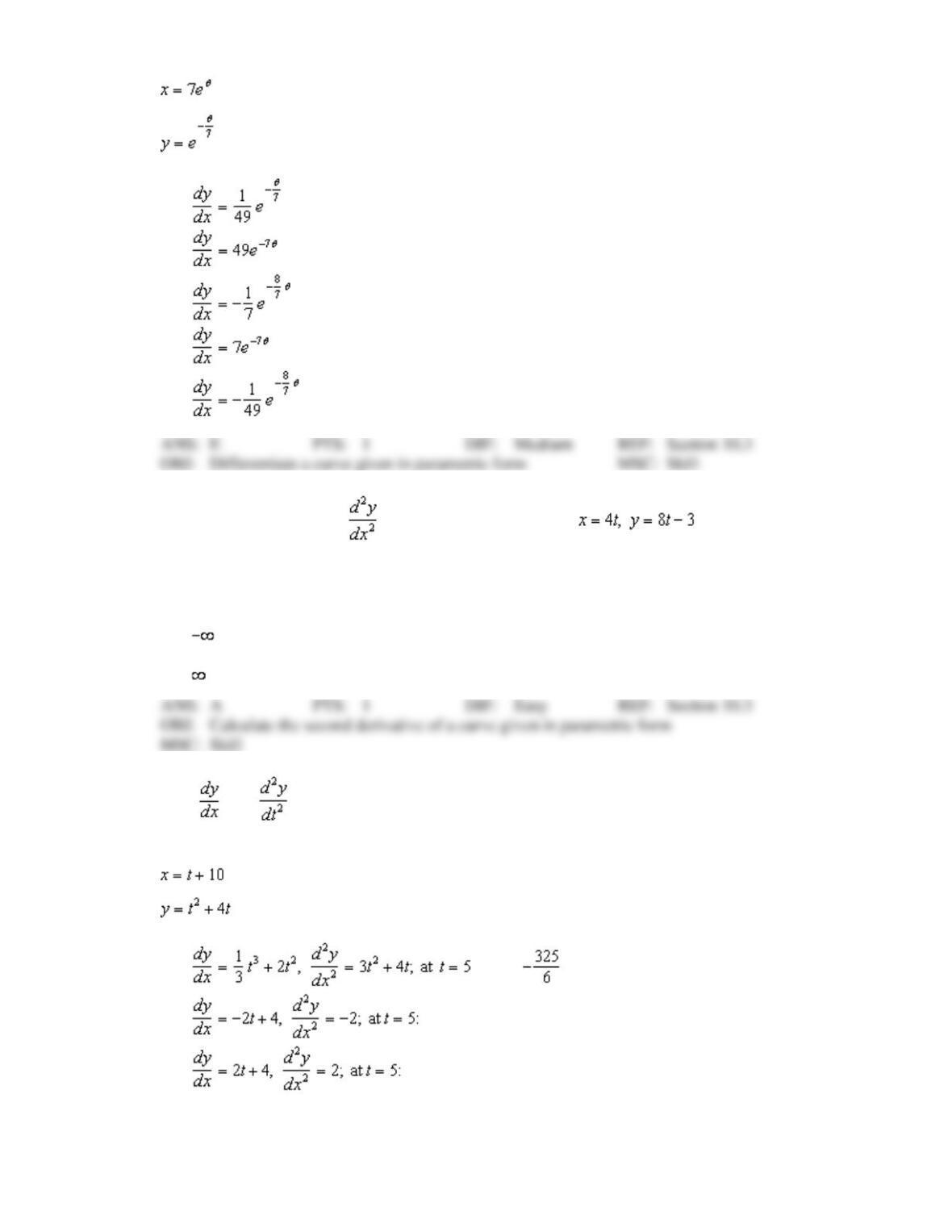
3. Find .
a.
b.
c.
d.
e.
4. Find the second derivative of the parametric equations . Round your answer to
two decimal places, if necessary.
a.
0
b.
2.00
c.
d.
0.50
e.
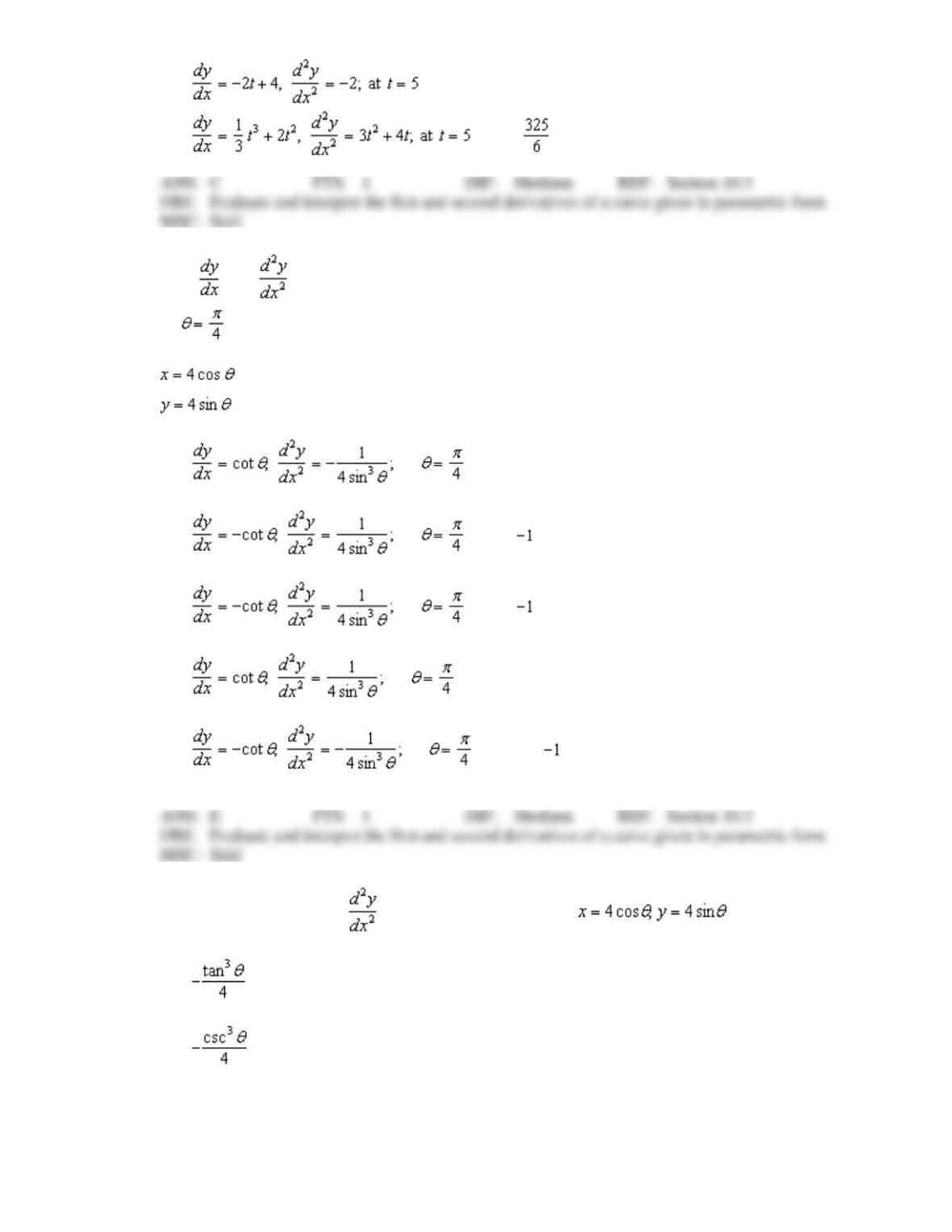
5. Find and if possible, and find the slope and concavity (if possible) at the point corresponding
to t = 5.
a.
: slope and concave up
b.
slope –6 and concave down
c.
slope 14 and concave up
d.
: slope 6 and concave down
e.
: slope and concave up
6. Find and if possible, and find the slope and concavity (if possible) at the point corresponding
to .
a.
at : slope 1 and concave down
b.
at : slope and concave down
c.
at : slope and concave up
d.
at : slope 1 and concave up
e.
at : slope of and concave down
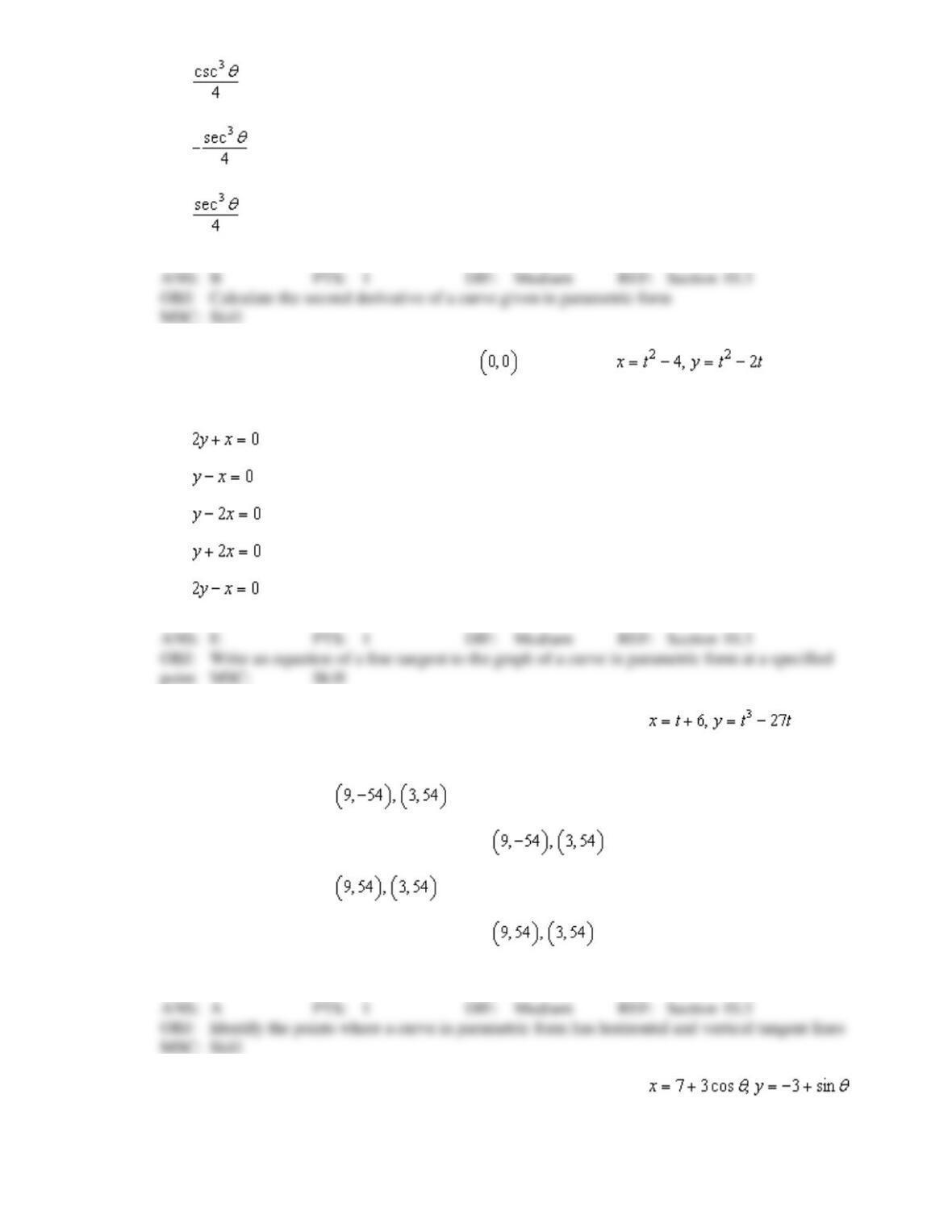
7. Find the second derivative of the parametric equations .
a.
b.
c.
d.
e.
8. Find an equation of the tangent line at a point on the curve .
a.
b.
c.
d.
e.
9. Find all points (if any) of horizontal and vertical tangency to the curve .
a.
horizontal tangents: , vertical tangent: none
b.
horizontal tangent: none, vertical tangents:
c.
horizontal tangents: , vertical tangent: none
d.
horizontal tangent: none, vertical tangents:
e.
horizontal tangent: none, vertical tangent: none
10. Find all points (if any) of horizontal and vertical tangency to the curve .
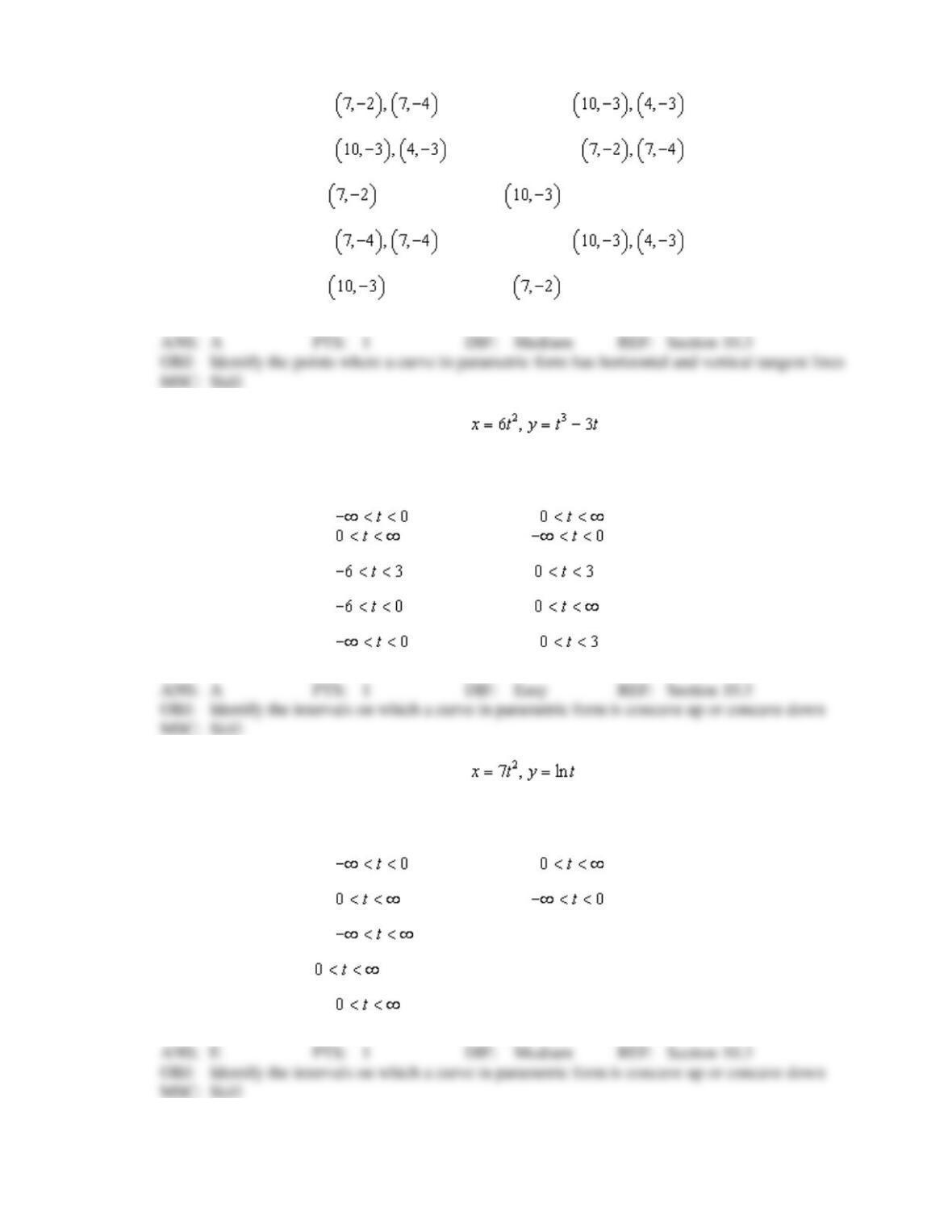
a.
horizontal tangents: , vertical tangents:
b.
horizontal tangents: , vertical tangents:
c.
horizontal tangent: , vertical tangent:
d.
horizontal tangents: , vertical tangents:
e.
horizontal tangent: , vertical tangent:
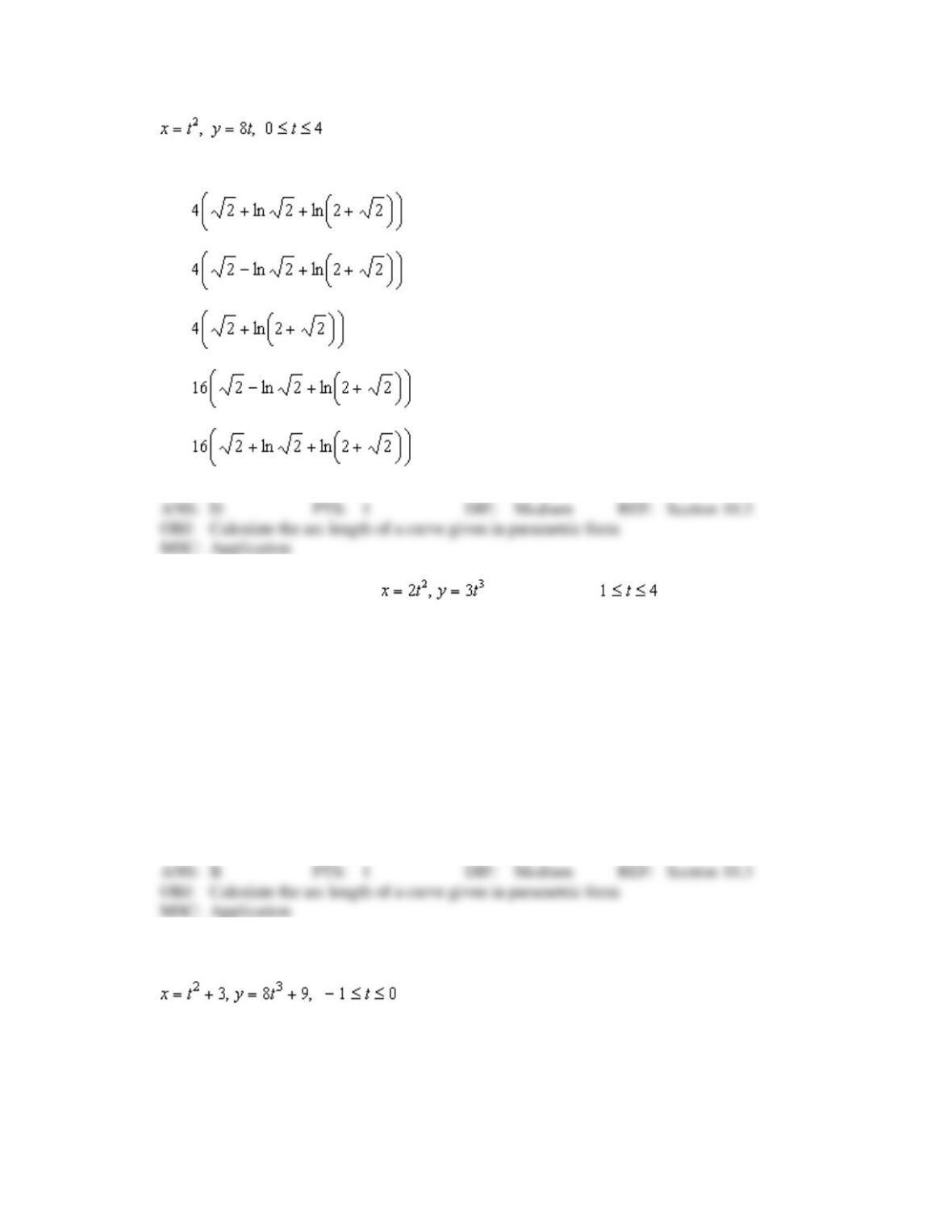
11. Determine the t intervals on which the curve is concave downward or concave
upward.
a.
concave downward: ; concave upward:
b.
concave downward: ; concave upward:
c.
concave downward: ; concave upward:
d.
concave downward: ; concave upward:
e.
concave downward: ; concave upward:
12. Determine the t intervals on which the curve is concave downward or concave
upward.
a.
concave downward: ; concave upward:
b.
concave downward: ; concave upward:
c.
concave downward:
d.
concave upward:
e.
concave downward:
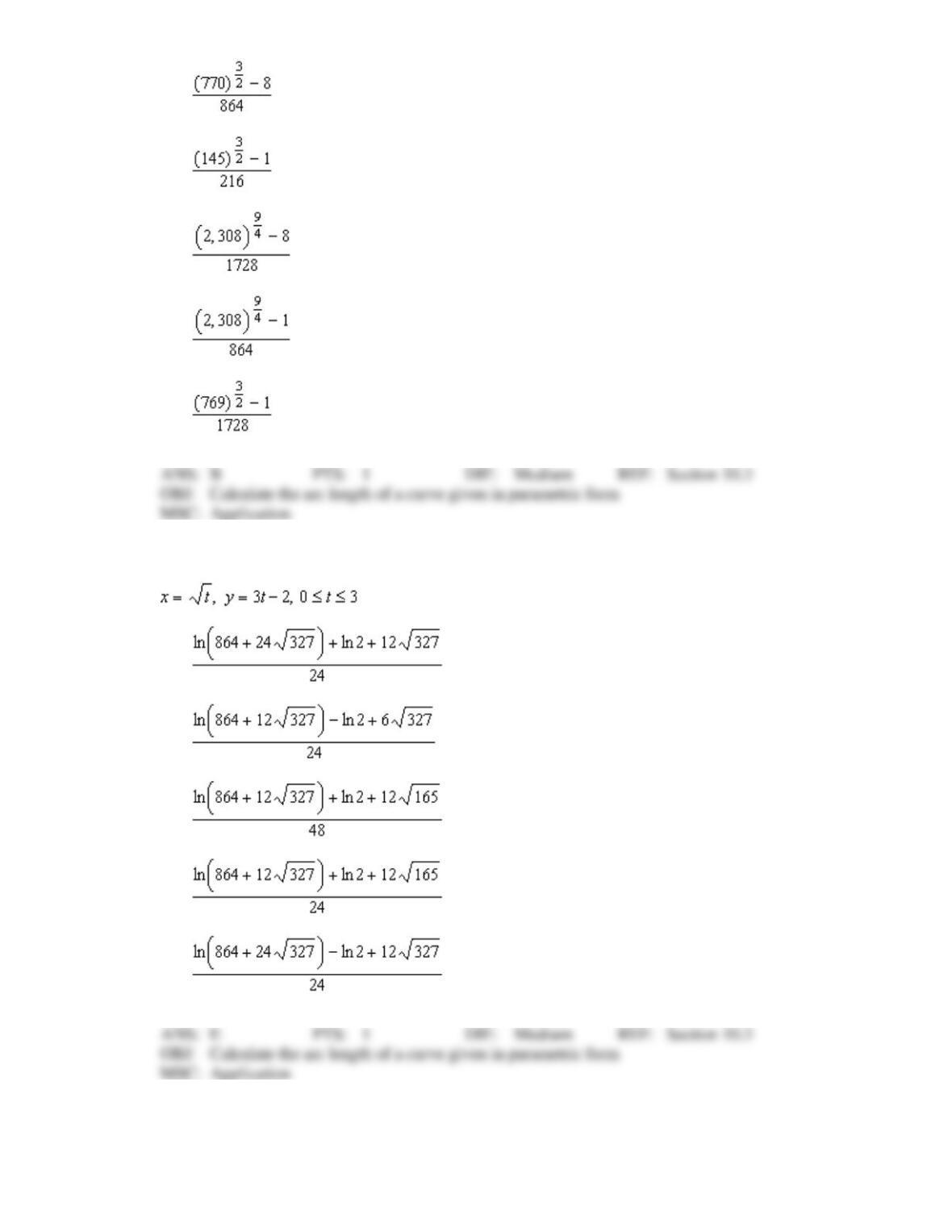
13. Find the arc length of the curve on the given interval.
a.
b.
c.
d.
e.
14. Find the arc length of the curve on the interval . Round your answer to three
decimal places.
a.
287.453
b.
191.635
c.
193.606
d.
66.480
e.
99.721
15. Find the arc length of the curve on the given interval.
a.
b.
c.
d.
e.
16. Find the arc length of the curve on the given interval.
a.
b.
c.
d.
e.
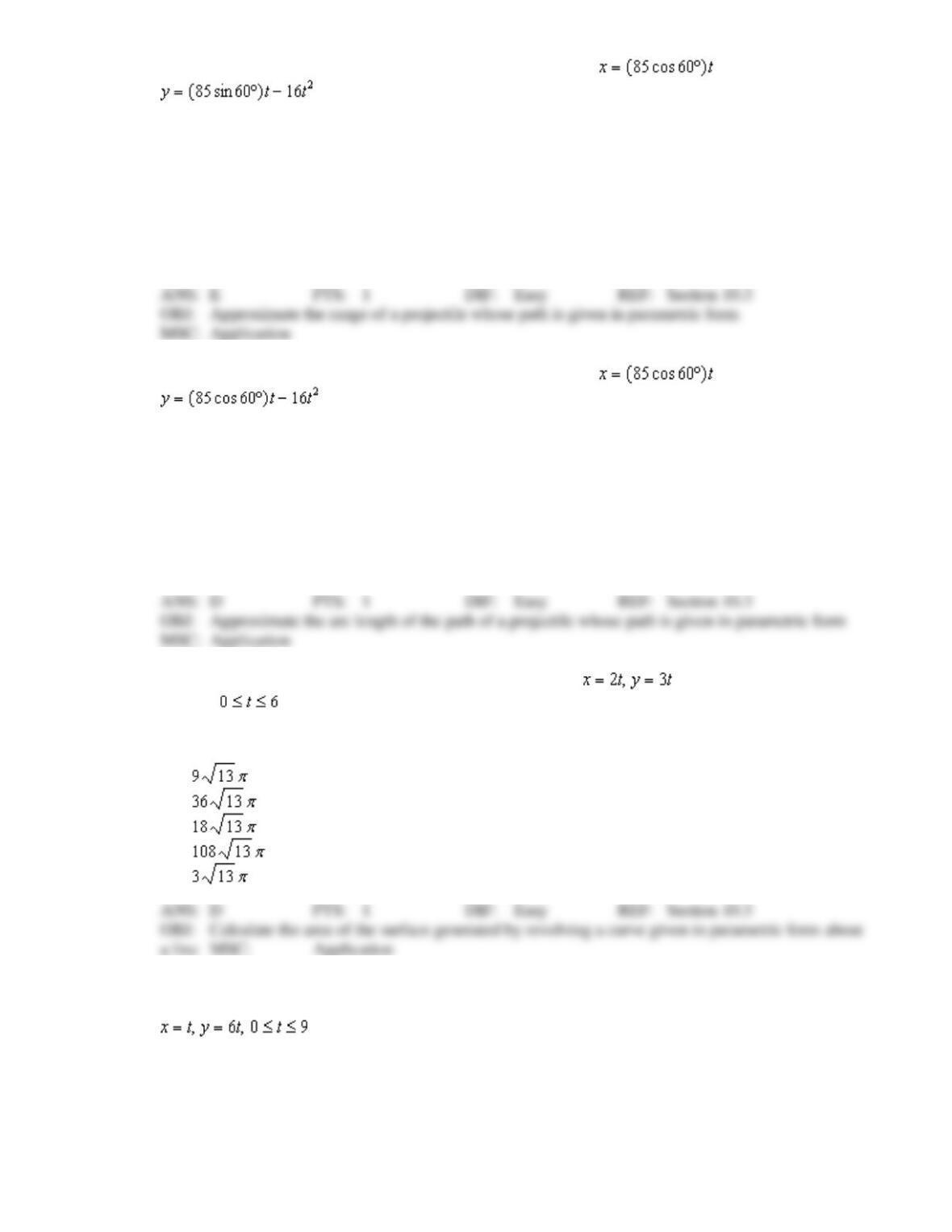
17. The path of a projectile is modeled by the parametric equations and
where x and y are measured in feet. Use a graphing utility to approximate the
range of the projectile. Round your answer to two decimal places.
a.
312.85 ft
b.
521.42 ft
c.
131.09 ft
d.
391.06 ft
e.
195.53 ft
18. The path of a projectile is modeled by the parametric equations and
where x and y are measured in feet. Use the integration capabilities of a
graphing utility to approximate the arc length of the path. Round your answer to one decimal place.
a.
387.2 ft
b.
595.8 ft
c.
335.0 ft
d.
269.9 ft
e.
465.4 ft
19. Find the area of the surface generated by revolving the curve about the x-axis on the
interval .
a.
b.
c.
d.
e.
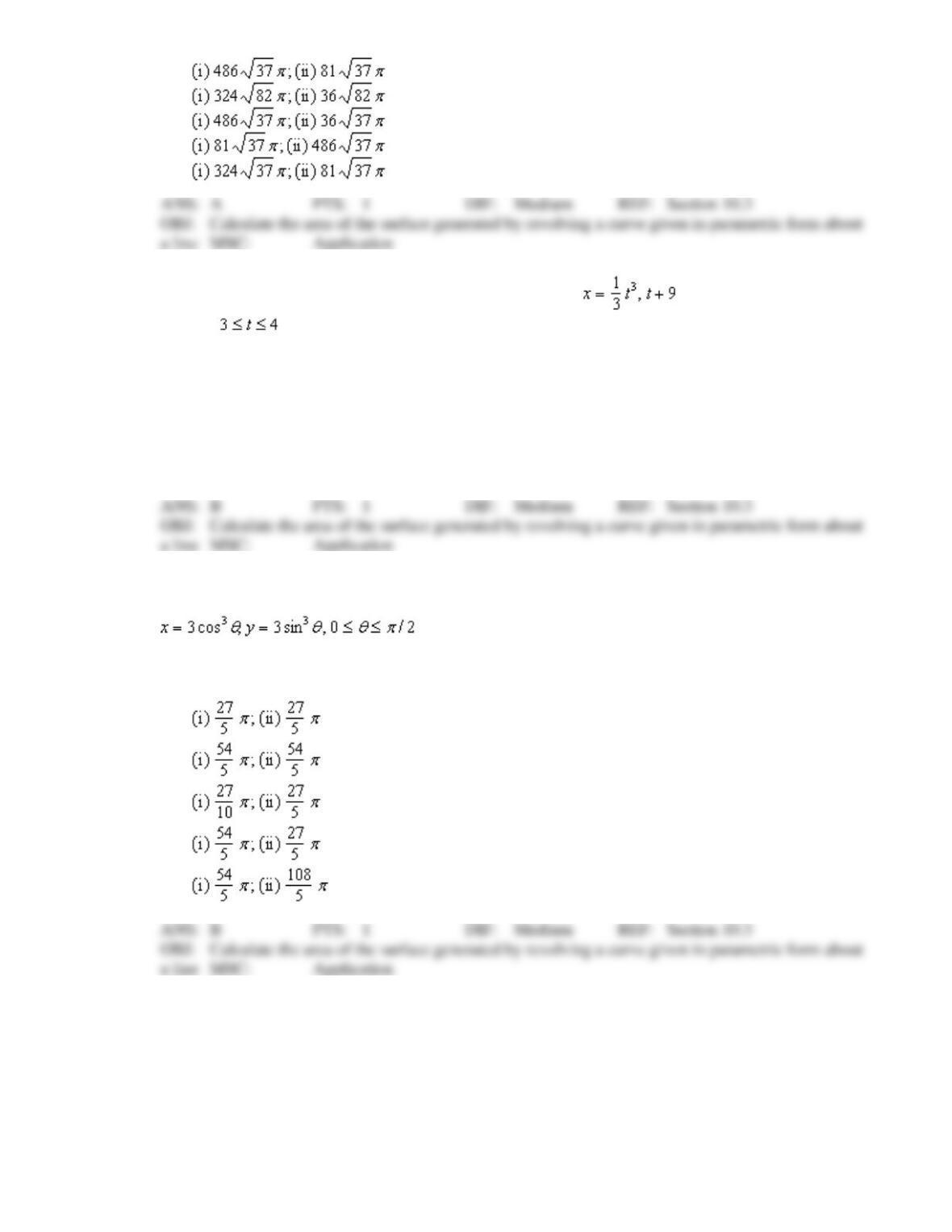
20. Find the area of the surface generated by revolving the curve about the given axis.
(i) x-axis; (ii) y-axis
a.
b.
c.
d.
e.
21. Find the area of the surface generated by revolving the curve about the y-axis on the
interval . Round your answer to two decimal places.
a.
1427.12
b.
1178.96
c.
1049.37
d.
589.48
e.
1898.04
22. Find the area of the surface generated by revolving the curve about the given axis.
(i) x-axis; (ii) y-axis
a.
b.
c.
d.
e.