10
Multiple Choice
Identify the choice that best completes the statement or answers the question.
____ 1. Art protesting a particular war was first seen____.
a.
in ancient times
b.
in the twentieth century
c.
about fifty years ago
d.
about two hundred years ago
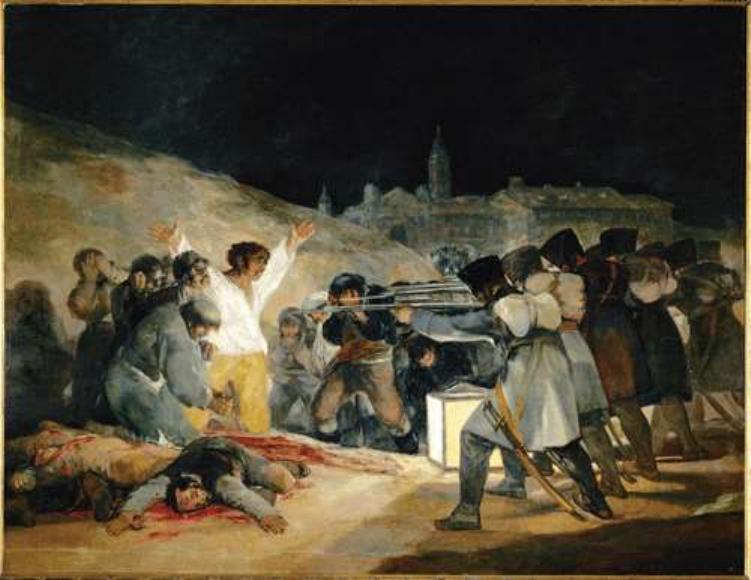
____ 2. Francisco Goya’s The Executions of May 3, 1808, sympathize with____.
a.
the Greeks
b.
the Germans
c.
the Spaniards
d.
the French
____ 3. Both Kathe Kollwitz and George Grosz____.
a.
protested against wars
b.
protested against specific battles
c.
celebrated the victorious
d.
celebrated the losers
____ 4. Much of John Heartfield’s art protested against ____.
a.
Nazi Germany
b.
Communist Russia
c.
Fascist Italy
d.
Neo-Nazi America
____ 5. David Alfaro Siqueiros protested against the ____.
a.
Spanish Civil War
b.
Mexican Revolution
c.
Spanish Inquisition
d.
Gothic Invasion
____ 6. Robert Motherwell believed that abstraction communicated best____.
a.
the objects of life
b.
the struggle between life and death
c.
the beginning of life in the womb
d.
the life of the spirit
____ 7. The Surrealists believed in automatism, which includes the idea of____.
a.
automatons
b.
autopsies
c.
careful observation
d.
intuition
____ 8. Tomatsu Shomei’s photographs are of victims of ____.
a.
the plague
b.
mercury poisoning
c.
torture
d.
the atomic bomb
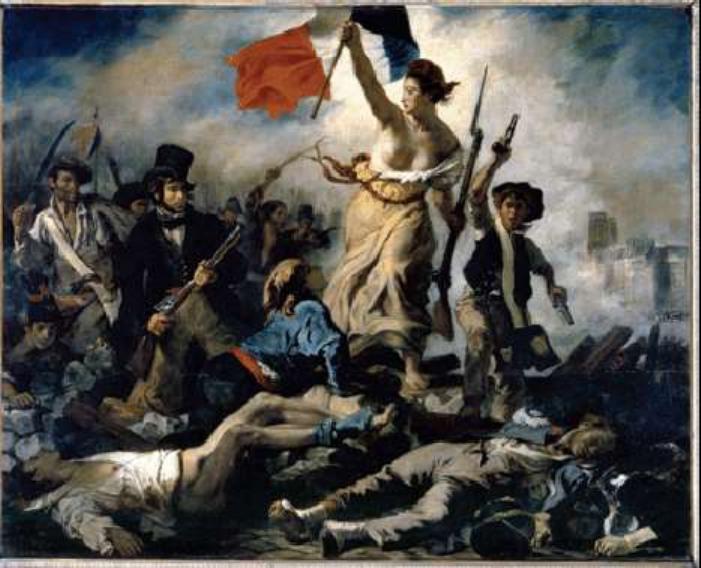
____ 9. Eugene Delacroix’s Liberty Leading the People is ____ in its portrayal of fighting as thrilling, dangerous, and
liberating.
a.
realistic
b.
symbolic
c.
romantic
d.
revolutionary
____ 10. Leon Golub’s Mercenaries I is particularly imposing because of its____.
a.
subdued colors
b.
large size
c.
view of the surrounding landscape
d.
emphasis on weapons
____ 11. Lewis Hine’s photos of child laborers have long ____, which fully documented their youthfulness.
a.
dark shadows
b.
descriptions
c.
titles
d.
newspaper articles
____ 12. Jacob Lawrence did a series of paintings describing the tribulations of____.
a.
prisoners of war
b.
African Americans
c.
child laborers
d.
soldiers in the army
____ 13. The Passion of Sacco and Vanzetti was done by____.
a.
Shahn
b.
Siqueiros
c.
Motherwell
d.
Golub
____ 14. Jacob Lawrence’s artistic style was____.
a.
flat and simple
b.
textured and complex
c.
realistic and compelling
d.
large and bold
____ 15. William Kentridge created charcoal drawings and film animations reflecting the causes and injustices of ____.
a.
homophobia
b.
apartheid
c.
slavery
d.
misogyny
____ 16. Edward Kienholz’s work is based on his experiences as ____.
a.
a waiter
b.
a prisoner
c.
a mental hospital worker
d.
a home health aide
____ 17. Ester Hernandez uses ____ to make her artistic protests.
a.
shocking details
b.
lurid colors
c.
humor
d.
sarcasm
____ 18. Yinka Shonibare’s Mr. and Mrs. Andrews without Their Heads is a parody of a work by____.
a.
Walker
b.
Golub
c.
Constable
d.
Gainsborough
____ 19. Abrogio Lorenzetti’s Allegory of Good Government was____.
a.
a fresco
b.
a sculpture
c.
an oil painting
d.
a protest painting
____ 20. The ____ Codex Borbonicus is a religious calendar that was made during the period of the Spanish conquest.
a.
Maya
b.
Aztec
c.
Olmec
d.
Toltec
____ 21. This painting was ____.
a.
painted six years after the event from sketches the artist made
b.
painted from life while the artist witnessed the actual event
c.
painted from a photograph taken of the actual event
d.
based on images from the artist’s imagination of the event
____ 22. The function of this painting was to ____.
a.
glorify the extermination of revolutionaries in Andalusia
b.
symbolize a peasant revolt of the sixteenth century in Spain
c.
illustrate an event that occurred when Napoleon Bonaparte’s army occupied Madrid
d.
illustrate the executions of aristocrats following the French Revolution
____ 23. This work is an example of art as ____.
a.
social protest
b.
mortuary memorial
c.
social commentary
d.
glorifying war
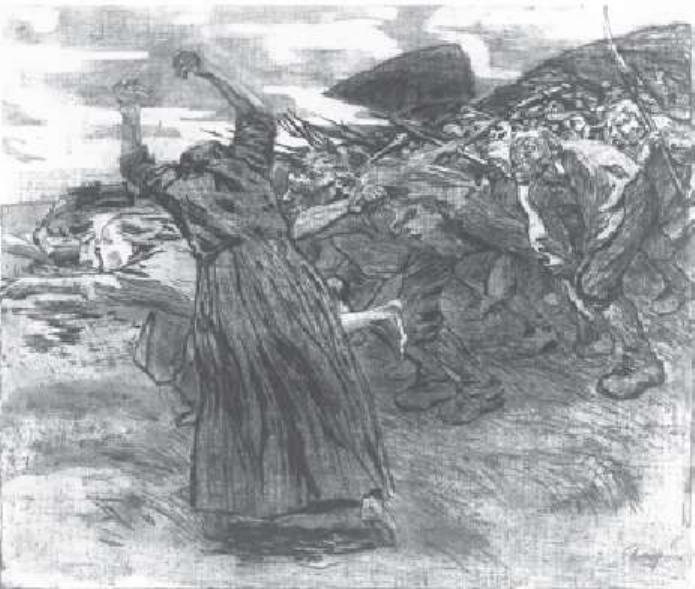
____ 24. The subject matter in this work deals with ____.
a.
a local revolt to liberate people from concentration camps at the end of World War II in
Germany
b.
the Peasant War in Germany in the sixteenth century
c.
the assassination of Kaiser Wilhelm at the beginning of the twentieth century
d.
Napoleaon Bonapart’s occupation of Madrid
____ 25. The Passion of Sacco and Vanzetti uses ____ as a protest strategy.
a.
beauty
b.
narrative
c.
symbols
d.
humor
____ 26. Osorio’s mixed-media ____ The Scene of the Crime (Whose Crime?) affirms the worth of Puerto Rican
culture in New York, while depicting how the people are depicted in mass media.
a.
assemblage
b.
collage
c.
installation
d.
montage
____ 27. ____ did a series of forty-one paintings on the life of Francois-Dominique Toussaint-L’Ouverture, a slave
who led a revolt in Haiti that resulted in the abolition of slavery there in 1794.
a.
Jacob Lawrence
b.
Mona Hatoum
c.
William Hogarth
d.
Jenny Holzer
____ 28. In Jacob Lawrence’s tempera paintings, the use of space and color, as well as the bright patterns of handmade
rugs, indicate the influence of ____.
a.
Fauvism
b.
Divisionism
c.
Impressionism
d.
Cubism
____ 29. The Aboriginal Memorial commemorates all the native peoples of Australia who died as a result of the ____.
a.
Black Plague
b.
European Settlement
c.
Hundred Year War
d.
Civil War
____ 30. ____ is an African American artist who creates life-size, cutout silhouette figures based on racist imagery of
the slave era in the United States.
a.
George Grosz
b.
Jenny Holzer
c.
Kara Walker
d.
Robert Motherwell
____ 31. Ambrogio Lorenzetti’s Allegory of Good Government was painted when ____ was still a patchwork of city-
states in constant turmoil, rather than a unified nation.
a.
Italy
b.
Spain
c.
Mexico
d.
Brazil
____ 32. In The Ambassadors, Hans Holbein the Younger portrays Jean de Dinteville and Georges de Selve as ____,
indicated by the objects on the table between them, which reflect their interest in culture, arts, mathematics,
and astronomy.
a.
physicians
b.
scientists
c.
musicians
d.
humanists
____ 33. The ____ is the normal, existing state of affairs, which appears natural or inevitable instead of constructed or
evolving.
a.
sublime
b.
status quo
c.
avant garde
d.
semiotic
____ 34. The nineteenth-century French artist ____ was known for his pointedly satirical, political cartoons.
a.
Edouard Manet
b.
Jacques-Louis David
c.
Honore Daumier
d.
Gustave Moreau
____ 35. Robert Motherwell was influenced by the Surrealist concept of ____, which incorporates intuition,
spontaneity, and the accidental when creating artwork.
a.
collage
b.
automatism
c.
utopia
d.
dystopia
Essay
36. Describe the different ways Australians and Westerners celebrated the 200th anniversary of the “discovery” of
Australia.
37. How did Hogarth lampoon the English upper classes?
38. What is so unusual about Robert Arneson‘s Portrait of George?
39.
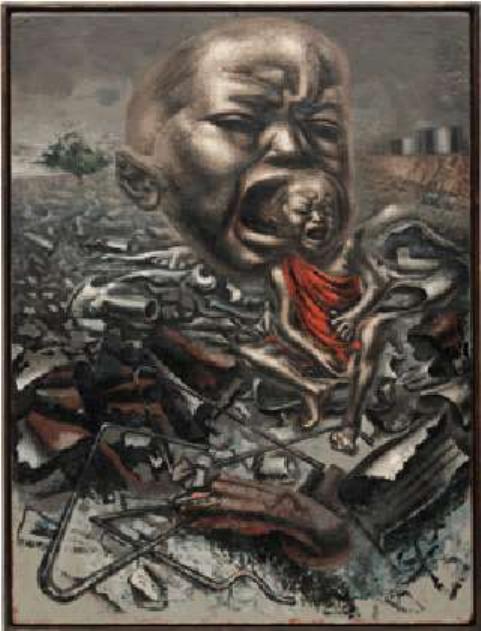
Compare and contrast Eugene Delecroix’s Liberty Leading the People with David Alfaro Siqueiros’s Echo of
a Scream.
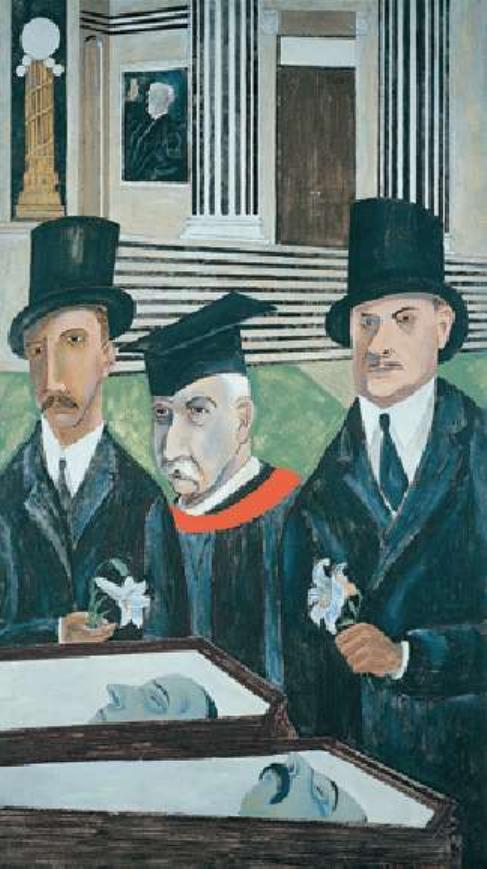
40.
How does the artist indicate time in this image?
True/False
Indicate whether the statement is true or false.
____ 41. Robert Motherwell’s Elegy to the Spanish Republic was made in response to the influenza epidemic of 1918.
____ 42. Tomatsu Shomei’s Senji Yamaguchi of Urakami is an example of documentary photography.
____ 43. Most social protest works of art are designed to prescribe specific changes and actions.
____ 44. Edward Kienholz’s The State Hospital uses ugliness to criticize the way society deals with people it deems
incompetent.

____ 45. Hatoum’s Light Sentence deals with personal identity, the body, surveillance, and control.
10
Answer Section
MULTIPLE CHOICE
ESSAY
TRUE/FALSE