10-101
stockholders’ equity.
Topic: Stockholders’ Equity in the Balance Sheet
170.
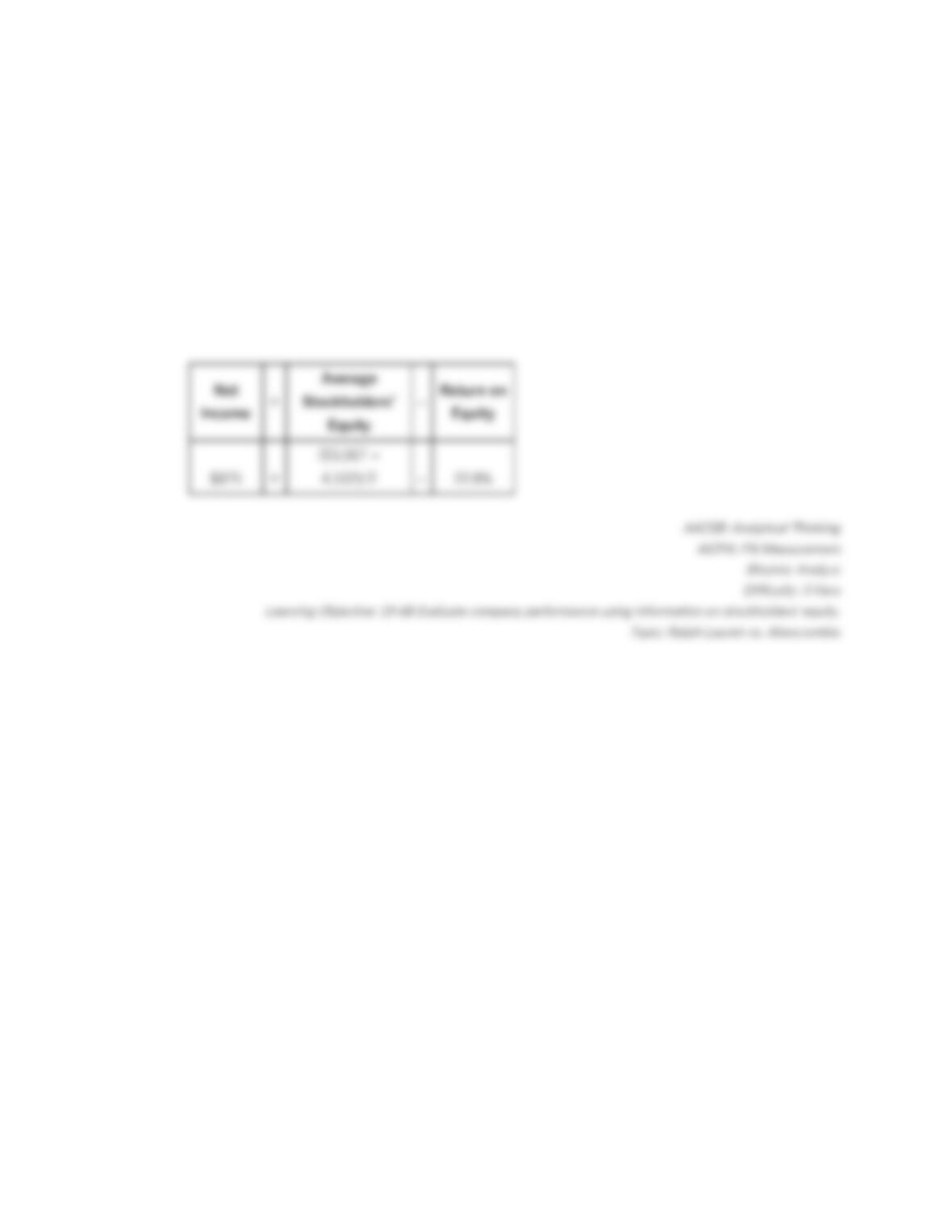
The financial statements of Heatwave Athletic Wear include the following selected data ($
in millions): Sales, $22,502; Net income $875; Beginning stockholders’ equity $3,567;
Ending stockholders’ equity, $4,102. Calculate the return on equity.
10-102
171.
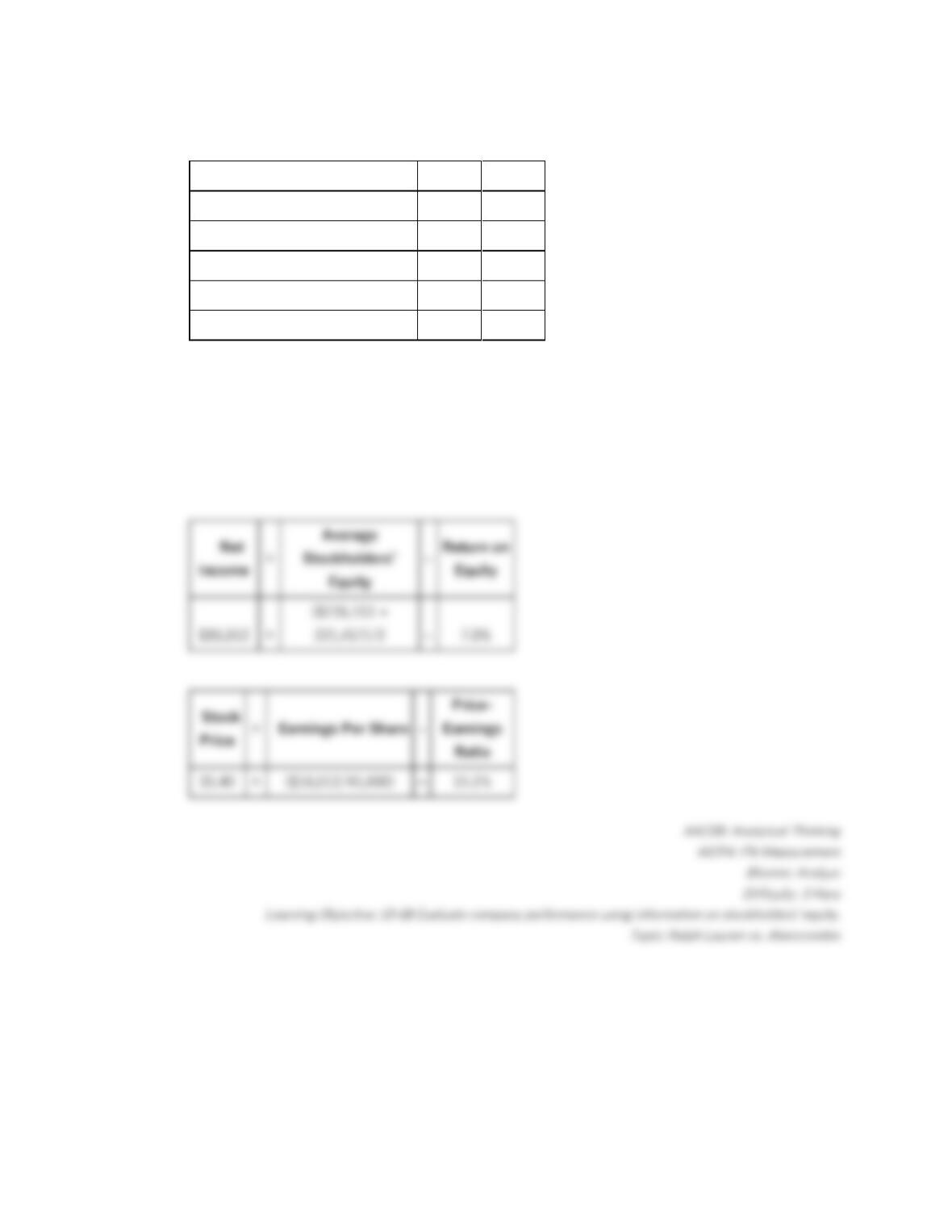
The financial statements of Trail Apparel include the following selected data (in millions):
($ in thousands)
2018
2017
Sales
$728,121
$751,558
Net income
16,012
13,626
Stockholders’ equity, end of year
235,153
221,457
Shares outstanding (in thousands)
45,000
–
Average stock price
$5.40
–
1. Calculate the return on equity for 2018.
2. Calculate the price-earnings ratio for 2018.
($16,012/45,000)

10-103
172.
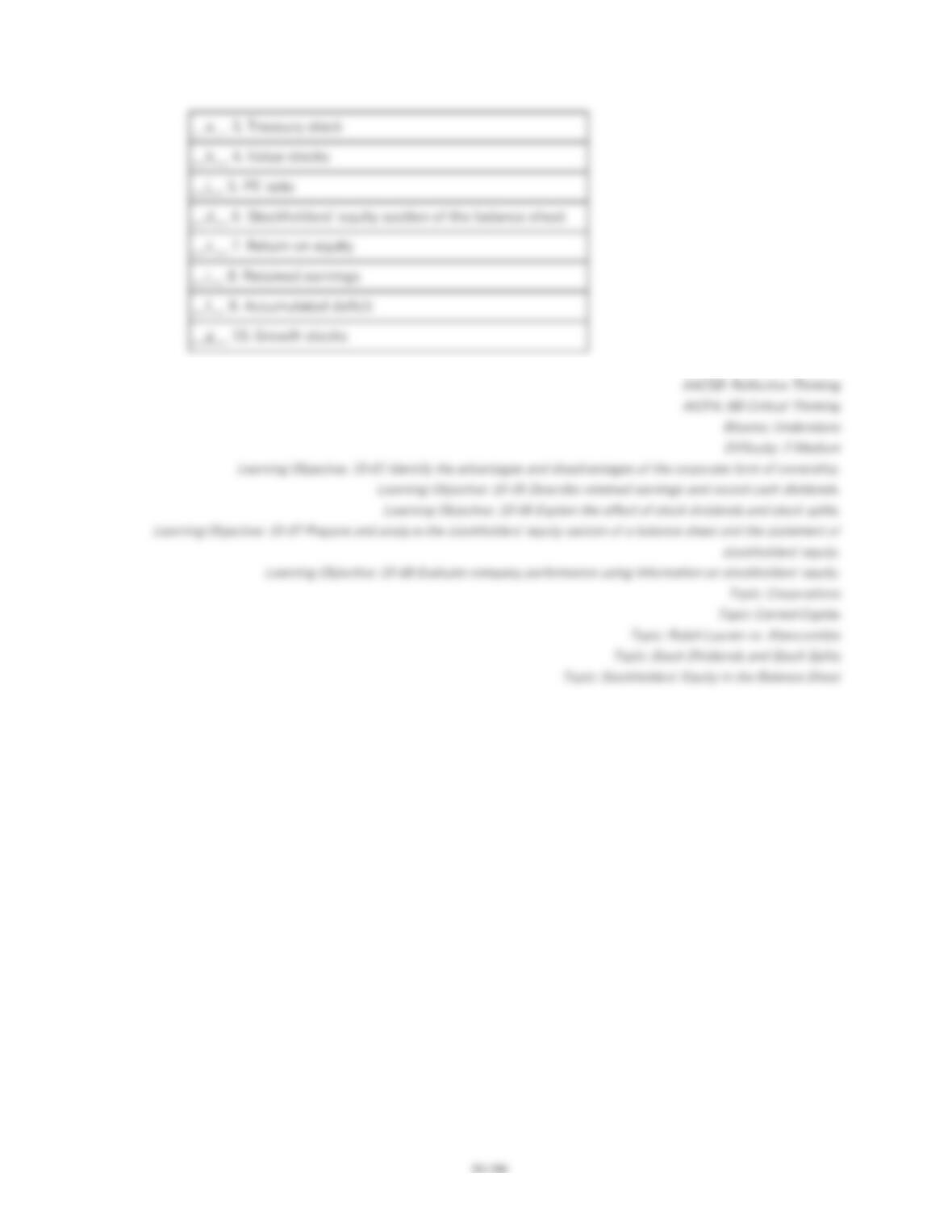
Match (by letter) the following terms with their definitions. Each letter is used only once.
Terms
_____ 1. 100% stock dividend
_____2. Statement of stockholders’ equity
_____3. Treasury stock
_____4. Value stocks
_____5. PE ratio
_____6. Stockholders’ equity section of the balance sheet
_____7. Return on equity
_____ 8. Retained earnings
_____ 9. Accumulated deficit
_____10. Growth stocks
Definitions
a. Summarizes the
changes
in the balance in each stockholders’ equity account
over
a
period
of
time
.
b. Priced low in relation to current earnings.
c. Measures the ability of company management to generate earnings from the resources
that owners provide.
d. Shows the balance in each equity account
at
a
point
in
time
.
e. The corporation’s own stock that it reacquired.
f. A debit balance in retained earnings.
g. Priced high in relation to current earnings as investors expect future earnings to be
higher.
h. Effectively the same as a 2-for-1 stock split.
i. The earnings not paid out in dividends.
j. The stock price divided by earnings per share.
Terms
__h__ 1. 100% stock dividend

10-105
173.
Sweet Sixteen has two classes of stock authorized: $100 par value preferred and $1 par
value common. As of the beginning of 2018, 1,000 shares of preferred stock have been
issued and 20,000 shares of common stock have been issued. The following transactions
affect stockholders’ equity during 2018:
March 1
Issue 3,000 additional shares of common stock for $22 per share.
April 1
Issue 5,000 additional shares of preferred stock for $110 per share.
June 1
Declare a cash dividend on common stock of $1 per share and a cash
dividend on preferred stock of $5 per share to all stockholders of
record on June 15.
June 30
Pay the cash dividends declared on June 1.
August 1
Purchase 2,000 shares of common treasury stock for $18 per share.
October 1
Reissue 1,000 shares of treasury stock purchased on August 1 for $20
per share.
Required:
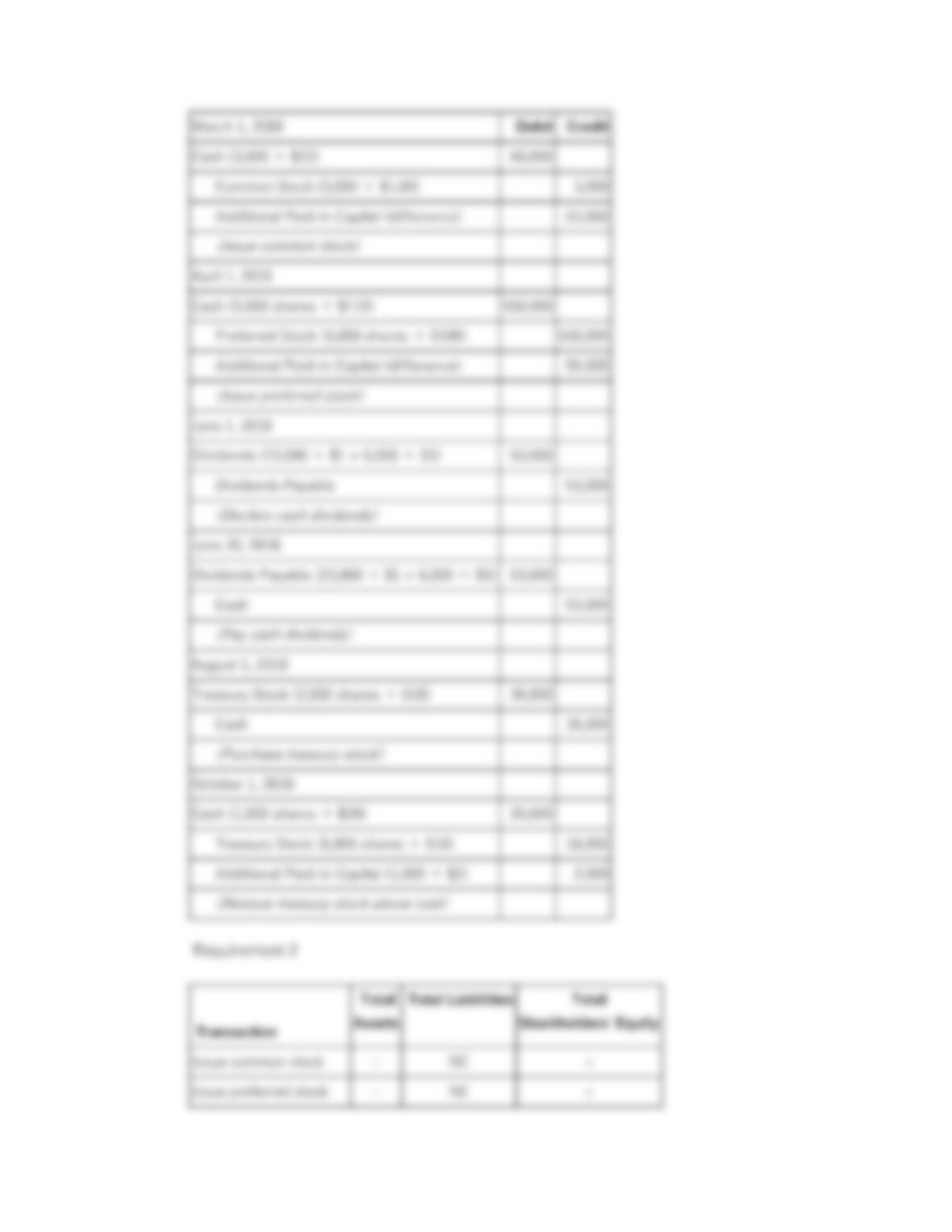
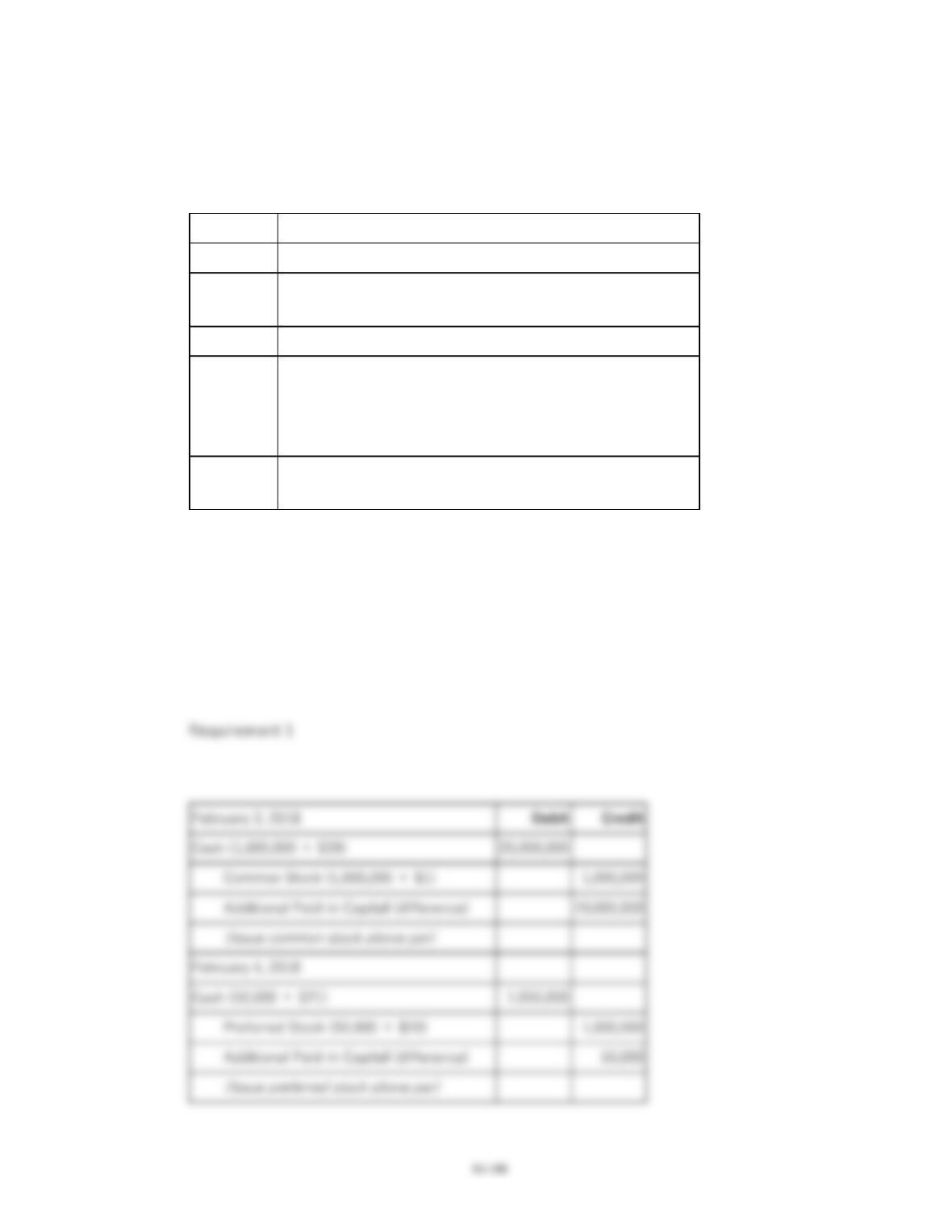
1. Record each of these transactions.
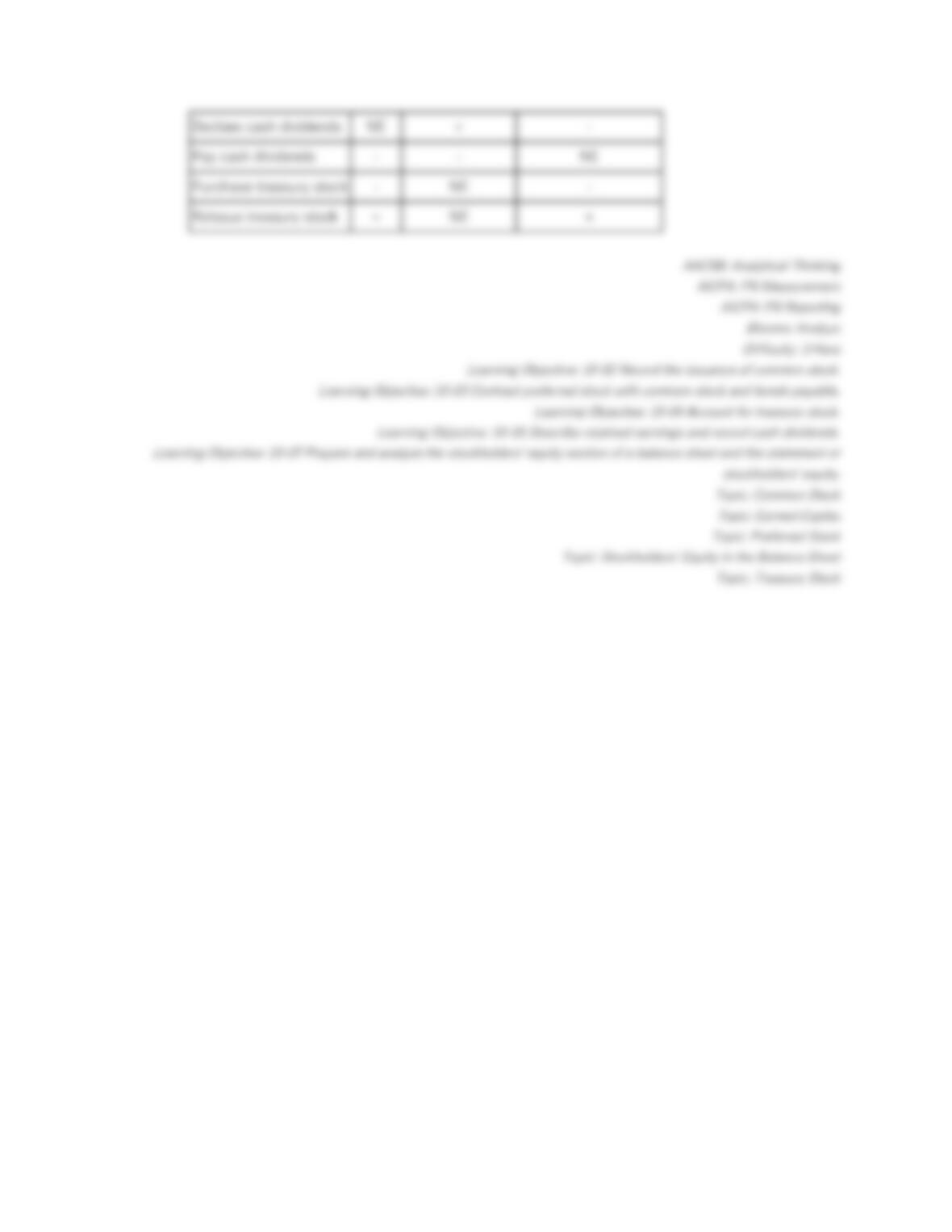
2. Indicate whether each of these transactions would increase (+), decrease (-), or have
no effect (NE) on total assets, total liabilities, and total stockholders’ equity by completing
the following chart.
Transaction
Total Assets
Total Liabilities
Total Stockholders’ Equity
Issue common stock
Issue preferred stock
Declare cash dividends
Pay cash dividends
Purchase treasury stock
Reissue treasury stock
10-106
10-107
174.
Hoop It Up has two classes of stock authorized: 7%, $20 par value preferred and $1 par
value common. The following transactions affect stockholders’ equity during 2018, its first
year of operations:
February 2
Issue 1 million shares of common stock for $20 per share.
February 4
Issue 50,000 shares of preferred stock for $21 per share.
June 15
Purchase 100,000 shares of its own common stock for $18 per
share.
August 15
Reissue 75,000 shares of treasury stock for $23 per share.
November 1
Declare a cash dividend on its common stock of $1 per share
and a $70,000 (7% of par value) cash dividend on its preferred
stock payable to all stockholders on record on November 15.
Hint: Dividends are not paid on treasury stock.
November
30
Pay the dividends declared on November 1.
Required:
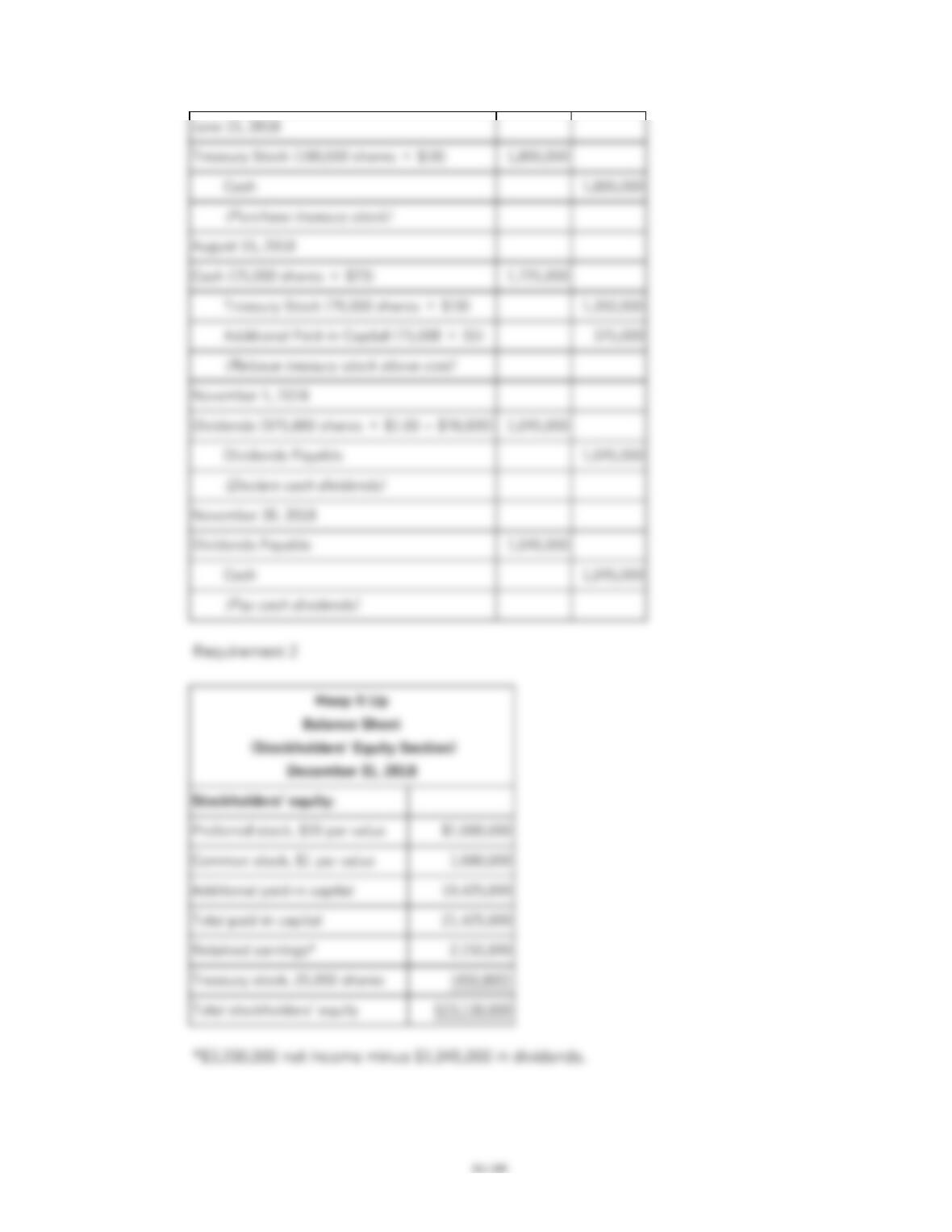
1. Record each of these transactions.
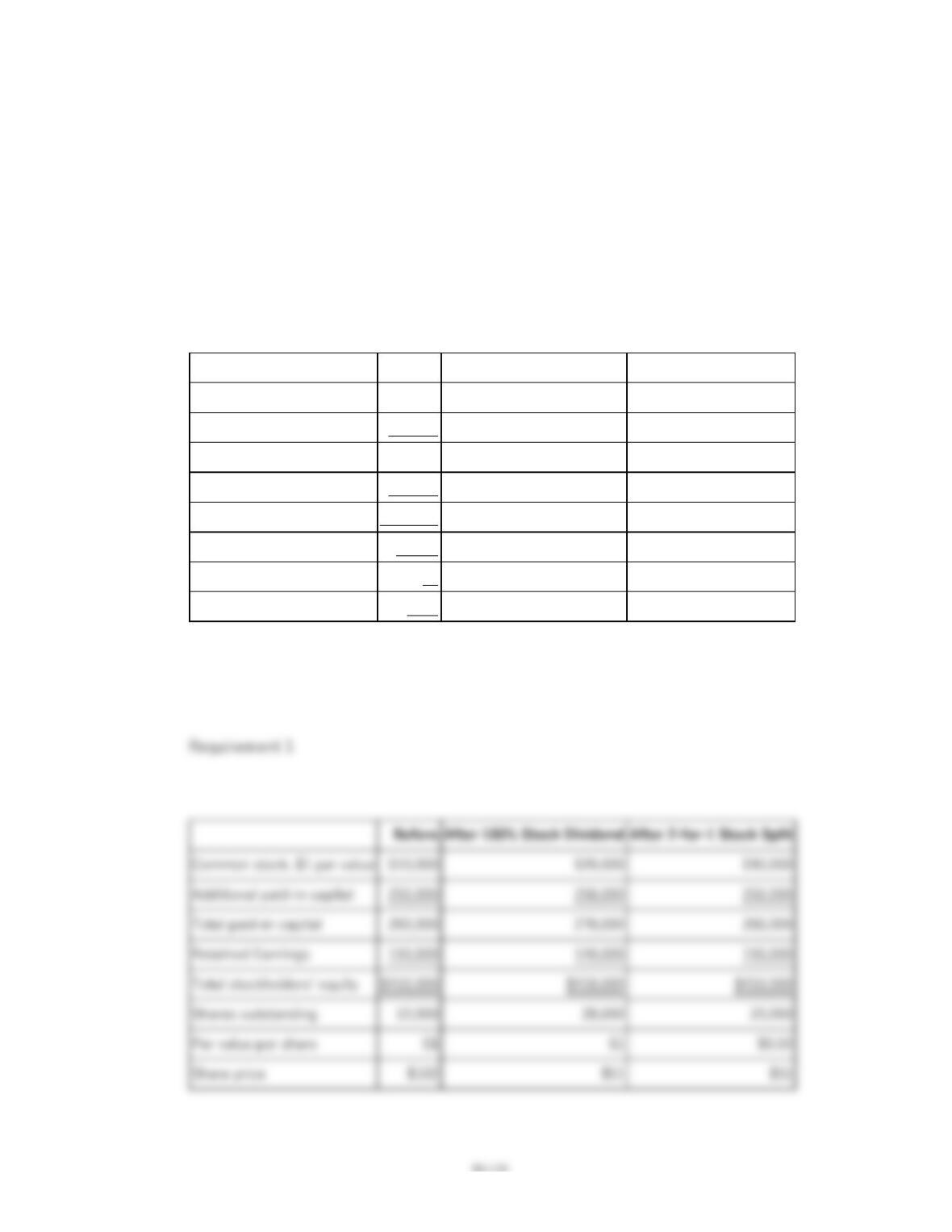
2. Prepare the stockholders’ equity section of the balance sheet as of December 31, 2018.
Net income for the year was $3,200,000.
February 2, 2018
Common Stock (1,000,000 × $1)
Additional Paid-in Capital (difference)
February 4, 2018
Preferred Stock (50,000 × $20)
Additional Paid-in Capital (difference)
10-110
175.
Brooks Brothers has done very well the past year and its stock price is now trading over
$100 per share. Management is considering either a 100% stock dividend or a 2–for–1
stock split.
Required:
Complete the following chart comparing the effects of a 100% stock dividend versus a 2–
for-1 stock split on the stockholders’ equity accounts, shares outstanding, par value, and
share price.
Before
After 100% Stock Dividend
After 2-for-1 Stock Split
Common stock, $1 par value
$10,000
Additional paid-in capital
250,000
Total paid-in capital
260,000
Retained earnings
150,000
Total stockholders’ equity
$410,000
Shares outstanding
10,000
Par value per share
$1
Share price
$102
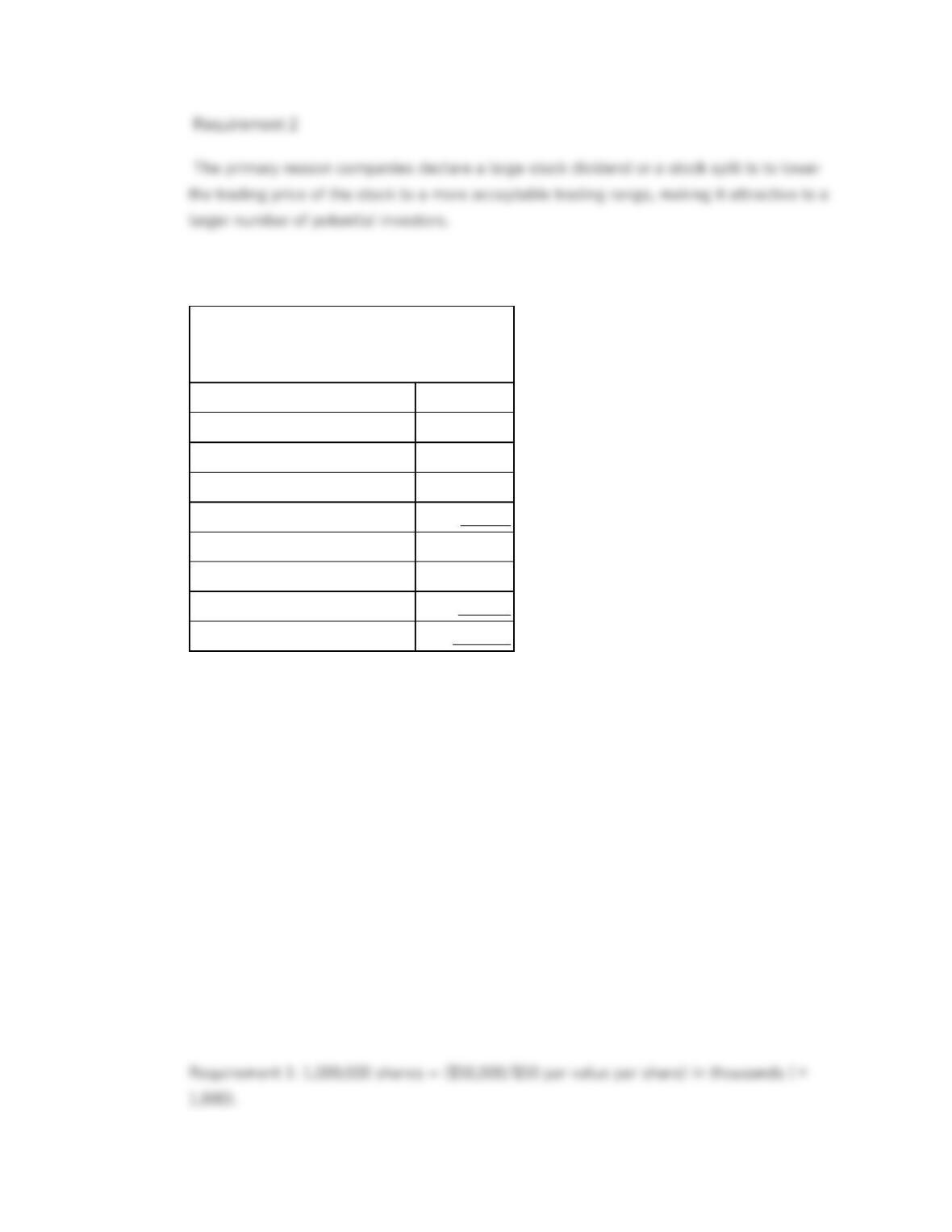
What is the primary reason companies declare a large stock dividend or a stock split?
Before
After 100% Stock Dividend
After 2-for-1 Stock Split
Common stock, $1 par value
$10,000
Additional paid-in capital
250,000
Total paid-in capital
260,000
Retained Earnings
150,000
Total stockholders’ equity
$410,000
Shares outstanding
10,000
Par value per share
$1
10-111
176.
The stockholders’ equity section of University Fashions is presented here.
University Fashions
Balance Sheet
(Stockholders’ Equity Section)
($ in thousands)
Stockholders’ equity:
Preferred stock, $50 par value
$50,000
Common stock, $5 par value
$25,000
Additional paid-in capital
120,000
Total paid-in capital
195,000
Retained earnings
140,000
Treasury stock
(20,900)
Total stockholders’ equity
$314,100
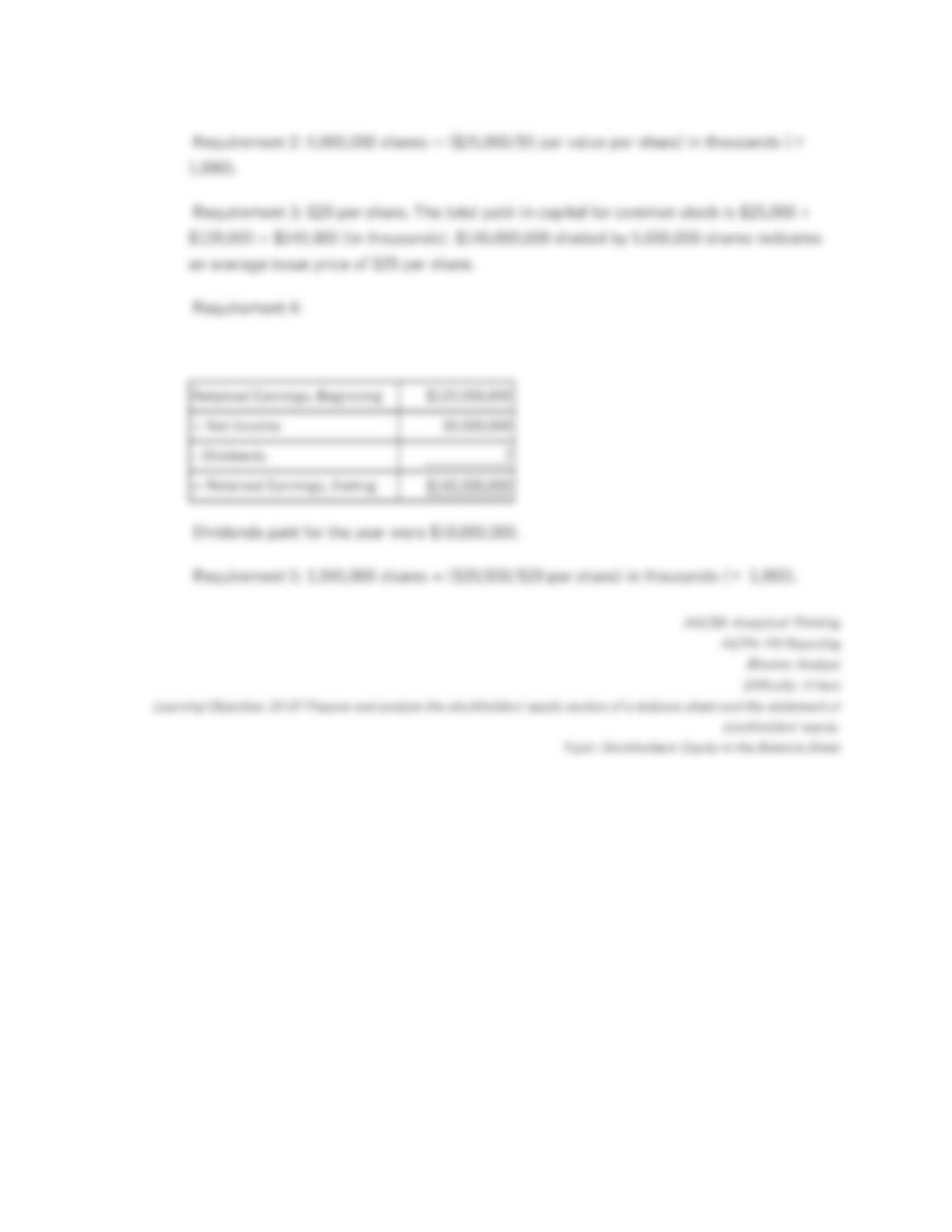
Required:
Based on the stockholders’ equity section of University Fashions, answer the following
questions. Remember that all amounts are presented in thousands.
1. How many shares of preferred stock have been issued?
2. How many shares of common stock have been issued?
3. Assuming the preferred shares were issued at par value, at what average price per
share were the common shares issued?
4. If retained earnings at the beginning of the period was $120 million and net income
during the year was $30 million, how much was paid in dividends for the year?
5. If the treasury stock was reacquired at $20 per share, how many shares were
reacquired?
10-112
10-113
177.
Sweet Sixteen has the following beginning balances in its stockholders’ equity accounts on
January 1, 2018: preferred stock, $100,000, common stock, $20,000; paid-in capital,
$380,000; and retained earnings, $450,000. Net income for the year ended December 31,
2018, is $65,000. The following transactions affect stockholders’ equity during 2018:
March 1
Issue 3,000 additional shares of common stock for $22 per share.
April 1
Issue 5,000 additional shares of preferred stock for $110 per share.
June 1
Declare a cash dividend on common stock of $1 per share and a cash
dividend on preferred stock of $5 per share to all stockholders of
record on June 15.
June 30
Pay the cash dividends declared on June 1.
August 1
Purchase 2,000 shares of common treasury stock for $18 per share.
October 1
Reissue 1,000 shares of treasury stock purchased on August 1 for $20
per share.
Required:
Taking into consideration the beginning balances and all the transactions during 2018,
respond to the following for Sweet Sixteen:
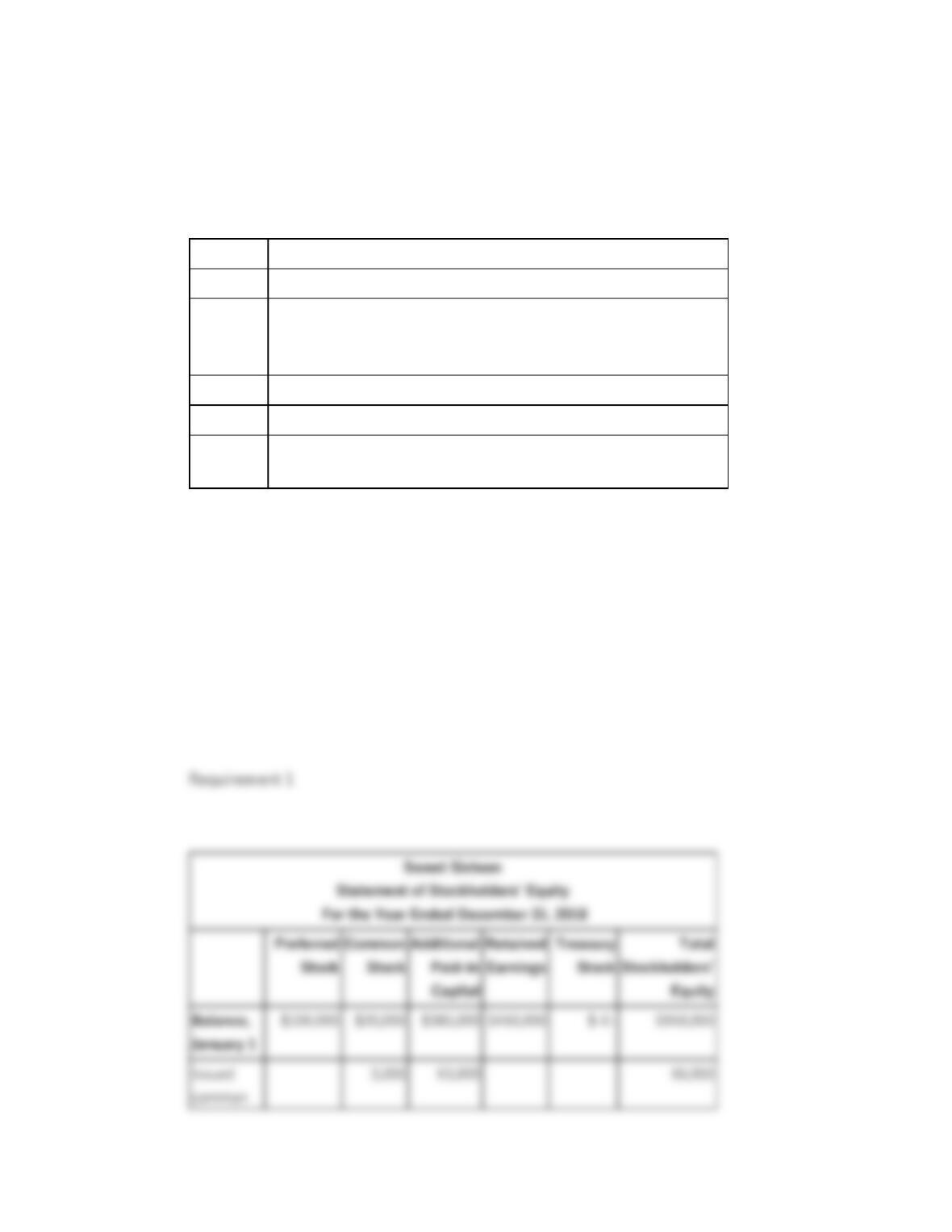
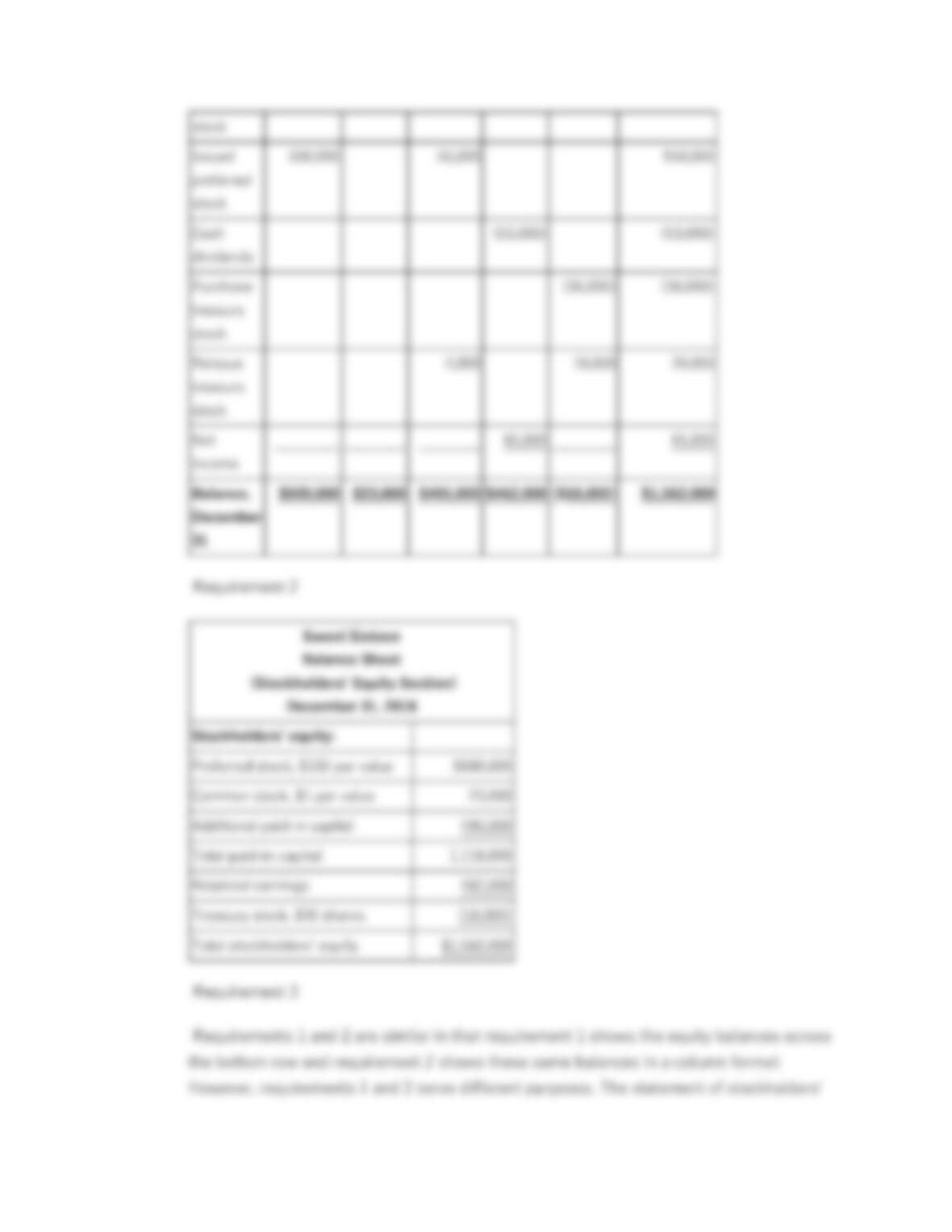
1. Prepare the statement of stockholders’ equity for the year ended December 31, 2018.
2. Prepare the stockholders’ equity section of the balance sheet as of December 31, 2018.
3. Explain how requirements 1 and 2 are similar and how they are different.
10-114
178.
Selected financial data is provided as follows:
($ in millions)
2018
2017
2016
Sales
$14,526
$15,763
$15,943
Net income
967
833
778
Total assets
$7,564
$7,838
$8,544
Total liabilities
$3,177
$3,564
$3,370
Stockholders’
equity
4,387
4,274
5,174
Total liabilities
and stockholders’
equity
$7,564
$7,838
$8,544
694
791
816
Average shares
outstanding (in
millions)
Average stock price
$16
$19
$18
Required:
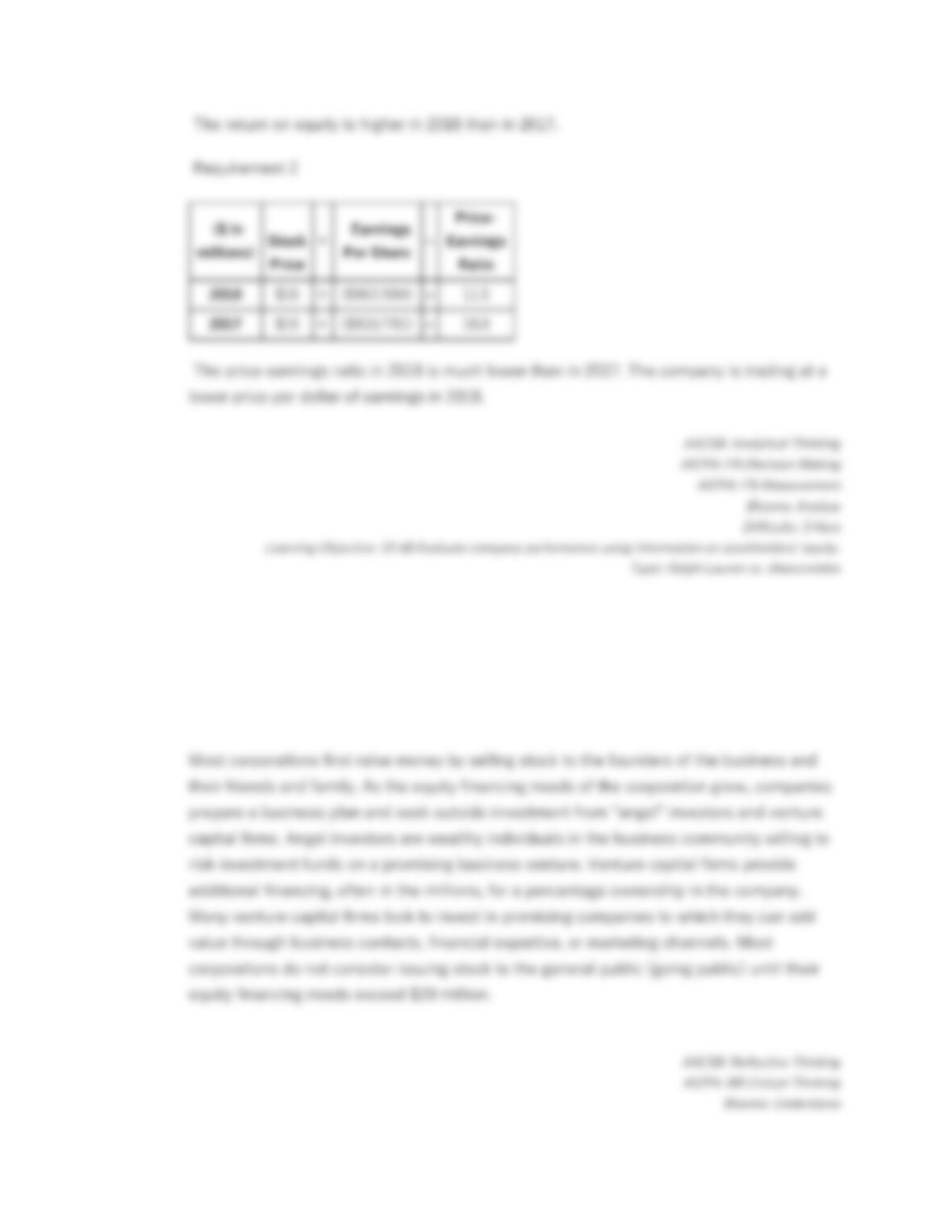
1. Calculate the return on equity for 2018. How does it compare with the return on equity
for 2017?
2. Calculate the price-earnings ratio for 2018. How does it compare with the price–
earnings ratio for 2017? Is the company trading at a higher or lower price per dollar of
earnings in 2018?
=
17.6%
10-117
179.
Corporations typically do not start raising capital by issuing stock to the general public.
What are the common stages of equity financing leading to an initial public offering (IPO)?
10-118
180.
Describe the primary advantages and disadvantages of a corporation in comparison to a
sole-proprietorship or partnership.
10-119
181.
Explain the difference between authorized, issued, and outstanding shares.
182.
Explain why preferred stock often is said to have a mixture of attributes somewhere
between common stock and bonds.
10-120
183.
Contrast the effects of a cash dividend and a stock dividend on total assets, total
liabilities, and total stockholders’ equity.