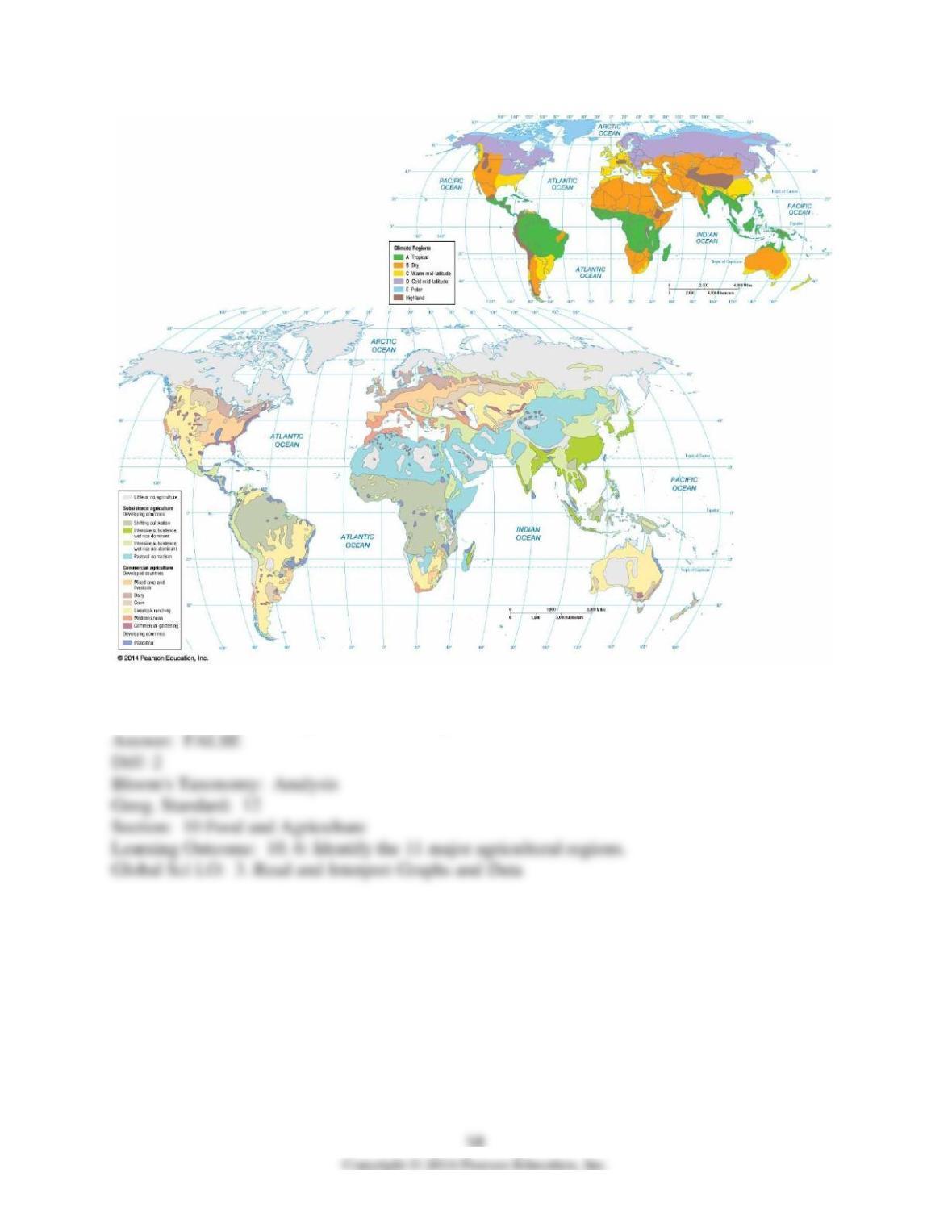
94) As indicated on the map of world agricultural regions, Mediterranean farming is so named
because it is practiced only on land bordering the Mediterranean Sea.
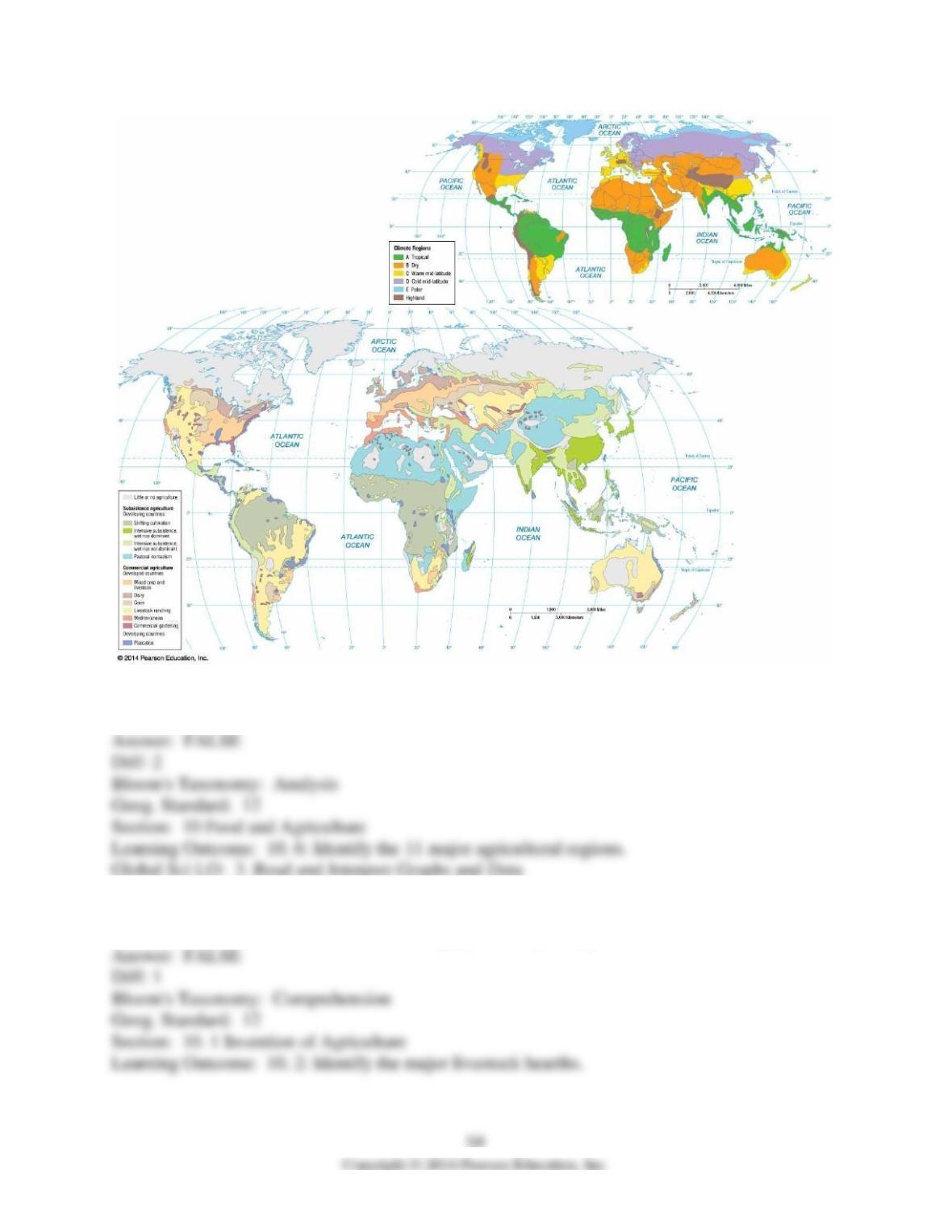
95) As indicated on the map of world agricultural regions, mixed crop and livestock production
dominates most of the western United States and Central Asia.
96) There is consensus among scientists that hunters and gatherers converted to agriculture
because of the domestication of animals roughly 12,000 years ago.
97) Hunting and gathering is still practiced by isolated groups in Africa, Australia, and South
America.
98) While 40% of the world’s population overall are farmers, only 10% of the United States’
population are farmers.
99) Subsistence agriculture is designed mainly to generate products for sale off the farm.
100) The one type of commercial agriculture found in developing countries rather than more
developed countries is mixed crop and livestock.
101) Developing countries are home to about 97 percent of the world’s farmers.
102) Most people in Asia, Africa, and Latin America have become commercial farmers.
103) Shifting cultivation can support large population concentrations in East and South Asia.
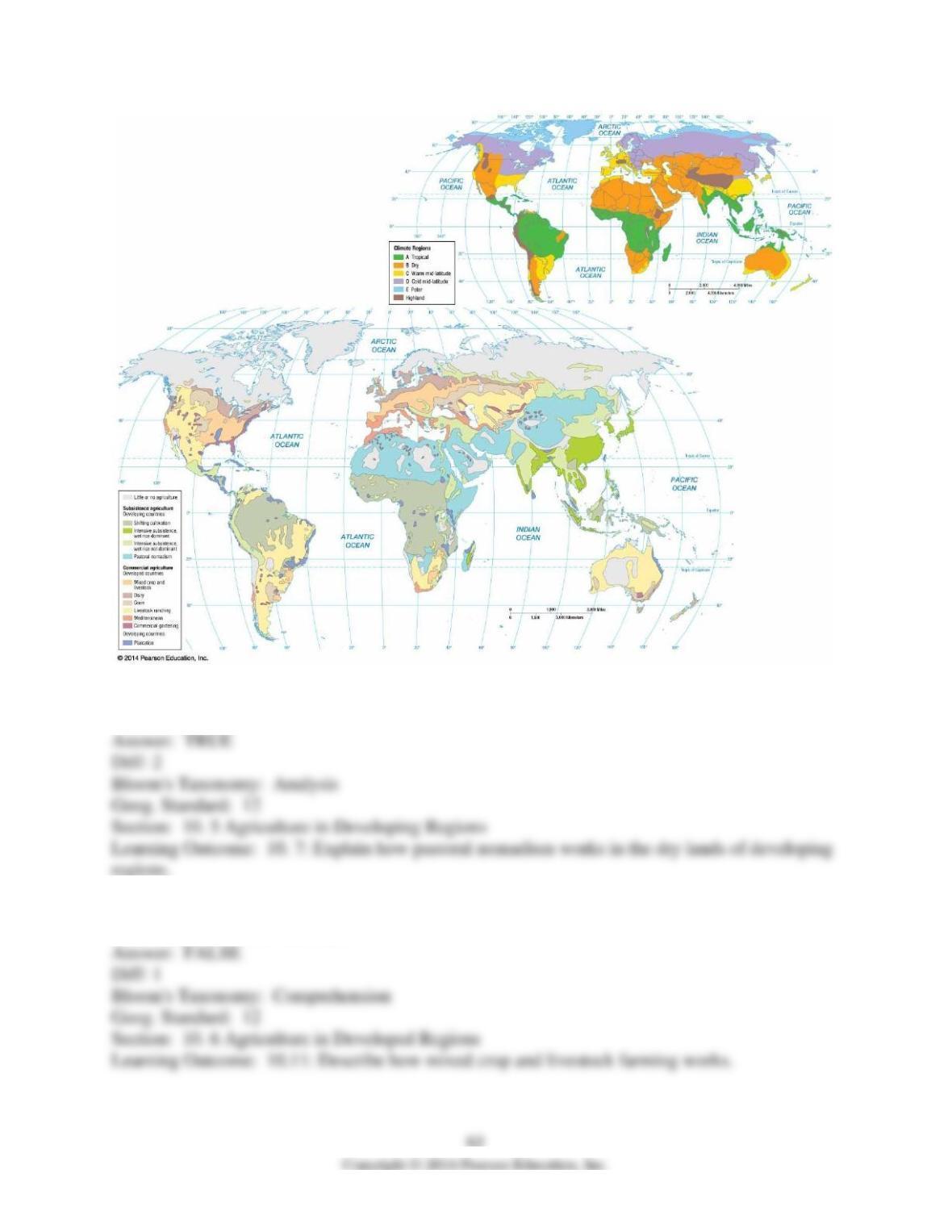
104) Pastoral nomads primarily live in an arid climate region that stretches from Central Asia to
North Africa.
105) Most of the maize grown in the American Midwest is consumed directly by humans rather
than being used for animal feed.
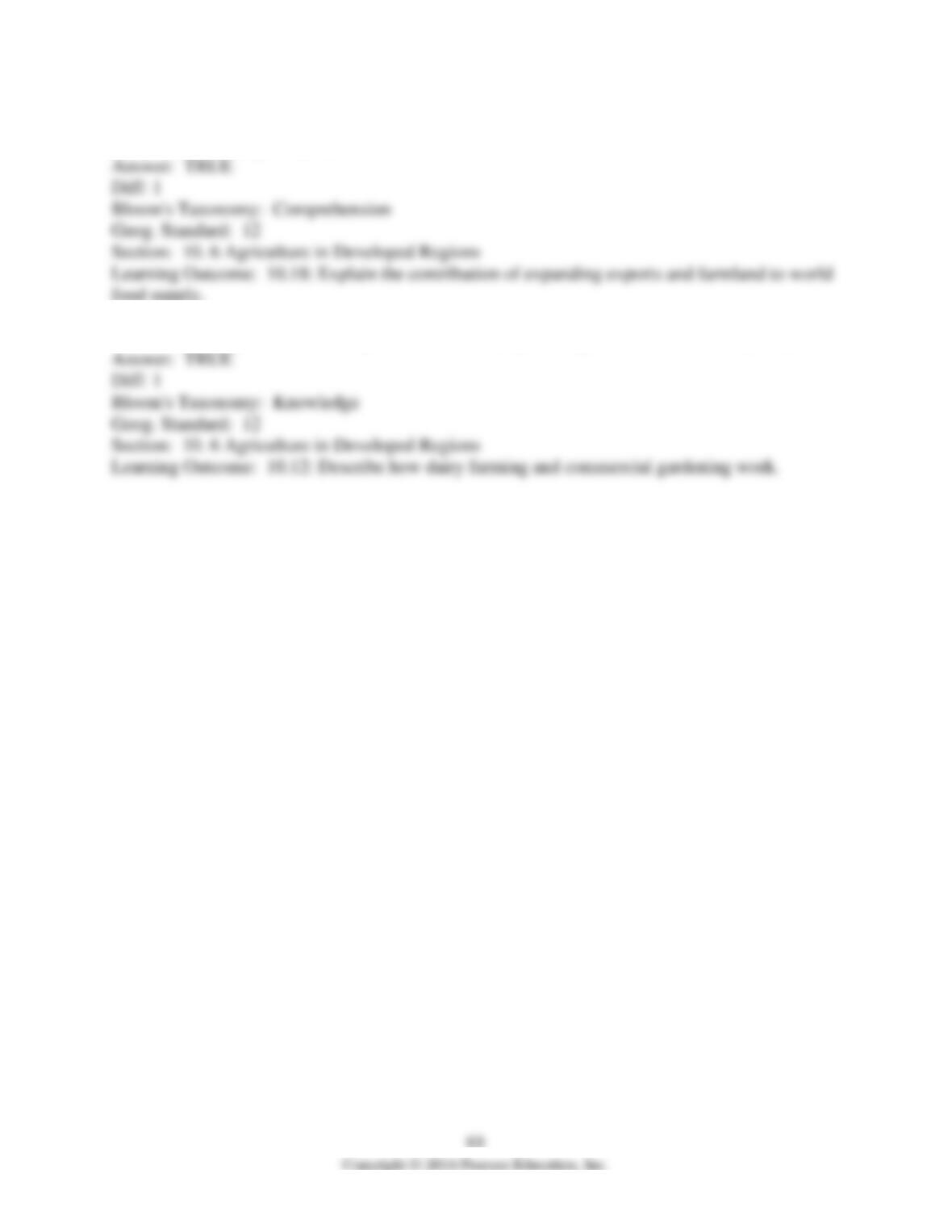
106) Railroads and highways have contributed to the diffusion and production levels of
commercial farming in MDCs.
107) Developing countries are responsible for a small percentage of the world’s milk production.
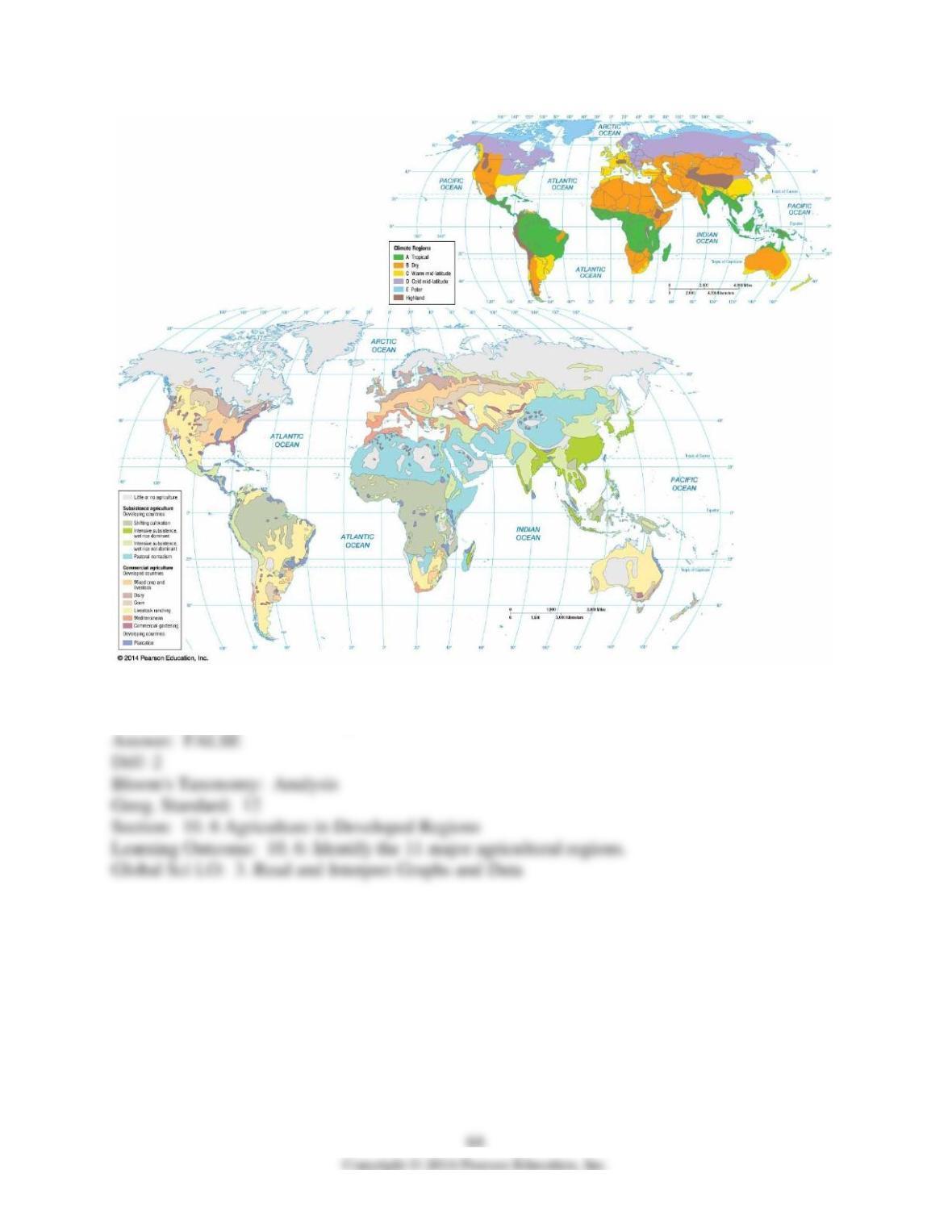
108) As indicated on the map of world agricultural regions, the eastern coastline of Australia is
dominated by livestock ranching.
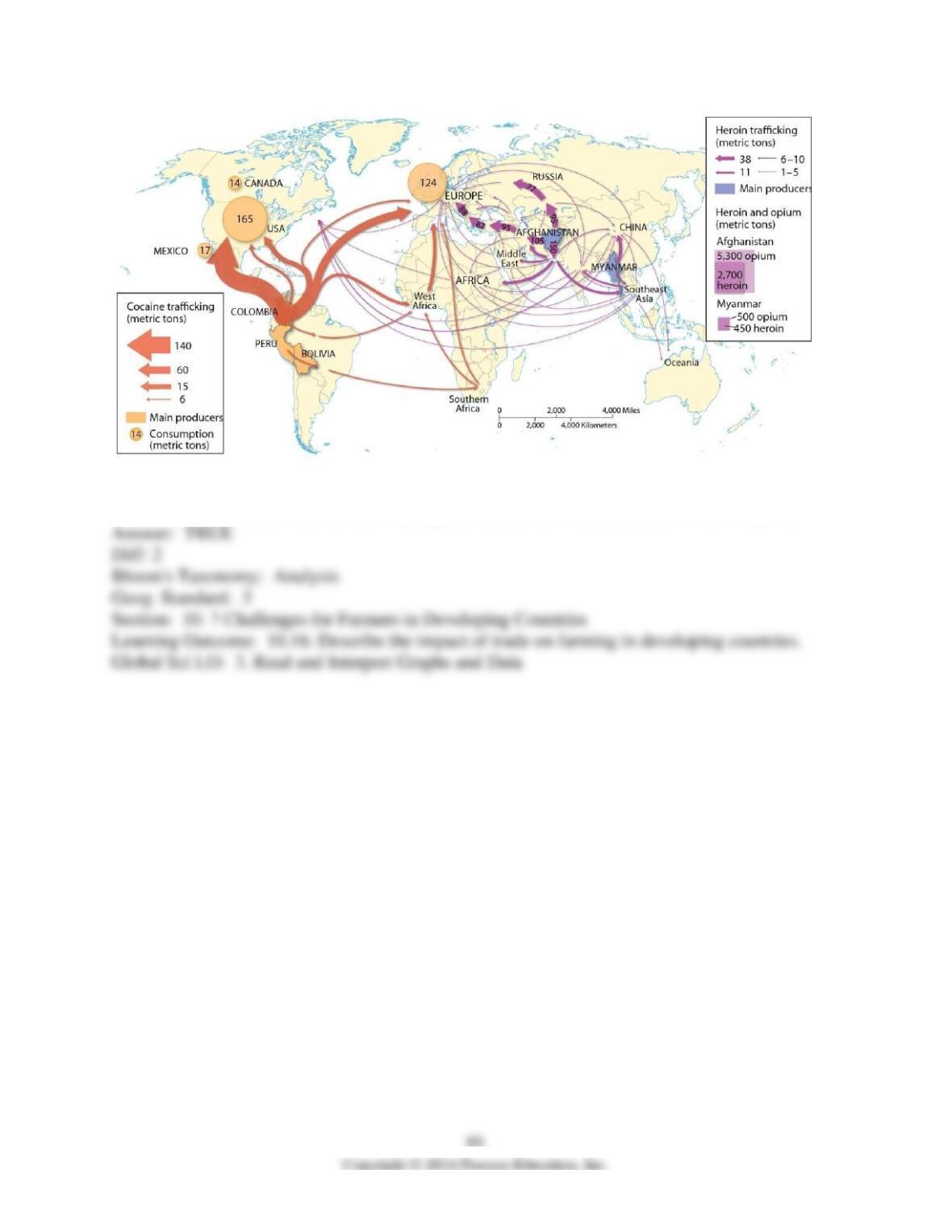
109) According to the map of global drug trafficking, cocaine trafficking is more dominant in the
western hemisphere while heroin trafficking is more concentrated in the eastern hemisphere.
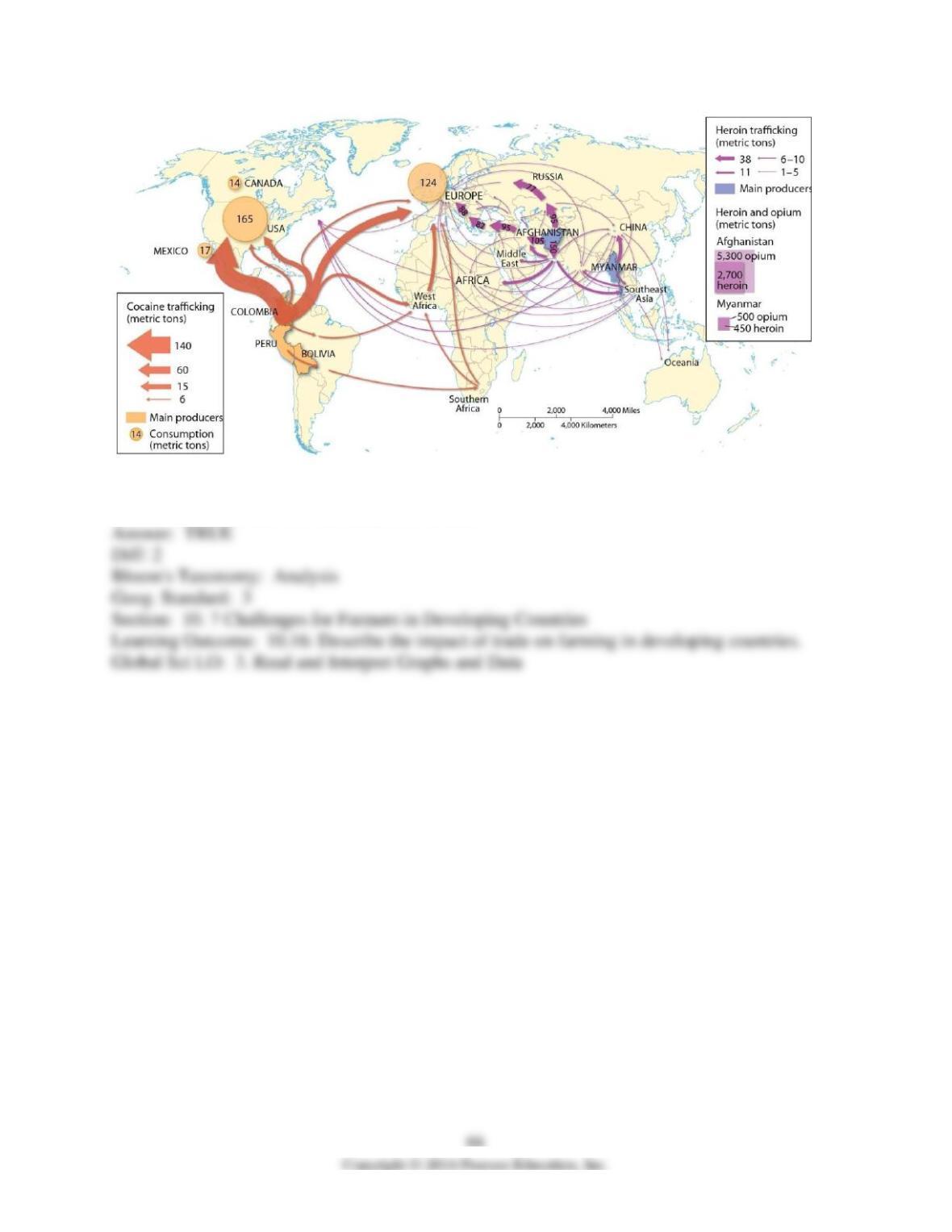
110) According to the map of global drug trafficking, Bolivia is one of the main sources for the
cocaine that is destined for the illicit U.S. market.
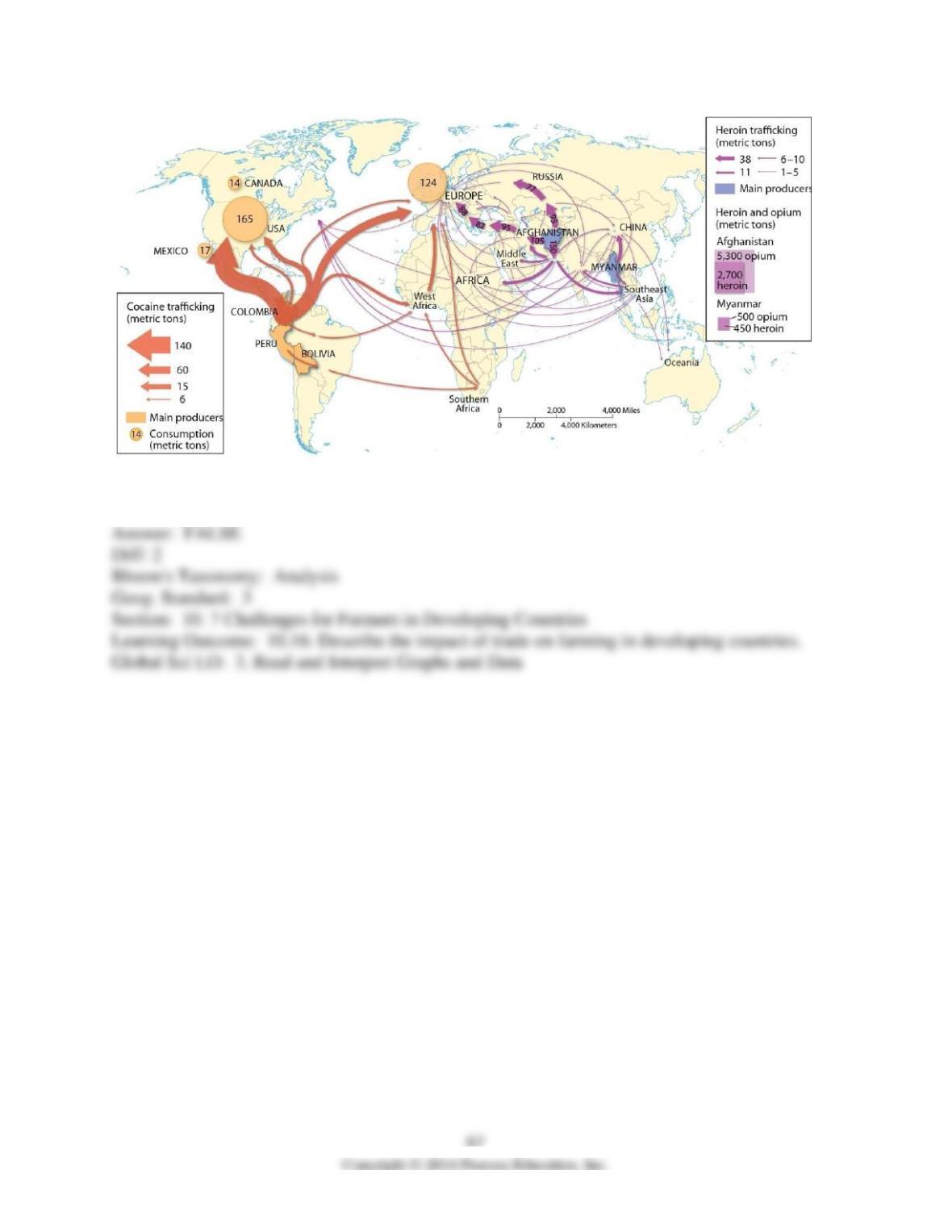
111) According to the map of global drug trafficking, Russia is one of the three top destinations
for cocaine.
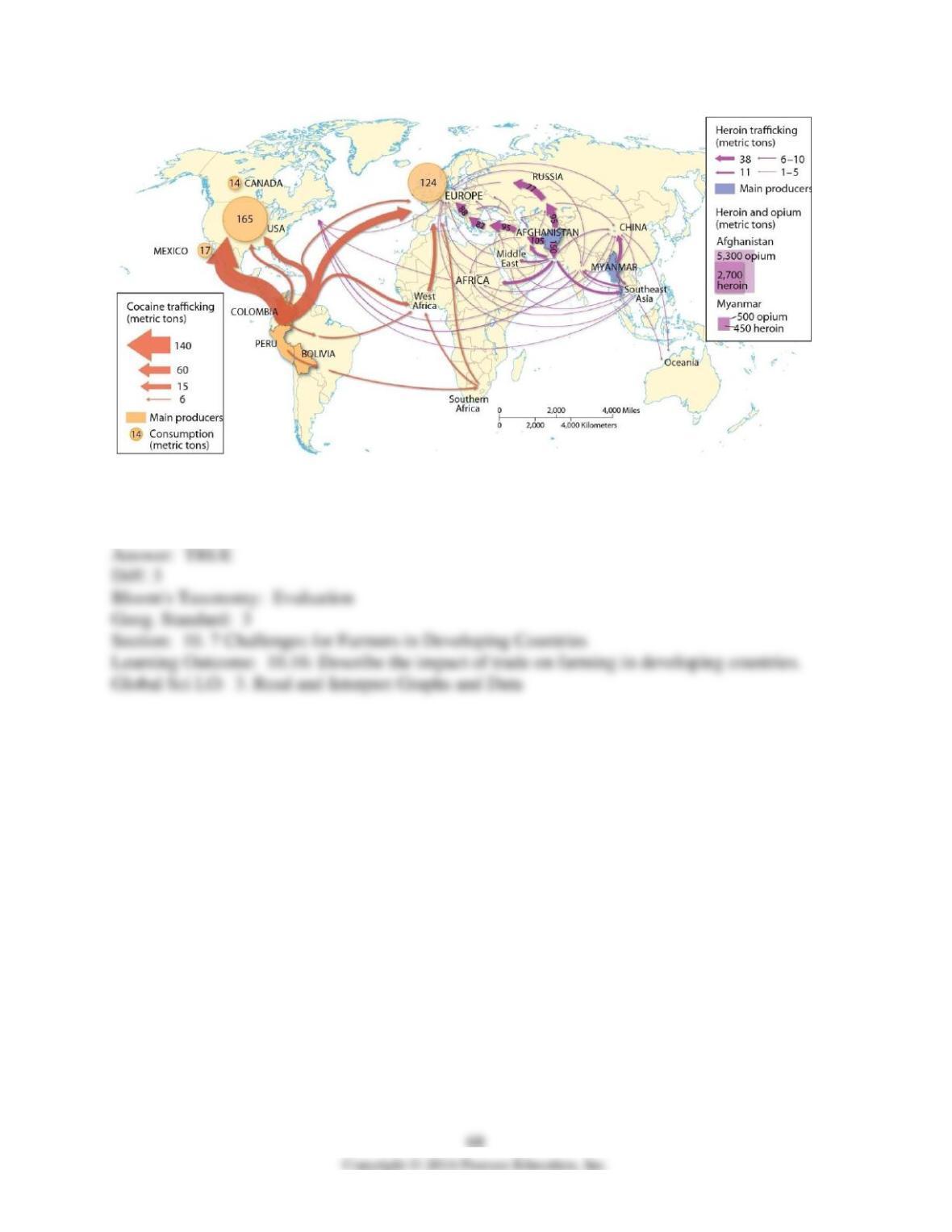
112) The map of global drug trafficking supports the hypothesis that continued unrest in
Afghanistan would help to guarantee its standing as one of the main sources of opium poppy
production for the heroin trade.
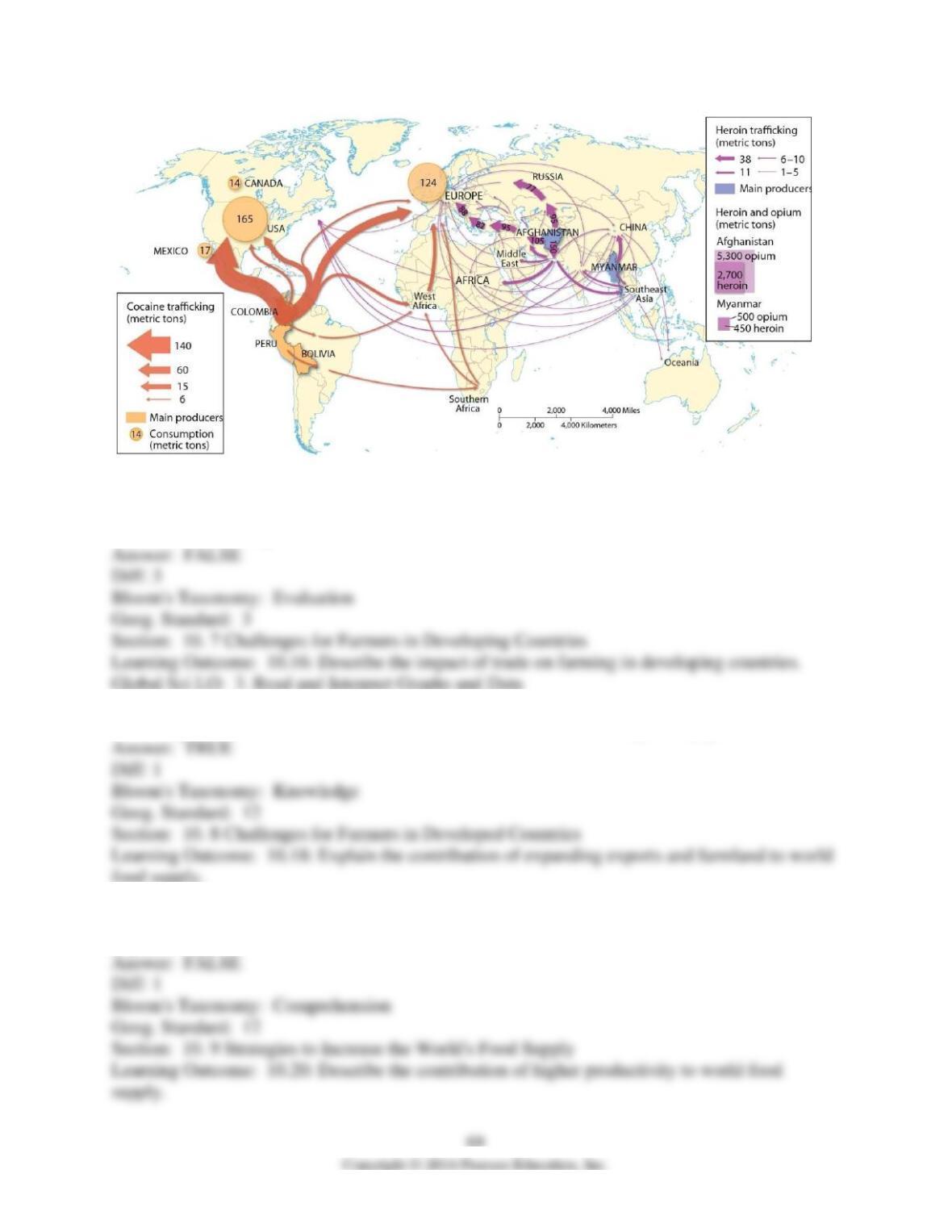
113) The map of global drug trafficking supports the hypothesis that Colombia, Peru, and
Bolivia would continue producing roughly the same amount of coca for cocaine if the U.S.
market for illicit drugs were to decline.
114) Despite its location far from world markets, New Zealand is a major dairy producer.
115) The green revolution has allowed agricultural production to increase at a rate equal to
population growth.
116) Crops grown in mixed crop and livestock regions are used primarily to feed animals.
117) Given that such a huge percentage of maize and soybean production is dedicated to
livestock feed, how does mixed crop and livestock production in the U.S. contribute to global
climate change? What solutions can you propose to minimize this environmental impact in the
future?
118) What is the distinctive type of agriculture practiced in the population concentrations of East
and South Asia, and how does this relate to concerns over the world’s growing population and
environmental problems?
119) What is the most important crop grown in East Asia? Why is this crop grown extensively in
the southern part of the region but not in the northern part? And how might global climate
change affect future yields in different regions of the world?
120) If peasant rice farmers in China were offered genetically modified rice at an extremely low
price, what positive and negative outcomes might they foresee as they debate whether or not to
accept the change?
121) Imagine that a government official wishes to build a new road close to a village that
practices shifting cultivation. What specific arguments might the villagers make against the road
construction, and why? What counter-arguments might the government make, and why? What
ulterior motives might also be at work?
122) Imagine you are a member of a culture that depends on pastoral nomadism. How might
changing demographics and market conditions affect your way of life in the near future, and
what solutions can you propose to maintain your way of life?
123) How and why are so many farmers pressured into growing illicit drug crops? What role
does location play in determining which farmers are pressured into this market?
124) Why are farmers suffering from low incomes in both more and less developed countries?
125) Describe the main differences in the patterns of production of maize in the United States
and Mexico. What are the most important differences? And how have recent changes in trade
relations affected these patterns of production?
126) Given that climate change will bring water deficits to much of the southwestern United
States, what solutions can you envision/imagine that might help protect the future of livestock
ranching there?
127) If you were planning to buy a commercially viable farm in the northeastern United States,
what kind of farm would you buy, where, and for what reasons?
128) Given that major agribusiness corporations are major beneficiaries of U.S. government
subsidies, what indirect connections can you envision between your taxes and the future markets
for genetically modified foods? Do you agree with this use of your tax dollars? Why or why not?
129) Discuss some of the problems encountered in the policy of encouraging farmers to grow
export crops in less developed countries.
130) Imagine that you are the leader of an island-state where 90 percent of the people practice
subsistence agriculture. Given that your country’s population has continued to grow rapidly, what
strategies might you propose for future changes to your island’s farming economy? Why?
131) Explain how integrated crop and livestock farming can be modified for sustainable farming
practices.
132) If you were the leader of an impoverished country, would you opt for more sustainable
farming practices or for the use of chemicals and genetic modifications to increase production?
Why?