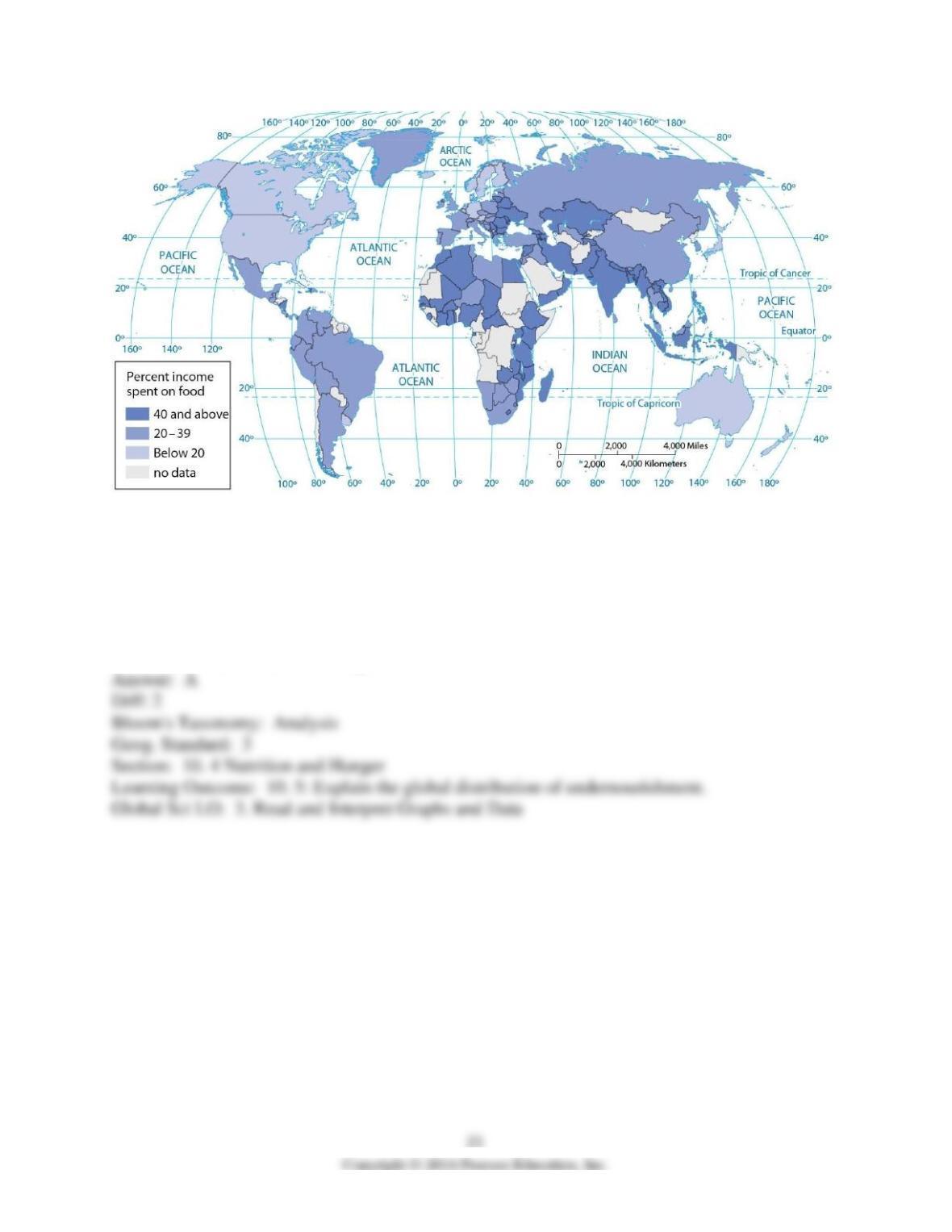
29) According to the map of income spent on food, more than 40 percent of average income is
spent on food in
A) Algeria, Syria, Madagascar, and Laos.
B) Syria, Iraq, Laos, Mexico, and Canada.
C) Syria, Malawi, Kenya, Australia, and Madagascar.
D) Madagascar, Mexico, Brazil, Guatemala, Syria, and Laos.
E) Laos, Cuba, Brazil, and Madagascar.
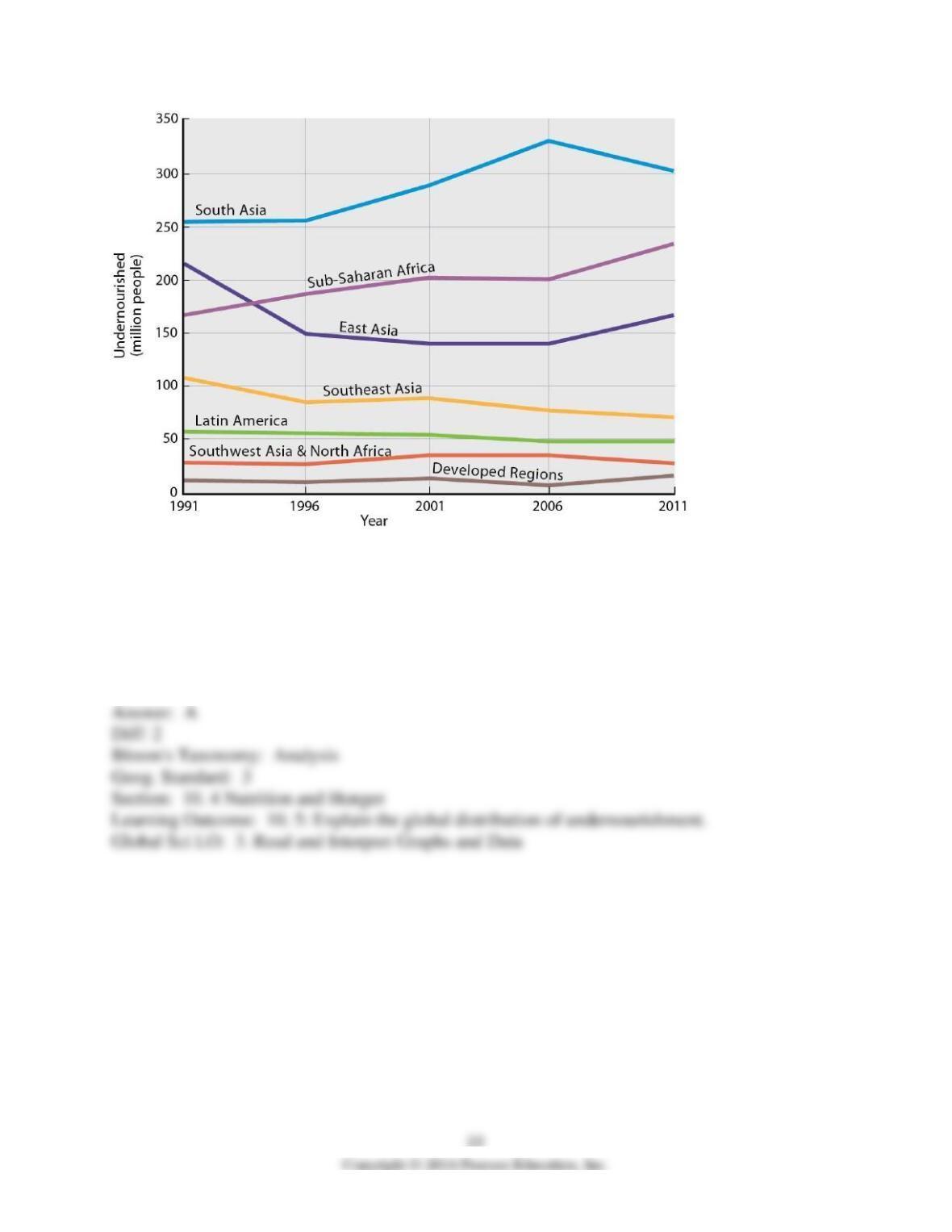
30) According to the “Change in Undernourishment” chart, there has been a recent decrease in
undernourishment in
A) Southeast Asia.
B) South Asia.
C) East Asia.
D) Sub-Saharan Africa.
E) North Africa.
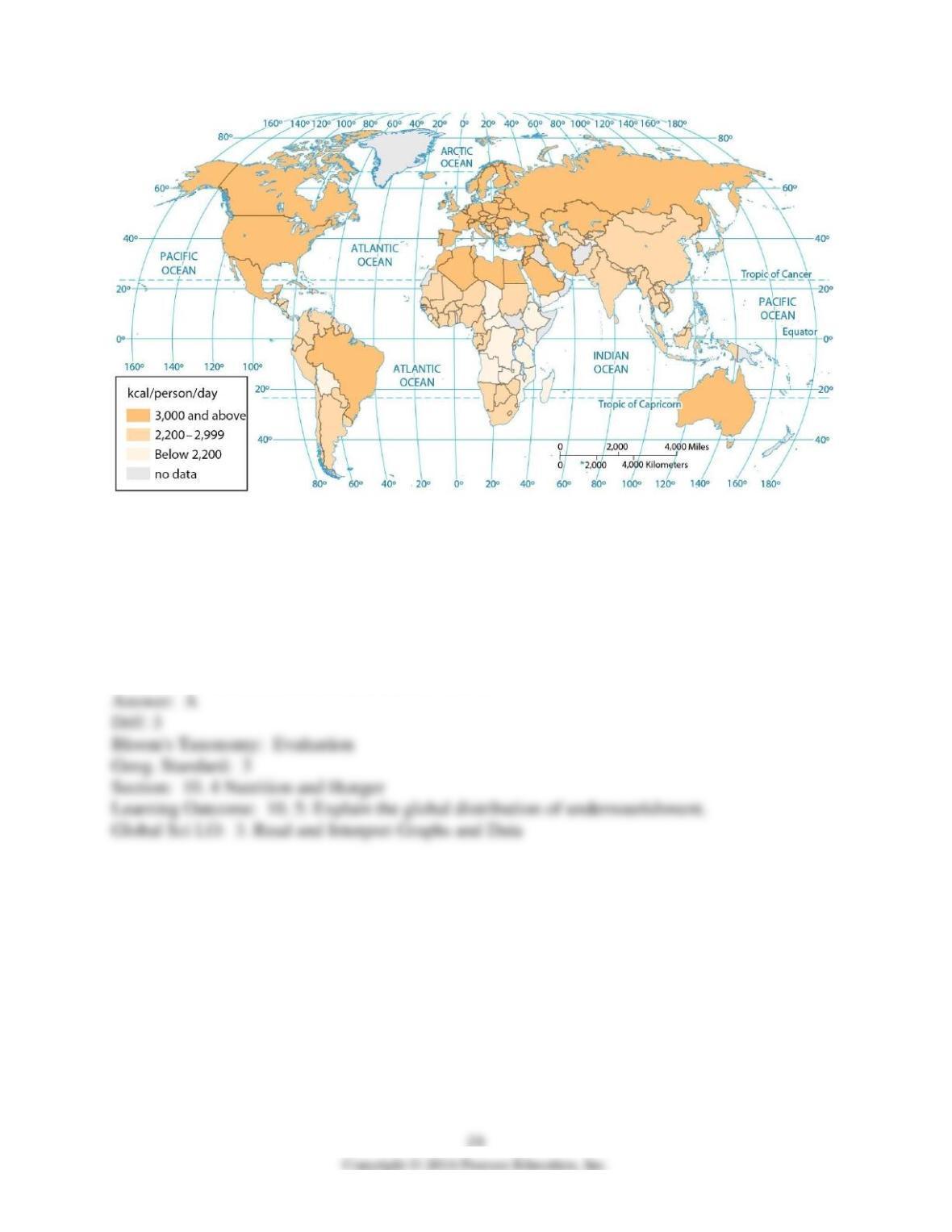
31) Using the map of dietary energy consumption as a reference (and momentarily ignoring other
factors), we could predict that among the following countries, those most likely to suffer food
shortages and/or undernourishment in the near future would be
A) Kenya, Ethiopia, Yemen, and Chad.
B) Kenya, Ethiopia, India, and Brazil.
C) Ethiopia, Somalia, South Sudan, and Yemen.
D) Kenya, Canada, Mexico, and Brazil.
E) Bolivia, Mexico, Guatemala, Peru, and Ecuador.
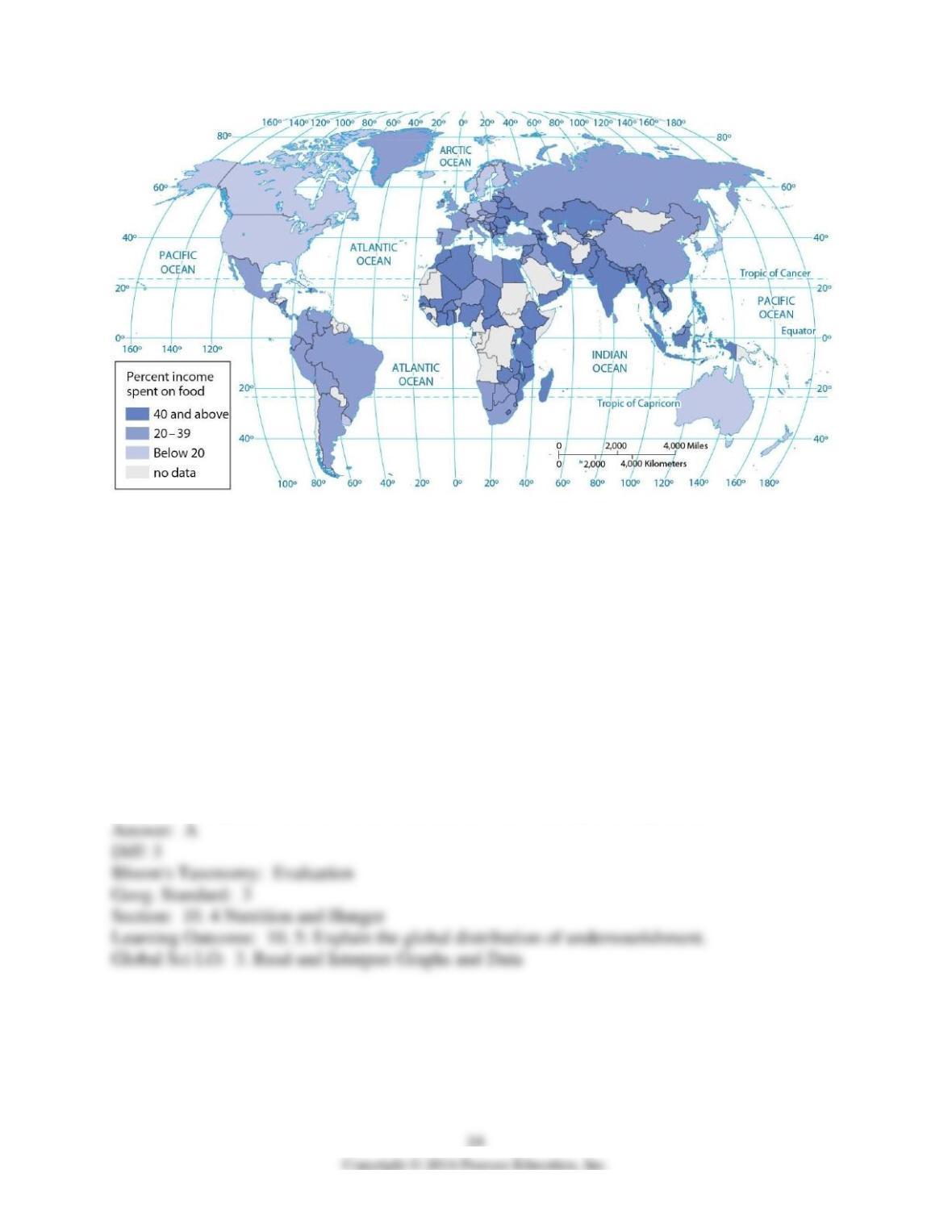
32) A choropleth map such as the map of “Income Spent on Food” might conceal details such as
which of the following?
A) Even in developed countries where the average person spends less than 20 percent of their
income on food, inequalities of income may be great enough for many people to remain
undernourished.
B) In developed countries where the average person spends less than 20 percent of their income
on food, the average upper-class person may spend more than 40 percent of their income on
food.
C) Even in developed countries where the average person spends less than 20 percent of their
income on food, less food is available than in developing countries.
D) Even in developing countries where the average person spends more than 40 percent of their
income on food, wealthy people must also spend more than 40 percent of their income on food.
E) In developed countries where the average person spends more than 40 percent of their income
on food, other prices are so low that undernourishment is hardly ever a problem.
33) Which type of agriculture is found primarily in less developed countries?
A) Mediterranean
B) plantation
C) truck farming
D) commercial gardening
E) mechanized
34) Shifting cultivation is most commonly found in which climate region?
A) humid low-latitude
B) dry
C) warm mid-latitude
D) cold mid-latitude
E) highlands
35) Which type of agriculture is practiced by the largest percentage of the world’s people?
A) hunting and gathering
B) shifting cultivation
C) pastoral nomadism
D) intensive subsistence
E) plantation
36) Compared to shifting cultivation, intensive subsistence agriculture is characterized by which
of the following?
A) smaller farms
B) lower population densities
C) greater use of animal power
D) more diversified cropping
E) greater use of land in rainforests
37) Which of the following is a typical practice in growing rice in Asia?
A) preparing fields with a plow drawn by oxen
B) flooding the plowed field with water
C) growing seedlings in a nursery
D) transplanting seedlings into the flooded field
E) All of these answers are correct.
38) The most important reason why most farmers in northeast China grow crops other than wet
rice is
A) cultural preference.
B) tradition.
C) climate.
D) soil.
E) harvesting wet rice requires expensive machinery.
39) Pastoral nomadism is most commonly found in which climate region?
A) humid low-latitude
B) dry
C) warm mid-latitude
D) cold mid-latitude
E) polar
40) The seasonal migration of livestock between mountains and lowland pastures is
A) pastoral nomadism.
B) transnomadism.
C) transhumance.
D) practiced mostly in the tropics.
E) livestock ranching.
41) Unlike other forms of commercial agriculture, plantations are
A) part of agribusiness.
B) owned by day laborers in less developed countries.
C) found primarily in less developed countries.
D) situated in densely populated locations.
E) found primarily in more developed countries.
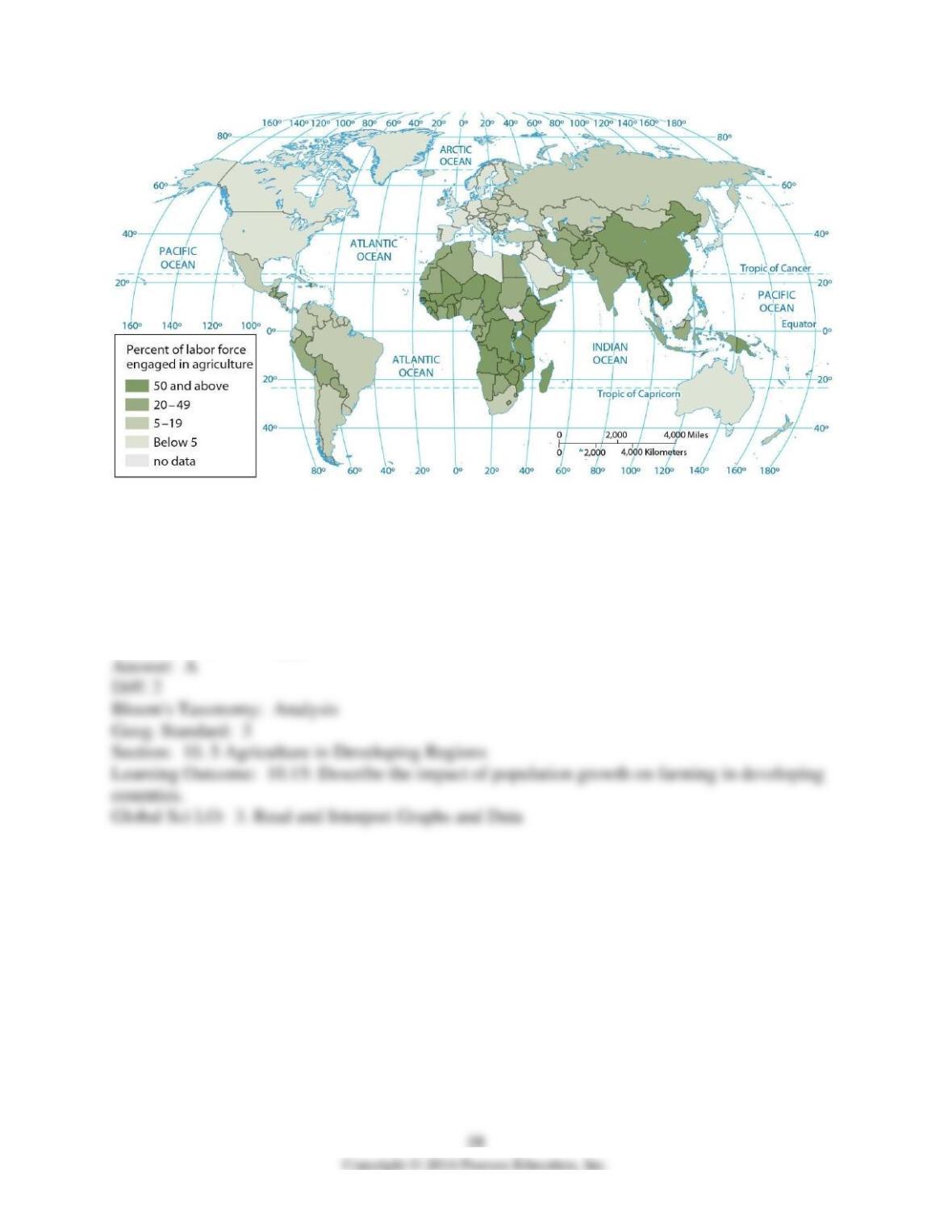
42) According to the map of agricultural workers, more than 50 percent of the labor force is
engaged in agriculture in
A) Kenya, Tanzania, and Zimbabwe.
B) Afghanistan, Iran, and Iraq.
C) Kenya, Namibia, and South Africa.
D) Tanzania, Zimbabwe, and Nigeria.
E) Chad, Libya, and Egypt.
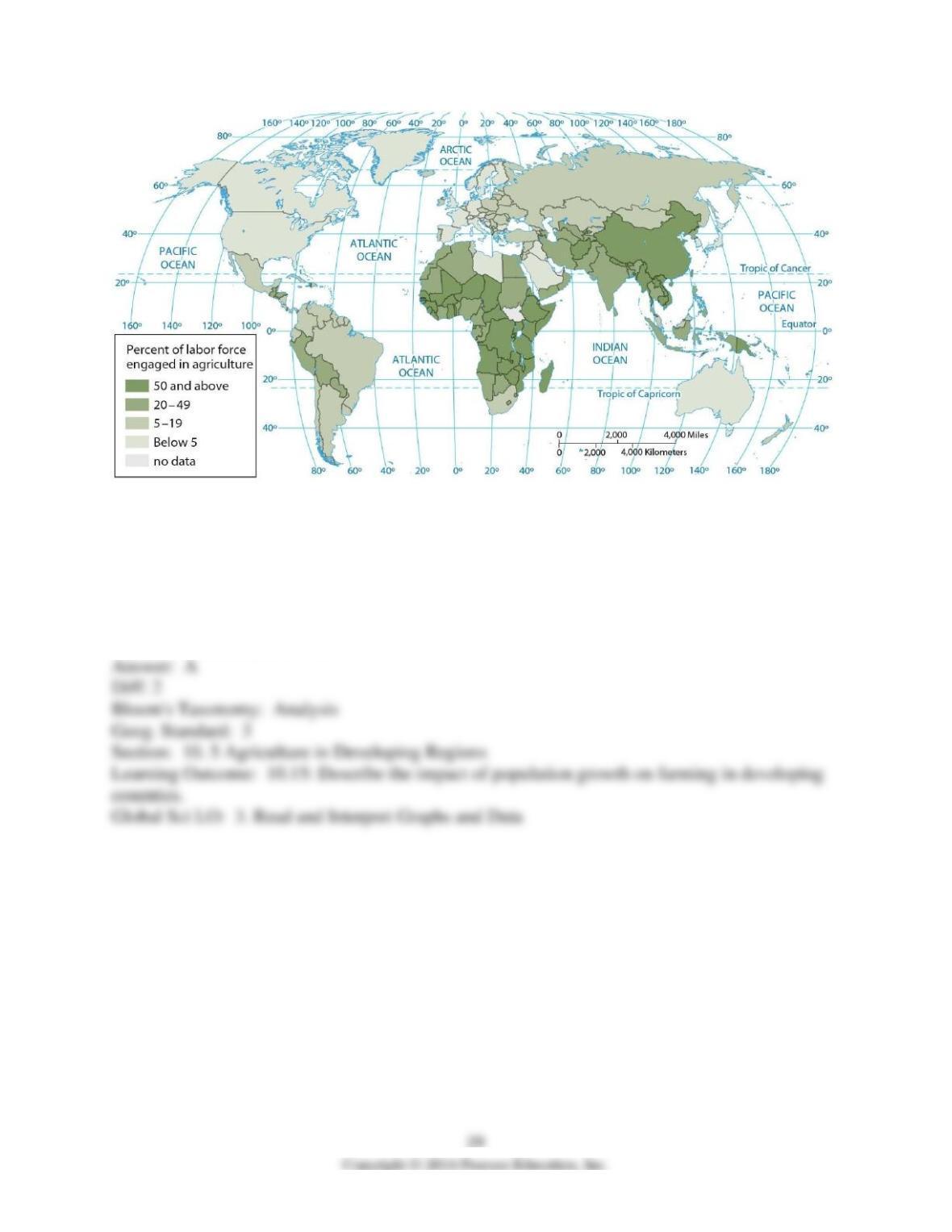
43) According to the map of agricultural workers, from 20 to 49 percent of the labor force is
engaged in agriculture in
A) Pakistan, Iran, and Algeria.
B) Pakistan, Afghanistan, and India.
C) Algeria, Sudan, and Ethiopia.
D) Bolivia, Peru, and Brazil.
E) Mexico, Canada, and Brazil.
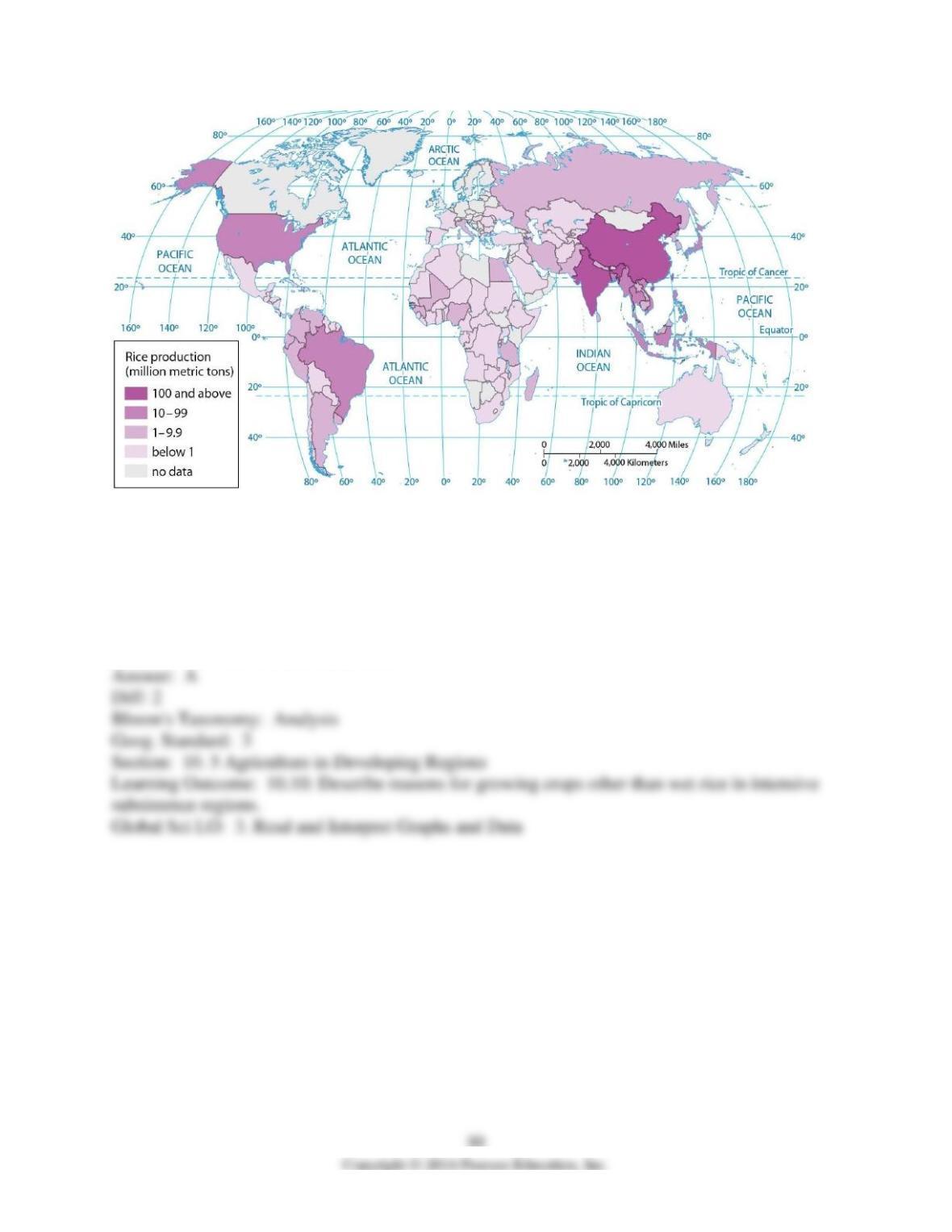
44) According to the map of world rice production, between 10 and 99 million metric tons of rice
are produced annually in
A) Brazil, Thailand, and the United States.
B) China and India.
C) Iran, Iraq, and Afghanistan.
D) Brazil, Thailand, India, Japan, and China.
E) the United States, China, and India.
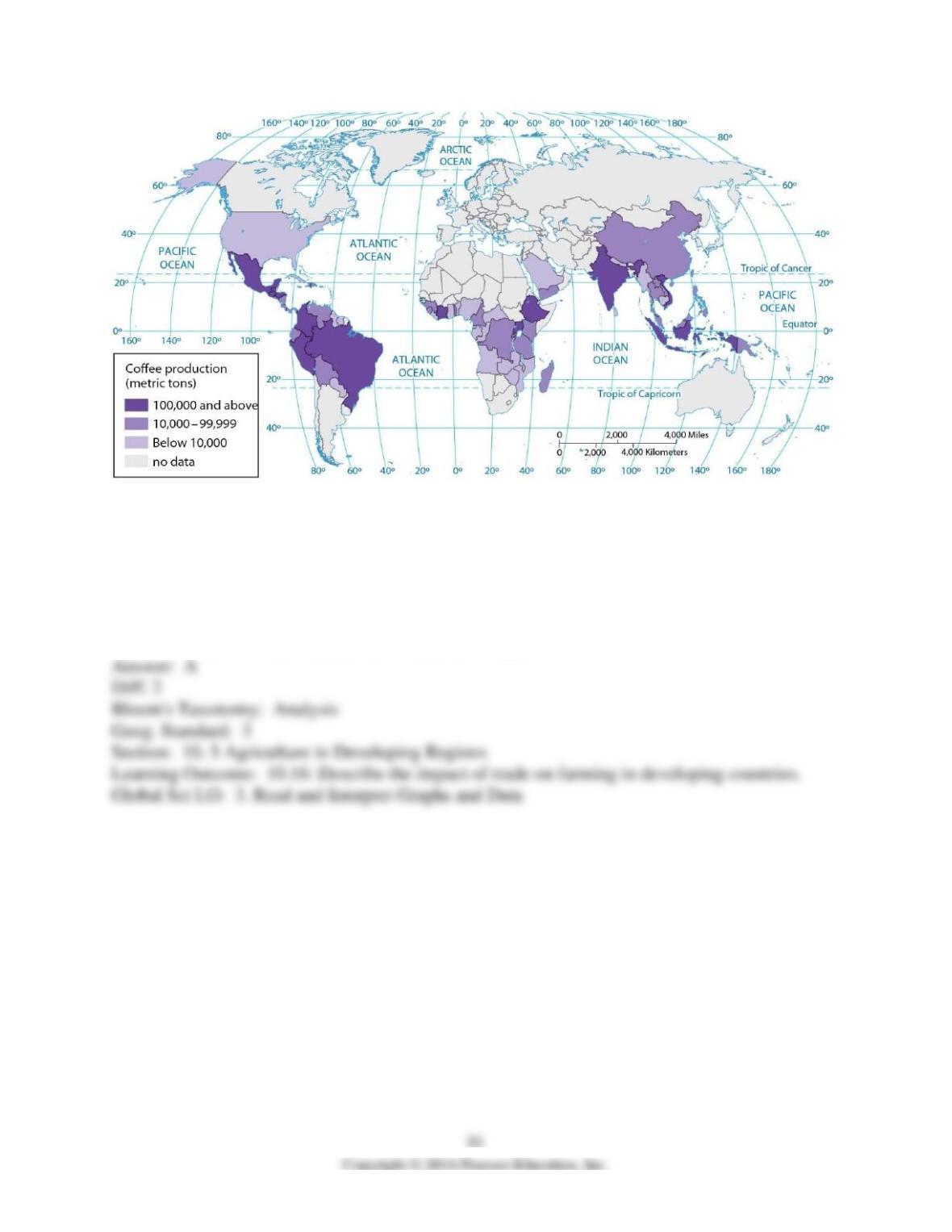
45) According to the map of coffee bean production, more than 100,000 metric tons of coffee
beans are harvested annually in which countries?
A) Brazil, Mexico, Peru, Indonesia, and Ethiopia.
B) China, Ethiopia, Colombia, and India.
C) Iran, Iraq, Colombia, Brazil, and Indonesia.
D) Colombia, Brazil, Thailand, India, Japan, and China.
E) Colombia, the United States, Indonesia, and Ethiopia.
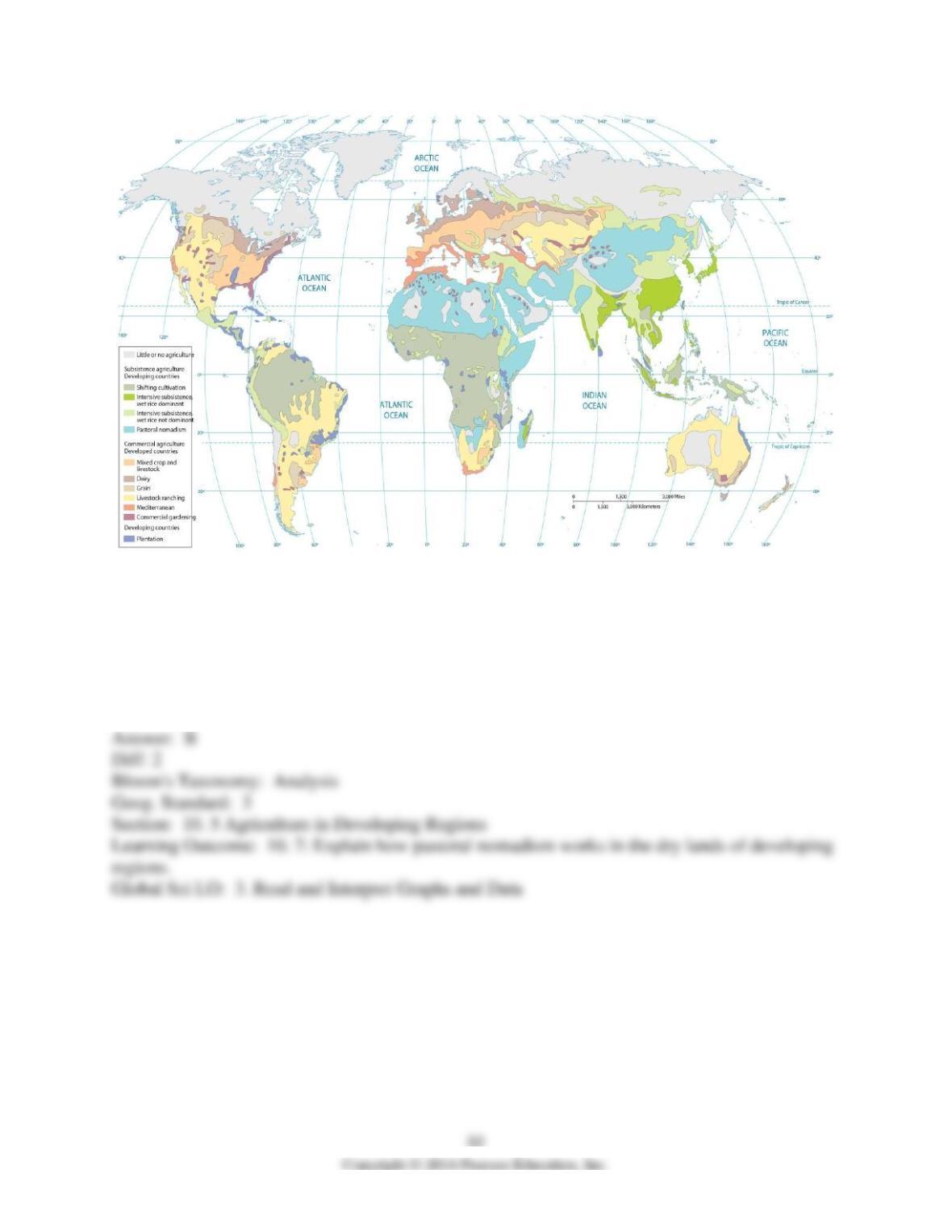
46) Judging from the map of agricultural regions, which type of agriculture occupies the largest
percentage of Iran?
A) mixed crop and livestock
B) pastoral nomadism
C) shifting cultivation
D) intensive subsistence
E) plantation
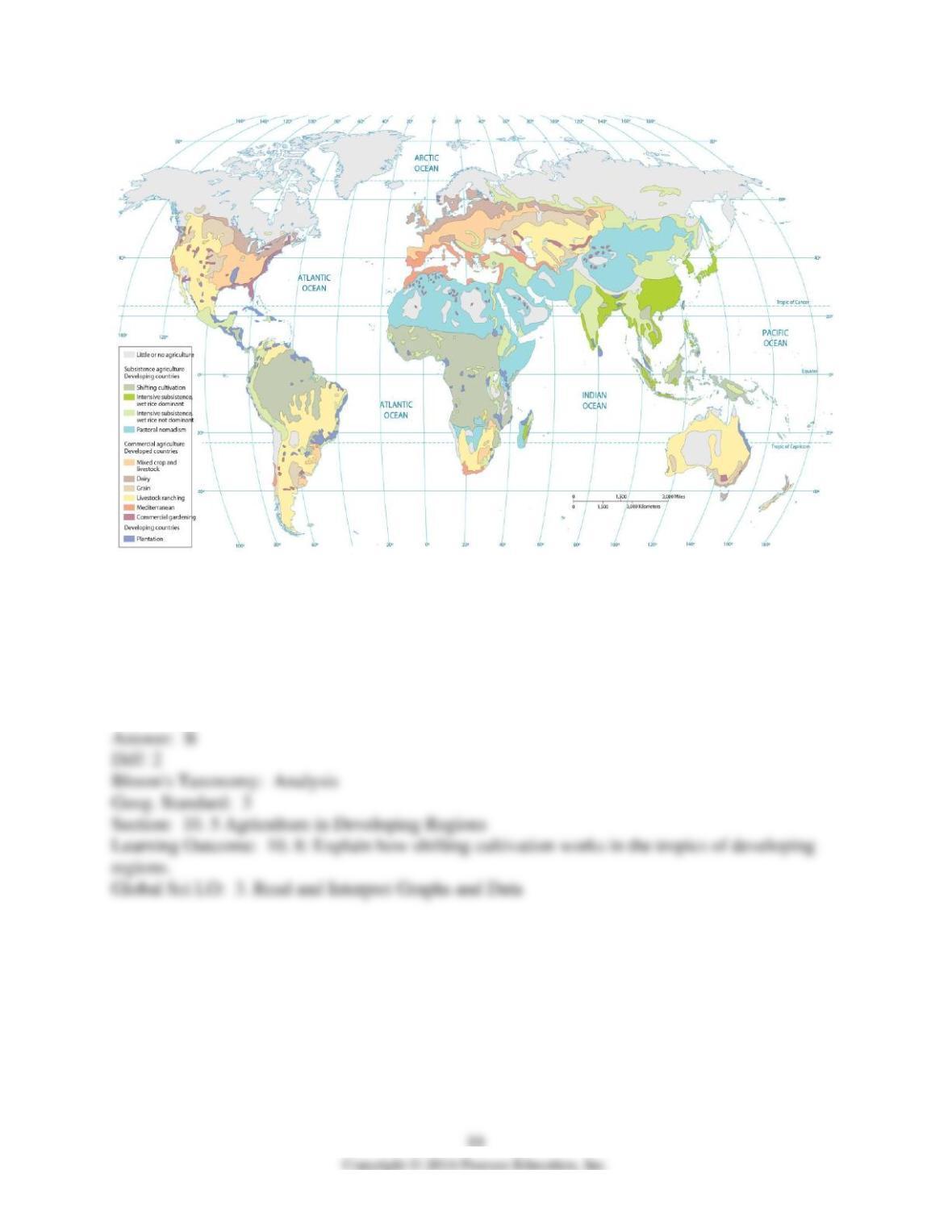
47) Judging from the map of agricultural regions, which type of agriculture occupies the largest
percentage of central Africa?
A) mixed crop and livestock
B) shifting cultivation
C) pastoral nomadism
D) intensive subsistence
E) plantation
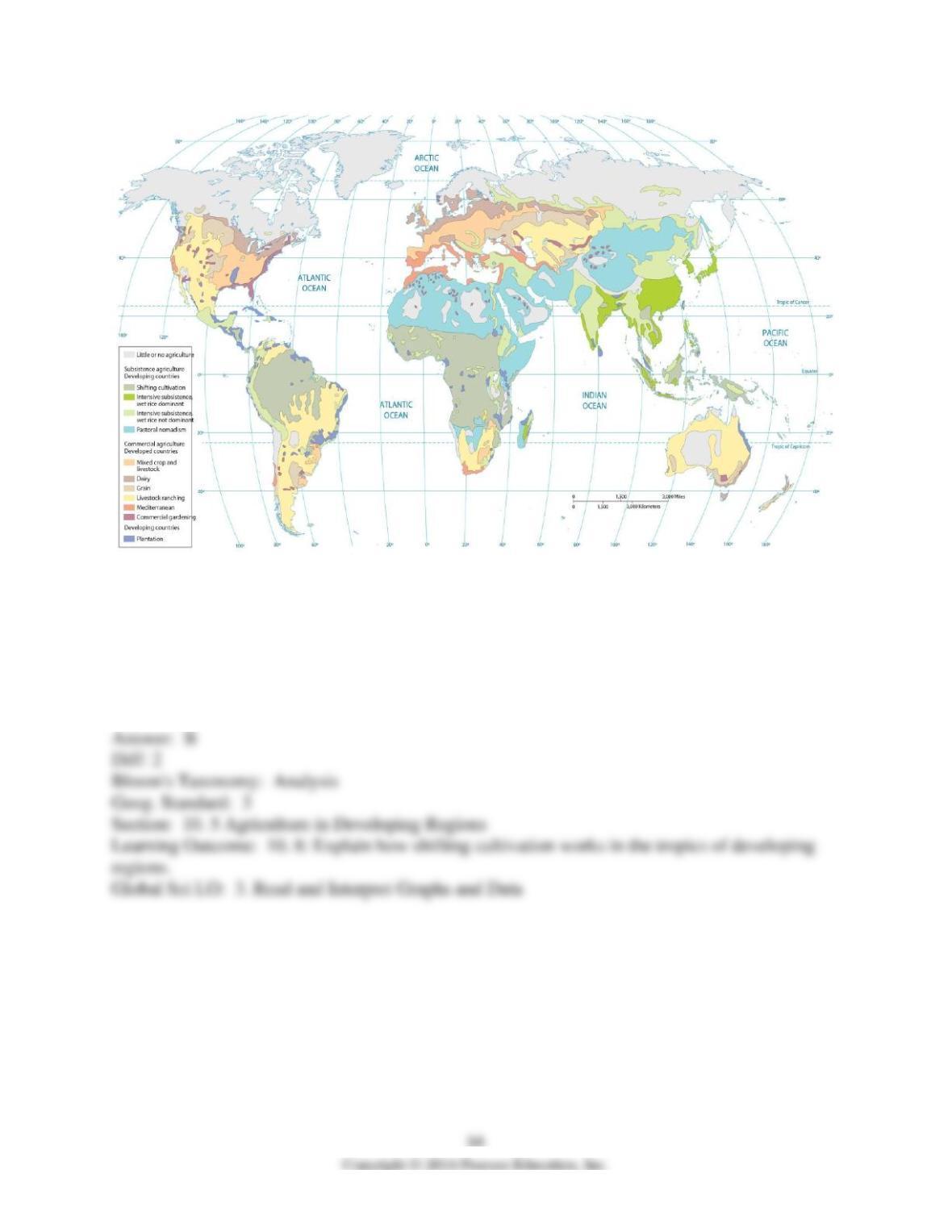
48) Judging from the map of agricultural regions, which type of agriculture occupies the largest
percentage of eastern Peru?
A) mixed crop and livestock
B) shifting cultivation
C) pastoral nomadism
D) intensive subsistence
E) plantation
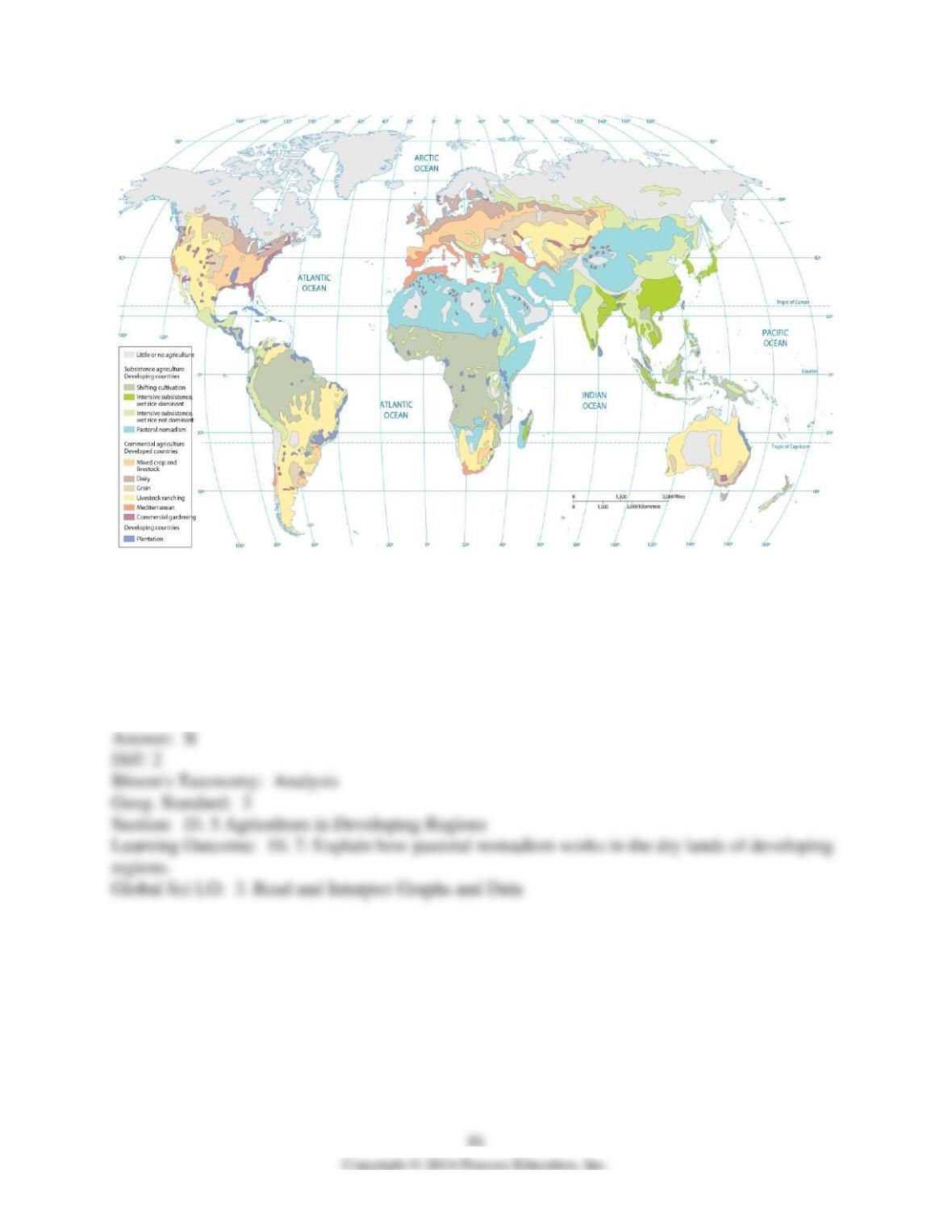
49) Judging from the map of agricultural regions, which type of agriculture occupies the largest
percentage of Somalia?
A) mixed crop and livestock
B) pastoral nomadism
C) shifting cultivation
D) intensive subsistence
E) plantation
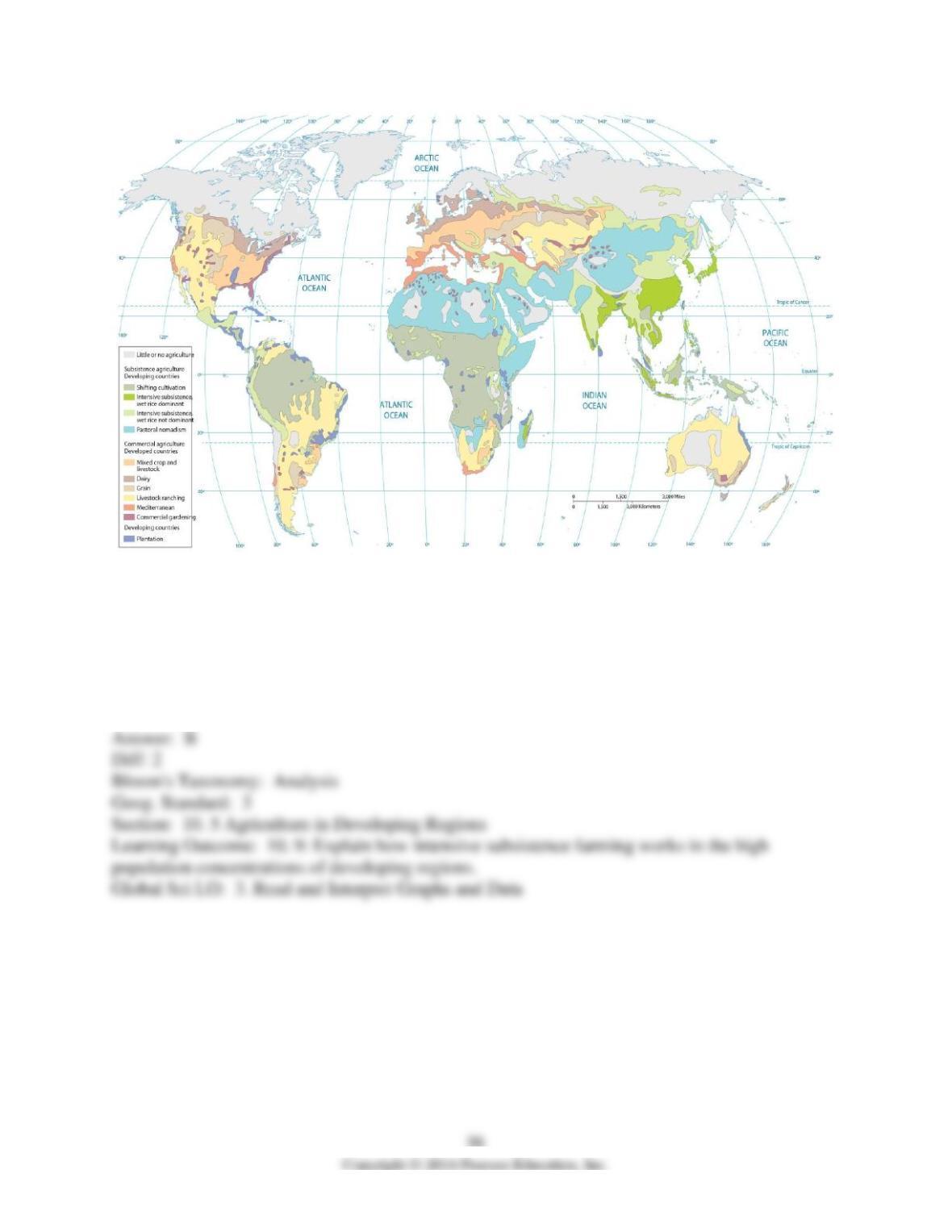
50) Judging from the map of agricultural regions, which type of agriculture occupies the largest
percentage of southeastern China?
A) mixed crop and livestock
B) intensive subsistence
C) shifting cultivation
D) pastoral nomadism
E) plantation
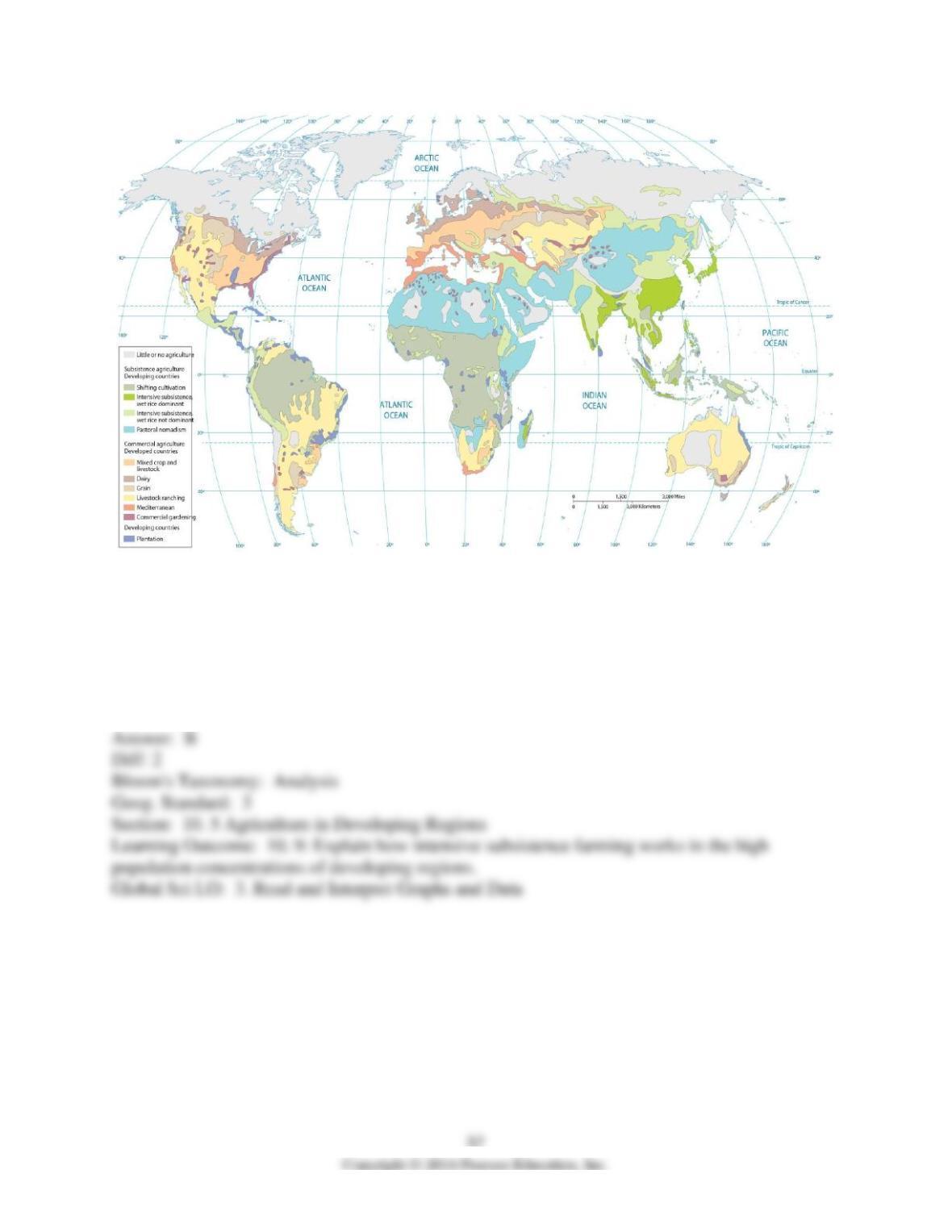
51) Judging from the map of agricultural regions, which type of agriculture occupies the largest
percentage of eastern India?
A) mixed crop and livestock
B) intensive subsistence
C) shifting cultivation
D) pastoral nomadism
E) plantation
52) Which of the following have aided commercial farmers in MDCs?
A) transportation improvements and the rise of sea levels
B) scientific advances, the reduction in the need for electronics, and
C) ancient irrigation projects that can be refitted for modern farming
D) transportation improvements, scientific advances, and electronics
E) climate change, scientific advances, and transportation improvements
53) The decline in the number of farmers in MDCs can best be described as a consequence of
A) push/pull economic factors, including the lack of opportunity in rural areas and higher-paying
jobs in urban areas.
B) urban sprawl, including the development of rings of suburbs and exurbs around major
metropolitan areas, which required larger amounts of farm production.
C) push/pull economic factors, including greater opportunities in rural areas and lower-paying
jobs in urban areas.
D) the increase of populations in urban areas and the reduced population in rural areas.
E) the spread of disease and starvation in rural areas, which quickly reduced the populations of
farmers.
54) The United States had about 60 percent fewer farms and ________ percent fewer farmers in
2000 than in 1900.
A) 85
B) 52
C) 15
D) 25
E) 99
55) The number of farms in the United States declined from about 6 million in 1940 to ________
in 1980.
A) 2 million
B) 5.5 million
C) 10 million
D) 1 million
E) 20,000
56) Which of the following is the most common form of commercial agriculture in Europe?
A) mixed crop and livestock farming
B) dairy farming
C) grain farming
D) livestock ranching
E) Mediterranean agriculture
57) Mixing crops and livestock allows farmers to
A) distribute the workload of the crops and livestock so that farmers hardly need to work during
the summer season.
B) generate 90 percent of their income from the sale of livestock.
C) doublecrop.
D) create a system where crops provide food for livestock and the livestock provide manure for
crop fertilization.
E) circumvent market forces that determine the prices of livestock and crops.
58) After maize, the most important crop in the U.S. mixed crop and livestock region is
A) wheat.
B) soybeans.
C) barley.
D) fruits and vegetables.
E) sugar beets.
59) In the winter wheat area of the U.S., the crop is planted in
A) autumn and harvested in summer.
B) winter and harvested in spring.
C) winter and harvested in autumn.
D) spring and harvested in summer.
E) spring and harvested in autumn.
60) Ranching is practiced in a climate region most similar to that of which other type of
agriculture?
A) dairying
B) grain
C) pastoral nomadism
D) shifting cultivation
E) Mediterranean agriculture